User login
Official Newspaper of the American College of Surgeons
Chlorhexidine beats iodine for preventing C-section wound infections
ATLANTA – A chlorhexidine/alcohol skin antiseptic cut cesarean section surgical site infections by half, compared with a solution of iodine and alcohol.
The chlorhexidine solution significantly reduced the risk of both superficial and deep incisional infections, Dr. Methodius G. Tuuli reported at the annual Pregnancy Meeting sponsored by the Society for Maternal-Fetal Medicine. The study was simultaneously published in the New England Journal of Medicine (2016 Feb 4. doi: 10.1056/NEJMoa1511048).
The randomized trial is the first to examine the two antiseptics in obstetric surgery, noted Dr. Tuuli of Washington University, St. Louis. The results echo those repeatedly found in the general surgical literature, and, he said, clearly show that chlorhexidine-based skin prep is more effective than the more often–employed iodine-based prep.
“We become comfortable doing the things we have always done, because that’s the way we were taught, and we see no reason to change,” he said in an interview. “I think now is the time to make a change for our patients.”
Dr. Tuuli’s study comprised 1,147 patients who delivered via cesarean section from 2011-2015. They were randomized to either a chlorhexidine/alcohol antiseptic (2% chlorhexidine gluconate with 70% isopropyl alcohol) or the iodine/alcohol combination (8.3% povidone-iodine with 72.5% isopropyl alcohol). Both groups received standard-of-care systemic antibiotic prophylaxis.
They were followed daily until discharge from the hospital, and then with a telephone call 30 days after delivery to assess whether a surgical site infection had occurred, as well as any visits to a physician’s office or emergency department that were related to a wound complication.
The co-primary endpoints were superficial and deep incisional infections. Secondary endpoints included length of hospital stay; physician office visits; hospital readmissions for infection-related complications; endometritis; positive wound culture; skin irritation; and allergic reaction.
Surgical site infections occurred in 23 patients in the chlorhexidine group and 42 in the iodine group (4.0% vs. 7.3%) – a significant 45% risk reduction (relative risk, 0.55). Superficial infections were significantly less common in the chlorhexidine group (3.0% vs. 4.9%), as were deep infections (1.0% vs. 2.4%).
A subgroup analysis examined unscheduled vs. scheduled cesarean; obese vs. nonobese patients; suture vs. staple closure; diabetes vs. no diabetes; and chronic comorbidities vs. none. Chlorhexidine was significantly more effective than iodine in each of these groups.
Antiseptic type did not affect rates of skin separation, seroma, hematoma, or cellulitis. Nor did it affect the rates of endometritis, hospitalization for infectious complications, or length of hospital stay. However, those in the chlorhexidine group were significantly less likely to visit a physician for wound care (7.9% vs. 12.5%)
Cultures were obtained on 32 patients with a confirmed infection; 27 of these specimens were positive. About half of the positive cultures were polymicrobial. The most common isolate was Staphylococcus aureus (37%). Methicillin-resistant S. aureus (MRSA) was present in 12% of cultures in the chlorhexidine group and 17% in the iodine group.
In an interview, Dr. Tuuli said that chlorhexidine has several properties that make it more effective than iodine. It is effective against both gram-negative and gram-positive organisms, including MRSA, and is not inactivated by organic matter. Although chlorhexidine is more likely than iodine to provoke an allergic reaction, none were observed in this study.
The study was supported by a grant from the National Institutes of Health. Dr. Tuuli reported having no financial disclosures; the antiseptics were procured and paid for by the medical center.
Watch Dr. Tuuli discuss the study results here.
The video associated with this article is no longer available on this site. Please view all of our videos on the MDedge YouTube channel
ATLANTA – A chlorhexidine/alcohol skin antiseptic cut cesarean section surgical site infections by half, compared with a solution of iodine and alcohol.
The chlorhexidine solution significantly reduced the risk of both superficial and deep incisional infections, Dr. Methodius G. Tuuli reported at the annual Pregnancy Meeting sponsored by the Society for Maternal-Fetal Medicine. The study was simultaneously published in the New England Journal of Medicine (2016 Feb 4. doi: 10.1056/NEJMoa1511048).
The randomized trial is the first to examine the two antiseptics in obstetric surgery, noted Dr. Tuuli of Washington University, St. Louis. The results echo those repeatedly found in the general surgical literature, and, he said, clearly show that chlorhexidine-based skin prep is more effective than the more often–employed iodine-based prep.
“We become comfortable doing the things we have always done, because that’s the way we were taught, and we see no reason to change,” he said in an interview. “I think now is the time to make a change for our patients.”
Dr. Tuuli’s study comprised 1,147 patients who delivered via cesarean section from 2011-2015. They were randomized to either a chlorhexidine/alcohol antiseptic (2% chlorhexidine gluconate with 70% isopropyl alcohol) or the iodine/alcohol combination (8.3% povidone-iodine with 72.5% isopropyl alcohol). Both groups received standard-of-care systemic antibiotic prophylaxis.
They were followed daily until discharge from the hospital, and then with a telephone call 30 days after delivery to assess whether a surgical site infection had occurred, as well as any visits to a physician’s office or emergency department that were related to a wound complication.
The co-primary endpoints were superficial and deep incisional infections. Secondary endpoints included length of hospital stay; physician office visits; hospital readmissions for infection-related complications; endometritis; positive wound culture; skin irritation; and allergic reaction.
Surgical site infections occurred in 23 patients in the chlorhexidine group and 42 in the iodine group (4.0% vs. 7.3%) – a significant 45% risk reduction (relative risk, 0.55). Superficial infections were significantly less common in the chlorhexidine group (3.0% vs. 4.9%), as were deep infections (1.0% vs. 2.4%).
A subgroup analysis examined unscheduled vs. scheduled cesarean; obese vs. nonobese patients; suture vs. staple closure; diabetes vs. no diabetes; and chronic comorbidities vs. none. Chlorhexidine was significantly more effective than iodine in each of these groups.
Antiseptic type did not affect rates of skin separation, seroma, hematoma, or cellulitis. Nor did it affect the rates of endometritis, hospitalization for infectious complications, or length of hospital stay. However, those in the chlorhexidine group were significantly less likely to visit a physician for wound care (7.9% vs. 12.5%)
Cultures were obtained on 32 patients with a confirmed infection; 27 of these specimens were positive. About half of the positive cultures were polymicrobial. The most common isolate was Staphylococcus aureus (37%). Methicillin-resistant S. aureus (MRSA) was present in 12% of cultures in the chlorhexidine group and 17% in the iodine group.
In an interview, Dr. Tuuli said that chlorhexidine has several properties that make it more effective than iodine. It is effective against both gram-negative and gram-positive organisms, including MRSA, and is not inactivated by organic matter. Although chlorhexidine is more likely than iodine to provoke an allergic reaction, none were observed in this study.
The study was supported by a grant from the National Institutes of Health. Dr. Tuuli reported having no financial disclosures; the antiseptics were procured and paid for by the medical center.
Watch Dr. Tuuli discuss the study results here.
The video associated with this article is no longer available on this site. Please view all of our videos on the MDedge YouTube channel
ATLANTA – A chlorhexidine/alcohol skin antiseptic cut cesarean section surgical site infections by half, compared with a solution of iodine and alcohol.
The chlorhexidine solution significantly reduced the risk of both superficial and deep incisional infections, Dr. Methodius G. Tuuli reported at the annual Pregnancy Meeting sponsored by the Society for Maternal-Fetal Medicine. The study was simultaneously published in the New England Journal of Medicine (2016 Feb 4. doi: 10.1056/NEJMoa1511048).
The randomized trial is the first to examine the two antiseptics in obstetric surgery, noted Dr. Tuuli of Washington University, St. Louis. The results echo those repeatedly found in the general surgical literature, and, he said, clearly show that chlorhexidine-based skin prep is more effective than the more often–employed iodine-based prep.
“We become comfortable doing the things we have always done, because that’s the way we were taught, and we see no reason to change,” he said in an interview. “I think now is the time to make a change for our patients.”
Dr. Tuuli’s study comprised 1,147 patients who delivered via cesarean section from 2011-2015. They were randomized to either a chlorhexidine/alcohol antiseptic (2% chlorhexidine gluconate with 70% isopropyl alcohol) or the iodine/alcohol combination (8.3% povidone-iodine with 72.5% isopropyl alcohol). Both groups received standard-of-care systemic antibiotic prophylaxis.
They were followed daily until discharge from the hospital, and then with a telephone call 30 days after delivery to assess whether a surgical site infection had occurred, as well as any visits to a physician’s office or emergency department that were related to a wound complication.
The co-primary endpoints were superficial and deep incisional infections. Secondary endpoints included length of hospital stay; physician office visits; hospital readmissions for infection-related complications; endometritis; positive wound culture; skin irritation; and allergic reaction.
Surgical site infections occurred in 23 patients in the chlorhexidine group and 42 in the iodine group (4.0% vs. 7.3%) – a significant 45% risk reduction (relative risk, 0.55). Superficial infections were significantly less common in the chlorhexidine group (3.0% vs. 4.9%), as were deep infections (1.0% vs. 2.4%).
A subgroup analysis examined unscheduled vs. scheduled cesarean; obese vs. nonobese patients; suture vs. staple closure; diabetes vs. no diabetes; and chronic comorbidities vs. none. Chlorhexidine was significantly more effective than iodine in each of these groups.
Antiseptic type did not affect rates of skin separation, seroma, hematoma, or cellulitis. Nor did it affect the rates of endometritis, hospitalization for infectious complications, or length of hospital stay. However, those in the chlorhexidine group were significantly less likely to visit a physician for wound care (7.9% vs. 12.5%)
Cultures were obtained on 32 patients with a confirmed infection; 27 of these specimens were positive. About half of the positive cultures were polymicrobial. The most common isolate was Staphylococcus aureus (37%). Methicillin-resistant S. aureus (MRSA) was present in 12% of cultures in the chlorhexidine group and 17% in the iodine group.
In an interview, Dr. Tuuli said that chlorhexidine has several properties that make it more effective than iodine. It is effective against both gram-negative and gram-positive organisms, including MRSA, and is not inactivated by organic matter. Although chlorhexidine is more likely than iodine to provoke an allergic reaction, none were observed in this study.
The study was supported by a grant from the National Institutes of Health. Dr. Tuuli reported having no financial disclosures; the antiseptics were procured and paid for by the medical center.
Watch Dr. Tuuli discuss the study results here.
The video associated with this article is no longer available on this site. Please view all of our videos on the MDedge YouTube channel
AT THE PREGNANCY MEETING
Key clinical point: A chlorhexidine/alcohol antiseptic was significantly more effective at preventing cesarean section incision infections than an iodine/alcohol antiseptic.
Major finding: The chlorhexidine solution decreased surgical site infections by half, compared with the iodine-based solution.
Data source: A randomized study of 1,147 women who delivered via cesarean from 2011-2015.
Disclosures: The study was supported by a grant from the National Institutes of Health. Dr. Tuuli reported having no financial disclosures; the antiseptics were procured and paid for by the medical center.

More than 90% of Americans have health insurance, HHS reports
About 12.7 million people have either selected plans or were automatically reenrolled through the federal or state-based individual insurance marketplaces during the open enrollment period for the 2016 plan year, the U.S. Department of Health & Human Services reported.
An additional 400,000 people in Minnesota and New York enrolled through the Basic Health Program, a state-based program that provides health insurance coverage to low-income individuals who would otherwise be eligible to purchase on the exchanges.

“As the Affordable Care Act has taken effect, more than 17.6 million Americans gained coverage through late last summer,” HHS Secretary Sylvia Burwell said during a Feb. 2 teleconference. “More than 90% of Americans are insured. That’s the first time this has ever been true.”
In detailing enrollment through the federal marketplace, HHS reported that of the 9.6 million people who received coverage through the exchange, 42%, or 4 million, were new enrollees.
“While we won’t know how this season’s sign-ups will precisely impact the uninsured rate until later in the year, it’s clear that, with these 4 million people who are new to Medicaid, and the improving economy, we will continue to make progress,” Ms. Burwell said.
The new enrollees are also important to “help refresh” the risk pools, Health Insurance Marketplace CEO Kevin Counihan said during the call. In responding to a question about larger insurers possibly bowing out of the exchanges, he noted that the higher utilizers of health care services were more likely to have joined in the first 2 years, and those new enrollees are likely to be in a different place in terms of their health care needs.
About 12.7 million people have either selected plans or were automatically reenrolled through the federal or state-based individual insurance marketplaces during the open enrollment period for the 2016 plan year, the U.S. Department of Health & Human Services reported.
An additional 400,000 people in Minnesota and New York enrolled through the Basic Health Program, a state-based program that provides health insurance coverage to low-income individuals who would otherwise be eligible to purchase on the exchanges.
“As the Affordable Care Act has taken effect, more than 17.6 million Americans gained coverage through late last summer,” HHS Secretary Sylvia Burwell said during a Feb. 2 teleconference. “More than 90% of Americans are insured. That’s the first time this has ever been true.”
In detailing enrollment through the federal marketplace, HHS reported that of the 9.6 million people who received coverage through the exchange, 42%, or 4 million, were new enrollees.
“While we won’t know how this season’s sign-ups will precisely impact the uninsured rate until later in the year, it’s clear that, with these 4 million people who are new to Medicaid, and the improving economy, we will continue to make progress,” Ms. Burwell said.
The new enrollees are also important to “help refresh” the risk pools, Health Insurance Marketplace CEO Kevin Counihan said during the call. In responding to a question about larger insurers possibly bowing out of the exchanges, he noted that the higher utilizers of health care services were more likely to have joined in the first 2 years, and those new enrollees are likely to be in a different place in terms of their health care needs.
About 12.7 million people have either selected plans or were automatically reenrolled through the federal or state-based individual insurance marketplaces during the open enrollment period for the 2016 plan year, the U.S. Department of Health & Human Services reported.
An additional 400,000 people in Minnesota and New York enrolled through the Basic Health Program, a state-based program that provides health insurance coverage to low-income individuals who would otherwise be eligible to purchase on the exchanges.
“As the Affordable Care Act has taken effect, more than 17.6 million Americans gained coverage through late last summer,” HHS Secretary Sylvia Burwell said during a Feb. 2 teleconference. “More than 90% of Americans are insured. That’s the first time this has ever been true.”
In detailing enrollment through the federal marketplace, HHS reported that of the 9.6 million people who received coverage through the exchange, 42%, or 4 million, were new enrollees.
“While we won’t know how this season’s sign-ups will precisely impact the uninsured rate until later in the year, it’s clear that, with these 4 million people who are new to Medicaid, and the improving economy, we will continue to make progress,” Ms. Burwell said.
The new enrollees are also important to “help refresh” the risk pools, Health Insurance Marketplace CEO Kevin Counihan said during the call. In responding to a question about larger insurers possibly bowing out of the exchanges, he noted that the higher utilizers of health care services were more likely to have joined in the first 2 years, and those new enrollees are likely to be in a different place in terms of their health care needs.

Tourniquets overemphasized in mass shooting response planning
SAN ANTONIO – Tourniquets are being overemphasized in preparations for mass shootings in the United States, according to a review by the Committee for Tactical Emergency Casualty Care of wounding patterns in 12 mass shootings.
Since the 2012 shootings in Newtown, Conn., efforts to improve survival have tended to emphasize tourniquets to stop bleeding from wounded limbs. The recently-launched federal “Stop the Bleed” campaign promotes public awareness of compression and tourniquets, and the American College of Surgeons and other groups recently called for public education and use of tourniquets as one of many responses to mass-casualty and active-shooter events, stating that “the most significant preventable cause of death in the prehospital environment is external hemorrhage.” There are thoughts of making tourniquets at least as common as automated external defibrillators in public settings.
The efforts are driven by combat experience in Afghanistan and Iraq, where about half of wounds were to arms and legs, and tourniquets saved many lives.
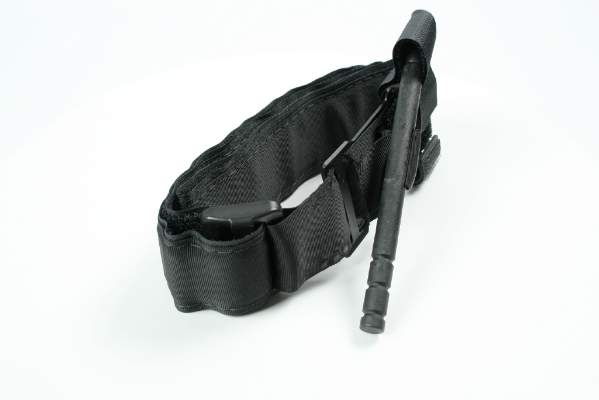
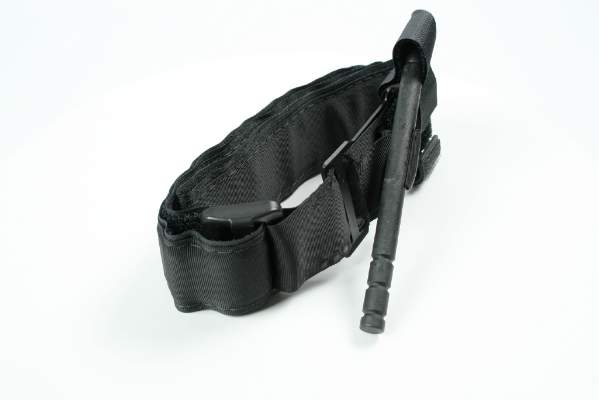
Tourniquets are important especially for civilian bombings, but fatalities in civilian mass shootings – shootings with at least four deaths in which killing is the primary aim – are from head and chest wounds, not extremity wounds. The emphasis on bleeding control overshadows public education about other simple interventions that could be more useful in shootings, according to emergency physician Dr. Reed Smith, medical director of the Arlington County (Va.) Fire Department and cofounder and cochairman of the Committee for Tactical Emergency Casualty Care (C-TECC).
“We need a civilian perspective on civilian incidents, not a military perspective,” he said at the Eastern Association for the Surgery of Trauma scientific assembly.
Dr. Smith and other C-TECC investigators reviewed autopsy reports from 12 U.S. civilian mass shootings from the period of 1996-2012. They tried to get data for more, but ran into significant resistance from authorities.
There were 371 bullet wounds and 139 deaths, an average of 2.7 wounds per victim but a range of 1-10. About 40% of deaths were from shots to the head; another 40% from shots to the chest or upper back; and the rest from shots to the face/neck, abdomen/lower back, or multiple regions.
“We looked at every one of these events, and with the exception of the Gabby Giffords Tucson shooting, no tourniquets were used. There were no cases of major peripheral vascular injury, and no fatalities from extremity exsanguination,” Dr. Smith said.
The investigators estimated that nine fatalities were potentially survivable, without injuries to the heart, brain, or major blood vessels, and definitive care available within 60 minutes. The victims died from face and torso wounds, not wounds to the limbs.
“Wounding in active-shooter events differs from combat and may require different therapeutic emphasis. Although tourniquets and external hemorrhage control techniques hold value, their role in active-shooter events may be overemphasized as a means to decrease fatality. The focus on external hemorrhage is important, but it’s not enough,” Dr. Smith said.
Additional interventions could be taught for every step in the chain of contact, from citizen to trauma surgeon, that could have greater benefit. Teachers, for instance, could be taught to roll victims on their sides and clear out their mouths to keep airways open, and to keep them warm to prevent hypothermia until help arrives. Police could learn to insert nasal airways, and occlude sucking chest wounds. Fire/EMS could start initial damage control. “Everything builds,” Dr. Smith said.
C-TECC made many recommendations for enhanced mass-causality response its 2015 Tactical Emergency Casualty Care Guidelines.
Dr. Smith had no disclosures.
SAN ANTONIO – Tourniquets are being overemphasized in preparations for mass shootings in the United States, according to a review by the Committee for Tactical Emergency Casualty Care of wounding patterns in 12 mass shootings.
Since the 2012 shootings in Newtown, Conn., efforts to improve survival have tended to emphasize tourniquets to stop bleeding from wounded limbs. The recently-launched federal “Stop the Bleed” campaign promotes public awareness of compression and tourniquets, and the American College of Surgeons and other groups recently called for public education and use of tourniquets as one of many responses to mass-casualty and active-shooter events, stating that “the most significant preventable cause of death in the prehospital environment is external hemorrhage.” There are thoughts of making tourniquets at least as common as automated external defibrillators in public settings.
The efforts are driven by combat experience in Afghanistan and Iraq, where about half of wounds were to arms and legs, and tourniquets saved many lives.
Tourniquets are important especially for civilian bombings, but fatalities in civilian mass shootings – shootings with at least four deaths in which killing is the primary aim – are from head and chest wounds, not extremity wounds. The emphasis on bleeding control overshadows public education about other simple interventions that could be more useful in shootings, according to emergency physician Dr. Reed Smith, medical director of the Arlington County (Va.) Fire Department and cofounder and cochairman of the Committee for Tactical Emergency Casualty Care (C-TECC).
“We need a civilian perspective on civilian incidents, not a military perspective,” he said at the Eastern Association for the Surgery of Trauma scientific assembly.
Dr. Smith and other C-TECC investigators reviewed autopsy reports from 12 U.S. civilian mass shootings from the period of 1996-2012. They tried to get data for more, but ran into significant resistance from authorities.
There were 371 bullet wounds and 139 deaths, an average of 2.7 wounds per victim but a range of 1-10. About 40% of deaths were from shots to the head; another 40% from shots to the chest or upper back; and the rest from shots to the face/neck, abdomen/lower back, or multiple regions.
“We looked at every one of these events, and with the exception of the Gabby Giffords Tucson shooting, no tourniquets were used. There were no cases of major peripheral vascular injury, and no fatalities from extremity exsanguination,” Dr. Smith said.
The investigators estimated that nine fatalities were potentially survivable, without injuries to the heart, brain, or major blood vessels, and definitive care available within 60 minutes. The victims died from face and torso wounds, not wounds to the limbs.
“Wounding in active-shooter events differs from combat and may require different therapeutic emphasis. Although tourniquets and external hemorrhage control techniques hold value, their role in active-shooter events may be overemphasized as a means to decrease fatality. The focus on external hemorrhage is important, but it’s not enough,” Dr. Smith said.
Additional interventions could be taught for every step in the chain of contact, from citizen to trauma surgeon, that could have greater benefit. Teachers, for instance, could be taught to roll victims on their sides and clear out their mouths to keep airways open, and to keep them warm to prevent hypothermia until help arrives. Police could learn to insert nasal airways, and occlude sucking chest wounds. Fire/EMS could start initial damage control. “Everything builds,” Dr. Smith said.
C-TECC made many recommendations for enhanced mass-causality response its 2015 Tactical Emergency Casualty Care Guidelines.
Dr. Smith had no disclosures.
SAN ANTONIO – Tourniquets are being overemphasized in preparations for mass shootings in the United States, according to a review by the Committee for Tactical Emergency Casualty Care of wounding patterns in 12 mass shootings.
Since the 2012 shootings in Newtown, Conn., efforts to improve survival have tended to emphasize tourniquets to stop bleeding from wounded limbs. The recently-launched federal “Stop the Bleed” campaign promotes public awareness of compression and tourniquets, and the American College of Surgeons and other groups recently called for public education and use of tourniquets as one of many responses to mass-casualty and active-shooter events, stating that “the most significant preventable cause of death in the prehospital environment is external hemorrhage.” There are thoughts of making tourniquets at least as common as automated external defibrillators in public settings.
The efforts are driven by combat experience in Afghanistan and Iraq, where about half of wounds were to arms and legs, and tourniquets saved many lives.
Tourniquets are important especially for civilian bombings, but fatalities in civilian mass shootings – shootings with at least four deaths in which killing is the primary aim – are from head and chest wounds, not extremity wounds. The emphasis on bleeding control overshadows public education about other simple interventions that could be more useful in shootings, according to emergency physician Dr. Reed Smith, medical director of the Arlington County (Va.) Fire Department and cofounder and cochairman of the Committee for Tactical Emergency Casualty Care (C-TECC).
“We need a civilian perspective on civilian incidents, not a military perspective,” he said at the Eastern Association for the Surgery of Trauma scientific assembly.
Dr. Smith and other C-TECC investigators reviewed autopsy reports from 12 U.S. civilian mass shootings from the period of 1996-2012. They tried to get data for more, but ran into significant resistance from authorities.
There were 371 bullet wounds and 139 deaths, an average of 2.7 wounds per victim but a range of 1-10. About 40% of deaths were from shots to the head; another 40% from shots to the chest or upper back; and the rest from shots to the face/neck, abdomen/lower back, or multiple regions.
“We looked at every one of these events, and with the exception of the Gabby Giffords Tucson shooting, no tourniquets were used. There were no cases of major peripheral vascular injury, and no fatalities from extremity exsanguination,” Dr. Smith said.
The investigators estimated that nine fatalities were potentially survivable, without injuries to the heart, brain, or major blood vessels, and definitive care available within 60 minutes. The victims died from face and torso wounds, not wounds to the limbs.
“Wounding in active-shooter events differs from combat and may require different therapeutic emphasis. Although tourniquets and external hemorrhage control techniques hold value, their role in active-shooter events may be overemphasized as a means to decrease fatality. The focus on external hemorrhage is important, but it’s not enough,” Dr. Smith said.
Additional interventions could be taught for every step in the chain of contact, from citizen to trauma surgeon, that could have greater benefit. Teachers, for instance, could be taught to roll victims on their sides and clear out their mouths to keep airways open, and to keep them warm to prevent hypothermia until help arrives. Police could learn to insert nasal airways, and occlude sucking chest wounds. Fire/EMS could start initial damage control. “Everything builds,” Dr. Smith said.
C-TECC made many recommendations for enhanced mass-causality response its 2015 Tactical Emergency Casualty Care Guidelines.
Dr. Smith had no disclosures.
AT THE EAST SCIENTIFIC ASSEMBLY
Key clinical point: Tourniquets aren’t much help in civilian mass shootings.
Major finding: There were no cases of major peripheral vascular injury, and no fatalities from extremity exsanguination in a review of 12 mass shootings in the United States from 1996-2012.
Data source: Autopsy reports.
Disclosures: The lead investigator had no disclosures.
VTE prophylaxis within 72 hours seems safe in severe TBI
SAN ANTONIO – Initiation of venous thromboembolism prophylaxis within 72 hours of severe traumatic brain injury (TBI) reduced the odds of venous thromboembolism by 50% without increasing subsequent intracranial complications or death in a large, propensity-matched cohort study from the University of Toronto.
The investigators matched 1,234 adult patients given prophylaxis before 72 hours – the early-prophylaxis (EP) group – to 1,234 given prophylaxis at 72 hours or later – the late-prophylaxis (LP) group – based on demographics, injury characteristics, intracranial lesions, early neurosurgical procedures, and prophylaxis type.

EP patients had a significantly lower rate of pulmonary embolism (1.1% vs. 2.4%; odds ratio, 0.48; 95% confidence interval, 0.25-0.91) and deep vein thrombosis (4.2% vs. 7.9%; OR, 0.51; 95% CI, 0.36-0.72), with no significant increase in the risk of death (9.8% EP vs. 9% LP; OR, 1.1; 95% CI 0.84-1.4) or late secondary craniotomy/-ectomy (EP 2.5% vs. LP 2.9%; OR, 0.86; 95% CI 0.53-1.4) or intracranial monitoring/drainage (EP 1.1% vs. LP 1.4%; OR, 0.76; 95% CI 0.37-1.6) from VTE complications or other reasons.
“Practice guidelines say we should initiate VTE [venous thromboembolism] prophylaxis” in severe TBI “as early as possible. It’s a very loose recommendation,” so some centers wait 72 hours or longer for fear of extending intracranial hemorrhages. Pending results from prospective trials, “our study lends evidence that early prophylaxis in this population may be safe,” said investigator and University of Toronto general surgery resident, Dr. James Byrne.
The study included 3,634 severe, adult TBI patients in the American College of Surgeons Trauma Quality Improvement Program database from 2012-2014. The subjects had head Abbreviated Injury Scale (AIS) scores of at least 3, Glasgow Coma Scale scores of no more than 8, and, in almost all cases, initial surgeries within 48 hours. Injury was due to blunt trauma. Patients who died or were discharged within 5 days of their injury and those with severe injuries to other body areas were excluded from the analysis.
The median time to starting VTE prophylaxis was 84 hours across the 186 trauma centers in the study, but ranged from 48-150 hours. Centers started prophylaxis within 72 hours in 18%-54% of patients. Fifty-five percent of patients had prophylaxis with low-molecular-weight heparin, and the rest with unfractionated heparin. Overall, 1.7% of patients developed pulmonary emboli, and 6.5% deep vein thromboses. Less than 3% had secondary neurosurgical interventions.
Prophylaxis was more likely to be delayed past 72 hours in patients with higher head AIS scores; subdural hematomas; subarachnoid hemorrhages; blood transfusions within 12 hours of admission; and early neurosurgery. Low-molecular-weight heparin was the more likely option past 72 hours.
Among the 114 centers who treated 10 or more patients, there was a continuous trend toward lower VTE rates with higher EP use, a rate of 9.1% in centers using EP in 18% of patients, but 6.1% in centers using it in 54% (P = .126).
The decision of when to start prophylaxis in severe TBI “still needs to be made at the patient level, but it may be safe to start earlier than 72 hours,” Dr. Byrne said.
The median age in the study was about 43 years, and three-quarters of the subjects were men. Most of the injuries were due to falls or motor vehicle crashes.
Dr. Byrne had no disclosures.
SAN ANTONIO – Initiation of venous thromboembolism prophylaxis within 72 hours of severe traumatic brain injury (TBI) reduced the odds of venous thromboembolism by 50% without increasing subsequent intracranial complications or death in a large, propensity-matched cohort study from the University of Toronto.
The investigators matched 1,234 adult patients given prophylaxis before 72 hours – the early-prophylaxis (EP) group – to 1,234 given prophylaxis at 72 hours or later – the late-prophylaxis (LP) group – based on demographics, injury characteristics, intracranial lesions, early neurosurgical procedures, and prophylaxis type.
EP patients had a significantly lower rate of pulmonary embolism (1.1% vs. 2.4%; odds ratio, 0.48; 95% confidence interval, 0.25-0.91) and deep vein thrombosis (4.2% vs. 7.9%; OR, 0.51; 95% CI, 0.36-0.72), with no significant increase in the risk of death (9.8% EP vs. 9% LP; OR, 1.1; 95% CI 0.84-1.4) or late secondary craniotomy/-ectomy (EP 2.5% vs. LP 2.9%; OR, 0.86; 95% CI 0.53-1.4) or intracranial monitoring/drainage (EP 1.1% vs. LP 1.4%; OR, 0.76; 95% CI 0.37-1.6) from VTE complications or other reasons.
“Practice guidelines say we should initiate VTE [venous thromboembolism] prophylaxis” in severe TBI “as early as possible. It’s a very loose recommendation,” so some centers wait 72 hours or longer for fear of extending intracranial hemorrhages. Pending results from prospective trials, “our study lends evidence that early prophylaxis in this population may be safe,” said investigator and University of Toronto general surgery resident, Dr. James Byrne.
The study included 3,634 severe, adult TBI patients in the American College of Surgeons Trauma Quality Improvement Program database from 2012-2014. The subjects had head Abbreviated Injury Scale (AIS) scores of at least 3, Glasgow Coma Scale scores of no more than 8, and, in almost all cases, initial surgeries within 48 hours. Injury was due to blunt trauma. Patients who died or were discharged within 5 days of their injury and those with severe injuries to other body areas were excluded from the analysis.
The median time to starting VTE prophylaxis was 84 hours across the 186 trauma centers in the study, but ranged from 48-150 hours. Centers started prophylaxis within 72 hours in 18%-54% of patients. Fifty-five percent of patients had prophylaxis with low-molecular-weight heparin, and the rest with unfractionated heparin. Overall, 1.7% of patients developed pulmonary emboli, and 6.5% deep vein thromboses. Less than 3% had secondary neurosurgical interventions.
Prophylaxis was more likely to be delayed past 72 hours in patients with higher head AIS scores; subdural hematomas; subarachnoid hemorrhages; blood transfusions within 12 hours of admission; and early neurosurgery. Low-molecular-weight heparin was the more likely option past 72 hours.
Among the 114 centers who treated 10 or more patients, there was a continuous trend toward lower VTE rates with higher EP use, a rate of 9.1% in centers using EP in 18% of patients, but 6.1% in centers using it in 54% (P = .126).
The decision of when to start prophylaxis in severe TBI “still needs to be made at the patient level, but it may be safe to start earlier than 72 hours,” Dr. Byrne said.
The median age in the study was about 43 years, and three-quarters of the subjects were men. Most of the injuries were due to falls or motor vehicle crashes.
Dr. Byrne had no disclosures.
SAN ANTONIO – Initiation of venous thromboembolism prophylaxis within 72 hours of severe traumatic brain injury (TBI) reduced the odds of venous thromboembolism by 50% without increasing subsequent intracranial complications or death in a large, propensity-matched cohort study from the University of Toronto.
The investigators matched 1,234 adult patients given prophylaxis before 72 hours – the early-prophylaxis (EP) group – to 1,234 given prophylaxis at 72 hours or later – the late-prophylaxis (LP) group – based on demographics, injury characteristics, intracranial lesions, early neurosurgical procedures, and prophylaxis type.
EP patients had a significantly lower rate of pulmonary embolism (1.1% vs. 2.4%; odds ratio, 0.48; 95% confidence interval, 0.25-0.91) and deep vein thrombosis (4.2% vs. 7.9%; OR, 0.51; 95% CI, 0.36-0.72), with no significant increase in the risk of death (9.8% EP vs. 9% LP; OR, 1.1; 95% CI 0.84-1.4) or late secondary craniotomy/-ectomy (EP 2.5% vs. LP 2.9%; OR, 0.86; 95% CI 0.53-1.4) or intracranial monitoring/drainage (EP 1.1% vs. LP 1.4%; OR, 0.76; 95% CI 0.37-1.6) from VTE complications or other reasons.
“Practice guidelines say we should initiate VTE [venous thromboembolism] prophylaxis” in severe TBI “as early as possible. It’s a very loose recommendation,” so some centers wait 72 hours or longer for fear of extending intracranial hemorrhages. Pending results from prospective trials, “our study lends evidence that early prophylaxis in this population may be safe,” said investigator and University of Toronto general surgery resident, Dr. James Byrne.
The study included 3,634 severe, adult TBI patients in the American College of Surgeons Trauma Quality Improvement Program database from 2012-2014. The subjects had head Abbreviated Injury Scale (AIS) scores of at least 3, Glasgow Coma Scale scores of no more than 8, and, in almost all cases, initial surgeries within 48 hours. Injury was due to blunt trauma. Patients who died or were discharged within 5 days of their injury and those with severe injuries to other body areas were excluded from the analysis.
The median time to starting VTE prophylaxis was 84 hours across the 186 trauma centers in the study, but ranged from 48-150 hours. Centers started prophylaxis within 72 hours in 18%-54% of patients. Fifty-five percent of patients had prophylaxis with low-molecular-weight heparin, and the rest with unfractionated heparin. Overall, 1.7% of patients developed pulmonary emboli, and 6.5% deep vein thromboses. Less than 3% had secondary neurosurgical interventions.
Prophylaxis was more likely to be delayed past 72 hours in patients with higher head AIS scores; subdural hematomas; subarachnoid hemorrhages; blood transfusions within 12 hours of admission; and early neurosurgery. Low-molecular-weight heparin was the more likely option past 72 hours.
Among the 114 centers who treated 10 or more patients, there was a continuous trend toward lower VTE rates with higher EP use, a rate of 9.1% in centers using EP in 18% of patients, but 6.1% in centers using it in 54% (P = .126).
The decision of when to start prophylaxis in severe TBI “still needs to be made at the patient level, but it may be safe to start earlier than 72 hours,” Dr. Byrne said.
The median age in the study was about 43 years, and three-quarters of the subjects were men. Most of the injuries were due to falls or motor vehicle crashes.
Dr. Byrne had no disclosures.
AT THE EAST SCIENTIFIC ASSEMBLY
Key clinical point: VTE prophylaxis within 72 hours appears to be safe in patients with TBI.
Major finding: Patients who had prophylaxis within 72 hours had a significantly lower rate of pulmonary embolism, compared with those started later (1.1% vs. 2.4%); and deep vein thrombosis (4.2% vs. 7.9%).
Data source: More than 2,000 patients in a propensity-matched cohort study from the University of Toronto.
Disclosures: Dr. Byrne had no disclosures.

Surgeons dinged by incomplete risk adjustment for emergency cases
SAN ANTONIO – Perioperative risk factors affect postoperative morbidity and mortality differently in emergency and nonemergency surgery, according to an analysis of the ACS National Surgical Quality Improvement Program (ACS NSQIP) database by investigators from Massachusetts General Hospital, Boston.
“Instead of using the same risk-adjustment model for both ... as is currently being done, our findings strongly suggest the need to benchmark emergent and elective surgeries separately,” they concluded.
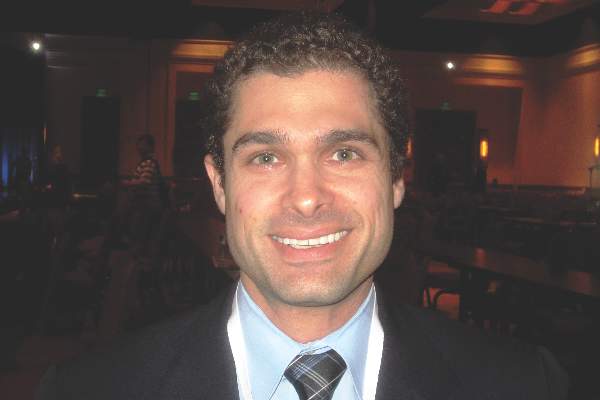
“Most risk-adjustment models simply have an on/off switch for whether or not the patient underwent emergency surgery and treat comorbidities and other perioperative variables the same.” Those variables, however, “don’t behave the same way in emergency surgery,” said investigator Dr. Jordan Bohnen, a surgical research resident at Mass General.
Because risk adjustment doesn’t take into account variables that have a particularly strong negative impact in emergency settings, acute care surgeons are getting “unnecessarily dinged for having higher complication rates,” he said at the Eastern Association for the Surgery of Trauma scientific assembly.
For example, the team found that preop transfusions and white blood counts (WBC) at or below 4.5 carry a significantly higher risk of 30-day major morbidity or mortality (MMM) in emergency versus nonemergency surgery. Conversely, ascites, preop anemia, and leukocytosis carry a greater MMM risk in nonemergent cases.
The findings come from a comparison of 110,182 nonemergent surgeries to 59,949 emergency cases – generally meaning surgery within 12 hours of emergency department (ED) admission – from the NSQIP database for 2011-2012.
As expected, the overall risk of MMM was significantly higher for emergency cases (16.75% vs. 9.73%; P less than .001), and four procedures – laparoscopic cholecystectomy, exploratory laparotomy, and umbilical and incisional hernia repairs – were relatively riskier when done emergently.
“As surgical quality improvement efforts mature, it’s increasingly important to apply accurate risk-adjustment models to benchmark quality improvement for surgeons, hospitals, and health care systems.” The current “assumption that perioperative variables have an equal impact on outcomes in emergent and nonemergent settings” is incorrect. “Risk factors for bad outcomes change depending on the setting,” Dr. Bohnen said.
Dr. Bohnen has no disclosures.
SAN ANTONIO – Perioperative risk factors affect postoperative morbidity and mortality differently in emergency and nonemergency surgery, according to an analysis of the ACS National Surgical Quality Improvement Program (ACS NSQIP) database by investigators from Massachusetts General Hospital, Boston.
“Instead of using the same risk-adjustment model for both ... as is currently being done, our findings strongly suggest the need to benchmark emergent and elective surgeries separately,” they concluded.
“Most risk-adjustment models simply have an on/off switch for whether or not the patient underwent emergency surgery and treat comorbidities and other perioperative variables the same.” Those variables, however, “don’t behave the same way in emergency surgery,” said investigator Dr. Jordan Bohnen, a surgical research resident at Mass General.
Because risk adjustment doesn’t take into account variables that have a particularly strong negative impact in emergency settings, acute care surgeons are getting “unnecessarily dinged for having higher complication rates,” he said at the Eastern Association for the Surgery of Trauma scientific assembly.
For example, the team found that preop transfusions and white blood counts (WBC) at or below 4.5 carry a significantly higher risk of 30-day major morbidity or mortality (MMM) in emergency versus nonemergency surgery. Conversely, ascites, preop anemia, and leukocytosis carry a greater MMM risk in nonemergent cases.
The findings come from a comparison of 110,182 nonemergent surgeries to 59,949 emergency cases – generally meaning surgery within 12 hours of emergency department (ED) admission – from the NSQIP database for 2011-2012.
As expected, the overall risk of MMM was significantly higher for emergency cases (16.75% vs. 9.73%; P less than .001), and four procedures – laparoscopic cholecystectomy, exploratory laparotomy, and umbilical and incisional hernia repairs – were relatively riskier when done emergently.
“As surgical quality improvement efforts mature, it’s increasingly important to apply accurate risk-adjustment models to benchmark quality improvement for surgeons, hospitals, and health care systems.” The current “assumption that perioperative variables have an equal impact on outcomes in emergent and nonemergent settings” is incorrect. “Risk factors for bad outcomes change depending on the setting,” Dr. Bohnen said.
Dr. Bohnen has no disclosures.
SAN ANTONIO – Perioperative risk factors affect postoperative morbidity and mortality differently in emergency and nonemergency surgery, according to an analysis of the ACS National Surgical Quality Improvement Program (ACS NSQIP) database by investigators from Massachusetts General Hospital, Boston.
“Instead of using the same risk-adjustment model for both ... as is currently being done, our findings strongly suggest the need to benchmark emergent and elective surgeries separately,” they concluded.
“Most risk-adjustment models simply have an on/off switch for whether or not the patient underwent emergency surgery and treat comorbidities and other perioperative variables the same.” Those variables, however, “don’t behave the same way in emergency surgery,” said investigator Dr. Jordan Bohnen, a surgical research resident at Mass General.
Because risk adjustment doesn’t take into account variables that have a particularly strong negative impact in emergency settings, acute care surgeons are getting “unnecessarily dinged for having higher complication rates,” he said at the Eastern Association for the Surgery of Trauma scientific assembly.
For example, the team found that preop transfusions and white blood counts (WBC) at or below 4.5 carry a significantly higher risk of 30-day major morbidity or mortality (MMM) in emergency versus nonemergency surgery. Conversely, ascites, preop anemia, and leukocytosis carry a greater MMM risk in nonemergent cases.
The findings come from a comparison of 110,182 nonemergent surgeries to 59,949 emergency cases – generally meaning surgery within 12 hours of emergency department (ED) admission – from the NSQIP database for 2011-2012.
As expected, the overall risk of MMM was significantly higher for emergency cases (16.75% vs. 9.73%; P less than .001), and four procedures – laparoscopic cholecystectomy, exploratory laparotomy, and umbilical and incisional hernia repairs – were relatively riskier when done emergently.
“As surgical quality improvement efforts mature, it’s increasingly important to apply accurate risk-adjustment models to benchmark quality improvement for surgeons, hospitals, and health care systems.” The current “assumption that perioperative variables have an equal impact on outcomes in emergent and nonemergent settings” is incorrect. “Risk factors for bad outcomes change depending on the setting,” Dr. Bohnen said.
Dr. Bohnen has no disclosures.
AT THE EAST SCIENTIFIC ASSEMBLY
Key clinical point: Emergent and elective surgeries need to be benchmarked separately.
Major finding: Preop transfusions and WBC counts at or below 4.5 carry a significantly higher risk of 30-day major morbidity or mortality (MMM) in emergency surgery. Conversely, ascites, preop anemia, and leukocytosis carry a greater MMM risk in nonemergent cases.
Data source: More than 170,000 cases in the NSQIP database
Disclosures: The presenter has no disclosures.
Doctors to APM committee: Remember specialists
Physicians are calling on a new federal advisory committee to be sure to include specialists in the coming value-based alternative payment models.
Created by the Medicare Access and CHIP Reauthorization Act of 2015 (MACRA), the Physician-Focused Payment Model Technical Advisory Committee (PTAC) is charged with providing comments and recommendations on physician payment models to the Health & Human Services department. At the committee’s first meeting on Feb. 1, members heard from a number of physician associations that expressed disappointment about the role of specialists in current value-based payment models and requested more attention as new models move forward.
“We believe [the Centers for Medicare & Medicaid Services] needs to allow for the widest range of innovative ideas to ensure the greatest number of physicians are not only able to participate, but succeed in future payment models,” said Jenna Kappel, health policy director for the American Academy of Otolaryngology–Head and Neck Surgery. “We are hopeful there will be opportunities for specialists to participate and thrive in [alternative payment models] in the future. However, the current CMS definition of an alternative payment entity provides very limited opportunities for models that include the participation of specialists.”
The American College of Emergency Physicians concurred.
“There have been a significant number of [Center for Medicare & Medicaid Innovation] grants and state Medicaid proposals that include an emergency department [ED] visit as a failure metric,” said Barbara Tomar, federal affairs director for ACEP. “We understand that to a certain point ... but there are always going to be a proportion of patients [who] have serious diseases or conditions that will have exacerbations, and they’re going to land in the ED. This really should be acknowledged in a lot of the alternative payment models.”
Committee members acknowledged concerns about APMs and outlined goals for developing an effective proposal review process.
“We need to involve everybody in developing innovative payment models that do away with all frustration that physicians are currently experiencing and get to better results and higher value,” said committee member Robert A. Berenson, an internist and former vice chair of the Medicare Payment Advisory Commission. “At the same time, these payment models not only have to be elegant in their conception, but they have to be operationally and administratively feasible. ... They need to be such that most payers can adopt them, not simply CMS or Medicare or a state Medicaid agency,” Dr. Berenson said.
Transparency, inclusion, and education are primary aims of the committee, said committee member Dr. Kavita Patel, an internist and senior fellow at the Brookings Institution, Washington.
“Part of my responsibility, having looked at other payment models as well as the trials and tribulations of not just the practicing clinician, but the practicing team is [considering] how the team is going to adapt and learn and strive in this environment,” Dr. Patel said. “So much of what we try to do is think about the financial incentives. We also need to think about what are we asking clinicians to measure? What are we asking patients and families to report on and how do we have the two align?”
Officials at the CMS Innovation Center have said that proposed APMs will be submitted first to PTAC for recommendations and then will go to HHS. The Secretary will make comments about the proposals on the CMS website, followed by testing consideration. Potential evaluation factors include the strength of the evidence base, the potential for cost savings, the probability of model success, feasibility, scalability, and demographic, clinical, and geographic diversity.
“Obviously, we’re not looking for slam dunk data that say it always will be effective because if it were, we wouldn’t need to do the test, but we need some evidence that this is potentially a worthwhile investment,” said Dr. Hoangmai H. Pham, director of accountable care programs at the CMS Innovation Center.
CMS officials stressed that models should be designed as broadly as possible. A proposal can include multiple interventions, but should include a similar theme, procedure, or condition to address.
“It gives us the opportunity to find efficiencies,” Dr. Pham said. “It’s much easier to have one model with multiple tracks that you can ask one application contractor to handle as opposed to six. Much easier to ask for all the payment shared system changes in 1 change request rather than 32. That’s another reason we would urge you to favor comprehensive models.”
CMS officials plan to issue a proposed rule on APMs in April and a final rule Nov. 1.
On Twitter @legal_med
Physicians are calling on a new federal advisory committee to be sure to include specialists in the coming value-based alternative payment models.
Created by the Medicare Access and CHIP Reauthorization Act of 2015 (MACRA), the Physician-Focused Payment Model Technical Advisory Committee (PTAC) is charged with providing comments and recommendations on physician payment models to the Health & Human Services department. At the committee’s first meeting on Feb. 1, members heard from a number of physician associations that expressed disappointment about the role of specialists in current value-based payment models and requested more attention as new models move forward.
“We believe [the Centers for Medicare & Medicaid Services] needs to allow for the widest range of innovative ideas to ensure the greatest number of physicians are not only able to participate, but succeed in future payment models,” said Jenna Kappel, health policy director for the American Academy of Otolaryngology–Head and Neck Surgery. “We are hopeful there will be opportunities for specialists to participate and thrive in [alternative payment models] in the future. However, the current CMS definition of an alternative payment entity provides very limited opportunities for models that include the participation of specialists.”
The American College of Emergency Physicians concurred.
“There have been a significant number of [Center for Medicare & Medicaid Innovation] grants and state Medicaid proposals that include an emergency department [ED] visit as a failure metric,” said Barbara Tomar, federal affairs director for ACEP. “We understand that to a certain point ... but there are always going to be a proportion of patients [who] have serious diseases or conditions that will have exacerbations, and they’re going to land in the ED. This really should be acknowledged in a lot of the alternative payment models.”
Committee members acknowledged concerns about APMs and outlined goals for developing an effective proposal review process.
“We need to involve everybody in developing innovative payment models that do away with all frustration that physicians are currently experiencing and get to better results and higher value,” said committee member Robert A. Berenson, an internist and former vice chair of the Medicare Payment Advisory Commission. “At the same time, these payment models not only have to be elegant in their conception, but they have to be operationally and administratively feasible. ... They need to be such that most payers can adopt them, not simply CMS or Medicare or a state Medicaid agency,” Dr. Berenson said.
Transparency, inclusion, and education are primary aims of the committee, said committee member Dr. Kavita Patel, an internist and senior fellow at the Brookings Institution, Washington.
“Part of my responsibility, having looked at other payment models as well as the trials and tribulations of not just the practicing clinician, but the practicing team is [considering] how the team is going to adapt and learn and strive in this environment,” Dr. Patel said. “So much of what we try to do is think about the financial incentives. We also need to think about what are we asking clinicians to measure? What are we asking patients and families to report on and how do we have the two align?”
Officials at the CMS Innovation Center have said that proposed APMs will be submitted first to PTAC for recommendations and then will go to HHS. The Secretary will make comments about the proposals on the CMS website, followed by testing consideration. Potential evaluation factors include the strength of the evidence base, the potential for cost savings, the probability of model success, feasibility, scalability, and demographic, clinical, and geographic diversity.
“Obviously, we’re not looking for slam dunk data that say it always will be effective because if it were, we wouldn’t need to do the test, but we need some evidence that this is potentially a worthwhile investment,” said Dr. Hoangmai H. Pham, director of accountable care programs at the CMS Innovation Center.
CMS officials stressed that models should be designed as broadly as possible. A proposal can include multiple interventions, but should include a similar theme, procedure, or condition to address.
“It gives us the opportunity to find efficiencies,” Dr. Pham said. “It’s much easier to have one model with multiple tracks that you can ask one application contractor to handle as opposed to six. Much easier to ask for all the payment shared system changes in 1 change request rather than 32. That’s another reason we would urge you to favor comprehensive models.”
CMS officials plan to issue a proposed rule on APMs in April and a final rule Nov. 1.
On Twitter @legal_med
Physicians are calling on a new federal advisory committee to be sure to include specialists in the coming value-based alternative payment models.
Created by the Medicare Access and CHIP Reauthorization Act of 2015 (MACRA), the Physician-Focused Payment Model Technical Advisory Committee (PTAC) is charged with providing comments and recommendations on physician payment models to the Health & Human Services department. At the committee’s first meeting on Feb. 1, members heard from a number of physician associations that expressed disappointment about the role of specialists in current value-based payment models and requested more attention as new models move forward.
“We believe [the Centers for Medicare & Medicaid Services] needs to allow for the widest range of innovative ideas to ensure the greatest number of physicians are not only able to participate, but succeed in future payment models,” said Jenna Kappel, health policy director for the American Academy of Otolaryngology–Head and Neck Surgery. “We are hopeful there will be opportunities for specialists to participate and thrive in [alternative payment models] in the future. However, the current CMS definition of an alternative payment entity provides very limited opportunities for models that include the participation of specialists.”
The American College of Emergency Physicians concurred.
“There have been a significant number of [Center for Medicare & Medicaid Innovation] grants and state Medicaid proposals that include an emergency department [ED] visit as a failure metric,” said Barbara Tomar, federal affairs director for ACEP. “We understand that to a certain point ... but there are always going to be a proportion of patients [who] have serious diseases or conditions that will have exacerbations, and they’re going to land in the ED. This really should be acknowledged in a lot of the alternative payment models.”
Committee members acknowledged concerns about APMs and outlined goals for developing an effective proposal review process.
“We need to involve everybody in developing innovative payment models that do away with all frustration that physicians are currently experiencing and get to better results and higher value,” said committee member Robert A. Berenson, an internist and former vice chair of the Medicare Payment Advisory Commission. “At the same time, these payment models not only have to be elegant in their conception, but they have to be operationally and administratively feasible. ... They need to be such that most payers can adopt them, not simply CMS or Medicare or a state Medicaid agency,” Dr. Berenson said.
Transparency, inclusion, and education are primary aims of the committee, said committee member Dr. Kavita Patel, an internist and senior fellow at the Brookings Institution, Washington.
“Part of my responsibility, having looked at other payment models as well as the trials and tribulations of not just the practicing clinician, but the practicing team is [considering] how the team is going to adapt and learn and strive in this environment,” Dr. Patel said. “So much of what we try to do is think about the financial incentives. We also need to think about what are we asking clinicians to measure? What are we asking patients and families to report on and how do we have the two align?”
Officials at the CMS Innovation Center have said that proposed APMs will be submitted first to PTAC for recommendations and then will go to HHS. The Secretary will make comments about the proposals on the CMS website, followed by testing consideration. Potential evaluation factors include the strength of the evidence base, the potential for cost savings, the probability of model success, feasibility, scalability, and demographic, clinical, and geographic diversity.
“Obviously, we’re not looking for slam dunk data that say it always will be effective because if it were, we wouldn’t need to do the test, but we need some evidence that this is potentially a worthwhile investment,” said Dr. Hoangmai H. Pham, director of accountable care programs at the CMS Innovation Center.
CMS officials stressed that models should be designed as broadly as possible. A proposal can include multiple interventions, but should include a similar theme, procedure, or condition to address.
“It gives us the opportunity to find efficiencies,” Dr. Pham said. “It’s much easier to have one model with multiple tracks that you can ask one application contractor to handle as opposed to six. Much easier to ask for all the payment shared system changes in 1 change request rather than 32. That’s another reason we would urge you to favor comprehensive models.”
CMS officials plan to issue a proposed rule on APMs in April and a final rule Nov. 1.
On Twitter @legal_med
Shorter hours, longer breaks for surgery residents not shown to improve patient outcomes
JACKSONVILLE, FLA. – Accreditation Council for Graduate Medical Education (ACGME) rules that shortened surgery resident shifts and expanded breaks didn’t improve patient safety or surgery resident well-being in a trial presented at the Association for Academic Surgery/Society of University Surgeons Academic Surgical Congress.
“This national, prospective, randomized trial showed that flexible, less-restrictive duty-hour policies for surgical residents were noninferior to standard ACGME duty-hour policies,” wrote Dr. Karl Bilimoria, associate surgery professor at Northwestern University, Chicago, and associates. The work was published simultaneously Feb. 2 in the New England Journal of Medicine (doi: 10.1056/NEJMoa1515724).

Recent ACGME residency reforms were meant to reduce fatigue-related errors, but there have been concerns that they have come at the cost of increased handoffs and reduced education.
To get a handle on the situation, the investigators randomized 59 teaching-hospital surgery programs to standard ACGME duty hours and 58 others to a freer approach in the 2014-2015 academic year. Residents weren’t allowed to work more than 80 hours per week in either group, but hospitals in the flexible-hour arm were allowed to push residents past ACGME policy, working first-year residents longer than 16 hours per shift and others more than 28 hours, with breaks of less than 14 hours after 24-hour shifts and less than 8-10 hours after shorter ones.
Among the 138,691 adult general surgery cases during the academic year, there was no increase in 30-day rates of postoperative deaths or serious complications in the flexible group (9.1% vs. 9.0% with standard policy, P = .92) or secondary postoperative outcomes, based on risk-adjusted data from the American College of Surgeons’ National Surgical Quality Improvement Program (ACS NSQIP).
The 4,330 residents in the study filled out a multiple-choice questionnaire midway through the project in January 2015. Those in the flexible group said they weren’t significantly unhappier with the quality of their education (11.0% vs. 10.7% in the standard group, P = .86) or well-being (14.9% and 12.0%, P = .10). The investigators didn’t report the lengths of shifts or breaks.
There were no significant differences in resident-reported perceptions of fatigue on personal or patient safety. Residents in the flexible group were less likely to report leaving an operation (7.0% vs. 13.2%, P less than .001) or handing off patients with active issues (32% vs. 46.3%, P less than .001).
Flexible duty-hour residents “noted numerous benefits with respect to nearly all aspects of patient safety, continuity of care, surgical training, and professionalism. However, residents reported that less-restrictive duty-hour policies had a negative effect on [their] time with family and friends, time for extracurricular activities, rest, and health. Importantly … residents’ satisfaction with overall well-being did not differ significantly between study groups,” Dr. Karl Bilimoria and associates concluded.
The investigators “did not specifically collect data on needle sticks and car accidents, because these are notoriously challenging outcomes to capture in surveys,” they noted.
In an interview, Dr. Bilimoria commented, “Increasingly over time we’ve had more regulations of duty hours, and with each set of regulations the surgical community became increasingly concerned about patient handoffs and continuity of care, so our focus was to identify those policies that we thought affected continuity of care and work with the ACGME to waive those for the centers that were in the flexible arm of the study.”
His comments on the impact on residents: “The residents very clearly noted that the flexible policy arm provided better continuity of care, allowed them to take care of their patients in a way that they wanted to and stay with their patients in the operating room and at times when their patients were unstable.”
When asked if the findings could be extrapolated to these smaller nonparticipating centers, Dr. Bilimoria responded, “We captured the majority of residents, and we’re working on an analysis now that seeks to understand what the generalizability would be to those nonparticipating programs. That will be fairly enlightening as well.”
“95% of eligible programs participated in the trial, showing overwhelming support from the community for bringing high level data to this question. There had never before been a randomized trial nationally on this topic and for understanding and testing the notion of flexibility. They saw a need for both of those things.”
ACGME paid for the work, along with the American Board of Surgery and the American College of Surgeons. Dr. Bilimoria and five other authors reported payments from ACGME and the other entities.
UPDATE: This story was updated 2/2/16
What do the results of [this] trial mean for ACGME policy on resident duty hours? The authors conclude, as will many surgeons, that surgical training programs should be afforded more flexibility in applying work-hour rules. This interpretation implicitly places the burden of proof on the ACGME. Thus, because the [trial] found no evidence that removing restrictions on resident shift length and time off between shifts was harmful to patients, programs should have more autonomy to train residents as they choose.
I reach a different conclusion. The [trial] effectively debunks concerns that patients will suffer as a result of increased handoffs and breaks in the continuity of care. Rather than backtrack on the ACGME duty-hour rules, surgical leaders should focus on developing safe, resilient health systems that do not depend on overworked resident physicians. They also should recognize the changing expectations of postmillennial learners. To many current residents and medical students, 80-hour (or even 72-hour) work weeks and 24-hour shifts probably seem long enough. Although few surgical residents would ever acknowledge this publicly, I’m sure that many love to hear, “We can take care of this case without you. Go home, see your family, and come in fresh tomorrow.”
Dr. John Birkmeyer is professor of surgery at the Geisel School of Medicine at Dartmouth in Hanover, N.H. He wasn’t involved in the study; his comments appeared in an editorial (N Eng J Med. 2016 Feb 2. doi: 10.1056/NEJMe1516572).
What do the results of [this] trial mean for ACGME policy on resident duty hours? The authors conclude, as will many surgeons, that surgical training programs should be afforded more flexibility in applying work-hour rules. This interpretation implicitly places the burden of proof on the ACGME. Thus, because the [trial] found no evidence that removing restrictions on resident shift length and time off between shifts was harmful to patients, programs should have more autonomy to train residents as they choose.
I reach a different conclusion. The [trial] effectively debunks concerns that patients will suffer as a result of increased handoffs and breaks in the continuity of care. Rather than backtrack on the ACGME duty-hour rules, surgical leaders should focus on developing safe, resilient health systems that do not depend on overworked resident physicians. They also should recognize the changing expectations of postmillennial learners. To many current residents and medical students, 80-hour (or even 72-hour) work weeks and 24-hour shifts probably seem long enough. Although few surgical residents would ever acknowledge this publicly, I’m sure that many love to hear, “We can take care of this case without you. Go home, see your family, and come in fresh tomorrow.”
Dr. John Birkmeyer is professor of surgery at the Geisel School of Medicine at Dartmouth in Hanover, N.H. He wasn’t involved in the study; his comments appeared in an editorial (N Eng J Med. 2016 Feb 2. doi: 10.1056/NEJMe1516572).
What do the results of [this] trial mean for ACGME policy on resident duty hours? The authors conclude, as will many surgeons, that surgical training programs should be afforded more flexibility in applying work-hour rules. This interpretation implicitly places the burden of proof on the ACGME. Thus, because the [trial] found no evidence that removing restrictions on resident shift length and time off between shifts was harmful to patients, programs should have more autonomy to train residents as they choose.
I reach a different conclusion. The [trial] effectively debunks concerns that patients will suffer as a result of increased handoffs and breaks in the continuity of care. Rather than backtrack on the ACGME duty-hour rules, surgical leaders should focus on developing safe, resilient health systems that do not depend on overworked resident physicians. They also should recognize the changing expectations of postmillennial learners. To many current residents and medical students, 80-hour (or even 72-hour) work weeks and 24-hour shifts probably seem long enough. Although few surgical residents would ever acknowledge this publicly, I’m sure that many love to hear, “We can take care of this case without you. Go home, see your family, and come in fresh tomorrow.”
Dr. John Birkmeyer is professor of surgery at the Geisel School of Medicine at Dartmouth in Hanover, N.H. He wasn’t involved in the study; his comments appeared in an editorial (N Eng J Med. 2016 Feb 2. doi: 10.1056/NEJMe1516572).
JACKSONVILLE, FLA. – Accreditation Council for Graduate Medical Education (ACGME) rules that shortened surgery resident shifts and expanded breaks didn’t improve patient safety or surgery resident well-being in a trial presented at the Association for Academic Surgery/Society of University Surgeons Academic Surgical Congress.
“This national, prospective, randomized trial showed that flexible, less-restrictive duty-hour policies for surgical residents were noninferior to standard ACGME duty-hour policies,” wrote Dr. Karl Bilimoria, associate surgery professor at Northwestern University, Chicago, and associates. The work was published simultaneously Feb. 2 in the New England Journal of Medicine (doi: 10.1056/NEJMoa1515724).
Recent ACGME residency reforms were meant to reduce fatigue-related errors, but there have been concerns that they have come at the cost of increased handoffs and reduced education.
To get a handle on the situation, the investigators randomized 59 teaching-hospital surgery programs to standard ACGME duty hours and 58 others to a freer approach in the 2014-2015 academic year. Residents weren’t allowed to work more than 80 hours per week in either group, but hospitals in the flexible-hour arm were allowed to push residents past ACGME policy, working first-year residents longer than 16 hours per shift and others more than 28 hours, with breaks of less than 14 hours after 24-hour shifts and less than 8-10 hours after shorter ones.
Among the 138,691 adult general surgery cases during the academic year, there was no increase in 30-day rates of postoperative deaths or serious complications in the flexible group (9.1% vs. 9.0% with standard policy, P = .92) or secondary postoperative outcomes, based on risk-adjusted data from the American College of Surgeons’ National Surgical Quality Improvement Program (ACS NSQIP).
The 4,330 residents in the study filled out a multiple-choice questionnaire midway through the project in January 2015. Those in the flexible group said they weren’t significantly unhappier with the quality of their education (11.0% vs. 10.7% in the standard group, P = .86) or well-being (14.9% and 12.0%, P = .10). The investigators didn’t report the lengths of shifts or breaks.
There were no significant differences in resident-reported perceptions of fatigue on personal or patient safety. Residents in the flexible group were less likely to report leaving an operation (7.0% vs. 13.2%, P less than .001) or handing off patients with active issues (32% vs. 46.3%, P less than .001).
Flexible duty-hour residents “noted numerous benefits with respect to nearly all aspects of patient safety, continuity of care, surgical training, and professionalism. However, residents reported that less-restrictive duty-hour policies had a negative effect on [their] time with family and friends, time for extracurricular activities, rest, and health. Importantly … residents’ satisfaction with overall well-being did not differ significantly between study groups,” Dr. Karl Bilimoria and associates concluded.
The investigators “did not specifically collect data on needle sticks and car accidents, because these are notoriously challenging outcomes to capture in surveys,” they noted.
In an interview, Dr. Bilimoria commented, “Increasingly over time we’ve had more regulations of duty hours, and with each set of regulations the surgical community became increasingly concerned about patient handoffs and continuity of care, so our focus was to identify those policies that we thought affected continuity of care and work with the ACGME to waive those for the centers that were in the flexible arm of the study.”
His comments on the impact on residents: “The residents very clearly noted that the flexible policy arm provided better continuity of care, allowed them to take care of their patients in a way that they wanted to and stay with their patients in the operating room and at times when their patients were unstable.”
When asked if the findings could be extrapolated to these smaller nonparticipating centers, Dr. Bilimoria responded, “We captured the majority of residents, and we’re working on an analysis now that seeks to understand what the generalizability would be to those nonparticipating programs. That will be fairly enlightening as well.”
“95% of eligible programs participated in the trial, showing overwhelming support from the community for bringing high level data to this question. There had never before been a randomized trial nationally on this topic and for understanding and testing the notion of flexibility. They saw a need for both of those things.”
ACGME paid for the work, along with the American Board of Surgery and the American College of Surgeons. Dr. Bilimoria and five other authors reported payments from ACGME and the other entities.
UPDATE: This story was updated 2/2/16
JACKSONVILLE, FLA. – Accreditation Council for Graduate Medical Education (ACGME) rules that shortened surgery resident shifts and expanded breaks didn’t improve patient safety or surgery resident well-being in a trial presented at the Association for Academic Surgery/Society of University Surgeons Academic Surgical Congress.
“This national, prospective, randomized trial showed that flexible, less-restrictive duty-hour policies for surgical residents were noninferior to standard ACGME duty-hour policies,” wrote Dr. Karl Bilimoria, associate surgery professor at Northwestern University, Chicago, and associates. The work was published simultaneously Feb. 2 in the New England Journal of Medicine (doi: 10.1056/NEJMoa1515724).
Recent ACGME residency reforms were meant to reduce fatigue-related errors, but there have been concerns that they have come at the cost of increased handoffs and reduced education.
To get a handle on the situation, the investigators randomized 59 teaching-hospital surgery programs to standard ACGME duty hours and 58 others to a freer approach in the 2014-2015 academic year. Residents weren’t allowed to work more than 80 hours per week in either group, but hospitals in the flexible-hour arm were allowed to push residents past ACGME policy, working first-year residents longer than 16 hours per shift and others more than 28 hours, with breaks of less than 14 hours after 24-hour shifts and less than 8-10 hours after shorter ones.
Among the 138,691 adult general surgery cases during the academic year, there was no increase in 30-day rates of postoperative deaths or serious complications in the flexible group (9.1% vs. 9.0% with standard policy, P = .92) or secondary postoperative outcomes, based on risk-adjusted data from the American College of Surgeons’ National Surgical Quality Improvement Program (ACS NSQIP).
The 4,330 residents in the study filled out a multiple-choice questionnaire midway through the project in January 2015. Those in the flexible group said they weren’t significantly unhappier with the quality of their education (11.0% vs. 10.7% in the standard group, P = .86) or well-being (14.9% and 12.0%, P = .10). The investigators didn’t report the lengths of shifts or breaks.
There were no significant differences in resident-reported perceptions of fatigue on personal or patient safety. Residents in the flexible group were less likely to report leaving an operation (7.0% vs. 13.2%, P less than .001) or handing off patients with active issues (32% vs. 46.3%, P less than .001).
Flexible duty-hour residents “noted numerous benefits with respect to nearly all aspects of patient safety, continuity of care, surgical training, and professionalism. However, residents reported that less-restrictive duty-hour policies had a negative effect on [their] time with family and friends, time for extracurricular activities, rest, and health. Importantly … residents’ satisfaction with overall well-being did not differ significantly between study groups,” Dr. Karl Bilimoria and associates concluded.
The investigators “did not specifically collect data on needle sticks and car accidents, because these are notoriously challenging outcomes to capture in surveys,” they noted.
In an interview, Dr. Bilimoria commented, “Increasingly over time we’ve had more regulations of duty hours, and with each set of regulations the surgical community became increasingly concerned about patient handoffs and continuity of care, so our focus was to identify those policies that we thought affected continuity of care and work with the ACGME to waive those for the centers that were in the flexible arm of the study.”
His comments on the impact on residents: “The residents very clearly noted that the flexible policy arm provided better continuity of care, allowed them to take care of their patients in a way that they wanted to and stay with their patients in the operating room and at times when their patients were unstable.”
When asked if the findings could be extrapolated to these smaller nonparticipating centers, Dr. Bilimoria responded, “We captured the majority of residents, and we’re working on an analysis now that seeks to understand what the generalizability would be to those nonparticipating programs. That will be fairly enlightening as well.”
“95% of eligible programs participated in the trial, showing overwhelming support from the community for bringing high level data to this question. There had never before been a randomized trial nationally on this topic and for understanding and testing the notion of flexibility. They saw a need for both of those things.”
ACGME paid for the work, along with the American Board of Surgery and the American College of Surgeons. Dr. Bilimoria and five other authors reported payments from ACGME and the other entities.
UPDATE: This story was updated 2/2/16
AT THE ACADEMIC SURGICAL CONGRESS
Key clinical point: Patient outcome were not affected by the duty hours of general surgery residents.
Major finding: There was no increase in 30-day rates of postoperative deaths or serious complications when residents exceeded Accreditation Council for Graduate Medical Education (ACGME) hours (9.1% vs. 9.0% for residents not going beyond ACGME policy, P = .92).
Data source: 1-year randomized trial of 117 general surgery residency programs in the United States.
Disclosures: ACGME paid for the work, along with the American Board of Surgery and the American College of Surgeons. The lead author and five others reported payments from those groups.

Appendicitis, antibiotics, and surgery: An evolving trilogy
Appendicitis is the most common surgical emergency in children. It is seen at all ages; however, it is less common in infants and toddlers younger than 4 years of age and peaks at an incidence of 25/100,000 in children 12- to 18-years-old. Fortunately, appendicitis is rarely fatal but can be associated with significant morbidity, especially in young children in whom the diagnosis is often delayed and perforation is more common. Reducing morbidity requires early diagnosis and optimizing management such that perforation and associated peritonitis are prevented.
The classical signs and symptoms of appendicitis are periumbilical pain migrating to the right lower quadrant, nausea, and low-grade fever. Presentation may vary if the location of the appendix is atypical, but primarily is age associated. In young children, abdominal distension, hip pain with or without limp, and fever are commonplace. In older children, right lower quadrant abdominal pain that intensifies with coughing or movement is frequent. Localized tenderness also appears to be age related; right lower quadrant tenderness and rebound are more often found in older children and adolescents, whereas younger children have more diffuse signs.

When I started my career, abdominal x-rays would be performed in search of a fecalith. However, such studies were of low sensitivity, and clinical acumen had a primary role in the decision to take the child to the operating room. In the current era, ultrasound and CT scan provide reasonable sensitivity and specificity. Ultrasound criteria include a diameter greater than 6 mm, concentric rings (target sign), an appendicolith, high echogenicity, obstruction of the lumen, and fluid surrounding the appendix.
As the pathogenesis of appendicitis represents occlusion of the appendiceal lumen, followed by overgrowth or translocation of bowel flora resulting in inflammation of the wall of the appendix, anaerobes and gram-negative gut flora represent the most important pathogens. In advanced cases, necrosis and gangrene of the appendix result with progression to rupture and peritonitis.
The traditional management was early surgical intervention to reduce the risk of perforation and peritonitis with acceptance of high rates of negative abdominal explorations as an acceptable consequence. Today, the approach to management of appendicitis is undergoing reevaluation. Early antimicrobial treatment has become routine in the management of nonperforated, perforated, or abscessed appendicitis. However, the question being asked is, “Do all children with uncomplicated appendicitis need appendectomy, or is antibiotic management sufficient?”
P. Salminen et al. reported on the results of a randomized clinical trial in 530 patients aged 18-60 years, comparing antimicrobial treatment alone with early appendectomy. Among 273 patients in the surgical group, all but 1 underwent successful appendectomy, resulting in a success rate of 99.6% (95% CI, 98.0%-100.0%). In the antibiotic group, 186 of 256 patients (70%) treated with antibiotics did not require surgery; 70 (27%) underwent appendectomy within 1 year of initial presentation for appendicitis (JAMA. 2015 Jun 16;313[23]:2340-8). There were no intraabdominal abscesses or other major complications associated with delayed appendectomy in patients randomized to antibiotic treatment. The authors concluded that among patients with CT-proven, uncomplicated appendicitis, antibiotic treatment did not meet the prespecified criterion for noninferiority, compared with appendectomy. However, most patients randomized to antibiotics for uncomplicated appendicitis did not require appendectomy during the 1-year follow-up period.
J.A. Horst et al. reviewed published reports of medical management of appendicitis in children (Ann Emerg Med. 2015 Aug;66[2]:119-22). They concluded that medical management of uncomplicated appendicitis in a select low-risk pediatric population is safe and does not result in significant morbidity. The arguments against a nonoperative approach include the risk of recurrent appendicitis, including the anxiety associated with any recurrences of abdominal pain, the risk of antibiotic-related complications, the potential for increased duration of hospitalization, and the relatively low morbidity of appendectomy in children. Factors associated with failed antibiotic management included fecaliths, fluid collections, or an appendiceal diameter greater than 1.1 cm on CT scan. The investigators concluded such children are poor candidates for nonsurgical management.
The bottom line is that antimicrobial therapy, in the absence of surgery, can be effective. Certainly in remote settings where surgery is not readily available, antimicrobial therapy with fluid and electrolyte management and close observation can be used in children with uncomplicated appendicitis with few failures and relatively few children requiring subsequent appendectomy. In more complicated cases with evidence of fecalith, or appendiceal abscess or phlegm, initial antimicrobial therapy reduces the acute inflammation and urgent need for surgery, but persistent inflammation of the appendix is often observed and appendectomy, either acutely or after improvement following antimicrobial therapy, appears indicated. Many different antimicrobial regimens have proven effective; ceftriaxone and metronidazole are associated with low rates of complications, offer an opportunity for once-daily therapy, and are cost effective, compared with other once-daily regimens.
Dr. Pelton is chief of pediatric infectious disease and coordinator of the maternal-child HIV program at Boston Medical Center.
Appendicitis is the most common surgical emergency in children. It is seen at all ages; however, it is less common in infants and toddlers younger than 4 years of age and peaks at an incidence of 25/100,000 in children 12- to 18-years-old. Fortunately, appendicitis is rarely fatal but can be associated with significant morbidity, especially in young children in whom the diagnosis is often delayed and perforation is more common. Reducing morbidity requires early diagnosis and optimizing management such that perforation and associated peritonitis are prevented.
The classical signs and symptoms of appendicitis are periumbilical pain migrating to the right lower quadrant, nausea, and low-grade fever. Presentation may vary if the location of the appendix is atypical, but primarily is age associated. In young children, abdominal distension, hip pain with or without limp, and fever are commonplace. In older children, right lower quadrant abdominal pain that intensifies with coughing or movement is frequent. Localized tenderness also appears to be age related; right lower quadrant tenderness and rebound are more often found in older children and adolescents, whereas younger children have more diffuse signs.
When I started my career, abdominal x-rays would be performed in search of a fecalith. However, such studies were of low sensitivity, and clinical acumen had a primary role in the decision to take the child to the operating room. In the current era, ultrasound and CT scan provide reasonable sensitivity and specificity. Ultrasound criteria include a diameter greater than 6 mm, concentric rings (target sign), an appendicolith, high echogenicity, obstruction of the lumen, and fluid surrounding the appendix.
As the pathogenesis of appendicitis represents occlusion of the appendiceal lumen, followed by overgrowth or translocation of bowel flora resulting in inflammation of the wall of the appendix, anaerobes and gram-negative gut flora represent the most important pathogens. In advanced cases, necrosis and gangrene of the appendix result with progression to rupture and peritonitis.
The traditional management was early surgical intervention to reduce the risk of perforation and peritonitis with acceptance of high rates of negative abdominal explorations as an acceptable consequence. Today, the approach to management of appendicitis is undergoing reevaluation. Early antimicrobial treatment has become routine in the management of nonperforated, perforated, or abscessed appendicitis. However, the question being asked is, “Do all children with uncomplicated appendicitis need appendectomy, or is antibiotic management sufficient?”
P. Salminen et al. reported on the results of a randomized clinical trial in 530 patients aged 18-60 years, comparing antimicrobial treatment alone with early appendectomy. Among 273 patients in the surgical group, all but 1 underwent successful appendectomy, resulting in a success rate of 99.6% (95% CI, 98.0%-100.0%). In the antibiotic group, 186 of 256 patients (70%) treated with antibiotics did not require surgery; 70 (27%) underwent appendectomy within 1 year of initial presentation for appendicitis (JAMA. 2015 Jun 16;313[23]:2340-8). There were no intraabdominal abscesses or other major complications associated with delayed appendectomy in patients randomized to antibiotic treatment. The authors concluded that among patients with CT-proven, uncomplicated appendicitis, antibiotic treatment did not meet the prespecified criterion for noninferiority, compared with appendectomy. However, most patients randomized to antibiotics for uncomplicated appendicitis did not require appendectomy during the 1-year follow-up period.
J.A. Horst et al. reviewed published reports of medical management of appendicitis in children (Ann Emerg Med. 2015 Aug;66[2]:119-22). They concluded that medical management of uncomplicated appendicitis in a select low-risk pediatric population is safe and does not result in significant morbidity. The arguments against a nonoperative approach include the risk of recurrent appendicitis, including the anxiety associated with any recurrences of abdominal pain, the risk of antibiotic-related complications, the potential for increased duration of hospitalization, and the relatively low morbidity of appendectomy in children. Factors associated with failed antibiotic management included fecaliths, fluid collections, or an appendiceal diameter greater than 1.1 cm on CT scan. The investigators concluded such children are poor candidates for nonsurgical management.
The bottom line is that antimicrobial therapy, in the absence of surgery, can be effective. Certainly in remote settings where surgery is not readily available, antimicrobial therapy with fluid and electrolyte management and close observation can be used in children with uncomplicated appendicitis with few failures and relatively few children requiring subsequent appendectomy. In more complicated cases with evidence of fecalith, or appendiceal abscess or phlegm, initial antimicrobial therapy reduces the acute inflammation and urgent need for surgery, but persistent inflammation of the appendix is often observed and appendectomy, either acutely or after improvement following antimicrobial therapy, appears indicated. Many different antimicrobial regimens have proven effective; ceftriaxone and metronidazole are associated with low rates of complications, offer an opportunity for once-daily therapy, and are cost effective, compared with other once-daily regimens.
Dr. Pelton is chief of pediatric infectious disease and coordinator of the maternal-child HIV program at Boston Medical Center.
Appendicitis is the most common surgical emergency in children. It is seen at all ages; however, it is less common in infants and toddlers younger than 4 years of age and peaks at an incidence of 25/100,000 in children 12- to 18-years-old. Fortunately, appendicitis is rarely fatal but can be associated with significant morbidity, especially in young children in whom the diagnosis is often delayed and perforation is more common. Reducing morbidity requires early diagnosis and optimizing management such that perforation and associated peritonitis are prevented.
The classical signs and symptoms of appendicitis are periumbilical pain migrating to the right lower quadrant, nausea, and low-grade fever. Presentation may vary if the location of the appendix is atypical, but primarily is age associated. In young children, abdominal distension, hip pain with or without limp, and fever are commonplace. In older children, right lower quadrant abdominal pain that intensifies with coughing or movement is frequent. Localized tenderness also appears to be age related; right lower quadrant tenderness and rebound are more often found in older children and adolescents, whereas younger children have more diffuse signs.
When I started my career, abdominal x-rays would be performed in search of a fecalith. However, such studies were of low sensitivity, and clinical acumen had a primary role in the decision to take the child to the operating room. In the current era, ultrasound and CT scan provide reasonable sensitivity and specificity. Ultrasound criteria include a diameter greater than 6 mm, concentric rings (target sign), an appendicolith, high echogenicity, obstruction of the lumen, and fluid surrounding the appendix.
As the pathogenesis of appendicitis represents occlusion of the appendiceal lumen, followed by overgrowth or translocation of bowel flora resulting in inflammation of the wall of the appendix, anaerobes and gram-negative gut flora represent the most important pathogens. In advanced cases, necrosis and gangrene of the appendix result with progression to rupture and peritonitis.
The traditional management was early surgical intervention to reduce the risk of perforation and peritonitis with acceptance of high rates of negative abdominal explorations as an acceptable consequence. Today, the approach to management of appendicitis is undergoing reevaluation. Early antimicrobial treatment has become routine in the management of nonperforated, perforated, or abscessed appendicitis. However, the question being asked is, “Do all children with uncomplicated appendicitis need appendectomy, or is antibiotic management sufficient?”
P. Salminen et al. reported on the results of a randomized clinical trial in 530 patients aged 18-60 years, comparing antimicrobial treatment alone with early appendectomy. Among 273 patients in the surgical group, all but 1 underwent successful appendectomy, resulting in a success rate of 99.6% (95% CI, 98.0%-100.0%). In the antibiotic group, 186 of 256 patients (70%) treated with antibiotics did not require surgery; 70 (27%) underwent appendectomy within 1 year of initial presentation for appendicitis (JAMA. 2015 Jun 16;313[23]:2340-8). There were no intraabdominal abscesses or other major complications associated with delayed appendectomy in patients randomized to antibiotic treatment. The authors concluded that among patients with CT-proven, uncomplicated appendicitis, antibiotic treatment did not meet the prespecified criterion for noninferiority, compared with appendectomy. However, most patients randomized to antibiotics for uncomplicated appendicitis did not require appendectomy during the 1-year follow-up period.
J.A. Horst et al. reviewed published reports of medical management of appendicitis in children (Ann Emerg Med. 2015 Aug;66[2]:119-22). They concluded that medical management of uncomplicated appendicitis in a select low-risk pediatric population is safe and does not result in significant morbidity. The arguments against a nonoperative approach include the risk of recurrent appendicitis, including the anxiety associated with any recurrences of abdominal pain, the risk of antibiotic-related complications, the potential for increased duration of hospitalization, and the relatively low morbidity of appendectomy in children. Factors associated with failed antibiotic management included fecaliths, fluid collections, or an appendiceal diameter greater than 1.1 cm on CT scan. The investigators concluded such children are poor candidates for nonsurgical management.
The bottom line is that antimicrobial therapy, in the absence of surgery, can be effective. Certainly in remote settings where surgery is not readily available, antimicrobial therapy with fluid and electrolyte management and close observation can be used in children with uncomplicated appendicitis with few failures and relatively few children requiring subsequent appendectomy. In more complicated cases with evidence of fecalith, or appendiceal abscess or phlegm, initial antimicrobial therapy reduces the acute inflammation and urgent need for surgery, but persistent inflammation of the appendix is often observed and appendectomy, either acutely or after improvement following antimicrobial therapy, appears indicated. Many different antimicrobial regimens have proven effective; ceftriaxone and metronidazole are associated with low rates of complications, offer an opportunity for once-daily therapy, and are cost effective, compared with other once-daily regimens.
Dr. Pelton is chief of pediatric infectious disease and coordinator of the maternal-child HIV program at Boston Medical Center.

Organ transplant recipients face increased risk of BCC
Recipients of a solid organ transplant face up to a sixfold increase in the risk of developing a basal cell carcinoma – a risk that seems to increase as time passes.
A pretransplant history of squamous cell carcinoma (SCC) increased this risk to 55 times that seen in the general population, Dr. Britta Krynitz and her colleagues reported (Br J Dermatol. 2015. doi: 10.1111/bjd.14153).

But even when the pretransplant SCC group was removed from the final analysis, the risk of basal cell carcinoma after transplant was five times that of the general population, “indicating that a pretransplant SCC has limited effect on BCC risk overall and that organ transplantation per se is a strong driver of posttransplant BCC risk,” wrote Dr. Krynitz of Karolinska Institute, Stockholm, and her coauthors.
“Our results strongly suggest tumor promoter effects of the immunosuppressive drugs in the pathogenesis of post-transplantation BCC,” the team said. “We speculate that calcineurin inhibitors and also antiproliferative drugs, often used in combination with corticosteroids, play a role.”
The researchers investigated the incidence of both BCC and SCC in a cohort of 4,023 patients who underwent solid organ transplant from 2004 to 2011. Their median age at the time of transplant was 53 years; most (59%) received a kidney. Other organs transplanted were liver (22%), heart and/or lung (15%), and other organs (4%). The median follow-up time was 3.4 years; the longest follow-up was 5.5 years.
Only 17 of patients had a history of melanoma, and 19 patients a history of SCC – less than 1% for each skin cancer. Seven percent (301) of patients had experienced some form of nonskin cancer.
By the end of follow-up, 341 BCCs had developed among 175 patients – an incidence of 6.7%. About half developed more than one BCC.
The researchers compared these patients to a group of almost 200,000 nontransplant patients who had developed BCC. Among these, the median age at BCC appearance was significantly older (71 years); 39% had more than one lesion.
The overall relative risk of BCC was increased sixfold in transplant recipients and was similar between the genders. However, the risk varied according to the type of organ received. Kidney recipients were at the highest risk (relative risk, 7.2), and those who received other organs had a lower risk (heart/lung: RR, 5.8; liver: RR, 2.6).
The risk also appeared to increase over time, the authors noted. From 0 to 2 years, it was 5.8; from 3 to 5 years, it increased to 7.0.
Among men, 54% of lesions appeared in the head/neck area and 35% on the trunk – a similar distribution to that seen in the nontransplant control group. Among women, there were differences between transplant patients and controls: 44% of lesions appeared on patients’ head/neck, compared with 60% in the control group, and 34% appeared on the truck, compared with 24% in the control group.
Histology was similar, as were the proportions of aggressive type II and highly aggressive type III lesions.
A total of 199 SCCs developed among 87 patients during follow-up, a ratio to BCC of 1:1.7. “The low ratio was probably due to the short follow-up in our study,” the authors noted.
The Welander Foundation, the Westerberg Foundation, and the Strategic Research Program in Epidemiology at Karolinska Institute sponsored the study. None of the authors had any financial declarations.
Recipients of a solid organ transplant face up to a sixfold increase in the risk of developing a basal cell carcinoma – a risk that seems to increase as time passes.
A pretransplant history of squamous cell carcinoma (SCC) increased this risk to 55 times that seen in the general population, Dr. Britta Krynitz and her colleagues reported (Br J Dermatol. 2015. doi: 10.1111/bjd.14153).
But even when the pretransplant SCC group was removed from the final analysis, the risk of basal cell carcinoma after transplant was five times that of the general population, “indicating that a pretransplant SCC has limited effect on BCC risk overall and that organ transplantation per se is a strong driver of posttransplant BCC risk,” wrote Dr. Krynitz of Karolinska Institute, Stockholm, and her coauthors.
“Our results strongly suggest tumor promoter effects of the immunosuppressive drugs in the pathogenesis of post-transplantation BCC,” the team said. “We speculate that calcineurin inhibitors and also antiproliferative drugs, often used in combination with corticosteroids, play a role.”
The researchers investigated the incidence of both BCC and SCC in a cohort of 4,023 patients who underwent solid organ transplant from 2004 to 2011. Their median age at the time of transplant was 53 years; most (59%) received a kidney. Other organs transplanted were liver (22%), heart and/or lung (15%), and other organs (4%). The median follow-up time was 3.4 years; the longest follow-up was 5.5 years.
Only 17 of patients had a history of melanoma, and 19 patients a history of SCC – less than 1% for each skin cancer. Seven percent (301) of patients had experienced some form of nonskin cancer.
By the end of follow-up, 341 BCCs had developed among 175 patients – an incidence of 6.7%. About half developed more than one BCC.
The researchers compared these patients to a group of almost 200,000 nontransplant patients who had developed BCC. Among these, the median age at BCC appearance was significantly older (71 years); 39% had more than one lesion.
The overall relative risk of BCC was increased sixfold in transplant recipients and was similar between the genders. However, the risk varied according to the type of organ received. Kidney recipients were at the highest risk (relative risk, 7.2), and those who received other organs had a lower risk (heart/lung: RR, 5.8; liver: RR, 2.6).
The risk also appeared to increase over time, the authors noted. From 0 to 2 years, it was 5.8; from 3 to 5 years, it increased to 7.0.
Among men, 54% of lesions appeared in the head/neck area and 35% on the trunk – a similar distribution to that seen in the nontransplant control group. Among women, there were differences between transplant patients and controls: 44% of lesions appeared on patients’ head/neck, compared with 60% in the control group, and 34% appeared on the truck, compared with 24% in the control group.
Histology was similar, as were the proportions of aggressive type II and highly aggressive type III lesions.
A total of 199 SCCs developed among 87 patients during follow-up, a ratio to BCC of 1:1.7. “The low ratio was probably due to the short follow-up in our study,” the authors noted.
The Welander Foundation, the Westerberg Foundation, and the Strategic Research Program in Epidemiology at Karolinska Institute sponsored the study. None of the authors had any financial declarations.
Recipients of a solid organ transplant face up to a sixfold increase in the risk of developing a basal cell carcinoma – a risk that seems to increase as time passes.
A pretransplant history of squamous cell carcinoma (SCC) increased this risk to 55 times that seen in the general population, Dr. Britta Krynitz and her colleagues reported (Br J Dermatol. 2015. doi: 10.1111/bjd.14153).
But even when the pretransplant SCC group was removed from the final analysis, the risk of basal cell carcinoma after transplant was five times that of the general population, “indicating that a pretransplant SCC has limited effect on BCC risk overall and that organ transplantation per se is a strong driver of posttransplant BCC risk,” wrote Dr. Krynitz of Karolinska Institute, Stockholm, and her coauthors.
“Our results strongly suggest tumor promoter effects of the immunosuppressive drugs in the pathogenesis of post-transplantation BCC,” the team said. “We speculate that calcineurin inhibitors and also antiproliferative drugs, often used in combination with corticosteroids, play a role.”
The researchers investigated the incidence of both BCC and SCC in a cohort of 4,023 patients who underwent solid organ transplant from 2004 to 2011. Their median age at the time of transplant was 53 years; most (59%) received a kidney. Other organs transplanted were liver (22%), heart and/or lung (15%), and other organs (4%). The median follow-up time was 3.4 years; the longest follow-up was 5.5 years.
Only 17 of patients had a history of melanoma, and 19 patients a history of SCC – less than 1% for each skin cancer. Seven percent (301) of patients had experienced some form of nonskin cancer.
By the end of follow-up, 341 BCCs had developed among 175 patients – an incidence of 6.7%. About half developed more than one BCC.
The researchers compared these patients to a group of almost 200,000 nontransplant patients who had developed BCC. Among these, the median age at BCC appearance was significantly older (71 years); 39% had more than one lesion.
The overall relative risk of BCC was increased sixfold in transplant recipients and was similar between the genders. However, the risk varied according to the type of organ received. Kidney recipients were at the highest risk (relative risk, 7.2), and those who received other organs had a lower risk (heart/lung: RR, 5.8; liver: RR, 2.6).
The risk also appeared to increase over time, the authors noted. From 0 to 2 years, it was 5.8; from 3 to 5 years, it increased to 7.0.
Among men, 54% of lesions appeared in the head/neck area and 35% on the trunk – a similar distribution to that seen in the nontransplant control group. Among women, there were differences between transplant patients and controls: 44% of lesions appeared on patients’ head/neck, compared with 60% in the control group, and 34% appeared on the truck, compared with 24% in the control group.
Histology was similar, as were the proportions of aggressive type II and highly aggressive type III lesions.
A total of 199 SCCs developed among 87 patients during follow-up, a ratio to BCC of 1:1.7. “The low ratio was probably due to the short follow-up in our study,” the authors noted.
The Welander Foundation, the Westerberg Foundation, and the Strategic Research Program in Epidemiology at Karolinska Institute sponsored the study. None of the authors had any financial declarations.
FROM BRITISH JOURNAL OF DERMATOLOGY
Key clinical point: The risk of a basal cell carcinoma increases after solid organ transplant.
Major finding: Transplant patients have a sixfold increased risk of BCC.
Data source: A retrospective database study of 4,000 transplant patients and almost 200,000 controls.
Disclosures: The Welander Foundation, the Westerberg Foundation, and the Strategic Research Program in Epidemiology at Karolinska Institute sponsored the study. None of the authors had any financial declarations.

A better way to relieve rib fracture pain in the ICU
SAN ANTONIO – A new pain relief option for multiple rib fractures means that you might not have to wait around anymore for anesthesiology to place thoracic epidurals.
It’s called posterior paramedian subrhomboidal (PoPS) analgesia. A skin incision is made below the lowest fractured rib just paramedian to the spinus processes; a tunneling device is then used to work a catheter upwards under the rhomboids just past the highest fractured rib. The catheter has multiple openings along its length – like a sprinkler hose – so analgesic bathes the intercostal nerves as it runs down from a reservoir into the patient. The reservoir can be set to a desired flow rate or for on-demand use (ON-Q Pain Relief System – Halyard).

A pilot study at the University of Kansas, Kansas City, found that pain control from PoPS was at least equivalent to standard thoracic epidural analgesia (TEA), and that the system can be placed by a variety of hospital staff, not just anesthesiologists.
The 11 PoPS patients also used fewer rescue narcotics than the 19 TEA patients and had less hypotension. Because they weren’t at risk for epidural hematomas, they started venous thromboembolism prophylaxis without delay and at full dose.
“Our results are very promising. PoPS provides pain control similar to that of TEA,” with several “other benefits. You are not relying on one specialty for pain control,” so patients probably get faster relief. “PoPS can also be placed in patients whose injuries prohibit TEA, such as those with spinal cord injuries or increased intracranial pressure,” said investigator Dr. Casey Shelley, a University of Kansas general surgery resident.
PoPS was placed in the study either by anesthesiologists or by a trauma surgeon who practiced placement beforehand in the cadaver lab. The do-it-yourself potential for surgeons “is key. Most of us trauma surgeons are sick of begging anesthesiologists to come place thoracic epidurals,” said an audience member after Dr. Shelley’s presentation at the annual scientific assembly of the Eastern Association for the Surgery of Trauma.
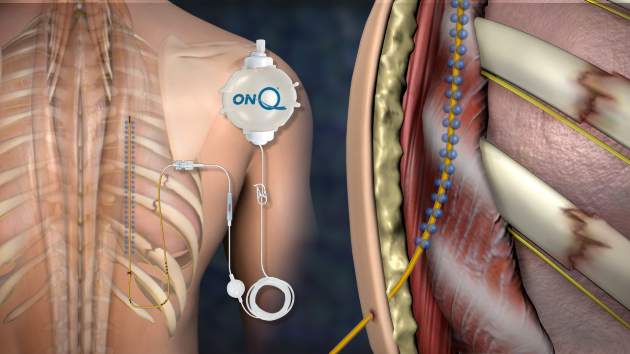
Ropivacaine 0.2% was used in both PoPS and TEA patients, all of whom had at least three broken ribs.
Median pain scores dropped from 8.5 to 2.5 on a 10-point scale an hour after PoPS placement, versus a median drop from 8 to 5 points an hour after TEA (P = .03). Although not statistically significant, median pain scores were about 1.5 points better with PoPS over the next several days, hovering around 3.5 versus around 5 points with TEA. Anesthesiology “usually won’t place high thoracic epidurals. With PoPS, you can tunnel up as far as you need to go to get to higher ribs,” which might explain the better pain control, Dr. Shelley said.
PoPS patients used about 70 mg/day oral morphine equivalents versus about 90 mg/day with TEA through day 6, but again the difference was not statistically significant. Even so, it might explain why six TEA patients (32%) were hypotensive over that time, compared with two PoPS patients (18%).
PoPS patients were a little older on average (mean 63 versus 55 years), with more fractured ribs (mean eight versus seven), and higher Injury Severity Scale scores (mean 20 versus 16). They were also more likely to have bilateral fractures, longer ICU stays (mean 4.9 versus 3.1 days), and longer overall lengths of stay (mean 14.8 versus 9.8 days), but none of those trends were statistically significant.
Both groups had mean chest Abbreviated Injury Scale scores of 3, and there were no statistical differences in daily spirometry readings. The majority of patients in both groups were men.
Favorable results were also reported in 2010 for ON-Q rib pain control, but the investigators did not compare the system to TEA (World J Surg. 2010 Oct;34:2359-62).
Dr. Shelley said Halyard was not involved in the study, and that she has no disclosures.
SAN ANTONIO – A new pain relief option for multiple rib fractures means that you might not have to wait around anymore for anesthesiology to place thoracic epidurals.
It’s called posterior paramedian subrhomboidal (PoPS) analgesia. A skin incision is made below the lowest fractured rib just paramedian to the spinus processes; a tunneling device is then used to work a catheter upwards under the rhomboids just past the highest fractured rib. The catheter has multiple openings along its length – like a sprinkler hose – so analgesic bathes the intercostal nerves as it runs down from a reservoir into the patient. The reservoir can be set to a desired flow rate or for on-demand use (ON-Q Pain Relief System – Halyard).
A pilot study at the University of Kansas, Kansas City, found that pain control from PoPS was at least equivalent to standard thoracic epidural analgesia (TEA), and that the system can be placed by a variety of hospital staff, not just anesthesiologists.
The 11 PoPS patients also used fewer rescue narcotics than the 19 TEA patients and had less hypotension. Because they weren’t at risk for epidural hematomas, they started venous thromboembolism prophylaxis without delay and at full dose.
“Our results are very promising. PoPS provides pain control similar to that of TEA,” with several “other benefits. You are not relying on one specialty for pain control,” so patients probably get faster relief. “PoPS can also be placed in patients whose injuries prohibit TEA, such as those with spinal cord injuries or increased intracranial pressure,” said investigator Dr. Casey Shelley, a University of Kansas general surgery resident.
PoPS was placed in the study either by anesthesiologists or by a trauma surgeon who practiced placement beforehand in the cadaver lab. The do-it-yourself potential for surgeons “is key. Most of us trauma surgeons are sick of begging anesthesiologists to come place thoracic epidurals,” said an audience member after Dr. Shelley’s presentation at the annual scientific assembly of the Eastern Association for the Surgery of Trauma.
Ropivacaine 0.2% was used in both PoPS and TEA patients, all of whom had at least three broken ribs.
Median pain scores dropped from 8.5 to 2.5 on a 10-point scale an hour after PoPS placement, versus a median drop from 8 to 5 points an hour after TEA (P = .03). Although not statistically significant, median pain scores were about 1.5 points better with PoPS over the next several days, hovering around 3.5 versus around 5 points with TEA. Anesthesiology “usually won’t place high thoracic epidurals. With PoPS, you can tunnel up as far as you need to go to get to higher ribs,” which might explain the better pain control, Dr. Shelley said.
PoPS patients used about 70 mg/day oral morphine equivalents versus about 90 mg/day with TEA through day 6, but again the difference was not statistically significant. Even so, it might explain why six TEA patients (32%) were hypotensive over that time, compared with two PoPS patients (18%).
PoPS patients were a little older on average (mean 63 versus 55 years), with more fractured ribs (mean eight versus seven), and higher Injury Severity Scale scores (mean 20 versus 16). They were also more likely to have bilateral fractures, longer ICU stays (mean 4.9 versus 3.1 days), and longer overall lengths of stay (mean 14.8 versus 9.8 days), but none of those trends were statistically significant.
Both groups had mean chest Abbreviated Injury Scale scores of 3, and there were no statistical differences in daily spirometry readings. The majority of patients in both groups were men.
Favorable results were also reported in 2010 for ON-Q rib pain control, but the investigators did not compare the system to TEA (World J Surg. 2010 Oct;34:2359-62).
Dr. Shelley said Halyard was not involved in the study, and that she has no disclosures.
SAN ANTONIO – A new pain relief option for multiple rib fractures means that you might not have to wait around anymore for anesthesiology to place thoracic epidurals.
It’s called posterior paramedian subrhomboidal (PoPS) analgesia. A skin incision is made below the lowest fractured rib just paramedian to the spinus processes; a tunneling device is then used to work a catheter upwards under the rhomboids just past the highest fractured rib. The catheter has multiple openings along its length – like a sprinkler hose – so analgesic bathes the intercostal nerves as it runs down from a reservoir into the patient. The reservoir can be set to a desired flow rate or for on-demand use (ON-Q Pain Relief System – Halyard).
A pilot study at the University of Kansas, Kansas City, found that pain control from PoPS was at least equivalent to standard thoracic epidural analgesia (TEA), and that the system can be placed by a variety of hospital staff, not just anesthesiologists.
The 11 PoPS patients also used fewer rescue narcotics than the 19 TEA patients and had less hypotension. Because they weren’t at risk for epidural hematomas, they started venous thromboembolism prophylaxis without delay and at full dose.
“Our results are very promising. PoPS provides pain control similar to that of TEA,” with several “other benefits. You are not relying on one specialty for pain control,” so patients probably get faster relief. “PoPS can also be placed in patients whose injuries prohibit TEA, such as those with spinal cord injuries or increased intracranial pressure,” said investigator Dr. Casey Shelley, a University of Kansas general surgery resident.
PoPS was placed in the study either by anesthesiologists or by a trauma surgeon who practiced placement beforehand in the cadaver lab. The do-it-yourself potential for surgeons “is key. Most of us trauma surgeons are sick of begging anesthesiologists to come place thoracic epidurals,” said an audience member after Dr. Shelley’s presentation at the annual scientific assembly of the Eastern Association for the Surgery of Trauma.
Ropivacaine 0.2% was used in both PoPS and TEA patients, all of whom had at least three broken ribs.
Median pain scores dropped from 8.5 to 2.5 on a 10-point scale an hour after PoPS placement, versus a median drop from 8 to 5 points an hour after TEA (P = .03). Although not statistically significant, median pain scores were about 1.5 points better with PoPS over the next several days, hovering around 3.5 versus around 5 points with TEA. Anesthesiology “usually won’t place high thoracic epidurals. With PoPS, you can tunnel up as far as you need to go to get to higher ribs,” which might explain the better pain control, Dr. Shelley said.
PoPS patients used about 70 mg/day oral morphine equivalents versus about 90 mg/day with TEA through day 6, but again the difference was not statistically significant. Even so, it might explain why six TEA patients (32%) were hypotensive over that time, compared with two PoPS patients (18%).
PoPS patients were a little older on average (mean 63 versus 55 years), with more fractured ribs (mean eight versus seven), and higher Injury Severity Scale scores (mean 20 versus 16). They were also more likely to have bilateral fractures, longer ICU stays (mean 4.9 versus 3.1 days), and longer overall lengths of stay (mean 14.8 versus 9.8 days), but none of those trends were statistically significant.
Both groups had mean chest Abbreviated Injury Scale scores of 3, and there were no statistical differences in daily spirometry readings. The majority of patients in both groups were men.
Favorable results were also reported in 2010 for ON-Q rib pain control, but the investigators did not compare the system to TEA (World J Surg. 2010 Oct;34:2359-62).
Dr. Shelley said Halyard was not involved in the study, and that she has no disclosures.
AT THE EAST SCIENTIFIC ASSEMBLY
Key clinical point: You might not have to wait around anymore for anesthesiology to place thoracic epidurals.
Major finding: Median pain scores dropped from 8.5 to 2.5 on a 10-point scale an hour after posterior PoPS placement, versus a median drop from 8 to 5 points an hour after thoracic epidural analgesia (P = .03).
Data source: Pilot study of 30 adults with at least three fractured ribs.
Disclosures: The maker of the PoPS system was not involved in the study, and the presenter had no disclosures.