User login
Bringing you the latest news, research and reviews, exclusive interviews, podcasts, quizzes, and more.
div[contains(@class, 'header__large-screen')]
div[contains(@class, 'read-next-article')]
div[contains(@class, 'nav-primary')]
nav[contains(@class, 'nav-primary')]
section[contains(@class, 'footer-nav-section-wrapper')]
footer[@id='footer']
div[contains(@class, 'main-prefix')]
section[contains(@class, 'nav-hidden')]
div[contains(@class, 'ce-card-content')]
nav[contains(@class, 'nav-ce-stack')]
Residents Unionizing: What Are the Benefits, the Downsides?
This transcript has been edited for clarity.
Hospital administrators and some department heads have been vocal about the potential for unions to affect both the attending-resident relationship and the ability for residents to directly discuss concerns and educational plans.
Sometimes, there are institution-specific issues as well. One example was at Loma Linda. They argued that unionization would go against their religious principles. They filed a lawsuit. That didn’t go through, and the residents won a few months later.
I know there’s always that one senior, older doctor who says, “Back in our day, we just worked, and we never complained.”
Look at the current situation that residents are facing now, with housing and rent prices and increasing costs of childcare. Sprinkle in some inflation, poor hospital staffing, increasing workload, and add in the fact that the average first-year resident salary in 2023 was around $64,000.
Now, if you look back to 2012, the average salary was around $55,000. If you adjust that for inflation, it would be around $75,000 today, which is more than what the average resident is getting paid.
Then, there are hospital administrators who say that the hospital does not have the money to meet these demands; meanwhile, hospital graduate medical education (GME) offices receive about $150,000 of Medicare funds per resident.
Obviously, there are additional costs when it comes to training and supporting residents. In general, unionizing freaks out the people handling all the cash.
There’s also the threat of a strike, which no hospital wants on their public record. A recent highly publicized event happened at New York’s Elmhurst Hospital, when 160 residents went on strike for 3 days until a deal was made.
Critics of unionizing also cite a particular study in JAMA, which included a survey of 5700 general surgery residents at 285 programs. It found that while unions helped with vacation time and housing stipends, the unions were not associated with improved burnout rates, suicidality, job satisfaction, duty hour violations, mistreatment, educational environment, or salary.
Now, granted, this isn’t the strongest study. It only sampled one group of residents, so I wouldn’t generalize these findings, but it’s still commonly cited by anti-union advocates.
Another potential downside, which is purely anecdotal because I can’t find any data to support this, is potential retaliation against residents or harm to the attending-resident relationship.
I’m an attending. I don’t really understand this one. I don’t exactly own stock in my hospital, nor am I making millions of dollars by siphoning GME money. I’m just trying to focus on educating and supporting my residents the best I can.
Dr. Patel is Clinical Instructor, Department of Pediatrics, Columbia University College of Physicians and Surgeons; Pediatric Hospitalist, Morgan Stanley Children’s Hospital of NewYork–Presbyterian, and Benioff Children’s Hospital, University of California San Francisco. He disclosed ties with Medumo Inc.
A version of this article first appeared on Medscape.com.
This transcript has been edited for clarity.
Hospital administrators and some department heads have been vocal about the potential for unions to affect both the attending-resident relationship and the ability for residents to directly discuss concerns and educational plans.
Sometimes, there are institution-specific issues as well. One example was at Loma Linda. They argued that unionization would go against their religious principles. They filed a lawsuit. That didn’t go through, and the residents won a few months later.
I know there’s always that one senior, older doctor who says, “Back in our day, we just worked, and we never complained.”
Look at the current situation that residents are facing now, with housing and rent prices and increasing costs of childcare. Sprinkle in some inflation, poor hospital staffing, increasing workload, and add in the fact that the average first-year resident salary in 2023 was around $64,000.
Now, if you look back to 2012, the average salary was around $55,000. If you adjust that for inflation, it would be around $75,000 today, which is more than what the average resident is getting paid.
Then, there are hospital administrators who say that the hospital does not have the money to meet these demands; meanwhile, hospital graduate medical education (GME) offices receive about $150,000 of Medicare funds per resident.
Obviously, there are additional costs when it comes to training and supporting residents. In general, unionizing freaks out the people handling all the cash.
There’s also the threat of a strike, which no hospital wants on their public record. A recent highly publicized event happened at New York’s Elmhurst Hospital, when 160 residents went on strike for 3 days until a deal was made.
Critics of unionizing also cite a particular study in JAMA, which included a survey of 5700 general surgery residents at 285 programs. It found that while unions helped with vacation time and housing stipends, the unions were not associated with improved burnout rates, suicidality, job satisfaction, duty hour violations, mistreatment, educational environment, or salary.
Now, granted, this isn’t the strongest study. It only sampled one group of residents, so I wouldn’t generalize these findings, but it’s still commonly cited by anti-union advocates.
Another potential downside, which is purely anecdotal because I can’t find any data to support this, is potential retaliation against residents or harm to the attending-resident relationship.
I’m an attending. I don’t really understand this one. I don’t exactly own stock in my hospital, nor am I making millions of dollars by siphoning GME money. I’m just trying to focus on educating and supporting my residents the best I can.
Dr. Patel is Clinical Instructor, Department of Pediatrics, Columbia University College of Physicians and Surgeons; Pediatric Hospitalist, Morgan Stanley Children’s Hospital of NewYork–Presbyterian, and Benioff Children’s Hospital, University of California San Francisco. He disclosed ties with Medumo Inc.
A version of this article first appeared on Medscape.com.
This transcript has been edited for clarity.
Hospital administrators and some department heads have been vocal about the potential for unions to affect both the attending-resident relationship and the ability for residents to directly discuss concerns and educational plans.
Sometimes, there are institution-specific issues as well. One example was at Loma Linda. They argued that unionization would go against their religious principles. They filed a lawsuit. That didn’t go through, and the residents won a few months later.
I know there’s always that one senior, older doctor who says, “Back in our day, we just worked, and we never complained.”
Look at the current situation that residents are facing now, with housing and rent prices and increasing costs of childcare. Sprinkle in some inflation, poor hospital staffing, increasing workload, and add in the fact that the average first-year resident salary in 2023 was around $64,000.
Now, if you look back to 2012, the average salary was around $55,000. If you adjust that for inflation, it would be around $75,000 today, which is more than what the average resident is getting paid.
Then, there are hospital administrators who say that the hospital does not have the money to meet these demands; meanwhile, hospital graduate medical education (GME) offices receive about $150,000 of Medicare funds per resident.
Obviously, there are additional costs when it comes to training and supporting residents. In general, unionizing freaks out the people handling all the cash.
There’s also the threat of a strike, which no hospital wants on their public record. A recent highly publicized event happened at New York’s Elmhurst Hospital, when 160 residents went on strike for 3 days until a deal was made.
Critics of unionizing also cite a particular study in JAMA, which included a survey of 5700 general surgery residents at 285 programs. It found that while unions helped with vacation time and housing stipends, the unions were not associated with improved burnout rates, suicidality, job satisfaction, duty hour violations, mistreatment, educational environment, or salary.
Now, granted, this isn’t the strongest study. It only sampled one group of residents, so I wouldn’t generalize these findings, but it’s still commonly cited by anti-union advocates.
Another potential downside, which is purely anecdotal because I can’t find any data to support this, is potential retaliation against residents or harm to the attending-resident relationship.
I’m an attending. I don’t really understand this one. I don’t exactly own stock in my hospital, nor am I making millions of dollars by siphoning GME money. I’m just trying to focus on educating and supporting my residents the best I can.
Dr. Patel is Clinical Instructor, Department of Pediatrics, Columbia University College of Physicians and Surgeons; Pediatric Hospitalist, Morgan Stanley Children’s Hospital of NewYork–Presbyterian, and Benioff Children’s Hospital, University of California San Francisco. He disclosed ties with Medumo Inc.
A version of this article first appeared on Medscape.com.
Is Atopic Dermatitis Linked to Cognitive Impairment Symptoms in Children?
TOPLINE:
METHODOLOGY:
It remains unknown whether subpopulations of children with atopic dermatitis face a greater risk for cognitive impairment or not.
To determine the association, researchers drew from a weighted sample of 69,732,807 children with atopic dermatitis in the 2021 US National Health Interview Survey.
Main outcomes of interest were difficulty in learning or memory (cognitive impairment symptoms) as reported by the child’s caregiver.
The researchers performed logistic regression to compare the odds of learning or memory difficulties between 60,509,794 children without atopic dermatitis and 9,223,013 children with atopic dermatitis.
TAKEAWAY:
Children with versus without atopic dermatitis were more likely to experience difficulties with learning (10.8% [95% CI, 7.8%-15.8%] vs 5.9% [95% CI, 5.1%-6.9%]; P < .001) and difficulties with memory (11.1% [95% CI, 8.0%-15.9%] vs 5.8% [95% CI, 4.9%-6.9%]; P < .001).
On multivariable logistic regression adjusted for sociodemographic factors, asthma, food allergies, and seasonal allergies or hay fever, researchers found that having atopic dermatitis was associated with increased odds of difficulties in learning (adjusted odds ratio [aOR], 1.77; 95% CI, 1.28-2.45) and memory (aOR, 1.69; 95% CI, 1.19-2.41).
When stratified by neurodevelopmental comorbidities, having atopic dermatitis was associated with a 2- to 3-fold greater odds of memory difficulties among children with any neurodevelopmental disorder (aOR, 2.26; 95% CI, 1.43-3.57), which included ADHD (aOR, 2.90; 95% CI, 1.60-5.24) or learning disabilities (aOR, 2.04; 95% CI, 1.04-4.00).
Having atopic dermatitis was not associated with learning or memory difficulties among children without neurodevelopmental conditions.
IN PRACTICE:
“These findings may improve the risk stratification of children with atopic dermatitis for cognitive impairment and suggest that evaluation for cognitive impairment should be prioritized among children with atopic dermatitis and comorbid ADHD or learning disability,” the authors wrote.
SOURCE:
Corresponding author Joy Wan, MD, of the department of dermatology at Johns Hopkins University School of Medicine, Baltimore, and colleagues conducted the research, which was published on March 6, 2024, in JAMA Dermatology.
LIMITATIONS:
The study’s limitations were its cross-sectional design, reliance on caregiver reports, and the fact that National Health Interview Survey data do not include information on factors such as atopic dermatitis severity, age at atopic dermatitis diagnosis, and sleep.
DISCLOSURES:
The study was supported by a grant from the National Institutes of Health. Dr. Wan reported receiving a grant from Pfizer and personal fees from Sun Pharmaceutical Industries and Janssen Pharmaceuticals outside the submitted work. No other study authors had disclosures to report.
A version of this article appeared on Medscape.com.
TOPLINE:
METHODOLOGY:
It remains unknown whether subpopulations of children with atopic dermatitis face a greater risk for cognitive impairment or not.
To determine the association, researchers drew from a weighted sample of 69,732,807 children with atopic dermatitis in the 2021 US National Health Interview Survey.
Main outcomes of interest were difficulty in learning or memory (cognitive impairment symptoms) as reported by the child’s caregiver.
The researchers performed logistic regression to compare the odds of learning or memory difficulties between 60,509,794 children without atopic dermatitis and 9,223,013 children with atopic dermatitis.
TAKEAWAY:
Children with versus without atopic dermatitis were more likely to experience difficulties with learning (10.8% [95% CI, 7.8%-15.8%] vs 5.9% [95% CI, 5.1%-6.9%]; P < .001) and difficulties with memory (11.1% [95% CI, 8.0%-15.9%] vs 5.8% [95% CI, 4.9%-6.9%]; P < .001).
On multivariable logistic regression adjusted for sociodemographic factors, asthma, food allergies, and seasonal allergies or hay fever, researchers found that having atopic dermatitis was associated with increased odds of difficulties in learning (adjusted odds ratio [aOR], 1.77; 95% CI, 1.28-2.45) and memory (aOR, 1.69; 95% CI, 1.19-2.41).
When stratified by neurodevelopmental comorbidities, having atopic dermatitis was associated with a 2- to 3-fold greater odds of memory difficulties among children with any neurodevelopmental disorder (aOR, 2.26; 95% CI, 1.43-3.57), which included ADHD (aOR, 2.90; 95% CI, 1.60-5.24) or learning disabilities (aOR, 2.04; 95% CI, 1.04-4.00).
Having atopic dermatitis was not associated with learning or memory difficulties among children without neurodevelopmental conditions.
IN PRACTICE:
“These findings may improve the risk stratification of children with atopic dermatitis for cognitive impairment and suggest that evaluation for cognitive impairment should be prioritized among children with atopic dermatitis and comorbid ADHD or learning disability,” the authors wrote.
SOURCE:
Corresponding author Joy Wan, MD, of the department of dermatology at Johns Hopkins University School of Medicine, Baltimore, and colleagues conducted the research, which was published on March 6, 2024, in JAMA Dermatology.
LIMITATIONS:
The study’s limitations were its cross-sectional design, reliance on caregiver reports, and the fact that National Health Interview Survey data do not include information on factors such as atopic dermatitis severity, age at atopic dermatitis diagnosis, and sleep.
DISCLOSURES:
The study was supported by a grant from the National Institutes of Health. Dr. Wan reported receiving a grant from Pfizer and personal fees from Sun Pharmaceutical Industries and Janssen Pharmaceuticals outside the submitted work. No other study authors had disclosures to report.
A version of this article appeared on Medscape.com.
TOPLINE:
METHODOLOGY:
It remains unknown whether subpopulations of children with atopic dermatitis face a greater risk for cognitive impairment or not.
To determine the association, researchers drew from a weighted sample of 69,732,807 children with atopic dermatitis in the 2021 US National Health Interview Survey.
Main outcomes of interest were difficulty in learning or memory (cognitive impairment symptoms) as reported by the child’s caregiver.
The researchers performed logistic regression to compare the odds of learning or memory difficulties between 60,509,794 children without atopic dermatitis and 9,223,013 children with atopic dermatitis.
TAKEAWAY:
Children with versus without atopic dermatitis were more likely to experience difficulties with learning (10.8% [95% CI, 7.8%-15.8%] vs 5.9% [95% CI, 5.1%-6.9%]; P < .001) and difficulties with memory (11.1% [95% CI, 8.0%-15.9%] vs 5.8% [95% CI, 4.9%-6.9%]; P < .001).
On multivariable logistic regression adjusted for sociodemographic factors, asthma, food allergies, and seasonal allergies or hay fever, researchers found that having atopic dermatitis was associated with increased odds of difficulties in learning (adjusted odds ratio [aOR], 1.77; 95% CI, 1.28-2.45) and memory (aOR, 1.69; 95% CI, 1.19-2.41).
When stratified by neurodevelopmental comorbidities, having atopic dermatitis was associated with a 2- to 3-fold greater odds of memory difficulties among children with any neurodevelopmental disorder (aOR, 2.26; 95% CI, 1.43-3.57), which included ADHD (aOR, 2.90; 95% CI, 1.60-5.24) or learning disabilities (aOR, 2.04; 95% CI, 1.04-4.00).
Having atopic dermatitis was not associated with learning or memory difficulties among children without neurodevelopmental conditions.
IN PRACTICE:
“These findings may improve the risk stratification of children with atopic dermatitis for cognitive impairment and suggest that evaluation for cognitive impairment should be prioritized among children with atopic dermatitis and comorbid ADHD or learning disability,” the authors wrote.
SOURCE:
Corresponding author Joy Wan, MD, of the department of dermatology at Johns Hopkins University School of Medicine, Baltimore, and colleagues conducted the research, which was published on March 6, 2024, in JAMA Dermatology.
LIMITATIONS:
The study’s limitations were its cross-sectional design, reliance on caregiver reports, and the fact that National Health Interview Survey data do not include information on factors such as atopic dermatitis severity, age at atopic dermatitis diagnosis, and sleep.
DISCLOSURES:
The study was supported by a grant from the National Institutes of Health. Dr. Wan reported receiving a grant from Pfizer and personal fees from Sun Pharmaceutical Industries and Janssen Pharmaceuticals outside the submitted work. No other study authors had disclosures to report.
A version of this article appeared on Medscape.com.
Study Finds No Increased Cancer Risk With Spironolactone
TOPLINE:
than that of unexposed women.
METHODOLOGY:
- Spironolactone, used off-label for several skin conditions in women, carries a warning about an increased tumor risk associated with high doses in rat models, and its antiandrogen properties have prompted hypotheses about a possible increased risk for breast or gynecologic cancers.
- The researchers reviewed data on 420 women with a history of spironolactone use for acne, hair loss, and hirsutism and 3272 women with no spironolactone use at the authors› institution. Their mean age ranged from 42 to 63 years; the majority were White, and 38% were non-White.
- Median spironolactone doses ranged from 25 mg to 225 mg; chart reviews included 5-year follow-up data from the first spironolactone exposure to allow time for tumor development.
TAKEAWAY:
- A total of 37 of the 420 women exposed to spironolactone developed any tumors, as did 546 of the 3272 with no spironolactone exposure.
- After the researchers controlled for age and race, women exposed to spironolactone were no more likely to develop a malignant tumor than a benign tumor, compared with unexposed women (odds ratio [OR], 0.48, P = .2).
- The risk for breast or uterine cancer was not significantly different in the spironolactone and non-spironolactone groups (OR, 0.95, P > .9).
IN PRACTICE:
“Women taking spironolactone for acne, hair loss, and hirsutism and who are at low risk of breast or gynecologic cancers may be counseled to have regular gynecology follow-up, but no more frequently than the general population,” but more studies are needed to evaluate risk over longer periods of time, the researchers wrote.
SOURCE:
The lead author of the study was Rachel C. Hill, BS, a student at Weill Cornell Medical College, New York City, and Shari R. Lipner, MD, PhD, of the department of dermatology at Weill Cornell Medical College, was the corresponding author. The study was published online in The Journal of the American Academy of Dermatology.
LIMITATIONS:
The findings were limited by the retrospective design, as well as the small number of spironolactone patients analyzed, the short follow-up period, the lack of information about spironolactone courses, and the inability to control for family history of malignancy.
DISCLOSURES:
The study was supported by the National Center for Advancing Translational Sciences and a grant from the Clinical and Translational Science Center at Weill Cornell Medical College awarded to Ms. Hill. None of the authors had relevant disclosures; Dr. Lipner disclosed serving as a consultant for Ortho-Dermatologics, Eli Lilly, Moberg Pharmaceuticals, and BelleTorus Corporation.
A version of this article appeared on Medscape.com.
TOPLINE:
than that of unexposed women.
METHODOLOGY:
- Spironolactone, used off-label for several skin conditions in women, carries a warning about an increased tumor risk associated with high doses in rat models, and its antiandrogen properties have prompted hypotheses about a possible increased risk for breast or gynecologic cancers.
- The researchers reviewed data on 420 women with a history of spironolactone use for acne, hair loss, and hirsutism and 3272 women with no spironolactone use at the authors› institution. Their mean age ranged from 42 to 63 years; the majority were White, and 38% were non-White.
- Median spironolactone doses ranged from 25 mg to 225 mg; chart reviews included 5-year follow-up data from the first spironolactone exposure to allow time for tumor development.
TAKEAWAY:
- A total of 37 of the 420 women exposed to spironolactone developed any tumors, as did 546 of the 3272 with no spironolactone exposure.
- After the researchers controlled for age and race, women exposed to spironolactone were no more likely to develop a malignant tumor than a benign tumor, compared with unexposed women (odds ratio [OR], 0.48, P = .2).
- The risk for breast or uterine cancer was not significantly different in the spironolactone and non-spironolactone groups (OR, 0.95, P > .9).
IN PRACTICE:
“Women taking spironolactone for acne, hair loss, and hirsutism and who are at low risk of breast or gynecologic cancers may be counseled to have regular gynecology follow-up, but no more frequently than the general population,” but more studies are needed to evaluate risk over longer periods of time, the researchers wrote.
SOURCE:
The lead author of the study was Rachel C. Hill, BS, a student at Weill Cornell Medical College, New York City, and Shari R. Lipner, MD, PhD, of the department of dermatology at Weill Cornell Medical College, was the corresponding author. The study was published online in The Journal of the American Academy of Dermatology.
LIMITATIONS:
The findings were limited by the retrospective design, as well as the small number of spironolactone patients analyzed, the short follow-up period, the lack of information about spironolactone courses, and the inability to control for family history of malignancy.
DISCLOSURES:
The study was supported by the National Center for Advancing Translational Sciences and a grant from the Clinical and Translational Science Center at Weill Cornell Medical College awarded to Ms. Hill. None of the authors had relevant disclosures; Dr. Lipner disclosed serving as a consultant for Ortho-Dermatologics, Eli Lilly, Moberg Pharmaceuticals, and BelleTorus Corporation.
A version of this article appeared on Medscape.com.
TOPLINE:
than that of unexposed women.
METHODOLOGY:
- Spironolactone, used off-label for several skin conditions in women, carries a warning about an increased tumor risk associated with high doses in rat models, and its antiandrogen properties have prompted hypotheses about a possible increased risk for breast or gynecologic cancers.
- The researchers reviewed data on 420 women with a history of spironolactone use for acne, hair loss, and hirsutism and 3272 women with no spironolactone use at the authors› institution. Their mean age ranged from 42 to 63 years; the majority were White, and 38% were non-White.
- Median spironolactone doses ranged from 25 mg to 225 mg; chart reviews included 5-year follow-up data from the first spironolactone exposure to allow time for tumor development.
TAKEAWAY:
- A total of 37 of the 420 women exposed to spironolactone developed any tumors, as did 546 of the 3272 with no spironolactone exposure.
- After the researchers controlled for age and race, women exposed to spironolactone were no more likely to develop a malignant tumor than a benign tumor, compared with unexposed women (odds ratio [OR], 0.48, P = .2).
- The risk for breast or uterine cancer was not significantly different in the spironolactone and non-spironolactone groups (OR, 0.95, P > .9).
IN PRACTICE:
“Women taking spironolactone for acne, hair loss, and hirsutism and who are at low risk of breast or gynecologic cancers may be counseled to have regular gynecology follow-up, but no more frequently than the general population,” but more studies are needed to evaluate risk over longer periods of time, the researchers wrote.
SOURCE:
The lead author of the study was Rachel C. Hill, BS, a student at Weill Cornell Medical College, New York City, and Shari R. Lipner, MD, PhD, of the department of dermatology at Weill Cornell Medical College, was the corresponding author. The study was published online in The Journal of the American Academy of Dermatology.
LIMITATIONS:
The findings were limited by the retrospective design, as well as the small number of spironolactone patients analyzed, the short follow-up period, the lack of information about spironolactone courses, and the inability to control for family history of malignancy.
DISCLOSURES:
The study was supported by the National Center for Advancing Translational Sciences and a grant from the Clinical and Translational Science Center at Weill Cornell Medical College awarded to Ms. Hill. None of the authors had relevant disclosures; Dr. Lipner disclosed serving as a consultant for Ortho-Dermatologics, Eli Lilly, Moberg Pharmaceuticals, and BelleTorus Corporation.
A version of this article appeared on Medscape.com.
Medicare Pay Bump Provision in Federal Bill Falls Short, Doc Groups Say
Lawmakers have added a provision to raise Medicare payments to clinicians to a $460 billion bipartisan package of federal spending bills that passed in the House on March 6 and is expected to be passed in the Senate and signed by President Biden before then end of March 8, but industry groups have criticized it as paltry.
Lawmakers often tweak Medicare policy by adding provisions to other kinds of legislation, including the spending bills Congress must pass to keep the federal government running.
Physicians’ groups and some lawmakers have long pressed Congress to change Medicare payment rules with little success, even as inflation has caused physicians’ expenses to rise. Doctors now face a 3.4% cut to Medicare reimbursements in 2024, which would be only partly mitigated by the recently announced provision.
The Medical Group Management Association (MGMA) said the proposed increase would total 1.68%. The increase, part of a bipartisan package of bills released by the House and Senate Appropriations committees on March 3, would apply to the budget for fiscal 2024, which began on October 1, 2023.
“We are deeply disappointed with Congress’ half-hearted attempt to remedy the devastating blow physician practices were dealt by the 2024 Medicare Physician Fee Schedule,” Anders Gilberg, senior vice president of MGMA, said in a statement. “Anything less than a full reversal of the 3.4% cut is appallingly inadequate.”
The American Medical Association said it was “extremely disappointed” that the boost only eased, but did not fully reverse, a deeper planned cut.
The American Academy of Family Physicians (AAFP) also expressed disappointment with the proposed increase.
“The AAFP has repeatedly told Congress that the 3.4% Medicare payment reduction that went into effect on January 1 is untenable for family physicians and threatens patients’ access to primary care,” the group said in a statement.
“While we appreciate the partial relief, family physicians continue to face an annual threat of payment cuts that are detrimental to practices and patients,” AAFP said.
A version of this article appeared on Medscape.com.
Lawmakers have added a provision to raise Medicare payments to clinicians to a $460 billion bipartisan package of federal spending bills that passed in the House on March 6 and is expected to be passed in the Senate and signed by President Biden before then end of March 8, but industry groups have criticized it as paltry.
Lawmakers often tweak Medicare policy by adding provisions to other kinds of legislation, including the spending bills Congress must pass to keep the federal government running.
Physicians’ groups and some lawmakers have long pressed Congress to change Medicare payment rules with little success, even as inflation has caused physicians’ expenses to rise. Doctors now face a 3.4% cut to Medicare reimbursements in 2024, which would be only partly mitigated by the recently announced provision.
The Medical Group Management Association (MGMA) said the proposed increase would total 1.68%. The increase, part of a bipartisan package of bills released by the House and Senate Appropriations committees on March 3, would apply to the budget for fiscal 2024, which began on October 1, 2023.
“We are deeply disappointed with Congress’ half-hearted attempt to remedy the devastating blow physician practices were dealt by the 2024 Medicare Physician Fee Schedule,” Anders Gilberg, senior vice president of MGMA, said in a statement. “Anything less than a full reversal of the 3.4% cut is appallingly inadequate.”
The American Medical Association said it was “extremely disappointed” that the boost only eased, but did not fully reverse, a deeper planned cut.
The American Academy of Family Physicians (AAFP) also expressed disappointment with the proposed increase.
“The AAFP has repeatedly told Congress that the 3.4% Medicare payment reduction that went into effect on January 1 is untenable for family physicians and threatens patients’ access to primary care,” the group said in a statement.
“While we appreciate the partial relief, family physicians continue to face an annual threat of payment cuts that are detrimental to practices and patients,” AAFP said.
A version of this article appeared on Medscape.com.
Lawmakers have added a provision to raise Medicare payments to clinicians to a $460 billion bipartisan package of federal spending bills that passed in the House on March 6 and is expected to be passed in the Senate and signed by President Biden before then end of March 8, but industry groups have criticized it as paltry.
Lawmakers often tweak Medicare policy by adding provisions to other kinds of legislation, including the spending bills Congress must pass to keep the federal government running.
Physicians’ groups and some lawmakers have long pressed Congress to change Medicare payment rules with little success, even as inflation has caused physicians’ expenses to rise. Doctors now face a 3.4% cut to Medicare reimbursements in 2024, which would be only partly mitigated by the recently announced provision.
The Medical Group Management Association (MGMA) said the proposed increase would total 1.68%. The increase, part of a bipartisan package of bills released by the House and Senate Appropriations committees on March 3, would apply to the budget for fiscal 2024, which began on October 1, 2023.
“We are deeply disappointed with Congress’ half-hearted attempt to remedy the devastating blow physician practices were dealt by the 2024 Medicare Physician Fee Schedule,” Anders Gilberg, senior vice president of MGMA, said in a statement. “Anything less than a full reversal of the 3.4% cut is appallingly inadequate.”
The American Medical Association said it was “extremely disappointed” that the boost only eased, but did not fully reverse, a deeper planned cut.
The American Academy of Family Physicians (AAFP) also expressed disappointment with the proposed increase.
“The AAFP has repeatedly told Congress that the 3.4% Medicare payment reduction that went into effect on January 1 is untenable for family physicians and threatens patients’ access to primary care,” the group said in a statement.
“While we appreciate the partial relief, family physicians continue to face an annual threat of payment cuts that are detrimental to practices and patients,” AAFP said.
A version of this article appeared on Medscape.com.
How These MDs Conquered Imposter Syndrome
Do I deserve to be here? Am I doing what I’m supposed to be doing? Is anyone going to tell me if I’m terrible?
Kerri Palamara McGrath, MD, remembered worrying over these questions as chief resident at Massachusetts General Hospital, Boston, Massachusetts, in 2009. Having graduated from New York Medical College, she felt out of step with her peers from Ivy League medical schools and considered herself lucky to be there. In order to measure up, she felt she had to work twice as hard as everybody else.
But as Dr. McGrath moved through residency and spoke with other trainees, she had a realization. Her constant fears, the nagging voice in her head saying she wasn’t good enough, these issues weren’t exclusive to her; they were pervasive.
Today, Dr. McGrath is the director of the Center for Physician Well-Being at Massachusetts General Hospital. The facility aims to address physician stress and equip doctors with the tools to navigate personal and professional issues. Dr. McGrath is also a physician coach, a growing nonclinical field, helping doctors identify their own stressors, values, and measures of success. This type of internal work, Dr. McGrath feels, can help alleviate imposter syndrome, that inner refrain saying: I’ll never be good enough.
What Is Imposter Syndrome?
While not a formal medical diagnosis, imposter syndrome has been defined as «an internal experience of intellectual phoniness.» It›s considered an inability to internalize success and a tendency to attribute gains to external factors — for example, being in the right place at the right time.
“Many people describe imposter phenomena in medicine as fearing that others are going to realize that they don’t belong somewhere or question why they’re there,” said Dr. McGrath.
It’s a “fear of being found out,” added Jessi Gold, MD, a psychiatrist who treats physicians. “In many ways, imposter syndrome shows up as a conflict between the outer self — the metaphorical mask you’re ‘putting on’ [in order] to achieve, and the inner self — how you feel like you’re not measuring up.”
Dr. McGrath said she experienced imposter syndrome before her medical career even began. She applied to 26 medical schools. Only one accepted her. “The whole time, I was like, ‘This is the only school you got into, so you’re obviously not good enough,’” she recalled. Later, having been chosen by a “coveted” institution like Mass General, “you assume that, at some point, someone will realize that the gig is up, that everybody’s better than you.”
Where Does Imposter Syndrome Come From?
Dr. McGrath felt that in medicine, high expectations are often coupled with low self-compassion. “We are so hard on ourselves, and when we set our expectations so high, we’re constantly disappointed in ourselves,” she said. External markers of success — papers published, promotions, or even social media — can further fuel this.
It can feel like “striving for excellence in a sea of excellence,” Dr. McGrath added, and this can invite comparison.
Ravi Parikh, MD, a medical oncologist and physician-scientist at the University of Pennsylvania, Philadelphia, Pennsylvania, remembered struggling with imposter syndrome early in his career. As a new doctor, he had a ton of questions, and yet those above him seemed able to make weighty decisions on their own. The comparison shook his confidence. “I remember thinking that when I became an attending, I would just magically not have to run decisions by people,” said Dr. Parikh. But even then, the “magical” self-assurance didn’t materialize.
Research found that imposter syndrome is more likely to affect women and groups that are underrepresented in medicine. But overall, the incidence is remarkably high.
A 2023 survey published in the Journal of the American College of Surgeons found that 90% of female surgeons and more than two-thirds of male ones experienced imposter syndrome. In a 2023 study on medical students in JAMA, it was nearly universal; 97% reported feelings of imposter syndrome with women 1.7 times more likely to report it than men and underrepresented groups often three times more likely.
‘I’m Clearly in the Minority Here’
The term “imposter” also suggests a lack of belonging. If medicine doesn’t “look like you,” this can create feelings of pressure, like you’re “representing a whole group with your mere existence,” said Dr. Gold, “and you have to keep proving yourself.”
Chloe Slocum, MD, MPH, an assistant professor of physical medicine and rehabilitation at Harvard Medical School, Boston, Massachusetts, remembered that feeling of conspicuous “otherness.” As a resident, Dr. Slocum began presenting at national meetings and later pursued physician leadership training. Many of her counterparts at these events were older males. “At some programs early on, I’d wonder, ‘I’m clearly in the minority here; did they really make the right decision including me in this?’”
Reactions from those around you can also have an impact. Dr. McGrath — who is 5’ 2” and describes herself as looking “very young” — noted that when she started out, neither patients nor other providers thought she was a doctor.
“I have tried everything in the book to be seen, in somebody else’s eyes, as more consistent with a doctor,” she said. “I’ve dressed down. I’ve dressed up. I’ve worn heels. I’ve worn flats. I’ve worn glasses. I’ve done all the things. When you’re constantly being told you don’t look like a doctor, you start questioning yourself.”
The Emotional Toll
If that sounds mentally exhausting, it is. Research found that imposter syndrome is often linked with burnout, depression, and anxiety.
The need to prove yourself and prevent being “found out” can push some doctors toward traditional measurements of success — promotions or published work, said Dr. Gold. But “if you’re trying to achieve in ways that you don’t value,” she warned, “you’re going to burn out.”
On the other hand, intense self-doubt can also limit advancement. After all, if you don’t think you’re good enough, you may not apply for job opportunities or leadership positions.
This mental burden can persist over years and even decades. A 2020 review of studies on imposter syndrome noted that “it would be reassuring to believe that imposter symptoms decline with age.” Unfortunately, several studies indicated that they do not.
How to Manage Imposter Syndrome
While it can be difficult to overcome imposter syndrome, there are ways to work through it and make it less pervasive or intense. Here are some tips from our experts:
- Prioritize your mental health. This can be difficult for some physicians, but don’t ignore symptoms of depression, anxiety, or burnout. Untreated mental health conditions cloud the ability to reflect on some of the existential questions that will help you navigate imposter syndrome, said Dr. Gold.
- Assess how often you need validation and why. Try to identify what you›re feeling, what needs aren›t being met, and how you can meet those needs. You can then consider where to get that validation either internally or by connecting with a colleague. Dr. McGrath encourages physicians to ask, “What does success look like for me?” and can you make success more personal and meaningful. It might sound shocking, but rather than an unattainable ideal, success should be something that feels good.
- Know the power of teamwork. As Dr. Parikh eventually realized, collaborative care is a common and beneficial part of medicine — not something that makes you a less-than physician. “There’s a lot of opportunity to crowdsource the medical decision-making process in ways that increase your own confidence as a doctor,” he said.
- Practice self-compassion. Critical voices in your head add to an already hard and stressful world. This is where self-compassion comes in. “We don’t have much control over medicine, but we have control over how medicine makes us feel,” Dr. Gold said. Imagine treating yourself how you would treat a friend.
- Consider a physician coach. suggests that physician coaches can help lower rates of burnout and improve well-being, resilience, professional fulfillment, and self-worth. “Coaching looks into the future to help you envision what things would look like if you were feeling differently. It helps you explore what’s in your control and how you want to shape that,” said Dr. McGrath.
- Amplify the good. Apps and web-based tools can remind you to celebrate your own achievements. The “” exercise created by J. Bryan Sexton, PhD, at the Duke Center for Healthcare Safety & Quality for example, was documented in a . When healthcare workers reflected on three good things that happened each day for 2 weeks, they reported significant improvements in depression, burnout, and work-life balance.
- Do a values check. Dr. Gold often suggested that physicians with imposter syndrome ask themselves what they value, what medicine values, and how the two line up. Pausing to consider this can guide you toward useful strategies. If you value family life but feel like medicine doesn’t, for example, you might talk with a colleague who has navigated this conflict.
Dr. Gold added that reminding yourself of the range of options can be freeing. “There’s no ‘one career’ in medicine,” she said. “There are multiple ways to be happy in medicine; there are multiple ways to be happy outside of medicine. And you’re not a failure for the path you choose.”
A version of this article appeared on Medscape.com.
Do I deserve to be here? Am I doing what I’m supposed to be doing? Is anyone going to tell me if I’m terrible?
Kerri Palamara McGrath, MD, remembered worrying over these questions as chief resident at Massachusetts General Hospital, Boston, Massachusetts, in 2009. Having graduated from New York Medical College, she felt out of step with her peers from Ivy League medical schools and considered herself lucky to be there. In order to measure up, she felt she had to work twice as hard as everybody else.
But as Dr. McGrath moved through residency and spoke with other trainees, she had a realization. Her constant fears, the nagging voice in her head saying she wasn’t good enough, these issues weren’t exclusive to her; they were pervasive.
Today, Dr. McGrath is the director of the Center for Physician Well-Being at Massachusetts General Hospital. The facility aims to address physician stress and equip doctors with the tools to navigate personal and professional issues. Dr. McGrath is also a physician coach, a growing nonclinical field, helping doctors identify their own stressors, values, and measures of success. This type of internal work, Dr. McGrath feels, can help alleviate imposter syndrome, that inner refrain saying: I’ll never be good enough.
What Is Imposter Syndrome?
While not a formal medical diagnosis, imposter syndrome has been defined as «an internal experience of intellectual phoniness.» It›s considered an inability to internalize success and a tendency to attribute gains to external factors — for example, being in the right place at the right time.
“Many people describe imposter phenomena in medicine as fearing that others are going to realize that they don’t belong somewhere or question why they’re there,” said Dr. McGrath.
It’s a “fear of being found out,” added Jessi Gold, MD, a psychiatrist who treats physicians. “In many ways, imposter syndrome shows up as a conflict between the outer self — the metaphorical mask you’re ‘putting on’ [in order] to achieve, and the inner self — how you feel like you’re not measuring up.”
Dr. McGrath said she experienced imposter syndrome before her medical career even began. She applied to 26 medical schools. Only one accepted her. “The whole time, I was like, ‘This is the only school you got into, so you’re obviously not good enough,’” she recalled. Later, having been chosen by a “coveted” institution like Mass General, “you assume that, at some point, someone will realize that the gig is up, that everybody’s better than you.”
Where Does Imposter Syndrome Come From?
Dr. McGrath felt that in medicine, high expectations are often coupled with low self-compassion. “We are so hard on ourselves, and when we set our expectations so high, we’re constantly disappointed in ourselves,” she said. External markers of success — papers published, promotions, or even social media — can further fuel this.
It can feel like “striving for excellence in a sea of excellence,” Dr. McGrath added, and this can invite comparison.
Ravi Parikh, MD, a medical oncologist and physician-scientist at the University of Pennsylvania, Philadelphia, Pennsylvania, remembered struggling with imposter syndrome early in his career. As a new doctor, he had a ton of questions, and yet those above him seemed able to make weighty decisions on their own. The comparison shook his confidence. “I remember thinking that when I became an attending, I would just magically not have to run decisions by people,” said Dr. Parikh. But even then, the “magical” self-assurance didn’t materialize.
Research found that imposter syndrome is more likely to affect women and groups that are underrepresented in medicine. But overall, the incidence is remarkably high.
A 2023 survey published in the Journal of the American College of Surgeons found that 90% of female surgeons and more than two-thirds of male ones experienced imposter syndrome. In a 2023 study on medical students in JAMA, it was nearly universal; 97% reported feelings of imposter syndrome with women 1.7 times more likely to report it than men and underrepresented groups often three times more likely.
‘I’m Clearly in the Minority Here’
The term “imposter” also suggests a lack of belonging. If medicine doesn’t “look like you,” this can create feelings of pressure, like you’re “representing a whole group with your mere existence,” said Dr. Gold, “and you have to keep proving yourself.”
Chloe Slocum, MD, MPH, an assistant professor of physical medicine and rehabilitation at Harvard Medical School, Boston, Massachusetts, remembered that feeling of conspicuous “otherness.” As a resident, Dr. Slocum began presenting at national meetings and later pursued physician leadership training. Many of her counterparts at these events were older males. “At some programs early on, I’d wonder, ‘I’m clearly in the minority here; did they really make the right decision including me in this?’”
Reactions from those around you can also have an impact. Dr. McGrath — who is 5’ 2” and describes herself as looking “very young” — noted that when she started out, neither patients nor other providers thought she was a doctor.
“I have tried everything in the book to be seen, in somebody else’s eyes, as more consistent with a doctor,” she said. “I’ve dressed down. I’ve dressed up. I’ve worn heels. I’ve worn flats. I’ve worn glasses. I’ve done all the things. When you’re constantly being told you don’t look like a doctor, you start questioning yourself.”
The Emotional Toll
If that sounds mentally exhausting, it is. Research found that imposter syndrome is often linked with burnout, depression, and anxiety.
The need to prove yourself and prevent being “found out” can push some doctors toward traditional measurements of success — promotions or published work, said Dr. Gold. But “if you’re trying to achieve in ways that you don’t value,” she warned, “you’re going to burn out.”
On the other hand, intense self-doubt can also limit advancement. After all, if you don’t think you’re good enough, you may not apply for job opportunities or leadership positions.
This mental burden can persist over years and even decades. A 2020 review of studies on imposter syndrome noted that “it would be reassuring to believe that imposter symptoms decline with age.” Unfortunately, several studies indicated that they do not.
How to Manage Imposter Syndrome
While it can be difficult to overcome imposter syndrome, there are ways to work through it and make it less pervasive or intense. Here are some tips from our experts:
- Prioritize your mental health. This can be difficult for some physicians, but don’t ignore symptoms of depression, anxiety, or burnout. Untreated mental health conditions cloud the ability to reflect on some of the existential questions that will help you navigate imposter syndrome, said Dr. Gold.
- Assess how often you need validation and why. Try to identify what you›re feeling, what needs aren›t being met, and how you can meet those needs. You can then consider where to get that validation either internally or by connecting with a colleague. Dr. McGrath encourages physicians to ask, “What does success look like for me?” and can you make success more personal and meaningful. It might sound shocking, but rather than an unattainable ideal, success should be something that feels good.
- Know the power of teamwork. As Dr. Parikh eventually realized, collaborative care is a common and beneficial part of medicine — not something that makes you a less-than physician. “There’s a lot of opportunity to crowdsource the medical decision-making process in ways that increase your own confidence as a doctor,” he said.
- Practice self-compassion. Critical voices in your head add to an already hard and stressful world. This is where self-compassion comes in. “We don’t have much control over medicine, but we have control over how medicine makes us feel,” Dr. Gold said. Imagine treating yourself how you would treat a friend.
- Consider a physician coach. suggests that physician coaches can help lower rates of burnout and improve well-being, resilience, professional fulfillment, and self-worth. “Coaching looks into the future to help you envision what things would look like if you were feeling differently. It helps you explore what’s in your control and how you want to shape that,” said Dr. McGrath.
- Amplify the good. Apps and web-based tools can remind you to celebrate your own achievements. The “” exercise created by J. Bryan Sexton, PhD, at the Duke Center for Healthcare Safety & Quality for example, was documented in a . When healthcare workers reflected on three good things that happened each day for 2 weeks, they reported significant improvements in depression, burnout, and work-life balance.
- Do a values check. Dr. Gold often suggested that physicians with imposter syndrome ask themselves what they value, what medicine values, and how the two line up. Pausing to consider this can guide you toward useful strategies. If you value family life but feel like medicine doesn’t, for example, you might talk with a colleague who has navigated this conflict.
Dr. Gold added that reminding yourself of the range of options can be freeing. “There’s no ‘one career’ in medicine,” she said. “There are multiple ways to be happy in medicine; there are multiple ways to be happy outside of medicine. And you’re not a failure for the path you choose.”
A version of this article appeared on Medscape.com.
Do I deserve to be here? Am I doing what I’m supposed to be doing? Is anyone going to tell me if I’m terrible?
Kerri Palamara McGrath, MD, remembered worrying over these questions as chief resident at Massachusetts General Hospital, Boston, Massachusetts, in 2009. Having graduated from New York Medical College, she felt out of step with her peers from Ivy League medical schools and considered herself lucky to be there. In order to measure up, she felt she had to work twice as hard as everybody else.
But as Dr. McGrath moved through residency and spoke with other trainees, she had a realization. Her constant fears, the nagging voice in her head saying she wasn’t good enough, these issues weren’t exclusive to her; they were pervasive.
Today, Dr. McGrath is the director of the Center for Physician Well-Being at Massachusetts General Hospital. The facility aims to address physician stress and equip doctors with the tools to navigate personal and professional issues. Dr. McGrath is also a physician coach, a growing nonclinical field, helping doctors identify their own stressors, values, and measures of success. This type of internal work, Dr. McGrath feels, can help alleviate imposter syndrome, that inner refrain saying: I’ll never be good enough.
What Is Imposter Syndrome?
While not a formal medical diagnosis, imposter syndrome has been defined as «an internal experience of intellectual phoniness.» It›s considered an inability to internalize success and a tendency to attribute gains to external factors — for example, being in the right place at the right time.
“Many people describe imposter phenomena in medicine as fearing that others are going to realize that they don’t belong somewhere or question why they’re there,” said Dr. McGrath.
It’s a “fear of being found out,” added Jessi Gold, MD, a psychiatrist who treats physicians. “In many ways, imposter syndrome shows up as a conflict between the outer self — the metaphorical mask you’re ‘putting on’ [in order] to achieve, and the inner self — how you feel like you’re not measuring up.”
Dr. McGrath said she experienced imposter syndrome before her medical career even began. She applied to 26 medical schools. Only one accepted her. “The whole time, I was like, ‘This is the only school you got into, so you’re obviously not good enough,’” she recalled. Later, having been chosen by a “coveted” institution like Mass General, “you assume that, at some point, someone will realize that the gig is up, that everybody’s better than you.”
Where Does Imposter Syndrome Come From?
Dr. McGrath felt that in medicine, high expectations are often coupled with low self-compassion. “We are so hard on ourselves, and when we set our expectations so high, we’re constantly disappointed in ourselves,” she said. External markers of success — papers published, promotions, or even social media — can further fuel this.
It can feel like “striving for excellence in a sea of excellence,” Dr. McGrath added, and this can invite comparison.
Ravi Parikh, MD, a medical oncologist and physician-scientist at the University of Pennsylvania, Philadelphia, Pennsylvania, remembered struggling with imposter syndrome early in his career. As a new doctor, he had a ton of questions, and yet those above him seemed able to make weighty decisions on their own. The comparison shook his confidence. “I remember thinking that when I became an attending, I would just magically not have to run decisions by people,” said Dr. Parikh. But even then, the “magical” self-assurance didn’t materialize.
Research found that imposter syndrome is more likely to affect women and groups that are underrepresented in medicine. But overall, the incidence is remarkably high.
A 2023 survey published in the Journal of the American College of Surgeons found that 90% of female surgeons and more than two-thirds of male ones experienced imposter syndrome. In a 2023 study on medical students in JAMA, it was nearly universal; 97% reported feelings of imposter syndrome with women 1.7 times more likely to report it than men and underrepresented groups often three times more likely.
‘I’m Clearly in the Minority Here’
The term “imposter” also suggests a lack of belonging. If medicine doesn’t “look like you,” this can create feelings of pressure, like you’re “representing a whole group with your mere existence,” said Dr. Gold, “and you have to keep proving yourself.”
Chloe Slocum, MD, MPH, an assistant professor of physical medicine and rehabilitation at Harvard Medical School, Boston, Massachusetts, remembered that feeling of conspicuous “otherness.” As a resident, Dr. Slocum began presenting at national meetings and later pursued physician leadership training. Many of her counterparts at these events were older males. “At some programs early on, I’d wonder, ‘I’m clearly in the minority here; did they really make the right decision including me in this?’”
Reactions from those around you can also have an impact. Dr. McGrath — who is 5’ 2” and describes herself as looking “very young” — noted that when she started out, neither patients nor other providers thought she was a doctor.
“I have tried everything in the book to be seen, in somebody else’s eyes, as more consistent with a doctor,” she said. “I’ve dressed down. I’ve dressed up. I’ve worn heels. I’ve worn flats. I’ve worn glasses. I’ve done all the things. When you’re constantly being told you don’t look like a doctor, you start questioning yourself.”
The Emotional Toll
If that sounds mentally exhausting, it is. Research found that imposter syndrome is often linked with burnout, depression, and anxiety.
The need to prove yourself and prevent being “found out” can push some doctors toward traditional measurements of success — promotions or published work, said Dr. Gold. But “if you’re trying to achieve in ways that you don’t value,” she warned, “you’re going to burn out.”
On the other hand, intense self-doubt can also limit advancement. After all, if you don’t think you’re good enough, you may not apply for job opportunities or leadership positions.
This mental burden can persist over years and even decades. A 2020 review of studies on imposter syndrome noted that “it would be reassuring to believe that imposter symptoms decline with age.” Unfortunately, several studies indicated that they do not.
How to Manage Imposter Syndrome
While it can be difficult to overcome imposter syndrome, there are ways to work through it and make it less pervasive or intense. Here are some tips from our experts:
- Prioritize your mental health. This can be difficult for some physicians, but don’t ignore symptoms of depression, anxiety, or burnout. Untreated mental health conditions cloud the ability to reflect on some of the existential questions that will help you navigate imposter syndrome, said Dr. Gold.
- Assess how often you need validation and why. Try to identify what you›re feeling, what needs aren›t being met, and how you can meet those needs. You can then consider where to get that validation either internally or by connecting with a colleague. Dr. McGrath encourages physicians to ask, “What does success look like for me?” and can you make success more personal and meaningful. It might sound shocking, but rather than an unattainable ideal, success should be something that feels good.
- Know the power of teamwork. As Dr. Parikh eventually realized, collaborative care is a common and beneficial part of medicine — not something that makes you a less-than physician. “There’s a lot of opportunity to crowdsource the medical decision-making process in ways that increase your own confidence as a doctor,” he said.
- Practice self-compassion. Critical voices in your head add to an already hard and stressful world. This is where self-compassion comes in. “We don’t have much control over medicine, but we have control over how medicine makes us feel,” Dr. Gold said. Imagine treating yourself how you would treat a friend.
- Consider a physician coach. suggests that physician coaches can help lower rates of burnout and improve well-being, resilience, professional fulfillment, and self-worth. “Coaching looks into the future to help you envision what things would look like if you were feeling differently. It helps you explore what’s in your control and how you want to shape that,” said Dr. McGrath.
- Amplify the good. Apps and web-based tools can remind you to celebrate your own achievements. The “” exercise created by J. Bryan Sexton, PhD, at the Duke Center for Healthcare Safety & Quality for example, was documented in a . When healthcare workers reflected on three good things that happened each day for 2 weeks, they reported significant improvements in depression, burnout, and work-life balance.
- Do a values check. Dr. Gold often suggested that physicians with imposter syndrome ask themselves what they value, what medicine values, and how the two line up. Pausing to consider this can guide you toward useful strategies. If you value family life but feel like medicine doesn’t, for example, you might talk with a colleague who has navigated this conflict.
Dr. Gold added that reminding yourself of the range of options can be freeing. “There’s no ‘one career’ in medicine,” she said. “There are multiple ways to be happy in medicine; there are multiple ways to be happy outside of medicine. And you’re not a failure for the path you choose.”
A version of this article appeared on Medscape.com.
What’s Eating You? Carpet Beetles (Dermestidae)
Carpet beetle larvae of the family Dermestidae have been documented to cause both acute and delayed hypersensitivity reactions in susceptible individuals. These larvae have specialized horizontal rows of spear-shaped hairs called hastisetae, which detach easily into the surrounding environment and are small enough to travel by air. Exposure to hastisetae has been tied to adverse effects ranging from dermatitis to rhinoconjunctivitis and acute asthma, with treatment being mostly empiric and symptom based. Due to the pervasiveness of carpet beetles in homes, improved awareness of dermestid-induced manifestations is valuable for clinicians.
Beetles in the Dermestidae family do not bite humans but have been reported to cause skin reactions in addition to other symptoms typical of an allergic reaction. Skin contact with larval hairs (hastisetae) of these insects—known as carpet, larder, or hide beetles — may cause urticarial or edematous papules that are mistaken for papular urticaria or arthropod bites. 1 There are approximately 500 to 700 species of carpet beetles worldwide. Carpet beetles are a clinically underrecognized cause of allergic contact dermatitis given their frequent presence in homes across the world. 2 Carpet beetle larvae feed on shed skin, feathers, hair, wool, book bindings, felt, leather, wood, silk, and sometimes grains and thus can be found nearly anywhere. Most symptom-inducing exposures to Dermestidae beetles occur occupationally, such as in museum curators working hands-on with collection materials and workers handling infested materials such as wool. 3,4 In-home Dermestidae exposure may lead to symptoms, especially if regularly worn clothing and bedding materials are infested. The broad palate of dermestid members has resulted in substantial contamination of stored materials such as flour and fabric in addition to the destruction of museum collections. 5-7
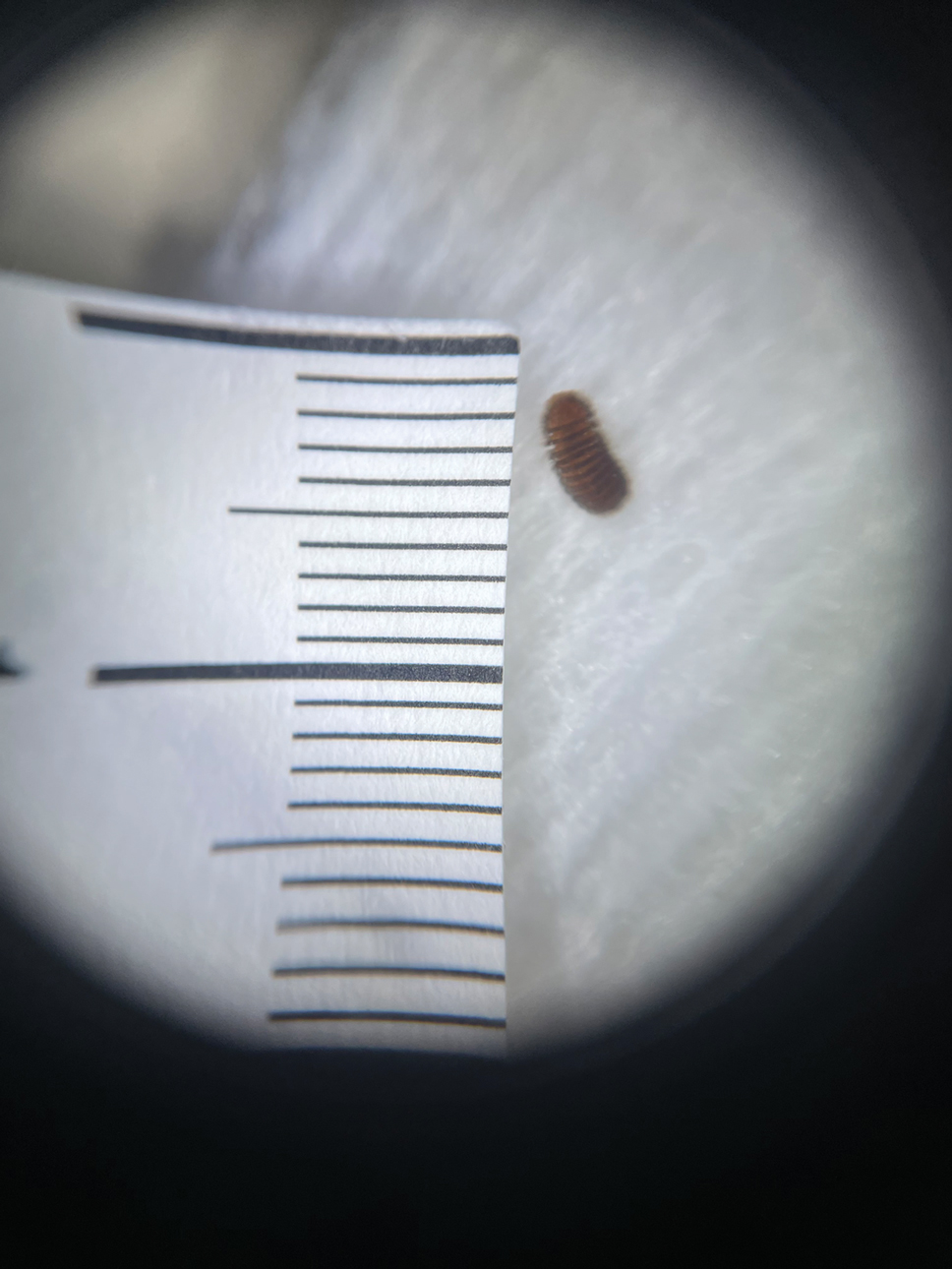
The larvae of some dermestid species, most commonly of the genera Anthrenus and Dermestes, are 2 to 3 mm in length and have detachable hairlike hastisetae that shed into the surrounding environment throughout larval development (Figure 1).8 The hastisetae, located on the thoracic and abdominal segments (tergites), serve as a larval defense mechanism. When prodded, the round, hairy, wormlike larvae tense up and can raise their abdominal tergites while splaying the hastisetae out in a fanlike manner.9 Similar to porcupine quills, the hastisetae easily detach and can entrap the appendages of invertebrate predators. Hastisetae are not known to be sharp enough to puncture human skin, but friction and irritation from skin contact and superficial sticking of the hastisetae into mucous membranes and noncornified epithelium, such as in the bronchial airways, are thought to induce hypersensitivity reactions in susceptible individuals.
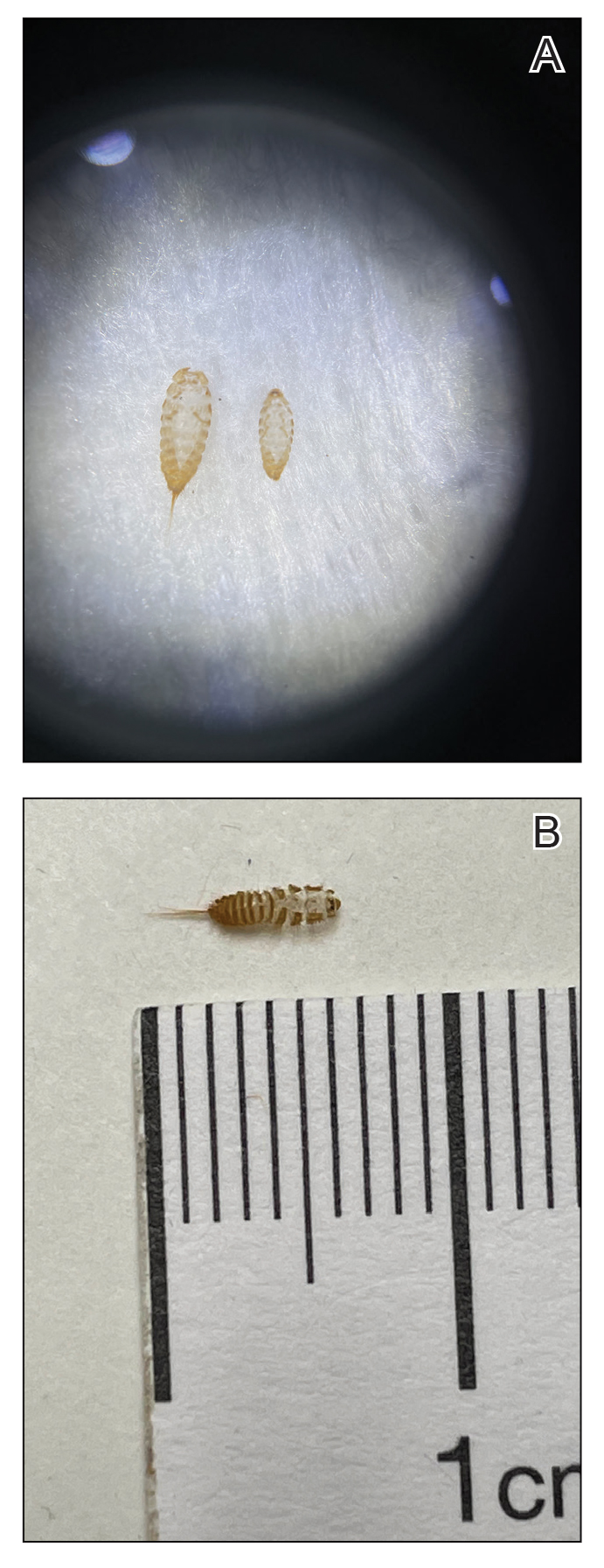
Additionally, hastisetae and the exoskeletons of both adult and larval dermestid beetles are composed mostly of chitin, which is highly allergenic. Chitin has been found to play a proinflammatory role in ocular inflammation, asthma, and bronchial reactivity via T helper cell (TH2)–mediated cellular interactions.10-12 Larvae shed their exoskeletons, including hastisetae, multiple times over the course of their development, which contributes to their potential allergen burden (Figure 2). Reports of positive prick and/or patch testing to larval components indicate some cases of both acute type 1 and delayed type 4 hypersensitivity reactions.4,8,13
Clinical Presentation and Diagnosis
Multiple erythematous urticarial papules, papulopustules, and papulovesicles are the typical manifestations of dermestid dermatitis.3,4,13-16 Figure 3 demonstrates several characteristic edematous papules with background erythema. Unlike the clusters seen with flea and bed bug bites, dermestid-induced lesions typically are single and scattered, with a propensity for exposed limbs and the face. Exposure to hastisetae commonly results in classic allergic symptoms including rhinitis, conjunctivitis, coughing, wheezing, sneezing, and intranasal and periocular pruritus, even in those with no personal history of atopy.17-19 Lymphadenopathy, vasculitis, and allergic alveolitis also have been reported.20 A large infestation in which many individual beetles as well as larvae can be found in 1 or more areas of the inhabited structure has been reported to cause more severe symptoms, including acute eczema, otitis externa, lymphocytic vasculitis, and allergic alveolitis, all of which resolved within 3 months of thorough deinfestation cleaning.21

Skin-prick and/or patch testing is not necessary for this clinical diagnosis of dermestid-induced allergic contact dermatitis. This diagnosis is bolstered by (but does not require a history of) repeated symptom induction upon performing certain activities (eg, handling taxidermy specimens) and/or in certain environments (eg, only at home). Because of individual differences in hypersensitivity to dermestid parts, it is not typical for all members of a household to be affected.
When there are multiple potential suspected allergens or an unknown cause for symptoms despite a detailed history, allergy testing can be useful in confirming a diagnosis and directing management. Immediate-onset type 1 hypersensitivity reactions are evaluated using skin-prick testing or serum IgE levels, whereas delayed type 4 hypersensitivity reactions can be evaluated using patch testing. Type 1 reactions tend to present with classic allergy symptoms, especially where there are abundant mast cells to degranulate in the skin and mucosa of the gastrointestinal and respiratory tracts; these symptoms range from mild wheezing, urticaria, periorbital pruritus, and sneezing to outright asthma, diarrhea, rhinoconjunctivitis, and even anaphylaxis. With these reactions, initial exposure to an antigen such as chitin in the hastisetae leads to an asymptomatic sensitization against the antigen in which its introduction leads to a TH2-skewed cellular response, which promotes B-cell production of IgE antibodies. Upon subsequent exposure to this antigen, IgE antibodies bound to mast cells will lead them to degranulate with release of histamine and other proinflammatory molecules, resulting in clinical manifestations. The skin-prick test relies on introduction of potential antigens through the epidermis into the dermis with a sharp lancet to induce IgE antibody activation and then degranulation of the patient’s mast cells, resulting in a pruritic erythematous wheal. This IgE-mediated process has been shown to occur in response to dermestid larval parts among household dust, resulting in chronic coughing, sneezing, nasal pruritus, and asthma.15,17,22
Type 4 hypersensitivity reactions are T-cell mediated and also include a sensitization phase followed by symptom manifestation upon repeat exposure; however, these reactions usually are not immediate and can take up to 72 hours after exposure to manifest.23 This is because T cells specific to the antigen do not lead a process resulting in antibodies but instead recruit numerous other TH1-polarized mediators upon re-exposure to activate cytotoxic CD8+ T cells and macrophages to attempt to neutralize the antigen. Many type 4 reactions result in mostly cutaneous manifestations, such as contact dermatitis. Patch testing involves adhering potential allergens to the skin for a time with assessments at regular intervals to evaluate the level of reaction from weakly positive to severe. At minimum, most reports of dermestid-related manifestations include a rash such as erythematous papules, and several published cases involving patch testing have yielded positive results to various preparations of larval parts.3,14,21
Management and Treatment
Prevention of dermestid exposure is difficult given the myriad materials eaten by the larvae. An insect exterminator should verify and treat a carpet beetle infestation, while a dermatologist can treat symptomatic individuals. Treatment is driven by the severity of the patient’s discomfort and is aimed at both symptomatic relief and reducing dermestid exposure moving forward. Although in certain environments it will be nearly impossible to eradicate Dermestidae, cleaning thoroughly and regularly may go far to reduce exposure and associated symptoms.
Clothing and other materials such as bedding that will have direct skin contact should be washed to remove hastisetae and be stored in airtight containers in addition to items made with animal fibers, such as wool sweaters and down blankets. Mattresses, flooring, rugs, curtains, and other amenable areas should be vacuumed thoroughly, and the vacuum bag should be placed in the trash afterward. Protective pillow and mattress covers should be used. Stuffed animals in infested areas should be thrown away if not able to be completely washed and dried. Air conditioning systems may spread larval hairs away from the site of infestation and should be cleaned as much as possible. Surfaces where beetles and larvae also are commonly seen, such as windowsills, and hidden among closet and pantry items should also be wiped clean to remove both insects and potential substrate. In one case, scraping the wood flooring and applying a thick coat of varnish in addition to removing all stuffed animals from an affected individual’s home allowed for resolution of symptoms.17
Treatment for symptoms includes topical anti-inflammatory agents and/or oral antihistamines, with improvement in symptoms typically occurring within days and resolution dependent on level of exposure moving forward.
Final Thoughts
- Gumina ME, Yan AC. Carpet beetle dermatitis mimicking bullous impetigo. Pediatr Dermatol. 2021;38:329-331. doi:10.1111/pde.14453
- Bertone MA, Leong M, Bayless KM, et al. Arthropods of the great indoors: characterizing diversity inside urban and suburban homes. PeerJ. 2016;4:E1582. doi:10.7717/peerj.1582
- Siegel S, Lee N, Rohr A, et. al. Evaluation of dermestid sensitivity in museum personnel. J Allergy Clin Immunol. 1991;87:190. doi:10.1016/0091-6749(91)91488-F
- Brito FF, Mur P, Barber D, et al. Occupational rhinoconjunctivitis and asthma in a wool worker caused by Dermestidae spp. Allergy. 2002;57:1191-1194.
- Stengaard HL, Akerlund M, Grontoft T, et al. Future pest status of an insect pest in museums, Attagenus smirnovi: distribution and food consumption in relation to climate change. J Cult Herit. 2012;13:22l-227.
- Veer V, Negi BK, Rao KM. Dermestid beetles and some other insect pests associated with stored silkworm cocoons in India, including a world list of dermestid species found attacking this commodity. J Stored Products Research. 1996;32:69-89.
- Veer V, Prasad R, Rao KM. Taxonomic and biological notes on Attagenus and Anthrenus spp. (Coleoptera: Dermestidae) found damaging stored woolen fabrics in India. J Stored Products Research. 1991;27:189-198.
- Háva J. World Catalogue of Insects. Volume 13. Dermestidae (Coleoptera). Brill; 2015.
- Ruzzier E, Kadej M, Di Giulio A, et al. Entangling the enemy: ecological, systematic, and medical implications of dermestid beetle Hastisetae. Insects. 2021;12:436. doi:10.3390/insects12050436
- Arae K, Morita H, Unno H, et al. Chitin promotes antigen-specific Th2 cell-mediated murine asthma through induction of IL-33-mediated IL-1β production by DCs. Sci Rep. 2018;8:11721.
- Brinchmann BC, Bayat M, Brøgger T, et. al. A possible role of chitin in the pathogenesis of asthma and allergy. Ann Agric Environ Med. 2011;18:7-12.
- Bucolo C, Musumeci M, Musumeci S, et al. Acidic mammalian chitinase and the eye: implications for ocular inflammatory diseases. Front Pharmacol. 2011;2:1-4.
- Hoverson K, Wohltmann WE, Pollack RJ, et al. Dermestid dermatitis in a 2-year-old girl: case report and review of the literature. Pediatr Dermatol. 2015;32:E228-E233. doi:10.1111/pde.12641
- Simon L, Boukari F, Oumarou H, et al. Anthrenus sp. and an uncommon cluster of dermatitis. Emerg Infect Dis. 2021;27:1940-1943. doi:10.3201/eid2707.203245
- Ahmed R, Moy R, Barr R, et al. Carpet beetle dermatitis. J Am Acad Dermatol. 1981;5:428-432.
- MacArthur K, Richardson V, Novoa R, et al. Carpet beetle dermatitis: a possibly under-recognized entity. Int J Dermatol. 2016;55:577-579.
- Cuesta-Herranz J, de las Heras M, Sastre J, et al. Asthma caused by Dermestidae (black carpet beetle): a new allergen in house dust. J Allergy Clin Immunol. 1997;99(1 Pt 1):147-149.
- Bernstein J, Morgan M, Ghosh D, et al. Respiratory sensitization of a worker to the warehouse beetle Trogoderma variabile: an index case report. J Allergy Clin Immunol. 2009;123:1413-1416.
- Gorgojo IE, De Las Heras M, Pastor C, et al. Allergy to Dermestidae: a new indoor allergen? [abstract] J Allergy Clin Immunol. 2015;135:AB105.
- Ruzzier E, Kadej M, Battisti A. Occurrence, ecological function and medical importance of dermestid beetle hastisetae. PeerJ. 2020;8:E8340. doi:10.7717/peerj.8340
- Ramachandran J, Hern J, Almeyda J, et al. Contact dermatitis with cervical lymphadenopathy following exposure to the hide beetle, Dermestes peruvianus. Br J Dermatol. 1997;136:943-945.
- Horster S, Prinz J, Holm N, et al. Anthrenus-dermatitis. Hautarzt. 2002;53:328-331.
- Justiz Vaillant AA, Vashisht R, Zito PM. Immediate hypersensitivity reactions. In: StatPearls. StatPearls Publishing; 2023.
Carpet beetle larvae of the family Dermestidae have been documented to cause both acute and delayed hypersensitivity reactions in susceptible individuals. These larvae have specialized horizontal rows of spear-shaped hairs called hastisetae, which detach easily into the surrounding environment and are small enough to travel by air. Exposure to hastisetae has been tied to adverse effects ranging from dermatitis to rhinoconjunctivitis and acute asthma, with treatment being mostly empiric and symptom based. Due to the pervasiveness of carpet beetles in homes, improved awareness of dermestid-induced manifestations is valuable for clinicians.
Beetles in the Dermestidae family do not bite humans but have been reported to cause skin reactions in addition to other symptoms typical of an allergic reaction. Skin contact with larval hairs (hastisetae) of these insects—known as carpet, larder, or hide beetles — may cause urticarial or edematous papules that are mistaken for papular urticaria or arthropod bites. 1 There are approximately 500 to 700 species of carpet beetles worldwide. Carpet beetles are a clinically underrecognized cause of allergic contact dermatitis given their frequent presence in homes across the world. 2 Carpet beetle larvae feed on shed skin, feathers, hair, wool, book bindings, felt, leather, wood, silk, and sometimes grains and thus can be found nearly anywhere. Most symptom-inducing exposures to Dermestidae beetles occur occupationally, such as in museum curators working hands-on with collection materials and workers handling infested materials such as wool. 3,4 In-home Dermestidae exposure may lead to symptoms, especially if regularly worn clothing and bedding materials are infested. The broad palate of dermestid members has resulted in substantial contamination of stored materials such as flour and fabric in addition to the destruction of museum collections. 5-7
The larvae of some dermestid species, most commonly of the genera Anthrenus and Dermestes, are 2 to 3 mm in length and have detachable hairlike hastisetae that shed into the surrounding environment throughout larval development (Figure 1).8 The hastisetae, located on the thoracic and abdominal segments (tergites), serve as a larval defense mechanism. When prodded, the round, hairy, wormlike larvae tense up and can raise their abdominal tergites while splaying the hastisetae out in a fanlike manner.9 Similar to porcupine quills, the hastisetae easily detach and can entrap the appendages of invertebrate predators. Hastisetae are not known to be sharp enough to puncture human skin, but friction and irritation from skin contact and superficial sticking of the hastisetae into mucous membranes and noncornified epithelium, such as in the bronchial airways, are thought to induce hypersensitivity reactions in susceptible individuals.
Additionally, hastisetae and the exoskeletons of both adult and larval dermestid beetles are composed mostly of chitin, which is highly allergenic. Chitin has been found to play a proinflammatory role in ocular inflammation, asthma, and bronchial reactivity via T helper cell (TH2)–mediated cellular interactions.10-12 Larvae shed their exoskeletons, including hastisetae, multiple times over the course of their development, which contributes to their potential allergen burden (Figure 2). Reports of positive prick and/or patch testing to larval components indicate some cases of both acute type 1 and delayed type 4 hypersensitivity reactions.4,8,13
Clinical Presentation and Diagnosis
Multiple erythematous urticarial papules, papulopustules, and papulovesicles are the typical manifestations of dermestid dermatitis.3,4,13-16 Figure 3 demonstrates several characteristic edematous papules with background erythema. Unlike the clusters seen with flea and bed bug bites, dermestid-induced lesions typically are single and scattered, with a propensity for exposed limbs and the face. Exposure to hastisetae commonly results in classic allergic symptoms including rhinitis, conjunctivitis, coughing, wheezing, sneezing, and intranasal and periocular pruritus, even in those with no personal history of atopy.17-19 Lymphadenopathy, vasculitis, and allergic alveolitis also have been reported.20 A large infestation in which many individual beetles as well as larvae can be found in 1 or more areas of the inhabited structure has been reported to cause more severe symptoms, including acute eczema, otitis externa, lymphocytic vasculitis, and allergic alveolitis, all of which resolved within 3 months of thorough deinfestation cleaning.21
Skin-prick and/or patch testing is not necessary for this clinical diagnosis of dermestid-induced allergic contact dermatitis. This diagnosis is bolstered by (but does not require a history of) repeated symptom induction upon performing certain activities (eg, handling taxidermy specimens) and/or in certain environments (eg, only at home). Because of individual differences in hypersensitivity to dermestid parts, it is not typical for all members of a household to be affected.
When there are multiple potential suspected allergens or an unknown cause for symptoms despite a detailed history, allergy testing can be useful in confirming a diagnosis and directing management. Immediate-onset type 1 hypersensitivity reactions are evaluated using skin-prick testing or serum IgE levels, whereas delayed type 4 hypersensitivity reactions can be evaluated using patch testing. Type 1 reactions tend to present with classic allergy symptoms, especially where there are abundant mast cells to degranulate in the skin and mucosa of the gastrointestinal and respiratory tracts; these symptoms range from mild wheezing, urticaria, periorbital pruritus, and sneezing to outright asthma, diarrhea, rhinoconjunctivitis, and even anaphylaxis. With these reactions, initial exposure to an antigen such as chitin in the hastisetae leads to an asymptomatic sensitization against the antigen in which its introduction leads to a TH2-skewed cellular response, which promotes B-cell production of IgE antibodies. Upon subsequent exposure to this antigen, IgE antibodies bound to mast cells will lead them to degranulate with release of histamine and other proinflammatory molecules, resulting in clinical manifestations. The skin-prick test relies on introduction of potential antigens through the epidermis into the dermis with a sharp lancet to induce IgE antibody activation and then degranulation of the patient’s mast cells, resulting in a pruritic erythematous wheal. This IgE-mediated process has been shown to occur in response to dermestid larval parts among household dust, resulting in chronic coughing, sneezing, nasal pruritus, and asthma.15,17,22
Type 4 hypersensitivity reactions are T-cell mediated and also include a sensitization phase followed by symptom manifestation upon repeat exposure; however, these reactions usually are not immediate and can take up to 72 hours after exposure to manifest.23 This is because T cells specific to the antigen do not lead a process resulting in antibodies but instead recruit numerous other TH1-polarized mediators upon re-exposure to activate cytotoxic CD8+ T cells and macrophages to attempt to neutralize the antigen. Many type 4 reactions result in mostly cutaneous manifestations, such as contact dermatitis. Patch testing involves adhering potential allergens to the skin for a time with assessments at regular intervals to evaluate the level of reaction from weakly positive to severe. At minimum, most reports of dermestid-related manifestations include a rash such as erythematous papules, and several published cases involving patch testing have yielded positive results to various preparations of larval parts.3,14,21
Management and Treatment
Prevention of dermestid exposure is difficult given the myriad materials eaten by the larvae. An insect exterminator should verify and treat a carpet beetle infestation, while a dermatologist can treat symptomatic individuals. Treatment is driven by the severity of the patient’s discomfort and is aimed at both symptomatic relief and reducing dermestid exposure moving forward. Although in certain environments it will be nearly impossible to eradicate Dermestidae, cleaning thoroughly and regularly may go far to reduce exposure and associated symptoms.
Clothing and other materials such as bedding that will have direct skin contact should be washed to remove hastisetae and be stored in airtight containers in addition to items made with animal fibers, such as wool sweaters and down blankets. Mattresses, flooring, rugs, curtains, and other amenable areas should be vacuumed thoroughly, and the vacuum bag should be placed in the trash afterward. Protective pillow and mattress covers should be used. Stuffed animals in infested areas should be thrown away if not able to be completely washed and dried. Air conditioning systems may spread larval hairs away from the site of infestation and should be cleaned as much as possible. Surfaces where beetles and larvae also are commonly seen, such as windowsills, and hidden among closet and pantry items should also be wiped clean to remove both insects and potential substrate. In one case, scraping the wood flooring and applying a thick coat of varnish in addition to removing all stuffed animals from an affected individual’s home allowed for resolution of symptoms.17
Treatment for symptoms includes topical anti-inflammatory agents and/or oral antihistamines, with improvement in symptoms typically occurring within days and resolution dependent on level of exposure moving forward.
Final Thoughts
Carpet beetle larvae of the family Dermestidae have been documented to cause both acute and delayed hypersensitivity reactions in susceptible individuals. These larvae have specialized horizontal rows of spear-shaped hairs called hastisetae, which detach easily into the surrounding environment and are small enough to travel by air. Exposure to hastisetae has been tied to adverse effects ranging from dermatitis to rhinoconjunctivitis and acute asthma, with treatment being mostly empiric and symptom based. Due to the pervasiveness of carpet beetles in homes, improved awareness of dermestid-induced manifestations is valuable for clinicians.
Beetles in the Dermestidae family do not bite humans but have been reported to cause skin reactions in addition to other symptoms typical of an allergic reaction. Skin contact with larval hairs (hastisetae) of these insects—known as carpet, larder, or hide beetles — may cause urticarial or edematous papules that are mistaken for papular urticaria or arthropod bites. 1 There are approximately 500 to 700 species of carpet beetles worldwide. Carpet beetles are a clinically underrecognized cause of allergic contact dermatitis given their frequent presence in homes across the world. 2 Carpet beetle larvae feed on shed skin, feathers, hair, wool, book bindings, felt, leather, wood, silk, and sometimes grains and thus can be found nearly anywhere. Most symptom-inducing exposures to Dermestidae beetles occur occupationally, such as in museum curators working hands-on with collection materials and workers handling infested materials such as wool. 3,4 In-home Dermestidae exposure may lead to symptoms, especially if regularly worn clothing and bedding materials are infested. The broad palate of dermestid members has resulted in substantial contamination of stored materials such as flour and fabric in addition to the destruction of museum collections. 5-7
The larvae of some dermestid species, most commonly of the genera Anthrenus and Dermestes, are 2 to 3 mm in length and have detachable hairlike hastisetae that shed into the surrounding environment throughout larval development (Figure 1).8 The hastisetae, located on the thoracic and abdominal segments (tergites), serve as a larval defense mechanism. When prodded, the round, hairy, wormlike larvae tense up and can raise their abdominal tergites while splaying the hastisetae out in a fanlike manner.9 Similar to porcupine quills, the hastisetae easily detach and can entrap the appendages of invertebrate predators. Hastisetae are not known to be sharp enough to puncture human skin, but friction and irritation from skin contact and superficial sticking of the hastisetae into mucous membranes and noncornified epithelium, such as in the bronchial airways, are thought to induce hypersensitivity reactions in susceptible individuals.
Additionally, hastisetae and the exoskeletons of both adult and larval dermestid beetles are composed mostly of chitin, which is highly allergenic. Chitin has been found to play a proinflammatory role in ocular inflammation, asthma, and bronchial reactivity via T helper cell (TH2)–mediated cellular interactions.10-12 Larvae shed their exoskeletons, including hastisetae, multiple times over the course of their development, which contributes to their potential allergen burden (Figure 2). Reports of positive prick and/or patch testing to larval components indicate some cases of both acute type 1 and delayed type 4 hypersensitivity reactions.4,8,13
Clinical Presentation and Diagnosis
Multiple erythematous urticarial papules, papulopustules, and papulovesicles are the typical manifestations of dermestid dermatitis.3,4,13-16 Figure 3 demonstrates several characteristic edematous papules with background erythema. Unlike the clusters seen with flea and bed bug bites, dermestid-induced lesions typically are single and scattered, with a propensity for exposed limbs and the face. Exposure to hastisetae commonly results in classic allergic symptoms including rhinitis, conjunctivitis, coughing, wheezing, sneezing, and intranasal and periocular pruritus, even in those with no personal history of atopy.17-19 Lymphadenopathy, vasculitis, and allergic alveolitis also have been reported.20 A large infestation in which many individual beetles as well as larvae can be found in 1 or more areas of the inhabited structure has been reported to cause more severe symptoms, including acute eczema, otitis externa, lymphocytic vasculitis, and allergic alveolitis, all of which resolved within 3 months of thorough deinfestation cleaning.21
Skin-prick and/or patch testing is not necessary for this clinical diagnosis of dermestid-induced allergic contact dermatitis. This diagnosis is bolstered by (but does not require a history of) repeated symptom induction upon performing certain activities (eg, handling taxidermy specimens) and/or in certain environments (eg, only at home). Because of individual differences in hypersensitivity to dermestid parts, it is not typical for all members of a household to be affected.
When there are multiple potential suspected allergens or an unknown cause for symptoms despite a detailed history, allergy testing can be useful in confirming a diagnosis and directing management. Immediate-onset type 1 hypersensitivity reactions are evaluated using skin-prick testing or serum IgE levels, whereas delayed type 4 hypersensitivity reactions can be evaluated using patch testing. Type 1 reactions tend to present with classic allergy symptoms, especially where there are abundant mast cells to degranulate in the skin and mucosa of the gastrointestinal and respiratory tracts; these symptoms range from mild wheezing, urticaria, periorbital pruritus, and sneezing to outright asthma, diarrhea, rhinoconjunctivitis, and even anaphylaxis. With these reactions, initial exposure to an antigen such as chitin in the hastisetae leads to an asymptomatic sensitization against the antigen in which its introduction leads to a TH2-skewed cellular response, which promotes B-cell production of IgE antibodies. Upon subsequent exposure to this antigen, IgE antibodies bound to mast cells will lead them to degranulate with release of histamine and other proinflammatory molecules, resulting in clinical manifestations. The skin-prick test relies on introduction of potential antigens through the epidermis into the dermis with a sharp lancet to induce IgE antibody activation and then degranulation of the patient’s mast cells, resulting in a pruritic erythematous wheal. This IgE-mediated process has been shown to occur in response to dermestid larval parts among household dust, resulting in chronic coughing, sneezing, nasal pruritus, and asthma.15,17,22
Type 4 hypersensitivity reactions are T-cell mediated and also include a sensitization phase followed by symptom manifestation upon repeat exposure; however, these reactions usually are not immediate and can take up to 72 hours after exposure to manifest.23 This is because T cells specific to the antigen do not lead a process resulting in antibodies but instead recruit numerous other TH1-polarized mediators upon re-exposure to activate cytotoxic CD8+ T cells and macrophages to attempt to neutralize the antigen. Many type 4 reactions result in mostly cutaneous manifestations, such as contact dermatitis. Patch testing involves adhering potential allergens to the skin for a time with assessments at regular intervals to evaluate the level of reaction from weakly positive to severe. At minimum, most reports of dermestid-related manifestations include a rash such as erythematous papules, and several published cases involving patch testing have yielded positive results to various preparations of larval parts.3,14,21
Management and Treatment
Prevention of dermestid exposure is difficult given the myriad materials eaten by the larvae. An insect exterminator should verify and treat a carpet beetle infestation, while a dermatologist can treat symptomatic individuals. Treatment is driven by the severity of the patient’s discomfort and is aimed at both symptomatic relief and reducing dermestid exposure moving forward. Although in certain environments it will be nearly impossible to eradicate Dermestidae, cleaning thoroughly and regularly may go far to reduce exposure and associated symptoms.
Clothing and other materials such as bedding that will have direct skin contact should be washed to remove hastisetae and be stored in airtight containers in addition to items made with animal fibers, such as wool sweaters and down blankets. Mattresses, flooring, rugs, curtains, and other amenable areas should be vacuumed thoroughly, and the vacuum bag should be placed in the trash afterward. Protective pillow and mattress covers should be used. Stuffed animals in infested areas should be thrown away if not able to be completely washed and dried. Air conditioning systems may spread larval hairs away from the site of infestation and should be cleaned as much as possible. Surfaces where beetles and larvae also are commonly seen, such as windowsills, and hidden among closet and pantry items should also be wiped clean to remove both insects and potential substrate. In one case, scraping the wood flooring and applying a thick coat of varnish in addition to removing all stuffed animals from an affected individual’s home allowed for resolution of symptoms.17
Treatment for symptoms includes topical anti-inflammatory agents and/or oral antihistamines, with improvement in symptoms typically occurring within days and resolution dependent on level of exposure moving forward.
Final Thoughts
- Gumina ME, Yan AC. Carpet beetle dermatitis mimicking bullous impetigo. Pediatr Dermatol. 2021;38:329-331. doi:10.1111/pde.14453
- Bertone MA, Leong M, Bayless KM, et al. Arthropods of the great indoors: characterizing diversity inside urban and suburban homes. PeerJ. 2016;4:E1582. doi:10.7717/peerj.1582
- Siegel S, Lee N, Rohr A, et. al. Evaluation of dermestid sensitivity in museum personnel. J Allergy Clin Immunol. 1991;87:190. doi:10.1016/0091-6749(91)91488-F
- Brito FF, Mur P, Barber D, et al. Occupational rhinoconjunctivitis and asthma in a wool worker caused by Dermestidae spp. Allergy. 2002;57:1191-1194.
- Stengaard HL, Akerlund M, Grontoft T, et al. Future pest status of an insect pest in museums, Attagenus smirnovi: distribution and food consumption in relation to climate change. J Cult Herit. 2012;13:22l-227.
- Veer V, Negi BK, Rao KM. Dermestid beetles and some other insect pests associated with stored silkworm cocoons in India, including a world list of dermestid species found attacking this commodity. J Stored Products Research. 1996;32:69-89.
- Veer V, Prasad R, Rao KM. Taxonomic and biological notes on Attagenus and Anthrenus spp. (Coleoptera: Dermestidae) found damaging stored woolen fabrics in India. J Stored Products Research. 1991;27:189-198.
- Háva J. World Catalogue of Insects. Volume 13. Dermestidae (Coleoptera). Brill; 2015.
- Ruzzier E, Kadej M, Di Giulio A, et al. Entangling the enemy: ecological, systematic, and medical implications of dermestid beetle Hastisetae. Insects. 2021;12:436. doi:10.3390/insects12050436
- Arae K, Morita H, Unno H, et al. Chitin promotes antigen-specific Th2 cell-mediated murine asthma through induction of IL-33-mediated IL-1β production by DCs. Sci Rep. 2018;8:11721.
- Brinchmann BC, Bayat M, Brøgger T, et. al. A possible role of chitin in the pathogenesis of asthma and allergy. Ann Agric Environ Med. 2011;18:7-12.
- Bucolo C, Musumeci M, Musumeci S, et al. Acidic mammalian chitinase and the eye: implications for ocular inflammatory diseases. Front Pharmacol. 2011;2:1-4.
- Hoverson K, Wohltmann WE, Pollack RJ, et al. Dermestid dermatitis in a 2-year-old girl: case report and review of the literature. Pediatr Dermatol. 2015;32:E228-E233. doi:10.1111/pde.12641
- Simon L, Boukari F, Oumarou H, et al. Anthrenus sp. and an uncommon cluster of dermatitis. Emerg Infect Dis. 2021;27:1940-1943. doi:10.3201/eid2707.203245
- Ahmed R, Moy R, Barr R, et al. Carpet beetle dermatitis. J Am Acad Dermatol. 1981;5:428-432.
- MacArthur K, Richardson V, Novoa R, et al. Carpet beetle dermatitis: a possibly under-recognized entity. Int J Dermatol. 2016;55:577-579.
- Cuesta-Herranz J, de las Heras M, Sastre J, et al. Asthma caused by Dermestidae (black carpet beetle): a new allergen in house dust. J Allergy Clin Immunol. 1997;99(1 Pt 1):147-149.
- Bernstein J, Morgan M, Ghosh D, et al. Respiratory sensitization of a worker to the warehouse beetle Trogoderma variabile: an index case report. J Allergy Clin Immunol. 2009;123:1413-1416.
- Gorgojo IE, De Las Heras M, Pastor C, et al. Allergy to Dermestidae: a new indoor allergen? [abstract] J Allergy Clin Immunol. 2015;135:AB105.
- Ruzzier E, Kadej M, Battisti A. Occurrence, ecological function and medical importance of dermestid beetle hastisetae. PeerJ. 2020;8:E8340. doi:10.7717/peerj.8340
- Ramachandran J, Hern J, Almeyda J, et al. Contact dermatitis with cervical lymphadenopathy following exposure to the hide beetle, Dermestes peruvianus. Br J Dermatol. 1997;136:943-945.
- Horster S, Prinz J, Holm N, et al. Anthrenus-dermatitis. Hautarzt. 2002;53:328-331.
- Justiz Vaillant AA, Vashisht R, Zito PM. Immediate hypersensitivity reactions. In: StatPearls. StatPearls Publishing; 2023.
- Gumina ME, Yan AC. Carpet beetle dermatitis mimicking bullous impetigo. Pediatr Dermatol. 2021;38:329-331. doi:10.1111/pde.14453
- Bertone MA, Leong M, Bayless KM, et al. Arthropods of the great indoors: characterizing diversity inside urban and suburban homes. PeerJ. 2016;4:E1582. doi:10.7717/peerj.1582
- Siegel S, Lee N, Rohr A, et. al. Evaluation of dermestid sensitivity in museum personnel. J Allergy Clin Immunol. 1991;87:190. doi:10.1016/0091-6749(91)91488-F
- Brito FF, Mur P, Barber D, et al. Occupational rhinoconjunctivitis and asthma in a wool worker caused by Dermestidae spp. Allergy. 2002;57:1191-1194.
- Stengaard HL, Akerlund M, Grontoft T, et al. Future pest status of an insect pest in museums, Attagenus smirnovi: distribution and food consumption in relation to climate change. J Cult Herit. 2012;13:22l-227.
- Veer V, Negi BK, Rao KM. Dermestid beetles and some other insect pests associated with stored silkworm cocoons in India, including a world list of dermestid species found attacking this commodity. J Stored Products Research. 1996;32:69-89.
- Veer V, Prasad R, Rao KM. Taxonomic and biological notes on Attagenus and Anthrenus spp. (Coleoptera: Dermestidae) found damaging stored woolen fabrics in India. J Stored Products Research. 1991;27:189-198.
- Háva J. World Catalogue of Insects. Volume 13. Dermestidae (Coleoptera). Brill; 2015.
- Ruzzier E, Kadej M, Di Giulio A, et al. Entangling the enemy: ecological, systematic, and medical implications of dermestid beetle Hastisetae. Insects. 2021;12:436. doi:10.3390/insects12050436
- Arae K, Morita H, Unno H, et al. Chitin promotes antigen-specific Th2 cell-mediated murine asthma through induction of IL-33-mediated IL-1β production by DCs. Sci Rep. 2018;8:11721.
- Brinchmann BC, Bayat M, Brøgger T, et. al. A possible role of chitin in the pathogenesis of asthma and allergy. Ann Agric Environ Med. 2011;18:7-12.
- Bucolo C, Musumeci M, Musumeci S, et al. Acidic mammalian chitinase and the eye: implications for ocular inflammatory diseases. Front Pharmacol. 2011;2:1-4.
- Hoverson K, Wohltmann WE, Pollack RJ, et al. Dermestid dermatitis in a 2-year-old girl: case report and review of the literature. Pediatr Dermatol. 2015;32:E228-E233. doi:10.1111/pde.12641
- Simon L, Boukari F, Oumarou H, et al. Anthrenus sp. and an uncommon cluster of dermatitis. Emerg Infect Dis. 2021;27:1940-1943. doi:10.3201/eid2707.203245
- Ahmed R, Moy R, Barr R, et al. Carpet beetle dermatitis. J Am Acad Dermatol. 1981;5:428-432.
- MacArthur K, Richardson V, Novoa R, et al. Carpet beetle dermatitis: a possibly under-recognized entity. Int J Dermatol. 2016;55:577-579.
- Cuesta-Herranz J, de las Heras M, Sastre J, et al. Asthma caused by Dermestidae (black carpet beetle): a new allergen in house dust. J Allergy Clin Immunol. 1997;99(1 Pt 1):147-149.
- Bernstein J, Morgan M, Ghosh D, et al. Respiratory sensitization of a worker to the warehouse beetle Trogoderma variabile: an index case report. J Allergy Clin Immunol. 2009;123:1413-1416.
- Gorgojo IE, De Las Heras M, Pastor C, et al. Allergy to Dermestidae: a new indoor allergen? [abstract] J Allergy Clin Immunol. 2015;135:AB105.
- Ruzzier E, Kadej M, Battisti A. Occurrence, ecological function and medical importance of dermestid beetle hastisetae. PeerJ. 2020;8:E8340. doi:10.7717/peerj.8340
- Ramachandran J, Hern J, Almeyda J, et al. Contact dermatitis with cervical lymphadenopathy following exposure to the hide beetle, Dermestes peruvianus. Br J Dermatol. 1997;136:943-945.
- Horster S, Prinz J, Holm N, et al. Anthrenus-dermatitis. Hautarzt. 2002;53:328-331.
- Justiz Vaillant AA, Vashisht R, Zito PM. Immediate hypersensitivity reactions. In: StatPearls. StatPearls Publishing; 2023.
Practice Points
- Given their ubiquity, dermatologists should be aware of the potential for hypersensitivity reactions to carpet beetles (Dermestidae).
- Pruritic erythematous papules, pustules, and vesicles are the most common manifestations of exposure to larval hairs.
- Treatment is symptom based, and future exposure can be greatly diminished with thorough cleaning of the patient’s environment.
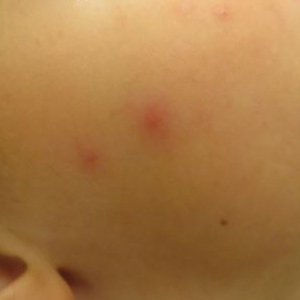
Hospital Mergers in 2024: Five Things to Know
Hospital mergers and acquisitions continue to garner intense scrutiny from lawmakers, with pressure likely to hold steady following the recent announcement of new antitrust guidelines and state and federal investigations into potential healthcare monopolies.
In December, the US Department of Justice (DOJ) and the Federal Trade Commission (FTC) released updated guidelines outlining the factors they consider when determining if a merger illegally monopolizes a local healthcare market or jeopardizes access to critical healthcare services.
Last week, the DOJ also announced a UnitedHealth Group antitrust probe, just months after the healthcare conglomerate’s workforce numbers indicated it is now affiliated with or employs 10% of the US physician workforce.
While the impact of the latest guidelines is yet to be seen, concerns over healthcare market consolidation are not new. Over the past two decades, mergers have attracted attention for contributing to a decline in independent hospitals, said Rachel M. Werner, MD, PhD, executive director of the Leonard Davis Institute of Health Economics at the University of Pennsylvania, Philadelphia, Pennsylvania.
“At this point, most hospitals are operating in a pretty concentrated market,” she said.
Here are five things to know about the current state of hospital mergers.
1. Record-Breaking Merger Enforcements
The DOJ and FTC reported the highest level of enforcement activity in over 20 years in fiscal year 2022 — the latest available data. Together, the agencies filed 50 merger enforcement actions and brought a record-breaking number of merger enforcement challenges, resulting in 11 approved actions, the restructuring or abandonment of seven mergers, and six business deals entering litigation.
Included in those statistics was a proposed merger between the two largest health systems in Rhode Island, Lifespan and Care New England Health System, which was abandoned after the FTC and the state Attorney General took steps to block it. the HCA branch in Utah Healthcare abandoned plans for to acquire five Salt Lake City area hospitals from competitor Steward Health Care System, as did RWJBarnabas Health after exploring a merger with Saint Peter's Healthcare System in New Jersey.
2. New Antitrust Guidelines Consider Labor Market
The new guidelines notably focus on labor competition, said Jody Boudreault, JD, attorney and chair of the Antitrust Life Sciences and Healthcare Group at Baker Botts law firm in Washington, DC. Health professionals typically have more employment opportunities in an urban area, unless hindered by restrictive noncompete agreements, and fewer options in rural settings.
In the Lifespan merger that fell through, Ms. Boudreault said that the newly created hospital system would have employed two thirds of Rhode Island's full-time nurses, limiting opportunities for local employment elsewhere.
“Going forward, I would expect federal authorities to review not only the competitive impact of the hospitals merging but also the competitive impact of the physician, and especially nursing, workforce,” she said.
FTC Chair Lina M. Khan noted similar labor market concerns.
In a statement to Congress, she said that hospital consolidation reduces options for employees, who fear “being blacklisted from further hiring in a system that controls many of the hospitals in the area” and “makes workers afraid to file complaints, organize their workplace, or leave before the end of a contract.”
3. Mergers Can Drive Care Costs Higher
When hospital markets become less competitive, the cost of care often increases. In Indiana, inpatient prices rose 13% in hospitals that merged. Another study found that prices at monopoly hospitals are 12% higher than in markets with four or more rivals. Even cross-market mergers, when hospitals in different geographic locations combine, can drive prices higher.
Dr. Werner told this news organization that more significant price hikes of 20-30% aren’t unheard of, with reimbursements by some commercial insurance companies rising as much as 50%. “That’s the direct price that the insurers pay, but the burden of those higher prices ultimately falls on patients through higher premiums,” she said.
Still, the American Hospital Association (AHA) says that mergers and acquisitions can significantly lower annual operating expenses per admission and reduce inpatient readmission rates and mortality measures. In comments to the FTC, the AHA stated that mergers could provide a lifeline for rural and community hospitals struggling with shrinking payer reimbursement and rising labor and supply costs. The business arrangements also could ensure these communities maintain continuity of care.
Although a cross-market merger may initially benefit cash-strapped rural hospitals, Dr. Werner urged caution.
“In the long run, it’s not clear that it is good for patients because we start to see decreased access to some types of service, like labor and delivery, which are services needed in rural markets,” she said.
4. Mergers to Watch in 2024
Ms. Boudreault, who represented RWJBarnabas in the abandoned Saint Peter’s transaction, says the courts widely accepted the old merger guidelines, and it will take time to see how the new measures are interpreted. “The guidelines don’t yet have the force of law, but they can be persuasive to a court.”
Looking ahead, she is watching how Steward Health Care navigates its impending financial collapse. The nation’s largest private for-profit health system was previously owned by private equity firm Cerberus Capital Management and includes nine Massachusetts hospitals plus entities in at least seven other states.
Ms. Boudreault also plans to monitor Jefferson Health’s intent to merge with Lehigh Valley Health Network. “It’s a pretty big deal because they would become a 30-hospital system,” said Ms. Boudreault. The newly formed network would become the largest employer in Philadelphia.
5. Merger and Acquisition Reversals Unlikely
Dr. Werner said that mergers and acquisitions are complicated business moves that are nearly impossible to undo once approved, so it makes sense for agencies to continue to evaluate them closely.
“The costs of healthcare are borne by us as a society,” she said. “We’re going to have to live with the ill effects of a consolidated market once we let hospitals merge, so they deserve additional scrutiny.”
A version of this article appeared on Medscape.com.
Hospital mergers and acquisitions continue to garner intense scrutiny from lawmakers, with pressure likely to hold steady following the recent announcement of new antitrust guidelines and state and federal investigations into potential healthcare monopolies.
In December, the US Department of Justice (DOJ) and the Federal Trade Commission (FTC) released updated guidelines outlining the factors they consider when determining if a merger illegally monopolizes a local healthcare market or jeopardizes access to critical healthcare services.
Last week, the DOJ also announced a UnitedHealth Group antitrust probe, just months after the healthcare conglomerate’s workforce numbers indicated it is now affiliated with or employs 10% of the US physician workforce.
While the impact of the latest guidelines is yet to be seen, concerns over healthcare market consolidation are not new. Over the past two decades, mergers have attracted attention for contributing to a decline in independent hospitals, said Rachel M. Werner, MD, PhD, executive director of the Leonard Davis Institute of Health Economics at the University of Pennsylvania, Philadelphia, Pennsylvania.
“At this point, most hospitals are operating in a pretty concentrated market,” she said.
Here are five things to know about the current state of hospital mergers.
1. Record-Breaking Merger Enforcements
The DOJ and FTC reported the highest level of enforcement activity in over 20 years in fiscal year 2022 — the latest available data. Together, the agencies filed 50 merger enforcement actions and brought a record-breaking number of merger enforcement challenges, resulting in 11 approved actions, the restructuring or abandonment of seven mergers, and six business deals entering litigation.
Included in those statistics was a proposed merger between the two largest health systems in Rhode Island, Lifespan and Care New England Health System, which was abandoned after the FTC and the state Attorney General took steps to block it. the HCA branch in Utah Healthcare abandoned plans for to acquire five Salt Lake City area hospitals from competitor Steward Health Care System, as did RWJBarnabas Health after exploring a merger with Saint Peter's Healthcare System in New Jersey.
2. New Antitrust Guidelines Consider Labor Market
The new guidelines notably focus on labor competition, said Jody Boudreault, JD, attorney and chair of the Antitrust Life Sciences and Healthcare Group at Baker Botts law firm in Washington, DC. Health professionals typically have more employment opportunities in an urban area, unless hindered by restrictive noncompete agreements, and fewer options in rural settings.
In the Lifespan merger that fell through, Ms. Boudreault said that the newly created hospital system would have employed two thirds of Rhode Island's full-time nurses, limiting opportunities for local employment elsewhere.
“Going forward, I would expect federal authorities to review not only the competitive impact of the hospitals merging but also the competitive impact of the physician, and especially nursing, workforce,” she said.
FTC Chair Lina M. Khan noted similar labor market concerns.
In a statement to Congress, she said that hospital consolidation reduces options for employees, who fear “being blacklisted from further hiring in a system that controls many of the hospitals in the area” and “makes workers afraid to file complaints, organize their workplace, or leave before the end of a contract.”
3. Mergers Can Drive Care Costs Higher
When hospital markets become less competitive, the cost of care often increases. In Indiana, inpatient prices rose 13% in hospitals that merged. Another study found that prices at monopoly hospitals are 12% higher than in markets with four or more rivals. Even cross-market mergers, when hospitals in different geographic locations combine, can drive prices higher.
Dr. Werner told this news organization that more significant price hikes of 20-30% aren’t unheard of, with reimbursements by some commercial insurance companies rising as much as 50%. “That’s the direct price that the insurers pay, but the burden of those higher prices ultimately falls on patients through higher premiums,” she said.
Still, the American Hospital Association (AHA) says that mergers and acquisitions can significantly lower annual operating expenses per admission and reduce inpatient readmission rates and mortality measures. In comments to the FTC, the AHA stated that mergers could provide a lifeline for rural and community hospitals struggling with shrinking payer reimbursement and rising labor and supply costs. The business arrangements also could ensure these communities maintain continuity of care.
Although a cross-market merger may initially benefit cash-strapped rural hospitals, Dr. Werner urged caution.
“In the long run, it’s not clear that it is good for patients because we start to see decreased access to some types of service, like labor and delivery, which are services needed in rural markets,” she said.
4. Mergers to Watch in 2024
Ms. Boudreault, who represented RWJBarnabas in the abandoned Saint Peter’s transaction, says the courts widely accepted the old merger guidelines, and it will take time to see how the new measures are interpreted. “The guidelines don’t yet have the force of law, but they can be persuasive to a court.”
Looking ahead, she is watching how Steward Health Care navigates its impending financial collapse. The nation’s largest private for-profit health system was previously owned by private equity firm Cerberus Capital Management and includes nine Massachusetts hospitals plus entities in at least seven other states.
Ms. Boudreault also plans to monitor Jefferson Health’s intent to merge with Lehigh Valley Health Network. “It’s a pretty big deal because they would become a 30-hospital system,” said Ms. Boudreault. The newly formed network would become the largest employer in Philadelphia.
5. Merger and Acquisition Reversals Unlikely
Dr. Werner said that mergers and acquisitions are complicated business moves that are nearly impossible to undo once approved, so it makes sense for agencies to continue to evaluate them closely.
“The costs of healthcare are borne by us as a society,” she said. “We’re going to have to live with the ill effects of a consolidated market once we let hospitals merge, so they deserve additional scrutiny.”
A version of this article appeared on Medscape.com.
Hospital mergers and acquisitions continue to garner intense scrutiny from lawmakers, with pressure likely to hold steady following the recent announcement of new antitrust guidelines and state and federal investigations into potential healthcare monopolies.
In December, the US Department of Justice (DOJ) and the Federal Trade Commission (FTC) released updated guidelines outlining the factors they consider when determining if a merger illegally monopolizes a local healthcare market or jeopardizes access to critical healthcare services.
Last week, the DOJ also announced a UnitedHealth Group antitrust probe, just months after the healthcare conglomerate’s workforce numbers indicated it is now affiliated with or employs 10% of the US physician workforce.
While the impact of the latest guidelines is yet to be seen, concerns over healthcare market consolidation are not new. Over the past two decades, mergers have attracted attention for contributing to a decline in independent hospitals, said Rachel M. Werner, MD, PhD, executive director of the Leonard Davis Institute of Health Economics at the University of Pennsylvania, Philadelphia, Pennsylvania.
“At this point, most hospitals are operating in a pretty concentrated market,” she said.
Here are five things to know about the current state of hospital mergers.
1. Record-Breaking Merger Enforcements
The DOJ and FTC reported the highest level of enforcement activity in over 20 years in fiscal year 2022 — the latest available data. Together, the agencies filed 50 merger enforcement actions and brought a record-breaking number of merger enforcement challenges, resulting in 11 approved actions, the restructuring or abandonment of seven mergers, and six business deals entering litigation.
Included in those statistics was a proposed merger between the two largest health systems in Rhode Island, Lifespan and Care New England Health System, which was abandoned after the FTC and the state Attorney General took steps to block it. the HCA branch in Utah Healthcare abandoned plans for to acquire five Salt Lake City area hospitals from competitor Steward Health Care System, as did RWJBarnabas Health after exploring a merger with Saint Peter's Healthcare System in New Jersey.
2. New Antitrust Guidelines Consider Labor Market
The new guidelines notably focus on labor competition, said Jody Boudreault, JD, attorney and chair of the Antitrust Life Sciences and Healthcare Group at Baker Botts law firm in Washington, DC. Health professionals typically have more employment opportunities in an urban area, unless hindered by restrictive noncompete agreements, and fewer options in rural settings.
In the Lifespan merger that fell through, Ms. Boudreault said that the newly created hospital system would have employed two thirds of Rhode Island's full-time nurses, limiting opportunities for local employment elsewhere.
“Going forward, I would expect federal authorities to review not only the competitive impact of the hospitals merging but also the competitive impact of the physician, and especially nursing, workforce,” she said.
FTC Chair Lina M. Khan noted similar labor market concerns.
In a statement to Congress, she said that hospital consolidation reduces options for employees, who fear “being blacklisted from further hiring in a system that controls many of the hospitals in the area” and “makes workers afraid to file complaints, organize their workplace, or leave before the end of a contract.”
3. Mergers Can Drive Care Costs Higher
When hospital markets become less competitive, the cost of care often increases. In Indiana, inpatient prices rose 13% in hospitals that merged. Another study found that prices at monopoly hospitals are 12% higher than in markets with four or more rivals. Even cross-market mergers, when hospitals in different geographic locations combine, can drive prices higher.
Dr. Werner told this news organization that more significant price hikes of 20-30% aren’t unheard of, with reimbursements by some commercial insurance companies rising as much as 50%. “That’s the direct price that the insurers pay, but the burden of those higher prices ultimately falls on patients through higher premiums,” she said.
Still, the American Hospital Association (AHA) says that mergers and acquisitions can significantly lower annual operating expenses per admission and reduce inpatient readmission rates and mortality measures. In comments to the FTC, the AHA stated that mergers could provide a lifeline for rural and community hospitals struggling with shrinking payer reimbursement and rising labor and supply costs. The business arrangements also could ensure these communities maintain continuity of care.
Although a cross-market merger may initially benefit cash-strapped rural hospitals, Dr. Werner urged caution.
“In the long run, it’s not clear that it is good for patients because we start to see decreased access to some types of service, like labor and delivery, which are services needed in rural markets,” she said.
4. Mergers to Watch in 2024
Ms. Boudreault, who represented RWJBarnabas in the abandoned Saint Peter’s transaction, says the courts widely accepted the old merger guidelines, and it will take time to see how the new measures are interpreted. “The guidelines don’t yet have the force of law, but they can be persuasive to a court.”
Looking ahead, she is watching how Steward Health Care navigates its impending financial collapse. The nation’s largest private for-profit health system was previously owned by private equity firm Cerberus Capital Management and includes nine Massachusetts hospitals plus entities in at least seven other states.
Ms. Boudreault also plans to monitor Jefferson Health’s intent to merge with Lehigh Valley Health Network. “It’s a pretty big deal because they would become a 30-hospital system,” said Ms. Boudreault. The newly formed network would become the largest employer in Philadelphia.
5. Merger and Acquisition Reversals Unlikely
Dr. Werner said that mergers and acquisitions are complicated business moves that are nearly impossible to undo once approved, so it makes sense for agencies to continue to evaluate them closely.
“The costs of healthcare are borne by us as a society,” she said. “We’re going to have to live with the ill effects of a consolidated market once we let hospitals merge, so they deserve additional scrutiny.”
A version of this article appeared on Medscape.com.
Bartonella henselae Infection May Occasionally Distract Immune Control of Latent Human Herpesviruses
To the Editor:
We read with interest the September 2023 Cutis article by Swink et al,1 “Cat Scratch Disease Presenting With Concurrent Pityriasis Rosea in a 10-Year-Old Girl.” The authors documented the possibility of Bartonella henselae infection as another causative agent for pityriasis rosea (PR) even though the association of PR with human herpesvirus (HHV) 6 and HHV-7 infection is based on several consistent observations and not on occasional findings. The association of PR with endogenous systemic reactivation of HHV-6 and HHV-7 has been identified with different investigations and laboratory techniques. Using polymerase chain reaction, real-time calibrated quantitative polymerase chain reaction, in situ hybridization, immunohistochemistry, and electron microscopy, HHV-6 and HHV-7 have been detected in plasma (a marker of active viral replication), peripheral blood mononuclear cells, and skin lesions from patients with PR.2 In addition, HHV-6 and HHV-7 messenger RNA expression and their specific antigens have been detected in PR skin lesions and herpesvirus virions in various stages of morphogenesis as well as in the supernatant of co-cultured peripheral blood mononuclear cells of patients with PR.2,3 Lastly, the increased levels of several particular cytokines and chemokinesin the sera of patients with PR support a viral role in its pathogenesis.4
Bartonella henselae is a gram-negative intracellular facultative bacterium that is commonly implicated in causing zoonotic infections worldwide. The incidence of cat-scratch disease (CSD) was reported to be 6.4 cases per 100,000 population in adults and 9.4 cases per 100,000 population in children aged 5 to 9 years globally.5 Approximately 24,000 cases of CSD are reported in the United States every year.6 Therefore, considering these data, if B henselae was a causative agent for PR, the eruption would be observed frequently in many patients with CSD, which is not the case. On the contrary, it is possible that B henselae infection may have reactivated HHV-6 and/or HHV-7 infection. It is well established that B henselae causes a robust cell-mediated immune response by activating natural killer and helper T cells (TH1) and enhancement of cytotoxic T lymphocytes.7 It could be assumed that by strongly stimulating the immune response and polarizing it to a specific antigen cell response, B henselae infection may temporarily distract the T cell-mediated control of the latent infections, such as HHV-6 and HHV-7, which may reactivate and cause PR.
It is important to point out that a case of concomitant B henselae and Epstein-Barr virus infection has been described.8 Even in that case, the B henselae infection may have reactivated Epstein-Barr virus as well as HHV-6 and HHV-7 in the case described by Swink et al.1 Epstein-Barr virus reactivation has been detected in one case8 through serologic testing—IgM, IgG, Epstein-Barr virus nuclear antigen IgG, and heterophile antibodies—as there were no dermatologic manifestations that may be related to Epstein-Barr virus reactivation from latency.9
In conclusion, a viral or bacterial infection such as Epstein-Barr virus or B henselae may have a transactivating function allowing another (latent) virus such as HHV-6 or HHV-7 to reactivate. Indeed, it has been described that SARS-CoV-2 may act as a transactivator agent triggering HHV-6/HHV-7 reactivation, thereby indirectly causing PR clinical manifestation.10
- Swink SM, Rhodes LP, Levin J. Cat scratch disease presenting with concurrent pityriasis rosea in a 10-year-old girl. Cutis. 2023;112:E24-E26. doi:10.12788/cutis.0861
- Broccolo F, Drago F, Careddu AM, et al. Additional evidence that pityriasis rosea is associated with reactivation of human herpesvirus-6 and -7. J Invest Dermatol. 2005;124:1234-1240.
- Rebora A, Ciccarese G, Herzum A, et al. Pityriasis rosea and other infectious eruptions during pregnancy: possible life-threatening health conditions for the fetus. Clin Dermatol. 2020;38:105-112.
- Drago F, Ciccarese G, Broccolo F, et al. The role of cytokines, chemokines, and growth factors in the pathogenesis of pityriasis rosea. Mediators Inflamm. 2015;2015:438963. doi:10.1155/2015/438963
- Nelson CA, Moore AR, Perea AE, et al. Cat scratch disease: U.S. clinicians’ experience and knowledge. Zoonoses Public Health. 2018;65:67-73.
- Ackson LA, Perkins BA, Wenger JD. Cat scratch disease in the United States: an analysis of three national databases. Am J Public Health. 1993;83:1707-1711.
- Resto-Ruiz S, Burgess A, Anderson BE. The role of the host immune response in pathogenesis of Bartonella henselae. DNA Cell Biol. 2003; 22:431-440.
- Aparicio-Casares H, Puente-Rico MH, Tomé-Nestal C, et al. A pediatric case of Bartonella henselae and Epstein Barr virus disease with bone and hepatosplenic involvement. Bol Med Hosp Infant Mex. 2021;78:467-473.
- Ciccarese G, Trave I, Herzum A, et al. Dermatological manifestations of Epstein-Barr virus systemic infection: a case report and literature review. Int J Dermatol. 2020;59:1202-1209.
- Drago F, Broccolo F, Ciccarese G. Pityriasis rosea, pityriasis rosea-like eruptions, and herpes zoster in the setting of COVID-19 and COVID-19 vaccination. Clin Dermatol. 2022;40:586-590.
To the Editor:
We read with interest the September 2023 Cutis article by Swink et al,1 “Cat Scratch Disease Presenting With Concurrent Pityriasis Rosea in a 10-Year-Old Girl.” The authors documented the possibility of Bartonella henselae infection as another causative agent for pityriasis rosea (PR) even though the association of PR with human herpesvirus (HHV) 6 and HHV-7 infection is based on several consistent observations and not on occasional findings. The association of PR with endogenous systemic reactivation of HHV-6 and HHV-7 has been identified with different investigations and laboratory techniques. Using polymerase chain reaction, real-time calibrated quantitative polymerase chain reaction, in situ hybridization, immunohistochemistry, and electron microscopy, HHV-6 and HHV-7 have been detected in plasma (a marker of active viral replication), peripheral blood mononuclear cells, and skin lesions from patients with PR.2 In addition, HHV-6 and HHV-7 messenger RNA expression and their specific antigens have been detected in PR skin lesions and herpesvirus virions in various stages of morphogenesis as well as in the supernatant of co-cultured peripheral blood mononuclear cells of patients with PR.2,3 Lastly, the increased levels of several particular cytokines and chemokinesin the sera of patients with PR support a viral role in its pathogenesis.4
Bartonella henselae is a gram-negative intracellular facultative bacterium that is commonly implicated in causing zoonotic infections worldwide. The incidence of cat-scratch disease (CSD) was reported to be 6.4 cases per 100,000 population in adults and 9.4 cases per 100,000 population in children aged 5 to 9 years globally.5 Approximately 24,000 cases of CSD are reported in the United States every year.6 Therefore, considering these data, if B henselae was a causative agent for PR, the eruption would be observed frequently in many patients with CSD, which is not the case. On the contrary, it is possible that B henselae infection may have reactivated HHV-6 and/or HHV-7 infection. It is well established that B henselae causes a robust cell-mediated immune response by activating natural killer and helper T cells (TH1) and enhancement of cytotoxic T lymphocytes.7 It could be assumed that by strongly stimulating the immune response and polarizing it to a specific antigen cell response, B henselae infection may temporarily distract the T cell-mediated control of the latent infections, such as HHV-6 and HHV-7, which may reactivate and cause PR.
It is important to point out that a case of concomitant B henselae and Epstein-Barr virus infection has been described.8 Even in that case, the B henselae infection may have reactivated Epstein-Barr virus as well as HHV-6 and HHV-7 in the case described by Swink et al.1 Epstein-Barr virus reactivation has been detected in one case8 through serologic testing—IgM, IgG, Epstein-Barr virus nuclear antigen IgG, and heterophile antibodies—as there were no dermatologic manifestations that may be related to Epstein-Barr virus reactivation from latency.9
In conclusion, a viral or bacterial infection such as Epstein-Barr virus or B henselae may have a transactivating function allowing another (latent) virus such as HHV-6 or HHV-7 to reactivate. Indeed, it has been described that SARS-CoV-2 may act as a transactivator agent triggering HHV-6/HHV-7 reactivation, thereby indirectly causing PR clinical manifestation.10
To the Editor:
We read with interest the September 2023 Cutis article by Swink et al,1 “Cat Scratch Disease Presenting With Concurrent Pityriasis Rosea in a 10-Year-Old Girl.” The authors documented the possibility of Bartonella henselae infection as another causative agent for pityriasis rosea (PR) even though the association of PR with human herpesvirus (HHV) 6 and HHV-7 infection is based on several consistent observations and not on occasional findings. The association of PR with endogenous systemic reactivation of HHV-6 and HHV-7 has been identified with different investigations and laboratory techniques. Using polymerase chain reaction, real-time calibrated quantitative polymerase chain reaction, in situ hybridization, immunohistochemistry, and electron microscopy, HHV-6 and HHV-7 have been detected in plasma (a marker of active viral replication), peripheral blood mononuclear cells, and skin lesions from patients with PR.2 In addition, HHV-6 and HHV-7 messenger RNA expression and their specific antigens have been detected in PR skin lesions and herpesvirus virions in various stages of morphogenesis as well as in the supernatant of co-cultured peripheral blood mononuclear cells of patients with PR.2,3 Lastly, the increased levels of several particular cytokines and chemokinesin the sera of patients with PR support a viral role in its pathogenesis.4
Bartonella henselae is a gram-negative intracellular facultative bacterium that is commonly implicated in causing zoonotic infections worldwide. The incidence of cat-scratch disease (CSD) was reported to be 6.4 cases per 100,000 population in adults and 9.4 cases per 100,000 population in children aged 5 to 9 years globally.5 Approximately 24,000 cases of CSD are reported in the United States every year.6 Therefore, considering these data, if B henselae was a causative agent for PR, the eruption would be observed frequently in many patients with CSD, which is not the case. On the contrary, it is possible that B henselae infection may have reactivated HHV-6 and/or HHV-7 infection. It is well established that B henselae causes a robust cell-mediated immune response by activating natural killer and helper T cells (TH1) and enhancement of cytotoxic T lymphocytes.7 It could be assumed that by strongly stimulating the immune response and polarizing it to a specific antigen cell response, B henselae infection may temporarily distract the T cell-mediated control of the latent infections, such as HHV-6 and HHV-7, which may reactivate and cause PR.
It is important to point out that a case of concomitant B henselae and Epstein-Barr virus infection has been described.8 Even in that case, the B henselae infection may have reactivated Epstein-Barr virus as well as HHV-6 and HHV-7 in the case described by Swink et al.1 Epstein-Barr virus reactivation has been detected in one case8 through serologic testing—IgM, IgG, Epstein-Barr virus nuclear antigen IgG, and heterophile antibodies—as there were no dermatologic manifestations that may be related to Epstein-Barr virus reactivation from latency.9
In conclusion, a viral or bacterial infection such as Epstein-Barr virus or B henselae may have a transactivating function allowing another (latent) virus such as HHV-6 or HHV-7 to reactivate. Indeed, it has been described that SARS-CoV-2 may act as a transactivator agent triggering HHV-6/HHV-7 reactivation, thereby indirectly causing PR clinical manifestation.10
- Swink SM, Rhodes LP, Levin J. Cat scratch disease presenting with concurrent pityriasis rosea in a 10-year-old girl. Cutis. 2023;112:E24-E26. doi:10.12788/cutis.0861
- Broccolo F, Drago F, Careddu AM, et al. Additional evidence that pityriasis rosea is associated with reactivation of human herpesvirus-6 and -7. J Invest Dermatol. 2005;124:1234-1240.
- Rebora A, Ciccarese G, Herzum A, et al. Pityriasis rosea and other infectious eruptions during pregnancy: possible life-threatening health conditions for the fetus. Clin Dermatol. 2020;38:105-112.
- Drago F, Ciccarese G, Broccolo F, et al. The role of cytokines, chemokines, and growth factors in the pathogenesis of pityriasis rosea. Mediators Inflamm. 2015;2015:438963. doi:10.1155/2015/438963
- Nelson CA, Moore AR, Perea AE, et al. Cat scratch disease: U.S. clinicians’ experience and knowledge. Zoonoses Public Health. 2018;65:67-73.
- Ackson LA, Perkins BA, Wenger JD. Cat scratch disease in the United States: an analysis of three national databases. Am J Public Health. 1993;83:1707-1711.
- Resto-Ruiz S, Burgess A, Anderson BE. The role of the host immune response in pathogenesis of Bartonella henselae. DNA Cell Biol. 2003; 22:431-440.
- Aparicio-Casares H, Puente-Rico MH, Tomé-Nestal C, et al. A pediatric case of Bartonella henselae and Epstein Barr virus disease with bone and hepatosplenic involvement. Bol Med Hosp Infant Mex. 2021;78:467-473.
- Ciccarese G, Trave I, Herzum A, et al. Dermatological manifestations of Epstein-Barr virus systemic infection: a case report and literature review. Int J Dermatol. 2020;59:1202-1209.
- Drago F, Broccolo F, Ciccarese G. Pityriasis rosea, pityriasis rosea-like eruptions, and herpes zoster in the setting of COVID-19 and COVID-19 vaccination. Clin Dermatol. 2022;40:586-590.
- Swink SM, Rhodes LP, Levin J. Cat scratch disease presenting with concurrent pityriasis rosea in a 10-year-old girl. Cutis. 2023;112:E24-E26. doi:10.12788/cutis.0861
- Broccolo F, Drago F, Careddu AM, et al. Additional evidence that pityriasis rosea is associated with reactivation of human herpesvirus-6 and -7. J Invest Dermatol. 2005;124:1234-1240.
- Rebora A, Ciccarese G, Herzum A, et al. Pityriasis rosea and other infectious eruptions during pregnancy: possible life-threatening health conditions for the fetus. Clin Dermatol. 2020;38:105-112.
- Drago F, Ciccarese G, Broccolo F, et al. The role of cytokines, chemokines, and growth factors in the pathogenesis of pityriasis rosea. Mediators Inflamm. 2015;2015:438963. doi:10.1155/2015/438963
- Nelson CA, Moore AR, Perea AE, et al. Cat scratch disease: U.S. clinicians’ experience and knowledge. Zoonoses Public Health. 2018;65:67-73.
- Ackson LA, Perkins BA, Wenger JD. Cat scratch disease in the United States: an analysis of three national databases. Am J Public Health. 1993;83:1707-1711.
- Resto-Ruiz S, Burgess A, Anderson BE. The role of the host immune response in pathogenesis of Bartonella henselae. DNA Cell Biol. 2003; 22:431-440.
- Aparicio-Casares H, Puente-Rico MH, Tomé-Nestal C, et al. A pediatric case of Bartonella henselae and Epstein Barr virus disease with bone and hepatosplenic involvement. Bol Med Hosp Infant Mex. 2021;78:467-473.
- Ciccarese G, Trave I, Herzum A, et al. Dermatological manifestations of Epstein-Barr virus systemic infection: a case report and literature review. Int J Dermatol. 2020;59:1202-1209.
- Drago F, Broccolo F, Ciccarese G. Pityriasis rosea, pityriasis rosea-like eruptions, and herpes zoster in the setting of COVID-19 and COVID-19 vaccination. Clin Dermatol. 2022;40:586-590.
Hemorrhagic Crescent Sign in Pseudocellulitis
To the Editor:
Cellulitis is the most common reason for skin-related hospital admissions.1 Despite its frequency, it is suspected that many cases of cellulitis are misdiagnosed as other etiologies presenting with similar symptoms such as a ruptured Baker cyst. These cysts are located behind the knee and can present with calf pain, peripheral edema, and erythema when ruptured. Symptoms of a ruptured Baker cyst can be indistinguishable from cellulitis as well as deep vein thrombosis (DVT), both manifesting with lower extremity pain, swelling, and erythema, making diagnosis challenging.2 The hemorrhagic crescent sign—a crescent of ecchymosis distal to the medial malleolus and on the foot that results from synovial injury or rupture—can be a useful diagnostic tool to differentiate between the causes of acute swelling and pain of the leg.2 When observed, the hemorrhagic crescent sign supports testing for synovial pathology at the knee.
A 63-year-old man presented to an outside hospital for evaluation of a fever (temperature, 101 °F [38.3 °C]), as well as pain, edema, and erythema of the right lower leg of 2 days’ duration. He had a history of leg cellulitis, gout, diabetes mellitus, lymphedema, and peripheral neuropathy. On admission, he was found to have elevated C-reactive protein (45 mg/L [reference range, <8 mg/L]) and mild leukocytosis (13,500 cells/μL [reference range, 4500–11,000 cells/μL]). A venous duplex scan did not demonstrate signs of thrombosis. Antibiotic therapy was started for suspected cellulitis including levofloxacin, piperacillin-tazobactam, and linezolid. Despite broad-spectrum antibiotic coverage, the patient continued to be febrile and experienced progressive erythema and swelling of the right lower leg, at which point he was transferred to our institution. A new antibiotic regimen of vancomycin, cefepime, and clindamycin was started and showed no improvement, after which dermatology was consulted.
Physical examination revealed unilateral edema and calor of the right lower leg with a demarcated erythematous rash extending to the level of the knee. Furthermore, a hemorrhagic crescent sign was present below the right medial malleolus (Figure). The popliteal fossa was supple, though the patient was adamant that he had a Baker cyst. Punch biopsies demonstrated epidermal spongiosis and extensive edema with perivascular inflammation. No organisms were found by stain and culture. Ultrasound records confirmed a Baker cyst present at least 4 months prior; however, a repeat ultrasound showed resolution. A diagnosis of pseudocellulitis secondary to Baker cyst rupture was made, and corticosteroids were started, resulting in marked reduction in erythema and edema of the lower leg and hospital discharge.
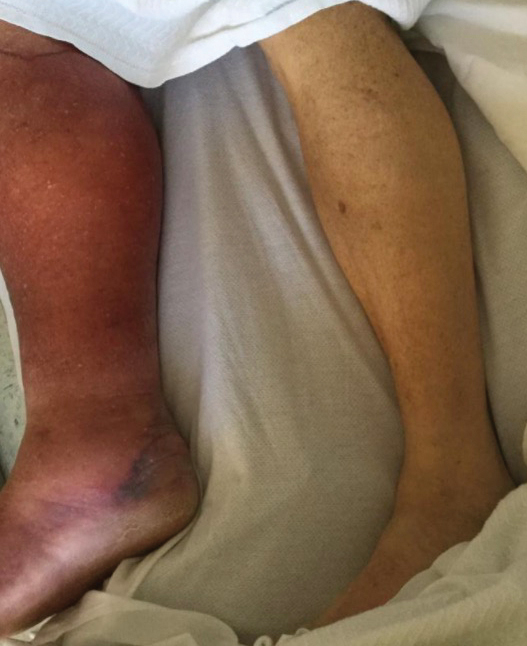
This case highlights the importance of early involvement of dermatology when cellulitis is suspected. A study of 635 patients in the United Kingdom referred to dermatology for lower limb cellulitis found that 210 (33%) patients did not have cellulitis and only 18 (3%) required hospital admission.3 Dermatology consultations have been shown to benefit patients with inflammatory skin disease by decreasing length of stay and reducing readmissions.4
Our patient had several risk factors for cellulitis, including obesity, lymphedema, and chronic kidney disease, in addition to having fevers and unilateral involvement. However, failure of symptoms to improve with broad-spectrum antibiotics made a diagnosis of cellulitis less likely. In this case, a severe immune response to the ruptured Baker cyst mimicked the presentation of cellulitis.
Ruptured Baker cysts have been reported to cause acute leg swelling, mimicking the symptoms of cellulitis or DVT.2,5 The presence of a hemorrhagic crescent sign can be a useful diagnostic tool, as in our patient, because it has been reported as an indication of synovial injury or rupture, supporting the exclusion of cellulitis or DVT when it is observed.6 Prior reports have observed ecchymosis on the foot in as little as 1 day after the onset of calf swelling and at the lateral malleolus 3 days after the onset of calf swelling.5
Following suspicion of a ruptured Baker cyst causing pseudocellulitis, an ultrasound can be used to confirm the diagnosis. Ultrasonography shows a large hypoechoic space behind the calf muscles, which is pathognomonic of a ruptured Baker cyst.7
In conclusion, when a hemorrhagic crescent sign is observed, one should be suspicious for a ruptured Baker cyst or other synovial pathology as an etiology of pseudocellulitis. Early recognition of the hemorrhagic crescent sign can help rule out cellulitis and DVT, thereby reducing the amount of intravenous antibiotic prescribed, decreasing the length of hospital stay, and reducing readmission.
- Feldman SR, Fleischer AB, McConnell RC. Most common dermatologic problems identified by internists, 1990-1994. Arch Intern Med. 1998;158:726-730. doi:10.1001/archinte.158.7.726
- Von Schroeder HP, Ameli FM, Piazza D, et al. Ruptured Baker’s cyst causes ecchymosis of the foot. J Bone Joint Surg Br. 1993;75:316-317.
- Levell NJ, Wingfield CG, Garioch JJ. Severe lower limb cellulitis is best diagnosed by dermatologists and managed with shared care between primary and secondary care. Br J Dermatol. 2011;164:1326-1328.
- Milani-Nejad N, Zhang M, Kaffenberger BH. Association of dermatology consultations with patient care outcomes in hospitalized patients with inflammatory skin diseases. JAMA Dermatol. 2017;53:523-528.
- Dunlop D, Parker PJ, Keating JF. Ruptured Baker’s cyst causing posterior compartment syndrome. Injury. 1997;28:561-562.
- Kraag G, Thevathasan EM, Gordon DA, et al. The hemorrhagic crescent sign of acute synovial rupture. Ann Intern Med. 1976;85:477-478.
- Sato O, Kondoh K, Iyori K, et al. Midcalf ultrasonography for the diagnosis of ruptured Baker’s cysts. Surg Today. 2001;31:410-413. doi:10.1007/s005950170131
To the Editor:
Cellulitis is the most common reason for skin-related hospital admissions.1 Despite its frequency, it is suspected that many cases of cellulitis are misdiagnosed as other etiologies presenting with similar symptoms such as a ruptured Baker cyst. These cysts are located behind the knee and can present with calf pain, peripheral edema, and erythema when ruptured. Symptoms of a ruptured Baker cyst can be indistinguishable from cellulitis as well as deep vein thrombosis (DVT), both manifesting with lower extremity pain, swelling, and erythema, making diagnosis challenging.2 The hemorrhagic crescent sign—a crescent of ecchymosis distal to the medial malleolus and on the foot that results from synovial injury or rupture—can be a useful diagnostic tool to differentiate between the causes of acute swelling and pain of the leg.2 When observed, the hemorrhagic crescent sign supports testing for synovial pathology at the knee.
A 63-year-old man presented to an outside hospital for evaluation of a fever (temperature, 101 °F [38.3 °C]), as well as pain, edema, and erythema of the right lower leg of 2 days’ duration. He had a history of leg cellulitis, gout, diabetes mellitus, lymphedema, and peripheral neuropathy. On admission, he was found to have elevated C-reactive protein (45 mg/L [reference range, <8 mg/L]) and mild leukocytosis (13,500 cells/μL [reference range, 4500–11,000 cells/μL]). A venous duplex scan did not demonstrate signs of thrombosis. Antibiotic therapy was started for suspected cellulitis including levofloxacin, piperacillin-tazobactam, and linezolid. Despite broad-spectrum antibiotic coverage, the patient continued to be febrile and experienced progressive erythema and swelling of the right lower leg, at which point he was transferred to our institution. A new antibiotic regimen of vancomycin, cefepime, and clindamycin was started and showed no improvement, after which dermatology was consulted.
Physical examination revealed unilateral edema and calor of the right lower leg with a demarcated erythematous rash extending to the level of the knee. Furthermore, a hemorrhagic crescent sign was present below the right medial malleolus (Figure). The popliteal fossa was supple, though the patient was adamant that he had a Baker cyst. Punch biopsies demonstrated epidermal spongiosis and extensive edema with perivascular inflammation. No organisms were found by stain and culture. Ultrasound records confirmed a Baker cyst present at least 4 months prior; however, a repeat ultrasound showed resolution. A diagnosis of pseudocellulitis secondary to Baker cyst rupture was made, and corticosteroids were started, resulting in marked reduction in erythema and edema of the lower leg and hospital discharge.
This case highlights the importance of early involvement of dermatology when cellulitis is suspected. A study of 635 patients in the United Kingdom referred to dermatology for lower limb cellulitis found that 210 (33%) patients did not have cellulitis and only 18 (3%) required hospital admission.3 Dermatology consultations have been shown to benefit patients with inflammatory skin disease by decreasing length of stay and reducing readmissions.4
Our patient had several risk factors for cellulitis, including obesity, lymphedema, and chronic kidney disease, in addition to having fevers and unilateral involvement. However, failure of symptoms to improve with broad-spectrum antibiotics made a diagnosis of cellulitis less likely. In this case, a severe immune response to the ruptured Baker cyst mimicked the presentation of cellulitis.
Ruptured Baker cysts have been reported to cause acute leg swelling, mimicking the symptoms of cellulitis or DVT.2,5 The presence of a hemorrhagic crescent sign can be a useful diagnostic tool, as in our patient, because it has been reported as an indication of synovial injury or rupture, supporting the exclusion of cellulitis or DVT when it is observed.6 Prior reports have observed ecchymosis on the foot in as little as 1 day after the onset of calf swelling and at the lateral malleolus 3 days after the onset of calf swelling.5
Following suspicion of a ruptured Baker cyst causing pseudocellulitis, an ultrasound can be used to confirm the diagnosis. Ultrasonography shows a large hypoechoic space behind the calf muscles, which is pathognomonic of a ruptured Baker cyst.7
In conclusion, when a hemorrhagic crescent sign is observed, one should be suspicious for a ruptured Baker cyst or other synovial pathology as an etiology of pseudocellulitis. Early recognition of the hemorrhagic crescent sign can help rule out cellulitis and DVT, thereby reducing the amount of intravenous antibiotic prescribed, decreasing the length of hospital stay, and reducing readmission.
To the Editor:
Cellulitis is the most common reason for skin-related hospital admissions.1 Despite its frequency, it is suspected that many cases of cellulitis are misdiagnosed as other etiologies presenting with similar symptoms such as a ruptured Baker cyst. These cysts are located behind the knee and can present with calf pain, peripheral edema, and erythema when ruptured. Symptoms of a ruptured Baker cyst can be indistinguishable from cellulitis as well as deep vein thrombosis (DVT), both manifesting with lower extremity pain, swelling, and erythema, making diagnosis challenging.2 The hemorrhagic crescent sign—a crescent of ecchymosis distal to the medial malleolus and on the foot that results from synovial injury or rupture—can be a useful diagnostic tool to differentiate between the causes of acute swelling and pain of the leg.2 When observed, the hemorrhagic crescent sign supports testing for synovial pathology at the knee.
A 63-year-old man presented to an outside hospital for evaluation of a fever (temperature, 101 °F [38.3 °C]), as well as pain, edema, and erythema of the right lower leg of 2 days’ duration. He had a history of leg cellulitis, gout, diabetes mellitus, lymphedema, and peripheral neuropathy. On admission, he was found to have elevated C-reactive protein (45 mg/L [reference range, <8 mg/L]) and mild leukocytosis (13,500 cells/μL [reference range, 4500–11,000 cells/μL]). A venous duplex scan did not demonstrate signs of thrombosis. Antibiotic therapy was started for suspected cellulitis including levofloxacin, piperacillin-tazobactam, and linezolid. Despite broad-spectrum antibiotic coverage, the patient continued to be febrile and experienced progressive erythema and swelling of the right lower leg, at which point he was transferred to our institution. A new antibiotic regimen of vancomycin, cefepime, and clindamycin was started and showed no improvement, after which dermatology was consulted.
Physical examination revealed unilateral edema and calor of the right lower leg with a demarcated erythematous rash extending to the level of the knee. Furthermore, a hemorrhagic crescent sign was present below the right medial malleolus (Figure). The popliteal fossa was supple, though the patient was adamant that he had a Baker cyst. Punch biopsies demonstrated epidermal spongiosis and extensive edema with perivascular inflammation. No organisms were found by stain and culture. Ultrasound records confirmed a Baker cyst present at least 4 months prior; however, a repeat ultrasound showed resolution. A diagnosis of pseudocellulitis secondary to Baker cyst rupture was made, and corticosteroids were started, resulting in marked reduction in erythema and edema of the lower leg and hospital discharge.
This case highlights the importance of early involvement of dermatology when cellulitis is suspected. A study of 635 patients in the United Kingdom referred to dermatology for lower limb cellulitis found that 210 (33%) patients did not have cellulitis and only 18 (3%) required hospital admission.3 Dermatology consultations have been shown to benefit patients with inflammatory skin disease by decreasing length of stay and reducing readmissions.4
Our patient had several risk factors for cellulitis, including obesity, lymphedema, and chronic kidney disease, in addition to having fevers and unilateral involvement. However, failure of symptoms to improve with broad-spectrum antibiotics made a diagnosis of cellulitis less likely. In this case, a severe immune response to the ruptured Baker cyst mimicked the presentation of cellulitis.
Ruptured Baker cysts have been reported to cause acute leg swelling, mimicking the symptoms of cellulitis or DVT.2,5 The presence of a hemorrhagic crescent sign can be a useful diagnostic tool, as in our patient, because it has been reported as an indication of synovial injury or rupture, supporting the exclusion of cellulitis or DVT when it is observed.6 Prior reports have observed ecchymosis on the foot in as little as 1 day after the onset of calf swelling and at the lateral malleolus 3 days after the onset of calf swelling.5
Following suspicion of a ruptured Baker cyst causing pseudocellulitis, an ultrasound can be used to confirm the diagnosis. Ultrasonography shows a large hypoechoic space behind the calf muscles, which is pathognomonic of a ruptured Baker cyst.7
In conclusion, when a hemorrhagic crescent sign is observed, one should be suspicious for a ruptured Baker cyst or other synovial pathology as an etiology of pseudocellulitis. Early recognition of the hemorrhagic crescent sign can help rule out cellulitis and DVT, thereby reducing the amount of intravenous antibiotic prescribed, decreasing the length of hospital stay, and reducing readmission.
- Feldman SR, Fleischer AB, McConnell RC. Most common dermatologic problems identified by internists, 1990-1994. Arch Intern Med. 1998;158:726-730. doi:10.1001/archinte.158.7.726
- Von Schroeder HP, Ameli FM, Piazza D, et al. Ruptured Baker’s cyst causes ecchymosis of the foot. J Bone Joint Surg Br. 1993;75:316-317.
- Levell NJ, Wingfield CG, Garioch JJ. Severe lower limb cellulitis is best diagnosed by dermatologists and managed with shared care between primary and secondary care. Br J Dermatol. 2011;164:1326-1328.
- Milani-Nejad N, Zhang M, Kaffenberger BH. Association of dermatology consultations with patient care outcomes in hospitalized patients with inflammatory skin diseases. JAMA Dermatol. 2017;53:523-528.
- Dunlop D, Parker PJ, Keating JF. Ruptured Baker’s cyst causing posterior compartment syndrome. Injury. 1997;28:561-562.
- Kraag G, Thevathasan EM, Gordon DA, et al. The hemorrhagic crescent sign of acute synovial rupture. Ann Intern Med. 1976;85:477-478.
- Sato O, Kondoh K, Iyori K, et al. Midcalf ultrasonography for the diagnosis of ruptured Baker’s cysts. Surg Today. 2001;31:410-413. doi:10.1007/s005950170131
- Feldman SR, Fleischer AB, McConnell RC. Most common dermatologic problems identified by internists, 1990-1994. Arch Intern Med. 1998;158:726-730. doi:10.1001/archinte.158.7.726
- Von Schroeder HP, Ameli FM, Piazza D, et al. Ruptured Baker’s cyst causes ecchymosis of the foot. J Bone Joint Surg Br. 1993;75:316-317.
- Levell NJ, Wingfield CG, Garioch JJ. Severe lower limb cellulitis is best diagnosed by dermatologists and managed with shared care between primary and secondary care. Br J Dermatol. 2011;164:1326-1328.
- Milani-Nejad N, Zhang M, Kaffenberger BH. Association of dermatology consultations with patient care outcomes in hospitalized patients with inflammatory skin diseases. JAMA Dermatol. 2017;53:523-528.
- Dunlop D, Parker PJ, Keating JF. Ruptured Baker’s cyst causing posterior compartment syndrome. Injury. 1997;28:561-562.
- Kraag G, Thevathasan EM, Gordon DA, et al. The hemorrhagic crescent sign of acute synovial rupture. Ann Intern Med. 1976;85:477-478.
- Sato O, Kondoh K, Iyori K, et al. Midcalf ultrasonography for the diagnosis of ruptured Baker’s cysts. Surg Today. 2001;31:410-413. doi:10.1007/s005950170131
Practice Points
- Pseudocellulitis is common in patients presenting with cellulitislike symptoms.
- A hemorrhagic crescent at the medial malleolus should lead to the suspicion on bursa or joint pathology as a cause of pseudocellulitis.
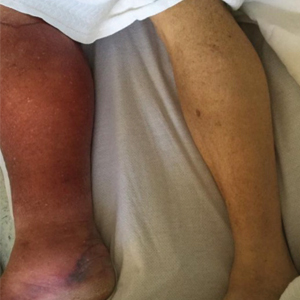
Another Neurotoxin for Frown Lines Enters the Market
The Food and Drug Administration (FDA) has approved letibotulinumtoxinA-wlbg, an injectable neurotoxin long used in South Korea for the treatment of moderate to severe glabellar (frown) lines in adults. Developed by Hugel, the product is being marketed under the brand name Letybo.
The FDA’s approval was based on positive results from three phase 3 trials of letibotulinumtoxinA-wlbg that enrolled more than 1000 individuals in the United States and Europe. According to information in the package insert, the most common adverse reaction reported in the trials was headache, which occurred in 2% of trial participants. Other adverse events reported by fewer than 1% of trial participants included brow ptosis, eyelid ptosis, and blepharospasm, while the most frequently reported injection site reactions included administrative site swelling, facial pain, folliculitis, and periorbital hematoma.
According to a press release from the company, letibotulinumtoxinA-wlbg has been the leading neurotoxin brand in South Korea for 7 consecutive years, and the product has been sold in more than 50 different countries. Hugel plans to launch Letybo for US-based aesthetic clinicians in the latter half of 2024.
A version of this article appeared on Medscape.com.
The Food and Drug Administration (FDA) has approved letibotulinumtoxinA-wlbg, an injectable neurotoxin long used in South Korea for the treatment of moderate to severe glabellar (frown) lines in adults. Developed by Hugel, the product is being marketed under the brand name Letybo.
The FDA’s approval was based on positive results from three phase 3 trials of letibotulinumtoxinA-wlbg that enrolled more than 1000 individuals in the United States and Europe. According to information in the package insert, the most common adverse reaction reported in the trials was headache, which occurred in 2% of trial participants. Other adverse events reported by fewer than 1% of trial participants included brow ptosis, eyelid ptosis, and blepharospasm, while the most frequently reported injection site reactions included administrative site swelling, facial pain, folliculitis, and periorbital hematoma.
According to a press release from the company, letibotulinumtoxinA-wlbg has been the leading neurotoxin brand in South Korea for 7 consecutive years, and the product has been sold in more than 50 different countries. Hugel plans to launch Letybo for US-based aesthetic clinicians in the latter half of 2024.
A version of this article appeared on Medscape.com.
The Food and Drug Administration (FDA) has approved letibotulinumtoxinA-wlbg, an injectable neurotoxin long used in South Korea for the treatment of moderate to severe glabellar (frown) lines in adults. Developed by Hugel, the product is being marketed under the brand name Letybo.
The FDA’s approval was based on positive results from three phase 3 trials of letibotulinumtoxinA-wlbg that enrolled more than 1000 individuals in the United States and Europe. According to information in the package insert, the most common adverse reaction reported in the trials was headache, which occurred in 2% of trial participants. Other adverse events reported by fewer than 1% of trial participants included brow ptosis, eyelid ptosis, and blepharospasm, while the most frequently reported injection site reactions included administrative site swelling, facial pain, folliculitis, and periorbital hematoma.
According to a press release from the company, letibotulinumtoxinA-wlbg has been the leading neurotoxin brand in South Korea for 7 consecutive years, and the product has been sold in more than 50 different countries. Hugel plans to launch Letybo for US-based aesthetic clinicians in the latter half of 2024.
A version of this article appeared on Medscape.com.