User login
VIDEO: Skin exam crucial in rheumatic diseases, expert says
SANDESTIN, FLA. – Even when you know a patient’s serology and hear their symptoms and think you have a bead on their rheumatic disease, you might not. It’s vital to check the skin in patients with rheumatic disease to be sure the right disease is being treated and that they don’t actually have a more severe condition that might progress suddenly if left unchecked, said Alisa Femia, MD, assistant professor of dermatology at the annual Congress of Clinical Rheumatology.
In a session filled with pearls for rheumatologists on what to look for on their patients’ skin to help guide diagnosis and treatment, she told the story of a woman whom a rheumatologist colleague had correctly diagnosed with dermatomyositis. She was started on prednisone and mycophenolate mofetil, but her skin disease did not clear.
After examining her skin, Dr. Femia became immediately concerned.
“Despite prednisone, despite mycophenolate, here not only does she have Gottron’s papules, but she has erosions within her Gottron’s papules,” Dr. Femia said. The woman also had erosions within papules on her palms.
These were telltale signs of MDA5-associated dermatomyositis, which studies have found to be linked with interstitial lung disease (J Am Acad Dermatol. 2011 Jul;65[1]:25-34). Under her care, these patients ideally undergo lung monitoring every 3 months, Dr. Femia said.
“That is a form of dermatomyositis that you cannot miss,” she said.
The effects of discoid lupus are another reason to take special care in skin examination. Once the disease, which involves a scaling of the skin, is obvious, there can be permanent aesthetic effects that could have been avoided with earlier detection and treatment, Dr. Femia said.
Clinicians should also be on the lookout for volume loss, or contour change, in discoid lupus patients, because that’s a sign of lupus panniculitis, which involves deeper lesions mainly to fatty areas such as the cheeks or thighs. The disease can progress fast, with sudden, massive loss of body volume, so therapy should be escalated quickly, she said.
“We want to treat these patients aggressively in order to avoid this.”
SOURCE: Femia A. CCR 2018.
SANDESTIN, FLA. – Even when you know a patient’s serology and hear their symptoms and think you have a bead on their rheumatic disease, you might not. It’s vital to check the skin in patients with rheumatic disease to be sure the right disease is being treated and that they don’t actually have a more severe condition that might progress suddenly if left unchecked, said Alisa Femia, MD, assistant professor of dermatology at the annual Congress of Clinical Rheumatology.
In a session filled with pearls for rheumatologists on what to look for on their patients’ skin to help guide diagnosis and treatment, she told the story of a woman whom a rheumatologist colleague had correctly diagnosed with dermatomyositis. She was started on prednisone and mycophenolate mofetil, but her skin disease did not clear.
After examining her skin, Dr. Femia became immediately concerned.
“Despite prednisone, despite mycophenolate, here not only does she have Gottron’s papules, but she has erosions within her Gottron’s papules,” Dr. Femia said. The woman also had erosions within papules on her palms.
These were telltale signs of MDA5-associated dermatomyositis, which studies have found to be linked with interstitial lung disease (J Am Acad Dermatol. 2011 Jul;65[1]:25-34). Under her care, these patients ideally undergo lung monitoring every 3 months, Dr. Femia said.
“That is a form of dermatomyositis that you cannot miss,” she said.
The effects of discoid lupus are another reason to take special care in skin examination. Once the disease, which involves a scaling of the skin, is obvious, there can be permanent aesthetic effects that could have been avoided with earlier detection and treatment, Dr. Femia said.
Clinicians should also be on the lookout for volume loss, or contour change, in discoid lupus patients, because that’s a sign of lupus panniculitis, which involves deeper lesions mainly to fatty areas such as the cheeks or thighs. The disease can progress fast, with sudden, massive loss of body volume, so therapy should be escalated quickly, she said.
“We want to treat these patients aggressively in order to avoid this.”
SOURCE: Femia A. CCR 2018.
SANDESTIN, FLA. – Even when you know a patient’s serology and hear their symptoms and think you have a bead on their rheumatic disease, you might not. It’s vital to check the skin in patients with rheumatic disease to be sure the right disease is being treated and that they don’t actually have a more severe condition that might progress suddenly if left unchecked, said Alisa Femia, MD, assistant professor of dermatology at the annual Congress of Clinical Rheumatology.
In a session filled with pearls for rheumatologists on what to look for on their patients’ skin to help guide diagnosis and treatment, she told the story of a woman whom a rheumatologist colleague had correctly diagnosed with dermatomyositis. She was started on prednisone and mycophenolate mofetil, but her skin disease did not clear.
After examining her skin, Dr. Femia became immediately concerned.
“Despite prednisone, despite mycophenolate, here not only does she have Gottron’s papules, but she has erosions within her Gottron’s papules,” Dr. Femia said. The woman also had erosions within papules on her palms.
These were telltale signs of MDA5-associated dermatomyositis, which studies have found to be linked with interstitial lung disease (J Am Acad Dermatol. 2011 Jul;65[1]:25-34). Under her care, these patients ideally undergo lung monitoring every 3 months, Dr. Femia said.
“That is a form of dermatomyositis that you cannot miss,” she said.
The effects of discoid lupus are another reason to take special care in skin examination. Once the disease, which involves a scaling of the skin, is obvious, there can be permanent aesthetic effects that could have been avoided with earlier detection and treatment, Dr. Femia said.
Clinicians should also be on the lookout for volume loss, or contour change, in discoid lupus patients, because that’s a sign of lupus panniculitis, which involves deeper lesions mainly to fatty areas such as the cheeks or thighs. The disease can progress fast, with sudden, massive loss of body volume, so therapy should be escalated quickly, she said.
“We want to treat these patients aggressively in order to avoid this.”
SOURCE: Femia A. CCR 2018.
EXPERT ANALYSIS AT CCR 18
VIDEO: Researchers seek end to early corticosteroid use in AAV
SANDESTIN, FLA. – Clinicians have long wanted to avoid using corticosteroids in the treatment of ANCA-associated vasculitis (AAV). They’re drawing closer to getting their wish, said Christian Pagnoux, MD, of the department of internal medicine at Mount Sinai Hospital in Toronto.
The drugs have been a cornerstone in the treatments of these diseases – including granulomatosis with polyangiitis (GPA) and microscopic polyangiitis (MPA) – for decades, but they come at the price of osteoporosis, cardiovascular comorbidities, diabetes, increased infection risk, and other problems.
The video associated with this article is no longer available on this site. Please view all of our videos on the MDedge YouTube channel
The emergence of newer therapies such as rituximab and complement C5a-blocker avacopan could mean less of a reliance on corticosteroids, Dr. Pagnoux said. The ongoing ADVOCATE trial is assessing the efficacy of avacopan with rituximab or cyclophosphamide, with or without a tapered dose of prednisone for the first 21 weeks.
“Whether we can use a lighter, briefer, shorter corticosteroid regimen for induction is really a burning question,” Dr. Pagnoux said. Avacopan “may totally replace corticosteroids in the very near future,” he said.
Another trial taking an intense look at winnowing corticosteroids from GPA and MPA treatment is the eagerly awaited PEXIVAS trial, an international effort of 700 patients that is the largest ever in AAV, Dr. Pagnoux said.
The primary endpoint in the trial is assessing plasma exchange versus no plasma exchange, but the use of corticosteroids is being assessed as well.
“The PEXIVAS [trial] may give you some additional information,” Dr. Pagnoux said. “Patients were not only randomized to receive plasma exchange or no plasma exchange, but they were also randomized to receive the standard regimen of corticosteroids with a slow taper ... or a much faster regimen with a much faster tapering of the corticosteroids.” The fast taper involves a steep drop every week, so that, after just 1 month, doses have fallen from 60 mg to 10 mg.
Dr. Pagnoux said he can imagine the day when corticosteroids can be completely eliminated from induction treatment for GPA and MPA. But he added there are studies looking at the efficacy and safety of the drugs in maintenance treatment even once they’re eliminated from induction, but at far lower doses.
“The good news is that it would only be 5 mg per day, for example.”
SOURCE: Pagnoux C. CCR 2018.
SANDESTIN, FLA. – Clinicians have long wanted to avoid using corticosteroids in the treatment of ANCA-associated vasculitis (AAV). They’re drawing closer to getting their wish, said Christian Pagnoux, MD, of the department of internal medicine at Mount Sinai Hospital in Toronto.
The drugs have been a cornerstone in the treatments of these diseases – including granulomatosis with polyangiitis (GPA) and microscopic polyangiitis (MPA) – for decades, but they come at the price of osteoporosis, cardiovascular comorbidities, diabetes, increased infection risk, and other problems.
The video associated with this article is no longer available on this site. Please view all of our videos on the MDedge YouTube channel
The emergence of newer therapies such as rituximab and complement C5a-blocker avacopan could mean less of a reliance on corticosteroids, Dr. Pagnoux said. The ongoing ADVOCATE trial is assessing the efficacy of avacopan with rituximab or cyclophosphamide, with or without a tapered dose of prednisone for the first 21 weeks.
“Whether we can use a lighter, briefer, shorter corticosteroid regimen for induction is really a burning question,” Dr. Pagnoux said. Avacopan “may totally replace corticosteroids in the very near future,” he said.
Another trial taking an intense look at winnowing corticosteroids from GPA and MPA treatment is the eagerly awaited PEXIVAS trial, an international effort of 700 patients that is the largest ever in AAV, Dr. Pagnoux said.
The primary endpoint in the trial is assessing plasma exchange versus no plasma exchange, but the use of corticosteroids is being assessed as well.
“The PEXIVAS [trial] may give you some additional information,” Dr. Pagnoux said. “Patients were not only randomized to receive plasma exchange or no plasma exchange, but they were also randomized to receive the standard regimen of corticosteroids with a slow taper ... or a much faster regimen with a much faster tapering of the corticosteroids.” The fast taper involves a steep drop every week, so that, after just 1 month, doses have fallen from 60 mg to 10 mg.
Dr. Pagnoux said he can imagine the day when corticosteroids can be completely eliminated from induction treatment for GPA and MPA. But he added there are studies looking at the efficacy and safety of the drugs in maintenance treatment even once they’re eliminated from induction, but at far lower doses.
“The good news is that it would only be 5 mg per day, for example.”
SOURCE: Pagnoux C. CCR 2018.
SANDESTIN, FLA. – Clinicians have long wanted to avoid using corticosteroids in the treatment of ANCA-associated vasculitis (AAV). They’re drawing closer to getting their wish, said Christian Pagnoux, MD, of the department of internal medicine at Mount Sinai Hospital in Toronto.
The drugs have been a cornerstone in the treatments of these diseases – including granulomatosis with polyangiitis (GPA) and microscopic polyangiitis (MPA) – for decades, but they come at the price of osteoporosis, cardiovascular comorbidities, diabetes, increased infection risk, and other problems.
The video associated with this article is no longer available on this site. Please view all of our videos on the MDedge YouTube channel
The emergence of newer therapies such as rituximab and complement C5a-blocker avacopan could mean less of a reliance on corticosteroids, Dr. Pagnoux said. The ongoing ADVOCATE trial is assessing the efficacy of avacopan with rituximab or cyclophosphamide, with or without a tapered dose of prednisone for the first 21 weeks.
“Whether we can use a lighter, briefer, shorter corticosteroid regimen for induction is really a burning question,” Dr. Pagnoux said. Avacopan “may totally replace corticosteroids in the very near future,” he said.
Another trial taking an intense look at winnowing corticosteroids from GPA and MPA treatment is the eagerly awaited PEXIVAS trial, an international effort of 700 patients that is the largest ever in AAV, Dr. Pagnoux said.
The primary endpoint in the trial is assessing plasma exchange versus no plasma exchange, but the use of corticosteroids is being assessed as well.
“The PEXIVAS [trial] may give you some additional information,” Dr. Pagnoux said. “Patients were not only randomized to receive plasma exchange or no plasma exchange, but they were also randomized to receive the standard regimen of corticosteroids with a slow taper ... or a much faster regimen with a much faster tapering of the corticosteroids.” The fast taper involves a steep drop every week, so that, after just 1 month, doses have fallen from 60 mg to 10 mg.
Dr. Pagnoux said he can imagine the day when corticosteroids can be completely eliminated from induction treatment for GPA and MPA. But he added there are studies looking at the efficacy and safety of the drugs in maintenance treatment even once they’re eliminated from induction, but at far lower doses.
“The good news is that it would only be 5 mg per day, for example.”
SOURCE: Pagnoux C. CCR 2018.
EXPERT ANALYSIS AT CCR 18
Hematocrit improvement with SGLT2 inhibitor: Not just a diuretic effect?
BOSTON – The SGLT2 inhibitor dapagliflozin may increase red blood cell production by suppressing plasma levels of hepcidin, a proinflammatory inhibitor of iron transport, according to results of a randomized study.
This reduction in hepcidin provides a new mechanistic explanation for the improvement in hematocrit seen with SGLT2 inhibitor treatment and suggests a role for use of these drugs beyond their current indications, according to researcher Husam A. Ghanim, PhD, of the State University of New York at Buffalo.

To see whether there were other mechanisms involved beyond hemoconcentration caused by diuretic effects of the drugs, Dr. Ghanim and his colleagues investigated the possibility that dapagliflozin might suppress concentrations of hepcidin concentrations, thereby increasing erythropoiesis.
Their study included 22 patients with type 2 diabetes and normal renal function randomized to dapagliflozin 10 mg daily or placebo for 12 weeks.
They found that the plasma concentration of hepcidin fell significantly over that time period, from 265 to 215 ng/mL in dapagliflozin-treated patients. They also saw significant decreases in hemoglobin A1c, hemoglobin concentration, and hematocrit, as well as an increase in transferrin, the major transporter of iron in the circulation, over 12 weeks.
No such significant changes in those measures were seen in the placebo group, Dr. Ghanim said.
There was a modest but nonsignificant increase in erythropoietin concentrations in the dapagliflozin-treated group, according to the researcher.
Circulating ferritin also fell by about 40% over the course of the study. “Circulating ferritin doesn’t have a clear indication or implication on iron transport,” Dr. Ghanim said. “However, it gets secreted from macrophages and from the liver, and it gets used as a marker for inflammation, and it’s also used as a marker of liver function. So a reduction in ferritin levels may have some clinical implication to what’s going on in the liver.”
On the basis of these findings, it appears that SGLT2 inhibition might increase hematocrit via anti-inflammatory effects and increased erythropoiesis, Dr. Ghanim said.
The increase in oxygenated blood available to tissues might contribute to the beneficial effects of SGLT2 inhibitors on cardiovascular disease, he added.
Also, it’s possible that SGLT2 inhibitors could have a “major impact” on the liver since hepcidin and ferritin are secreted mainly by the liver: “This could also lead us to think that it is possible that we could use SGLT2 inhibitors in conditions of liver inflammation like nonalcoholic steatohepatitis and fatty liver disease,” Dr. Ghanim said in his presentation. “These are future ideas we could explore, based on our data.”
Dr. Ghanim had no disclosures to report.
SOURCE: Ghanim HA et al. AACE 2018, Abstract 228.
BOSTON – The SGLT2 inhibitor dapagliflozin may increase red blood cell production by suppressing plasma levels of hepcidin, a proinflammatory inhibitor of iron transport, according to results of a randomized study.
This reduction in hepcidin provides a new mechanistic explanation for the improvement in hematocrit seen with SGLT2 inhibitor treatment and suggests a role for use of these drugs beyond their current indications, according to researcher Husam A. Ghanim, PhD, of the State University of New York at Buffalo.
To see whether there were other mechanisms involved beyond hemoconcentration caused by diuretic effects of the drugs, Dr. Ghanim and his colleagues investigated the possibility that dapagliflozin might suppress concentrations of hepcidin concentrations, thereby increasing erythropoiesis.
Their study included 22 patients with type 2 diabetes and normal renal function randomized to dapagliflozin 10 mg daily or placebo for 12 weeks.
They found that the plasma concentration of hepcidin fell significantly over that time period, from 265 to 215 ng/mL in dapagliflozin-treated patients. They also saw significant decreases in hemoglobin A1c, hemoglobin concentration, and hematocrit, as well as an increase in transferrin, the major transporter of iron in the circulation, over 12 weeks.
No such significant changes in those measures were seen in the placebo group, Dr. Ghanim said.
There was a modest but nonsignificant increase in erythropoietin concentrations in the dapagliflozin-treated group, according to the researcher.
Circulating ferritin also fell by about 40% over the course of the study. “Circulating ferritin doesn’t have a clear indication or implication on iron transport,” Dr. Ghanim said. “However, it gets secreted from macrophages and from the liver, and it gets used as a marker for inflammation, and it’s also used as a marker of liver function. So a reduction in ferritin levels may have some clinical implication to what’s going on in the liver.”
On the basis of these findings, it appears that SGLT2 inhibition might increase hematocrit via anti-inflammatory effects and increased erythropoiesis, Dr. Ghanim said.
The increase in oxygenated blood available to tissues might contribute to the beneficial effects of SGLT2 inhibitors on cardiovascular disease, he added.
Also, it’s possible that SGLT2 inhibitors could have a “major impact” on the liver since hepcidin and ferritin are secreted mainly by the liver: “This could also lead us to think that it is possible that we could use SGLT2 inhibitors in conditions of liver inflammation like nonalcoholic steatohepatitis and fatty liver disease,” Dr. Ghanim said in his presentation. “These are future ideas we could explore, based on our data.”
Dr. Ghanim had no disclosures to report.
SOURCE: Ghanim HA et al. AACE 2018, Abstract 228.
BOSTON – The SGLT2 inhibitor dapagliflozin may increase red blood cell production by suppressing plasma levels of hepcidin, a proinflammatory inhibitor of iron transport, according to results of a randomized study.
This reduction in hepcidin provides a new mechanistic explanation for the improvement in hematocrit seen with SGLT2 inhibitor treatment and suggests a role for use of these drugs beyond their current indications, according to researcher Husam A. Ghanim, PhD, of the State University of New York at Buffalo.
To see whether there were other mechanisms involved beyond hemoconcentration caused by diuretic effects of the drugs, Dr. Ghanim and his colleagues investigated the possibility that dapagliflozin might suppress concentrations of hepcidin concentrations, thereby increasing erythropoiesis.
Their study included 22 patients with type 2 diabetes and normal renal function randomized to dapagliflozin 10 mg daily or placebo for 12 weeks.
They found that the plasma concentration of hepcidin fell significantly over that time period, from 265 to 215 ng/mL in dapagliflozin-treated patients. They also saw significant decreases in hemoglobin A1c, hemoglobin concentration, and hematocrit, as well as an increase in transferrin, the major transporter of iron in the circulation, over 12 weeks.
No such significant changes in those measures were seen in the placebo group, Dr. Ghanim said.
There was a modest but nonsignificant increase in erythropoietin concentrations in the dapagliflozin-treated group, according to the researcher.
Circulating ferritin also fell by about 40% over the course of the study. “Circulating ferritin doesn’t have a clear indication or implication on iron transport,” Dr. Ghanim said. “However, it gets secreted from macrophages and from the liver, and it gets used as a marker for inflammation, and it’s also used as a marker of liver function. So a reduction in ferritin levels may have some clinical implication to what’s going on in the liver.”
On the basis of these findings, it appears that SGLT2 inhibition might increase hematocrit via anti-inflammatory effects and increased erythropoiesis, Dr. Ghanim said.
The increase in oxygenated blood available to tissues might contribute to the beneficial effects of SGLT2 inhibitors on cardiovascular disease, he added.
Also, it’s possible that SGLT2 inhibitors could have a “major impact” on the liver since hepcidin and ferritin are secreted mainly by the liver: “This could also lead us to think that it is possible that we could use SGLT2 inhibitors in conditions of liver inflammation like nonalcoholic steatohepatitis and fatty liver disease,” Dr. Ghanim said in his presentation. “These are future ideas we could explore, based on our data.”
Dr. Ghanim had no disclosures to report.
SOURCE: Ghanim HA et al. AACE 2018, Abstract 228.
REPORTING FROM AACE 2018
Key clinical point: The SGLT2 inhibitor dapagliflozin suppressed hepcidin, a proinflammatory inhibitor of iron transport.
Major finding: Hepcidin plasma concentration fell from 265 to 215 ng/mL (P < 0.05) in dapagliflozin-treated patients.
Study details: A study of 22 patients with type 2 diabetes randomized to either dapagliflozin 10 mg daily or placebo for 12 weeks.
Disclosures: Dr. Ghanim had no disclosures related to the presentation.
Source: Ghanim HA et al. AACE 2018, Abstract 228.
Cannabidiol gel for osteoarthritis knee pain gives lukewarm results
LIVERPOOL, ENGLAND – There was no significant reduction in pain from knee osteoarthritis (OA) with the use of investigational cannabidiol (CBD) gel ZYN002 in a phase 2a trial presented at the World Congress on Osteoarthritis.
The mean reductions in baseline knee pain scores from study entry to a 12-week assessment were –2.4 for placebo and –2.6 (P = .5) and –2.8 (P = .25), respectively, for a 250-mg and a 500-mg formulation of the gel.

While there was a trend for benefit, it was “neither statistically or clinically significant,” reported David Hunter, MBBS, PhD.
However, he observed that a significantly (P = .016) greater number of patients who received the 250-mg dose (52.7%) were “composite responders,” compared with patients who received placebo (34.1%). A composite response was defined as at least a 30% reduction in pain, and a 20% decrease in WOMAC physical function subscale score at the last observation.
Although the percentage of composite responders was also higher than placebo with the 500-mg dose, the difference wasn’t significant (45.1% vs. 34.1%; P = .0169).
Post-hoc analyses also suggested that perhaps some patients may benefit more than others, reported Dr. Hunter, professor of medicine at the University of Sydney and the Royal North Shore Hospital, Sydney.
For example, patients with baseline pain scores or 7 or more had greater mean reduction in pain at 12 weeks with both doses of the gel combined than placebo at week 4 (–2.2 vs. –1.6; P = .029), although the difference was not significant at week 8 (–3.0 vs. –2.2; P = .05) or 12 (–3.3 vs. –2.5; P = .086).
Women also exhibited a greater placebo response than did men, and “patients with less variability in baseline pain scores may have had greater separation between placebo and the treatment,” Dr. Hunter said. Indeed, 50%-52% of patients with less than 33% variation in baseline scores had a composite response to the gel, versus 27% for the placebo arm.
Evidence from preclinical models suggest that cannabinoids have antinociceptive and antihyperalgesic effects, Dr. Hunter explained at the congress, sponsored by the Osteoarthritis Research Society International. CBD has also been shown to have broad anti-inflammatory effects, and it may even promote osteoclast cell function and decrease bone resorption.
ZYN002 is a synthetic CBD formulated for transdermal delivery using a patented method to enhance its permeation through the skin. According to the manufacturer, Zynerba, it was developed for neuropsychiatric disorders, including fragile X syndrome, adult refractory epilepsy, and developmental and epileptic encephalopathies.
The primary aim of the phase 2 trial reported by Dr. Hunter was to assess ZYN002’s efficacy in managing osteoarthritis knee pain. Secondary objectives were to assess the gel’s safety and tolerability.
The STOP 1 (Synthetic Transdermal Cannabidiol for the Treatment of Knee Pain Due to Osteoarthritis) trial was a double-blind, placebo-controlled trial. For inclusion in the study, patients had to be between age 40 and 75 years and have had knee pain for at least 12 months because of primary OA, based on clinical and x-ray data as per American College of Rheumatology criteria. Anyone with a history of fibromyalgia or epilepsy was excluded.
A total of 320 patients with painful knee OA, with a mean age of 62 years, were randomized and underwent a 1-week washout period in which all their analgesic medications being used for osteoarthritis knee pain, except acetaminophen, were stopped. That was followed by a 7- to 10-day period when baseline daily worst pain levels were captured using a 0-10 numeric rating scale. Patients then underwent 12 weeks of treatment with either a high (500 mg) or a low (250 mg) dose of the gel, or placebo, given in twice-daily doses.
Just over a third (34%) of patients in the placebo arm discontinued the study, compared with 22% and 24% of those in the high- and low-dose gel arms. The main reason for discontinuation was withdrawn consent because of lack of efficacy in the placebo arm, with 8%, 8%, and 4% of patients, respectively, discontinuing because of adverse effects.
“Treatment-emergent adverse effects were roughly equally distributed across the three groups,” Dr. Hunter reported. The adverse events of more interest, he noted, were application site dryness, reaction, or pain. There was “a slight predisposition” to each of these in the 250-mg gel arm (5%, 3%, and 3% of patients affected) versus the 500-mg gel (3%, 0%, and 0%) and placebo (1%, 1%, 0%) arms.
SOURCE: Hunter D et al. Osteoarthritis Cartilage 2018:26(1):S26. Abstract 30.
LIVERPOOL, ENGLAND – There was no significant reduction in pain from knee osteoarthritis (OA) with the use of investigational cannabidiol (CBD) gel ZYN002 in a phase 2a trial presented at the World Congress on Osteoarthritis.
The mean reductions in baseline knee pain scores from study entry to a 12-week assessment were –2.4 for placebo and –2.6 (P = .5) and –2.8 (P = .25), respectively, for a 250-mg and a 500-mg formulation of the gel.
While there was a trend for benefit, it was “neither statistically or clinically significant,” reported David Hunter, MBBS, PhD.
However, he observed that a significantly (P = .016) greater number of patients who received the 250-mg dose (52.7%) were “composite responders,” compared with patients who received placebo (34.1%). A composite response was defined as at least a 30% reduction in pain, and a 20% decrease in WOMAC physical function subscale score at the last observation.
Although the percentage of composite responders was also higher than placebo with the 500-mg dose, the difference wasn’t significant (45.1% vs. 34.1%; P = .0169).
Post-hoc analyses also suggested that perhaps some patients may benefit more than others, reported Dr. Hunter, professor of medicine at the University of Sydney and the Royal North Shore Hospital, Sydney.
For example, patients with baseline pain scores or 7 or more had greater mean reduction in pain at 12 weeks with both doses of the gel combined than placebo at week 4 (–2.2 vs. –1.6; P = .029), although the difference was not significant at week 8 (–3.0 vs. –2.2; P = .05) or 12 (–3.3 vs. –2.5; P = .086).
Women also exhibited a greater placebo response than did men, and “patients with less variability in baseline pain scores may have had greater separation between placebo and the treatment,” Dr. Hunter said. Indeed, 50%-52% of patients with less than 33% variation in baseline scores had a composite response to the gel, versus 27% for the placebo arm.
Evidence from preclinical models suggest that cannabinoids have antinociceptive and antihyperalgesic effects, Dr. Hunter explained at the congress, sponsored by the Osteoarthritis Research Society International. CBD has also been shown to have broad anti-inflammatory effects, and it may even promote osteoclast cell function and decrease bone resorption.
ZYN002 is a synthetic CBD formulated for transdermal delivery using a patented method to enhance its permeation through the skin. According to the manufacturer, Zynerba, it was developed for neuropsychiatric disorders, including fragile X syndrome, adult refractory epilepsy, and developmental and epileptic encephalopathies.
The primary aim of the phase 2 trial reported by Dr. Hunter was to assess ZYN002’s efficacy in managing osteoarthritis knee pain. Secondary objectives were to assess the gel’s safety and tolerability.
The STOP 1 (Synthetic Transdermal Cannabidiol for the Treatment of Knee Pain Due to Osteoarthritis) trial was a double-blind, placebo-controlled trial. For inclusion in the study, patients had to be between age 40 and 75 years and have had knee pain for at least 12 months because of primary OA, based on clinical and x-ray data as per American College of Rheumatology criteria. Anyone with a history of fibromyalgia or epilepsy was excluded.
A total of 320 patients with painful knee OA, with a mean age of 62 years, were randomized and underwent a 1-week washout period in which all their analgesic medications being used for osteoarthritis knee pain, except acetaminophen, were stopped. That was followed by a 7- to 10-day period when baseline daily worst pain levels were captured using a 0-10 numeric rating scale. Patients then underwent 12 weeks of treatment with either a high (500 mg) or a low (250 mg) dose of the gel, or placebo, given in twice-daily doses.
Just over a third (34%) of patients in the placebo arm discontinued the study, compared with 22% and 24% of those in the high- and low-dose gel arms. The main reason for discontinuation was withdrawn consent because of lack of efficacy in the placebo arm, with 8%, 8%, and 4% of patients, respectively, discontinuing because of adverse effects.
“Treatment-emergent adverse effects were roughly equally distributed across the three groups,” Dr. Hunter reported. The adverse events of more interest, he noted, were application site dryness, reaction, or pain. There was “a slight predisposition” to each of these in the 250-mg gel arm (5%, 3%, and 3% of patients affected) versus the 500-mg gel (3%, 0%, and 0%) and placebo (1%, 1%, 0%) arms.
SOURCE: Hunter D et al. Osteoarthritis Cartilage 2018:26(1):S26. Abstract 30.
LIVERPOOL, ENGLAND – There was no significant reduction in pain from knee osteoarthritis (OA) with the use of investigational cannabidiol (CBD) gel ZYN002 in a phase 2a trial presented at the World Congress on Osteoarthritis.
The mean reductions in baseline knee pain scores from study entry to a 12-week assessment were –2.4 for placebo and –2.6 (P = .5) and –2.8 (P = .25), respectively, for a 250-mg and a 500-mg formulation of the gel.
While there was a trend for benefit, it was “neither statistically or clinically significant,” reported David Hunter, MBBS, PhD.
However, he observed that a significantly (P = .016) greater number of patients who received the 250-mg dose (52.7%) were “composite responders,” compared with patients who received placebo (34.1%). A composite response was defined as at least a 30% reduction in pain, and a 20% decrease in WOMAC physical function subscale score at the last observation.
Although the percentage of composite responders was also higher than placebo with the 500-mg dose, the difference wasn’t significant (45.1% vs. 34.1%; P = .0169).
Post-hoc analyses also suggested that perhaps some patients may benefit more than others, reported Dr. Hunter, professor of medicine at the University of Sydney and the Royal North Shore Hospital, Sydney.
For example, patients with baseline pain scores or 7 or more had greater mean reduction in pain at 12 weeks with both doses of the gel combined than placebo at week 4 (–2.2 vs. –1.6; P = .029), although the difference was not significant at week 8 (–3.0 vs. –2.2; P = .05) or 12 (–3.3 vs. –2.5; P = .086).
Women also exhibited a greater placebo response than did men, and “patients with less variability in baseline pain scores may have had greater separation between placebo and the treatment,” Dr. Hunter said. Indeed, 50%-52% of patients with less than 33% variation in baseline scores had a composite response to the gel, versus 27% for the placebo arm.
Evidence from preclinical models suggest that cannabinoids have antinociceptive and antihyperalgesic effects, Dr. Hunter explained at the congress, sponsored by the Osteoarthritis Research Society International. CBD has also been shown to have broad anti-inflammatory effects, and it may even promote osteoclast cell function and decrease bone resorption.
ZYN002 is a synthetic CBD formulated for transdermal delivery using a patented method to enhance its permeation through the skin. According to the manufacturer, Zynerba, it was developed for neuropsychiatric disorders, including fragile X syndrome, adult refractory epilepsy, and developmental and epileptic encephalopathies.
The primary aim of the phase 2 trial reported by Dr. Hunter was to assess ZYN002’s efficacy in managing osteoarthritis knee pain. Secondary objectives were to assess the gel’s safety and tolerability.
The STOP 1 (Synthetic Transdermal Cannabidiol for the Treatment of Knee Pain Due to Osteoarthritis) trial was a double-blind, placebo-controlled trial. For inclusion in the study, patients had to be between age 40 and 75 years and have had knee pain for at least 12 months because of primary OA, based on clinical and x-ray data as per American College of Rheumatology criteria. Anyone with a history of fibromyalgia or epilepsy was excluded.
A total of 320 patients with painful knee OA, with a mean age of 62 years, were randomized and underwent a 1-week washout period in which all their analgesic medications being used for osteoarthritis knee pain, except acetaminophen, were stopped. That was followed by a 7- to 10-day period when baseline daily worst pain levels were captured using a 0-10 numeric rating scale. Patients then underwent 12 weeks of treatment with either a high (500 mg) or a low (250 mg) dose of the gel, or placebo, given in twice-daily doses.
Just over a third (34%) of patients in the placebo arm discontinued the study, compared with 22% and 24% of those in the high- and low-dose gel arms. The main reason for discontinuation was withdrawn consent because of lack of efficacy in the placebo arm, with 8%, 8%, and 4% of patients, respectively, discontinuing because of adverse effects.
“Treatment-emergent adverse effects were roughly equally distributed across the three groups,” Dr. Hunter reported. The adverse events of more interest, he noted, were application site dryness, reaction, or pain. There was “a slight predisposition” to each of these in the 250-mg gel arm (5%, 3%, and 3% of patients affected) versus the 500-mg gel (3%, 0%, and 0%) and placebo (1%, 1%, 0%) arms.
SOURCE: Hunter D et al. Osteoarthritis Cartilage 2018:26(1):S26. Abstract 30.
REPORTING FROM OARSI 2018
Key clinical point:
Major finding: Mean knee pain scores at 12 weeks fell by –2.4 for placebo, and –2.6 (P = .5) and –2.8 (P = .25) for a 250-mg and a 500-mg formulation of the gel.
Study details: A 12-week, randomized, double-blind, placebo-controlled, phase 2, multidose study involving 320 patients with osteoarthritis knee pain for at least 12 months.
Disclosures: Dr. Hunter has consulted for Flexion, Merck Serono, TissueGene, and Zynerba, and has received royalties from DJO for a patellofemoral brace.
Source: Hunter D et al. Osteoarthritis Cartilage 2018:26(1):S26. Abstract 30.
VIDEO: Real-world findings on hybrid closed-loop insulin system
BOSTON – Real-world experience with the Medtronic MiniMed 670G, a hybrid closed-loop insulin delivery system, showed the device was associated with improved average glucose readings and more time in euglycemia in 26 patients with type 1 diabetes.
The findings go beyond the safety data from the clinical trial of the MiniMed 670G system, Kathryn Weaver, MD, of the University of Washington, Seattle, and her colleagues reported in a poster presented at the annual meeting of the American Association of Clinical Endocrinologists.

The clinical trial included a 2-week run-in period during which the system was used in manual mode before it was switched to automated mode. Mean sensor glucose readings for participants went from 150.2 mg/dL during run-in to 150.8 mg/dL at the end of 3 months, which was not a statistically significant difference (JAMA. 2016;316[13]:1407-8).
In the real-world study, average sensor glucose readings dropped from a mean 169.46 mg/dL at baseline to 157.08 mg/dL at the end of the 3-month study period (P = .05). Also, the time spent with blood glucose levels greater than 180 mg/dL fell from 26.5% to 20% (P = .007), while the amount of time with glucose readings between 70 and 180 mg/dL increased from 61.7% to 71.1% (P = .02). Periods of hypoglycemia and severe hypoglycemia were already low at baseline and did not change, Dr. Weaver said.
“It is important to note that the initial pivotal trial was a study designed to evaluate safety not a study designed to evaluate effectiveness. And the [trial] group did demonstrate safety; they had a very significant reduction in the amount of hypoglycemia” with the pump, said Dr. Weaver. “We did not show a significant reduction in hypoglycemia in our [real-world] group, likely because we had a very low rate of hypoglycemia going into the study.”
Two of the study coauthors are employees of Medtronic, which manufactures the MiniMed 670G insulin pump/continuous glucose monitor. Medtronic did not provide funding support for the study or provide the closed-loop systems, and Dr. Weaver reported that she had no relevant financial disclosures.
SOURCE: Weaver K et al. AACE 2018, Abstract 210.
BOSTON – Real-world experience with the Medtronic MiniMed 670G, a hybrid closed-loop insulin delivery system, showed the device was associated with improved average glucose readings and more time in euglycemia in 26 patients with type 1 diabetes.
The findings go beyond the safety data from the clinical trial of the MiniMed 670G system, Kathryn Weaver, MD, of the University of Washington, Seattle, and her colleagues reported in a poster presented at the annual meeting of the American Association of Clinical Endocrinologists.
The clinical trial included a 2-week run-in period during which the system was used in manual mode before it was switched to automated mode. Mean sensor glucose readings for participants went from 150.2 mg/dL during run-in to 150.8 mg/dL at the end of 3 months, which was not a statistically significant difference (JAMA. 2016;316[13]:1407-8).
In the real-world study, average sensor glucose readings dropped from a mean 169.46 mg/dL at baseline to 157.08 mg/dL at the end of the 3-month study period (P = .05). Also, the time spent with blood glucose levels greater than 180 mg/dL fell from 26.5% to 20% (P = .007), while the amount of time with glucose readings between 70 and 180 mg/dL increased from 61.7% to 71.1% (P = .02). Periods of hypoglycemia and severe hypoglycemia were already low at baseline and did not change, Dr. Weaver said.
“It is important to note that the initial pivotal trial was a study designed to evaluate safety not a study designed to evaluate effectiveness. And the [trial] group did demonstrate safety; they had a very significant reduction in the amount of hypoglycemia” with the pump, said Dr. Weaver. “We did not show a significant reduction in hypoglycemia in our [real-world] group, likely because we had a very low rate of hypoglycemia going into the study.”
Two of the study coauthors are employees of Medtronic, which manufactures the MiniMed 670G insulin pump/continuous glucose monitor. Medtronic did not provide funding support for the study or provide the closed-loop systems, and Dr. Weaver reported that she had no relevant financial disclosures.
SOURCE: Weaver K et al. AACE 2018, Abstract 210.
BOSTON – Real-world experience with the Medtronic MiniMed 670G, a hybrid closed-loop insulin delivery system, showed the device was associated with improved average glucose readings and more time in euglycemia in 26 patients with type 1 diabetes.
The findings go beyond the safety data from the clinical trial of the MiniMed 670G system, Kathryn Weaver, MD, of the University of Washington, Seattle, and her colleagues reported in a poster presented at the annual meeting of the American Association of Clinical Endocrinologists.
The clinical trial included a 2-week run-in period during which the system was used in manual mode before it was switched to automated mode. Mean sensor glucose readings for participants went from 150.2 mg/dL during run-in to 150.8 mg/dL at the end of 3 months, which was not a statistically significant difference (JAMA. 2016;316[13]:1407-8).
In the real-world study, average sensor glucose readings dropped from a mean 169.46 mg/dL at baseline to 157.08 mg/dL at the end of the 3-month study period (P = .05). Also, the time spent with blood glucose levels greater than 180 mg/dL fell from 26.5% to 20% (P = .007), while the amount of time with glucose readings between 70 and 180 mg/dL increased from 61.7% to 71.1% (P = .02). Periods of hypoglycemia and severe hypoglycemia were already low at baseline and did not change, Dr. Weaver said.
“It is important to note that the initial pivotal trial was a study designed to evaluate safety not a study designed to evaluate effectiveness. And the [trial] group did demonstrate safety; they had a very significant reduction in the amount of hypoglycemia” with the pump, said Dr. Weaver. “We did not show a significant reduction in hypoglycemia in our [real-world] group, likely because we had a very low rate of hypoglycemia going into the study.”
Two of the study coauthors are employees of Medtronic, which manufactures the MiniMed 670G insulin pump/continuous glucose monitor. Medtronic did not provide funding support for the study or provide the closed-loop systems, and Dr. Weaver reported that she had no relevant financial disclosures.
SOURCE: Weaver K et al. AACE 2018, Abstract 210.
REPORTING FROM AACE 2018
Vestibular/oculomotor component of concussion warrants more attention
NEW ORLEANS – Vestibular and oculomotor impairment is increasingly recognized as a common, underappreciated, and yet treatable aspect of sports concussions, Gary W. Dorshimer, MD, said at the annual meeting of the American College of Physicians.

A major advance in the diagnosis and treatment of this form of impairment has been achieved by researchers at the University of Pittsburgh Medical Center sports medicine concussion program.
“The Pitt group has come up with a nice exam to assess this part of the concussion injury, which doesn’t affect your memory, it doesn’t affect your cognition, it affects what I’ve found to be the thing that takes the longest to get better: the oculomotor/vestibular mechanism,” explained Dr. Dorshimer, chief of general internal medicine at Penn Medicine, Philadelphia, and team physician for the Philadelphia Flyers professional ice hockey team.
The exam, which the Pitt group has described in full detail (Am J Sports Med. 2014;42(10):2479-86), is known as the Vestibular/Ocular Motor Screening assessment, or VOMS. The tool has filled an unmet need in sports medicine, he said. It takes only a few minutes for a physician to perform. The rating scale assesses visual motion sensitivity, smooth eye pursuits, horizontal and vertical saccades, the vestibular ocular reflex, and convergence. Positive findings warrant specialized referral for targeted rehabilitation using visual-ocular and vestibular therapies.
The symptoms of sports concussion–related oculomotor/vestibular impairment may include nausea, vertigo, dizziness, blurred or double vision, difficulty tracking a moving target, and discomfort in busy environments. These symptoms often translate to difficulty reading and academic problems, which historically often were misinterpreted as cognitive impairments.
It’s estimated that oculomotor/vestibular impairment occurs in roughly 60% of sports concussions. These vestibular and/or vision symptoms are associated with protracted recovery. And preliminary evidence demonstrates that targeted physical therapies are effective in speeding recovery.
“It’s so important to be able to find this [impairment] because it’s something you can do something about. We find that when these things are off and people work on them, they get better. That’s why so many people in the field are now saying that if a patient works hard, does the rehabilitation, the majority of them are going to get better. And they won’t get better unless they press forward,” the internist said.
The VOMS screen is simple to perform. It entails tasks such as convergence testing, in which the physician moves a finger or pen steadily closer to the patient’s face; if the patient reports that the single object has turned into two at a distance of more than 6 cm, that’s a positive result indicative of convergence insufficiency.
In another task, the physician hold his two index fingers apart and has the patients move their eyes from finger to finger while holding their heads still.
“I’m not that interested in whether they’re catching the tips of fingers, I’m interested in if they can go fast, and can they go faster if I challenge them, or do they stop doing it? When people with ocular vestibular dysfunction start doing this task, they’re going to slow down. They can’t keep it up because it’s so unpleasant. It really bothers them a lot,” Dr. Dorshimer observed.
In his experience, another key element in a smooth and successful recovery from sports concussions, in addition to getting skilled help for vestibular/oculomotor impairment, if present, is to encourage a positive attitude.
“If you think you’re going to get CTE [chronic traumatic encephalopathy] when you get older because you got waffled a bit in sport, that’s just such a negative attitude. I mean, you can’t lie to them: We don’t know. But I take care of a ton of retired athletes who don’t have CTE. Maybe they’re going to have some tangles in their brains, but they don’t have it clinically. So you want them to keep a positive attitude,” he emphasized.
“CTE was around when your parents and grandparents were jocks. They went out on the playground and pummeled each other every day after school. There are probably all kinds of factors involved in CTE: the number of concussions, hereditary factors, alcohol, drugs. No one really knows yet,” he said.
Dr. Dorshimer reported having no financial conflicts regarding his presentation on the athlete as patient.
NEW ORLEANS – Vestibular and oculomotor impairment is increasingly recognized as a common, underappreciated, and yet treatable aspect of sports concussions, Gary W. Dorshimer, MD, said at the annual meeting of the American College of Physicians.
A major advance in the diagnosis and treatment of this form of impairment has been achieved by researchers at the University of Pittsburgh Medical Center sports medicine concussion program.
“The Pitt group has come up with a nice exam to assess this part of the concussion injury, which doesn’t affect your memory, it doesn’t affect your cognition, it affects what I’ve found to be the thing that takes the longest to get better: the oculomotor/vestibular mechanism,” explained Dr. Dorshimer, chief of general internal medicine at Penn Medicine, Philadelphia, and team physician for the Philadelphia Flyers professional ice hockey team.
The exam, which the Pitt group has described in full detail (Am J Sports Med. 2014;42(10):2479-86), is known as the Vestibular/Ocular Motor Screening assessment, or VOMS. The tool has filled an unmet need in sports medicine, he said. It takes only a few minutes for a physician to perform. The rating scale assesses visual motion sensitivity, smooth eye pursuits, horizontal and vertical saccades, the vestibular ocular reflex, and convergence. Positive findings warrant specialized referral for targeted rehabilitation using visual-ocular and vestibular therapies.
The symptoms of sports concussion–related oculomotor/vestibular impairment may include nausea, vertigo, dizziness, blurred or double vision, difficulty tracking a moving target, and discomfort in busy environments. These symptoms often translate to difficulty reading and academic problems, which historically often were misinterpreted as cognitive impairments.
It’s estimated that oculomotor/vestibular impairment occurs in roughly 60% of sports concussions. These vestibular and/or vision symptoms are associated with protracted recovery. And preliminary evidence demonstrates that targeted physical therapies are effective in speeding recovery.
“It’s so important to be able to find this [impairment] because it’s something you can do something about. We find that when these things are off and people work on them, they get better. That’s why so many people in the field are now saying that if a patient works hard, does the rehabilitation, the majority of them are going to get better. And they won’t get better unless they press forward,” the internist said.
The VOMS screen is simple to perform. It entails tasks such as convergence testing, in which the physician moves a finger or pen steadily closer to the patient’s face; if the patient reports that the single object has turned into two at a distance of more than 6 cm, that’s a positive result indicative of convergence insufficiency.
In another task, the physician hold his two index fingers apart and has the patients move their eyes from finger to finger while holding their heads still.
“I’m not that interested in whether they’re catching the tips of fingers, I’m interested in if they can go fast, and can they go faster if I challenge them, or do they stop doing it? When people with ocular vestibular dysfunction start doing this task, they’re going to slow down. They can’t keep it up because it’s so unpleasant. It really bothers them a lot,” Dr. Dorshimer observed.
In his experience, another key element in a smooth and successful recovery from sports concussions, in addition to getting skilled help for vestibular/oculomotor impairment, if present, is to encourage a positive attitude.
“If you think you’re going to get CTE [chronic traumatic encephalopathy] when you get older because you got waffled a bit in sport, that’s just such a negative attitude. I mean, you can’t lie to them: We don’t know. But I take care of a ton of retired athletes who don’t have CTE. Maybe they’re going to have some tangles in their brains, but they don’t have it clinically. So you want them to keep a positive attitude,” he emphasized.
“CTE was around when your parents and grandparents were jocks. They went out on the playground and pummeled each other every day after school. There are probably all kinds of factors involved in CTE: the number of concussions, hereditary factors, alcohol, drugs. No one really knows yet,” he said.
Dr. Dorshimer reported having no financial conflicts regarding his presentation on the athlete as patient.
NEW ORLEANS – Vestibular and oculomotor impairment is increasingly recognized as a common, underappreciated, and yet treatable aspect of sports concussions, Gary W. Dorshimer, MD, said at the annual meeting of the American College of Physicians.
A major advance in the diagnosis and treatment of this form of impairment has been achieved by researchers at the University of Pittsburgh Medical Center sports medicine concussion program.
“The Pitt group has come up with a nice exam to assess this part of the concussion injury, which doesn’t affect your memory, it doesn’t affect your cognition, it affects what I’ve found to be the thing that takes the longest to get better: the oculomotor/vestibular mechanism,” explained Dr. Dorshimer, chief of general internal medicine at Penn Medicine, Philadelphia, and team physician for the Philadelphia Flyers professional ice hockey team.
The exam, which the Pitt group has described in full detail (Am J Sports Med. 2014;42(10):2479-86), is known as the Vestibular/Ocular Motor Screening assessment, or VOMS. The tool has filled an unmet need in sports medicine, he said. It takes only a few minutes for a physician to perform. The rating scale assesses visual motion sensitivity, smooth eye pursuits, horizontal and vertical saccades, the vestibular ocular reflex, and convergence. Positive findings warrant specialized referral for targeted rehabilitation using visual-ocular and vestibular therapies.
The symptoms of sports concussion–related oculomotor/vestibular impairment may include nausea, vertigo, dizziness, blurred or double vision, difficulty tracking a moving target, and discomfort in busy environments. These symptoms often translate to difficulty reading and academic problems, which historically often were misinterpreted as cognitive impairments.
It’s estimated that oculomotor/vestibular impairment occurs in roughly 60% of sports concussions. These vestibular and/or vision symptoms are associated with protracted recovery. And preliminary evidence demonstrates that targeted physical therapies are effective in speeding recovery.
“It’s so important to be able to find this [impairment] because it’s something you can do something about. We find that when these things are off and people work on them, they get better. That’s why so many people in the field are now saying that if a patient works hard, does the rehabilitation, the majority of them are going to get better. And they won’t get better unless they press forward,” the internist said.
The VOMS screen is simple to perform. It entails tasks such as convergence testing, in which the physician moves a finger or pen steadily closer to the patient’s face; if the patient reports that the single object has turned into two at a distance of more than 6 cm, that’s a positive result indicative of convergence insufficiency.
In another task, the physician hold his two index fingers apart and has the patients move their eyes from finger to finger while holding their heads still.
“I’m not that interested in whether they’re catching the tips of fingers, I’m interested in if they can go fast, and can they go faster if I challenge them, or do they stop doing it? When people with ocular vestibular dysfunction start doing this task, they’re going to slow down. They can’t keep it up because it’s so unpleasant. It really bothers them a lot,” Dr. Dorshimer observed.
In his experience, another key element in a smooth and successful recovery from sports concussions, in addition to getting skilled help for vestibular/oculomotor impairment, if present, is to encourage a positive attitude.
“If you think you’re going to get CTE [chronic traumatic encephalopathy] when you get older because you got waffled a bit in sport, that’s just such a negative attitude. I mean, you can’t lie to them: We don’t know. But I take care of a ton of retired athletes who don’t have CTE. Maybe they’re going to have some tangles in their brains, but they don’t have it clinically. So you want them to keep a positive attitude,” he emphasized.
“CTE was around when your parents and grandparents were jocks. They went out on the playground and pummeled each other every day after school. There are probably all kinds of factors involved in CTE: the number of concussions, hereditary factors, alcohol, drugs. No one really knows yet,” he said.
Dr. Dorshimer reported having no financial conflicts regarding his presentation on the athlete as patient.
REPORTING FROM ACP INTERNAL MEDICINE
HBV birth dose predicts vaccine adherence
TORONTO – Infants who do not receive the hepatitis B vaccine birth dose are less likely to be up-to-date recipients of recommended vaccines by 19 months, based on results from a retrospective study of more than 9,000 infants.
“As pediatricians, we should be mindful of that when we are meeting families after the birth hospitalization and start a conversation at that point around vaccines,” one of the study authors, Annika M. Hofstetter, MD, PhD, said in an interview at the Pediatric Academic Societies meeting.
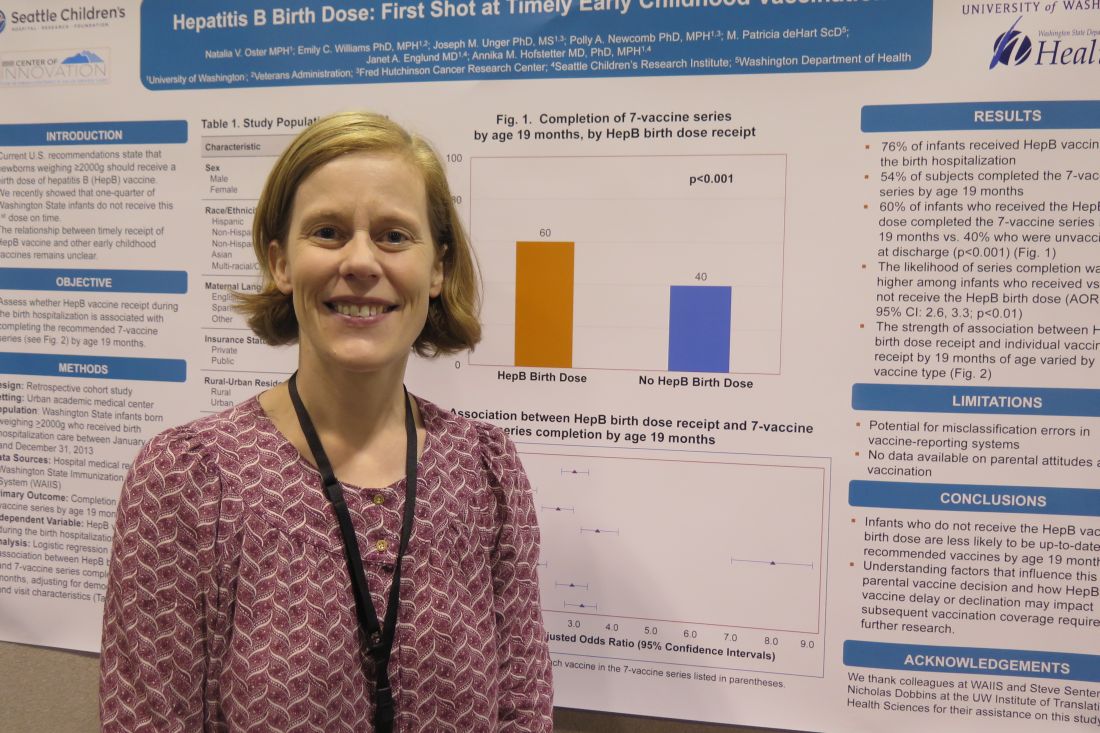
Of the 9,080 infants, 51% were male, 49% were non-Hispanic white, 56% were covered by public health insurance, and 47% stayed in the hospital for 48 hours or longer. The researchers reported that 76% infants received the HBV during the birth hospitalization, and 54% of subjects completed the seven-vaccine series by age 19 months. They also found that (P less than .001). Infants who received the HBV birth dose were 2.9 times more likely to complete the seven-vaccine series by age 19 months, compared with those who did not receive the HBV birth dose.
“Parents are making their first vaccine decision during that birth hospitalization,” said Dr. Hofstetter, who also conducts immunization research studies at Seattle Children’s Research Institute. “It’s unclear what underlies this decision, such as specific parent concerns or the way in which we as providers in the hospital are communicating vaccine information to the families. It’s telling, and it will be interesting to further explore the factors that are determining whether a family gets the vaccine during the birth hospitalization or not, and how we as a pediatric community can start having effective vaccine conversations earlier.”
She acknowledged certain limitations of the study, including the potential for misclassification errors in vaccine reporting systems and the fact that no data were available on parental attitudes about vaccination. The researchers reported having no financial disclosures.
TORONTO – Infants who do not receive the hepatitis B vaccine birth dose are less likely to be up-to-date recipients of recommended vaccines by 19 months, based on results from a retrospective study of more than 9,000 infants.
“As pediatricians, we should be mindful of that when we are meeting families after the birth hospitalization and start a conversation at that point around vaccines,” one of the study authors, Annika M. Hofstetter, MD, PhD, said in an interview at the Pediatric Academic Societies meeting.
Of the 9,080 infants, 51% were male, 49% were non-Hispanic white, 56% were covered by public health insurance, and 47% stayed in the hospital for 48 hours or longer. The researchers reported that 76% infants received the HBV during the birth hospitalization, and 54% of subjects completed the seven-vaccine series by age 19 months. They also found that (P less than .001). Infants who received the HBV birth dose were 2.9 times more likely to complete the seven-vaccine series by age 19 months, compared with those who did not receive the HBV birth dose.
“Parents are making their first vaccine decision during that birth hospitalization,” said Dr. Hofstetter, who also conducts immunization research studies at Seattle Children’s Research Institute. “It’s unclear what underlies this decision, such as specific parent concerns or the way in which we as providers in the hospital are communicating vaccine information to the families. It’s telling, and it will be interesting to further explore the factors that are determining whether a family gets the vaccine during the birth hospitalization or not, and how we as a pediatric community can start having effective vaccine conversations earlier.”
She acknowledged certain limitations of the study, including the potential for misclassification errors in vaccine reporting systems and the fact that no data were available on parental attitudes about vaccination. The researchers reported having no financial disclosures.
TORONTO – Infants who do not receive the hepatitis B vaccine birth dose are less likely to be up-to-date recipients of recommended vaccines by 19 months, based on results from a retrospective study of more than 9,000 infants.
“As pediatricians, we should be mindful of that when we are meeting families after the birth hospitalization and start a conversation at that point around vaccines,” one of the study authors, Annika M. Hofstetter, MD, PhD, said in an interview at the Pediatric Academic Societies meeting.
Of the 9,080 infants, 51% were male, 49% were non-Hispanic white, 56% were covered by public health insurance, and 47% stayed in the hospital for 48 hours or longer. The researchers reported that 76% infants received the HBV during the birth hospitalization, and 54% of subjects completed the seven-vaccine series by age 19 months. They also found that (P less than .001). Infants who received the HBV birth dose were 2.9 times more likely to complete the seven-vaccine series by age 19 months, compared with those who did not receive the HBV birth dose.
“Parents are making their first vaccine decision during that birth hospitalization,” said Dr. Hofstetter, who also conducts immunization research studies at Seattle Children’s Research Institute. “It’s unclear what underlies this decision, such as specific parent concerns or the way in which we as providers in the hospital are communicating vaccine information to the families. It’s telling, and it will be interesting to further explore the factors that are determining whether a family gets the vaccine during the birth hospitalization or not, and how we as a pediatric community can start having effective vaccine conversations earlier.”
She acknowledged certain limitations of the study, including the potential for misclassification errors in vaccine reporting systems and the fact that no data were available on parental attitudes about vaccination. The researchers reported having no financial disclosures.
AT PAS 2018
Key clinical point: Likelihood of completing the 7-vaccine series at 19 months was higher among infants who received the HBV birth dose.
Major finding: Infants who received the HBV birth dose were 2.9 times more likely to complete the 7-vaccine series by age 19 months, compared with those who did not receive the HBV birth dose.
Study details: A retrospective review of 9,080 infants born weighing at least 2,000 grams who received hospitalization care between January 1, 2008 and December 31, 2013.
Disclosures: The researchers reported having no financial disclosures.
Behavioral sleep intervention linked to sleep improvement in infants
(BSI) in a real-world setting, Sarah M. Honaker, PhD, of Indiana University, Indianapolis, and her associates, reported in the Journal of Pediatrics.
In a study of 652 parents who participated, parents started BSI when their infants were as young as less than 1 month of age and as late as 18 months of age. Most parents started BSI at 3-5 months.
Crying generally was greatest the first night, occurring in 45% of cases when all BSI approaches were considered. It lasted a mean 43 minutes, which dropped significantly after 1 week to a mean 9 minutes (P less than .001). Crying was considered most intense (on a 1-5 scale) on the initial night of BSI, a mean 4.42, and this “was equally true for all of the BSI approaches,” Dr. Honaker and her colleagues wrote.
In most cases, the parents’ first attempt at BSI worked (83%). Success varied by BSI approach, with the highest first attempt success rate in the unmodified extinction group (90%), followed by parental presence without support (83%), modified extinction (81%), and parental presence with support (65%). Eventually, 27% of parents were successful with a different approach than the one with which they started. Most commonly, they changed from modified extinction to unmodified extinction (66% of those who changed approaches).
“The majority of parents report successfully implementing BSI at a variety of ages across infancy, primarily using extinction-based approaches,” the researchers concluded. “Few significant differences were found between approaches, suggesting that health providers should offer parents options for BSI implementation.”
SOURCE: Honaker SM et al., J Pediatr. 2018. doi: 10.1016/j.jpeds.2018.04.009.
(BSI) in a real-world setting, Sarah M. Honaker, PhD, of Indiana University, Indianapolis, and her associates, reported in the Journal of Pediatrics.
In a study of 652 parents who participated, parents started BSI when their infants were as young as less than 1 month of age and as late as 18 months of age. Most parents started BSI at 3-5 months.
Crying generally was greatest the first night, occurring in 45% of cases when all BSI approaches were considered. It lasted a mean 43 minutes, which dropped significantly after 1 week to a mean 9 minutes (P less than .001). Crying was considered most intense (on a 1-5 scale) on the initial night of BSI, a mean 4.42, and this “was equally true for all of the BSI approaches,” Dr. Honaker and her colleagues wrote.
In most cases, the parents’ first attempt at BSI worked (83%). Success varied by BSI approach, with the highest first attempt success rate in the unmodified extinction group (90%), followed by parental presence without support (83%), modified extinction (81%), and parental presence with support (65%). Eventually, 27% of parents were successful with a different approach than the one with which they started. Most commonly, they changed from modified extinction to unmodified extinction (66% of those who changed approaches).
“The majority of parents report successfully implementing BSI at a variety of ages across infancy, primarily using extinction-based approaches,” the researchers concluded. “Few significant differences were found between approaches, suggesting that health providers should offer parents options for BSI implementation.”
SOURCE: Honaker SM et al., J Pediatr. 2018. doi: 10.1016/j.jpeds.2018.04.009.
(BSI) in a real-world setting, Sarah M. Honaker, PhD, of Indiana University, Indianapolis, and her associates, reported in the Journal of Pediatrics.
In a study of 652 parents who participated, parents started BSI when their infants were as young as less than 1 month of age and as late as 18 months of age. Most parents started BSI at 3-5 months.
Crying generally was greatest the first night, occurring in 45% of cases when all BSI approaches were considered. It lasted a mean 43 minutes, which dropped significantly after 1 week to a mean 9 minutes (P less than .001). Crying was considered most intense (on a 1-5 scale) on the initial night of BSI, a mean 4.42, and this “was equally true for all of the BSI approaches,” Dr. Honaker and her colleagues wrote.
In most cases, the parents’ first attempt at BSI worked (83%). Success varied by BSI approach, with the highest first attempt success rate in the unmodified extinction group (90%), followed by parental presence without support (83%), modified extinction (81%), and parental presence with support (65%). Eventually, 27% of parents were successful with a different approach than the one with which they started. Most commonly, they changed from modified extinction to unmodified extinction (66% of those who changed approaches).
“The majority of parents report successfully implementing BSI at a variety of ages across infancy, primarily using extinction-based approaches,” the researchers concluded. “Few significant differences were found between approaches, suggesting that health providers should offer parents options for BSI implementation.”
SOURCE: Honaker SM et al., J Pediatr. 2018. doi: 10.1016/j.jpeds.2018.04.009.
FROM THE JOURNAL OF PEDIATRICS
VIDEO: Let clinical scenario, not imaging, guide sarcoidosis treatment
SANDESTIN, FLA. – Don’t be a slave to imaging when evaluating the patient with sarcoidosis.
“Sometimes, the worst-looking patients [on imaging] have the best prognosis,” Daniel Culver, DO, said at the annual Congress of Clinical Rheumatology. Patients with Löfgren’s syndrome are a very good example of this tenet, he said in an interview. Scans can look alarming, with multiple widespread granulomas. But Löfgren’s is generally a benign condition, despite its threatening mien.
The video associated with this article is no longer available on this site. Please view all of our videos on the MDedge YouTube channel
Instead of imaging, “Let two things drive your decision to treat: danger to an organ, and quality of life,” said Dr. Culver, a pulmonologist and director of the Sarcoidosis Center of Excellence at the Cleveland Clinic in Ohio; he is also president of the World Association for Sarcoidosis.
He agrees with a decision schema published in 2015 (Clin Chest Med. 2015;36[4]:751-67).
Six factors weigh in favor of treatment:
- Symptomatic disease.
- Impaired organ function.
- Disease endangering an organ.
- Progressive disease.
- Clear-cut disease activity.
- Low likelihood of remission.
These must be balanced – with patient input as the fulcrum – against five factors that favor conservative management:
- Minimal symptoms.
- Good organ function.
- Low risk of danger to organs.
- Inactive disease.
- Higher likelihood of remission.
The decision to embark on a treatment program, usually starting with a steroid-based regimen, can’t be taken lightly, Dr. Culver said. A 2017 study showed that steroids pose a cumulative risk of toxicities for sarcoidosis patients (Respir Med. 2017 Nov;132:9-14). Patients who started steroids faced more than a doubling in the risk of a toxic side effect by 96 months when compared with those who didn’t. But even short-term steroid use increased the risk of a toxicity, Dr. Culver said. The study noted that problems can begin to occur in as little as 1 month, at a cumulative dose as low as 1 g.
For patients who fall onto the “treat” side of the risk teeter-totter, Dr. Culver recommended starting with an initial course of prednisone at 20-30 mg daily for no more than 4 weeks. Responders can taper to less than 10 mg/day. Those who continue to do well can maintain low-dose prednisone for up to 12 months and then complete the taper. Patients who relapse can add an immune modulator (methotrexate, azathioprine, leflunomide, or mycophenolate).
Those who have an inadequate response to the initial prednisone course should then get an immune modulator. If they do well, that can be maintained; a second modulator can be brought on board if necessary.
For those who don’t respond at all to the initial prednisone course, it’s necessary to proceed immediately to an immunosuppressive regimen to prevent irreversible fibrosis.
Dr. Culver noted associations with multiple pharmaceutical companies, but said none were relevant to his talk.
SOURCE: Culver D. CCR 2018.
SANDESTIN, FLA. – Don’t be a slave to imaging when evaluating the patient with sarcoidosis.
“Sometimes, the worst-looking patients [on imaging] have the best prognosis,” Daniel Culver, DO, said at the annual Congress of Clinical Rheumatology. Patients with Löfgren’s syndrome are a very good example of this tenet, he said in an interview. Scans can look alarming, with multiple widespread granulomas. But Löfgren’s is generally a benign condition, despite its threatening mien.
The video associated with this article is no longer available on this site. Please view all of our videos on the MDedge YouTube channel
Instead of imaging, “Let two things drive your decision to treat: danger to an organ, and quality of life,” said Dr. Culver, a pulmonologist and director of the Sarcoidosis Center of Excellence at the Cleveland Clinic in Ohio; he is also president of the World Association for Sarcoidosis.
He agrees with a decision schema published in 2015 (Clin Chest Med. 2015;36[4]:751-67).
Six factors weigh in favor of treatment:
- Symptomatic disease.
- Impaired organ function.
- Disease endangering an organ.
- Progressive disease.
- Clear-cut disease activity.
- Low likelihood of remission.
These must be balanced – with patient input as the fulcrum – against five factors that favor conservative management:
- Minimal symptoms.
- Good organ function.
- Low risk of danger to organs.
- Inactive disease.
- Higher likelihood of remission.
The decision to embark on a treatment program, usually starting with a steroid-based regimen, can’t be taken lightly, Dr. Culver said. A 2017 study showed that steroids pose a cumulative risk of toxicities for sarcoidosis patients (Respir Med. 2017 Nov;132:9-14). Patients who started steroids faced more than a doubling in the risk of a toxic side effect by 96 months when compared with those who didn’t. But even short-term steroid use increased the risk of a toxicity, Dr. Culver said. The study noted that problems can begin to occur in as little as 1 month, at a cumulative dose as low as 1 g.
For patients who fall onto the “treat” side of the risk teeter-totter, Dr. Culver recommended starting with an initial course of prednisone at 20-30 mg daily for no more than 4 weeks. Responders can taper to less than 10 mg/day. Those who continue to do well can maintain low-dose prednisone for up to 12 months and then complete the taper. Patients who relapse can add an immune modulator (methotrexate, azathioprine, leflunomide, or mycophenolate).
Those who have an inadequate response to the initial prednisone course should then get an immune modulator. If they do well, that can be maintained; a second modulator can be brought on board if necessary.
For those who don’t respond at all to the initial prednisone course, it’s necessary to proceed immediately to an immunosuppressive regimen to prevent irreversible fibrosis.
Dr. Culver noted associations with multiple pharmaceutical companies, but said none were relevant to his talk.
SOURCE: Culver D. CCR 2018.
SANDESTIN, FLA. – Don’t be a slave to imaging when evaluating the patient with sarcoidosis.
“Sometimes, the worst-looking patients [on imaging] have the best prognosis,” Daniel Culver, DO, said at the annual Congress of Clinical Rheumatology. Patients with Löfgren’s syndrome are a very good example of this tenet, he said in an interview. Scans can look alarming, with multiple widespread granulomas. But Löfgren’s is generally a benign condition, despite its threatening mien.
The video associated with this article is no longer available on this site. Please view all of our videos on the MDedge YouTube channel
Instead of imaging, “Let two things drive your decision to treat: danger to an organ, and quality of life,” said Dr. Culver, a pulmonologist and director of the Sarcoidosis Center of Excellence at the Cleveland Clinic in Ohio; he is also president of the World Association for Sarcoidosis.
He agrees with a decision schema published in 2015 (Clin Chest Med. 2015;36[4]:751-67).
Six factors weigh in favor of treatment:
- Symptomatic disease.
- Impaired organ function.
- Disease endangering an organ.
- Progressive disease.
- Clear-cut disease activity.
- Low likelihood of remission.
These must be balanced – with patient input as the fulcrum – against five factors that favor conservative management:
- Minimal symptoms.
- Good organ function.
- Low risk of danger to organs.
- Inactive disease.
- Higher likelihood of remission.
The decision to embark on a treatment program, usually starting with a steroid-based regimen, can’t be taken lightly, Dr. Culver said. A 2017 study showed that steroids pose a cumulative risk of toxicities for sarcoidosis patients (Respir Med. 2017 Nov;132:9-14). Patients who started steroids faced more than a doubling in the risk of a toxic side effect by 96 months when compared with those who didn’t. But even short-term steroid use increased the risk of a toxicity, Dr. Culver said. The study noted that problems can begin to occur in as little as 1 month, at a cumulative dose as low as 1 g.
For patients who fall onto the “treat” side of the risk teeter-totter, Dr. Culver recommended starting with an initial course of prednisone at 20-30 mg daily for no more than 4 weeks. Responders can taper to less than 10 mg/day. Those who continue to do well can maintain low-dose prednisone for up to 12 months and then complete the taper. Patients who relapse can add an immune modulator (methotrexate, azathioprine, leflunomide, or mycophenolate).
Those who have an inadequate response to the initial prednisone course should then get an immune modulator. If they do well, that can be maintained; a second modulator can be brought on board if necessary.
For those who don’t respond at all to the initial prednisone course, it’s necessary to proceed immediately to an immunosuppressive regimen to prevent irreversible fibrosis.
Dr. Culver noted associations with multiple pharmaceutical companies, but said none were relevant to his talk.
SOURCE: Culver D. CCR 2018.
REPORTING FROM CCR 18

Drug-related deaths continue to rise in United States
TORONTO – Drug-related deaths in America are rising faster than ever.
Rear Adm. Wanda D. Barfield, MD shared recent data from the U.S. National Center for Health Statistics on people aged 15 years and older at the Pediatric Academic Societies annual meeting. Between 1999 and 2016, for example, the number of drug overdose deaths rose more than threefold, from 6.1/100,000 standard population in 1999 to 19.8/100,000 in 2016. For males, the rate increased from 8.2/100,000 in 1999 to 26.2/100,000 in 2016. For females, the rate increased from 3.9/100,000 in 1999 to 13.4/100,000 in 2016.
Dr. Barfield, director of the division of reproductive health at the Centers for Disease Control and Prevention, said that in 2016, the NCHS also found that 22 states and the District of Columbia had drug overdoses that were significantly higher than the national average. The states with the highest number of drug overdose deaths were the District of Columbia, New Hampshire, Pennsylvania, and West Virginia while the states with the lowest observed rates were Nebraska, North Dakota, South Dakota, and Texas.
“Many of these drug overdose deaths are linked to opioids, but not exclusively,” Dr. Barfield said. “In the past, the overall opioid-related overdose deaths were mainly attributed to commonly prescribed opioid medications. However, in recent years, we’re seeing more deaths due to illicit drugs such as heroin and fentanyl.”
The NCHS found that the age-adjusted rate for drug overdose deaths involving synthetic opioids other than methadone doubled from 2015 to 2016, and that drug overdose deaths involving synthetic opioids other than methadone increased from 0.3/100,000 in 1999 to 6.2/100,000 in 2016. The rate increased an average of 18% per year from 1999 to 2006, remained steady from 2006 to 2013, but increased by 88% per year from 2013 to 2016. At the same time, drug overdose deaths involving heroin increased from 0.7/100,000 in 1999 to 1/100,000 in 2010, to 4.9/100,000 in 2016.
According to Dr. Barfield, the spike in opioid use since 1999 stems directly from increased prescribing rates. “In 2015, the number of opioids prescribed was enough so that every American could be medicated around the clock for 3 weeks,” she said. “In addition to the number of prescriptions, the average day’s supply of prescription opioids increased from 2006 to 2015, from 13.3 days in 2006 to 17.7 days in 2015.” What’s more, a recent CDC Vital Signs found that the amount of opioids prescribed per person varied widely among U.S. counties in 2015. “The wide variation among counties suggests a lack of consistency among providers when prescribing opioids,” Dr. Barfield said. “It’s concerning, as higher opioid prescribing puts patients at risk for addiction.”
At the same time, opioid overdose ED visits continue to rise. Data from the CDC’s National Syndromic Surveillance Program found that from July 2016 to September 2017, opioid overdose ED visits increased by 30% for men, by 24% for women, and for all adult age groups (31% among those aged 25-34 years, 36% among those aged 35-54 years, and 32% among those aged 55 years and older).

There’s a problem of prescription opioid use among pregnant women. Published estimates indicate that 14%-22% of women filled an opioid prescription during pregnancy, Dr. Barfield said. Among pregnant women, the prevalence of maternal opioid use or dependence during hospitalization for delivery has increased 127%, from 1.7 /1,000 delivery admissions in 1998 to 3.9/1,000 delivery admissions in 2011 (Anesthesiology 2014;121[6]:1158-65). There also has been a significant increase in neonatal abstinence syndrome (NAS), which is most commonly attributed to opioid exposure during pregnancy, from 1.2/1,000 U.S. hospital births in 2000 to 8/1,000 U.S. hospital births in 2014. “NAS is still on the rise,” Dr. Barfield said. “In 2012, we saw one baby with NAS born every 25 minutes. In 2014, that number jumped to one baby born with NAS every 15 minutes. That means about 96 infants with NAS are born daily,” she said. “Where do you think we’re going to be when we look at 2018 data?”
Role for pediatricians
Dr. Barfield closed her presentation by underscoring the role pediatricians play in counseling patients about opioid abuse or dependence during pregnancy. “We know that providers have a tremendous impact on patients and their families,” she said. “We also know that issues leading to a newborn having NAS are complex, so adopting a public health approach focused on prevention, expansion of treatment, and improvements in child welfare systems is vital.” Specifically, she said, health care providers can “bridge the gap” between clinical care and public health; lead in their communities, not just within their hospital or practice; work as a team member with colleagues in other fields of medicine such as obstetrics, family medicine, and addiction care when caring for infants with NAS, and by considering the social determinants of health.
“One way to adopt a public health perspective is to remember that the health of the fetus and baby rely on more than just prenatal care,” Dr. Barfield said. “We’re all part of a larger whole, surrounded by our families, communities, regions, state, and even our countries of origin. What’s going on with the mom, her family, and the larger community impacts the baby’s health. In other words, the social determinants of health matter, and are an important part of the conversation on NAS.”
She reported having no financial disclosures.
TORONTO – Drug-related deaths in America are rising faster than ever.
Rear Adm. Wanda D. Barfield, MD shared recent data from the U.S. National Center for Health Statistics on people aged 15 years and older at the Pediatric Academic Societies annual meeting. Between 1999 and 2016, for example, the number of drug overdose deaths rose more than threefold, from 6.1/100,000 standard population in 1999 to 19.8/100,000 in 2016. For males, the rate increased from 8.2/100,000 in 1999 to 26.2/100,000 in 2016. For females, the rate increased from 3.9/100,000 in 1999 to 13.4/100,000 in 2016.
Dr. Barfield, director of the division of reproductive health at the Centers for Disease Control and Prevention, said that in 2016, the NCHS also found that 22 states and the District of Columbia had drug overdoses that were significantly higher than the national average. The states with the highest number of drug overdose deaths were the District of Columbia, New Hampshire, Pennsylvania, and West Virginia while the states with the lowest observed rates were Nebraska, North Dakota, South Dakota, and Texas.
“Many of these drug overdose deaths are linked to opioids, but not exclusively,” Dr. Barfield said. “In the past, the overall opioid-related overdose deaths were mainly attributed to commonly prescribed opioid medications. However, in recent years, we’re seeing more deaths due to illicit drugs such as heroin and fentanyl.”
The NCHS found that the age-adjusted rate for drug overdose deaths involving synthetic opioids other than methadone doubled from 2015 to 2016, and that drug overdose deaths involving synthetic opioids other than methadone increased from 0.3/100,000 in 1999 to 6.2/100,000 in 2016. The rate increased an average of 18% per year from 1999 to 2006, remained steady from 2006 to 2013, but increased by 88% per year from 2013 to 2016. At the same time, drug overdose deaths involving heroin increased from 0.7/100,000 in 1999 to 1/100,000 in 2010, to 4.9/100,000 in 2016.
According to Dr. Barfield, the spike in opioid use since 1999 stems directly from increased prescribing rates. “In 2015, the number of opioids prescribed was enough so that every American could be medicated around the clock for 3 weeks,” she said. “In addition to the number of prescriptions, the average day’s supply of prescription opioids increased from 2006 to 2015, from 13.3 days in 2006 to 17.7 days in 2015.” What’s more, a recent CDC Vital Signs found that the amount of opioids prescribed per person varied widely among U.S. counties in 2015. “The wide variation among counties suggests a lack of consistency among providers when prescribing opioids,” Dr. Barfield said. “It’s concerning, as higher opioid prescribing puts patients at risk for addiction.”
At the same time, opioid overdose ED visits continue to rise. Data from the CDC’s National Syndromic Surveillance Program found that from July 2016 to September 2017, opioid overdose ED visits increased by 30% for men, by 24% for women, and for all adult age groups (31% among those aged 25-34 years, 36% among those aged 35-54 years, and 32% among those aged 55 years and older).
There’s a problem of prescription opioid use among pregnant women. Published estimates indicate that 14%-22% of women filled an opioid prescription during pregnancy, Dr. Barfield said. Among pregnant women, the prevalence of maternal opioid use or dependence during hospitalization for delivery has increased 127%, from 1.7 /1,000 delivery admissions in 1998 to 3.9/1,000 delivery admissions in 2011 (Anesthesiology 2014;121[6]:1158-65). There also has been a significant increase in neonatal abstinence syndrome (NAS), which is most commonly attributed to opioid exposure during pregnancy, from 1.2/1,000 U.S. hospital births in 2000 to 8/1,000 U.S. hospital births in 2014. “NAS is still on the rise,” Dr. Barfield said. “In 2012, we saw one baby with NAS born every 25 minutes. In 2014, that number jumped to one baby born with NAS every 15 minutes. That means about 96 infants with NAS are born daily,” she said. “Where do you think we’re going to be when we look at 2018 data?”
Role for pediatricians
Dr. Barfield closed her presentation by underscoring the role pediatricians play in counseling patients about opioid abuse or dependence during pregnancy. “We know that providers have a tremendous impact on patients and their families,” she said. “We also know that issues leading to a newborn having NAS are complex, so adopting a public health approach focused on prevention, expansion of treatment, and improvements in child welfare systems is vital.” Specifically, she said, health care providers can “bridge the gap” between clinical care and public health; lead in their communities, not just within their hospital or practice; work as a team member with colleagues in other fields of medicine such as obstetrics, family medicine, and addiction care when caring for infants with NAS, and by considering the social determinants of health.
“One way to adopt a public health perspective is to remember that the health of the fetus and baby rely on more than just prenatal care,” Dr. Barfield said. “We’re all part of a larger whole, surrounded by our families, communities, regions, state, and even our countries of origin. What’s going on with the mom, her family, and the larger community impacts the baby’s health. In other words, the social determinants of health matter, and are an important part of the conversation on NAS.”
She reported having no financial disclosures.
TORONTO – Drug-related deaths in America are rising faster than ever.
Rear Adm. Wanda D. Barfield, MD shared recent data from the U.S. National Center for Health Statistics on people aged 15 years and older at the Pediatric Academic Societies annual meeting. Between 1999 and 2016, for example, the number of drug overdose deaths rose more than threefold, from 6.1/100,000 standard population in 1999 to 19.8/100,000 in 2016. For males, the rate increased from 8.2/100,000 in 1999 to 26.2/100,000 in 2016. For females, the rate increased from 3.9/100,000 in 1999 to 13.4/100,000 in 2016.
Dr. Barfield, director of the division of reproductive health at the Centers for Disease Control and Prevention, said that in 2016, the NCHS also found that 22 states and the District of Columbia had drug overdoses that were significantly higher than the national average. The states with the highest number of drug overdose deaths were the District of Columbia, New Hampshire, Pennsylvania, and West Virginia while the states with the lowest observed rates were Nebraska, North Dakota, South Dakota, and Texas.
“Many of these drug overdose deaths are linked to opioids, but not exclusively,” Dr. Barfield said. “In the past, the overall opioid-related overdose deaths were mainly attributed to commonly prescribed opioid medications. However, in recent years, we’re seeing more deaths due to illicit drugs such as heroin and fentanyl.”
The NCHS found that the age-adjusted rate for drug overdose deaths involving synthetic opioids other than methadone doubled from 2015 to 2016, and that drug overdose deaths involving synthetic opioids other than methadone increased from 0.3/100,000 in 1999 to 6.2/100,000 in 2016. The rate increased an average of 18% per year from 1999 to 2006, remained steady from 2006 to 2013, but increased by 88% per year from 2013 to 2016. At the same time, drug overdose deaths involving heroin increased from 0.7/100,000 in 1999 to 1/100,000 in 2010, to 4.9/100,000 in 2016.
According to Dr. Barfield, the spike in opioid use since 1999 stems directly from increased prescribing rates. “In 2015, the number of opioids prescribed was enough so that every American could be medicated around the clock for 3 weeks,” she said. “In addition to the number of prescriptions, the average day’s supply of prescription opioids increased from 2006 to 2015, from 13.3 days in 2006 to 17.7 days in 2015.” What’s more, a recent CDC Vital Signs found that the amount of opioids prescribed per person varied widely among U.S. counties in 2015. “The wide variation among counties suggests a lack of consistency among providers when prescribing opioids,” Dr. Barfield said. “It’s concerning, as higher opioid prescribing puts patients at risk for addiction.”
At the same time, opioid overdose ED visits continue to rise. Data from the CDC’s National Syndromic Surveillance Program found that from July 2016 to September 2017, opioid overdose ED visits increased by 30% for men, by 24% for women, and for all adult age groups (31% among those aged 25-34 years, 36% among those aged 35-54 years, and 32% among those aged 55 years and older).
There’s a problem of prescription opioid use among pregnant women. Published estimates indicate that 14%-22% of women filled an opioid prescription during pregnancy, Dr. Barfield said. Among pregnant women, the prevalence of maternal opioid use or dependence during hospitalization for delivery has increased 127%, from 1.7 /1,000 delivery admissions in 1998 to 3.9/1,000 delivery admissions in 2011 (Anesthesiology 2014;121[6]:1158-65). There also has been a significant increase in neonatal abstinence syndrome (NAS), which is most commonly attributed to opioid exposure during pregnancy, from 1.2/1,000 U.S. hospital births in 2000 to 8/1,000 U.S. hospital births in 2014. “NAS is still on the rise,” Dr. Barfield said. “In 2012, we saw one baby with NAS born every 25 minutes. In 2014, that number jumped to one baby born with NAS every 15 minutes. That means about 96 infants with NAS are born daily,” she said. “Where do you think we’re going to be when we look at 2018 data?”
Role for pediatricians
Dr. Barfield closed her presentation by underscoring the role pediatricians play in counseling patients about opioid abuse or dependence during pregnancy. “We know that providers have a tremendous impact on patients and their families,” she said. “We also know that issues leading to a newborn having NAS are complex, so adopting a public health approach focused on prevention, expansion of treatment, and improvements in child welfare systems is vital.” Specifically, she said, health care providers can “bridge the gap” between clinical care and public health; lead in their communities, not just within their hospital or practice; work as a team member with colleagues in other fields of medicine such as obstetrics, family medicine, and addiction care when caring for infants with NAS, and by considering the social determinants of health.
“One way to adopt a public health perspective is to remember that the health of the fetus and baby rely on more than just prenatal care,” Dr. Barfield said. “We’re all part of a larger whole, surrounded by our families, communities, regions, state, and even our countries of origin. What’s going on with the mom, her family, and the larger community impacts the baby’s health. In other words, the social determinants of health matter, and are an important part of the conversation on NAS.”
She reported having no financial disclosures.
EXPERT ANALYSIS FROM PAS 2018