User login
VIDEO: BMI helps predict bone fragility in obese patients
BOSTON – An index that takes into account the ratio between body mass index (BMI) and bone mineral density (BMD) correlated well with trabecular bone scores, a newer assessment of bone fragility. The index may help predict risk for fragility fractures in individuals with obesity when trabecular bone scores are not available.
“Obesity is traditionally thought to be protective against bone fractures,” said Mikiko Watanabe, MD, an endocrinologist at Sapienza University of Rome. “But recent evidence suggests that this is not entirely true, especially in morbidly obese patients.”
The video associated with this article is no longer available on this site. Please view all of our videos on the MDedge YouTube channel
Lumbar spine BMD alone may not accurately capture bone fragility in patients with obesity, said Dr. Watanabe in an interview at the annual meeting of the American Association of Clinical Endocrinologists.
Adding the trabecular bone score (TBS) to BMD gives additional information about bone microarchitecture, refining risk assessment for fragility fractures. This newer technology, however, may not be readily available and may be associated with extra cost.
Accordingly, said Dr. Watanabe, the study’s senior investigator, Sapienza University’s Carla Lubrano, MD, had the idea to index bone density to BMI, and then see how well the ratio correlated to TBS; obesity is known to be associated with lower TBS scores, indicating increased bone fragility.
Living in Italy, with relatively fewer medical resources available, “We were trying to find some readily available index that could predict the risk of fracture as well as the indexes that are around right now,” said Dr. Watanabe.
“We did find some very interesting data in our population of over 2,000 obese patients living in Rome,” she said. “We do confirm something from the literature, where BMD tends to go high with increasing BMI.” Further, the relatively weak correlation between TBS and BMI was confirmed in the investigators’ work (r = 0.3).
“If you correct the BMD by BMI – so if you use our index – then the correlation becomes more stringent, and definitely so much better,” she said (r = 0.54).
Dr. Watanabe and her colleagues also conducted an analysis to see if there were differences between participants with and without metabolic syndrome. The 45.7% of participants who had metabolic syndrome had similar lumbar spine BMD scores to the rest of the cohort (1.067 versus 1.063 g/cm2, P = .50754).
However, both the TBS and BMD/BMI ratio were significantly lower for those with metabolic syndrome than for the metabolically healthy participants. The TBS, as expected, was 1.21 in patients with metabolic syndrome, and 1.31 in patients without metabolic syndrome; the BMD/BMI ratio followed the same pattern, with ratios of 0.28 for those with, and 0.30 for those without, metabolic syndrome (P less than .00001 for both).
Dr. Watanabe said that she and her associates are continuing research “to see whether our ratio is actually able to predict the risk of fractures." The hope, she said, is to use the BMD/BMI index together with or instead of TBS to better assess bone strength in patients with obesity.
Dr. Watanabe reported that she had no relevant conflicts of interest.
BOSTON – An index that takes into account the ratio between body mass index (BMI) and bone mineral density (BMD) correlated well with trabecular bone scores, a newer assessment of bone fragility. The index may help predict risk for fragility fractures in individuals with obesity when trabecular bone scores are not available.
“Obesity is traditionally thought to be protective against bone fractures,” said Mikiko Watanabe, MD, an endocrinologist at Sapienza University of Rome. “But recent evidence suggests that this is not entirely true, especially in morbidly obese patients.”
The video associated with this article is no longer available on this site. Please view all of our videos on the MDedge YouTube channel
Lumbar spine BMD alone may not accurately capture bone fragility in patients with obesity, said Dr. Watanabe in an interview at the annual meeting of the American Association of Clinical Endocrinologists.
Adding the trabecular bone score (TBS) to BMD gives additional information about bone microarchitecture, refining risk assessment for fragility fractures. This newer technology, however, may not be readily available and may be associated with extra cost.
Accordingly, said Dr. Watanabe, the study’s senior investigator, Sapienza University’s Carla Lubrano, MD, had the idea to index bone density to BMI, and then see how well the ratio correlated to TBS; obesity is known to be associated with lower TBS scores, indicating increased bone fragility.
Living in Italy, with relatively fewer medical resources available, “We were trying to find some readily available index that could predict the risk of fracture as well as the indexes that are around right now,” said Dr. Watanabe.
“We did find some very interesting data in our population of over 2,000 obese patients living in Rome,” she said. “We do confirm something from the literature, where BMD tends to go high with increasing BMI.” Further, the relatively weak correlation between TBS and BMI was confirmed in the investigators’ work (r = 0.3).
“If you correct the BMD by BMI – so if you use our index – then the correlation becomes more stringent, and definitely so much better,” she said (r = 0.54).
Dr. Watanabe and her colleagues also conducted an analysis to see if there were differences between participants with and without metabolic syndrome. The 45.7% of participants who had metabolic syndrome had similar lumbar spine BMD scores to the rest of the cohort (1.067 versus 1.063 g/cm2, P = .50754).
However, both the TBS and BMD/BMI ratio were significantly lower for those with metabolic syndrome than for the metabolically healthy participants. The TBS, as expected, was 1.21 in patients with metabolic syndrome, and 1.31 in patients without metabolic syndrome; the BMD/BMI ratio followed the same pattern, with ratios of 0.28 for those with, and 0.30 for those without, metabolic syndrome (P less than .00001 for both).
Dr. Watanabe said that she and her associates are continuing research “to see whether our ratio is actually able to predict the risk of fractures." The hope, she said, is to use the BMD/BMI index together with or instead of TBS to better assess bone strength in patients with obesity.
Dr. Watanabe reported that she had no relevant conflicts of interest.
BOSTON – An index that takes into account the ratio between body mass index (BMI) and bone mineral density (BMD) correlated well with trabecular bone scores, a newer assessment of bone fragility. The index may help predict risk for fragility fractures in individuals with obesity when trabecular bone scores are not available.
“Obesity is traditionally thought to be protective against bone fractures,” said Mikiko Watanabe, MD, an endocrinologist at Sapienza University of Rome. “But recent evidence suggests that this is not entirely true, especially in morbidly obese patients.”
The video associated with this article is no longer available on this site. Please view all of our videos on the MDedge YouTube channel
Lumbar spine BMD alone may not accurately capture bone fragility in patients with obesity, said Dr. Watanabe in an interview at the annual meeting of the American Association of Clinical Endocrinologists.
Adding the trabecular bone score (TBS) to BMD gives additional information about bone microarchitecture, refining risk assessment for fragility fractures. This newer technology, however, may not be readily available and may be associated with extra cost.
Accordingly, said Dr. Watanabe, the study’s senior investigator, Sapienza University’s Carla Lubrano, MD, had the idea to index bone density to BMI, and then see how well the ratio correlated to TBS; obesity is known to be associated with lower TBS scores, indicating increased bone fragility.
Living in Italy, with relatively fewer medical resources available, “We were trying to find some readily available index that could predict the risk of fracture as well as the indexes that are around right now,” said Dr. Watanabe.
“We did find some very interesting data in our population of over 2,000 obese patients living in Rome,” she said. “We do confirm something from the literature, where BMD tends to go high with increasing BMI.” Further, the relatively weak correlation between TBS and BMI was confirmed in the investigators’ work (r = 0.3).
“If you correct the BMD by BMI – so if you use our index – then the correlation becomes more stringent, and definitely so much better,” she said (r = 0.54).
Dr. Watanabe and her colleagues also conducted an analysis to see if there were differences between participants with and without metabolic syndrome. The 45.7% of participants who had metabolic syndrome had similar lumbar spine BMD scores to the rest of the cohort (1.067 versus 1.063 g/cm2, P = .50754).
However, both the TBS and BMD/BMI ratio were significantly lower for those with metabolic syndrome than for the metabolically healthy participants. The TBS, as expected, was 1.21 in patients with metabolic syndrome, and 1.31 in patients without metabolic syndrome; the BMD/BMI ratio followed the same pattern, with ratios of 0.28 for those with, and 0.30 for those without, metabolic syndrome (P less than .00001 for both).
Dr. Watanabe said that she and her associates are continuing research “to see whether our ratio is actually able to predict the risk of fractures." The hope, she said, is to use the BMD/BMI index together with or instead of TBS to better assess bone strength in patients with obesity.
Dr. Watanabe reported that she had no relevant conflicts of interest.
REPORTING FROM AACE 2018

VIDEO: First year after bariatric surgery critical for HbA1c improvement
BOSTON – Acute weight loss during the first year after bariatric surgery has a significant effect on hemoglobin A1c level improvement at 5 years’ follow-up, according to a study presented at the annual meeting of the American Association of Clinical Endocrinologists.
The data presented could help clinicians understand when and where to focus their efforts to help patients optimize weight loss in order to see the best long-term benefits of the procedure, according to presenter Keren Zhou, MD, an endocrinology fellow at the Cleveland Clinic.
“Clinicians need to really focus on that first year weight loss after bariatric surgery to try and optimize 5-year A1c outcomes,” said Dr. Zhou. “It also answers another question people have been having, which is how much does weight regain after bariatric surgery really matter? What we’ve been able to show here is that weight regain didn’t look very correlated at all.”
Dr. Zhou and her colleagues developed the ancillary study using data from the STAMPEDE (Surgical Treatment and Medications Potentially Eradicate Diabetes Efficiently) trial, specifically looking at 96 patients: 49 who underwent bariatric surgery and 47 who had a sleeve gastrectomy.
Patients were majority female, on average 48 years old, with a mean body mass index of 36.5 and HbA1c level of 9.4.
Overall, bariatric surgery patients lost an average of 27.2% in the first year, and regained around 8.2% from the first to fifth year, while sleeve gastrectomy lost and regained 25.1% and 9.4% respectively.
When comparing weight loss in the first year and HbA1c levels, Dr. Zhou and her colleagues found a significant correlation for both bariatric surgery and sleeve gastrectomy patients (r +.34; P = .0006).
“It was interesting because when we graphically represented the weight changes in addition to the A1c over time, we found that they actually correlated quite closely, but it was only when we did the statistical analysis on the numbers that we found that [in both groups] people who lost less weight had a higher A1c at the 5-year mark,” said Dr. Zhou.
In the non–multivariable analysis, however, investigators found a more significant correlation between weight regain and HbA1c levels in gastrectomy patients, however these findings changed when Dr. Zhou and her fellow investigators controlled for insulin use and baseline C-peptide.
In continuing studies, Dr. Zhou and her team will dive deeper into why these correlations exist, as right now they can only speculate.
Dr. Zhou reported no relevant financial disclosures.
SOURCE: Zhou K et al. AACE 18. Abstract 240-F.
BOSTON – Acute weight loss during the first year after bariatric surgery has a significant effect on hemoglobin A1c level improvement at 5 years’ follow-up, according to a study presented at the annual meeting of the American Association of Clinical Endocrinologists.
The data presented could help clinicians understand when and where to focus their efforts to help patients optimize weight loss in order to see the best long-term benefits of the procedure, according to presenter Keren Zhou, MD, an endocrinology fellow at the Cleveland Clinic.
“Clinicians need to really focus on that first year weight loss after bariatric surgery to try and optimize 5-year A1c outcomes,” said Dr. Zhou. “It also answers another question people have been having, which is how much does weight regain after bariatric surgery really matter? What we’ve been able to show here is that weight regain didn’t look very correlated at all.”
Dr. Zhou and her colleagues developed the ancillary study using data from the STAMPEDE (Surgical Treatment and Medications Potentially Eradicate Diabetes Efficiently) trial, specifically looking at 96 patients: 49 who underwent bariatric surgery and 47 who had a sleeve gastrectomy.
Patients were majority female, on average 48 years old, with a mean body mass index of 36.5 and HbA1c level of 9.4.
Overall, bariatric surgery patients lost an average of 27.2% in the first year, and regained around 8.2% from the first to fifth year, while sleeve gastrectomy lost and regained 25.1% and 9.4% respectively.
When comparing weight loss in the first year and HbA1c levels, Dr. Zhou and her colleagues found a significant correlation for both bariatric surgery and sleeve gastrectomy patients (r +.34; P = .0006).
“It was interesting because when we graphically represented the weight changes in addition to the A1c over time, we found that they actually correlated quite closely, but it was only when we did the statistical analysis on the numbers that we found that [in both groups] people who lost less weight had a higher A1c at the 5-year mark,” said Dr. Zhou.
In the non–multivariable analysis, however, investigators found a more significant correlation between weight regain and HbA1c levels in gastrectomy patients, however these findings changed when Dr. Zhou and her fellow investigators controlled for insulin use and baseline C-peptide.
In continuing studies, Dr. Zhou and her team will dive deeper into why these correlations exist, as right now they can only speculate.
Dr. Zhou reported no relevant financial disclosures.
SOURCE: Zhou K et al. AACE 18. Abstract 240-F.
BOSTON – Acute weight loss during the first year after bariatric surgery has a significant effect on hemoglobin A1c level improvement at 5 years’ follow-up, according to a study presented at the annual meeting of the American Association of Clinical Endocrinologists.
The data presented could help clinicians understand when and where to focus their efforts to help patients optimize weight loss in order to see the best long-term benefits of the procedure, according to presenter Keren Zhou, MD, an endocrinology fellow at the Cleveland Clinic.
“Clinicians need to really focus on that first year weight loss after bariatric surgery to try and optimize 5-year A1c outcomes,” said Dr. Zhou. “It also answers another question people have been having, which is how much does weight regain after bariatric surgery really matter? What we’ve been able to show here is that weight regain didn’t look very correlated at all.”
Dr. Zhou and her colleagues developed the ancillary study using data from the STAMPEDE (Surgical Treatment and Medications Potentially Eradicate Diabetes Efficiently) trial, specifically looking at 96 patients: 49 who underwent bariatric surgery and 47 who had a sleeve gastrectomy.
Patients were majority female, on average 48 years old, with a mean body mass index of 36.5 and HbA1c level of 9.4.
Overall, bariatric surgery patients lost an average of 27.2% in the first year, and regained around 8.2% from the first to fifth year, while sleeve gastrectomy lost and regained 25.1% and 9.4% respectively.
When comparing weight loss in the first year and HbA1c levels, Dr. Zhou and her colleagues found a significant correlation for both bariatric surgery and sleeve gastrectomy patients (r +.34; P = .0006).
“It was interesting because when we graphically represented the weight changes in addition to the A1c over time, we found that they actually correlated quite closely, but it was only when we did the statistical analysis on the numbers that we found that [in both groups] people who lost less weight had a higher A1c at the 5-year mark,” said Dr. Zhou.
In the non–multivariable analysis, however, investigators found a more significant correlation between weight regain and HbA1c levels in gastrectomy patients, however these findings changed when Dr. Zhou and her fellow investigators controlled for insulin use and baseline C-peptide.
In continuing studies, Dr. Zhou and her team will dive deeper into why these correlations exist, as right now they can only speculate.
Dr. Zhou reported no relevant financial disclosures.
SOURCE: Zhou K et al. AACE 18. Abstract 240-F.
REPORTING FROM AACE 18
Key clinical point:
Major finding: Change in weight within the first year was significantly correlated with lower HbA1c levels at 5 years (P = .0003).
Study details: Ancillary study of 96 patients who underwent either bariatric surgery or sleeve gastrectomy and participated in the STAMPEDE study.
Disclosures: Presenter reported no relevant financial disclosures.
Source: Zhou K et al. AACE 18. Abstract 240-F.
VIDEO: Half of after-hours calls to endocrinology fellows are nonurgent
Many calls to endocrinology fellows are often not urgent and could be directed to the clinic, potentially reducing work burden on the on-call fellows, a review of one center’s call logs suggests.
Nearly half of all calls were not urgent, many were after hours, and refill requests constituted the most common reason the patient initiated contact, according to Uzma Mohammad Siddiqui, MD, who presented results of the call log review in a poster presentation at the annual meeting of the American Association of Clinical Endocrinologists.
The log review was part of a quality initiative intended to streamline care of patients to their primary endocrinologists whenever appropriate, according to Dr. Siddiqui, a second-year fellow at the University of Massachusetts Medical School in Worcester.
“A lot of these calls were happening after 6:00 p.m. until midnight, sometimes waking fellows up from their sleep,” Dr. Siddiqui said in an interview. “Fellows thought that these were disruptive to their personal life, and also it was causing frustration among patients when they were not able to reach their primary endocrinologists.”
On-call endocrinology fellows logged a total of 100 calls between July and August 2017. Of those calls, the fellows categorized 47% as nonurgent, Dr. Siddiqui reported.
About one-quarter of the calls came in between 8 p.m. and 3 a.m., with an average of 1.6 calls logged per 24-hour period. The actual average is probably higher, since fellows missed logging some calls during busy inpatient service days, the investigators said.
The most common reason for the calls, at 39%, was for refills of insulin, test strips, or noninsulin medication, which could have been directed to the clinic, according to Dr. Siddiqui and coauthors of the poster.
The rest of the calls were for insulin pump failure (9%), hyperglycemia (14%) or hypoglycemia (9%), concerns related to insulin regimen (9%) or thyroid-related medication (5%), requests for test results (4%), fever or rash reports (6%), and inpatient consults (5%).
To tackle the issue of nonurgent calls, Dr. Siddiqui and colleagues have been educating patients to call during work hours for test results, and to request refills 3 business days ahead of time. In addition, they are reminding providers to ask about refills during the clinic visit and to discuss with patients when an after-hours call because of blood glucose thresholds would be warranted.
Dr. Siddiqui and colleagues are now analyzing results of these initiatives to show to what extent they are reducing work burden on fellows and improving patient satisfaction.
“Even in the past 2-3 months, we have seen a significant improvement,” Dr. Siddiqui said.
“The patients get to speak to their primary endocrinologist and are happier with their care, because they have one provider, one person who’s answering their questions,” she added. “With this, we also reduced the burden of nonurgent calls, so the fellows have more personal time, are not getting disturbed in their sleep, and have less chances of being over worked or fatigued.”
Dr. Siddiqui reported no disclosures related to the presentation.
Many calls to endocrinology fellows are often not urgent and could be directed to the clinic, potentially reducing work burden on the on-call fellows, a review of one center’s call logs suggests.
Nearly half of all calls were not urgent, many were after hours, and refill requests constituted the most common reason the patient initiated contact, according to Uzma Mohammad Siddiqui, MD, who presented results of the call log review in a poster presentation at the annual meeting of the American Association of Clinical Endocrinologists.
The log review was part of a quality initiative intended to streamline care of patients to their primary endocrinologists whenever appropriate, according to Dr. Siddiqui, a second-year fellow at the University of Massachusetts Medical School in Worcester.
“A lot of these calls were happening after 6:00 p.m. until midnight, sometimes waking fellows up from their sleep,” Dr. Siddiqui said in an interview. “Fellows thought that these were disruptive to their personal life, and also it was causing frustration among patients when they were not able to reach their primary endocrinologists.”
On-call endocrinology fellows logged a total of 100 calls between July and August 2017. Of those calls, the fellows categorized 47% as nonurgent, Dr. Siddiqui reported.
About one-quarter of the calls came in between 8 p.m. and 3 a.m., with an average of 1.6 calls logged per 24-hour period. The actual average is probably higher, since fellows missed logging some calls during busy inpatient service days, the investigators said.
The most common reason for the calls, at 39%, was for refills of insulin, test strips, or noninsulin medication, which could have been directed to the clinic, according to Dr. Siddiqui and coauthors of the poster.
The rest of the calls were for insulin pump failure (9%), hyperglycemia (14%) or hypoglycemia (9%), concerns related to insulin regimen (9%) or thyroid-related medication (5%), requests for test results (4%), fever or rash reports (6%), and inpatient consults (5%).
To tackle the issue of nonurgent calls, Dr. Siddiqui and colleagues have been educating patients to call during work hours for test results, and to request refills 3 business days ahead of time. In addition, they are reminding providers to ask about refills during the clinic visit and to discuss with patients when an after-hours call because of blood glucose thresholds would be warranted.
Dr. Siddiqui and colleagues are now analyzing results of these initiatives to show to what extent they are reducing work burden on fellows and improving patient satisfaction.
“Even in the past 2-3 months, we have seen a significant improvement,” Dr. Siddiqui said.
“The patients get to speak to their primary endocrinologist and are happier with their care, because they have one provider, one person who’s answering their questions,” she added. “With this, we also reduced the burden of nonurgent calls, so the fellows have more personal time, are not getting disturbed in their sleep, and have less chances of being over worked or fatigued.”
Dr. Siddiqui reported no disclosures related to the presentation.
Many calls to endocrinology fellows are often not urgent and could be directed to the clinic, potentially reducing work burden on the on-call fellows, a review of one center’s call logs suggests.
Nearly half of all calls were not urgent, many were after hours, and refill requests constituted the most common reason the patient initiated contact, according to Uzma Mohammad Siddiqui, MD, who presented results of the call log review in a poster presentation at the annual meeting of the American Association of Clinical Endocrinologists.
The log review was part of a quality initiative intended to streamline care of patients to their primary endocrinologists whenever appropriate, according to Dr. Siddiqui, a second-year fellow at the University of Massachusetts Medical School in Worcester.
“A lot of these calls were happening after 6:00 p.m. until midnight, sometimes waking fellows up from their sleep,” Dr. Siddiqui said in an interview. “Fellows thought that these were disruptive to their personal life, and also it was causing frustration among patients when they were not able to reach their primary endocrinologists.”
On-call endocrinology fellows logged a total of 100 calls between July and August 2017. Of those calls, the fellows categorized 47% as nonurgent, Dr. Siddiqui reported.
About one-quarter of the calls came in between 8 p.m. and 3 a.m., with an average of 1.6 calls logged per 24-hour period. The actual average is probably higher, since fellows missed logging some calls during busy inpatient service days, the investigators said.
The most common reason for the calls, at 39%, was for refills of insulin, test strips, or noninsulin medication, which could have been directed to the clinic, according to Dr. Siddiqui and coauthors of the poster.
The rest of the calls were for insulin pump failure (9%), hyperglycemia (14%) or hypoglycemia (9%), concerns related to insulin regimen (9%) or thyroid-related medication (5%), requests for test results (4%), fever or rash reports (6%), and inpatient consults (5%).
To tackle the issue of nonurgent calls, Dr. Siddiqui and colleagues have been educating patients to call during work hours for test results, and to request refills 3 business days ahead of time. In addition, they are reminding providers to ask about refills during the clinic visit and to discuss with patients when an after-hours call because of blood glucose thresholds would be warranted.
Dr. Siddiqui and colleagues are now analyzing results of these initiatives to show to what extent they are reducing work burden on fellows and improving patient satisfaction.
“Even in the past 2-3 months, we have seen a significant improvement,” Dr. Siddiqui said.
“The patients get to speak to their primary endocrinologist and are happier with their care, because they have one provider, one person who’s answering their questions,” she added. “With this, we also reduced the burden of nonurgent calls, so the fellows have more personal time, are not getting disturbed in their sleep, and have less chances of being over worked or fatigued.”
Dr. Siddiqui reported no disclosures related to the presentation.
REPORTING FROM AACE 2018
Key clinical point: Calls to endocrinology fellows often are not urgent and could be directed to the clinic, potentially reducing work burden and improving patient satisfaction.
Major finding: On-call fellows documented 47% of calls as nonurgent, and medication or test strip refills were the most common reason for calls.
Study details: A quality initiative based on 100 calls logged by on-call endocrinology fellows at a single institution in July-August 2017.
Disclosures: The primary study author had no disclosures.

Guidelines-based intervention improves pediatrician management of acne
A guidelines-based educational program on treating acne in teenagers has led to significant improvements in pediatricians’ management of the condition and decreased referrals to dermatologists, new research suggests.
A research letter published online May in the Journal of the American Academy of Dermatology described the results of a study involving 116 pediatricians, who participated in an educational program, including brief live sessions, on how to manage acne in teenagers.
After 4 months, researchers saw that acne-coded visits to pediatricians increased by 18% (P less than .001), but this did not translate to more work for the physicians involved; instead, three-quarters of those involved said the treatment process involved “minimal to no work.”
At the same time, the intervention was associated with a 26% decrease in the percentage of acne referrals to dermatologists, reported Jenna Borok of the Rady Children’s Hospital in San Diego, and her coauthors.
The researchers saw a fivefold increase in the likelihood of pediatricians prescribing retinoids (P = .003), after controlling for confounding factors such as sex and insurance status, and significantly less topical clindamycin being prescribed.
The study was initiated to address what the authors described as a “practice gap” between pediatricians treating acne, compared with dermatologists treating acne, which included significantly lower prescribing rates of topical retinoids among pediatricians.
Ms. Borok and her coauthors wrote that their educational program and prescribing tool aimed to address this practice gap without increasing the workload for pediatricians or dermatologists. “Adherence to guidelines by pediatricians has the potential to improve treatment provided in the primary care setting, better patient satisfaction, and allow greater access to dermatologists and pediatric dermatologists for patients with more severe acne and other conditions.”
Acknowledging that the study took place over a relatively short period of time, the authors said future research would examine the impact of the educational program and ordering tool on patient acne outcomes.
No funding or conflicts of interest were declared.
SOURCE: Borok J et al. J Am Acad Dermatol. 2018 May 9. doi: 10.1016/j.jaad.2018.04.055.
A guidelines-based educational program on treating acne in teenagers has led to significant improvements in pediatricians’ management of the condition and decreased referrals to dermatologists, new research suggests.
A research letter published online May in the Journal of the American Academy of Dermatology described the results of a study involving 116 pediatricians, who participated in an educational program, including brief live sessions, on how to manage acne in teenagers.
After 4 months, researchers saw that acne-coded visits to pediatricians increased by 18% (P less than .001), but this did not translate to more work for the physicians involved; instead, three-quarters of those involved said the treatment process involved “minimal to no work.”
At the same time, the intervention was associated with a 26% decrease in the percentage of acne referrals to dermatologists, reported Jenna Borok of the Rady Children’s Hospital in San Diego, and her coauthors.
The researchers saw a fivefold increase in the likelihood of pediatricians prescribing retinoids (P = .003), after controlling for confounding factors such as sex and insurance status, and significantly less topical clindamycin being prescribed.
The study was initiated to address what the authors described as a “practice gap” between pediatricians treating acne, compared with dermatologists treating acne, which included significantly lower prescribing rates of topical retinoids among pediatricians.
Ms. Borok and her coauthors wrote that their educational program and prescribing tool aimed to address this practice gap without increasing the workload for pediatricians or dermatologists. “Adherence to guidelines by pediatricians has the potential to improve treatment provided in the primary care setting, better patient satisfaction, and allow greater access to dermatologists and pediatric dermatologists for patients with more severe acne and other conditions.”
Acknowledging that the study took place over a relatively short period of time, the authors said future research would examine the impact of the educational program and ordering tool on patient acne outcomes.
No funding or conflicts of interest were declared.
SOURCE: Borok J et al. J Am Acad Dermatol. 2018 May 9. doi: 10.1016/j.jaad.2018.04.055.
A guidelines-based educational program on treating acne in teenagers has led to significant improvements in pediatricians’ management of the condition and decreased referrals to dermatologists, new research suggests.
A research letter published online May in the Journal of the American Academy of Dermatology described the results of a study involving 116 pediatricians, who participated in an educational program, including brief live sessions, on how to manage acne in teenagers.
After 4 months, researchers saw that acne-coded visits to pediatricians increased by 18% (P less than .001), but this did not translate to more work for the physicians involved; instead, three-quarters of those involved said the treatment process involved “minimal to no work.”
At the same time, the intervention was associated with a 26% decrease in the percentage of acne referrals to dermatologists, reported Jenna Borok of the Rady Children’s Hospital in San Diego, and her coauthors.
The researchers saw a fivefold increase in the likelihood of pediatricians prescribing retinoids (P = .003), after controlling for confounding factors such as sex and insurance status, and significantly less topical clindamycin being prescribed.
The study was initiated to address what the authors described as a “practice gap” between pediatricians treating acne, compared with dermatologists treating acne, which included significantly lower prescribing rates of topical retinoids among pediatricians.
Ms. Borok and her coauthors wrote that their educational program and prescribing tool aimed to address this practice gap without increasing the workload for pediatricians or dermatologists. “Adherence to guidelines by pediatricians has the potential to improve treatment provided in the primary care setting, better patient satisfaction, and allow greater access to dermatologists and pediatric dermatologists for patients with more severe acne and other conditions.”
Acknowledging that the study took place over a relatively short period of time, the authors said future research would examine the impact of the educational program and ordering tool on patient acne outcomes.
No funding or conflicts of interest were declared.
SOURCE: Borok J et al. J Am Acad Dermatol. 2018 May 9. doi: 10.1016/j.jaad.2018.04.055.
FROM THE JOURNAL OF THE AMERICAN ACADEMY OF DERMATOLOGY
Key clinical point:
Major finding: An education program for pediatricians on acne treatment increased retinoid prescribing but decreased referrals to dermatologists.
Study details: Interventional study in 116 pediatricians.
Disclosures: No funding or conflicts of interest were declared.
Source: Borok J et al. J Am Acad Dermatol. 2018 May 9. doi: 10.1016/j.jaad.2018.04.055.

No-shows
When a patient fails to show up for his appointment, your reaction may run the gamut from elation to anger or land somewhere on the spectrum between concern and self-doubt. If you are overbooked and running behind with a waiting room that looks like a bus station at rush hour, an unexpectedly unfilled appointment slot can provide a much needed but all too brief respite. However, if the patient who no-shows is someone whom you have been worried about, you may wonder if he has slipped further into a debilitating depression. Or maybe he found a physician that he prefers?
If you keep your finger on the economic pulse of your practice, you know that the empty slot created when a patient no-shows is valuable time that is not generating any income. Your practice administrator may have sent a practice-wide email expressing concern about what she feels is an unacceptably high and economically unsustainable no-show rate. She already may have replaced your antiquated system using postcards and personal phone call reminders with preprogrammed emails and robo-calls.
If despite these high tech targeted reminders your no-show rate continues to be unacceptably high, the problem may be with how and when your office schedules appointments. When a parent or older patient calls with what she feels is an urgent or time-sensitive complaint, is she offered an appointment that satisfies her sense of urgency? She may agree to make an appointment but as soon as she hangs up may begin searching for another source of care and neglect to cancel the appointment with you when she finds a more timely response.
On the other hand, the patient’s problem may have resolved itself. With this in mind, I asked our receptionists to not make next-day appointments for a child with ear pain if for whatever reason the child was unable to come in for a same-day appointment. I knew from experience that ear pain often resolved and appointments weren’t kept or parents would cancel at the last minute. However, we guaranteed that if the child’s pain persisted we would see them immediately in the morning.
You may be muttering to yourself that you can’t possibly give every patient an appointment as soon as they would like to be seen. True. But aren’t there some patients who could be well served by a quick same-day appointment to allay their fear and sketch out a starting point for diagnosis and management at a later visit? A skillful and calming appointment secretary or nurse may be able to provide the same level of reassurance. But sometimes a short office visit is a more effective and efficient way to depressurize the situation and avoid a longer appointment that has a high likelihood of being no-showed or canceled.
Finally, are you or other members of your group in the habit of making follow-up appointments for problems that probably don’t require follow up? Most patients have an excellent sense when a follow-up appointment is unnecessary and are likely to cancel at the last minute or no-show. They may have had more than one experience in which they took off time from work and traveled 20 miles for a 3-minute visit that didn’t seem worth the effort. A quick phone call or two from you or your staff may be a better way to make sure things are going in the right direction and avoid the cost and frustration of a no-show.
The bottom line is that no-shows happen but when appointments are thoughtfully made the patients are more likely to keep them.

Dr. Wilkoff practiced primary care pediatrics in Brunswick, Maine for nearly 40 years. He has authored several books on behavioral pediatrics, including “How to Say No to Your Toddler.” Email him at [email protected].
When a patient fails to show up for his appointment, your reaction may run the gamut from elation to anger or land somewhere on the spectrum between concern and self-doubt. If you are overbooked and running behind with a waiting room that looks like a bus station at rush hour, an unexpectedly unfilled appointment slot can provide a much needed but all too brief respite. However, if the patient who no-shows is someone whom you have been worried about, you may wonder if he has slipped further into a debilitating depression. Or maybe he found a physician that he prefers?
If you keep your finger on the economic pulse of your practice, you know that the empty slot created when a patient no-shows is valuable time that is not generating any income. Your practice administrator may have sent a practice-wide email expressing concern about what she feels is an unacceptably high and economically unsustainable no-show rate. She already may have replaced your antiquated system using postcards and personal phone call reminders with preprogrammed emails and robo-calls.
If despite these high tech targeted reminders your no-show rate continues to be unacceptably high, the problem may be with how and when your office schedules appointments. When a parent or older patient calls with what she feels is an urgent or time-sensitive complaint, is she offered an appointment that satisfies her sense of urgency? She may agree to make an appointment but as soon as she hangs up may begin searching for another source of care and neglect to cancel the appointment with you when she finds a more timely response.
On the other hand, the patient’s problem may have resolved itself. With this in mind, I asked our receptionists to not make next-day appointments for a child with ear pain if for whatever reason the child was unable to come in for a same-day appointment. I knew from experience that ear pain often resolved and appointments weren’t kept or parents would cancel at the last minute. However, we guaranteed that if the child’s pain persisted we would see them immediately in the morning.
You may be muttering to yourself that you can’t possibly give every patient an appointment as soon as they would like to be seen. True. But aren’t there some patients who could be well served by a quick same-day appointment to allay their fear and sketch out a starting point for diagnosis and management at a later visit? A skillful and calming appointment secretary or nurse may be able to provide the same level of reassurance. But sometimes a short office visit is a more effective and efficient way to depressurize the situation and avoid a longer appointment that has a high likelihood of being no-showed or canceled.
Finally, are you or other members of your group in the habit of making follow-up appointments for problems that probably don’t require follow up? Most patients have an excellent sense when a follow-up appointment is unnecessary and are likely to cancel at the last minute or no-show. They may have had more than one experience in which they took off time from work and traveled 20 miles for a 3-minute visit that didn’t seem worth the effort. A quick phone call or two from you or your staff may be a better way to make sure things are going in the right direction and avoid the cost and frustration of a no-show.
The bottom line is that no-shows happen but when appointments are thoughtfully made the patients are more likely to keep them.
Dr. Wilkoff practiced primary care pediatrics in Brunswick, Maine for nearly 40 years. He has authored several books on behavioral pediatrics, including “How to Say No to Your Toddler.” Email him at [email protected].
When a patient fails to show up for his appointment, your reaction may run the gamut from elation to anger or land somewhere on the spectrum between concern and self-doubt. If you are overbooked and running behind with a waiting room that looks like a bus station at rush hour, an unexpectedly unfilled appointment slot can provide a much needed but all too brief respite. However, if the patient who no-shows is someone whom you have been worried about, you may wonder if he has slipped further into a debilitating depression. Or maybe he found a physician that he prefers?
If you keep your finger on the economic pulse of your practice, you know that the empty slot created when a patient no-shows is valuable time that is not generating any income. Your practice administrator may have sent a practice-wide email expressing concern about what she feels is an unacceptably high and economically unsustainable no-show rate. She already may have replaced your antiquated system using postcards and personal phone call reminders with preprogrammed emails and robo-calls.
If despite these high tech targeted reminders your no-show rate continues to be unacceptably high, the problem may be with how and when your office schedules appointments. When a parent or older patient calls with what she feels is an urgent or time-sensitive complaint, is she offered an appointment that satisfies her sense of urgency? She may agree to make an appointment but as soon as she hangs up may begin searching for another source of care and neglect to cancel the appointment with you when she finds a more timely response.
On the other hand, the patient’s problem may have resolved itself. With this in mind, I asked our receptionists to not make next-day appointments for a child with ear pain if for whatever reason the child was unable to come in for a same-day appointment. I knew from experience that ear pain often resolved and appointments weren’t kept or parents would cancel at the last minute. However, we guaranteed that if the child’s pain persisted we would see them immediately in the morning.
You may be muttering to yourself that you can’t possibly give every patient an appointment as soon as they would like to be seen. True. But aren’t there some patients who could be well served by a quick same-day appointment to allay their fear and sketch out a starting point for diagnosis and management at a later visit? A skillful and calming appointment secretary or nurse may be able to provide the same level of reassurance. But sometimes a short office visit is a more effective and efficient way to depressurize the situation and avoid a longer appointment that has a high likelihood of being no-showed or canceled.
Finally, are you or other members of your group in the habit of making follow-up appointments for problems that probably don’t require follow up? Most patients have an excellent sense when a follow-up appointment is unnecessary and are likely to cancel at the last minute or no-show. They may have had more than one experience in which they took off time from work and traveled 20 miles for a 3-minute visit that didn’t seem worth the effort. A quick phone call or two from you or your staff may be a better way to make sure things are going in the right direction and avoid the cost and frustration of a no-show.
The bottom line is that no-shows happen but when appointments are thoughtfully made the patients are more likely to keep them.
Dr. Wilkoff practiced primary care pediatrics in Brunswick, Maine for nearly 40 years. He has authored several books on behavioral pediatrics, including “How to Say No to Your Toddler.” Email him at [email protected].

Intraperitoneal chemo missed main endpoint, yet may benefit gastric cancer
Intraperitoneal chemotherapy may have clinical benefits over standard treatment in gastric cancer patients with peritoneal metastasis, exploratory analyses of a randomized clinical trial suggest.
Although it failed to demonstrate a statistical overall survival advantage versus standard chemotherapy in the primary analysis of the phase 3 trial, intraperitoneal treatment had a significantly longer overall survival in an analysis adjusted for presence of ascites, study investigators reported.
In addition, the 3-year overall survival rate was significantly higher in the intraperitoneal arm of the trial, according to Hironori Ishigami, MD, PhD, of the University of Tokyo, and coinvestigators.
“Considering the results of these analyses, the efficacy of the IP [intraperitoneal] regimen seems underestimated by the primary analysis,” Dr. Ishigami and coauthors wrote in the Journal of Clinical Oncology.
The main culprits were an imbalance in ascites between arms, and crossover from standard therapy to the intraperitoneal arm, they added.
The phase 3 trial included 183 patients with gastric cancer and peritoneal metastases who had less than 2 months of prior chemotherapy. They were randomly assigned to receive either intraperitoneal and intravenous paclitaxel plus S-1 (tegafur/gimeracil/oteracil) or standard S-1 plus cisplatin.
Median survival was 17.7 months in the intraperitoneal arm, and 15.2 months in the standard-treatment arm (hazard ratio, 0.72; P = .08), Dr. Ishigami and associates reported.
That difference reached statistical significance in a sensitivity analysis adjusted for baseline ascites, investigators said (HR, 0.59; P = .008). In addition, the 3-year overall survival rate reached 21.9% in the intraperitoneal arm, versus 6.0% for standard treatment.
Based on these possible clinical benefits, further investigation is warranted, authors said. One single-arm trial evaluating the intraperitoneal regimen is underway in Japan now and has enrolled 111 patients. Several other trials recently completed, ongoing, or planned are also evaluating intraperitoneal treatment plus other systemic therapy, they wrote.
“The results of these trials are awaited to confirm the efficacy of intraperitoneal therapy for gastric cancer,” Dr. Ishigami and associates said.
The study was supported in part by Sawai Pharmaceutical. Dr. Ishigami reported disclosures related to Taiho Pharmaceutical and Chugai Pharma.
SOURCE: Ishigami H et al. J Clin Oncol. 2018 May 10. doi: 10.1200/JCO.2018.77.8613.
Intraperitoneal chemotherapy may have clinical benefits over standard treatment in gastric cancer patients with peritoneal metastasis, exploratory analyses of a randomized clinical trial suggest.
Although it failed to demonstrate a statistical overall survival advantage versus standard chemotherapy in the primary analysis of the phase 3 trial, intraperitoneal treatment had a significantly longer overall survival in an analysis adjusted for presence of ascites, study investigators reported.
In addition, the 3-year overall survival rate was significantly higher in the intraperitoneal arm of the trial, according to Hironori Ishigami, MD, PhD, of the University of Tokyo, and coinvestigators.
“Considering the results of these analyses, the efficacy of the IP [intraperitoneal] regimen seems underestimated by the primary analysis,” Dr. Ishigami and coauthors wrote in the Journal of Clinical Oncology.
The main culprits were an imbalance in ascites between arms, and crossover from standard therapy to the intraperitoneal arm, they added.
The phase 3 trial included 183 patients with gastric cancer and peritoneal metastases who had less than 2 months of prior chemotherapy. They were randomly assigned to receive either intraperitoneal and intravenous paclitaxel plus S-1 (tegafur/gimeracil/oteracil) or standard S-1 plus cisplatin.
Median survival was 17.7 months in the intraperitoneal arm, and 15.2 months in the standard-treatment arm (hazard ratio, 0.72; P = .08), Dr. Ishigami and associates reported.
That difference reached statistical significance in a sensitivity analysis adjusted for baseline ascites, investigators said (HR, 0.59; P = .008). In addition, the 3-year overall survival rate reached 21.9% in the intraperitoneal arm, versus 6.0% for standard treatment.
Based on these possible clinical benefits, further investigation is warranted, authors said. One single-arm trial evaluating the intraperitoneal regimen is underway in Japan now and has enrolled 111 patients. Several other trials recently completed, ongoing, or planned are also evaluating intraperitoneal treatment plus other systemic therapy, they wrote.
“The results of these trials are awaited to confirm the efficacy of intraperitoneal therapy for gastric cancer,” Dr. Ishigami and associates said.
The study was supported in part by Sawai Pharmaceutical. Dr. Ishigami reported disclosures related to Taiho Pharmaceutical and Chugai Pharma.
SOURCE: Ishigami H et al. J Clin Oncol. 2018 May 10. doi: 10.1200/JCO.2018.77.8613.
Intraperitoneal chemotherapy may have clinical benefits over standard treatment in gastric cancer patients with peritoneal metastasis, exploratory analyses of a randomized clinical trial suggest.
Although it failed to demonstrate a statistical overall survival advantage versus standard chemotherapy in the primary analysis of the phase 3 trial, intraperitoneal treatment had a significantly longer overall survival in an analysis adjusted for presence of ascites, study investigators reported.
In addition, the 3-year overall survival rate was significantly higher in the intraperitoneal arm of the trial, according to Hironori Ishigami, MD, PhD, of the University of Tokyo, and coinvestigators.
“Considering the results of these analyses, the efficacy of the IP [intraperitoneal] regimen seems underestimated by the primary analysis,” Dr. Ishigami and coauthors wrote in the Journal of Clinical Oncology.
The main culprits were an imbalance in ascites between arms, and crossover from standard therapy to the intraperitoneal arm, they added.
The phase 3 trial included 183 patients with gastric cancer and peritoneal metastases who had less than 2 months of prior chemotherapy. They were randomly assigned to receive either intraperitoneal and intravenous paclitaxel plus S-1 (tegafur/gimeracil/oteracil) or standard S-1 plus cisplatin.
Median survival was 17.7 months in the intraperitoneal arm, and 15.2 months in the standard-treatment arm (hazard ratio, 0.72; P = .08), Dr. Ishigami and associates reported.
That difference reached statistical significance in a sensitivity analysis adjusted for baseline ascites, investigators said (HR, 0.59; P = .008). In addition, the 3-year overall survival rate reached 21.9% in the intraperitoneal arm, versus 6.0% for standard treatment.
Based on these possible clinical benefits, further investigation is warranted, authors said. One single-arm trial evaluating the intraperitoneal regimen is underway in Japan now and has enrolled 111 patients. Several other trials recently completed, ongoing, or planned are also evaluating intraperitoneal treatment plus other systemic therapy, they wrote.
“The results of these trials are awaited to confirm the efficacy of intraperitoneal therapy for gastric cancer,” Dr. Ishigami and associates said.
The study was supported in part by Sawai Pharmaceutical. Dr. Ishigami reported disclosures related to Taiho Pharmaceutical and Chugai Pharma.
SOURCE: Ishigami H et al. J Clin Oncol. 2018 May 10. doi: 10.1200/JCO.2018.77.8613.
FROM THE JOURNAL OF CLINICAL ONCOLOGY
Key clinical point: Intraperitoneal chemotherapy failed to show statistical superiority to standard chemotherapy in patients with gastric cancer and peritoneal metastases, but exploratory analyses suggested a benefit.
Major finding: For overall survival, the hazard ratio was 0.72 (P = .08) in the primary analysis, and 0.59 (P = .008) in an analysis adjusting for baseline ascites.
Study details: A randomized, phase 3 trial including 183 patients with gastric cancer with peritoneal metastasis with less than 2 months of prior chemotherapy.
Disclosures: The study was supported in part by Sawai Pharmaceutical. Authors reported disclosures related to Taiho Pharmaceutical, Chugai Pharma, and other entities.
Source: Ishigami H et al. J Clin Oncol. 2018 May 10. doi: 10.1200/JCO.2018.77.8613.
Pediatric cancers are on the rise
PITTSBURGH – The incidence of many pediatric cancers are on the rise, and the increase is occurring in nearly all demographic groups studied, according to the latest data from the U.S. Centers for Disease Control and Prevention.
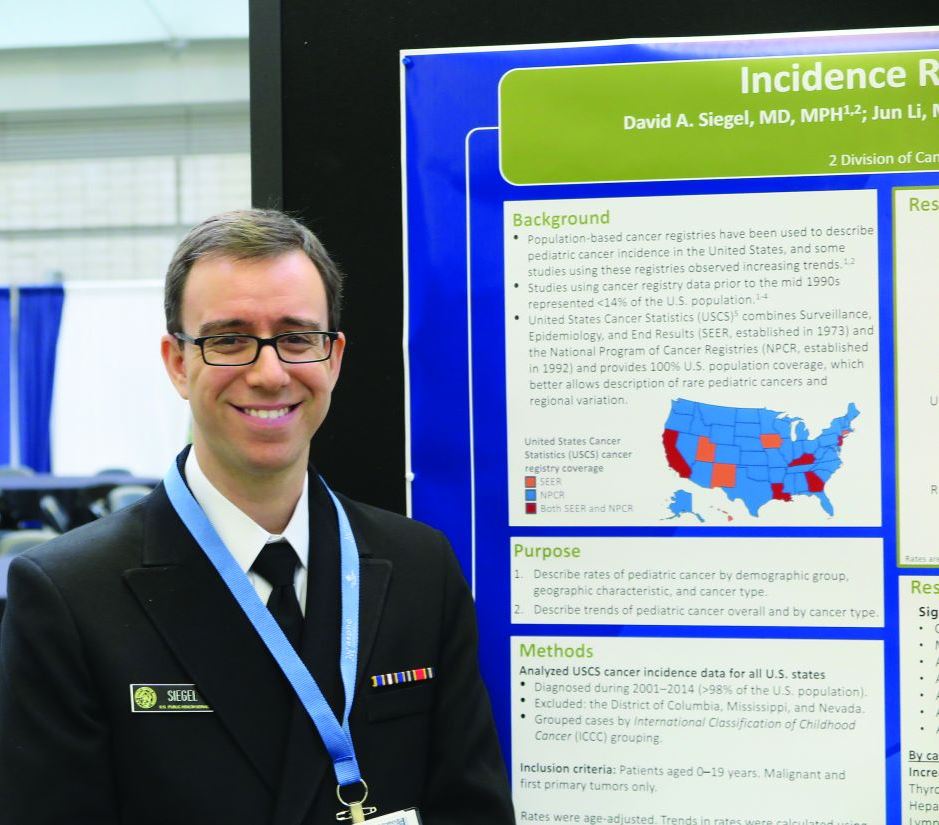
Pediatric cancers that increased significantly in incidence from 2001 through 2014, compared with previous time periods, include thyroid carcinoma, hepatic tumors, lymphomas, renal tumors, and brain tumors. Other cancer types remained unchanged, except malignant melanoma, which saw a significant decline in incidence over the same period, reported David A. Siegel, MD, of the Epidemic Intelligence Service at the CDC in Atlanta.
Recent studies of trends in pediatric cancer have either used data from before 2010 or covered less than a third of the U.S. population, the investigators noted.
To get a more accurate estimate of current trends, the investigators relied on the United States Cancer Statistics, which combines data from the Surveillance, Epidemiology, and End Results (SEER) program and the National Program of Cancer Registries. Together, the combined databases cover 100% of the U.S. population.
Dr. Siegel and his colleagues looked at cancer incidence rates and trends among individuals younger than 20 years of age from across 48 states from 2001 to 2014 – Mississippi, Nevada, and the District of Columbia were not included.
They used a joinpoint regression method to calculate average annual percent change (AAPC) in rates, then stratified rates and trends by sex, age, and race/ethnicity; location; economic status; and cancer type.
During the 14-year period of the study, there were a total of 196,200 incident cases of pediatric cancer, for an overall cancer incidence rate of 173 per million. The pediatric cancer with the highest incident rate was leukemia of any type (45.6 per million), brain tumors (30.8), and lymphomas (26.0).
Incidence rates were highest among males, patients from infancy through age 4, non-Hispanic whites, children who live in the Northeast region, those who live in the wealthiest counties, and those who live in urban/metropolitan counties. The overall pediatric cancer incidence rate increased, with an AAPC of 0.7 (95% confidence interval, 0.5-0.8).
“Rates increased in each stratum of sex, age, and race/ethnicity (except non-Hispanic American Indian/Alaska Native), region, economic status, and rural/urban classification,” the investigators wrote.
Cancers with significantly increased AAPC included thyroid carcinomas (AAPC, 4.8), hepatic tumors (2.5), lymphomas (1.7), renal tumors (0.6), and brain tumors (all types, 0.4).
There were no significant changes in the incidence of either germ cell cancer, retinoblastoma, leukemia, neuroblastoma, soft-tissue sarcomas, or bone tumors.
The only significant decrease over the study period was in the incidence of melanoma in children (–2.6).
“Possible causes of increasing rates might include changes in diagnostic, coding, and reporting standards, increased detection, population-based changes (such as increasing obesity), and environmental exposures,” they wrote.
Public health campaigns about the dangers of UV exposure and promoting the use of sunscreens may account for the decline in the incidence of malignant melanoma, they suggested.
The study was supported by the CDC. Dr. Siegel and coauthors are CDC employees. They reported having no conflicts of interest.
SOURCE: Siegel DA et al. ASPHO 2018, Abstract 605.
PITTSBURGH – The incidence of many pediatric cancers are on the rise, and the increase is occurring in nearly all demographic groups studied, according to the latest data from the U.S. Centers for Disease Control and Prevention.
Pediatric cancers that increased significantly in incidence from 2001 through 2014, compared with previous time periods, include thyroid carcinoma, hepatic tumors, lymphomas, renal tumors, and brain tumors. Other cancer types remained unchanged, except malignant melanoma, which saw a significant decline in incidence over the same period, reported David A. Siegel, MD, of the Epidemic Intelligence Service at the CDC in Atlanta.
Recent studies of trends in pediatric cancer have either used data from before 2010 or covered less than a third of the U.S. population, the investigators noted.
To get a more accurate estimate of current trends, the investigators relied on the United States Cancer Statistics, which combines data from the Surveillance, Epidemiology, and End Results (SEER) program and the National Program of Cancer Registries. Together, the combined databases cover 100% of the U.S. population.
Dr. Siegel and his colleagues looked at cancer incidence rates and trends among individuals younger than 20 years of age from across 48 states from 2001 to 2014 – Mississippi, Nevada, and the District of Columbia were not included.
They used a joinpoint regression method to calculate average annual percent change (AAPC) in rates, then stratified rates and trends by sex, age, and race/ethnicity; location; economic status; and cancer type.
During the 14-year period of the study, there were a total of 196,200 incident cases of pediatric cancer, for an overall cancer incidence rate of 173 per million. The pediatric cancer with the highest incident rate was leukemia of any type (45.6 per million), brain tumors (30.8), and lymphomas (26.0).
Incidence rates were highest among males, patients from infancy through age 4, non-Hispanic whites, children who live in the Northeast region, those who live in the wealthiest counties, and those who live in urban/metropolitan counties. The overall pediatric cancer incidence rate increased, with an AAPC of 0.7 (95% confidence interval, 0.5-0.8).
“Rates increased in each stratum of sex, age, and race/ethnicity (except non-Hispanic American Indian/Alaska Native), region, economic status, and rural/urban classification,” the investigators wrote.
Cancers with significantly increased AAPC included thyroid carcinomas (AAPC, 4.8), hepatic tumors (2.5), lymphomas (1.7), renal tumors (0.6), and brain tumors (all types, 0.4).
There were no significant changes in the incidence of either germ cell cancer, retinoblastoma, leukemia, neuroblastoma, soft-tissue sarcomas, or bone tumors.
The only significant decrease over the study period was in the incidence of melanoma in children (–2.6).
“Possible causes of increasing rates might include changes in diagnostic, coding, and reporting standards, increased detection, population-based changes (such as increasing obesity), and environmental exposures,” they wrote.
Public health campaigns about the dangers of UV exposure and promoting the use of sunscreens may account for the decline in the incidence of malignant melanoma, they suggested.
The study was supported by the CDC. Dr. Siegel and coauthors are CDC employees. They reported having no conflicts of interest.
SOURCE: Siegel DA et al. ASPHO 2018, Abstract 605.
PITTSBURGH – The incidence of many pediatric cancers are on the rise, and the increase is occurring in nearly all demographic groups studied, according to the latest data from the U.S. Centers for Disease Control and Prevention.
Pediatric cancers that increased significantly in incidence from 2001 through 2014, compared with previous time periods, include thyroid carcinoma, hepatic tumors, lymphomas, renal tumors, and brain tumors. Other cancer types remained unchanged, except malignant melanoma, which saw a significant decline in incidence over the same period, reported David A. Siegel, MD, of the Epidemic Intelligence Service at the CDC in Atlanta.
Recent studies of trends in pediatric cancer have either used data from before 2010 or covered less than a third of the U.S. population, the investigators noted.
To get a more accurate estimate of current trends, the investigators relied on the United States Cancer Statistics, which combines data from the Surveillance, Epidemiology, and End Results (SEER) program and the National Program of Cancer Registries. Together, the combined databases cover 100% of the U.S. population.
Dr. Siegel and his colleagues looked at cancer incidence rates and trends among individuals younger than 20 years of age from across 48 states from 2001 to 2014 – Mississippi, Nevada, and the District of Columbia were not included.
They used a joinpoint regression method to calculate average annual percent change (AAPC) in rates, then stratified rates and trends by sex, age, and race/ethnicity; location; economic status; and cancer type.
During the 14-year period of the study, there were a total of 196,200 incident cases of pediatric cancer, for an overall cancer incidence rate of 173 per million. The pediatric cancer with the highest incident rate was leukemia of any type (45.6 per million), brain tumors (30.8), and lymphomas (26.0).
Incidence rates were highest among males, patients from infancy through age 4, non-Hispanic whites, children who live in the Northeast region, those who live in the wealthiest counties, and those who live in urban/metropolitan counties. The overall pediatric cancer incidence rate increased, with an AAPC of 0.7 (95% confidence interval, 0.5-0.8).
“Rates increased in each stratum of sex, age, and race/ethnicity (except non-Hispanic American Indian/Alaska Native), region, economic status, and rural/urban classification,” the investigators wrote.
Cancers with significantly increased AAPC included thyroid carcinomas (AAPC, 4.8), hepatic tumors (2.5), lymphomas (1.7), renal tumors (0.6), and brain tumors (all types, 0.4).
There were no significant changes in the incidence of either germ cell cancer, retinoblastoma, leukemia, neuroblastoma, soft-tissue sarcomas, or bone tumors.
The only significant decrease over the study period was in the incidence of melanoma in children (–2.6).
“Possible causes of increasing rates might include changes in diagnostic, coding, and reporting standards, increased detection, population-based changes (such as increasing obesity), and environmental exposures,” they wrote.
Public health campaigns about the dangers of UV exposure and promoting the use of sunscreens may account for the decline in the incidence of malignant melanoma, they suggested.
The study was supported by the CDC. Dr. Siegel and coauthors are CDC employees. They reported having no conflicts of interest.
SOURCE: Siegel DA et al. ASPHO 2018, Abstract 605.
REPORTING FROM ASPHO 2018
Key clinical point: Major finding: From 2001 to 2014, there were 196,200 incident cases of pediatric cancer for an overall cancer incidence rate of 173 per 1 million.
Study details: A review of data from the United States Cancer Statistics for children under age 20.
Disclosures: The CDC supported the study. Dr. Siegel and his coauthors are CDC employees. They reported having no conflicts of interest.
Source: Siegel DA et al. ASPHO 2018, Abstract 605.
Simple postural exercises may reduce depressive symptoms
NEW YORK – Postural exercises that take only a few minutes but are performed several times a day produced large reductions in symptoms of depression and increased the rate of remission at 12 weeks, according to results of a randomized study presented at the annual meeting of the American Psychiatric Association.
“These were very marked symptom improvements seen at the end of 12 weeks in those randomized to the exercises when compared to the controls who received antidepressants alone,” reported Martin Furman, MD, a researcher in psychiatry at the University of Maimónides, Buenos Aires.
The patients in this study all continued on their baseline SSRI dose but were randomized to start postural exercises or to remain on an SSRI alone. The two sets of exercises, which took only a couple of minutes, were repeated four to six times per day with at least 2 hours of separation.
The equilibrium exercises involved raised arms with flexing of first one lower limb then the other. Each flex was maintained for 15 seconds. In a separate exercise, patients were instructed to hold a pencil between the teeth and smile for 1 minute, a technique that activates facial skin afferents, according to Dr. Furman.
“In previous studies, posture and balance have been linked to a reduction in anxiety and moderate depression,” Dr. Furman explained. “Feedback of the muscular and facial skin afferents has been associated with modulation of neural activity within the central circuit of emotions.”
Much of this work was pioneered by Tomás Ortiz Alonso, MD, PhD, director of the department of psychiatry at Universidad Complutense de Madrid, according to Dr. Furman. While working to complete his PhD, Dr. Furman is collaborating with Dr. Ortiz Alonso.
Patients participating in the study were evaluated with the Beck Depression Inventory (BDI) and the 17-item Hamilton Depression Rating Scale (HDRS-17) at baseline and the end of 12 weeks. Response for both scales was defined as at least a 50% score reduction from baseline. Remission of depression was defined as HDRS-17 score of less than 7.
At 12 weeks, 86% of those in the experimental arm versus 28.5% of those in the control arm achieved a response on the HDRS-17 tool. For the BDI tool, the response rates were 71.5% and 19%, respectively. The remission rates as defined by HDRS-17 score of less than 7 were 66.6% and 19%. All differences were statistically significant (P less than .05).
“The exercises are simple and take very little time,” said Dr. Furman, who reported that compliance was good in the study arm according to patient self-report.
There are numerous published studies suggesting that exercise improves mood in a variety of circumstances, including the treatment of depression, and Dr. Furman said these exercises are not physically demanding. If larger studies validate the results of this initial trial, this might prove to be a highly cost-effective tool for depression treatment.
“Further studies are needed to determine whether these exercises are most effective as adjunctive treatment to pharmacotherapy or can be used alone without medications,” he said.
In addition to larger efficacy studies, Dr. Furman reported that efforts to understand the mechanism of benefit are being considered, such as studies with functional MRI or EEG to evaluate the effect of the exercises on brain activity.
“We are excited about these results. ,” he said.
Dr. Furman reports no potential conflicts of interest related to this topic.
NEW YORK – Postural exercises that take only a few minutes but are performed several times a day produced large reductions in symptoms of depression and increased the rate of remission at 12 weeks, according to results of a randomized study presented at the annual meeting of the American Psychiatric Association.
“These were very marked symptom improvements seen at the end of 12 weeks in those randomized to the exercises when compared to the controls who received antidepressants alone,” reported Martin Furman, MD, a researcher in psychiatry at the University of Maimónides, Buenos Aires.
The patients in this study all continued on their baseline SSRI dose but were randomized to start postural exercises or to remain on an SSRI alone. The two sets of exercises, which took only a couple of minutes, were repeated four to six times per day with at least 2 hours of separation.
The equilibrium exercises involved raised arms with flexing of first one lower limb then the other. Each flex was maintained for 15 seconds. In a separate exercise, patients were instructed to hold a pencil between the teeth and smile for 1 minute, a technique that activates facial skin afferents, according to Dr. Furman.
“In previous studies, posture and balance have been linked to a reduction in anxiety and moderate depression,” Dr. Furman explained. “Feedback of the muscular and facial skin afferents has been associated with modulation of neural activity within the central circuit of emotions.”
Much of this work was pioneered by Tomás Ortiz Alonso, MD, PhD, director of the department of psychiatry at Universidad Complutense de Madrid, according to Dr. Furman. While working to complete his PhD, Dr. Furman is collaborating with Dr. Ortiz Alonso.
Patients participating in the study were evaluated with the Beck Depression Inventory (BDI) and the 17-item Hamilton Depression Rating Scale (HDRS-17) at baseline and the end of 12 weeks. Response for both scales was defined as at least a 50% score reduction from baseline. Remission of depression was defined as HDRS-17 score of less than 7.
At 12 weeks, 86% of those in the experimental arm versus 28.5% of those in the control arm achieved a response on the HDRS-17 tool. For the BDI tool, the response rates were 71.5% and 19%, respectively. The remission rates as defined by HDRS-17 score of less than 7 were 66.6% and 19%. All differences were statistically significant (P less than .05).
“The exercises are simple and take very little time,” said Dr. Furman, who reported that compliance was good in the study arm according to patient self-report.
There are numerous published studies suggesting that exercise improves mood in a variety of circumstances, including the treatment of depression, and Dr. Furman said these exercises are not physically demanding. If larger studies validate the results of this initial trial, this might prove to be a highly cost-effective tool for depression treatment.
“Further studies are needed to determine whether these exercises are most effective as adjunctive treatment to pharmacotherapy or can be used alone without medications,” he said.
In addition to larger efficacy studies, Dr. Furman reported that efforts to understand the mechanism of benefit are being considered, such as studies with functional MRI or EEG to evaluate the effect of the exercises on brain activity.
“We are excited about these results. ,” he said.
Dr. Furman reports no potential conflicts of interest related to this topic.
NEW YORK – Postural exercises that take only a few minutes but are performed several times a day produced large reductions in symptoms of depression and increased the rate of remission at 12 weeks, according to results of a randomized study presented at the annual meeting of the American Psychiatric Association.
“These were very marked symptom improvements seen at the end of 12 weeks in those randomized to the exercises when compared to the controls who received antidepressants alone,” reported Martin Furman, MD, a researcher in psychiatry at the University of Maimónides, Buenos Aires.
The patients in this study all continued on their baseline SSRI dose but were randomized to start postural exercises or to remain on an SSRI alone. The two sets of exercises, which took only a couple of minutes, were repeated four to six times per day with at least 2 hours of separation.
The equilibrium exercises involved raised arms with flexing of first one lower limb then the other. Each flex was maintained for 15 seconds. In a separate exercise, patients were instructed to hold a pencil between the teeth and smile for 1 minute, a technique that activates facial skin afferents, according to Dr. Furman.
“In previous studies, posture and balance have been linked to a reduction in anxiety and moderate depression,” Dr. Furman explained. “Feedback of the muscular and facial skin afferents has been associated with modulation of neural activity within the central circuit of emotions.”
Much of this work was pioneered by Tomás Ortiz Alonso, MD, PhD, director of the department of psychiatry at Universidad Complutense de Madrid, according to Dr. Furman. While working to complete his PhD, Dr. Furman is collaborating with Dr. Ortiz Alonso.
Patients participating in the study were evaluated with the Beck Depression Inventory (BDI) and the 17-item Hamilton Depression Rating Scale (HDRS-17) at baseline and the end of 12 weeks. Response for both scales was defined as at least a 50% score reduction from baseline. Remission of depression was defined as HDRS-17 score of less than 7.
At 12 weeks, 86% of those in the experimental arm versus 28.5% of those in the control arm achieved a response on the HDRS-17 tool. For the BDI tool, the response rates were 71.5% and 19%, respectively. The remission rates as defined by HDRS-17 score of less than 7 were 66.6% and 19%. All differences were statistically significant (P less than .05).
“The exercises are simple and take very little time,” said Dr. Furman, who reported that compliance was good in the study arm according to patient self-report.
There are numerous published studies suggesting that exercise improves mood in a variety of circumstances, including the treatment of depression, and Dr. Furman said these exercises are not physically demanding. If larger studies validate the results of this initial trial, this might prove to be a highly cost-effective tool for depression treatment.
“Further studies are needed to determine whether these exercises are most effective as adjunctive treatment to pharmacotherapy or can be used alone without medications,” he said.
In addition to larger efficacy studies, Dr. Furman reported that efforts to understand the mechanism of benefit are being considered, such as studies with functional MRI or EEG to evaluate the effect of the exercises on brain activity.
“We are excited about these results. ,” he said.
Dr. Furman reports no potential conflicts of interest related to this topic.
REPORTING FROM APA
Key clinical point: In patients with major depression, a simple set of daily postural exercises appears effective for improving symptom control.
Major finding: After 12 weeks, 67% of those performing exercises versus 19% of controls (P less than .05) met criteria for depression remission.
Study details: Randomized, controlled trial of 42 patients who met DSM-5 criteria for major depressive disorder.
Disclosures: Dr. Furman reports no potential conflicts of interest related to this topic.
Americans are getting more sleep
an analysis of data from the American Time Use Survey (ATUS) has suggested.
Many people living in the United States habitually sleep less than the recommended 7-9 hours each day. “Experimental studies have demonstrated that both acute total and chronic partial sleep restriction in healthy adults are associated with physiological changes that can be considered precursors of manifest diseases (e.g. decreased insulin sensitivity),” noted Mathias Basner, MD, PhD, and David F. Dinges, PhD, both of the division of sleep and chronobiology at the University of Pennsylvania, Philadelphia, in their paper, which was published in the journal Sleep.
This new study is the first to have demonstrated that large parts of the U.S. population significantly increased their sleep between 2003 and 2016.
The investigators analyzed ATUS responses from 181,335 Americans aged 15 years and older; respondents included in the analysis were not active in the military or residing in institutions such as nursing homes or prisons. In 15- to 20-minute computer-assisted telephone interviews, the survey participants reported the activities they performed over a 24-hour period on a minute-by-minute basis. In-depth analyses only included groups “that showed a significant increase in sleep duration across survey years either on weekdays or weekends (or both): employed respondents, full-time students, and retirees.”
Using this data from ATUS, Dr. Basner and Dr. Dinges found that on workdays the prevalence of people who were sleeping 7 hours or less a day decreased by 0.44% per year (P less than .0001), while the percentage people who were sleeping more than 9 hours a day increased by 0.48% per year (P less than .0001).
Overall, respondents’ sleep increased by an average of 1.40 minutes during a weekday and 0.83 minutes during a weekend day every year.
These findings will be welcome news for organizations, such as the American Academy of Sleep Medicine, the Sleep Research Society, and the Centers for Disease Control and Prevention, that have been campaigning for years to increase sleep time among Americans.
The researchers also observed that the percentage of respondents in short sleep duration categories decreased significantly, and the percentage of respondents in long sleep duration categories increased significantly across survey years. One of the “most pronounced changes” occurred in the size of the group of patients receiving 6-7 hours of sleep. This group decreased by 0.23% per year. The biggest change was seen in the category of patients receiving 9-10 hours of sleep, which increased by 0.24% per year.
“[The] change in sleep duration across survey years on weekdays can mostly be explained by respondents going to bed earlier at night and, to a lesser degree, by getting up later in the morning,” the researchers said. “On weekends/holidays, ‘time to bed’ shifted significantly to earlier bed times by 1.1 min/year across survey years, which was comparable to the shift observed on weekdays.”
Study participants aged 18-24 slept the most, with hours slept having “decreased with increasing age.” On weekdays, adults aged 45-54 years slept the least, and on weekends, adults aged 55-64 years got the least shuteye. Hispanic, Asian, and black respondents slept more than white and “other race/ethnicity” survey participants. The researchers also found that women overall got more sleep than men.
Dr. Basner and Dr. Dinges expressed optimism about Americans’ ongoing battle against chronic sleep deficiency. “These findings presented here suggest that we are on the right track ... even if there is still a long way to go,” they said.
The authors reported no conflicts of interest.
David Schulman, MD, FCCP, comments: For more than fifteen years, we have had evidence that sleep deprivation is not only associated with increased accident risk, but also other common causes of mortality, including cardiovascular disease and cancer. Despite this knowledge, decades of trending in sleep patterns of the United States population have continued to show declines in total sleep time, which have been attributed to multiple factors, including longer work hours and the pervasive use of electronics, which can serve both as a distraction from sleep and a contributor to circadian dysrhythmia.
While our work in improving public awareness of sleep deprivation is far from done, perhaps this study is the first sign that a new day is dawning on improved sleep health for the country.
David Schulman, MD, FCCP, comments: For more than fifteen years, we have had evidence that sleep deprivation is not only associated with increased accident risk, but also other common causes of mortality, including cardiovascular disease and cancer. Despite this knowledge, decades of trending in sleep patterns of the United States population have continued to show declines in total sleep time, which have been attributed to multiple factors, including longer work hours and the pervasive use of electronics, which can serve both as a distraction from sleep and a contributor to circadian dysrhythmia.
While our work in improving public awareness of sleep deprivation is far from done, perhaps this study is the first sign that a new day is dawning on improved sleep health for the country.
David Schulman, MD, FCCP, comments: For more than fifteen years, we have had evidence that sleep deprivation is not only associated with increased accident risk, but also other common causes of mortality, including cardiovascular disease and cancer. Despite this knowledge, decades of trending in sleep patterns of the United States population have continued to show declines in total sleep time, which have been attributed to multiple factors, including longer work hours and the pervasive use of electronics, which can serve both as a distraction from sleep and a contributor to circadian dysrhythmia.
While our work in improving public awareness of sleep deprivation is far from done, perhaps this study is the first sign that a new day is dawning on improved sleep health for the country.
an analysis of data from the American Time Use Survey (ATUS) has suggested.
Many people living in the United States habitually sleep less than the recommended 7-9 hours each day. “Experimental studies have demonstrated that both acute total and chronic partial sleep restriction in healthy adults are associated with physiological changes that can be considered precursors of manifest diseases (e.g. decreased insulin sensitivity),” noted Mathias Basner, MD, PhD, and David F. Dinges, PhD, both of the division of sleep and chronobiology at the University of Pennsylvania, Philadelphia, in their paper, which was published in the journal Sleep.
This new study is the first to have demonstrated that large parts of the U.S. population significantly increased their sleep between 2003 and 2016.
The investigators analyzed ATUS responses from 181,335 Americans aged 15 years and older; respondents included in the analysis were not active in the military or residing in institutions such as nursing homes or prisons. In 15- to 20-minute computer-assisted telephone interviews, the survey participants reported the activities they performed over a 24-hour period on a minute-by-minute basis. In-depth analyses only included groups “that showed a significant increase in sleep duration across survey years either on weekdays or weekends (or both): employed respondents, full-time students, and retirees.”
Using this data from ATUS, Dr. Basner and Dr. Dinges found that on workdays the prevalence of people who were sleeping 7 hours or less a day decreased by 0.44% per year (P less than .0001), while the percentage people who were sleeping more than 9 hours a day increased by 0.48% per year (P less than .0001).
Overall, respondents’ sleep increased by an average of 1.40 minutes during a weekday and 0.83 minutes during a weekend day every year.
These findings will be welcome news for organizations, such as the American Academy of Sleep Medicine, the Sleep Research Society, and the Centers for Disease Control and Prevention, that have been campaigning for years to increase sleep time among Americans.
The researchers also observed that the percentage of respondents in short sleep duration categories decreased significantly, and the percentage of respondents in long sleep duration categories increased significantly across survey years. One of the “most pronounced changes” occurred in the size of the group of patients receiving 6-7 hours of sleep. This group decreased by 0.23% per year. The biggest change was seen in the category of patients receiving 9-10 hours of sleep, which increased by 0.24% per year.
“[The] change in sleep duration across survey years on weekdays can mostly be explained by respondents going to bed earlier at night and, to a lesser degree, by getting up later in the morning,” the researchers said. “On weekends/holidays, ‘time to bed’ shifted significantly to earlier bed times by 1.1 min/year across survey years, which was comparable to the shift observed on weekdays.”
Study participants aged 18-24 slept the most, with hours slept having “decreased with increasing age.” On weekdays, adults aged 45-54 years slept the least, and on weekends, adults aged 55-64 years got the least shuteye. Hispanic, Asian, and black respondents slept more than white and “other race/ethnicity” survey participants. The researchers also found that women overall got more sleep than men.
Dr. Basner and Dr. Dinges expressed optimism about Americans’ ongoing battle against chronic sleep deficiency. “These findings presented here suggest that we are on the right track ... even if there is still a long way to go,” they said.
The authors reported no conflicts of interest.
an analysis of data from the American Time Use Survey (ATUS) has suggested.
Many people living in the United States habitually sleep less than the recommended 7-9 hours each day. “Experimental studies have demonstrated that both acute total and chronic partial sleep restriction in healthy adults are associated with physiological changes that can be considered precursors of manifest diseases (e.g. decreased insulin sensitivity),” noted Mathias Basner, MD, PhD, and David F. Dinges, PhD, both of the division of sleep and chronobiology at the University of Pennsylvania, Philadelphia, in their paper, which was published in the journal Sleep.
This new study is the first to have demonstrated that large parts of the U.S. population significantly increased their sleep between 2003 and 2016.
The investigators analyzed ATUS responses from 181,335 Americans aged 15 years and older; respondents included in the analysis were not active in the military or residing in institutions such as nursing homes or prisons. In 15- to 20-minute computer-assisted telephone interviews, the survey participants reported the activities they performed over a 24-hour period on a minute-by-minute basis. In-depth analyses only included groups “that showed a significant increase in sleep duration across survey years either on weekdays or weekends (or both): employed respondents, full-time students, and retirees.”
Using this data from ATUS, Dr. Basner and Dr. Dinges found that on workdays the prevalence of people who were sleeping 7 hours or less a day decreased by 0.44% per year (P less than .0001), while the percentage people who were sleeping more than 9 hours a day increased by 0.48% per year (P less than .0001).
Overall, respondents’ sleep increased by an average of 1.40 minutes during a weekday and 0.83 minutes during a weekend day every year.
These findings will be welcome news for organizations, such as the American Academy of Sleep Medicine, the Sleep Research Society, and the Centers for Disease Control and Prevention, that have been campaigning for years to increase sleep time among Americans.
The researchers also observed that the percentage of respondents in short sleep duration categories decreased significantly, and the percentage of respondents in long sleep duration categories increased significantly across survey years. One of the “most pronounced changes” occurred in the size of the group of patients receiving 6-7 hours of sleep. This group decreased by 0.23% per year. The biggest change was seen in the category of patients receiving 9-10 hours of sleep, which increased by 0.24% per year.
“[The] change in sleep duration across survey years on weekdays can mostly be explained by respondents going to bed earlier at night and, to a lesser degree, by getting up later in the morning,” the researchers said. “On weekends/holidays, ‘time to bed’ shifted significantly to earlier bed times by 1.1 min/year across survey years, which was comparable to the shift observed on weekdays.”
Study participants aged 18-24 slept the most, with hours slept having “decreased with increasing age.” On weekdays, adults aged 45-54 years slept the least, and on weekends, adults aged 55-64 years got the least shuteye. Hispanic, Asian, and black respondents slept more than white and “other race/ethnicity” survey participants. The researchers also found that women overall got more sleep than men.
Dr. Basner and Dr. Dinges expressed optimism about Americans’ ongoing battle against chronic sleep deficiency. “These findings presented here suggest that we are on the right track ... even if there is still a long way to go,” they said.
The authors reported no conflicts of interest.
FROM SLEEP
Key clinical point: The amount of time people in the United States spend sleeping has increased.
Major finding: On workdays, the prevalence of people who were sleeping 7 hours or less a day decreased by 0.44% per year, and the percentage of people who were sleeping more than 9 hours a day increased by 0.48% per year.
Study details: An analysis of survey responses from 181,335 Americans over 2003-2016.
Disclosures: The authors reported no conflicts of interest.
Source: Basner M et al. Sleep. 2018 Apr 1;41(4):1-16.

Multiple solid tumors targeted by concept CAR T
PITTSBURGH – Call it the CAR of the future – an investigational chimeric antigen receptor–T cell construct targeted against an antigen highly expressed on pediatric solid tumors has shown promising efficacy in preclinical studies.
Investigators found that the antigen, labeled B7-H3, was expressed on 84% of microarrays of pediatric solid tumors. More importantly, a single dose of CAR targeted to B7-H3 caused complete regression of osteosarcoma and Ewing sarcoma xenografts and improved survival over an untransduced, CD19-targeted CAR in mice, Robbie Majzner, MD, reported at the annual meeting of the American Society of Pediatric Hematology/Oncology.
Dr. Majzner was the recipient of an ASPHO young investigator award for his team’s research into developing a CAR T that could be as effective against solid tumors as other CAR Ts have been against hematologic malignancies such as acute lymphoblastic leukemia.
Solid tumors are more challenging to target than leukemias or lymphomas because of the small number of antigens expressed on most pediatric tumors, he said.
“Over 95% of tumors have a very low rate of mutations, which means that they have very few neoantigens which the immune system can recognize in order to attack,” he said.
In the Children’s Oncology Group ADVL1412 trial, single-agent immunotherapy with the anti–programmed death protein 1 (PD-1) inhibitor nivolumab (Opdivo) showed no evidence of efficacy against either Ewing sarcoma, osteosarcoma, rhabdomyosarcoma, or measurable neuroblastoma. PD–ligand 1 was found to be expressed in only a few of the 43 tumors studied, suggesting that checkpoint inhibitor therapy is unlikely to work in these solid tumors, he said.
In contrast, B7-H3 is highly expressed on many different pediatric solid tumors, including rhabdomyosarcoma (95% of tumors stained), Ewing sarcoma (89%), Wilms tumor (100%), neuroblastoma (82%), ganglioneuroblastoma and ganglioneuroma (53%), medulloblastoma (96%), glioblastoma multiforme (84%), and diffuse intrinsic pontine glioma (100%).
To see whether CAR T therapy might have better efficacy than checkpoint inhibitors in this population, the investigators created a B7-H3 CAR using the B7-H3 tumor–specific monoclonal antibody MGA271, which has been shown to be safe in both adults and children in early clinical trials.
In human tumor xenograft models of osteosarcoma, all mice who received a single dose of the B7-H3 CAR survived at least 70 days after tumor engraftment, whereas all control mice, who received the CD19 CAR, died by day 60 (P = .0067). Similarly, in a model of Ewing sarcoma, all mice treated with B7-H3 survived at least 100 days, whereas all controls were dead by day 50 (P = .0015).
The B7-H3 construct also showed good activity against a model of medulloblastoma, showing that it was capable of crossing the blood-brain barrier.
Since B7-H3 has been reported to be expressed on both myeloid and lymphoid leukemia cells, the investigators also tested the CAR against a murine model of leukemia generated by injection of K562, a well-characterized line of myeloid leukemia cells.
“While we found some increase in survival in the mice that received the B7-H3 CAR T cells, compared to mice that received untransduced CAR T cells, this clearly is not as effective as in our solid tumor models,” Dr. Majzner said.
Going back to the cell line, they discovered that expression of B7-H3 was considerably lower in the K562 cells than in either the osteosarcoma or medulloblastoma cell lines used in their other models.
They found that both in vitro and in vivo, high levels of B7-H3 expression were necessary to provoke the immune system into releasing cytokines necessary for an adequate antitumor response.
The investigators are currently planning clinical trials using the B7-H3 CAR T-cell construct in patients with solid tumors.
The work is supported by the Sarcoma Alliance for Research through Collaboration, the St. Baldrick’s Foundation, and Stand Up to Cancer. Dr. Majzner reported having no financial disclosures.
SOURCE: Majzner RG et al. ASPHO 2018, Abstract #PS2003.
PITTSBURGH – Call it the CAR of the future – an investigational chimeric antigen receptor–T cell construct targeted against an antigen highly expressed on pediatric solid tumors has shown promising efficacy in preclinical studies.
Investigators found that the antigen, labeled B7-H3, was expressed on 84% of microarrays of pediatric solid tumors. More importantly, a single dose of CAR targeted to B7-H3 caused complete regression of osteosarcoma and Ewing sarcoma xenografts and improved survival over an untransduced, CD19-targeted CAR in mice, Robbie Majzner, MD, reported at the annual meeting of the American Society of Pediatric Hematology/Oncology.
Dr. Majzner was the recipient of an ASPHO young investigator award for his team’s research into developing a CAR T that could be as effective against solid tumors as other CAR Ts have been against hematologic malignancies such as acute lymphoblastic leukemia.
Solid tumors are more challenging to target than leukemias or lymphomas because of the small number of antigens expressed on most pediatric tumors, he said.
“Over 95% of tumors have a very low rate of mutations, which means that they have very few neoantigens which the immune system can recognize in order to attack,” he said.
In the Children’s Oncology Group ADVL1412 trial, single-agent immunotherapy with the anti–programmed death protein 1 (PD-1) inhibitor nivolumab (Opdivo) showed no evidence of efficacy against either Ewing sarcoma, osteosarcoma, rhabdomyosarcoma, or measurable neuroblastoma. PD–ligand 1 was found to be expressed in only a few of the 43 tumors studied, suggesting that checkpoint inhibitor therapy is unlikely to work in these solid tumors, he said.
In contrast, B7-H3 is highly expressed on many different pediatric solid tumors, including rhabdomyosarcoma (95% of tumors stained), Ewing sarcoma (89%), Wilms tumor (100%), neuroblastoma (82%), ganglioneuroblastoma and ganglioneuroma (53%), medulloblastoma (96%), glioblastoma multiforme (84%), and diffuse intrinsic pontine glioma (100%).
To see whether CAR T therapy might have better efficacy than checkpoint inhibitors in this population, the investigators created a B7-H3 CAR using the B7-H3 tumor–specific monoclonal antibody MGA271, which has been shown to be safe in both adults and children in early clinical trials.
In human tumor xenograft models of osteosarcoma, all mice who received a single dose of the B7-H3 CAR survived at least 70 days after tumor engraftment, whereas all control mice, who received the CD19 CAR, died by day 60 (P = .0067). Similarly, in a model of Ewing sarcoma, all mice treated with B7-H3 survived at least 100 days, whereas all controls were dead by day 50 (P = .0015).
The B7-H3 construct also showed good activity against a model of medulloblastoma, showing that it was capable of crossing the blood-brain barrier.
Since B7-H3 has been reported to be expressed on both myeloid and lymphoid leukemia cells, the investigators also tested the CAR against a murine model of leukemia generated by injection of K562, a well-characterized line of myeloid leukemia cells.
“While we found some increase in survival in the mice that received the B7-H3 CAR T cells, compared to mice that received untransduced CAR T cells, this clearly is not as effective as in our solid tumor models,” Dr. Majzner said.
Going back to the cell line, they discovered that expression of B7-H3 was considerably lower in the K562 cells than in either the osteosarcoma or medulloblastoma cell lines used in their other models.
They found that both in vitro and in vivo, high levels of B7-H3 expression were necessary to provoke the immune system into releasing cytokines necessary for an adequate antitumor response.
The investigators are currently planning clinical trials using the B7-H3 CAR T-cell construct in patients with solid tumors.
The work is supported by the Sarcoma Alliance for Research through Collaboration, the St. Baldrick’s Foundation, and Stand Up to Cancer. Dr. Majzner reported having no financial disclosures.
SOURCE: Majzner RG et al. ASPHO 2018, Abstract #PS2003.
PITTSBURGH – Call it the CAR of the future – an investigational chimeric antigen receptor–T cell construct targeted against an antigen highly expressed on pediatric solid tumors has shown promising efficacy in preclinical studies.
Investigators found that the antigen, labeled B7-H3, was expressed on 84% of microarrays of pediatric solid tumors. More importantly, a single dose of CAR targeted to B7-H3 caused complete regression of osteosarcoma and Ewing sarcoma xenografts and improved survival over an untransduced, CD19-targeted CAR in mice, Robbie Majzner, MD, reported at the annual meeting of the American Society of Pediatric Hematology/Oncology.
Dr. Majzner was the recipient of an ASPHO young investigator award for his team’s research into developing a CAR T that could be as effective against solid tumors as other CAR Ts have been against hematologic malignancies such as acute lymphoblastic leukemia.
Solid tumors are more challenging to target than leukemias or lymphomas because of the small number of antigens expressed on most pediatric tumors, he said.
“Over 95% of tumors have a very low rate of mutations, which means that they have very few neoantigens which the immune system can recognize in order to attack,” he said.
In the Children’s Oncology Group ADVL1412 trial, single-agent immunotherapy with the anti–programmed death protein 1 (PD-1) inhibitor nivolumab (Opdivo) showed no evidence of efficacy against either Ewing sarcoma, osteosarcoma, rhabdomyosarcoma, or measurable neuroblastoma. PD–ligand 1 was found to be expressed in only a few of the 43 tumors studied, suggesting that checkpoint inhibitor therapy is unlikely to work in these solid tumors, he said.
In contrast, B7-H3 is highly expressed on many different pediatric solid tumors, including rhabdomyosarcoma (95% of tumors stained), Ewing sarcoma (89%), Wilms tumor (100%), neuroblastoma (82%), ganglioneuroblastoma and ganglioneuroma (53%), medulloblastoma (96%), glioblastoma multiforme (84%), and diffuse intrinsic pontine glioma (100%).
To see whether CAR T therapy might have better efficacy than checkpoint inhibitors in this population, the investigators created a B7-H3 CAR using the B7-H3 tumor–specific monoclonal antibody MGA271, which has been shown to be safe in both adults and children in early clinical trials.
In human tumor xenograft models of osteosarcoma, all mice who received a single dose of the B7-H3 CAR survived at least 70 days after tumor engraftment, whereas all control mice, who received the CD19 CAR, died by day 60 (P = .0067). Similarly, in a model of Ewing sarcoma, all mice treated with B7-H3 survived at least 100 days, whereas all controls were dead by day 50 (P = .0015).
The B7-H3 construct also showed good activity against a model of medulloblastoma, showing that it was capable of crossing the blood-brain barrier.
Since B7-H3 has been reported to be expressed on both myeloid and lymphoid leukemia cells, the investigators also tested the CAR against a murine model of leukemia generated by injection of K562, a well-characterized line of myeloid leukemia cells.
“While we found some increase in survival in the mice that received the B7-H3 CAR T cells, compared to mice that received untransduced CAR T cells, this clearly is not as effective as in our solid tumor models,” Dr. Majzner said.
Going back to the cell line, they discovered that expression of B7-H3 was considerably lower in the K562 cells than in either the osteosarcoma or medulloblastoma cell lines used in their other models.
They found that both in vitro and in vivo, high levels of B7-H3 expression were necessary to provoke the immune system into releasing cytokines necessary for an adequate antitumor response.
The investigators are currently planning clinical trials using the B7-H3 CAR T-cell construct in patients with solid tumors.
The work is supported by the Sarcoma Alliance for Research through Collaboration, the St. Baldrick’s Foundation, and Stand Up to Cancer. Dr. Majzner reported having no financial disclosures.
SOURCE: Majzner RG et al. ASPHO 2018, Abstract #PS2003.
REPORTING FROM ASPHO 2018
Key clinical point:
Major finding: A single dose of the B7-H3 CAR caused complete regression of osteosarcoma and Ewing sarcoma xenografts and extended survival in mice.
Study details: Preclinical research.
Disclosures: The work is supported by the Sarcoma Alliance for Research through Collaboration, St. Baldrick’s Foundation, and Stand Up to Cancer. Dr. Majzner reported having no financial disclosures.
Source: Majzner RG et al. ASPHO 2018, Abstract #PS2003.