User login
In the Hospital: Series Introduction
The only real voyage of discovery consists not in seeking new landscapes but in having new eyes.
—Marcel Proust
Hospitals can be complex, challenging, and dehumanizing for both patients and practitioners. In a national survey, up to half of hospitalists were affected by burnout and scored highly on emotional exhaustion and depersonalization scales.1
Yet hospitals are also ripe with meaningful stories. In addition to patients’ narratives, the stories of multidisciplinary team members who make quality patient care possible reveal that we are bound together in more ways than we realize. Now, we have the opportunity to tell these stories.
This issue of Journal of Hospital Medicine introduces a new series: In the Hospital. Through selected interviews we explore the day-to-day lives of members of our hospital team. Highlighting the “team”
We invite readers to appreciate the common threads that bind these pieces together. These stories will introduce us to individuals who have discrete and often disparate job descriptions, but all of them care about patients and want the best for them. Some are frustrated with the health care system and the constraints it places on our efficiency. Many of them worry about how to balance the demands of work with the need to be available for their families and friends. Many are trying their best to maintain their humanism, build resilience, and sustain themselves in ways that meet their personal goals for excellence, empathy, and fulfillment.
This series begins with the story of a palliative-care clinical chaplain whose life experience and perspective brings to light issues of resilience, meaning, and purpose. Future stories in this series will include a variety of providers across a spectrum of practice environments. We look forward to engaging you in this journey and welcome feedback and contributions.
Disclosures
The authors have nothing to disclose.
1. Roberts DL, Shanafelt TD, Dyrbye LN, West CP. A national comparison of burnout and work-life balance among internal medicine hospitalists and out- patient general internists. J Hosp Med. 2014;9(3),176-181. PubMed
The only real voyage of discovery consists not in seeking new landscapes but in having new eyes.
—Marcel Proust
Hospitals can be complex, challenging, and dehumanizing for both patients and practitioners. In a national survey, up to half of hospitalists were affected by burnout and scored highly on emotional exhaustion and depersonalization scales.1
Yet hospitals are also ripe with meaningful stories. In addition to patients’ narratives, the stories of multidisciplinary team members who make quality patient care possible reveal that we are bound together in more ways than we realize. Now, we have the opportunity to tell these stories.
This issue of Journal of Hospital Medicine introduces a new series: In the Hospital. Through selected interviews we explore the day-to-day lives of members of our hospital team. Highlighting the “team”
We invite readers to appreciate the common threads that bind these pieces together. These stories will introduce us to individuals who have discrete and often disparate job descriptions, but all of them care about patients and want the best for them. Some are frustrated with the health care system and the constraints it places on our efficiency. Many of them worry about how to balance the demands of work with the need to be available for their families and friends. Many are trying their best to maintain their humanism, build resilience, and sustain themselves in ways that meet their personal goals for excellence, empathy, and fulfillment.
This series begins with the story of a palliative-care clinical chaplain whose life experience and perspective brings to light issues of resilience, meaning, and purpose. Future stories in this series will include a variety of providers across a spectrum of practice environments. We look forward to engaging you in this journey and welcome feedback and contributions.
Disclosures
The authors have nothing to disclose.
The only real voyage of discovery consists not in seeking new landscapes but in having new eyes.
—Marcel Proust
Hospitals can be complex, challenging, and dehumanizing for both patients and practitioners. In a national survey, up to half of hospitalists were affected by burnout and scored highly on emotional exhaustion and depersonalization scales.1
Yet hospitals are also ripe with meaningful stories. In addition to patients’ narratives, the stories of multidisciplinary team members who make quality patient care possible reveal that we are bound together in more ways than we realize. Now, we have the opportunity to tell these stories.
This issue of Journal of Hospital Medicine introduces a new series: In the Hospital. Through selected interviews we explore the day-to-day lives of members of our hospital team. Highlighting the “team”
We invite readers to appreciate the common threads that bind these pieces together. These stories will introduce us to individuals who have discrete and often disparate job descriptions, but all of them care about patients and want the best for them. Some are frustrated with the health care system and the constraints it places on our efficiency. Many of them worry about how to balance the demands of work with the need to be available for their families and friends. Many are trying their best to maintain their humanism, build resilience, and sustain themselves in ways that meet their personal goals for excellence, empathy, and fulfillment.
This series begins with the story of a palliative-care clinical chaplain whose life experience and perspective brings to light issues of resilience, meaning, and purpose. Future stories in this series will include a variety of providers across a spectrum of practice environments. We look forward to engaging you in this journey and welcome feedback and contributions.
Disclosures
The authors have nothing to disclose.
1. Roberts DL, Shanafelt TD, Dyrbye LN, West CP. A national comparison of burnout and work-life balance among internal medicine hospitalists and out- patient general internists. J Hosp Med. 2014;9(3),176-181. PubMed
1. Roberts DL, Shanafelt TD, Dyrbye LN, West CP. A national comparison of burnout and work-life balance among internal medicine hospitalists and out- patient general internists. J Hosp Med. 2014;9(3),176-181. PubMed
© 2018 Society of Hospital Medicine
Rivaroxaban Plus Aspirin Nearly Halves Ischemic Stroke Risk
LOS ANGELES—Combined treatment with a low dosage of the anticoagulant rivaroxaban plus aspirin cut the incidence of ischemic strokes nearly in half, compared with aspirin alone, in a multicenter, randomized trial of more than 27,000 patients with stable atherosclerotic vascular disease.
This dramatic reduction in ischemic strokes, as well as a 42% reduction in all-cause strokes, by adding low-dose rivaroxaban (Xarelto) occurred without a significant increase in hemorrhagic strokes, but with a small increase in total major bleeding events such as gastrointestinal bleeds, said Mike Sharma, MD, at the International Stroke Conference 2018.
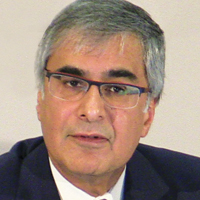
“There was a consistent effect across all strata of stroke risk,” Dr. Sharma said. Among patients with a prior stroke, rivaroxaban plus aspirin provided the greatest benefit, with no increase in intracranial hemorrhages, Dr. Sharma said.
“We think these results will fundamentally change how we approach stroke prevention,” said Dr. Sharma, a stroke neurologist in the Population Health Research Institute of McMaster University in Hamilton, Ontario.
An Analysis of Data From COMPASS
Dr. Sharma reported results from a secondary analysis of data collected in the COMPASS (Rivaroxaban for the Prevention of Major Cardiovascular Events in Coronary or Peripheral Artery Disease) trial, which enrolled 27,395 patients with stable coronary or peripheral artery disease at 602 centers in 33 countries.
The primary outcome of the trial, reported in 2017, was the combined rate of cardiovascular death, myocardial infarction, or stroke during an average of 23 months of follow-up. Patients received rivaroxaban plus aspirin (ie, 2.5 mg of rivaroxaban twice daily plus 100 mg of aspirin once daily), aspirin alone (ie, 100 mg of aspirin daily), or rivaroxaban alone (ie, 5.0 mg of rivaroxaban twice daily). A primary outcome event occurred in 4.1% of patients treated with rivaroxaban plus aspirin, 4.9% of patients who received rivaroxaban alone, and 5.4% of patients who received aspirin alone—a statistically significant 24% relative risk reduction in the combined treatment group, compared with aspirin only. The rivaroxaban only–treated patients did not significantly differ from the control patients who received only aspirin. The rate of major bleeds in patients treated with rivaroxaban plus aspirin was 1.2% greater, compared with aspirin only, but the rate of nonfatal symptomatic intracranial hemorrhages was identical in the two treatment groups.
The present study focused on various measures of stroke. The rate of all strokes was 42% lower among the patients treated with rivaroxaban plus aspirin, compared with the aspirin-alone patients, and the rate of ischemic strokes was 49% lower with the dual therapy, compared with aspirin only. Both differences were statistically significant. In contrast, the rivaroxaban-alone regimen did not significantly reduce all-cause strokes. It did significantly reduce ischemic strokes, compared with aspirin only, but it also significantly increased hemorrhagic strokes, compared with aspirin only, an adverse effect not caused by the combination of low-dose rivaroxaban plus aspirin.
Benefit in High-Risk Patients
Rivaroxaban plus aspirin surpassed aspirin alone for preventing mild and severe strokes and for preventing strokes in patients with a history of a prior stroke and in those without a prior stroke. The stroke reduction produced by rivaroxaban plus aspirin was greatest in the highest risk patients—those with a prior stroke. On the combined regimen, these patients had an average stroke incidence of 0.7% per year, compared with an annual 3.4% rate among the patients on aspirin only. This 2.7% absolute reduction by using rivaroxaban plus aspirin translated into a number needed to treat of 37 patients with a history of stroke to prevent one new stroke per year.
The 2017 report of the main COMPASS results included a net clinical benefit analysis that factored together the primary end point events and major bleeding events. The net rate of all these events was 4.7% with rivaroxaban plus aspirin and 5.9% with aspirin only, a statistically significant 20% relative risk reduction for all adverse outcomes with dual therapy. Researchers are assessing the cost-effectiveness of adding rivaroxaban, Dr. Sharma said.
Rivaroxaban received FDA marketing approval in 2011 for preventing deep vein thrombosis and preventing stroke in patients with atrial fibrillation at dosages higher than those used in COMPASS. The approved rivaroxaban dosage is 10 mg/day for preventing deep vein thrombosis, and 20 mg/day for preventing stroke in patients with atrial fibrillation. The 2.5-mg formulation of rivaroxaban that was given twice daily had the best safety and efficacy in COMPASS, but it is not available now on the US market, although it is available in Europe. Johnson & Johnson, which markets rivaroxaban globally with Bayer, submitted an application to the FDA in December 2017 for marketing approval of the 2.5-mg formulation in twice-daily dosing for use as in the COMPASS trial.
COMPASS was sponsored by Bayer, and Dr. Sharma has been a consultant or adviser to Bayer.
—Mitchel L. Zoler
Suggested Reading
Eikelboom JW, Connolly SJ, Bosch J, et al. Rivaroxaban with or without aspirin in stable cardiovascular disease. N Engl J Med. 2017;377(14):1319-1330.
LOS ANGELES—Combined treatment with a low dosage of the anticoagulant rivaroxaban plus aspirin cut the incidence of ischemic strokes nearly in half, compared with aspirin alone, in a multicenter, randomized trial of more than 27,000 patients with stable atherosclerotic vascular disease.
This dramatic reduction in ischemic strokes, as well as a 42% reduction in all-cause strokes, by adding low-dose rivaroxaban (Xarelto) occurred without a significant increase in hemorrhagic strokes, but with a small increase in total major bleeding events such as gastrointestinal bleeds, said Mike Sharma, MD, at the International Stroke Conference 2018.
“There was a consistent effect across all strata of stroke risk,” Dr. Sharma said. Among patients with a prior stroke, rivaroxaban plus aspirin provided the greatest benefit, with no increase in intracranial hemorrhages, Dr. Sharma said.
“We think these results will fundamentally change how we approach stroke prevention,” said Dr. Sharma, a stroke neurologist in the Population Health Research Institute of McMaster University in Hamilton, Ontario.
An Analysis of Data From COMPASS
Dr. Sharma reported results from a secondary analysis of data collected in the COMPASS (Rivaroxaban for the Prevention of Major Cardiovascular Events in Coronary or Peripheral Artery Disease) trial, which enrolled 27,395 patients with stable coronary or peripheral artery disease at 602 centers in 33 countries.
The primary outcome of the trial, reported in 2017, was the combined rate of cardiovascular death, myocardial infarction, or stroke during an average of 23 months of follow-up. Patients received rivaroxaban plus aspirin (ie, 2.5 mg of rivaroxaban twice daily plus 100 mg of aspirin once daily), aspirin alone (ie, 100 mg of aspirin daily), or rivaroxaban alone (ie, 5.0 mg of rivaroxaban twice daily). A primary outcome event occurred in 4.1% of patients treated with rivaroxaban plus aspirin, 4.9% of patients who received rivaroxaban alone, and 5.4% of patients who received aspirin alone—a statistically significant 24% relative risk reduction in the combined treatment group, compared with aspirin only. The rivaroxaban only–treated patients did not significantly differ from the control patients who received only aspirin. The rate of major bleeds in patients treated with rivaroxaban plus aspirin was 1.2% greater, compared with aspirin only, but the rate of nonfatal symptomatic intracranial hemorrhages was identical in the two treatment groups.
The present study focused on various measures of stroke. The rate of all strokes was 42% lower among the patients treated with rivaroxaban plus aspirin, compared with the aspirin-alone patients, and the rate of ischemic strokes was 49% lower with the dual therapy, compared with aspirin only. Both differences were statistically significant. In contrast, the rivaroxaban-alone regimen did not significantly reduce all-cause strokes. It did significantly reduce ischemic strokes, compared with aspirin only, but it also significantly increased hemorrhagic strokes, compared with aspirin only, an adverse effect not caused by the combination of low-dose rivaroxaban plus aspirin.
Benefit in High-Risk Patients
Rivaroxaban plus aspirin surpassed aspirin alone for preventing mild and severe strokes and for preventing strokes in patients with a history of a prior stroke and in those without a prior stroke. The stroke reduction produced by rivaroxaban plus aspirin was greatest in the highest risk patients—those with a prior stroke. On the combined regimen, these patients had an average stroke incidence of 0.7% per year, compared with an annual 3.4% rate among the patients on aspirin only. This 2.7% absolute reduction by using rivaroxaban plus aspirin translated into a number needed to treat of 37 patients with a history of stroke to prevent one new stroke per year.
The 2017 report of the main COMPASS results included a net clinical benefit analysis that factored together the primary end point events and major bleeding events. The net rate of all these events was 4.7% with rivaroxaban plus aspirin and 5.9% with aspirin only, a statistically significant 20% relative risk reduction for all adverse outcomes with dual therapy. Researchers are assessing the cost-effectiveness of adding rivaroxaban, Dr. Sharma said.
Rivaroxaban received FDA marketing approval in 2011 for preventing deep vein thrombosis and preventing stroke in patients with atrial fibrillation at dosages higher than those used in COMPASS. The approved rivaroxaban dosage is 10 mg/day for preventing deep vein thrombosis, and 20 mg/day for preventing stroke in patients with atrial fibrillation. The 2.5-mg formulation of rivaroxaban that was given twice daily had the best safety and efficacy in COMPASS, but it is not available now on the US market, although it is available in Europe. Johnson & Johnson, which markets rivaroxaban globally with Bayer, submitted an application to the FDA in December 2017 for marketing approval of the 2.5-mg formulation in twice-daily dosing for use as in the COMPASS trial.
COMPASS was sponsored by Bayer, and Dr. Sharma has been a consultant or adviser to Bayer.
—Mitchel L. Zoler
Suggested Reading
Eikelboom JW, Connolly SJ, Bosch J, et al. Rivaroxaban with or without aspirin in stable cardiovascular disease. N Engl J Med. 2017;377(14):1319-1330.
LOS ANGELES—Combined treatment with a low dosage of the anticoagulant rivaroxaban plus aspirin cut the incidence of ischemic strokes nearly in half, compared with aspirin alone, in a multicenter, randomized trial of more than 27,000 patients with stable atherosclerotic vascular disease.
This dramatic reduction in ischemic strokes, as well as a 42% reduction in all-cause strokes, by adding low-dose rivaroxaban (Xarelto) occurred without a significant increase in hemorrhagic strokes, but with a small increase in total major bleeding events such as gastrointestinal bleeds, said Mike Sharma, MD, at the International Stroke Conference 2018.
“There was a consistent effect across all strata of stroke risk,” Dr. Sharma said. Among patients with a prior stroke, rivaroxaban plus aspirin provided the greatest benefit, with no increase in intracranial hemorrhages, Dr. Sharma said.
“We think these results will fundamentally change how we approach stroke prevention,” said Dr. Sharma, a stroke neurologist in the Population Health Research Institute of McMaster University in Hamilton, Ontario.
An Analysis of Data From COMPASS
Dr. Sharma reported results from a secondary analysis of data collected in the COMPASS (Rivaroxaban for the Prevention of Major Cardiovascular Events in Coronary or Peripheral Artery Disease) trial, which enrolled 27,395 patients with stable coronary or peripheral artery disease at 602 centers in 33 countries.
The primary outcome of the trial, reported in 2017, was the combined rate of cardiovascular death, myocardial infarction, or stroke during an average of 23 months of follow-up. Patients received rivaroxaban plus aspirin (ie, 2.5 mg of rivaroxaban twice daily plus 100 mg of aspirin once daily), aspirin alone (ie, 100 mg of aspirin daily), or rivaroxaban alone (ie, 5.0 mg of rivaroxaban twice daily). A primary outcome event occurred in 4.1% of patients treated with rivaroxaban plus aspirin, 4.9% of patients who received rivaroxaban alone, and 5.4% of patients who received aspirin alone—a statistically significant 24% relative risk reduction in the combined treatment group, compared with aspirin only. The rivaroxaban only–treated patients did not significantly differ from the control patients who received only aspirin. The rate of major bleeds in patients treated with rivaroxaban plus aspirin was 1.2% greater, compared with aspirin only, but the rate of nonfatal symptomatic intracranial hemorrhages was identical in the two treatment groups.
The present study focused on various measures of stroke. The rate of all strokes was 42% lower among the patients treated with rivaroxaban plus aspirin, compared with the aspirin-alone patients, and the rate of ischemic strokes was 49% lower with the dual therapy, compared with aspirin only. Both differences were statistically significant. In contrast, the rivaroxaban-alone regimen did not significantly reduce all-cause strokes. It did significantly reduce ischemic strokes, compared with aspirin only, but it also significantly increased hemorrhagic strokes, compared with aspirin only, an adverse effect not caused by the combination of low-dose rivaroxaban plus aspirin.
Benefit in High-Risk Patients
Rivaroxaban plus aspirin surpassed aspirin alone for preventing mild and severe strokes and for preventing strokes in patients with a history of a prior stroke and in those without a prior stroke. The stroke reduction produced by rivaroxaban plus aspirin was greatest in the highest risk patients—those with a prior stroke. On the combined regimen, these patients had an average stroke incidence of 0.7% per year, compared with an annual 3.4% rate among the patients on aspirin only. This 2.7% absolute reduction by using rivaroxaban plus aspirin translated into a number needed to treat of 37 patients with a history of stroke to prevent one new stroke per year.
The 2017 report of the main COMPASS results included a net clinical benefit analysis that factored together the primary end point events and major bleeding events. The net rate of all these events was 4.7% with rivaroxaban plus aspirin and 5.9% with aspirin only, a statistically significant 20% relative risk reduction for all adverse outcomes with dual therapy. Researchers are assessing the cost-effectiveness of adding rivaroxaban, Dr. Sharma said.
Rivaroxaban received FDA marketing approval in 2011 for preventing deep vein thrombosis and preventing stroke in patients with atrial fibrillation at dosages higher than those used in COMPASS. The approved rivaroxaban dosage is 10 mg/day for preventing deep vein thrombosis, and 20 mg/day for preventing stroke in patients with atrial fibrillation. The 2.5-mg formulation of rivaroxaban that was given twice daily had the best safety and efficacy in COMPASS, but it is not available now on the US market, although it is available in Europe. Johnson & Johnson, which markets rivaroxaban globally with Bayer, submitted an application to the FDA in December 2017 for marketing approval of the 2.5-mg formulation in twice-daily dosing for use as in the COMPASS trial.
COMPASS was sponsored by Bayer, and Dr. Sharma has been a consultant or adviser to Bayer.
—Mitchel L. Zoler
Suggested Reading
Eikelboom JW, Connolly SJ, Bosch J, et al. Rivaroxaban with or without aspirin in stable cardiovascular disease. N Engl J Med. 2017;377(14):1319-1330.
Relationship between Hospital 30-Day Mortality Rates for Heart Failure and Patterns of Early Inpatient Comfort Care
In an effort to improve the quality of care delivered to heart failure (HF) patients, the Centers for Medicare & Medicaid Services (CMS) publish hospitals’ 30-day risk-standardized mortality rates (RSMRs) for HF.1 These mortality rates are also used by CMS to determine the financial penalties and bonuses that hospitals receive as part of the national Hospital Value-based Purchasing program.2 Whether or not these efforts effectively direct patients towards high-quality providers or motivate hospitals to provide better care, few would disagree with the overarching goal of decreasing the number of patients who die from HF.
However, for some patients with chronic disease at the end of life, goals of care may change. The quality of days lived may become more important than the quantity of days lived. As a consequence, high-quality care for some patients at the end of life is associated with withdrawing life-sustaining or life-extending therapies. Over time, this therapeutic perspective has become more common, with use of hospice care doubling from 23% to 47% between 2000 and 2012 among Medicare beneficiaries who died.3 For a national cohort of older patients admitted with HF—not just those patients who died in that same year—hospitals’ rates of referral to hospice are considerably lower, averaging 2.9% in 2010 in a national study.4 Nevertheless, it is possible that hospitals that more faithfully follow their dying patients’ wishes and withdraw life-prolonging interventions and provide comfort-focused care at the end of life might be unfairly penalized if such efforts resulted in higher mortality rates than other hospitals.
Therefore, we used Medicare data linked to a national HF registry with information about end-of-life care, to address 3 questions: (1) How much do hospitals vary in their rates of early comfort care and how has this changed over time; (2) What hospital and patient factors are associated with higher early comfort care rates; and (3) Is there a correlation between 30-day risk-adjusted mortality rates for HF with hospital rates of early comfort care?
METHODS
Data Sources
We used data from the American Heart Association’s Get With The Guidelines-Heart Failure (GWTG-HF) registry. GWTG-HF is a voluntary, inpatient, quality improvement registry5-7 that uses web-based tools and standard questionnaires to collect data on patients with HF admitted to participating hospitals nationwide. The data include information from admission (eg, sociodemographic characteristics, symptoms, medical history, and initial laboratory and test results), the inpatient stay (eg, therapies), and discharge (eg, discharge destination, whether and when comfort care was initiated). We linked the GWTG-HF registry data to Medicare claims data in order to obtain information about Medicare eligibility and patient comorbidities. Additionally, we used data from the American Hospital Association (2008) for hospital characteristics. Quintiles Real-World & Late Phase Research (Cambridge, MA) serves as the data coordinating center for GWTG-HF and the Duke Clinical Research Institute (Durham, NC) serves as the statistical analytic center. GWTG-HF participating sites have a waiver of informed consent because the data are de-identified and primarily used for quality improvement. All analyses performed on this data have been approved by the Duke Medical Center Institutional Review Board.
Study Population
Study Outcomes
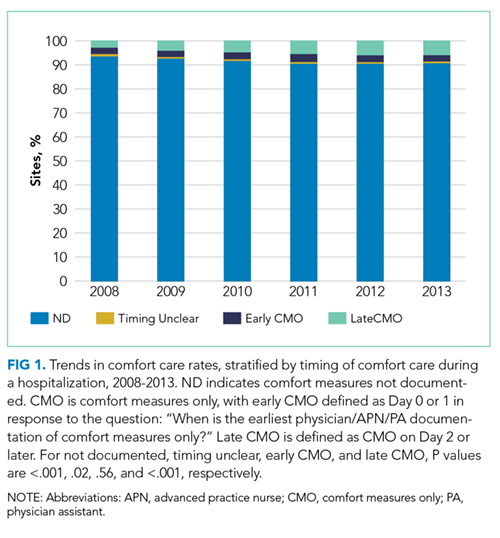
Our outcome of interest was the correlation between a hospital’s rate of initiating early CMO for admitted HF patients and a hospital’s 30-day RSMR for HF. The GWTG-HF questionnaire8 asks “When is the earliest physician/advanced practice nurse/physician assistant documentation of comfort measures only?” and permits 4 responses: day 0 or 1, day 2 or after, timing unclear, or not documented/unable to determine. We defined early CMO as CMO on day 0 or 1, and late/no CMO as any other response. We chose to examine early comfort care because many hospitalized patients transition to comfort care before they die if the death is in any way predictable. Thus, if comfort care is measured at any time during the hospitalization, hospitals that have high mortality rates are likely to have high comfort care rates. Therefore, we chose to use the more precise measure of early comfort care. We created hospital-level, risk-standardized early comfort care rates using the same risk-adjustment model used for RSMRs but with the outcome of early comfort care instead of mortality.9,10
RSMRs were calculated using a validated GWTG-HF 30-day risk-standardized mortality model9 with additional variables identified from other GWTG-HF analyses.10 The 30 days are measured as the 30 days after the index admission date.
Statistical Analyses
We described trends in early comfort care rates over time, from February 17, 2008, to February 17, 2014, using the Cochran-Armitage test for trend. We then grouped hospitals into quintiles based on their unadjusted early comfort care rates. We described patient and hospital characteristics for each quintile, using χ2 tests to test for differences across quintiles for categorical variables and Wilcoxon rank sum tests to assess for differences across quintiles for continuous variables. We then examined the Spearman’s rank correlation between hospitals’ RSMR and risk-adjusted comfort care rates. Finally, we compared hospital-level RSMRs before and after adjusting for early comfort care.
We performed risk-adjustment for these last 2 analyses as follows. For each patient, covariates were obtained from the GWTG-HF registry. Clinical data captured for the index admission were utilized in the risk-adjustment model (for both RSMRs and risk-adjusted comfort care rates). Included covariates were as follows: age (per 10 years); race (black vs non-black); systolic blood pressure at admission ≤170 (per 10 mm Hg); respiratory rate (per 5 respirations/min); heart rate ≤105 (per 10 beats/min); weight ≤100 (per 5 kg); weight >100 (per 5 kg); blood urea nitrogen (per 10 mg/dl); brain natriuretic peptide ≤2000 (per 500 pg/ml); hemoglobin 10-14 (per 1 g/dl); troponin abnormal (vs normal); creatinine ≤1 (per 1 mg/dl); sodium 130-140 (per 5 mEq/l); and chronic obstructive pulmonary disease or asthma.
Hierarchical logistic regression modeling was used to calculate the hospital-specific RSMR. A predicted/expected ratio similar to an observed/expected (O/E) ratio was calculated using the following modifications: (1) instead of the observed (crude) number of deaths, the numerator is the number of deaths predicted by the hierarchical model among a hospital’s patients given the patients’ risk factors and the hospital-specific effect; (2) the denominator is the expected number of deaths among the hospital’s patients given the patients’ risk factors and the average of all hospital-specific effects overall; and (3) the ratio of the numerator and denominator are then multiplied by the observed overall mortality rate (same as O/E). This calculation is the method used by CMS to derive RSMRs.11 Multiple imputation was used to handle missing data in the models; 25 imputed datasets using the fully conditional specification method were created. Patients with missing prior comorbidities were assumed to not have those conditions. Hospital characteristics were not imputed; therefore, for analyses that required construction of risk-adjusted comfort care rates or RSMRs, we excluded 18,867 patients cared for at 82 hospitals missing hospital characteristics. We ran 2 sets of models for risk-adjusted comfort care rates and RSMRs: the first adjusted only for patient characteristics, and the second adjusted for both patient and hospital characteristics. Results from the 2 models were similar, so we present only results from the latter. Variance inflation factors were all <2, indicating the collinearity between covariates was not an issue.
All statistical analyses were performed by using SAS version 9.4 (SAS Institute, Cary, NC). We tested for statistical significance by using 2-tailed tests and considered P values <.05 to be statistically significant.
RESULTS
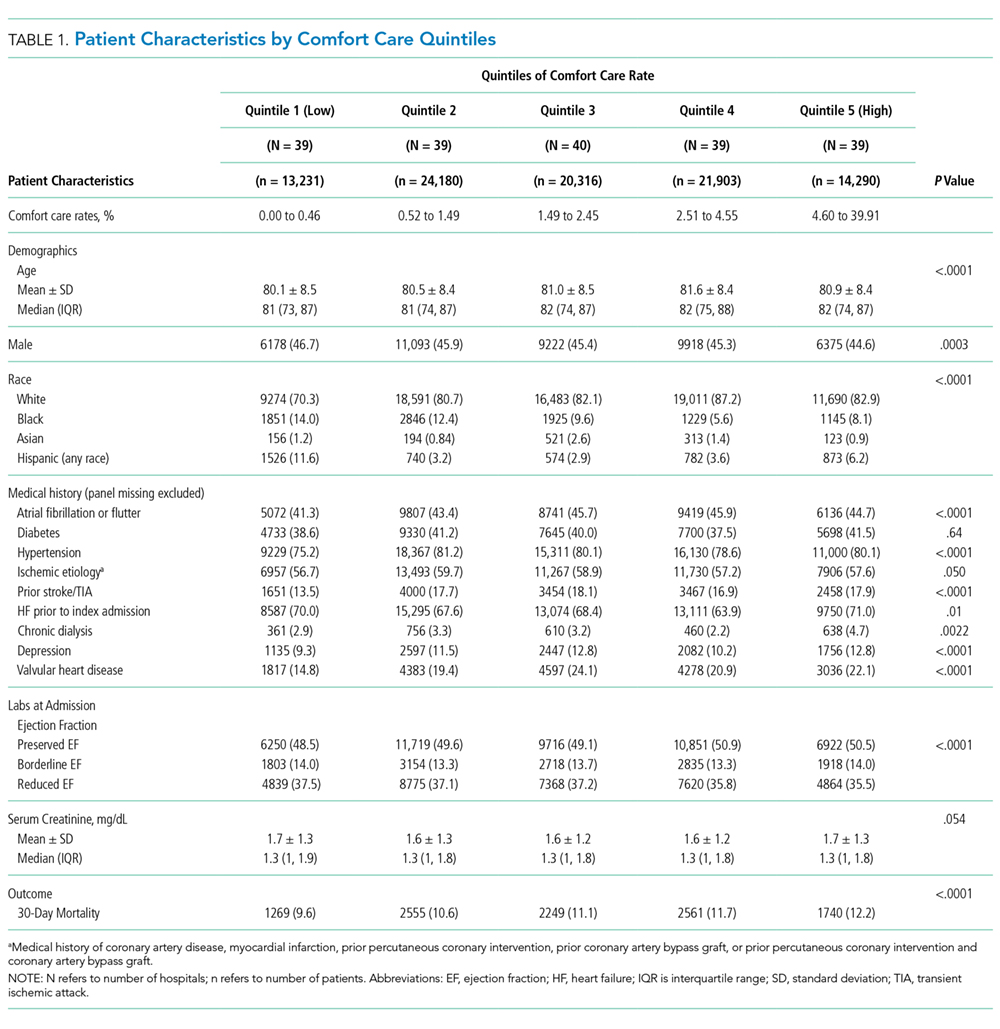
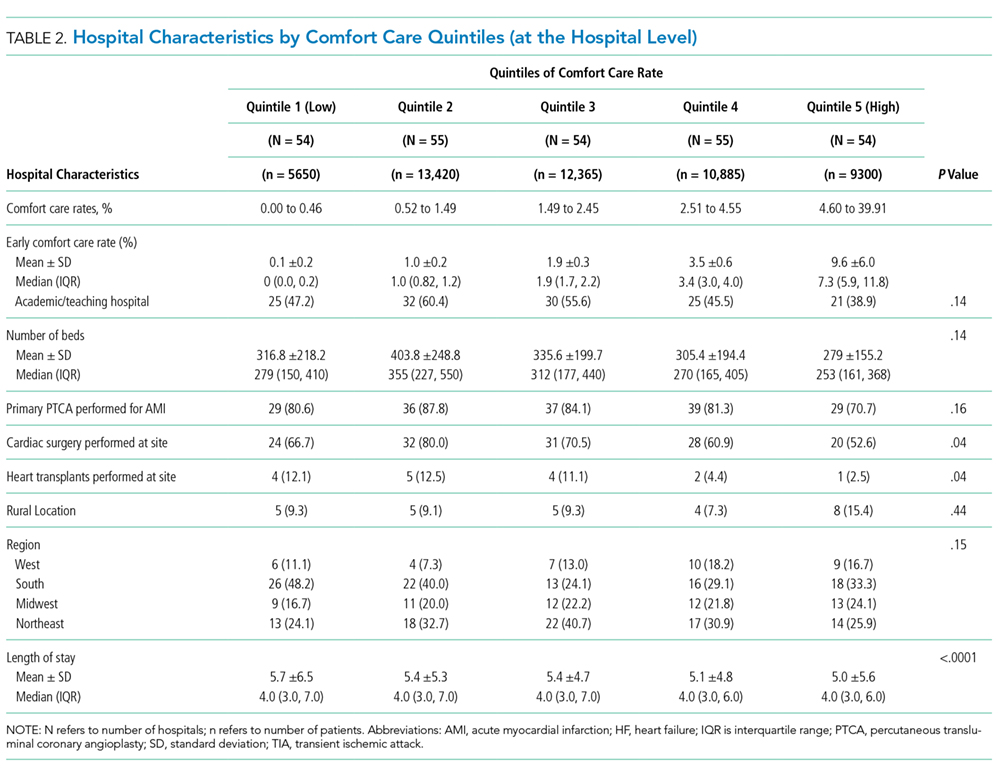
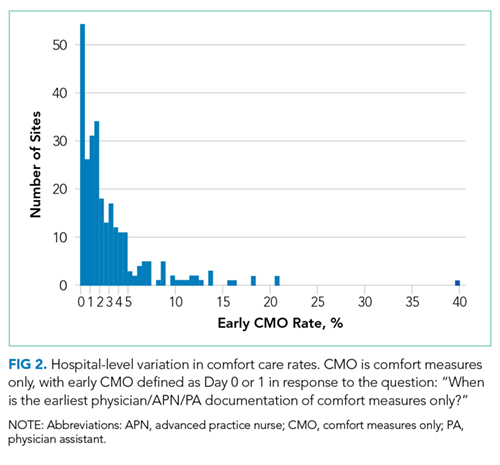
Of the 272 hospitals included in our final study cohort, the observed median overall rate of early comfort care in this study was 1.9% (25th to 75th percentile: 0.9% to 4.0%); hospitals varied widely in unadjusted early comfort care rates (0.00% to 0.46% in the lowest quintile, and 4.60% to 39.91% in the highest quintile; Table 1).
DISCUSSION
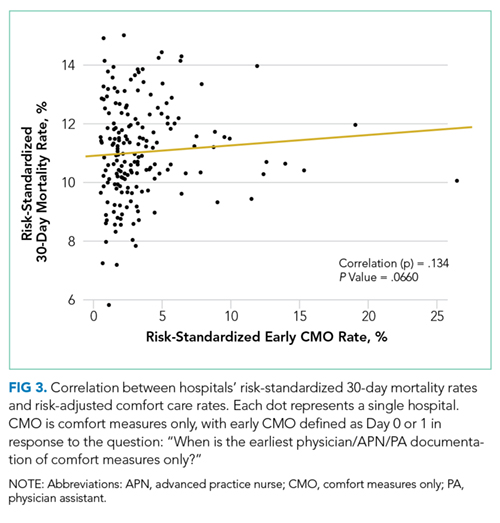
Among a national sample of US hospitals, we found wide variation in how frequently health care providers deliver comfort care within the first 2 days of admission for HF. A minority of hospitals reported no early comfort care on any patients throughout the 6-year study period, but hospitals in the highest quintile initiated early comfort care rates for at least 1 in 20 HF patients. Hospitals that were more likely to initiate early comfort care had a higher proportion of female and white patients and were less likely to have the capacity to deliver aggressive surgical interventions such as heart transplants. Hospital-level 30-day RSMRs were not correlated with rates of early comfort care.
While the appropriate rate of early comfort care for patients hospitalized with HF is unknown, given that the average hospital RSMR is approximately 12% for fee-for-service Medicare patients hospitalized with HF,12 it is surprising that some hospitals initiated early comfort care on none or very few of their HF patients. It is quite possible that many of these hospitals initiated comfort care for some of their patients after 48 hours of hospitalization. We were unable to estimate the average period of time patients received comfort care prior to dying, the degree to which this varies across hospitals or why it might vary, and whether the length of time between comfort care initiation and death is related to satisfaction with end-of-life care. Future research on these topics would help inform providers seeking to deliver better end-of-life care. In this study, we also were unable to estimate how often early comfort care was not initiated because patients had a good prognosis. However, prior studies have suggested low rates of comfort care or hospice referral even among patients at very high estimated mortality risk.4 It is also possible that providers and families had concerns about the ability to accurately prognosticate, although several models have been shown to perform acceptably for patients hospitalized with HF.13
We found that comfort care rates did not increase over time, even though use of hospice care doubled among Medicare beneficiaries between 2000 and 2012. By way of context, cancer—the second leading cause of death in the US—was responsible for 38% of hospice admissions in 2013, whereas heart disease (including but not limited to HF)—the leading cause of death— was responsible for 13% of hospice admissions.14 The 2013 American College of Cardiology Foundation and the American Heart Association guidelines for HF recommend consideration of hospice or palliative care for inpatient and transitional care.15 In future work, it would be important to better understand the drivers behind decisions around comfort care for patients hospitalized with HF.
With regards to the policy implications of our study, we found that on average, adjusting 30-day mortality rates for early comfort care was not associated with a change in hospital mortality rankings. For those hospitals with high comfort care rates, adjusting for comfort care did lower mortality rates, but the change was so small as to be clinically insignificant. CMS’ RSMR for HF excludes patients enrolled in hospice during the 12 months prior to index admission, including the first day of the index admission, acknowledging that death may not be an untoward outcome for such patients.16 Fee-for-service Medicare beneficiaries excluded for hospice enrollment comprised 1.29% of HF admissions from July 2012 to June 201516 and are likely a subset of early comfort care patients in our sample, both because of the inclusiveness of chart review (vs claims-based identification) and because we defined early comfort care as comfort care initiated on day 0 or 1 of hospitalization. Nevertheless, with our data we cannot assess to what degree our findings were due solely to hospice patients excluded from CMS’ current estimates.
Prior research has described the underuse of palliative care among patients with HF17 and the association of palliative care with better patient and family experiences at the end of life.18-20 We add to this literature by describing the epidemiology—prevalence, changes over time, and associated factors—of early comfort care for HF in a national sample of hospitals. This serves as a baseline for future work on end-of-life care among patients hospitalized for HF. Our findings also contribute to ongoing discussion about how best to risk-adjust mortality metrics used to assess hospital quality in pay-for-performance programs. Recent research on stroke and pneumonia based on California data suggests that not accounting for do-not-resuscitate (DNR) status biases hospital mortality rates.21,22 Earlier research examined the impact of adjusting hospital mortality rates for DNR for a broader range of conditions.23,24 We expand this line of inquiry by examining the hospital-level association of early comfort care with mortality rates for HF, utilizing a national, contemporary cohort of inpatient stays. In addition, while studies have found that DNR rates within the first 24 hours of admission are relatively high (median 15.8% for pneumonia; 13.3% for stroke),21,22 comfort care is distinct from DNR.
Our findings should be interpreted in the context of several potential limitations. First, we did not have any information about patient or family wishes regarding end-of-life care, or the exact timing of early comfort care (eg, day 0 or day 1). The initiation of comfort care usually follows conversations about end-of-life care involving a patient, his or her family, and the medical team. Thus, we do not know if low early comfort care rates represent the lack of such a conversation (and thus poor-quality care) or the desire by most patients not to initiate early comfort care (and thus high-quality care). This would be an important area for future research. Second, we included only patients admitted to hospitals that participate in GWTG-HF, a voluntary quality improvement initiative. This may limit the generalizability of our findings, but it is unclear how our sample might bias our findings. Hospitals engaged in quality improvement may be more likely to initiate early comfort care aligned with patients’ wishes; on the other hand, hospitals with advanced surgical capabilities are over-represented in our sample and these hospitals are less likely to initiate early comfort care. Third, we examined associations and cannot make conclusions about causality. Residual measured and unmeasured confounding may influence these findings.
In summary, we found that early comfort care rates for fee-for-service Medicare beneficiaries admitted for HF varies widely among hospitals, but median rates of early comfort care have not changed over time. On average, there was no correlation between hospital-level, 30-day, RSMRs and rates of early comfort care. This suggests that current efforts to lower mortality rates have not had unintended consequences for hospitals that institute early comfort care more commonly than their peers.
Acknowledgments
Dr. Chen and Ms. Cox take responsibility for the integrity of the data and the accuracy of the data analysis. Drs. Chen, Levine, and Hayward are responsible for the study concept and design. Drs. Chen and Fonarow acquired the data. Dr. Chen drafted the manuscript. Drs. Chen, Levin, Hayward, Cox, Fonarow, DeVore, Hernandez, Heidenreich, and Yancy revised the manuscript for important intellectual content. Drs. Chen, Hayward, Cox, and Schulte performed the statistical analysis. Drs. Chen and Fonarow obtained funding for the study. Drs. Hayward and Fonarow supervised the study. The authors thank Bailey Green, MPH, for the research assistance she provided. She was compensated for her work.
Disclosure
Dr. Fonarow reports research support from the National Institutes of Health, and consulting for Amgen, Janssen, Novartis, Medtronic, and St Jude Medical. Dr. DeVore reports research support from the American Heart Association, Amgen, and Novartis, and consulting for Amgen. The other authors have no relevant conflicts of interest. Dr. Chen was supported by a Career Development Grant Award (K08HS020671) from the Agency for Healthcare Research and Quality when the manuscript was being prepared. She currently receives support from the Department of Health and Human Services Office of the Assistant Secretary for Planning and Evaluation for her work there. She also receives support from the Blue Cross Blue Shield of Michigan Foundation’s Investigator Initiated Research Program, the Agency for Healthcare Research and Quality (R01 HS024698), and the National Institute on Aging (P01 AG019783). These funding sources had no role in the preparation, review, or approval of the manuscript. The GWTG-HF program is provided by the American Heart Association. GWTG-HF has been funded in the past through support from Amgen, Medtronic, GlaxoSmithKline, Ortho-McNeil, and the American Heart Association Pharmaceutical Roundtable. These sponsors had no role in the study design, data analysis or manuscript preparation and revision.
1. Centers for Medicare & Medicaid Services. Hospital Compare. https://www.medicare.gov/hospitalcompare/. Accessed on November 27, 2016.
2. Centers for Medicare & Medicaid Services. Hospital Value-based Purchasing. https://www.medicare.gov/hospitalcompare/data/hospital-vbp.html. Accessed August 30, 2017.
3. Medicare Payment Advisory Comission. Report to the Congress: Medicare payment policy. 2014. http://www.medpac.gov/docs/default-source/reports/mar14_entirereport.pdf. Accessed August 31, 2017.
4. Whellan DJ, Cox M, Hernandez AF, et al. Utilization of hospice and predicted mortality risk among older patients hospitalized with heart failure: findings from GWTG-HF. J Card Fail. 2012;18(6):471-477. PubMed
5. Hong Y, LaBresh KA. Overview of the American Heart Association “Get with the Guidelines” programs: coronary heart disease, stroke, and heart failure. Crit Pathw Cardiol. 2006;5(4):179-186. PubMed
6. LaBresh KA, Gliklich R, Liljestrand J, Peto R, Ellrodt AG. Using “get with the guidelines” to improve cardiovascular secondary prevention. Jt Comm J Qual Saf. 2003;29(10):539-550. PubMed
7. Hernandez AF, Fonarow GC, Liang L, et al. Sex and racial differences in the use of implantable cardioverter-defibrillators among patients hospitalized with heart failure. JAMA. 2007;298(13):1525-1532. PubMed
8. Get With The Guidelines-Heart Failure. HF Patient Management Tool, October 2016.
9. Eapen ZJ, Liang L, Fonarow GC, et al. Validated, electronic health record deployable prediction models for assessing patient risk of 30-day rehospitalization and mortality in older heart failure patients. JACC Heart Fail. 2013;1(3):245-251. PubMed
10. Peterson PN, Rumsfeld JS, Liang L, et al. A validated risk score for in-hospital mortality in patients with heart failure from the American Heart Association get with the guidelines program. Circ Cardiovasc Qual Outcomes. 2010;3(1):25-32. PubMed
11. Frequently Asked Questions (FAQs): Implementation and Maintenance of CMS Mortality Measures for AMI & HF. 2007. https://www.cms.gov/Medicare/Quality-Initiatives-Patient-Assessment-Instruments/HospitalQualityInits/downloads/HospitalMortalityAboutAMI_HF.pdf. Accessed August 30, 2017.
12. Suter LG, Li SX, Grady JN, et al. National patterns of risk-standardized mortality and readmission after hospitalization for acute myocardial infarction, heart failure, and pneumonia: update on publicly reported outcomes measures based on the 2013 release. J Gen Intern Med. 2014;29(10):1333-1340. PubMed
13. Lagu T, Pekow PS, Shieh MS, et al. Validation and comparison of seven mortality prediction models for hospitalized patients with acute decompensated heart failure. Circ Heart Fail. Aug 2016;9(8):e002912. PubMed
14. National Hospice and Palliative Care Organization. NHPCO’s facts and figures: hospice care in america. 2015. https://www.nhpco.org/sites/default/files/public/Statistics_Research/2015_Facts_Figures.pdf. Accessed August 30, 2017.
15. Yancy CW, Jessup M, Bozkurt B, et al. 2013 ACCF/AHA guideline for the management of heart failure: executive summary: a report of the American College of Cardiology Foundation/American Heart Association Task Force on practice guidelines. Circulation. 2013;128(16):1810-1852. PubMed
16. Centers for Medicare & Medicaid Services. 2016 Condition-Specific Measures Updates and Specifications Report Hospital-Level 30-Day Risk-Standardized Mortality Measures. https://www.qualitynet.org/dcs/ContentServer?c=Page&pagename=QnetPublic%2FPage%2FQnetTier3&cid=1228774398696. Accessed August 30, 2017.
17. Bakitas M, Macmartin M, Trzepkowski K, et al. Palliative care consultations for heart failure patients: how many, when, and why? J Card Fail. 2013;19(3):193-201. PubMed
18. Wachterman MW, Pilver C, Smith D, Ersek M, Lipsitz SR, Keating NL. Quality of End-of-Life Care Provided to Patients With Different Serious Illnesses. JAMA Intern Med. 2016;176(8):1095-1102. PubMed
19. Wright AA, Zhang B, Ray A, et al. Associations between end-of-life discussions, patient mental health, medical care near death, and caregiver bereavement adjustment. JAMA. 2008;300(14):1665-1673. PubMed
20. Rogers JG, Patel CB, Mentz RJ, et al. Palliative care in heart failure: results of a randomized, controlled clinical trial. J Card Fail. 2016;22(11):940. PubMed
21. Kelly AG, Zahuranec DB, Holloway RG, Morgenstern LB, Burke JF. Variation in do-not-resuscitate orders for patients with ischemic stroke: implications for national hospital comparisons. Stroke. 2014;45(3):822-827. PubMed
22. Walkey AJ, Weinberg J, Wiener RS, Cooke CR, Lindenauer PK. Association of Do-Not-Resuscitate Orders and Hospital Mortality Rate Among Patients With Pneumonia. JAMA Intern Med. 2016;176(1):97-104. PubMed
23. Bardach N, Zhao S, Pantilat S, Johnston SC. Adjustment for do-not-resuscitate orders reverses the apparent in-hospital mortality advantage for minorities. Am J Med. 2005;118(4):400-408. PubMed
24. Tabak YP, Johannes RS, Silber JH, Kurtz SG. Should Do-Not-Resuscitate status be included as a mortality risk adjustor? The impact of DNR variations on performance reporting. Med Care. 2005;43(7):658-666. PubMed
In an effort to improve the quality of care delivered to heart failure (HF) patients, the Centers for Medicare & Medicaid Services (CMS) publish hospitals’ 30-day risk-standardized mortality rates (RSMRs) for HF.1 These mortality rates are also used by CMS to determine the financial penalties and bonuses that hospitals receive as part of the national Hospital Value-based Purchasing program.2 Whether or not these efforts effectively direct patients towards high-quality providers or motivate hospitals to provide better care, few would disagree with the overarching goal of decreasing the number of patients who die from HF.
However, for some patients with chronic disease at the end of life, goals of care may change. The quality of days lived may become more important than the quantity of days lived. As a consequence, high-quality care for some patients at the end of life is associated with withdrawing life-sustaining or life-extending therapies. Over time, this therapeutic perspective has become more common, with use of hospice care doubling from 23% to 47% between 2000 and 2012 among Medicare beneficiaries who died.3 For a national cohort of older patients admitted with HF—not just those patients who died in that same year—hospitals’ rates of referral to hospice are considerably lower, averaging 2.9% in 2010 in a national study.4 Nevertheless, it is possible that hospitals that more faithfully follow their dying patients’ wishes and withdraw life-prolonging interventions and provide comfort-focused care at the end of life might be unfairly penalized if such efforts resulted in higher mortality rates than other hospitals.
Therefore, we used Medicare data linked to a national HF registry with information about end-of-life care, to address 3 questions: (1) How much do hospitals vary in their rates of early comfort care and how has this changed over time; (2) What hospital and patient factors are associated with higher early comfort care rates; and (3) Is there a correlation between 30-day risk-adjusted mortality rates for HF with hospital rates of early comfort care?
METHODS
Data Sources
We used data from the American Heart Association’s Get With The Guidelines-Heart Failure (GWTG-HF) registry. GWTG-HF is a voluntary, inpatient, quality improvement registry5-7 that uses web-based tools and standard questionnaires to collect data on patients with HF admitted to participating hospitals nationwide. The data include information from admission (eg, sociodemographic characteristics, symptoms, medical history, and initial laboratory and test results), the inpatient stay (eg, therapies), and discharge (eg, discharge destination, whether and when comfort care was initiated). We linked the GWTG-HF registry data to Medicare claims data in order to obtain information about Medicare eligibility and patient comorbidities. Additionally, we used data from the American Hospital Association (2008) for hospital characteristics. Quintiles Real-World & Late Phase Research (Cambridge, MA) serves as the data coordinating center for GWTG-HF and the Duke Clinical Research Institute (Durham, NC) serves as the statistical analytic center. GWTG-HF participating sites have a waiver of informed consent because the data are de-identified and primarily used for quality improvement. All analyses performed on this data have been approved by the Duke Medical Center Institutional Review Board.
Study Population
Study Outcomes
Our outcome of interest was the correlation between a hospital’s rate of initiating early CMO for admitted HF patients and a hospital’s 30-day RSMR for HF. The GWTG-HF questionnaire8 asks “When is the earliest physician/advanced practice nurse/physician assistant documentation of comfort measures only?” and permits 4 responses: day 0 or 1, day 2 or after, timing unclear, or not documented/unable to determine. We defined early CMO as CMO on day 0 or 1, and late/no CMO as any other response. We chose to examine early comfort care because many hospitalized patients transition to comfort care before they die if the death is in any way predictable. Thus, if comfort care is measured at any time during the hospitalization, hospitals that have high mortality rates are likely to have high comfort care rates. Therefore, we chose to use the more precise measure of early comfort care. We created hospital-level, risk-standardized early comfort care rates using the same risk-adjustment model used for RSMRs but with the outcome of early comfort care instead of mortality.9,10
RSMRs were calculated using a validated GWTG-HF 30-day risk-standardized mortality model9 with additional variables identified from other GWTG-HF analyses.10 The 30 days are measured as the 30 days after the index admission date.
Statistical Analyses
We described trends in early comfort care rates over time, from February 17, 2008, to February 17, 2014, using the Cochran-Armitage test for trend. We then grouped hospitals into quintiles based on their unadjusted early comfort care rates. We described patient and hospital characteristics for each quintile, using χ2 tests to test for differences across quintiles for categorical variables and Wilcoxon rank sum tests to assess for differences across quintiles for continuous variables. We then examined the Spearman’s rank correlation between hospitals’ RSMR and risk-adjusted comfort care rates. Finally, we compared hospital-level RSMRs before and after adjusting for early comfort care.
We performed risk-adjustment for these last 2 analyses as follows. For each patient, covariates were obtained from the GWTG-HF registry. Clinical data captured for the index admission were utilized in the risk-adjustment model (for both RSMRs and risk-adjusted comfort care rates). Included covariates were as follows: age (per 10 years); race (black vs non-black); systolic blood pressure at admission ≤170 (per 10 mm Hg); respiratory rate (per 5 respirations/min); heart rate ≤105 (per 10 beats/min); weight ≤100 (per 5 kg); weight >100 (per 5 kg); blood urea nitrogen (per 10 mg/dl); brain natriuretic peptide ≤2000 (per 500 pg/ml); hemoglobin 10-14 (per 1 g/dl); troponin abnormal (vs normal); creatinine ≤1 (per 1 mg/dl); sodium 130-140 (per 5 mEq/l); and chronic obstructive pulmonary disease or asthma.
Hierarchical logistic regression modeling was used to calculate the hospital-specific RSMR. A predicted/expected ratio similar to an observed/expected (O/E) ratio was calculated using the following modifications: (1) instead of the observed (crude) number of deaths, the numerator is the number of deaths predicted by the hierarchical model among a hospital’s patients given the patients’ risk factors and the hospital-specific effect; (2) the denominator is the expected number of deaths among the hospital’s patients given the patients’ risk factors and the average of all hospital-specific effects overall; and (3) the ratio of the numerator and denominator are then multiplied by the observed overall mortality rate (same as O/E). This calculation is the method used by CMS to derive RSMRs.11 Multiple imputation was used to handle missing data in the models; 25 imputed datasets using the fully conditional specification method were created. Patients with missing prior comorbidities were assumed to not have those conditions. Hospital characteristics were not imputed; therefore, for analyses that required construction of risk-adjusted comfort care rates or RSMRs, we excluded 18,867 patients cared for at 82 hospitals missing hospital characteristics. We ran 2 sets of models for risk-adjusted comfort care rates and RSMRs: the first adjusted only for patient characteristics, and the second adjusted for both patient and hospital characteristics. Results from the 2 models were similar, so we present only results from the latter. Variance inflation factors were all <2, indicating the collinearity between covariates was not an issue.
All statistical analyses were performed by using SAS version 9.4 (SAS Institute, Cary, NC). We tested for statistical significance by using 2-tailed tests and considered P values <.05 to be statistically significant.
RESULTS
Of the 272 hospitals included in our final study cohort, the observed median overall rate of early comfort care in this study was 1.9% (25th to 75th percentile: 0.9% to 4.0%); hospitals varied widely in unadjusted early comfort care rates (0.00% to 0.46% in the lowest quintile, and 4.60% to 39.91% in the highest quintile; Table 1).
DISCUSSION
Among a national sample of US hospitals, we found wide variation in how frequently health care providers deliver comfort care within the first 2 days of admission for HF. A minority of hospitals reported no early comfort care on any patients throughout the 6-year study period, but hospitals in the highest quintile initiated early comfort care rates for at least 1 in 20 HF patients. Hospitals that were more likely to initiate early comfort care had a higher proportion of female and white patients and were less likely to have the capacity to deliver aggressive surgical interventions such as heart transplants. Hospital-level 30-day RSMRs were not correlated with rates of early comfort care.
While the appropriate rate of early comfort care for patients hospitalized with HF is unknown, given that the average hospital RSMR is approximately 12% for fee-for-service Medicare patients hospitalized with HF,12 it is surprising that some hospitals initiated early comfort care on none or very few of their HF patients. It is quite possible that many of these hospitals initiated comfort care for some of their patients after 48 hours of hospitalization. We were unable to estimate the average period of time patients received comfort care prior to dying, the degree to which this varies across hospitals or why it might vary, and whether the length of time between comfort care initiation and death is related to satisfaction with end-of-life care. Future research on these topics would help inform providers seeking to deliver better end-of-life care. In this study, we also were unable to estimate how often early comfort care was not initiated because patients had a good prognosis. However, prior studies have suggested low rates of comfort care or hospice referral even among patients at very high estimated mortality risk.4 It is also possible that providers and families had concerns about the ability to accurately prognosticate, although several models have been shown to perform acceptably for patients hospitalized with HF.13
We found that comfort care rates did not increase over time, even though use of hospice care doubled among Medicare beneficiaries between 2000 and 2012. By way of context, cancer—the second leading cause of death in the US—was responsible for 38% of hospice admissions in 2013, whereas heart disease (including but not limited to HF)—the leading cause of death— was responsible for 13% of hospice admissions.14 The 2013 American College of Cardiology Foundation and the American Heart Association guidelines for HF recommend consideration of hospice or palliative care for inpatient and transitional care.15 In future work, it would be important to better understand the drivers behind decisions around comfort care for patients hospitalized with HF.
With regards to the policy implications of our study, we found that on average, adjusting 30-day mortality rates for early comfort care was not associated with a change in hospital mortality rankings. For those hospitals with high comfort care rates, adjusting for comfort care did lower mortality rates, but the change was so small as to be clinically insignificant. CMS’ RSMR for HF excludes patients enrolled in hospice during the 12 months prior to index admission, including the first day of the index admission, acknowledging that death may not be an untoward outcome for such patients.16 Fee-for-service Medicare beneficiaries excluded for hospice enrollment comprised 1.29% of HF admissions from July 2012 to June 201516 and are likely a subset of early comfort care patients in our sample, both because of the inclusiveness of chart review (vs claims-based identification) and because we defined early comfort care as comfort care initiated on day 0 or 1 of hospitalization. Nevertheless, with our data we cannot assess to what degree our findings were due solely to hospice patients excluded from CMS’ current estimates.
Prior research has described the underuse of palliative care among patients with HF17 and the association of palliative care with better patient and family experiences at the end of life.18-20 We add to this literature by describing the epidemiology—prevalence, changes over time, and associated factors—of early comfort care for HF in a national sample of hospitals. This serves as a baseline for future work on end-of-life care among patients hospitalized for HF. Our findings also contribute to ongoing discussion about how best to risk-adjust mortality metrics used to assess hospital quality in pay-for-performance programs. Recent research on stroke and pneumonia based on California data suggests that not accounting for do-not-resuscitate (DNR) status biases hospital mortality rates.21,22 Earlier research examined the impact of adjusting hospital mortality rates for DNR for a broader range of conditions.23,24 We expand this line of inquiry by examining the hospital-level association of early comfort care with mortality rates for HF, utilizing a national, contemporary cohort of inpatient stays. In addition, while studies have found that DNR rates within the first 24 hours of admission are relatively high (median 15.8% for pneumonia; 13.3% for stroke),21,22 comfort care is distinct from DNR.
Our findings should be interpreted in the context of several potential limitations. First, we did not have any information about patient or family wishes regarding end-of-life care, or the exact timing of early comfort care (eg, day 0 or day 1). The initiation of comfort care usually follows conversations about end-of-life care involving a patient, his or her family, and the medical team. Thus, we do not know if low early comfort care rates represent the lack of such a conversation (and thus poor-quality care) or the desire by most patients not to initiate early comfort care (and thus high-quality care). This would be an important area for future research. Second, we included only patients admitted to hospitals that participate in GWTG-HF, a voluntary quality improvement initiative. This may limit the generalizability of our findings, but it is unclear how our sample might bias our findings. Hospitals engaged in quality improvement may be more likely to initiate early comfort care aligned with patients’ wishes; on the other hand, hospitals with advanced surgical capabilities are over-represented in our sample and these hospitals are less likely to initiate early comfort care. Third, we examined associations and cannot make conclusions about causality. Residual measured and unmeasured confounding may influence these findings.
In summary, we found that early comfort care rates for fee-for-service Medicare beneficiaries admitted for HF varies widely among hospitals, but median rates of early comfort care have not changed over time. On average, there was no correlation between hospital-level, 30-day, RSMRs and rates of early comfort care. This suggests that current efforts to lower mortality rates have not had unintended consequences for hospitals that institute early comfort care more commonly than their peers.
Acknowledgments
Dr. Chen and Ms. Cox take responsibility for the integrity of the data and the accuracy of the data analysis. Drs. Chen, Levine, and Hayward are responsible for the study concept and design. Drs. Chen and Fonarow acquired the data. Dr. Chen drafted the manuscript. Drs. Chen, Levin, Hayward, Cox, Fonarow, DeVore, Hernandez, Heidenreich, and Yancy revised the manuscript for important intellectual content. Drs. Chen, Hayward, Cox, and Schulte performed the statistical analysis. Drs. Chen and Fonarow obtained funding for the study. Drs. Hayward and Fonarow supervised the study. The authors thank Bailey Green, MPH, for the research assistance she provided. She was compensated for her work.
Disclosure
Dr. Fonarow reports research support from the National Institutes of Health, and consulting for Amgen, Janssen, Novartis, Medtronic, and St Jude Medical. Dr. DeVore reports research support from the American Heart Association, Amgen, and Novartis, and consulting for Amgen. The other authors have no relevant conflicts of interest. Dr. Chen was supported by a Career Development Grant Award (K08HS020671) from the Agency for Healthcare Research and Quality when the manuscript was being prepared. She currently receives support from the Department of Health and Human Services Office of the Assistant Secretary for Planning and Evaluation for her work there. She also receives support from the Blue Cross Blue Shield of Michigan Foundation’s Investigator Initiated Research Program, the Agency for Healthcare Research and Quality (R01 HS024698), and the National Institute on Aging (P01 AG019783). These funding sources had no role in the preparation, review, or approval of the manuscript. The GWTG-HF program is provided by the American Heart Association. GWTG-HF has been funded in the past through support from Amgen, Medtronic, GlaxoSmithKline, Ortho-McNeil, and the American Heart Association Pharmaceutical Roundtable. These sponsors had no role in the study design, data analysis or manuscript preparation and revision.
In an effort to improve the quality of care delivered to heart failure (HF) patients, the Centers for Medicare & Medicaid Services (CMS) publish hospitals’ 30-day risk-standardized mortality rates (RSMRs) for HF.1 These mortality rates are also used by CMS to determine the financial penalties and bonuses that hospitals receive as part of the national Hospital Value-based Purchasing program.2 Whether or not these efforts effectively direct patients towards high-quality providers or motivate hospitals to provide better care, few would disagree with the overarching goal of decreasing the number of patients who die from HF.
However, for some patients with chronic disease at the end of life, goals of care may change. The quality of days lived may become more important than the quantity of days lived. As a consequence, high-quality care for some patients at the end of life is associated with withdrawing life-sustaining or life-extending therapies. Over time, this therapeutic perspective has become more common, with use of hospice care doubling from 23% to 47% between 2000 and 2012 among Medicare beneficiaries who died.3 For a national cohort of older patients admitted with HF—not just those patients who died in that same year—hospitals’ rates of referral to hospice are considerably lower, averaging 2.9% in 2010 in a national study.4 Nevertheless, it is possible that hospitals that more faithfully follow their dying patients’ wishes and withdraw life-prolonging interventions and provide comfort-focused care at the end of life might be unfairly penalized if such efforts resulted in higher mortality rates than other hospitals.
Therefore, we used Medicare data linked to a national HF registry with information about end-of-life care, to address 3 questions: (1) How much do hospitals vary in their rates of early comfort care and how has this changed over time; (2) What hospital and patient factors are associated with higher early comfort care rates; and (3) Is there a correlation between 30-day risk-adjusted mortality rates for HF with hospital rates of early comfort care?
METHODS
Data Sources
We used data from the American Heart Association’s Get With The Guidelines-Heart Failure (GWTG-HF) registry. GWTG-HF is a voluntary, inpatient, quality improvement registry5-7 that uses web-based tools and standard questionnaires to collect data on patients with HF admitted to participating hospitals nationwide. The data include information from admission (eg, sociodemographic characteristics, symptoms, medical history, and initial laboratory and test results), the inpatient stay (eg, therapies), and discharge (eg, discharge destination, whether and when comfort care was initiated). We linked the GWTG-HF registry data to Medicare claims data in order to obtain information about Medicare eligibility and patient comorbidities. Additionally, we used data from the American Hospital Association (2008) for hospital characteristics. Quintiles Real-World & Late Phase Research (Cambridge, MA) serves as the data coordinating center for GWTG-HF and the Duke Clinical Research Institute (Durham, NC) serves as the statistical analytic center. GWTG-HF participating sites have a waiver of informed consent because the data are de-identified and primarily used for quality improvement. All analyses performed on this data have been approved by the Duke Medical Center Institutional Review Board.
Study Population
Study Outcomes
Our outcome of interest was the correlation between a hospital’s rate of initiating early CMO for admitted HF patients and a hospital’s 30-day RSMR for HF. The GWTG-HF questionnaire8 asks “When is the earliest physician/advanced practice nurse/physician assistant documentation of comfort measures only?” and permits 4 responses: day 0 or 1, day 2 or after, timing unclear, or not documented/unable to determine. We defined early CMO as CMO on day 0 or 1, and late/no CMO as any other response. We chose to examine early comfort care because many hospitalized patients transition to comfort care before they die if the death is in any way predictable. Thus, if comfort care is measured at any time during the hospitalization, hospitals that have high mortality rates are likely to have high comfort care rates. Therefore, we chose to use the more precise measure of early comfort care. We created hospital-level, risk-standardized early comfort care rates using the same risk-adjustment model used for RSMRs but with the outcome of early comfort care instead of mortality.9,10
RSMRs were calculated using a validated GWTG-HF 30-day risk-standardized mortality model9 with additional variables identified from other GWTG-HF analyses.10 The 30 days are measured as the 30 days after the index admission date.
Statistical Analyses
We described trends in early comfort care rates over time, from February 17, 2008, to February 17, 2014, using the Cochran-Armitage test for trend. We then grouped hospitals into quintiles based on their unadjusted early comfort care rates. We described patient and hospital characteristics for each quintile, using χ2 tests to test for differences across quintiles for categorical variables and Wilcoxon rank sum tests to assess for differences across quintiles for continuous variables. We then examined the Spearman’s rank correlation between hospitals’ RSMR and risk-adjusted comfort care rates. Finally, we compared hospital-level RSMRs before and after adjusting for early comfort care.
We performed risk-adjustment for these last 2 analyses as follows. For each patient, covariates were obtained from the GWTG-HF registry. Clinical data captured for the index admission were utilized in the risk-adjustment model (for both RSMRs and risk-adjusted comfort care rates). Included covariates were as follows: age (per 10 years); race (black vs non-black); systolic blood pressure at admission ≤170 (per 10 mm Hg); respiratory rate (per 5 respirations/min); heart rate ≤105 (per 10 beats/min); weight ≤100 (per 5 kg); weight >100 (per 5 kg); blood urea nitrogen (per 10 mg/dl); brain natriuretic peptide ≤2000 (per 500 pg/ml); hemoglobin 10-14 (per 1 g/dl); troponin abnormal (vs normal); creatinine ≤1 (per 1 mg/dl); sodium 130-140 (per 5 mEq/l); and chronic obstructive pulmonary disease or asthma.
Hierarchical logistic regression modeling was used to calculate the hospital-specific RSMR. A predicted/expected ratio similar to an observed/expected (O/E) ratio was calculated using the following modifications: (1) instead of the observed (crude) number of deaths, the numerator is the number of deaths predicted by the hierarchical model among a hospital’s patients given the patients’ risk factors and the hospital-specific effect; (2) the denominator is the expected number of deaths among the hospital’s patients given the patients’ risk factors and the average of all hospital-specific effects overall; and (3) the ratio of the numerator and denominator are then multiplied by the observed overall mortality rate (same as O/E). This calculation is the method used by CMS to derive RSMRs.11 Multiple imputation was used to handle missing data in the models; 25 imputed datasets using the fully conditional specification method were created. Patients with missing prior comorbidities were assumed to not have those conditions. Hospital characteristics were not imputed; therefore, for analyses that required construction of risk-adjusted comfort care rates or RSMRs, we excluded 18,867 patients cared for at 82 hospitals missing hospital characteristics. We ran 2 sets of models for risk-adjusted comfort care rates and RSMRs: the first adjusted only for patient characteristics, and the second adjusted for both patient and hospital characteristics. Results from the 2 models were similar, so we present only results from the latter. Variance inflation factors were all <2, indicating the collinearity between covariates was not an issue.
All statistical analyses were performed by using SAS version 9.4 (SAS Institute, Cary, NC). We tested for statistical significance by using 2-tailed tests and considered P values <.05 to be statistically significant.
RESULTS
Of the 272 hospitals included in our final study cohort, the observed median overall rate of early comfort care in this study was 1.9% (25th to 75th percentile: 0.9% to 4.0%); hospitals varied widely in unadjusted early comfort care rates (0.00% to 0.46% in the lowest quintile, and 4.60% to 39.91% in the highest quintile; Table 1).
DISCUSSION
Among a national sample of US hospitals, we found wide variation in how frequently health care providers deliver comfort care within the first 2 days of admission for HF. A minority of hospitals reported no early comfort care on any patients throughout the 6-year study period, but hospitals in the highest quintile initiated early comfort care rates for at least 1 in 20 HF patients. Hospitals that were more likely to initiate early comfort care had a higher proportion of female and white patients and were less likely to have the capacity to deliver aggressive surgical interventions such as heart transplants. Hospital-level 30-day RSMRs were not correlated with rates of early comfort care.
While the appropriate rate of early comfort care for patients hospitalized with HF is unknown, given that the average hospital RSMR is approximately 12% for fee-for-service Medicare patients hospitalized with HF,12 it is surprising that some hospitals initiated early comfort care on none or very few of their HF patients. It is quite possible that many of these hospitals initiated comfort care for some of their patients after 48 hours of hospitalization. We were unable to estimate the average period of time patients received comfort care prior to dying, the degree to which this varies across hospitals or why it might vary, and whether the length of time between comfort care initiation and death is related to satisfaction with end-of-life care. Future research on these topics would help inform providers seeking to deliver better end-of-life care. In this study, we also were unable to estimate how often early comfort care was not initiated because patients had a good prognosis. However, prior studies have suggested low rates of comfort care or hospice referral even among patients at very high estimated mortality risk.4 It is also possible that providers and families had concerns about the ability to accurately prognosticate, although several models have been shown to perform acceptably for patients hospitalized with HF.13
We found that comfort care rates did not increase over time, even though use of hospice care doubled among Medicare beneficiaries between 2000 and 2012. By way of context, cancer—the second leading cause of death in the US—was responsible for 38% of hospice admissions in 2013, whereas heart disease (including but not limited to HF)—the leading cause of death— was responsible for 13% of hospice admissions.14 The 2013 American College of Cardiology Foundation and the American Heart Association guidelines for HF recommend consideration of hospice or palliative care for inpatient and transitional care.15 In future work, it would be important to better understand the drivers behind decisions around comfort care for patients hospitalized with HF.
With regards to the policy implications of our study, we found that on average, adjusting 30-day mortality rates for early comfort care was not associated with a change in hospital mortality rankings. For those hospitals with high comfort care rates, adjusting for comfort care did lower mortality rates, but the change was so small as to be clinically insignificant. CMS’ RSMR for HF excludes patients enrolled in hospice during the 12 months prior to index admission, including the first day of the index admission, acknowledging that death may not be an untoward outcome for such patients.16 Fee-for-service Medicare beneficiaries excluded for hospice enrollment comprised 1.29% of HF admissions from July 2012 to June 201516 and are likely a subset of early comfort care patients in our sample, both because of the inclusiveness of chart review (vs claims-based identification) and because we defined early comfort care as comfort care initiated on day 0 or 1 of hospitalization. Nevertheless, with our data we cannot assess to what degree our findings were due solely to hospice patients excluded from CMS’ current estimates.
Prior research has described the underuse of palliative care among patients with HF17 and the association of palliative care with better patient and family experiences at the end of life.18-20 We add to this literature by describing the epidemiology—prevalence, changes over time, and associated factors—of early comfort care for HF in a national sample of hospitals. This serves as a baseline for future work on end-of-life care among patients hospitalized for HF. Our findings also contribute to ongoing discussion about how best to risk-adjust mortality metrics used to assess hospital quality in pay-for-performance programs. Recent research on stroke and pneumonia based on California data suggests that not accounting for do-not-resuscitate (DNR) status biases hospital mortality rates.21,22 Earlier research examined the impact of adjusting hospital mortality rates for DNR for a broader range of conditions.23,24 We expand this line of inquiry by examining the hospital-level association of early comfort care with mortality rates for HF, utilizing a national, contemporary cohort of inpatient stays. In addition, while studies have found that DNR rates within the first 24 hours of admission are relatively high (median 15.8% for pneumonia; 13.3% for stroke),21,22 comfort care is distinct from DNR.
Our findings should be interpreted in the context of several potential limitations. First, we did not have any information about patient or family wishes regarding end-of-life care, or the exact timing of early comfort care (eg, day 0 or day 1). The initiation of comfort care usually follows conversations about end-of-life care involving a patient, his or her family, and the medical team. Thus, we do not know if low early comfort care rates represent the lack of such a conversation (and thus poor-quality care) or the desire by most patients not to initiate early comfort care (and thus high-quality care). This would be an important area for future research. Second, we included only patients admitted to hospitals that participate in GWTG-HF, a voluntary quality improvement initiative. This may limit the generalizability of our findings, but it is unclear how our sample might bias our findings. Hospitals engaged in quality improvement may be more likely to initiate early comfort care aligned with patients’ wishes; on the other hand, hospitals with advanced surgical capabilities are over-represented in our sample and these hospitals are less likely to initiate early comfort care. Third, we examined associations and cannot make conclusions about causality. Residual measured and unmeasured confounding may influence these findings.
In summary, we found that early comfort care rates for fee-for-service Medicare beneficiaries admitted for HF varies widely among hospitals, but median rates of early comfort care have not changed over time. On average, there was no correlation between hospital-level, 30-day, RSMRs and rates of early comfort care. This suggests that current efforts to lower mortality rates have not had unintended consequences for hospitals that institute early comfort care more commonly than their peers.
Acknowledgments
Dr. Chen and Ms. Cox take responsibility for the integrity of the data and the accuracy of the data analysis. Drs. Chen, Levine, and Hayward are responsible for the study concept and design. Drs. Chen and Fonarow acquired the data. Dr. Chen drafted the manuscript. Drs. Chen, Levin, Hayward, Cox, Fonarow, DeVore, Hernandez, Heidenreich, and Yancy revised the manuscript for important intellectual content. Drs. Chen, Hayward, Cox, and Schulte performed the statistical analysis. Drs. Chen and Fonarow obtained funding for the study. Drs. Hayward and Fonarow supervised the study. The authors thank Bailey Green, MPH, for the research assistance she provided. She was compensated for her work.
Disclosure
Dr. Fonarow reports research support from the National Institutes of Health, and consulting for Amgen, Janssen, Novartis, Medtronic, and St Jude Medical. Dr. DeVore reports research support from the American Heart Association, Amgen, and Novartis, and consulting for Amgen. The other authors have no relevant conflicts of interest. Dr. Chen was supported by a Career Development Grant Award (K08HS020671) from the Agency for Healthcare Research and Quality when the manuscript was being prepared. She currently receives support from the Department of Health and Human Services Office of the Assistant Secretary for Planning and Evaluation for her work there. She also receives support from the Blue Cross Blue Shield of Michigan Foundation’s Investigator Initiated Research Program, the Agency for Healthcare Research and Quality (R01 HS024698), and the National Institute on Aging (P01 AG019783). These funding sources had no role in the preparation, review, or approval of the manuscript. The GWTG-HF program is provided by the American Heart Association. GWTG-HF has been funded in the past through support from Amgen, Medtronic, GlaxoSmithKline, Ortho-McNeil, and the American Heart Association Pharmaceutical Roundtable. These sponsors had no role in the study design, data analysis or manuscript preparation and revision.
1. Centers for Medicare & Medicaid Services. Hospital Compare. https://www.medicare.gov/hospitalcompare/. Accessed on November 27, 2016.
2. Centers for Medicare & Medicaid Services. Hospital Value-based Purchasing. https://www.medicare.gov/hospitalcompare/data/hospital-vbp.html. Accessed August 30, 2017.
3. Medicare Payment Advisory Comission. Report to the Congress: Medicare payment policy. 2014. http://www.medpac.gov/docs/default-source/reports/mar14_entirereport.pdf. Accessed August 31, 2017.
4. Whellan DJ, Cox M, Hernandez AF, et al. Utilization of hospice and predicted mortality risk among older patients hospitalized with heart failure: findings from GWTG-HF. J Card Fail. 2012;18(6):471-477. PubMed
5. Hong Y, LaBresh KA. Overview of the American Heart Association “Get with the Guidelines” programs: coronary heart disease, stroke, and heart failure. Crit Pathw Cardiol. 2006;5(4):179-186. PubMed
6. LaBresh KA, Gliklich R, Liljestrand J, Peto R, Ellrodt AG. Using “get with the guidelines” to improve cardiovascular secondary prevention. Jt Comm J Qual Saf. 2003;29(10):539-550. PubMed
7. Hernandez AF, Fonarow GC, Liang L, et al. Sex and racial differences in the use of implantable cardioverter-defibrillators among patients hospitalized with heart failure. JAMA. 2007;298(13):1525-1532. PubMed
8. Get With The Guidelines-Heart Failure. HF Patient Management Tool, October 2016.
9. Eapen ZJ, Liang L, Fonarow GC, et al. Validated, electronic health record deployable prediction models for assessing patient risk of 30-day rehospitalization and mortality in older heart failure patients. JACC Heart Fail. 2013;1(3):245-251. PubMed
10. Peterson PN, Rumsfeld JS, Liang L, et al. A validated risk score for in-hospital mortality in patients with heart failure from the American Heart Association get with the guidelines program. Circ Cardiovasc Qual Outcomes. 2010;3(1):25-32. PubMed
11. Frequently Asked Questions (FAQs): Implementation and Maintenance of CMS Mortality Measures for AMI & HF. 2007. https://www.cms.gov/Medicare/Quality-Initiatives-Patient-Assessment-Instruments/HospitalQualityInits/downloads/HospitalMortalityAboutAMI_HF.pdf. Accessed August 30, 2017.
12. Suter LG, Li SX, Grady JN, et al. National patterns of risk-standardized mortality and readmission after hospitalization for acute myocardial infarction, heart failure, and pneumonia: update on publicly reported outcomes measures based on the 2013 release. J Gen Intern Med. 2014;29(10):1333-1340. PubMed
13. Lagu T, Pekow PS, Shieh MS, et al. Validation and comparison of seven mortality prediction models for hospitalized patients with acute decompensated heart failure. Circ Heart Fail. Aug 2016;9(8):e002912. PubMed
14. National Hospice and Palliative Care Organization. NHPCO’s facts and figures: hospice care in america. 2015. https://www.nhpco.org/sites/default/files/public/Statistics_Research/2015_Facts_Figures.pdf. Accessed August 30, 2017.
15. Yancy CW, Jessup M, Bozkurt B, et al. 2013 ACCF/AHA guideline for the management of heart failure: executive summary: a report of the American College of Cardiology Foundation/American Heart Association Task Force on practice guidelines. Circulation. 2013;128(16):1810-1852. PubMed
16. Centers for Medicare & Medicaid Services. 2016 Condition-Specific Measures Updates and Specifications Report Hospital-Level 30-Day Risk-Standardized Mortality Measures. https://www.qualitynet.org/dcs/ContentServer?c=Page&pagename=QnetPublic%2FPage%2FQnetTier3&cid=1228774398696. Accessed August 30, 2017.
17. Bakitas M, Macmartin M, Trzepkowski K, et al. Palliative care consultations for heart failure patients: how many, when, and why? J Card Fail. 2013;19(3):193-201. PubMed
18. Wachterman MW, Pilver C, Smith D, Ersek M, Lipsitz SR, Keating NL. Quality of End-of-Life Care Provided to Patients With Different Serious Illnesses. JAMA Intern Med. 2016;176(8):1095-1102. PubMed
19. Wright AA, Zhang B, Ray A, et al. Associations between end-of-life discussions, patient mental health, medical care near death, and caregiver bereavement adjustment. JAMA. 2008;300(14):1665-1673. PubMed
20. Rogers JG, Patel CB, Mentz RJ, et al. Palliative care in heart failure: results of a randomized, controlled clinical trial. J Card Fail. 2016;22(11):940. PubMed
21. Kelly AG, Zahuranec DB, Holloway RG, Morgenstern LB, Burke JF. Variation in do-not-resuscitate orders for patients with ischemic stroke: implications for national hospital comparisons. Stroke. 2014;45(3):822-827. PubMed
22. Walkey AJ, Weinberg J, Wiener RS, Cooke CR, Lindenauer PK. Association of Do-Not-Resuscitate Orders and Hospital Mortality Rate Among Patients With Pneumonia. JAMA Intern Med. 2016;176(1):97-104. PubMed
23. Bardach N, Zhao S, Pantilat S, Johnston SC. Adjustment for do-not-resuscitate orders reverses the apparent in-hospital mortality advantage for minorities. Am J Med. 2005;118(4):400-408. PubMed
24. Tabak YP, Johannes RS, Silber JH, Kurtz SG. Should Do-Not-Resuscitate status be included as a mortality risk adjustor? The impact of DNR variations on performance reporting. Med Care. 2005;43(7):658-666. PubMed
1. Centers for Medicare & Medicaid Services. Hospital Compare. https://www.medicare.gov/hospitalcompare/. Accessed on November 27, 2016.
2. Centers for Medicare & Medicaid Services. Hospital Value-based Purchasing. https://www.medicare.gov/hospitalcompare/data/hospital-vbp.html. Accessed August 30, 2017.
3. Medicare Payment Advisory Comission. Report to the Congress: Medicare payment policy. 2014. http://www.medpac.gov/docs/default-source/reports/mar14_entirereport.pdf. Accessed August 31, 2017.
4. Whellan DJ, Cox M, Hernandez AF, et al. Utilization of hospice and predicted mortality risk among older patients hospitalized with heart failure: findings from GWTG-HF. J Card Fail. 2012;18(6):471-477. PubMed
5. Hong Y, LaBresh KA. Overview of the American Heart Association “Get with the Guidelines” programs: coronary heart disease, stroke, and heart failure. Crit Pathw Cardiol. 2006;5(4):179-186. PubMed
6. LaBresh KA, Gliklich R, Liljestrand J, Peto R, Ellrodt AG. Using “get with the guidelines” to improve cardiovascular secondary prevention. Jt Comm J Qual Saf. 2003;29(10):539-550. PubMed
7. Hernandez AF, Fonarow GC, Liang L, et al. Sex and racial differences in the use of implantable cardioverter-defibrillators among patients hospitalized with heart failure. JAMA. 2007;298(13):1525-1532. PubMed
8. Get With The Guidelines-Heart Failure. HF Patient Management Tool, October 2016.
9. Eapen ZJ, Liang L, Fonarow GC, et al. Validated, electronic health record deployable prediction models for assessing patient risk of 30-day rehospitalization and mortality in older heart failure patients. JACC Heart Fail. 2013;1(3):245-251. PubMed
10. Peterson PN, Rumsfeld JS, Liang L, et al. A validated risk score for in-hospital mortality in patients with heart failure from the American Heart Association get with the guidelines program. Circ Cardiovasc Qual Outcomes. 2010;3(1):25-32. PubMed
11. Frequently Asked Questions (FAQs): Implementation and Maintenance of CMS Mortality Measures for AMI & HF. 2007. https://www.cms.gov/Medicare/Quality-Initiatives-Patient-Assessment-Instruments/HospitalQualityInits/downloads/HospitalMortalityAboutAMI_HF.pdf. Accessed August 30, 2017.
12. Suter LG, Li SX, Grady JN, et al. National patterns of risk-standardized mortality and readmission after hospitalization for acute myocardial infarction, heart failure, and pneumonia: update on publicly reported outcomes measures based on the 2013 release. J Gen Intern Med. 2014;29(10):1333-1340. PubMed
13. Lagu T, Pekow PS, Shieh MS, et al. Validation and comparison of seven mortality prediction models for hospitalized patients with acute decompensated heart failure. Circ Heart Fail. Aug 2016;9(8):e002912. PubMed
14. National Hospice and Palliative Care Organization. NHPCO’s facts and figures: hospice care in america. 2015. https://www.nhpco.org/sites/default/files/public/Statistics_Research/2015_Facts_Figures.pdf. Accessed August 30, 2017.
15. Yancy CW, Jessup M, Bozkurt B, et al. 2013 ACCF/AHA guideline for the management of heart failure: executive summary: a report of the American College of Cardiology Foundation/American Heart Association Task Force on practice guidelines. Circulation. 2013;128(16):1810-1852. PubMed
16. Centers for Medicare & Medicaid Services. 2016 Condition-Specific Measures Updates and Specifications Report Hospital-Level 30-Day Risk-Standardized Mortality Measures. https://www.qualitynet.org/dcs/ContentServer?c=Page&pagename=QnetPublic%2FPage%2FQnetTier3&cid=1228774398696. Accessed August 30, 2017.
17. Bakitas M, Macmartin M, Trzepkowski K, et al. Palliative care consultations for heart failure patients: how many, when, and why? J Card Fail. 2013;19(3):193-201. PubMed
18. Wachterman MW, Pilver C, Smith D, Ersek M, Lipsitz SR, Keating NL. Quality of End-of-Life Care Provided to Patients With Different Serious Illnesses. JAMA Intern Med. 2016;176(8):1095-1102. PubMed
19. Wright AA, Zhang B, Ray A, et al. Associations between end-of-life discussions, patient mental health, medical care near death, and caregiver bereavement adjustment. JAMA. 2008;300(14):1665-1673. PubMed
20. Rogers JG, Patel CB, Mentz RJ, et al. Palliative care in heart failure: results of a randomized, controlled clinical trial. J Card Fail. 2016;22(11):940. PubMed
21. Kelly AG, Zahuranec DB, Holloway RG, Morgenstern LB, Burke JF. Variation in do-not-resuscitate orders for patients with ischemic stroke: implications for national hospital comparisons. Stroke. 2014;45(3):822-827. PubMed
22. Walkey AJ, Weinberg J, Wiener RS, Cooke CR, Lindenauer PK. Association of Do-Not-Resuscitate Orders and Hospital Mortality Rate Among Patients With Pneumonia. JAMA Intern Med. 2016;176(1):97-104. PubMed
23. Bardach N, Zhao S, Pantilat S, Johnston SC. Adjustment for do-not-resuscitate orders reverses the apparent in-hospital mortality advantage for minorities. Am J Med. 2005;118(4):400-408. PubMed
24. Tabak YP, Johannes RS, Silber JH, Kurtz SG. Should Do-Not-Resuscitate status be included as a mortality risk adjustor? The impact of DNR variations on performance reporting. Med Care. 2005;43(7):658-666. PubMed
© 2018 Society of Hospital Medicine
Increasing sepsis survivorship creates new challenges
SAN ANTONIO – , results of a retrospective, single-center analysis suggest.
The number of sepsis survivors at risk for hospital readmission rose substantially in recent years, according to the analysis of 17,256 adult medical and surgical admissions to University of Pennsylvania Health System hospitals between July 1, 2010, and June 30, 2015. The journal Critical Care Medicine published these results online as Mark E. Mikkelsen, MD, was presenting them at the Critical Care Congress sponsored by the Society for Critical Care Medicine.

Over the time period that Dr. Mikkelsen and his colleagues analyzed, the proportion of sepsis hospitalizations more than doubled from 3.9% to 9.4%, while in-hospital mortality rates for sepsis hospitalizations fell from 24.1% to 14.8%. As a result, the proportion of discharged patients at risk for readmission increased from 2.7% to 7.8%, noted Dr. Mikkelsen, associate professor of medicine at the Hospital of the University Of Pennsylvania, Philadelphia.
Thirty-day hospital readmission rates modestly declined from 26.4% to 23.1% over that time period, driven by reduced readmissions among survivors of nonsevere and nonpneumonia sepsis, Dr. Mikkelsen said. This decline in overall sepsis patient readmissions was offset by an increase in emergency department treat-and-release visits. Such visits rose from 2.8% in 2010 to a peak of 5.4% in 2014, Dr. Mikkelsen explained. Generally, readmission rates for severe sepsis patients have not changed over time, he added.
“I anticipate that each and every hospital represented in this room will experience a similar phenomenon,” he said. “Therefore, high quality postdischarge care is in fact urgently needed,” he added. “It is warranted that there is an international spotlight on sepsis beginning in the hospital but now continuing thereafter into the phase of life after sepsis.”
These findings reflect “great sepsis survivorship” and suggest new challenges to address, said Timothy G. Buchman, MD, PhD, editor-in-chief of the Critical Care Medicine and past president of the Society for Critical Care Medicine.
“It’s really extraordinary to see that the efforts that have been made by the Surviving Sepsis campaign have paid off,” Dr. Buchman said in an interview. “Now we need to look much more carefully at both the readmission issues, as well as the consequences of long-term sepsis survivorship, not just on patients, but also on their families.”
Dr. Mikkelsen and a study coauthor received support for article research from the National Institutes of Health.
SOURCE: Meyer N et al. Crit Care Med. 2018 Mar. doi: 10.1097/CCM. 0000000000002872.
SAN ANTONIO – , results of a retrospective, single-center analysis suggest.
The number of sepsis survivors at risk for hospital readmission rose substantially in recent years, according to the analysis of 17,256 adult medical and surgical admissions to University of Pennsylvania Health System hospitals between July 1, 2010, and June 30, 2015. The journal Critical Care Medicine published these results online as Mark E. Mikkelsen, MD, was presenting them at the Critical Care Congress sponsored by the Society for Critical Care Medicine.
Over the time period that Dr. Mikkelsen and his colleagues analyzed, the proportion of sepsis hospitalizations more than doubled from 3.9% to 9.4%, while in-hospital mortality rates for sepsis hospitalizations fell from 24.1% to 14.8%. As a result, the proportion of discharged patients at risk for readmission increased from 2.7% to 7.8%, noted Dr. Mikkelsen, associate professor of medicine at the Hospital of the University Of Pennsylvania, Philadelphia.
Thirty-day hospital readmission rates modestly declined from 26.4% to 23.1% over that time period, driven by reduced readmissions among survivors of nonsevere and nonpneumonia sepsis, Dr. Mikkelsen said. This decline in overall sepsis patient readmissions was offset by an increase in emergency department treat-and-release visits. Such visits rose from 2.8% in 2010 to a peak of 5.4% in 2014, Dr. Mikkelsen explained. Generally, readmission rates for severe sepsis patients have not changed over time, he added.
“I anticipate that each and every hospital represented in this room will experience a similar phenomenon,” he said. “Therefore, high quality postdischarge care is in fact urgently needed,” he added. “It is warranted that there is an international spotlight on sepsis beginning in the hospital but now continuing thereafter into the phase of life after sepsis.”
These findings reflect “great sepsis survivorship” and suggest new challenges to address, said Timothy G. Buchman, MD, PhD, editor-in-chief of the Critical Care Medicine and past president of the Society for Critical Care Medicine.
“It’s really extraordinary to see that the efforts that have been made by the Surviving Sepsis campaign have paid off,” Dr. Buchman said in an interview. “Now we need to look much more carefully at both the readmission issues, as well as the consequences of long-term sepsis survivorship, not just on patients, but also on their families.”
Dr. Mikkelsen and a study coauthor received support for article research from the National Institutes of Health.
SOURCE: Meyer N et al. Crit Care Med. 2018 Mar. doi: 10.1097/CCM. 0000000000002872.
SAN ANTONIO – , results of a retrospective, single-center analysis suggest.
The number of sepsis survivors at risk for hospital readmission rose substantially in recent years, according to the analysis of 17,256 adult medical and surgical admissions to University of Pennsylvania Health System hospitals between July 1, 2010, and June 30, 2015. The journal Critical Care Medicine published these results online as Mark E. Mikkelsen, MD, was presenting them at the Critical Care Congress sponsored by the Society for Critical Care Medicine.
Over the time period that Dr. Mikkelsen and his colleagues analyzed, the proportion of sepsis hospitalizations more than doubled from 3.9% to 9.4%, while in-hospital mortality rates for sepsis hospitalizations fell from 24.1% to 14.8%. As a result, the proportion of discharged patients at risk for readmission increased from 2.7% to 7.8%, noted Dr. Mikkelsen, associate professor of medicine at the Hospital of the University Of Pennsylvania, Philadelphia.
Thirty-day hospital readmission rates modestly declined from 26.4% to 23.1% over that time period, driven by reduced readmissions among survivors of nonsevere and nonpneumonia sepsis, Dr. Mikkelsen said. This decline in overall sepsis patient readmissions was offset by an increase in emergency department treat-and-release visits. Such visits rose from 2.8% in 2010 to a peak of 5.4% in 2014, Dr. Mikkelsen explained. Generally, readmission rates for severe sepsis patients have not changed over time, he added.
“I anticipate that each and every hospital represented in this room will experience a similar phenomenon,” he said. “Therefore, high quality postdischarge care is in fact urgently needed,” he added. “It is warranted that there is an international spotlight on sepsis beginning in the hospital but now continuing thereafter into the phase of life after sepsis.”
These findings reflect “great sepsis survivorship” and suggest new challenges to address, said Timothy G. Buchman, MD, PhD, editor-in-chief of the Critical Care Medicine and past president of the Society for Critical Care Medicine.
“It’s really extraordinary to see that the efforts that have been made by the Surviving Sepsis campaign have paid off,” Dr. Buchman said in an interview. “Now we need to look much more carefully at both the readmission issues, as well as the consequences of long-term sepsis survivorship, not just on patients, but also on their families.”
Dr. Mikkelsen and a study coauthor received support for article research from the National Institutes of Health.
SOURCE: Meyer N et al. Crit Care Med. 2018 Mar. doi: 10.1097/CCM. 0000000000002872.
AT CCC47
Key clinical point: An analysis of one center’s sepsis cases revealed increases in sepsis survivors at risk for hospital readmission and returns of these patients to the hospital via the emergency department.
Major finding: The proportion of medical and surgical discharges at risk for hospital readmission after sepsis grew from 2.7% to 7.8%. The modest decline in 30-day readmission rates was offset by an increase in emergency department treat-and-release visits.
Data source: A retrospective, observational cohort study of more than 17,000 adult medical and surgical admissions in an academic health care system from 2010 to 2015.
Disclosures: The National Institutes of Health supported the work.
Source: Meyer N et al. Crit Care Med. 2018 Mar. doi: 10.1097/CCM.0000000000002872.
Levetiracetam May Be Superior to Phenobarbital for Infantile Epilepsy
Levetiracetam may be a superior initial treatment for infants with nonsyndromic epilepsy, according to a multicenter, prospective, observational study published online ahead of print February 12 in JAMA Pediatrics.
“Our findings suggest that levetiracetam has superior effectiveness, compared with phenobarbital, as initial monotherapy for nonsyndromic epilepsy in infants,” said Zachary Grinspan, MD, Director of the Pediatric Epilepsy Program at Cornell University, New York, and colleagues. “We estimate that for every 100 infants with epilepsy treated with levetiracetam instead of phenobarbital, 44 infants would be free from monotherapy failure instead of 16.”

To evaluate the effectiveness of levetiracetam vs phenobarbital, the researchers conducted the Early Life Epilepsy Study, which included 155 children with nonsyndromic epilepsy. Patient information was obtained from medical records and collected from March 1, 2012, through April 30, 2015. All participants were observed during their first three years of life.
In all, 117 children were treated with levetiracetam, and 38 with phenobarbital. Children treated with levetiracetam were, on average, two months older at seizure onset than were those in the phenobarbital group (5.2 months vs 3.0 months). Infants treated with levetiracetam also tended to begin treatment further from the time of their first seizure and exhibited less developmental delay at the time of epilepsy diagnosis.
Freedom from monotherapy failure was more common in the levetiracetam group than the phenobarbital group (40.2% vs 15.8%).
Outcome information was missing for more infants treated with levetiracetam than those treated with phenobarbital, which could have influenced the analyses, said Dr. Grinspan. The genetic interactions that influence nonsyndromic epilepsy make the latter difficult to study.
Although this study provides information that could benefit patients with infantile epilepsy, more work must be done on the topic, said the investigators. “A prospective clinical trial is needed. Levetiracetam and phenobarbital are both commonly used for infantile-onset epilepsy, indicating community equipoise regarding their relative effectiveness,” they said. “However, the effect size in our analysis was surprisingly large (number needed to treat, 3.5), suggesting that a change in practice could meaningfully improve outcomes.”
—Ian Lacy
Suggested Reading
Grinspan ZM, Shellhaas RA, Coryell J, et al. Comparative effectiveness of levetiracetam vs phenobarbital for infantile epilepsy. JAMA Pediatr. 2018 Feb 12 [Epub ahead of print].
Levetiracetam may be a superior initial treatment for infants with nonsyndromic epilepsy, according to a multicenter, prospective, observational study published online ahead of print February 12 in JAMA Pediatrics.
“Our findings suggest that levetiracetam has superior effectiveness, compared with phenobarbital, as initial monotherapy for nonsyndromic epilepsy in infants,” said Zachary Grinspan, MD, Director of the Pediatric Epilepsy Program at Cornell University, New York, and colleagues. “We estimate that for every 100 infants with epilepsy treated with levetiracetam instead of phenobarbital, 44 infants would be free from monotherapy failure instead of 16.”
To evaluate the effectiveness of levetiracetam vs phenobarbital, the researchers conducted the Early Life Epilepsy Study, which included 155 children with nonsyndromic epilepsy. Patient information was obtained from medical records and collected from March 1, 2012, through April 30, 2015. All participants were observed during their first three years of life.
In all, 117 children were treated with levetiracetam, and 38 with phenobarbital. Children treated with levetiracetam were, on average, two months older at seizure onset than were those in the phenobarbital group (5.2 months vs 3.0 months). Infants treated with levetiracetam also tended to begin treatment further from the time of their first seizure and exhibited less developmental delay at the time of epilepsy diagnosis.
Freedom from monotherapy failure was more common in the levetiracetam group than the phenobarbital group (40.2% vs 15.8%).
Outcome information was missing for more infants treated with levetiracetam than those treated with phenobarbital, which could have influenced the analyses, said Dr. Grinspan. The genetic interactions that influence nonsyndromic epilepsy make the latter difficult to study.
Although this study provides information that could benefit patients with infantile epilepsy, more work must be done on the topic, said the investigators. “A prospective clinical trial is needed. Levetiracetam and phenobarbital are both commonly used for infantile-onset epilepsy, indicating community equipoise regarding their relative effectiveness,” they said. “However, the effect size in our analysis was surprisingly large (number needed to treat, 3.5), suggesting that a change in practice could meaningfully improve outcomes.”
—Ian Lacy
Suggested Reading
Grinspan ZM, Shellhaas RA, Coryell J, et al. Comparative effectiveness of levetiracetam vs phenobarbital for infantile epilepsy. JAMA Pediatr. 2018 Feb 12 [Epub ahead of print].
Levetiracetam may be a superior initial treatment for infants with nonsyndromic epilepsy, according to a multicenter, prospective, observational study published online ahead of print February 12 in JAMA Pediatrics.
“Our findings suggest that levetiracetam has superior effectiveness, compared with phenobarbital, as initial monotherapy for nonsyndromic epilepsy in infants,” said Zachary Grinspan, MD, Director of the Pediatric Epilepsy Program at Cornell University, New York, and colleagues. “We estimate that for every 100 infants with epilepsy treated with levetiracetam instead of phenobarbital, 44 infants would be free from monotherapy failure instead of 16.”
To evaluate the effectiveness of levetiracetam vs phenobarbital, the researchers conducted the Early Life Epilepsy Study, which included 155 children with nonsyndromic epilepsy. Patient information was obtained from medical records and collected from March 1, 2012, through April 30, 2015. All participants were observed during their first three years of life.
In all, 117 children were treated with levetiracetam, and 38 with phenobarbital. Children treated with levetiracetam were, on average, two months older at seizure onset than were those in the phenobarbital group (5.2 months vs 3.0 months). Infants treated with levetiracetam also tended to begin treatment further from the time of their first seizure and exhibited less developmental delay at the time of epilepsy diagnosis.
Freedom from monotherapy failure was more common in the levetiracetam group than the phenobarbital group (40.2% vs 15.8%).
Outcome information was missing for more infants treated with levetiracetam than those treated with phenobarbital, which could have influenced the analyses, said Dr. Grinspan. The genetic interactions that influence nonsyndromic epilepsy make the latter difficult to study.
Although this study provides information that could benefit patients with infantile epilepsy, more work must be done on the topic, said the investigators. “A prospective clinical trial is needed. Levetiracetam and phenobarbital are both commonly used for infantile-onset epilepsy, indicating community equipoise regarding their relative effectiveness,” they said. “However, the effect size in our analysis was surprisingly large (number needed to treat, 3.5), suggesting that a change in practice could meaningfully improve outcomes.”
—Ian Lacy
Suggested Reading
Grinspan ZM, Shellhaas RA, Coryell J, et al. Comparative effectiveness of levetiracetam vs phenobarbital for infantile epilepsy. JAMA Pediatr. 2018 Feb 12 [Epub ahead of print].

No Consensus Treatment for Neurosarcoidosis
NAPLES, FL—Although patients with symptomatic neurosarcoidosis account for approximately 5% to 15% of people with systemic sarcoidosis, making it a rare manifestation of an uncommon disorder, neurosarcoidosis is associated with substantial morbidity and with mortality rates ranging from about 1% to 7%. Steroids can be an effective treatment, but high doses over a long period of time are often required, relapse rates are relatively high, and a significant percentage of cases are refractory to first-line therapy. Additional therapies, including steroid-sparing immunosuppressive agents, show promise. Current evidence is based largely on small series of patients, however, and these treatments remain off-label, according to a presentation given at the 45th Annual Meeting of the Southern Clinical Neurological Society.

In the absence of accepted standards, treatment mainly is informed by small series and anecdotal experiences, said Christopher Eckstein, MD, Assistant Professor of Neurology at the Duke University School of Medicine in Durham, North Carolina. “Nobody really knows exactly what to do,” he said.
A Higher Cutoff for Recurrence
To compensate for this uncertainty, as well as for the lack of robust data, Dr. Eckstein offered clinical treatment strategies based on his own experience and other anecdotal sources. Steroids play a large role in treatment. For acute treatment, corticosteroids are the main first-line therapies and typically are administered in high doses for a long time. “It is not uncommon for me to start patients with clear neurosarcoidosis on 80 mg to 100 mg of prednisone a day, keep them there for four weeks, and then taper down by 10 mg every two weeks until I get to 40 mg,” he said. “Then I take it down by 5 mg every two weeks till I get to about 10 mg. The reason I slow it down is because, once I get [the dosage] to about 40 mg or below it, that is where I tend to see, anecdotally at least, my sarcoid patients relapse.”
For patients with cardiac sarcoidosis who present to Duke, clinicians usually reduce the dosage to 25 mg before patients start to have recurrent symptoms, said Dr. Eckstein. Recurrent symptoms usually do not arise until the dosage goes below approximately 10 mg for patients with pulmonary sarcoidosis. Patients with neurosarcoidosis often require higher doses, however, said Dr. Eckstein. “Frequently, when I hit that 35-mg mark, I do another MRI, and we will see patients who either have recurrence of their symptoms or their enhancement has returned. It is not unusual for patients to be on steroids sometimes up to a year.”
Cases of refractory or recurrent neurosarcoidosis generally are treated with broad-spectrum immunosuppression. Several steroid-sparing agents and mechanisms are available, and their use in neurosarcoidosis is based on case series involving small numbers of patients. The original case series for methotrexate included eight patients, that for mycophenolate included three patients, that for azathioprine included less than 12, that for cyclosporine had 13, and that for TNF-alpha inhibitors such as infliximab and adalimumab included 17.
Dr. Eckstein will often start patients on one of these agents when he is weaning them from a steroid. “I usually do repeat MRIs when I get them around 35–40 mg, when I get them below 20 mg, and then when I get them off prednisone,” he said. “If we see recurrence, or their symptoms start to recur, and we see that they are refractory to steroids alone, we will often add these in.”
These agents are increasingly being added to first-line therapy for neurosarcoidosis, along with prednisone, said Dr. Eckstein. “But I find that enough [patients] are steroid-responsive and do not need things like infliximab that I do not necessarily start them right away.”
Choosing Among Oral Agents
Among the oral therapies, he uses methotrexate most. “I previously used a lot of mycophenolate; however, a recent retrospective comparison found that methotrexate’s recurrence level was much lower than [that for] mycophenolate,” said Dr. Eckstein.
Hydroxychloroquine, which works well in treating mucocutaneous forms of sarcoidosis, does not seem especially effective for neurosarcoidosis, said Dr. Eckstein. He tends not to use cyclosporine often, considering that better tolerated therapies are available. For certain patients, cyclophosphamide is the only therapy that will control neurosarcoidosis, said Dr. Eckstein. These patients tend to be exceptionally refractory. “But generally with cyclophosphamide—with high enough doses for long enough—you can usually suppress it,” he said.
Adalimumab has been assessed mostly as a treatment for myelopathies. Studies suggest it to be effective and easy to tolerate.
Steroid-Sparing Agents Can Be Effective
The steroid-sparing agent that Dr. Eckstein currently uses the most is infliximab, which is administered IV. The patients tend to tolerate it well and have good outcomes. Dr. Eckstein usually starts treatment at the lowest dose he thinks will be efficacious. “Most neurologists have not used a lot of infliximab, but they send people to rheumatology for it,” he said. “I start at 5 mg/kg, I do an induction at day one, day 14, and then four weeks later, followed by maintenance dosing every eight weeks.”
For most of his patients, this regimen is sufficient, although some patients require doses of 8 mg/kg, and others need an infusion at that level every four to six weeks. These regimens are often effective. While such patients are usually on concurrent prednisone, a recent trend is to use concurrent methotrexate to prevent reactions to infliximab. A few patients who receive infliximab plus methotrexate tend to tolerate the combination fairly well, said Dr. Eckstein.
Researchers have studied one nonpharmacologic treatment for neurosarcoidosis: radiotherapy. Dr. Eckstein cited recent case reports that examined low-dose, whole-brain radiation in refractory cases. “This is not something I have any hands-on experience with,” he said. “Most of my patients have responded to one of the other steroid-sparing agents [listed] when they’re refractory. But this is something that may be looked at more in the next several years. If there are people who have a very focal kind of encephalitic nodules, they can [undergo] fractional or focal radiotherapy.”
—Fred Balzac
Suggested Reading
Fritz D, van de Beek D, Brouwer MC. Clinical features, treatment and outcome in neurosarcoidosis: systematic review and meta-analysis. BMC Neurol. 2016;16(1):220-227.
Gelfand JM, Bradshaw MJ, Stern BJ, et al. Infliximab for the treatment of CNS sarcoidosis: a multi-institutional series. Neurology. 2017;89(20):2092-2100.
Ibitoye RT, Wilkins A, Scolding NJ. Neurosarcoidosis: a clinical approach to diagnosis and management. J Neurol. 2017;264(5):1023-1028.
Saidha S, Sotirchos ES, Eckstein C. Etiology of sarcoidosis: does infection play a role? Yale J Biol Med. 2012;85(1):133-141.
Tana C, Wegener S, Borys E, et al. Challenges in the diagnosis and treatment of neurosarcoidosis. Ann Med. 2015;47(7):576-591.
Ungprasert P, Matteson EL. Neurosarcoidosis. Rheum Dis Clin North Am. 2017;43(4):593-606.
Ungprasert P, Crowson CS, Matteson EL. Characteristics and long-term outcome of neurosarcoidosis: a population-based study from 1976-2013. Neuroepidemiology. 2017;48(3-4):87-94.
NAPLES, FL—Although patients with symptomatic neurosarcoidosis account for approximately 5% to 15% of people with systemic sarcoidosis, making it a rare manifestation of an uncommon disorder, neurosarcoidosis is associated with substantial morbidity and with mortality rates ranging from about 1% to 7%. Steroids can be an effective treatment, but high doses over a long period of time are often required, relapse rates are relatively high, and a significant percentage of cases are refractory to first-line therapy. Additional therapies, including steroid-sparing immunosuppressive agents, show promise. Current evidence is based largely on small series of patients, however, and these treatments remain off-label, according to a presentation given at the 45th Annual Meeting of the Southern Clinical Neurological Society.
In the absence of accepted standards, treatment mainly is informed by small series and anecdotal experiences, said Christopher Eckstein, MD, Assistant Professor of Neurology at the Duke University School of Medicine in Durham, North Carolina. “Nobody really knows exactly what to do,” he said.
A Higher Cutoff for Recurrence
To compensate for this uncertainty, as well as for the lack of robust data, Dr. Eckstein offered clinical treatment strategies based on his own experience and other anecdotal sources. Steroids play a large role in treatment. For acute treatment, corticosteroids are the main first-line therapies and typically are administered in high doses for a long time. “It is not uncommon for me to start patients with clear neurosarcoidosis on 80 mg to 100 mg of prednisone a day, keep them there for four weeks, and then taper down by 10 mg every two weeks until I get to 40 mg,” he said. “Then I take it down by 5 mg every two weeks till I get to about 10 mg. The reason I slow it down is because, once I get [the dosage] to about 40 mg or below it, that is where I tend to see, anecdotally at least, my sarcoid patients relapse.”
For patients with cardiac sarcoidosis who present to Duke, clinicians usually reduce the dosage to 25 mg before patients start to have recurrent symptoms, said Dr. Eckstein. Recurrent symptoms usually do not arise until the dosage goes below approximately 10 mg for patients with pulmonary sarcoidosis. Patients with neurosarcoidosis often require higher doses, however, said Dr. Eckstein. “Frequently, when I hit that 35-mg mark, I do another MRI, and we will see patients who either have recurrence of their symptoms or their enhancement has returned. It is not unusual for patients to be on steroids sometimes up to a year.”
Cases of refractory or recurrent neurosarcoidosis generally are treated with broad-spectrum immunosuppression. Several steroid-sparing agents and mechanisms are available, and their use in neurosarcoidosis is based on case series involving small numbers of patients. The original case series for methotrexate included eight patients, that for mycophenolate included three patients, that for azathioprine included less than 12, that for cyclosporine had 13, and that for TNF-alpha inhibitors such as infliximab and adalimumab included 17.
Dr. Eckstein will often start patients on one of these agents when he is weaning them from a steroid. “I usually do repeat MRIs when I get them around 35–40 mg, when I get them below 20 mg, and then when I get them off prednisone,” he said. “If we see recurrence, or their symptoms start to recur, and we see that they are refractory to steroids alone, we will often add these in.”
These agents are increasingly being added to first-line therapy for neurosarcoidosis, along with prednisone, said Dr. Eckstein. “But I find that enough [patients] are steroid-responsive and do not need things like infliximab that I do not necessarily start them right away.”
Choosing Among Oral Agents
Among the oral therapies, he uses methotrexate most. “I previously used a lot of mycophenolate; however, a recent retrospective comparison found that methotrexate’s recurrence level was much lower than [that for] mycophenolate,” said Dr. Eckstein.
Hydroxychloroquine, which works well in treating mucocutaneous forms of sarcoidosis, does not seem especially effective for neurosarcoidosis, said Dr. Eckstein. He tends not to use cyclosporine often, considering that better tolerated therapies are available. For certain patients, cyclophosphamide is the only therapy that will control neurosarcoidosis, said Dr. Eckstein. These patients tend to be exceptionally refractory. “But generally with cyclophosphamide—with high enough doses for long enough—you can usually suppress it,” he said.
Adalimumab has been assessed mostly as a treatment for myelopathies. Studies suggest it to be effective and easy to tolerate.
Steroid-Sparing Agents Can Be Effective
The steroid-sparing agent that Dr. Eckstein currently uses the most is infliximab, which is administered IV. The patients tend to tolerate it well and have good outcomes. Dr. Eckstein usually starts treatment at the lowest dose he thinks will be efficacious. “Most neurologists have not used a lot of infliximab, but they send people to rheumatology for it,” he said. “I start at 5 mg/kg, I do an induction at day one, day 14, and then four weeks later, followed by maintenance dosing every eight weeks.”
For most of his patients, this regimen is sufficient, although some patients require doses of 8 mg/kg, and others need an infusion at that level every four to six weeks. These regimens are often effective. While such patients are usually on concurrent prednisone, a recent trend is to use concurrent methotrexate to prevent reactions to infliximab. A few patients who receive infliximab plus methotrexate tend to tolerate the combination fairly well, said Dr. Eckstein.
Researchers have studied one nonpharmacologic treatment for neurosarcoidosis: radiotherapy. Dr. Eckstein cited recent case reports that examined low-dose, whole-brain radiation in refractory cases. “This is not something I have any hands-on experience with,” he said. “Most of my patients have responded to one of the other steroid-sparing agents [listed] when they’re refractory. But this is something that may be looked at more in the next several years. If there are people who have a very focal kind of encephalitic nodules, they can [undergo] fractional or focal radiotherapy.”
—Fred Balzac
Suggested Reading
Fritz D, van de Beek D, Brouwer MC. Clinical features, treatment and outcome in neurosarcoidosis: systematic review and meta-analysis. BMC Neurol. 2016;16(1):220-227.
Gelfand JM, Bradshaw MJ, Stern BJ, et al. Infliximab for the treatment of CNS sarcoidosis: a multi-institutional series. Neurology. 2017;89(20):2092-2100.
Ibitoye RT, Wilkins A, Scolding NJ. Neurosarcoidosis: a clinical approach to diagnosis and management. J Neurol. 2017;264(5):1023-1028.
Saidha S, Sotirchos ES, Eckstein C. Etiology of sarcoidosis: does infection play a role? Yale J Biol Med. 2012;85(1):133-141.
Tana C, Wegener S, Borys E, et al. Challenges in the diagnosis and treatment of neurosarcoidosis. Ann Med. 2015;47(7):576-591.
Ungprasert P, Matteson EL. Neurosarcoidosis. Rheum Dis Clin North Am. 2017;43(4):593-606.
Ungprasert P, Crowson CS, Matteson EL. Characteristics and long-term outcome of neurosarcoidosis: a population-based study from 1976-2013. Neuroepidemiology. 2017;48(3-4):87-94.
NAPLES, FL—Although patients with symptomatic neurosarcoidosis account for approximately 5% to 15% of people with systemic sarcoidosis, making it a rare manifestation of an uncommon disorder, neurosarcoidosis is associated with substantial morbidity and with mortality rates ranging from about 1% to 7%. Steroids can be an effective treatment, but high doses over a long period of time are often required, relapse rates are relatively high, and a significant percentage of cases are refractory to first-line therapy. Additional therapies, including steroid-sparing immunosuppressive agents, show promise. Current evidence is based largely on small series of patients, however, and these treatments remain off-label, according to a presentation given at the 45th Annual Meeting of the Southern Clinical Neurological Society.
In the absence of accepted standards, treatment mainly is informed by small series and anecdotal experiences, said Christopher Eckstein, MD, Assistant Professor of Neurology at the Duke University School of Medicine in Durham, North Carolina. “Nobody really knows exactly what to do,” he said.
A Higher Cutoff for Recurrence
To compensate for this uncertainty, as well as for the lack of robust data, Dr. Eckstein offered clinical treatment strategies based on his own experience and other anecdotal sources. Steroids play a large role in treatment. For acute treatment, corticosteroids are the main first-line therapies and typically are administered in high doses for a long time. “It is not uncommon for me to start patients with clear neurosarcoidosis on 80 mg to 100 mg of prednisone a day, keep them there for four weeks, and then taper down by 10 mg every two weeks until I get to 40 mg,” he said. “Then I take it down by 5 mg every two weeks till I get to about 10 mg. The reason I slow it down is because, once I get [the dosage] to about 40 mg or below it, that is where I tend to see, anecdotally at least, my sarcoid patients relapse.”
For patients with cardiac sarcoidosis who present to Duke, clinicians usually reduce the dosage to 25 mg before patients start to have recurrent symptoms, said Dr. Eckstein. Recurrent symptoms usually do not arise until the dosage goes below approximately 10 mg for patients with pulmonary sarcoidosis. Patients with neurosarcoidosis often require higher doses, however, said Dr. Eckstein. “Frequently, when I hit that 35-mg mark, I do another MRI, and we will see patients who either have recurrence of their symptoms or their enhancement has returned. It is not unusual for patients to be on steroids sometimes up to a year.”
Cases of refractory or recurrent neurosarcoidosis generally are treated with broad-spectrum immunosuppression. Several steroid-sparing agents and mechanisms are available, and their use in neurosarcoidosis is based on case series involving small numbers of patients. The original case series for methotrexate included eight patients, that for mycophenolate included three patients, that for azathioprine included less than 12, that for cyclosporine had 13, and that for TNF-alpha inhibitors such as infliximab and adalimumab included 17.
Dr. Eckstein will often start patients on one of these agents when he is weaning them from a steroid. “I usually do repeat MRIs when I get them around 35–40 mg, when I get them below 20 mg, and then when I get them off prednisone,” he said. “If we see recurrence, or their symptoms start to recur, and we see that they are refractory to steroids alone, we will often add these in.”
These agents are increasingly being added to first-line therapy for neurosarcoidosis, along with prednisone, said Dr. Eckstein. “But I find that enough [patients] are steroid-responsive and do not need things like infliximab that I do not necessarily start them right away.”
Choosing Among Oral Agents
Among the oral therapies, he uses methotrexate most. “I previously used a lot of mycophenolate; however, a recent retrospective comparison found that methotrexate’s recurrence level was much lower than [that for] mycophenolate,” said Dr. Eckstein.
Hydroxychloroquine, which works well in treating mucocutaneous forms of sarcoidosis, does not seem especially effective for neurosarcoidosis, said Dr. Eckstein. He tends not to use cyclosporine often, considering that better tolerated therapies are available. For certain patients, cyclophosphamide is the only therapy that will control neurosarcoidosis, said Dr. Eckstein. These patients tend to be exceptionally refractory. “But generally with cyclophosphamide—with high enough doses for long enough—you can usually suppress it,” he said.
Adalimumab has been assessed mostly as a treatment for myelopathies. Studies suggest it to be effective and easy to tolerate.
Steroid-Sparing Agents Can Be Effective
The steroid-sparing agent that Dr. Eckstein currently uses the most is infliximab, which is administered IV. The patients tend to tolerate it well and have good outcomes. Dr. Eckstein usually starts treatment at the lowest dose he thinks will be efficacious. “Most neurologists have not used a lot of infliximab, but they send people to rheumatology for it,” he said. “I start at 5 mg/kg, I do an induction at day one, day 14, and then four weeks later, followed by maintenance dosing every eight weeks.”
For most of his patients, this regimen is sufficient, although some patients require doses of 8 mg/kg, and others need an infusion at that level every four to six weeks. These regimens are often effective. While such patients are usually on concurrent prednisone, a recent trend is to use concurrent methotrexate to prevent reactions to infliximab. A few patients who receive infliximab plus methotrexate tend to tolerate the combination fairly well, said Dr. Eckstein.
Researchers have studied one nonpharmacologic treatment for neurosarcoidosis: radiotherapy. Dr. Eckstein cited recent case reports that examined low-dose, whole-brain radiation in refractory cases. “This is not something I have any hands-on experience with,” he said. “Most of my patients have responded to one of the other steroid-sparing agents [listed] when they’re refractory. But this is something that may be looked at more in the next several years. If there are people who have a very focal kind of encephalitic nodules, they can [undergo] fractional or focal radiotherapy.”
—Fred Balzac
Suggested Reading
Fritz D, van de Beek D, Brouwer MC. Clinical features, treatment and outcome in neurosarcoidosis: systematic review and meta-analysis. BMC Neurol. 2016;16(1):220-227.
Gelfand JM, Bradshaw MJ, Stern BJ, et al. Infliximab for the treatment of CNS sarcoidosis: a multi-institutional series. Neurology. 2017;89(20):2092-2100.
Ibitoye RT, Wilkins A, Scolding NJ. Neurosarcoidosis: a clinical approach to diagnosis and management. J Neurol. 2017;264(5):1023-1028.
Saidha S, Sotirchos ES, Eckstein C. Etiology of sarcoidosis: does infection play a role? Yale J Biol Med. 2012;85(1):133-141.
Tana C, Wegener S, Borys E, et al. Challenges in the diagnosis and treatment of neurosarcoidosis. Ann Med. 2015;47(7):576-591.
Ungprasert P, Matteson EL. Neurosarcoidosis. Rheum Dis Clin North Am. 2017;43(4):593-606.
Ungprasert P, Crowson CS, Matteson EL. Characteristics and long-term outcome of neurosarcoidosis: a population-based study from 1976-2013. Neuroepidemiology. 2017;48(3-4):87-94.
Conference News Roundup—American Association for the Advancement of Science
Stretchable Electronics Could Aid Stroke Recovery Treatment
A device designed to be worn on the throat could aid stroke rehabilitation, researchers said.
John A. Rogers, PhD, Louis Simpson and Kimberly Querrey Professor of Materials Science and Engineering, Biomedical Engineering, and Neurological Surgery at Northwestern University in Evanston, Illinois, developed the device in partnership with Shirley Ryan AbilityLab, a research hospital in Chicago. The sensor is the latest in Dr. Rogers’s portfolio of stretchable electronics that are appropriate for use in advanced medical care and portable enough to be worn outside the hospital and during exercise.
Dr. Rogers’s sensors stick directly to the skin, moving with the body and providing measurements, including heart function, muscle activity, and quality of sleep.
“Stretchable electronics allow us to see what is going on inside patients’ bodies at a level traditional wearables simply cannot achieve,” said Dr. Rogers. “The key is to make them as integrated as possible with the human body.”
The new bandage-like throat sensor measures patients’ swallowing ability and patterns of speech. The sensors aid in the diagnosis and treatment of aphasia.
The tools that speech-language pathologists have traditionally used to monitor patients’ speech function, such as microphones, cannot distinguish between patients’ voices and ambient noise.
“Our sensors solve that problem by measuring vibrations of the vocal cords,” Dr. Rogers said. “But they only work when worn directly on the throat, which is a sensitive area of the skin. We developed novel materials for this sensor that bend and stretch with the body, minimizing discomfort to patients.”
Shirley Ryan AbilityLab uses the throat sensor in conjunction with electronic biosensors, also developed in Dr. Rogers’s laboratory, on the legs, arms, and chest to monitor stroke patients’ recovery progress. The intermodal system of sensors streams data wirelessly to clinicians’ phones and computers, providing a quantitative picture of patients’ advanced physical and physiologic responses in real time.“One of the biggest problems we face with stroke patients is that their gains tend to drop off when they leave the hospital,” said Arun Jayaraman, PhD, research scientist at the Shirley Ryan AbilityLab. “With the home monitoring enabled by these sensors, we can intervene at the right time, which could lead to better, faster recoveries for patients.”
Because the sensors are wireless, they eliminate barriers posed by traditional health monitoring devices in clinical settings. Patients can wear them after they leave the hospital, allowing doctors to understand how their patients are functioning in the real world.
“Talking with friends and family at home is a completely different dimension from what we do in therapy,” said Leora Cherney, PhD, research scientist at the Shirley Ryan AbilityLab. “Having a detailed understanding of patients’ communication habits outside of the clinic helps us develop better strategies with our patients to improve their speaking skills and speed up their recovery process.”
Data from the sensors will be presented in a dashboard that is easy for clinicians and patients to understand. It will send alerts when patients are underperforming on a certain metric and allow them to set and track progress toward their goals.
Inhibiting an Enzyme May Aid Memory Creation
Aging or impaired brains can once again form lasting memories if an enzyme that impedes the function of a key gene too strongly is inhibited, according to neurobiologists at the University of California, Irvine.
“What we have discovered is that if we free up that DNA again, now the aging brain can form long-term memories normally,” said senior author Marcelo Wood, PhD, Francisco J. Ayala Chair in Neurobiology and Behavior at the university. “To form a long-term memory, you have to turn specific genes on. In most young brains, that happens easily, but as we get older and our brains get older, we have trouble with that.”
That is because the six feet of DNA spooled into every cell in our bodies has a harder time releasing itself as needed, he explained. Like many body parts, “it is no longer as flexible as it used to be,” said Dr. Wood. The stiffness in this case is due to a molecular brake pad called histone deacetylase 3 (HDAC3), that has become “overeager” in the aged brain and is compacting the material too hard, blocking the release of a gene called Period1, said Dr. Wood. Removing HDAC3 restores flexibility and allows internal cell machinery to access Period1 to begin forming new memories.
Researchers had previously theorized that the loss of transcription and encoding functions in older brains resulted from deteriorating core circadian clocks. But Dr. Wood and his team found that the ability to create lasting memories was linked to a different process—the enzyme blocking the release of Period1—in the hippocampus.
“New drugs targeting HDAC3 could provide an exciting avenue to allow older people to improve memory formation,” said Dr. Wood.
Unaffected Hemisphere Assumes Language Function After Perinatal Stroke
Babies sometimes have stroke around the time of birth. Birth is hard on the brain, as is the change in blood circulation from the mother to the neonate. At least one in 4,000 babies have stroke shortly before, during, or after birth.
But a stroke in a baby, even a big one, does not have the same lasting impact as a stroke in an adult. A study led by investigators at Georgetown University Medical Center in Washington, DC, found that a decade or two after a perinatal stroke damaged the left language side of the brain, affected teenagers and young adults used the right sides of their brains for language.The findings demonstrate how plastic brain function is in infants, said Elissa L. Newport, PhD, Professor of Neurology at Georgetown University School of Medicine, and Director of the Center for Brain Plasticity and Recovery at Georgetown University and MedStar National Rehabilitation Network.Her study found that the 12 individuals studied, aged 12 to 25, who had a left-brain perinatal stroke all used the right side of their brains for language. “Their language is good—normal,” she said.
The only signs of prior damage to their brains are that some participants limp, and many have learned to make their left hands dominant because their right hands had impaired function after stroke. They also have executive function impairments—slightly slower neural processing, for example—that are common in individuals with brain injuries. But basic cognitive functions, like language comprehension and production, are excellent, said Dr. Newport.
Furthermore, imaging studies revealed that language in these participants is based entirely in the right hemisphere, in the region opposite to the normal language areas in the left hemisphere. This result had been recorded in previous research, but earlier findings were inconsistent, perhaps because of the heterogeneity of the types of brain injuries included in those studies, said Dr. Newport. Her research, which was carefully controlled in terms of the types and areas of injury included, suggests that while “these young brains were plastic, meaning they could relocate language to a healthy area, it does not mean that new areas can be located willy-nilly on the right side.
“We believe there are important constraints on where functions can be relocated,” she continued. “There are specific regions that take over when part of the brain is injured, depending on the particular function. Each function, like language or spatial skills, has a particular region that can take over if its primary brain area is injured. This is an important discovery that may have implications in the rehabilitation of adult stroke survivors.”
This finding is consistent with the behavior of young brains, said Dr. Newport. “Imaging shows that children up to about age 4 can process language in both sides of their brains, and then the functions split up: the left side processes sentences, and the right processes emotion in language.”
Dr. Newport and her colleagues are extending their study of brain function after a perinatal stroke to a larger group of participants. They are examining stroke in the left and right hemispheres and also whether brain functions other than language are relocated and where. Her group is also collaborating on studies that may reveal the molecular basis of plasticity in young brains. This information might help promote plasticity in adults with stroke or brain injury.
Why Do We Sleep?
Evidence supports the synaptic homeostasis hypothesis about the function of sleep, said researchers. The debate about sleep’s function has continued for a generation and arose following observations that people and animals sicken and die if they are deprived of sleep.
Chiara Cirelli, MD, PhD, and Giulio Tononi, MD, PhD, psychiatrists at the Center for Sleep and Consciousness in Madison, Wisconsin, proposed the synaptic homeostasis hypothesis in 2003. This hypothesis holds that sleep is the price we pay for brains that are plastic and able to keep learning new things. They subsequently undertook a four-year research effort that could show direct evidence for their theory. The result was published in February 2017 in Science and offered direct visual proof of the hypothesis.
Striking electron-microscope pictures from inside the brains of mice suggest what happens in our own brains every day. Our synapses grow strong and large during the stimulation of daytime, then shrink by nearly 20% while we sleep, thus creating room for more growth and learning the next day.
A large team of researchers sectioned the brains of mice and used a scanning electron microscope to photograph, reconstruct, and analyze two areas of cerebral cortex. They were able to reconstruct 6,920 synapses and measure their size.
The team remained blinded about whether they were analyzing the brain cells of a well-rested mouse or one that had been awake. When they finally correlated the measurements with the amount of sleep the mice had had during the six to eight hours before the image was taken, they found that a few hours of sleep led on average to an 18% decrease in the size of the synapses. These changes occurred in both areas of the cerebral cortex and were proportional to the size of the synapses.
Dr. Cirelli’s laboratory is now looking at new brain areas, and at the brains of young mice, to understand the role that sleep plays in brain development.
Statistics and Neuroscience Can Improve Anesthesiology
Anesthesia is believed to act on the brain, but the standard protocol among anesthesiologists for monitoring and dosing patients during surgery is to rely on indirect signs of arousal, like movement and changes in heart rate and blood pressure. Research in brain science and statistical modeling has allowed Emery N. Brown, MD, PhD, an anesthetist at Massachusetts General Hospital in Boston, to safely give patients less anesthesia, which can be beneficial.
Dr. Brown has developed a theoretical (ie, neuroscientific) and analytical (ie, statistical) understanding of EEG brain wave measurements of patients under general anesthesia. Anesthesia’s effects in the brain produce specific patterns of brain waves, and monitoring them via EEG data can improve care.
“We should use neuroscience and neuroscience paradigms to try to understand what is happening in the brain under general anesthesia,” said Dr. Brown. “It is a neurophysiologic process that affects the brain and CNS, so how can it be that what is being developed in the neuroscience field is not being brought to bear on the question of the brain under anesthesia?”
In numerous papers over more than a decade, Dr. Brown has examined how various anesthesia drugs such as propofol, dexmedetomidine, and sevoflurane interact with various neuronal receptors, affecting circuits in different regions of the brain. Those neurophysiologic effects ultimately give rise to a state of unconsciousness—essentially a reversible coma—characterized by powerful, low-frequency brain waves that overwhelm the normal rhythms that synchronize brain functions such as sensory perception, higher cognition, or motor control.
Understanding anesthesia to this degree allows for practical insights. In a study published in October 2016 in Proceedings of the National Academy of Sciences, for example, Dr. Brown and colleagues showed how stimulating dopamine-producing neurons in the ventral tegmental area of the brain could wake mice up from general anesthesia. The study suggests a way that human patients could be awakened as well, which could lessen side effects, recover normal brain function more rapidly, and help patients move more quickly out of the operating room and into recovery.
In parallel with illuminating the neuroscience of general anesthesia, Dr. Brown has developed statistical methods to analyze EEG measurements in a way that anesthesiologists can apply to patients. Dr. Brown has shown that EEG readings of level of unconsciousness vary in characteristic ways based on the drug, its dose, and the patient’s age.
“The deciphering of how these drugs are acting in the brain turns out to be an important signal-processing question,” said Dr. Brown. “The drugs work by producing oscillations, these oscillations are readily visible in the EEG and change systematically with drug dose, class, and age.”
During every surgery, Dr. Brown uses real-time EEG readings to keep a patient adequately dosed without giving too much anesthetic. While treating an 81-year-old patient with cancer, Dr. Brown was able to administer about one-third of the dose considered necessary. This dose reduction can be especially important for older patients. “We already know you do not have to give older people as much, but it turns out it can be even less,” said Dr. Brown.
Older patients are especially susceptible to problematic side effects when they wake up, including delirium or postoperative cognitive dysfunction. Neuroscientifically informed ways to prevent giving too much anesthesia can help prevent such problems, said Dr. Brown.
As more anesthesiologists acquire knowledge and EEG equipment, the field can move to a model where doctors have a direct view of the patient’s brain when monitoring and maintaining their consciousness during surgery, said Dr. Brown.
Stretchable Electronics Could Aid Stroke Recovery Treatment
A device designed to be worn on the throat could aid stroke rehabilitation, researchers said.
John A. Rogers, PhD, Louis Simpson and Kimberly Querrey Professor of Materials Science and Engineering, Biomedical Engineering, and Neurological Surgery at Northwestern University in Evanston, Illinois, developed the device in partnership with Shirley Ryan AbilityLab, a research hospital in Chicago. The sensor is the latest in Dr. Rogers’s portfolio of stretchable electronics that are appropriate for use in advanced medical care and portable enough to be worn outside the hospital and during exercise.
Dr. Rogers’s sensors stick directly to the skin, moving with the body and providing measurements, including heart function, muscle activity, and quality of sleep.
“Stretchable electronics allow us to see what is going on inside patients’ bodies at a level traditional wearables simply cannot achieve,” said Dr. Rogers. “The key is to make them as integrated as possible with the human body.”
The new bandage-like throat sensor measures patients’ swallowing ability and patterns of speech. The sensors aid in the diagnosis and treatment of aphasia.
The tools that speech-language pathologists have traditionally used to monitor patients’ speech function, such as microphones, cannot distinguish between patients’ voices and ambient noise.
“Our sensors solve that problem by measuring vibrations of the vocal cords,” Dr. Rogers said. “But they only work when worn directly on the throat, which is a sensitive area of the skin. We developed novel materials for this sensor that bend and stretch with the body, minimizing discomfort to patients.”
Shirley Ryan AbilityLab uses the throat sensor in conjunction with electronic biosensors, also developed in Dr. Rogers’s laboratory, on the legs, arms, and chest to monitor stroke patients’ recovery progress. The intermodal system of sensors streams data wirelessly to clinicians’ phones and computers, providing a quantitative picture of patients’ advanced physical and physiologic responses in real time.“One of the biggest problems we face with stroke patients is that their gains tend to drop off when they leave the hospital,” said Arun Jayaraman, PhD, research scientist at the Shirley Ryan AbilityLab. “With the home monitoring enabled by these sensors, we can intervene at the right time, which could lead to better, faster recoveries for patients.”
Because the sensors are wireless, they eliminate barriers posed by traditional health monitoring devices in clinical settings. Patients can wear them after they leave the hospital, allowing doctors to understand how their patients are functioning in the real world.
“Talking with friends and family at home is a completely different dimension from what we do in therapy,” said Leora Cherney, PhD, research scientist at the Shirley Ryan AbilityLab. “Having a detailed understanding of patients’ communication habits outside of the clinic helps us develop better strategies with our patients to improve their speaking skills and speed up their recovery process.”
Data from the sensors will be presented in a dashboard that is easy for clinicians and patients to understand. It will send alerts when patients are underperforming on a certain metric and allow them to set and track progress toward their goals.
Inhibiting an Enzyme May Aid Memory Creation
Aging or impaired brains can once again form lasting memories if an enzyme that impedes the function of a key gene too strongly is inhibited, according to neurobiologists at the University of California, Irvine.
“What we have discovered is that if we free up that DNA again, now the aging brain can form long-term memories normally,” said senior author Marcelo Wood, PhD, Francisco J. Ayala Chair in Neurobiology and Behavior at the university. “To form a long-term memory, you have to turn specific genes on. In most young brains, that happens easily, but as we get older and our brains get older, we have trouble with that.”
That is because the six feet of DNA spooled into every cell in our bodies has a harder time releasing itself as needed, he explained. Like many body parts, “it is no longer as flexible as it used to be,” said Dr. Wood. The stiffness in this case is due to a molecular brake pad called histone deacetylase 3 (HDAC3), that has become “overeager” in the aged brain and is compacting the material too hard, blocking the release of a gene called Period1, said Dr. Wood. Removing HDAC3 restores flexibility and allows internal cell machinery to access Period1 to begin forming new memories.
Researchers had previously theorized that the loss of transcription and encoding functions in older brains resulted from deteriorating core circadian clocks. But Dr. Wood and his team found that the ability to create lasting memories was linked to a different process—the enzyme blocking the release of Period1—in the hippocampus.
“New drugs targeting HDAC3 could provide an exciting avenue to allow older people to improve memory formation,” said Dr. Wood.
Unaffected Hemisphere Assumes Language Function After Perinatal Stroke
Babies sometimes have stroke around the time of birth. Birth is hard on the brain, as is the change in blood circulation from the mother to the neonate. At least one in 4,000 babies have stroke shortly before, during, or after birth.
But a stroke in a baby, even a big one, does not have the same lasting impact as a stroke in an adult. A study led by investigators at Georgetown University Medical Center in Washington, DC, found that a decade or two after a perinatal stroke damaged the left language side of the brain, affected teenagers and young adults used the right sides of their brains for language.The findings demonstrate how plastic brain function is in infants, said Elissa L. Newport, PhD, Professor of Neurology at Georgetown University School of Medicine, and Director of the Center for Brain Plasticity and Recovery at Georgetown University and MedStar National Rehabilitation Network.Her study found that the 12 individuals studied, aged 12 to 25, who had a left-brain perinatal stroke all used the right side of their brains for language. “Their language is good—normal,” she said.
The only signs of prior damage to their brains are that some participants limp, and many have learned to make their left hands dominant because their right hands had impaired function after stroke. They also have executive function impairments—slightly slower neural processing, for example—that are common in individuals with brain injuries. But basic cognitive functions, like language comprehension and production, are excellent, said Dr. Newport.
Furthermore, imaging studies revealed that language in these participants is based entirely in the right hemisphere, in the region opposite to the normal language areas in the left hemisphere. This result had been recorded in previous research, but earlier findings were inconsistent, perhaps because of the heterogeneity of the types of brain injuries included in those studies, said Dr. Newport. Her research, which was carefully controlled in terms of the types and areas of injury included, suggests that while “these young brains were plastic, meaning they could relocate language to a healthy area, it does not mean that new areas can be located willy-nilly on the right side.
“We believe there are important constraints on where functions can be relocated,” she continued. “There are specific regions that take over when part of the brain is injured, depending on the particular function. Each function, like language or spatial skills, has a particular region that can take over if its primary brain area is injured. This is an important discovery that may have implications in the rehabilitation of adult stroke survivors.”
This finding is consistent with the behavior of young brains, said Dr. Newport. “Imaging shows that children up to about age 4 can process language in both sides of their brains, and then the functions split up: the left side processes sentences, and the right processes emotion in language.”
Dr. Newport and her colleagues are extending their study of brain function after a perinatal stroke to a larger group of participants. They are examining stroke in the left and right hemispheres and also whether brain functions other than language are relocated and where. Her group is also collaborating on studies that may reveal the molecular basis of plasticity in young brains. This information might help promote plasticity in adults with stroke or brain injury.
Why Do We Sleep?
Evidence supports the synaptic homeostasis hypothesis about the function of sleep, said researchers. The debate about sleep’s function has continued for a generation and arose following observations that people and animals sicken and die if they are deprived of sleep.
Chiara Cirelli, MD, PhD, and Giulio Tononi, MD, PhD, psychiatrists at the Center for Sleep and Consciousness in Madison, Wisconsin, proposed the synaptic homeostasis hypothesis in 2003. This hypothesis holds that sleep is the price we pay for brains that are plastic and able to keep learning new things. They subsequently undertook a four-year research effort that could show direct evidence for their theory. The result was published in February 2017 in Science and offered direct visual proof of the hypothesis.
Striking electron-microscope pictures from inside the brains of mice suggest what happens in our own brains every day. Our synapses grow strong and large during the stimulation of daytime, then shrink by nearly 20% while we sleep, thus creating room for more growth and learning the next day.
A large team of researchers sectioned the brains of mice and used a scanning electron microscope to photograph, reconstruct, and analyze two areas of cerebral cortex. They were able to reconstruct 6,920 synapses and measure their size.
The team remained blinded about whether they were analyzing the brain cells of a well-rested mouse or one that had been awake. When they finally correlated the measurements with the amount of sleep the mice had had during the six to eight hours before the image was taken, they found that a few hours of sleep led on average to an 18% decrease in the size of the synapses. These changes occurred in both areas of the cerebral cortex and were proportional to the size of the synapses.
Dr. Cirelli’s laboratory is now looking at new brain areas, and at the brains of young mice, to understand the role that sleep plays in brain development.
Statistics and Neuroscience Can Improve Anesthesiology
Anesthesia is believed to act on the brain, but the standard protocol among anesthesiologists for monitoring and dosing patients during surgery is to rely on indirect signs of arousal, like movement and changes in heart rate and blood pressure. Research in brain science and statistical modeling has allowed Emery N. Brown, MD, PhD, an anesthetist at Massachusetts General Hospital in Boston, to safely give patients less anesthesia, which can be beneficial.
Dr. Brown has developed a theoretical (ie, neuroscientific) and analytical (ie, statistical) understanding of EEG brain wave measurements of patients under general anesthesia. Anesthesia’s effects in the brain produce specific patterns of brain waves, and monitoring them via EEG data can improve care.
“We should use neuroscience and neuroscience paradigms to try to understand what is happening in the brain under general anesthesia,” said Dr. Brown. “It is a neurophysiologic process that affects the brain and CNS, so how can it be that what is being developed in the neuroscience field is not being brought to bear on the question of the brain under anesthesia?”
In numerous papers over more than a decade, Dr. Brown has examined how various anesthesia drugs such as propofol, dexmedetomidine, and sevoflurane interact with various neuronal receptors, affecting circuits in different regions of the brain. Those neurophysiologic effects ultimately give rise to a state of unconsciousness—essentially a reversible coma—characterized by powerful, low-frequency brain waves that overwhelm the normal rhythms that synchronize brain functions such as sensory perception, higher cognition, or motor control.
Understanding anesthesia to this degree allows for practical insights. In a study published in October 2016 in Proceedings of the National Academy of Sciences, for example, Dr. Brown and colleagues showed how stimulating dopamine-producing neurons in the ventral tegmental area of the brain could wake mice up from general anesthesia. The study suggests a way that human patients could be awakened as well, which could lessen side effects, recover normal brain function more rapidly, and help patients move more quickly out of the operating room and into recovery.
In parallel with illuminating the neuroscience of general anesthesia, Dr. Brown has developed statistical methods to analyze EEG measurements in a way that anesthesiologists can apply to patients. Dr. Brown has shown that EEG readings of level of unconsciousness vary in characteristic ways based on the drug, its dose, and the patient’s age.
“The deciphering of how these drugs are acting in the brain turns out to be an important signal-processing question,” said Dr. Brown. “The drugs work by producing oscillations, these oscillations are readily visible in the EEG and change systematically with drug dose, class, and age.”
During every surgery, Dr. Brown uses real-time EEG readings to keep a patient adequately dosed without giving too much anesthetic. While treating an 81-year-old patient with cancer, Dr. Brown was able to administer about one-third of the dose considered necessary. This dose reduction can be especially important for older patients. “We already know you do not have to give older people as much, but it turns out it can be even less,” said Dr. Brown.
Older patients are especially susceptible to problematic side effects when they wake up, including delirium or postoperative cognitive dysfunction. Neuroscientifically informed ways to prevent giving too much anesthesia can help prevent such problems, said Dr. Brown.
As more anesthesiologists acquire knowledge and EEG equipment, the field can move to a model where doctors have a direct view of the patient’s brain when monitoring and maintaining their consciousness during surgery, said Dr. Brown.
Stretchable Electronics Could Aid Stroke Recovery Treatment
A device designed to be worn on the throat could aid stroke rehabilitation, researchers said.
John A. Rogers, PhD, Louis Simpson and Kimberly Querrey Professor of Materials Science and Engineering, Biomedical Engineering, and Neurological Surgery at Northwestern University in Evanston, Illinois, developed the device in partnership with Shirley Ryan AbilityLab, a research hospital in Chicago. The sensor is the latest in Dr. Rogers’s portfolio of stretchable electronics that are appropriate for use in advanced medical care and portable enough to be worn outside the hospital and during exercise.
Dr. Rogers’s sensors stick directly to the skin, moving with the body and providing measurements, including heart function, muscle activity, and quality of sleep.
“Stretchable electronics allow us to see what is going on inside patients’ bodies at a level traditional wearables simply cannot achieve,” said Dr. Rogers. “The key is to make them as integrated as possible with the human body.”
The new bandage-like throat sensor measures patients’ swallowing ability and patterns of speech. The sensors aid in the diagnosis and treatment of aphasia.
The tools that speech-language pathologists have traditionally used to monitor patients’ speech function, such as microphones, cannot distinguish between patients’ voices and ambient noise.
“Our sensors solve that problem by measuring vibrations of the vocal cords,” Dr. Rogers said. “But they only work when worn directly on the throat, which is a sensitive area of the skin. We developed novel materials for this sensor that bend and stretch with the body, minimizing discomfort to patients.”
Shirley Ryan AbilityLab uses the throat sensor in conjunction with electronic biosensors, also developed in Dr. Rogers’s laboratory, on the legs, arms, and chest to monitor stroke patients’ recovery progress. The intermodal system of sensors streams data wirelessly to clinicians’ phones and computers, providing a quantitative picture of patients’ advanced physical and physiologic responses in real time.“One of the biggest problems we face with stroke patients is that their gains tend to drop off when they leave the hospital,” said Arun Jayaraman, PhD, research scientist at the Shirley Ryan AbilityLab. “With the home monitoring enabled by these sensors, we can intervene at the right time, which could lead to better, faster recoveries for patients.”
Because the sensors are wireless, they eliminate barriers posed by traditional health monitoring devices in clinical settings. Patients can wear them after they leave the hospital, allowing doctors to understand how their patients are functioning in the real world.
“Talking with friends and family at home is a completely different dimension from what we do in therapy,” said Leora Cherney, PhD, research scientist at the Shirley Ryan AbilityLab. “Having a detailed understanding of patients’ communication habits outside of the clinic helps us develop better strategies with our patients to improve their speaking skills and speed up their recovery process.”
Data from the sensors will be presented in a dashboard that is easy for clinicians and patients to understand. It will send alerts when patients are underperforming on a certain metric and allow them to set and track progress toward their goals.
Inhibiting an Enzyme May Aid Memory Creation
Aging or impaired brains can once again form lasting memories if an enzyme that impedes the function of a key gene too strongly is inhibited, according to neurobiologists at the University of California, Irvine.
“What we have discovered is that if we free up that DNA again, now the aging brain can form long-term memories normally,” said senior author Marcelo Wood, PhD, Francisco J. Ayala Chair in Neurobiology and Behavior at the university. “To form a long-term memory, you have to turn specific genes on. In most young brains, that happens easily, but as we get older and our brains get older, we have trouble with that.”
That is because the six feet of DNA spooled into every cell in our bodies has a harder time releasing itself as needed, he explained. Like many body parts, “it is no longer as flexible as it used to be,” said Dr. Wood. The stiffness in this case is due to a molecular brake pad called histone deacetylase 3 (HDAC3), that has become “overeager” in the aged brain and is compacting the material too hard, blocking the release of a gene called Period1, said Dr. Wood. Removing HDAC3 restores flexibility and allows internal cell machinery to access Period1 to begin forming new memories.
Researchers had previously theorized that the loss of transcription and encoding functions in older brains resulted from deteriorating core circadian clocks. But Dr. Wood and his team found that the ability to create lasting memories was linked to a different process—the enzyme blocking the release of Period1—in the hippocampus.
“New drugs targeting HDAC3 could provide an exciting avenue to allow older people to improve memory formation,” said Dr. Wood.
Unaffected Hemisphere Assumes Language Function After Perinatal Stroke
Babies sometimes have stroke around the time of birth. Birth is hard on the brain, as is the change in blood circulation from the mother to the neonate. At least one in 4,000 babies have stroke shortly before, during, or after birth.
But a stroke in a baby, even a big one, does not have the same lasting impact as a stroke in an adult. A study led by investigators at Georgetown University Medical Center in Washington, DC, found that a decade or two after a perinatal stroke damaged the left language side of the brain, affected teenagers and young adults used the right sides of their brains for language.The findings demonstrate how plastic brain function is in infants, said Elissa L. Newport, PhD, Professor of Neurology at Georgetown University School of Medicine, and Director of the Center for Brain Plasticity and Recovery at Georgetown University and MedStar National Rehabilitation Network.Her study found that the 12 individuals studied, aged 12 to 25, who had a left-brain perinatal stroke all used the right side of their brains for language. “Their language is good—normal,” she said.
The only signs of prior damage to their brains are that some participants limp, and many have learned to make their left hands dominant because their right hands had impaired function after stroke. They also have executive function impairments—slightly slower neural processing, for example—that are common in individuals with brain injuries. But basic cognitive functions, like language comprehension and production, are excellent, said Dr. Newport.
Furthermore, imaging studies revealed that language in these participants is based entirely in the right hemisphere, in the region opposite to the normal language areas in the left hemisphere. This result had been recorded in previous research, but earlier findings were inconsistent, perhaps because of the heterogeneity of the types of brain injuries included in those studies, said Dr. Newport. Her research, which was carefully controlled in terms of the types and areas of injury included, suggests that while “these young brains were plastic, meaning they could relocate language to a healthy area, it does not mean that new areas can be located willy-nilly on the right side.
“We believe there are important constraints on where functions can be relocated,” she continued. “There are specific regions that take over when part of the brain is injured, depending on the particular function. Each function, like language or spatial skills, has a particular region that can take over if its primary brain area is injured. This is an important discovery that may have implications in the rehabilitation of adult stroke survivors.”
This finding is consistent with the behavior of young brains, said Dr. Newport. “Imaging shows that children up to about age 4 can process language in both sides of their brains, and then the functions split up: the left side processes sentences, and the right processes emotion in language.”
Dr. Newport and her colleagues are extending their study of brain function after a perinatal stroke to a larger group of participants. They are examining stroke in the left and right hemispheres and also whether brain functions other than language are relocated and where. Her group is also collaborating on studies that may reveal the molecular basis of plasticity in young brains. This information might help promote plasticity in adults with stroke or brain injury.
Why Do We Sleep?
Evidence supports the synaptic homeostasis hypothesis about the function of sleep, said researchers. The debate about sleep’s function has continued for a generation and arose following observations that people and animals sicken and die if they are deprived of sleep.
Chiara Cirelli, MD, PhD, and Giulio Tononi, MD, PhD, psychiatrists at the Center for Sleep and Consciousness in Madison, Wisconsin, proposed the synaptic homeostasis hypothesis in 2003. This hypothesis holds that sleep is the price we pay for brains that are plastic and able to keep learning new things. They subsequently undertook a four-year research effort that could show direct evidence for their theory. The result was published in February 2017 in Science and offered direct visual proof of the hypothesis.
Striking electron-microscope pictures from inside the brains of mice suggest what happens in our own brains every day. Our synapses grow strong and large during the stimulation of daytime, then shrink by nearly 20% while we sleep, thus creating room for more growth and learning the next day.
A large team of researchers sectioned the brains of mice and used a scanning electron microscope to photograph, reconstruct, and analyze two areas of cerebral cortex. They were able to reconstruct 6,920 synapses and measure their size.
The team remained blinded about whether they were analyzing the brain cells of a well-rested mouse or one that had been awake. When they finally correlated the measurements with the amount of sleep the mice had had during the six to eight hours before the image was taken, they found that a few hours of sleep led on average to an 18% decrease in the size of the synapses. These changes occurred in both areas of the cerebral cortex and were proportional to the size of the synapses.
Dr. Cirelli’s laboratory is now looking at new brain areas, and at the brains of young mice, to understand the role that sleep plays in brain development.
Statistics and Neuroscience Can Improve Anesthesiology
Anesthesia is believed to act on the brain, but the standard protocol among anesthesiologists for monitoring and dosing patients during surgery is to rely on indirect signs of arousal, like movement and changes in heart rate and blood pressure. Research in brain science and statistical modeling has allowed Emery N. Brown, MD, PhD, an anesthetist at Massachusetts General Hospital in Boston, to safely give patients less anesthesia, which can be beneficial.
Dr. Brown has developed a theoretical (ie, neuroscientific) and analytical (ie, statistical) understanding of EEG brain wave measurements of patients under general anesthesia. Anesthesia’s effects in the brain produce specific patterns of brain waves, and monitoring them via EEG data can improve care.
“We should use neuroscience and neuroscience paradigms to try to understand what is happening in the brain under general anesthesia,” said Dr. Brown. “It is a neurophysiologic process that affects the brain and CNS, so how can it be that what is being developed in the neuroscience field is not being brought to bear on the question of the brain under anesthesia?”
In numerous papers over more than a decade, Dr. Brown has examined how various anesthesia drugs such as propofol, dexmedetomidine, and sevoflurane interact with various neuronal receptors, affecting circuits in different regions of the brain. Those neurophysiologic effects ultimately give rise to a state of unconsciousness—essentially a reversible coma—characterized by powerful, low-frequency brain waves that overwhelm the normal rhythms that synchronize brain functions such as sensory perception, higher cognition, or motor control.
Understanding anesthesia to this degree allows for practical insights. In a study published in October 2016 in Proceedings of the National Academy of Sciences, for example, Dr. Brown and colleagues showed how stimulating dopamine-producing neurons in the ventral tegmental area of the brain could wake mice up from general anesthesia. The study suggests a way that human patients could be awakened as well, which could lessen side effects, recover normal brain function more rapidly, and help patients move more quickly out of the operating room and into recovery.
In parallel with illuminating the neuroscience of general anesthesia, Dr. Brown has developed statistical methods to analyze EEG measurements in a way that anesthesiologists can apply to patients. Dr. Brown has shown that EEG readings of level of unconsciousness vary in characteristic ways based on the drug, its dose, and the patient’s age.
“The deciphering of how these drugs are acting in the brain turns out to be an important signal-processing question,” said Dr. Brown. “The drugs work by producing oscillations, these oscillations are readily visible in the EEG and change systematically with drug dose, class, and age.”
During every surgery, Dr. Brown uses real-time EEG readings to keep a patient adequately dosed without giving too much anesthetic. While treating an 81-year-old patient with cancer, Dr. Brown was able to administer about one-third of the dose considered necessary. This dose reduction can be especially important for older patients. “We already know you do not have to give older people as much, but it turns out it can be even less,” said Dr. Brown.
Older patients are especially susceptible to problematic side effects when they wake up, including delirium or postoperative cognitive dysfunction. Neuroscientifically informed ways to prevent giving too much anesthesia can help prevent such problems, said Dr. Brown.
As more anesthesiologists acquire knowledge and EEG equipment, the field can move to a model where doctors have a direct view of the patient’s brain when monitoring and maintaining their consciousness during surgery, said Dr. Brown.

Team engagement and motivation critical to QI success
Thomas McIlraith, MD, SFHM, CLHM, never imagined he would be leading hospitalists and launching quality improvement (QI) initiatives, but only one year out of residency, he was doing just that.
In 2000, Dr. McIlraith had spent a year working as a hospitalist at South Sacramento (Calif.) Kaiser Permanente when he was tapped for the QI program director role.
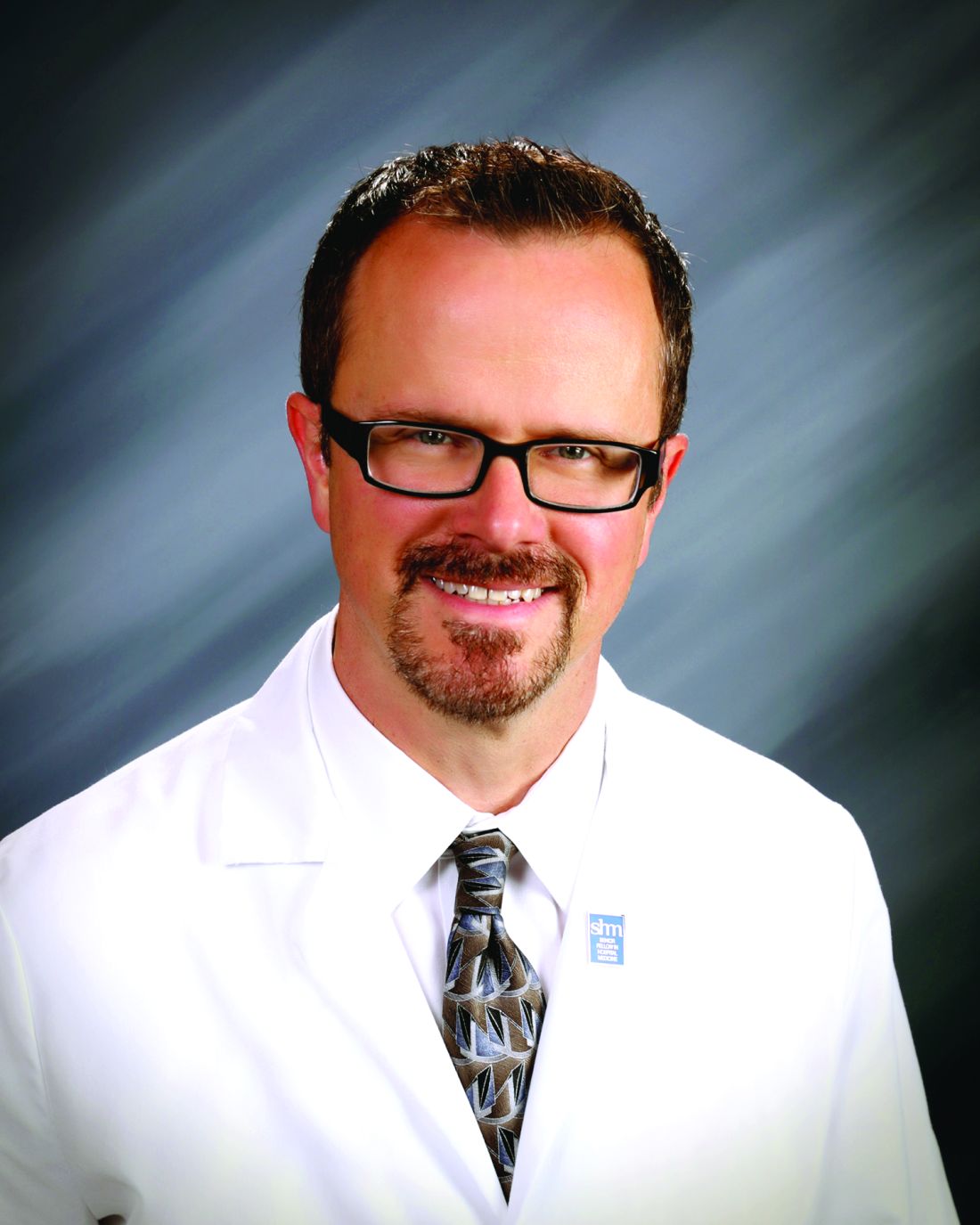
“Obviously I didn’t have a lot of preparation,” he said of that first job as director. “All of a sudden I found myself in charge of 15 hospitalists, … and I really didn’t know what I was getting myself into.”
But a passion for quality improvement – for striving to always find ways to do better – put Dr. McIlraith on that path and kept him on it through two terms as chair of the hospital medicine department of Mercy Medical Group in Sacramento, where he was hired in 2004. He completed his second term in June 2016 (the department quintupled in size during his tenure), and then chose to return to the ranks as a hospitalist focusing on patient care – and on spending time with his kids before they finished high school.
But quality improvement is in his blood, and he can see himself returning to it someday, Dr. McIlraith said.
“For me it was never about rising up in the ranks of leadership. It was really about making the world I exist in better,” he said.
In recounting some of the lessons he learned over the last 17 years, Dr. McIlraith recalled his first and all-time favorite quality initiative: Central Coordination. It was a concept he implemented around 2002 at Kaiser Permanante that fundamentally changed the way patients were admitted from the emergency department.
The previous system had separate admitting and rounding physicians, which lead to too many patient hand-offs, increased risk of mistakes, poor efficiency, and low patient satisfaction, he said.
“We actually took the job of distributing patients out of physicians’ hands altogether,” Dr. McIlraith explained.
Under Central Coordination, patient assignments were coordinated by a clerical staffer who distributed them evenly among a team of six doctors.
“The most amazing thing was that after this was implemented we went back and looked at ER responsiveness, and our ability to respond to the needs of the ER improved dramatically,” he said. “That wasn’t even an outcome I intended to impact, or look at, but the data were unequivocal. It ended up being really enduring and substantial on many fronts.”
Mercy Medical Group still uses Central Coordination systemwide, and the results of Dr. McIlraith’s initiative were eventually published.
“At the same time, due to my lack of experience in 2002, I definitely made some mistakes,” he said of the undertaking. Among them was failing to recognize just how resistant people can be to change. “I thought [the plan] was so brilliant that everyone would see that and get in line behind me,” he said. “Then I had a rude awakening that not everyone sees things the same way I do. I was completely taken aback by the resistance.”
Even though the existing system left a lot to be desired, the doctors were comfortable with it, Dr. McIlraith explained, stressing that implementing change requires the buy-in of team members.
If he could do it over again, he would follow the eight-step “Road Map for Change” as outlined by Jeffrey Glasheen, MD, SFHM, during the Society of Hospital Medicine’s Leadership Academy, Dr. McIlraith said.
Dr. Glasheen’s road map emphasizes team engagement and motivation, as well as the importance of creating a “burning platform” (the imperative for change).
“You need to be systematic about it to get people to change behaviors,” Dr. McIlraith said, noting that behavioral change is one of the greatest challenges and one of the leading causes of failure to attain the “holy grail” of quality improvement: sustained results.
In fact, the main reason for the enduring success of Central Coordination was that it took the focus off of behavioral change and put it on the process. “We took the behavior aspect out of the equation and put form over function,” Dr. McIlraith said.
One recent quality improvement initiative involved increasing the percentage of discharge orders delivered before 11 a.m. Dr. McIlraith put the lessons he learned to work by creating an “excellence team” that met regularly to identify key problems and to create “SMART (Specific, Measurable, Attainable, Relevant, and Timely) goals,” which are necessary for success.
Because the team not only bought into the plan to meet the target but also helped create the plan, it wasn’t necessary to force behavioral change, Dr. McIlraith said. Instead the team lead the initiative, set the targets and goals, and ended up surpassing the initial goal of reaching 30% of discharge orders in by 11 a.m. (in fact, they hit 40%).
Dr. McIlraith’s advice for QI success is to know the problem you are trying to solve so that you can tell if the solution you implement is having the desired impact and also to measure the impact of that solution using the SMART goals.
For those who hope to follow a quality improvement career path to leadership, he strongly recommends the Society of Hospital Medicine’s Leadership Academies, which are excellent resources for mentorship, networking, and leadership training through SHM.
Ultimately, Dr. McIlraith stressed the importance of mentoring team members for development as future QI leaders. If mentoring relationships are successful, then when the time comes for a QI veteran to “step back” to focus more on family or take a different career path, there will be others who can step in and keep the quality momentum going.
Thomas McIlraith, MD, SFHM, CLHM, never imagined he would be leading hospitalists and launching quality improvement (QI) initiatives, but only one year out of residency, he was doing just that.
In 2000, Dr. McIlraith had spent a year working as a hospitalist at South Sacramento (Calif.) Kaiser Permanente when he was tapped for the QI program director role.
“Obviously I didn’t have a lot of preparation,” he said of that first job as director. “All of a sudden I found myself in charge of 15 hospitalists, … and I really didn’t know what I was getting myself into.”
But a passion for quality improvement – for striving to always find ways to do better – put Dr. McIlraith on that path and kept him on it through two terms as chair of the hospital medicine department of Mercy Medical Group in Sacramento, where he was hired in 2004. He completed his second term in June 2016 (the department quintupled in size during his tenure), and then chose to return to the ranks as a hospitalist focusing on patient care – and on spending time with his kids before they finished high school.
But quality improvement is in his blood, and he can see himself returning to it someday, Dr. McIlraith said.
“For me it was never about rising up in the ranks of leadership. It was really about making the world I exist in better,” he said.
In recounting some of the lessons he learned over the last 17 years, Dr. McIlraith recalled his first and all-time favorite quality initiative: Central Coordination. It was a concept he implemented around 2002 at Kaiser Permanante that fundamentally changed the way patients were admitted from the emergency department.
The previous system had separate admitting and rounding physicians, which lead to too many patient hand-offs, increased risk of mistakes, poor efficiency, and low patient satisfaction, he said.
“We actually took the job of distributing patients out of physicians’ hands altogether,” Dr. McIlraith explained.
Under Central Coordination, patient assignments were coordinated by a clerical staffer who distributed them evenly among a team of six doctors.
“The most amazing thing was that after this was implemented we went back and looked at ER responsiveness, and our ability to respond to the needs of the ER improved dramatically,” he said. “That wasn’t even an outcome I intended to impact, or look at, but the data were unequivocal. It ended up being really enduring and substantial on many fronts.”
Mercy Medical Group still uses Central Coordination systemwide, and the results of Dr. McIlraith’s initiative were eventually published.
“At the same time, due to my lack of experience in 2002, I definitely made some mistakes,” he said of the undertaking. Among them was failing to recognize just how resistant people can be to change. “I thought [the plan] was so brilliant that everyone would see that and get in line behind me,” he said. “Then I had a rude awakening that not everyone sees things the same way I do. I was completely taken aback by the resistance.”
Even though the existing system left a lot to be desired, the doctors were comfortable with it, Dr. McIlraith explained, stressing that implementing change requires the buy-in of team members.
If he could do it over again, he would follow the eight-step “Road Map for Change” as outlined by Jeffrey Glasheen, MD, SFHM, during the Society of Hospital Medicine’s Leadership Academy, Dr. McIlraith said.
Dr. Glasheen’s road map emphasizes team engagement and motivation, as well as the importance of creating a “burning platform” (the imperative for change).
“You need to be systematic about it to get people to change behaviors,” Dr. McIlraith said, noting that behavioral change is one of the greatest challenges and one of the leading causes of failure to attain the “holy grail” of quality improvement: sustained results.
In fact, the main reason for the enduring success of Central Coordination was that it took the focus off of behavioral change and put it on the process. “We took the behavior aspect out of the equation and put form over function,” Dr. McIlraith said.
One recent quality improvement initiative involved increasing the percentage of discharge orders delivered before 11 a.m. Dr. McIlraith put the lessons he learned to work by creating an “excellence team” that met regularly to identify key problems and to create “SMART (Specific, Measurable, Attainable, Relevant, and Timely) goals,” which are necessary for success.
Because the team not only bought into the plan to meet the target but also helped create the plan, it wasn’t necessary to force behavioral change, Dr. McIlraith said. Instead the team lead the initiative, set the targets and goals, and ended up surpassing the initial goal of reaching 30% of discharge orders in by 11 a.m. (in fact, they hit 40%).
Dr. McIlraith’s advice for QI success is to know the problem you are trying to solve so that you can tell if the solution you implement is having the desired impact and also to measure the impact of that solution using the SMART goals.
For those who hope to follow a quality improvement career path to leadership, he strongly recommends the Society of Hospital Medicine’s Leadership Academies, which are excellent resources for mentorship, networking, and leadership training through SHM.
Ultimately, Dr. McIlraith stressed the importance of mentoring team members for development as future QI leaders. If mentoring relationships are successful, then when the time comes for a QI veteran to “step back” to focus more on family or take a different career path, there will be others who can step in and keep the quality momentum going.
Thomas McIlraith, MD, SFHM, CLHM, never imagined he would be leading hospitalists and launching quality improvement (QI) initiatives, but only one year out of residency, he was doing just that.
In 2000, Dr. McIlraith had spent a year working as a hospitalist at South Sacramento (Calif.) Kaiser Permanente when he was tapped for the QI program director role.
“Obviously I didn’t have a lot of preparation,” he said of that first job as director. “All of a sudden I found myself in charge of 15 hospitalists, … and I really didn’t know what I was getting myself into.”
But a passion for quality improvement – for striving to always find ways to do better – put Dr. McIlraith on that path and kept him on it through two terms as chair of the hospital medicine department of Mercy Medical Group in Sacramento, where he was hired in 2004. He completed his second term in June 2016 (the department quintupled in size during his tenure), and then chose to return to the ranks as a hospitalist focusing on patient care – and on spending time with his kids before they finished high school.
But quality improvement is in his blood, and he can see himself returning to it someday, Dr. McIlraith said.
“For me it was never about rising up in the ranks of leadership. It was really about making the world I exist in better,” he said.
In recounting some of the lessons he learned over the last 17 years, Dr. McIlraith recalled his first and all-time favorite quality initiative: Central Coordination. It was a concept he implemented around 2002 at Kaiser Permanante that fundamentally changed the way patients were admitted from the emergency department.
The previous system had separate admitting and rounding physicians, which lead to too many patient hand-offs, increased risk of mistakes, poor efficiency, and low patient satisfaction, he said.
“We actually took the job of distributing patients out of physicians’ hands altogether,” Dr. McIlraith explained.
Under Central Coordination, patient assignments were coordinated by a clerical staffer who distributed them evenly among a team of six doctors.
“The most amazing thing was that after this was implemented we went back and looked at ER responsiveness, and our ability to respond to the needs of the ER improved dramatically,” he said. “That wasn’t even an outcome I intended to impact, or look at, but the data were unequivocal. It ended up being really enduring and substantial on many fronts.”
Mercy Medical Group still uses Central Coordination systemwide, and the results of Dr. McIlraith’s initiative were eventually published.
“At the same time, due to my lack of experience in 2002, I definitely made some mistakes,” he said of the undertaking. Among them was failing to recognize just how resistant people can be to change. “I thought [the plan] was so brilliant that everyone would see that and get in line behind me,” he said. “Then I had a rude awakening that not everyone sees things the same way I do. I was completely taken aback by the resistance.”
Even though the existing system left a lot to be desired, the doctors were comfortable with it, Dr. McIlraith explained, stressing that implementing change requires the buy-in of team members.
If he could do it over again, he would follow the eight-step “Road Map for Change” as outlined by Jeffrey Glasheen, MD, SFHM, during the Society of Hospital Medicine’s Leadership Academy, Dr. McIlraith said.
Dr. Glasheen’s road map emphasizes team engagement and motivation, as well as the importance of creating a “burning platform” (the imperative for change).
“You need to be systematic about it to get people to change behaviors,” Dr. McIlraith said, noting that behavioral change is one of the greatest challenges and one of the leading causes of failure to attain the “holy grail” of quality improvement: sustained results.
In fact, the main reason for the enduring success of Central Coordination was that it took the focus off of behavioral change and put it on the process. “We took the behavior aspect out of the equation and put form over function,” Dr. McIlraith said.
One recent quality improvement initiative involved increasing the percentage of discharge orders delivered before 11 a.m. Dr. McIlraith put the lessons he learned to work by creating an “excellence team” that met regularly to identify key problems and to create “SMART (Specific, Measurable, Attainable, Relevant, and Timely) goals,” which are necessary for success.
Because the team not only bought into the plan to meet the target but also helped create the plan, it wasn’t necessary to force behavioral change, Dr. McIlraith said. Instead the team lead the initiative, set the targets and goals, and ended up surpassing the initial goal of reaching 30% of discharge orders in by 11 a.m. (in fact, they hit 40%).
Dr. McIlraith’s advice for QI success is to know the problem you are trying to solve so that you can tell if the solution you implement is having the desired impact and also to measure the impact of that solution using the SMART goals.
For those who hope to follow a quality improvement career path to leadership, he strongly recommends the Society of Hospital Medicine’s Leadership Academies, which are excellent resources for mentorship, networking, and leadership training through SHM.
Ultimately, Dr. McIlraith stressed the importance of mentoring team members for development as future QI leaders. If mentoring relationships are successful, then when the time comes for a QI veteran to “step back” to focus more on family or take a different career path, there will be others who can step in and keep the quality momentum going.
Migraine May Be an Important Risk Factor for Cardiovascular Diseases
Migraine is associated with increased risk of myocardial infarction, ischemic stroke, hemorrhagic stroke, venous thromboembolism, and atrial fibrillation or atrial flutter, according to a study published online ahead of print January 31 in BMJ. The results suggest that “migraine should be considered a potent and persistent risk factor for most cardiovascular diseases in both men and women,” the researchers said.
Prior studies have found that migraine is associated with ischemic stroke and ischemic heart disease, especially among women and patients with migraine with aura. Convincing epidemiologic evidence of an association between migraine and other cardiovascular events has been lacking, however, said Kasper Adelborg, MD, PhD, of the Department of Clinical Epidemiology at Aarhus University Hospital in Denmark, and colleagues.

To study cardiovascular morbidity associated with migraine, Dr. Adelborg and colleagues conducted a nationwide, population-based cohort study. The study included patients from all Danish hospitals and hospital outpatient clinics between 1995 and 2013. The researchers used Cox regression analysis to assess comorbidity-adjusted hazard ratios of cardiovascular outcomes.
Their analysis included 51,032 patients with migraine and 510,320 people from the general population matched on age, sex, and calendar year. Median age at migraine diagnosis was 35, and 71% of the participants were women.
Incidence per 1,000 People
Patients with incident migraine had greater absolute risk of most cardiovascular outcomes, compared with the general population, across most follow-up periods. After 19 years of follow-up, the cumulative incidences per 1,000 people were greater among migraineurs, compared with the general population, for myocardial infarction (25 vs 17), ischemic stroke (45 vs 25), hemorrhagic stroke (11 vs 6), peripheral artery disease (13 vs 11), venous thromboembolism (27 vs 18), atrial fibrillation or atrial flutter (47 vs 34), and heart failure (19 vs 18).
Migraine was associated with myocardial infarction (adjusted hazard ratio [HR], 1.49), ischemic stroke (adjusted HR, 2.26), and hemorrhagic stroke (adjusted HR, 1.94), as well as venous thromboembolism (adjusted HR, 1.59) and atrial fibrillation or atrial flutter (adjusted HR, 1.25). Migraine was not meaningfully associated with peripheral artery disease or heart failure. “The associations, particularly for stroke outcomes, were stronger during the short term (0–1 years) after diagnosis than the long term (up to 19 years),” the researchers said. In addition, associations were stronger in migraine with aura than in migraine without aura, and in women than in men. In a subcohort of patients with additional data, the associations persisted after additional adjustments for BMI and smoking.
The absolute risk of cardiovascular outcomes was low, which was expected, given the young age of the study population, the researchers noted. Although the investigators adjusted for a range of potential confounders, other unknown or residual confounding (eg, by physical activity) is possible.
Multifactorial mechanisms may explain the observed increased risk of cardiovascular disease in migraine, and different mechanisms may be involved in specific cardiovascular outcomes. Migraine and cardiovascular diseases may share genetic, inflammatory, vascular, endothelial, electrical or depolarizing, or coagulable factors, the researchers said. In addition, migraineurs often use NSAIDs, which are associated with increased risk of cardiovascular events. It is also possible that immobilization due to migraine attacks may increase the risk of venous thromboembolism.
Reducing Risk
“Although the magnitude of the increased cardiovascular risk associated with migraine was fairly small at the individual level, it translates into a substantial increase in risk at the population level, because migraine is a common disease,” Dr. Adelborg and colleagues said. Migraine increasingly is recognized as an important cardiovascular risk factor to consider in clinical practice, and the recently developed QRISK3 algorithm, which predicts 10-year risk of cardiovascular disease in men and women ages 25 to 84, is the first cardiovascular risk-stratification tool to incorporate migraine.
“Ultimately, it will be important to determine whether prevention strategies in patients with migraine can reduce the burden of cardiovascular disease in patients with this common disorder,” the researchers said. “Current migraine guidelines do not recommend use of aspirin and clopidogrel in the prophylaxis of migraine, but clinicians should consider whether patients at particularly high risk of cardiovascular diseases would benefit from anticoagulant treatment.”
The present study and prior research provide “plenty of evidence that migraine should be taken seriously as a strong cardiovascular risk marker,” and data indicate that migraine is associated with “a measurable risk of cardiovascular death,” said Tobias Kurth, MD, Professor of Public Health and Epidemiology and Director of the Institute of Public Health at the Charité-Universitätsmedizin Berlin
Suggested Reading
Adelborg K, Szépligeti SK, Holland-Bill L, et al. Migraine and risk of cardiovascular diseases: Danish population based matched cohort study. BMJ. 2018 Jan 31 [Epub ahead of print].
Kurth T, Rohmann JL, Shapiro RE. Migraine and risk of cardiovascular disease. BMJ. 2018 Jan 31 [Epub ahead of print].
Migraine is associated with increased risk of myocardial infarction, ischemic stroke, hemorrhagic stroke, venous thromboembolism, and atrial fibrillation or atrial flutter, according to a study published online ahead of print January 31 in BMJ. The results suggest that “migraine should be considered a potent and persistent risk factor for most cardiovascular diseases in both men and women,” the researchers said.
Prior studies have found that migraine is associated with ischemic stroke and ischemic heart disease, especially among women and patients with migraine with aura. Convincing epidemiologic evidence of an association between migraine and other cardiovascular events has been lacking, however, said Kasper Adelborg, MD, PhD, of the Department of Clinical Epidemiology at Aarhus University Hospital in Denmark, and colleagues.
To study cardiovascular morbidity associated with migraine, Dr. Adelborg and colleagues conducted a nationwide, population-based cohort study. The study included patients from all Danish hospitals and hospital outpatient clinics between 1995 and 2013. The researchers used Cox regression analysis to assess comorbidity-adjusted hazard ratios of cardiovascular outcomes.
Their analysis included 51,032 patients with migraine and 510,320 people from the general population matched on age, sex, and calendar year. Median age at migraine diagnosis was 35, and 71% of the participants were women.
Incidence per 1,000 People
Patients with incident migraine had greater absolute risk of most cardiovascular outcomes, compared with the general population, across most follow-up periods. After 19 years of follow-up, the cumulative incidences per 1,000 people were greater among migraineurs, compared with the general population, for myocardial infarction (25 vs 17), ischemic stroke (45 vs 25), hemorrhagic stroke (11 vs 6), peripheral artery disease (13 vs 11), venous thromboembolism (27 vs 18), atrial fibrillation or atrial flutter (47 vs 34), and heart failure (19 vs 18).
Migraine was associated with myocardial infarction (adjusted hazard ratio [HR], 1.49), ischemic stroke (adjusted HR, 2.26), and hemorrhagic stroke (adjusted HR, 1.94), as well as venous thromboembolism (adjusted HR, 1.59) and atrial fibrillation or atrial flutter (adjusted HR, 1.25). Migraine was not meaningfully associated with peripheral artery disease or heart failure. “The associations, particularly for stroke outcomes, were stronger during the short term (0–1 years) after diagnosis than the long term (up to 19 years),” the researchers said. In addition, associations were stronger in migraine with aura than in migraine without aura, and in women than in men. In a subcohort of patients with additional data, the associations persisted after additional adjustments for BMI and smoking.
The absolute risk of cardiovascular outcomes was low, which was expected, given the young age of the study population, the researchers noted. Although the investigators adjusted for a range of potential confounders, other unknown or residual confounding (eg, by physical activity) is possible.
Multifactorial mechanisms may explain the observed increased risk of cardiovascular disease in migraine, and different mechanisms may be involved in specific cardiovascular outcomes. Migraine and cardiovascular diseases may share genetic, inflammatory, vascular, endothelial, electrical or depolarizing, or coagulable factors, the researchers said. In addition, migraineurs often use NSAIDs, which are associated with increased risk of cardiovascular events. It is also possible that immobilization due to migraine attacks may increase the risk of venous thromboembolism.
Reducing Risk
“Although the magnitude of the increased cardiovascular risk associated with migraine was fairly small at the individual level, it translates into a substantial increase in risk at the population level, because migraine is a common disease,” Dr. Adelborg and colleagues said. Migraine increasingly is recognized as an important cardiovascular risk factor to consider in clinical practice, and the recently developed QRISK3 algorithm, which predicts 10-year risk of cardiovascular disease in men and women ages 25 to 84, is the first cardiovascular risk-stratification tool to incorporate migraine.
“Ultimately, it will be important to determine whether prevention strategies in patients with migraine can reduce the burden of cardiovascular disease in patients with this common disorder,” the researchers said. “Current migraine guidelines do not recommend use of aspirin and clopidogrel in the prophylaxis of migraine, but clinicians should consider whether patients at particularly high risk of cardiovascular diseases would benefit from anticoagulant treatment.”
The present study and prior research provide “plenty of evidence that migraine should be taken seriously as a strong cardiovascular risk marker,” and data indicate that migraine is associated with “a measurable risk of cardiovascular death,” said Tobias Kurth, MD, Professor of Public Health and Epidemiology and Director of the Institute of Public Health at the Charité-Universitätsmedizin Berlin
Suggested Reading
Adelborg K, Szépligeti SK, Holland-Bill L, et al. Migraine and risk of cardiovascular diseases: Danish population based matched cohort study. BMJ. 2018 Jan 31 [Epub ahead of print].
Kurth T, Rohmann JL, Shapiro RE. Migraine and risk of cardiovascular disease. BMJ. 2018 Jan 31 [Epub ahead of print].
Migraine is associated with increased risk of myocardial infarction, ischemic stroke, hemorrhagic stroke, venous thromboembolism, and atrial fibrillation or atrial flutter, according to a study published online ahead of print January 31 in BMJ. The results suggest that “migraine should be considered a potent and persistent risk factor for most cardiovascular diseases in both men and women,” the researchers said.
Prior studies have found that migraine is associated with ischemic stroke and ischemic heart disease, especially among women and patients with migraine with aura. Convincing epidemiologic evidence of an association between migraine and other cardiovascular events has been lacking, however, said Kasper Adelborg, MD, PhD, of the Department of Clinical Epidemiology at Aarhus University Hospital in Denmark, and colleagues.
To study cardiovascular morbidity associated with migraine, Dr. Adelborg and colleagues conducted a nationwide, population-based cohort study. The study included patients from all Danish hospitals and hospital outpatient clinics between 1995 and 2013. The researchers used Cox regression analysis to assess comorbidity-adjusted hazard ratios of cardiovascular outcomes.
Their analysis included 51,032 patients with migraine and 510,320 people from the general population matched on age, sex, and calendar year. Median age at migraine diagnosis was 35, and 71% of the participants were women.
Incidence per 1,000 People
Patients with incident migraine had greater absolute risk of most cardiovascular outcomes, compared with the general population, across most follow-up periods. After 19 years of follow-up, the cumulative incidences per 1,000 people were greater among migraineurs, compared with the general population, for myocardial infarction (25 vs 17), ischemic stroke (45 vs 25), hemorrhagic stroke (11 vs 6), peripheral artery disease (13 vs 11), venous thromboembolism (27 vs 18), atrial fibrillation or atrial flutter (47 vs 34), and heart failure (19 vs 18).
Migraine was associated with myocardial infarction (adjusted hazard ratio [HR], 1.49), ischemic stroke (adjusted HR, 2.26), and hemorrhagic stroke (adjusted HR, 1.94), as well as venous thromboembolism (adjusted HR, 1.59) and atrial fibrillation or atrial flutter (adjusted HR, 1.25). Migraine was not meaningfully associated with peripheral artery disease or heart failure. “The associations, particularly for stroke outcomes, were stronger during the short term (0–1 years) after diagnosis than the long term (up to 19 years),” the researchers said. In addition, associations were stronger in migraine with aura than in migraine without aura, and in women than in men. In a subcohort of patients with additional data, the associations persisted after additional adjustments for BMI and smoking.
The absolute risk of cardiovascular outcomes was low, which was expected, given the young age of the study population, the researchers noted. Although the investigators adjusted for a range of potential confounders, other unknown or residual confounding (eg, by physical activity) is possible.
Multifactorial mechanisms may explain the observed increased risk of cardiovascular disease in migraine, and different mechanisms may be involved in specific cardiovascular outcomes. Migraine and cardiovascular diseases may share genetic, inflammatory, vascular, endothelial, electrical or depolarizing, or coagulable factors, the researchers said. In addition, migraineurs often use NSAIDs, which are associated with increased risk of cardiovascular events. It is also possible that immobilization due to migraine attacks may increase the risk of venous thromboembolism.
Reducing Risk
“Although the magnitude of the increased cardiovascular risk associated with migraine was fairly small at the individual level, it translates into a substantial increase in risk at the population level, because migraine is a common disease,” Dr. Adelborg and colleagues said. Migraine increasingly is recognized as an important cardiovascular risk factor to consider in clinical practice, and the recently developed QRISK3 algorithm, which predicts 10-year risk of cardiovascular disease in men and women ages 25 to 84, is the first cardiovascular risk-stratification tool to incorporate migraine.
“Ultimately, it will be important to determine whether prevention strategies in patients with migraine can reduce the burden of cardiovascular disease in patients with this common disorder,” the researchers said. “Current migraine guidelines do not recommend use of aspirin and clopidogrel in the prophylaxis of migraine, but clinicians should consider whether patients at particularly high risk of cardiovascular diseases would benefit from anticoagulant treatment.”
The present study and prior research provide “plenty of evidence that migraine should be taken seriously as a strong cardiovascular risk marker,” and data indicate that migraine is associated with “a measurable risk of cardiovascular death,” said Tobias Kurth, MD, Professor of Public Health and Epidemiology and Director of the Institute of Public Health at the Charité-Universitätsmedizin Berlin
Suggested Reading
Adelborg K, Szépligeti SK, Holland-Bill L, et al. Migraine and risk of cardiovascular diseases: Danish population based matched cohort study. BMJ. 2018 Jan 31 [Epub ahead of print].
Kurth T, Rohmann JL, Shapiro RE. Migraine and risk of cardiovascular disease. BMJ. 2018 Jan 31 [Epub ahead of print].

Conference News Roundup—Association of Academic Physiatrists
Electrical Stimulation Device Improves Motor Function
A person with a spinal cord injury can improve his or her ability to grip and move household objects by using an electrical stimulation device controlled by his or her thoughts, according to researchers. The study suggests that this new technology could one day enhance quality of life among people with disabilities and allow them to live more independently.
People with tetraplegia lose upper-limb strength and dexterity, which has a severe impact on their independence and quality of life. New technology that connects a person’s brain to an implanted functional electrical stimulation orthotics device on the hands could restore manual dexterity and grip strength, thus allowing him or her to perform simple daily tasks like holding a toothbrush without help.
“Individuals with cervical spinal cord injury identify recovery of the use of their hands as the single most impactful way that neurotechnology could change their lives,” said Marcie Bockbrader, MD, PhD, Assistant Professor of Physical Medicine and Rehabilitation at the Ohio State University Wexner Medical Center in Columbus. “Giving a person back [his or her] hands reduces dependence on others. It makes it possible to do the little things—like cutting food or opening a door—that are so essential to being able to take care of oneself.”
To test how well this thought-controlled brain–computer interface system works in real life to improve hand strength and dexterity, Dr. Bockbrader and her research team surgically implanted one of these devices into the hand of a 26-year-old man with C5-level, nonspastic tetraplegia following a spinal cord injury. He practiced using the device three times per week for four hours each session for more than 1,000 days. The research team administered standardized tests of upper-limb motor ability and functional participation to see how well the system improved his grip strength, quickness, and other basic skills.
Using this device improved the man’s upper-limb motor ability dramatically, according to several standardized tests. He improved his ability to grip and manipulate basic objects, and showed that he could perform ordinary tasks with his hands at the speed and dexterity levels of healthy individuals. He could move objects of different sizes and weights. With practice, he improved his ability to manipulate smaller household objects like a toothbrush or hairbrush. He also demonstrated that he could imagine different hand positions to proportionally adjust and control different hand movements.
“Our study demonstrated that patients with tetraplegia might be able to restore some of their skilled hand function with an implanted device that allows them to control movements with their own thoughts,” said Dr. Bockbrader. “Although this technology must be refined and tested before it can go from the laboratory to the public, it may one day offer people with disabilities a way to live and work more independently, and enable them to perform daily tasks.”
Concussion Recovery Varies Among Children
Not all children follow the same path to concussion recovery, nor do they have the same predictors for returning to normal activity, investigators reported. Their study also suggests that younger children should be considered separately from high-school students.
“Concussions are common among children, yet the literature is limited with regard to understanding trajectory of recovery after concussion, particularly in children with non-sports-related injuries and for younger children,” said Kaitlyn Chin, a second-year medical student at University of New England College of Osteopathic Medicine in Biddeford, Maine. “We were particularly interested in understanding how activity levels during recovery from concussion influence time to full recovery, to be able to identify modifiable factors to help guide concussion care. Previous studies have noted differences in the amount of time it takes children to recover from a concussion, and our team recently initiated a study to see if we can identify predictors associated with the amount of time between injury and when a child is medically cleared to return to activities which place the child at risk for reinjury.”
Ms. Chin’s team at Kennedy Krieger Institute in Baltimore reviewed the medical records of 178 children who were treated for concussions at an academically affiliated, rehabilitation-based clinic. The children had been medically cleared to return to play between September 2015 and February 2017. The children included in the study ranged in age from 6 to 17. A slight majority was younger than 14. Each child’s first visit to the clinic was within 60 days of his or her concussion.
The researchers reviewed each child’s record, noting when they had been approved to return to play. Then they looked at several other factors for each child, including sex, cause of the concussion (ie, sports or non-sports-related), number of symptoms, school attendance, and exercise status at the initial visit to the clinic. Finally, they considered these factors when the children were placed into two categories—children under 14 and children over 14—to examine potential differences related to age.
Ms. Chin’s team found that the number of symptoms affected how quickly all children were cleared to return to play. Fewer symptoms were associated with a faster return to play. For older children, male sex and higher level of exercise during recovery were associated with a faster return to play. For younger children, higher levels of exercise and school participation (eg, attending class and completing homework and tests) were associated with faster return to play.
Overall, this study shows that elementary and middle-school-aged children should be considered separately from high-school-aged students when considering risk factors for prolonged recovery from a concussion. Furthermore, Ms. Chin’s team found that school participation and exercise were not harmful and did not prolong recovery.
“Our study adds to the literature supporting that return to cognitive and safe physical activities while a child is still recovering from concussion does not prolong time to recovery,” said Ms. Chin. “Every child is different, and recovery is different for each concussion. [Therefore], a concussion recovery plan should be tailored for each child, and parents should seek help from the child’s pediatrician or other medical professionals for guiding care after a concussion.”
Medicine May Not Affect Concussion Recovery
Medications commonly prescribed to reduce symptoms of concussion may not affect recovery, said investigators. Sports medicine physicians commonly treat patients with concussion, so researchers in Utah investigated how some widely prescribed treatments might affect patients’ recovery.
“We really do not have much other than rest and gentle exercise to combat symptoms of concussion,” said Venessa Lee, MD, a physical medicine and rehabilitation resident at University of Utah Health in Salt Lake City. “Medications are commonly prescribed to help with symptoms, but there is little evidence that they help more than just time and rest.”
Although FDA has not approved any medication to treat concussion, physicians may prescribe medications like gabapentin or tricyclic antidepressants (TCAs) to help reduce symptoms during recovery. To examine whether these drugs benefit patients, Dr. Lee and her research team looked at 277 patients who had been diagnosed with concussion at a local academic sports medicine practice. At each of their visits to the clinic during recovery, patients reported their postconcussion symptoms. The research team used a score sheet to measure their symptoms, and they tracked scores of patients who had more than one visit to the clinic for as long as one year.
Patients were separated into three groups for the study: those not prescribed any medication, those prescribed gabapentin, and those prescribed one of two TCAs, amitriptyline or nortriptyline. Based on self-reported information, investigators gave each patient a score for two factors of postconcussion recovery: headaches and a combination of 22 symptoms, including headaches. Each score was on a scale of 0 to 6.
After they adjusted scores for gender and age, Dr. Lee’s team found that headache and combined symptoms scores decreased significantly within days after the first clinic visit for all three groups of patients—those who had taken no medications, those who had been prescribed gabapentin, and those who had been prescribed a TCA. Patients who had been prescribed any of the medications had significantly higher scores for headaches and overall postconcussion symptoms to begin with, but no one type of medication had any better or worse effect over the duration of the study.
“Patients’ symptoms improve with time after a concussion,” said Dr. Lee. “When we looked at [patients who received] gabapentin and TCAs, their symptoms improved over time as well, but similar to those that did not receive a medication.”
Based on this study, neither gabapentin nor TCAs appear to provide any additional benefit for postconcussion recovery. With this information, patients may be able to avoid taking unnecessary medications as they recover from concussions. Patients should speak with a physician about their symptoms after a concussion, said Dr. Lee.
“Though the two medications we studied did not show a profound improvement in our analysis, this was a retrospective study … which has many drawbacks and limitations. We need to do more research to really find the best method for improving postconcussive symptoms.”
Ballet Helps Children with Musculoskeletal and Neurologic Conditions
Adaptive ballet classes provide functional improvement and social interactions for children with musculoskeletal and neurologic conditions, according to researchers. This type of arts-based adaptive therapy is a promising expansion to successful adaptive sports therapies, said the investigators.
“While great strides have been made in adaptive sports, there are still relatively few opportunities in the arts for people with disabilities,” said Sarah Stauder, MD, a physician at the Medical College of Wisconsin in Milwaukee. “Because of this [scarcity], we wanted to evaluate the effect of adaptive ballet on the physical, emotional, social, and academic function of children with physical impairments. The program is a collaboration between a children’s hospital and a metropolitan ballet company that brings together professional dancers, pediatric doctors, physical and occupational therapists, and children with physical disabilities for a series of dance classes.”
The goal of the study was to see whether a weekly, 45-mintute ballet class with 15 minutes of ballet education over five consecutive weeks would improve the children’s balance, physical functions, social skills, and overall quality of life. Eighteen children (17 girls) from ages 5 to 14, took part in the class. Assessments of each child were performed before and after the series of classes using the Pediatric Quality of Life Inventory, the PEDI-CAT survey, and the Pediatric Balance Scale. Finally, a questionnaire was used to assess each child’s success in achieving individual goals set for the class.
At the end of the five weeks, 94% of participants reached their individual goals for the ballet program. PEDI-CAT scores improved after completion of the program, and the program was most beneficial to participants who had lower functioning and quality of life at the beginning of the program. Finally, the researchers noticed an average improvement in balance among the participants.
“Adaptive programs like the one studied here give children the opportunity to participate in activities they otherwise would have no way to do,” said Dr. Stauder. “More specifically, these dance classes instilled a sense of pride and confidence in the children while improving their physical functioning and quality of life. Our study should open the door to more arts-based therapy for children. It is an effective and enjoyable way for patients to get the therapy they need. When kids are active in an activity that interests them, they naturally make greater strides, and we were able to see this in their day-to-day function.”
Genetic Risk Score Predicts TBI Outcomes
A genetic risk score could help predict a patient’s quality of life after a traumatic brain injury (TBI), said researchers. One day, physicians could have a simple method to forecast a patient’s recovery and personalize therapy to maximize quality of life.
“Gene pathways can influence all of our biologic functions and risk for many health outcomes,” said Mark Linsenmeyer, MD, a resident physician at the University of Pittsburgh Medical Center. “Each person has a unique inherited genetic code. By studying one gene pathway in a large group of people with the same disease or health problem, we hope to unlock clues to why some people have different outcomes than others. This knowledge may be used to help physicians make the best treatment choice for each person.”
Dr. Linsenmeyer and colleagues set out to investigate how genes that affect the brain’s dopamine pathways could predict recovery in people with moderate-to-severe TBI. The team recruited 94 adults with TBI from a level-1 trauma center. They focused on the following five genes in the dopamine pathways: COMT rs4680, VMAT2 rs363226, DRD2 rs6279, ANKK1 Taq1a, and MAOA VNTR. They defined which risk genotypes were associated with lower average scores on surveys filled out by patients with TBI to describe their overall quality of life at six and 12 months after their injuries.
The researchers analyzed how individual variants of each of these five genes could affect patients’ quality of life, and then generated a weighted gene risk score as a measure to reflect cumulative risk represented by all genotypes included in the score. Based on available literature about dopamine pathway genetics, they predicted that their gene risk score calculation tool should be specific to a patient’s sex.
Before they calculated gene risk scores, the research team noticed that only COMT could significantly predict quality of life for a subset of patients six months after their injuries. After generating sex-specific gene risk scores, they found that variants of all five genes on the dopamine pathway could meaningfully contribute to a gene risk score that was highly predictive of quality of life after six months for patients of both sexes with TBI, and also predictive of quality of life after one year for women.
Electrical Stimulation Device Improves Motor Function
A person with a spinal cord injury can improve his or her ability to grip and move household objects by using an electrical stimulation device controlled by his or her thoughts, according to researchers. The study suggests that this new technology could one day enhance quality of life among people with disabilities and allow them to live more independently.
People with tetraplegia lose upper-limb strength and dexterity, which has a severe impact on their independence and quality of life. New technology that connects a person’s brain to an implanted functional electrical stimulation orthotics device on the hands could restore manual dexterity and grip strength, thus allowing him or her to perform simple daily tasks like holding a toothbrush without help.
“Individuals with cervical spinal cord injury identify recovery of the use of their hands as the single most impactful way that neurotechnology could change their lives,” said Marcie Bockbrader, MD, PhD, Assistant Professor of Physical Medicine and Rehabilitation at the Ohio State University Wexner Medical Center in Columbus. “Giving a person back [his or her] hands reduces dependence on others. It makes it possible to do the little things—like cutting food or opening a door—that are so essential to being able to take care of oneself.”
To test how well this thought-controlled brain–computer interface system works in real life to improve hand strength and dexterity, Dr. Bockbrader and her research team surgically implanted one of these devices into the hand of a 26-year-old man with C5-level, nonspastic tetraplegia following a spinal cord injury. He practiced using the device three times per week for four hours each session for more than 1,000 days. The research team administered standardized tests of upper-limb motor ability and functional participation to see how well the system improved his grip strength, quickness, and other basic skills.
Using this device improved the man’s upper-limb motor ability dramatically, according to several standardized tests. He improved his ability to grip and manipulate basic objects, and showed that he could perform ordinary tasks with his hands at the speed and dexterity levels of healthy individuals. He could move objects of different sizes and weights. With practice, he improved his ability to manipulate smaller household objects like a toothbrush or hairbrush. He also demonstrated that he could imagine different hand positions to proportionally adjust and control different hand movements.
“Our study demonstrated that patients with tetraplegia might be able to restore some of their skilled hand function with an implanted device that allows them to control movements with their own thoughts,” said Dr. Bockbrader. “Although this technology must be refined and tested before it can go from the laboratory to the public, it may one day offer people with disabilities a way to live and work more independently, and enable them to perform daily tasks.”
Concussion Recovery Varies Among Children
Not all children follow the same path to concussion recovery, nor do they have the same predictors for returning to normal activity, investigators reported. Their study also suggests that younger children should be considered separately from high-school students.
“Concussions are common among children, yet the literature is limited with regard to understanding trajectory of recovery after concussion, particularly in children with non-sports-related injuries and for younger children,” said Kaitlyn Chin, a second-year medical student at University of New England College of Osteopathic Medicine in Biddeford, Maine. “We were particularly interested in understanding how activity levels during recovery from concussion influence time to full recovery, to be able to identify modifiable factors to help guide concussion care. Previous studies have noted differences in the amount of time it takes children to recover from a concussion, and our team recently initiated a study to see if we can identify predictors associated with the amount of time between injury and when a child is medically cleared to return to activities which place the child at risk for reinjury.”
Ms. Chin’s team at Kennedy Krieger Institute in Baltimore reviewed the medical records of 178 children who were treated for concussions at an academically affiliated, rehabilitation-based clinic. The children had been medically cleared to return to play between September 2015 and February 2017. The children included in the study ranged in age from 6 to 17. A slight majority was younger than 14. Each child’s first visit to the clinic was within 60 days of his or her concussion.
The researchers reviewed each child’s record, noting when they had been approved to return to play. Then they looked at several other factors for each child, including sex, cause of the concussion (ie, sports or non-sports-related), number of symptoms, school attendance, and exercise status at the initial visit to the clinic. Finally, they considered these factors when the children were placed into two categories—children under 14 and children over 14—to examine potential differences related to age.
Ms. Chin’s team found that the number of symptoms affected how quickly all children were cleared to return to play. Fewer symptoms were associated with a faster return to play. For older children, male sex and higher level of exercise during recovery were associated with a faster return to play. For younger children, higher levels of exercise and school participation (eg, attending class and completing homework and tests) were associated with faster return to play.
Overall, this study shows that elementary and middle-school-aged children should be considered separately from high-school-aged students when considering risk factors for prolonged recovery from a concussion. Furthermore, Ms. Chin’s team found that school participation and exercise were not harmful and did not prolong recovery.
“Our study adds to the literature supporting that return to cognitive and safe physical activities while a child is still recovering from concussion does not prolong time to recovery,” said Ms. Chin. “Every child is different, and recovery is different for each concussion. [Therefore], a concussion recovery plan should be tailored for each child, and parents should seek help from the child’s pediatrician or other medical professionals for guiding care after a concussion.”
Medicine May Not Affect Concussion Recovery
Medications commonly prescribed to reduce symptoms of concussion may not affect recovery, said investigators. Sports medicine physicians commonly treat patients with concussion, so researchers in Utah investigated how some widely prescribed treatments might affect patients’ recovery.
“We really do not have much other than rest and gentle exercise to combat symptoms of concussion,” said Venessa Lee, MD, a physical medicine and rehabilitation resident at University of Utah Health in Salt Lake City. “Medications are commonly prescribed to help with symptoms, but there is little evidence that they help more than just time and rest.”
Although FDA has not approved any medication to treat concussion, physicians may prescribe medications like gabapentin or tricyclic antidepressants (TCAs) to help reduce symptoms during recovery. To examine whether these drugs benefit patients, Dr. Lee and her research team looked at 277 patients who had been diagnosed with concussion at a local academic sports medicine practice. At each of their visits to the clinic during recovery, patients reported their postconcussion symptoms. The research team used a score sheet to measure their symptoms, and they tracked scores of patients who had more than one visit to the clinic for as long as one year.
Patients were separated into three groups for the study: those not prescribed any medication, those prescribed gabapentin, and those prescribed one of two TCAs, amitriptyline or nortriptyline. Based on self-reported information, investigators gave each patient a score for two factors of postconcussion recovery: headaches and a combination of 22 symptoms, including headaches. Each score was on a scale of 0 to 6.
After they adjusted scores for gender and age, Dr. Lee’s team found that headache and combined symptoms scores decreased significantly within days after the first clinic visit for all three groups of patients—those who had taken no medications, those who had been prescribed gabapentin, and those who had been prescribed a TCA. Patients who had been prescribed any of the medications had significantly higher scores for headaches and overall postconcussion symptoms to begin with, but no one type of medication had any better or worse effect over the duration of the study.
“Patients’ symptoms improve with time after a concussion,” said Dr. Lee. “When we looked at [patients who received] gabapentin and TCAs, their symptoms improved over time as well, but similar to those that did not receive a medication.”
Based on this study, neither gabapentin nor TCAs appear to provide any additional benefit for postconcussion recovery. With this information, patients may be able to avoid taking unnecessary medications as they recover from concussions. Patients should speak with a physician about their symptoms after a concussion, said Dr. Lee.
“Though the two medications we studied did not show a profound improvement in our analysis, this was a retrospective study … which has many drawbacks and limitations. We need to do more research to really find the best method for improving postconcussive symptoms.”
Ballet Helps Children with Musculoskeletal and Neurologic Conditions
Adaptive ballet classes provide functional improvement and social interactions for children with musculoskeletal and neurologic conditions, according to researchers. This type of arts-based adaptive therapy is a promising expansion to successful adaptive sports therapies, said the investigators.
“While great strides have been made in adaptive sports, there are still relatively few opportunities in the arts for people with disabilities,” said Sarah Stauder, MD, a physician at the Medical College of Wisconsin in Milwaukee. “Because of this [scarcity], we wanted to evaluate the effect of adaptive ballet on the physical, emotional, social, and academic function of children with physical impairments. The program is a collaboration between a children’s hospital and a metropolitan ballet company that brings together professional dancers, pediatric doctors, physical and occupational therapists, and children with physical disabilities for a series of dance classes.”
The goal of the study was to see whether a weekly, 45-mintute ballet class with 15 minutes of ballet education over five consecutive weeks would improve the children’s balance, physical functions, social skills, and overall quality of life. Eighteen children (17 girls) from ages 5 to 14, took part in the class. Assessments of each child were performed before and after the series of classes using the Pediatric Quality of Life Inventory, the PEDI-CAT survey, and the Pediatric Balance Scale. Finally, a questionnaire was used to assess each child’s success in achieving individual goals set for the class.
At the end of the five weeks, 94% of participants reached their individual goals for the ballet program. PEDI-CAT scores improved after completion of the program, and the program was most beneficial to participants who had lower functioning and quality of life at the beginning of the program. Finally, the researchers noticed an average improvement in balance among the participants.
“Adaptive programs like the one studied here give children the opportunity to participate in activities they otherwise would have no way to do,” said Dr. Stauder. “More specifically, these dance classes instilled a sense of pride and confidence in the children while improving their physical functioning and quality of life. Our study should open the door to more arts-based therapy for children. It is an effective and enjoyable way for patients to get the therapy they need. When kids are active in an activity that interests them, they naturally make greater strides, and we were able to see this in their day-to-day function.”
Genetic Risk Score Predicts TBI Outcomes
A genetic risk score could help predict a patient’s quality of life after a traumatic brain injury (TBI), said researchers. One day, physicians could have a simple method to forecast a patient’s recovery and personalize therapy to maximize quality of life.
“Gene pathways can influence all of our biologic functions and risk for many health outcomes,” said Mark Linsenmeyer, MD, a resident physician at the University of Pittsburgh Medical Center. “Each person has a unique inherited genetic code. By studying one gene pathway in a large group of people with the same disease or health problem, we hope to unlock clues to why some people have different outcomes than others. This knowledge may be used to help physicians make the best treatment choice for each person.”
Dr. Linsenmeyer and colleagues set out to investigate how genes that affect the brain’s dopamine pathways could predict recovery in people with moderate-to-severe TBI. The team recruited 94 adults with TBI from a level-1 trauma center. They focused on the following five genes in the dopamine pathways: COMT rs4680, VMAT2 rs363226, DRD2 rs6279, ANKK1 Taq1a, and MAOA VNTR. They defined which risk genotypes were associated with lower average scores on surveys filled out by patients with TBI to describe their overall quality of life at six and 12 months after their injuries.
The researchers analyzed how individual variants of each of these five genes could affect patients’ quality of life, and then generated a weighted gene risk score as a measure to reflect cumulative risk represented by all genotypes included in the score. Based on available literature about dopamine pathway genetics, they predicted that their gene risk score calculation tool should be specific to a patient’s sex.
Before they calculated gene risk scores, the research team noticed that only COMT could significantly predict quality of life for a subset of patients six months after their injuries. After generating sex-specific gene risk scores, they found that variants of all five genes on the dopamine pathway could meaningfully contribute to a gene risk score that was highly predictive of quality of life after six months for patients of both sexes with TBI, and also predictive of quality of life after one year for women.
Electrical Stimulation Device Improves Motor Function
A person with a spinal cord injury can improve his or her ability to grip and move household objects by using an electrical stimulation device controlled by his or her thoughts, according to researchers. The study suggests that this new technology could one day enhance quality of life among people with disabilities and allow them to live more independently.
People with tetraplegia lose upper-limb strength and dexterity, which has a severe impact on their independence and quality of life. New technology that connects a person’s brain to an implanted functional electrical stimulation orthotics device on the hands could restore manual dexterity and grip strength, thus allowing him or her to perform simple daily tasks like holding a toothbrush without help.
“Individuals with cervical spinal cord injury identify recovery of the use of their hands as the single most impactful way that neurotechnology could change their lives,” said Marcie Bockbrader, MD, PhD, Assistant Professor of Physical Medicine and Rehabilitation at the Ohio State University Wexner Medical Center in Columbus. “Giving a person back [his or her] hands reduces dependence on others. It makes it possible to do the little things—like cutting food or opening a door—that are so essential to being able to take care of oneself.”
To test how well this thought-controlled brain–computer interface system works in real life to improve hand strength and dexterity, Dr. Bockbrader and her research team surgically implanted one of these devices into the hand of a 26-year-old man with C5-level, nonspastic tetraplegia following a spinal cord injury. He practiced using the device three times per week for four hours each session for more than 1,000 days. The research team administered standardized tests of upper-limb motor ability and functional participation to see how well the system improved his grip strength, quickness, and other basic skills.
Using this device improved the man’s upper-limb motor ability dramatically, according to several standardized tests. He improved his ability to grip and manipulate basic objects, and showed that he could perform ordinary tasks with his hands at the speed and dexterity levels of healthy individuals. He could move objects of different sizes and weights. With practice, he improved his ability to manipulate smaller household objects like a toothbrush or hairbrush. He also demonstrated that he could imagine different hand positions to proportionally adjust and control different hand movements.
“Our study demonstrated that patients with tetraplegia might be able to restore some of their skilled hand function with an implanted device that allows them to control movements with their own thoughts,” said Dr. Bockbrader. “Although this technology must be refined and tested before it can go from the laboratory to the public, it may one day offer people with disabilities a way to live and work more independently, and enable them to perform daily tasks.”
Concussion Recovery Varies Among Children
Not all children follow the same path to concussion recovery, nor do they have the same predictors for returning to normal activity, investigators reported. Their study also suggests that younger children should be considered separately from high-school students.
“Concussions are common among children, yet the literature is limited with regard to understanding trajectory of recovery after concussion, particularly in children with non-sports-related injuries and for younger children,” said Kaitlyn Chin, a second-year medical student at University of New England College of Osteopathic Medicine in Biddeford, Maine. “We were particularly interested in understanding how activity levels during recovery from concussion influence time to full recovery, to be able to identify modifiable factors to help guide concussion care. Previous studies have noted differences in the amount of time it takes children to recover from a concussion, and our team recently initiated a study to see if we can identify predictors associated with the amount of time between injury and when a child is medically cleared to return to activities which place the child at risk for reinjury.”
Ms. Chin’s team at Kennedy Krieger Institute in Baltimore reviewed the medical records of 178 children who were treated for concussions at an academically affiliated, rehabilitation-based clinic. The children had been medically cleared to return to play between September 2015 and February 2017. The children included in the study ranged in age from 6 to 17. A slight majority was younger than 14. Each child’s first visit to the clinic was within 60 days of his or her concussion.
The researchers reviewed each child’s record, noting when they had been approved to return to play. Then they looked at several other factors for each child, including sex, cause of the concussion (ie, sports or non-sports-related), number of symptoms, school attendance, and exercise status at the initial visit to the clinic. Finally, they considered these factors when the children were placed into two categories—children under 14 and children over 14—to examine potential differences related to age.
Ms. Chin’s team found that the number of symptoms affected how quickly all children were cleared to return to play. Fewer symptoms were associated with a faster return to play. For older children, male sex and higher level of exercise during recovery were associated with a faster return to play. For younger children, higher levels of exercise and school participation (eg, attending class and completing homework and tests) were associated with faster return to play.
Overall, this study shows that elementary and middle-school-aged children should be considered separately from high-school-aged students when considering risk factors for prolonged recovery from a concussion. Furthermore, Ms. Chin’s team found that school participation and exercise were not harmful and did not prolong recovery.
“Our study adds to the literature supporting that return to cognitive and safe physical activities while a child is still recovering from concussion does not prolong time to recovery,” said Ms. Chin. “Every child is different, and recovery is different for each concussion. [Therefore], a concussion recovery plan should be tailored for each child, and parents should seek help from the child’s pediatrician or other medical professionals for guiding care after a concussion.”
Medicine May Not Affect Concussion Recovery
Medications commonly prescribed to reduce symptoms of concussion may not affect recovery, said investigators. Sports medicine physicians commonly treat patients with concussion, so researchers in Utah investigated how some widely prescribed treatments might affect patients’ recovery.
“We really do not have much other than rest and gentle exercise to combat symptoms of concussion,” said Venessa Lee, MD, a physical medicine and rehabilitation resident at University of Utah Health in Salt Lake City. “Medications are commonly prescribed to help with symptoms, but there is little evidence that they help more than just time and rest.”
Although FDA has not approved any medication to treat concussion, physicians may prescribe medications like gabapentin or tricyclic antidepressants (TCAs) to help reduce symptoms during recovery. To examine whether these drugs benefit patients, Dr. Lee and her research team looked at 277 patients who had been diagnosed with concussion at a local academic sports medicine practice. At each of their visits to the clinic during recovery, patients reported their postconcussion symptoms. The research team used a score sheet to measure their symptoms, and they tracked scores of patients who had more than one visit to the clinic for as long as one year.
Patients were separated into three groups for the study: those not prescribed any medication, those prescribed gabapentin, and those prescribed one of two TCAs, amitriptyline or nortriptyline. Based on self-reported information, investigators gave each patient a score for two factors of postconcussion recovery: headaches and a combination of 22 symptoms, including headaches. Each score was on a scale of 0 to 6.
After they adjusted scores for gender and age, Dr. Lee’s team found that headache and combined symptoms scores decreased significantly within days after the first clinic visit for all three groups of patients—those who had taken no medications, those who had been prescribed gabapentin, and those who had been prescribed a TCA. Patients who had been prescribed any of the medications had significantly higher scores for headaches and overall postconcussion symptoms to begin with, but no one type of medication had any better or worse effect over the duration of the study.
“Patients’ symptoms improve with time after a concussion,” said Dr. Lee. “When we looked at [patients who received] gabapentin and TCAs, their symptoms improved over time as well, but similar to those that did not receive a medication.”
Based on this study, neither gabapentin nor TCAs appear to provide any additional benefit for postconcussion recovery. With this information, patients may be able to avoid taking unnecessary medications as they recover from concussions. Patients should speak with a physician about their symptoms after a concussion, said Dr. Lee.
“Though the two medications we studied did not show a profound improvement in our analysis, this was a retrospective study … which has many drawbacks and limitations. We need to do more research to really find the best method for improving postconcussive symptoms.”
Ballet Helps Children with Musculoskeletal and Neurologic Conditions
Adaptive ballet classes provide functional improvement and social interactions for children with musculoskeletal and neurologic conditions, according to researchers. This type of arts-based adaptive therapy is a promising expansion to successful adaptive sports therapies, said the investigators.
“While great strides have been made in adaptive sports, there are still relatively few opportunities in the arts for people with disabilities,” said Sarah Stauder, MD, a physician at the Medical College of Wisconsin in Milwaukee. “Because of this [scarcity], we wanted to evaluate the effect of adaptive ballet on the physical, emotional, social, and academic function of children with physical impairments. The program is a collaboration between a children’s hospital and a metropolitan ballet company that brings together professional dancers, pediatric doctors, physical and occupational therapists, and children with physical disabilities for a series of dance classes.”
The goal of the study was to see whether a weekly, 45-mintute ballet class with 15 minutes of ballet education over five consecutive weeks would improve the children’s balance, physical functions, social skills, and overall quality of life. Eighteen children (17 girls) from ages 5 to 14, took part in the class. Assessments of each child were performed before and after the series of classes using the Pediatric Quality of Life Inventory, the PEDI-CAT survey, and the Pediatric Balance Scale. Finally, a questionnaire was used to assess each child’s success in achieving individual goals set for the class.
At the end of the five weeks, 94% of participants reached their individual goals for the ballet program. PEDI-CAT scores improved after completion of the program, and the program was most beneficial to participants who had lower functioning and quality of life at the beginning of the program. Finally, the researchers noticed an average improvement in balance among the participants.
“Adaptive programs like the one studied here give children the opportunity to participate in activities they otherwise would have no way to do,” said Dr. Stauder. “More specifically, these dance classes instilled a sense of pride and confidence in the children while improving their physical functioning and quality of life. Our study should open the door to more arts-based therapy for children. It is an effective and enjoyable way for patients to get the therapy they need. When kids are active in an activity that interests them, they naturally make greater strides, and we were able to see this in their day-to-day function.”
Genetic Risk Score Predicts TBI Outcomes
A genetic risk score could help predict a patient’s quality of life after a traumatic brain injury (TBI), said researchers. One day, physicians could have a simple method to forecast a patient’s recovery and personalize therapy to maximize quality of life.
“Gene pathways can influence all of our biologic functions and risk for many health outcomes,” said Mark Linsenmeyer, MD, a resident physician at the University of Pittsburgh Medical Center. “Each person has a unique inherited genetic code. By studying one gene pathway in a large group of people with the same disease or health problem, we hope to unlock clues to why some people have different outcomes than others. This knowledge may be used to help physicians make the best treatment choice for each person.”
Dr. Linsenmeyer and colleagues set out to investigate how genes that affect the brain’s dopamine pathways could predict recovery in people with moderate-to-severe TBI. The team recruited 94 adults with TBI from a level-1 trauma center. They focused on the following five genes in the dopamine pathways: COMT rs4680, VMAT2 rs363226, DRD2 rs6279, ANKK1 Taq1a, and MAOA VNTR. They defined which risk genotypes were associated with lower average scores on surveys filled out by patients with TBI to describe their overall quality of life at six and 12 months after their injuries.
The researchers analyzed how individual variants of each of these five genes could affect patients’ quality of life, and then generated a weighted gene risk score as a measure to reflect cumulative risk represented by all genotypes included in the score. Based on available literature about dopamine pathway genetics, they predicted that their gene risk score calculation tool should be specific to a patient’s sex.
Before they calculated gene risk scores, the research team noticed that only COMT could significantly predict quality of life for a subset of patients six months after their injuries. After generating sex-specific gene risk scores, they found that variants of all five genes on the dopamine pathway could meaningfully contribute to a gene risk score that was highly predictive of quality of life after six months for patients of both sexes with TBI, and also predictive of quality of life after one year for women.