User login
Trials of atezolizumab placed on partial hold
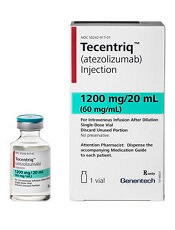
Roche has announced a partial clinical hold on 2 trials of the anti-PD-L1 antibody atezolizumab (Tecentriq).
One is a phase 1b/2 study (NCT02631577) in which researchers are evaluating atezolizumab in combination with obinutuzumab plus lenalidomide in patients with relapsed or refractory follicular lymphoma.
The other is a phase 1b study (NCT02431208) of atezolizumab alone or in combination with an immunomodulatory drug and/or daratumumab in patients with multiple myeloma (MM).
The partial clinical hold on these trials means patients who are currently enrolled and are deriving clinical benefit may continue to receive treatment, but no additional patients will be enrolled.
The decision to place these trials on hold is related to risks identified in 2 trials of the anti-PD-1 agent pembrolizumab. Results from these trials showed that combining pembrolizumab with dexamethasone and an immunomodulatory agent (lenalidomide or pomalidomide) increases the risk of death in patients with MM.
The results led to clinical holds on these trials (and a third trial of pembrolizumab) as well as an investigation by the US Food and Drug Administration (FDA).
The FDA has stressed its belief that the benefits of taking pembrolizumab and other PD-1/PD-L1 inhibitors for their approved uses continue to outweigh the risks.
However, the agency also thinks there may be an unfavorable risk-benefit ratio for patients receiving PD-1/PD-L1 treatment alone or in other combinations in unapproved indications.
Therefore, the FDA is investigating trials of PD-1/PD-L1 inhibitors being studied in combination with immunomodulatory agents or other classes of drugs in patients with hematologic malignancies.
In the course of this investigation, the FDA has placed holds on trials of nivolumab and durvalumab as well as atezolizumab.
According to Roche, there is no evidence of an increased risk of death or serious events with the use of atezolizumab in combination with immunomodulatory agents. 
Roche has announced a partial clinical hold on 2 trials of the anti-PD-L1 antibody atezolizumab (Tecentriq).
One is a phase 1b/2 study (NCT02631577) in which researchers are evaluating atezolizumab in combination with obinutuzumab plus lenalidomide in patients with relapsed or refractory follicular lymphoma.
The other is a phase 1b study (NCT02431208) of atezolizumab alone or in combination with an immunomodulatory drug and/or daratumumab in patients with multiple myeloma (MM).
The partial clinical hold on these trials means patients who are currently enrolled and are deriving clinical benefit may continue to receive treatment, but no additional patients will be enrolled.
The decision to place these trials on hold is related to risks identified in 2 trials of the anti-PD-1 agent pembrolizumab. Results from these trials showed that combining pembrolizumab with dexamethasone and an immunomodulatory agent (lenalidomide or pomalidomide) increases the risk of death in patients with MM.
The results led to clinical holds on these trials (and a third trial of pembrolizumab) as well as an investigation by the US Food and Drug Administration (FDA).
The FDA has stressed its belief that the benefits of taking pembrolizumab and other PD-1/PD-L1 inhibitors for their approved uses continue to outweigh the risks.
However, the agency also thinks there may be an unfavorable risk-benefit ratio for patients receiving PD-1/PD-L1 treatment alone or in other combinations in unapproved indications.
Therefore, the FDA is investigating trials of PD-1/PD-L1 inhibitors being studied in combination with immunomodulatory agents or other classes of drugs in patients with hematologic malignancies.
In the course of this investigation, the FDA has placed holds on trials of nivolumab and durvalumab as well as atezolizumab.
According to Roche, there is no evidence of an increased risk of death or serious events with the use of atezolizumab in combination with immunomodulatory agents.
Roche has announced a partial clinical hold on 2 trials of the anti-PD-L1 antibody atezolizumab (Tecentriq).
One is a phase 1b/2 study (NCT02631577) in which researchers are evaluating atezolizumab in combination with obinutuzumab plus lenalidomide in patients with relapsed or refractory follicular lymphoma.
The other is a phase 1b study (NCT02431208) of atezolizumab alone or in combination with an immunomodulatory drug and/or daratumumab in patients with multiple myeloma (MM).
The partial clinical hold on these trials means patients who are currently enrolled and are deriving clinical benefit may continue to receive treatment, but no additional patients will be enrolled.
The decision to place these trials on hold is related to risks identified in 2 trials of the anti-PD-1 agent pembrolizumab. Results from these trials showed that combining pembrolizumab with dexamethasone and an immunomodulatory agent (lenalidomide or pomalidomide) increases the risk of death in patients with MM.
The results led to clinical holds on these trials (and a third trial of pembrolizumab) as well as an investigation by the US Food and Drug Administration (FDA).
The FDA has stressed its belief that the benefits of taking pembrolizumab and other PD-1/PD-L1 inhibitors for their approved uses continue to outweigh the risks.
However, the agency also thinks there may be an unfavorable risk-benefit ratio for patients receiving PD-1/PD-L1 treatment alone or in other combinations in unapproved indications.
Therefore, the FDA is investigating trials of PD-1/PD-L1 inhibitors being studied in combination with immunomodulatory agents or other classes of drugs in patients with hematologic malignancies.
In the course of this investigation, the FDA has placed holds on trials of nivolumab and durvalumab as well as atezolizumab.
According to Roche, there is no evidence of an increased risk of death or serious events with the use of atezolizumab in combination with immunomodulatory agents.
EMA issues final opinion on FVIII products

The European Medicines Agency (EMA) has concluded there is “no clear and consistent evidence” of a difference in inhibitor development between the 2 classes of factor VIII (FVIII) products.
A review of data from several studies has suggested that hemophilia A patients are no more likely to develop inhibitors if they receive a recombinant FVIII product rather than a plasma-derived FVIII product.
The review began after publication of the SIPPET study1, which suggested that patients who received plasma-derived FVIII had a lower incidence of inhibitors than patients treated with recombinant FVIII.
To test this conclusion, the EMA’s Pharmacovigilance Risk Assessment Committee (PRAC) reviewed data on all FVIII products authorized for use in the European Union. This includes products containing the active substances human coagulation FVIII, efmoroctocog alfa, moroctocog alfa, octocog alfa, simoctocog alfa, susoctocog alfa, and turoctocog alfa.
The PRAC examined data from the SIPPET study and additional clinical trials and observational studies.2-5
The data did not show any statistically significant or clinically meaningful difference in inhibitor risk between FVIII classes.
The PRAC said results of the SIPPET study cannot be extrapolated to individual products, as the study only included a small number of FVIII products.
The PRAC’s conclusion was sent to the EMA’s Committee for Medicinal Products for Human Use (CHMP) for adoption of the EMA’s final opinion. And the CHMP has adopted the opinion that there is “no clear and consistent evidence” of a difference in inhibitor development.
The CHMP’s opinion will be forwarded to the European Commission, which will issue a final, legally binding decision applicable in all European Union member states. The European Commission typically adheres to the CHMP’s recommendations.
The EMA said prescribing information for FVIII products will be updated as appropriate to add inhibitor development as a very common side effect in previously untreated patients and as uncommon in previously treated patients.
The warning on inhibitor development will be amended to state that low titers of inhibitors pose less risk of insufficient response than high titers.
1. Peyvandi F, Mannucci PM, Garagiola I et al. A Randomized Trial of Factor VIII and Neutralizing Antibodies in Hemophilia A. N Engl J Med (2016), 374:2054-64.
2. Gouw SC et al. Treatment-related risk factors of inhibitor development in previously untreated patients with hemophilia A: the CANAL cohort study. Blood (2007), 109:4648-54.
3. Gouw SC et al. PedNet and RODIN Study Group. Factor VIII products and inhibitor development in severe hemophilia A. N Engl J Med (2013), 368:231-9.
4. Iorio A et al. Natural history and clinical characteristics of inhibitors in previously treated haemophilia A patients: a case series. Haemophilia (2017), 23:255-63.
5. Fischer K et al. Inhibitor development in haemophilia according to concentrate. Four-year results from the European HAemophilia Safety Surveillance (EUHASS) project. Thromb Haemost (2015) 113:968-75.
The European Medicines Agency (EMA) has concluded there is “no clear and consistent evidence” of a difference in inhibitor development between the 2 classes of factor VIII (FVIII) products.
A review of data from several studies has suggested that hemophilia A patients are no more likely to develop inhibitors if they receive a recombinant FVIII product rather than a plasma-derived FVIII product.
The review began after publication of the SIPPET study1, which suggested that patients who received plasma-derived FVIII had a lower incidence of inhibitors than patients treated with recombinant FVIII.
To test this conclusion, the EMA’s Pharmacovigilance Risk Assessment Committee (PRAC) reviewed data on all FVIII products authorized for use in the European Union. This includes products containing the active substances human coagulation FVIII, efmoroctocog alfa, moroctocog alfa, octocog alfa, simoctocog alfa, susoctocog alfa, and turoctocog alfa.
The PRAC examined data from the SIPPET study and additional clinical trials and observational studies.2-5
The data did not show any statistically significant or clinically meaningful difference in inhibitor risk between FVIII classes.
The PRAC said results of the SIPPET study cannot be extrapolated to individual products, as the study only included a small number of FVIII products.
The PRAC’s conclusion was sent to the EMA’s Committee for Medicinal Products for Human Use (CHMP) for adoption of the EMA’s final opinion. And the CHMP has adopted the opinion that there is “no clear and consistent evidence” of a difference in inhibitor development.
The CHMP’s opinion will be forwarded to the European Commission, which will issue a final, legally binding decision applicable in all European Union member states. The European Commission typically adheres to the CHMP’s recommendations.
The EMA said prescribing information for FVIII products will be updated as appropriate to add inhibitor development as a very common side effect in previously untreated patients and as uncommon in previously treated patients.
The warning on inhibitor development will be amended to state that low titers of inhibitors pose less risk of insufficient response than high titers.
1. Peyvandi F, Mannucci PM, Garagiola I et al. A Randomized Trial of Factor VIII and Neutralizing Antibodies in Hemophilia A. N Engl J Med (2016), 374:2054-64.
2. Gouw SC et al. Treatment-related risk factors of inhibitor development in previously untreated patients with hemophilia A: the CANAL cohort study. Blood (2007), 109:4648-54.
3. Gouw SC et al. PedNet and RODIN Study Group. Factor VIII products and inhibitor development in severe hemophilia A. N Engl J Med (2013), 368:231-9.
4. Iorio A et al. Natural history and clinical characteristics of inhibitors in previously treated haemophilia A patients: a case series. Haemophilia (2017), 23:255-63.
5. Fischer K et al. Inhibitor development in haemophilia according to concentrate. Four-year results from the European HAemophilia Safety Surveillance (EUHASS) project. Thromb Haemost (2015) 113:968-75.
The European Medicines Agency (EMA) has concluded there is “no clear and consistent evidence” of a difference in inhibitor development between the 2 classes of factor VIII (FVIII) products.
A review of data from several studies has suggested that hemophilia A patients are no more likely to develop inhibitors if they receive a recombinant FVIII product rather than a plasma-derived FVIII product.
The review began after publication of the SIPPET study1, which suggested that patients who received plasma-derived FVIII had a lower incidence of inhibitors than patients treated with recombinant FVIII.
To test this conclusion, the EMA’s Pharmacovigilance Risk Assessment Committee (PRAC) reviewed data on all FVIII products authorized for use in the European Union. This includes products containing the active substances human coagulation FVIII, efmoroctocog alfa, moroctocog alfa, octocog alfa, simoctocog alfa, susoctocog alfa, and turoctocog alfa.
The PRAC examined data from the SIPPET study and additional clinical trials and observational studies.2-5
The data did not show any statistically significant or clinically meaningful difference in inhibitor risk between FVIII classes.
The PRAC said results of the SIPPET study cannot be extrapolated to individual products, as the study only included a small number of FVIII products.
The PRAC’s conclusion was sent to the EMA’s Committee for Medicinal Products for Human Use (CHMP) for adoption of the EMA’s final opinion. And the CHMP has adopted the opinion that there is “no clear and consistent evidence” of a difference in inhibitor development.
The CHMP’s opinion will be forwarded to the European Commission, which will issue a final, legally binding decision applicable in all European Union member states. The European Commission typically adheres to the CHMP’s recommendations.
The EMA said prescribing information for FVIII products will be updated as appropriate to add inhibitor development as a very common side effect in previously untreated patients and as uncommon in previously treated patients.
The warning on inhibitor development will be amended to state that low titers of inhibitors pose less risk of insufficient response than high titers.
1. Peyvandi F, Mannucci PM, Garagiola I et al. A Randomized Trial of Factor VIII and Neutralizing Antibodies in Hemophilia A. N Engl J Med (2016), 374:2054-64.
2. Gouw SC et al. Treatment-related risk factors of inhibitor development in previously untreated patients with hemophilia A: the CANAL cohort study. Blood (2007), 109:4648-54.
3. Gouw SC et al. PedNet and RODIN Study Group. Factor VIII products and inhibitor development in severe hemophilia A. N Engl J Med (2013), 368:231-9.
4. Iorio A et al. Natural history and clinical characteristics of inhibitors in previously treated haemophilia A patients: a case series. Haemophilia (2017), 23:255-63.
5. Fischer K et al. Inhibitor development in haemophilia according to concentrate. Four-year results from the European HAemophilia Safety Surveillance (EUHASS) project. Thromb Haemost (2015) 113:968-75.
Riociguat may benefit subset of PAH patients
Switching to riociguat may be an effective strategy for pulmonary arterial hypertension (PAH) patients who respond inadequately to phosphodiesterase-5 inhibitors, results from a small open-label study demonstrated.
“This study represents an important step towards determining if this new treatment strategy is an effective approach to the management of patients with PAH, although additional data from larger, randomised, controlled studies are needed to further establish the safety and efficacy of this approach,” researchers led by Marius M. Hoeper, MD, wrote in a study published online Sept. 9, 2017, in the European Respiratory Journal.
Current clinical data indicate that many patients with PAH who receive phosphodiesterase-5 inhibitors do not reach treatment goals. “For example, in the AMBITION study, 73% of patients with PAH receiving tadalafil monotherapy and 61% of those receiving tadalafil in combination with ambrisentan did not achieve a satisfactory clinical response at week 24 of the study (N Engl J Med. 2015;373:834-44),” Dr. Hoeper of the Clinic for Respiratory Medicine at Hannover Medical School Germany and his associates wrote. “Furthermore, in the SERAPHIN study, event-free survival of patients receiving [phosphodiesterase-5 inhibitors] monotherapy was approximately 50% at 3 years (N Engl J Med. 2013;369:809-18).”
For the current trial, known as RESPITE, investigators from nine countries in Europe and North America enrolled 61 PAH patients in a 24-week, open-label uncontrolled analysis to investigate the safety, feasibility, and benefit of switching them from phosphodiesterase-5 inhibitors to riociguat. The patients underwent 1-3 days free of phosphodiesterase-5 inhibitors before receiving riociguat in a maximum dose of up to 2.5 mg t.i.d. Most patients (74%) were female, and 92% were Caucasian. In all, 51 patients (84%) completed all 24 weeks of treatment, while the remaining 10 discontinued treatment, 4 of whom due to adverse events.
Additionally, 54% of the patients studied experienced an improvement in their the World Health Organization Functional Class. However, 32 patients (52%) experienced study drug–related adverse events and 10 (16%) experienced serious adverse events, two of which were related to the drug being studied. Six patients (10%) experienced clinical worsening, including death in two, though the deaths were deemed to be unrelated to the drug being studied.
“Although not mechanistically studied, the findings of RESPITE support the hypothesis that a defective [nitric oxide–soluble guanylate cyclase–cyclic guanosine monophosphate] pathway might explain why some patients have no sufficient or sustained response to [phosphodiesterase-5 inhibitors] therapy,” the researchers noted. “In such patients, direct stimulation of [soluble guanylate cyclase] may be more effective than inhibition of [phosphodiesterase-5], but this hypothesis is still unproven.”
They acknowledged certain limitations of the study, including its prospective design and the relatively homogenous patient population. “Other limitations include the lack of a long-term continuation phase, and the absence of mechanistic data allowing identification of patients likely to respond or not respond to switching,” they wrote. “Two deaths were observed in this study, which might raise concerns, although neither of the deaths (one due to pneumonia and one due to subdural haematoma) was considered by the investigators to be study drug-related or due to worsening PAH. Given the lack of a control group and the rate of study withdrawals and clinical worsening events, further evaluation to clarify the safety of switching is required.”
The study was funded by Bayer AG, Berlin. Dr. Hoeper and his coauthors disclosed having financial ties to numerous pharmaceutical companies, including Bayer, which makes riociguat.
PRIMARY SOURCE: Eur Respir J. 2017 Sep 9. doi: 10.1183/13993003.02425-2016.
Switching to riociguat may be an effective strategy for pulmonary arterial hypertension (PAH) patients who respond inadequately to phosphodiesterase-5 inhibitors, results from a small open-label study demonstrated.
“This study represents an important step towards determining if this new treatment strategy is an effective approach to the management of patients with PAH, although additional data from larger, randomised, controlled studies are needed to further establish the safety and efficacy of this approach,” researchers led by Marius M. Hoeper, MD, wrote in a study published online Sept. 9, 2017, in the European Respiratory Journal.
Current clinical data indicate that many patients with PAH who receive phosphodiesterase-5 inhibitors do not reach treatment goals. “For example, in the AMBITION study, 73% of patients with PAH receiving tadalafil monotherapy and 61% of those receiving tadalafil in combination with ambrisentan did not achieve a satisfactory clinical response at week 24 of the study (N Engl J Med. 2015;373:834-44),” Dr. Hoeper of the Clinic for Respiratory Medicine at Hannover Medical School Germany and his associates wrote. “Furthermore, in the SERAPHIN study, event-free survival of patients receiving [phosphodiesterase-5 inhibitors] monotherapy was approximately 50% at 3 years (N Engl J Med. 2013;369:809-18).”
For the current trial, known as RESPITE, investigators from nine countries in Europe and North America enrolled 61 PAH patients in a 24-week, open-label uncontrolled analysis to investigate the safety, feasibility, and benefit of switching them from phosphodiesterase-5 inhibitors to riociguat. The patients underwent 1-3 days free of phosphodiesterase-5 inhibitors before receiving riociguat in a maximum dose of up to 2.5 mg t.i.d. Most patients (74%) were female, and 92% were Caucasian. In all, 51 patients (84%) completed all 24 weeks of treatment, while the remaining 10 discontinued treatment, 4 of whom due to adverse events.
Additionally, 54% of the patients studied experienced an improvement in their the World Health Organization Functional Class. However, 32 patients (52%) experienced study drug–related adverse events and 10 (16%) experienced serious adverse events, two of which were related to the drug being studied. Six patients (10%) experienced clinical worsening, including death in two, though the deaths were deemed to be unrelated to the drug being studied.
“Although not mechanistically studied, the findings of RESPITE support the hypothesis that a defective [nitric oxide–soluble guanylate cyclase–cyclic guanosine monophosphate] pathway might explain why some patients have no sufficient or sustained response to [phosphodiesterase-5 inhibitors] therapy,” the researchers noted. “In such patients, direct stimulation of [soluble guanylate cyclase] may be more effective than inhibition of [phosphodiesterase-5], but this hypothesis is still unproven.”
They acknowledged certain limitations of the study, including its prospective design and the relatively homogenous patient population. “Other limitations include the lack of a long-term continuation phase, and the absence of mechanistic data allowing identification of patients likely to respond or not respond to switching,” they wrote. “Two deaths were observed in this study, which might raise concerns, although neither of the deaths (one due to pneumonia and one due to subdural haematoma) was considered by the investigators to be study drug-related or due to worsening PAH. Given the lack of a control group and the rate of study withdrawals and clinical worsening events, further evaluation to clarify the safety of switching is required.”
The study was funded by Bayer AG, Berlin. Dr. Hoeper and his coauthors disclosed having financial ties to numerous pharmaceutical companies, including Bayer, which makes riociguat.
PRIMARY SOURCE: Eur Respir J. 2017 Sep 9. doi: 10.1183/13993003.02425-2016.
Switching to riociguat may be an effective strategy for pulmonary arterial hypertension (PAH) patients who respond inadequately to phosphodiesterase-5 inhibitors, results from a small open-label study demonstrated.
“This study represents an important step towards determining if this new treatment strategy is an effective approach to the management of patients with PAH, although additional data from larger, randomised, controlled studies are needed to further establish the safety and efficacy of this approach,” researchers led by Marius M. Hoeper, MD, wrote in a study published online Sept. 9, 2017, in the European Respiratory Journal.
Current clinical data indicate that many patients with PAH who receive phosphodiesterase-5 inhibitors do not reach treatment goals. “For example, in the AMBITION study, 73% of patients with PAH receiving tadalafil monotherapy and 61% of those receiving tadalafil in combination with ambrisentan did not achieve a satisfactory clinical response at week 24 of the study (N Engl J Med. 2015;373:834-44),” Dr. Hoeper of the Clinic for Respiratory Medicine at Hannover Medical School Germany and his associates wrote. “Furthermore, in the SERAPHIN study, event-free survival of patients receiving [phosphodiesterase-5 inhibitors] monotherapy was approximately 50% at 3 years (N Engl J Med. 2013;369:809-18).”
For the current trial, known as RESPITE, investigators from nine countries in Europe and North America enrolled 61 PAH patients in a 24-week, open-label uncontrolled analysis to investigate the safety, feasibility, and benefit of switching them from phosphodiesterase-5 inhibitors to riociguat. The patients underwent 1-3 days free of phosphodiesterase-5 inhibitors before receiving riociguat in a maximum dose of up to 2.5 mg t.i.d. Most patients (74%) were female, and 92% were Caucasian. In all, 51 patients (84%) completed all 24 weeks of treatment, while the remaining 10 discontinued treatment, 4 of whom due to adverse events.
Additionally, 54% of the patients studied experienced an improvement in their the World Health Organization Functional Class. However, 32 patients (52%) experienced study drug–related adverse events and 10 (16%) experienced serious adverse events, two of which were related to the drug being studied. Six patients (10%) experienced clinical worsening, including death in two, though the deaths were deemed to be unrelated to the drug being studied.
“Although not mechanistically studied, the findings of RESPITE support the hypothesis that a defective [nitric oxide–soluble guanylate cyclase–cyclic guanosine monophosphate] pathway might explain why some patients have no sufficient or sustained response to [phosphodiesterase-5 inhibitors] therapy,” the researchers noted. “In such patients, direct stimulation of [soluble guanylate cyclase] may be more effective than inhibition of [phosphodiesterase-5], but this hypothesis is still unproven.”
They acknowledged certain limitations of the study, including its prospective design and the relatively homogenous patient population. “Other limitations include the lack of a long-term continuation phase, and the absence of mechanistic data allowing identification of patients likely to respond or not respond to switching,” they wrote. “Two deaths were observed in this study, which might raise concerns, although neither of the deaths (one due to pneumonia and one due to subdural haematoma) was considered by the investigators to be study drug-related or due to worsening PAH. Given the lack of a control group and the rate of study withdrawals and clinical worsening events, further evaluation to clarify the safety of switching is required.”
The study was funded by Bayer AG, Berlin. Dr. Hoeper and his coauthors disclosed having financial ties to numerous pharmaceutical companies, including Bayer, which makes riociguat.
PRIMARY SOURCE: Eur Respir J. 2017 Sep 9. doi: 10.1183/13993003.02425-2016.
FROM THE EUROPEAN RESPIRATORY JOURNAL
Key clinical point: Selected patients with pulmonary artery hypertension (PAH) may benefit from switching from phosphodiesterase-5 inhibitors to riociguat.
Major finding: Among patients who completed all 24 weeks of treatment with riociguat, their mean 6-minute walking distance had increased by a mean of 31 meters, and their N-terminal pro b-type natriuretic peptide level decreased by a mean of 347 pg/mL.
Study details: A multicenter, open-label trial of 61 patients with PAH.
Disclosures: The study was funded by Bayer AG, Berlin. Dr. Hoeper and his coauthors disclosed having financial ties to numerous pharmaceutical companies, including Bayer, which makes riociguat.
Source: Marius M. Hoeper, et al. RESPITE: switching to riociguat in pulmonary arterial hypertension patients with inadequate response to phosphdiesterase-5 inhibitors. Eur Resp J. 2017 Sep 09. doi: 10.1183/13993003.02425-2016.
Teens smoking more pot than cigarettes
CHICAGO – The challenge of addressing marijuana use by children and teens is increasing with its wider availability; 29 states have now legalized cannabis for medical use, and 8 of them plus the District of Columbia have legalized recreational marijuana use.
“Past-month marijuana use is now higher than past-month use of cigarettes” based on teens’ responses to surveys from the National Institute on Drug Abuse (NIDA), Karen M. Wilson, MD, said at the annual meeting of the American Academy of Pediatrics.

Dr. Wilson emphasized the importance of discussing drug use and attitudes about drug use with young teens, as well as educating them about risks.
Recent research suggests the brain does not fully mature until the mid-20s, and marijuana has been shown to impair working memory, cognitive flexibility, learning, attention, and verbal functions. Marijuana may alter the developing brain in ways that cannot be repaired in those who halt use at an older age, said Dr. Wilson, division chief of general pediatrics and vice-chair for clinical and translational research at the Icahn School of Medicine at Mount Sinai, New York. Marijuana use becomes an addictive behavior in 9% of users, and this addictive behavior is more likely to persist in those who begin to use marijuana at a young age.
“Whether it’s alcohol or marijuana or tobacco, even if they’re only using it on the weekends,” the behavior can progress to addictive behavior, she said. Discussions should determine how much cannabis is used, how often, and why it is used.
“Kids may be self-medicating if they have depression, anxiety, or chronic pain,” Dr. Wilson said. “That could be something you could provide a more appropriate pharmacological intervention for.”
Motivational interviewing – a collaborative, person-centered form of guiding to elicit and strengthen motivation for change – can be the impetus for discussion about whether young patients can try quitting for a short time to show they can do it.
One challenge of discouraging and reducing teens’ marijuana use is the increasing diversity of products and consumption methods. From candy and baked goods to electronic “vaping” products and dissolvable strips similar to breath mints, it’s difficult to keep up. Dr. Wilson showed an image of a new product that looks exactly like a medical inhaler.
Couse of marijuana with tobacco also presents challenges since researchers have little data on how dual use may affect the ability to quit using either drug. “Joints,” rolled in paper, contain only marijuana, but a “blunt” is marijuana rolled in a tobacco leaf, and “spliffs” contain both marijuana and tobacco. Both blunts and spliffs, therefore, include nicotine which is addictive.
Other inhaled substances that can potentially damage the lungs include “lung juice,” a herbal product marketed to “clean out” the lungs. “We should encourage teens to get clean lungs by not inhaling things that aren’t good for you.”
Dr. Wilson reported having no disclosures, and no external funding was used for the presentation.
CHICAGO – The challenge of addressing marijuana use by children and teens is increasing with its wider availability; 29 states have now legalized cannabis for medical use, and 8 of them plus the District of Columbia have legalized recreational marijuana use.
“Past-month marijuana use is now higher than past-month use of cigarettes” based on teens’ responses to surveys from the National Institute on Drug Abuse (NIDA), Karen M. Wilson, MD, said at the annual meeting of the American Academy of Pediatrics.
Dr. Wilson emphasized the importance of discussing drug use and attitudes about drug use with young teens, as well as educating them about risks.
Recent research suggests the brain does not fully mature until the mid-20s, and marijuana has been shown to impair working memory, cognitive flexibility, learning, attention, and verbal functions. Marijuana may alter the developing brain in ways that cannot be repaired in those who halt use at an older age, said Dr. Wilson, division chief of general pediatrics and vice-chair for clinical and translational research at the Icahn School of Medicine at Mount Sinai, New York. Marijuana use becomes an addictive behavior in 9% of users, and this addictive behavior is more likely to persist in those who begin to use marijuana at a young age.
“Whether it’s alcohol or marijuana or tobacco, even if they’re only using it on the weekends,” the behavior can progress to addictive behavior, she said. Discussions should determine how much cannabis is used, how often, and why it is used.
“Kids may be self-medicating if they have depression, anxiety, or chronic pain,” Dr. Wilson said. “That could be something you could provide a more appropriate pharmacological intervention for.”
Motivational interviewing – a collaborative, person-centered form of guiding to elicit and strengthen motivation for change – can be the impetus for discussion about whether young patients can try quitting for a short time to show they can do it.
One challenge of discouraging and reducing teens’ marijuana use is the increasing diversity of products and consumption methods. From candy and baked goods to electronic “vaping” products and dissolvable strips similar to breath mints, it’s difficult to keep up. Dr. Wilson showed an image of a new product that looks exactly like a medical inhaler.
Couse of marijuana with tobacco also presents challenges since researchers have little data on how dual use may affect the ability to quit using either drug. “Joints,” rolled in paper, contain only marijuana, but a “blunt” is marijuana rolled in a tobacco leaf, and “spliffs” contain both marijuana and tobacco. Both blunts and spliffs, therefore, include nicotine which is addictive.
Other inhaled substances that can potentially damage the lungs include “lung juice,” a herbal product marketed to “clean out” the lungs. “We should encourage teens to get clean lungs by not inhaling things that aren’t good for you.”
Dr. Wilson reported having no disclosures, and no external funding was used for the presentation.
CHICAGO – The challenge of addressing marijuana use by children and teens is increasing with its wider availability; 29 states have now legalized cannabis for medical use, and 8 of them plus the District of Columbia have legalized recreational marijuana use.
“Past-month marijuana use is now higher than past-month use of cigarettes” based on teens’ responses to surveys from the National Institute on Drug Abuse (NIDA), Karen M. Wilson, MD, said at the annual meeting of the American Academy of Pediatrics.
Dr. Wilson emphasized the importance of discussing drug use and attitudes about drug use with young teens, as well as educating them about risks.
Recent research suggests the brain does not fully mature until the mid-20s, and marijuana has been shown to impair working memory, cognitive flexibility, learning, attention, and verbal functions. Marijuana may alter the developing brain in ways that cannot be repaired in those who halt use at an older age, said Dr. Wilson, division chief of general pediatrics and vice-chair for clinical and translational research at the Icahn School of Medicine at Mount Sinai, New York. Marijuana use becomes an addictive behavior in 9% of users, and this addictive behavior is more likely to persist in those who begin to use marijuana at a young age.
“Whether it’s alcohol or marijuana or tobacco, even if they’re only using it on the weekends,” the behavior can progress to addictive behavior, she said. Discussions should determine how much cannabis is used, how often, and why it is used.
“Kids may be self-medicating if they have depression, anxiety, or chronic pain,” Dr. Wilson said. “That could be something you could provide a more appropriate pharmacological intervention for.”
Motivational interviewing – a collaborative, person-centered form of guiding to elicit and strengthen motivation for change – can be the impetus for discussion about whether young patients can try quitting for a short time to show they can do it.
One challenge of discouraging and reducing teens’ marijuana use is the increasing diversity of products and consumption methods. From candy and baked goods to electronic “vaping” products and dissolvable strips similar to breath mints, it’s difficult to keep up. Dr. Wilson showed an image of a new product that looks exactly like a medical inhaler.
Couse of marijuana with tobacco also presents challenges since researchers have little data on how dual use may affect the ability to quit using either drug. “Joints,” rolled in paper, contain only marijuana, but a “blunt” is marijuana rolled in a tobacco leaf, and “spliffs” contain both marijuana and tobacco. Both blunts and spliffs, therefore, include nicotine which is addictive.
Other inhaled substances that can potentially damage the lungs include “lung juice,” a herbal product marketed to “clean out” the lungs. “We should encourage teens to get clean lungs by not inhaling things that aren’t good for you.”
Dr. Wilson reported having no disclosures, and no external funding was used for the presentation.
EXPERT ANALYSIS FROM AAP 2017
FDA approves single-dose, oral bacterial vaginosis treatment
, thanks to its approval by the Food and Drug Administration.
Symbiomix Therapeutics announced Sept. 18 that the FDA had granted approval to secnidazole (Solosec) 2 g oral granules for the treatment of bacterial vaginosis in adult women. Clinical trials of the 5-nitroimidazole antibiotic have shown it to be effective in a single dose, offering the potential for greater patient adherence to treatment over the common regimen of twice-a-day dosing for 7 days.
In a phase 2, randomized, double-blind, dose-ranging, placebo-controlled study of 215 women with bacterial vaginosis, the clinical cure rate was 65.3% for the 2-g secnidazole group, 49.3% for the 1-g secnidazole group, and 19.4% for the placebo group (Obstet Gynecol. 2017 Aug;130[2]:379-86).
Similarly, in a phase 3 double-blind, placebo-controlled study with 189 women, clinical cure rates based on the 2016 FDA guidance were 64.0% for single-dose secnidazole 2 g versus 26.4% for placebo (Am J Obstet Gynecol. 2017 Sep 1. doi: 10.1016/j.ajog.2017.08.017).
The most common adverse events in the trials were vulvovaginal candidiasis (9.6%), headache (3.6%), nausea (3.6%), dysgeusia (3.4%), vomiting (2.5%), diarrhea (2.5%), abdominal pain (2.0%), and vulvovaginal pruritus (2.0%).
The FDA designated the drug as a qualified infectious disease product and granted it fast-track designation, making it eligible for priority review and at least 10 years of market exclusivity.
[email protected]
On Twitter @maryellenny
, thanks to its approval by the Food and Drug Administration.
Symbiomix Therapeutics announced Sept. 18 that the FDA had granted approval to secnidazole (Solosec) 2 g oral granules for the treatment of bacterial vaginosis in adult women. Clinical trials of the 5-nitroimidazole antibiotic have shown it to be effective in a single dose, offering the potential for greater patient adherence to treatment over the common regimen of twice-a-day dosing for 7 days.
In a phase 2, randomized, double-blind, dose-ranging, placebo-controlled study of 215 women with bacterial vaginosis, the clinical cure rate was 65.3% for the 2-g secnidazole group, 49.3% for the 1-g secnidazole group, and 19.4% for the placebo group (Obstet Gynecol. 2017 Aug;130[2]:379-86).
Similarly, in a phase 3 double-blind, placebo-controlled study with 189 women, clinical cure rates based on the 2016 FDA guidance were 64.0% for single-dose secnidazole 2 g versus 26.4% for placebo (Am J Obstet Gynecol. 2017 Sep 1. doi: 10.1016/j.ajog.2017.08.017).
The most common adverse events in the trials were vulvovaginal candidiasis (9.6%), headache (3.6%), nausea (3.6%), dysgeusia (3.4%), vomiting (2.5%), diarrhea (2.5%), abdominal pain (2.0%), and vulvovaginal pruritus (2.0%).
The FDA designated the drug as a qualified infectious disease product and granted it fast-track designation, making it eligible for priority review and at least 10 years of market exclusivity.
[email protected]
On Twitter @maryellenny
, thanks to its approval by the Food and Drug Administration.
Symbiomix Therapeutics announced Sept. 18 that the FDA had granted approval to secnidazole (Solosec) 2 g oral granules for the treatment of bacterial vaginosis in adult women. Clinical trials of the 5-nitroimidazole antibiotic have shown it to be effective in a single dose, offering the potential for greater patient adherence to treatment over the common regimen of twice-a-day dosing for 7 days.
In a phase 2, randomized, double-blind, dose-ranging, placebo-controlled study of 215 women with bacterial vaginosis, the clinical cure rate was 65.3% for the 2-g secnidazole group, 49.3% for the 1-g secnidazole group, and 19.4% for the placebo group (Obstet Gynecol. 2017 Aug;130[2]:379-86).
Similarly, in a phase 3 double-blind, placebo-controlled study with 189 women, clinical cure rates based on the 2016 FDA guidance were 64.0% for single-dose secnidazole 2 g versus 26.4% for placebo (Am J Obstet Gynecol. 2017 Sep 1. doi: 10.1016/j.ajog.2017.08.017).
The most common adverse events in the trials were vulvovaginal candidiasis (9.6%), headache (3.6%), nausea (3.6%), dysgeusia (3.4%), vomiting (2.5%), diarrhea (2.5%), abdominal pain (2.0%), and vulvovaginal pruritus (2.0%).
The FDA designated the drug as a qualified infectious disease product and granted it fast-track designation, making it eligible for priority review and at least 10 years of market exclusivity.
[email protected]
On Twitter @maryellenny
AML risk is doubled in low-risk thyroid cancer patients unnecessarily given radioactive iodine therapy
MADRID – Radioactive iodine treatment is associated with nearly twice the risk of developing acute myeloid leukemia (AML) in patients with well-differentiated thyroid cancer, based on data from the Surveillance Epidemiology and End Results (SEER) registry.
Up to 40% of patients in Europe and North America with well-differentiated thyroid cancer still receive radioactive iodine treatment “even though RAI has no proven benefit in this population,” Remco Molenaar, MD, PhD, of the University of Amsterdam reported at the European Society of Medical Oncology Congress.
Of 148,215 patients treated for well-differentiated thyroid cancer between 1973 and 2014, 55% had surgery only and 45% received surgery plus radioactive iodine treatment. After a median 4.3 years of follow-up, 44 patients developed AML. When cases in those exposed to RAI were cross-referenced to those who were not, the relative risk was increased more than fivefold. When the analysis controlled for an extensive list of potentially confounding variables, the hazard ratio of 1.79 remained statistically significant (P = .03).
“There is a nearly twofold increased risk even though radioactive iodine treatment is not indicated in this population,” Dr. Molenaar said. Moreover, AML following treatment for well-differentiated thyroid cancer was associated with a substantial reduction in expected overall survival, falling from a median 24.4 years to 7.5 years.
Compared with other AML patients, “those who develop AML after RAI also have a worse prognosis,” added Dr. Molenaar, noting the difference in overall survival is highly statistically significant (1.2 vs. 3.5 years; P = .004).
The ESMO-invited discussant, Tim Somervaille, MD, senior group leader of the Leukemia Biology Laboratory at the Cancer Research UK Manchester Institute, called this analysis “a more thorough and detailed study” than previous retrospective analyses, but he added a note of caution: Despite the almost twofold increase in risk, AML remains a rare iatrogenic event in thyroid cancer patients even if it is avoidable by withholding RAI therapy.
“These data do suggest that the risk is measurable and will further provide some downward pressure on the numbers of patients having unnecessary RAI therapy for well-differentiated thyroid cancer,” he said.
In the discussion that followed the presentation, one audience member suggested that telling patients they have a twofold increased risk of AML after RAI therapy is misleading. It was emphasized that a twofold increase of a very small number is still a very small number, but Dr. Molenaar suggested that this misses the point.
“I don’t think this is something that you need to discuss with patients, because you should not be giving RAI therapy to thyroid cancer patients with low- or intermediate-risk disease,” he said. Any AML case caused “by a therapy with no proven benefit is one too many,” especially since unnecessary RAI adds inconvenience and cost to treatment.
MADRID – Radioactive iodine treatment is associated with nearly twice the risk of developing acute myeloid leukemia (AML) in patients with well-differentiated thyroid cancer, based on data from the Surveillance Epidemiology and End Results (SEER) registry.
Up to 40% of patients in Europe and North America with well-differentiated thyroid cancer still receive radioactive iodine treatment “even though RAI has no proven benefit in this population,” Remco Molenaar, MD, PhD, of the University of Amsterdam reported at the European Society of Medical Oncology Congress.
Of 148,215 patients treated for well-differentiated thyroid cancer between 1973 and 2014, 55% had surgery only and 45% received surgery plus radioactive iodine treatment. After a median 4.3 years of follow-up, 44 patients developed AML. When cases in those exposed to RAI were cross-referenced to those who were not, the relative risk was increased more than fivefold. When the analysis controlled for an extensive list of potentially confounding variables, the hazard ratio of 1.79 remained statistically significant (P = .03).
“There is a nearly twofold increased risk even though radioactive iodine treatment is not indicated in this population,” Dr. Molenaar said. Moreover, AML following treatment for well-differentiated thyroid cancer was associated with a substantial reduction in expected overall survival, falling from a median 24.4 years to 7.5 years.
Compared with other AML patients, “those who develop AML after RAI also have a worse prognosis,” added Dr. Molenaar, noting the difference in overall survival is highly statistically significant (1.2 vs. 3.5 years; P = .004).
The ESMO-invited discussant, Tim Somervaille, MD, senior group leader of the Leukemia Biology Laboratory at the Cancer Research UK Manchester Institute, called this analysis “a more thorough and detailed study” than previous retrospective analyses, but he added a note of caution: Despite the almost twofold increase in risk, AML remains a rare iatrogenic event in thyroid cancer patients even if it is avoidable by withholding RAI therapy.
“These data do suggest that the risk is measurable and will further provide some downward pressure on the numbers of patients having unnecessary RAI therapy for well-differentiated thyroid cancer,” he said.
In the discussion that followed the presentation, one audience member suggested that telling patients they have a twofold increased risk of AML after RAI therapy is misleading. It was emphasized that a twofold increase of a very small number is still a very small number, but Dr. Molenaar suggested that this misses the point.
“I don’t think this is something that you need to discuss with patients, because you should not be giving RAI therapy to thyroid cancer patients with low- or intermediate-risk disease,” he said. Any AML case caused “by a therapy with no proven benefit is one too many,” especially since unnecessary RAI adds inconvenience and cost to treatment.
MADRID – Radioactive iodine treatment is associated with nearly twice the risk of developing acute myeloid leukemia (AML) in patients with well-differentiated thyroid cancer, based on data from the Surveillance Epidemiology and End Results (SEER) registry.
Up to 40% of patients in Europe and North America with well-differentiated thyroid cancer still receive radioactive iodine treatment “even though RAI has no proven benefit in this population,” Remco Molenaar, MD, PhD, of the University of Amsterdam reported at the European Society of Medical Oncology Congress.
Of 148,215 patients treated for well-differentiated thyroid cancer between 1973 and 2014, 55% had surgery only and 45% received surgery plus radioactive iodine treatment. After a median 4.3 years of follow-up, 44 patients developed AML. When cases in those exposed to RAI were cross-referenced to those who were not, the relative risk was increased more than fivefold. When the analysis controlled for an extensive list of potentially confounding variables, the hazard ratio of 1.79 remained statistically significant (P = .03).
“There is a nearly twofold increased risk even though radioactive iodine treatment is not indicated in this population,” Dr. Molenaar said. Moreover, AML following treatment for well-differentiated thyroid cancer was associated with a substantial reduction in expected overall survival, falling from a median 24.4 years to 7.5 years.
Compared with other AML patients, “those who develop AML after RAI also have a worse prognosis,” added Dr. Molenaar, noting the difference in overall survival is highly statistically significant (1.2 vs. 3.5 years; P = .004).
The ESMO-invited discussant, Tim Somervaille, MD, senior group leader of the Leukemia Biology Laboratory at the Cancer Research UK Manchester Institute, called this analysis “a more thorough and detailed study” than previous retrospective analyses, but he added a note of caution: Despite the almost twofold increase in risk, AML remains a rare iatrogenic event in thyroid cancer patients even if it is avoidable by withholding RAI therapy.
“These data do suggest that the risk is measurable and will further provide some downward pressure on the numbers of patients having unnecessary RAI therapy for well-differentiated thyroid cancer,” he said.
In the discussion that followed the presentation, one audience member suggested that telling patients they have a twofold increased risk of AML after RAI therapy is misleading. It was emphasized that a twofold increase of a very small number is still a very small number, but Dr. Molenaar suggested that this misses the point.
“I don’t think this is something that you need to discuss with patients, because you should not be giving RAI therapy to thyroid cancer patients with low- or intermediate-risk disease,” he said. Any AML case caused “by a therapy with no proven benefit is one too many,” especially since unnecessary RAI adds inconvenience and cost to treatment.
AT ESMO 2017
Key clinical point:
Major finding: The hazard ratio for AML after RAI therapy in well-differentiated thyroid cancer patients is almost doubled (HR = 1.79).
Data source: Population-based, retrospective study of 148,215 patients treated for well-differentiated thyroid cancer between 1973 and 2014.
Disclosures: Dr. Molenaar reported that he had no relevant financial relationships to disclose.
Know the best specific signs for polycystic ovary syndrome
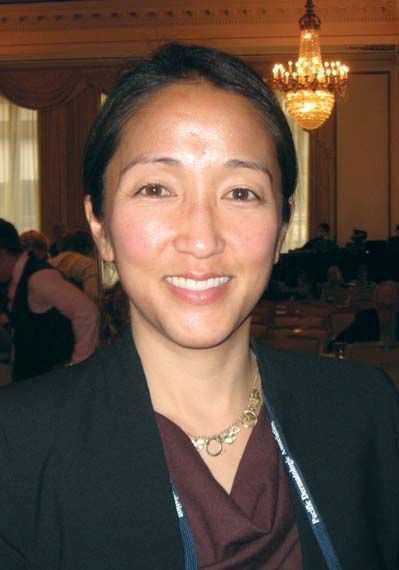
SAN FRANCISCO – Dermatologists are often on the frontline when it comes to diagnosing polycystic ovary syndrome (PCOS), which is one reason they should be up to date and aware of the changing diagnostic criteria for the condition, according to Kanade Shinkai, MD.
About one-quarter of patients who are diagnosed with PCOS are seen first by a dermatologist. That’s because skin conditions may be more concerning than reproductive issues in young women.
“Sometimes, people don’t see [irregular menstruation] as a problem,” explained Dr. Shinkai of the department of dermatology at the University of California, San Francisco. “Maybe they’re young, or they’re not trying to get pregnant. But if their hair is falling out, they see that as a problem, or if they have bad acne, or they’re becoming hirsute, they see that as a problem. So, they present to a dermatologist.”
Early recognition of PCOS is important, because many women with the condition go on to develop diabetes, impaired glucose intolerance, hyperlipidemia, hypertension, fertility problems, and obesity.
It used to be that physicians expected patients with PCOS to have menstrual irregularities, biochemical or clinical evidence of hyperandrogenism, and evidence of polycystic ovaries on ultrasound. But just two of the three are now considered enough to warrant a diagnosis.
“Our original view of the classic patient has gone away, and it’s really a heterogeneous phenotype,” Dr. Shinkai said. “Originally, it was all three [criteria], and the patient was obese, and they all had diabetes. Now, we know that’s not true. Every woman who has PCOS has her own version of PCOS.”
Dr. Shinkai’s team conducted a study of clinical markers associated with PCOS and found that some of the classic signs of PCOS may be unreliable.
“Alopecia turns out not to be a very reliable marker,” she explained. “That’s paradigm shifting, I think, because often if patients present with hair loss in a hormonal pattern, they get worked up for PCOS, and it turns out that workup is not always fruitful.” Acne can also be misleading, given its frequency in the general population.
More reliable signs include hirsutism and acanthosis nigricans; 70%-80% of women with hirsutism have PCOS, and 53% of patients with PCOS have hirsutism, most commonly on the trunk. Acanthosis nigricans occurs in 37% of PCOS patients.
“Those are the best specific signs for PCOS,” said Dr. Shinkai. “If we see those, we should probably work the patient up.”
In preparation, the patient should be off of birth control treatment for at least 4 weeks, because hormonal treatment can interfere with test results, Dr Shinkai noted.
She also recommended a transvaginal ultrasound and a free-testosterone test. Consensus statements recommend testing of 17-hydroxyprogesterone, but Dr. Shinkai said she isn’t so sure. “That’s only going to capture about 3% of your patients with cutaneous hyperandrogenism, so it’s pretty low yield,” she said.
For treatment of cutaneous symptoms of PCOS, it’s important for the patient to understand that treatment courses will last at least 6 months. “It’s not a quick fix,” said Dr. Shinkai. Oral contraceptives are a mainstay, and are often sufficient for mild hirsutism. But moderate or severe cases call for high doses of spironolactone (150-200 mg/day). She said she usually combines spironolactone with oral contraceptives, because the drug can lead to menstrual irregularities, which birth control pills can relieve.
Dr. Shinkai reported having no relevant financial disclosures.
SAN FRANCISCO – Dermatologists are often on the frontline when it comes to diagnosing polycystic ovary syndrome (PCOS), which is one reason they should be up to date and aware of the changing diagnostic criteria for the condition, according to Kanade Shinkai, MD.
About one-quarter of patients who are diagnosed with PCOS are seen first by a dermatologist. That’s because skin conditions may be more concerning than reproductive issues in young women.
“Sometimes, people don’t see [irregular menstruation] as a problem,” explained Dr. Shinkai of the department of dermatology at the University of California, San Francisco. “Maybe they’re young, or they’re not trying to get pregnant. But if their hair is falling out, they see that as a problem, or if they have bad acne, or they’re becoming hirsute, they see that as a problem. So, they present to a dermatologist.”
Early recognition of PCOS is important, because many women with the condition go on to develop diabetes, impaired glucose intolerance, hyperlipidemia, hypertension, fertility problems, and obesity.
It used to be that physicians expected patients with PCOS to have menstrual irregularities, biochemical or clinical evidence of hyperandrogenism, and evidence of polycystic ovaries on ultrasound. But just two of the three are now considered enough to warrant a diagnosis.
“Our original view of the classic patient has gone away, and it’s really a heterogeneous phenotype,” Dr. Shinkai said. “Originally, it was all three [criteria], and the patient was obese, and they all had diabetes. Now, we know that’s not true. Every woman who has PCOS has her own version of PCOS.”
Dr. Shinkai’s team conducted a study of clinical markers associated with PCOS and found that some of the classic signs of PCOS may be unreliable.
“Alopecia turns out not to be a very reliable marker,” she explained. “That’s paradigm shifting, I think, because often if patients present with hair loss in a hormonal pattern, they get worked up for PCOS, and it turns out that workup is not always fruitful.” Acne can also be misleading, given its frequency in the general population.
More reliable signs include hirsutism and acanthosis nigricans; 70%-80% of women with hirsutism have PCOS, and 53% of patients with PCOS have hirsutism, most commonly on the trunk. Acanthosis nigricans occurs in 37% of PCOS patients.
“Those are the best specific signs for PCOS,” said Dr. Shinkai. “If we see those, we should probably work the patient up.”
In preparation, the patient should be off of birth control treatment for at least 4 weeks, because hormonal treatment can interfere with test results, Dr Shinkai noted.
She also recommended a transvaginal ultrasound and a free-testosterone test. Consensus statements recommend testing of 17-hydroxyprogesterone, but Dr. Shinkai said she isn’t so sure. “That’s only going to capture about 3% of your patients with cutaneous hyperandrogenism, so it’s pretty low yield,” she said.
For treatment of cutaneous symptoms of PCOS, it’s important for the patient to understand that treatment courses will last at least 6 months. “It’s not a quick fix,” said Dr. Shinkai. Oral contraceptives are a mainstay, and are often sufficient for mild hirsutism. But moderate or severe cases call for high doses of spironolactone (150-200 mg/day). She said she usually combines spironolactone with oral contraceptives, because the drug can lead to menstrual irregularities, which birth control pills can relieve.
Dr. Shinkai reported having no relevant financial disclosures.
SAN FRANCISCO – Dermatologists are often on the frontline when it comes to diagnosing polycystic ovary syndrome (PCOS), which is one reason they should be up to date and aware of the changing diagnostic criteria for the condition, according to Kanade Shinkai, MD.
About one-quarter of patients who are diagnosed with PCOS are seen first by a dermatologist. That’s because skin conditions may be more concerning than reproductive issues in young women.
“Sometimes, people don’t see [irregular menstruation] as a problem,” explained Dr. Shinkai of the department of dermatology at the University of California, San Francisco. “Maybe they’re young, or they’re not trying to get pregnant. But if their hair is falling out, they see that as a problem, or if they have bad acne, or they’re becoming hirsute, they see that as a problem. So, they present to a dermatologist.”
Early recognition of PCOS is important, because many women with the condition go on to develop diabetes, impaired glucose intolerance, hyperlipidemia, hypertension, fertility problems, and obesity.
It used to be that physicians expected patients with PCOS to have menstrual irregularities, biochemical or clinical evidence of hyperandrogenism, and evidence of polycystic ovaries on ultrasound. But just two of the three are now considered enough to warrant a diagnosis.
“Our original view of the classic patient has gone away, and it’s really a heterogeneous phenotype,” Dr. Shinkai said. “Originally, it was all three [criteria], and the patient was obese, and they all had diabetes. Now, we know that’s not true. Every woman who has PCOS has her own version of PCOS.”
Dr. Shinkai’s team conducted a study of clinical markers associated with PCOS and found that some of the classic signs of PCOS may be unreliable.
“Alopecia turns out not to be a very reliable marker,” she explained. “That’s paradigm shifting, I think, because often if patients present with hair loss in a hormonal pattern, they get worked up for PCOS, and it turns out that workup is not always fruitful.” Acne can also be misleading, given its frequency in the general population.
More reliable signs include hirsutism and acanthosis nigricans; 70%-80% of women with hirsutism have PCOS, and 53% of patients with PCOS have hirsutism, most commonly on the trunk. Acanthosis nigricans occurs in 37% of PCOS patients.
“Those are the best specific signs for PCOS,” said Dr. Shinkai. “If we see those, we should probably work the patient up.”
In preparation, the patient should be off of birth control treatment for at least 4 weeks, because hormonal treatment can interfere with test results, Dr Shinkai noted.
She also recommended a transvaginal ultrasound and a free-testosterone test. Consensus statements recommend testing of 17-hydroxyprogesterone, but Dr. Shinkai said she isn’t so sure. “That’s only going to capture about 3% of your patients with cutaneous hyperandrogenism, so it’s pretty low yield,” she said.
For treatment of cutaneous symptoms of PCOS, it’s important for the patient to understand that treatment courses will last at least 6 months. “It’s not a quick fix,” said Dr. Shinkai. Oral contraceptives are a mainstay, and are often sufficient for mild hirsutism. But moderate or severe cases call for high doses of spironolactone (150-200 mg/day). She said she usually combines spironolactone with oral contraceptives, because the drug can lead to menstrual irregularities, which birth control pills can relieve.
Dr. Shinkai reported having no relevant financial disclosures.
AT PDA 2017
DACA program in limbo after White House attitude changes
The fate of the Deferred Action for Childhood Arrivals (DACA) program remains uncertain after an unexpected change of tune by President Donald J. Trump to support of protecting young undocumented immigrants from deportation.
Earlier this month, President Trump announced he would phase out the Obama administration’s DACA program, a policy that protected immigrants who came to the United States as children from deportation and authorized them to work in the United States. In a Sept. 5 statement, President Trump said winding down the DACA program was in the nation’s best interest, and that there can be no principled immigration reform if the executive branch is able to “rewrite or nullify federal laws at will.” The Trump administration allowed Congress 6 months to pass legislation that would replace DACA or preserve some of its provisions before the program terminated in March 2018.

In a series of tweets on Sept. 14, President Trump expressed support for those currently protected under DACA, stating an agreement to address the program was in the works.
“Does anybody really want to throw out good, educated, and accomplished young people who have jobs, some serving in the military?” President Trump tweeted. “They have been in our country for many years through no fault of their own – brought in by parents at young age. Plus BIG border security. ... No deal was made last night on DACA. Massive border security would have to be agreed to in exchange for consent. Would be subject to vote.”

“As Congress debates the best ways to address illegal immigration through strong border security and interior enforcement, DACA should be part of those discussions,” Sen. McConnell said in a statement. “We look forward to receiving the Trump administration’s legislative proposal as we continue our work on these issues.”
DACA demise could strand medical students
The DACA program was created by the Obama administration in 2012 as a way of protecting young, undocumented immigrants from deportation after Congress repeatedly blocked legislation that would develop such a safe haven. The policy allowed about 800,000 young adults brought to the United States illegally as children to work legally in the United States and remain in the country without fear of deportation.
If the Trump administration moves forward with termination, the program’s end will affect the growing number of medical students with DACA status and likely jeopardize the funding invested in their training. Sixty-two medical schools accept applications from DACA applicants, according to the Association of American Medical Colleges. For the 2016-2017 school year, 113 students with DACA status applied to U.S. medical schools, and there were 65 medical students enrolled who had DACA status. AAMC does not collect data on medical students with DACA status; the National Resident Matching Program, likewise, does not collect data on residents with DACA status.

“It’s a tragic decision,” Dr. Kuczewski said of the President’s Sept. 5 announcement to end DACA. “It once again puts a cloud over these young people who DACA has given the first real opportunity to come out of the shadows, be educated, and serve the community. Now they’re returned back to the situation of uncertainty.”
If DACA ends, current DACA medical students may not be able to finish their training, and those close to completion may not be able to use their degrees in the workforce, Dr. Kuczewski said. Since they are not citizens, DACA students do not qualify for federal student loans, so medical schools must find ways to help DACA students finance their education. A major Catholic health system provides student loan packages for several DACA students at Loyola’s Stritch School of Medicine, Dr. Kuczewski said. However, such loan programs require DACA status. Without DACA or another path to citizenship, medical students in the middle of training will not be able to obtain financial aid to finish their training, he said. The work authorization that DACA provided will also be eliminated.
Dr. Kuczewski said his university plans to advocate strongly for Congress to pass legislation to protect DACA youth, such as the Development, Relief, and Education for Alien Minors (DREAM) Act. The legislation, which dates back to 2001 with a renewed bill in 2017, would shield young immigrants from deportation and offer a path to citizenship.
“We are going to advocate strongly because we believe this is common sense,” he said. “You don’t just throw away the talents of these young people and the investments they’ve made in their education and the investments we’ve made in them. DACA has given many people the chance to see these young people as students, as employees, as colleagues, and we hope that helps people to mobilize.”
Medical groups push for DREAM Act passage
Dozens of physician and medical associations are also pushing Congress to pass the DREAM Act. On Sept. 14, more than 50 medical and health care groups, including the American Medical Association, the American Academy of Family Physicians, the American College of Physicians, the American Academy of Dermatology Association, and the American Academy of Pediatrics sent a letter to congressional leaders urging them to pass the bill.
“On behalf of the undersigned health professions organizations, we urge you to ensure that all members of the health care workforce with Deferred Action for Childhood Arrivals (DACA) status are able to continue their employment, education, training, and research, with passage of a permanent legislative remedy, such as the bipartisan, bicameral Dream Act of 2017,” the letter stated. “By providing a legal pathway to permanent residency for undocumented Americans brought to the U.S. as children, Congress can help our country produce a diverse and culturally responsive health care workforce to meet the needs of underserved populations, improve cultural awareness, and promote health equity.”
The Immigration Reform Law Institute praised President Trump’s Sept. 5 decision to rescind the DACA program, calling the policy an affront to Congress and a violation of the U.S. Constitution.
“Contrary to former President Obama’s claims, not only is DACA not authorized by federal statute, but prior to the unlawful program, deferred action has only ever been applied to small numbers of illegal aliens on a case-by-case basis,” Dale Wilcox, executive director, said in a statement. “Applying it to approximately 15% of the illegal alien population was never a proper exercise of the president’s discretion under the Constitution and is inconsistent with the president’s duty to take care that the laws be faithfully executed. By rescinding DACA, President Trump has put an end to the previous administration’s flagrant violation of our immigration laws and its abuse of hard-working American taxpayers.”
[email protected]
On Twitter @legal_med
The fate of the Deferred Action for Childhood Arrivals (DACA) program remains uncertain after an unexpected change of tune by President Donald J. Trump to support of protecting young undocumented immigrants from deportation.
Earlier this month, President Trump announced he would phase out the Obama administration’s DACA program, a policy that protected immigrants who came to the United States as children from deportation and authorized them to work in the United States. In a Sept. 5 statement, President Trump said winding down the DACA program was in the nation’s best interest, and that there can be no principled immigration reform if the executive branch is able to “rewrite or nullify federal laws at will.” The Trump administration allowed Congress 6 months to pass legislation that would replace DACA or preserve some of its provisions before the program terminated in March 2018.
In a series of tweets on Sept. 14, President Trump expressed support for those currently protected under DACA, stating an agreement to address the program was in the works.
“Does anybody really want to throw out good, educated, and accomplished young people who have jobs, some serving in the military?” President Trump tweeted. “They have been in our country for many years through no fault of their own – brought in by parents at young age. Plus BIG border security. ... No deal was made last night on DACA. Massive border security would have to be agreed to in exchange for consent. Would be subject to vote.”
“As Congress debates the best ways to address illegal immigration through strong border security and interior enforcement, DACA should be part of those discussions,” Sen. McConnell said in a statement. “We look forward to receiving the Trump administration’s legislative proposal as we continue our work on these issues.”
DACA demise could strand medical students
The DACA program was created by the Obama administration in 2012 as a way of protecting young, undocumented immigrants from deportation after Congress repeatedly blocked legislation that would develop such a safe haven. The policy allowed about 800,000 young adults brought to the United States illegally as children to work legally in the United States and remain in the country without fear of deportation.
If the Trump administration moves forward with termination, the program’s end will affect the growing number of medical students with DACA status and likely jeopardize the funding invested in their training. Sixty-two medical schools accept applications from DACA applicants, according to the Association of American Medical Colleges. For the 2016-2017 school year, 113 students with DACA status applied to U.S. medical schools, and there were 65 medical students enrolled who had DACA status. AAMC does not collect data on medical students with DACA status; the National Resident Matching Program, likewise, does not collect data on residents with DACA status.
“It’s a tragic decision,” Dr. Kuczewski said of the President’s Sept. 5 announcement to end DACA. “It once again puts a cloud over these young people who DACA has given the first real opportunity to come out of the shadows, be educated, and serve the community. Now they’re returned back to the situation of uncertainty.”
If DACA ends, current DACA medical students may not be able to finish their training, and those close to completion may not be able to use their degrees in the workforce, Dr. Kuczewski said. Since they are not citizens, DACA students do not qualify for federal student loans, so medical schools must find ways to help DACA students finance their education. A major Catholic health system provides student loan packages for several DACA students at Loyola’s Stritch School of Medicine, Dr. Kuczewski said. However, such loan programs require DACA status. Without DACA or another path to citizenship, medical students in the middle of training will not be able to obtain financial aid to finish their training, he said. The work authorization that DACA provided will also be eliminated.
Dr. Kuczewski said his university plans to advocate strongly for Congress to pass legislation to protect DACA youth, such as the Development, Relief, and Education for Alien Minors (DREAM) Act. The legislation, which dates back to 2001 with a renewed bill in 2017, would shield young immigrants from deportation and offer a path to citizenship.
“We are going to advocate strongly because we believe this is common sense,” he said. “You don’t just throw away the talents of these young people and the investments they’ve made in their education and the investments we’ve made in them. DACA has given many people the chance to see these young people as students, as employees, as colleagues, and we hope that helps people to mobilize.”
Medical groups push for DREAM Act passage
Dozens of physician and medical associations are also pushing Congress to pass the DREAM Act. On Sept. 14, more than 50 medical and health care groups, including the American Medical Association, the American Academy of Family Physicians, the American College of Physicians, the American Academy of Dermatology Association, and the American Academy of Pediatrics sent a letter to congressional leaders urging them to pass the bill.
“On behalf of the undersigned health professions organizations, we urge you to ensure that all members of the health care workforce with Deferred Action for Childhood Arrivals (DACA) status are able to continue their employment, education, training, and research, with passage of a permanent legislative remedy, such as the bipartisan, bicameral Dream Act of 2017,” the letter stated. “By providing a legal pathway to permanent residency for undocumented Americans brought to the U.S. as children, Congress can help our country produce a diverse and culturally responsive health care workforce to meet the needs of underserved populations, improve cultural awareness, and promote health equity.”
The Immigration Reform Law Institute praised President Trump’s Sept. 5 decision to rescind the DACA program, calling the policy an affront to Congress and a violation of the U.S. Constitution.
“Contrary to former President Obama’s claims, not only is DACA not authorized by federal statute, but prior to the unlawful program, deferred action has only ever been applied to small numbers of illegal aliens on a case-by-case basis,” Dale Wilcox, executive director, said in a statement. “Applying it to approximately 15% of the illegal alien population was never a proper exercise of the president’s discretion under the Constitution and is inconsistent with the president’s duty to take care that the laws be faithfully executed. By rescinding DACA, President Trump has put an end to the previous administration’s flagrant violation of our immigration laws and its abuse of hard-working American taxpayers.”
[email protected]
On Twitter @legal_med
The fate of the Deferred Action for Childhood Arrivals (DACA) program remains uncertain after an unexpected change of tune by President Donald J. Trump to support of protecting young undocumented immigrants from deportation.
Earlier this month, President Trump announced he would phase out the Obama administration’s DACA program, a policy that protected immigrants who came to the United States as children from deportation and authorized them to work in the United States. In a Sept. 5 statement, President Trump said winding down the DACA program was in the nation’s best interest, and that there can be no principled immigration reform if the executive branch is able to “rewrite or nullify federal laws at will.” The Trump administration allowed Congress 6 months to pass legislation that would replace DACA or preserve some of its provisions before the program terminated in March 2018.
In a series of tweets on Sept. 14, President Trump expressed support for those currently protected under DACA, stating an agreement to address the program was in the works.
“Does anybody really want to throw out good, educated, and accomplished young people who have jobs, some serving in the military?” President Trump tweeted. “They have been in our country for many years through no fault of their own – brought in by parents at young age. Plus BIG border security. ... No deal was made last night on DACA. Massive border security would have to be agreed to in exchange for consent. Would be subject to vote.”
“As Congress debates the best ways to address illegal immigration through strong border security and interior enforcement, DACA should be part of those discussions,” Sen. McConnell said in a statement. “We look forward to receiving the Trump administration’s legislative proposal as we continue our work on these issues.”
DACA demise could strand medical students
The DACA program was created by the Obama administration in 2012 as a way of protecting young, undocumented immigrants from deportation after Congress repeatedly blocked legislation that would develop such a safe haven. The policy allowed about 800,000 young adults brought to the United States illegally as children to work legally in the United States and remain in the country without fear of deportation.
If the Trump administration moves forward with termination, the program’s end will affect the growing number of medical students with DACA status and likely jeopardize the funding invested in their training. Sixty-two medical schools accept applications from DACA applicants, according to the Association of American Medical Colleges. For the 2016-2017 school year, 113 students with DACA status applied to U.S. medical schools, and there were 65 medical students enrolled who had DACA status. AAMC does not collect data on medical students with DACA status; the National Resident Matching Program, likewise, does not collect data on residents with DACA status.
“It’s a tragic decision,” Dr. Kuczewski said of the President’s Sept. 5 announcement to end DACA. “It once again puts a cloud over these young people who DACA has given the first real opportunity to come out of the shadows, be educated, and serve the community. Now they’re returned back to the situation of uncertainty.”
If DACA ends, current DACA medical students may not be able to finish their training, and those close to completion may not be able to use their degrees in the workforce, Dr. Kuczewski said. Since they are not citizens, DACA students do not qualify for federal student loans, so medical schools must find ways to help DACA students finance their education. A major Catholic health system provides student loan packages for several DACA students at Loyola’s Stritch School of Medicine, Dr. Kuczewski said. However, such loan programs require DACA status. Without DACA or another path to citizenship, medical students in the middle of training will not be able to obtain financial aid to finish their training, he said. The work authorization that DACA provided will also be eliminated.
Dr. Kuczewski said his university plans to advocate strongly for Congress to pass legislation to protect DACA youth, such as the Development, Relief, and Education for Alien Minors (DREAM) Act. The legislation, which dates back to 2001 with a renewed bill in 2017, would shield young immigrants from deportation and offer a path to citizenship.
“We are going to advocate strongly because we believe this is common sense,” he said. “You don’t just throw away the talents of these young people and the investments they’ve made in their education and the investments we’ve made in them. DACA has given many people the chance to see these young people as students, as employees, as colleagues, and we hope that helps people to mobilize.”
Medical groups push for DREAM Act passage
Dozens of physician and medical associations are also pushing Congress to pass the DREAM Act. On Sept. 14, more than 50 medical and health care groups, including the American Medical Association, the American Academy of Family Physicians, the American College of Physicians, the American Academy of Dermatology Association, and the American Academy of Pediatrics sent a letter to congressional leaders urging them to pass the bill.
“On behalf of the undersigned health professions organizations, we urge you to ensure that all members of the health care workforce with Deferred Action for Childhood Arrivals (DACA) status are able to continue their employment, education, training, and research, with passage of a permanent legislative remedy, such as the bipartisan, bicameral Dream Act of 2017,” the letter stated. “By providing a legal pathway to permanent residency for undocumented Americans brought to the U.S. as children, Congress can help our country produce a diverse and culturally responsive health care workforce to meet the needs of underserved populations, improve cultural awareness, and promote health equity.”
The Immigration Reform Law Institute praised President Trump’s Sept. 5 decision to rescind the DACA program, calling the policy an affront to Congress and a violation of the U.S. Constitution.
“Contrary to former President Obama’s claims, not only is DACA not authorized by federal statute, but prior to the unlawful program, deferred action has only ever been applied to small numbers of illegal aliens on a case-by-case basis,” Dale Wilcox, executive director, said in a statement. “Applying it to approximately 15% of the illegal alien population was never a proper exercise of the president’s discretion under the Constitution and is inconsistent with the president’s duty to take care that the laws be faithfully executed. By rescinding DACA, President Trump has put an end to the previous administration’s flagrant violation of our immigration laws and its abuse of hard-working American taxpayers.”
[email protected]
On Twitter @legal_med
Do you answer patient emails?
Recently I received a lengthy email from a woman who claimed to have once been a patient, though her name did not come up in my EHR system. She asked numerous questions about a self-diagnosed skin disorder.
I was undecided on how to reply – or even whether to reply at all – so I queried several dozen dermatology colleagues around the country, as well as a few physician friends and acquaintances in other specialties.
Responses varied all over the map – from “I never answer patient emails” to “What harm could it do, she’s better off getting correct answers from you than incorrect answers from some ‘advocacy’ web site” – and everything in between. I decided to look at what has been published on the subject.
[polldaddy:{"method":"iframe","type":"survey","src":"//newspolls2017.polldaddy.com/s/do-you-answer-patient-emails-take-our-poll?iframe=1"}]It turns out that as early as 1998, a group of investigators asked this same question and designed a study to address it (JAMA. 1998 Oct 21;280[15]:1333-5). Posing as a fictitious patient, they sent emails to random dermatologists describing an acute dermatological problem, tallied the responses they received, and followed up with a questionnaire to responders and nonresponders alike.
As with my informal survey, the authors found what they termed “a striking lack of consensus” on how to deal with this situation: 50% responded to the fictitious patient’s email; of those, 31% refused to give advice without seeing the patient, but 59% offered a diagnosis, and a third of that group went on to provide specific advice about therapy. In response to the questionnaire, 28% said that they tended not to answer any patient emails, 24% said they usually replied with a standard message, and 24% said they answered each request individually. The authors concluded that “standards for physician response to unsolicited patient e-mail are needed.”
Indeed. But my own unscientific survey suggests that, almost 20 years later, there is still nothing resembling a consensus on this issue. In the interim, several groups, including the American Medical Informatics Association, Medem, and the American Medical Association have proposed guidelines; but none have been generally accepted. Until such time as that happens, it seems prudent for each individual practice to adopt its own. For ideas, take a look at the proposals from the groups I mentioned, plus any others you can find. When you’re done, consider running your list past your lawyer to make sure you haven’t forgotten anything, and that there are no unique requirements in your state.
Your guidelines may be very simple (if you decide never to answer any queries) or very complex, depending on your situation and personal philosophy; but all guidelines should cover such issues as authentication of correspondents, informed consent, licensing jurisdiction (if you receive e-mails from states in which you are not licensed), and of course, confidentiality.
Contrary to popular belief, the Health Insurance Portability and Accountability Act (HIPAA) does not prohibit email communication with patients, nor does it require that it be encrypted. The HIPAA website specifically says, “Patients may initiate communications with a provider using e-mail. If this situation occurs, the health care provider can assume (unless the patient has explicitly stated otherwise) that e-mail communications are acceptable to the individual.”
Still, if you are not comfortable with unencrypted communication, encryption software can be added to your practice’s email system. Enli, Sigaba, Tumbleweed, Zix, and many other vendors sell encryption packages. (As always, I have no financial interest in any product or enterprise mentioned in this column.)
Another option is web-based messaging: Patients enter your website and send a message using an electronic template that you design. A designated staffer will be notified by regular email when messages are received, and can post a reply on a page that can only be accessed by the patient. Besides enhancing privacy and security, you can state your guidelines in plain English to preclude any misunderstanding of what you will and will not address online.
Web-based messaging services can be freestanding or incorporated into existing secure web sites. Medfusion and RelayHealth are among the leading vendors of secure messaging services.

And now, I’m writing my guidelines.
Dr. Eastern practices dermatology and dermatologic surgery in Belleville, N.J. He is the author of numerous articles and textbook chapters, and is a longtime monthly columnist for Dermatology News. Write to him at [email protected].
Recently I received a lengthy email from a woman who claimed to have once been a patient, though her name did not come up in my EHR system. She asked numerous questions about a self-diagnosed skin disorder.
I was undecided on how to reply – or even whether to reply at all – so I queried several dozen dermatology colleagues around the country, as well as a few physician friends and acquaintances in other specialties.
Responses varied all over the map – from “I never answer patient emails” to “What harm could it do, she’s better off getting correct answers from you than incorrect answers from some ‘advocacy’ web site” – and everything in between. I decided to look at what has been published on the subject.
[polldaddy:{"method":"iframe","type":"survey","src":"//newspolls2017.polldaddy.com/s/do-you-answer-patient-emails-take-our-poll?iframe=1"}]It turns out that as early as 1998, a group of investigators asked this same question and designed a study to address it (JAMA. 1998 Oct 21;280[15]:1333-5). Posing as a fictitious patient, they sent emails to random dermatologists describing an acute dermatological problem, tallied the responses they received, and followed up with a questionnaire to responders and nonresponders alike.
As with my informal survey, the authors found what they termed “a striking lack of consensus” on how to deal with this situation: 50% responded to the fictitious patient’s email; of those, 31% refused to give advice without seeing the patient, but 59% offered a diagnosis, and a third of that group went on to provide specific advice about therapy. In response to the questionnaire, 28% said that they tended not to answer any patient emails, 24% said they usually replied with a standard message, and 24% said they answered each request individually. The authors concluded that “standards for physician response to unsolicited patient e-mail are needed.”
Indeed. But my own unscientific survey suggests that, almost 20 years later, there is still nothing resembling a consensus on this issue. In the interim, several groups, including the American Medical Informatics Association, Medem, and the American Medical Association have proposed guidelines; but none have been generally accepted. Until such time as that happens, it seems prudent for each individual practice to adopt its own. For ideas, take a look at the proposals from the groups I mentioned, plus any others you can find. When you’re done, consider running your list past your lawyer to make sure you haven’t forgotten anything, and that there are no unique requirements in your state.
Your guidelines may be very simple (if you decide never to answer any queries) or very complex, depending on your situation and personal philosophy; but all guidelines should cover such issues as authentication of correspondents, informed consent, licensing jurisdiction (if you receive e-mails from states in which you are not licensed), and of course, confidentiality.
Contrary to popular belief, the Health Insurance Portability and Accountability Act (HIPAA) does not prohibit email communication with patients, nor does it require that it be encrypted. The HIPAA website specifically says, “Patients may initiate communications with a provider using e-mail. If this situation occurs, the health care provider can assume (unless the patient has explicitly stated otherwise) that e-mail communications are acceptable to the individual.”
Still, if you are not comfortable with unencrypted communication, encryption software can be added to your practice’s email system. Enli, Sigaba, Tumbleweed, Zix, and many other vendors sell encryption packages. (As always, I have no financial interest in any product or enterprise mentioned in this column.)
Another option is web-based messaging: Patients enter your website and send a message using an electronic template that you design. A designated staffer will be notified by regular email when messages are received, and can post a reply on a page that can only be accessed by the patient. Besides enhancing privacy and security, you can state your guidelines in plain English to preclude any misunderstanding of what you will and will not address online.
Web-based messaging services can be freestanding or incorporated into existing secure web sites. Medfusion and RelayHealth are among the leading vendors of secure messaging services.
And now, I’m writing my guidelines.
Dr. Eastern practices dermatology and dermatologic surgery in Belleville, N.J. He is the author of numerous articles and textbook chapters, and is a longtime monthly columnist for Dermatology News. Write to him at [email protected].
Recently I received a lengthy email from a woman who claimed to have once been a patient, though her name did not come up in my EHR system. She asked numerous questions about a self-diagnosed skin disorder.
I was undecided on how to reply – or even whether to reply at all – so I queried several dozen dermatology colleagues around the country, as well as a few physician friends and acquaintances in other specialties.
Responses varied all over the map – from “I never answer patient emails” to “What harm could it do, she’s better off getting correct answers from you than incorrect answers from some ‘advocacy’ web site” – and everything in between. I decided to look at what has been published on the subject.
[polldaddy:{"method":"iframe","type":"survey","src":"//newspolls2017.polldaddy.com/s/do-you-answer-patient-emails-take-our-poll?iframe=1"}]It turns out that as early as 1998, a group of investigators asked this same question and designed a study to address it (JAMA. 1998 Oct 21;280[15]:1333-5). Posing as a fictitious patient, they sent emails to random dermatologists describing an acute dermatological problem, tallied the responses they received, and followed up with a questionnaire to responders and nonresponders alike.
As with my informal survey, the authors found what they termed “a striking lack of consensus” on how to deal with this situation: 50% responded to the fictitious patient’s email; of those, 31% refused to give advice without seeing the patient, but 59% offered a diagnosis, and a third of that group went on to provide specific advice about therapy. In response to the questionnaire, 28% said that they tended not to answer any patient emails, 24% said they usually replied with a standard message, and 24% said they answered each request individually. The authors concluded that “standards for physician response to unsolicited patient e-mail are needed.”
Indeed. But my own unscientific survey suggests that, almost 20 years later, there is still nothing resembling a consensus on this issue. In the interim, several groups, including the American Medical Informatics Association, Medem, and the American Medical Association have proposed guidelines; but none have been generally accepted. Until such time as that happens, it seems prudent for each individual practice to adopt its own. For ideas, take a look at the proposals from the groups I mentioned, plus any others you can find. When you’re done, consider running your list past your lawyer to make sure you haven’t forgotten anything, and that there are no unique requirements in your state.
Your guidelines may be very simple (if you decide never to answer any queries) or very complex, depending on your situation and personal philosophy; but all guidelines should cover such issues as authentication of correspondents, informed consent, licensing jurisdiction (if you receive e-mails from states in which you are not licensed), and of course, confidentiality.
Contrary to popular belief, the Health Insurance Portability and Accountability Act (HIPAA) does not prohibit email communication with patients, nor does it require that it be encrypted. The HIPAA website specifically says, “Patients may initiate communications with a provider using e-mail. If this situation occurs, the health care provider can assume (unless the patient has explicitly stated otherwise) that e-mail communications are acceptable to the individual.”
Still, if you are not comfortable with unencrypted communication, encryption software can be added to your practice’s email system. Enli, Sigaba, Tumbleweed, Zix, and many other vendors sell encryption packages. (As always, I have no financial interest in any product or enterprise mentioned in this column.)
Another option is web-based messaging: Patients enter your website and send a message using an electronic template that you design. A designated staffer will be notified by regular email when messages are received, and can post a reply on a page that can only be accessed by the patient. Besides enhancing privacy and security, you can state your guidelines in plain English to preclude any misunderstanding of what you will and will not address online.
Web-based messaging services can be freestanding or incorporated into existing secure web sites. Medfusion and RelayHealth are among the leading vendors of secure messaging services.
And now, I’m writing my guidelines.
Dr. Eastern practices dermatology and dermatologic surgery in Belleville, N.J. He is the author of numerous articles and textbook chapters, and is a longtime monthly columnist for Dermatology News. Write to him at [email protected].

Female physicians can face breastfeeding challenges at work
CHICAGO – Physician mothers who breastfeed and wish to pump milk during work hours can face many of the same challenges as other working mothers, as well as some issues unique to the profession, a new survey revealed.
“Although physician mothers have high rates of intention to breastfeed while they are pregnant, and initiation of breastfeeding at birth, we unfortunately have low rates of continuing to breastfeed and even meeting the [6 month] recommendations for exclusive breastfeeding,” Rebecca Cantu, MD, MPH said at the annual meeting of the American Academy of Pediatrics.
Dr. Cantu and her colleagues surveyed providers affiliated with the University of Arkansas for Medical Sciences in Little Rock in 2016. The 3-item, Web-based survey was anonymous and assessed role [trainee (medical student, resident physician, fellow) or faculty physician], breastfeeding experience, and perceived barriers to successful breastfeeding.
Common barriers identified
Of the 223 responses, 38% were from medical students, 31% from faculty, 24% from residents, and 7% from fellows. Of the 97 physicians who had breastfed at some point, 97% identified at least one barrier they felt inhibited their breastfeeding goals, said Dr. Cantu, a pediatric hospitalist at Arkansas Children’s Hospital in Little Rock. The survey revealed a total 397 barriers, for an average of 3.7 per person. Being faced with barriers could lead to early unintentional weaning and other consequences like mastitis, decreased milk supply, or anxiety, she added.
“We did find trainees identified a significantly higher median number of barriers, five, versus three for faculty [P less than .01],” Dr. Cantu said. Only one respondent said she faced no barriers.
Lack of time and place to pump breast milk, an unpredictable schedule, short maternity leave, and long working hours were among the most common barriers cited.
“For physicians, we don’t have time. I don’t have a protected lunch break. I’m a hospitalist rounding for hours in the morning,” Dr. Cantu said. “Also, residents don’t always feel comfortable asking for time to leave, and we don’t have people identified to cover our patients. So, depending on the institution, there can be many areas that need to be addressed.”
“The last place I worked had many lactation rooms scattered throughout the hospital, some for physicians only,” she said. “Where I work now we have one room for breastfeeding with two chairs for the entire medical center. So space is a problem.”
A little over half (56%) of respondents had never breastfed. Another 30% had previously breastfed and weaned and 14% were currently breastfeeding at the time of the survey. Of those who had never breastfed, 87% indicated that they planned to at some point in the future. “This emphasizes that the current problem is something we need to continue to work on. We need to address these barriers, and find ways to decrease the impact these barriers have on breastfeeding physicians.”
Future research will investigate association between these barriers and breastfeeding duration and other outcomes, Dr. Cantu said.
Potential solutions
“Policy can play a role here. Plenty of studies have shown that supporting physicians who breastfeed is associated with better patient outcomes, and institutions that support breastfeeding can have a financial benefit,” she said, adding, “If the hospitals cannot even support breastfeeding mothers, how do we expect other places to?”
During the Q&A after Dr. Cantu’s presentation, a meeting attendee suggested using a Freemie pump.* It’s a smaller and more discreet pump that can be used “at an airport, restaurant or while charting in the emergency department.” Dr. Cantu agreed that Freemie pumps could help.
Dr. Cantu also recommended the Dr. Milk support group website and Facebook pages. “I refer a lot of trainees there because you can post a question and get tons of peer advice and support, and find out what’s worked for other people.:
Dr. Cantu had no relevant financial disclosures.
* This article was updated on 1/11/18.
CHICAGO – Physician mothers who breastfeed and wish to pump milk during work hours can face many of the same challenges as other working mothers, as well as some issues unique to the profession, a new survey revealed.
“Although physician mothers have high rates of intention to breastfeed while they are pregnant, and initiation of breastfeeding at birth, we unfortunately have low rates of continuing to breastfeed and even meeting the [6 month] recommendations for exclusive breastfeeding,” Rebecca Cantu, MD, MPH said at the annual meeting of the American Academy of Pediatrics.
Dr. Cantu and her colleagues surveyed providers affiliated with the University of Arkansas for Medical Sciences in Little Rock in 2016. The 3-item, Web-based survey was anonymous and assessed role [trainee (medical student, resident physician, fellow) or faculty physician], breastfeeding experience, and perceived barriers to successful breastfeeding.
Common barriers identified
Of the 223 responses, 38% were from medical students, 31% from faculty, 24% from residents, and 7% from fellows. Of the 97 physicians who had breastfed at some point, 97% identified at least one barrier they felt inhibited their breastfeeding goals, said Dr. Cantu, a pediatric hospitalist at Arkansas Children’s Hospital in Little Rock. The survey revealed a total 397 barriers, for an average of 3.7 per person. Being faced with barriers could lead to early unintentional weaning and other consequences like mastitis, decreased milk supply, or anxiety, she added.
“We did find trainees identified a significantly higher median number of barriers, five, versus three for faculty [P less than .01],” Dr. Cantu said. Only one respondent said she faced no barriers.
Lack of time and place to pump breast milk, an unpredictable schedule, short maternity leave, and long working hours were among the most common barriers cited.
“For physicians, we don’t have time. I don’t have a protected lunch break. I’m a hospitalist rounding for hours in the morning,” Dr. Cantu said. “Also, residents don’t always feel comfortable asking for time to leave, and we don’t have people identified to cover our patients. So, depending on the institution, there can be many areas that need to be addressed.”
“The last place I worked had many lactation rooms scattered throughout the hospital, some for physicians only,” she said. “Where I work now we have one room for breastfeeding with two chairs for the entire medical center. So space is a problem.”
A little over half (56%) of respondents had never breastfed. Another 30% had previously breastfed and weaned and 14% were currently breastfeeding at the time of the survey. Of those who had never breastfed, 87% indicated that they planned to at some point in the future. “This emphasizes that the current problem is something we need to continue to work on. We need to address these barriers, and find ways to decrease the impact these barriers have on breastfeeding physicians.”
Future research will investigate association between these barriers and breastfeeding duration and other outcomes, Dr. Cantu said.
Potential solutions
“Policy can play a role here. Plenty of studies have shown that supporting physicians who breastfeed is associated with better patient outcomes, and institutions that support breastfeeding can have a financial benefit,” she said, adding, “If the hospitals cannot even support breastfeeding mothers, how do we expect other places to?”
During the Q&A after Dr. Cantu’s presentation, a meeting attendee suggested using a Freemie pump.* It’s a smaller and more discreet pump that can be used “at an airport, restaurant or while charting in the emergency department.” Dr. Cantu agreed that Freemie pumps could help.
Dr. Cantu also recommended the Dr. Milk support group website and Facebook pages. “I refer a lot of trainees there because you can post a question and get tons of peer advice and support, and find out what’s worked for other people.:
Dr. Cantu had no relevant financial disclosures.
* This article was updated on 1/11/18.
CHICAGO – Physician mothers who breastfeed and wish to pump milk during work hours can face many of the same challenges as other working mothers, as well as some issues unique to the profession, a new survey revealed.
“Although physician mothers have high rates of intention to breastfeed while they are pregnant, and initiation of breastfeeding at birth, we unfortunately have low rates of continuing to breastfeed and even meeting the [6 month] recommendations for exclusive breastfeeding,” Rebecca Cantu, MD, MPH said at the annual meeting of the American Academy of Pediatrics.
Dr. Cantu and her colleagues surveyed providers affiliated with the University of Arkansas for Medical Sciences in Little Rock in 2016. The 3-item, Web-based survey was anonymous and assessed role [trainee (medical student, resident physician, fellow) or faculty physician], breastfeeding experience, and perceived barriers to successful breastfeeding.
Common barriers identified
Of the 223 responses, 38% were from medical students, 31% from faculty, 24% from residents, and 7% from fellows. Of the 97 physicians who had breastfed at some point, 97% identified at least one barrier they felt inhibited their breastfeeding goals, said Dr. Cantu, a pediatric hospitalist at Arkansas Children’s Hospital in Little Rock. The survey revealed a total 397 barriers, for an average of 3.7 per person. Being faced with barriers could lead to early unintentional weaning and other consequences like mastitis, decreased milk supply, or anxiety, she added.
“We did find trainees identified a significantly higher median number of barriers, five, versus three for faculty [P less than .01],” Dr. Cantu said. Only one respondent said she faced no barriers.
Lack of time and place to pump breast milk, an unpredictable schedule, short maternity leave, and long working hours were among the most common barriers cited.
“For physicians, we don’t have time. I don’t have a protected lunch break. I’m a hospitalist rounding for hours in the morning,” Dr. Cantu said. “Also, residents don’t always feel comfortable asking for time to leave, and we don’t have people identified to cover our patients. So, depending on the institution, there can be many areas that need to be addressed.”
“The last place I worked had many lactation rooms scattered throughout the hospital, some for physicians only,” she said. “Where I work now we have one room for breastfeeding with two chairs for the entire medical center. So space is a problem.”
A little over half (56%) of respondents had never breastfed. Another 30% had previously breastfed and weaned and 14% were currently breastfeeding at the time of the survey. Of those who had never breastfed, 87% indicated that they planned to at some point in the future. “This emphasizes that the current problem is something we need to continue to work on. We need to address these barriers, and find ways to decrease the impact these barriers have on breastfeeding physicians.”
Future research will investigate association between these barriers and breastfeeding duration and other outcomes, Dr. Cantu said.
Potential solutions
“Policy can play a role here. Plenty of studies have shown that supporting physicians who breastfeed is associated with better patient outcomes, and institutions that support breastfeeding can have a financial benefit,” she said, adding, “If the hospitals cannot even support breastfeeding mothers, how do we expect other places to?”
During the Q&A after Dr. Cantu’s presentation, a meeting attendee suggested using a Freemie pump.* It’s a smaller and more discreet pump that can be used “at an airport, restaurant or while charting in the emergency department.” Dr. Cantu agreed that Freemie pumps could help.
Dr. Cantu also recommended the Dr. Milk support group website and Facebook pages. “I refer a lot of trainees there because you can post a question and get tons of peer advice and support, and find out what’s worked for other people.:
Dr. Cantu had no relevant financial disclosures.
* This article was updated on 1/11/18.
AT AAP 2017
Key clinical point: .
Major finding: Of 97 physicians who had ever breastfed, 97% perceived at least one barrier at work that inhibited meeting their breastfeeding goals.
Data source: Survey responses from 223 physicians and medical students affiliated with the University of Arkansas.
Disclosures: Dr. Cantu had no relevant financial disclosures.