User login
Doctors testify on health insurance stabilization
WASHINGTON – Physicians testifying before the Senate Health, Education, Labor & Pensions Committee offered recommendations that are generally in line with the narrow, focused legislation to stabilize the individual health insurance markets that Chairman Lamar Alexander (R-Tenn.) is hoping to introduce early in the week of Sept. 17.
Two key provisions of Chairman Alexander’s plan are extending the cost-sharing reduction (CSR) payments to insurers through the end of 2018 and providing additional flexibility to the process that allows states to come up with alternatives to the Affordable Care Act mandates.
Manny Sethi, MD, president of Healthy Tennessee, said he favored repealing and replacing the ACA but offered suggestions to fit the current legislative landscape.
“We must take three steps immediately,” Dr. Sethi, an orthopedic trauma surgeon, testified. “First, in order to stabilize the insurance markets, we must continue the cost-sharing reduction program. Premiums are rapidly rising as insurers fear they will be left bearing the cost. These soaring costs are forcing young members out, saturating the market with higher-need and higher-cost patients and further escalating prices in a troublesome cycle.
“Second, we must quickly create risk pools for those individuals with serious chronic conditions, allowing more affordable coverage options for young, healthy citizens,” Dr. Sethi continued. “Third, I believe a one-size-fits-all plan from Washington, D.C., doesn’t meet the needs of Tennesseans. Open the door for innovation, and allow more flexibility for states to create their own insurance products. For example, a catastrophic plan should be available regardless of age or income status, which is currently not the case.”
Opening the catastrophic plans to all would help bring people into the individual market, even if they don’t have access to any government subsidies, he said.
“Meeting with patients ... I do believe that creating a catastrophic plan open to all ages, all incomes, I think would bring younger folks, and people in general, into the insurance market because I think that’s the problem,” Dr. Sethi said. “You don’t want to pay more for your insurance than you do for your home mortgage. When you do that, something’s wrong.”
Susan Turney, MD, CEO of Marshfield (Wisc.) Clinic Health System, offered similar suggestions. She called for fully funding CSR payments for 2018 and beyond and also recommended creating a reinsurance program, establishing continuous coverage rules that encourage people to get and maintain coverage, enhancing risk adjustment for payments to carriers, and reinstating federal funding for outreach that was recently cut by the Trump administration.
But she also stressed a longer-term goal of how care is delivered, especially in rural areas.
“As we look at this short-term fix to a relatively small group of insured, we have to start thinking differently about how we provide care. The care delivery model needs to be above the payment system, and, once we figure out how to take care of our communities, we can then look differently at the way we support the practices who provide those services,” Dr. Turney said. “Most people don’t ask to get sick. We need to take care of them, and we need to figure out the best way to do that.”
Physicians’ organizations including the American Academy of Family Physicians, American Academy of Pediatrics, American College of Physicians, American Congress of Obstetricians and Gynecologists, American Osteopathic Association, and American Psychiatric Association, submitted a joint statement to the committee that advocated ensuring CSR funding through at least 2019, continuing reinsurance programs, continuing community outreach programs, and expanding public choice through a public option in all exchanges markets.
Chairman Alexander stressed that, in order for this narrowly focused bill to have a chance at passing, it will require a little compromise from both sides of the aisle.
“To get a result, Republicans will have to agree to something – additional funding through the Affordable Care Act – that some are reluctant to support,” he said. “And Democrats will have to agree to something – more flexibility for states – that some may be reluctant to support. I simply won’t be able to persuade the Republican majority in the Senate, the Republican majority in the House, and the Republican president to extend the cost-sharing payments without giving states meaningful flexibility.”
He stressed that the flexibility he is looking for in the 1332 waiver program will not alter consumer protections that are in place, including the ban on charging more for preexisting conditions, guaranteed issue, no annual or lifetime caps on benefits, and allowing those under 26 years of age to remain on their parent’s policy.
“Our goal is to see if we can come to a consensus by early next week so we can hand [Senate Majority Leader Mitch] McConnell and [Senate Minority Leader Chuck] Schumer an agreement that Congress can pass by the end of the month that would help limit premium increases for 18 million Americans next year and begin to lower premiums after that, and to prevent insurers from leaving the markets where those 18 million Americans buy insurance.”
WASHINGTON – Physicians testifying before the Senate Health, Education, Labor & Pensions Committee offered recommendations that are generally in line with the narrow, focused legislation to stabilize the individual health insurance markets that Chairman Lamar Alexander (R-Tenn.) is hoping to introduce early in the week of Sept. 17.
Two key provisions of Chairman Alexander’s plan are extending the cost-sharing reduction (CSR) payments to insurers through the end of 2018 and providing additional flexibility to the process that allows states to come up with alternatives to the Affordable Care Act mandates.
Manny Sethi, MD, president of Healthy Tennessee, said he favored repealing and replacing the ACA but offered suggestions to fit the current legislative landscape.
“We must take three steps immediately,” Dr. Sethi, an orthopedic trauma surgeon, testified. “First, in order to stabilize the insurance markets, we must continue the cost-sharing reduction program. Premiums are rapidly rising as insurers fear they will be left bearing the cost. These soaring costs are forcing young members out, saturating the market with higher-need and higher-cost patients and further escalating prices in a troublesome cycle.
“Second, we must quickly create risk pools for those individuals with serious chronic conditions, allowing more affordable coverage options for young, healthy citizens,” Dr. Sethi continued. “Third, I believe a one-size-fits-all plan from Washington, D.C., doesn’t meet the needs of Tennesseans. Open the door for innovation, and allow more flexibility for states to create their own insurance products. For example, a catastrophic plan should be available regardless of age or income status, which is currently not the case.”
Opening the catastrophic plans to all would help bring people into the individual market, even if they don’t have access to any government subsidies, he said.
“Meeting with patients ... I do believe that creating a catastrophic plan open to all ages, all incomes, I think would bring younger folks, and people in general, into the insurance market because I think that’s the problem,” Dr. Sethi said. “You don’t want to pay more for your insurance than you do for your home mortgage. When you do that, something’s wrong.”
Susan Turney, MD, CEO of Marshfield (Wisc.) Clinic Health System, offered similar suggestions. She called for fully funding CSR payments for 2018 and beyond and also recommended creating a reinsurance program, establishing continuous coverage rules that encourage people to get and maintain coverage, enhancing risk adjustment for payments to carriers, and reinstating federal funding for outreach that was recently cut by the Trump administration.
But she also stressed a longer-term goal of how care is delivered, especially in rural areas.
“As we look at this short-term fix to a relatively small group of insured, we have to start thinking differently about how we provide care. The care delivery model needs to be above the payment system, and, once we figure out how to take care of our communities, we can then look differently at the way we support the practices who provide those services,” Dr. Turney said. “Most people don’t ask to get sick. We need to take care of them, and we need to figure out the best way to do that.”
Physicians’ organizations including the American Academy of Family Physicians, American Academy of Pediatrics, American College of Physicians, American Congress of Obstetricians and Gynecologists, American Osteopathic Association, and American Psychiatric Association, submitted a joint statement to the committee that advocated ensuring CSR funding through at least 2019, continuing reinsurance programs, continuing community outreach programs, and expanding public choice through a public option in all exchanges markets.
Chairman Alexander stressed that, in order for this narrowly focused bill to have a chance at passing, it will require a little compromise from both sides of the aisle.
“To get a result, Republicans will have to agree to something – additional funding through the Affordable Care Act – that some are reluctant to support,” he said. “And Democrats will have to agree to something – more flexibility for states – that some may be reluctant to support. I simply won’t be able to persuade the Republican majority in the Senate, the Republican majority in the House, and the Republican president to extend the cost-sharing payments without giving states meaningful flexibility.”
He stressed that the flexibility he is looking for in the 1332 waiver program will not alter consumer protections that are in place, including the ban on charging more for preexisting conditions, guaranteed issue, no annual or lifetime caps on benefits, and allowing those under 26 years of age to remain on their parent’s policy.
“Our goal is to see if we can come to a consensus by early next week so we can hand [Senate Majority Leader Mitch] McConnell and [Senate Minority Leader Chuck] Schumer an agreement that Congress can pass by the end of the month that would help limit premium increases for 18 million Americans next year and begin to lower premiums after that, and to prevent insurers from leaving the markets where those 18 million Americans buy insurance.”
WASHINGTON – Physicians testifying before the Senate Health, Education, Labor & Pensions Committee offered recommendations that are generally in line with the narrow, focused legislation to stabilize the individual health insurance markets that Chairman Lamar Alexander (R-Tenn.) is hoping to introduce early in the week of Sept. 17.
Two key provisions of Chairman Alexander’s plan are extending the cost-sharing reduction (CSR) payments to insurers through the end of 2018 and providing additional flexibility to the process that allows states to come up with alternatives to the Affordable Care Act mandates.
Manny Sethi, MD, president of Healthy Tennessee, said he favored repealing and replacing the ACA but offered suggestions to fit the current legislative landscape.
“We must take three steps immediately,” Dr. Sethi, an orthopedic trauma surgeon, testified. “First, in order to stabilize the insurance markets, we must continue the cost-sharing reduction program. Premiums are rapidly rising as insurers fear they will be left bearing the cost. These soaring costs are forcing young members out, saturating the market with higher-need and higher-cost patients and further escalating prices in a troublesome cycle.
“Second, we must quickly create risk pools for those individuals with serious chronic conditions, allowing more affordable coverage options for young, healthy citizens,” Dr. Sethi continued. “Third, I believe a one-size-fits-all plan from Washington, D.C., doesn’t meet the needs of Tennesseans. Open the door for innovation, and allow more flexibility for states to create their own insurance products. For example, a catastrophic plan should be available regardless of age or income status, which is currently not the case.”
Opening the catastrophic plans to all would help bring people into the individual market, even if they don’t have access to any government subsidies, he said.
“Meeting with patients ... I do believe that creating a catastrophic plan open to all ages, all incomes, I think would bring younger folks, and people in general, into the insurance market because I think that’s the problem,” Dr. Sethi said. “You don’t want to pay more for your insurance than you do for your home mortgage. When you do that, something’s wrong.”
Susan Turney, MD, CEO of Marshfield (Wisc.) Clinic Health System, offered similar suggestions. She called for fully funding CSR payments for 2018 and beyond and also recommended creating a reinsurance program, establishing continuous coverage rules that encourage people to get and maintain coverage, enhancing risk adjustment for payments to carriers, and reinstating federal funding for outreach that was recently cut by the Trump administration.
But she also stressed a longer-term goal of how care is delivered, especially in rural areas.
“As we look at this short-term fix to a relatively small group of insured, we have to start thinking differently about how we provide care. The care delivery model needs to be above the payment system, and, once we figure out how to take care of our communities, we can then look differently at the way we support the practices who provide those services,” Dr. Turney said. “Most people don’t ask to get sick. We need to take care of them, and we need to figure out the best way to do that.”
Physicians’ organizations including the American Academy of Family Physicians, American Academy of Pediatrics, American College of Physicians, American Congress of Obstetricians and Gynecologists, American Osteopathic Association, and American Psychiatric Association, submitted a joint statement to the committee that advocated ensuring CSR funding through at least 2019, continuing reinsurance programs, continuing community outreach programs, and expanding public choice through a public option in all exchanges markets.
Chairman Alexander stressed that, in order for this narrowly focused bill to have a chance at passing, it will require a little compromise from both sides of the aisle.
“To get a result, Republicans will have to agree to something – additional funding through the Affordable Care Act – that some are reluctant to support,” he said. “And Democrats will have to agree to something – more flexibility for states – that some may be reluctant to support. I simply won’t be able to persuade the Republican majority in the Senate, the Republican majority in the House, and the Republican president to extend the cost-sharing payments without giving states meaningful flexibility.”
He stressed that the flexibility he is looking for in the 1332 waiver program will not alter consumer protections that are in place, including the ban on charging more for preexisting conditions, guaranteed issue, no annual or lifetime caps on benefits, and allowing those under 26 years of age to remain on their parent’s policy.
“Our goal is to see if we can come to a consensus by early next week so we can hand [Senate Majority Leader Mitch] McConnell and [Senate Minority Leader Chuck] Schumer an agreement that Congress can pass by the end of the month that would help limit premium increases for 18 million Americans next year and begin to lower premiums after that, and to prevent insurers from leaving the markets where those 18 million Americans buy insurance.”
AT A SENATE HELP COMMITTEE HEARING
Alirocumab’s ODYSSEY continues: Efficacy unaffected by insulin, beats fenofibrate
LISBON – , plus it may have an edge over using older, add-on lipid-lowering therapies such as fibrates.
The findings were presented at the annual meeting of the European Association for the Study of Diabetes.
In one study involving 76 insulin-treated patients with T1DM, treatment with alirocumab (Praluent, Sanofi/Regeneron Pharmaceuticals) reduced low-density lipoprotein cholesterol levels by a mean of 47.8% versus placebo from baseline to week 24 (P less than .0001), the primary endpoint of the study.
Furthermore, in a separate study involving 413 patients with T2DM with mixed hyperlipidemia, alirocumab decreased levels of non–high-density lipoprotein cholesterol (non-HDL-C) by 33.3% compared with fenofibrate (P less than .0001).
These new results from the ODYSSEY DM-INSULIN and ODYSSEY DM-DYSLIPIDEMIA trials, respectively, add to those already presented this year at the annual scientific sessions of the American Diabetes Association.
“We have studied two groups of high- to very-high cardiovascular risk patients with diabetes mellitus: those on insulin and those with mixed dyslipidemia in whom previously only secondary data were available,” said Stefano Del Prato, MD, who presented the lipid study. “These are dedicated studies in these specific populations,” he added.
In these high-risk diabetic populations, Dr. Del Prato, professor of endocrinology and metabolism and chief of the section of diabetes, University of Pisa, Italy, observed “alirocumab was superior in lipid-lowering efficacy compared to standard care, with no specific safety issues.”
Efficacy unaffected by co-administration with insulin use
Helen Colhoun, MD, AXA chair of medical informatics and life course epidemiology at the University of Edinburgh, presented the updated findings of the ODYSSEY DM-INSULIN study, which recruited 517 patients, the majority (n = 441) of whom had T2DM.
In the study, alirocumab, a monoclonal antibody that targets proprotein convertase subtilisin–kexin type 9 (PCSK9), was compared with placebo in patients with established atherosclerotic cardiovascular disease or other cardiovascular risk factors, and in whom LDL-C was 70 mg/dL (1.8 mmol/L) or higher.
The percentage change in LDL-C from baseline to week 24 was similarly reduced in T1DM and T2DM, Dr. Colhoun observed, and commensurate with data seen across the ODYSSEY phase III trials program. Of note, the majority of type 2 (80%) and type 1 (63%) patients did not need the dose of alirocumab to be increased and remained on the starting dose of 75 mg every 2 weeks.
The results of the ODYSSEY DM-INSULIN trial, which were published online, Sept. 14, 2017, to coincide with their presentation at the meeting, also showed that the percentage change in LDL-C over time is “well sustained” and that 70% and 76% of patients with T1DM and T2DM, respectively, can achieve an LDL-C target of less than 70 mg/dL (1.8 mmol/L) and 79% and 71% can hit a non-HDL-C target of less than 100 mg/dL (2.6 mmol/L).
Other lipid parameters – including apolipoprotein (Apo) B, total cholesterol, Lp(a), and triglycerides – were also reduced to a greater extent in patients treated with alirocumab versus those given placebo. Dr. Colhoun drew attention to the reduction in Lp(a), which dropped by 23% in patients with T1DM and by 19% in patients with T2DM, as it is an important risk factor for peripheral vascular disease, and it is not affected by statin therapy.
“What this trial has told us is that coadministering alirocumab with insulin does not adversely affect its efficacy,” said Dr. Colhoun. “There’s absolutely no evidence of alirocumab altering HbA1c or fasting plasma glucose,” she added. There was also no affect on how patients were treated, either with insulin therapy or antihyperglycemic drugs.
Overall safety findings were “reassuring” and anti-drug antibodies were rare (2.1%) and did not affect the lipid-lowering effects of alirocumab.
Alirocumab beats fenofibrate as add-on lipid-lowering therapy
Presenting the ODYSSEY DM-DYSLIPIDEMIA data, which involved patients with T2DM, Dr. Del Prato observed that alirocumab was “generally well tolerated” and did not affect HbA1c or fasting plasma glucose levels.
He presented new data from a prespecified analysis that looked at the subgroup of 72 patients who were randomized into an alirocumab (n = 48) or fenofibrate (n = 24) as usual care arm. Dr. Del Prato reminded the audience that the choice of usual treatment was decided by the study investigators prior to randomizing patients, and that other usual care treatments included in the study were ezetimibe, omega-3 fatty acids, nicotinic acid, or no lipid-lowering therapy.
As in the insulin study, the majority (63.6%) of patients treated with alirocumab remained on the starting dose of 75 mg every 2 weeks and did not need up-titration.
Changes in the percentage of non-HDL-C from baseline over time were greater in the alirocumab group than in the usual care group, both in the overall population and in the fenofibrate subanalysis.
Higher percentages of patients treated with alirocumab achieved non-HDL-C compared with those given usual care (66.9% vs. 17.7% in overall population, 65.2% vs. 10.1% in fenofibrate sub-analysis) and LDL-C (70.8% vs. 16.3% and 71.9% vs. 17.5%, respectively) goals at week 24.
Alirocumab also significantly reduced levels of Apo B, total cholesterol, and Lp(a) versus the overall usual care group and also versus the fenofibrate usual care group, Dr. Del Prato said.
Taking the two studies together, he concluded: “These data support alirocumab as a treatment option in people with diabetes mellitus and hypercholesterolemia despite maximally tolerated statins,” Dr. Del Prato said.
Will the lipid-benefits translate into improved cardiovascular outcomes?
The question now is whether the lipid-lowering effects of alirocumab in patients with diabetes will translate into improved cardiovascular outcomes in patients with diabetes.
The results of the ODYSSEY OUTCOMES trial, which is evaluating cardiovascular outcomes during treatment with alirocumab after an acute coronary syndrome, are expected next year. While the trial is not being conducted specifically in patients with diabetes, it is expected that there will be subpopulations of T1DM and T2DM patients included.
Cardiovascular outcomes data on the PCSK9 inhibitor, evolocumab (Repatha, Amgen) in the FOURIER trial were published in March (N Engl J Med 2017;376:1713-22) and provide some evidence that a reduction in major cardiovascular events may be possible with these agents.
Providing independent comment on the study, Angelo Avogaro, MD, of the University of Padova, Italy, said that the additional LDL-C lowering effect of alirocumab on top of statins could theoretically halve the projected 10-year risk of cardiovascular disease using data from the two ODYSSEY studies and the UKPDS Risk Engine. Using a baseline 10-year cardiovascular risk of around 26%-28%, this could be reduced to 11%-13%, he suggested.
Of note, Dr. Avogaro said, was that, at baseline, not all patients were on high intensity statins, the majority received moderate doses, with a good number of patients taking none or who were intolerant to statins included. “This, I like,” he observed.
A reassuring point was that there was no signal of having a detrimental effect on neurocognitive dysfunction, Dr. Avogaro observed, which concurs with recent data published on evolocumab (N Engl J Med 2017; 377:633-43).
Nevertheless, longer-follow-up is needed to examine adverse effects, “especially in those insulin-treated patients experiencing severe hypoglycemic reactions.”
The ODYSSEY DM studies were funded by Sanofi and Regeneron Pharmaceuticals.
Dr. Colhoun has received research grants from AstraZeneca, Bayer, Boehringer Ingelheim, Eli Lilly, Pfizer, Regeneron Pharmaceuticals, Roche Pharmaceuticals, and Sanofi. She has also been a consultant for Eli Lilly, Regeneron Pharmaceuticals, and Sanofi.
Dr. Del Prato has received research funding from AstraZeneca, Boehringer Ingelheim, Novartis, Merck Sharpe & Dohme, and Novo Nordisk. He is a consultant for or has received honoraria from the preceding companies, as well as from Eli Lilly, GlaxoSmithKline, Janssen Pharmaceuticals, Laboratoires Servier, Sanofi-Aventis, and Takeda Pharmaceuticals.
LISBON – , plus it may have an edge over using older, add-on lipid-lowering therapies such as fibrates.
The findings were presented at the annual meeting of the European Association for the Study of Diabetes.
In one study involving 76 insulin-treated patients with T1DM, treatment with alirocumab (Praluent, Sanofi/Regeneron Pharmaceuticals) reduced low-density lipoprotein cholesterol levels by a mean of 47.8% versus placebo from baseline to week 24 (P less than .0001), the primary endpoint of the study.
Furthermore, in a separate study involving 413 patients with T2DM with mixed hyperlipidemia, alirocumab decreased levels of non–high-density lipoprotein cholesterol (non-HDL-C) by 33.3% compared with fenofibrate (P less than .0001).
These new results from the ODYSSEY DM-INSULIN and ODYSSEY DM-DYSLIPIDEMIA trials, respectively, add to those already presented this year at the annual scientific sessions of the American Diabetes Association.
“We have studied two groups of high- to very-high cardiovascular risk patients with diabetes mellitus: those on insulin and those with mixed dyslipidemia in whom previously only secondary data were available,” said Stefano Del Prato, MD, who presented the lipid study. “These are dedicated studies in these specific populations,” he added.
In these high-risk diabetic populations, Dr. Del Prato, professor of endocrinology and metabolism and chief of the section of diabetes, University of Pisa, Italy, observed “alirocumab was superior in lipid-lowering efficacy compared to standard care, with no specific safety issues.”
Efficacy unaffected by co-administration with insulin use
Helen Colhoun, MD, AXA chair of medical informatics and life course epidemiology at the University of Edinburgh, presented the updated findings of the ODYSSEY DM-INSULIN study, which recruited 517 patients, the majority (n = 441) of whom had T2DM.
In the study, alirocumab, a monoclonal antibody that targets proprotein convertase subtilisin–kexin type 9 (PCSK9), was compared with placebo in patients with established atherosclerotic cardiovascular disease or other cardiovascular risk factors, and in whom LDL-C was 70 mg/dL (1.8 mmol/L) or higher.
The percentage change in LDL-C from baseline to week 24 was similarly reduced in T1DM and T2DM, Dr. Colhoun observed, and commensurate with data seen across the ODYSSEY phase III trials program. Of note, the majority of type 2 (80%) and type 1 (63%) patients did not need the dose of alirocumab to be increased and remained on the starting dose of 75 mg every 2 weeks.
The results of the ODYSSEY DM-INSULIN trial, which were published online, Sept. 14, 2017, to coincide with their presentation at the meeting, also showed that the percentage change in LDL-C over time is “well sustained” and that 70% and 76% of patients with T1DM and T2DM, respectively, can achieve an LDL-C target of less than 70 mg/dL (1.8 mmol/L) and 79% and 71% can hit a non-HDL-C target of less than 100 mg/dL (2.6 mmol/L).
Other lipid parameters – including apolipoprotein (Apo) B, total cholesterol, Lp(a), and triglycerides – were also reduced to a greater extent in patients treated with alirocumab versus those given placebo. Dr. Colhoun drew attention to the reduction in Lp(a), which dropped by 23% in patients with T1DM and by 19% in patients with T2DM, as it is an important risk factor for peripheral vascular disease, and it is not affected by statin therapy.
“What this trial has told us is that coadministering alirocumab with insulin does not adversely affect its efficacy,” said Dr. Colhoun. “There’s absolutely no evidence of alirocumab altering HbA1c or fasting plasma glucose,” she added. There was also no affect on how patients were treated, either with insulin therapy or antihyperglycemic drugs.
Overall safety findings were “reassuring” and anti-drug antibodies were rare (2.1%) and did not affect the lipid-lowering effects of alirocumab.
Alirocumab beats fenofibrate as add-on lipid-lowering therapy
Presenting the ODYSSEY DM-DYSLIPIDEMIA data, which involved patients with T2DM, Dr. Del Prato observed that alirocumab was “generally well tolerated” and did not affect HbA1c or fasting plasma glucose levels.
He presented new data from a prespecified analysis that looked at the subgroup of 72 patients who were randomized into an alirocumab (n = 48) or fenofibrate (n = 24) as usual care arm. Dr. Del Prato reminded the audience that the choice of usual treatment was decided by the study investigators prior to randomizing patients, and that other usual care treatments included in the study were ezetimibe, omega-3 fatty acids, nicotinic acid, or no lipid-lowering therapy.
As in the insulin study, the majority (63.6%) of patients treated with alirocumab remained on the starting dose of 75 mg every 2 weeks and did not need up-titration.
Changes in the percentage of non-HDL-C from baseline over time were greater in the alirocumab group than in the usual care group, both in the overall population and in the fenofibrate subanalysis.
Higher percentages of patients treated with alirocumab achieved non-HDL-C compared with those given usual care (66.9% vs. 17.7% in overall population, 65.2% vs. 10.1% in fenofibrate sub-analysis) and LDL-C (70.8% vs. 16.3% and 71.9% vs. 17.5%, respectively) goals at week 24.
Alirocumab also significantly reduced levels of Apo B, total cholesterol, and Lp(a) versus the overall usual care group and also versus the fenofibrate usual care group, Dr. Del Prato said.
Taking the two studies together, he concluded: “These data support alirocumab as a treatment option in people with diabetes mellitus and hypercholesterolemia despite maximally tolerated statins,” Dr. Del Prato said.
Will the lipid-benefits translate into improved cardiovascular outcomes?
The question now is whether the lipid-lowering effects of alirocumab in patients with diabetes will translate into improved cardiovascular outcomes in patients with diabetes.
The results of the ODYSSEY OUTCOMES trial, which is evaluating cardiovascular outcomes during treatment with alirocumab after an acute coronary syndrome, are expected next year. While the trial is not being conducted specifically in patients with diabetes, it is expected that there will be subpopulations of T1DM and T2DM patients included.
Cardiovascular outcomes data on the PCSK9 inhibitor, evolocumab (Repatha, Amgen) in the FOURIER trial were published in March (N Engl J Med 2017;376:1713-22) and provide some evidence that a reduction in major cardiovascular events may be possible with these agents.
Providing independent comment on the study, Angelo Avogaro, MD, of the University of Padova, Italy, said that the additional LDL-C lowering effect of alirocumab on top of statins could theoretically halve the projected 10-year risk of cardiovascular disease using data from the two ODYSSEY studies and the UKPDS Risk Engine. Using a baseline 10-year cardiovascular risk of around 26%-28%, this could be reduced to 11%-13%, he suggested.
Of note, Dr. Avogaro said, was that, at baseline, not all patients were on high intensity statins, the majority received moderate doses, with a good number of patients taking none or who were intolerant to statins included. “This, I like,” he observed.
A reassuring point was that there was no signal of having a detrimental effect on neurocognitive dysfunction, Dr. Avogaro observed, which concurs with recent data published on evolocumab (N Engl J Med 2017; 377:633-43).
Nevertheless, longer-follow-up is needed to examine adverse effects, “especially in those insulin-treated patients experiencing severe hypoglycemic reactions.”
The ODYSSEY DM studies were funded by Sanofi and Regeneron Pharmaceuticals.
Dr. Colhoun has received research grants from AstraZeneca, Bayer, Boehringer Ingelheim, Eli Lilly, Pfizer, Regeneron Pharmaceuticals, Roche Pharmaceuticals, and Sanofi. She has also been a consultant for Eli Lilly, Regeneron Pharmaceuticals, and Sanofi.
Dr. Del Prato has received research funding from AstraZeneca, Boehringer Ingelheim, Novartis, Merck Sharpe & Dohme, and Novo Nordisk. He is a consultant for or has received honoraria from the preceding companies, as well as from Eli Lilly, GlaxoSmithKline, Janssen Pharmaceuticals, Laboratoires Servier, Sanofi-Aventis, and Takeda Pharmaceuticals.
LISBON – , plus it may have an edge over using older, add-on lipid-lowering therapies such as fibrates.
The findings were presented at the annual meeting of the European Association for the Study of Diabetes.
In one study involving 76 insulin-treated patients with T1DM, treatment with alirocumab (Praluent, Sanofi/Regeneron Pharmaceuticals) reduced low-density lipoprotein cholesterol levels by a mean of 47.8% versus placebo from baseline to week 24 (P less than .0001), the primary endpoint of the study.
Furthermore, in a separate study involving 413 patients with T2DM with mixed hyperlipidemia, alirocumab decreased levels of non–high-density lipoprotein cholesterol (non-HDL-C) by 33.3% compared with fenofibrate (P less than .0001).
These new results from the ODYSSEY DM-INSULIN and ODYSSEY DM-DYSLIPIDEMIA trials, respectively, add to those already presented this year at the annual scientific sessions of the American Diabetes Association.
“We have studied two groups of high- to very-high cardiovascular risk patients with diabetes mellitus: those on insulin and those with mixed dyslipidemia in whom previously only secondary data were available,” said Stefano Del Prato, MD, who presented the lipid study. “These are dedicated studies in these specific populations,” he added.
In these high-risk diabetic populations, Dr. Del Prato, professor of endocrinology and metabolism and chief of the section of diabetes, University of Pisa, Italy, observed “alirocumab was superior in lipid-lowering efficacy compared to standard care, with no specific safety issues.”
Efficacy unaffected by co-administration with insulin use
Helen Colhoun, MD, AXA chair of medical informatics and life course epidemiology at the University of Edinburgh, presented the updated findings of the ODYSSEY DM-INSULIN study, which recruited 517 patients, the majority (n = 441) of whom had T2DM.
In the study, alirocumab, a monoclonal antibody that targets proprotein convertase subtilisin–kexin type 9 (PCSK9), was compared with placebo in patients with established atherosclerotic cardiovascular disease or other cardiovascular risk factors, and in whom LDL-C was 70 mg/dL (1.8 mmol/L) or higher.
The percentage change in LDL-C from baseline to week 24 was similarly reduced in T1DM and T2DM, Dr. Colhoun observed, and commensurate with data seen across the ODYSSEY phase III trials program. Of note, the majority of type 2 (80%) and type 1 (63%) patients did not need the dose of alirocumab to be increased and remained on the starting dose of 75 mg every 2 weeks.
The results of the ODYSSEY DM-INSULIN trial, which were published online, Sept. 14, 2017, to coincide with their presentation at the meeting, also showed that the percentage change in LDL-C over time is “well sustained” and that 70% and 76% of patients with T1DM and T2DM, respectively, can achieve an LDL-C target of less than 70 mg/dL (1.8 mmol/L) and 79% and 71% can hit a non-HDL-C target of less than 100 mg/dL (2.6 mmol/L).
Other lipid parameters – including apolipoprotein (Apo) B, total cholesterol, Lp(a), and triglycerides – were also reduced to a greater extent in patients treated with alirocumab versus those given placebo. Dr. Colhoun drew attention to the reduction in Lp(a), which dropped by 23% in patients with T1DM and by 19% in patients with T2DM, as it is an important risk factor for peripheral vascular disease, and it is not affected by statin therapy.
“What this trial has told us is that coadministering alirocumab with insulin does not adversely affect its efficacy,” said Dr. Colhoun. “There’s absolutely no evidence of alirocumab altering HbA1c or fasting plasma glucose,” she added. There was also no affect on how patients were treated, either with insulin therapy or antihyperglycemic drugs.
Overall safety findings were “reassuring” and anti-drug antibodies were rare (2.1%) and did not affect the lipid-lowering effects of alirocumab.
Alirocumab beats fenofibrate as add-on lipid-lowering therapy
Presenting the ODYSSEY DM-DYSLIPIDEMIA data, which involved patients with T2DM, Dr. Del Prato observed that alirocumab was “generally well tolerated” and did not affect HbA1c or fasting plasma glucose levels.
He presented new data from a prespecified analysis that looked at the subgroup of 72 patients who were randomized into an alirocumab (n = 48) or fenofibrate (n = 24) as usual care arm. Dr. Del Prato reminded the audience that the choice of usual treatment was decided by the study investigators prior to randomizing patients, and that other usual care treatments included in the study were ezetimibe, omega-3 fatty acids, nicotinic acid, or no lipid-lowering therapy.
As in the insulin study, the majority (63.6%) of patients treated with alirocumab remained on the starting dose of 75 mg every 2 weeks and did not need up-titration.
Changes in the percentage of non-HDL-C from baseline over time were greater in the alirocumab group than in the usual care group, both in the overall population and in the fenofibrate subanalysis.
Higher percentages of patients treated with alirocumab achieved non-HDL-C compared with those given usual care (66.9% vs. 17.7% in overall population, 65.2% vs. 10.1% in fenofibrate sub-analysis) and LDL-C (70.8% vs. 16.3% and 71.9% vs. 17.5%, respectively) goals at week 24.
Alirocumab also significantly reduced levels of Apo B, total cholesterol, and Lp(a) versus the overall usual care group and also versus the fenofibrate usual care group, Dr. Del Prato said.
Taking the two studies together, he concluded: “These data support alirocumab as a treatment option in people with diabetes mellitus and hypercholesterolemia despite maximally tolerated statins,” Dr. Del Prato said.
Will the lipid-benefits translate into improved cardiovascular outcomes?
The question now is whether the lipid-lowering effects of alirocumab in patients with diabetes will translate into improved cardiovascular outcomes in patients with diabetes.
The results of the ODYSSEY OUTCOMES trial, which is evaluating cardiovascular outcomes during treatment with alirocumab after an acute coronary syndrome, are expected next year. While the trial is not being conducted specifically in patients with diabetes, it is expected that there will be subpopulations of T1DM and T2DM patients included.
Cardiovascular outcomes data on the PCSK9 inhibitor, evolocumab (Repatha, Amgen) in the FOURIER trial were published in March (N Engl J Med 2017;376:1713-22) and provide some evidence that a reduction in major cardiovascular events may be possible with these agents.
Providing independent comment on the study, Angelo Avogaro, MD, of the University of Padova, Italy, said that the additional LDL-C lowering effect of alirocumab on top of statins could theoretically halve the projected 10-year risk of cardiovascular disease using data from the two ODYSSEY studies and the UKPDS Risk Engine. Using a baseline 10-year cardiovascular risk of around 26%-28%, this could be reduced to 11%-13%, he suggested.
Of note, Dr. Avogaro said, was that, at baseline, not all patients were on high intensity statins, the majority received moderate doses, with a good number of patients taking none or who were intolerant to statins included. “This, I like,” he observed.
A reassuring point was that there was no signal of having a detrimental effect on neurocognitive dysfunction, Dr. Avogaro observed, which concurs with recent data published on evolocumab (N Engl J Med 2017; 377:633-43).
Nevertheless, longer-follow-up is needed to examine adverse effects, “especially in those insulin-treated patients experiencing severe hypoglycemic reactions.”
The ODYSSEY DM studies were funded by Sanofi and Regeneron Pharmaceuticals.
Dr. Colhoun has received research grants from AstraZeneca, Bayer, Boehringer Ingelheim, Eli Lilly, Pfizer, Regeneron Pharmaceuticals, Roche Pharmaceuticals, and Sanofi. She has also been a consultant for Eli Lilly, Regeneron Pharmaceuticals, and Sanofi.
Dr. Del Prato has received research funding from AstraZeneca, Boehringer Ingelheim, Novartis, Merck Sharpe & Dohme, and Novo Nordisk. He is a consultant for or has received honoraria from the preceding companies, as well as from Eli Lilly, GlaxoSmithKline, Janssen Pharmaceuticals, Laboratoires Servier, Sanofi-Aventis, and Takeda Pharmaceuticals.
AT EASD 2017
Key clinical point: Alicrocumab significantly reduced lipids in patients with type 1 and type 2 diabetes who remain at high cardiovascular risk despite statin therapy.
Major findings: From baseline to week 24, greater mean differences in low-density lipoprotein cholesterol were seen with alirocumab versus placebo in both T1DM (47.8%) and T2DM (49%) insulin-treated patients. In a separate trial, a 33% mean difference was seen between alirocumab and fenofibrate in the reduction of non–high density lipoprotein cholesterol.
Data source: Two randomized, controlled trials of alirocumab: ODYSSEY DM-INSULIN involving 441 T2DM and 76 T1DM insulin-treated patients and ODYSSEY DM-DYSLIPIDEMIA in 413 T2DM patients with mixed dyslipidemia.
Disclosures: Sanofi and Regeneron Pharmaceuticals funded the studies. All speakers except for the independent commentator disclosed receiving advisory fees, research grants, or both, from Sanofi/Regeneron Pharmaceuticals in addition to other companies involved in the manufacture and sale of drugs to treat diabetes.
Acquiring a REDcap data entry skill set
Editor’s Note: The Society of Hospital Medicine’s (SHM’s) Physician in Training Committee launched a scholarship program in 2015 for medical students to help transform health care and revolutionize patient care. The program has been expanded for the 2017-2018 year, offering two options for students to receive funding and engage in scholarly work during their first, second, and third years of medical school. As a part of the program, recipients are required to write about their experience on a biweekly basis.
To give a status update on my project, I am almost finished collecting data for the Emergency ICU Transfer cases in Cincinnati Children’s Hospital. The project timeline is going as planned, and I should be finishing my data collection within the next week or so. I have begun to match control subjects by age strata, time of transfer and hospital unit to the Emergency ICU Transfer cases, and hope to finish that within the next week as well.

To streamline data collection and make it available for analysis in the near future, I set up a REDcap data entry form for my project. This was initially a challenge because even though I have entered data using this online tool before, I had no experience creating my own forms. With a lot of help from Google, people who worked around me, and our campus REDcap administrators, I was able to set this up pretty quickly and independently. I have noticed that this tool is widely used for clinical research, and am glad that being able create project instruments within REDcap is now part of my skill set. This was a unique learning experience for me that I wasn’t expecting to gain. It helped me understand what needs to be done specifically in order to execute a clinical research project, such as the one I’m working on alongside my mentor.
I have also learned a little medical knowledge from reading patient charts as I’m collecting data. For example, for procedures such as intubation, I have been seeing what specific medications are being administered for the pediatric patient. It has been interesting to learn some medical details behind lifesaving procedures, before even having clinical exposure in my medical training.
Farah Hussain is a 2nd-year medical student at University of Cincinnati College of Medicine and student researcher at Cincinnati Children’s Hospital Medical Center. Her research interests involve bettering patient care to vulnerable populations.
Editor’s Note: The Society of Hospital Medicine’s (SHM’s) Physician in Training Committee launched a scholarship program in 2015 for medical students to help transform health care and revolutionize patient care. The program has been expanded for the 2017-2018 year, offering two options for students to receive funding and engage in scholarly work during their first, second, and third years of medical school. As a part of the program, recipients are required to write about their experience on a biweekly basis.
To give a status update on my project, I am almost finished collecting data for the Emergency ICU Transfer cases in Cincinnati Children’s Hospital. The project timeline is going as planned, and I should be finishing my data collection within the next week or so. I have begun to match control subjects by age strata, time of transfer and hospital unit to the Emergency ICU Transfer cases, and hope to finish that within the next week as well.
To streamline data collection and make it available for analysis in the near future, I set up a REDcap data entry form for my project. This was initially a challenge because even though I have entered data using this online tool before, I had no experience creating my own forms. With a lot of help from Google, people who worked around me, and our campus REDcap administrators, I was able to set this up pretty quickly and independently. I have noticed that this tool is widely used for clinical research, and am glad that being able create project instruments within REDcap is now part of my skill set. This was a unique learning experience for me that I wasn’t expecting to gain. It helped me understand what needs to be done specifically in order to execute a clinical research project, such as the one I’m working on alongside my mentor.
I have also learned a little medical knowledge from reading patient charts as I’m collecting data. For example, for procedures such as intubation, I have been seeing what specific medications are being administered for the pediatric patient. It has been interesting to learn some medical details behind lifesaving procedures, before even having clinical exposure in my medical training.
Farah Hussain is a 2nd-year medical student at University of Cincinnati College of Medicine and student researcher at Cincinnati Children’s Hospital Medical Center. Her research interests involve bettering patient care to vulnerable populations.
Editor’s Note: The Society of Hospital Medicine’s (SHM’s) Physician in Training Committee launched a scholarship program in 2015 for medical students to help transform health care and revolutionize patient care. The program has been expanded for the 2017-2018 year, offering two options for students to receive funding and engage in scholarly work during their first, second, and third years of medical school. As a part of the program, recipients are required to write about their experience on a biweekly basis.
To give a status update on my project, I am almost finished collecting data for the Emergency ICU Transfer cases in Cincinnati Children’s Hospital. The project timeline is going as planned, and I should be finishing my data collection within the next week or so. I have begun to match control subjects by age strata, time of transfer and hospital unit to the Emergency ICU Transfer cases, and hope to finish that within the next week as well.
To streamline data collection and make it available for analysis in the near future, I set up a REDcap data entry form for my project. This was initially a challenge because even though I have entered data using this online tool before, I had no experience creating my own forms. With a lot of help from Google, people who worked around me, and our campus REDcap administrators, I was able to set this up pretty quickly and independently. I have noticed that this tool is widely used for clinical research, and am glad that being able create project instruments within REDcap is now part of my skill set. This was a unique learning experience for me that I wasn’t expecting to gain. It helped me understand what needs to be done specifically in order to execute a clinical research project, such as the one I’m working on alongside my mentor.
I have also learned a little medical knowledge from reading patient charts as I’m collecting data. For example, for procedures such as intubation, I have been seeing what specific medications are being administered for the pediatric patient. It has been interesting to learn some medical details behind lifesaving procedures, before even having clinical exposure in my medical training.
Farah Hussain is a 2nd-year medical student at University of Cincinnati College of Medicine and student researcher at Cincinnati Children’s Hospital Medical Center. Her research interests involve bettering patient care to vulnerable populations.
HPV vaccine pioneers win 2017 Lasker-DeBakey Clinical Medical Research Award
Douglas R. Lowy, MD, and John T. Schiller, PhD, received the 2017 Lasker-DeBakey Clinical Medical Research Award for their development of the virus-like particle technology used to create the human papillomavirus (HPV) vaccine. Their team discovered that proteins making up the outer shell of HPV could form virus-like particles that closely resemble the original virus but are not infectious, and these particles could trigger the immune system to produce protective antibodies that could neutralize HPV in a later infection. These particles eventually became the basis of the HPV vaccines Gardasil, Gardasil 9, and Cervarix.

HPV causes cervical cancer and other cancers such as cancer of the vulva, vagina, penis, or anus, as well as oropharyngeal cancer. Two of the high-risk types of HPV – HPV-16 and HPV-18 – cause about 70% of cervical cancers worldwide; it ranks 14th in frequency in the United States, according to the National Cancer Institute. The HPV vaccines are very effective in preventing persistent infections with HPV-16 and HPV-18. The Centers for Disease Control and Prevention’s Advisory Committee on Immunization Practices continues to recommend routine HPV vaccination for girls and boys at age 11 or 12 years, with a second vaccine given 6-12 months later.
Douglas R. Lowy, MD, and John T. Schiller, PhD, received the 2017 Lasker-DeBakey Clinical Medical Research Award for their development of the virus-like particle technology used to create the human papillomavirus (HPV) vaccine. Their team discovered that proteins making up the outer shell of HPV could form virus-like particles that closely resemble the original virus but are not infectious, and these particles could trigger the immune system to produce protective antibodies that could neutralize HPV in a later infection. These particles eventually became the basis of the HPV vaccines Gardasil, Gardasil 9, and Cervarix.
HPV causes cervical cancer and other cancers such as cancer of the vulva, vagina, penis, or anus, as well as oropharyngeal cancer. Two of the high-risk types of HPV – HPV-16 and HPV-18 – cause about 70% of cervical cancers worldwide; it ranks 14th in frequency in the United States, according to the National Cancer Institute. The HPV vaccines are very effective in preventing persistent infections with HPV-16 and HPV-18. The Centers for Disease Control and Prevention’s Advisory Committee on Immunization Practices continues to recommend routine HPV vaccination for girls and boys at age 11 or 12 years, with a second vaccine given 6-12 months later.
Douglas R. Lowy, MD, and John T. Schiller, PhD, received the 2017 Lasker-DeBakey Clinical Medical Research Award for their development of the virus-like particle technology used to create the human papillomavirus (HPV) vaccine. Their team discovered that proteins making up the outer shell of HPV could form virus-like particles that closely resemble the original virus but are not infectious, and these particles could trigger the immune system to produce protective antibodies that could neutralize HPV in a later infection. These particles eventually became the basis of the HPV vaccines Gardasil, Gardasil 9, and Cervarix.
HPV causes cervical cancer and other cancers such as cancer of the vulva, vagina, penis, or anus, as well as oropharyngeal cancer. Two of the high-risk types of HPV – HPV-16 and HPV-18 – cause about 70% of cervical cancers worldwide; it ranks 14th in frequency in the United States, according to the National Cancer Institute. The HPV vaccines are very effective in preventing persistent infections with HPV-16 and HPV-18. The Centers for Disease Control and Prevention’s Advisory Committee on Immunization Practices continues to recommend routine HPV vaccination for girls and boys at age 11 or 12 years, with a second vaccine given 6-12 months later.
Briviact gets monotherapy approval for partial-onset seizures
A supplemental new drug application for Briviact (brivaracetam) CV as a monotherapy treatment for partial-onset seizures in patients aged 16 years and older with epilepsy received approval from the Food and Drug Administration on Sept. 15, according to an announcement from its manufacturer, UCB.
Brivaracetam is already approved in the United States as an adjunctive treatment for partial-onset seizures in patients in this age group. As a result, adults and adolescents aged 16 years and older with partial-onset seizures in the United States can now be initiated on brivaracetam as monotherapy or adjunctive therapy.
Brivaracetam is the newest antiepileptic drug (AED) in the ‘racetam’ class of medicines and demonstrates a high and selective affinity for synaptic vesicle protein 2A (SV2A) in the brain, which may contribute to its anticonvulsant effects. Gradual dose escalation is not required when initiating treatment with brivaracetam for monotherapy or adjunctive therapy. According to the prescribing information, it is available in three formulations: film-coated tablets (10-mg, 25-mg, 50-mg, 75-mg, and 100-mg strengths), oral solution (10 mg/mL), and injection (50 mg in a 5-mL single-dose vial).
Common adverse reactions reported in at least 5% of brivaracetam users and at least 2% more frequently than placebo are somnolence and sedation, dizziness, fatigue, and nausea and vomiting.
“This new monotherapy indication builds on an already strong and compelling clinical profile for Briviact, providing doctors the flexibility to tailor their choice of AED to match individual patient needs and circumstances,” explained Pavel Klein, MD, director of the Mid-Atlantic Epilepsy and Sleep Center, Bethesda, Md., in the UCB announcement. “In helping to progress their journey towards seizure freedom by providing a choice of treatment which can be initiated as monotherapy, at a therapeutic dose, from day 1, Briviact provides an additional treatment choice for neurologists and their patients.”
A supplemental new drug application for Briviact (brivaracetam) CV as a monotherapy treatment for partial-onset seizures in patients aged 16 years and older with epilepsy received approval from the Food and Drug Administration on Sept. 15, according to an announcement from its manufacturer, UCB.
Brivaracetam is already approved in the United States as an adjunctive treatment for partial-onset seizures in patients in this age group. As a result, adults and adolescents aged 16 years and older with partial-onset seizures in the United States can now be initiated on brivaracetam as monotherapy or adjunctive therapy.
Brivaracetam is the newest antiepileptic drug (AED) in the ‘racetam’ class of medicines and demonstrates a high and selective affinity for synaptic vesicle protein 2A (SV2A) in the brain, which may contribute to its anticonvulsant effects. Gradual dose escalation is not required when initiating treatment with brivaracetam for monotherapy or adjunctive therapy. According to the prescribing information, it is available in three formulations: film-coated tablets (10-mg, 25-mg, 50-mg, 75-mg, and 100-mg strengths), oral solution (10 mg/mL), and injection (50 mg in a 5-mL single-dose vial).
Common adverse reactions reported in at least 5% of brivaracetam users and at least 2% more frequently than placebo are somnolence and sedation, dizziness, fatigue, and nausea and vomiting.
“This new monotherapy indication builds on an already strong and compelling clinical profile for Briviact, providing doctors the flexibility to tailor their choice of AED to match individual patient needs and circumstances,” explained Pavel Klein, MD, director of the Mid-Atlantic Epilepsy and Sleep Center, Bethesda, Md., in the UCB announcement. “In helping to progress their journey towards seizure freedom by providing a choice of treatment which can be initiated as monotherapy, at a therapeutic dose, from day 1, Briviact provides an additional treatment choice for neurologists and their patients.”
A supplemental new drug application for Briviact (brivaracetam) CV as a monotherapy treatment for partial-onset seizures in patients aged 16 years and older with epilepsy received approval from the Food and Drug Administration on Sept. 15, according to an announcement from its manufacturer, UCB.
Brivaracetam is already approved in the United States as an adjunctive treatment for partial-onset seizures in patients in this age group. As a result, adults and adolescents aged 16 years and older with partial-onset seizures in the United States can now be initiated on brivaracetam as monotherapy or adjunctive therapy.
Brivaracetam is the newest antiepileptic drug (AED) in the ‘racetam’ class of medicines and demonstrates a high and selective affinity for synaptic vesicle protein 2A (SV2A) in the brain, which may contribute to its anticonvulsant effects. Gradual dose escalation is not required when initiating treatment with brivaracetam for monotherapy or adjunctive therapy. According to the prescribing information, it is available in three formulations: film-coated tablets (10-mg, 25-mg, 50-mg, 75-mg, and 100-mg strengths), oral solution (10 mg/mL), and injection (50 mg in a 5-mL single-dose vial).
Common adverse reactions reported in at least 5% of brivaracetam users and at least 2% more frequently than placebo are somnolence and sedation, dizziness, fatigue, and nausea and vomiting.
“This new monotherapy indication builds on an already strong and compelling clinical profile for Briviact, providing doctors the flexibility to tailor their choice of AED to match individual patient needs and circumstances,” explained Pavel Klein, MD, director of the Mid-Atlantic Epilepsy and Sleep Center, Bethesda, Md., in the UCB announcement. “In helping to progress their journey towards seizure freedom by providing a choice of treatment which can be initiated as monotherapy, at a therapeutic dose, from day 1, Briviact provides an additional treatment choice for neurologists and their patients.”
VIDEO: What’s new in AAP’s pediatric hypertension guidelines
SAN FRANCISCO – The American Academy of Pediatrics recently released new hypertension guidelines for children and adolescents.
Some of the advice is similar to the group’s last effort in 2004, but there are a few key changes that clinicians need to know, according to lead author Joseph Flynn, MD, professor of pediatrics and chief of nephrology at Seattle Children’s Hospital. He explained what they are, and the reasons behind them, in an interview at the joint hypertension scientific sessions sponsored by the American Heart Association and the American Society of Hypertension (Pediatrics. 2017 Aug 21. doi: 10.1542/peds.2017-1904).
The prevalence of pediatric hypertension, he said, now rivals asthma.
SAN FRANCISCO – The American Academy of Pediatrics recently released new hypertension guidelines for children and adolescents.
Some of the advice is similar to the group’s last effort in 2004, but there are a few key changes that clinicians need to know, according to lead author Joseph Flynn, MD, professor of pediatrics and chief of nephrology at Seattle Children’s Hospital. He explained what they are, and the reasons behind them, in an interview at the joint hypertension scientific sessions sponsored by the American Heart Association and the American Society of Hypertension (Pediatrics. 2017 Aug 21. doi: 10.1542/peds.2017-1904).
The prevalence of pediatric hypertension, he said, now rivals asthma.
SAN FRANCISCO – The American Academy of Pediatrics recently released new hypertension guidelines for children and adolescents.
Some of the advice is similar to the group’s last effort in 2004, but there are a few key changes that clinicians need to know, according to lead author Joseph Flynn, MD, professor of pediatrics and chief of nephrology at Seattle Children’s Hospital. He explained what they are, and the reasons behind them, in an interview at the joint hypertension scientific sessions sponsored by the American Heart Association and the American Society of Hypertension (Pediatrics. 2017 Aug 21. doi: 10.1542/peds.2017-1904).
The prevalence of pediatric hypertension, he said, now rivals asthma.
EXPERT ANALYSIS FROM THE AHA/ASH JOINT SCIENTIFIC SESSIONS

Increase in sepsis incidence stable from 2009 to 2014
The trend for sepsis incidence from 2009 to 2014, “calculated relative to the observed 2014 rates,” was a stable increase of 0.6% per year using the more accurate of two forms of analysis, investigators reported.
The incidence of sepsis was an adjusted 5.9% among hospitalized adults in 2014, with in-hospital mortality of 15%, according to a retrospective cohort study published online Sept. 13 in JAMA.
“Most studies [of sepsis incidence] have used claims data, but increasing clinical awareness, changes in diagnosis and coding practices, and variable definitions have led to uncertainty about the accuracy of reported trends,” wrote Chanu Rhee, MD, of Harvard Medical School, Boston, and his associates (JAMA. 2017 Sep 13. doi: 10.1001/jama.2017.13836).
They used two methods – one involving claims-based estimates using ICD-9-CM codes and the other based on clinical data from electronic health records (EHRs) – to analyze data for more than 2.9 million adults admitted to 409 U.S. academic, community, and federal acute-care hospitals in 2014. The claims-based “explicit-codes” approach used discharge diagnoses of severe sepsis (995.92) or septic shock (785.52), while the EHR-based, clinical-criteria method included blood cultures, antibiotics, and concurrent organ dysfunction with or without the criterion of a lactate level of 2.0 mmol/L or greater, the investigators said.
The explicit-codes approach produced an increase of 10.3% per year in sepsis incidence from 2009 to 2014, compared with 0.6% per year for the clinical-criteria approach, while in-hospital mortality declined by 7% a year using explicit codes and 3.3% using clinical criteria, Dr. Rhee and his associates reported.
“EHR-based criteria were more sensitive than explicit sepsis codes on medical record review, with comparable [positive predictive value]; EHR-based criteria had similar sensitivity to implicit or explicit codes combined but higher [positive predictive value],” they said.
The estimates provided by Dr. Rhee and his associates provide “a clearer understanding of trends in the incidence and mortality of sepsis in the United States but also a better understanding of the challenges in improving ICD coding to accurately document the global burden of sepsis,” Kristina E. Rudd, MD, of the University of Washington, Seattle, and her associates said in an editorial (JAMA 2017 Sep 13. doi: 10.1001/jama.2017.13697).
The study was funded by the Centers for Disease Control and Prevention, Agency for Healthcare Research and Quality, National Institutes of Health, Department of Veterans Affairs, National Institutes of Health Clinical Center, and National Institute of Allergy and Infectious Diseases. Three of Dr. Rhee’s associates reported receiving personal fees from private companies or serving on advisory boards or as consultants. No other authors reported disclosures. Dr. Rudd and her associates had no conflicts of interest to report.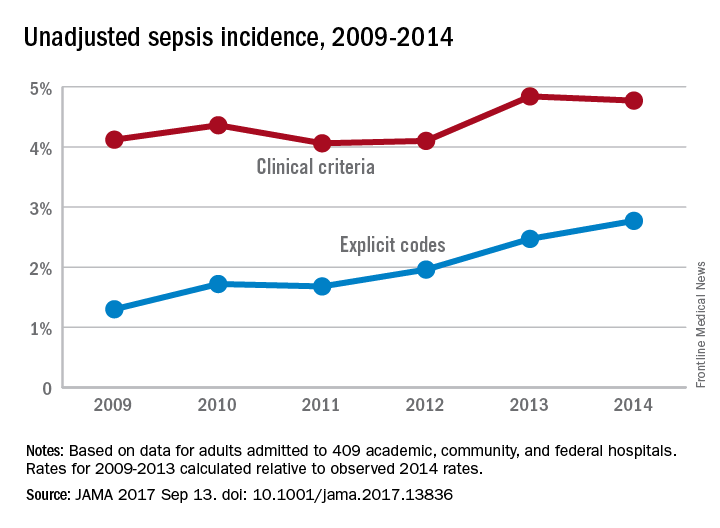
The trend for sepsis incidence from 2009 to 2014, “calculated relative to the observed 2014 rates,” was a stable increase of 0.6% per year using the more accurate of two forms of analysis, investigators reported.
The incidence of sepsis was an adjusted 5.9% among hospitalized adults in 2014, with in-hospital mortality of 15%, according to a retrospective cohort study published online Sept. 13 in JAMA.
“Most studies [of sepsis incidence] have used claims data, but increasing clinical awareness, changes in diagnosis and coding practices, and variable definitions have led to uncertainty about the accuracy of reported trends,” wrote Chanu Rhee, MD, of Harvard Medical School, Boston, and his associates (JAMA. 2017 Sep 13. doi: 10.1001/jama.2017.13836).
They used two methods – one involving claims-based estimates using ICD-9-CM codes and the other based on clinical data from electronic health records (EHRs) – to analyze data for more than 2.9 million adults admitted to 409 U.S. academic, community, and federal acute-care hospitals in 2014. The claims-based “explicit-codes” approach used discharge diagnoses of severe sepsis (995.92) or septic shock (785.52), while the EHR-based, clinical-criteria method included blood cultures, antibiotics, and concurrent organ dysfunction with or without the criterion of a lactate level of 2.0 mmol/L or greater, the investigators said.
The explicit-codes approach produced an increase of 10.3% per year in sepsis incidence from 2009 to 2014, compared with 0.6% per year for the clinical-criteria approach, while in-hospital mortality declined by 7% a year using explicit codes and 3.3% using clinical criteria, Dr. Rhee and his associates reported.
“EHR-based criteria were more sensitive than explicit sepsis codes on medical record review, with comparable [positive predictive value]; EHR-based criteria had similar sensitivity to implicit or explicit codes combined but higher [positive predictive value],” they said.
The estimates provided by Dr. Rhee and his associates provide “a clearer understanding of trends in the incidence and mortality of sepsis in the United States but also a better understanding of the challenges in improving ICD coding to accurately document the global burden of sepsis,” Kristina E. Rudd, MD, of the University of Washington, Seattle, and her associates said in an editorial (JAMA 2017 Sep 13. doi: 10.1001/jama.2017.13697).
The study was funded by the Centers for Disease Control and Prevention, Agency for Healthcare Research and Quality, National Institutes of Health, Department of Veterans Affairs, National Institutes of Health Clinical Center, and National Institute of Allergy and Infectious Diseases. Three of Dr. Rhee’s associates reported receiving personal fees from private companies or serving on advisory boards or as consultants. No other authors reported disclosures. Dr. Rudd and her associates had no conflicts of interest to report.
The trend for sepsis incidence from 2009 to 2014, “calculated relative to the observed 2014 rates,” was a stable increase of 0.6% per year using the more accurate of two forms of analysis, investigators reported.
The incidence of sepsis was an adjusted 5.9% among hospitalized adults in 2014, with in-hospital mortality of 15%, according to a retrospective cohort study published online Sept. 13 in JAMA.
“Most studies [of sepsis incidence] have used claims data, but increasing clinical awareness, changes in diagnosis and coding practices, and variable definitions have led to uncertainty about the accuracy of reported trends,” wrote Chanu Rhee, MD, of Harvard Medical School, Boston, and his associates (JAMA. 2017 Sep 13. doi: 10.1001/jama.2017.13836).
They used two methods – one involving claims-based estimates using ICD-9-CM codes and the other based on clinical data from electronic health records (EHRs) – to analyze data for more than 2.9 million adults admitted to 409 U.S. academic, community, and federal acute-care hospitals in 2014. The claims-based “explicit-codes” approach used discharge diagnoses of severe sepsis (995.92) or septic shock (785.52), while the EHR-based, clinical-criteria method included blood cultures, antibiotics, and concurrent organ dysfunction with or without the criterion of a lactate level of 2.0 mmol/L or greater, the investigators said.
The explicit-codes approach produced an increase of 10.3% per year in sepsis incidence from 2009 to 2014, compared with 0.6% per year for the clinical-criteria approach, while in-hospital mortality declined by 7% a year using explicit codes and 3.3% using clinical criteria, Dr. Rhee and his associates reported.
“EHR-based criteria were more sensitive than explicit sepsis codes on medical record review, with comparable [positive predictive value]; EHR-based criteria had similar sensitivity to implicit or explicit codes combined but higher [positive predictive value],” they said.
The estimates provided by Dr. Rhee and his associates provide “a clearer understanding of trends in the incidence and mortality of sepsis in the United States but also a better understanding of the challenges in improving ICD coding to accurately document the global burden of sepsis,” Kristina E. Rudd, MD, of the University of Washington, Seattle, and her associates said in an editorial (JAMA 2017 Sep 13. doi: 10.1001/jama.2017.13697).
The study was funded by the Centers for Disease Control and Prevention, Agency for Healthcare Research and Quality, National Institutes of Health, Department of Veterans Affairs, National Institutes of Health Clinical Center, and National Institute of Allergy and Infectious Diseases. Three of Dr. Rhee’s associates reported receiving personal fees from private companies or serving on advisory boards or as consultants. No other authors reported disclosures. Dr. Rudd and her associates had no conflicts of interest to report.
FROM JAMA
Sleep Strategies
The definition of mild obstructive sleep apnea (OSA) has varied over the years depending upon several factors, but based upon all definitions, it is highly prevalent. Depending upon presence of symptoms and gender, the prevalence may be as high 28% in men and 26% in women. (Young et al. N Engl J Med. 1993;328:1230).
Typically, a combination of symptoms and frequency of respiratory events is required to make the diagnosis. Based upon the International Classification of Sleep Disorders-3rd edition (ICSD-3), the threshold apnea hypopnea index (AHI) for diagnosis depends upon the presence or absence of symptoms. If an individual has no symptoms, an AHI of 15 events per hour or more is required to make a diagnosis of OSA. However, there are several concerns about whether or not an individual may be “symptomatic.” This is most relevant when driving privileges may be at risk, such as with a commercial drivers’ licensing.

The presence of other comorbid disease can be used as criteria, including hypertension, mood disorder, cognitive dysfunction, coronary artery disease, stroke, congestive heart failure, atrial fibrillation, and type 2 diabetes mellitus. If no signs, symptoms, or comorbid diseases are present, then an AHI greater than 15 events per hour or more is required to make the diagnosis of OSA (Chowdrui et al. Am J Respir Crit Care Med. 2016;193:e37).
There is still debate regarding the association of mild OSA and cardiovascular disease and whether treatment may prevent or reduce cardiovascular outcomes. The four main clinical outcomes typically reported are hypertension, cardiovascular events, cardiovascular and all-cause mortality, and arrhythmias.
A large clinical cohort of patients referred for sleep studies showed no association of mild OSA with different composite outcomes. Kendzerska and colleagues evaluated a composite outcome (myocardial infarction, stroke, CHF, revascularization procedures, or death from any cause) during a median follow-up of 68 months. No association of mild OSA with the composite cardiovascular endpoint was identified compared with those without OSA (Kendzerska et al. PLoS Med. 2014;11[2]:e1001599). Only one population-based study (MrOS Sleep Study) looked at the association between mild OSA and nocturnal arrhythmias in elderly men. The study did not find an increased risk for atrial fibrillation or complex ventricular ectopy in patients with mild OSA vs no OSA (Mehra et al. Arch Intern Med. 2009; 169:1147).
Several cohort studies have reported mild OSA is not associated with increased cardiovascular mortality. In the 18-year follow-up of the Wisconsin Cohort Study, it was found that mild OSA was not associated with cardiovascular mortality (HR, 1.8; 95% CI, 0.7–4.9). All-cause mortality was also not significantly increased in the mild OSA group compared with the no-OSA group in the Wisconsin cohort after 8 years of follow-up (adjusted HR, 1.6; 95% CI, 0.8–2.8). In summary, compared with subjects without OSA, available evidence from population-based longitudinal studies indicates that mild OSA is not associated with increased cardiovascular or all-cause mortality.
Does treatment of mild OSA vs no treatment change cardiovascular or mortality outcomes? This is still debated with no definitive answer. There have been several studies that have examined different therapies for OSA to reduce cardiovascular events. Typical events include coronary artery disease, hypertension, heart failure, stroke, arrhythmias, and cardiovascular disease-related mortality. However, most studies have examined cohorts with moderate to severe OSA with limited evaluation in the mild OSA category.

An observational study evaluated the effects of CPAP specifically in patients with mild OSA. There was no significant difference in the risk of developing hypertension among those patients ineligible for CPAP therapy, active on therapy, or those who declined therapy (Marin et al. JAMA. 2012; 307:2169). In contrast, a retrospective longitudinal cohort with normal blood pressure at baseline (mild OSA without preexisting cardiovascular disease, diabetes, or hyperlipidemia) did show decrease in mean arterial blood pressure of 2 mm Hg in the treatment group (Jaimchariyatam et al. Sleep Med. 2010;11:837). The MOSAIC trial was a multicenter randomized trial that evaluated the effects of CPAP on cardiac function in minimally symptomatic patients with OSA. The use of CPAP reduced the oxygen desaturation index (ODI) and Epworth Sleepiness Scale values. However, 6 months of therapy did not change functional or structural parameters measured by echocardiogram or cardiac magnetic resonance scanning in patients with mild to moderate OSA (Craig et al. J Clin Sleep Med. 2015;11[9]:967). A single retrospective study reported the effects of CPAP in patients with mild OSA and all-cause mortality. The study compared treatment with patients using CPAP more than 4 hours vs a combined group of nonadherent and those who refused therapy (Hudgel et al. J Clin Sleep Med. 2012;8:9). There was no significant difference in all-cause mortality in the two groups. However, this study did not analyze the impact of therapy on cardiovascular-specific mortality.
To date, there have been no studies that have evaluated the impact of treatment of mild OSA on cardiovascular events, arrhythmias, or stroke. In addition, there have been no randomized studies assessing treatment of mild OSA on fatal and nonfatal cardiovascular events. There is inadequate evidence regarding the effect of mild OSA on elevated blood pressure, neurologic cognition, quality of life, and cardiovascular consequences. Future research is needed to investigate the impact of mild OSA on these outcomes.
In summary, mild OSA is a very prevalent disease but the association with hypertension remains unclear and the literature to date suggests no association with other cardiovascular outcomes. In addition, no clear prevention of cardiovascular outcomes with treatment has been proven in the setting of mild OSA.
Dr. Duthuluru is Assistant Professor, Dr. Nazir is Assistant Professor, and Dr. Stevens is Associate Professor at the University of Kansas Medical Center.
The definition of mild obstructive sleep apnea (OSA) has varied over the years depending upon several factors, but based upon all definitions, it is highly prevalent. Depending upon presence of symptoms and gender, the prevalence may be as high 28% in men and 26% in women. (Young et al. N Engl J Med. 1993;328:1230).
Typically, a combination of symptoms and frequency of respiratory events is required to make the diagnosis. Based upon the International Classification of Sleep Disorders-3rd edition (ICSD-3), the threshold apnea hypopnea index (AHI) for diagnosis depends upon the presence or absence of symptoms. If an individual has no symptoms, an AHI of 15 events per hour or more is required to make a diagnosis of OSA. However, there are several concerns about whether or not an individual may be “symptomatic.” This is most relevant when driving privileges may be at risk, such as with a commercial drivers’ licensing.
The presence of other comorbid disease can be used as criteria, including hypertension, mood disorder, cognitive dysfunction, coronary artery disease, stroke, congestive heart failure, atrial fibrillation, and type 2 diabetes mellitus. If no signs, symptoms, or comorbid diseases are present, then an AHI greater than 15 events per hour or more is required to make the diagnosis of OSA (Chowdrui et al. Am J Respir Crit Care Med. 2016;193:e37).
There is still debate regarding the association of mild OSA and cardiovascular disease and whether treatment may prevent or reduce cardiovascular outcomes. The four main clinical outcomes typically reported are hypertension, cardiovascular events, cardiovascular and all-cause mortality, and arrhythmias.
A large clinical cohort of patients referred for sleep studies showed no association of mild OSA with different composite outcomes. Kendzerska and colleagues evaluated a composite outcome (myocardial infarction, stroke, CHF, revascularization procedures, or death from any cause) during a median follow-up of 68 months. No association of mild OSA with the composite cardiovascular endpoint was identified compared with those without OSA (Kendzerska et al. PLoS Med. 2014;11[2]:e1001599). Only one population-based study (MrOS Sleep Study) looked at the association between mild OSA and nocturnal arrhythmias in elderly men. The study did not find an increased risk for atrial fibrillation or complex ventricular ectopy in patients with mild OSA vs no OSA (Mehra et al. Arch Intern Med. 2009; 169:1147).
Several cohort studies have reported mild OSA is not associated with increased cardiovascular mortality. In the 18-year follow-up of the Wisconsin Cohort Study, it was found that mild OSA was not associated with cardiovascular mortality (HR, 1.8; 95% CI, 0.7–4.9). All-cause mortality was also not significantly increased in the mild OSA group compared with the no-OSA group in the Wisconsin cohort after 8 years of follow-up (adjusted HR, 1.6; 95% CI, 0.8–2.8). In summary, compared with subjects without OSA, available evidence from population-based longitudinal studies indicates that mild OSA is not associated with increased cardiovascular or all-cause mortality.
Does treatment of mild OSA vs no treatment change cardiovascular or mortality outcomes? This is still debated with no definitive answer. There have been several studies that have examined different therapies for OSA to reduce cardiovascular events. Typical events include coronary artery disease, hypertension, heart failure, stroke, arrhythmias, and cardiovascular disease-related mortality. However, most studies have examined cohorts with moderate to severe OSA with limited evaluation in the mild OSA category.
An observational study evaluated the effects of CPAP specifically in patients with mild OSA. There was no significant difference in the risk of developing hypertension among those patients ineligible for CPAP therapy, active on therapy, or those who declined therapy (Marin et al. JAMA. 2012; 307:2169). In contrast, a retrospective longitudinal cohort with normal blood pressure at baseline (mild OSA without preexisting cardiovascular disease, diabetes, or hyperlipidemia) did show decrease in mean arterial blood pressure of 2 mm Hg in the treatment group (Jaimchariyatam et al. Sleep Med. 2010;11:837). The MOSAIC trial was a multicenter randomized trial that evaluated the effects of CPAP on cardiac function in minimally symptomatic patients with OSA. The use of CPAP reduced the oxygen desaturation index (ODI) and Epworth Sleepiness Scale values. However, 6 months of therapy did not change functional or structural parameters measured by echocardiogram or cardiac magnetic resonance scanning in patients with mild to moderate OSA (Craig et al. J Clin Sleep Med. 2015;11[9]:967). A single retrospective study reported the effects of CPAP in patients with mild OSA and all-cause mortality. The study compared treatment with patients using CPAP more than 4 hours vs a combined group of nonadherent and those who refused therapy (Hudgel et al. J Clin Sleep Med. 2012;8:9). There was no significant difference in all-cause mortality in the two groups. However, this study did not analyze the impact of therapy on cardiovascular-specific mortality.
To date, there have been no studies that have evaluated the impact of treatment of mild OSA on cardiovascular events, arrhythmias, or stroke. In addition, there have been no randomized studies assessing treatment of mild OSA on fatal and nonfatal cardiovascular events. There is inadequate evidence regarding the effect of mild OSA on elevated blood pressure, neurologic cognition, quality of life, and cardiovascular consequences. Future research is needed to investigate the impact of mild OSA on these outcomes.
In summary, mild OSA is a very prevalent disease but the association with hypertension remains unclear and the literature to date suggests no association with other cardiovascular outcomes. In addition, no clear prevention of cardiovascular outcomes with treatment has been proven in the setting of mild OSA.
Dr. Duthuluru is Assistant Professor, Dr. Nazir is Assistant Professor, and Dr. Stevens is Associate Professor at the University of Kansas Medical Center.
The definition of mild obstructive sleep apnea (OSA) has varied over the years depending upon several factors, but based upon all definitions, it is highly prevalent. Depending upon presence of symptoms and gender, the prevalence may be as high 28% in men and 26% in women. (Young et al. N Engl J Med. 1993;328:1230).
Typically, a combination of symptoms and frequency of respiratory events is required to make the diagnosis. Based upon the International Classification of Sleep Disorders-3rd edition (ICSD-3), the threshold apnea hypopnea index (AHI) for diagnosis depends upon the presence or absence of symptoms. If an individual has no symptoms, an AHI of 15 events per hour or more is required to make a diagnosis of OSA. However, there are several concerns about whether or not an individual may be “symptomatic.” This is most relevant when driving privileges may be at risk, such as with a commercial drivers’ licensing.
The presence of other comorbid disease can be used as criteria, including hypertension, mood disorder, cognitive dysfunction, coronary artery disease, stroke, congestive heart failure, atrial fibrillation, and type 2 diabetes mellitus. If no signs, symptoms, or comorbid diseases are present, then an AHI greater than 15 events per hour or more is required to make the diagnosis of OSA (Chowdrui et al. Am J Respir Crit Care Med. 2016;193:e37).
There is still debate regarding the association of mild OSA and cardiovascular disease and whether treatment may prevent or reduce cardiovascular outcomes. The four main clinical outcomes typically reported are hypertension, cardiovascular events, cardiovascular and all-cause mortality, and arrhythmias.
A large clinical cohort of patients referred for sleep studies showed no association of mild OSA with different composite outcomes. Kendzerska and colleagues evaluated a composite outcome (myocardial infarction, stroke, CHF, revascularization procedures, or death from any cause) during a median follow-up of 68 months. No association of mild OSA with the composite cardiovascular endpoint was identified compared with those without OSA (Kendzerska et al. PLoS Med. 2014;11[2]:e1001599). Only one population-based study (MrOS Sleep Study) looked at the association between mild OSA and nocturnal arrhythmias in elderly men. The study did not find an increased risk for atrial fibrillation or complex ventricular ectopy in patients with mild OSA vs no OSA (Mehra et al. Arch Intern Med. 2009; 169:1147).
Several cohort studies have reported mild OSA is not associated with increased cardiovascular mortality. In the 18-year follow-up of the Wisconsin Cohort Study, it was found that mild OSA was not associated with cardiovascular mortality (HR, 1.8; 95% CI, 0.7–4.9). All-cause mortality was also not significantly increased in the mild OSA group compared with the no-OSA group in the Wisconsin cohort after 8 years of follow-up (adjusted HR, 1.6; 95% CI, 0.8–2.8). In summary, compared with subjects without OSA, available evidence from population-based longitudinal studies indicates that mild OSA is not associated with increased cardiovascular or all-cause mortality.
Does treatment of mild OSA vs no treatment change cardiovascular or mortality outcomes? This is still debated with no definitive answer. There have been several studies that have examined different therapies for OSA to reduce cardiovascular events. Typical events include coronary artery disease, hypertension, heart failure, stroke, arrhythmias, and cardiovascular disease-related mortality. However, most studies have examined cohorts with moderate to severe OSA with limited evaluation in the mild OSA category.
An observational study evaluated the effects of CPAP specifically in patients with mild OSA. There was no significant difference in the risk of developing hypertension among those patients ineligible for CPAP therapy, active on therapy, or those who declined therapy (Marin et al. JAMA. 2012; 307:2169). In contrast, a retrospective longitudinal cohort with normal blood pressure at baseline (mild OSA without preexisting cardiovascular disease, diabetes, or hyperlipidemia) did show decrease in mean arterial blood pressure of 2 mm Hg in the treatment group (Jaimchariyatam et al. Sleep Med. 2010;11:837). The MOSAIC trial was a multicenter randomized trial that evaluated the effects of CPAP on cardiac function in minimally symptomatic patients with OSA. The use of CPAP reduced the oxygen desaturation index (ODI) and Epworth Sleepiness Scale values. However, 6 months of therapy did not change functional or structural parameters measured by echocardiogram or cardiac magnetic resonance scanning in patients with mild to moderate OSA (Craig et al. J Clin Sleep Med. 2015;11[9]:967). A single retrospective study reported the effects of CPAP in patients with mild OSA and all-cause mortality. The study compared treatment with patients using CPAP more than 4 hours vs a combined group of nonadherent and those who refused therapy (Hudgel et al. J Clin Sleep Med. 2012;8:9). There was no significant difference in all-cause mortality in the two groups. However, this study did not analyze the impact of therapy on cardiovascular-specific mortality.
To date, there have been no studies that have evaluated the impact of treatment of mild OSA on cardiovascular events, arrhythmias, or stroke. In addition, there have been no randomized studies assessing treatment of mild OSA on fatal and nonfatal cardiovascular events. There is inadequate evidence regarding the effect of mild OSA on elevated blood pressure, neurologic cognition, quality of life, and cardiovascular consequences. Future research is needed to investigate the impact of mild OSA on these outcomes.
In summary, mild OSA is a very prevalent disease but the association with hypertension remains unclear and the literature to date suggests no association with other cardiovascular outcomes. In addition, no clear prevention of cardiovascular outcomes with treatment has been proven in the setting of mild OSA.
Dr. Duthuluru is Assistant Professor, Dr. Nazir is Assistant Professor, and Dr. Stevens is Associate Professor at the University of Kansas Medical Center.
CHEST Foundation NetWorks Challenge
The CHEST Foundation is proud to announce the winners of the first round of the 2017 NetWorks Challenge! Our first place winner, Home-Based Mechanical Ventilation and Neuromuscular Disease NetWork, and our second place finisher, Women’s Health NetWork, both receive session time at CHEST 2017 on a topic of their choice and two travel grants to help their NetWork members attend CHEST 2017.

The Women’s Health NetWork was directly behind our first place finishers with more than 90% participation. Their session, “Care of the Critically Ill Pregnant Woman: Balancing Two Patients and Two Lives” will be on Monday, October 30, 1:30 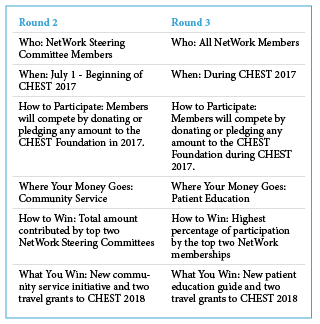
Don’t forget, there is still time to win Round 2 and Round 3 of the NetWorks Challenge.
Learn more about the challenge at chestfoundation.org/networkschallenge.
The CHEST Foundation is proud to announce the winners of the first round of the 2017 NetWorks Challenge! Our first place winner, Home-Based Mechanical Ventilation and Neuromuscular Disease NetWork, and our second place finisher, Women’s Health NetWork, both receive session time at CHEST 2017 on a topic of their choice and two travel grants to help their NetWork members attend CHEST 2017.
The Women’s Health NetWork was directly behind our first place finishers with more than 90% participation. Their session, “Care of the Critically Ill Pregnant Woman: Balancing Two Patients and Two Lives” will be on Monday, October 30, 1:30
Don’t forget, there is still time to win Round 2 and Round 3 of the NetWorks Challenge.
Learn more about the challenge at chestfoundation.org/networkschallenge.
The CHEST Foundation is proud to announce the winners of the first round of the 2017 NetWorks Challenge! Our first place winner, Home-Based Mechanical Ventilation and Neuromuscular Disease NetWork, and our second place finisher, Women’s Health NetWork, both receive session time at CHEST 2017 on a topic of their choice and two travel grants to help their NetWork members attend CHEST 2017.
The Women’s Health NetWork was directly behind our first place finishers with more than 90% participation. Their session, “Care of the Critically Ill Pregnant Woman: Balancing Two Patients and Two Lives” will be on Monday, October 30, 1:30
Don’t forget, there is still time to win Round 2 and Round 3 of the NetWorks Challenge.
Learn more about the challenge at chestfoundation.org/networkschallenge.
Aptiom approved for pediatric partial-onset seizures
The Food and Drug Administration has approved Aptiom (eslicarbazepine acetate) for the treatment of partial-onset seizures in children aged 4-17 years, according to an announcement from Sunovion Pharmaceuticals.
The approval was based on results of three clinical trials where eslicarbazepine was shown to be safe and well tolerated in pediatric populations. The efficacy of eslicarbazepine has been illustrated in clinical trials in adult populations, and data were extrapolated to support usage in pediatric patients. Eslicarbazepine has previously been approved to treat partial-onset seizures in adults.
Pediatric dosing of eslicarbazepine is based on weight, and the tablets, available in 200-mg, 400-mg, 600-mg, and 800-mg strengths, can be taken whole or crushed, with or without food, according to the prescribing information.
“The unpredictable nature of seizures can be disruptive in the lives of these young people and their families, friends, and community. It is important that physicians have additional treatment options that address patient needs,” Steven Wolf, MD, director of pediatric epilepsy at Mount Sinai Health System, said in the announcement.
The Food and Drug Administration has approved Aptiom (eslicarbazepine acetate) for the treatment of partial-onset seizures in children aged 4-17 years, according to an announcement from Sunovion Pharmaceuticals.
The approval was based on results of three clinical trials where eslicarbazepine was shown to be safe and well tolerated in pediatric populations. The efficacy of eslicarbazepine has been illustrated in clinical trials in adult populations, and data were extrapolated to support usage in pediatric patients. Eslicarbazepine has previously been approved to treat partial-onset seizures in adults.
Pediatric dosing of eslicarbazepine is based on weight, and the tablets, available in 200-mg, 400-mg, 600-mg, and 800-mg strengths, can be taken whole or crushed, with or without food, according to the prescribing information.
“The unpredictable nature of seizures can be disruptive in the lives of these young people and their families, friends, and community. It is important that physicians have additional treatment options that address patient needs,” Steven Wolf, MD, director of pediatric epilepsy at Mount Sinai Health System, said in the announcement.
The Food and Drug Administration has approved Aptiom (eslicarbazepine acetate) for the treatment of partial-onset seizures in children aged 4-17 years, according to an announcement from Sunovion Pharmaceuticals.
The approval was based on results of three clinical trials where eslicarbazepine was shown to be safe and well tolerated in pediatric populations. The efficacy of eslicarbazepine has been illustrated in clinical trials in adult populations, and data were extrapolated to support usage in pediatric patients. Eslicarbazepine has previously been approved to treat partial-onset seizures in adults.
Pediatric dosing of eslicarbazepine is based on weight, and the tablets, available in 200-mg, 400-mg, 600-mg, and 800-mg strengths, can be taken whole or crushed, with or without food, according to the prescribing information.
“The unpredictable nature of seizures can be disruptive in the lives of these young people and their families, friends, and community. It is important that physicians have additional treatment options that address patient needs,” Steven Wolf, MD, director of pediatric epilepsy at Mount Sinai Health System, said in the announcement.