User login
Buprenorphine linked to less neonatal abstinence syndrome than methadone
CHICAGO – Methadone was associated with a significantly higher incidence of neonatal abstinence syndrome (NAS), compared with babies born to mothers who took buprenorphine for opioid maintenance therapy during pregnancy, a retrospective study of 204 neonates revealed.
Interestingly, among babies who developed the syndrome, the duration of treatment and length of stay did not differ significantly between groups.
“We found buprenorphine decreases [the incidence of] NAS,” said Alla Kushnir, MD, an attending neonatologist at Cooper University Hospital in Camden, N.J. The findings also demonstrate that physicians can expect to see “about the same withdrawal once they withdraw,” regardless of whether the mother took methadone or buprenorphine during pregnancy.
“We can’t make it better, but we can prevent some neonatal abstinence syndrome,” Dr. Kushnir said in an interview at the annual meeting of the American Academy of Pediatrics.
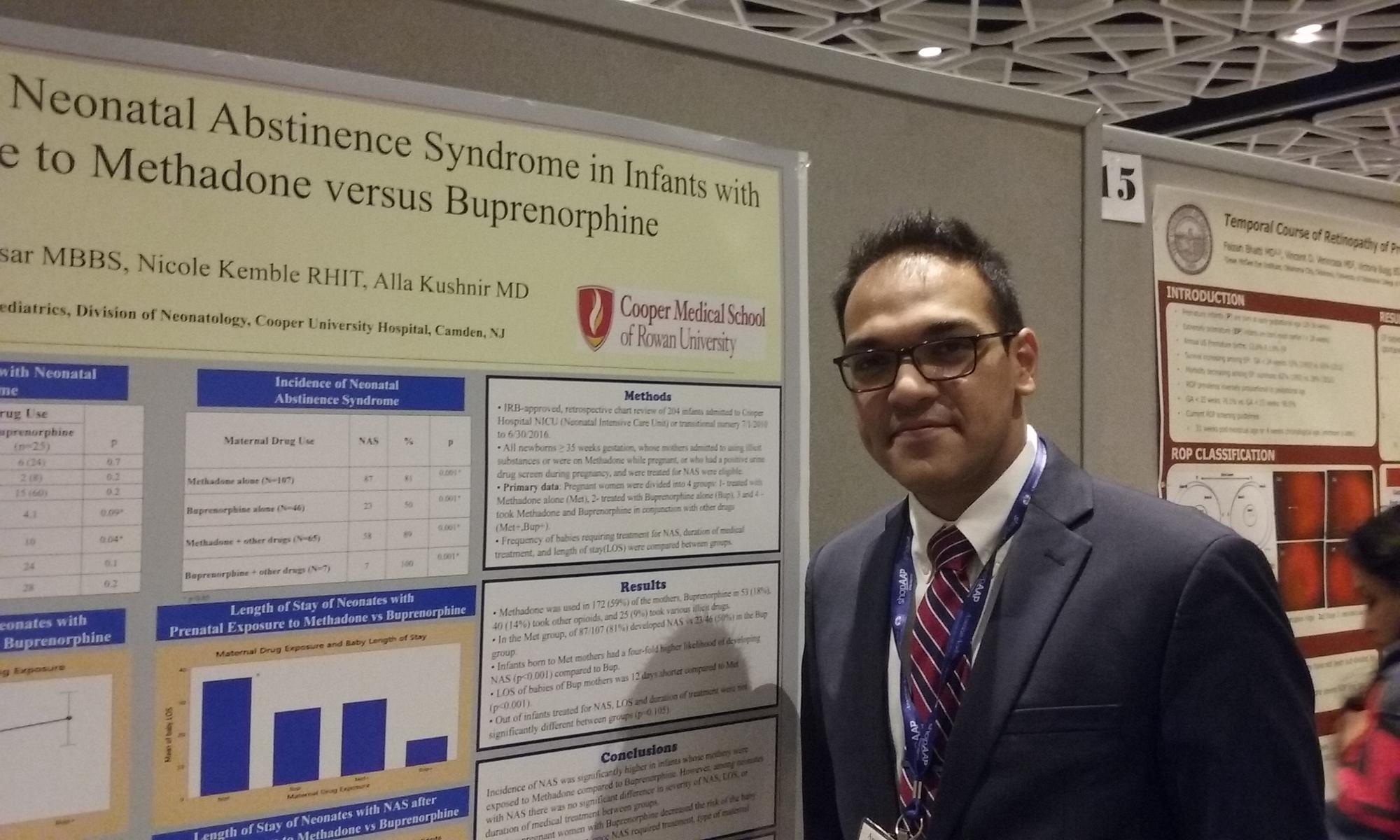
The infants in the study were admitted to the neonatal ICU between July 2010 and June 2016. The mothers self-reported prenatal use of methadone, buprenorphine, other opioids and/or various illicit drugs, or tested positive on a urine screen during pregnancy. In the methadone group, 81% of infants developed NAS, compared with 50% of those in the buprenorphine group. The higher likelihood of developing NAS from methadone-treated mothers was statistically significant (P less than .001).
The study population included some women who reported taking additional drugs. Among 65 infants born to women who combined methadone with other agents, 58 (89%) developed NAS. In addition, all seven infants (100%) born to women who took buprenorphine and other drugs developed the syndrome.
“Methadone was the clear bad guy in terms of incidence” between the two drugs, said Ravi Bhavsar, MBBS, a research assistant at the hospital.
Among the infants who developed NAS symptoms, the hospital length of stay and duration of medical treatment – indicators of syndrome severity – did not differ significantly (P = .015).
“This study also tells us that more research needs to be done,” Dr. Bhavsar said. Methadone is a mainstay of opioid maintenance therapy, he added, and additional evidence is warranted before shifting recommendations toward buprenorphine.
Dr. Kushnir and Dr. Bhavsar reported having no relevant financial disclosures.
CHICAGO – Methadone was associated with a significantly higher incidence of neonatal abstinence syndrome (NAS), compared with babies born to mothers who took buprenorphine for opioid maintenance therapy during pregnancy, a retrospective study of 204 neonates revealed.
Interestingly, among babies who developed the syndrome, the duration of treatment and length of stay did not differ significantly between groups.
“We found buprenorphine decreases [the incidence of] NAS,” said Alla Kushnir, MD, an attending neonatologist at Cooper University Hospital in Camden, N.J. The findings also demonstrate that physicians can expect to see “about the same withdrawal once they withdraw,” regardless of whether the mother took methadone or buprenorphine during pregnancy.
“We can’t make it better, but we can prevent some neonatal abstinence syndrome,” Dr. Kushnir said in an interview at the annual meeting of the American Academy of Pediatrics.
The infants in the study were admitted to the neonatal ICU between July 2010 and June 2016. The mothers self-reported prenatal use of methadone, buprenorphine, other opioids and/or various illicit drugs, or tested positive on a urine screen during pregnancy. In the methadone group, 81% of infants developed NAS, compared with 50% of those in the buprenorphine group. The higher likelihood of developing NAS from methadone-treated mothers was statistically significant (P less than .001).
The study population included some women who reported taking additional drugs. Among 65 infants born to women who combined methadone with other agents, 58 (89%) developed NAS. In addition, all seven infants (100%) born to women who took buprenorphine and other drugs developed the syndrome.
“Methadone was the clear bad guy in terms of incidence” between the two drugs, said Ravi Bhavsar, MBBS, a research assistant at the hospital.
Among the infants who developed NAS symptoms, the hospital length of stay and duration of medical treatment – indicators of syndrome severity – did not differ significantly (P = .015).
“This study also tells us that more research needs to be done,” Dr. Bhavsar said. Methadone is a mainstay of opioid maintenance therapy, he added, and additional evidence is warranted before shifting recommendations toward buprenorphine.
Dr. Kushnir and Dr. Bhavsar reported having no relevant financial disclosures.
CHICAGO – Methadone was associated with a significantly higher incidence of neonatal abstinence syndrome (NAS), compared with babies born to mothers who took buprenorphine for opioid maintenance therapy during pregnancy, a retrospective study of 204 neonates revealed.
Interestingly, among babies who developed the syndrome, the duration of treatment and length of stay did not differ significantly between groups.
“We found buprenorphine decreases [the incidence of] NAS,” said Alla Kushnir, MD, an attending neonatologist at Cooper University Hospital in Camden, N.J. The findings also demonstrate that physicians can expect to see “about the same withdrawal once they withdraw,” regardless of whether the mother took methadone or buprenorphine during pregnancy.
“We can’t make it better, but we can prevent some neonatal abstinence syndrome,” Dr. Kushnir said in an interview at the annual meeting of the American Academy of Pediatrics.
The infants in the study were admitted to the neonatal ICU between July 2010 and June 2016. The mothers self-reported prenatal use of methadone, buprenorphine, other opioids and/or various illicit drugs, or tested positive on a urine screen during pregnancy. In the methadone group, 81% of infants developed NAS, compared with 50% of those in the buprenorphine group. The higher likelihood of developing NAS from methadone-treated mothers was statistically significant (P less than .001).
The study population included some women who reported taking additional drugs. Among 65 infants born to women who combined methadone with other agents, 58 (89%) developed NAS. In addition, all seven infants (100%) born to women who took buprenorphine and other drugs developed the syndrome.
“Methadone was the clear bad guy in terms of incidence” between the two drugs, said Ravi Bhavsar, MBBS, a research assistant at the hospital.
Among the infants who developed NAS symptoms, the hospital length of stay and duration of medical treatment – indicators of syndrome severity – did not differ significantly (P = .015).
“This study also tells us that more research needs to be done,” Dr. Bhavsar said. Methadone is a mainstay of opioid maintenance therapy, he added, and additional evidence is warranted before shifting recommendations toward buprenorphine.
Dr. Kushnir and Dr. Bhavsar reported having no relevant financial disclosures.
AT AAP 2017
Key clinical point: .
Major finding: 81% of infants in the methadone group developed NAS, compared with 50% of the buprenorphine group.
Data source: Retrospective study of 204 babies admitted to a NICU between July 2010 to June 2016 whose mothers admitted or tested positive for opioid maintenance therapy.
Disclosures: Dr. Kushnir and Dr. Bhaysar reported having no relevant financial disclosures.
EVAR registry results show equivalence between the sexes
A global registry showed that men and women had equivalent outcomes after endovascular abdominal aortic aneurysm repair (EVAR) despite significant differences in baseline characteristics, anatomy, and off-instruction stent use.
The 5-year ENGAGE (Endurant Stent Graft Natural Selection Global Postmarket Registry) data were presented by Marc Schermerhorn, MD, chief, division of vascular and endovascular surgery, Beth Israel Deaconess Medical Center, Boston, in a late-breaking clinical trial at the Vascular Interventional Advances (VIVA) 2017 conference in Las Vegas.
The registry comprises data from 1,263 patients (133 women and 1,130 men) in 30 countries who received the Endurant II stent graft during for endovascular repair of the abdominal aortic aneurysm. ENGAGE participants are consecutively enrolled, and have 30-day and subsequent yearly evaluations, with independent data monitoring and event adjudication.

Despite many other equivalent demographic and clinical characteristics, including smoking status, hypertension, diabetes, and pulmonary disease, overall women were statistically significantly older, had less cardiac disease, had shorter and more angulated aneurysm necks, and had smaller iliac arteries. In addition they were more likely to be treated outside of the Endurant II instructions for use (IFU), according to Dr. Schemerhorn.
Women also had significantly longer hospital stays than men (7.9 days vs. 6.4 days), respectively, but had equivalent procedure duration, ICU times, and similarly successful stent delivery and deployment (99%).
But despite these differences in baseline characteristics and anatomy, the 5-year data showed equivalent outcomes between women and men at 30 days, and 1 year, and through 5 years. There were no significant differences across these periods in freedom from all-cause mortality (67.5% in men, 65.6% in women, P = 0.87), 5-year freedom from aneurysm-related mortality (97.5% men, 100% women, P = .09), 5-year freedom from rupture (98.4% men, 100% women, P = .23), and 5-year freedom from conversion (97.8% men, 99.2% women, P = .48). There were also no significant differences in type 1 endoleaks, 5-year freedom from conversion, and sac diameter changes, Dr. Schermerhorn concluded.
The ENGAGE registry is sponsored by Medtronic. Dr. Schermerhorn disclosed that he was a consultant for several medical device companies and a shareholder and owner of a health care company, but that he did not have any potential conflicts of interest for this particular study.
[email protected]
A global registry showed that men and women had equivalent outcomes after endovascular abdominal aortic aneurysm repair (EVAR) despite significant differences in baseline characteristics, anatomy, and off-instruction stent use.
The 5-year ENGAGE (Endurant Stent Graft Natural Selection Global Postmarket Registry) data were presented by Marc Schermerhorn, MD, chief, division of vascular and endovascular surgery, Beth Israel Deaconess Medical Center, Boston, in a late-breaking clinical trial at the Vascular Interventional Advances (VIVA) 2017 conference in Las Vegas.
The registry comprises data from 1,263 patients (133 women and 1,130 men) in 30 countries who received the Endurant II stent graft during for endovascular repair of the abdominal aortic aneurysm. ENGAGE participants are consecutively enrolled, and have 30-day and subsequent yearly evaluations, with independent data monitoring and event adjudication.
Despite many other equivalent demographic and clinical characteristics, including smoking status, hypertension, diabetes, and pulmonary disease, overall women were statistically significantly older, had less cardiac disease, had shorter and more angulated aneurysm necks, and had smaller iliac arteries. In addition they were more likely to be treated outside of the Endurant II instructions for use (IFU), according to Dr. Schemerhorn.
Women also had significantly longer hospital stays than men (7.9 days vs. 6.4 days), respectively, but had equivalent procedure duration, ICU times, and similarly successful stent delivery and deployment (99%).
But despite these differences in baseline characteristics and anatomy, the 5-year data showed equivalent outcomes between women and men at 30 days, and 1 year, and through 5 years. There were no significant differences across these periods in freedom from all-cause mortality (67.5% in men, 65.6% in women, P = 0.87), 5-year freedom from aneurysm-related mortality (97.5% men, 100% women, P = .09), 5-year freedom from rupture (98.4% men, 100% women, P = .23), and 5-year freedom from conversion (97.8% men, 99.2% women, P = .48). There were also no significant differences in type 1 endoleaks, 5-year freedom from conversion, and sac diameter changes, Dr. Schermerhorn concluded.
The ENGAGE registry is sponsored by Medtronic. Dr. Schermerhorn disclosed that he was a consultant for several medical device companies and a shareholder and owner of a health care company, but that he did not have any potential conflicts of interest for this particular study.
[email protected]
A global registry showed that men and women had equivalent outcomes after endovascular abdominal aortic aneurysm repair (EVAR) despite significant differences in baseline characteristics, anatomy, and off-instruction stent use.
The 5-year ENGAGE (Endurant Stent Graft Natural Selection Global Postmarket Registry) data were presented by Marc Schermerhorn, MD, chief, division of vascular and endovascular surgery, Beth Israel Deaconess Medical Center, Boston, in a late-breaking clinical trial at the Vascular Interventional Advances (VIVA) 2017 conference in Las Vegas.
The registry comprises data from 1,263 patients (133 women and 1,130 men) in 30 countries who received the Endurant II stent graft during for endovascular repair of the abdominal aortic aneurysm. ENGAGE participants are consecutively enrolled, and have 30-day and subsequent yearly evaluations, with independent data monitoring and event adjudication.
Despite many other equivalent demographic and clinical characteristics, including smoking status, hypertension, diabetes, and pulmonary disease, overall women were statistically significantly older, had less cardiac disease, had shorter and more angulated aneurysm necks, and had smaller iliac arteries. In addition they were more likely to be treated outside of the Endurant II instructions for use (IFU), according to Dr. Schemerhorn.
Women also had significantly longer hospital stays than men (7.9 days vs. 6.4 days), respectively, but had equivalent procedure duration, ICU times, and similarly successful stent delivery and deployment (99%).
But despite these differences in baseline characteristics and anatomy, the 5-year data showed equivalent outcomes between women and men at 30 days, and 1 year, and through 5 years. There were no significant differences across these periods in freedom from all-cause mortality (67.5% in men, 65.6% in women, P = 0.87), 5-year freedom from aneurysm-related mortality (97.5% men, 100% women, P = .09), 5-year freedom from rupture (98.4% men, 100% women, P = .23), and 5-year freedom from conversion (97.8% men, 99.2% women, P = .48). There were also no significant differences in type 1 endoleaks, 5-year freedom from conversion, and sac diameter changes, Dr. Schermerhorn concluded.
The ENGAGE registry is sponsored by Medtronic. Dr. Schermerhorn disclosed that he was a consultant for several medical device companies and a shareholder and owner of a health care company, but that he did not have any potential conflicts of interest for this particular study.
[email protected]
FROM VIVA 17
Key clinical point:
Major finding: The 5-year data showed equivalent outcomes between women and men at 30 days, and 1 year, and through 5 years.
Data source: ENGAGE global registry data from 1,263 patients (133 women and 1,130 men).
Disclosures: The ENGAGE registry is sponsored by Medtronic. Dr. Schermerhorn reported that he had no potential conflicts of interest for this study.
Can We Trust the Data?
In his thought provoking keynote address at the annual Association of VA Hematology and Oncology meeting in Denver on September 15, 2017, John P.A. Ioannidis, MD, DSc, of Stanford University challenged the current reliance on clinical trial research and meta-analyses. Ioannidis has published numerous examinations of medical literature and found significant biases and potential limitations, and as he noted, few health care providers are aware of the poor quality of the research and its limitations.
Ioannidis’ studies contend that in most medical research “there is no evidence to build our decision making,” although he acknowledged that hematology and oncology research is a little better than other parts of the medical research. In a study of indexed articles, for example, just 19% had at least one outcome with high quality evidence. He attributes this to a number of types of flaws, including bias, an increase in research conducted in regions without a strong tradition, and degrees of freedom to conduct research, even in clinical trials.
Complicating matters even further, Ioannidis pointed out that many of the most highly cited studies were later refuted in other studies. In a re-examination of study data made available by researchers publishing in BMJ and PLoS Medicine, Ioannidis and his colleagues found that they could reproduce a fraction of the results. Moreover, he argued, “even when we can trust the data, most clinical research is not useful for making decisions.”
To measure the usefulness of a study, Ioannidis and his colleagues noted 8 different quality measures:
- Problem base;
- Context placement;
- Information gain;
- Pragmatism;
- Patient-centeredness;
- Value for money;
- Feasibility; and
- Transparency.
According to Ioannidis, few trials or studies hit 5 of 8 measures, and he has yet to find a study that incorporates all 8. Even articles in the most prestigious journals tend to score fairly low, he noted.
Meta-analyses are not immune to these structural problems, according to Ioannidis. Close to 100,000 meta-analysis have been published, with nearly 1,000 new studies published each month. Some, he noted, have been “hijacked to serve other agendas,” while many others simply summarized biased information.
Despite these concerns, Ioannidis remains optimistic. “We need to maximize diversity, minimize co-occurrence and incoherence” in the medical literature he argued.
In his thought provoking keynote address at the annual Association of VA Hematology and Oncology meeting in Denver on September 15, 2017, John P.A. Ioannidis, MD, DSc, of Stanford University challenged the current reliance on clinical trial research and meta-analyses. Ioannidis has published numerous examinations of medical literature and found significant biases and potential limitations, and as he noted, few health care providers are aware of the poor quality of the research and its limitations.
Ioannidis’ studies contend that in most medical research “there is no evidence to build our decision making,” although he acknowledged that hematology and oncology research is a little better than other parts of the medical research. In a study of indexed articles, for example, just 19% had at least one outcome with high quality evidence. He attributes this to a number of types of flaws, including bias, an increase in research conducted in regions without a strong tradition, and degrees of freedom to conduct research, even in clinical trials.
Complicating matters even further, Ioannidis pointed out that many of the most highly cited studies were later refuted in other studies. In a re-examination of study data made available by researchers publishing in BMJ and PLoS Medicine, Ioannidis and his colleagues found that they could reproduce a fraction of the results. Moreover, he argued, “even when we can trust the data, most clinical research is not useful for making decisions.”
To measure the usefulness of a study, Ioannidis and his colleagues noted 8 different quality measures:
- Problem base;
- Context placement;
- Information gain;
- Pragmatism;
- Patient-centeredness;
- Value for money;
- Feasibility; and
- Transparency.
According to Ioannidis, few trials or studies hit 5 of 8 measures, and he has yet to find a study that incorporates all 8. Even articles in the most prestigious journals tend to score fairly low, he noted.
Meta-analyses are not immune to these structural problems, according to Ioannidis. Close to 100,000 meta-analysis have been published, with nearly 1,000 new studies published each month. Some, he noted, have been “hijacked to serve other agendas,” while many others simply summarized biased information.
Despite these concerns, Ioannidis remains optimistic. “We need to maximize diversity, minimize co-occurrence and incoherence” in the medical literature he argued.
In his thought provoking keynote address at the annual Association of VA Hematology and Oncology meeting in Denver on September 15, 2017, John P.A. Ioannidis, MD, DSc, of Stanford University challenged the current reliance on clinical trial research and meta-analyses. Ioannidis has published numerous examinations of medical literature and found significant biases and potential limitations, and as he noted, few health care providers are aware of the poor quality of the research and its limitations.
Ioannidis’ studies contend that in most medical research “there is no evidence to build our decision making,” although he acknowledged that hematology and oncology research is a little better than other parts of the medical research. In a study of indexed articles, for example, just 19% had at least one outcome with high quality evidence. He attributes this to a number of types of flaws, including bias, an increase in research conducted in regions without a strong tradition, and degrees of freedom to conduct research, even in clinical trials.
Complicating matters even further, Ioannidis pointed out that many of the most highly cited studies were later refuted in other studies. In a re-examination of study data made available by researchers publishing in BMJ and PLoS Medicine, Ioannidis and his colleagues found that they could reproduce a fraction of the results. Moreover, he argued, “even when we can trust the data, most clinical research is not useful for making decisions.”
To measure the usefulness of a study, Ioannidis and his colleagues noted 8 different quality measures:
- Problem base;
- Context placement;
- Information gain;
- Pragmatism;
- Patient-centeredness;
- Value for money;
- Feasibility; and
- Transparency.
According to Ioannidis, few trials or studies hit 5 of 8 measures, and he has yet to find a study that incorporates all 8. Even articles in the most prestigious journals tend to score fairly low, he noted.
Meta-analyses are not immune to these structural problems, according to Ioannidis. Close to 100,000 meta-analysis have been published, with nearly 1,000 new studies published each month. Some, he noted, have been “hijacked to serve other agendas,” while many others simply summarized biased information.
Despite these concerns, Ioannidis remains optimistic. “We need to maximize diversity, minimize co-occurrence and incoherence” in the medical literature he argued.
The Top Abstracts Awarded at the 2017 Annual AVAHO Meeting
Of the 55 accepted posters and abstracts presented at the 2017 Association of VA Hematology/Oncology Annual Meeting, 3 were recognized for their innovation and importance. A panel of judges examined each abstract and poster and talked to the presenter before recognizing the 3 winners.
In addition, AVAHO also recognized Katherine Faricy-Anderson, MD, MPH, of the Providence VAMC as the recipient of the inaugural AVAHO Research Schoalrship Award for her submission titled, “Optimization of Palliative Oncology Care within the VA Healthcare System – Assessing the Availability of Outpatient Palliative Care within VA Oncology Clinics.” This $10,000 scholarship challenges applicants to develop research initiatives that foster collaboration across multiple medical facilities. Five reviewers evaluated submissions for “the merits of (1) innovation, (2) likelihood that findings will improve patient outcomes, (3) relevance to veterans and the VHA, (4) subject matter expertise (or available mentorship), (5) likelihood of collaboration with other VA investigators, and (6) opportunity to support the pursuit of future funding.” AVAHO announced plans to continue this scholarship program next year and increase the award to $25,000.
The abstract award winners were:
1. Staging and Survival of Colorectal Cancer in Octogenarians: Nationwide Study of U.S. Veterans
Virk G, Jafri M, Ashley C, Mehdi S
Awarded $1,000
2. National Comprehensive Cancer Network Distress Thermometer Versus Veteran Symptom Assessment Screen: Year in Review at the Cleveland VAMC
Smith J, Arfons L, Cmolik B, Fox D, Dimick J, Berman S, Woods K, Simon J
Awarded $500
3. Hypertension Among Veterans Affairs Colorectal Cancer Survivors: A Matched Case-Control Analysis
Zullig LL, Lindquist J, Smith VA, Williams CD, Weinberger M, Povenzale D, Jackson GL, Kelley MJ, Danus S, Bosworth HB
Awarded $250
Click here to view all the 2017 abstracts.
Of the 55 accepted posters and abstracts presented at the 2017 Association of VA Hematology/Oncology Annual Meeting, 3 were recognized for their innovation and importance. A panel of judges examined each abstract and poster and talked to the presenter before recognizing the 3 winners.
In addition, AVAHO also recognized Katherine Faricy-Anderson, MD, MPH, of the Providence VAMC as the recipient of the inaugural AVAHO Research Schoalrship Award for her submission titled, “Optimization of Palliative Oncology Care within the VA Healthcare System – Assessing the Availability of Outpatient Palliative Care within VA Oncology Clinics.” This $10,000 scholarship challenges applicants to develop research initiatives that foster collaboration across multiple medical facilities. Five reviewers evaluated submissions for “the merits of (1) innovation, (2) likelihood that findings will improve patient outcomes, (3) relevance to veterans and the VHA, (4) subject matter expertise (or available mentorship), (5) likelihood of collaboration with other VA investigators, and (6) opportunity to support the pursuit of future funding.” AVAHO announced plans to continue this scholarship program next year and increase the award to $25,000.
The abstract award winners were:
1. Staging and Survival of Colorectal Cancer in Octogenarians: Nationwide Study of U.S. Veterans
Virk G, Jafri M, Ashley C, Mehdi S
Awarded $1,000
2. National Comprehensive Cancer Network Distress Thermometer Versus Veteran Symptom Assessment Screen: Year in Review at the Cleveland VAMC
Smith J, Arfons L, Cmolik B, Fox D, Dimick J, Berman S, Woods K, Simon J
Awarded $500
3. Hypertension Among Veterans Affairs Colorectal Cancer Survivors: A Matched Case-Control Analysis
Zullig LL, Lindquist J, Smith VA, Williams CD, Weinberger M, Povenzale D, Jackson GL, Kelley MJ, Danus S, Bosworth HB
Awarded $250
Click here to view all the 2017 abstracts.
Of the 55 accepted posters and abstracts presented at the 2017 Association of VA Hematology/Oncology Annual Meeting, 3 were recognized for their innovation and importance. A panel of judges examined each abstract and poster and talked to the presenter before recognizing the 3 winners.
In addition, AVAHO also recognized Katherine Faricy-Anderson, MD, MPH, of the Providence VAMC as the recipient of the inaugural AVAHO Research Schoalrship Award for her submission titled, “Optimization of Palliative Oncology Care within the VA Healthcare System – Assessing the Availability of Outpatient Palliative Care within VA Oncology Clinics.” This $10,000 scholarship challenges applicants to develop research initiatives that foster collaboration across multiple medical facilities. Five reviewers evaluated submissions for “the merits of (1) innovation, (2) likelihood that findings will improve patient outcomes, (3) relevance to veterans and the VHA, (4) subject matter expertise (or available mentorship), (5) likelihood of collaboration with other VA investigators, and (6) opportunity to support the pursuit of future funding.” AVAHO announced plans to continue this scholarship program next year and increase the award to $25,000.
The abstract award winners were:
1. Staging and Survival of Colorectal Cancer in Octogenarians: Nationwide Study of U.S. Veterans
Virk G, Jafri M, Ashley C, Mehdi S
Awarded $1,000
2. National Comprehensive Cancer Network Distress Thermometer Versus Veteran Symptom Assessment Screen: Year in Review at the Cleveland VAMC
Smith J, Arfons L, Cmolik B, Fox D, Dimick J, Berman S, Woods K, Simon J
Awarded $500
3. Hypertension Among Veterans Affairs Colorectal Cancer Survivors: A Matched Case-Control Analysis
Zullig LL, Lindquist J, Smith VA, Williams CD, Weinberger M, Povenzale D, Jackson GL, Kelley MJ, Danus S, Bosworth HB
Awarded $250
Click here to view all the 2017 abstracts.
Becoming the Authoritative Expert on Cancer Care for Veterans
In their addresses to the assembly, both the outgoing and incoming Association of VA Hematology and Oncology (AVAHO) presidents laid out the challenges and opportunities for the growing organization. Nearly 500 people attended the meeting, which was held in Denver, Colorado September 15 to September 17. Next year the meeting will be held in the Chicago area September 28 to 30, 2018.
As Mary Thomas, MS, CNS, AOCN noted, it is a challenging time to provide care at the VA. Public scrutiny and criticism, coupled with both understaffing and difficulties in employee retention at most facilities has left many health care providers feeling overwhelmed. Amid the challenges of working within the VA and for vulnerable veteran patients AVAHO provides its members an "essential opportunity to support each other" Thomas insisted in her farewell address. "One of our strategic goals is to enhance the value of the group for our members and to broaden our base by offering other functions and activities," Thomas added. "There is something for everyone.
Over the past year AVAHO has hired a part-time executive director to focus on the business and operations of the organization, proactively hired an accounting firm to ensure that the financial processes are done properly, and developed a formal relationship with the National Association of Veterans Research to increase access to clinical trials to improve clinical research. Thomas also highlighted a new relationship between AVAHO and an organization that develops continuing education programs. These programs will be available at VA hospitals throughout the country. "As a result of these relationships," Thomas told Federal Practitioner, "we have the ability to step up to the plate to assist the VA to be a more active partner in clinical research--that's really, really exciting."
Russell "Rusty" Crawford, B Pharm, BCOP, struck an upbeat note as he closed the meeting. Noting the significant progress made during Thomas' tenure, Crawford also laid out a more ambitious goal to "make AVAHO the authoritative expert on cancer care for veterans," he said "Our patients are unique and don't fit into a National Comprehensive Cancer Network box."
Mark Klein, MD, an oncologist at the Minneapolis VA Health Care System and an assistant professor of medicine at the University of Minnesota, in Minneapolis was named president elect.
In their addresses to the assembly, both the outgoing and incoming Association of VA Hematology and Oncology (AVAHO) presidents laid out the challenges and opportunities for the growing organization. Nearly 500 people attended the meeting, which was held in Denver, Colorado September 15 to September 17. Next year the meeting will be held in the Chicago area September 28 to 30, 2018.
As Mary Thomas, MS, CNS, AOCN noted, it is a challenging time to provide care at the VA. Public scrutiny and criticism, coupled with both understaffing and difficulties in employee retention at most facilities has left many health care providers feeling overwhelmed. Amid the challenges of working within the VA and for vulnerable veteran patients AVAHO provides its members an "essential opportunity to support each other" Thomas insisted in her farewell address. "One of our strategic goals is to enhance the value of the group for our members and to broaden our base by offering other functions and activities," Thomas added. "There is something for everyone.
Over the past year AVAHO has hired a part-time executive director to focus on the business and operations of the organization, proactively hired an accounting firm to ensure that the financial processes are done properly, and developed a formal relationship with the National Association of Veterans Research to increase access to clinical trials to improve clinical research. Thomas also highlighted a new relationship between AVAHO and an organization that develops continuing education programs. These programs will be available at VA hospitals throughout the country. "As a result of these relationships," Thomas told Federal Practitioner, "we have the ability to step up to the plate to assist the VA to be a more active partner in clinical research--that's really, really exciting."
Russell "Rusty" Crawford, B Pharm, BCOP, struck an upbeat note as he closed the meeting. Noting the significant progress made during Thomas' tenure, Crawford also laid out a more ambitious goal to "make AVAHO the authoritative expert on cancer care for veterans," he said "Our patients are unique and don't fit into a National Comprehensive Cancer Network box."
Mark Klein, MD, an oncologist at the Minneapolis VA Health Care System and an assistant professor of medicine at the University of Minnesota, in Minneapolis was named president elect.
In their addresses to the assembly, both the outgoing and incoming Association of VA Hematology and Oncology (AVAHO) presidents laid out the challenges and opportunities for the growing organization. Nearly 500 people attended the meeting, which was held in Denver, Colorado September 15 to September 17. Next year the meeting will be held in the Chicago area September 28 to 30, 2018.
As Mary Thomas, MS, CNS, AOCN noted, it is a challenging time to provide care at the VA. Public scrutiny and criticism, coupled with both understaffing and difficulties in employee retention at most facilities has left many health care providers feeling overwhelmed. Amid the challenges of working within the VA and for vulnerable veteran patients AVAHO provides its members an "essential opportunity to support each other" Thomas insisted in her farewell address. "One of our strategic goals is to enhance the value of the group for our members and to broaden our base by offering other functions and activities," Thomas added. "There is something for everyone.
Over the past year AVAHO has hired a part-time executive director to focus on the business and operations of the organization, proactively hired an accounting firm to ensure that the financial processes are done properly, and developed a formal relationship with the National Association of Veterans Research to increase access to clinical trials to improve clinical research. Thomas also highlighted a new relationship between AVAHO and an organization that develops continuing education programs. These programs will be available at VA hospitals throughout the country. "As a result of these relationships," Thomas told Federal Practitioner, "we have the ability to step up to the plate to assist the VA to be a more active partner in clinical research--that's really, really exciting."
Russell "Rusty" Crawford, B Pharm, BCOP, struck an upbeat note as he closed the meeting. Noting the significant progress made during Thomas' tenure, Crawford also laid out a more ambitious goal to "make AVAHO the authoritative expert on cancer care for veterans," he said "Our patients are unique and don't fit into a National Comprehensive Cancer Network box."
Mark Klein, MD, an oncologist at the Minneapolis VA Health Care System and an assistant professor of medicine at the University of Minnesota, in Minneapolis was named president elect.
CHMP recommends approval of nilotinib for kids

The European Medicines Agency’s Committee for Medicinal Products for Human Use (CHMP) has recommended expanding the authorized use for nilotinib (Tasigna) to include pediatric patients.
At present, nilotinib is approved for use in the European Economic Area to treat adults with chronic myeloid leukemia (CML).
The drug is used to treat adults with newly diagnosed, Philadelphia-chromosome-positive (Ph+), chronic phase CML and adults with chronic or accelerated phase, Ph+ CML with resistance or intolerance to prior therapy, including imatinib.
The CHMP has recommended expanding the marketing authorization of nilotinib to include pediatric patients with newly diagnosed, Ph+, chronic phase CML and pediatric patients with chronic phase, Ph+ CML with resistance or intolerance to prior therapy, including imatinib.
Detailed recommendations for the use of nilotinib will be described in the updated summary of product characteristics, which will be published in the revised European public assessment report. It will be available in all official European Union languages after a decision on this change to the marketing authorization has been granted by the European Commission (EC).
The EC typically adheres to the CHMP’s recommendations and delivers its final decision within 67 days of the CHMP’s recommendation.
The EC’s decision will be applicable to the entire European Economic Area—all member states of the European Union plus Iceland, Liechtenstein, and Norway. 
The European Medicines Agency’s Committee for Medicinal Products for Human Use (CHMP) has recommended expanding the authorized use for nilotinib (Tasigna) to include pediatric patients.
At present, nilotinib is approved for use in the European Economic Area to treat adults with chronic myeloid leukemia (CML).
The drug is used to treat adults with newly diagnosed, Philadelphia-chromosome-positive (Ph+), chronic phase CML and adults with chronic or accelerated phase, Ph+ CML with resistance or intolerance to prior therapy, including imatinib.
The CHMP has recommended expanding the marketing authorization of nilotinib to include pediatric patients with newly diagnosed, Ph+, chronic phase CML and pediatric patients with chronic phase, Ph+ CML with resistance or intolerance to prior therapy, including imatinib.
Detailed recommendations for the use of nilotinib will be described in the updated summary of product characteristics, which will be published in the revised European public assessment report. It will be available in all official European Union languages after a decision on this change to the marketing authorization has been granted by the European Commission (EC).
The EC typically adheres to the CHMP’s recommendations and delivers its final decision within 67 days of the CHMP’s recommendation.
The EC’s decision will be applicable to the entire European Economic Area—all member states of the European Union plus Iceland, Liechtenstein, and Norway.
The European Medicines Agency’s Committee for Medicinal Products for Human Use (CHMP) has recommended expanding the authorized use for nilotinib (Tasigna) to include pediatric patients.
At present, nilotinib is approved for use in the European Economic Area to treat adults with chronic myeloid leukemia (CML).
The drug is used to treat adults with newly diagnosed, Philadelphia-chromosome-positive (Ph+), chronic phase CML and adults with chronic or accelerated phase, Ph+ CML with resistance or intolerance to prior therapy, including imatinib.
The CHMP has recommended expanding the marketing authorization of nilotinib to include pediatric patients with newly diagnosed, Ph+, chronic phase CML and pediatric patients with chronic phase, Ph+ CML with resistance or intolerance to prior therapy, including imatinib.
Detailed recommendations for the use of nilotinib will be described in the updated summary of product characteristics, which will be published in the revised European public assessment report. It will be available in all official European Union languages after a decision on this change to the marketing authorization has been granted by the European Commission (EC).
The EC typically adheres to the CHMP’s recommendations and delivers its final decision within 67 days of the CHMP’s recommendation.
The EC’s decision will be applicable to the entire European Economic Area—all member states of the European Union plus Iceland, Liechtenstein, and Norway.
Suicide: A surprisingly ambivalent topic
It’s National Suicide Prevention Week (Sept. 10-16, 2017) and few psychiatrists would disagree that suicide is a bad outcome, that it is often preventable, and that the loss and pain that follow an untimely act are nothing short of tragic.
It’s also an epidemic on the rise, with more than 40,000 deaths a year, half of those by self-inflicted gunshot. Because 90% of those who suicide suffer from mental illness, one target becomes clear: We need to identify those at risk and make it easy for them to get help. Still, treatment is not a clear panacea; in the decades since selective serotonin reuptake inhibitors have become so readily available, suicide rates have risen, and many who die have gotten help of some type. The issue is a complicated one that reaches well beyond the arena of mental health.

Paul Nestadt, MD, a postdoctoral fellow in the Johns Hopkins Psychiatric Epidemiology Training Program, is a researcher on a study that correlated rural suicide rates with the availability of firearms (Am J Public Health. 2017 Oct;107[10]:1548-53). “Suicide can happen when ambivalent suicidal thoughts dip over the threshold into behavior. In those key moments, the lethality of the nearest available method may determine whether someone dies, as illustrated in the United States by the predominance of firearms in the use of completed suicides.” Yet it is not unusual for those who are against gun control to note that most firearm deaths are suicides, and therefore unlikely to be changed with gun regulation; they believe that individuals who want to die will find another way, despite research that indicates otherwise. At moments, it feels like they are saying these deaths don’t count; people who have impulses to harm themselves will do so, and gun control is not an answer. Others, like Nestadt, contend otherwise, and say that limiting access to lethal means will make a difference.
Let’s also consider the words we use. While the familiar term is to “commit suicide,” the current thinking is that this is stigmatizing – people “commit” crimes – and family members of survivors often prefer the phrase “died of suicide.” Is the change necessary? It is true that people commit crimes, but they also commit to relationships, and to any number of positive activities. I had not previously associated the word with criminal behavior, and the now-favored term changes suicide from an active event to a passive one. If changing the words helps lessen the pain of the survivors, then I am all in favor, but the loss and shame remain regardless of the phrasing.
Stigma may be a mixed thing when it comes to ending one’s life. We would all like to see suicidal thoughts and intentions destigmatized so that those who suffer won’t hesitate to get help. It’s not clear, however, whether stigmatizing the completed suicide might serve as a deterrent to the behavior for some. When patients talk of wanting to die and are considering a method, they often add that they could not do this to their families. If suicide is just another nonstigmatized way to die and end an individual’s suffering, perhaps even more people would choose this option? And the question moves to media portrayals where suicide is not only not stigmatized, it is sometimes glamorized, and the deceased becomes the focus of positive attention, especially for young people, and inspires copycat deaths.
Anita Everett, MD, the chief medical officer of the Substance Abuse and Mental Health Services Administration and president of the American Psychiatric Association, notes, “Suicide is a significant problem of national concern that every part of the health care system can play a part in addressing.” Yet in our societal ambivalence, the topic of physician-assisted suicide has become a subject of much contention in our state legislatures. Six states and the District of Columbia allow for “physician-assisted suicide” – also called “aid in dying” or “death with dignity” – terms that distance the association with either suicide or euthanasia. It is available for people with terminal illnesses and a projected life expectancy of less than 6 months. In this scenario, a physician prescribes a lethal dose of medication at the patient’s request, and the patient then obtains the medication and self-administers it. The death is not reported as suicide, but rather as a consequence of the underlying disease, thereby eliminating any concerns with stigma for the family survivors. While this is not obviously an issue for psychiatry, members of our profession have been outspoken about it, and in one state, the issue came to such a head that two district branches of the American Psychiatric Association with differing views could no longer continue to employ a single lobbyist.
Ambivalence is not limited to the United States. Belgium and the Netherlands have extended physician-assisted suicide to include patients with psychiatric illnesses deemed to be intractable. In these countries, the patient may choose to have a psychiatrist administer a lethal injection.
Mark Komrad, MD, is the ethicist-in-residence at Sheppard Pratt Health Systems. Earlier this month, he visited Belgium to speak on the topic. Komrad noted: “The Belgian professionals were quite aware that the majority of the world disagrees with the euthanasia of psychiatric patients. It seemed almost a point of honor that they differed in this way, as if they are on higher moral ground in a bold new era of medical ethics.” It strikes me as tragically ironic that, as we struggle to prevent the blight of suicide, we have colleagues in Europe who are ushering it along and stretching the practice of euthanasia to what many of us might classify more simply as the murder of physically healthy patients who may not have exhausted every possible psychiatric treatment, or who may spontaneously recover in the future.
Finally, I wanted to touch on a rather unusual case of two teenagers in Massachusetts. Michelle Carter was 17 years old when her boyfriend died of suicide from carbon monoxide poisoning. Sometime after the young man’s death, it was discovered that Carter, a troubled young woman with her own psychiatric illnesses, had known of his suicide plans. By text and phone call, she encouraged him to go through with it, although she was never physically present at the scene of his death. The boyfriend had been suicidal prior to meeting Carter and had spoken to her about his wishes to die. The defense contended, unsuccessfully, that the young woman was propelled to such evil because she was taking antidepressants. Carter was convicted of involuntary manslaughter in a juvenile court and sentenced to 15 months in jail for her reckless conduct that was deemed to have caused the young man’s suicide. The case was obviously quite complicated, but I found it to be one more example of our society’s ambivalence about suicide, in that a teenager would be held responsible and incarcerated for inciting another person to die with her words alone.
As suicide rates rise, we are still finding our way here. We don’t know what propels it, and we don’t know how to cure it. We vacillate between trying not to stigmatize suicide and trying not to glamorize it. And we struggle with whether it is the role of the physician to prolong life and continue to proffer hope or to end life when suffering is deemed by the individual to be unbearable.
Dr. Miller is coauthor with Annette Hanson, MD, of “Committed: The Battle Over Involuntary Psychiatric Care” (Baltimore: Johns Hopkins University Press, 2016).
It’s National Suicide Prevention Week (Sept. 10-16, 2017) and few psychiatrists would disagree that suicide is a bad outcome, that it is often preventable, and that the loss and pain that follow an untimely act are nothing short of tragic.
It’s also an epidemic on the rise, with more than 40,000 deaths a year, half of those by self-inflicted gunshot. Because 90% of those who suicide suffer from mental illness, one target becomes clear: We need to identify those at risk and make it easy for them to get help. Still, treatment is not a clear panacea; in the decades since selective serotonin reuptake inhibitors have become so readily available, suicide rates have risen, and many who die have gotten help of some type. The issue is a complicated one that reaches well beyond the arena of mental health.
Paul Nestadt, MD, a postdoctoral fellow in the Johns Hopkins Psychiatric Epidemiology Training Program, is a researcher on a study that correlated rural suicide rates with the availability of firearms (Am J Public Health. 2017 Oct;107[10]:1548-53). “Suicide can happen when ambivalent suicidal thoughts dip over the threshold into behavior. In those key moments, the lethality of the nearest available method may determine whether someone dies, as illustrated in the United States by the predominance of firearms in the use of completed suicides.” Yet it is not unusual for those who are against gun control to note that most firearm deaths are suicides, and therefore unlikely to be changed with gun regulation; they believe that individuals who want to die will find another way, despite research that indicates otherwise. At moments, it feels like they are saying these deaths don’t count; people who have impulses to harm themselves will do so, and gun control is not an answer. Others, like Nestadt, contend otherwise, and say that limiting access to lethal means will make a difference.
Let’s also consider the words we use. While the familiar term is to “commit suicide,” the current thinking is that this is stigmatizing – people “commit” crimes – and family members of survivors often prefer the phrase “died of suicide.” Is the change necessary? It is true that people commit crimes, but they also commit to relationships, and to any number of positive activities. I had not previously associated the word with criminal behavior, and the now-favored term changes suicide from an active event to a passive one. If changing the words helps lessen the pain of the survivors, then I am all in favor, but the loss and shame remain regardless of the phrasing.
Stigma may be a mixed thing when it comes to ending one’s life. We would all like to see suicidal thoughts and intentions destigmatized so that those who suffer won’t hesitate to get help. It’s not clear, however, whether stigmatizing the completed suicide might serve as a deterrent to the behavior for some. When patients talk of wanting to die and are considering a method, they often add that they could not do this to their families. If suicide is just another nonstigmatized way to die and end an individual’s suffering, perhaps even more people would choose this option? And the question moves to media portrayals where suicide is not only not stigmatized, it is sometimes glamorized, and the deceased becomes the focus of positive attention, especially for young people, and inspires copycat deaths.
Anita Everett, MD, the chief medical officer of the Substance Abuse and Mental Health Services Administration and president of the American Psychiatric Association, notes, “Suicide is a significant problem of national concern that every part of the health care system can play a part in addressing.” Yet in our societal ambivalence, the topic of physician-assisted suicide has become a subject of much contention in our state legislatures. Six states and the District of Columbia allow for “physician-assisted suicide” – also called “aid in dying” or “death with dignity” – terms that distance the association with either suicide or euthanasia. It is available for people with terminal illnesses and a projected life expectancy of less than 6 months. In this scenario, a physician prescribes a lethal dose of medication at the patient’s request, and the patient then obtains the medication and self-administers it. The death is not reported as suicide, but rather as a consequence of the underlying disease, thereby eliminating any concerns with stigma for the family survivors. While this is not obviously an issue for psychiatry, members of our profession have been outspoken about it, and in one state, the issue came to such a head that two district branches of the American Psychiatric Association with differing views could no longer continue to employ a single lobbyist.
Ambivalence is not limited to the United States. Belgium and the Netherlands have extended physician-assisted suicide to include patients with psychiatric illnesses deemed to be intractable. In these countries, the patient may choose to have a psychiatrist administer a lethal injection.
Mark Komrad, MD, is the ethicist-in-residence at Sheppard Pratt Health Systems. Earlier this month, he visited Belgium to speak on the topic. Komrad noted: “The Belgian professionals were quite aware that the majority of the world disagrees with the euthanasia of psychiatric patients. It seemed almost a point of honor that they differed in this way, as if they are on higher moral ground in a bold new era of medical ethics.” It strikes me as tragically ironic that, as we struggle to prevent the blight of suicide, we have colleagues in Europe who are ushering it along and stretching the practice of euthanasia to what many of us might classify more simply as the murder of physically healthy patients who may not have exhausted every possible psychiatric treatment, or who may spontaneously recover in the future.
Finally, I wanted to touch on a rather unusual case of two teenagers in Massachusetts. Michelle Carter was 17 years old when her boyfriend died of suicide from carbon monoxide poisoning. Sometime after the young man’s death, it was discovered that Carter, a troubled young woman with her own psychiatric illnesses, had known of his suicide plans. By text and phone call, she encouraged him to go through with it, although she was never physically present at the scene of his death. The boyfriend had been suicidal prior to meeting Carter and had spoken to her about his wishes to die. The defense contended, unsuccessfully, that the young woman was propelled to such evil because she was taking antidepressants. Carter was convicted of involuntary manslaughter in a juvenile court and sentenced to 15 months in jail for her reckless conduct that was deemed to have caused the young man’s suicide. The case was obviously quite complicated, but I found it to be one more example of our society’s ambivalence about suicide, in that a teenager would be held responsible and incarcerated for inciting another person to die with her words alone.
As suicide rates rise, we are still finding our way here. We don’t know what propels it, and we don’t know how to cure it. We vacillate between trying not to stigmatize suicide and trying not to glamorize it. And we struggle with whether it is the role of the physician to prolong life and continue to proffer hope or to end life when suffering is deemed by the individual to be unbearable.
Dr. Miller is coauthor with Annette Hanson, MD, of “Committed: The Battle Over Involuntary Psychiatric Care” (Baltimore: Johns Hopkins University Press, 2016).
It’s National Suicide Prevention Week (Sept. 10-16, 2017) and few psychiatrists would disagree that suicide is a bad outcome, that it is often preventable, and that the loss and pain that follow an untimely act are nothing short of tragic.
It’s also an epidemic on the rise, with more than 40,000 deaths a year, half of those by self-inflicted gunshot. Because 90% of those who suicide suffer from mental illness, one target becomes clear: We need to identify those at risk and make it easy for them to get help. Still, treatment is not a clear panacea; in the decades since selective serotonin reuptake inhibitors have become so readily available, suicide rates have risen, and many who die have gotten help of some type. The issue is a complicated one that reaches well beyond the arena of mental health.
Paul Nestadt, MD, a postdoctoral fellow in the Johns Hopkins Psychiatric Epidemiology Training Program, is a researcher on a study that correlated rural suicide rates with the availability of firearms (Am J Public Health. 2017 Oct;107[10]:1548-53). “Suicide can happen when ambivalent suicidal thoughts dip over the threshold into behavior. In those key moments, the lethality of the nearest available method may determine whether someone dies, as illustrated in the United States by the predominance of firearms in the use of completed suicides.” Yet it is not unusual for those who are against gun control to note that most firearm deaths are suicides, and therefore unlikely to be changed with gun regulation; they believe that individuals who want to die will find another way, despite research that indicates otherwise. At moments, it feels like they are saying these deaths don’t count; people who have impulses to harm themselves will do so, and gun control is not an answer. Others, like Nestadt, contend otherwise, and say that limiting access to lethal means will make a difference.
Let’s also consider the words we use. While the familiar term is to “commit suicide,” the current thinking is that this is stigmatizing – people “commit” crimes – and family members of survivors often prefer the phrase “died of suicide.” Is the change necessary? It is true that people commit crimes, but they also commit to relationships, and to any number of positive activities. I had not previously associated the word with criminal behavior, and the now-favored term changes suicide from an active event to a passive one. If changing the words helps lessen the pain of the survivors, then I am all in favor, but the loss and shame remain regardless of the phrasing.
Stigma may be a mixed thing when it comes to ending one’s life. We would all like to see suicidal thoughts and intentions destigmatized so that those who suffer won’t hesitate to get help. It’s not clear, however, whether stigmatizing the completed suicide might serve as a deterrent to the behavior for some. When patients talk of wanting to die and are considering a method, they often add that they could not do this to their families. If suicide is just another nonstigmatized way to die and end an individual’s suffering, perhaps even more people would choose this option? And the question moves to media portrayals where suicide is not only not stigmatized, it is sometimes glamorized, and the deceased becomes the focus of positive attention, especially for young people, and inspires copycat deaths.
Anita Everett, MD, the chief medical officer of the Substance Abuse and Mental Health Services Administration and president of the American Psychiatric Association, notes, “Suicide is a significant problem of national concern that every part of the health care system can play a part in addressing.” Yet in our societal ambivalence, the topic of physician-assisted suicide has become a subject of much contention in our state legislatures. Six states and the District of Columbia allow for “physician-assisted suicide” – also called “aid in dying” or “death with dignity” – terms that distance the association with either suicide or euthanasia. It is available for people with terminal illnesses and a projected life expectancy of less than 6 months. In this scenario, a physician prescribes a lethal dose of medication at the patient’s request, and the patient then obtains the medication and self-administers it. The death is not reported as suicide, but rather as a consequence of the underlying disease, thereby eliminating any concerns with stigma for the family survivors. While this is not obviously an issue for psychiatry, members of our profession have been outspoken about it, and in one state, the issue came to such a head that two district branches of the American Psychiatric Association with differing views could no longer continue to employ a single lobbyist.
Ambivalence is not limited to the United States. Belgium and the Netherlands have extended physician-assisted suicide to include patients with psychiatric illnesses deemed to be intractable. In these countries, the patient may choose to have a psychiatrist administer a lethal injection.
Mark Komrad, MD, is the ethicist-in-residence at Sheppard Pratt Health Systems. Earlier this month, he visited Belgium to speak on the topic. Komrad noted: “The Belgian professionals were quite aware that the majority of the world disagrees with the euthanasia of psychiatric patients. It seemed almost a point of honor that they differed in this way, as if they are on higher moral ground in a bold new era of medical ethics.” It strikes me as tragically ironic that, as we struggle to prevent the blight of suicide, we have colleagues in Europe who are ushering it along and stretching the practice of euthanasia to what many of us might classify more simply as the murder of physically healthy patients who may not have exhausted every possible psychiatric treatment, or who may spontaneously recover in the future.
Finally, I wanted to touch on a rather unusual case of two teenagers in Massachusetts. Michelle Carter was 17 years old when her boyfriend died of suicide from carbon monoxide poisoning. Sometime after the young man’s death, it was discovered that Carter, a troubled young woman with her own psychiatric illnesses, had known of his suicide plans. By text and phone call, she encouraged him to go through with it, although she was never physically present at the scene of his death. The boyfriend had been suicidal prior to meeting Carter and had spoken to her about his wishes to die. The defense contended, unsuccessfully, that the young woman was propelled to such evil because she was taking antidepressants. Carter was convicted of involuntary manslaughter in a juvenile court and sentenced to 15 months in jail for her reckless conduct that was deemed to have caused the young man’s suicide. The case was obviously quite complicated, but I found it to be one more example of our society’s ambivalence about suicide, in that a teenager would be held responsible and incarcerated for inciting another person to die with her words alone.
As suicide rates rise, we are still finding our way here. We don’t know what propels it, and we don’t know how to cure it. We vacillate between trying not to stigmatize suicide and trying not to glamorize it. And we struggle with whether it is the role of the physician to prolong life and continue to proffer hope or to end life when suffering is deemed by the individual to be unbearable.
Dr. Miller is coauthor with Annette Hanson, MD, of “Committed: The Battle Over Involuntary Psychiatric Care” (Baltimore: Johns Hopkins University Press, 2016).
FDA gives nod to first mobile app for substance use disorders
The Food and Drug Administration has permitted marketing of the first mobile medical application aimed at helping to treat substance use disorders (SUDs) in adults, the agency announced Sept. 14.
“This is an example of how innovative digital technologies can help provide patients access to additional tools during their treatment,” said Carlos Peña, PhD, director of the division of neurological and physical medicine devices in the FDA’s Center for Devices and Radiological Health, in a statement.
“More therapy tools means a greater potential to help improve outcomes ... for patients with substance use disorder,” Dr. Peña added.
The agency’s permission is based on data reviewed from a multisite, unblinded 12-week clinical trial sponsored by the National Institute on Drug Abuse of 399 patients who received either standard treatment or standard treatment with the addition of a desktop-based version of reSET. According to the data, adherence to abstinence for patients with alcohol, cocaine, marijuana, and stimulant SUD who used reSET increased 40.3%, compared with an increase of 17.6% in adherence to abstinence for patients who did not use the system.
No side effects are associated with the reSET application. Adverse events reported in clinical trials were in line with those found in patients with SUD, including cardiovascular disease, gastrointestinal events, depression, mania, suicidal behavior and ideation, and suicide attempts.
Edward V. Nunes, MD, said in a statement issued by the company that developed reSET, Pear Therapeutics, that the clinical outcomes found in the pivotal study were remarkable. “Clinically validated digital therapeutics may become a cornerstone of future treatment,” said Dr. Nunes, lead investigator in the study submitted to the FDA and a professor of psychiatry at Columbia University in New York.
For more information about the reSET medical application system, click here.
[email protected]
On Twitter @abbbbeeeyyy
The Food and Drug Administration has permitted marketing of the first mobile medical application aimed at helping to treat substance use disorders (SUDs) in adults, the agency announced Sept. 14.
“This is an example of how innovative digital technologies can help provide patients access to additional tools during their treatment,” said Carlos Peña, PhD, director of the division of neurological and physical medicine devices in the FDA’s Center for Devices and Radiological Health, in a statement.
“More therapy tools means a greater potential to help improve outcomes ... for patients with substance use disorder,” Dr. Peña added.
The agency’s permission is based on data reviewed from a multisite, unblinded 12-week clinical trial sponsored by the National Institute on Drug Abuse of 399 patients who received either standard treatment or standard treatment with the addition of a desktop-based version of reSET. According to the data, adherence to abstinence for patients with alcohol, cocaine, marijuana, and stimulant SUD who used reSET increased 40.3%, compared with an increase of 17.6% in adherence to abstinence for patients who did not use the system.
No side effects are associated with the reSET application. Adverse events reported in clinical trials were in line with those found in patients with SUD, including cardiovascular disease, gastrointestinal events, depression, mania, suicidal behavior and ideation, and suicide attempts.
Edward V. Nunes, MD, said in a statement issued by the company that developed reSET, Pear Therapeutics, that the clinical outcomes found in the pivotal study were remarkable. “Clinically validated digital therapeutics may become a cornerstone of future treatment,” said Dr. Nunes, lead investigator in the study submitted to the FDA and a professor of psychiatry at Columbia University in New York.
For more information about the reSET medical application system, click here.
[email protected]
On Twitter @abbbbeeeyyy
The Food and Drug Administration has permitted marketing of the first mobile medical application aimed at helping to treat substance use disorders (SUDs) in adults, the agency announced Sept. 14.
“This is an example of how innovative digital technologies can help provide patients access to additional tools during their treatment,” said Carlos Peña, PhD, director of the division of neurological and physical medicine devices in the FDA’s Center for Devices and Radiological Health, in a statement.
“More therapy tools means a greater potential to help improve outcomes ... for patients with substance use disorder,” Dr. Peña added.
The agency’s permission is based on data reviewed from a multisite, unblinded 12-week clinical trial sponsored by the National Institute on Drug Abuse of 399 patients who received either standard treatment or standard treatment with the addition of a desktop-based version of reSET. According to the data, adherence to abstinence for patients with alcohol, cocaine, marijuana, and stimulant SUD who used reSET increased 40.3%, compared with an increase of 17.6% in adherence to abstinence for patients who did not use the system.
No side effects are associated with the reSET application. Adverse events reported in clinical trials were in line with those found in patients with SUD, including cardiovascular disease, gastrointestinal events, depression, mania, suicidal behavior and ideation, and suicide attempts.
Edward V. Nunes, MD, said in a statement issued by the company that developed reSET, Pear Therapeutics, that the clinical outcomes found in the pivotal study were remarkable. “Clinically validated digital therapeutics may become a cornerstone of future treatment,” said Dr. Nunes, lead investigator in the study submitted to the FDA and a professor of psychiatry at Columbia University in New York.
For more information about the reSET medical application system, click here.
[email protected]
On Twitter @abbbbeeeyyy
LORELEI sings praises of neoadjuvant taselisib/letrozole in ER+/HER2– breast cancer
MADRID – Adding the investigational PI3K inhibitor taselisib to letrozole (Femara) significantly improved overall response rates, compared with neoadjuvant letrozole alone, in postmenopausal women with early estrogen receptor–positive, human epidermal growth factor receptor 2–negative (ER+/HER2–) breast cancer, results of the LORELEI trial show.
In this phase 2 trial, the overall response rate (ORR), the primary endpoint, was 50% for 166 patients assigned to letrozole plus taselisib, compared with 39.3% for 168 patients assigned to letrozole plus placebo, reported Cristina Saura, MD, of Vall d’Hebron University Hospital in Barcelona.
Although the pathologic complete rate (pCR) was low in each study arm, this was not unexpected, due to the short course (4 months) of endocrine-based therapy, she said.
Taselisib is a selective inhibitor of phosphatidylinositol 3-kinase (PI3K), with enhanced activity against the mutation isoform of the protein, labeled p110a. The PI3K alpha isoform, Taselisib degrades p110a by a mechanism of action that is different from other PI3K inhibitors, Dr. Saura said.
As monotherapy and in combination with endocrine therapy agents in phase 1 trials, taselisib elicited partial responses in patients with PIK3CA-mutated metastatic breast cancer, she noted.
In LORELEI, 334 postmenopausal women with previously untreated ER+/HER2– stage I-III operable breast cancer with tumors of 2 cm or greater on MRI were enrolled. The patients were stratified by tumor size and nodal status and then randomly assigned to letrozole 2.5 mg daily plus taselisib 4 mg taken in 2 mg doses twice daily for 5 days each week for 16 weeks, or letrozole plus placebo. Patients then went on to surgery, were followed for safety for 30 days, and then had adjuvant therapy consisting of endocrine therapy and/or chemotherapy and/or radiation therapy.
As noted, the ORR for patients assigned to the combination was 50%, consisting of 4.8% CR, and 45.2% partial responses (PR). Additionally, 40.4% of patients assigned to the taselisib arm had stable disease. The corresponding response rates for patients assigned to the letrozole/placebo arm were 1.8%, 37.5%, and 51.2%.
The odds ratio favoring the combination was 1.55 (P = .049).
For the subset of patients with PIK3CA-mutated tumors, the ORR was 56.2% for 73 patients in the taselisib arm, vs. 38% for 79 patients in the placebo arm (OR, 2.03; P = .033).
The pCRs in the overall population were 1.8% with taselisib vs. 0.6% with placebo. The corresponding pCRs in the PIK3CA-mutated population were 1.4% and 0%. None of the differences were statistically significant.
In all, 11.4% of patients assigned to taselisib required dose reductions, and 10.8% had to discontinue the drug.
The incidence of adverse events of any grade was 91% with letrozole/taselisib, and 83.2% with letrozole placebo.
Taselisib was associated with higher rates of gastrointestinal side effects, skin and subcutaneous disorders, metabolic and nutritional side effects and respiratory, thoracic, and mediastinal disorders. Patients in the taselisib arm had a lower incidence of musculoskeletal/connective tissue problems, vascular disorders, and psychiatric complaints.
The toxicities were generally manageable and consistent with that of other PI3K inhibitors, Dr. Saura said.

She said that although taselisib is more selective than other PI3K inhibitors and has a somewhat lower incidence of GI toxicities, “it’s still difficult to manage as a drug in the clinic, but I think if we can tell a patient there is a selection criterion which is a PIK3CA mutation, then patients are more willing and we as therapists are more willing to give those drugs.”
LORELEI provides the first clinical proof of efficacy of a specific PI3K inhibitor in early breast cancer, and “results of confirmatory phase 3 trials in metastatic breast cancer are eagerly awaited,” Dr. Harbeck added.
The study was supported by Genentech/F. Hoffman–La Roche. Dr. Saura disclosed consulting fees and institutional funding from Roche. Dr. Harbeck reported no disclosures relevant to the study.
MADRID – Adding the investigational PI3K inhibitor taselisib to letrozole (Femara) significantly improved overall response rates, compared with neoadjuvant letrozole alone, in postmenopausal women with early estrogen receptor–positive, human epidermal growth factor receptor 2–negative (ER+/HER2–) breast cancer, results of the LORELEI trial show.
In this phase 2 trial, the overall response rate (ORR), the primary endpoint, was 50% for 166 patients assigned to letrozole plus taselisib, compared with 39.3% for 168 patients assigned to letrozole plus placebo, reported Cristina Saura, MD, of Vall d’Hebron University Hospital in Barcelona.
Although the pathologic complete rate (pCR) was low in each study arm, this was not unexpected, due to the short course (4 months) of endocrine-based therapy, she said.
Taselisib is a selective inhibitor of phosphatidylinositol 3-kinase (PI3K), with enhanced activity against the mutation isoform of the protein, labeled p110a. The PI3K alpha isoform, Taselisib degrades p110a by a mechanism of action that is different from other PI3K inhibitors, Dr. Saura said.
As monotherapy and in combination with endocrine therapy agents in phase 1 trials, taselisib elicited partial responses in patients with PIK3CA-mutated metastatic breast cancer, she noted.
In LORELEI, 334 postmenopausal women with previously untreated ER+/HER2– stage I-III operable breast cancer with tumors of 2 cm or greater on MRI were enrolled. The patients were stratified by tumor size and nodal status and then randomly assigned to letrozole 2.5 mg daily plus taselisib 4 mg taken in 2 mg doses twice daily for 5 days each week for 16 weeks, or letrozole plus placebo. Patients then went on to surgery, were followed for safety for 30 days, and then had adjuvant therapy consisting of endocrine therapy and/or chemotherapy and/or radiation therapy.
As noted, the ORR for patients assigned to the combination was 50%, consisting of 4.8% CR, and 45.2% partial responses (PR). Additionally, 40.4% of patients assigned to the taselisib arm had stable disease. The corresponding response rates for patients assigned to the letrozole/placebo arm were 1.8%, 37.5%, and 51.2%.
The odds ratio favoring the combination was 1.55 (P = .049).
For the subset of patients with PIK3CA-mutated tumors, the ORR was 56.2% for 73 patients in the taselisib arm, vs. 38% for 79 patients in the placebo arm (OR, 2.03; P = .033).
The pCRs in the overall population were 1.8% with taselisib vs. 0.6% with placebo. The corresponding pCRs in the PIK3CA-mutated population were 1.4% and 0%. None of the differences were statistically significant.
In all, 11.4% of patients assigned to taselisib required dose reductions, and 10.8% had to discontinue the drug.
The incidence of adverse events of any grade was 91% with letrozole/taselisib, and 83.2% with letrozole placebo.
Taselisib was associated with higher rates of gastrointestinal side effects, skin and subcutaneous disorders, metabolic and nutritional side effects and respiratory, thoracic, and mediastinal disorders. Patients in the taselisib arm had a lower incidence of musculoskeletal/connective tissue problems, vascular disorders, and psychiatric complaints.
The toxicities were generally manageable and consistent with that of other PI3K inhibitors, Dr. Saura said.
She said that although taselisib is more selective than other PI3K inhibitors and has a somewhat lower incidence of GI toxicities, “it’s still difficult to manage as a drug in the clinic, but I think if we can tell a patient there is a selection criterion which is a PIK3CA mutation, then patients are more willing and we as therapists are more willing to give those drugs.”
LORELEI provides the first clinical proof of efficacy of a specific PI3K inhibitor in early breast cancer, and “results of confirmatory phase 3 trials in metastatic breast cancer are eagerly awaited,” Dr. Harbeck added.
The study was supported by Genentech/F. Hoffman–La Roche. Dr. Saura disclosed consulting fees and institutional funding from Roche. Dr. Harbeck reported no disclosures relevant to the study.
MADRID – Adding the investigational PI3K inhibitor taselisib to letrozole (Femara) significantly improved overall response rates, compared with neoadjuvant letrozole alone, in postmenopausal women with early estrogen receptor–positive, human epidermal growth factor receptor 2–negative (ER+/HER2–) breast cancer, results of the LORELEI trial show.
In this phase 2 trial, the overall response rate (ORR), the primary endpoint, was 50% for 166 patients assigned to letrozole plus taselisib, compared with 39.3% for 168 patients assigned to letrozole plus placebo, reported Cristina Saura, MD, of Vall d’Hebron University Hospital in Barcelona.
Although the pathologic complete rate (pCR) was low in each study arm, this was not unexpected, due to the short course (4 months) of endocrine-based therapy, she said.
Taselisib is a selective inhibitor of phosphatidylinositol 3-kinase (PI3K), with enhanced activity against the mutation isoform of the protein, labeled p110a. The PI3K alpha isoform, Taselisib degrades p110a by a mechanism of action that is different from other PI3K inhibitors, Dr. Saura said.
As monotherapy and in combination with endocrine therapy agents in phase 1 trials, taselisib elicited partial responses in patients with PIK3CA-mutated metastatic breast cancer, she noted.
In LORELEI, 334 postmenopausal women with previously untreated ER+/HER2– stage I-III operable breast cancer with tumors of 2 cm or greater on MRI were enrolled. The patients were stratified by tumor size and nodal status and then randomly assigned to letrozole 2.5 mg daily plus taselisib 4 mg taken in 2 mg doses twice daily for 5 days each week for 16 weeks, or letrozole plus placebo. Patients then went on to surgery, were followed for safety for 30 days, and then had adjuvant therapy consisting of endocrine therapy and/or chemotherapy and/or radiation therapy.
As noted, the ORR for patients assigned to the combination was 50%, consisting of 4.8% CR, and 45.2% partial responses (PR). Additionally, 40.4% of patients assigned to the taselisib arm had stable disease. The corresponding response rates for patients assigned to the letrozole/placebo arm were 1.8%, 37.5%, and 51.2%.
The odds ratio favoring the combination was 1.55 (P = .049).
For the subset of patients with PIK3CA-mutated tumors, the ORR was 56.2% for 73 patients in the taselisib arm, vs. 38% for 79 patients in the placebo arm (OR, 2.03; P = .033).
The pCRs in the overall population were 1.8% with taselisib vs. 0.6% with placebo. The corresponding pCRs in the PIK3CA-mutated population were 1.4% and 0%. None of the differences were statistically significant.
In all, 11.4% of patients assigned to taselisib required dose reductions, and 10.8% had to discontinue the drug.
The incidence of adverse events of any grade was 91% with letrozole/taselisib, and 83.2% with letrozole placebo.
Taselisib was associated with higher rates of gastrointestinal side effects, skin and subcutaneous disorders, metabolic and nutritional side effects and respiratory, thoracic, and mediastinal disorders. Patients in the taselisib arm had a lower incidence of musculoskeletal/connective tissue problems, vascular disorders, and psychiatric complaints.
The toxicities were generally manageable and consistent with that of other PI3K inhibitors, Dr. Saura said.
She said that although taselisib is more selective than other PI3K inhibitors and has a somewhat lower incidence of GI toxicities, “it’s still difficult to manage as a drug in the clinic, but I think if we can tell a patient there is a selection criterion which is a PIK3CA mutation, then patients are more willing and we as therapists are more willing to give those drugs.”
LORELEI provides the first clinical proof of efficacy of a specific PI3K inhibitor in early breast cancer, and “results of confirmatory phase 3 trials in metastatic breast cancer are eagerly awaited,” Dr. Harbeck added.
The study was supported by Genentech/F. Hoffman–La Roche. Dr. Saura disclosed consulting fees and institutional funding from Roche. Dr. Harbeck reported no disclosures relevant to the study.
AT ESMO 2017
Key clinical point: Adding the PI3K inhibitor taselisib to letrozole improved response rates over letrozole alone in postmenopausal women with ER+/HER2– early breast cancer.
Major finding: The ORR was 50% for letrozole/taselisib, vs. 39.3% for letrozole/placebo (P = .049).
Data source: Randomized, double-blind phase 2 trial in 334 postmenopausal women.
Disclosures: The study was supported by Genentech/F. Hoffman–La Roche. Dr. Saura disclosed consulting fees and institutional funding from Roche. Dr. Harbeck reported no disclosures relevant to the study.
Eribulin superior to dacarbazine in advanced liposarcoma
In patients with advanced liposarcoma, eribulin was superior to dacarbazine in improving both overall and progression-free survival, investigators report.
In a phase 3 trial that included 452 patients with advanced liposarcoma (LPS), those treated with eribulin had an overall survival of 15.6 months, compared with 8.4 months with dacarbazine (hazard ratio, 0.51; 95% CI, 0.35 to 0.75; P less than .001).
Longer overall survival was also seen in all histologic subtypes of LPS and in all geographic regions included in the study.
Median progression-free survival was significantly longer among patients in the eribulin arm, compared with those who received dacarbazine, at 2.9 versus 1.7 months (HR, 0.521; 95% CI, 0.35 to 0.78; nominal P = .0015).
“Our findings demonstrate that eribulin is an important treatment option for patients with previously treated LPS, a sarcoma subtype for which limited treatment options are available,” wrote lead author George D. Demetri, MD, of the Dana-Farber Cancer Institute and Brigham and Women’s Cancer Center, both in Boston, and his colleagues (J Clin Oncol. 2017 Aug 30. doi: 10.1200/JCO.2016.71.6605).
A larger randomized, phase 3 prospective study had found that eribulin significantly improved overall survival versus dacarbazine (13.5 versus 11.5 months, respectively; HR, 0.77; 95% CI, 0.62-0.95; P = .0169) in patients with LPS and leiomyosarcoma. Toxicity was also manageable and similar to that observed when used to treat breast cancer.
However, the survival benefit with eribulin was greater in patients with LPS than those with leiomyosarcoma; on the basis of this trial, eribulin was approved in both the United States and European Union for use in advanced LPS in patients who have received a prior anthracycline-containing regimen.
The current study is a subgroup analysis of 452 patients with advanced or metastatic LPS that is dedifferentiated, myxoid/round cell, or pleomorphic and has been deemed incurable by surgery or radiotherapy; patients were randomized to receive either eribulin mesylate (1.4 mg/m2 intravenously on days 1 and 8) or dacarbazine (850, 1,000, or 1,200 mg/m2 intravenously on day 1) every 21 days.
The largest difference in overall survival for eribulin versus dacarbazine was observed in patients with pleomorphic LPS (22.2 versus 6.7 months), but there were only 23 patients (16.2%) with this disease subtype included in the study. Thus, the authors caution that this particular finding should be interpreted carefully.
All patients who received eribulin and 95.8% treated with dacarbazine experienced adverse events, with the majority being treatment related (95.7% versus 84.7% in the eribulin and dacarbazine arms, respectively).
“On the basis of its activity in patients with advanced LPS, eribulin merits further exploration in earlier lines of treatment, either alone or in combination with other therapies,” the authors concluded.
In patients with advanced liposarcoma, eribulin was superior to dacarbazine in improving both overall and progression-free survival, investigators report.
In a phase 3 trial that included 452 patients with advanced liposarcoma (LPS), those treated with eribulin had an overall survival of 15.6 months, compared with 8.4 months with dacarbazine (hazard ratio, 0.51; 95% CI, 0.35 to 0.75; P less than .001).
Longer overall survival was also seen in all histologic subtypes of LPS and in all geographic regions included in the study.
Median progression-free survival was significantly longer among patients in the eribulin arm, compared with those who received dacarbazine, at 2.9 versus 1.7 months (HR, 0.521; 95% CI, 0.35 to 0.78; nominal P = .0015).
“Our findings demonstrate that eribulin is an important treatment option for patients with previously treated LPS, a sarcoma subtype for which limited treatment options are available,” wrote lead author George D. Demetri, MD, of the Dana-Farber Cancer Institute and Brigham and Women’s Cancer Center, both in Boston, and his colleagues (J Clin Oncol. 2017 Aug 30. doi: 10.1200/JCO.2016.71.6605).
A larger randomized, phase 3 prospective study had found that eribulin significantly improved overall survival versus dacarbazine (13.5 versus 11.5 months, respectively; HR, 0.77; 95% CI, 0.62-0.95; P = .0169) in patients with LPS and leiomyosarcoma. Toxicity was also manageable and similar to that observed when used to treat breast cancer.
However, the survival benefit with eribulin was greater in patients with LPS than those with leiomyosarcoma; on the basis of this trial, eribulin was approved in both the United States and European Union for use in advanced LPS in patients who have received a prior anthracycline-containing regimen.
The current study is a subgroup analysis of 452 patients with advanced or metastatic LPS that is dedifferentiated, myxoid/round cell, or pleomorphic and has been deemed incurable by surgery or radiotherapy; patients were randomized to receive either eribulin mesylate (1.4 mg/m2 intravenously on days 1 and 8) or dacarbazine (850, 1,000, or 1,200 mg/m2 intravenously on day 1) every 21 days.
The largest difference in overall survival for eribulin versus dacarbazine was observed in patients with pleomorphic LPS (22.2 versus 6.7 months), but there were only 23 patients (16.2%) with this disease subtype included in the study. Thus, the authors caution that this particular finding should be interpreted carefully.
All patients who received eribulin and 95.8% treated with dacarbazine experienced adverse events, with the majority being treatment related (95.7% versus 84.7% in the eribulin and dacarbazine arms, respectively).
“On the basis of its activity in patients with advanced LPS, eribulin merits further exploration in earlier lines of treatment, either alone or in combination with other therapies,” the authors concluded.
In patients with advanced liposarcoma, eribulin was superior to dacarbazine in improving both overall and progression-free survival, investigators report.
In a phase 3 trial that included 452 patients with advanced liposarcoma (LPS), those treated with eribulin had an overall survival of 15.6 months, compared with 8.4 months with dacarbazine (hazard ratio, 0.51; 95% CI, 0.35 to 0.75; P less than .001).
Longer overall survival was also seen in all histologic subtypes of LPS and in all geographic regions included in the study.
Median progression-free survival was significantly longer among patients in the eribulin arm, compared with those who received dacarbazine, at 2.9 versus 1.7 months (HR, 0.521; 95% CI, 0.35 to 0.78; nominal P = .0015).
“Our findings demonstrate that eribulin is an important treatment option for patients with previously treated LPS, a sarcoma subtype for which limited treatment options are available,” wrote lead author George D. Demetri, MD, of the Dana-Farber Cancer Institute and Brigham and Women’s Cancer Center, both in Boston, and his colleagues (J Clin Oncol. 2017 Aug 30. doi: 10.1200/JCO.2016.71.6605).
A larger randomized, phase 3 prospective study had found that eribulin significantly improved overall survival versus dacarbazine (13.5 versus 11.5 months, respectively; HR, 0.77; 95% CI, 0.62-0.95; P = .0169) in patients with LPS and leiomyosarcoma. Toxicity was also manageable and similar to that observed when used to treat breast cancer.
However, the survival benefit with eribulin was greater in patients with LPS than those with leiomyosarcoma; on the basis of this trial, eribulin was approved in both the United States and European Union for use in advanced LPS in patients who have received a prior anthracycline-containing regimen.
The current study is a subgroup analysis of 452 patients with advanced or metastatic LPS that is dedifferentiated, myxoid/round cell, or pleomorphic and has been deemed incurable by surgery or radiotherapy; patients were randomized to receive either eribulin mesylate (1.4 mg/m2 intravenously on days 1 and 8) or dacarbazine (850, 1,000, or 1,200 mg/m2 intravenously on day 1) every 21 days.
The largest difference in overall survival for eribulin versus dacarbazine was observed in patients with pleomorphic LPS (22.2 versus 6.7 months), but there were only 23 patients (16.2%) with this disease subtype included in the study. Thus, the authors caution that this particular finding should be interpreted carefully.
All patients who received eribulin and 95.8% treated with dacarbazine experienced adverse events, with the majority being treatment related (95.7% versus 84.7% in the eribulin and dacarbazine arms, respectively).
“On the basis of its activity in patients with advanced LPS, eribulin merits further exploration in earlier lines of treatment, either alone or in combination with other therapies,” the authors concluded.
FROM THE JOURNAL OF CLINICAL ONCOLOGY
Key clinical point: Eribulin is superior to dacarbazine in improving outcomes in advanced liposarcoma.
Major finding: Overall survival with eribulin was 15.6 months versus 8.4 months with dacarbazine (hazard ratio, 0.51; 95% CI, 0.35 to 0.75; P less than .001).
Data source: Phase 3 randomized, prospective clinical trial that included 452 patients with advanced liposarcoma.
Disclosures: The study was supported by Eisai. Dr. Demetri and several of the coauthors report relationships with industry including Eisai.