User login
FDA approves drug to treat relapsed FL

The US Food and Drug Administration (FDA) has granted accelerated approval to copanlisib (Aliqopa), an intravenous PI3K inhibitor developed by Bayer.
The drug is now approved to treat adults with relapsed follicular lymphoma (FL) who have received at least 2 prior systemic therapies.
Copanlisib received accelerated approval from the FDA because it has not yet shown a clinical benefit in these patients.
The FDA’s accelerated approval program allows conditional approval of a drug that fills an unmet medical need for a serious condition.
Accelerated approval is based on a surrogate or intermediate endpoint—in this case, overall response rate—that is reasonably likely to predict clinical benefit.
Continued approval of copanlisib for the aforementioned indication may be contingent upon verification of clinical benefit in confirmatory trials.
The FDA previously granted copanlisib priority review, fast track designation, and orphan drug designation.
According to Bayer, copanlisib is now available. The prescribing information is available for download here.
In addition, Bayer has created the Aliqopa™ Resource Connections (ARCTM) Program, which includes resources to help patients navigate the insurance process and identify sources of financial assistance.
The program offers free medication to patients who are uninsured or underinsured and meet the eligibility criteria. It includes a $0 co-pay program for covered patients.
Phase 2 results
The FDA’s approval of copanlisib is based on data from the phase 2 CHRONOS-1 trial. Data from this trial were presented at the AACR Annual Meeting 2017 and the 2017 ASCO Annual Meeting.
The trial included 104 patients with FL who had relapsed after at least 2 prior systemic therapies.
The median duration of treatment with copanlisib was 22 weeks (range, 1-105). Thirty-three patients (32%) were still on treatment at last follow-up.
The overall response rate was 59%, with 14% of patients achieving a complete response. The median duration of response was 12.2 months (range, 0+ to 22.6).
The most common treatment-emergent adverse events (in ≥25% of patients) were diarrhea (34% all grades, 5% ≥grade 3), reduced neutrophil count (30% all grades, 24% ≥grade 3), fatigue (30% all grades, 2% ≥grade 3), and fever (25% all grades, 4% ≥grade 3).
There were 6 deaths, and 3 of them were attributed to copanlisib. One patient died of lung infection, 1 died of respiratory failure, and 1 died of a thromboembolic event. 
The US Food and Drug Administration (FDA) has granted accelerated approval to copanlisib (Aliqopa), an intravenous PI3K inhibitor developed by Bayer.
The drug is now approved to treat adults with relapsed follicular lymphoma (FL) who have received at least 2 prior systemic therapies.
Copanlisib received accelerated approval from the FDA because it has not yet shown a clinical benefit in these patients.
The FDA’s accelerated approval program allows conditional approval of a drug that fills an unmet medical need for a serious condition.
Accelerated approval is based on a surrogate or intermediate endpoint—in this case, overall response rate—that is reasonably likely to predict clinical benefit.
Continued approval of copanlisib for the aforementioned indication may be contingent upon verification of clinical benefit in confirmatory trials.
The FDA previously granted copanlisib priority review, fast track designation, and orphan drug designation.
According to Bayer, copanlisib is now available. The prescribing information is available for download here.
In addition, Bayer has created the Aliqopa™ Resource Connections (ARCTM) Program, which includes resources to help patients navigate the insurance process and identify sources of financial assistance.
The program offers free medication to patients who are uninsured or underinsured and meet the eligibility criteria. It includes a $0 co-pay program for covered patients.
Phase 2 results
The FDA’s approval of copanlisib is based on data from the phase 2 CHRONOS-1 trial. Data from this trial were presented at the AACR Annual Meeting 2017 and the 2017 ASCO Annual Meeting.
The trial included 104 patients with FL who had relapsed after at least 2 prior systemic therapies.
The median duration of treatment with copanlisib was 22 weeks (range, 1-105). Thirty-three patients (32%) were still on treatment at last follow-up.
The overall response rate was 59%, with 14% of patients achieving a complete response. The median duration of response was 12.2 months (range, 0+ to 22.6).
The most common treatment-emergent adverse events (in ≥25% of patients) were diarrhea (34% all grades, 5% ≥grade 3), reduced neutrophil count (30% all grades, 24% ≥grade 3), fatigue (30% all grades, 2% ≥grade 3), and fever (25% all grades, 4% ≥grade 3).
There were 6 deaths, and 3 of them were attributed to copanlisib. One patient died of lung infection, 1 died of respiratory failure, and 1 died of a thromboembolic event.
The US Food and Drug Administration (FDA) has granted accelerated approval to copanlisib (Aliqopa), an intravenous PI3K inhibitor developed by Bayer.
The drug is now approved to treat adults with relapsed follicular lymphoma (FL) who have received at least 2 prior systemic therapies.
Copanlisib received accelerated approval from the FDA because it has not yet shown a clinical benefit in these patients.
The FDA’s accelerated approval program allows conditional approval of a drug that fills an unmet medical need for a serious condition.
Accelerated approval is based on a surrogate or intermediate endpoint—in this case, overall response rate—that is reasonably likely to predict clinical benefit.
Continued approval of copanlisib for the aforementioned indication may be contingent upon verification of clinical benefit in confirmatory trials.
The FDA previously granted copanlisib priority review, fast track designation, and orphan drug designation.
According to Bayer, copanlisib is now available. The prescribing information is available for download here.
In addition, Bayer has created the Aliqopa™ Resource Connections (ARCTM) Program, which includes resources to help patients navigate the insurance process and identify sources of financial assistance.
The program offers free medication to patients who are uninsured or underinsured and meet the eligibility criteria. It includes a $0 co-pay program for covered patients.
Phase 2 results
The FDA’s approval of copanlisib is based on data from the phase 2 CHRONOS-1 trial. Data from this trial were presented at the AACR Annual Meeting 2017 and the 2017 ASCO Annual Meeting.
The trial included 104 patients with FL who had relapsed after at least 2 prior systemic therapies.
The median duration of treatment with copanlisib was 22 weeks (range, 1-105). Thirty-three patients (32%) were still on treatment at last follow-up.
The overall response rate was 59%, with 14% of patients achieving a complete response. The median duration of response was 12.2 months (range, 0+ to 22.6).
The most common treatment-emergent adverse events (in ≥25% of patients) were diarrhea (34% all grades, 5% ≥grade 3), reduced neutrophil count (30% all grades, 24% ≥grade 3), fatigue (30% all grades, 2% ≥grade 3), and fever (25% all grades, 4% ≥grade 3).
There were 6 deaths, and 3 of them were attributed to copanlisib. One patient died of lung infection, 1 died of respiratory failure, and 1 died of a thromboembolic event.
Immune status linked to outcomes of CAR T-cell therapy
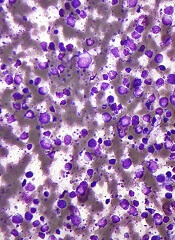
MAINZ/FRANKFURT, GERMANY—Outcomes of treatment with a third-generation chimeric antigen receptor (CAR) T-cell therapy are associated with a patient’s immune status, according to a phase 1/2a trial.
The CD19-specific CAR T-cell therapy produced a complete response (CR) in 6 of 15 patients with relapsed/refractory CD19-positive leukemia or lymphoma.
Though all responders eventually relapsed, 4 patients—including 2 with stable disease (SD) after treatment—responded to subsequent therapy and are still alive, 1 of them beyond 36 months.
An analysis of blood samples taken throughout the study revealed that a patient’s immune status was associated with treatment failure and overall survival.
Tanja Lövgren, PhD, of Uppsala University in Sweden, and her colleagues presented these findings at the Third CRI-CIMT-EATI-AACR International Cancer Immunotherapy Conference: Translating Science into Survival (abstract B156).
“CD19-specific CAR T-cell therapy has yielded remarkable response rates for patients who have B-cell acute lymphoblastic leukemia,” Dr Lövgren said. “However, many patients relapse.”
“In addition, response rates are more variable for patients who have other CD19-positive B-cell malignancies, and many patients experience serious adverse events. We set out to investigate the safety and effectiveness of a third-generation CD19-specific CAR T-cell therapy and to identify potential biomarkers of treatment outcome.”
Dr Lövgren and her colleagues studied 15 patients (ages 24-72) who had relapsed or refractory CD19-positive B-cell malignancies:
- Six patients with diffuse large B-cell lymphoma (DLBCL), including 3 cases that were transformed from follicular lymphoma (FL)
- Four patients with pre-B acute lymphoblastic leukemia (ALL)
- Two patients with mantle cell lymphoma (MCL)
- Two patients with chronic lymphocytic leukemia (CLL)
- One patient with FL transformed from Burkitt lymphoma.
Eleven patients received preconditioning with cyclophosphamide (500 mg/m2) and fludarabine (3 doses at 25 mg/m2).
All patients received CAR T cells at 1 x 10⁸, 2 x 10⁷, or 2 x 10⁸ cells/m2. These were autologous, CD19-targeting CAR T cells with 3 intracellular signaling domains derived from CD3 zeta, CD28, and 4-1BB.
The researchers assessed tumor responses via bone marrow/blood analysis and/or radiology, depending on the type of malignancy. The team also collected blood samples before CAR T-cell infusion and at multiple times after infusion.
Efficacy and safety
Six patients achieved a CR to treatment—3 with DLBCL (1 transformed), 2 with ALL, and 1 with CLL. Two patients had SD—1 with MCL and 1 with CLL. The remaining patients progressed.
All patients with a CR eventually relapsed. The median duration of CR was 5 months (range, 3-24 months).
Four patients—2 complete responders and 2 with SD—responded well to subsequent therapy and are still alive with 27 to 36 months of follow-up. This includes 1 patient with DLBCL, 1 with MCL, and 2 with CLL.
Four patients had serious adverse events. Three had cytokine-release syndrome, and 2 had neurological toxicity.
All cases of cytokine-release syndrome resolved after treatment with corticosteroids/anti-IL6R therapy. The neurological toxicity resolved spontaneously.
Immune status
An analysis of the blood samples taken throughout the study showed that high levels of monocytic myeloid-derived suppressor cells (MDSCs) prior to treatment was associated with decreased overall survival. In addition, increased levels of MDSCs after treatment preceded treatment failure.
Furthermore, high plasma levels of immunosuppressive factors—such as PD-L1 and PD-L2—after treatment were associated with decreased overall survival.
High plasma levels of biomarkers of an immunostimulatory environment—including IL-12, DC-LAMP, TRAIL, and FasL—before the administration of CAR T-cell therapy was associated with increased overall survival.
“[A]n immunostimulatory environment was associated with improved overall survival, while immunosuppressive cells and factors were associated with treatment failure and decreased overall survival,” Dr Lövgren said.
“We are hoping to follow up this study with another clinical trial that will combine CAR T-cell therapy with chemotherapy known to decrease the number of monocytic myeloid-derived suppressive cells. We are also looking to further optimize the CAR T-cell therapy.”
Dr Lövgren said the main limitations of this study are that it only included 15 patients, the patients had several different malignancies, and some patients may have been too sick to respond to any treatment.
This study was supported by funds from AFA Insurance AB, the Swedish Cancer Society, the Swedish Research Council, the Lions Fund at Uppsala University Hospital, and the Swedish State Support for Clinical Research. Dr Lövgren declared no conflicts of interest.
MAINZ/FRANKFURT, GERMANY—Outcomes of treatment with a third-generation chimeric antigen receptor (CAR) T-cell therapy are associated with a patient’s immune status, according to a phase 1/2a trial.
The CD19-specific CAR T-cell therapy produced a complete response (CR) in 6 of 15 patients with relapsed/refractory CD19-positive leukemia or lymphoma.
Though all responders eventually relapsed, 4 patients—including 2 with stable disease (SD) after treatment—responded to subsequent therapy and are still alive, 1 of them beyond 36 months.
An analysis of blood samples taken throughout the study revealed that a patient’s immune status was associated with treatment failure and overall survival.
Tanja Lövgren, PhD, of Uppsala University in Sweden, and her colleagues presented these findings at the Third CRI-CIMT-EATI-AACR International Cancer Immunotherapy Conference: Translating Science into Survival (abstract B156).
“CD19-specific CAR T-cell therapy has yielded remarkable response rates for patients who have B-cell acute lymphoblastic leukemia,” Dr Lövgren said. “However, many patients relapse.”
“In addition, response rates are more variable for patients who have other CD19-positive B-cell malignancies, and many patients experience serious adverse events. We set out to investigate the safety and effectiveness of a third-generation CD19-specific CAR T-cell therapy and to identify potential biomarkers of treatment outcome.”
Dr Lövgren and her colleagues studied 15 patients (ages 24-72) who had relapsed or refractory CD19-positive B-cell malignancies:
- Six patients with diffuse large B-cell lymphoma (DLBCL), including 3 cases that were transformed from follicular lymphoma (FL)
- Four patients with pre-B acute lymphoblastic leukemia (ALL)
- Two patients with mantle cell lymphoma (MCL)
- Two patients with chronic lymphocytic leukemia (CLL)
- One patient with FL transformed from Burkitt lymphoma.
Eleven patients received preconditioning with cyclophosphamide (500 mg/m2) and fludarabine (3 doses at 25 mg/m2).
All patients received CAR T cells at 1 x 10⁸, 2 x 10⁷, or 2 x 10⁸ cells/m2. These were autologous, CD19-targeting CAR T cells with 3 intracellular signaling domains derived from CD3 zeta, CD28, and 4-1BB.
The researchers assessed tumor responses via bone marrow/blood analysis and/or radiology, depending on the type of malignancy. The team also collected blood samples before CAR T-cell infusion and at multiple times after infusion.
Efficacy and safety
Six patients achieved a CR to treatment—3 with DLBCL (1 transformed), 2 with ALL, and 1 with CLL. Two patients had SD—1 with MCL and 1 with CLL. The remaining patients progressed.
All patients with a CR eventually relapsed. The median duration of CR was 5 months (range, 3-24 months).
Four patients—2 complete responders and 2 with SD—responded well to subsequent therapy and are still alive with 27 to 36 months of follow-up. This includes 1 patient with DLBCL, 1 with MCL, and 2 with CLL.
Four patients had serious adverse events. Three had cytokine-release syndrome, and 2 had neurological toxicity.
All cases of cytokine-release syndrome resolved after treatment with corticosteroids/anti-IL6R therapy. The neurological toxicity resolved spontaneously.
Immune status
An analysis of the blood samples taken throughout the study showed that high levels of monocytic myeloid-derived suppressor cells (MDSCs) prior to treatment was associated with decreased overall survival. In addition, increased levels of MDSCs after treatment preceded treatment failure.
Furthermore, high plasma levels of immunosuppressive factors—such as PD-L1 and PD-L2—after treatment were associated with decreased overall survival.
High plasma levels of biomarkers of an immunostimulatory environment—including IL-12, DC-LAMP, TRAIL, and FasL—before the administration of CAR T-cell therapy was associated with increased overall survival.
“[A]n immunostimulatory environment was associated with improved overall survival, while immunosuppressive cells and factors were associated with treatment failure and decreased overall survival,” Dr Lövgren said.
“We are hoping to follow up this study with another clinical trial that will combine CAR T-cell therapy with chemotherapy known to decrease the number of monocytic myeloid-derived suppressive cells. We are also looking to further optimize the CAR T-cell therapy.”
Dr Lövgren said the main limitations of this study are that it only included 15 patients, the patients had several different malignancies, and some patients may have been too sick to respond to any treatment.
This study was supported by funds from AFA Insurance AB, the Swedish Cancer Society, the Swedish Research Council, the Lions Fund at Uppsala University Hospital, and the Swedish State Support for Clinical Research. Dr Lövgren declared no conflicts of interest.
MAINZ/FRANKFURT, GERMANY—Outcomes of treatment with a third-generation chimeric antigen receptor (CAR) T-cell therapy are associated with a patient’s immune status, according to a phase 1/2a trial.
The CD19-specific CAR T-cell therapy produced a complete response (CR) in 6 of 15 patients with relapsed/refractory CD19-positive leukemia or lymphoma.
Though all responders eventually relapsed, 4 patients—including 2 with stable disease (SD) after treatment—responded to subsequent therapy and are still alive, 1 of them beyond 36 months.
An analysis of blood samples taken throughout the study revealed that a patient’s immune status was associated with treatment failure and overall survival.
Tanja Lövgren, PhD, of Uppsala University in Sweden, and her colleagues presented these findings at the Third CRI-CIMT-EATI-AACR International Cancer Immunotherapy Conference: Translating Science into Survival (abstract B156).
“CD19-specific CAR T-cell therapy has yielded remarkable response rates for patients who have B-cell acute lymphoblastic leukemia,” Dr Lövgren said. “However, many patients relapse.”
“In addition, response rates are more variable for patients who have other CD19-positive B-cell malignancies, and many patients experience serious adverse events. We set out to investigate the safety and effectiveness of a third-generation CD19-specific CAR T-cell therapy and to identify potential biomarkers of treatment outcome.”
Dr Lövgren and her colleagues studied 15 patients (ages 24-72) who had relapsed or refractory CD19-positive B-cell malignancies:
- Six patients with diffuse large B-cell lymphoma (DLBCL), including 3 cases that were transformed from follicular lymphoma (FL)
- Four patients with pre-B acute lymphoblastic leukemia (ALL)
- Two patients with mantle cell lymphoma (MCL)
- Two patients with chronic lymphocytic leukemia (CLL)
- One patient with FL transformed from Burkitt lymphoma.
Eleven patients received preconditioning with cyclophosphamide (500 mg/m2) and fludarabine (3 doses at 25 mg/m2).
All patients received CAR T cells at 1 x 10⁸, 2 x 10⁷, or 2 x 10⁸ cells/m2. These were autologous, CD19-targeting CAR T cells with 3 intracellular signaling domains derived from CD3 zeta, CD28, and 4-1BB.
The researchers assessed tumor responses via bone marrow/blood analysis and/or radiology, depending on the type of malignancy. The team also collected blood samples before CAR T-cell infusion and at multiple times after infusion.
Efficacy and safety
Six patients achieved a CR to treatment—3 with DLBCL (1 transformed), 2 with ALL, and 1 with CLL. Two patients had SD—1 with MCL and 1 with CLL. The remaining patients progressed.
All patients with a CR eventually relapsed. The median duration of CR was 5 months (range, 3-24 months).
Four patients—2 complete responders and 2 with SD—responded well to subsequent therapy and are still alive with 27 to 36 months of follow-up. This includes 1 patient with DLBCL, 1 with MCL, and 2 with CLL.
Four patients had serious adverse events. Three had cytokine-release syndrome, and 2 had neurological toxicity.
All cases of cytokine-release syndrome resolved after treatment with corticosteroids/anti-IL6R therapy. The neurological toxicity resolved spontaneously.
Immune status
An analysis of the blood samples taken throughout the study showed that high levels of monocytic myeloid-derived suppressor cells (MDSCs) prior to treatment was associated with decreased overall survival. In addition, increased levels of MDSCs after treatment preceded treatment failure.
Furthermore, high plasma levels of immunosuppressive factors—such as PD-L1 and PD-L2—after treatment were associated with decreased overall survival.
High plasma levels of biomarkers of an immunostimulatory environment—including IL-12, DC-LAMP, TRAIL, and FasL—before the administration of CAR T-cell therapy was associated with increased overall survival.
“[A]n immunostimulatory environment was associated with improved overall survival, while immunosuppressive cells and factors were associated with treatment failure and decreased overall survival,” Dr Lövgren said.
“We are hoping to follow up this study with another clinical trial that will combine CAR T-cell therapy with chemotherapy known to decrease the number of monocytic myeloid-derived suppressive cells. We are also looking to further optimize the CAR T-cell therapy.”
Dr Lövgren said the main limitations of this study are that it only included 15 patients, the patients had several different malignancies, and some patients may have been too sick to respond to any treatment.
This study was supported by funds from AFA Insurance AB, the Swedish Cancer Society, the Swedish Research Council, the Lions Fund at Uppsala University Hospital, and the Swedish State Support for Clinical Research. Dr Lövgren declared no conflicts of interest.
Survey reveals lack of specialized care for AYAs with cancer

MADRID—New research indicates there is a lack of specialized care in Europe for adolescents and young adults (AYAs) with cancer.
In a survey of more than 200 European healthcare professionals, more than two-thirds of respondents said they did not have access to specialized services where adult and pediatric cancer specialists work together to plan treatment and deliver care to AYAs with cancer.
This lack of services was more pronounced in Eastern and Southern Europe than Western and Northern Europe.
“The survey found gaps and disparities in cancer care for adolescents and young adults across Europe,” said study author Emmanouil Saloustros, MD, a consultant medical oncologist at General Hospital of Heraklion “Venizelio” in Heraklion, Crete, Greece.
Dr Saloustros and his colleagues presented these findings at the ESMO 2017 Congress (abstract 1438O_PR) and reported them in ESMO Open.
The researchers sent an online survey on the status of care and research in AYAs (ages 15-39) to members of the European Society for Medical Oncology (ESMO) and the European Society for Paediatric Oncology (SIOPE).
The team received responses from 266 healthcare professionals across Europe—55% of them female. Eleven percent were age 20–29, 29% were age 30–39, 26% were age 40–49, 25% were age 50–59, and 9% were age 60 and older.
Forty-eight percent were medical oncologists, 21% were pediatric oncologists, 8% were in training, 5% were hematologists, 4% were radiation oncologists, and 2% were surgical oncologists. The rest were other types of healthcare professionals, such as oncology nurses.
Fifty-two percent of respondents worked in general academic centers, 19% in specialized cancer hospitals, and 11% in pediatric hospitals. Sixty percent of respondents had been trained to treat adults with cancer, 25% to treat pediatric cancer patients, and 15% were trained to treat both.
In the past year, 32% of respondents had treated between 1 and 10 AYAs, 28% had treated 11 to 20, 17% had treated between 21 and 50, and 16% had treated more than 50 AYAs.
Results
The following results are based on data from 242 survey respondents. (The other respondents did not provide complete information.)
More than two-thirds (67%) of the respondents said they did not have access to specialized services for AYAs with cancer. This was true for 88% of respondents in Southern Europe, 87% in Eastern Europe, 55% in Western Europe, and 40% in Northern Europe.
Sixty-two percent of hematologists said they had access to AYA services, as did 44% of pediatric oncologists and 27% of medical oncologists.
Eighty-six percent of respondents said their AYA patients had access to professional psychological support. This was true for 97% of respondents in Western Europe, 82% in Southern Europe, 81% in Northern Europe, and 74% in Eastern Europe.
Fifty-four percent of all respondents said their AYAs had access to a support group with other young people. This was true for 81% of respondents in Northern Europe, 60% in Western Europe, 48% in Eastern Europe, and 34% in Southern Europe.
Thirty-six percent of all respondents said their AYAs had access to an age-specific specialist nurse. This was true for 53% of respondents in Western Europe, 51% in Northern Europe, 32% in Eastern Europe, and 10% in Southern Europe.
Sixty-two percent of respondents said their institution provided AYAs with access to a fertility specialist. This was true for 78% of respondents in Western Europe, 72% in Northern Europe, 52% in Southern Europe, and 24% in Eastern Europe.
“These patients have specific needs that are not covered by pediatric or general oncology centers or classical medical oncology centers, and this survey shows that most do not have access to the recommended special care,” said Gilles Vassal, director of clinical research at Gustave Roussy in Villejuif, France, and past president of SIOPE (who was not involved in this study).
“Countries without these services can look at existing examples—such as in the UK and France—to build teams equipped to improve survival and survivorship for adolescents and young adults with cancer.”
MADRID—New research indicates there is a lack of specialized care in Europe for adolescents and young adults (AYAs) with cancer.
In a survey of more than 200 European healthcare professionals, more than two-thirds of respondents said they did not have access to specialized services where adult and pediatric cancer specialists work together to plan treatment and deliver care to AYAs with cancer.
This lack of services was more pronounced in Eastern and Southern Europe than Western and Northern Europe.
“The survey found gaps and disparities in cancer care for adolescents and young adults across Europe,” said study author Emmanouil Saloustros, MD, a consultant medical oncologist at General Hospital of Heraklion “Venizelio” in Heraklion, Crete, Greece.
Dr Saloustros and his colleagues presented these findings at the ESMO 2017 Congress (abstract 1438O_PR) and reported them in ESMO Open.
The researchers sent an online survey on the status of care and research in AYAs (ages 15-39) to members of the European Society for Medical Oncology (ESMO) and the European Society for Paediatric Oncology (SIOPE).
The team received responses from 266 healthcare professionals across Europe—55% of them female. Eleven percent were age 20–29, 29% were age 30–39, 26% were age 40–49, 25% were age 50–59, and 9% were age 60 and older.
Forty-eight percent were medical oncologists, 21% were pediatric oncologists, 8% were in training, 5% were hematologists, 4% were radiation oncologists, and 2% were surgical oncologists. The rest were other types of healthcare professionals, such as oncology nurses.
Fifty-two percent of respondents worked in general academic centers, 19% in specialized cancer hospitals, and 11% in pediatric hospitals. Sixty percent of respondents had been trained to treat adults with cancer, 25% to treat pediatric cancer patients, and 15% were trained to treat both.
In the past year, 32% of respondents had treated between 1 and 10 AYAs, 28% had treated 11 to 20, 17% had treated between 21 and 50, and 16% had treated more than 50 AYAs.
Results
The following results are based on data from 242 survey respondents. (The other respondents did not provide complete information.)
More than two-thirds (67%) of the respondents said they did not have access to specialized services for AYAs with cancer. This was true for 88% of respondents in Southern Europe, 87% in Eastern Europe, 55% in Western Europe, and 40% in Northern Europe.
Sixty-two percent of hematologists said they had access to AYA services, as did 44% of pediatric oncologists and 27% of medical oncologists.
Eighty-six percent of respondents said their AYA patients had access to professional psychological support. This was true for 97% of respondents in Western Europe, 82% in Southern Europe, 81% in Northern Europe, and 74% in Eastern Europe.
Fifty-four percent of all respondents said their AYAs had access to a support group with other young people. This was true for 81% of respondents in Northern Europe, 60% in Western Europe, 48% in Eastern Europe, and 34% in Southern Europe.
Thirty-six percent of all respondents said their AYAs had access to an age-specific specialist nurse. This was true for 53% of respondents in Western Europe, 51% in Northern Europe, 32% in Eastern Europe, and 10% in Southern Europe.
Sixty-two percent of respondents said their institution provided AYAs with access to a fertility specialist. This was true for 78% of respondents in Western Europe, 72% in Northern Europe, 52% in Southern Europe, and 24% in Eastern Europe.
“These patients have specific needs that are not covered by pediatric or general oncology centers or classical medical oncology centers, and this survey shows that most do not have access to the recommended special care,” said Gilles Vassal, director of clinical research at Gustave Roussy in Villejuif, France, and past president of SIOPE (who was not involved in this study).
“Countries without these services can look at existing examples—such as in the UK and France—to build teams equipped to improve survival and survivorship for adolescents and young adults with cancer.”
MADRID—New research indicates there is a lack of specialized care in Europe for adolescents and young adults (AYAs) with cancer.
In a survey of more than 200 European healthcare professionals, more than two-thirds of respondents said they did not have access to specialized services where adult and pediatric cancer specialists work together to plan treatment and deliver care to AYAs with cancer.
This lack of services was more pronounced in Eastern and Southern Europe than Western and Northern Europe.
“The survey found gaps and disparities in cancer care for adolescents and young adults across Europe,” said study author Emmanouil Saloustros, MD, a consultant medical oncologist at General Hospital of Heraklion “Venizelio” in Heraklion, Crete, Greece.
Dr Saloustros and his colleagues presented these findings at the ESMO 2017 Congress (abstract 1438O_PR) and reported them in ESMO Open.
The researchers sent an online survey on the status of care and research in AYAs (ages 15-39) to members of the European Society for Medical Oncology (ESMO) and the European Society for Paediatric Oncology (SIOPE).
The team received responses from 266 healthcare professionals across Europe—55% of them female. Eleven percent were age 20–29, 29% were age 30–39, 26% were age 40–49, 25% were age 50–59, and 9% were age 60 and older.
Forty-eight percent were medical oncologists, 21% were pediatric oncologists, 8% were in training, 5% were hematologists, 4% were radiation oncologists, and 2% were surgical oncologists. The rest were other types of healthcare professionals, such as oncology nurses.
Fifty-two percent of respondents worked in general academic centers, 19% in specialized cancer hospitals, and 11% in pediatric hospitals. Sixty percent of respondents had been trained to treat adults with cancer, 25% to treat pediatric cancer patients, and 15% were trained to treat both.
In the past year, 32% of respondents had treated between 1 and 10 AYAs, 28% had treated 11 to 20, 17% had treated between 21 and 50, and 16% had treated more than 50 AYAs.
Results
The following results are based on data from 242 survey respondents. (The other respondents did not provide complete information.)
More than two-thirds (67%) of the respondents said they did not have access to specialized services for AYAs with cancer. This was true for 88% of respondents in Southern Europe, 87% in Eastern Europe, 55% in Western Europe, and 40% in Northern Europe.
Sixty-two percent of hematologists said they had access to AYA services, as did 44% of pediatric oncologists and 27% of medical oncologists.
Eighty-six percent of respondents said their AYA patients had access to professional psychological support. This was true for 97% of respondents in Western Europe, 82% in Southern Europe, 81% in Northern Europe, and 74% in Eastern Europe.
Fifty-four percent of all respondents said their AYAs had access to a support group with other young people. This was true for 81% of respondents in Northern Europe, 60% in Western Europe, 48% in Eastern Europe, and 34% in Southern Europe.
Thirty-six percent of all respondents said their AYAs had access to an age-specific specialist nurse. This was true for 53% of respondents in Western Europe, 51% in Northern Europe, 32% in Eastern Europe, and 10% in Southern Europe.
Sixty-two percent of respondents said their institution provided AYAs with access to a fertility specialist. This was true for 78% of respondents in Western Europe, 72% in Northern Europe, 52% in Southern Europe, and 24% in Eastern Europe.
“These patients have specific needs that are not covered by pediatric or general oncology centers or classical medical oncology centers, and this survey shows that most do not have access to the recommended special care,” said Gilles Vassal, director of clinical research at Gustave Roussy in Villejuif, France, and past president of SIOPE (who was not involved in this study).
“Countries without these services can look at existing examples—such as in the UK and France—to build teams equipped to improve survival and survivorship for adolescents and young adults with cancer.”
Climate change may lead to more cellulitis
As a follow-up to our previous column on the effects of climate change on the skin (Dermatology News, June 2016, p. 28), this month’s column will focus on a study recently published in Clinical Infectious Diseases that explores warmer weather as a possible risk factor for cellulitis.1 As the summer continues with sweltering weather, humidity, and the recent spate of hurricanes in North America, it’s interesting to think about how the climate affects our patients and puts them at risk.



Much attention has been given to global warming and climate change over the past several years. The results of this study demonstrate that, if temperatures consistently increase, the odds of cellulitis also may increase in regions exposed to warmer temperatures.
Dr. Wesley and Dr. Talakoub are cocontributors to this column. Dr. Wesley practices dermatology in Beverly Hills, Calif. Dr. Talakoub is in private practice in McLean, Va. This month’s column is by Dr. Wesley. Write to them at [email protected]. They had no relevant disclosures.
Reference
1. Clin Infect Dis. 2017 Jul 31. doi: 10.1093/cid/cix487.
As a follow-up to our previous column on the effects of climate change on the skin (Dermatology News, June 2016, p. 28), this month’s column will focus on a study recently published in Clinical Infectious Diseases that explores warmer weather as a possible risk factor for cellulitis.1 As the summer continues with sweltering weather, humidity, and the recent spate of hurricanes in North America, it’s interesting to think about how the climate affects our patients and puts them at risk.
Much attention has been given to global warming and climate change over the past several years. The results of this study demonstrate that, if temperatures consistently increase, the odds of cellulitis also may increase in regions exposed to warmer temperatures.
Dr. Wesley and Dr. Talakoub are cocontributors to this column. Dr. Wesley practices dermatology in Beverly Hills, Calif. Dr. Talakoub is in private practice in McLean, Va. This month’s column is by Dr. Wesley. Write to them at [email protected]. They had no relevant disclosures.
Reference
1. Clin Infect Dis. 2017 Jul 31. doi: 10.1093/cid/cix487.
As a follow-up to our previous column on the effects of climate change on the skin (Dermatology News, June 2016, p. 28), this month’s column will focus on a study recently published in Clinical Infectious Diseases that explores warmer weather as a possible risk factor for cellulitis.1 As the summer continues with sweltering weather, humidity, and the recent spate of hurricanes in North America, it’s interesting to think about how the climate affects our patients and puts them at risk.
Much attention has been given to global warming and climate change over the past several years. The results of this study demonstrate that, if temperatures consistently increase, the odds of cellulitis also may increase in regions exposed to warmer temperatures.
Dr. Wesley and Dr. Talakoub are cocontributors to this column. Dr. Wesley practices dermatology in Beverly Hills, Calif. Dr. Talakoub is in private practice in McLean, Va. This month’s column is by Dr. Wesley. Write to them at [email protected]. They had no relevant disclosures.
Reference
1. Clin Infect Dis. 2017 Jul 31. doi: 10.1093/cid/cix487.
Most daratumumab infusion reactions occur in first infusion
MADRID – The high rate of infusion-related reactions at first daratumumab infusion may be related to treatment duration, based on data from the CASTOR and POLLUX studies presented at the European Society for Medical Oncology Congress.
Infusion-related reactions occur in half of relapsed or refractory multiple myeloma patients who receive daratumumab, but nearly all reactions are grade 2 or less and rarely lead to treatment discontinuation, reported Philippe Moreau, MD, of University Hospital, Nantes, France.
“In the two phase 3 trials, CASTOR and POLLUX, infusion-related reactions occurred in 45% and 48% of patients, respectively. Of these, 98% and 96%, respectively, occurred during the first infusion,” he said. Treatment duration was 7 hours for first infusion vs. 4 hours and 3 hours for the second and third infusions, respectively. Grade 3 infusion-related reactions occurred in 5.3% and 8.6% of patients in CASTOR and POLLUX, respectively. No grade 4 infusion-related reactions were observed in either trial.
(In CASTOR [NCT02136134], daratumumab was combined with bortezomib and dexamethasone. In POLLUX [NCT02076009], it was combined with lenalidomide and dexamethasone. Based on improvements in progression-free survival relative to the background drugs alone, daratumumab was approved for relapsed or refractory multiple myeloma.)
All patients in the trials received some form of preinfusion medications. These included 650-1,000 mg of paracetamol by intravenous or oral administration, 25-50 mg of diphenhydramine, 10 mg of montelukast, and 20 mg of dexamethasone. Patients thought to be at high risk of respiratory complications were candidates for postinfusion medications such as diphenhydramine or a short-acting beta agonist. However, only about 10% of high-risk patients received these therapies, so the impact of this potentially preventive approach is not clear, Dr. Moreau said.
In grade 1 reactions, Dr. Moreau recommended that infusions be paused at the first sign of an infusion-related reaction and then restarted at half the infusion rate when the condition is considered stable. Daratumumab treatment should be withdrawn in grade 2 or higher infusion-related reactions associated with laryngeal edema or grade 2 or higher bronchospasm that does not respond to systemic therapy and resolves within 6 hours of onset.
In grade 3 infusion-related reactions, the recommendation is to stop the daratumumab infusion and closely observe the patient. The infusion should be restarted only if the severity drops to grade 1. Again, the rate of infusion after the interruption should be half the rate provided prior to the infusion-related reaction. Therapy should be withdrawn if the infusion-related reaction recurs for a second time, according to Dr. Moreau.
Infusion-related reactions involving the upper respiratory tract – such as dyspnea, cough, bronchospasm, or throat irritation – may be related to the physiologic function of CD38, Dr. Moreau said. For this reason, grade 3 upper respiratory-related events deserve close attention and persisting symptoms warrant halting treatment.
The evidence is “reassuring” that the majority of infusion-related reactions are confined to the first infusion, said the ESMO-invited discussant, Evangelos Terpos, MD, PhD, of the University of Athens. He noted that the specific treatment recommendations outlined by Dr. Moreau could be helpful for minimizing nuisance infusion-related reactions as well as reducing the risk of more serious infusion-related reactions, particularly those involving respiratory events.
Prophylactic strategies for infusion-related reactions are particularly important in patients with risk factors for respiratory complications, Dr. Terpos added.
MADRID – The high rate of infusion-related reactions at first daratumumab infusion may be related to treatment duration, based on data from the CASTOR and POLLUX studies presented at the European Society for Medical Oncology Congress.
Infusion-related reactions occur in half of relapsed or refractory multiple myeloma patients who receive daratumumab, but nearly all reactions are grade 2 or less and rarely lead to treatment discontinuation, reported Philippe Moreau, MD, of University Hospital, Nantes, France.
“In the two phase 3 trials, CASTOR and POLLUX, infusion-related reactions occurred in 45% and 48% of patients, respectively. Of these, 98% and 96%, respectively, occurred during the first infusion,” he said. Treatment duration was 7 hours for first infusion vs. 4 hours and 3 hours for the second and third infusions, respectively. Grade 3 infusion-related reactions occurred in 5.3% and 8.6% of patients in CASTOR and POLLUX, respectively. No grade 4 infusion-related reactions were observed in either trial.
(In CASTOR [NCT02136134], daratumumab was combined with bortezomib and dexamethasone. In POLLUX [NCT02076009], it was combined with lenalidomide and dexamethasone. Based on improvements in progression-free survival relative to the background drugs alone, daratumumab was approved for relapsed or refractory multiple myeloma.)
All patients in the trials received some form of preinfusion medications. These included 650-1,000 mg of paracetamol by intravenous or oral administration, 25-50 mg of diphenhydramine, 10 mg of montelukast, and 20 mg of dexamethasone. Patients thought to be at high risk of respiratory complications were candidates for postinfusion medications such as diphenhydramine or a short-acting beta agonist. However, only about 10% of high-risk patients received these therapies, so the impact of this potentially preventive approach is not clear, Dr. Moreau said.
In grade 1 reactions, Dr. Moreau recommended that infusions be paused at the first sign of an infusion-related reaction and then restarted at half the infusion rate when the condition is considered stable. Daratumumab treatment should be withdrawn in grade 2 or higher infusion-related reactions associated with laryngeal edema or grade 2 or higher bronchospasm that does not respond to systemic therapy and resolves within 6 hours of onset.
In grade 3 infusion-related reactions, the recommendation is to stop the daratumumab infusion and closely observe the patient. The infusion should be restarted only if the severity drops to grade 1. Again, the rate of infusion after the interruption should be half the rate provided prior to the infusion-related reaction. Therapy should be withdrawn if the infusion-related reaction recurs for a second time, according to Dr. Moreau.
Infusion-related reactions involving the upper respiratory tract – such as dyspnea, cough, bronchospasm, or throat irritation – may be related to the physiologic function of CD38, Dr. Moreau said. For this reason, grade 3 upper respiratory-related events deserve close attention and persisting symptoms warrant halting treatment.
The evidence is “reassuring” that the majority of infusion-related reactions are confined to the first infusion, said the ESMO-invited discussant, Evangelos Terpos, MD, PhD, of the University of Athens. He noted that the specific treatment recommendations outlined by Dr. Moreau could be helpful for minimizing nuisance infusion-related reactions as well as reducing the risk of more serious infusion-related reactions, particularly those involving respiratory events.
Prophylactic strategies for infusion-related reactions are particularly important in patients with risk factors for respiratory complications, Dr. Terpos added.
MADRID – The high rate of infusion-related reactions at first daratumumab infusion may be related to treatment duration, based on data from the CASTOR and POLLUX studies presented at the European Society for Medical Oncology Congress.
Infusion-related reactions occur in half of relapsed or refractory multiple myeloma patients who receive daratumumab, but nearly all reactions are grade 2 or less and rarely lead to treatment discontinuation, reported Philippe Moreau, MD, of University Hospital, Nantes, France.
“In the two phase 3 trials, CASTOR and POLLUX, infusion-related reactions occurred in 45% and 48% of patients, respectively. Of these, 98% and 96%, respectively, occurred during the first infusion,” he said. Treatment duration was 7 hours for first infusion vs. 4 hours and 3 hours for the second and third infusions, respectively. Grade 3 infusion-related reactions occurred in 5.3% and 8.6% of patients in CASTOR and POLLUX, respectively. No grade 4 infusion-related reactions were observed in either trial.
(In CASTOR [NCT02136134], daratumumab was combined with bortezomib and dexamethasone. In POLLUX [NCT02076009], it was combined with lenalidomide and dexamethasone. Based on improvements in progression-free survival relative to the background drugs alone, daratumumab was approved for relapsed or refractory multiple myeloma.)
All patients in the trials received some form of preinfusion medications. These included 650-1,000 mg of paracetamol by intravenous or oral administration, 25-50 mg of diphenhydramine, 10 mg of montelukast, and 20 mg of dexamethasone. Patients thought to be at high risk of respiratory complications were candidates for postinfusion medications such as diphenhydramine or a short-acting beta agonist. However, only about 10% of high-risk patients received these therapies, so the impact of this potentially preventive approach is not clear, Dr. Moreau said.
In grade 1 reactions, Dr. Moreau recommended that infusions be paused at the first sign of an infusion-related reaction and then restarted at half the infusion rate when the condition is considered stable. Daratumumab treatment should be withdrawn in grade 2 or higher infusion-related reactions associated with laryngeal edema or grade 2 or higher bronchospasm that does not respond to systemic therapy and resolves within 6 hours of onset.
In grade 3 infusion-related reactions, the recommendation is to stop the daratumumab infusion and closely observe the patient. The infusion should be restarted only if the severity drops to grade 1. Again, the rate of infusion after the interruption should be half the rate provided prior to the infusion-related reaction. Therapy should be withdrawn if the infusion-related reaction recurs for a second time, according to Dr. Moreau.
Infusion-related reactions involving the upper respiratory tract – such as dyspnea, cough, bronchospasm, or throat irritation – may be related to the physiologic function of CD38, Dr. Moreau said. For this reason, grade 3 upper respiratory-related events deserve close attention and persisting symptoms warrant halting treatment.
The evidence is “reassuring” that the majority of infusion-related reactions are confined to the first infusion, said the ESMO-invited discussant, Evangelos Terpos, MD, PhD, of the University of Athens. He noted that the specific treatment recommendations outlined by Dr. Moreau could be helpful for minimizing nuisance infusion-related reactions as well as reducing the risk of more serious infusion-related reactions, particularly those involving respiratory events.
Prophylactic strategies for infusion-related reactions are particularly important in patients with risk factors for respiratory complications, Dr. Terpos added.
AT ESMO 2017
Key clinical point: In grade 1 infusion-related reactions, daratumumab infusion should be paused at the first sign of a reaction and then restarted at half the infusion rate when the condition is considered stable.
Major finding:
Data source: Post hoc analysis of the phase 3 trials, CASTOR and POLLUX.
Disclosures: Dr. Moreau reported financial relationships with Amgen, Celgene, Janssen, Novartis, and Takeda.
VIDEO: Alopecia areata patients seek emotional support
SILVER SPRING, MD. – The emotional challenges facing alopecia areata patients are as tough, or tougher, than the physical challenges, according to many patients participating in a public meeting on alopecia areata patient-focused drug development.
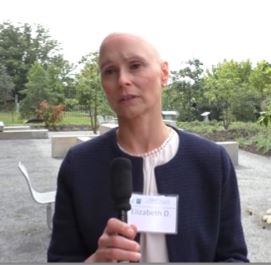
A panel of patients shared their experiences of living with alopecia areata, including Elizabeth DeCarlo of Wilmington, Delaware. In a video interview at the meeting, held at FDA headquarters on Sept. 11, Ms. DeCarlo elaborated on what she would like clinicians to understand about alopecia patients that might surprise them, and what matters to her as a patient.
“I would tell them to be more compassionate,” Ms. DeCarlo said. “It’s very emotional.” She also emphasized the value of giving alopecia patients information about local support groups, as well as national organizations such as the National Alopecia Areata Foundation.
Ms. DeCarlo had no financial conflicts to disclose.
SILVER SPRING, MD. – The emotional challenges facing alopecia areata patients are as tough, or tougher, than the physical challenges, according to many patients participating in a public meeting on alopecia areata patient-focused drug development.
A panel of patients shared their experiences of living with alopecia areata, including Elizabeth DeCarlo of Wilmington, Delaware. In a video interview at the meeting, held at FDA headquarters on Sept. 11, Ms. DeCarlo elaborated on what she would like clinicians to understand about alopecia patients that might surprise them, and what matters to her as a patient.
“I would tell them to be more compassionate,” Ms. DeCarlo said. “It’s very emotional.” She also emphasized the value of giving alopecia patients information about local support groups, as well as national organizations such as the National Alopecia Areata Foundation.
Ms. DeCarlo had no financial conflicts to disclose.
SILVER SPRING, MD. – The emotional challenges facing alopecia areata patients are as tough, or tougher, than the physical challenges, according to many patients participating in a public meeting on alopecia areata patient-focused drug development.
A panel of patients shared their experiences of living with alopecia areata, including Elizabeth DeCarlo of Wilmington, Delaware. In a video interview at the meeting, held at FDA headquarters on Sept. 11, Ms. DeCarlo elaborated on what she would like clinicians to understand about alopecia patients that might surprise them, and what matters to her as a patient.
“I would tell them to be more compassionate,” Ms. DeCarlo said. “It’s very emotional.” She also emphasized the value of giving alopecia patients information about local support groups, as well as national organizations such as the National Alopecia Areata Foundation.
Ms. DeCarlo had no financial conflicts to disclose.
AT AN FDA PUBLIC MEETING
Suicide attempts on the rise among young U.S. adults
Suicide attempts continue to increase in the United States, particularly among young adults with lower education levels and greater economic challenges, according to an analysis published Sept. 13.
These conclusions are based on data gleaned from two studies – the 2004-2005 wave 2 National Epidemiologic Survey on Alcohol and Related Conditions (NESARC-II) and the 2012-2013 NESARC-III. Of the 69,341 people surveyed, 57.2% were women, and the mean age was 48.1 years.
However, the demographic groups that had the most notable increases were young adults aged 21-34 (ARD, 0.48%; 95% CI, 0.09%-0.87%; P = .02) and those with no more than a high school education (ADR, 0.49%; 95% CI, 0.18%-0.80%; P less than .002).
Dr. Olfson and his coauthors also found an increase in suicide attempts among adults with certain psychiatric disorders. Specifically, the risk for suicide attempts was higher for adults with antisocial personality disorder; among that group, the risk increased from 0.07% (95% CI, –0.09% to 0.23%) in 2004-2005 to 2.16% (95% CI, 0.61%-3.71%) in 2012-2013. “Other high-risk groups included persons with ... schizotypal ... personality disorders and those with anxiety and depressive disorders,” according to Dr. Olfson and his coauthors. “These findings highlight an increasing prevalence of suicide attempts and underscore the prominent role of mental disorders ... in risks for suicide attempts at the population level.”
Almost two-thirds of the adults who had recent suicide attempts in both NESARC survey groups had borderline personality disorder, the investigators reported. However, a finding the coauthors called “encouraging” is that “although most of the adults in the 2012-2013 survey who had recent suicide attempts had borderline personality disorder, the risk of attempted suicide among adults with borderline personality disorder significantly decreased during the study period,” Dr. Olfson and his coauthors wrote. They speculated that this decrease could be tied to findings showing that 40.8% of U.S. psychiatry residency programs offer training in dialectical behavior therapy for borderline personality disorder (Acad Psychiatry. 2013 Jul 1:37[4]:287-8). Clinician training programs are needed to help frontline clinicians manage self-harm among patients with borderline personality disorder, the investigators said.
In addition to many other risk factors, the investigators emphasized the correlation between recent suicide attempts and prior suicide attempts. About one-half of adults who reported a recent attempt also reported a prior attempt (95% CI, 16.46-33.67). “Because 15% to 25% of adults who die by suicide have received treatment for a suicide attempt within the past year, a substantial proportion of suicide deaths” could be subject to prior intervention that could be associated with an attempt, they said.
The data were limited in that adults who are homeless or incarcerated or who have schizophrenia were not surveyed. In addition, the coauthors cited the retrospective nature of NESARC self-reports as a limitation. Given the nature of the study, no data were collected from individuals who died of suicide. “This lack may have led to an underestimation of suicide attempts in each survey,” they wrote.
The study was supported by grants from the National Institutes of Health and the New York State Psychiatric Institute. The surveys were funded in part by the NIH Intramural Research Program. The authors did not report any financial disclosures.
The findings by Mark Olfson, MD, MPH, and his associates “strongly echo” the discussions of Anne Case, PhD, and Angus Deaton, PhD, that underscore “the mortality rate effect of lower education levels, fundamental economic and vocational challenges, and social dislocation occurring in many communities across the United States.” But the work of Dr. Case and Dr. Deaton emphasizes that the biggest impact on deaths, including those caused by suicides, occurred in the middle years.
Meanwhile, findings from the National Violent Death Reporting System on suicide attempts in middle life show that more than two-thirds of men and more than 80% of women report having a disorder related to substance use or mental health, but only 25% of those men and 44% of those women ever received treatment for such conditions. The characteristics of these people, as recorded by the NVDRS, “fit into the populations discerned” by Dr. Case and Dr. Deaton. “While there are suggestions that the surveys used by Olfson et al. may not have been tuned to pick up the ‘signal’ that was associated with the rise in fatal suicide attempts during the first 15 years of the new century, they provided a clear warning that the coming generation of people aging into the ‘middle years’ may see a further rise in suicide rates.”
The National Epidemiologic Survey on Alcohol and Related Conditions surveys were not conducted in clinical settings. Therefore, clinicians need to “look beyond the walls” of their health facilities to engage potentially vulnerable individuals and their families before they become suicidal.
Eric D. Caine, MD, is the chair of the department of psychiatry and codirector of the Center for Study and Prevention of Suicide at the University of Rochester (N.Y.). These remarks have been adapted from an editorial accompanying the article by Dr. Olfson and his associates (JAMA Psychiatry. 2017 Sep 13. doi: 10.1001/jamapsychiatry.2017.2524 ). He reported no financial disclosures.
The findings by Mark Olfson, MD, MPH, and his associates “strongly echo” the discussions of Anne Case, PhD, and Angus Deaton, PhD, that underscore “the mortality rate effect of lower education levels, fundamental economic and vocational challenges, and social dislocation occurring in many communities across the United States.” But the work of Dr. Case and Dr. Deaton emphasizes that the biggest impact on deaths, including those caused by suicides, occurred in the middle years.
Meanwhile, findings from the National Violent Death Reporting System on suicide attempts in middle life show that more than two-thirds of men and more than 80% of women report having a disorder related to substance use or mental health, but only 25% of those men and 44% of those women ever received treatment for such conditions. The characteristics of these people, as recorded by the NVDRS, “fit into the populations discerned” by Dr. Case and Dr. Deaton. “While there are suggestions that the surveys used by Olfson et al. may not have been tuned to pick up the ‘signal’ that was associated with the rise in fatal suicide attempts during the first 15 years of the new century, they provided a clear warning that the coming generation of people aging into the ‘middle years’ may see a further rise in suicide rates.”
The National Epidemiologic Survey on Alcohol and Related Conditions surveys were not conducted in clinical settings. Therefore, clinicians need to “look beyond the walls” of their health facilities to engage potentially vulnerable individuals and their families before they become suicidal.
Eric D. Caine, MD, is the chair of the department of psychiatry and codirector of the Center for Study and Prevention of Suicide at the University of Rochester (N.Y.). These remarks have been adapted from an editorial accompanying the article by Dr. Olfson and his associates (JAMA Psychiatry. 2017 Sep 13. doi: 10.1001/jamapsychiatry.2017.2524 ). He reported no financial disclosures.
The findings by Mark Olfson, MD, MPH, and his associates “strongly echo” the discussions of Anne Case, PhD, and Angus Deaton, PhD, that underscore “the mortality rate effect of lower education levels, fundamental economic and vocational challenges, and social dislocation occurring in many communities across the United States.” But the work of Dr. Case and Dr. Deaton emphasizes that the biggest impact on deaths, including those caused by suicides, occurred in the middle years.
Meanwhile, findings from the National Violent Death Reporting System on suicide attempts in middle life show that more than two-thirds of men and more than 80% of women report having a disorder related to substance use or mental health, but only 25% of those men and 44% of those women ever received treatment for such conditions. The characteristics of these people, as recorded by the NVDRS, “fit into the populations discerned” by Dr. Case and Dr. Deaton. “While there are suggestions that the surveys used by Olfson et al. may not have been tuned to pick up the ‘signal’ that was associated with the rise in fatal suicide attempts during the first 15 years of the new century, they provided a clear warning that the coming generation of people aging into the ‘middle years’ may see a further rise in suicide rates.”
The National Epidemiologic Survey on Alcohol and Related Conditions surveys were not conducted in clinical settings. Therefore, clinicians need to “look beyond the walls” of their health facilities to engage potentially vulnerable individuals and their families before they become suicidal.
Eric D. Caine, MD, is the chair of the department of psychiatry and codirector of the Center for Study and Prevention of Suicide at the University of Rochester (N.Y.). These remarks have been adapted from an editorial accompanying the article by Dr. Olfson and his associates (JAMA Psychiatry. 2017 Sep 13. doi: 10.1001/jamapsychiatry.2017.2524 ). He reported no financial disclosures.
Suicide attempts continue to increase in the United States, particularly among young adults with lower education levels and greater economic challenges, according to an analysis published Sept. 13.
These conclusions are based on data gleaned from two studies – the 2004-2005 wave 2 National Epidemiologic Survey on Alcohol and Related Conditions (NESARC-II) and the 2012-2013 NESARC-III. Of the 69,341 people surveyed, 57.2% were women, and the mean age was 48.1 years.
However, the demographic groups that had the most notable increases were young adults aged 21-34 (ARD, 0.48%; 95% CI, 0.09%-0.87%; P = .02) and those with no more than a high school education (ADR, 0.49%; 95% CI, 0.18%-0.80%; P less than .002).
Dr. Olfson and his coauthors also found an increase in suicide attempts among adults with certain psychiatric disorders. Specifically, the risk for suicide attempts was higher for adults with antisocial personality disorder; among that group, the risk increased from 0.07% (95% CI, –0.09% to 0.23%) in 2004-2005 to 2.16% (95% CI, 0.61%-3.71%) in 2012-2013. “Other high-risk groups included persons with ... schizotypal ... personality disorders and those with anxiety and depressive disorders,” according to Dr. Olfson and his coauthors. “These findings highlight an increasing prevalence of suicide attempts and underscore the prominent role of mental disorders ... in risks for suicide attempts at the population level.”
Almost two-thirds of the adults who had recent suicide attempts in both NESARC survey groups had borderline personality disorder, the investigators reported. However, a finding the coauthors called “encouraging” is that “although most of the adults in the 2012-2013 survey who had recent suicide attempts had borderline personality disorder, the risk of attempted suicide among adults with borderline personality disorder significantly decreased during the study period,” Dr. Olfson and his coauthors wrote. They speculated that this decrease could be tied to findings showing that 40.8% of U.S. psychiatry residency programs offer training in dialectical behavior therapy for borderline personality disorder (Acad Psychiatry. 2013 Jul 1:37[4]:287-8). Clinician training programs are needed to help frontline clinicians manage self-harm among patients with borderline personality disorder, the investigators said.
In addition to many other risk factors, the investigators emphasized the correlation between recent suicide attempts and prior suicide attempts. About one-half of adults who reported a recent attempt also reported a prior attempt (95% CI, 16.46-33.67). “Because 15% to 25% of adults who die by suicide have received treatment for a suicide attempt within the past year, a substantial proportion of suicide deaths” could be subject to prior intervention that could be associated with an attempt, they said.
The data were limited in that adults who are homeless or incarcerated or who have schizophrenia were not surveyed. In addition, the coauthors cited the retrospective nature of NESARC self-reports as a limitation. Given the nature of the study, no data were collected from individuals who died of suicide. “This lack may have led to an underestimation of suicide attempts in each survey,” they wrote.
The study was supported by grants from the National Institutes of Health and the New York State Psychiatric Institute. The surveys were funded in part by the NIH Intramural Research Program. The authors did not report any financial disclosures.
Suicide attempts continue to increase in the United States, particularly among young adults with lower education levels and greater economic challenges, according to an analysis published Sept. 13.
These conclusions are based on data gleaned from two studies – the 2004-2005 wave 2 National Epidemiologic Survey on Alcohol and Related Conditions (NESARC-II) and the 2012-2013 NESARC-III. Of the 69,341 people surveyed, 57.2% were women, and the mean age was 48.1 years.
However, the demographic groups that had the most notable increases were young adults aged 21-34 (ARD, 0.48%; 95% CI, 0.09%-0.87%; P = .02) and those with no more than a high school education (ADR, 0.49%; 95% CI, 0.18%-0.80%; P less than .002).
Dr. Olfson and his coauthors also found an increase in suicide attempts among adults with certain psychiatric disorders. Specifically, the risk for suicide attempts was higher for adults with antisocial personality disorder; among that group, the risk increased from 0.07% (95% CI, –0.09% to 0.23%) in 2004-2005 to 2.16% (95% CI, 0.61%-3.71%) in 2012-2013. “Other high-risk groups included persons with ... schizotypal ... personality disorders and those with anxiety and depressive disorders,” according to Dr. Olfson and his coauthors. “These findings highlight an increasing prevalence of suicide attempts and underscore the prominent role of mental disorders ... in risks for suicide attempts at the population level.”
Almost two-thirds of the adults who had recent suicide attempts in both NESARC survey groups had borderline personality disorder, the investigators reported. However, a finding the coauthors called “encouraging” is that “although most of the adults in the 2012-2013 survey who had recent suicide attempts had borderline personality disorder, the risk of attempted suicide among adults with borderline personality disorder significantly decreased during the study period,” Dr. Olfson and his coauthors wrote. They speculated that this decrease could be tied to findings showing that 40.8% of U.S. psychiatry residency programs offer training in dialectical behavior therapy for borderline personality disorder (Acad Psychiatry. 2013 Jul 1:37[4]:287-8). Clinician training programs are needed to help frontline clinicians manage self-harm among patients with borderline personality disorder, the investigators said.
In addition to many other risk factors, the investigators emphasized the correlation between recent suicide attempts and prior suicide attempts. About one-half of adults who reported a recent attempt also reported a prior attempt (95% CI, 16.46-33.67). “Because 15% to 25% of adults who die by suicide have received treatment for a suicide attempt within the past year, a substantial proportion of suicide deaths” could be subject to prior intervention that could be associated with an attempt, they said.
The data were limited in that adults who are homeless or incarcerated or who have schizophrenia were not surveyed. In addition, the coauthors cited the retrospective nature of NESARC self-reports as a limitation. Given the nature of the study, no data were collected from individuals who died of suicide. “This lack may have led to an underestimation of suicide attempts in each survey,” they wrote.
The study was supported by grants from the National Institutes of Health and the New York State Psychiatric Institute. The surveys were funded in part by the NIH Intramural Research Program. The authors did not report any financial disclosures.
FROM JAMA PSYCHIATRY
Key clinical point:
Major finding: The percentage of adults over the age of 21 years who attempted suicide during the study period increased from 0.62% to 0.79% (adjusted risk difference, 0.17%; 95% confidence interval, 0.01%-0.33%; P = .04).
Data source: An analysis of the 2004-2005 wave 2 National Epidemiologic Survey on Alcohol and Related Conditions (NESARC-II) and the 2012-2013 NESARC-III.
Disclosures: This study was supported by grants from the National Institutes of Health and the New York State Psychiatric Institute. The surveys were funded in part by the NIH Intramural Research Program. The authors did not report any financial disclosures.
Patent foramen ovale closure reduces risk of stroke in three trials
Three separate trials examining the impact of closing a patent foramen ovale on the risk of stroke all point to endovascular closure offering a greater reduction in risk than with anticoagulant or antiplatelet therapy alone.
However, this benefit may be evident only in patients at higher risk of stroke associated with patent foramen ovale (PFO), and comes at the cost of an increased risk of atrial fibrillation and procedure-related adverse events, according to papers published in the Sept. 14 issue of the New England Journal of Medicine.
Closure plus anticoagulation vs. anticoagulation or antiplatelets alone
In the CLOSE trial, 663 patients aged 16-60 years who had experienced a recent stroke attributed to PFO and who had an associated atrial septal aneurysm or large interatrial shunt were randomized to transcatheter closure plus long-term antiplatelet therapy, antiplatelets alone, or oral anticoagulation alone.
After a mean follow-up of 5.3 years, Jean‑Louis Mas, MD, of Sainte-Anne Hospital, Paris, and his colleagues reported that there were no recurrent strokes in the closure group, but 14 of the 235 patients in the antiplatelets-only group experienced a stroke, representing a 97% reduction in the risk of stroke with endovascular closure (P less than .001). Patients in the antiplatelets-only group had a 4.9% overall probability of stroke, and no explanation other than PFO could be found for their recurrent stroke (N Engl J Med. 2017;377:1011-21), reported .
The study was not adequately powered to compare the outcomes of anticoagulant therapy with antiplatelet therapy alone.
The closure group also had a 61% lower risk of the secondary composite outcome of stroke, transient ischemic attack, or systemic embolism, compared with the antiplatelet-only group (P = .01).
However, closure of the PFO was associated with a higher rate of new-onset atrial fibrillation or flutter than antiplatelet therapy alone (4.6% vs. 0.9%, P = .02), and major procedural complications occurred in 5.9% of patients.
Closure plus antiplatelets vs. antiplatelets alone
In the second study – REDUCE – 664 patients with PFO who had experienced an ischemic stroke with no other obvious cause were randomized either to closure plus antiplatelet therapy or antiplatelet therapy alone (N Engl J Med. 2017;377:1033-42).
Over the median follow-up of 3.2 years, there were ischemic strokes in 1.4% of patients in the closure group, compared with 5.4% in the antiplatelet-only group; this was a 77% reduction in risk (P = .002), Lars Søndergaard, MD, of the University of Copenhagen, and his coauthors reported.
The closure group also had a 49% lower incidence of new brain infarctions, compared with the antiplatelet-only group, although the incidence of silent brain infarction was similar between the two groups.
While the risks of major bleeding, deep-vein thrombosis, and pulmonary embolism and serious adverse events were similar between the two groups, the closure group had a 2.5% rate of procedure-related serious adverse events and 1.4% rate of device-related serious adverse events. The closure group also had a significantly higher incidence of atrial fibrillation when compared with the control group (6.6% vs. 0.4%; P less than .001).
Closure vs. medical therapy alone
Finally, in the third paper, Jeffrey L. Saver, MD, of the University of California, Los Angeles, and his associates reported the long-term outcomes of the RESPECT trial of PFO closure versus medical therapy alone in 980 patients with PFO who had experienced a cryptogenic ischemic stroke (N Engl J Med. 2017; 377:1022-32).
After a median follow-up of 5.9 years, there was a 45% lower risk of recurrent ischemic stroke in the closure group, compared with the medical therapy alone group. The overall incidence of recurrent ischemic stroke was 0.58 events per 100 patient-years after closure, compared against 1.07 events with medical therapy, which included aspirin, warfarin, clopidogrel, or aspirin combined with extended-release dipyridamole.
However, the rate of pulmonary embolism was more than threefold higher, and the rate of deep vein thrombosis was more than fourfold higher in the closure group, compared with the medical therapy group, although the latter was not statistically significant.
FDA perspective
In an accompanying perspective on the three studies, Andrew Farb, MD, and his colleagues from the Center for Devices and Radiological Health at the Food and Drug Administration noted that the clinical benefit of closing a PFO has been an ongoing question for several decades, but the data on the Amplatzer PFO Occluder – a device for PFO closure – had met the agency’s approval threshold.
“The FDA concluded that although there were few recurrent strokes in both groups and some uncertainty regarding the reduction in stroke risk attributable to the device, preventing recurrent stroke is of high value,” the authors wrote (N Engl J Med. 2017;377:1006-9).
However, they stressed that because of the high prevalence of PFO, patients being considered for surgical closure should undergo comprehensive clinical assessment by a neurologist and cardiologist to ensure the ischemic stroke did not have any other possible cause.
The CLOSE trial was supported by the French Ministry of Health. Fourteen authors reported funding, grants, consultancies, and other support from the pharmaceutical industry. The REDUCE trial was supported by W.L. Gore and Associates, and 11 authors declared grants or fees from W.L. Gore and Associates. The RESPECT trial was supported by St. Jude Medical. Eight authors declared grants, fees, or nonfinancial support from St. Jude Medical. One also declared grants and fees from the pharmaceutical industry. The authors of the accompanying perspective had no conflicts of interest to declare.
The evidence for causation of embolic stroke in any given person is, of course, circumstantial (for example, atrial fibrillation or carotid stenosis), and it seems reasonable that the presence of a PFO and a sizable interatrial shunt should similarly no longer result in the categorization of a stroke as cryptogenic.
One conclusion from previous trials of closure of patent foramen ovale is that the potential benefit from closure is determined on the basis of the positive characteristics of the PFO rather than on the basis of exclusionary factors that make a stroke cryptogenic. Restricting PFO closure entirely to patients with high-risk characteristics of the PFO may perhaps be too conservative, but the boundaries of the features that support the procedure are becoming clearer.
Dr. Allan H. Ropper is deputy editor of the New England Journal of Medicine. These comments are taken from an accompanying editorial (N Engl J Med. 2017; 377:1093-5). He had no conflicts of interest to declare.
The evidence for causation of embolic stroke in any given person is, of course, circumstantial (for example, atrial fibrillation or carotid stenosis), and it seems reasonable that the presence of a PFO and a sizable interatrial shunt should similarly no longer result in the categorization of a stroke as cryptogenic.
One conclusion from previous trials of closure of patent foramen ovale is that the potential benefit from closure is determined on the basis of the positive characteristics of the PFO rather than on the basis of exclusionary factors that make a stroke cryptogenic. Restricting PFO closure entirely to patients with high-risk characteristics of the PFO may perhaps be too conservative, but the boundaries of the features that support the procedure are becoming clearer.
Dr. Allan H. Ropper is deputy editor of the New England Journal of Medicine. These comments are taken from an accompanying editorial (N Engl J Med. 2017; 377:1093-5). He had no conflicts of interest to declare.
The evidence for causation of embolic stroke in any given person is, of course, circumstantial (for example, atrial fibrillation or carotid stenosis), and it seems reasonable that the presence of a PFO and a sizable interatrial shunt should similarly no longer result in the categorization of a stroke as cryptogenic.
One conclusion from previous trials of closure of patent foramen ovale is that the potential benefit from closure is determined on the basis of the positive characteristics of the PFO rather than on the basis of exclusionary factors that make a stroke cryptogenic. Restricting PFO closure entirely to patients with high-risk characteristics of the PFO may perhaps be too conservative, but the boundaries of the features that support the procedure are becoming clearer.
Dr. Allan H. Ropper is deputy editor of the New England Journal of Medicine. These comments are taken from an accompanying editorial (N Engl J Med. 2017; 377:1093-5). He had no conflicts of interest to declare.
Three separate trials examining the impact of closing a patent foramen ovale on the risk of stroke all point to endovascular closure offering a greater reduction in risk than with anticoagulant or antiplatelet therapy alone.
However, this benefit may be evident only in patients at higher risk of stroke associated with patent foramen ovale (PFO), and comes at the cost of an increased risk of atrial fibrillation and procedure-related adverse events, according to papers published in the Sept. 14 issue of the New England Journal of Medicine.
Closure plus anticoagulation vs. anticoagulation or antiplatelets alone
In the CLOSE trial, 663 patients aged 16-60 years who had experienced a recent stroke attributed to PFO and who had an associated atrial septal aneurysm or large interatrial shunt were randomized to transcatheter closure plus long-term antiplatelet therapy, antiplatelets alone, or oral anticoagulation alone.
After a mean follow-up of 5.3 years, Jean‑Louis Mas, MD, of Sainte-Anne Hospital, Paris, and his colleagues reported that there were no recurrent strokes in the closure group, but 14 of the 235 patients in the antiplatelets-only group experienced a stroke, representing a 97% reduction in the risk of stroke with endovascular closure (P less than .001). Patients in the antiplatelets-only group had a 4.9% overall probability of stroke, and no explanation other than PFO could be found for their recurrent stroke (N Engl J Med. 2017;377:1011-21), reported .
The study was not adequately powered to compare the outcomes of anticoagulant therapy with antiplatelet therapy alone.
The closure group also had a 61% lower risk of the secondary composite outcome of stroke, transient ischemic attack, or systemic embolism, compared with the antiplatelet-only group (P = .01).
However, closure of the PFO was associated with a higher rate of new-onset atrial fibrillation or flutter than antiplatelet therapy alone (4.6% vs. 0.9%, P = .02), and major procedural complications occurred in 5.9% of patients.
Closure plus antiplatelets vs. antiplatelets alone
In the second study – REDUCE – 664 patients with PFO who had experienced an ischemic stroke with no other obvious cause were randomized either to closure plus antiplatelet therapy or antiplatelet therapy alone (N Engl J Med. 2017;377:1033-42).
Over the median follow-up of 3.2 years, there were ischemic strokes in 1.4% of patients in the closure group, compared with 5.4% in the antiplatelet-only group; this was a 77% reduction in risk (P = .002), Lars Søndergaard, MD, of the University of Copenhagen, and his coauthors reported.
The closure group also had a 49% lower incidence of new brain infarctions, compared with the antiplatelet-only group, although the incidence of silent brain infarction was similar between the two groups.
While the risks of major bleeding, deep-vein thrombosis, and pulmonary embolism and serious adverse events were similar between the two groups, the closure group had a 2.5% rate of procedure-related serious adverse events and 1.4% rate of device-related serious adverse events. The closure group also had a significantly higher incidence of atrial fibrillation when compared with the control group (6.6% vs. 0.4%; P less than .001).
Closure vs. medical therapy alone
Finally, in the third paper, Jeffrey L. Saver, MD, of the University of California, Los Angeles, and his associates reported the long-term outcomes of the RESPECT trial of PFO closure versus medical therapy alone in 980 patients with PFO who had experienced a cryptogenic ischemic stroke (N Engl J Med. 2017; 377:1022-32).
After a median follow-up of 5.9 years, there was a 45% lower risk of recurrent ischemic stroke in the closure group, compared with the medical therapy alone group. The overall incidence of recurrent ischemic stroke was 0.58 events per 100 patient-years after closure, compared against 1.07 events with medical therapy, which included aspirin, warfarin, clopidogrel, or aspirin combined with extended-release dipyridamole.
However, the rate of pulmonary embolism was more than threefold higher, and the rate of deep vein thrombosis was more than fourfold higher in the closure group, compared with the medical therapy group, although the latter was not statistically significant.
FDA perspective
In an accompanying perspective on the three studies, Andrew Farb, MD, and his colleagues from the Center for Devices and Radiological Health at the Food and Drug Administration noted that the clinical benefit of closing a PFO has been an ongoing question for several decades, but the data on the Amplatzer PFO Occluder – a device for PFO closure – had met the agency’s approval threshold.
“The FDA concluded that although there were few recurrent strokes in both groups and some uncertainty regarding the reduction in stroke risk attributable to the device, preventing recurrent stroke is of high value,” the authors wrote (N Engl J Med. 2017;377:1006-9).
However, they stressed that because of the high prevalence of PFO, patients being considered for surgical closure should undergo comprehensive clinical assessment by a neurologist and cardiologist to ensure the ischemic stroke did not have any other possible cause.
The CLOSE trial was supported by the French Ministry of Health. Fourteen authors reported funding, grants, consultancies, and other support from the pharmaceutical industry. The REDUCE trial was supported by W.L. Gore and Associates, and 11 authors declared grants or fees from W.L. Gore and Associates. The RESPECT trial was supported by St. Jude Medical. Eight authors declared grants, fees, or nonfinancial support from St. Jude Medical. One also declared grants and fees from the pharmaceutical industry. The authors of the accompanying perspective had no conflicts of interest to declare.
Three separate trials examining the impact of closing a patent foramen ovale on the risk of stroke all point to endovascular closure offering a greater reduction in risk than with anticoagulant or antiplatelet therapy alone.
However, this benefit may be evident only in patients at higher risk of stroke associated with patent foramen ovale (PFO), and comes at the cost of an increased risk of atrial fibrillation and procedure-related adverse events, according to papers published in the Sept. 14 issue of the New England Journal of Medicine.
Closure plus anticoagulation vs. anticoagulation or antiplatelets alone
In the CLOSE trial, 663 patients aged 16-60 years who had experienced a recent stroke attributed to PFO and who had an associated atrial septal aneurysm or large interatrial shunt were randomized to transcatheter closure plus long-term antiplatelet therapy, antiplatelets alone, or oral anticoagulation alone.
After a mean follow-up of 5.3 years, Jean‑Louis Mas, MD, of Sainte-Anne Hospital, Paris, and his colleagues reported that there were no recurrent strokes in the closure group, but 14 of the 235 patients in the antiplatelets-only group experienced a stroke, representing a 97% reduction in the risk of stroke with endovascular closure (P less than .001). Patients in the antiplatelets-only group had a 4.9% overall probability of stroke, and no explanation other than PFO could be found for their recurrent stroke (N Engl J Med. 2017;377:1011-21), reported .
The study was not adequately powered to compare the outcomes of anticoagulant therapy with antiplatelet therapy alone.
The closure group also had a 61% lower risk of the secondary composite outcome of stroke, transient ischemic attack, or systemic embolism, compared with the antiplatelet-only group (P = .01).
However, closure of the PFO was associated with a higher rate of new-onset atrial fibrillation or flutter than antiplatelet therapy alone (4.6% vs. 0.9%, P = .02), and major procedural complications occurred in 5.9% of patients.
Closure plus antiplatelets vs. antiplatelets alone
In the second study – REDUCE – 664 patients with PFO who had experienced an ischemic stroke with no other obvious cause were randomized either to closure plus antiplatelet therapy or antiplatelet therapy alone (N Engl J Med. 2017;377:1033-42).
Over the median follow-up of 3.2 years, there were ischemic strokes in 1.4% of patients in the closure group, compared with 5.4% in the antiplatelet-only group; this was a 77% reduction in risk (P = .002), Lars Søndergaard, MD, of the University of Copenhagen, and his coauthors reported.
The closure group also had a 49% lower incidence of new brain infarctions, compared with the antiplatelet-only group, although the incidence of silent brain infarction was similar between the two groups.
While the risks of major bleeding, deep-vein thrombosis, and pulmonary embolism and serious adverse events were similar between the two groups, the closure group had a 2.5% rate of procedure-related serious adverse events and 1.4% rate of device-related serious adverse events. The closure group also had a significantly higher incidence of atrial fibrillation when compared with the control group (6.6% vs. 0.4%; P less than .001).
Closure vs. medical therapy alone
Finally, in the third paper, Jeffrey L. Saver, MD, of the University of California, Los Angeles, and his associates reported the long-term outcomes of the RESPECT trial of PFO closure versus medical therapy alone in 980 patients with PFO who had experienced a cryptogenic ischemic stroke (N Engl J Med. 2017; 377:1022-32).
After a median follow-up of 5.9 years, there was a 45% lower risk of recurrent ischemic stroke in the closure group, compared with the medical therapy alone group. The overall incidence of recurrent ischemic stroke was 0.58 events per 100 patient-years after closure, compared against 1.07 events with medical therapy, which included aspirin, warfarin, clopidogrel, or aspirin combined with extended-release dipyridamole.
However, the rate of pulmonary embolism was more than threefold higher, and the rate of deep vein thrombosis was more than fourfold higher in the closure group, compared with the medical therapy group, although the latter was not statistically significant.
FDA perspective
In an accompanying perspective on the three studies, Andrew Farb, MD, and his colleagues from the Center for Devices and Radiological Health at the Food and Drug Administration noted that the clinical benefit of closing a PFO has been an ongoing question for several decades, but the data on the Amplatzer PFO Occluder – a device for PFO closure – had met the agency’s approval threshold.
“The FDA concluded that although there were few recurrent strokes in both groups and some uncertainty regarding the reduction in stroke risk attributable to the device, preventing recurrent stroke is of high value,” the authors wrote (N Engl J Med. 2017;377:1006-9).
However, they stressed that because of the high prevalence of PFO, patients being considered for surgical closure should undergo comprehensive clinical assessment by a neurologist and cardiologist to ensure the ischemic stroke did not have any other possible cause.
The CLOSE trial was supported by the French Ministry of Health. Fourteen authors reported funding, grants, consultancies, and other support from the pharmaceutical industry. The REDUCE trial was supported by W.L. Gore and Associates, and 11 authors declared grants or fees from W.L. Gore and Associates. The RESPECT trial was supported by St. Jude Medical. Eight authors declared grants, fees, or nonfinancial support from St. Jude Medical. One also declared grants and fees from the pharmaceutical industry. The authors of the accompanying perspective had no conflicts of interest to declare.
FROM NEW ENGLAND JOURNAL OF MEDICINE
Key clinical point:
Major finding: Patent foramen ovale closure was associated with a 45%-97% reduction in the incidence of recurrent ischemic stroke, compared with treatment with antiplatelets or anticoagulants alone.
Data source: The CLOSE, REDUCE, and RESPECT randomized, controlled trials in patients with patent foramen ovale who had experienced a cryptogenic ischemic stroke.
Disclosures: The CLOSE trial was supported by the French Ministry of Health. Fourteen authors reported funding, grants, consultancies and other support from the pharmaceutical industry. The REDUCE trial was supported by W.L. Gore and Associates, and 11 authors declared grants or fees from W.L. Gore and Associates. The RESPECT trial was supported by St. Jude Medical. Eight authors declared grants, fees, or nonfinancial support from St. Jude Medical. One also declared grants and fees from the pharmaceutical industry.
Tezepelumab reduces exacerbations in persistent, treatment-resistant asthma
Patients whose asthma remains uncontrolled despite treatment may benefit from a new monoclonal antibody that targets an inflammatory cytokine known to be promoted in asthmatic airways, according to data presented at the annual congress of the European Respiratory Society.
Writing in the Sept. 7 issue of the New England Journal of Medicine, researchers reported on a phase 2, randomized placebo-controlled trial of three dosing regimens of subcutaneous tezepelumab, which targets the epithelial cell–derived cytokine thymic stromal lymphopoietin (TSLP). The trial involved 584 patients with uncontrolled asthma, despite treatment with long-acting beta-agonists and medium to high doses of inhaled glucocorticoids.
At 70 mg every 4 weeks, exacerbation rates were 61% lower than in the placebo group; at 210 mg every 4 weeks, they were 71% lower; and at 280 mg every 2 weeks, they were 66% lower (P was less than 001 in comparisons between each group and the placebo).
The overall annualized exacerbation rates by week 52 were 0.26 for the 70-mg group, 0.19 for the 210-mg group, and 0.22 for the 280-mg group, compared with 0.67 in the placebo group, regardless of a patient’s baseline eosinophil count. Patients treated with tezepelumab had a longer time to first asthma exacerbation. They also experienced a significantly higher change from baseline in their prebronchodilator forced expiratory volume in 1 second at week 52, when compared with patients on the placebo.
“The observed improvements in disease control in patients who received tezepelumab highlight the potential pathogenic role of TSLP across different asthma phenotypes,” reported Jonathan Corren, MD, of the University of California, Los Angeles, and his coauthors. “... Although TSLP is central to the regulation of type 2 immunity, many cell types that are activated by or respond to TSLP, such as mast cells, basophils, natural killer T cells, innate lymphoid cells, and neutrophils, may play a role in inflammation in asthma beyond type 2 inflammation.”
The incidences of adverse events and serious adverse events were similar across all groups in the study. Three serious adverse events – pneumonia and stroke in the same patient and one case of Guillain-Barré syndrome – in patients taking tezepelumab, were deemed to be related to the treatment.
The study was supported by tezepelumab manufacturers MedImmune (a member of the AstraZeneca group) and Amgen. Six of the seven authors are employees of MedImmune or Amgen. One author declared support and honoraria from several pharmaceutical companies, one declared a related patent, and five also had stock options in either MedImmune or Amgen.
Tezepelumab is the first biologic that has a substantial positive effect on two important markers of the inflammation of asthma – namely, blood eosinophil counts and the fraction of exhaled nitric oxide. It appears to be the broadest and most promising biologic for the treatment of persistent uncontrolled asthma to date.
The observation that tezepelumab reduces the level of both inflammatory markers shows that it hits a more upstream target and that it blocks at least two relevant inflammatory pathways in asthma. This is likely to be clinically relevant, since simultaneously increased exhaled nitric oxide levels and blood eosinophil counts are related to increased morbidity due to asthma.
Elisabeth H. Bel, MD, PhD, is with the department of respiratory medicine, Academic Medical Center, the University of Amsterdam. These comments were taken from an accompanying editorial (N Engl J Med. 2017;377:989-91). Dr. Bel declared consultancies and grants from pharmaceutical companies including AstraZeneca.
Tezepelumab is the first biologic that has a substantial positive effect on two important markers of the inflammation of asthma – namely, blood eosinophil counts and the fraction of exhaled nitric oxide. It appears to be the broadest and most promising biologic for the treatment of persistent uncontrolled asthma to date.
The observation that tezepelumab reduces the level of both inflammatory markers shows that it hits a more upstream target and that it blocks at least two relevant inflammatory pathways in asthma. This is likely to be clinically relevant, since simultaneously increased exhaled nitric oxide levels and blood eosinophil counts are related to increased morbidity due to asthma.
Elisabeth H. Bel, MD, PhD, is with the department of respiratory medicine, Academic Medical Center, the University of Amsterdam. These comments were taken from an accompanying editorial (N Engl J Med. 2017;377:989-91). Dr. Bel declared consultancies and grants from pharmaceutical companies including AstraZeneca.
Tezepelumab is the first biologic that has a substantial positive effect on two important markers of the inflammation of asthma – namely, blood eosinophil counts and the fraction of exhaled nitric oxide. It appears to be the broadest and most promising biologic for the treatment of persistent uncontrolled asthma to date.
The observation that tezepelumab reduces the level of both inflammatory markers shows that it hits a more upstream target and that it blocks at least two relevant inflammatory pathways in asthma. This is likely to be clinically relevant, since simultaneously increased exhaled nitric oxide levels and blood eosinophil counts are related to increased morbidity due to asthma.
Elisabeth H. Bel, MD, PhD, is with the department of respiratory medicine, Academic Medical Center, the University of Amsterdam. These comments were taken from an accompanying editorial (N Engl J Med. 2017;377:989-91). Dr. Bel declared consultancies and grants from pharmaceutical companies including AstraZeneca.
Patients whose asthma remains uncontrolled despite treatment may benefit from a new monoclonal antibody that targets an inflammatory cytokine known to be promoted in asthmatic airways, according to data presented at the annual congress of the European Respiratory Society.
Writing in the Sept. 7 issue of the New England Journal of Medicine, researchers reported on a phase 2, randomized placebo-controlled trial of three dosing regimens of subcutaneous tezepelumab, which targets the epithelial cell–derived cytokine thymic stromal lymphopoietin (TSLP). The trial involved 584 patients with uncontrolled asthma, despite treatment with long-acting beta-agonists and medium to high doses of inhaled glucocorticoids.
At 70 mg every 4 weeks, exacerbation rates were 61% lower than in the placebo group; at 210 mg every 4 weeks, they were 71% lower; and at 280 mg every 2 weeks, they were 66% lower (P was less than 001 in comparisons between each group and the placebo).
The overall annualized exacerbation rates by week 52 were 0.26 for the 70-mg group, 0.19 for the 210-mg group, and 0.22 for the 280-mg group, compared with 0.67 in the placebo group, regardless of a patient’s baseline eosinophil count. Patients treated with tezepelumab had a longer time to first asthma exacerbation. They also experienced a significantly higher change from baseline in their prebronchodilator forced expiratory volume in 1 second at week 52, when compared with patients on the placebo.
“The observed improvements in disease control in patients who received tezepelumab highlight the potential pathogenic role of TSLP across different asthma phenotypes,” reported Jonathan Corren, MD, of the University of California, Los Angeles, and his coauthors. “... Although TSLP is central to the regulation of type 2 immunity, many cell types that are activated by or respond to TSLP, such as mast cells, basophils, natural killer T cells, innate lymphoid cells, and neutrophils, may play a role in inflammation in asthma beyond type 2 inflammation.”
The incidences of adverse events and serious adverse events were similar across all groups in the study. Three serious adverse events – pneumonia and stroke in the same patient and one case of Guillain-Barré syndrome – in patients taking tezepelumab, were deemed to be related to the treatment.
The study was supported by tezepelumab manufacturers MedImmune (a member of the AstraZeneca group) and Amgen. Six of the seven authors are employees of MedImmune or Amgen. One author declared support and honoraria from several pharmaceutical companies, one declared a related patent, and five also had stock options in either MedImmune or Amgen.
Patients whose asthma remains uncontrolled despite treatment may benefit from a new monoclonal antibody that targets an inflammatory cytokine known to be promoted in asthmatic airways, according to data presented at the annual congress of the European Respiratory Society.
Writing in the Sept. 7 issue of the New England Journal of Medicine, researchers reported on a phase 2, randomized placebo-controlled trial of three dosing regimens of subcutaneous tezepelumab, which targets the epithelial cell–derived cytokine thymic stromal lymphopoietin (TSLP). The trial involved 584 patients with uncontrolled asthma, despite treatment with long-acting beta-agonists and medium to high doses of inhaled glucocorticoids.
At 70 mg every 4 weeks, exacerbation rates were 61% lower than in the placebo group; at 210 mg every 4 weeks, they were 71% lower; and at 280 mg every 2 weeks, they were 66% lower (P was less than 001 in comparisons between each group and the placebo).
The overall annualized exacerbation rates by week 52 were 0.26 for the 70-mg group, 0.19 for the 210-mg group, and 0.22 for the 280-mg group, compared with 0.67 in the placebo group, regardless of a patient’s baseline eosinophil count. Patients treated with tezepelumab had a longer time to first asthma exacerbation. They also experienced a significantly higher change from baseline in their prebronchodilator forced expiratory volume in 1 second at week 52, when compared with patients on the placebo.
“The observed improvements in disease control in patients who received tezepelumab highlight the potential pathogenic role of TSLP across different asthma phenotypes,” reported Jonathan Corren, MD, of the University of California, Los Angeles, and his coauthors. “... Although TSLP is central to the regulation of type 2 immunity, many cell types that are activated by or respond to TSLP, such as mast cells, basophils, natural killer T cells, innate lymphoid cells, and neutrophils, may play a role in inflammation in asthma beyond type 2 inflammation.”
The incidences of adverse events and serious adverse events were similar across all groups in the study. Three serious adverse events – pneumonia and stroke in the same patient and one case of Guillain-Barré syndrome – in patients taking tezepelumab, were deemed to be related to the treatment.
The study was supported by tezepelumab manufacturers MedImmune (a member of the AstraZeneca group) and Amgen. Six of the seven authors are employees of MedImmune or Amgen. One author declared support and honoraria from several pharmaceutical companies, one declared a related patent, and five also had stock options in either MedImmune or Amgen.
FROM THE ERS CONGRESS 2017
Key clinical point: The monoclonal antibody tezepelumab is associated with a significant reduction in asthma exacerbations in patients with treatment-resistant and persistent disease.
Major finding: Patients treated with tezepelumab had a 34% reduction in the risk of asthma exacerbations, compared with those on placebo.
Data source: A phase 2, randomized placebo-controlled trial in 584 patients with persistent asthma.
Disclosures: The study was supported by tezepelumab manufacturers MedImmune (a member of the AstraZeneca group) and Amgen. Six of the seven authors are employees of MedImmune or Amgen. One author declared support and honoraria from several pharmaceutical companies, one declared a related patent, and five also had stock options in either MedImmune or Amgen.
Parents of very preterm and VLBW infants have resilient quality of life decades later
A prospective cohort study of parents whose children were born very preterm (VP) or very low birth weight (VLBW) showed that their quality of life once their children reached adulthood was comparable to that of parents of term children. What did predict a poorer quality of life for these parents was whether their children had mental health problems or worse peer relationships in childhood.

The questionnaire used was the World Health Organization Quality of Life instrument, Short Edition, which assesses physical health, psychological health, social relationships, and environment in 26 items. Parents also answered the five-item Satisfaction with Life Scale.
“The overall Quality of Life factor score of parents of VP and VLBW and term offspring was not different (VP and VLBW: mean standardized factor score −0.02; 95% confidence interval, −0.13 to 0.08; term controls: mean standardized factor score 0.02; 95% CI, −0.07 to 0.12; P greater than .05),” wrote Dieter Wolke, PhD, of the University of Warwick (England) and his coauthors.
VP and VLBW, disabilities, poorer academic achievement, and poorer parent-child relationships did not predict a lower quality of life for the parents. However, “in offspring, better mental health and peer relationships in childhood (independently of whether they were born VP or VLBW or term) still predicted parents’ quality of life more than a decade later,” they said.
Thus, taking measures to improve children’s mental health and peer relationships likely would aid both the children and their parents, they observed.
One thing that the authors do not remark on is that a significant number of the VP and VLBW infants in the Bavarian study’s initial sample died in the hospital (172 of 682; 25%), with another 12 deaths between the infants’ discharge and adulthood; the cohort study’s focus, therefore, is limited to the quality of life of parents whose children are still alive. Some other eligible parents dropped out, although the authors noted that they tried to control for factors differing between the dropouts and the participants.
Read more at Pediatrics (2017 Sep;140[3]:e20171263)
A prospective cohort study of parents whose children were born very preterm (VP) or very low birth weight (VLBW) showed that their quality of life once their children reached adulthood was comparable to that of parents of term children. What did predict a poorer quality of life for these parents was whether their children had mental health problems or worse peer relationships in childhood.
The questionnaire used was the World Health Organization Quality of Life instrument, Short Edition, which assesses physical health, psychological health, social relationships, and environment in 26 items. Parents also answered the five-item Satisfaction with Life Scale.
“The overall Quality of Life factor score of parents of VP and VLBW and term offspring was not different (VP and VLBW: mean standardized factor score −0.02; 95% confidence interval, −0.13 to 0.08; term controls: mean standardized factor score 0.02; 95% CI, −0.07 to 0.12; P greater than .05),” wrote Dieter Wolke, PhD, of the University of Warwick (England) and his coauthors.
VP and VLBW, disabilities, poorer academic achievement, and poorer parent-child relationships did not predict a lower quality of life for the parents. However, “in offspring, better mental health and peer relationships in childhood (independently of whether they were born VP or VLBW or term) still predicted parents’ quality of life more than a decade later,” they said.
Thus, taking measures to improve children’s mental health and peer relationships likely would aid both the children and their parents, they observed.
One thing that the authors do not remark on is that a significant number of the VP and VLBW infants in the Bavarian study’s initial sample died in the hospital (172 of 682; 25%), with another 12 deaths between the infants’ discharge and adulthood; the cohort study’s focus, therefore, is limited to the quality of life of parents whose children are still alive. Some other eligible parents dropped out, although the authors noted that they tried to control for factors differing between the dropouts and the participants.
Read more at Pediatrics (2017 Sep;140[3]:e20171263)
A prospective cohort study of parents whose children were born very preterm (VP) or very low birth weight (VLBW) showed that their quality of life once their children reached adulthood was comparable to that of parents of term children. What did predict a poorer quality of life for these parents was whether their children had mental health problems or worse peer relationships in childhood.
The questionnaire used was the World Health Organization Quality of Life instrument, Short Edition, which assesses physical health, psychological health, social relationships, and environment in 26 items. Parents also answered the five-item Satisfaction with Life Scale.
“The overall Quality of Life factor score of parents of VP and VLBW and term offspring was not different (VP and VLBW: mean standardized factor score −0.02; 95% confidence interval, −0.13 to 0.08; term controls: mean standardized factor score 0.02; 95% CI, −0.07 to 0.12; P greater than .05),” wrote Dieter Wolke, PhD, of the University of Warwick (England) and his coauthors.
VP and VLBW, disabilities, poorer academic achievement, and poorer parent-child relationships did not predict a lower quality of life for the parents. However, “in offspring, better mental health and peer relationships in childhood (independently of whether they were born VP or VLBW or term) still predicted parents’ quality of life more than a decade later,” they said.
Thus, taking measures to improve children’s mental health and peer relationships likely would aid both the children and their parents, they observed.
One thing that the authors do not remark on is that a significant number of the VP and VLBW infants in the Bavarian study’s initial sample died in the hospital (172 of 682; 25%), with another 12 deaths between the infants’ discharge and adulthood; the cohort study’s focus, therefore, is limited to the quality of life of parents whose children are still alive. Some other eligible parents dropped out, although the authors noted that they tried to control for factors differing between the dropouts and the participants.
Read more at Pediatrics (2017 Sep;140[3]:e20171263)
FROM PEDIATRICS