User login
CRPM may be promising predictive biomarker for knee osteoarthritis
LAS VEGAS – , Anne-Christine Bay-Jensen, PhD, said at the World Congress on Osteoarthritis.

That way, investigators maximize the likelihood of obtaining a positive outcome undiluted by giving the therapy to the wrong patients.
CRPM shows preliminary evidence of passing muster on both counts, according to Dr. Bay-Jensen, head of rheumatology at Nordic Bioscience in Herløv, Denmark.
The Danish researcher introduced herself to the Las Vegas audience by announcing, “My purpose in life is to develop biomarkers for identifying phenotypes in osteoarthritis.”
Indeed, she has been a pioneer in investigating the clinical utility of CRPM, a degradation fragment of C-reactive protein that is produced in the joint and thus reflects joint-specific tissue inflammation. Unlike C-reactive protein, which is an acute phase reactant, CRPM reflects chronic inflammation, she explained at the meeting sponsored by the Osteoarthritis Research Society International.
Her early work with CRPM explored its use as a biomarker in rheumatoid arthritis (RA) patients. She demonstrated, for example, in a secondary analysis of the phase III, double-blind, placebo-controlled LITHE trial that an 11% reduction in CRPM at week 4 of treatment with tocilizumab (Actemra) plus methotrexate was associated with a fourfold increased likelihood of a clinical response at week 16. That finding indicates that utilizing CRPM as an early predictor of tocilizumab efficacy promotes a more targeted, cost-effective, and personalized use of the biologic agent.
At OARSI 2017, Dr. Bay-Jensen presented evidence that even though the mean serum CRPM is significantly higher in patients with RA than in those with knee osteoarthritis (KOA), one-third or more of KOA patients have levels of joint tissue inflammation comparable to that seen in RA. That patient subset with a highly inflammatory KOA phenotype would be the logical focus of future clinical trials of agents having potent anti-inflammatory effects, rather than potential therapies with bone- or cartilage-modifying effects.
The data came from a biomarker study of 113 patients with early RA, as well as from two Nordic Bioscience–sponsored phase III randomized, multicenter, placebo-controlled clinical trials of oral salmon calcitonin in a total of 2,306 patients with knee osteoarthritis, both of which proved negative (Osteoarthritis Cartilage. 2015 Apr;23[4]:532-43). The mean baseline CRPM in the early RA patients was 17.1 ng/mL, compared with 8.5 ng/mL in the KOA patients. However, 31% of KOA patients in one phase III oral calcitonin trial and 41% in the other had a baseline serum CRPM greater than 9 ng/mL, a level that overlapped with 75% of the RA patients.
A related substudy of the oral calcitonin trials examined CRPM as a predictive biomarker. It included 153 knees without OA at baseline, 50 of which developed radiographic evidence of KOA, as evidenced by a Kellgren-Lawrence grade of 2 or 3 during 2 years of prospective follow-up. A serum CRPM of 9 ng/mL or more at baseline was associated with a 4.6-fold increased likelihood of incident KOA during follow-up.
Nordic Bioscience, Dr. Bay-Jensen’s employer, markets numerous proprietary biomarker assays, including one for CRPM.
LAS VEGAS – , Anne-Christine Bay-Jensen, PhD, said at the World Congress on Osteoarthritis.
That way, investigators maximize the likelihood of obtaining a positive outcome undiluted by giving the therapy to the wrong patients.
CRPM shows preliminary evidence of passing muster on both counts, according to Dr. Bay-Jensen, head of rheumatology at Nordic Bioscience in Herløv, Denmark.
The Danish researcher introduced herself to the Las Vegas audience by announcing, “My purpose in life is to develop biomarkers for identifying phenotypes in osteoarthritis.”
Indeed, she has been a pioneer in investigating the clinical utility of CRPM, a degradation fragment of C-reactive protein that is produced in the joint and thus reflects joint-specific tissue inflammation. Unlike C-reactive protein, which is an acute phase reactant, CRPM reflects chronic inflammation, she explained at the meeting sponsored by the Osteoarthritis Research Society International.
Her early work with CRPM explored its use as a biomarker in rheumatoid arthritis (RA) patients. She demonstrated, for example, in a secondary analysis of the phase III, double-blind, placebo-controlled LITHE trial that an 11% reduction in CRPM at week 4 of treatment with tocilizumab (Actemra) plus methotrexate was associated with a fourfold increased likelihood of a clinical response at week 16. That finding indicates that utilizing CRPM as an early predictor of tocilizumab efficacy promotes a more targeted, cost-effective, and personalized use of the biologic agent.
At OARSI 2017, Dr. Bay-Jensen presented evidence that even though the mean serum CRPM is significantly higher in patients with RA than in those with knee osteoarthritis (KOA), one-third or more of KOA patients have levels of joint tissue inflammation comparable to that seen in RA. That patient subset with a highly inflammatory KOA phenotype would be the logical focus of future clinical trials of agents having potent anti-inflammatory effects, rather than potential therapies with bone- or cartilage-modifying effects.
The data came from a biomarker study of 113 patients with early RA, as well as from two Nordic Bioscience–sponsored phase III randomized, multicenter, placebo-controlled clinical trials of oral salmon calcitonin in a total of 2,306 patients with knee osteoarthritis, both of which proved negative (Osteoarthritis Cartilage. 2015 Apr;23[4]:532-43). The mean baseline CRPM in the early RA patients was 17.1 ng/mL, compared with 8.5 ng/mL in the KOA patients. However, 31% of KOA patients in one phase III oral calcitonin trial and 41% in the other had a baseline serum CRPM greater than 9 ng/mL, a level that overlapped with 75% of the RA patients.
A related substudy of the oral calcitonin trials examined CRPM as a predictive biomarker. It included 153 knees without OA at baseline, 50 of which developed radiographic evidence of KOA, as evidenced by a Kellgren-Lawrence grade of 2 or 3 during 2 years of prospective follow-up. A serum CRPM of 9 ng/mL or more at baseline was associated with a 4.6-fold increased likelihood of incident KOA during follow-up.
Nordic Bioscience, Dr. Bay-Jensen’s employer, markets numerous proprietary biomarker assays, including one for CRPM.
LAS VEGAS – , Anne-Christine Bay-Jensen, PhD, said at the World Congress on Osteoarthritis.
That way, investigators maximize the likelihood of obtaining a positive outcome undiluted by giving the therapy to the wrong patients.
CRPM shows preliminary evidence of passing muster on both counts, according to Dr. Bay-Jensen, head of rheumatology at Nordic Bioscience in Herløv, Denmark.
The Danish researcher introduced herself to the Las Vegas audience by announcing, “My purpose in life is to develop biomarkers for identifying phenotypes in osteoarthritis.”
Indeed, she has been a pioneer in investigating the clinical utility of CRPM, a degradation fragment of C-reactive protein that is produced in the joint and thus reflects joint-specific tissue inflammation. Unlike C-reactive protein, which is an acute phase reactant, CRPM reflects chronic inflammation, she explained at the meeting sponsored by the Osteoarthritis Research Society International.
Her early work with CRPM explored its use as a biomarker in rheumatoid arthritis (RA) patients. She demonstrated, for example, in a secondary analysis of the phase III, double-blind, placebo-controlled LITHE trial that an 11% reduction in CRPM at week 4 of treatment with tocilizumab (Actemra) plus methotrexate was associated with a fourfold increased likelihood of a clinical response at week 16. That finding indicates that utilizing CRPM as an early predictor of tocilizumab efficacy promotes a more targeted, cost-effective, and personalized use of the biologic agent.
At OARSI 2017, Dr. Bay-Jensen presented evidence that even though the mean serum CRPM is significantly higher in patients with RA than in those with knee osteoarthritis (KOA), one-third or more of KOA patients have levels of joint tissue inflammation comparable to that seen in RA. That patient subset with a highly inflammatory KOA phenotype would be the logical focus of future clinical trials of agents having potent anti-inflammatory effects, rather than potential therapies with bone- or cartilage-modifying effects.
The data came from a biomarker study of 113 patients with early RA, as well as from two Nordic Bioscience–sponsored phase III randomized, multicenter, placebo-controlled clinical trials of oral salmon calcitonin in a total of 2,306 patients with knee osteoarthritis, both of which proved negative (Osteoarthritis Cartilage. 2015 Apr;23[4]:532-43). The mean baseline CRPM in the early RA patients was 17.1 ng/mL, compared with 8.5 ng/mL in the KOA patients. However, 31% of KOA patients in one phase III oral calcitonin trial and 41% in the other had a baseline serum CRPM greater than 9 ng/mL, a level that overlapped with 75% of the RA patients.
A related substudy of the oral calcitonin trials examined CRPM as a predictive biomarker. It included 153 knees without OA at baseline, 50 of which developed radiographic evidence of KOA, as evidenced by a Kellgren-Lawrence grade of 2 or 3 during 2 years of prospective follow-up. A serum CRPM of 9 ng/mL or more at baseline was associated with a 4.6-fold increased likelihood of incident KOA during follow-up.
Nordic Bioscience, Dr. Bay-Jensen’s employer, markets numerous proprietary biomarker assays, including one for CRPM.
EXPERT ANALYSIS FROM OARSI 2017
Very-low-volume vascular surgery practice linked to worse outcomes
The very-low-volume practice of surgeons performing no more than one open abdominal aortic aneurysm repair (OAR) or carotid endarterectomy (CEA) per year has persisted in New York State and was associated with worse postoperative outcomes and longer lengths of stay in a cohort study of statewide hospital data.
The study examined inpatient data on elective OARs and CEAs performed from 2000 to 2014 in every hospital in the state.
While the numbers and proportions of very-low-volume surgeons decreased (44.6%-23% for OAR and 35.2%-18.1% for CEA) and the number of procedures performed by these surgeons also decreased (QAR, 346-47; CEA, 395-90), the data are “concerning” and elucidate the “persistence” of very-low-volume practice in open vascular surgery, said Jialin Mao, MD, of Cornell University, New York, and associates (JAMA Surg. doi: 10:1001/jamasurg.2017.1100).
Very-low-volume surgeons were significantly less likely to be vascular surgeons, compared with higher-volume surgeons for both OAR (23.9% vs. 63.9%) and CEA (14.6% vs. 51.7%), they reported.
Compared with patients treated by higher-volume surgeons, those whose OAR was performed by very-low-volume surgeons had a twofold higher risk of postoperative death (6.7% vs. 3.5%) after adjusting for patient risk factors, surgeon specialty, and facility characteristics. Patients of very-low-volume surgeons also had significantly higher odds of sepsis or shock (odds ratio, 1.45), prolonged length of stay (OR, 1.37) and 30-day readmission (OR, 1.19), although the latter was not significant.
Similarly, patients whose CEA was performed by very-low-volume surgeons had a significant 1.8-fold higher odds of experiencing postoperative acute myocardial infarction (1.5% vs. 0.5%) and stroke (3.5% vs. 2.1%). They also were significantly more likely to have 30-day readmission (OR, 1.30).
With both procedures, patients treated by very-low-volume surgeons tended to be younger and healthier (less likely to have two or more comorbidities). They also were more likely to be nonwhite or insured by Medicaid.
“It is reasonable to speculate,” the researchers wrote, “that those treated by very-low-volume surgeons were more likely to be socioeconomically disadvantaged.”
Notably, 30% of the very-low-volume practice occurred in New York City, “where accessibility to high-volume practitioners should generally be higher,” they said.
The findings “indicate the need to eliminate this type of practice, to restrict the practice of these very-low-volume surgeons or to force referrals to higher-volume and specialized surgeons, and to improve disparity in access to high-quality care for all patients,” they said.
The study was funded in part by the U.S. Food and Drug Administration. The researchers reported having no relevant conflicts of interest.
The delineation of a threshold number of cases of OAR and CEA below which surgeons should not be credentialed remains unclear, despite much discussion of the volume-outcome relationship in vascular surgery.
In the current endovascular era, OAR in particular has become increasingly less frequent, with a dramatic effect on trainee experiences. It is often proposed that these cases be limited to high-volume surgeons. Some are concerned, however, that this action will leave rural surgeons unprepared to deal with ruptured abdominal aortic aneurysm and will force patients to travel long distances.

Sarah E. Deery, MD, and Marc L. Schermerhorn, MD, are in the division of vascular and endovascular surgery at Beth Israel Deaconess Medical Center in Boston. These remarks are adapted from an editorial accompanying the study. They reported having no disclosures.
The delineation of a threshold number of cases of OAR and CEA below which surgeons should not be credentialed remains unclear, despite much discussion of the volume-outcome relationship in vascular surgery.
In the current endovascular era, OAR in particular has become increasingly less frequent, with a dramatic effect on trainee experiences. It is often proposed that these cases be limited to high-volume surgeons. Some are concerned, however, that this action will leave rural surgeons unprepared to deal with ruptured abdominal aortic aneurysm and will force patients to travel long distances.
Sarah E. Deery, MD, and Marc L. Schermerhorn, MD, are in the division of vascular and endovascular surgery at Beth Israel Deaconess Medical Center in Boston. These remarks are adapted from an editorial accompanying the study. They reported having no disclosures.
The delineation of a threshold number of cases of OAR and CEA below which surgeons should not be credentialed remains unclear, despite much discussion of the volume-outcome relationship in vascular surgery.
In the current endovascular era, OAR in particular has become increasingly less frequent, with a dramatic effect on trainee experiences. It is often proposed that these cases be limited to high-volume surgeons. Some are concerned, however, that this action will leave rural surgeons unprepared to deal with ruptured abdominal aortic aneurysm and will force patients to travel long distances.
Sarah E. Deery, MD, and Marc L. Schermerhorn, MD, are in the division of vascular and endovascular surgery at Beth Israel Deaconess Medical Center in Boston. These remarks are adapted from an editorial accompanying the study. They reported having no disclosures.
The very-low-volume practice of surgeons performing no more than one open abdominal aortic aneurysm repair (OAR) or carotid endarterectomy (CEA) per year has persisted in New York State and was associated with worse postoperative outcomes and longer lengths of stay in a cohort study of statewide hospital data.
The study examined inpatient data on elective OARs and CEAs performed from 2000 to 2014 in every hospital in the state.
While the numbers and proportions of very-low-volume surgeons decreased (44.6%-23% for OAR and 35.2%-18.1% for CEA) and the number of procedures performed by these surgeons also decreased (QAR, 346-47; CEA, 395-90), the data are “concerning” and elucidate the “persistence” of very-low-volume practice in open vascular surgery, said Jialin Mao, MD, of Cornell University, New York, and associates (JAMA Surg. doi: 10:1001/jamasurg.2017.1100).
Very-low-volume surgeons were significantly less likely to be vascular surgeons, compared with higher-volume surgeons for both OAR (23.9% vs. 63.9%) and CEA (14.6% vs. 51.7%), they reported.
Compared with patients treated by higher-volume surgeons, those whose OAR was performed by very-low-volume surgeons had a twofold higher risk of postoperative death (6.7% vs. 3.5%) after adjusting for patient risk factors, surgeon specialty, and facility characteristics. Patients of very-low-volume surgeons also had significantly higher odds of sepsis or shock (odds ratio, 1.45), prolonged length of stay (OR, 1.37) and 30-day readmission (OR, 1.19), although the latter was not significant.
Similarly, patients whose CEA was performed by very-low-volume surgeons had a significant 1.8-fold higher odds of experiencing postoperative acute myocardial infarction (1.5% vs. 0.5%) and stroke (3.5% vs. 2.1%). They also were significantly more likely to have 30-day readmission (OR, 1.30).
With both procedures, patients treated by very-low-volume surgeons tended to be younger and healthier (less likely to have two or more comorbidities). They also were more likely to be nonwhite or insured by Medicaid.
“It is reasonable to speculate,” the researchers wrote, “that those treated by very-low-volume surgeons were more likely to be socioeconomically disadvantaged.”
Notably, 30% of the very-low-volume practice occurred in New York City, “where accessibility to high-volume practitioners should generally be higher,” they said.
The findings “indicate the need to eliminate this type of practice, to restrict the practice of these very-low-volume surgeons or to force referrals to higher-volume and specialized surgeons, and to improve disparity in access to high-quality care for all patients,” they said.
The study was funded in part by the U.S. Food and Drug Administration. The researchers reported having no relevant conflicts of interest.
The very-low-volume practice of surgeons performing no more than one open abdominal aortic aneurysm repair (OAR) or carotid endarterectomy (CEA) per year has persisted in New York State and was associated with worse postoperative outcomes and longer lengths of stay in a cohort study of statewide hospital data.
The study examined inpatient data on elective OARs and CEAs performed from 2000 to 2014 in every hospital in the state.
While the numbers and proportions of very-low-volume surgeons decreased (44.6%-23% for OAR and 35.2%-18.1% for CEA) and the number of procedures performed by these surgeons also decreased (QAR, 346-47; CEA, 395-90), the data are “concerning” and elucidate the “persistence” of very-low-volume practice in open vascular surgery, said Jialin Mao, MD, of Cornell University, New York, and associates (JAMA Surg. doi: 10:1001/jamasurg.2017.1100).
Very-low-volume surgeons were significantly less likely to be vascular surgeons, compared with higher-volume surgeons for both OAR (23.9% vs. 63.9%) and CEA (14.6% vs. 51.7%), they reported.
Compared with patients treated by higher-volume surgeons, those whose OAR was performed by very-low-volume surgeons had a twofold higher risk of postoperative death (6.7% vs. 3.5%) after adjusting for patient risk factors, surgeon specialty, and facility characteristics. Patients of very-low-volume surgeons also had significantly higher odds of sepsis or shock (odds ratio, 1.45), prolonged length of stay (OR, 1.37) and 30-day readmission (OR, 1.19), although the latter was not significant.
Similarly, patients whose CEA was performed by very-low-volume surgeons had a significant 1.8-fold higher odds of experiencing postoperative acute myocardial infarction (1.5% vs. 0.5%) and stroke (3.5% vs. 2.1%). They also were significantly more likely to have 30-day readmission (OR, 1.30).
With both procedures, patients treated by very-low-volume surgeons tended to be younger and healthier (less likely to have two or more comorbidities). They also were more likely to be nonwhite or insured by Medicaid.
“It is reasonable to speculate,” the researchers wrote, “that those treated by very-low-volume surgeons were more likely to be socioeconomically disadvantaged.”
Notably, 30% of the very-low-volume practice occurred in New York City, “where accessibility to high-volume practitioners should generally be higher,” they said.
The findings “indicate the need to eliminate this type of practice, to restrict the practice of these very-low-volume surgeons or to force referrals to higher-volume and specialized surgeons, and to improve disparity in access to high-quality care for all patients,” they said.
The study was funded in part by the U.S. Food and Drug Administration. The researchers reported having no relevant conflicts of interest.
FROM JAMA SURGERY
Key clinical point: The very-low-volume practice of open abdominal aortic aneurysm repair and carotid endarterectomy (one or fewer annual procedures) is associated with worse postoperative outcomes and greater length of stay.
Major finding: Patients whose procedure was performed by very-low-volume surgeons had a twofold higher risk of postoperative death after OAR or 1.8-fold higher odds of experiencing postoperative acute myocardial infarction or stroke after CEA.
Data source: The study was funded in part by the U.S. Food and Drug Administration.
Disclosures: The researchers reported having no relevant conflicts of interest.
MV disease in children requires modified strategies
NEW YORK – Repairing mitral valves in pediatric patients must overcome two issues: the wide variability in their anatomy and their growth. Using strategies and techniques common in adult mitral surgery can accomplish good mitral valve function in children, but some techniques in children differ, like using combined resorbable material with autologous tissue or transferring native chords instead of placing artificial chords to a malfunctioning leaflet.
Pedro del Nido, MD, of Boston Children’s Hospital, said the spectrum of mitral valve pathology in children goes from congenital mitral stenosis with a thick annulus with leaflet immobility to leaflet hypermobility that involves anterior leaflet prolapse and can involve a cleft that causes regurgitation. Dr. del Nido explained his surgical approaches for mitral valve disease in children at the 2017 Mitral Conclave, sponsored by the American Association of Thoracic Surgery.

Accessing the mitral valve in children requires a different approach than in adults, Dr. del Nido said. “Going through the left atrium is generally difficult, so we often enter through a trans-septal incision,” he said. “The main reason for that is because the tricuspid valve is often associated with the mitral valve problem and this gives us the most direct exposure.”
Once the surgeon gains exposure, the surgical analysis for a diseased adult or child valve is almost identical, with the exception that adult disease is acquired whereas childhood disease tends to be congenital, Dr. del Nido said. “In the congenital patient, we often find fibroelastic tissue that the child is born with,” he said. “We see this in neonates and young infants. It thickens over time; it doesn’t often calcify, but it does often restrict the leaflets and it tends to fuse the chords, so in essence you have direct attachments of the leaflets to the papillaries.”
He explained that this pathology requires an approach similar to that for rheumatic mitral disease in adults. “Start splitting the commissures and start resecting the tissue off the chords creating fenestrations in order to improve the inflow.” Dr. del Nido added, “If you don’t do this, the child will always have a gradient, and if you think about an adult having problems and symptoms with a gradient, think about a 10-year-old running around trying to do athletics; it’s impossible.”
Dysfunctional chords also require a somewhat different approach in children than they require in adults. “We find elongation of the chords and the anterior support structure is abnormal; the secondary chords are totally intact,” Dr. del Nido said. When confronting a torn-edge chord, resection is often an option in adults, but is uncommon in children. “We don’t usually have very much leaflet tissue,” he said. Artificial chords do not accommodate growth.
“We tend to use native tissue,” said Dr. del Nido. “You can transfer the strut chord; you can transfer the secondary chord in order to achieve support for the edge of that prolapsed leaflet.”
Leaflet problems are probably the biggest single source of recurrence in children, Dr. del Nido said. A cleft on the anterior leaflet can be particularly vexing. For example, cleft edges attached to the septum can prevent the valve leaflet from coaptation with the posterior leaflet. “If you don’t recognize that on 3-D echocardiography, you’re going to have a problem; that leaflet will never create the coaptation surface that you want,” he said.
The solution may lie underneath the leaflet. Said Dr. del Nido, “We tend to want to close a cleft, and, yes, that will get you relief of regurgitation in the central portion, but if you end up with immobility of that leaflet, then look underneath. Most often there are very abnormal attachments to the edges of that cleft to the septum. You have to get rid of that; if you don’t resect all that, you’ll never have a leaflet that truly floats up to coapt against the posterior leaflet.”
Annular dilation in children can also challenge a cardiothoracic surgeon’s skill.
In rare cases, a suture commissuroplasty may correct the problem. Sometimes Dr. del Nido will use the DeVega suture annuloplasty – “even though it is very much user dependent; it’s very easy in pediatrics to create stenosis with the DeVega.” As an alternative, synthetic ring annuloplasties can confine valve growth and are rarely used.
Dr. del Nido’s preference is to use a hybrid approach of tissue and resorbable material. “The advantage of the resorbable material is that it will go away, but that’s also the problem with the resorbable material,” he said. “Once it does go away, there’s nothing there to support the annulus, so a combination of tissue and resorbable suture is probably the best answer.”
In posterior leaflet deficiency, a patch of pericardium posteriorly can augment the dysfunctional leaflet. You can also use pericardium as an annuloplasty ring. “You can use it circumferentially,” Dr. del Nido said. “It’s a soft ring; you can certainly use this material which is autologous; it does provide strength to the fibrous annulus; it does support that valve; and you do see growth.” He added that bovine pericardium is not ideal for this use.
Dr. del Nido reported no relevant financial relationships.
NEW YORK – Repairing mitral valves in pediatric patients must overcome two issues: the wide variability in their anatomy and their growth. Using strategies and techniques common in adult mitral surgery can accomplish good mitral valve function in children, but some techniques in children differ, like using combined resorbable material with autologous tissue or transferring native chords instead of placing artificial chords to a malfunctioning leaflet.
Pedro del Nido, MD, of Boston Children’s Hospital, said the spectrum of mitral valve pathology in children goes from congenital mitral stenosis with a thick annulus with leaflet immobility to leaflet hypermobility that involves anterior leaflet prolapse and can involve a cleft that causes regurgitation. Dr. del Nido explained his surgical approaches for mitral valve disease in children at the 2017 Mitral Conclave, sponsored by the American Association of Thoracic Surgery.
Accessing the mitral valve in children requires a different approach than in adults, Dr. del Nido said. “Going through the left atrium is generally difficult, so we often enter through a trans-septal incision,” he said. “The main reason for that is because the tricuspid valve is often associated with the mitral valve problem and this gives us the most direct exposure.”
Once the surgeon gains exposure, the surgical analysis for a diseased adult or child valve is almost identical, with the exception that adult disease is acquired whereas childhood disease tends to be congenital, Dr. del Nido said. “In the congenital patient, we often find fibroelastic tissue that the child is born with,” he said. “We see this in neonates and young infants. It thickens over time; it doesn’t often calcify, but it does often restrict the leaflets and it tends to fuse the chords, so in essence you have direct attachments of the leaflets to the papillaries.”
He explained that this pathology requires an approach similar to that for rheumatic mitral disease in adults. “Start splitting the commissures and start resecting the tissue off the chords creating fenestrations in order to improve the inflow.” Dr. del Nido added, “If you don’t do this, the child will always have a gradient, and if you think about an adult having problems and symptoms with a gradient, think about a 10-year-old running around trying to do athletics; it’s impossible.”
Dysfunctional chords also require a somewhat different approach in children than they require in adults. “We find elongation of the chords and the anterior support structure is abnormal; the secondary chords are totally intact,” Dr. del Nido said. When confronting a torn-edge chord, resection is often an option in adults, but is uncommon in children. “We don’t usually have very much leaflet tissue,” he said. Artificial chords do not accommodate growth.
“We tend to use native tissue,” said Dr. del Nido. “You can transfer the strut chord; you can transfer the secondary chord in order to achieve support for the edge of that prolapsed leaflet.”
Leaflet problems are probably the biggest single source of recurrence in children, Dr. del Nido said. A cleft on the anterior leaflet can be particularly vexing. For example, cleft edges attached to the septum can prevent the valve leaflet from coaptation with the posterior leaflet. “If you don’t recognize that on 3-D echocardiography, you’re going to have a problem; that leaflet will never create the coaptation surface that you want,” he said.
The solution may lie underneath the leaflet. Said Dr. del Nido, “We tend to want to close a cleft, and, yes, that will get you relief of regurgitation in the central portion, but if you end up with immobility of that leaflet, then look underneath. Most often there are very abnormal attachments to the edges of that cleft to the septum. You have to get rid of that; if you don’t resect all that, you’ll never have a leaflet that truly floats up to coapt against the posterior leaflet.”
Annular dilation in children can also challenge a cardiothoracic surgeon’s skill.
In rare cases, a suture commissuroplasty may correct the problem. Sometimes Dr. del Nido will use the DeVega suture annuloplasty – “even though it is very much user dependent; it’s very easy in pediatrics to create stenosis with the DeVega.” As an alternative, synthetic ring annuloplasties can confine valve growth and are rarely used.
Dr. del Nido’s preference is to use a hybrid approach of tissue and resorbable material. “The advantage of the resorbable material is that it will go away, but that’s also the problem with the resorbable material,” he said. “Once it does go away, there’s nothing there to support the annulus, so a combination of tissue and resorbable suture is probably the best answer.”
In posterior leaflet deficiency, a patch of pericardium posteriorly can augment the dysfunctional leaflet. You can also use pericardium as an annuloplasty ring. “You can use it circumferentially,” Dr. del Nido said. “It’s a soft ring; you can certainly use this material which is autologous; it does provide strength to the fibrous annulus; it does support that valve; and you do see growth.” He added that bovine pericardium is not ideal for this use.
Dr. del Nido reported no relevant financial relationships.
NEW YORK – Repairing mitral valves in pediatric patients must overcome two issues: the wide variability in their anatomy and their growth. Using strategies and techniques common in adult mitral surgery can accomplish good mitral valve function in children, but some techniques in children differ, like using combined resorbable material with autologous tissue or transferring native chords instead of placing artificial chords to a malfunctioning leaflet.
Pedro del Nido, MD, of Boston Children’s Hospital, said the spectrum of mitral valve pathology in children goes from congenital mitral stenosis with a thick annulus with leaflet immobility to leaflet hypermobility that involves anterior leaflet prolapse and can involve a cleft that causes regurgitation. Dr. del Nido explained his surgical approaches for mitral valve disease in children at the 2017 Mitral Conclave, sponsored by the American Association of Thoracic Surgery.
Accessing the mitral valve in children requires a different approach than in adults, Dr. del Nido said. “Going through the left atrium is generally difficult, so we often enter through a trans-septal incision,” he said. “The main reason for that is because the tricuspid valve is often associated with the mitral valve problem and this gives us the most direct exposure.”
Once the surgeon gains exposure, the surgical analysis for a diseased adult or child valve is almost identical, with the exception that adult disease is acquired whereas childhood disease tends to be congenital, Dr. del Nido said. “In the congenital patient, we often find fibroelastic tissue that the child is born with,” he said. “We see this in neonates and young infants. It thickens over time; it doesn’t often calcify, but it does often restrict the leaflets and it tends to fuse the chords, so in essence you have direct attachments of the leaflets to the papillaries.”
He explained that this pathology requires an approach similar to that for rheumatic mitral disease in adults. “Start splitting the commissures and start resecting the tissue off the chords creating fenestrations in order to improve the inflow.” Dr. del Nido added, “If you don’t do this, the child will always have a gradient, and if you think about an adult having problems and symptoms with a gradient, think about a 10-year-old running around trying to do athletics; it’s impossible.”
Dysfunctional chords also require a somewhat different approach in children than they require in adults. “We find elongation of the chords and the anterior support structure is abnormal; the secondary chords are totally intact,” Dr. del Nido said. When confronting a torn-edge chord, resection is often an option in adults, but is uncommon in children. “We don’t usually have very much leaflet tissue,” he said. Artificial chords do not accommodate growth.
“We tend to use native tissue,” said Dr. del Nido. “You can transfer the strut chord; you can transfer the secondary chord in order to achieve support for the edge of that prolapsed leaflet.”
Leaflet problems are probably the biggest single source of recurrence in children, Dr. del Nido said. A cleft on the anterior leaflet can be particularly vexing. For example, cleft edges attached to the septum can prevent the valve leaflet from coaptation with the posterior leaflet. “If you don’t recognize that on 3-D echocardiography, you’re going to have a problem; that leaflet will never create the coaptation surface that you want,” he said.
The solution may lie underneath the leaflet. Said Dr. del Nido, “We tend to want to close a cleft, and, yes, that will get you relief of regurgitation in the central portion, but if you end up with immobility of that leaflet, then look underneath. Most often there are very abnormal attachments to the edges of that cleft to the septum. You have to get rid of that; if you don’t resect all that, you’ll never have a leaflet that truly floats up to coapt against the posterior leaflet.”
Annular dilation in children can also challenge a cardiothoracic surgeon’s skill.
In rare cases, a suture commissuroplasty may correct the problem. Sometimes Dr. del Nido will use the DeVega suture annuloplasty – “even though it is very much user dependent; it’s very easy in pediatrics to create stenosis with the DeVega.” As an alternative, synthetic ring annuloplasties can confine valve growth and are rarely used.
Dr. del Nido’s preference is to use a hybrid approach of tissue and resorbable material. “The advantage of the resorbable material is that it will go away, but that’s also the problem with the resorbable material,” he said. “Once it does go away, there’s nothing there to support the annulus, so a combination of tissue and resorbable suture is probably the best answer.”
In posterior leaflet deficiency, a patch of pericardium posteriorly can augment the dysfunctional leaflet. You can also use pericardium as an annuloplasty ring. “You can use it circumferentially,” Dr. del Nido said. “It’s a soft ring; you can certainly use this material which is autologous; it does provide strength to the fibrous annulus; it does support that valve; and you do see growth.” He added that bovine pericardium is not ideal for this use.
Dr. del Nido reported no relevant financial relationships.
AT THE 2017 MITRAL VALVE CONCLAVE
Key clinical point: Operating on mitral valves in pediatric patients must overcome the wide variability in anatomy among young patients and accommodate growth.
Major finding: Strategies that involve a combination of resorbable material with autologous tissue can accomplish repair in most of these patients.
Data source: Review based on Dr. del Nido’s experience.
Disclosures: Dr. del Nido reported having no relevant financial disclosures.
ALTTO follow-up: Dual HER2 blockade may benefit HER2+/HR- tumors
CHICAGO – HER2-positive/HR-negative breast tumors may have a different biology than HER2+/HR+ tumors and may derive more benefit from dual HER2 blockade, according to 5-year results from the phase III ALTTO trial comparing 1 year of adjuvant anti-HER2 therapy with lapatinib and trastuzumab alone, sequentially, or in combination in patients with HER2-positive early breast cancer.
The hazard ratios for this preplanned updated analysis at a median of 6.9 years of follow-up (when all patients had reached 5 years of follow-up) are similar to those from the primary analysis reported at the 2014 ASCO annual meeting and published in the Journal of Clinical Oncology in 2015 (J Clin Oncol. 2015;34:1034-42) at a median clinical follow-up of 4.5 years, Alvaro Moreno-Aspitia, MD, reported at the annual meeting of the American Society of Clinical Oncology.
In the current analysis, the rate of disease-free survival was 85% with combined lapatinib and trastuzumab (L+T), 84% for sequential trastuzumab and lapatinib (T–L), and 82% with T (hazard ratio for disease-free survival was 0.86 for L+T vs. T and 0.93 for T–L vs. T alone,) said Dr. Moreno-Aspitia of Mayo Clinic, Jacksonville, Fla.
“So, at this time, as noted in the primary analysis, there’s no benefit on the primary endpoint in regard to dual HER2 blockade as provided in this clinical trial,” he said.
There also were no significant differences seen in disease-free survival based on chemotherapy timing, he said.
Notably, disease-free survival was similar across treatment groups among patients with HER2+/HR+ tumors (85% for L+T, 85% to T–L, and 83% for T; HRs, 0.91 and 0.90 vs. T, respectively), but, among those with HER2+/HR– tumors, the 6-year disease-free survival difference for L+T (84%) vs. T (80%) was slightly greater (HR, 0.80).
“This is a hypothesis generating observation that also holds that possibly these patients with hormone receptor–negative tumors may derive benefit from dual HER2 blockade,” Dr. Moreno-Aspitia said, noting that this has also been observed in several other trials.
The 6-year overall survival in ALTTO was 93%, 92%, and 91% for L+T, T–L, and T, respectively (HRs for overall survival, 0.86 for L+T vs. T and 0.88 for T–L).
“At this time, there is absolutely no [overall survival] benefit on dual HER2 blockade over single agent trastuzumab. However, it is very rewarding to see that over 90% of the patients who participated in this trial are alive at this longer-term follow-up,” he said.
As for cardiac events, the numbers remained low as in the primary ALTTO analysis, and no new safety signals had emerged.
ALTTO study subjects were 8,381 patients randomized from 946 sites in 44 countries between June 2007 and July 2011. Those in the L+T group received both agents together for 52 weeks; those in the sequential treatment group received T for 12 weeks followed by a 6-week wash-out period, followed by lapatinib for 34 weeks; and those in the trastuzumab arm (the control arm) and the lapatinib arm each received treatment for 52 weeks. In 2011 the lapatinib arm was closed because of futility, and results for that arm are not included in this analysis.
Long-term follow up of participants continues, a large number of correlative studies are ongoing, and final results will be reported when all patients have been followed for at least 10 years, Dr. Moreno-Aspitia said.
The ALTTO trial was sponsored by GlaxoSmithKline and Novartis. Dr. Moreno-Aspitia reported having no disclosures.
CHICAGO – HER2-positive/HR-negative breast tumors may have a different biology than HER2+/HR+ tumors and may derive more benefit from dual HER2 blockade, according to 5-year results from the phase III ALTTO trial comparing 1 year of adjuvant anti-HER2 therapy with lapatinib and trastuzumab alone, sequentially, or in combination in patients with HER2-positive early breast cancer.
The hazard ratios for this preplanned updated analysis at a median of 6.9 years of follow-up (when all patients had reached 5 years of follow-up) are similar to those from the primary analysis reported at the 2014 ASCO annual meeting and published in the Journal of Clinical Oncology in 2015 (J Clin Oncol. 2015;34:1034-42) at a median clinical follow-up of 4.5 years, Alvaro Moreno-Aspitia, MD, reported at the annual meeting of the American Society of Clinical Oncology.
In the current analysis, the rate of disease-free survival was 85% with combined lapatinib and trastuzumab (L+T), 84% for sequential trastuzumab and lapatinib (T–L), and 82% with T (hazard ratio for disease-free survival was 0.86 for L+T vs. T and 0.93 for T–L vs. T alone,) said Dr. Moreno-Aspitia of Mayo Clinic, Jacksonville, Fla.
“So, at this time, as noted in the primary analysis, there’s no benefit on the primary endpoint in regard to dual HER2 blockade as provided in this clinical trial,” he said.
There also were no significant differences seen in disease-free survival based on chemotherapy timing, he said.
Notably, disease-free survival was similar across treatment groups among patients with HER2+/HR+ tumors (85% for L+T, 85% to T–L, and 83% for T; HRs, 0.91 and 0.90 vs. T, respectively), but, among those with HER2+/HR– tumors, the 6-year disease-free survival difference for L+T (84%) vs. T (80%) was slightly greater (HR, 0.80).
“This is a hypothesis generating observation that also holds that possibly these patients with hormone receptor–negative tumors may derive benefit from dual HER2 blockade,” Dr. Moreno-Aspitia said, noting that this has also been observed in several other trials.
The 6-year overall survival in ALTTO was 93%, 92%, and 91% for L+T, T–L, and T, respectively (HRs for overall survival, 0.86 for L+T vs. T and 0.88 for T–L).
“At this time, there is absolutely no [overall survival] benefit on dual HER2 blockade over single agent trastuzumab. However, it is very rewarding to see that over 90% of the patients who participated in this trial are alive at this longer-term follow-up,” he said.
As for cardiac events, the numbers remained low as in the primary ALTTO analysis, and no new safety signals had emerged.
ALTTO study subjects were 8,381 patients randomized from 946 sites in 44 countries between June 2007 and July 2011. Those in the L+T group received both agents together for 52 weeks; those in the sequential treatment group received T for 12 weeks followed by a 6-week wash-out period, followed by lapatinib for 34 weeks; and those in the trastuzumab arm (the control arm) and the lapatinib arm each received treatment for 52 weeks. In 2011 the lapatinib arm was closed because of futility, and results for that arm are not included in this analysis.
Long-term follow up of participants continues, a large number of correlative studies are ongoing, and final results will be reported when all patients have been followed for at least 10 years, Dr. Moreno-Aspitia said.
The ALTTO trial was sponsored by GlaxoSmithKline and Novartis. Dr. Moreno-Aspitia reported having no disclosures.
CHICAGO – HER2-positive/HR-negative breast tumors may have a different biology than HER2+/HR+ tumors and may derive more benefit from dual HER2 blockade, according to 5-year results from the phase III ALTTO trial comparing 1 year of adjuvant anti-HER2 therapy with lapatinib and trastuzumab alone, sequentially, or in combination in patients with HER2-positive early breast cancer.
The hazard ratios for this preplanned updated analysis at a median of 6.9 years of follow-up (when all patients had reached 5 years of follow-up) are similar to those from the primary analysis reported at the 2014 ASCO annual meeting and published in the Journal of Clinical Oncology in 2015 (J Clin Oncol. 2015;34:1034-42) at a median clinical follow-up of 4.5 years, Alvaro Moreno-Aspitia, MD, reported at the annual meeting of the American Society of Clinical Oncology.
In the current analysis, the rate of disease-free survival was 85% with combined lapatinib and trastuzumab (L+T), 84% for sequential trastuzumab and lapatinib (T–L), and 82% with T (hazard ratio for disease-free survival was 0.86 for L+T vs. T and 0.93 for T–L vs. T alone,) said Dr. Moreno-Aspitia of Mayo Clinic, Jacksonville, Fla.
“So, at this time, as noted in the primary analysis, there’s no benefit on the primary endpoint in regard to dual HER2 blockade as provided in this clinical trial,” he said.
There also were no significant differences seen in disease-free survival based on chemotherapy timing, he said.
Notably, disease-free survival was similar across treatment groups among patients with HER2+/HR+ tumors (85% for L+T, 85% to T–L, and 83% for T; HRs, 0.91 and 0.90 vs. T, respectively), but, among those with HER2+/HR– tumors, the 6-year disease-free survival difference for L+T (84%) vs. T (80%) was slightly greater (HR, 0.80).
“This is a hypothesis generating observation that also holds that possibly these patients with hormone receptor–negative tumors may derive benefit from dual HER2 blockade,” Dr. Moreno-Aspitia said, noting that this has also been observed in several other trials.
The 6-year overall survival in ALTTO was 93%, 92%, and 91% for L+T, T–L, and T, respectively (HRs for overall survival, 0.86 for L+T vs. T and 0.88 for T–L).
“At this time, there is absolutely no [overall survival] benefit on dual HER2 blockade over single agent trastuzumab. However, it is very rewarding to see that over 90% of the patients who participated in this trial are alive at this longer-term follow-up,” he said.
As for cardiac events, the numbers remained low as in the primary ALTTO analysis, and no new safety signals had emerged.
ALTTO study subjects were 8,381 patients randomized from 946 sites in 44 countries between June 2007 and July 2011. Those in the L+T group received both agents together for 52 weeks; those in the sequential treatment group received T for 12 weeks followed by a 6-week wash-out period, followed by lapatinib for 34 weeks; and those in the trastuzumab arm (the control arm) and the lapatinib arm each received treatment for 52 weeks. In 2011 the lapatinib arm was closed because of futility, and results for that arm are not included in this analysis.
Long-term follow up of participants continues, a large number of correlative studies are ongoing, and final results will be reported when all patients have been followed for at least 10 years, Dr. Moreno-Aspitia said.
The ALTTO trial was sponsored by GlaxoSmithKline and Novartis. Dr. Moreno-Aspitia reported having no disclosures.
AT ASCO 2017
Key clinical point:
Major finding: DFS differed slightly between lapatinib plus trastuzumab and trastuzumab alone (84% vs. 80%; HR, 0.80) among those with HER2+/HR-negative tumors but not among those with HER2+/HR+ tumors.
Data source: The phase III ALTTO trial of 8,381 patients.
Disclosures: The ALTTO trial was sponsored by GlaxoSmithKline and Novartis. Dr. Moreno-Aspitia reported having no disclosures.
AED Choice Requires an Individualized Approach

New Epilepsy Classification System
A patient’s epilepsy syndrome is the most important factor when choosing an AED, Dr. French said. According to a new epilepsy classification system published by the International League Against Epilepsy, generalized epilepsy may be further categorized as absence, myoclonic, atonic, tonic, and tonic–clonic. Focal epilepsy (formerly called partial epilepsy) may be categorized as focal aware (formerly simple partial), focal impaired awareness (formerly complex partial), and focal to bilateral tonic–clonic (formerly secondary generalized).
Combined generalized and focal epilepsy is a new category associated with epileptic encephalopathies, such as Dravet syndrome and Lennox-Gastaut syndrome. Finally, “seizures of unknown onset” describes cases where the clinician does not have enough information to determine whether the epilepsy is focal or generalized.
Narrow-spectrum drugs, including carbamazepine, oxcarbazepine, tiagabine, gabapentin, and pregabalin, should only be used in patients with focal epilepsy. “Narrow-spectrum drugs might make generalized seizures worse, or they fail to treat generalized seizures,” Dr. French said. “People with generalized epilepsy, generalized and focal epilepsy combined, or epilepsy of unknown onset should be on broad-spectrum agents—valproic acid, topiramate, lamotrigine, levetiracetam, zonisamide, and perampanel.”
Risk of Adverse Effects
“With any AED, the most common adverse events are dose-related,” Dr. French said. Some adverse events occur during titration and eventually resolve. Some drugs are associated with specific adverse events and therefore should be avoided in certain patient populations.
For instance, carbamazepine, oxcarbazepine, and eslicarbazepine may cause hyponatremia and should be given with caution to at-risk patients, such as the elderly. Likewise, drugs that may cause renal calculi, such as topiramate and zonisamide, should be given with caution to patients with that condition. Enzyme-inducing AEDs that increase cholesterol levels (eg, carbamazepine and phenytoin) should be avoided in patients with cardiovascular risk factors. For patients with weight problems or eating disorders, physicians should bear in mind that valproate, gabapentin, carbamazepine, pregabalin, ezogabine, and perampanel have been known to increase weight, while topiramate, zonisamide, and felbamate have been known to decrease weight.
AEDs that may worsen psychiatric function include levetiracetam, topiramate, zonisamide, tiagabine, phenobarbital, and perampanel. “Make sure that you ask patients when they are on levetiracetam whether they are experiencing increased irritability, although not everyone recognizes their mood changes,” Dr. French said. “Sometimes the spouse will complain, but the person will not.” On the other hand, carbamazepine, valproic acid, lamotrigine, and pregabalin have a tendency to improve psychiatric function—but not always. Psychiatric function “can go either way” with any of the AEDs, she said.
Some patients experience adverse drug effects as a result of add-on therapy. In some cases, a pharmacodynamic interaction between the new and old drugs may be responsible. Removing the add-on drug or the background drug may help. “Sometimes it is a better idea to take away the background drugs,” she said.
Older AEDs—carbamazepine, phenytoin, phenobarbital, and valproic acid—are associated with idiosyncratic adverse effects, including serious rash, liver failure, bone marrow failure, and pancreatitis. While some of the newer drugs also have such risks, the overall rate of idiosyncratic adverse reactions with their use is lower. Thus far, levetiracetam, brivaracetam, gabapentin, and pregabalin have not been associated with major idiosyncratic adverse effects, Dr. French noted.
Drug Initiation and Interactions
“The ability to initiate a drug rapidly is sometimes the driving characteristic that causes some doctors to pick one drug over another,” Dr. French said. Drugs that can be initiated at a therapeutic dose in a single day include phenytoin, levetiracetam, valproic acid, gabapentin, pregabalin, lacosamide, and brivaracetam. Other AEDs, such as carbamazepine, lamotrigine, perampanel, and oxcarbazepine, require gradual initiation over one to 10 weeks. Some drugs that take longer to initiate may be better tolerated overall, she said.
Generally, older AEDs are more likely to cause drug interactions, compared with newer drugs. Phenytoin, phenobarbital, and carbamazepine are enzyme inducers, which may cause problems for patients who are on statins. Valproic acid is a hepatic enzyme inhibitor, and phenytoin and valproic acid can have protein-binding interactions. Oral contraceptives reduce lamotrigine’s efficacy by doubling the clearance of the AED, Dr. French explained. “This can be problematic when women do not tell you when they are going on and off the contraceptive pill. They can have a breakthrough seizure, and it is only after the fact that you realize why that happened,” she said.
Interactions between oral contraceptive are common with other AEDs, as well. She cited a recent retrospective study involving 1,144 women with epilepsy ages 18 to 47 who provided demographic, epilepsy, AED, contraceptive, and pregnancy data. Survey results showed that 65% of their pregnancies were unintended. Oral forms of contraception had greater failure rates than nonoral forms, with intrauterine devices having the lowest failure rate.
—Adriene Marshall
Suggested Reading
Herzog AG, Mandle HB, Cahill KE, et al. Predictors of unintended pregnancy in women with epilepsy. Neurology. 2017;88(8):728-733.
Scheffer IE, Berkovic S, Capovilla G, et al. ILAE classification of the epilepsies: Position paper of the ILAE Commission for Classification and Terminology. Epilepsia. 2017;58(4):512-521.
New Epilepsy Classification System
A patient’s epilepsy syndrome is the most important factor when choosing an AED, Dr. French said. According to a new epilepsy classification system published by the International League Against Epilepsy, generalized epilepsy may be further categorized as absence, myoclonic, atonic, tonic, and tonic–clonic. Focal epilepsy (formerly called partial epilepsy) may be categorized as focal aware (formerly simple partial), focal impaired awareness (formerly complex partial), and focal to bilateral tonic–clonic (formerly secondary generalized).
Combined generalized and focal epilepsy is a new category associated with epileptic encephalopathies, such as Dravet syndrome and Lennox-Gastaut syndrome. Finally, “seizures of unknown onset” describes cases where the clinician does not have enough information to determine whether the epilepsy is focal or generalized.
Narrow-spectrum drugs, including carbamazepine, oxcarbazepine, tiagabine, gabapentin, and pregabalin, should only be used in patients with focal epilepsy. “Narrow-spectrum drugs might make generalized seizures worse, or they fail to treat generalized seizures,” Dr. French said. “People with generalized epilepsy, generalized and focal epilepsy combined, or epilepsy of unknown onset should be on broad-spectrum agents—valproic acid, topiramate, lamotrigine, levetiracetam, zonisamide, and perampanel.”
Risk of Adverse Effects
“With any AED, the most common adverse events are dose-related,” Dr. French said. Some adverse events occur during titration and eventually resolve. Some drugs are associated with specific adverse events and therefore should be avoided in certain patient populations.
For instance, carbamazepine, oxcarbazepine, and eslicarbazepine may cause hyponatremia and should be given with caution to at-risk patients, such as the elderly. Likewise, drugs that may cause renal calculi, such as topiramate and zonisamide, should be given with caution to patients with that condition. Enzyme-inducing AEDs that increase cholesterol levels (eg, carbamazepine and phenytoin) should be avoided in patients with cardiovascular risk factors. For patients with weight problems or eating disorders, physicians should bear in mind that valproate, gabapentin, carbamazepine, pregabalin, ezogabine, and perampanel have been known to increase weight, while topiramate, zonisamide, and felbamate have been known to decrease weight.
AEDs that may worsen psychiatric function include levetiracetam, topiramate, zonisamide, tiagabine, phenobarbital, and perampanel. “Make sure that you ask patients when they are on levetiracetam whether they are experiencing increased irritability, although not everyone recognizes their mood changes,” Dr. French said. “Sometimes the spouse will complain, but the person will not.” On the other hand, carbamazepine, valproic acid, lamotrigine, and pregabalin have a tendency to improve psychiatric function—but not always. Psychiatric function “can go either way” with any of the AEDs, she said.
Some patients experience adverse drug effects as a result of add-on therapy. In some cases, a pharmacodynamic interaction between the new and old drugs may be responsible. Removing the add-on drug or the background drug may help. “Sometimes it is a better idea to take away the background drugs,” she said.
Older AEDs—carbamazepine, phenytoin, phenobarbital, and valproic acid—are associated with idiosyncratic adverse effects, including serious rash, liver failure, bone marrow failure, and pancreatitis. While some of the newer drugs also have such risks, the overall rate of idiosyncratic adverse reactions with their use is lower. Thus far, levetiracetam, brivaracetam, gabapentin, and pregabalin have not been associated with major idiosyncratic adverse effects, Dr. French noted.
Drug Initiation and Interactions
“The ability to initiate a drug rapidly is sometimes the driving characteristic that causes some doctors to pick one drug over another,” Dr. French said. Drugs that can be initiated at a therapeutic dose in a single day include phenytoin, levetiracetam, valproic acid, gabapentin, pregabalin, lacosamide, and brivaracetam. Other AEDs, such as carbamazepine, lamotrigine, perampanel, and oxcarbazepine, require gradual initiation over one to 10 weeks. Some drugs that take longer to initiate may be better tolerated overall, she said.
Generally, older AEDs are more likely to cause drug interactions, compared with newer drugs. Phenytoin, phenobarbital, and carbamazepine are enzyme inducers, which may cause problems for patients who are on statins. Valproic acid is a hepatic enzyme inhibitor, and phenytoin and valproic acid can have protein-binding interactions. Oral contraceptives reduce lamotrigine’s efficacy by doubling the clearance of the AED, Dr. French explained. “This can be problematic when women do not tell you when they are going on and off the contraceptive pill. They can have a breakthrough seizure, and it is only after the fact that you realize why that happened,” she said.
Interactions between oral contraceptive are common with other AEDs, as well. She cited a recent retrospective study involving 1,144 women with epilepsy ages 18 to 47 who provided demographic, epilepsy, AED, contraceptive, and pregnancy data. Survey results showed that 65% of their pregnancies were unintended. Oral forms of contraception had greater failure rates than nonoral forms, with intrauterine devices having the lowest failure rate.
—Adriene Marshall
Suggested Reading
Herzog AG, Mandle HB, Cahill KE, et al. Predictors of unintended pregnancy in women with epilepsy. Neurology. 2017;88(8):728-733.
Scheffer IE, Berkovic S, Capovilla G, et al. ILAE classification of the epilepsies: Position paper of the ILAE Commission for Classification and Terminology. Epilepsia. 2017;58(4):512-521.
New Epilepsy Classification System
A patient’s epilepsy syndrome is the most important factor when choosing an AED, Dr. French said. According to a new epilepsy classification system published by the International League Against Epilepsy, generalized epilepsy may be further categorized as absence, myoclonic, atonic, tonic, and tonic–clonic. Focal epilepsy (formerly called partial epilepsy) may be categorized as focal aware (formerly simple partial), focal impaired awareness (formerly complex partial), and focal to bilateral tonic–clonic (formerly secondary generalized).
Combined generalized and focal epilepsy is a new category associated with epileptic encephalopathies, such as Dravet syndrome and Lennox-Gastaut syndrome. Finally, “seizures of unknown onset” describes cases where the clinician does not have enough information to determine whether the epilepsy is focal or generalized.
Narrow-spectrum drugs, including carbamazepine, oxcarbazepine, tiagabine, gabapentin, and pregabalin, should only be used in patients with focal epilepsy. “Narrow-spectrum drugs might make generalized seizures worse, or they fail to treat generalized seizures,” Dr. French said. “People with generalized epilepsy, generalized and focal epilepsy combined, or epilepsy of unknown onset should be on broad-spectrum agents—valproic acid, topiramate, lamotrigine, levetiracetam, zonisamide, and perampanel.”
Risk of Adverse Effects
“With any AED, the most common adverse events are dose-related,” Dr. French said. Some adverse events occur during titration and eventually resolve. Some drugs are associated with specific adverse events and therefore should be avoided in certain patient populations.
For instance, carbamazepine, oxcarbazepine, and eslicarbazepine may cause hyponatremia and should be given with caution to at-risk patients, such as the elderly. Likewise, drugs that may cause renal calculi, such as topiramate and zonisamide, should be given with caution to patients with that condition. Enzyme-inducing AEDs that increase cholesterol levels (eg, carbamazepine and phenytoin) should be avoided in patients with cardiovascular risk factors. For patients with weight problems or eating disorders, physicians should bear in mind that valproate, gabapentin, carbamazepine, pregabalin, ezogabine, and perampanel have been known to increase weight, while topiramate, zonisamide, and felbamate have been known to decrease weight.
AEDs that may worsen psychiatric function include levetiracetam, topiramate, zonisamide, tiagabine, phenobarbital, and perampanel. “Make sure that you ask patients when they are on levetiracetam whether they are experiencing increased irritability, although not everyone recognizes their mood changes,” Dr. French said. “Sometimes the spouse will complain, but the person will not.” On the other hand, carbamazepine, valproic acid, lamotrigine, and pregabalin have a tendency to improve psychiatric function—but not always. Psychiatric function “can go either way” with any of the AEDs, she said.
Some patients experience adverse drug effects as a result of add-on therapy. In some cases, a pharmacodynamic interaction between the new and old drugs may be responsible. Removing the add-on drug or the background drug may help. “Sometimes it is a better idea to take away the background drugs,” she said.
Older AEDs—carbamazepine, phenytoin, phenobarbital, and valproic acid—are associated with idiosyncratic adverse effects, including serious rash, liver failure, bone marrow failure, and pancreatitis. While some of the newer drugs also have such risks, the overall rate of idiosyncratic adverse reactions with their use is lower. Thus far, levetiracetam, brivaracetam, gabapentin, and pregabalin have not been associated with major idiosyncratic adverse effects, Dr. French noted.
Drug Initiation and Interactions
“The ability to initiate a drug rapidly is sometimes the driving characteristic that causes some doctors to pick one drug over another,” Dr. French said. Drugs that can be initiated at a therapeutic dose in a single day include phenytoin, levetiracetam, valproic acid, gabapentin, pregabalin, lacosamide, and brivaracetam. Other AEDs, such as carbamazepine, lamotrigine, perampanel, and oxcarbazepine, require gradual initiation over one to 10 weeks. Some drugs that take longer to initiate may be better tolerated overall, she said.
Generally, older AEDs are more likely to cause drug interactions, compared with newer drugs. Phenytoin, phenobarbital, and carbamazepine are enzyme inducers, which may cause problems for patients who are on statins. Valproic acid is a hepatic enzyme inhibitor, and phenytoin and valproic acid can have protein-binding interactions. Oral contraceptives reduce lamotrigine’s efficacy by doubling the clearance of the AED, Dr. French explained. “This can be problematic when women do not tell you when they are going on and off the contraceptive pill. They can have a breakthrough seizure, and it is only after the fact that you realize why that happened,” she said.
Interactions between oral contraceptive are common with other AEDs, as well. She cited a recent retrospective study involving 1,144 women with epilepsy ages 18 to 47 who provided demographic, epilepsy, AED, contraceptive, and pregnancy data. Survey results showed that 65% of their pregnancies were unintended. Oral forms of contraception had greater failure rates than nonoral forms, with intrauterine devices having the lowest failure rate.
—Adriene Marshall
Suggested Reading
Herzog AG, Mandle HB, Cahill KE, et al. Predictors of unintended pregnancy in women with epilepsy. Neurology. 2017;88(8):728-733.
Scheffer IE, Berkovic S, Capovilla G, et al. ILAE classification of the epilepsies: Position paper of the ILAE Commission for Classification and Terminology. Epilepsia. 2017;58(4):512-521.
New and Noteworthy Information—July 2017
Device Helps Patients Move Paralyzed Hands After Stroke
Patients with stroke who learn to use their minds to open and close a device fitted over their paralyzed hands gain some control over their hands, according to a study published online ahead of print May 26 in Stroke. Ten survivors of chronic hemiparetic stroke with moderate-to-severe upper-limb motor impairment used a powered exoskeleton that opened and closed the affected hand using spectral power from EEG signals from the unaffected hemisphere associated with imagined hand movements of the paretic limb. At 12 weeks, participants had a statistically significant average increase of 6.2 points in the Action Research Arm Test. This behavioral improvement significantly correlated with improvements in brain–computer interface control. Secondary outcomes of grasp strength, Motricity Index, and the Canadian Occupational Performance Measure also significantly improved.
Bundy DT, Souders L, Baranyai K, et al. Contralesional brain-computer interface control of a powered exoskeleton for motor recovery in chronic stroke survivors. Stroke. 2017 May 26 [Epub ahead of print].
Pyrimethamine Lowers Levels of ALS Biomarker
Pyrimethamine is safe and well tolerated in amyotrophic lateral sclerosis (ALS), according to a study published online ahead of print May 8 in Annals of Neurology. Participants underwent a multicenter, open-label, nine-month dose-ranging study to determine the safety and efficacy of pyrimethamine to lower SOD1 levels in the CSF in patients with SOD1 mutations linked to familial ALS. The study included 32 patients with various SOD1 genetic mutations linked to ALS. Participants had three lumbar punctures, blood studies, and a clinical assessment of strength, motor function, quality of life, and potential adverse effects. A linear mixed effects model showed a significant reduction in CSF SOD1 at visit six, with a mean reduction of 13.5%, and at visit nine, with a mean reduction of 10.5%.
Lange DJ, Shahbazi M, Silani V, et al. Pyrimethamine significantly lowers cerebrospinal fluid Cu/Zn superoxide dismutase in amyotrophic lateral sclerosis patients with SOD1 mutations. Ann Neurol. 2017 May 8 [Epub ahead of print].
Statin Use Linked to Higher Risk of Parkinson’s Disease
Statins, especially lipophilic statins, are associated with higher risk of Parkinson’s disease, according to a study published in the June issue of Movement Disorders. The association is stronger with initial use, which suggests a facilitating effect, said the investigators. Researchers performed a retrospective case–control analysis and identified 2,322 people with incident Parkinson’s disease who had been enrolled in a claims database for at least 2.5 years before diagnosis or prescription of antiparkinson medication. They matched the cases with 2,322 controls by age, gender, and a follow-up window. Statin use was significantly associated with Parkinson’s disease risk. The strongest associations were for lipophilic statins (odds ratio [OR], 1.58) versus hydrophilic statins (OR, 1.19), statins plus nonstatins (OR, 1.95), and for the initial period after starting statins.
Liu G, Sterling NW, Kong L, et al. Statins may facilitate Parkinson’s disease: insight gained from a large, national claims database. Mov Disord. 2017;32(6):913-917.
Is Moderate Drinking Associated With Cognitive Decline?
Moderate alcohol consumption is associated with adverse brain outcomes, including hippocampal atrophy, according to a study published online ahead of print June 6 in BMJ. The study included 550 men and women with a mean age of 43 at study baseline. No patient had alcohol dependence, and all underwent brain MRI at follow-up. Higher alcohol consumption over the 30-year follow-up was associated with increased odds of hippocampal atrophy in a dose-dependent fashion. People consuming more than 30 units/week of alcohol were at the highest risk, compared with abstainers. People who drank moderately had three times the odds of right-sided hippocampal atrophy. There was no protective effect of light drinking over abstinence. Higher alcohol use also was associated with differences in corpus callosum microstructure and faster decline in lexical fluency.
Topiwala A, Allan CL, Valkanova V, et al. Moderate alcohol consumption as risk factor for adverse brain outcomes and cognitive decline: longitudinal cohort study. BMJ. 2017 Jun 6 [Epub ahead of print].
Consuming Low-Fat Dairy May Increase Risk for Parkinson’s Disease
Frequently consuming low-fat dairy products may be associated with an increased risk of Parkinson’s disease, according to a study published online ahead of print June 8 in Neurology. This study is based on data from 80,736 participants in the Nurses’ Health Study and 48,610 participants in the Health Professionals Follow-Up Study, with 26 and 24 years of follow-up, respectively. Both US-based studies were conducted through mailed biennial questionnaires. Dietary intake was assessed with food frequency questionnaires administered repeatedly over the follow-up period. Total dairy intake was not significantly associated with Parkinson’s disease risk, but intake of low-fat dairy foods was associated with Parkinson’s disease risk. This association appeared to result from an increased risk of Parkinson’s disease associated with skim and low-fat milk.
Hughes KC, Gao X, Kim IY, et al. Intake of dairy foods and risk of Parkinson disease. Neurology. 2017 Jun 8 [Epub ahead of print].
Elevated Brain Amyloid Increases Likelihood of Cognitive Decline
Elevated baseline brain amyloid level, compared with normal brain amyloid level, is associated with higher likelihood of cognitive decline, according to a study published June 13 in JAMA. Exploratory analyses were conducted with longitudinal cognitive and biomarker data from 445 cognitively normal people. Participants were classified at baseline as having normal or elevated brain amyloid using PET amyloid imaging or a CSF assay of amyloid β. Outcomes included scores on the Preclinical Alzheimer Cognitive Composite (PACC), Mini-Mental State Examination (MMSE), Clinical Dementia Rating Sum of Boxes (CDR-SOB), and Logical Memory Delayed Recall. Compared with the group with normal amyloid, people with elevated amyloid had worse mean scores at four years on the PACC, MMSE, and CDR-SOB. For Logical Memory Delayed Recall, between-group scores were not significantly different at four years.
Donohue MC, Sperling RA, Petersen R, et al. Association between elevated brain amyloid and subsequent cognitive decline among cognitively normal persons. JAMA. 2017;317(22):2305-2316.
Seven Risk Genes for Insomnia Found
Researchers have found seven risk genes for insomnia, according to a study published online ahead of print June 12 in Nature Genetics. To identify genetic factors for insomnia complaints, investigators performed a genome-wide association study and a genome-wide gene-based association study in 113,006 participants. The authors identified three loci and seven genes, including MEIS1,
Hammerschlag AR, Stringer S, de Leeuw CA, et al. Genome-wide association analysis of insomnia complaints identifies risk genes and genetic overlap with psychiatric and metabolic traits. Nat Genet. 2017 Jun 12 [Epub ahead of print].
Is Telemedicine for Headache as Effective as In-Person Visit?
In people with headache, a video consultation with a neurologist for treatment may be as effective as an in-person visit, according to a study published online ahead of print June 14 in Neurology. Researchers randomized, allocated, and consulted patients with nonacute headache via telemedicine or in a traditional manner in a noninferiority trial. Efficacy end points assessed by questionnaires at three and 12 months included change from baseline in Headache Impact Test-6 (HIT-6) and pain intensity. The primary safety end point was presence of secondary headache within 12 months after consultation. There were no differences between telemedicine and traditional consultations in HIT-6 or pain intensity over three periods. The absolute difference in HIT-6 from baseline was 0.3 at three months and 0.2 at 12 months.
Müller KI, Alstadhaug KB, Bekkelund SI. A randomized trial of telemedicine efficacy and safety for nonacute headaches. Neurology. 2017 Jun 14 [Epub ahead of print].
Minocycline Reduces Risk of Conversion From CIS to MS
The risk of conversion from clinically isolated syndrome (CIS) to multiple sclerosis (MS) is significantly lower with minocycline than with placebo over six months, but not over 24 months, according to a study published June 1 in the New England Journal of Medicine. This study included 142 participants who had had their first demyelinating symptoms within the previous 180 days. At 12 Canadian MS clinics, researchers randomly assigned participants to receive either 100 mg of minocycline, administered orally twice daily, or placebo. Administration of minocycline or placebo was continued until a diagnosis of MS was established or until 24 months after randomization. The unadjusted risk of conversion to MS within six months after randomization was 61.0% in the placebo group and 33.4% in the minocycline group.
Metz LM, Li DKB, Traboulsee AL, et al. Trial of minocycline in a clinically isolated syndrome of multiple sclerosis. N Engl J Med. 2017;376(22):2122-2133.
Can Gene Mutation Speed Memory Loss in Alzheimer’s Disease?
In a middle-aged cohort with Alzheimer’s disease risk, the BDNF Met allele is associated with steeper decline in episodic memory and executive function, according to a study published online ahead of print May 3 in Neurology. One thousand twenty-three adults enrolled in the Wisconsin Registry for Alzheimer’s Prevention underwent BDNF genotyping and cognitive assessment at as many as five time points. A subset of participants underwent Pittsburgh compound B scanning. Compared with BDNF Val/Val homozygotes, Met carriers had steeper decline in verbal learning and memory, and in speed and flexibility. In addition, amyloid β burden moderated the relationship between BDNF and verbal learning and memory, such that Met carriers with greater amyloid β burden showed even steeper cognitive decline.
Boots EA, Schultz SA, Clark LR, et al. BDNF Val66Met predicts cognitive decline in the Wisconsin Registry for Alzheimer’s Prevention. Neurology. 2017 May 3 [Epub ahead of print].
Support From Children Reduces Risk of Dementia
Positive social support from children is associated with reduced risk of dementia, whereas negative social support from children and other immediate family increases the risk, according to a study published in the Journal of Alzheimer’s Disease. Researchers analyzed 10-year follow-up data in 10,055 cognitively normal participants age 50 and older from the English Longitudinal Study of Aging. Incidence of dementia was identified from participant- or informant-reported physician diagnosed dementia or overall score of informant-completed IQCODE questionnaire. Positive social support from children significantly reduced the risk of dementia (hazard ratio, 0.83). Negative support from family and friends was significantly associated with increased risk of dementia. The causal mechanisms that create these associations require further research, said the researchers.
Khondoker M, Rafnsson SB, Morris S, et al. Positive and negative experiences of social support and risk of dementia in later life: an investigation using the English Longitudinal Study of Ageing. J Alzheimers Dis. 2017;58(1):99-108.
—Kimberly Williams
Device Helps Patients Move Paralyzed Hands After Stroke
Patients with stroke who learn to use their minds to open and close a device fitted over their paralyzed hands gain some control over their hands, according to a study published online ahead of print May 26 in Stroke. Ten survivors of chronic hemiparetic stroke with moderate-to-severe upper-limb motor impairment used a powered exoskeleton that opened and closed the affected hand using spectral power from EEG signals from the unaffected hemisphere associated with imagined hand movements of the paretic limb. At 12 weeks, participants had a statistically significant average increase of 6.2 points in the Action Research Arm Test. This behavioral improvement significantly correlated with improvements in brain–computer interface control. Secondary outcomes of grasp strength, Motricity Index, and the Canadian Occupational Performance Measure also significantly improved.
Bundy DT, Souders L, Baranyai K, et al. Contralesional brain-computer interface control of a powered exoskeleton for motor recovery in chronic stroke survivors. Stroke. 2017 May 26 [Epub ahead of print].
Pyrimethamine Lowers Levels of ALS Biomarker
Pyrimethamine is safe and well tolerated in amyotrophic lateral sclerosis (ALS), according to a study published online ahead of print May 8 in Annals of Neurology. Participants underwent a multicenter, open-label, nine-month dose-ranging study to determine the safety and efficacy of pyrimethamine to lower SOD1 levels in the CSF in patients with SOD1 mutations linked to familial ALS. The study included 32 patients with various SOD1 genetic mutations linked to ALS. Participants had three lumbar punctures, blood studies, and a clinical assessment of strength, motor function, quality of life, and potential adverse effects. A linear mixed effects model showed a significant reduction in CSF SOD1 at visit six, with a mean reduction of 13.5%, and at visit nine, with a mean reduction of 10.5%.
Lange DJ, Shahbazi M, Silani V, et al. Pyrimethamine significantly lowers cerebrospinal fluid Cu/Zn superoxide dismutase in amyotrophic lateral sclerosis patients with SOD1 mutations. Ann Neurol. 2017 May 8 [Epub ahead of print].
Statin Use Linked to Higher Risk of Parkinson’s Disease
Statins, especially lipophilic statins, are associated with higher risk of Parkinson’s disease, according to a study published in the June issue of Movement Disorders. The association is stronger with initial use, which suggests a facilitating effect, said the investigators. Researchers performed a retrospective case–control analysis and identified 2,322 people with incident Parkinson’s disease who had been enrolled in a claims database for at least 2.5 years before diagnosis or prescription of antiparkinson medication. They matched the cases with 2,322 controls by age, gender, and a follow-up window. Statin use was significantly associated with Parkinson’s disease risk. The strongest associations were for lipophilic statins (odds ratio [OR], 1.58) versus hydrophilic statins (OR, 1.19), statins plus nonstatins (OR, 1.95), and for the initial period after starting statins.
Liu G, Sterling NW, Kong L, et al. Statins may facilitate Parkinson’s disease: insight gained from a large, national claims database. Mov Disord. 2017;32(6):913-917.
Is Moderate Drinking Associated With Cognitive Decline?
Moderate alcohol consumption is associated with adverse brain outcomes, including hippocampal atrophy, according to a study published online ahead of print June 6 in BMJ. The study included 550 men and women with a mean age of 43 at study baseline. No patient had alcohol dependence, and all underwent brain MRI at follow-up. Higher alcohol consumption over the 30-year follow-up was associated with increased odds of hippocampal atrophy in a dose-dependent fashion. People consuming more than 30 units/week of alcohol were at the highest risk, compared with abstainers. People who drank moderately had three times the odds of right-sided hippocampal atrophy. There was no protective effect of light drinking over abstinence. Higher alcohol use also was associated with differences in corpus callosum microstructure and faster decline in lexical fluency.
Topiwala A, Allan CL, Valkanova V, et al. Moderate alcohol consumption as risk factor for adverse brain outcomes and cognitive decline: longitudinal cohort study. BMJ. 2017 Jun 6 [Epub ahead of print].
Consuming Low-Fat Dairy May Increase Risk for Parkinson’s Disease
Frequently consuming low-fat dairy products may be associated with an increased risk of Parkinson’s disease, according to a study published online ahead of print June 8 in Neurology. This study is based on data from 80,736 participants in the Nurses’ Health Study and 48,610 participants in the Health Professionals Follow-Up Study, with 26 and 24 years of follow-up, respectively. Both US-based studies were conducted through mailed biennial questionnaires. Dietary intake was assessed with food frequency questionnaires administered repeatedly over the follow-up period. Total dairy intake was not significantly associated with Parkinson’s disease risk, but intake of low-fat dairy foods was associated with Parkinson’s disease risk. This association appeared to result from an increased risk of Parkinson’s disease associated with skim and low-fat milk.
Hughes KC, Gao X, Kim IY, et al. Intake of dairy foods and risk of Parkinson disease. Neurology. 2017 Jun 8 [Epub ahead of print].
Elevated Brain Amyloid Increases Likelihood of Cognitive Decline
Elevated baseline brain amyloid level, compared with normal brain amyloid level, is associated with higher likelihood of cognitive decline, according to a study published June 13 in JAMA. Exploratory analyses were conducted with longitudinal cognitive and biomarker data from 445 cognitively normal people. Participants were classified at baseline as having normal or elevated brain amyloid using PET amyloid imaging or a CSF assay of amyloid β. Outcomes included scores on the Preclinical Alzheimer Cognitive Composite (PACC), Mini-Mental State Examination (MMSE), Clinical Dementia Rating Sum of Boxes (CDR-SOB), and Logical Memory Delayed Recall. Compared with the group with normal amyloid, people with elevated amyloid had worse mean scores at four years on the PACC, MMSE, and CDR-SOB. For Logical Memory Delayed Recall, between-group scores were not significantly different at four years.
Donohue MC, Sperling RA, Petersen R, et al. Association between elevated brain amyloid and subsequent cognitive decline among cognitively normal persons. JAMA. 2017;317(22):2305-2316.
Seven Risk Genes for Insomnia Found
Researchers have found seven risk genes for insomnia, according to a study published online ahead of print June 12 in Nature Genetics. To identify genetic factors for insomnia complaints, investigators performed a genome-wide association study and a genome-wide gene-based association study in 113,006 participants. The authors identified three loci and seven genes, including MEIS1,
Hammerschlag AR, Stringer S, de Leeuw CA, et al. Genome-wide association analysis of insomnia complaints identifies risk genes and genetic overlap with psychiatric and metabolic traits. Nat Genet. 2017 Jun 12 [Epub ahead of print].
Is Telemedicine for Headache as Effective as In-Person Visit?
In people with headache, a video consultation with a neurologist for treatment may be as effective as an in-person visit, according to a study published online ahead of print June 14 in Neurology. Researchers randomized, allocated, and consulted patients with nonacute headache via telemedicine or in a traditional manner in a noninferiority trial. Efficacy end points assessed by questionnaires at three and 12 months included change from baseline in Headache Impact Test-6 (HIT-6) and pain intensity. The primary safety end point was presence of secondary headache within 12 months after consultation. There were no differences between telemedicine and traditional consultations in HIT-6 or pain intensity over three periods. The absolute difference in HIT-6 from baseline was 0.3 at three months and 0.2 at 12 months.
Müller KI, Alstadhaug KB, Bekkelund SI. A randomized trial of telemedicine efficacy and safety for nonacute headaches. Neurology. 2017 Jun 14 [Epub ahead of print].
Minocycline Reduces Risk of Conversion From CIS to MS
The risk of conversion from clinically isolated syndrome (CIS) to multiple sclerosis (MS) is significantly lower with minocycline than with placebo over six months, but not over 24 months, according to a study published June 1 in the New England Journal of Medicine. This study included 142 participants who had had their first demyelinating symptoms within the previous 180 days. At 12 Canadian MS clinics, researchers randomly assigned participants to receive either 100 mg of minocycline, administered orally twice daily, or placebo. Administration of minocycline or placebo was continued until a diagnosis of MS was established or until 24 months after randomization. The unadjusted risk of conversion to MS within six months after randomization was 61.0% in the placebo group and 33.4% in the minocycline group.
Metz LM, Li DKB, Traboulsee AL, et al. Trial of minocycline in a clinically isolated syndrome of multiple sclerosis. N Engl J Med. 2017;376(22):2122-2133.
Can Gene Mutation Speed Memory Loss in Alzheimer’s Disease?
In a middle-aged cohort with Alzheimer’s disease risk, the BDNF Met allele is associated with steeper decline in episodic memory and executive function, according to a study published online ahead of print May 3 in Neurology. One thousand twenty-three adults enrolled in the Wisconsin Registry for Alzheimer’s Prevention underwent BDNF genotyping and cognitive assessment at as many as five time points. A subset of participants underwent Pittsburgh compound B scanning. Compared with BDNF Val/Val homozygotes, Met carriers had steeper decline in verbal learning and memory, and in speed and flexibility. In addition, amyloid β burden moderated the relationship between BDNF and verbal learning and memory, such that Met carriers with greater amyloid β burden showed even steeper cognitive decline.
Boots EA, Schultz SA, Clark LR, et al. BDNF Val66Met predicts cognitive decline in the Wisconsin Registry for Alzheimer’s Prevention. Neurology. 2017 May 3 [Epub ahead of print].
Support From Children Reduces Risk of Dementia
Positive social support from children is associated with reduced risk of dementia, whereas negative social support from children and other immediate family increases the risk, according to a study published in the Journal of Alzheimer’s Disease. Researchers analyzed 10-year follow-up data in 10,055 cognitively normal participants age 50 and older from the English Longitudinal Study of Aging. Incidence of dementia was identified from participant- or informant-reported physician diagnosed dementia or overall score of informant-completed IQCODE questionnaire. Positive social support from children significantly reduced the risk of dementia (hazard ratio, 0.83). Negative support from family and friends was significantly associated with increased risk of dementia. The causal mechanisms that create these associations require further research, said the researchers.
Khondoker M, Rafnsson SB, Morris S, et al. Positive and negative experiences of social support and risk of dementia in later life: an investigation using the English Longitudinal Study of Ageing. J Alzheimers Dis. 2017;58(1):99-108.
—Kimberly Williams
Device Helps Patients Move Paralyzed Hands After Stroke
Patients with stroke who learn to use their minds to open and close a device fitted over their paralyzed hands gain some control over their hands, according to a study published online ahead of print May 26 in Stroke. Ten survivors of chronic hemiparetic stroke with moderate-to-severe upper-limb motor impairment used a powered exoskeleton that opened and closed the affected hand using spectral power from EEG signals from the unaffected hemisphere associated with imagined hand movements of the paretic limb. At 12 weeks, participants had a statistically significant average increase of 6.2 points in the Action Research Arm Test. This behavioral improvement significantly correlated with improvements in brain–computer interface control. Secondary outcomes of grasp strength, Motricity Index, and the Canadian Occupational Performance Measure also significantly improved.
Bundy DT, Souders L, Baranyai K, et al. Contralesional brain-computer interface control of a powered exoskeleton for motor recovery in chronic stroke survivors. Stroke. 2017 May 26 [Epub ahead of print].
Pyrimethamine Lowers Levels of ALS Biomarker
Pyrimethamine is safe and well tolerated in amyotrophic lateral sclerosis (ALS), according to a study published online ahead of print May 8 in Annals of Neurology. Participants underwent a multicenter, open-label, nine-month dose-ranging study to determine the safety and efficacy of pyrimethamine to lower SOD1 levels in the CSF in patients with SOD1 mutations linked to familial ALS. The study included 32 patients with various SOD1 genetic mutations linked to ALS. Participants had three lumbar punctures, blood studies, and a clinical assessment of strength, motor function, quality of life, and potential adverse effects. A linear mixed effects model showed a significant reduction in CSF SOD1 at visit six, with a mean reduction of 13.5%, and at visit nine, with a mean reduction of 10.5%.
Lange DJ, Shahbazi M, Silani V, et al. Pyrimethamine significantly lowers cerebrospinal fluid Cu/Zn superoxide dismutase in amyotrophic lateral sclerosis patients with SOD1 mutations. Ann Neurol. 2017 May 8 [Epub ahead of print].
Statin Use Linked to Higher Risk of Parkinson’s Disease
Statins, especially lipophilic statins, are associated with higher risk of Parkinson’s disease, according to a study published in the June issue of Movement Disorders. The association is stronger with initial use, which suggests a facilitating effect, said the investigators. Researchers performed a retrospective case–control analysis and identified 2,322 people with incident Parkinson’s disease who had been enrolled in a claims database for at least 2.5 years before diagnosis or prescription of antiparkinson medication. They matched the cases with 2,322 controls by age, gender, and a follow-up window. Statin use was significantly associated with Parkinson’s disease risk. The strongest associations were for lipophilic statins (odds ratio [OR], 1.58) versus hydrophilic statins (OR, 1.19), statins plus nonstatins (OR, 1.95), and for the initial period after starting statins.
Liu G, Sterling NW, Kong L, et al. Statins may facilitate Parkinson’s disease: insight gained from a large, national claims database. Mov Disord. 2017;32(6):913-917.
Is Moderate Drinking Associated With Cognitive Decline?
Moderate alcohol consumption is associated with adverse brain outcomes, including hippocampal atrophy, according to a study published online ahead of print June 6 in BMJ. The study included 550 men and women with a mean age of 43 at study baseline. No patient had alcohol dependence, and all underwent brain MRI at follow-up. Higher alcohol consumption over the 30-year follow-up was associated with increased odds of hippocampal atrophy in a dose-dependent fashion. People consuming more than 30 units/week of alcohol were at the highest risk, compared with abstainers. People who drank moderately had three times the odds of right-sided hippocampal atrophy. There was no protective effect of light drinking over abstinence. Higher alcohol use also was associated with differences in corpus callosum microstructure and faster decline in lexical fluency.
Topiwala A, Allan CL, Valkanova V, et al. Moderate alcohol consumption as risk factor for adverse brain outcomes and cognitive decline: longitudinal cohort study. BMJ. 2017 Jun 6 [Epub ahead of print].
Consuming Low-Fat Dairy May Increase Risk for Parkinson’s Disease
Frequently consuming low-fat dairy products may be associated with an increased risk of Parkinson’s disease, according to a study published online ahead of print June 8 in Neurology. This study is based on data from 80,736 participants in the Nurses’ Health Study and 48,610 participants in the Health Professionals Follow-Up Study, with 26 and 24 years of follow-up, respectively. Both US-based studies were conducted through mailed biennial questionnaires. Dietary intake was assessed with food frequency questionnaires administered repeatedly over the follow-up period. Total dairy intake was not significantly associated with Parkinson’s disease risk, but intake of low-fat dairy foods was associated with Parkinson’s disease risk. This association appeared to result from an increased risk of Parkinson’s disease associated with skim and low-fat milk.
Hughes KC, Gao X, Kim IY, et al. Intake of dairy foods and risk of Parkinson disease. Neurology. 2017 Jun 8 [Epub ahead of print].
Elevated Brain Amyloid Increases Likelihood of Cognitive Decline
Elevated baseline brain amyloid level, compared with normal brain amyloid level, is associated with higher likelihood of cognitive decline, according to a study published June 13 in JAMA. Exploratory analyses were conducted with longitudinal cognitive and biomarker data from 445 cognitively normal people. Participants were classified at baseline as having normal or elevated brain amyloid using PET amyloid imaging or a CSF assay of amyloid β. Outcomes included scores on the Preclinical Alzheimer Cognitive Composite (PACC), Mini-Mental State Examination (MMSE), Clinical Dementia Rating Sum of Boxes (CDR-SOB), and Logical Memory Delayed Recall. Compared with the group with normal amyloid, people with elevated amyloid had worse mean scores at four years on the PACC, MMSE, and CDR-SOB. For Logical Memory Delayed Recall, between-group scores were not significantly different at four years.
Donohue MC, Sperling RA, Petersen R, et al. Association between elevated brain amyloid and subsequent cognitive decline among cognitively normal persons. JAMA. 2017;317(22):2305-2316.
Seven Risk Genes for Insomnia Found
Researchers have found seven risk genes for insomnia, according to a study published online ahead of print June 12 in Nature Genetics. To identify genetic factors for insomnia complaints, investigators performed a genome-wide association study and a genome-wide gene-based association study in 113,006 participants. The authors identified three loci and seven genes, including MEIS1,
Hammerschlag AR, Stringer S, de Leeuw CA, et al. Genome-wide association analysis of insomnia complaints identifies risk genes and genetic overlap with psychiatric and metabolic traits. Nat Genet. 2017 Jun 12 [Epub ahead of print].
Is Telemedicine for Headache as Effective as In-Person Visit?
In people with headache, a video consultation with a neurologist for treatment may be as effective as an in-person visit, according to a study published online ahead of print June 14 in Neurology. Researchers randomized, allocated, and consulted patients with nonacute headache via telemedicine or in a traditional manner in a noninferiority trial. Efficacy end points assessed by questionnaires at three and 12 months included change from baseline in Headache Impact Test-6 (HIT-6) and pain intensity. The primary safety end point was presence of secondary headache within 12 months after consultation. There were no differences between telemedicine and traditional consultations in HIT-6 or pain intensity over three periods. The absolute difference in HIT-6 from baseline was 0.3 at three months and 0.2 at 12 months.
Müller KI, Alstadhaug KB, Bekkelund SI. A randomized trial of telemedicine efficacy and safety for nonacute headaches. Neurology. 2017 Jun 14 [Epub ahead of print].
Minocycline Reduces Risk of Conversion From CIS to MS
The risk of conversion from clinically isolated syndrome (CIS) to multiple sclerosis (MS) is significantly lower with minocycline than with placebo over six months, but not over 24 months, according to a study published June 1 in the New England Journal of Medicine. This study included 142 participants who had had their first demyelinating symptoms within the previous 180 days. At 12 Canadian MS clinics, researchers randomly assigned participants to receive either 100 mg of minocycline, administered orally twice daily, or placebo. Administration of minocycline or placebo was continued until a diagnosis of MS was established or until 24 months after randomization. The unadjusted risk of conversion to MS within six months after randomization was 61.0% in the placebo group and 33.4% in the minocycline group.
Metz LM, Li DKB, Traboulsee AL, et al. Trial of minocycline in a clinically isolated syndrome of multiple sclerosis. N Engl J Med. 2017;376(22):2122-2133.
Can Gene Mutation Speed Memory Loss in Alzheimer’s Disease?
In a middle-aged cohort with Alzheimer’s disease risk, the BDNF Met allele is associated with steeper decline in episodic memory and executive function, according to a study published online ahead of print May 3 in Neurology. One thousand twenty-three adults enrolled in the Wisconsin Registry for Alzheimer’s Prevention underwent BDNF genotyping and cognitive assessment at as many as five time points. A subset of participants underwent Pittsburgh compound B scanning. Compared with BDNF Val/Val homozygotes, Met carriers had steeper decline in verbal learning and memory, and in speed and flexibility. In addition, amyloid β burden moderated the relationship between BDNF and verbal learning and memory, such that Met carriers with greater amyloid β burden showed even steeper cognitive decline.
Boots EA, Schultz SA, Clark LR, et al. BDNF Val66Met predicts cognitive decline in the Wisconsin Registry for Alzheimer’s Prevention. Neurology. 2017 May 3 [Epub ahead of print].
Support From Children Reduces Risk of Dementia
Positive social support from children is associated with reduced risk of dementia, whereas negative social support from children and other immediate family increases the risk, according to a study published in the Journal of Alzheimer’s Disease. Researchers analyzed 10-year follow-up data in 10,055 cognitively normal participants age 50 and older from the English Longitudinal Study of Aging. Incidence of dementia was identified from participant- or informant-reported physician diagnosed dementia or overall score of informant-completed IQCODE questionnaire. Positive social support from children significantly reduced the risk of dementia (hazard ratio, 0.83). Negative support from family and friends was significantly associated with increased risk of dementia. The causal mechanisms that create these associations require further research, said the researchers.
Khondoker M, Rafnsson SB, Morris S, et al. Positive and negative experiences of social support and risk of dementia in later life: an investigation using the English Longitudinal Study of Ageing. J Alzheimers Dis. 2017;58(1):99-108.
—Kimberly Williams

T receptor diversity may predict BCP-ALL response to blinatumomab
MADRID – For patients with relapsed or refractory B-cell precursor acute lymphoblastic leukemia (BCP-ALL), an extensive and diverse T-cell receptor repertoire may be predictive of response to blinatumomab (Blincyto), investigators suggest.
Patients with responses to blinatumomab had a significantly more diverse T-cell receptor–beta (TRB) gene repertoire at the time of screening, compared with patients who would go on to have minimal residual disease after starting on blinatumomab therapy, reported Michaela Kotrova, MD, from the 2nd Faculty of Medicine Charles University and University Hospital Motol in Prague, Czech Republic.

Blinatumomab is a bispecific T-cell engager designed to direct cytotoxic T cells to cancer cells expressing the CD19 receptor. Although it can induce high remission rates in patients with relapsed/refractory BCP-ALL and has been shown to nearly double overall survival among patients with relapsed/refractory BCP-ALL negative for the Philadelphia chromosome, about half of patients do not achieve a minimal residual disease response. This finding prompted the investigators to determine whether differences in the TRB repertoire could have an effect on individual patient responses to blinatumomab.
They performed next-generation sequencing of immunoglobulin and T-cell receptor gene rearrangements to evaluate the diversity of the repertoire, which can have a profound impact on health.
Dr. Kotrova noted that, in young people, there may be as many as 120 million different TRB gene rearrangements, and the more the merrier because a higher diversity repertoire is capable of protecting people from a large variety of pathogens.
They compared the diversity of the TRB repertoire in 114 patients who were either responders to blinatumomab salvage therapy or who had measurable minimal residual disease (persisters).
They found that there was significantly greater probability than mere chance that the TRB repertoire before blinatumomab administration was more diverse in patients with responses, compared with those without responses.
On day 15 of the first cycle of blinatumomab therapy, there was no significant difference in TRB repertoire between responders and persisters, but, by day 29, there was a sharper and statistically significant increase in repertoire diversity but no significant increase among nonresponders.
Their findings raise the intriguing possibility that response to blinatumomab could be predicted by repertoire diversity prior to the start of therapy, but further studies with larger patient cohorts will be necessary to confirm this, Dr. Kotrova said.
The study was supported by Amgen. Dr. Kotrova had no relevant disclosures.
MADRID – For patients with relapsed or refractory B-cell precursor acute lymphoblastic leukemia (BCP-ALL), an extensive and diverse T-cell receptor repertoire may be predictive of response to blinatumomab (Blincyto), investigators suggest.
Patients with responses to blinatumomab had a significantly more diverse T-cell receptor–beta (TRB) gene repertoire at the time of screening, compared with patients who would go on to have minimal residual disease after starting on blinatumomab therapy, reported Michaela Kotrova, MD, from the 2nd Faculty of Medicine Charles University and University Hospital Motol in Prague, Czech Republic.
Blinatumomab is a bispecific T-cell engager designed to direct cytotoxic T cells to cancer cells expressing the CD19 receptor. Although it can induce high remission rates in patients with relapsed/refractory BCP-ALL and has been shown to nearly double overall survival among patients with relapsed/refractory BCP-ALL negative for the Philadelphia chromosome, about half of patients do not achieve a minimal residual disease response. This finding prompted the investigators to determine whether differences in the TRB repertoire could have an effect on individual patient responses to blinatumomab.
They performed next-generation sequencing of immunoglobulin and T-cell receptor gene rearrangements to evaluate the diversity of the repertoire, which can have a profound impact on health.
Dr. Kotrova noted that, in young people, there may be as many as 120 million different TRB gene rearrangements, and the more the merrier because a higher diversity repertoire is capable of protecting people from a large variety of pathogens.
They compared the diversity of the TRB repertoire in 114 patients who were either responders to blinatumomab salvage therapy or who had measurable minimal residual disease (persisters).
They found that there was significantly greater probability than mere chance that the TRB repertoire before blinatumomab administration was more diverse in patients with responses, compared with those without responses.
On day 15 of the first cycle of blinatumomab therapy, there was no significant difference in TRB repertoire between responders and persisters, but, by day 29, there was a sharper and statistically significant increase in repertoire diversity but no significant increase among nonresponders.
Their findings raise the intriguing possibility that response to blinatumomab could be predicted by repertoire diversity prior to the start of therapy, but further studies with larger patient cohorts will be necessary to confirm this, Dr. Kotrova said.
The study was supported by Amgen. Dr. Kotrova had no relevant disclosures.
MADRID – For patients with relapsed or refractory B-cell precursor acute lymphoblastic leukemia (BCP-ALL), an extensive and diverse T-cell receptor repertoire may be predictive of response to blinatumomab (Blincyto), investigators suggest.
Patients with responses to blinatumomab had a significantly more diverse T-cell receptor–beta (TRB) gene repertoire at the time of screening, compared with patients who would go on to have minimal residual disease after starting on blinatumomab therapy, reported Michaela Kotrova, MD, from the 2nd Faculty of Medicine Charles University and University Hospital Motol in Prague, Czech Republic.
Blinatumomab is a bispecific T-cell engager designed to direct cytotoxic T cells to cancer cells expressing the CD19 receptor. Although it can induce high remission rates in patients with relapsed/refractory BCP-ALL and has been shown to nearly double overall survival among patients with relapsed/refractory BCP-ALL negative for the Philadelphia chromosome, about half of patients do not achieve a minimal residual disease response. This finding prompted the investigators to determine whether differences in the TRB repertoire could have an effect on individual patient responses to blinatumomab.
They performed next-generation sequencing of immunoglobulin and T-cell receptor gene rearrangements to evaluate the diversity of the repertoire, which can have a profound impact on health.
Dr. Kotrova noted that, in young people, there may be as many as 120 million different TRB gene rearrangements, and the more the merrier because a higher diversity repertoire is capable of protecting people from a large variety of pathogens.
They compared the diversity of the TRB repertoire in 114 patients who were either responders to blinatumomab salvage therapy or who had measurable minimal residual disease (persisters).
They found that there was significantly greater probability than mere chance that the TRB repertoire before blinatumomab administration was more diverse in patients with responses, compared with those without responses.
On day 15 of the first cycle of blinatumomab therapy, there was no significant difference in TRB repertoire between responders and persisters, but, by day 29, there was a sharper and statistically significant increase in repertoire diversity but no significant increase among nonresponders.
Their findings raise the intriguing possibility that response to blinatumomab could be predicted by repertoire diversity prior to the start of therapy, but further studies with larger patient cohorts will be necessary to confirm this, Dr. Kotrova said.
The study was supported by Amgen. Dr. Kotrova had no relevant disclosures.
AT EHA 2017
Key clinical point: T-cell receptor–beta diversity is important for protection against a wide variety of pathogens.
Major finding: Patients with responses to blinatumomab had a significantly more diverse TRB gene repertoire at the time of screening, compared with patients who would go on to have minimal residual disease after starting on blinatumomab therapy.
Data source: A next-generation sequencing study of samples from 114 patients with relapsed/refractory B-cell precursor acute lymphocytic leukemia.
Disclosures: The study was supported by Amgen. Dr. Kotrova had no relevant disclosures.
Dermatologist calls for paradigm shift on treating ocular rosacea
A partnership between ophthalmologists and dermatologists holds the potential to produce a better treatment for ocular rosacea, one of the few conditions that brings the two specialties together.
“Hopefully, the paradigm eventually shifts from treating symptoms and signs of ocular rosacea with oral antibiotics or reflexive referral to ophthalmology to approaching cutaneous treatment first,” said dermatologist Kara Capriotti, MD, who has been working with a team of ophthalmologists to develop a treatment that focuses on ocular rosacea as a “lid disease,” instead of as a primary ocular surface problem.

Eye scrubs, artificial tears, stress relief measures, and antibiotics are among the treatments used for the condition, which, however, can be treatment-resistant.
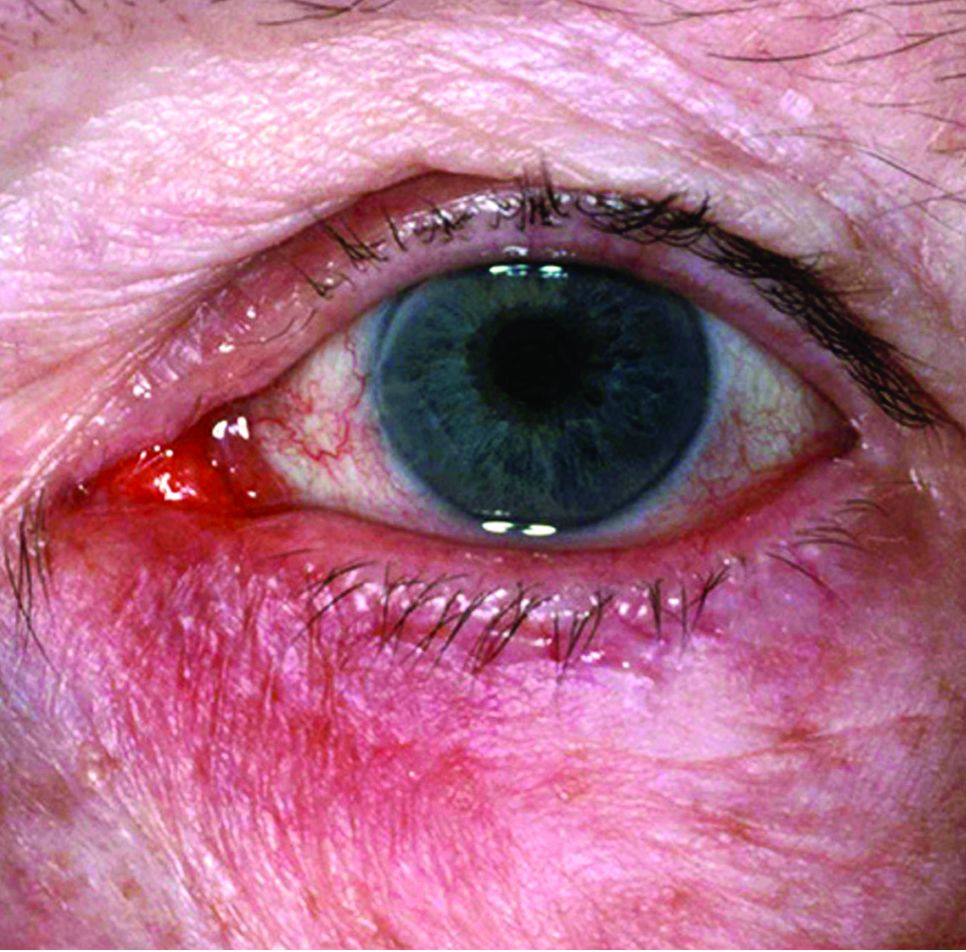
The key, she believes, is to move from a focus on ocular symptoms to an emphasis on lid and skin signs associated with ocular rosacea. “Almost all of the ophthalmology approaches to the disease start at the ocular surface, and these surface treatments are always a little bit [or very] toxic to the ocular surface,” she said. “By treating the lid signs first through a topical approach through the closed lid, we can eliminate a lot of the ocular surface symptoms without ever touching the ocular surface, thus preventing a lot of the associated toxicity and side effects you commonly see with topical ophthalmics.”
Dr. Capriotti and her colleagues have developed a topical treatment that contains dimethyl sulfoxide (DMSO) combined with dilute povidone iodine, which is applied to the lid margin of the closed eye.
In 2015, they published a case report describing the successful use of the treatment for a 78-year-old man with rosacea blepharoconjunctivitis, who had failed oral and topical treatments. He was treated with povidone iodine 10% solution in a DMSO vehicle, which was compounded into a topical gel by a pharmacy and administered twice a day, rubbed onto the lash line and eyelid.
After one week, “remarkable improvements were noted,” with reversal of much of the conjunctivitis, anterior lid erythema, and thickening, they wrote. One month later, after once daily application, “not only were the initial improvements conserved, but the posterior lid margin vessels and telangiectasias had begun to attenuate and involute. Moreover, meibomian capping was no longer present, secretions were less viscous, and tear break-up time normalized.”
DMSO is a skin penetration agent that is rarely used in ophthalmology and povidone iodine is a biocidal agent used in eye care, they pointed out in the case report. “This novel therapy may warrant further investigation in randomized, controlled clinical trials,” they concluded (Ophthalmol Ther. 2015 Dec;4[2]:143-50).
There are plans to start a clinical trial later in 2017, according to Dr. Capriottis, the cofounder of Veloce Biopharma, a company that is developing this product.
Until more specific treatments are available, what can dermatologists do now to improve their care of patients with ocular rosacea? “First and foremost, you have to be comfortable looking at the eyelids and ruling out anything that could be masquerading as blepharitis,” Dr. Capriotti commented. “We have a big disadvantage in dermatology because we don’t use slit-lamp biomicroscopy, but we are pretty good at looking at skin. If the patient has a lot of extraocular rosacea signs, I definitely think dermatologists can manage the prescription of a topical for the lids and evaluate the response.”
She cautioned, however, that referrals are in order in several situations: cases that are severe, those that involve the eye only, and those with which ocular symptoms seem to outweigh the lid signs.
Dr. Capriotti is also the senior vice president of dermatology at Veloce. In the study published in 2015, she and her three coauthors disclosed having financial interest in ALC Therapeutics, a company that was dissolved and restructured into Veloce.
A partnership between ophthalmologists and dermatologists holds the potential to produce a better treatment for ocular rosacea, one of the few conditions that brings the two specialties together.
“Hopefully, the paradigm eventually shifts from treating symptoms and signs of ocular rosacea with oral antibiotics or reflexive referral to ophthalmology to approaching cutaneous treatment first,” said dermatologist Kara Capriotti, MD, who has been working with a team of ophthalmologists to develop a treatment that focuses on ocular rosacea as a “lid disease,” instead of as a primary ocular surface problem.
Eye scrubs, artificial tears, stress relief measures, and antibiotics are among the treatments used for the condition, which, however, can be treatment-resistant.
The key, she believes, is to move from a focus on ocular symptoms to an emphasis on lid and skin signs associated with ocular rosacea. “Almost all of the ophthalmology approaches to the disease start at the ocular surface, and these surface treatments are always a little bit [or very] toxic to the ocular surface,” she said. “By treating the lid signs first through a topical approach through the closed lid, we can eliminate a lot of the ocular surface symptoms without ever touching the ocular surface, thus preventing a lot of the associated toxicity and side effects you commonly see with topical ophthalmics.”
Dr. Capriotti and her colleagues have developed a topical treatment that contains dimethyl sulfoxide (DMSO) combined with dilute povidone iodine, which is applied to the lid margin of the closed eye.
In 2015, they published a case report describing the successful use of the treatment for a 78-year-old man with rosacea blepharoconjunctivitis, who had failed oral and topical treatments. He was treated with povidone iodine 10% solution in a DMSO vehicle, which was compounded into a topical gel by a pharmacy and administered twice a day, rubbed onto the lash line and eyelid.
After one week, “remarkable improvements were noted,” with reversal of much of the conjunctivitis, anterior lid erythema, and thickening, they wrote. One month later, after once daily application, “not only were the initial improvements conserved, but the posterior lid margin vessels and telangiectasias had begun to attenuate and involute. Moreover, meibomian capping was no longer present, secretions were less viscous, and tear break-up time normalized.”
DMSO is a skin penetration agent that is rarely used in ophthalmology and povidone iodine is a biocidal agent used in eye care, they pointed out in the case report. “This novel therapy may warrant further investigation in randomized, controlled clinical trials,” they concluded (Ophthalmol Ther. 2015 Dec;4[2]:143-50).
There are plans to start a clinical trial later in 2017, according to Dr. Capriottis, the cofounder of Veloce Biopharma, a company that is developing this product.
Until more specific treatments are available, what can dermatologists do now to improve their care of patients with ocular rosacea? “First and foremost, you have to be comfortable looking at the eyelids and ruling out anything that could be masquerading as blepharitis,” Dr. Capriotti commented. “We have a big disadvantage in dermatology because we don’t use slit-lamp biomicroscopy, but we are pretty good at looking at skin. If the patient has a lot of extraocular rosacea signs, I definitely think dermatologists can manage the prescription of a topical for the lids and evaluate the response.”
She cautioned, however, that referrals are in order in several situations: cases that are severe, those that involve the eye only, and those with which ocular symptoms seem to outweigh the lid signs.
Dr. Capriotti is also the senior vice president of dermatology at Veloce. In the study published in 2015, she and her three coauthors disclosed having financial interest in ALC Therapeutics, a company that was dissolved and restructured into Veloce.
A partnership between ophthalmologists and dermatologists holds the potential to produce a better treatment for ocular rosacea, one of the few conditions that brings the two specialties together.
“Hopefully, the paradigm eventually shifts from treating symptoms and signs of ocular rosacea with oral antibiotics or reflexive referral to ophthalmology to approaching cutaneous treatment first,” said dermatologist Kara Capriotti, MD, who has been working with a team of ophthalmologists to develop a treatment that focuses on ocular rosacea as a “lid disease,” instead of as a primary ocular surface problem.
Eye scrubs, artificial tears, stress relief measures, and antibiotics are among the treatments used for the condition, which, however, can be treatment-resistant.
The key, she believes, is to move from a focus on ocular symptoms to an emphasis on lid and skin signs associated with ocular rosacea. “Almost all of the ophthalmology approaches to the disease start at the ocular surface, and these surface treatments are always a little bit [or very] toxic to the ocular surface,” she said. “By treating the lid signs first through a topical approach through the closed lid, we can eliminate a lot of the ocular surface symptoms without ever touching the ocular surface, thus preventing a lot of the associated toxicity and side effects you commonly see with topical ophthalmics.”
Dr. Capriotti and her colleagues have developed a topical treatment that contains dimethyl sulfoxide (DMSO) combined with dilute povidone iodine, which is applied to the lid margin of the closed eye.
In 2015, they published a case report describing the successful use of the treatment for a 78-year-old man with rosacea blepharoconjunctivitis, who had failed oral and topical treatments. He was treated with povidone iodine 10% solution in a DMSO vehicle, which was compounded into a topical gel by a pharmacy and administered twice a day, rubbed onto the lash line and eyelid.
After one week, “remarkable improvements were noted,” with reversal of much of the conjunctivitis, anterior lid erythema, and thickening, they wrote. One month later, after once daily application, “not only were the initial improvements conserved, but the posterior lid margin vessels and telangiectasias had begun to attenuate and involute. Moreover, meibomian capping was no longer present, secretions were less viscous, and tear break-up time normalized.”
DMSO is a skin penetration agent that is rarely used in ophthalmology and povidone iodine is a biocidal agent used in eye care, they pointed out in the case report. “This novel therapy may warrant further investigation in randomized, controlled clinical trials,” they concluded (Ophthalmol Ther. 2015 Dec;4[2]:143-50).
There are plans to start a clinical trial later in 2017, according to Dr. Capriottis, the cofounder of Veloce Biopharma, a company that is developing this product.
Until more specific treatments are available, what can dermatologists do now to improve their care of patients with ocular rosacea? “First and foremost, you have to be comfortable looking at the eyelids and ruling out anything that could be masquerading as blepharitis,” Dr. Capriotti commented. “We have a big disadvantage in dermatology because we don’t use slit-lamp biomicroscopy, but we are pretty good at looking at skin. If the patient has a lot of extraocular rosacea signs, I definitely think dermatologists can manage the prescription of a topical for the lids and evaluate the response.”
She cautioned, however, that referrals are in order in several situations: cases that are severe, those that involve the eye only, and those with which ocular symptoms seem to outweigh the lid signs.
Dr. Capriotti is also the senior vice president of dermatology at Veloce. In the study published in 2015, she and her three coauthors disclosed having financial interest in ALC Therapeutics, a company that was dissolved and restructured into Veloce.
Childhood asthma linked to high LV mass later
A history of childhood asthma correlates with high left ventricular mass, a prominent indicator of cardiac damage, in asymptomatic healthy young adults, according to a report published online June 26 in JACC: Heart Failure.
“Our data suggest that aggressive lifestyle modifications or even pharmacologic treatment may be applied to people with a [childhood] history of asthma. … to lower cardiovascular risk,” said Dianjianyi Sun, MD, PhD, of the department of epidemiology, Tulane University, New Orleans, and his associates.
Both mean left ventricular mass (169 g) and mean left ventricular mass index (41 g/m2) were significantly higher in participants who’d had childhood asthma than in those who had not (158 g and 38 g/m2, respectively). This correlation was independent of major cardiovascular risk factors such as race, smoking status, hypertension status, use of antihypertensive medications, C-reactive protein levels, heart rate, and body mass index, the investigators said (JACC: Heart Failure. 2017 Jun 26. doi: 10.1016/j.jchf.2017.03.009).
The association was strongest among young adults who had higher systolic blood pressure (prehypertension or hypertension).
This study was supported by the National Institutes of Health, the Boston Obesity Nutrition Research Center, the United States-Israel Binational Science Foundation, and the American Heart Association. Dr. Sun and his associates reported having no relevant financial disclosures.
Sun et al. report that healthy young adults who had asthma during childhood have a significantly greater left ventricular mass index, by about 8%, than do those who didn’t have the condition.
On an individual patient level, such a difference confers a relatively small incremental risk of incident cardiovascular disease: a roughly 1.08-fold increase. However, at the population level, where there are many major comorbidities, the public health implications could be substantial. Targeting these patients for intensified cardiovascular risk reduction could have important benefits.
John S. Gottdiener, MD, is at the University of Maryland Medical Center, Baltimore. He reported having no relevant financial disclosures. Dr. Gottdiener made these remarks in an editorial comment accompanying Dr. Sun’s report (JACC: Heart Failure. 2017 Jun 26. doi: 10.1016/j.jchf.2017.05.003).
Sun et al. report that healthy young adults who had asthma during childhood have a significantly greater left ventricular mass index, by about 8%, than do those who didn’t have the condition.
On an individual patient level, such a difference confers a relatively small incremental risk of incident cardiovascular disease: a roughly 1.08-fold increase. However, at the population level, where there are many major comorbidities, the public health implications could be substantial. Targeting these patients for intensified cardiovascular risk reduction could have important benefits.
John S. Gottdiener, MD, is at the University of Maryland Medical Center, Baltimore. He reported having no relevant financial disclosures. Dr. Gottdiener made these remarks in an editorial comment accompanying Dr. Sun’s report (JACC: Heart Failure. 2017 Jun 26. doi: 10.1016/j.jchf.2017.05.003).
Sun et al. report that healthy young adults who had asthma during childhood have a significantly greater left ventricular mass index, by about 8%, than do those who didn’t have the condition.
On an individual patient level, such a difference confers a relatively small incremental risk of incident cardiovascular disease: a roughly 1.08-fold increase. However, at the population level, where there are many major comorbidities, the public health implications could be substantial. Targeting these patients for intensified cardiovascular risk reduction could have important benefits.
John S. Gottdiener, MD, is at the University of Maryland Medical Center, Baltimore. He reported having no relevant financial disclosures. Dr. Gottdiener made these remarks in an editorial comment accompanying Dr. Sun’s report (JACC: Heart Failure. 2017 Jun 26. doi: 10.1016/j.jchf.2017.05.003).
A history of childhood asthma correlates with high left ventricular mass, a prominent indicator of cardiac damage, in asymptomatic healthy young adults, according to a report published online June 26 in JACC: Heart Failure.
“Our data suggest that aggressive lifestyle modifications or even pharmacologic treatment may be applied to people with a [childhood] history of asthma. … to lower cardiovascular risk,” said Dianjianyi Sun, MD, PhD, of the department of epidemiology, Tulane University, New Orleans, and his associates.
Both mean left ventricular mass (169 g) and mean left ventricular mass index (41 g/m2) were significantly higher in participants who’d had childhood asthma than in those who had not (158 g and 38 g/m2, respectively). This correlation was independent of major cardiovascular risk factors such as race, smoking status, hypertension status, use of antihypertensive medications, C-reactive protein levels, heart rate, and body mass index, the investigators said (JACC: Heart Failure. 2017 Jun 26. doi: 10.1016/j.jchf.2017.03.009).
The association was strongest among young adults who had higher systolic blood pressure (prehypertension or hypertension).
This study was supported by the National Institutes of Health, the Boston Obesity Nutrition Research Center, the United States-Israel Binational Science Foundation, and the American Heart Association. Dr. Sun and his associates reported having no relevant financial disclosures.
A history of childhood asthma correlates with high left ventricular mass, a prominent indicator of cardiac damage, in asymptomatic healthy young adults, according to a report published online June 26 in JACC: Heart Failure.
“Our data suggest that aggressive lifestyle modifications or even pharmacologic treatment may be applied to people with a [childhood] history of asthma. … to lower cardiovascular risk,” said Dianjianyi Sun, MD, PhD, of the department of epidemiology, Tulane University, New Orleans, and his associates.
Both mean left ventricular mass (169 g) and mean left ventricular mass index (41 g/m2) were significantly higher in participants who’d had childhood asthma than in those who had not (158 g and 38 g/m2, respectively). This correlation was independent of major cardiovascular risk factors such as race, smoking status, hypertension status, use of antihypertensive medications, C-reactive protein levels, heart rate, and body mass index, the investigators said (JACC: Heart Failure. 2017 Jun 26. doi: 10.1016/j.jchf.2017.03.009).
The association was strongest among young adults who had higher systolic blood pressure (prehypertension or hypertension).
This study was supported by the National Institutes of Health, the Boston Obesity Nutrition Research Center, the United States-Israel Binational Science Foundation, and the American Heart Association. Dr. Sun and his associates reported having no relevant financial disclosures.
FROM JACC: HEART FAILURE
Key clinical point: Childhood asthma is associated with high left ventricular mass in asymptomatic young adults.
Major finding: Both mean left ventricular mass (169 g) and mean left ventricular mass index (41 g/m2) were significantly higher in participants who’d had childhood asthma than in those who had not (158 g and 38 g/m2, respectively).
Data source: A secondary analysis of data from the Bogalusa Heart Study, involving 1,118 participants followed for an average of 10 years.
Disclosures: This study was supported by the National Heart, Lung, and Blood Institute, the National Institute of Diabetes and Digestive and Kidney Diseases, the Boston Obesity Nutrition Research Center, the United States-Israel Binational Science Foundation, and the American Heart Association. Dr. Sun and his associates reported having no relevant financial disclosures.
Hospital antibiograms may not apply to emergency department patients
NEW ORLEANS – Patients seen in the emergency department present with a wider range of risk for resistant infections than do hospitalized patients overall, and as a result, hospital-wide antibiograms that dictate empiric therapy may not translate well to the ED setting, a study showed.
Instead, investigators suggested that clinicians choose empiric antimicrobial therapy in the emergency department based on factors associated with differences in susceptibility.
The study researchers compared common antibiotics to treat Escherichia coli between adults treated at their institution overall versus the emergency department, and by sex, patient age, and whether people came to the ED from home versus a long-term care setting. They found some significant differences that could guide empiric treatment in the ED setting.
“Our ED pharmacist observed a lot of broad-spectrum antibiotic prescribing for UTIs,” lead investigator Sarah Jorgensen, PharmD, said at the annual meeting of the American Society for Microbiology. “Also, we’ve had a culture follow-up program in place for the last 5 years, and they had to intervene on a lot of postdischarge antibiotic mismatches.”
E. coli was the most common urinary pathogen detected in this study of 500 randomly selected ED patients with ICD-9/ICD-10 diagnostic codes for urinary tract infection. Investigators found E. coli in 64% of the 226 culture-positive patients presenting to the ED at Huntington Hospital in Pasadena, Calif., between July 2015 and June 2016.
“What was surprising for us, because our enrollment was based on ICD codes for a UTI, is that only about 50% had a positive urine culture,” said Dr. Jorgensen, a pharmacy resident at the University of Southern California in Los Angeles. “Urinalysis was positive in about 99% of the population.”
Dr. Jorgensen and her colleagues found overall low susceptibilities of 71% for ciprofloxacin, 66% for trimethoprim/sulfamethoxazole, and 67% for cefazolin susceptibilities in the ED. They also found that 8% of isolates were positive for extended-spectrum beta-lactamase isolates, as were 1% of E. coli isolates.
The 67% cefazolin susceptibility was significantly lower in the ED, compared with the 86% susceptibility in the institutional antibiogram (P less than .001).
The investigators found E. coli susceptibility to ciprofloxacin was lower in men, at 55%, compared with 74% among women, but the difference was not statistically significant (P = .14). A similar pattern emerged with cefazolin – 55% susceptibility among men and 69% among women (P = .26). In contrast, trimethoprim/sulfamethoxazole susceptibility trended higher in men, at 73%, vs. 64% among women in the ED (P = .63).
When they divided patients by age 50 years and younger versus those older than 50, the investigators found ampicillin susceptibilities were lower in the younger group, at 30%, compared with 51% among those in the older cohort (P = .03). Similarly, gentamicin susceptibilities were 80% in the younger group, compared with 92% in the older group (P = .04).
Ciprofloxacin susceptibility was significantly lower among people coming to the ED from a long-term care facility than among those coming from home – 35% vs. 77% (P less than .001). Differences in ciprofloxacin susceptibility between admitted and discharged patients was less striking – 63% vs. 78% (P = .04).
Nitrofurantoin was the only oral agent with susceptibility greater than 80% in all patient groups, with susceptibility ranging from 88% to 100%.
Because it typically takes 2-3 days to get the susceptibility results back at Huntington Hospital, many patients are discharged on empiric therapy, noted Mira Zurayk, PharmD, a resident at Huntington Hospital. That can present multiple challenges, particularly with homeless patients who are difficult to find and provide follow-up for, Dr. Jorgensen added.
Based partly on the study findings, the investigators developed a clinical algorithm specifically to address UTI antimicrobial prescriptions in the ED. The algorithm incorporates different recommendations for different groups of patients because of their different resistance trends.
“I think that is a good way to tailor empiric therapy when you don’t have culture results up front,” Dr. Jorgensen said. “We just implemented the algorithm, and I’m now analyzing the outcomes.”
Having more data on outcomes will help the clinicians target lowering the rate of “drug-bug mismatches,” as well as UTI-related revisits to the ED. In addition, the work could help expand the antibiotic stewardship program in the hospital to the ED for the first time, Dr. Jorgensen said.
Dr. Jorgensen and Dr. Zurayk had no relevant financial disclosures. One of the study coauthors, Annie Wong-Beringer, PharmD, receives grant funding from Merck.
NEW ORLEANS – Patients seen in the emergency department present with a wider range of risk for resistant infections than do hospitalized patients overall, and as a result, hospital-wide antibiograms that dictate empiric therapy may not translate well to the ED setting, a study showed.
Instead, investigators suggested that clinicians choose empiric antimicrobial therapy in the emergency department based on factors associated with differences in susceptibility.
The study researchers compared common antibiotics to treat Escherichia coli between adults treated at their institution overall versus the emergency department, and by sex, patient age, and whether people came to the ED from home versus a long-term care setting. They found some significant differences that could guide empiric treatment in the ED setting.
“Our ED pharmacist observed a lot of broad-spectrum antibiotic prescribing for UTIs,” lead investigator Sarah Jorgensen, PharmD, said at the annual meeting of the American Society for Microbiology. “Also, we’ve had a culture follow-up program in place for the last 5 years, and they had to intervene on a lot of postdischarge antibiotic mismatches.”
E. coli was the most common urinary pathogen detected in this study of 500 randomly selected ED patients with ICD-9/ICD-10 diagnostic codes for urinary tract infection. Investigators found E. coli in 64% of the 226 culture-positive patients presenting to the ED at Huntington Hospital in Pasadena, Calif., between July 2015 and June 2016.
“What was surprising for us, because our enrollment was based on ICD codes for a UTI, is that only about 50% had a positive urine culture,” said Dr. Jorgensen, a pharmacy resident at the University of Southern California in Los Angeles. “Urinalysis was positive in about 99% of the population.”
Dr. Jorgensen and her colleagues found overall low susceptibilities of 71% for ciprofloxacin, 66% for trimethoprim/sulfamethoxazole, and 67% for cefazolin susceptibilities in the ED. They also found that 8% of isolates were positive for extended-spectrum beta-lactamase isolates, as were 1% of E. coli isolates.
The 67% cefazolin susceptibility was significantly lower in the ED, compared with the 86% susceptibility in the institutional antibiogram (P less than .001).
The investigators found E. coli susceptibility to ciprofloxacin was lower in men, at 55%, compared with 74% among women, but the difference was not statistically significant (P = .14). A similar pattern emerged with cefazolin – 55% susceptibility among men and 69% among women (P = .26). In contrast, trimethoprim/sulfamethoxazole susceptibility trended higher in men, at 73%, vs. 64% among women in the ED (P = .63).
When they divided patients by age 50 years and younger versus those older than 50, the investigators found ampicillin susceptibilities were lower in the younger group, at 30%, compared with 51% among those in the older cohort (P = .03). Similarly, gentamicin susceptibilities were 80% in the younger group, compared with 92% in the older group (P = .04).
Ciprofloxacin susceptibility was significantly lower among people coming to the ED from a long-term care facility than among those coming from home – 35% vs. 77% (P less than .001). Differences in ciprofloxacin susceptibility between admitted and discharged patients was less striking – 63% vs. 78% (P = .04).
Nitrofurantoin was the only oral agent with susceptibility greater than 80% in all patient groups, with susceptibility ranging from 88% to 100%.
Because it typically takes 2-3 days to get the susceptibility results back at Huntington Hospital, many patients are discharged on empiric therapy, noted Mira Zurayk, PharmD, a resident at Huntington Hospital. That can present multiple challenges, particularly with homeless patients who are difficult to find and provide follow-up for, Dr. Jorgensen added.
Based partly on the study findings, the investigators developed a clinical algorithm specifically to address UTI antimicrobial prescriptions in the ED. The algorithm incorporates different recommendations for different groups of patients because of their different resistance trends.
“I think that is a good way to tailor empiric therapy when you don’t have culture results up front,” Dr. Jorgensen said. “We just implemented the algorithm, and I’m now analyzing the outcomes.”
Having more data on outcomes will help the clinicians target lowering the rate of “drug-bug mismatches,” as well as UTI-related revisits to the ED. In addition, the work could help expand the antibiotic stewardship program in the hospital to the ED for the first time, Dr. Jorgensen said.
Dr. Jorgensen and Dr. Zurayk had no relevant financial disclosures. One of the study coauthors, Annie Wong-Beringer, PharmD, receives grant funding from Merck.
NEW ORLEANS – Patients seen in the emergency department present with a wider range of risk for resistant infections than do hospitalized patients overall, and as a result, hospital-wide antibiograms that dictate empiric therapy may not translate well to the ED setting, a study showed.
Instead, investigators suggested that clinicians choose empiric antimicrobial therapy in the emergency department based on factors associated with differences in susceptibility.
The study researchers compared common antibiotics to treat Escherichia coli between adults treated at their institution overall versus the emergency department, and by sex, patient age, and whether people came to the ED from home versus a long-term care setting. They found some significant differences that could guide empiric treatment in the ED setting.
“Our ED pharmacist observed a lot of broad-spectrum antibiotic prescribing for UTIs,” lead investigator Sarah Jorgensen, PharmD, said at the annual meeting of the American Society for Microbiology. “Also, we’ve had a culture follow-up program in place for the last 5 years, and they had to intervene on a lot of postdischarge antibiotic mismatches.”
E. coli was the most common urinary pathogen detected in this study of 500 randomly selected ED patients with ICD-9/ICD-10 diagnostic codes for urinary tract infection. Investigators found E. coli in 64% of the 226 culture-positive patients presenting to the ED at Huntington Hospital in Pasadena, Calif., between July 2015 and June 2016.
“What was surprising for us, because our enrollment was based on ICD codes for a UTI, is that only about 50% had a positive urine culture,” said Dr. Jorgensen, a pharmacy resident at the University of Southern California in Los Angeles. “Urinalysis was positive in about 99% of the population.”
Dr. Jorgensen and her colleagues found overall low susceptibilities of 71% for ciprofloxacin, 66% for trimethoprim/sulfamethoxazole, and 67% for cefazolin susceptibilities in the ED. They also found that 8% of isolates were positive for extended-spectrum beta-lactamase isolates, as were 1% of E. coli isolates.
The 67% cefazolin susceptibility was significantly lower in the ED, compared with the 86% susceptibility in the institutional antibiogram (P less than .001).
The investigators found E. coli susceptibility to ciprofloxacin was lower in men, at 55%, compared with 74% among women, but the difference was not statistically significant (P = .14). A similar pattern emerged with cefazolin – 55% susceptibility among men and 69% among women (P = .26). In contrast, trimethoprim/sulfamethoxazole susceptibility trended higher in men, at 73%, vs. 64% among women in the ED (P = .63).
When they divided patients by age 50 years and younger versus those older than 50, the investigators found ampicillin susceptibilities were lower in the younger group, at 30%, compared with 51% among those in the older cohort (P = .03). Similarly, gentamicin susceptibilities were 80% in the younger group, compared with 92% in the older group (P = .04).
Ciprofloxacin susceptibility was significantly lower among people coming to the ED from a long-term care facility than among those coming from home – 35% vs. 77% (P less than .001). Differences in ciprofloxacin susceptibility between admitted and discharged patients was less striking – 63% vs. 78% (P = .04).
Nitrofurantoin was the only oral agent with susceptibility greater than 80% in all patient groups, with susceptibility ranging from 88% to 100%.
Because it typically takes 2-3 days to get the susceptibility results back at Huntington Hospital, many patients are discharged on empiric therapy, noted Mira Zurayk, PharmD, a resident at Huntington Hospital. That can present multiple challenges, particularly with homeless patients who are difficult to find and provide follow-up for, Dr. Jorgensen added.
Based partly on the study findings, the investigators developed a clinical algorithm specifically to address UTI antimicrobial prescriptions in the ED. The algorithm incorporates different recommendations for different groups of patients because of their different resistance trends.
“I think that is a good way to tailor empiric therapy when you don’t have culture results up front,” Dr. Jorgensen said. “We just implemented the algorithm, and I’m now analyzing the outcomes.”
Having more data on outcomes will help the clinicians target lowering the rate of “drug-bug mismatches,” as well as UTI-related revisits to the ED. In addition, the work could help expand the antibiotic stewardship program in the hospital to the ED for the first time, Dr. Jorgensen said.
Dr. Jorgensen and Dr. Zurayk had no relevant financial disclosures. One of the study coauthors, Annie Wong-Beringer, PharmD, receives grant funding from Merck.
AT ASM MICROBE 2017
Key clinical point: Escherichia coli susceptibility to common antibiotics in the emergency department varies by age, sex, and admitted versus discharge status.
Major finding: The only oral antimicrobial with greater than 80% susceptibility across all groups was nitrofurantoin.
Data source: A study of 500 randomly selected adults who presented to the ED with a urinary tract infection, based on ICD-9 or ICD-10 codes.
Disclosures: Dr. Jorgensen and Dr. Zurayk had no relevant financial disclosures. One study coauthor, Annie Wong-Beringer, PharmD, receives grant funding from Merck.