User login
Drug may be ‘important treatment option’ for AML
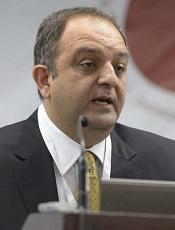
Photo courtesy of ASH
VIENNA—Adding the anticancer quinolone derivative vosaroxin to treatment with cytarabine can improve outcomes for some older patients with relapsed/refractory acute myeloid leukemia (AML), results of the phase 3 VALOR trial suggest.
AML patients age 60 and older with refractory and early relapse disease had improved survival rates when they received vosaroxin and cytarabine, compared to patients who received cytarabine and placebo.
However, for older patients with late-relapse AML, the addition of vosaroxin had no significant impact on survival.
Farhad Ravandi, MD, of the University of Texas MD Anderson Cancer Center in Houston, and his colleagues presented these result at the 20th Congress of the European Hematology Association (abstract P197*). The trial was sponsored by Sunesis Pharmaceuticals, the company developing vosaroxin.
“AML is a disease that primarily affects older patients, and clinical outcomes among these patients is abysmal,” Dr Ravandi noted. “These patients have had few options outside of clinical trial enrollment.”
“Results from the analyses presented today show compelling survival and durable responses, with comparable early mortality, for the vosaroxin and cytarabine treatment arm in the older refractory and early relapse patients. Given these results, I believe vosaroxin represents an important new treatment option.”
VALOR is a randomized, double-blind, phase 3 trial that enrolled 711 adult patients with relapsed or refractory AML. Patients were stratified for age, geographic region, and disease status, then randomized 1:1 to receive vosaroxin and cytarabine or placebo and cytarabine.
Dr Ravandi and his colleagues presented results from the subgroups of patients age 60 years and older (451/711) with late-relapse disease (n=87) and refractory or early relapse disease (combined n=364).
Late-relapse disease
Patients with late-relapse disease had a significantly higher complete response (CR) rate if they received vosaroxin/cytarabine rather than placebo/cytarabine. The rates were 57% and 28%, respectively (P=0.0064).
However, there was no significant difference between the treatment arms with regard to overall survival (OS), leukemia-free survival (LFS), or event-free survival (EFS).
The median OS was 9.2 months in the vosaroxin/cytarabine arm and 9.8 months in the placebo/cytarabine arm (hazard ratio [HR]=1.06, P=0.82). The median OS, censored for transplant, was 9.1 months in both arms (HR=0.92, P=0.78).
The median LFS was 10.3 months in the vosaroxin/cytarabine arm and 8.7 months in the placebo/cytarabine arm (HR=1.16, P=0.77). And the median EFS was 5.5 months and 2.3 months, respectively (HR=0.65, P=0.0852).
Thirty-day all-cause mortality was 11% the vosaroxin/cytarabine arm and 2% in the placebo/cytarabine arm. Sixty-day all-cause mortality was 18% and 14%, respectively.
Refractory/early relapse disease
Patients with refractory AML (n=210) and those with early relapse disease (n=154) had significant improvements in CR and survival when they received vosaroxin and cytarabine. The CR rate was 26% in the vosaroxin/cytarabine arm and 10% in the placebo/cytarabine arm (P=0.0001).
The median OS was 6.5 months in the vosaroxin/cytarabine arm and 3.9 months in the placebo/cytarabine arm (HR=0.69, P=0.0008). The median OS, censored for transplant, was 6.2 months and 3.9 months, respectively (HR=0.71, P=0.0048).
The median LFS was 9.7 months in the vosaroxin/cytarabine arm and 5.5 months in the placebo/cytarabine arm (HR=0.50, P=0.0424). And the median EFS was 1.7 months and 1.3 months, respectively (HR=0.59, P<0.0001).
Rates of all-cause mortality were comparable between the arms. Thirty-day all-cause mortality was 10% in the vosaroxin/cytarabine arm and 11% in the placebo/cytarabine arm. Sixty-day all-cause mortality was 21% and 25%, respectively.
Adverse events
Ninety-four percent of patients in the vosaroxin/cytarabine arm and 86% of those in the placebo/cytarabine arm experienced a grade 3 or higher adverse event (AE). The rate of treatment-related, grade 3 or higher AEs was 74% and 60%, respectively.
The most common grade 3 or higher AEs—occurring in at least 10% of patients in the vosaroxin/cytarabine and placebo/cytarabine arms, respectively—were febrile neutropenia (43% vs 30%), thrombocytopenia (24% vs 25%), anemia (23% vs 24%), neutropenia (19% vs 14%), hypokalemia (15% vs 7%), stomatitis (16% vs 4%), sepsis (12% vs 6%), and pneumonia (11% vs 8%). 
*Information in the abstract differs from that presented at the meeting.
Photo courtesy of ASH
VIENNA—Adding the anticancer quinolone derivative vosaroxin to treatment with cytarabine can improve outcomes for some older patients with relapsed/refractory acute myeloid leukemia (AML), results of the phase 3 VALOR trial suggest.
AML patients age 60 and older with refractory and early relapse disease had improved survival rates when they received vosaroxin and cytarabine, compared to patients who received cytarabine and placebo.
However, for older patients with late-relapse AML, the addition of vosaroxin had no significant impact on survival.
Farhad Ravandi, MD, of the University of Texas MD Anderson Cancer Center in Houston, and his colleagues presented these result at the 20th Congress of the European Hematology Association (abstract P197*). The trial was sponsored by Sunesis Pharmaceuticals, the company developing vosaroxin.
“AML is a disease that primarily affects older patients, and clinical outcomes among these patients is abysmal,” Dr Ravandi noted. “These patients have had few options outside of clinical trial enrollment.”
“Results from the analyses presented today show compelling survival and durable responses, with comparable early mortality, for the vosaroxin and cytarabine treatment arm in the older refractory and early relapse patients. Given these results, I believe vosaroxin represents an important new treatment option.”
VALOR is a randomized, double-blind, phase 3 trial that enrolled 711 adult patients with relapsed or refractory AML. Patients were stratified for age, geographic region, and disease status, then randomized 1:1 to receive vosaroxin and cytarabine or placebo and cytarabine.
Dr Ravandi and his colleagues presented results from the subgroups of patients age 60 years and older (451/711) with late-relapse disease (n=87) and refractory or early relapse disease (combined n=364).
Late-relapse disease
Patients with late-relapse disease had a significantly higher complete response (CR) rate if they received vosaroxin/cytarabine rather than placebo/cytarabine. The rates were 57% and 28%, respectively (P=0.0064).
However, there was no significant difference between the treatment arms with regard to overall survival (OS), leukemia-free survival (LFS), or event-free survival (EFS).
The median OS was 9.2 months in the vosaroxin/cytarabine arm and 9.8 months in the placebo/cytarabine arm (hazard ratio [HR]=1.06, P=0.82). The median OS, censored for transplant, was 9.1 months in both arms (HR=0.92, P=0.78).
The median LFS was 10.3 months in the vosaroxin/cytarabine arm and 8.7 months in the placebo/cytarabine arm (HR=1.16, P=0.77). And the median EFS was 5.5 months and 2.3 months, respectively (HR=0.65, P=0.0852).
Thirty-day all-cause mortality was 11% the vosaroxin/cytarabine arm and 2% in the placebo/cytarabine arm. Sixty-day all-cause mortality was 18% and 14%, respectively.
Refractory/early relapse disease
Patients with refractory AML (n=210) and those with early relapse disease (n=154) had significant improvements in CR and survival when they received vosaroxin and cytarabine. The CR rate was 26% in the vosaroxin/cytarabine arm and 10% in the placebo/cytarabine arm (P=0.0001).
The median OS was 6.5 months in the vosaroxin/cytarabine arm and 3.9 months in the placebo/cytarabine arm (HR=0.69, P=0.0008). The median OS, censored for transplant, was 6.2 months and 3.9 months, respectively (HR=0.71, P=0.0048).
The median LFS was 9.7 months in the vosaroxin/cytarabine arm and 5.5 months in the placebo/cytarabine arm (HR=0.50, P=0.0424). And the median EFS was 1.7 months and 1.3 months, respectively (HR=0.59, P<0.0001).
Rates of all-cause mortality were comparable between the arms. Thirty-day all-cause mortality was 10% in the vosaroxin/cytarabine arm and 11% in the placebo/cytarabine arm. Sixty-day all-cause mortality was 21% and 25%, respectively.
Adverse events
Ninety-four percent of patients in the vosaroxin/cytarabine arm and 86% of those in the placebo/cytarabine arm experienced a grade 3 or higher adverse event (AE). The rate of treatment-related, grade 3 or higher AEs was 74% and 60%, respectively.
The most common grade 3 or higher AEs—occurring in at least 10% of patients in the vosaroxin/cytarabine and placebo/cytarabine arms, respectively—were febrile neutropenia (43% vs 30%), thrombocytopenia (24% vs 25%), anemia (23% vs 24%), neutropenia (19% vs 14%), hypokalemia (15% vs 7%), stomatitis (16% vs 4%), sepsis (12% vs 6%), and pneumonia (11% vs 8%).
*Information in the abstract differs from that presented at the meeting.
Photo courtesy of ASH
VIENNA—Adding the anticancer quinolone derivative vosaroxin to treatment with cytarabine can improve outcomes for some older patients with relapsed/refractory acute myeloid leukemia (AML), results of the phase 3 VALOR trial suggest.
AML patients age 60 and older with refractory and early relapse disease had improved survival rates when they received vosaroxin and cytarabine, compared to patients who received cytarabine and placebo.
However, for older patients with late-relapse AML, the addition of vosaroxin had no significant impact on survival.
Farhad Ravandi, MD, of the University of Texas MD Anderson Cancer Center in Houston, and his colleagues presented these result at the 20th Congress of the European Hematology Association (abstract P197*). The trial was sponsored by Sunesis Pharmaceuticals, the company developing vosaroxin.
“AML is a disease that primarily affects older patients, and clinical outcomes among these patients is abysmal,” Dr Ravandi noted. “These patients have had few options outside of clinical trial enrollment.”
“Results from the analyses presented today show compelling survival and durable responses, with comparable early mortality, for the vosaroxin and cytarabine treatment arm in the older refractory and early relapse patients. Given these results, I believe vosaroxin represents an important new treatment option.”
VALOR is a randomized, double-blind, phase 3 trial that enrolled 711 adult patients with relapsed or refractory AML. Patients were stratified for age, geographic region, and disease status, then randomized 1:1 to receive vosaroxin and cytarabine or placebo and cytarabine.
Dr Ravandi and his colleagues presented results from the subgroups of patients age 60 years and older (451/711) with late-relapse disease (n=87) and refractory or early relapse disease (combined n=364).
Late-relapse disease
Patients with late-relapse disease had a significantly higher complete response (CR) rate if they received vosaroxin/cytarabine rather than placebo/cytarabine. The rates were 57% and 28%, respectively (P=0.0064).
However, there was no significant difference between the treatment arms with regard to overall survival (OS), leukemia-free survival (LFS), or event-free survival (EFS).
The median OS was 9.2 months in the vosaroxin/cytarabine arm and 9.8 months in the placebo/cytarabine arm (hazard ratio [HR]=1.06, P=0.82). The median OS, censored for transplant, was 9.1 months in both arms (HR=0.92, P=0.78).
The median LFS was 10.3 months in the vosaroxin/cytarabine arm and 8.7 months in the placebo/cytarabine arm (HR=1.16, P=0.77). And the median EFS was 5.5 months and 2.3 months, respectively (HR=0.65, P=0.0852).
Thirty-day all-cause mortality was 11% the vosaroxin/cytarabine arm and 2% in the placebo/cytarabine arm. Sixty-day all-cause mortality was 18% and 14%, respectively.
Refractory/early relapse disease
Patients with refractory AML (n=210) and those with early relapse disease (n=154) had significant improvements in CR and survival when they received vosaroxin and cytarabine. The CR rate was 26% in the vosaroxin/cytarabine arm and 10% in the placebo/cytarabine arm (P=0.0001).
The median OS was 6.5 months in the vosaroxin/cytarabine arm and 3.9 months in the placebo/cytarabine arm (HR=0.69, P=0.0008). The median OS, censored for transplant, was 6.2 months and 3.9 months, respectively (HR=0.71, P=0.0048).
The median LFS was 9.7 months in the vosaroxin/cytarabine arm and 5.5 months in the placebo/cytarabine arm (HR=0.50, P=0.0424). And the median EFS was 1.7 months and 1.3 months, respectively (HR=0.59, P<0.0001).
Rates of all-cause mortality were comparable between the arms. Thirty-day all-cause mortality was 10% in the vosaroxin/cytarabine arm and 11% in the placebo/cytarabine arm. Sixty-day all-cause mortality was 21% and 25%, respectively.
Adverse events
Ninety-four percent of patients in the vosaroxin/cytarabine arm and 86% of those in the placebo/cytarabine arm experienced a grade 3 or higher adverse event (AE). The rate of treatment-related, grade 3 or higher AEs was 74% and 60%, respectively.
The most common grade 3 or higher AEs—occurring in at least 10% of patients in the vosaroxin/cytarabine and placebo/cytarabine arms, respectively—were febrile neutropenia (43% vs 30%), thrombocytopenia (24% vs 25%), anemia (23% vs 24%), neutropenia (19% vs 14%), hypokalemia (15% vs 7%), stomatitis (16% vs 4%), sepsis (12% vs 6%), and pneumonia (11% vs 8%).
*Information in the abstract differs from that presented at the meeting.
Dual Antiplatelet Therapy – Less Stroke, More Bleeding
There is a persistent, unresolved debate regarding the perioperative management of clopidogrel (Plavix) among patients undergoing carotid endarterectomy (CEA).
”Surgeons often have to decide whether or not to continue antiplatelet drugs at the time of carotid endarterectomy. Most feel comfortable continuing aspirin but there is uncertainty about how to manage patients on clopidogrel as well.
“Our goal was to try and address this frequently encountered problem in a way that helps surgeons decide how to manage these medications,” according to Dr. Douglas W. Jones of New York Presbyterian Hospital Weill-Cornell Medical Center, New York, and Dr. David H. Stone of Dartmouth-Hitchcock Medical Center.
Dr. Jones will reported on their study examining the impact of dual antiplatelet therapy (clopidogrel plus aspirin) on perioperative CEA outcomes in more than 34,000 patients treated over the period 2003 to 2014 at the 2015 Vascular Annual Meeting.
Among the 34,477 patients undergoing CEA in the Vascular Quality Initiative database, 63% (21,624) were on aspirin and 20% (7,059) were on clopidogrel and aspirin.
In order to isolate the effect of clopidogrel, patients on clopidogrel and aspirin (dual therapy) were compared to patients taking aspirin alone.
Multivariate analyses and propensity score matching were employed to control for subgroup heterogeneity. The outcomes of the study included reoperation for bleeding (RTOR), neurologic events (transient ischemic attack or stroke), stroke, death, myocardial infarction (MI), and stroke/death.
Dr. Jones and his colleagues found that those patients who were on dual therapy were significantly more likely to have multiple comorbidities, including coronary artery disease, congestive heart failure, COPD, as well as diabetes.
However, after controlling for these differences, multivariate analysis showed that dual therapy was independently and significantly associated with increased RTOR (OR 1.74), but was also significantly protective against neurologic events (OR 0.61), any stroke (OR 0.62), and stroke/death (0.65).
Further analysis with propensity score matching yielded 2 well-matched groups of 4,548 patients.
Propensity score matching confirmed that patients on dual therapy were more likely to return to the OR for bleeding but were less likely to suffer neurologic events, stroke, or stroke/death.
“Our study shows that continuation of clopidogrel at the time of CEA was associated with a near 40% reduction in neurologic events, but it exposed patients to an increased bleeding risk,” said Dr. Jones.
“Accordingly, surgeons must judiciously assess the perioperative risk/benefit trade-off at the time of CEA for patients on dual antiplatelet therapy,” he concluded.
There is a persistent, unresolved debate regarding the perioperative management of clopidogrel (Plavix) among patients undergoing carotid endarterectomy (CEA).
”Surgeons often have to decide whether or not to continue antiplatelet drugs at the time of carotid endarterectomy. Most feel comfortable continuing aspirin but there is uncertainty about how to manage patients on clopidogrel as well.
“Our goal was to try and address this frequently encountered problem in a way that helps surgeons decide how to manage these medications,” according to Dr. Douglas W. Jones of New York Presbyterian Hospital Weill-Cornell Medical Center, New York, and Dr. David H. Stone of Dartmouth-Hitchcock Medical Center.
Dr. Jones will reported on their study examining the impact of dual antiplatelet therapy (clopidogrel plus aspirin) on perioperative CEA outcomes in more than 34,000 patients treated over the period 2003 to 2014 at the 2015 Vascular Annual Meeting.
Among the 34,477 patients undergoing CEA in the Vascular Quality Initiative database, 63% (21,624) were on aspirin and 20% (7,059) were on clopidogrel and aspirin.
In order to isolate the effect of clopidogrel, patients on clopidogrel and aspirin (dual therapy) were compared to patients taking aspirin alone.
Multivariate analyses and propensity score matching were employed to control for subgroup heterogeneity. The outcomes of the study included reoperation for bleeding (RTOR), neurologic events (transient ischemic attack or stroke), stroke, death, myocardial infarction (MI), and stroke/death.
Dr. Jones and his colleagues found that those patients who were on dual therapy were significantly more likely to have multiple comorbidities, including coronary artery disease, congestive heart failure, COPD, as well as diabetes.
However, after controlling for these differences, multivariate analysis showed that dual therapy was independently and significantly associated with increased RTOR (OR 1.74), but was also significantly protective against neurologic events (OR 0.61), any stroke (OR 0.62), and stroke/death (0.65).
Further analysis with propensity score matching yielded 2 well-matched groups of 4,548 patients.
Propensity score matching confirmed that patients on dual therapy were more likely to return to the OR for bleeding but were less likely to suffer neurologic events, stroke, or stroke/death.
“Our study shows that continuation of clopidogrel at the time of CEA was associated with a near 40% reduction in neurologic events, but it exposed patients to an increased bleeding risk,” said Dr. Jones.
“Accordingly, surgeons must judiciously assess the perioperative risk/benefit trade-off at the time of CEA for patients on dual antiplatelet therapy,” he concluded.
There is a persistent, unresolved debate regarding the perioperative management of clopidogrel (Plavix) among patients undergoing carotid endarterectomy (CEA).
”Surgeons often have to decide whether or not to continue antiplatelet drugs at the time of carotid endarterectomy. Most feel comfortable continuing aspirin but there is uncertainty about how to manage patients on clopidogrel as well.
“Our goal was to try and address this frequently encountered problem in a way that helps surgeons decide how to manage these medications,” according to Dr. Douglas W. Jones of New York Presbyterian Hospital Weill-Cornell Medical Center, New York, and Dr. David H. Stone of Dartmouth-Hitchcock Medical Center.
Dr. Jones will reported on their study examining the impact of dual antiplatelet therapy (clopidogrel plus aspirin) on perioperative CEA outcomes in more than 34,000 patients treated over the period 2003 to 2014 at the 2015 Vascular Annual Meeting.
Among the 34,477 patients undergoing CEA in the Vascular Quality Initiative database, 63% (21,624) were on aspirin and 20% (7,059) were on clopidogrel and aspirin.
In order to isolate the effect of clopidogrel, patients on clopidogrel and aspirin (dual therapy) were compared to patients taking aspirin alone.
Multivariate analyses and propensity score matching were employed to control for subgroup heterogeneity. The outcomes of the study included reoperation for bleeding (RTOR), neurologic events (transient ischemic attack or stroke), stroke, death, myocardial infarction (MI), and stroke/death.
Dr. Jones and his colleagues found that those patients who were on dual therapy were significantly more likely to have multiple comorbidities, including coronary artery disease, congestive heart failure, COPD, as well as diabetes.
However, after controlling for these differences, multivariate analysis showed that dual therapy was independently and significantly associated with increased RTOR (OR 1.74), but was also significantly protective against neurologic events (OR 0.61), any stroke (OR 0.62), and stroke/death (0.65).
Further analysis with propensity score matching yielded 2 well-matched groups of 4,548 patients.
Propensity score matching confirmed that patients on dual therapy were more likely to return to the OR for bleeding but were less likely to suffer neurologic events, stroke, or stroke/death.
“Our study shows that continuation of clopidogrel at the time of CEA was associated with a near 40% reduction in neurologic events, but it exposed patients to an increased bleeding risk,” said Dr. Jones.
“Accordingly, surgeons must judiciously assess the perioperative risk/benefit trade-off at the time of CEA for patients on dual antiplatelet therapy,” he concluded.
Sleep matters
Sleep deprivation being a health issue in adolescence is no surprise. We hear repeated reports on cellphone use and excessive video gaming as contributors to sleep deprivation, but how many pediatricians are actually warning their patient during annual exams about the health impact of sleep deprivation?
The American Academy of Pediatrics recently published its policy on sleep and recommended adolescents get at least 8.5 hours of sleep per night and that school start time for middle schools be 8:30 a.m. (Pediatrics 2014;134:642-9). Despite this recommendation, more than 60% of U.S. schools have start times earlier than 8:00 a.m. A recent study also showed that 59% of 6th-8th graders and 87% of high school students obtained less the recommended 8.5 hours.
The reasoning behind the recommendation was based on the natural change in sleep cycle that occurs during adolescence, in which the circadian rhythm changes, resulting in decreased secretion of melatonin and delayed onset of sleep. With later start times, adolescents actually get up to an extra hour of sleep, which in turn results in fewer absences, improved focus, concentration, and better behavior (Pediatrics 2014 [doi:10.1542/peds.2014-1697]).
But beyond biologic cause for delayed sleep, social media, texting, and video games further impact the amount of sleep obtained, which leaves the majority of teens sleep deprived. Watching TV more than 3 hours per night impacts your ability not only to fall asleep, but to stay asleep, which again increases daytime sleepiness. Many may think that the “weekend catch-up” might ameliorate the deprivation, but studies show that the inconsistency of appropriate sleep further disrupts the wake-sleep cycles and further reduces the secretion of melatonin.
So how does sleep deprivation impact health? The obvious increased daytime sleepiness which results in poor concentration and focus is well known, and clearly contributes to the number of car accidents in this age group. But there are clear physiologic changes that occur when there is inadequate sleep that result in increased risk for diabetes, obesity, depression, cardiovascular disease, and even Alzheimer’s (Psychiatry Res. 2010;176:34-9; Sleep 2004;27:1351-8; Endocr. Dev. 2010;17:11-21). Lack of sleep has shown alterations in metabolic profiles, such as insulin, cortisol, and leptin, which lead to insulin resistance, increased sympathetic nervous system activity, increased hunger, and decreased satiety (Pediatrics 2014 [doi:10.1542/peds.2014-1697]).
The resulting lack of sleep in adolescence has cause increased intake of caffeine as well. Recent surveys show that caffeine use has skyrocketed this age group. If it is taken in the form of energy drinks, coffee, or soda, people who drink excessive caffeine are twice as likely to have sleep issues and shortened REM sleep (J. Adolesc. 2009;32:1189-207). It suppresses appetite and has withdrawal symptoms that further increase daytime sleepiness.
Adolescents also show increased use of sleep aids and stimulant drinks that have significant side effects of residual daytime sleepiness and tachycardia, respectively. So the treatment is further impacting the problem.
As physicians, we need to emphasize the physiologic impact of sleep deprivation and how it impacts many of the symptoms with which patients present. Many patients may overlook limited sleep as a cause of their symptoms.
Natural alternatives for improved sleep include chamomile, passionflower, or valerian, which come as a tea, capsule, liquid, or essential oil. Magnesium with or without calcium also is commonly used. Although all are deemed generally safe, there is no definitive effective dose in pediatrics, and they are not without side effects, so caution should be used when recommending these. Almond milk is a rich source of calcium, and calcium in the brain gets converted to melatonin.
Suggesting to parents that cellphones, video games, and computers be removed from the bedrooms by 9 p.m. will allow for the required 8.5 hours sleep. Avoiding sleeping until noon on weekends will improve sleep cycles. Avoiding caffeinated drinks and eating at late hours also will improve the quality of sleep and lessen daytime sleepiness. But the best advice to parents is for them to be good role models, and for them to get the appropriate amount of sleep, so that they also can avoid the hazards of sleep deprivation.
Dr. Pearce is a pediatrician in Frankfort, Ill. E-mail her at [email protected]. Scan this QR code or go to pediatricnews.com.
Sleep deprivation being a health issue in adolescence is no surprise. We hear repeated reports on cellphone use and excessive video gaming as contributors to sleep deprivation, but how many pediatricians are actually warning their patient during annual exams about the health impact of sleep deprivation?
The American Academy of Pediatrics recently published its policy on sleep and recommended adolescents get at least 8.5 hours of sleep per night and that school start time for middle schools be 8:30 a.m. (Pediatrics 2014;134:642-9). Despite this recommendation, more than 60% of U.S. schools have start times earlier than 8:00 a.m. A recent study also showed that 59% of 6th-8th graders and 87% of high school students obtained less the recommended 8.5 hours.
The reasoning behind the recommendation was based on the natural change in sleep cycle that occurs during adolescence, in which the circadian rhythm changes, resulting in decreased secretion of melatonin and delayed onset of sleep. With later start times, adolescents actually get up to an extra hour of sleep, which in turn results in fewer absences, improved focus, concentration, and better behavior (Pediatrics 2014 [doi:10.1542/peds.2014-1697]).
But beyond biologic cause for delayed sleep, social media, texting, and video games further impact the amount of sleep obtained, which leaves the majority of teens sleep deprived. Watching TV more than 3 hours per night impacts your ability not only to fall asleep, but to stay asleep, which again increases daytime sleepiness. Many may think that the “weekend catch-up” might ameliorate the deprivation, but studies show that the inconsistency of appropriate sleep further disrupts the wake-sleep cycles and further reduces the secretion of melatonin.
So how does sleep deprivation impact health? The obvious increased daytime sleepiness which results in poor concentration and focus is well known, and clearly contributes to the number of car accidents in this age group. But there are clear physiologic changes that occur when there is inadequate sleep that result in increased risk for diabetes, obesity, depression, cardiovascular disease, and even Alzheimer’s (Psychiatry Res. 2010;176:34-9; Sleep 2004;27:1351-8; Endocr. Dev. 2010;17:11-21). Lack of sleep has shown alterations in metabolic profiles, such as insulin, cortisol, and leptin, which lead to insulin resistance, increased sympathetic nervous system activity, increased hunger, and decreased satiety (Pediatrics 2014 [doi:10.1542/peds.2014-1697]).
The resulting lack of sleep in adolescence has cause increased intake of caffeine as well. Recent surveys show that caffeine use has skyrocketed this age group. If it is taken in the form of energy drinks, coffee, or soda, people who drink excessive caffeine are twice as likely to have sleep issues and shortened REM sleep (J. Adolesc. 2009;32:1189-207). It suppresses appetite and has withdrawal symptoms that further increase daytime sleepiness.
Adolescents also show increased use of sleep aids and stimulant drinks that have significant side effects of residual daytime sleepiness and tachycardia, respectively. So the treatment is further impacting the problem.
As physicians, we need to emphasize the physiologic impact of sleep deprivation and how it impacts many of the symptoms with which patients present. Many patients may overlook limited sleep as a cause of their symptoms.
Natural alternatives for improved sleep include chamomile, passionflower, or valerian, which come as a tea, capsule, liquid, or essential oil. Magnesium with or without calcium also is commonly used. Although all are deemed generally safe, there is no definitive effective dose in pediatrics, and they are not without side effects, so caution should be used when recommending these. Almond milk is a rich source of calcium, and calcium in the brain gets converted to melatonin.
Suggesting to parents that cellphones, video games, and computers be removed from the bedrooms by 9 p.m. will allow for the required 8.5 hours sleep. Avoiding sleeping until noon on weekends will improve sleep cycles. Avoiding caffeinated drinks and eating at late hours also will improve the quality of sleep and lessen daytime sleepiness. But the best advice to parents is for them to be good role models, and for them to get the appropriate amount of sleep, so that they also can avoid the hazards of sleep deprivation.
Dr. Pearce is a pediatrician in Frankfort, Ill. E-mail her at [email protected]. Scan this QR code or go to pediatricnews.com.
Sleep deprivation being a health issue in adolescence is no surprise. We hear repeated reports on cellphone use and excessive video gaming as contributors to sleep deprivation, but how many pediatricians are actually warning their patient during annual exams about the health impact of sleep deprivation?
The American Academy of Pediatrics recently published its policy on sleep and recommended adolescents get at least 8.5 hours of sleep per night and that school start time for middle schools be 8:30 a.m. (Pediatrics 2014;134:642-9). Despite this recommendation, more than 60% of U.S. schools have start times earlier than 8:00 a.m. A recent study also showed that 59% of 6th-8th graders and 87% of high school students obtained less the recommended 8.5 hours.
The reasoning behind the recommendation was based on the natural change in sleep cycle that occurs during adolescence, in which the circadian rhythm changes, resulting in decreased secretion of melatonin and delayed onset of sleep. With later start times, adolescents actually get up to an extra hour of sleep, which in turn results in fewer absences, improved focus, concentration, and better behavior (Pediatrics 2014 [doi:10.1542/peds.2014-1697]).
But beyond biologic cause for delayed sleep, social media, texting, and video games further impact the amount of sleep obtained, which leaves the majority of teens sleep deprived. Watching TV more than 3 hours per night impacts your ability not only to fall asleep, but to stay asleep, which again increases daytime sleepiness. Many may think that the “weekend catch-up” might ameliorate the deprivation, but studies show that the inconsistency of appropriate sleep further disrupts the wake-sleep cycles and further reduces the secretion of melatonin.
So how does sleep deprivation impact health? The obvious increased daytime sleepiness which results in poor concentration and focus is well known, and clearly contributes to the number of car accidents in this age group. But there are clear physiologic changes that occur when there is inadequate sleep that result in increased risk for diabetes, obesity, depression, cardiovascular disease, and even Alzheimer’s (Psychiatry Res. 2010;176:34-9; Sleep 2004;27:1351-8; Endocr. Dev. 2010;17:11-21). Lack of sleep has shown alterations in metabolic profiles, such as insulin, cortisol, and leptin, which lead to insulin resistance, increased sympathetic nervous system activity, increased hunger, and decreased satiety (Pediatrics 2014 [doi:10.1542/peds.2014-1697]).
The resulting lack of sleep in adolescence has cause increased intake of caffeine as well. Recent surveys show that caffeine use has skyrocketed this age group. If it is taken in the form of energy drinks, coffee, or soda, people who drink excessive caffeine are twice as likely to have sleep issues and shortened REM sleep (J. Adolesc. 2009;32:1189-207). It suppresses appetite and has withdrawal symptoms that further increase daytime sleepiness.
Adolescents also show increased use of sleep aids and stimulant drinks that have significant side effects of residual daytime sleepiness and tachycardia, respectively. So the treatment is further impacting the problem.
As physicians, we need to emphasize the physiologic impact of sleep deprivation and how it impacts many of the symptoms with which patients present. Many patients may overlook limited sleep as a cause of their symptoms.
Natural alternatives for improved sleep include chamomile, passionflower, or valerian, which come as a tea, capsule, liquid, or essential oil. Magnesium with or without calcium also is commonly used. Although all are deemed generally safe, there is no definitive effective dose in pediatrics, and they are not without side effects, so caution should be used when recommending these. Almond milk is a rich source of calcium, and calcium in the brain gets converted to melatonin.
Suggesting to parents that cellphones, video games, and computers be removed from the bedrooms by 9 p.m. will allow for the required 8.5 hours sleep. Avoiding sleeping until noon on weekends will improve sleep cycles. Avoiding caffeinated drinks and eating at late hours also will improve the quality of sleep and lessen daytime sleepiness. But the best advice to parents is for them to be good role models, and for them to get the appropriate amount of sleep, so that they also can avoid the hazards of sleep deprivation.
Dr. Pearce is a pediatrician in Frankfort, Ill. E-mail her at [email protected]. Scan this QR code or go to pediatricnews.com.

Too old to practice?
Our local daily paper, like most other print newspapers, is on its last legs. But I read it faithfully for the obituaries, and to see how my former patients are doing on their school sports teams. Of course, there is always the smattering of motor vehicle accident reports to keep me reading.
One doesn’t have to be an insurance adjuster or an actuary to realize that motor vehicle accident fatalities cluster into two groups: teenagers and older folks (70 plus). One group falls victim to inexperience and a delusional sense of immortality. Those in the other group are losing their ability to sense their environment and respond with sufficient speed. One group makes poor decisions. The other makes them too slowly.
Because my mother died in her early 60s and my father never had a driver’s license, I never faced the difficult task of telling my aging parents that they were too old to drive. But I have heard from some of my friends of how difficult it was to ask Mom and Dad to give up their car keys.
The American Medical Association announced recently that they have to decided to take on a similar challenge by agreeing to “spearhead an effort to create competency guidelines for assessing whether older physicians remain able to provide safe and effective care for patients” (“Aging MDs Prompt Call for Competency Tests at AMA Meeting,” Associated Press, June 8, 2015). Prompted by the reality that one in four physicians in this country is over the age of 65 years, the AMA is beginning to talk about the issue and formulate plans to convene a variety of councils and work groups.
I’m sure there are some older physicians whose clinical skills have eroded with age to a point that they pose a significant threat to the safety of their patients, but I don’t think the situation warrants a full-court press by the AMA or anyone else for that matter.
First, I suspect that most physicians who continue to practice after they turn 70 years are not doing so because they need the money. That might be true 10-15 years from now when today’s young physicians are facing retirement while they are still recovering from the monstrous educational debts they incurred in their 20s. At present, though, I suspect that most physicians continue to practice because they enjoy what they do. I have to believe that a physician whose primary motivation is the joy of seeing patients is, in general, going to be doing a good job of it – and his or her patients probably know it and appreciate it.
Second, we already have in place (or should have) systems for identifying and dealing with physicians who are practicing substandard care for variety of reasons, such as substance abuse, financial malfeasance, inadequate training, or outright incompetence. Do we really need another layer of screening for older physicians? It feels like just another example of profiling. For example, does the Transportation Security Administration need to strip search every male with a dark complexion named Hassan?
The problem is that in many situations our safety nets for identifying and addressing incompetent physicians have too many holes in them. One of the reasons for this inadequacy is the unofficial code of silence that physicians have followed for years. Unless a fellow physician’s behavior is three orders of magnitude beyond the pale, many of us feel uncomfortable about approaching him or her or even lodging an anonymous report to the state board of licensure.
Of course, as physicians age some will lose critical clinical skills. On the other hand, with age many older physicians have gained perspectives on health, life, and death that their younger colleagues need to hear. We don’t need to single out older physicians for closer scrutiny. We simply have to improve our current surveillance systems and attitudes for physicians of all ages. If anyone wants to look more closely at how older physicians practice, the first question to ask should not be “What are they doing wrong?” but “What are these folks doing right that allows them to continue to enjoy practicing medicine at age 75?”
Dr. Wilkoff practiced primary care pediatrics in Brunswick, Maine, for nearly 40 years. He has authored several books on behavioral pediatrics, including “Coping with a Picky Eater.”
Our local daily paper, like most other print newspapers, is on its last legs. But I read it faithfully for the obituaries, and to see how my former patients are doing on their school sports teams. Of course, there is always the smattering of motor vehicle accident reports to keep me reading.
One doesn’t have to be an insurance adjuster or an actuary to realize that motor vehicle accident fatalities cluster into two groups: teenagers and older folks (70 plus). One group falls victim to inexperience and a delusional sense of immortality. Those in the other group are losing their ability to sense their environment and respond with sufficient speed. One group makes poor decisions. The other makes them too slowly.
Because my mother died in her early 60s and my father never had a driver’s license, I never faced the difficult task of telling my aging parents that they were too old to drive. But I have heard from some of my friends of how difficult it was to ask Mom and Dad to give up their car keys.
The American Medical Association announced recently that they have to decided to take on a similar challenge by agreeing to “spearhead an effort to create competency guidelines for assessing whether older physicians remain able to provide safe and effective care for patients” (“Aging MDs Prompt Call for Competency Tests at AMA Meeting,” Associated Press, June 8, 2015). Prompted by the reality that one in four physicians in this country is over the age of 65 years, the AMA is beginning to talk about the issue and formulate plans to convene a variety of councils and work groups.
I’m sure there are some older physicians whose clinical skills have eroded with age to a point that they pose a significant threat to the safety of their patients, but I don’t think the situation warrants a full-court press by the AMA or anyone else for that matter.
First, I suspect that most physicians who continue to practice after they turn 70 years are not doing so because they need the money. That might be true 10-15 years from now when today’s young physicians are facing retirement while they are still recovering from the monstrous educational debts they incurred in their 20s. At present, though, I suspect that most physicians continue to practice because they enjoy what they do. I have to believe that a physician whose primary motivation is the joy of seeing patients is, in general, going to be doing a good job of it – and his or her patients probably know it and appreciate it.
Second, we already have in place (or should have) systems for identifying and dealing with physicians who are practicing substandard care for variety of reasons, such as substance abuse, financial malfeasance, inadequate training, or outright incompetence. Do we really need another layer of screening for older physicians? It feels like just another example of profiling. For example, does the Transportation Security Administration need to strip search every male with a dark complexion named Hassan?
The problem is that in many situations our safety nets for identifying and addressing incompetent physicians have too many holes in them. One of the reasons for this inadequacy is the unofficial code of silence that physicians have followed for years. Unless a fellow physician’s behavior is three orders of magnitude beyond the pale, many of us feel uncomfortable about approaching him or her or even lodging an anonymous report to the state board of licensure.
Of course, as physicians age some will lose critical clinical skills. On the other hand, with age many older physicians have gained perspectives on health, life, and death that their younger colleagues need to hear. We don’t need to single out older physicians for closer scrutiny. We simply have to improve our current surveillance systems and attitudes for physicians of all ages. If anyone wants to look more closely at how older physicians practice, the first question to ask should not be “What are they doing wrong?” but “What are these folks doing right that allows them to continue to enjoy practicing medicine at age 75?”
Dr. Wilkoff practiced primary care pediatrics in Brunswick, Maine, for nearly 40 years. He has authored several books on behavioral pediatrics, including “Coping with a Picky Eater.”
Our local daily paper, like most other print newspapers, is on its last legs. But I read it faithfully for the obituaries, and to see how my former patients are doing on their school sports teams. Of course, there is always the smattering of motor vehicle accident reports to keep me reading.
One doesn’t have to be an insurance adjuster or an actuary to realize that motor vehicle accident fatalities cluster into two groups: teenagers and older folks (70 plus). One group falls victim to inexperience and a delusional sense of immortality. Those in the other group are losing their ability to sense their environment and respond with sufficient speed. One group makes poor decisions. The other makes them too slowly.
Because my mother died in her early 60s and my father never had a driver’s license, I never faced the difficult task of telling my aging parents that they were too old to drive. But I have heard from some of my friends of how difficult it was to ask Mom and Dad to give up their car keys.
The American Medical Association announced recently that they have to decided to take on a similar challenge by agreeing to “spearhead an effort to create competency guidelines for assessing whether older physicians remain able to provide safe and effective care for patients” (“Aging MDs Prompt Call for Competency Tests at AMA Meeting,” Associated Press, June 8, 2015). Prompted by the reality that one in four physicians in this country is over the age of 65 years, the AMA is beginning to talk about the issue and formulate plans to convene a variety of councils and work groups.
I’m sure there are some older physicians whose clinical skills have eroded with age to a point that they pose a significant threat to the safety of their patients, but I don’t think the situation warrants a full-court press by the AMA or anyone else for that matter.
First, I suspect that most physicians who continue to practice after they turn 70 years are not doing so because they need the money. That might be true 10-15 years from now when today’s young physicians are facing retirement while they are still recovering from the monstrous educational debts they incurred in their 20s. At present, though, I suspect that most physicians continue to practice because they enjoy what they do. I have to believe that a physician whose primary motivation is the joy of seeing patients is, in general, going to be doing a good job of it – and his or her patients probably know it and appreciate it.
Second, we already have in place (or should have) systems for identifying and dealing with physicians who are practicing substandard care for variety of reasons, such as substance abuse, financial malfeasance, inadequate training, or outright incompetence. Do we really need another layer of screening for older physicians? It feels like just another example of profiling. For example, does the Transportation Security Administration need to strip search every male with a dark complexion named Hassan?
The problem is that in many situations our safety nets for identifying and addressing incompetent physicians have too many holes in them. One of the reasons for this inadequacy is the unofficial code of silence that physicians have followed for years. Unless a fellow physician’s behavior is three orders of magnitude beyond the pale, many of us feel uncomfortable about approaching him or her or even lodging an anonymous report to the state board of licensure.
Of course, as physicians age some will lose critical clinical skills. On the other hand, with age many older physicians have gained perspectives on health, life, and death that their younger colleagues need to hear. We don’t need to single out older physicians for closer scrutiny. We simply have to improve our current surveillance systems and attitudes for physicians of all ages. If anyone wants to look more closely at how older physicians practice, the first question to ask should not be “What are they doing wrong?” but “What are these folks doing right that allows them to continue to enjoy practicing medicine at age 75?”
Dr. Wilkoff practiced primary care pediatrics in Brunswick, Maine, for nearly 40 years. He has authored several books on behavioral pediatrics, including “Coping with a Picky Eater.”
Caring for adults at suicide risk in the ED
The Suicide Prevention Resource Center (SPRC) has released Caring for Adult Patients with Suicide Risk: A Consensus Guide for Emergency Departments.
The Suicide Prevention Resource Center (SPRC) is the nation’s only federally-supported resource center devoted to advancing the National Strategy for Suicide Prevention. The guide includes evidence-based practices in decision support, initial interventions, and discharge planning for adults who have been identified as having some risk of suicide.
“Emergency departments are prime sites for suicide prevention activities in the U.S., but until now clinicians have not had tools to help them steer patients toward treatment options that best meet their health and safety needs,” Pamela S. Hyde, Administrator of the Substance Abuse and Mental Health Services Administration (SAMHSA) said in a press release.
Funded by SAMHSA, the guide was based on a literature review and developed by a consensus panel of experts from emergency medicine and suicide prevention organizations, as well as individuals who have lived through suicide attempts and suicidal thoughts or feelings.
The ED Guide is endorsed by the American Academy of Emergency Medicine, American Association for Emergency Psychiatry, American Association of Suicidology, and the American Foundation for Suicide Prevention.
SAMHSA’s National Survey on Drug Use and Health indicates that 1.3 million adults aged 18 or older (0.6 percent) attempted suicide in the past year. According to the Centers for Disease Control and Prevention, more than 41,000 individuals died by suicide in 2013. Suicides are the 10th leading cause of death in the U.S.
The ED Guide addresses specific objectives articulated by the 2012 National Strategy for Suicide Prevention, namely, to promote a continuum of care, safety, and well-being for ED patients treated for suicide risk; to collaborate with other health care providers to provide rapid and appropriate follow-up treatment; and to develop standardized protocols that direct clinical responses based on individual patient risk profiles.
The Suicide Prevention Resource Center (SPRC) has released Caring for Adult Patients with Suicide Risk: A Consensus Guide for Emergency Departments.
The Suicide Prevention Resource Center (SPRC) is the nation’s only federally-supported resource center devoted to advancing the National Strategy for Suicide Prevention. The guide includes evidence-based practices in decision support, initial interventions, and discharge planning for adults who have been identified as having some risk of suicide.
“Emergency departments are prime sites for suicide prevention activities in the U.S., but until now clinicians have not had tools to help them steer patients toward treatment options that best meet their health and safety needs,” Pamela S. Hyde, Administrator of the Substance Abuse and Mental Health Services Administration (SAMHSA) said in a press release.
Funded by SAMHSA, the guide was based on a literature review and developed by a consensus panel of experts from emergency medicine and suicide prevention organizations, as well as individuals who have lived through suicide attempts and suicidal thoughts or feelings.
The ED Guide is endorsed by the American Academy of Emergency Medicine, American Association for Emergency Psychiatry, American Association of Suicidology, and the American Foundation for Suicide Prevention.
SAMHSA’s National Survey on Drug Use and Health indicates that 1.3 million adults aged 18 or older (0.6 percent) attempted suicide in the past year. According to the Centers for Disease Control and Prevention, more than 41,000 individuals died by suicide in 2013. Suicides are the 10th leading cause of death in the U.S.
The ED Guide addresses specific objectives articulated by the 2012 National Strategy for Suicide Prevention, namely, to promote a continuum of care, safety, and well-being for ED patients treated for suicide risk; to collaborate with other health care providers to provide rapid and appropriate follow-up treatment; and to develop standardized protocols that direct clinical responses based on individual patient risk profiles.
The Suicide Prevention Resource Center (SPRC) has released Caring for Adult Patients with Suicide Risk: A Consensus Guide for Emergency Departments.
The Suicide Prevention Resource Center (SPRC) is the nation’s only federally-supported resource center devoted to advancing the National Strategy for Suicide Prevention. The guide includes evidence-based practices in decision support, initial interventions, and discharge planning for adults who have been identified as having some risk of suicide.
“Emergency departments are prime sites for suicide prevention activities in the U.S., but until now clinicians have not had tools to help them steer patients toward treatment options that best meet their health and safety needs,” Pamela S. Hyde, Administrator of the Substance Abuse and Mental Health Services Administration (SAMHSA) said in a press release.
Funded by SAMHSA, the guide was based on a literature review and developed by a consensus panel of experts from emergency medicine and suicide prevention organizations, as well as individuals who have lived through suicide attempts and suicidal thoughts or feelings.
The ED Guide is endorsed by the American Academy of Emergency Medicine, American Association for Emergency Psychiatry, American Association of Suicidology, and the American Foundation for Suicide Prevention.
SAMHSA’s National Survey on Drug Use and Health indicates that 1.3 million adults aged 18 or older (0.6 percent) attempted suicide in the past year. According to the Centers for Disease Control and Prevention, more than 41,000 individuals died by suicide in 2013. Suicides are the 10th leading cause of death in the U.S.
The ED Guide addresses specific objectives articulated by the 2012 National Strategy for Suicide Prevention, namely, to promote a continuum of care, safety, and well-being for ED patients treated for suicide risk; to collaborate with other health care providers to provide rapid and appropriate follow-up treatment; and to develop standardized protocols that direct clinical responses based on individual patient risk profiles.
MDD tied to lower bone mineral density in men
In men, major depressive disorder has a negative impact on bone mineral density, a cross-sectional study shows.
The study included 928 men, aged 24-98. Each study participant’s ultradistal forearm, lumbar spine, total hip, and total body bone mineral density (BMD) (g/cm2) were measured using dual-energy x-ray absorptiometry. Clinicians queried patients on their history of major depressive disorder (MDD) and whether they were currently using antidepressants. Of the study population, 84 (9.1%) had a single manic episode, 50 (5.4%) had recurrent (at least two ) manic episodes, and 65 (7.0%) were using antidepressants.
Study participants with recurrent MDD had lower forearm, total hip, lumbar spine, and total body BMDs than study participants who had one manic episode or had no history of MDD. After age and weight adjustments, recurrent MDD was significantly associated with lower forearm and total body BMDs, with forearm BMDs having been 6.5% lower and total body BMDs having been 2.5% lower in study participants with recurrent MDD than in those with no history of MDD.
Those men who had experienced a single manic episode actually had higher forearm, total hip, and total body BMDs than men with no history of MDD. Also, single-episode MDD was positively associated with total hip BMD – a finding that Paivi H. Rauma, a PhD student and researcher at University of Eastern Finland, Kuopio, and her colleagues said they could not explain.
Among the study’s other results was that antidepressant use was associated with lower BMD for the men studied with the lowest body weights (between 75 kg and 110 kg).
“We found that MDD and antidepressant use were independently associated with BMD; however, separation of these two issues is difficult,” the researchers wrote. “In all, prevention of depression, its early detection, and appropriate medical care are important issues in the prevention and care of osteoporosis in men. Lastly, these data raise the issue of screening for BMD in risk populations.”
Read the full study in Journal of Musculoskeletal and Neuronal Interactions.
In men, major depressive disorder has a negative impact on bone mineral density, a cross-sectional study shows.
The study included 928 men, aged 24-98. Each study participant’s ultradistal forearm, lumbar spine, total hip, and total body bone mineral density (BMD) (g/cm2) were measured using dual-energy x-ray absorptiometry. Clinicians queried patients on their history of major depressive disorder (MDD) and whether they were currently using antidepressants. Of the study population, 84 (9.1%) had a single manic episode, 50 (5.4%) had recurrent (at least two ) manic episodes, and 65 (7.0%) were using antidepressants.
Study participants with recurrent MDD had lower forearm, total hip, lumbar spine, and total body BMDs than study participants who had one manic episode or had no history of MDD. After age and weight adjustments, recurrent MDD was significantly associated with lower forearm and total body BMDs, with forearm BMDs having been 6.5% lower and total body BMDs having been 2.5% lower in study participants with recurrent MDD than in those with no history of MDD.
Those men who had experienced a single manic episode actually had higher forearm, total hip, and total body BMDs than men with no history of MDD. Also, single-episode MDD was positively associated with total hip BMD – a finding that Paivi H. Rauma, a PhD student and researcher at University of Eastern Finland, Kuopio, and her colleagues said they could not explain.
Among the study’s other results was that antidepressant use was associated with lower BMD for the men studied with the lowest body weights (between 75 kg and 110 kg).
“We found that MDD and antidepressant use were independently associated with BMD; however, separation of these two issues is difficult,” the researchers wrote. “In all, prevention of depression, its early detection, and appropriate medical care are important issues in the prevention and care of osteoporosis in men. Lastly, these data raise the issue of screening for BMD in risk populations.”
Read the full study in Journal of Musculoskeletal and Neuronal Interactions.
In men, major depressive disorder has a negative impact on bone mineral density, a cross-sectional study shows.
The study included 928 men, aged 24-98. Each study participant’s ultradistal forearm, lumbar spine, total hip, and total body bone mineral density (BMD) (g/cm2) were measured using dual-energy x-ray absorptiometry. Clinicians queried patients on their history of major depressive disorder (MDD) and whether they were currently using antidepressants. Of the study population, 84 (9.1%) had a single manic episode, 50 (5.4%) had recurrent (at least two ) manic episodes, and 65 (7.0%) were using antidepressants.
Study participants with recurrent MDD had lower forearm, total hip, lumbar spine, and total body BMDs than study participants who had one manic episode or had no history of MDD. After age and weight adjustments, recurrent MDD was significantly associated with lower forearm and total body BMDs, with forearm BMDs having been 6.5% lower and total body BMDs having been 2.5% lower in study participants with recurrent MDD than in those with no history of MDD.
Those men who had experienced a single manic episode actually had higher forearm, total hip, and total body BMDs than men with no history of MDD. Also, single-episode MDD was positively associated with total hip BMD – a finding that Paivi H. Rauma, a PhD student and researcher at University of Eastern Finland, Kuopio, and her colleagues said they could not explain.
Among the study’s other results was that antidepressant use was associated with lower BMD for the men studied with the lowest body weights (between 75 kg and 110 kg).
“We found that MDD and antidepressant use were independently associated with BMD; however, separation of these two issues is difficult,” the researchers wrote. “In all, prevention of depression, its early detection, and appropriate medical care are important issues in the prevention and care of osteoporosis in men. Lastly, these data raise the issue of screening for BMD in risk populations.”
Read the full study in Journal of Musculoskeletal and Neuronal Interactions.
Postpartum depression
For you, the first visits with a newborn are a busy balancing act of gentle physical exam and empathic parent reassurance and education. It’s difficult to imagine that much else could fit into these visits. But your providing weekly and then monthly checks on a newborn puts you in a unique position to detect postpartum depression in that baby’s mother (as are obstetricians at the 6-week follow up). Postpartum depression is relatively common and very treatable, but it can go untreated because of the silence that is often grounded in shame and stigma. A few days of “baby blues” secondary to being tired and hormonal changes is quite different from persistent postpartum depression. Early detection of postpartum depression and referral to a psychiatrist can relieve extraordinary suffering in a parent and stress in a family, and can protect the critical relationship developing between mother and baby.
Postpartum depression was rarely discussed as recently as 30 years ago; it was not formally recognized by psychiatrists as a distinct illness in the Diagnostic and Statistical Manual of Mental Disorders (DSM) until its fourth edition, released in 1994. It is only slightly more common than depression in nonpregnant women of childbearing age: the Centers for Disease Control and Prevention estimated that depression affects 13% of women in the postpartum period, compared with 11% of age-matched controls. It is, however, more likely to be severe than depression in the nonperipartum woman (Gen. Hosp. Psychiatry 2004;26:289-95).Teenage mothers, women with a personal or family history of depression, women giving birth to twins or triplets, women with a history of miscarriage or stillbirth, and women who experienced premature labor and delivery all appear to be at elevated risk for postpartum depression. While other stressors such as marital conflict, single parenthood, or financial strain are challenging for new mothers, they have not been shown to significantly increase the risk of postpartum depression. It also should be noted that a history of previous deliveries without a postpartum mood disorder is not protective or predictive.
The diagnostic criteria for postpartum depression are the same as for a major depressive episode, except that symptoms start in the 4 weeks after the delivery of a baby (although they may be present during the pregnancy or may not be noted until weeks or months later). This can make it easy to mistake depression for the “baby blues” – a period of weepiness, anxiety, moodiness, and exhaustion that commonly occurs to new mothers. These symptoms affect as many as 75% of mothers in the first few days after delivery and can be very unsettling, but the symptoms always improve within 2 weeks, whereas postpartum depression will persist or worsen. Although it can be severe, postpartum depression will improve with treatment, typically psychotherapy and possibly medication. Without treatment, postpartum depression can persist for months. It may remit spontaneously after a substantial period, but it also may worsen. Untreated postpartum depression can (rarely) deteriorate into postpartum psychosis, which usually requires hospitalization and more significant psychopharmacologic intervention. Failure to detect and treat depression in new mothers can lead to a number of complications for the mother, ranging from difficulty with breastfeeding and forming an attachment with her newborn to an inability to return to work. It also raises the risk for suicide, which accounts for 20% of all deaths in the postpartum population (Arch. Womens Ment. Health 2005;8:77-87).The catastrophe of infanticide is diminishingly rare, but almost always associated with untreated postpartum depression or psychosis.
The complications of untreated depression do not affect only the symptomatic mother. There have been many studies that have demonstrated the negative developmental effects of maternal depression on children of all ages, from infancy through adolescence. Maternal depression in the newborn period can be especially disruptive of development, as it can interfere with healthy attachment and an infant’s development of the fundamentals of self-regulation. Infants of depressed mothers are more likely to be passive, withdrawn, and dysregulated. Cognitive development in infants and toddlers of depressed mothers is frequently delayed. Toddler children of depressed mothers more frequently display internalizing (depressed and anxious) and externalizing (disruptive) behavioral symptoms. Mood, anxiety, conduct disorders, and attention-deficit/hyperactivity disorder are more common in the school-age and adolescent children of depressed mothers than in peers whose mothers are not depressed (Paediatr. Child Health 2004;9:575-83). Clearly, the consequences of untreated depression in a mother on even the youngest children can be profound and persistent. And, most importantly, they are preventable.
Why would new mothers experiencing such uncomfortable symptoms fail to actively seek help? There are many reasons for their silent suffering. Many new mothers assume that their symptoms are the “baby blues,” a normal part of the monumental adjustment from pregnancy to motherhood. When their symptoms fail to improve in the first few weeks as promised by friends or clinicians, they often assume that they are personally inadequate, not up to the task of parenting. Such feelings of worthlessness and guilt are actually common symptoms of depression, and contribute to the shame and silence that accompany depressive disorders. (This is one of the reasons depression is described as an “internalizing” disorder.) These feelings (or symptoms) of guilt often are heightened by popular expectations that new mothers should be experiencing delight and joy in the new child. While all of the attention was on the mother during her pregnancy, the focus of friends, family, and clinicians usually shifts entirely to the infant after delivery. Although the reality of postpartum depression is more comfortably and openly discussed now than a generation ago, these forces continue to compel most women suffering from depression to remain silent.
This is where you are in a unique position to facilitate the recognition and treatment of postpartum depression. While a new mother may have one follow-up visit with her obstetrician, she often will visit you weekly for the first month and monthly for the first 6 months of her infant’s life. These visits are structured around questions about routines of sleeping and eating, the mechanics of breastfeeding, and growing connection with the newborn. You are in a natural position to ask nonjudgmentally about these things, and to follow-up on suggestions that a mother’s sleep, appetite, and energy are problematic with a few screening questions. If it sounds to you like there may be postpartum depression, you are in a powerful position to point out that these feelings do not reflect inadequacy, but rather a common and treatable problem in new mothers. You are uniquely qualified to suggest to the guilt-ridden mother that it is not selfish to seek her own treatment, but it is critical to the healthy development of her newborn and other children, much like the routine airline warning that parents must put on their own oxygen masks before attempting to place the masks on their children. Indeed, the American Academy of Pediatrics recommended in a 2010 report that pediatricians screen new mothers for postpartum depression at the 1-, 2-, and 4-month check-ups of their newborns (Pediatrics 2010;126:1032).
So how best to screen during a busy check-up? The AAP recommends the Edinburgh Postnatal Depression Screen (EPDS), an extensively validated 10-item questionnaire that a mother can fill out in the waiting room. Scoring is relatively fast and a cut-off at or above 10 points suggests a high risk of depression. The AAP also suggests using a “yes” answer to either of the following questions as a positive screen:
1. Over the past 2 weeks have you ever felt down, depressed, or hopeless?
2. Over the past 2 weeks have you felt little interest or pleasure in doing things?
Even without using specific questions or instruments, you can be vigilant for certain red flags. If a new mother reports that she is having difficulty falling asleep (despite the sleep deprivation that usually accompanies life with a newborn); if her appetite is decreasing despite breastfeeding; if she describes intense worries or doubts about the baby or motherhood that have persisted for more than a few days or that interfere with her function; if she reports that she is experiencing no feelings of happiness or pleasure with her infant; or if she describes feelings of hopelessness or recurring thoughts about death and dying, then you should be concerned that she may be suffering from postpartum depression. You might then suggest to the mother that these feelings may reflect postpartum depression, reassuring her that this is a common and treatable condition. When you calmly and comfortably discusses this topic, you provide hope and relief, dissolving some of the stigma that can surround psychiatric illness for mothers.
What to do once you have noted that a new mother may be suffering from postpartum depression? The problem is common enough that you may want to find a psychiatrist with an interest in postpartum depression and develop a collegial working relationship. It can be helpful to find out if the mother has ever seen a psychiatrist or therapist, as this can be an easy and effective referral for a comprehensive evaluation. If she does not already have a mental health provider, referring her to her primary care provider can be an efficient way to access a psychiatric evaluation. Many mothers will want to have more specialized treatment, especially as they consider the safety of medications while breastfeeding. Many academic medical centers will have psychiatrists who specialize in women’s health. Some states have created programs to facilitate access to treatment for mothers, such as Massachusetts Child Psychiatry Access Project (MCPAP) for Moms. There are several national organizations that provide online information about clinicians and other resources, such as Postpartum Support International, the American Psychological Association, and the CDC.
Finally, we have addressed depression in new mothers. But the rates of depression in new fathers also are higher than in age-matched controls. When a father is the primary parent and suggests problems with sleep and mood, asking the same questions, showing concern, and providing referral information can be just as important.
Remember, 13% of new mothers have postpartum depression, and the suffering of parent, family, and newborn is treatable. Unfortunately, many mothers do not get the help they need, as this condition has not been a priority of our health care system. You, the pediatrician or family physician, are in a unique position to make this a priority. You can detect depression in new parents, providing a critical link to treatment and relief for them, and protecting their children from potentially serious and preventable complications.
Dr. Swick is an attending psychiatrist in the division of child psychiatry at Massachusetts General Hospital, Boston, and director of the Parenting at a Challenging Time (PACT) program at the Vernon Cancer Center, Newton (Mass.) Wellesley Hospital. Dr. Jellinek is professor of psychiatry and of pediatrics at Harvard Medical School, Boston. E-mail them at [email protected].
For you, the first visits with a newborn are a busy balancing act of gentle physical exam and empathic parent reassurance and education. It’s difficult to imagine that much else could fit into these visits. But your providing weekly and then monthly checks on a newborn puts you in a unique position to detect postpartum depression in that baby’s mother (as are obstetricians at the 6-week follow up). Postpartum depression is relatively common and very treatable, but it can go untreated because of the silence that is often grounded in shame and stigma. A few days of “baby blues” secondary to being tired and hormonal changes is quite different from persistent postpartum depression. Early detection of postpartum depression and referral to a psychiatrist can relieve extraordinary suffering in a parent and stress in a family, and can protect the critical relationship developing between mother and baby.
Postpartum depression was rarely discussed as recently as 30 years ago; it was not formally recognized by psychiatrists as a distinct illness in the Diagnostic and Statistical Manual of Mental Disorders (DSM) until its fourth edition, released in 1994. It is only slightly more common than depression in nonpregnant women of childbearing age: the Centers for Disease Control and Prevention estimated that depression affects 13% of women in the postpartum period, compared with 11% of age-matched controls. It is, however, more likely to be severe than depression in the nonperipartum woman (Gen. Hosp. Psychiatry 2004;26:289-95).Teenage mothers, women with a personal or family history of depression, women giving birth to twins or triplets, women with a history of miscarriage or stillbirth, and women who experienced premature labor and delivery all appear to be at elevated risk for postpartum depression. While other stressors such as marital conflict, single parenthood, or financial strain are challenging for new mothers, they have not been shown to significantly increase the risk of postpartum depression. It also should be noted that a history of previous deliveries without a postpartum mood disorder is not protective or predictive.
The diagnostic criteria for postpartum depression are the same as for a major depressive episode, except that symptoms start in the 4 weeks after the delivery of a baby (although they may be present during the pregnancy or may not be noted until weeks or months later). This can make it easy to mistake depression for the “baby blues” – a period of weepiness, anxiety, moodiness, and exhaustion that commonly occurs to new mothers. These symptoms affect as many as 75% of mothers in the first few days after delivery and can be very unsettling, but the symptoms always improve within 2 weeks, whereas postpartum depression will persist or worsen. Although it can be severe, postpartum depression will improve with treatment, typically psychotherapy and possibly medication. Without treatment, postpartum depression can persist for months. It may remit spontaneously after a substantial period, but it also may worsen. Untreated postpartum depression can (rarely) deteriorate into postpartum psychosis, which usually requires hospitalization and more significant psychopharmacologic intervention. Failure to detect and treat depression in new mothers can lead to a number of complications for the mother, ranging from difficulty with breastfeeding and forming an attachment with her newborn to an inability to return to work. It also raises the risk for suicide, which accounts for 20% of all deaths in the postpartum population (Arch. Womens Ment. Health 2005;8:77-87).The catastrophe of infanticide is diminishingly rare, but almost always associated with untreated postpartum depression or psychosis.
The complications of untreated depression do not affect only the symptomatic mother. There have been many studies that have demonstrated the negative developmental effects of maternal depression on children of all ages, from infancy through adolescence. Maternal depression in the newborn period can be especially disruptive of development, as it can interfere with healthy attachment and an infant’s development of the fundamentals of self-regulation. Infants of depressed mothers are more likely to be passive, withdrawn, and dysregulated. Cognitive development in infants and toddlers of depressed mothers is frequently delayed. Toddler children of depressed mothers more frequently display internalizing (depressed and anxious) and externalizing (disruptive) behavioral symptoms. Mood, anxiety, conduct disorders, and attention-deficit/hyperactivity disorder are more common in the school-age and adolescent children of depressed mothers than in peers whose mothers are not depressed (Paediatr. Child Health 2004;9:575-83). Clearly, the consequences of untreated depression in a mother on even the youngest children can be profound and persistent. And, most importantly, they are preventable.
Why would new mothers experiencing such uncomfortable symptoms fail to actively seek help? There are many reasons for their silent suffering. Many new mothers assume that their symptoms are the “baby blues,” a normal part of the monumental adjustment from pregnancy to motherhood. When their symptoms fail to improve in the first few weeks as promised by friends or clinicians, they often assume that they are personally inadequate, not up to the task of parenting. Such feelings of worthlessness and guilt are actually common symptoms of depression, and contribute to the shame and silence that accompany depressive disorders. (This is one of the reasons depression is described as an “internalizing” disorder.) These feelings (or symptoms) of guilt often are heightened by popular expectations that new mothers should be experiencing delight and joy in the new child. While all of the attention was on the mother during her pregnancy, the focus of friends, family, and clinicians usually shifts entirely to the infant after delivery. Although the reality of postpartum depression is more comfortably and openly discussed now than a generation ago, these forces continue to compel most women suffering from depression to remain silent.
This is where you are in a unique position to facilitate the recognition and treatment of postpartum depression. While a new mother may have one follow-up visit with her obstetrician, she often will visit you weekly for the first month and monthly for the first 6 months of her infant’s life. These visits are structured around questions about routines of sleeping and eating, the mechanics of breastfeeding, and growing connection with the newborn. You are in a natural position to ask nonjudgmentally about these things, and to follow-up on suggestions that a mother’s sleep, appetite, and energy are problematic with a few screening questions. If it sounds to you like there may be postpartum depression, you are in a powerful position to point out that these feelings do not reflect inadequacy, but rather a common and treatable problem in new mothers. You are uniquely qualified to suggest to the guilt-ridden mother that it is not selfish to seek her own treatment, but it is critical to the healthy development of her newborn and other children, much like the routine airline warning that parents must put on their own oxygen masks before attempting to place the masks on their children. Indeed, the American Academy of Pediatrics recommended in a 2010 report that pediatricians screen new mothers for postpartum depression at the 1-, 2-, and 4-month check-ups of their newborns (Pediatrics 2010;126:1032).
So how best to screen during a busy check-up? The AAP recommends the Edinburgh Postnatal Depression Screen (EPDS), an extensively validated 10-item questionnaire that a mother can fill out in the waiting room. Scoring is relatively fast and a cut-off at or above 10 points suggests a high risk of depression. The AAP also suggests using a “yes” answer to either of the following questions as a positive screen:
1. Over the past 2 weeks have you ever felt down, depressed, or hopeless?
2. Over the past 2 weeks have you felt little interest or pleasure in doing things?
Even without using specific questions or instruments, you can be vigilant for certain red flags. If a new mother reports that she is having difficulty falling asleep (despite the sleep deprivation that usually accompanies life with a newborn); if her appetite is decreasing despite breastfeeding; if she describes intense worries or doubts about the baby or motherhood that have persisted for more than a few days or that interfere with her function; if she reports that she is experiencing no feelings of happiness or pleasure with her infant; or if she describes feelings of hopelessness or recurring thoughts about death and dying, then you should be concerned that she may be suffering from postpartum depression. You might then suggest to the mother that these feelings may reflect postpartum depression, reassuring her that this is a common and treatable condition. When you calmly and comfortably discusses this topic, you provide hope and relief, dissolving some of the stigma that can surround psychiatric illness for mothers.
What to do once you have noted that a new mother may be suffering from postpartum depression? The problem is common enough that you may want to find a psychiatrist with an interest in postpartum depression and develop a collegial working relationship. It can be helpful to find out if the mother has ever seen a psychiatrist or therapist, as this can be an easy and effective referral for a comprehensive evaluation. If she does not already have a mental health provider, referring her to her primary care provider can be an efficient way to access a psychiatric evaluation. Many mothers will want to have more specialized treatment, especially as they consider the safety of medications while breastfeeding. Many academic medical centers will have psychiatrists who specialize in women’s health. Some states have created programs to facilitate access to treatment for mothers, such as Massachusetts Child Psychiatry Access Project (MCPAP) for Moms. There are several national organizations that provide online information about clinicians and other resources, such as Postpartum Support International, the American Psychological Association, and the CDC.
Finally, we have addressed depression in new mothers. But the rates of depression in new fathers also are higher than in age-matched controls. When a father is the primary parent and suggests problems with sleep and mood, asking the same questions, showing concern, and providing referral information can be just as important.
Remember, 13% of new mothers have postpartum depression, and the suffering of parent, family, and newborn is treatable. Unfortunately, many mothers do not get the help they need, as this condition has not been a priority of our health care system. You, the pediatrician or family physician, are in a unique position to make this a priority. You can detect depression in new parents, providing a critical link to treatment and relief for them, and protecting their children from potentially serious and preventable complications.
Dr. Swick is an attending psychiatrist in the division of child psychiatry at Massachusetts General Hospital, Boston, and director of the Parenting at a Challenging Time (PACT) program at the Vernon Cancer Center, Newton (Mass.) Wellesley Hospital. Dr. Jellinek is professor of psychiatry and of pediatrics at Harvard Medical School, Boston. E-mail them at [email protected].
For you, the first visits with a newborn are a busy balancing act of gentle physical exam and empathic parent reassurance and education. It’s difficult to imagine that much else could fit into these visits. But your providing weekly and then monthly checks on a newborn puts you in a unique position to detect postpartum depression in that baby’s mother (as are obstetricians at the 6-week follow up). Postpartum depression is relatively common and very treatable, but it can go untreated because of the silence that is often grounded in shame and stigma. A few days of “baby blues” secondary to being tired and hormonal changes is quite different from persistent postpartum depression. Early detection of postpartum depression and referral to a psychiatrist can relieve extraordinary suffering in a parent and stress in a family, and can protect the critical relationship developing between mother and baby.
Postpartum depression was rarely discussed as recently as 30 years ago; it was not formally recognized by psychiatrists as a distinct illness in the Diagnostic and Statistical Manual of Mental Disorders (DSM) until its fourth edition, released in 1994. It is only slightly more common than depression in nonpregnant women of childbearing age: the Centers for Disease Control and Prevention estimated that depression affects 13% of women in the postpartum period, compared with 11% of age-matched controls. It is, however, more likely to be severe than depression in the nonperipartum woman (Gen. Hosp. Psychiatry 2004;26:289-95).Teenage mothers, women with a personal or family history of depression, women giving birth to twins or triplets, women with a history of miscarriage or stillbirth, and women who experienced premature labor and delivery all appear to be at elevated risk for postpartum depression. While other stressors such as marital conflict, single parenthood, or financial strain are challenging for new mothers, they have not been shown to significantly increase the risk of postpartum depression. It also should be noted that a history of previous deliveries without a postpartum mood disorder is not protective or predictive.
The diagnostic criteria for postpartum depression are the same as for a major depressive episode, except that symptoms start in the 4 weeks after the delivery of a baby (although they may be present during the pregnancy or may not be noted until weeks or months later). This can make it easy to mistake depression for the “baby blues” – a period of weepiness, anxiety, moodiness, and exhaustion that commonly occurs to new mothers. These symptoms affect as many as 75% of mothers in the first few days after delivery and can be very unsettling, but the symptoms always improve within 2 weeks, whereas postpartum depression will persist or worsen. Although it can be severe, postpartum depression will improve with treatment, typically psychotherapy and possibly medication. Without treatment, postpartum depression can persist for months. It may remit spontaneously after a substantial period, but it also may worsen. Untreated postpartum depression can (rarely) deteriorate into postpartum psychosis, which usually requires hospitalization and more significant psychopharmacologic intervention. Failure to detect and treat depression in new mothers can lead to a number of complications for the mother, ranging from difficulty with breastfeeding and forming an attachment with her newborn to an inability to return to work. It also raises the risk for suicide, which accounts for 20% of all deaths in the postpartum population (Arch. Womens Ment. Health 2005;8:77-87).The catastrophe of infanticide is diminishingly rare, but almost always associated with untreated postpartum depression or psychosis.
The complications of untreated depression do not affect only the symptomatic mother. There have been many studies that have demonstrated the negative developmental effects of maternal depression on children of all ages, from infancy through adolescence. Maternal depression in the newborn period can be especially disruptive of development, as it can interfere with healthy attachment and an infant’s development of the fundamentals of self-regulation. Infants of depressed mothers are more likely to be passive, withdrawn, and dysregulated. Cognitive development in infants and toddlers of depressed mothers is frequently delayed. Toddler children of depressed mothers more frequently display internalizing (depressed and anxious) and externalizing (disruptive) behavioral symptoms. Mood, anxiety, conduct disorders, and attention-deficit/hyperactivity disorder are more common in the school-age and adolescent children of depressed mothers than in peers whose mothers are not depressed (Paediatr. Child Health 2004;9:575-83). Clearly, the consequences of untreated depression in a mother on even the youngest children can be profound and persistent. And, most importantly, they are preventable.
Why would new mothers experiencing such uncomfortable symptoms fail to actively seek help? There are many reasons for their silent suffering. Many new mothers assume that their symptoms are the “baby blues,” a normal part of the monumental adjustment from pregnancy to motherhood. When their symptoms fail to improve in the first few weeks as promised by friends or clinicians, they often assume that they are personally inadequate, not up to the task of parenting. Such feelings of worthlessness and guilt are actually common symptoms of depression, and contribute to the shame and silence that accompany depressive disorders. (This is one of the reasons depression is described as an “internalizing” disorder.) These feelings (or symptoms) of guilt often are heightened by popular expectations that new mothers should be experiencing delight and joy in the new child. While all of the attention was on the mother during her pregnancy, the focus of friends, family, and clinicians usually shifts entirely to the infant after delivery. Although the reality of postpartum depression is more comfortably and openly discussed now than a generation ago, these forces continue to compel most women suffering from depression to remain silent.
This is where you are in a unique position to facilitate the recognition and treatment of postpartum depression. While a new mother may have one follow-up visit with her obstetrician, she often will visit you weekly for the first month and monthly for the first 6 months of her infant’s life. These visits are structured around questions about routines of sleeping and eating, the mechanics of breastfeeding, and growing connection with the newborn. You are in a natural position to ask nonjudgmentally about these things, and to follow-up on suggestions that a mother’s sleep, appetite, and energy are problematic with a few screening questions. If it sounds to you like there may be postpartum depression, you are in a powerful position to point out that these feelings do not reflect inadequacy, but rather a common and treatable problem in new mothers. You are uniquely qualified to suggest to the guilt-ridden mother that it is not selfish to seek her own treatment, but it is critical to the healthy development of her newborn and other children, much like the routine airline warning that parents must put on their own oxygen masks before attempting to place the masks on their children. Indeed, the American Academy of Pediatrics recommended in a 2010 report that pediatricians screen new mothers for postpartum depression at the 1-, 2-, and 4-month check-ups of their newborns (Pediatrics 2010;126:1032).
So how best to screen during a busy check-up? The AAP recommends the Edinburgh Postnatal Depression Screen (EPDS), an extensively validated 10-item questionnaire that a mother can fill out in the waiting room. Scoring is relatively fast and a cut-off at or above 10 points suggests a high risk of depression. The AAP also suggests using a “yes” answer to either of the following questions as a positive screen:
1. Over the past 2 weeks have you ever felt down, depressed, or hopeless?
2. Over the past 2 weeks have you felt little interest or pleasure in doing things?
Even without using specific questions or instruments, you can be vigilant for certain red flags. If a new mother reports that she is having difficulty falling asleep (despite the sleep deprivation that usually accompanies life with a newborn); if her appetite is decreasing despite breastfeeding; if she describes intense worries or doubts about the baby or motherhood that have persisted for more than a few days or that interfere with her function; if she reports that she is experiencing no feelings of happiness or pleasure with her infant; or if she describes feelings of hopelessness or recurring thoughts about death and dying, then you should be concerned that she may be suffering from postpartum depression. You might then suggest to the mother that these feelings may reflect postpartum depression, reassuring her that this is a common and treatable condition. When you calmly and comfortably discusses this topic, you provide hope and relief, dissolving some of the stigma that can surround psychiatric illness for mothers.
What to do once you have noted that a new mother may be suffering from postpartum depression? The problem is common enough that you may want to find a psychiatrist with an interest in postpartum depression and develop a collegial working relationship. It can be helpful to find out if the mother has ever seen a psychiatrist or therapist, as this can be an easy and effective referral for a comprehensive evaluation. If she does not already have a mental health provider, referring her to her primary care provider can be an efficient way to access a psychiatric evaluation. Many mothers will want to have more specialized treatment, especially as they consider the safety of medications while breastfeeding. Many academic medical centers will have psychiatrists who specialize in women’s health. Some states have created programs to facilitate access to treatment for mothers, such as Massachusetts Child Psychiatry Access Project (MCPAP) for Moms. There are several national organizations that provide online information about clinicians and other resources, such as Postpartum Support International, the American Psychological Association, and the CDC.
Finally, we have addressed depression in new mothers. But the rates of depression in new fathers also are higher than in age-matched controls. When a father is the primary parent and suggests problems with sleep and mood, asking the same questions, showing concern, and providing referral information can be just as important.
Remember, 13% of new mothers have postpartum depression, and the suffering of parent, family, and newborn is treatable. Unfortunately, many mothers do not get the help they need, as this condition has not been a priority of our health care system. You, the pediatrician or family physician, are in a unique position to make this a priority. You can detect depression in new parents, providing a critical link to treatment and relief for them, and protecting their children from potentially serious and preventable complications.
Dr. Swick is an attending psychiatrist in the division of child psychiatry at Massachusetts General Hospital, Boston, and director of the Parenting at a Challenging Time (PACT) program at the Vernon Cancer Center, Newton (Mass.) Wellesley Hospital. Dr. Jellinek is professor of psychiatry and of pediatrics at Harvard Medical School, Boston. E-mail them at [email protected].
European cardiologists seek involvement in acute stroke
PARIS – The leaders of European interventional cardiology have thrown down the gauntlet to their colleagues, declaring during a special call-to-action session at EuroPCR that a revolution is underway in the treatment of acute stroke, and interventional cardiologists need to train up and become part of it.
“Something big is going on today. If we want to be transformative and impactful, I think stroke intervention is one of the main points where we can do so as interventional cardiologists,” said Dr. Alberto Cremonesi of Villa Maria Cecilia Hospital in Cotignola, Italy, a past president of the Italian Society of Interventional Cardiology.

Dr. Petr Widimsky highlighted the five prospective, randomized, controlled trials that have come out in the past few months and triggered the revolution in acute stroke therapy. All five studies – MR CLEAN, ESCAPE, EXTENT IA, SWIFT PRIME, and REVASCAT – were halted early because of the significant advantage mechanical endovascular therapy with stents or thrombus retrieval devices demonstrated over standard therapy featuring clot thrombolysis with tissue plasminogen activator.
Collectively, the five trials showed a 60% greater chance for good functional recovery from stroke with endovascular interventions. The rate of a favorable neurologic outcome as reflected in a modified Rankin score of 0-2 was 48% with the use of stent/retriever devices, compared with 30% with thrombolysis alone, noted Dr. Widimsky, professor and chair of the cardiology department at Charles University in Prague.
The Food and Drug Administration began approving these endovascular therapy devices in 2012. The major challenge is how to make this therapy available to the vast numbers of patients in need. After all, the successful clinical trials were carried out by highly skilled interventional neuroradiologists operating in centers of excellence – yet such centers are few and far between.
“There should be no fight between the specialties. In hospitals with high patient volume and good work flow and experienced neuroradiologists available 24/7, there is no need for cardiologists to jump in. But in hospitals where that’s not the case then cardiologists can be of help,” he asserted at the annual congress of the European Association of Percutaneous Cardiovascular Interventions.
There aren’t nearly enough interventional neuroradiologists or endovascularly trained neurosurgeons to fill the enormous need, and neurologists simply don’t have the mindset for this sort of work, Dr. Widimsky added.
“Neurologists, with few exceptions, don’t do interventions. In general, they are people who think conservatively. These procedures should be done by someone who is working with procedures every day, and that’s not what neurologists do,” he continued.
Because interventional neuroradiology services weren’t available at Dr. Widimsky’s hospital, he and his fellow interventional cardiologists took on the task several years ago, gaining specialized training and then forming a multidisciplinary acute stroke team. The results, he said, have been gratifying.
The new endovascular therapy for acute stroke has much in common with contemporary management of ST-elevation MI, Dr. Widimsky observed. Just as in an acute MI, where time is heart muscle, in acute stroke time is brain. In most patients, the endovascular procedures are most effective when done within 3 hours after acute stroke onset. By 6 hours, the rate of good functional recovery falls to about 20%. But some patients can derive benefit even with much later intervention provided they have sufficient collateral circulation, which can be determined by sophisticated perfusion imaging techniques.
Dr. Widimsky pointed out a couple of ways to streamline today’s standard acute stroke management flow in order to save substantial time. The typical pathway today is for EMS personnel to take a patient to the emergency department for evaluation for suspected stroke, which can take up to 30 minutes. That patient then goes to CT imaging to determine whether the stroke is ischemic or hemorrhagic, then to the neurology unit for thrombolytic therapy, which can take another 30-60 minutes. Only afterwards, if indicated, does the patient go to the catheterization laboratory for endovascular intervention.
A faster, better approach, he said, is to train EMS personnel to recognize suspected cases of acute stroke, have them bypass the ED and instead take those patients straight to a hospital with high-quality CT imaging available 24/7, and if imaging indicates the patient is a candidate for mechanical revascularization, to then bypass the thrombolysis suite and go directly to the catheterization laboratory. That can save an hour to an hour-and-a-half in total.

Who should be performing these endovascular interventions? Dr. Alain Bonafe presented highlights of a recent joint consensus statement by the European Stroke Organization, the European Society of Minimally Invasive Neurological Therapy, and the European Society of Neuroradiology that declared the decision to undertake these procedures should be made jointly by a multidisciplinary team in experienced centers providing comprehensive stroke care, and that the procedures should be carried out by accredited interventionalists with certified expertise, regardless of their specialty.
“We must offer this intervention to as many patients as possible,” stressed Dr. Bonafe, professor of neuroradiology at the University of Toulouse and president of the French Society of Neuroradiology. “In most places it’s not offered at all, or only part-time by a few experts. So I think cardiologists should join the force, and everybody who is expert in procedural interventions should be trained for this in order to cover the need for the whole population.”
Dr. Kenneth K. Snyder observed that as recently as 2013, the rumor was that endovascular stroke therapy was dead. Three randomized trials published in the New England Journal of Medicine – IMS III, SYNTHESIS, and MR RESCUE – had found no difference between endovascular therapy and standard medical therapy.
But only 5% of the participants in those trials were treated with modern clot retrievers, which are much more effective than earlier-generation devices. And the negative trials didn’t specifically target large-vessel occlusions, which is where device therapy clearly works best.
“Stroke is now a surgical disease. Many of us have believed this from the get go. In centers with advanced systems of stroke care, endovascular therapy can significantly improve functional outcomes without compromising safety as compared to standard therapy,” said Dr. Snyder, a neurosurgeon specializing in endovascular therapy at the State University of New York at Buffalo.
In the United States, he noted, stroke is the fourth leading cause of mortality, the No. 1 cause of long-term disability, the most common discharge diagnosis to nursing homes, and carries a cost of $70 billion annually. Worldwide, stroke is the second leading cause of mortality. And stroke rates will continue to grow.
He said conflict between specialties regarding provision of state-of-the-art acute stroke therapy is not inevitable, as can be seen at the acute stroke unit at SUNY Buffalo.
“Our center is collaborative and multidisciplinary. We have 20 interventional suites. We all work next to each other and with each other – the cardiologists next to the interventional radiologists next to the neurosurgeons. It forces a great deal of collaboration. And we have a track record of training cardiologists both in observerships and also in formal training programs,” Dr. Snyder said.
The speakers declared having no financial conflicts.
The convergence of technological advancements for intracranial mechanical thrombectomy (stent retrievers) and the use of noninvasive imaging (CTA/MRA) to improve patient selection for revascularization have revolutionized the treatment of acute stroke as demonstrated by the recent publication of five randomized clinical trials supporting revascularization for acute ischemic stroke. Similar to our national goal for minimizing door to balloon time (DTB) for acute heart attacks, there will now be a similar effort directed at expediting stroke treatment.
|
Dr. Christopher J. White |
However, we have not solved the manpower issue of offering this specialized therapy in the local hospitals where the stroke patients are. Unfortunately, the demand for endovascular stroke treatment has outstripped the ability of traditional radiology specialists to provide this care, in many hospitals. The good news is that many other specialists, including interventional neurologists, vascular surgeons, neurosurgeons, and interventional cardiologists have endovascular skills readily adaptable to treating patients with acute stroke.
At Ochsner Medical Center in New Orleans, we have demonstrated the feasibility of interventional cardiologists working 24-7–365 with neurologists as a team, to perform endovascular revascularization for acute stroke patients. Reassuringly, we found no difference in outcomes among those acute stroke patients treated by radiology specialists and those treated by the interventional cardiology team (Catheter. Cardiovasc. Interven. 2015;85:1043-50). Because there is an uneven distribution of radiology specialists in our communities where patients with strokes need time-sensitive treatment, we need to develop teams composed of a variety of physician specialties, including interventional cardiologists, who can deliver rapid and safe intracranial mechanical thrombectomy to selected patients with acute stroke in their local communities.
Dr. Christopher J. White is medical director of the John Ochsner Heart & Vascular Institute in New Orleans. He is an adviser to and consultant for Neovasc, and consults for Surmodics.
The convergence of technological advancements for intracranial mechanical thrombectomy (stent retrievers) and the use of noninvasive imaging (CTA/MRA) to improve patient selection for revascularization have revolutionized the treatment of acute stroke as demonstrated by the recent publication of five randomized clinical trials supporting revascularization for acute ischemic stroke. Similar to our national goal for minimizing door to balloon time (DTB) for acute heart attacks, there will now be a similar effort directed at expediting stroke treatment.
|
|
Dr. Christopher J. White |
However, we have not solved the manpower issue of offering this specialized therapy in the local hospitals where the stroke patients are. Unfortunately, the demand for endovascular stroke treatment has outstripped the ability of traditional radiology specialists to provide this care, in many hospitals. The good news is that many other specialists, including interventional neurologists, vascular surgeons, neurosurgeons, and interventional cardiologists have endovascular skills readily adaptable to treating patients with acute stroke.
At Ochsner Medical Center in New Orleans, we have demonstrated the feasibility of interventional cardiologists working 24-7–365 with neurologists as a team, to perform endovascular revascularization for acute stroke patients. Reassuringly, we found no difference in outcomes among those acute stroke patients treated by radiology specialists and those treated by the interventional cardiology team (Catheter. Cardiovasc. Interven. 2015;85:1043-50). Because there is an uneven distribution of radiology specialists in our communities where patients with strokes need time-sensitive treatment, we need to develop teams composed of a variety of physician specialties, including interventional cardiologists, who can deliver rapid and safe intracranial mechanical thrombectomy to selected patients with acute stroke in their local communities.
Dr. Christopher J. White is medical director of the John Ochsner Heart & Vascular Institute in New Orleans. He is an adviser to and consultant for Neovasc, and consults for Surmodics.
The convergence of technological advancements for intracranial mechanical thrombectomy (stent retrievers) and the use of noninvasive imaging (CTA/MRA) to improve patient selection for revascularization have revolutionized the treatment of acute stroke as demonstrated by the recent publication of five randomized clinical trials supporting revascularization for acute ischemic stroke. Similar to our national goal for minimizing door to balloon time (DTB) for acute heart attacks, there will now be a similar effort directed at expediting stroke treatment.
|
|
Dr. Christopher J. White |
However, we have not solved the manpower issue of offering this specialized therapy in the local hospitals where the stroke patients are. Unfortunately, the demand for endovascular stroke treatment has outstripped the ability of traditional radiology specialists to provide this care, in many hospitals. The good news is that many other specialists, including interventional neurologists, vascular surgeons, neurosurgeons, and interventional cardiologists have endovascular skills readily adaptable to treating patients with acute stroke.
At Ochsner Medical Center in New Orleans, we have demonstrated the feasibility of interventional cardiologists working 24-7–365 with neurologists as a team, to perform endovascular revascularization for acute stroke patients. Reassuringly, we found no difference in outcomes among those acute stroke patients treated by radiology specialists and those treated by the interventional cardiology team (Catheter. Cardiovasc. Interven. 2015;85:1043-50). Because there is an uneven distribution of radiology specialists in our communities where patients with strokes need time-sensitive treatment, we need to develop teams composed of a variety of physician specialties, including interventional cardiologists, who can deliver rapid and safe intracranial mechanical thrombectomy to selected patients with acute stroke in their local communities.
Dr. Christopher J. White is medical director of the John Ochsner Heart & Vascular Institute in New Orleans. He is an adviser to and consultant for Neovasc, and consults for Surmodics.
PARIS – The leaders of European interventional cardiology have thrown down the gauntlet to their colleagues, declaring during a special call-to-action session at EuroPCR that a revolution is underway in the treatment of acute stroke, and interventional cardiologists need to train up and become part of it.
“Something big is going on today. If we want to be transformative and impactful, I think stroke intervention is one of the main points where we can do so as interventional cardiologists,” said Dr. Alberto Cremonesi of Villa Maria Cecilia Hospital in Cotignola, Italy, a past president of the Italian Society of Interventional Cardiology.
Dr. Petr Widimsky highlighted the five prospective, randomized, controlled trials that have come out in the past few months and triggered the revolution in acute stroke therapy. All five studies – MR CLEAN, ESCAPE, EXTENT IA, SWIFT PRIME, and REVASCAT – were halted early because of the significant advantage mechanical endovascular therapy with stents or thrombus retrieval devices demonstrated over standard therapy featuring clot thrombolysis with tissue plasminogen activator.
Collectively, the five trials showed a 60% greater chance for good functional recovery from stroke with endovascular interventions. The rate of a favorable neurologic outcome as reflected in a modified Rankin score of 0-2 was 48% with the use of stent/retriever devices, compared with 30% with thrombolysis alone, noted Dr. Widimsky, professor and chair of the cardiology department at Charles University in Prague.
The Food and Drug Administration began approving these endovascular therapy devices in 2012. The major challenge is how to make this therapy available to the vast numbers of patients in need. After all, the successful clinical trials were carried out by highly skilled interventional neuroradiologists operating in centers of excellence – yet such centers are few and far between.
“There should be no fight between the specialties. In hospitals with high patient volume and good work flow and experienced neuroradiologists available 24/7, there is no need for cardiologists to jump in. But in hospitals where that’s not the case then cardiologists can be of help,” he asserted at the annual congress of the European Association of Percutaneous Cardiovascular Interventions.
There aren’t nearly enough interventional neuroradiologists or endovascularly trained neurosurgeons to fill the enormous need, and neurologists simply don’t have the mindset for this sort of work, Dr. Widimsky added.
“Neurologists, with few exceptions, don’t do interventions. In general, they are people who think conservatively. These procedures should be done by someone who is working with procedures every day, and that’s not what neurologists do,” he continued.
Because interventional neuroradiology services weren’t available at Dr. Widimsky’s hospital, he and his fellow interventional cardiologists took on the task several years ago, gaining specialized training and then forming a multidisciplinary acute stroke team. The results, he said, have been gratifying.
The new endovascular therapy for acute stroke has much in common with contemporary management of ST-elevation MI, Dr. Widimsky observed. Just as in an acute MI, where time is heart muscle, in acute stroke time is brain. In most patients, the endovascular procedures are most effective when done within 3 hours after acute stroke onset. By 6 hours, the rate of good functional recovery falls to about 20%. But some patients can derive benefit even with much later intervention provided they have sufficient collateral circulation, which can be determined by sophisticated perfusion imaging techniques.
Dr. Widimsky pointed out a couple of ways to streamline today’s standard acute stroke management flow in order to save substantial time. The typical pathway today is for EMS personnel to take a patient to the emergency department for evaluation for suspected stroke, which can take up to 30 minutes. That patient then goes to CT imaging to determine whether the stroke is ischemic or hemorrhagic, then to the neurology unit for thrombolytic therapy, which can take another 30-60 minutes. Only afterwards, if indicated, does the patient go to the catheterization laboratory for endovascular intervention.
A faster, better approach, he said, is to train EMS personnel to recognize suspected cases of acute stroke, have them bypass the ED and instead take those patients straight to a hospital with high-quality CT imaging available 24/7, and if imaging indicates the patient is a candidate for mechanical revascularization, to then bypass the thrombolysis suite and go directly to the catheterization laboratory. That can save an hour to an hour-and-a-half in total.
Who should be performing these endovascular interventions? Dr. Alain Bonafe presented highlights of a recent joint consensus statement by the European Stroke Organization, the European Society of Minimally Invasive Neurological Therapy, and the European Society of Neuroradiology that declared the decision to undertake these procedures should be made jointly by a multidisciplinary team in experienced centers providing comprehensive stroke care, and that the procedures should be carried out by accredited interventionalists with certified expertise, regardless of their specialty.
“We must offer this intervention to as many patients as possible,” stressed Dr. Bonafe, professor of neuroradiology at the University of Toulouse and president of the French Society of Neuroradiology. “In most places it’s not offered at all, or only part-time by a few experts. So I think cardiologists should join the force, and everybody who is expert in procedural interventions should be trained for this in order to cover the need for the whole population.”
Dr. Kenneth K. Snyder observed that as recently as 2013, the rumor was that endovascular stroke therapy was dead. Three randomized trials published in the New England Journal of Medicine – IMS III, SYNTHESIS, and MR RESCUE – had found no difference between endovascular therapy and standard medical therapy.
But only 5% of the participants in those trials were treated with modern clot retrievers, which are much more effective than earlier-generation devices. And the negative trials didn’t specifically target large-vessel occlusions, which is where device therapy clearly works best.
“Stroke is now a surgical disease. Many of us have believed this from the get go. In centers with advanced systems of stroke care, endovascular therapy can significantly improve functional outcomes without compromising safety as compared to standard therapy,” said Dr. Snyder, a neurosurgeon specializing in endovascular therapy at the State University of New York at Buffalo.
In the United States, he noted, stroke is the fourth leading cause of mortality, the No. 1 cause of long-term disability, the most common discharge diagnosis to nursing homes, and carries a cost of $70 billion annually. Worldwide, stroke is the second leading cause of mortality. And stroke rates will continue to grow.
He said conflict between specialties regarding provision of state-of-the-art acute stroke therapy is not inevitable, as can be seen at the acute stroke unit at SUNY Buffalo.
“Our center is collaborative and multidisciplinary. We have 20 interventional suites. We all work next to each other and with each other – the cardiologists next to the interventional radiologists next to the neurosurgeons. It forces a great deal of collaboration. And we have a track record of training cardiologists both in observerships and also in formal training programs,” Dr. Snyder said.
The speakers declared having no financial conflicts.
PARIS – The leaders of European interventional cardiology have thrown down the gauntlet to their colleagues, declaring during a special call-to-action session at EuroPCR that a revolution is underway in the treatment of acute stroke, and interventional cardiologists need to train up and become part of it.
“Something big is going on today. If we want to be transformative and impactful, I think stroke intervention is one of the main points where we can do so as interventional cardiologists,” said Dr. Alberto Cremonesi of Villa Maria Cecilia Hospital in Cotignola, Italy, a past president of the Italian Society of Interventional Cardiology.
Dr. Petr Widimsky highlighted the five prospective, randomized, controlled trials that have come out in the past few months and triggered the revolution in acute stroke therapy. All five studies – MR CLEAN, ESCAPE, EXTENT IA, SWIFT PRIME, and REVASCAT – were halted early because of the significant advantage mechanical endovascular therapy with stents or thrombus retrieval devices demonstrated over standard therapy featuring clot thrombolysis with tissue plasminogen activator.
Collectively, the five trials showed a 60% greater chance for good functional recovery from stroke with endovascular interventions. The rate of a favorable neurologic outcome as reflected in a modified Rankin score of 0-2 was 48% with the use of stent/retriever devices, compared with 30% with thrombolysis alone, noted Dr. Widimsky, professor and chair of the cardiology department at Charles University in Prague.
The Food and Drug Administration began approving these endovascular therapy devices in 2012. The major challenge is how to make this therapy available to the vast numbers of patients in need. After all, the successful clinical trials were carried out by highly skilled interventional neuroradiologists operating in centers of excellence – yet such centers are few and far between.
“There should be no fight between the specialties. In hospitals with high patient volume and good work flow and experienced neuroradiologists available 24/7, there is no need for cardiologists to jump in. But in hospitals where that’s not the case then cardiologists can be of help,” he asserted at the annual congress of the European Association of Percutaneous Cardiovascular Interventions.
There aren’t nearly enough interventional neuroradiologists or endovascularly trained neurosurgeons to fill the enormous need, and neurologists simply don’t have the mindset for this sort of work, Dr. Widimsky added.
“Neurologists, with few exceptions, don’t do interventions. In general, they are people who think conservatively. These procedures should be done by someone who is working with procedures every day, and that’s not what neurologists do,” he continued.
Because interventional neuroradiology services weren’t available at Dr. Widimsky’s hospital, he and his fellow interventional cardiologists took on the task several years ago, gaining specialized training and then forming a multidisciplinary acute stroke team. The results, he said, have been gratifying.
The new endovascular therapy for acute stroke has much in common with contemporary management of ST-elevation MI, Dr. Widimsky observed. Just as in an acute MI, where time is heart muscle, in acute stroke time is brain. In most patients, the endovascular procedures are most effective when done within 3 hours after acute stroke onset. By 6 hours, the rate of good functional recovery falls to about 20%. But some patients can derive benefit even with much later intervention provided they have sufficient collateral circulation, which can be determined by sophisticated perfusion imaging techniques.
Dr. Widimsky pointed out a couple of ways to streamline today’s standard acute stroke management flow in order to save substantial time. The typical pathway today is for EMS personnel to take a patient to the emergency department for evaluation for suspected stroke, which can take up to 30 minutes. That patient then goes to CT imaging to determine whether the stroke is ischemic or hemorrhagic, then to the neurology unit for thrombolytic therapy, which can take another 30-60 minutes. Only afterwards, if indicated, does the patient go to the catheterization laboratory for endovascular intervention.
A faster, better approach, he said, is to train EMS personnel to recognize suspected cases of acute stroke, have them bypass the ED and instead take those patients straight to a hospital with high-quality CT imaging available 24/7, and if imaging indicates the patient is a candidate for mechanical revascularization, to then bypass the thrombolysis suite and go directly to the catheterization laboratory. That can save an hour to an hour-and-a-half in total.
Who should be performing these endovascular interventions? Dr. Alain Bonafe presented highlights of a recent joint consensus statement by the European Stroke Organization, the European Society of Minimally Invasive Neurological Therapy, and the European Society of Neuroradiology that declared the decision to undertake these procedures should be made jointly by a multidisciplinary team in experienced centers providing comprehensive stroke care, and that the procedures should be carried out by accredited interventionalists with certified expertise, regardless of their specialty.
“We must offer this intervention to as many patients as possible,” stressed Dr. Bonafe, professor of neuroradiology at the University of Toulouse and president of the French Society of Neuroradiology. “In most places it’s not offered at all, or only part-time by a few experts. So I think cardiologists should join the force, and everybody who is expert in procedural interventions should be trained for this in order to cover the need for the whole population.”
Dr. Kenneth K. Snyder observed that as recently as 2013, the rumor was that endovascular stroke therapy was dead. Three randomized trials published in the New England Journal of Medicine – IMS III, SYNTHESIS, and MR RESCUE – had found no difference between endovascular therapy and standard medical therapy.
But only 5% of the participants in those trials were treated with modern clot retrievers, which are much more effective than earlier-generation devices. And the negative trials didn’t specifically target large-vessel occlusions, which is where device therapy clearly works best.
“Stroke is now a surgical disease. Many of us have believed this from the get go. In centers with advanced systems of stroke care, endovascular therapy can significantly improve functional outcomes without compromising safety as compared to standard therapy,” said Dr. Snyder, a neurosurgeon specializing in endovascular therapy at the State University of New York at Buffalo.
In the United States, he noted, stroke is the fourth leading cause of mortality, the No. 1 cause of long-term disability, the most common discharge diagnosis to nursing homes, and carries a cost of $70 billion annually. Worldwide, stroke is the second leading cause of mortality. And stroke rates will continue to grow.
He said conflict between specialties regarding provision of state-of-the-art acute stroke therapy is not inevitable, as can be seen at the acute stroke unit at SUNY Buffalo.
“Our center is collaborative and multidisciplinary. We have 20 interventional suites. We all work next to each other and with each other – the cardiologists next to the interventional radiologists next to the neurosurgeons. It forces a great deal of collaboration. And we have a track record of training cardiologists both in observerships and also in formal training programs,” Dr. Snyder said.
The speakers declared having no financial conflicts.
EXPERT ANALYSIS FROM EUROPCR 2015

Risk Stratification Insufficient for Predicting DVT in Hospitalized Patients: JAMA Internal Medicine Study
The Wells score is only slightly better than a coin toss for predicting deep vein thrombosis (DVT) in hospitalized patients, researchers have found.
"The Wells score risk stratification is not sufficient to rule out DVT or influence management decisions in the inpatient setting," Dr. Patricia C. Silveira from Brigham and Women’s Hospital in Boston says.
Although the Wells score has been validated in outpatient and ED settings, it has not been studied in hospitalized patients in a large prospective trial, Dr. Silveira and her colleagues note in JAMA Internal Medicine, online May 18.
The team evaluated the utility of the tool for risk stratification of inpatients with suspected DVT in a prospective study that included more than 1,100 patients. About one in eight were found on lower-extremity venous duplex ultrasound studies (LEUS) to have proximal DVT and 9.2% to have distal DVT.
The incidence of proximal DVT in the low, moderate, and high Wells pretest probability groups was 5.9%, 9.5%, and 16.4%, respectively, a much narrower range than was previously reported for outpatients (3.0%, 16.6%, and 74.6%).
The AUC for the discriminatory accuracy of the Wells score for risk of proximal DVT identified on LEUS was only 0.6 (a coin toss would yield a predicted AUC of 0.5), the researchers found.
Results were even less informative for distal DVT, where low, moderate, and high pretest probability groups had DVT incidences of 7.4%, 9.1%, and 9.7%, respectively.
"Physician should use their clinical judgment to order lower extremity ultrasound studies for hospitalized patients with suspected DVT," Dr. Silveira concludes. "A new clinical decision rule might be useful to determine a patient's pre-test probability of DVT in the inpatient setting."
Dr. Erika Leemann Price from San Francisco Veterans Affairs Medical Center in California, who coauthored an invited commentary on the new report, told Reuters Health by email, "In the inpatient setting, the Wells score for DVT doesn't do a good job of telling us who has a DVT and who doesn't. Inpatients are different from outpatients in that they are at greater risk for DVT overall, but they also have multiple other comorbidities that can mimic the signs and symptoms of DVT.
"We don't currently have a validated clinical prediction model for DVT in the inpatient setting, although there is clearly a need for one that includes factors more predictive of VTE (venous thromboembolism) specifically in inpatients," Dr. Price says. "For now, if you are worried that your hospitalized patient may have a DVT, skip the Wells score and get an ultrasound." TH
—Reuters Health
The Wells score is only slightly better than a coin toss for predicting deep vein thrombosis (DVT) in hospitalized patients, researchers have found.
"The Wells score risk stratification is not sufficient to rule out DVT or influence management decisions in the inpatient setting," Dr. Patricia C. Silveira from Brigham and Women’s Hospital in Boston says.
Although the Wells score has been validated in outpatient and ED settings, it has not been studied in hospitalized patients in a large prospective trial, Dr. Silveira and her colleagues note in JAMA Internal Medicine, online May 18.
The team evaluated the utility of the tool for risk stratification of inpatients with suspected DVT in a prospective study that included more than 1,100 patients. About one in eight were found on lower-extremity venous duplex ultrasound studies (LEUS) to have proximal DVT and 9.2% to have distal DVT.
The incidence of proximal DVT in the low, moderate, and high Wells pretest probability groups was 5.9%, 9.5%, and 16.4%, respectively, a much narrower range than was previously reported for outpatients (3.0%, 16.6%, and 74.6%).
The AUC for the discriminatory accuracy of the Wells score for risk of proximal DVT identified on LEUS was only 0.6 (a coin toss would yield a predicted AUC of 0.5), the researchers found.
Results were even less informative for distal DVT, where low, moderate, and high pretest probability groups had DVT incidences of 7.4%, 9.1%, and 9.7%, respectively.
"Physician should use their clinical judgment to order lower extremity ultrasound studies for hospitalized patients with suspected DVT," Dr. Silveira concludes. "A new clinical decision rule might be useful to determine a patient's pre-test probability of DVT in the inpatient setting."
Dr. Erika Leemann Price from San Francisco Veterans Affairs Medical Center in California, who coauthored an invited commentary on the new report, told Reuters Health by email, "In the inpatient setting, the Wells score for DVT doesn't do a good job of telling us who has a DVT and who doesn't. Inpatients are different from outpatients in that they are at greater risk for DVT overall, but they also have multiple other comorbidities that can mimic the signs and symptoms of DVT.
"We don't currently have a validated clinical prediction model for DVT in the inpatient setting, although there is clearly a need for one that includes factors more predictive of VTE (venous thromboembolism) specifically in inpatients," Dr. Price says. "For now, if you are worried that your hospitalized patient may have a DVT, skip the Wells score and get an ultrasound." TH
—Reuters Health
The Wells score is only slightly better than a coin toss for predicting deep vein thrombosis (DVT) in hospitalized patients, researchers have found.
"The Wells score risk stratification is not sufficient to rule out DVT or influence management decisions in the inpatient setting," Dr. Patricia C. Silveira from Brigham and Women’s Hospital in Boston says.
Although the Wells score has been validated in outpatient and ED settings, it has not been studied in hospitalized patients in a large prospective trial, Dr. Silveira and her colleagues note in JAMA Internal Medicine, online May 18.
The team evaluated the utility of the tool for risk stratification of inpatients with suspected DVT in a prospective study that included more than 1,100 patients. About one in eight were found on lower-extremity venous duplex ultrasound studies (LEUS) to have proximal DVT and 9.2% to have distal DVT.
The incidence of proximal DVT in the low, moderate, and high Wells pretest probability groups was 5.9%, 9.5%, and 16.4%, respectively, a much narrower range than was previously reported for outpatients (3.0%, 16.6%, and 74.6%).
The AUC for the discriminatory accuracy of the Wells score for risk of proximal DVT identified on LEUS was only 0.6 (a coin toss would yield a predicted AUC of 0.5), the researchers found.
Results were even less informative for distal DVT, where low, moderate, and high pretest probability groups had DVT incidences of 7.4%, 9.1%, and 9.7%, respectively.
"Physician should use their clinical judgment to order lower extremity ultrasound studies for hospitalized patients with suspected DVT," Dr. Silveira concludes. "A new clinical decision rule might be useful to determine a patient's pre-test probability of DVT in the inpatient setting."
Dr. Erika Leemann Price from San Francisco Veterans Affairs Medical Center in California, who coauthored an invited commentary on the new report, told Reuters Health by email, "In the inpatient setting, the Wells score for DVT doesn't do a good job of telling us who has a DVT and who doesn't. Inpatients are different from outpatients in that they are at greater risk for DVT overall, but they also have multiple other comorbidities that can mimic the signs and symptoms of DVT.
"We don't currently have a validated clinical prediction model for DVT in the inpatient setting, although there is clearly a need for one that includes factors more predictive of VTE (venous thromboembolism) specifically in inpatients," Dr. Price says. "For now, if you are worried that your hospitalized patient may have a DVT, skip the Wells score and get an ultrasound." TH
—Reuters Health
Avocado-derived compound could treat AML

lab, surrounded by avocados
Photo by Light Imaging/
University of Waterloo
A compound derived from avocados could be effective in treating acute myeloid leukemia (AML), according to a study published in Cancer Research.
Investigators discovered that avocatin B, a lipid found in avocados, combats AML by targeting leukemia stem cells.
In in vitro experiments, avocatin B proved cytotoxic to AML stem and progenitor cells but did not affect normal hematopoietic stem cells.
“We’ve performed many rounds of testing to determine how this new drug works at a molecular level and confirmed that it targets stem cells selectively, leaving healthy cells unharmed,” said study author Paul Spagnuolo, PhD, of the University of Waterloo in Ontario, Canada.
Dr Spagnuolo and his colleagues performed a screen of a natural health product library to identify avocatin B. Subsequent experiments showed that avocatin B employs a novel mechanism to induce death in leukemic cells.
Avocatin B induces mitochondria-mediated apoptosis. The mitochondrial localization of avocatin B inhibits fatty acid oxidation and decreases levels of nicotinamide adenine dinucleotide phosphate, which results in elevated reactive oxygen species and leads to apoptosis.
Next steps
Through a partnership with the Centre for Commercialization of Regenerative Medicine, Dr Spagnuolo has filed a patent application for the use of avocatin B to treat AML. He is also performing experiments to prepare the drug for a phase 1 trial.
Dr Spagnuolo said there are other potential applications for avocatin B beyond oncology, and the drug is one of several compounds he and his team have isolated from a library of nutraceuticals. Some labs use food or plant extracts to develop nutraceuticals, but Dr Spagnuolo said he prefers the precision of using nutraceuticals with defined structures.
“Extracts are less refined,” he said. “The contents of an extract can vary from plant to plant and year to year, depending on lots of factors—on the soil, the location, the amount of sunlight, the rain.”
“Evaluating a nutraceutical as a potential clinical drug requires in-depth evaluation at the molecular level. This approach provides a clearer understanding of how the nutraceutical works, and it means we can reproduce the effects more accurately and consistently. This is critical to safely translating our lab work into a reliable drug that could be used in oncology clinics.”
lab, surrounded by avocados
Photo by Light Imaging/
University of Waterloo
A compound derived from avocados could be effective in treating acute myeloid leukemia (AML), according to a study published in Cancer Research.
Investigators discovered that avocatin B, a lipid found in avocados, combats AML by targeting leukemia stem cells.
In in vitro experiments, avocatin B proved cytotoxic to AML stem and progenitor cells but did not affect normal hematopoietic stem cells.
“We’ve performed many rounds of testing to determine how this new drug works at a molecular level and confirmed that it targets stem cells selectively, leaving healthy cells unharmed,” said study author Paul Spagnuolo, PhD, of the University of Waterloo in Ontario, Canada.
Dr Spagnuolo and his colleagues performed a screen of a natural health product library to identify avocatin B. Subsequent experiments showed that avocatin B employs a novel mechanism to induce death in leukemic cells.
Avocatin B induces mitochondria-mediated apoptosis. The mitochondrial localization of avocatin B inhibits fatty acid oxidation and decreases levels of nicotinamide adenine dinucleotide phosphate, which results in elevated reactive oxygen species and leads to apoptosis.
Next steps
Through a partnership with the Centre for Commercialization of Regenerative Medicine, Dr Spagnuolo has filed a patent application for the use of avocatin B to treat AML. He is also performing experiments to prepare the drug for a phase 1 trial.
Dr Spagnuolo said there are other potential applications for avocatin B beyond oncology, and the drug is one of several compounds he and his team have isolated from a library of nutraceuticals. Some labs use food or plant extracts to develop nutraceuticals, but Dr Spagnuolo said he prefers the precision of using nutraceuticals with defined structures.
“Extracts are less refined,” he said. “The contents of an extract can vary from plant to plant and year to year, depending on lots of factors—on the soil, the location, the amount of sunlight, the rain.”
“Evaluating a nutraceutical as a potential clinical drug requires in-depth evaluation at the molecular level. This approach provides a clearer understanding of how the nutraceutical works, and it means we can reproduce the effects more accurately and consistently. This is critical to safely translating our lab work into a reliable drug that could be used in oncology clinics.”
lab, surrounded by avocados
Photo by Light Imaging/
University of Waterloo
A compound derived from avocados could be effective in treating acute myeloid leukemia (AML), according to a study published in Cancer Research.
Investigators discovered that avocatin B, a lipid found in avocados, combats AML by targeting leukemia stem cells.
In in vitro experiments, avocatin B proved cytotoxic to AML stem and progenitor cells but did not affect normal hematopoietic stem cells.
“We’ve performed many rounds of testing to determine how this new drug works at a molecular level and confirmed that it targets stem cells selectively, leaving healthy cells unharmed,” said study author Paul Spagnuolo, PhD, of the University of Waterloo in Ontario, Canada.
Dr Spagnuolo and his colleagues performed a screen of a natural health product library to identify avocatin B. Subsequent experiments showed that avocatin B employs a novel mechanism to induce death in leukemic cells.
Avocatin B induces mitochondria-mediated apoptosis. The mitochondrial localization of avocatin B inhibits fatty acid oxidation and decreases levels of nicotinamide adenine dinucleotide phosphate, which results in elevated reactive oxygen species and leads to apoptosis.
Next steps
Through a partnership with the Centre for Commercialization of Regenerative Medicine, Dr Spagnuolo has filed a patent application for the use of avocatin B to treat AML. He is also performing experiments to prepare the drug for a phase 1 trial.
Dr Spagnuolo said there are other potential applications for avocatin B beyond oncology, and the drug is one of several compounds he and his team have isolated from a library of nutraceuticals. Some labs use food or plant extracts to develop nutraceuticals, but Dr Spagnuolo said he prefers the precision of using nutraceuticals with defined structures.
“Extracts are less refined,” he said. “The contents of an extract can vary from plant to plant and year to year, depending on lots of factors—on the soil, the location, the amount of sunlight, the rain.”
“Evaluating a nutraceutical as a potential clinical drug requires in-depth evaluation at the molecular level. This approach provides a clearer understanding of how the nutraceutical works, and it means we can reproduce the effects more accurately and consistently. This is critical to safely translating our lab work into a reliable drug that could be used in oncology clinics.”