Man, 57, With Dyspnea After Chiropractic Manipulation

Article Type
Changed
Display Headline
Man, 57, With Dyspnea After Chiropractic Manipulation

A 57-year-old man presented to the emergency department (ED) with a two-day history of worsening shortness of breath, light-headedness, and back pain. The patient, who had a history of ankylosing spondylitis, had been receiving weekly therapy from a chiropractor for about 10 years. One week before presenting to the ED, he had begun to undergo daily manipulations under anesthesia (MUA)—an aggressive chiropractic procedure that is administered while the patient is under monitored, procedural sedation. After the second day of treatment, the patient began to experience worsening back pain and progressive light-headedness and shortness of breath.

At a follow-up visit with his chiropractor, he was found to have decreased O2 saturation and was directed to go to the hospital for evaluation. On arrival at the ED, the patient was awake and alert. He had intact motor strength in all extremities, no sensory abnormalities, intact symmetric reflexes, and no bladder or bowel dysfunction, with a negative Babinski sign. His O2 saturation was 92% on 5 L of oxygen. An absence of breath sounds was noted on the left side.

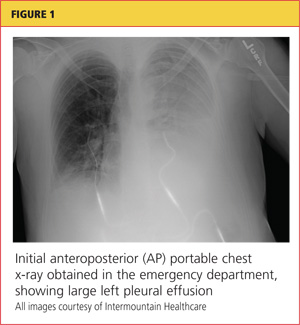
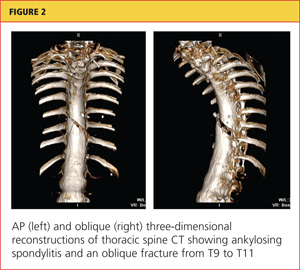
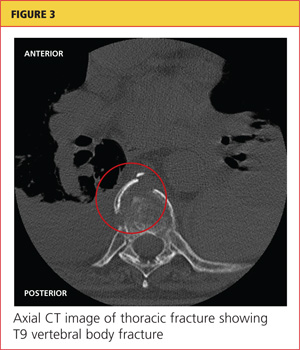
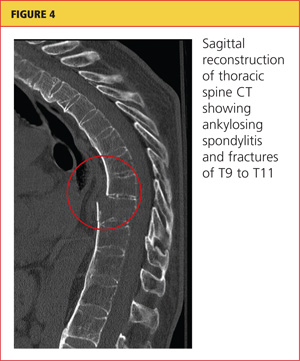
Chest x-ray (see Figure 1) was performed, which demonstrated complete opacification of the left hemithorax, consistent with a large pleural effusion or hemothorax. CT scan of the thoracic spine showed diffuse ankylosis. A complex oblique coronal and transversely oriented fracture with 7 mm of displacement was identified, beginning at the right anterior inferior lateral margin of the T8 vertebral body and extending centrally and inferiorly to the left and right into the T9 vertebral body. The fracture continued through the right T9-10 neural foramen and what was probably the right fused T9-10 facet joint. The fracture exited through the left superior and lateral margin of the T10 vertebral body and the left T10-11 neural foramen (see Figures 2, 3, and 4).

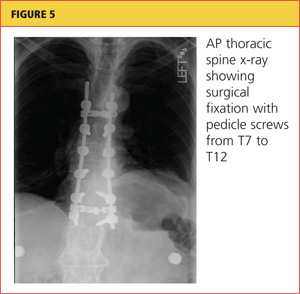
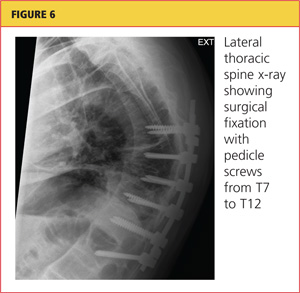
A chest tube was inserted in the ED, and 1,600 mL of old blood was immediately drained. The patient was admitted to the ICU on the trauma service. He was taken to surgery for open reduction and internal fixation of his unstable thoracic spine fracture on day 3 of hospitalization, after his pulmonary condition stabilized. Pedicle screws were placed from T7 through T12 during the spinal fusion. Good reduction of the fracture was observed following the spine surgery (see Figures 5 and 6). At the conclusion of surgery, an epidural catheter was placed in the thoracic spine to administer pain control.

After the spine portion of the procedure, the patient was repositioned and underwent video-assisted thoracoscopic surgery of the left hemithorax for evacuation of retained hemothorax. The patient tolerated the procedure well and was taken to the ICU for recovery.

On postoperative day 2, the patient complained of chest pain and experienced hypoxemia with activity. CT angiography of the chest demonstrated bilateral segmental and subsegmental pulmonary emboli. The epidural catheter was discontinued. Six hours later, a heparin drip was started, and the patient was transitioned to therapeutic enoxaparin and warfarin. When methicillin-sensitive Staphylococcus aureus (MSSA) was detected in his hemothorax fluid, he was treated with a course of nafcillin.

The patient was discharged to home on postoperative day 12. He has remained neurologically intact and has returned to his former work activities. He is not taking narcotic pain medications.

Discussion
Chiropractic care is a popular alternative health care modality in the United States. Researchers for the 2007 National Health Interview Study1 reported an annual use of chiropractic manipulation of 8.6%, while the Medical Expenditure Panel Survey2 data yielded an estimate of 12.6 million adults using chiropractic manipulation in 2006—translating to a prevalence of 5.6%. Despite the popularity of chiropractic medicine, few well-designed studies have been conducted to support its use.3,4 Because of its designation as an alternative therapy, however, chiropractic manipulation has not been subjected to rigorous efficacy and safety evaluations.5

Given the inconsistency of the evidence to support chiropractic manipulation, the practice's safety profile is a concern. The risks associated with spinal manipulation are generally described in case reports and small series. Most serious adverse events described in the literature are cerebrovascular in nature and tend to occur after cervical manipulation.6,7 Fractures after spine manipulation are exceedingly rare, and published literature on this topic consists of a few isolated case reports, with all fractures occurring in the cervical spine in patients with an underlying pathologic condition.8-10

In 2009, Gouveia et al5 reviewed the published literature regarding all adverse events resulting from chiropractic manipulation. The authors found one randomized controlled trial, two case-control studies, six prospective studies, 12 surveys, three retrospective studies, and 100 case reports. The spectrum of complications identified ranged from benign and transient, such as local discomfort, to far more serious: stroke, myelopathy, radiculopathy, subdural hematoma, spinal fluid leakage, cauda equina syndrome, herniated disc, diaphragmatic palsy, and vertebral fractures. The authors were unable to perform a true meta-analysis because of the heterogeneity of the data, but they concluded that complications associated with chiropractic procedures are "frequent."5


Manipulations Under Anesthesia
MUA is a procedure that combines chiropractic adjustments and manipulations with general anesthesia or procedural sedation.11 The theory behind this strategy is that the anesthesia or sedation reduces pain and muscle spasm that may hinder the manipulation, allowing the practitioner to more effectively break up joint adhesions and reduce segmental dysfunction than if the patient had not undergone anesthesia.11

MUA is generally indicated in patients who have not responded to a 4- to 8-week trial of traditional manipulation therapy.12 It is also considered in patients who have "painful and restricting muscular guarding [that] interferes with the performance of spinal adjustments, mobilizations, and soft tissue release techniques."13

In the chiropractic literature, between 3% and 10% of patients are estimated to be candidates for MUA.12,14 It is not completely clear, however, what diagnoses are most likely to be treated successfully with this technique. Contraindications to MUA are generally the same as those for manipulation in conscious patients. A published list of contraindications from the Committee for Manipulation under Anesthesia (2003)15 included malignancy with bony metastasis, tuberculosis of the bone, recent fracture, acute arthritis, acute gout, diabetic neuropathy, syphilitic articular lesions, excessive spinal osteoporosis, disk fragmentation, direct nerve root impingement, and evidence of cord or caudal compression by tumor, ankylosis, or other space-occupying lesions.

MUA generally begins with deep procedural sedation, managed by an anesthesiologist. Once an adequate level of sedation is achieved, the manipulations are performed. Both high- and low-velocity thrusts are used, but it is recommended that the force exerted should be much less, and the manipulations performed with more caution, than in patients who are not anesthetized.12

For the thoracic spine, the patient is manipulated in the supine position with the arms crossed over the chest. The practitioner places one hand in a fist under the spine with the other hand on the patient's crossed arms, then delivers an anterior-to-posterior thrust. This is repeated until all affected segments have been treated.11,12

Literature to support the use of MUA for various indications is largely anecdotal. The largest published series13 is of 177 patients with chronic spinal pain who each underwent three MUA sessions followed by four to six weeks of traditional manipulations. The authors found that pain, as measured by visual analog scale, was reduced by 62% in patients with cervical spine pain, and by 60% in patients with lumbar pain. No adverse events were reported in the study.

Kohlbeck and Haldeman12 reviewed the reported complications of MUA across all published literature. They found that in 17 published papers, the overall complication rate was 0.7%, mainly represented by transitory increased pain. No spinal fractures were reported.

This case demonstrates a rare but serious complication of chiropractic MUA. It is unclear exactly what mechanism of injury led to an unstable thoracic spine fracture with massive hemothorax, and the precise cause will probably never be known. The clinicians who treated the case patient find it curious that the reported rate of adverse events following this procedure is so low, but they suspect an element of reporting bias in the chiropractic literature.

Conclusion
Iatrogenic injury after chiropractic manipulation is uncommon, but it can be devastating. Few serious complications of chiropractic MUA have been reported, but the literature is lacking in well-designed research studies. Despite the dearth of clinical trials to support its safety and efficacy, use of MUA has continued in the chiropractic community. This case demonstrates that serious adverse outcomes can occur, and more rigorous studies are needed to delineate the true benefits and risks of this set of chiropractic procedures.


References
1. Barnes PM, Bloom B, Nahin RL. Complementary and alternative medicine use among adults and children: United States, 2007. Natl Health Stat Report. 2008;12:1-9.

2. Davis MA, Sirovich BE, Weeks WB. Utilization and expenditures on chiropractic care in the United States from 1997 to 2006. Health Serv Res. 2009;45:748-761.

3. Canadian Chiropractic Association; Canadian Federation of Chiropractic Regulatory Boards; Clinical Practice Guidelines Development Initiative; Guidelines Development Committee. Chiropractic clinical practice guideline: evidence-based treatment of adult neck pain not due to whiplash. J Can Chiropr Assoc. 2005;49:417-421.

4.

Hurwitz EL, Aker PD, Adams AH, et al. Manipulation and mobilization of the cervical spine: a systematic review of the literature. Spine (Phila Pa 1976). 1996;21:1746-1760.

5.Gouveia LO, Castanho P, Ferreira JJ. Safety of chiropractic interventions: a systematic review. Spine (Phila Pa 1976). 2009;34:E405-E413. 

6. Di Fabio RP. Manipulation of the cervical spine: risks and benefits. Phys Ther. 1999;79:50-65.

7. Nadareishvili Z, Norris JW. Stroke from traumatic arterial dissection. Lancet. 1999;354:159-160.

8. Austin RT. Pathological vertebral fractures after spinal manipulation. Br Med J (Clin Res Ed). 1985;291:1114-1115.

9. Ea HK, Weber AJ, Yon F, Lioté F. Osteoporotic fracture of the dens revealed by cervical manipulation. Joint Bone Spine. 2004;71:246-250.

10. Schmitz A, Lutterbey G, von Engelhardt L, et al. Pathological cervical fracture after spinal manipulation in a pregnant patient. J Manipulative Physiol Ther. 2005;28:633-636.

11. Cremata E, Collins S, Clauson W, et al. Manipulation under anesthesia: a report of four cases. J Manipulative Physiol Ther. 2005;28:526-533.

12. Kohlbeck FJ, Haldeman S. Medication-assisted spinal manipulation. Spine J. 2002;2:288-302.

13. West DT, Mathews RS, Miller MR, Kent GM. Effective management of spinal pain in one hundred seventy-seven patients evaluated for manipulation under anesthesia. J Manipulative Physiol Ther. 1999;22:299-308.

14. Morey LW Jr. Osteopathic manipulation under general anesthesia. J Am Osteopath Assoc. 1973;73:116-127.

15. Tain L, Gunderson C, Cremata E, et al; Committee for Manipulation Under Anesthesia. Recommendations to the Industrial Medical Council Work Group of California for manipulation under anesthesia use for injured workers. Sacramento, CA: Industrial Medical Council; 2003.

Author and Disclosure Information


Scott C. Gardner, PA-C, MMSc, DFAAPA, Sarah D. Majercik, MD, MBA, FACS, Don VanBoerum, MD, FACS, John R. Macfarlane, MD

Issue
Clinician Reviews - 23(4)
Publications
Topics
Page Number
23
Legacy Keywords
dyspnea, back pain, ankylosing spondylitis, chiropractic, manipulation, manipulations under anesthesia, thoracic vertebrae, fractures, hemothorax, thoracic spine, spinal fusion, pulmonary emboli, methicillin-sensitive Staphylococcus aureus, MSSAdyspnea, back pain, ankylosing spondylitis, chiropractic, manipulation, manipulations under anesthesia, thoracic vertebrae, fractures, hemothorax, thoracic spine, spinal fusion, pulmonary emboli, methicillin-sensitive Staphylococcus aureus, MSSA
Sections
Author and Disclosure Information


Scott C. Gardner, PA-C, MMSc, DFAAPA, Sarah D. Majercik, MD, MBA, FACS, Don VanBoerum, MD, FACS, John R. Macfarlane, MD

Author and Disclosure Information


Scott C. Gardner, PA-C, MMSc, DFAAPA, Sarah D. Majercik, MD, MBA, FACS, Don VanBoerum, MD, FACS, John R. Macfarlane, MD

A 57-year-old man presented to the emergency department (ED) with a two-day history of worsening shortness of breath, light-headedness, and back pain. The patient, who had a history of ankylosing spondylitis, had been receiving weekly therapy from a chiropractor for about 10 years. One week before presenting to the ED, he had begun to undergo daily manipulations under anesthesia (MUA)—an aggressive chiropractic procedure that is administered while the patient is under monitored, procedural sedation. After the second day of treatment, the patient began to experience worsening back pain and progressive light-headedness and shortness of breath.

At a follow-up visit with his chiropractor, he was found to have decreased O2 saturation and was directed to go to the hospital for evaluation. On arrival at the ED, the patient was awake and alert. He had intact motor strength in all extremities, no sensory abnormalities, intact symmetric reflexes, and no bladder or bowel dysfunction, with a negative Babinski sign. His O2 saturation was 92% on 5 L of oxygen. An absence of breath sounds was noted on the left side.

Chest x-ray (see Figure 1) was performed, which demonstrated complete opacification of the left hemithorax, consistent with a large pleural effusion or hemothorax. CT scan of the thoracic spine showed diffuse ankylosis. A complex oblique coronal and transversely oriented fracture with 7 mm of displacement was identified, beginning at the right anterior inferior lateral margin of the T8 vertebral body and extending centrally and inferiorly to the left and right into the T9 vertebral body. The fracture continued through the right T9-10 neural foramen and what was probably the right fused T9-10 facet joint. The fracture exited through the left superior and lateral margin of the T10 vertebral body and the left T10-11 neural foramen (see Figures 2, 3, and 4).

A chest tube was inserted in the ED, and 1,600 mL of old blood was immediately drained. The patient was admitted to the ICU on the trauma service. He was taken to surgery for open reduction and internal fixation of his unstable thoracic spine fracture on day 3 of hospitalization, after his pulmonary condition stabilized. Pedicle screws were placed from T7 through T12 during the spinal fusion. Good reduction of the fracture was observed following the spine surgery (see Figures 5 and 6). At the conclusion of surgery, an epidural catheter was placed in the thoracic spine to administer pain control.

After the spine portion of the procedure, the patient was repositioned and underwent video-assisted thoracoscopic surgery of the left hemithorax for evacuation of retained hemothorax. The patient tolerated the procedure well and was taken to the ICU for recovery.

On postoperative day 2, the patient complained of chest pain and experienced hypoxemia with activity. CT angiography of the chest demonstrated bilateral segmental and subsegmental pulmonary emboli. The epidural catheter was discontinued. Six hours later, a heparin drip was started, and the patient was transitioned to therapeutic enoxaparin and warfarin. When methicillin-sensitive Staphylococcus aureus (MSSA) was detected in his hemothorax fluid, he was treated with a course of nafcillin.

The patient was discharged to home on postoperative day 12. He has remained neurologically intact and has returned to his former work activities. He is not taking narcotic pain medications.

Discussion
Chiropractic care is a popular alternative health care modality in the United States. Researchers for the 2007 National Health Interview Study1 reported an annual use of chiropractic manipulation of 8.6%, while the Medical Expenditure Panel Survey2 data yielded an estimate of 12.6 million adults using chiropractic manipulation in 2006—translating to a prevalence of 5.6%. Despite the popularity of chiropractic medicine, few well-designed studies have been conducted to support its use.3,4 Because of its designation as an alternative therapy, however, chiropractic manipulation has not been subjected to rigorous efficacy and safety evaluations.5

Given the inconsistency of the evidence to support chiropractic manipulation, the practice's safety profile is a concern. The risks associated with spinal manipulation are generally described in case reports and small series. Most serious adverse events described in the literature are cerebrovascular in nature and tend to occur after cervical manipulation.6,7 Fractures after spine manipulation are exceedingly rare, and published literature on this topic consists of a few isolated case reports, with all fractures occurring in the cervical spine in patients with an underlying pathologic condition.8-10

In 2009, Gouveia et al5 reviewed the published literature regarding all adverse events resulting from chiropractic manipulation. The authors found one randomized controlled trial, two case-control studies, six prospective studies, 12 surveys, three retrospective studies, and 100 case reports. The spectrum of complications identified ranged from benign and transient, such as local discomfort, to far more serious: stroke, myelopathy, radiculopathy, subdural hematoma, spinal fluid leakage, cauda equina syndrome, herniated disc, diaphragmatic palsy, and vertebral fractures. The authors were unable to perform a true meta-analysis because of the heterogeneity of the data, but they concluded that complications associated with chiropractic procedures are "frequent."5


Manipulations Under Anesthesia
MUA is a procedure that combines chiropractic adjustments and manipulations with general anesthesia or procedural sedation.11 The theory behind this strategy is that the anesthesia or sedation reduces pain and muscle spasm that may hinder the manipulation, allowing the practitioner to more effectively break up joint adhesions and reduce segmental dysfunction than if the patient had not undergone anesthesia.11

MUA is generally indicated in patients who have not responded to a 4- to 8-week trial of traditional manipulation therapy.12 It is also considered in patients who have "painful and restricting muscular guarding [that] interferes with the performance of spinal adjustments, mobilizations, and soft tissue release techniques."13

In the chiropractic literature, between 3% and 10% of patients are estimated to be candidates for MUA.12,14 It is not completely clear, however, what diagnoses are most likely to be treated successfully with this technique. Contraindications to MUA are generally the same as those for manipulation in conscious patients. A published list of contraindications from the Committee for Manipulation under Anesthesia (2003)15 included malignancy with bony metastasis, tuberculosis of the bone, recent fracture, acute arthritis, acute gout, diabetic neuropathy, syphilitic articular lesions, excessive spinal osteoporosis, disk fragmentation, direct nerve root impingement, and evidence of cord or caudal compression by tumor, ankylosis, or other space-occupying lesions.

MUA generally begins with deep procedural sedation, managed by an anesthesiologist. Once an adequate level of sedation is achieved, the manipulations are performed. Both high- and low-velocity thrusts are used, but it is recommended that the force exerted should be much less, and the manipulations performed with more caution, than in patients who are not anesthetized.12

For the thoracic spine, the patient is manipulated in the supine position with the arms crossed over the chest. The practitioner places one hand in a fist under the spine with the other hand on the patient's crossed arms, then delivers an anterior-to-posterior thrust. This is repeated until all affected segments have been treated.11,12

Literature to support the use of MUA for various indications is largely anecdotal. The largest published series13 is of 177 patients with chronic spinal pain who each underwent three MUA sessions followed by four to six weeks of traditional manipulations. The authors found that pain, as measured by visual analog scale, was reduced by 62% in patients with cervical spine pain, and by 60% in patients with lumbar pain. No adverse events were reported in the study.

Kohlbeck and Haldeman12 reviewed the reported complications of MUA across all published literature. They found that in 17 published papers, the overall complication rate was 0.7%, mainly represented by transitory increased pain. No spinal fractures were reported.

This case demonstrates a rare but serious complication of chiropractic MUA. It is unclear exactly what mechanism of injury led to an unstable thoracic spine fracture with massive hemothorax, and the precise cause will probably never be known. The clinicians who treated the case patient find it curious that the reported rate of adverse events following this procedure is so low, but they suspect an element of reporting bias in the chiropractic literature.

Conclusion
Iatrogenic injury after chiropractic manipulation is uncommon, but it can be devastating. Few serious complications of chiropractic MUA have been reported, but the literature is lacking in well-designed research studies. Despite the dearth of clinical trials to support its safety and efficacy, use of MUA has continued in the chiropractic community. This case demonstrates that serious adverse outcomes can occur, and more rigorous studies are needed to delineate the true benefits and risks of this set of chiropractic procedures.


References
1. Barnes PM, Bloom B, Nahin RL. Complementary and alternative medicine use among adults and children: United States, 2007. Natl Health Stat Report. 2008;12:1-9.

2. Davis MA, Sirovich BE, Weeks WB. Utilization and expenditures on chiropractic care in the United States from 1997 to 2006. Health Serv Res. 2009;45:748-761.

3. Canadian Chiropractic Association; Canadian Federation of Chiropractic Regulatory Boards; Clinical Practice Guidelines Development Initiative; Guidelines Development Committee. Chiropractic clinical practice guideline: evidence-based treatment of adult neck pain not due to whiplash. J Can Chiropr Assoc. 2005;49:417-421.

4.

Hurwitz EL, Aker PD, Adams AH, et al. Manipulation and mobilization of the cervical spine: a systematic review of the literature. Spine (Phila Pa 1976). 1996;21:1746-1760.

5.Gouveia LO, Castanho P, Ferreira JJ. Safety of chiropractic interventions: a systematic review. Spine (Phila Pa 1976). 2009;34:E405-E413. 

6. Di Fabio RP. Manipulation of the cervical spine: risks and benefits. Phys Ther. 1999;79:50-65.

7. Nadareishvili Z, Norris JW. Stroke from traumatic arterial dissection. Lancet. 1999;354:159-160.

8. Austin RT. Pathological vertebral fractures after spinal manipulation. Br Med J (Clin Res Ed). 1985;291:1114-1115.

9. Ea HK, Weber AJ, Yon F, Lioté F. Osteoporotic fracture of the dens revealed by cervical manipulation. Joint Bone Spine. 2004;71:246-250.

10. Schmitz A, Lutterbey G, von Engelhardt L, et al. Pathological cervical fracture after spinal manipulation in a pregnant patient. J Manipulative Physiol Ther. 2005;28:633-636.

11. Cremata E, Collins S, Clauson W, et al. Manipulation under anesthesia: a report of four cases. J Manipulative Physiol Ther. 2005;28:526-533.

12. Kohlbeck FJ, Haldeman S. Medication-assisted spinal manipulation. Spine J. 2002;2:288-302.

13. West DT, Mathews RS, Miller MR, Kent GM. Effective management of spinal pain in one hundred seventy-seven patients evaluated for manipulation under anesthesia. J Manipulative Physiol Ther. 1999;22:299-308.

14. Morey LW Jr. Osteopathic manipulation under general anesthesia. J Am Osteopath Assoc. 1973;73:116-127.

15. Tain L, Gunderson C, Cremata E, et al; Committee for Manipulation Under Anesthesia. Recommendations to the Industrial Medical Council Work Group of California for manipulation under anesthesia use for injured workers. Sacramento, CA: Industrial Medical Council; 2003.

A 57-year-old man presented to the emergency department (ED) with a two-day history of worsening shortness of breath, light-headedness, and back pain. The patient, who had a history of ankylosing spondylitis, had been receiving weekly therapy from a chiropractor for about 10 years. One week before presenting to the ED, he had begun to undergo daily manipulations under anesthesia (MUA)—an aggressive chiropractic procedure that is administered while the patient is under monitored, procedural sedation. After the second day of treatment, the patient began to experience worsening back pain and progressive light-headedness and shortness of breath.

At a follow-up visit with his chiropractor, he was found to have decreased O2 saturation and was directed to go to the hospital for evaluation. On arrival at the ED, the patient was awake and alert. He had intact motor strength in all extremities, no sensory abnormalities, intact symmetric reflexes, and no bladder or bowel dysfunction, with a negative Babinski sign. His O2 saturation was 92% on 5 L of oxygen. An absence of breath sounds was noted on the left side.

Chest x-ray (see Figure 1) was performed, which demonstrated complete opacification of the left hemithorax, consistent with a large pleural effusion or hemothorax. CT scan of the thoracic spine showed diffuse ankylosis. A complex oblique coronal and transversely oriented fracture with 7 mm of displacement was identified, beginning at the right anterior inferior lateral margin of the T8 vertebral body and extending centrally and inferiorly to the left and right into the T9 vertebral body. The fracture continued through the right T9-10 neural foramen and what was probably the right fused T9-10 facet joint. The fracture exited through the left superior and lateral margin of the T10 vertebral body and the left T10-11 neural foramen (see Figures 2, 3, and 4).

A chest tube was inserted in the ED, and 1,600 mL of old blood was immediately drained. The patient was admitted to the ICU on the trauma service. He was taken to surgery for open reduction and internal fixation of his unstable thoracic spine fracture on day 3 of hospitalization, after his pulmonary condition stabilized. Pedicle screws were placed from T7 through T12 during the spinal fusion. Good reduction of the fracture was observed following the spine surgery (see Figures 5 and 6). At the conclusion of surgery, an epidural catheter was placed in the thoracic spine to administer pain control.

After the spine portion of the procedure, the patient was repositioned and underwent video-assisted thoracoscopic surgery of the left hemithorax for evacuation of retained hemothorax. The patient tolerated the procedure well and was taken to the ICU for recovery.

On postoperative day 2, the patient complained of chest pain and experienced hypoxemia with activity. CT angiography of the chest demonstrated bilateral segmental and subsegmental pulmonary emboli. The epidural catheter was discontinued. Six hours later, a heparin drip was started, and the patient was transitioned to therapeutic enoxaparin and warfarin. When methicillin-sensitive Staphylococcus aureus (MSSA) was detected in his hemothorax fluid, he was treated with a course of nafcillin.

The patient was discharged to home on postoperative day 12. He has remained neurologically intact and has returned to his former work activities. He is not taking narcotic pain medications.

Discussion
Chiropractic care is a popular alternative health care modality in the United States. Researchers for the 2007 National Health Interview Study1 reported an annual use of chiropractic manipulation of 8.6%, while the Medical Expenditure Panel Survey2 data yielded an estimate of 12.6 million adults using chiropractic manipulation in 2006—translating to a prevalence of 5.6%. Despite the popularity of chiropractic medicine, few well-designed studies have been conducted to support its use.3,4 Because of its designation as an alternative therapy, however, chiropractic manipulation has not been subjected to rigorous efficacy and safety evaluations.5

Given the inconsistency of the evidence to support chiropractic manipulation, the practice's safety profile is a concern. The risks associated with spinal manipulation are generally described in case reports and small series. Most serious adverse events described in the literature are cerebrovascular in nature and tend to occur after cervical manipulation.6,7 Fractures after spine manipulation are exceedingly rare, and published literature on this topic consists of a few isolated case reports, with all fractures occurring in the cervical spine in patients with an underlying pathologic condition.8-10

In 2009, Gouveia et al5 reviewed the published literature regarding all adverse events resulting from chiropractic manipulation. The authors found one randomized controlled trial, two case-control studies, six prospective studies, 12 surveys, three retrospective studies, and 100 case reports. The spectrum of complications identified ranged from benign and transient, such as local discomfort, to far more serious: stroke, myelopathy, radiculopathy, subdural hematoma, spinal fluid leakage, cauda equina syndrome, herniated disc, diaphragmatic palsy, and vertebral fractures. The authors were unable to perform a true meta-analysis because of the heterogeneity of the data, but they concluded that complications associated with chiropractic procedures are "frequent."5


Manipulations Under Anesthesia
MUA is a procedure that combines chiropractic adjustments and manipulations with general anesthesia or procedural sedation.11 The theory behind this strategy is that the anesthesia or sedation reduces pain and muscle spasm that may hinder the manipulation, allowing the practitioner to more effectively break up joint adhesions and reduce segmental dysfunction than if the patient had not undergone anesthesia.11

MUA is generally indicated in patients who have not responded to a 4- to 8-week trial of traditional manipulation therapy.12 It is also considered in patients who have "painful and restricting muscular guarding [that] interferes with the performance of spinal adjustments, mobilizations, and soft tissue release techniques."13

In the chiropractic literature, between 3% and 10% of patients are estimated to be candidates for MUA.12,14 It is not completely clear, however, what diagnoses are most likely to be treated successfully with this technique. Contraindications to MUA are generally the same as those for manipulation in conscious patients. A published list of contraindications from the Committee for Manipulation under Anesthesia (2003)15 included malignancy with bony metastasis, tuberculosis of the bone, recent fracture, acute arthritis, acute gout, diabetic neuropathy, syphilitic articular lesions, excessive spinal osteoporosis, disk fragmentation, direct nerve root impingement, and evidence of cord or caudal compression by tumor, ankylosis, or other space-occupying lesions.

MUA generally begins with deep procedural sedation, managed by an anesthesiologist. Once an adequate level of sedation is achieved, the manipulations are performed. Both high- and low-velocity thrusts are used, but it is recommended that the force exerted should be much less, and the manipulations performed with more caution, than in patients who are not anesthetized.12

For the thoracic spine, the patient is manipulated in the supine position with the arms crossed over the chest. The practitioner places one hand in a fist under the spine with the other hand on the patient's crossed arms, then delivers an anterior-to-posterior thrust. This is repeated until all affected segments have been treated.11,12

Literature to support the use of MUA for various indications is largely anecdotal. The largest published series13 is of 177 patients with chronic spinal pain who each underwent three MUA sessions followed by four to six weeks of traditional manipulations. The authors found that pain, as measured by visual analog scale, was reduced by 62% in patients with cervical spine pain, and by 60% in patients with lumbar pain. No adverse events were reported in the study.

Kohlbeck and Haldeman12 reviewed the reported complications of MUA across all published literature. They found that in 17 published papers, the overall complication rate was 0.7%, mainly represented by transitory increased pain. No spinal fractures were reported.

This case demonstrates a rare but serious complication of chiropractic MUA. It is unclear exactly what mechanism of injury led to an unstable thoracic spine fracture with massive hemothorax, and the precise cause will probably never be known. The clinicians who treated the case patient find it curious that the reported rate of adverse events following this procedure is so low, but they suspect an element of reporting bias in the chiropractic literature.

Conclusion
Iatrogenic injury after chiropractic manipulation is uncommon, but it can be devastating. Few serious complications of chiropractic MUA have been reported, but the literature is lacking in well-designed research studies. Despite the dearth of clinical trials to support its safety and efficacy, use of MUA has continued in the chiropractic community. This case demonstrates that serious adverse outcomes can occur, and more rigorous studies are needed to delineate the true benefits and risks of this set of chiropractic procedures.


References
1. Barnes PM, Bloom B, Nahin RL. Complementary and alternative medicine use among adults and children: United States, 2007. Natl Health Stat Report. 2008;12:1-9.

2. Davis MA, Sirovich BE, Weeks WB. Utilization and expenditures on chiropractic care in the United States from 1997 to 2006. Health Serv Res. 2009;45:748-761.

3. Canadian Chiropractic Association; Canadian Federation of Chiropractic Regulatory Boards; Clinical Practice Guidelines Development Initiative; Guidelines Development Committee. Chiropractic clinical practice guideline: evidence-based treatment of adult neck pain not due to whiplash. J Can Chiropr Assoc. 2005;49:417-421.

4.

Hurwitz EL, Aker PD, Adams AH, et al. Manipulation and mobilization of the cervical spine: a systematic review of the literature. Spine (Phila Pa 1976). 1996;21:1746-1760.

5.Gouveia LO, Castanho P, Ferreira JJ. Safety of chiropractic interventions: a systematic review. Spine (Phila Pa 1976). 2009;34:E405-E413. 

6. Di Fabio RP. Manipulation of the cervical spine: risks and benefits. Phys Ther. 1999;79:50-65.

7. Nadareishvili Z, Norris JW. Stroke from traumatic arterial dissection. Lancet. 1999;354:159-160.

8. Austin RT. Pathological vertebral fractures after spinal manipulation. Br Med J (Clin Res Ed). 1985;291:1114-1115.

9. Ea HK, Weber AJ, Yon F, Lioté F. Osteoporotic fracture of the dens revealed by cervical manipulation. Joint Bone Spine. 2004;71:246-250.

10. Schmitz A, Lutterbey G, von Engelhardt L, et al. Pathological cervical fracture after spinal manipulation in a pregnant patient. J Manipulative Physiol Ther. 2005;28:633-636.

11. Cremata E, Collins S, Clauson W, et al. Manipulation under anesthesia: a report of four cases. J Manipulative Physiol Ther. 2005;28:526-533.

12. Kohlbeck FJ, Haldeman S. Medication-assisted spinal manipulation. Spine J. 2002;2:288-302.

13. West DT, Mathews RS, Miller MR, Kent GM. Effective management of spinal pain in one hundred seventy-seven patients evaluated for manipulation under anesthesia. J Manipulative Physiol Ther. 1999;22:299-308.

14. Morey LW Jr. Osteopathic manipulation under general anesthesia. J Am Osteopath Assoc. 1973;73:116-127.

15. Tain L, Gunderson C, Cremata E, et al; Committee for Manipulation Under Anesthesia. Recommendations to the Industrial Medical Council Work Group of California for manipulation under anesthesia use for injured workers. Sacramento, CA: Industrial Medical Council; 2003.

Issue
Clinician Reviews - 23(4)
Issue
Clinician Reviews - 23(4)
Page Number
23
Page Number
23
Publications
Publications
Topics
Article Type
Display Headline
Man, 57, With Dyspnea After Chiropractic Manipulation
Display Headline
Man, 57, With Dyspnea After Chiropractic Manipulation
Legacy Keywords
dyspnea, back pain, ankylosing spondylitis, chiropractic, manipulation, manipulations under anesthesia, thoracic vertebrae, fractures, hemothorax, thoracic spine, spinal fusion, pulmonary emboli, methicillin-sensitive Staphylococcus aureus, MSSAdyspnea, back pain, ankylosing spondylitis, chiropractic, manipulation, manipulations under anesthesia, thoracic vertebrae, fractures, hemothorax, thoracic spine, spinal fusion, pulmonary emboli, methicillin-sensitive Staphylococcus aureus, MSSA
Legacy Keywords
dyspnea, back pain, ankylosing spondylitis, chiropractic, manipulation, manipulations under anesthesia, thoracic vertebrae, fractures, hemothorax, thoracic spine, spinal fusion, pulmonary emboli, methicillin-sensitive Staphylococcus aureus, MSSAdyspnea, back pain, ankylosing spondylitis, chiropractic, manipulation, manipulations under anesthesia, thoracic vertebrae, fractures, hemothorax, thoracic spine, spinal fusion, pulmonary emboli, methicillin-sensitive Staphylococcus aureus, MSSA
Sections
Disallow All Ads
Alternative CME

Scuba Diving Safety: A Case Report of Diving Injury in the Red Sea
Article Type
Changed
Display Headline
Scuba Diving Safety: A Case Report of Diving Injury in the Red Sea

Article PDF
Author and Disclosure Information

Moses Washington, MD, and Michael Touger, MD

Issue
Emergency Medicine - 45(4)
Publications
Topics
Page Number
9-10, 20-21
Legacy Keywords
Emergency Medicine, diving, safety, scuba, scuba diving, diver, injury, sea, red sea, diving injury, case report, joint pain, underwater, water, dive, Egypt, decompression, depth, decompression sickness, gases, nitrogen, DCS, oxygen, pressure, compressed air, air, swim, swimming, Boyle's law, Dalton's law, Henry's law, pulmonary, cardiovascular, chest pain, pulmonary DCS, hyperbaric therapy, therapy, hyperbaric treatment, hyperbaric, Moses Washington, Washington, Michael Touger, Touger, breath, shortness of breath, knee pain, pain, bilateral shoulder, cover article, featureEmergency Medicine, diving, safety, scuba, scuba diving, diver, injury, sea, red sea, diving injury, case report, joint pain, underwater, water, dive, Egypt, decompression, depth, decompression sickness, gases, nitrogen, DCS, oxygen, pressure, compressed air, air, swim, swimming, Boyle's law, Dalton's law, Henry's law, pulmonary, cardiovascular, chest pain, pulmonary DCS, hyperbaric therapy, therapy, hyperbaric treatment, hyperbaric, Moses Washington, Washington, Michael Touger, Touger, breath, shortness of breath, knee pain, pain, bilateral shoulder, cover article, feature
Sections
Author and Disclosure Information

Moses Washington, MD, and Michael Touger, MD

Author and Disclosure Information

Moses Washington, MD, and Michael Touger, MD

Article PDF
Article PDF

Issue
Emergency Medicine - 45(4)
Issue
Emergency Medicine - 45(4)
Page Number
9-10, 20-21
Page Number
9-10, 20-21
Publications
Publications
Topics
Article Type
Display Headline
Scuba Diving Safety: A Case Report of Diving Injury in the Red Sea
Display Headline
Scuba Diving Safety: A Case Report of Diving Injury in the Red Sea
Legacy Keywords
Emergency Medicine, diving, safety, scuba, scuba diving, diver, injury, sea, red sea, diving injury, case report, joint pain, underwater, water, dive, Egypt, decompression, depth, decompression sickness, gases, nitrogen, DCS, oxygen, pressure, compressed air, air, swim, swimming, Boyle's law, Dalton's law, Henry's law, pulmonary, cardiovascular, chest pain, pulmonary DCS, hyperbaric therapy, therapy, hyperbaric treatment, hyperbaric, Moses Washington, Washington, Michael Touger, Touger, breath, shortness of breath, knee pain, pain, bilateral shoulder, cover article, featureEmergency Medicine, diving, safety, scuba, scuba diving, diver, injury, sea, red sea, diving injury, case report, joint pain, underwater, water, dive, Egypt, decompression, depth, decompression sickness, gases, nitrogen, DCS, oxygen, pressure, compressed air, air, swim, swimming, Boyle's law, Dalton's law, Henry's law, pulmonary, cardiovascular, chest pain, pulmonary DCS, hyperbaric therapy, therapy, hyperbaric treatment, hyperbaric, Moses Washington, Washington, Michael Touger, Touger, breath, shortness of breath, knee pain, pain, bilateral shoulder, cover article, feature
Legacy Keywords
Emergency Medicine, diving, safety, scuba, scuba diving, diver, injury, sea, red sea, diving injury, case report, joint pain, underwater, water, dive, Egypt, decompression, depth, decompression sickness, gases, nitrogen, DCS, oxygen, pressure, compressed air, air, swim, swimming, Boyle's law, Dalton's law, Henry's law, pulmonary, cardiovascular, chest pain, pulmonary DCS, hyperbaric therapy, therapy, hyperbaric treatment, hyperbaric, Moses Washington, Washington, Michael Touger, Touger, breath, shortness of breath, knee pain, pain, bilateral shoulder, cover article, featureEmergency Medicine, diving, safety, scuba, scuba diving, diver, injury, sea, red sea, diving injury, case report, joint pain, underwater, water, dive, Egypt, decompression, depth, decompression sickness, gases, nitrogen, DCS, oxygen, pressure, compressed air, air, swim, swimming, Boyle's law, Dalton's law, Henry's law, pulmonary, cardiovascular, chest pain, pulmonary DCS, hyperbaric therapy, therapy, hyperbaric treatment, hyperbaric, Moses Washington, Washington, Michael Touger, Touger, breath, shortness of breath, knee pain, pain, bilateral shoulder, cover article, feature
Sections
Article Source

PURLs Copyright

Inside the Article

Article PDF Media

Cover

Article Type
Changed
Display Headline
Cover

Author and Disclosure Information

Issue
Emergency Medicine - 45(4)
Publications
Page Number
CV1
Sections
Author and Disclosure Information

Author and Disclosure Information

Issue
Emergency Medicine - 45(4)
Issue
Emergency Medicine - 45(4)
Page Number
CV1
Page Number
CV1
Publications
Publications
Article Type
Display Headline
Cover
Display Headline
Cover
Sections
Article Source

PURLs Copyright

Inside the Article

5 Points on Improving Rotator Cuff Healing

Article Type
Changed
Display Headline
5 Points on Improving Rotator Cuff Healing

Article PDF
Author and Disclosure Information

Robert Z. Tashjian, MD

Issue
The American Journal of Orthopedics - 42(4)
Publications
Topics
Page Number
160-165
Legacy Keywords
ajo, the american journal of orthopedics, rotator cuff healing, platelet-rich plasma, PRP, platelet-rich fibrin matrix, PRFM
Sections
Author and Disclosure Information

Robert Z. Tashjian, MD

Author and Disclosure Information

Robert Z. Tashjian, MD

Article PDF
Article PDF

Issue
The American Journal of Orthopedics - 42(4)
Issue
The American Journal of Orthopedics - 42(4)
Page Number
160-165
Page Number
160-165
Publications
Publications
Topics
Article Type
Display Headline
5 Points on Improving Rotator Cuff Healing
Display Headline
5 Points on Improving Rotator Cuff Healing
Legacy Keywords
ajo, the american journal of orthopedics, rotator cuff healing, platelet-rich plasma, PRP, platelet-rich fibrin matrix, PRFM
Legacy Keywords
ajo, the american journal of orthopedics, rotator cuff healing, platelet-rich plasma, PRP, platelet-rich fibrin matrix, PRFM
Sections
Article Source

PURLs Copyright

Inside the Article

Article PDF Media

UPDATE: MINIMALLY INVASIVE GYNECOLOGY

Article Type
Changed
Display Headline
UPDATE: MINIMALLY INVASIVE GYNECOLOGY

HAVE YOU READ THESE RELATED ARTICLES?

LARCs: Why they should be first-line contraceptive options
for your patients

Elizabeth O. Schmidt, MD; Tessa Madden, MD, MPH; Jeffrey F. Piepert, MD, PhD
(November 2012)

Let’s increase our use of IUDs and improve contraceptive effectiveness in this country
Robert L. Barbieri, MD (Editorial, August 2012)

Minimally invasive surgery
Amy Garcia, MD (Update, April 2012)

Your surgical toolbox should include topical hemostatic
agents—here is why

Lisa A. dos Santos, MD; Andrew W. Menzin, MD (Surgical Techniques, April 2012)

Minimally invasive surgery
Amy Garcia, MD (Update, April 2011)

The proliferation of terms to describe heavy menstrual bleeding sometimes seems never-ending. From “menometrorrhagia” to “uterine hemorrhage,” these terms pop up quickly and confuse discussion of one of the most widespread problems in gynecology.

Enter the International Federation of Gynecology and Obstetrics (FIGO), which decided to tackle the inconsistent terminology and lack of classification of causes of abnormal uterine bleeding (AUB) with an eye toward standardizing research, facilitating discussion, and informing management decisions.

In this article, I focus on three aspects of this effort:

  • FIGO’s revamping of terminology and classification
  • comparisons of outcomes of hysterectomy versus endometrial ablation and the levonorgestrel-releasing intrauterine system
  • guidelines on management of AUB related to ovulatory disorders and endometrial hemostatic dysfunction.

FIGO revamps nomenclature for abnormal uterine bleeding

Munro MG, Critchley HO, Fraser IS. The FIGO systems for nomenclature and classification of causes of abnormal uterine bleeding in the reproductive years: who needs them? Am J Obstet Gynecol. 2012;207(4):259–265.

As early as 2004, FIGO began a process to standardize the nomenclature for defining both normal and abnormal uterine bleeding in reproductive-aged women who are not pregnant.1 This process was a response to a lack of consistency and continuity in the design and interpretation of basic science and clinical investigation related to the problem of AUB. Inconsistent definitions of AUB, such as “menorrhagia,” “metrorrhagia,” and “dysfunctional uterine bleeding,” along with the absence of standard categorization of the causes of AUB, have led to confusion and difficulties in comparing clinical trials and in finding significant, relevant, and even meaningful correlations among investigations of AUB. Applying information from asynchronous and often incomplete investigations to evidence-based clinical practice then becomes a challenge for the gynecologist.

Munro and colleagues summarize the process by which FIGO developed both a nomenclature system and a classification system of the causes of AUB, which were formally adopted by FIGO in 2010 and endorsed in 2012 by the American College of Obstetricians and Gynecologists (ACOG).1-6 The arduous process led to:

  • a refined definition of chronic AUB
  • a new category called acute AUB
  • a method for describing the clinical dimensions of menstruation and the menstrual cycle according to the following parameters:
  • regularity of onset
  • frequency of onset
  • duration of menstrual flow
  • heaviness, or volume, of menstrual flow.

Wherever appropriate, the definitions of normal for these parameters were based on statistics from large population studies that used medians and 5th and 95th percentiles.

The term “heavy menstrual bleeding” (HMB) is used to describe a woman’s perception of increased menstrual volume, regardless of regularity, frequency, or duration. AUB is the overarching term to describe any departure from normal menstruation, as defined by the parameters listed above. A group of misleading terms commonly used to describe AUB were eliminated from the FIGO nomenclature system, including “dysfunctional uterine bleeding,” “menorrhagia,” “hypermenorrhea,” “menometrorrhagia,” “polymenorrhagia,” and “metrorrhagia.”

The causes of AUB are classified in nine categories that are arranged according to the acronym PALM-COEIN:

  • Polyp
  • Adenomyosis
  • Leiomyoma
  • Malignancy and hyperplasia
  • Coagulopathy
  • Ovulatory disorders
  • Endometrial dysfunction
  • Iatrogenic
  • Not otherwise classified.

Leiomyoma are subclassified as submucous or other, with tertiary subcategorization for intramural, subserosal, and transmural lesions

In general, the components of the PALM group are discrete (structural) entities that are measurable visually via imaging or histopathology, or both, while the COEI (of the COEIN group) includes women for whom the AUB is unrelated to structural abnormalities.

The classification system provides the infrastructure for a thorough investigative process and a means to characterize AUB for an individual who may have one or more potential causes or contributors. Such a comprehensive assessment allows the basic scientist to identify pure populations for tissue and molecular studies, the clinical scientist to identify potential confounders when defining populations for clinical investigation, and the clinician, educator, and trainee to consider the multidimensional nature of AUB where asymptomatic “red herrings” may coexist with otherwise invisible disorders of menstrual function.

The FIGO Menstrual Disorders Working Group anticipates that widespread, international acceptance of the recommended terms, definitions, and classification for AUB will lead to improved and more meaningful communication in clinical trials and published research and will enhance communication between health-care providers and patients, leading to better management of AUB.


WHAT THIS EVIDENCE MEANS FOR PRACTICE

Use of the FIGO-recommended terms, definitions, and classification of AUB will lead to higher-quality clinical research and thorough clinical investigation into the causes of AUB, with improved management of patients.
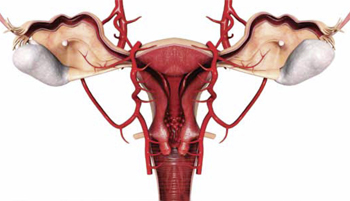

How hysterectomy for AUB compares with less invasive treatment options

Matteson KA, Abed H, Wheeler TL II, et al; Society of Gynecologic Surgeons Systematic Review Group. A systematic review comparing hysterectomy with less invasive treatments for abnormal uterine bleeding. J Minim Invasive Gynecol. 2012;19(1):13–28.

To create reliable treatment recommendations for AUB, as defined by the FIGO classification system just described, in women with ovulatory disorders, endometrial hemostatic dysfunction, and concomitant leiomyoma, the Systematic Review Group (SRG) of the Society of Gynecologic Surgeons performed a systematic review of treatments. The analysis was intended to compare hysterectomy with less invasive treatment modalities. The SRG reviewed randomized, controlled trials of AUB treatment that compared hysterectomy with:

  • endometrial ablation by resectoscopic loop, rollerball, or thermal balloon
  • the LNG-IUS
  • medical therapy.

This comprehensive review of literature published between 1950 and January 14, 2011 led the SRG to create seven categories of clinical outcomes:

  • bleeding control
  • quality of life
  • pain
  • sexual health
  • patient satisfaction
  • need for additional treatment
  • adverse events.

Of the initial 5,503 titles identified, only 18 articles, representing nine clinical trials, contained data of adequate quality to meet criteria for review. Seven of the trials compared hysterectomy with ablation, one compared hysterectomy with the LNG-IUS, and one compared hysterectomy with medical therapy. As FIGO has pointed out, the lack of homogeneity of terminology used to describe AUB and classification of its causes prevented clinically applicable comparative analyses of treatment outcomes.

Here are some of the SRG’s findings:

  • Control of bleeding. Only data regarding amenorrhea were sufficient for comparative analysis. The SRG was able to conclude only that there was moderate strength of evidence supporting the statement that bleeding is better controlled following hysterectomy than following ablation.
  • Quality of life. Overall, studies that evaluated quality of life showed improvement after ablation and hysterectomy. The strength of evidence demonstrating no difference between hysterectomy and ablation in postoperative quality of life was moderate.
  • Pain, general health, vitality, and social function. Three studies found statistically significant differences in validated dimensions of the SF-36 questionnaire favoring hysterectomy for pain, general health, vitality, and social function. Two of these three studies evaluated minimally invasive hysterectomy by the laparoscopic supracervical or vaginal approach. The strength of evidence on pain beyond the postoperative time period was low and favored hysterectomy over ablation.
  • Sexual health. The strength of evidence related to sexual health was low and revealed no differences between hysterectomy and ablation.
  • Patient satisfaction. Overall, the quality of evidence was very low, showing no difference between hysterectomy and ablation.
  • Need for additional treatment. The quality of evidence was moderate and favored hysterectomy over ablation.
  • Adverse events. Evidence of moderate quality favored ablation and the LNG-IUS over hysterectomy, and low-quality evidence favored medical therapy over hysterectomy (TABLES 1, 2).

TABLE 1

What the data reveal about hysterectomy versus ablation

ParameterStrength of evidence (comparison)
HysterectomyAblation
Bleeding controlModerate (F)
Quality of lifeModerate (S)Moderate (S)
Lower painLow (F)
Sexual healthLow (S)Low (S)
Patient satisfactionVery low (S)Very low (S)
Need for additional treatmentModerate (F)
Adverse eventsModerate (F)
F=Evidence favors comparator; S=no difference between comparators

TABLE 2

What the data reveal about hysterectomy versus the levonorgestrel-releasing intrauterine system (LNG-IUS)

ParameterStrength of evidence (comparison)
HysterectomyLNG-IUS
Bleeding controlModerate (F)
Quality of lifeModerate (S)Moderate (S)
Lower painModerate (S)Moderate (S)
Sexual healthModerate (S)Moderate (S)
Patient satisfactionModerate (S)Moderate (S)
Need for additional treatmentModerate (F)
Adverse eventsModerate (F)
F=Evidence favors comparator; S=no difference between comparators

The SRG concluded that there are tradeoffs between treatment effectiveness and the risk of serious adverse events between hysterectomy, ablation, and the LNG-IUS. It recommended that clinicians be educated about the relative advantages and disadvantages of each option so that they can discuss them with patients.

The SRG developed clinical practice guidelines for the treatment of ovulatory disorders and endometrial hemostatic dysfunction associated with AUB (see below).

WHAT THIS EVIDENCE MEANS FOR PRACTICE

Gynecologists should educate each patient about the efficacy and risks of options available for the management of AUB in the context of specific symptoms to facilitate an informed choice.

Group issues guidelines for treatment of AUB related to ovulatory disorders, endometrial hemostatic dysfunction

Wheeler TL II, Murphy M, Rogers RG, et al; Society of Gynecologic Surgeons Systematic Review Group. Clinical practice guidelines for abnormal uterine bleeding: hysterectomy versus alternative therapy. J Minim Invasive Gynecol. 2012;19(1):81–87.

The SRG used the results of the systematic review just summarized to formulate clinical guidelines for the treatment of AUB related to ovulatory disorders and endometrial hemostatic dysfunction. Recommendations were assigned a grade for their strength on the basis of the quality of supporting evidence, the size of the net medical benefit, and other considerations, including values and preferences applied in judgments. The strength of the clinical recommendation is either “strong” or “weak” and indicates the degree to which one can be confident that adherence to the recommendation will do more good than harm. All of the clinical recommendations described below received a grade of “weak.”


One primary suggestion from the study group is patient counseling that must first determine the type of AUB and the degree of burden or distress for the patient, as well as the presence of any additional cycle-related symptoms. Consideration should be given to variables that may modify the inherent risks or benefits of each intervention for the particular patient, as well as her values and preferences regarding treatment harms, benefits, and potential outcomes. Counseling should assess the patient’s need for contraception, desire for future childbearing, and proximity to menopause, as well as any cultural preferences for management.

Based on the clinical evidence related to hysterectomy versus endometrial ablation, the SRG made the following recommendations:

  • If the patient desires amenorrhea and less pain and wants to avoid additional therapy, hysterectomy is preferred
  • If the patient wants to avoid adverse events and seeks a shorter hospital stay, endometrial ablation is preferred
  • If the patient’s main desire is for improvement in overall quality of life or sexual health, either intervention is appropriate, depending on patient preferences.

There were no data available in the systematic review concerning newer technologies for nonhysteroscopic endometrial ablation versus hysterectomy.

Based on the clinical evidence related to hysterectomy versus the LNG-IUS, the SRG made the following recommendations:

  • If the patient desires amenorrhea or seeks to avoid additional therapy, hysterectomy is preferred
  • If the patient’s main preference is to avoid adverse events, the LNG-IUS is preferred
  • If her preference is for improved quality of life or sexual health, either treatment can be offered.

Based on the clinical evidence related to hysterectomy versus systemic medication, the SRG made the following recommendations:

  • If the patient wants to become amenorrheic or hopes to avoid further intervention, hysterectomy is recommended
  • If she wants to avoid adverse events, medications are recommended
  • If her main preference is overall improvement in quality of life, less pain, or improvement in sexual health, either hysterectomy or medication is appropriate.

Note that no standard therapy was given; medical agents included combined oral contraceptive pills, cyclic or continuous progestin, conjugated estrogen with or without progestin, and prostaglandin synthetase inhibitors, usually with hormonal therapy. There are no randomized, controlled trials of other medications such as nonsteroidal anti-inflammatory drugs or tranexamic acid versus hysterectomy.

The SRG cited three main difficulties in the development of clinical guidelines:

  • a lack of well-developed randomized, controlled trials of alternative management versus hysterectomy, as well as inconsistent measurement and reporting among the few trials that exist
  • a lack of uniformity in AUB diagnoses among the randomized, controlled trials evaluated
  • inconsistent use of terminology related to AUB within the trials.

All of these challenges were addressed by the FIGO nomenclature and AUB classification recommendations. Adherence to the FIGO guidelines for future clinical research would eliminate the difficulties faced by this study group and lead to higher-quality clinical evidence that could form the basis of solid clinical recommendations for the treatment of AUB related to ovulatory disorders or endometrial hemostatic dysfunction.

WHAT THIS EVIDENCE MEANS FOR PRACTICE

“Decision-making about treatments of AUB requires discussion so a patient can choose a therapy that best fits her disease, her values, and her preferences and optimizes her chance for treatment success while minimizing risks,” the SRG concluded.

ACKNOWLEDGMENT. Thank you to Dr. Malcolm Munro and Dr. Anita Lee Sloan for their thoughtful reviews of this manuscript.

We want to hear from you! Tell us what you think.

HAVE YOU READ THESE OTHER SURGICAL
  TECHNIQUE ARTICLES?

CLICK HERE to access Surgical Technique articles published recently in OBG Management.

References

1. Munro MG, Critchley HO, Broder MS, Fraser IS. FIGO Working Group on Menstrual Disorders. FIGO classification system (PALM-COEIN) for causes of abnormal uterine bleeding in nongravid women of reproductive age. Int J Gynaecol Obstet. 2011;113(1):3-13.

2. Munro MG, Critchley HO, Broder MS, Fraser IS. FIGO Working Group on Menstrual Disorders. The FIGO classification of causes of abnormal bleeding in the reproductive years. Fertil Steril. 2011;95(7):2204-2208.

3. Critchley HO, Munro MG, Broder M, Fraser IS. A five-year international review process concerning terminologies and definitions for normal and abnormal uterine bleeding. Semin Reprod Med. 2011;29(5):377-382.

4. Fraser IS, Critchley HO, Broder M, Munro MG. The FIGO recommendations on terminologies and definitions for normal and abnormal uterine bleeding. Semin Reprod Med. 2011;29(5):383-390.

5. Munro MG, Critchley HO, Fraser IS. The flexible FIGO classification concept for underlying causes of abnormal uterine bleeding. Semin Reprod Med. 2011;29(5):391-399.

6. American College of Obstetricians and Gynecologists. Practice bulletin #128: Diagnosis of abnormal uterine bleeding in reproductive-aged women. Obstet Gynecol. 2012;120(1):207-211.

Article PDF
Author and Disclosure Information


Amy Garcia, MD
Dr. Garcia is Director, Center for Women’s Surgery, Albuquerque, and Clinical Assistant Professor, Department of Obstetrics and Gynecology, University of New Mexico School of Medicine, Albuquerque, New Mexico.

The author reports no financial relationships relevant to this article.

Issue
OBG Management - 25(4)
Publications
Topics
Page Number
33-40
Legacy Keywords
Amy Garcia MD;update;minimally invasive gynecology;abnormal uterine bleeding;AUB;International Federation of Gynecology and Obstetrics;FIGO;inconsistent terminology and classification;hysterectomy;endometrial ablation;levonorgestrel-releasing intrauterine system;LNG-IUS;ovulatory disorders;endometrial hemostatic dysfunction;nomenclature;menstrual flow;PALM-COEIN;polyp;adenomyosis;leiomyoma;malignancy;hyperplasia;coagulopathy;iatrogenic;quality of life;adverse events;childbearing;menopause;
Sections
Author and Disclosure Information


Amy Garcia, MD
Dr. Garcia is Director, Center for Women’s Surgery, Albuquerque, and Clinical Assistant Professor, Department of Obstetrics and Gynecology, University of New Mexico School of Medicine, Albuquerque, New Mexico.

The author reports no financial relationships relevant to this article.

Author and Disclosure Information


Amy Garcia, MD
Dr. Garcia is Director, Center for Women’s Surgery, Albuquerque, and Clinical Assistant Professor, Department of Obstetrics and Gynecology, University of New Mexico School of Medicine, Albuquerque, New Mexico.

The author reports no financial relationships relevant to this article.

Article PDF
Article PDF

HAVE YOU READ THESE RELATED ARTICLES?

LARCs: Why they should be first-line contraceptive options
for your patients

Elizabeth O. Schmidt, MD; Tessa Madden, MD, MPH; Jeffrey F. Piepert, MD, PhD
(November 2012)

Let’s increase our use of IUDs and improve contraceptive effectiveness in this country
Robert L. Barbieri, MD (Editorial, August 2012)

Minimally invasive surgery
Amy Garcia, MD (Update, April 2012)

Your surgical toolbox should include topical hemostatic
agents—here is why

Lisa A. dos Santos, MD; Andrew W. Menzin, MD (Surgical Techniques, April 2012)

Minimally invasive surgery
Amy Garcia, MD (Update, April 2011)

The proliferation of terms to describe heavy menstrual bleeding sometimes seems never-ending. From “menometrorrhagia” to “uterine hemorrhage,” these terms pop up quickly and confuse discussion of one of the most widespread problems in gynecology.

Enter the International Federation of Gynecology and Obstetrics (FIGO), which decided to tackle the inconsistent terminology and lack of classification of causes of abnormal uterine bleeding (AUB) with an eye toward standardizing research, facilitating discussion, and informing management decisions.

In this article, I focus on three aspects of this effort:

  • FIGO’s revamping of terminology and classification
  • comparisons of outcomes of hysterectomy versus endometrial ablation and the levonorgestrel-releasing intrauterine system
  • guidelines on management of AUB related to ovulatory disorders and endometrial hemostatic dysfunction.

FIGO revamps nomenclature for abnormal uterine bleeding

Munro MG, Critchley HO, Fraser IS. The FIGO systems for nomenclature and classification of causes of abnormal uterine bleeding in the reproductive years: who needs them? Am J Obstet Gynecol. 2012;207(4):259–265.

As early as 2004, FIGO began a process to standardize the nomenclature for defining both normal and abnormal uterine bleeding in reproductive-aged women who are not pregnant.1 This process was a response to a lack of consistency and continuity in the design and interpretation of basic science and clinical investigation related to the problem of AUB. Inconsistent definitions of AUB, such as “menorrhagia,” “metrorrhagia,” and “dysfunctional uterine bleeding,” along with the absence of standard categorization of the causes of AUB, have led to confusion and difficulties in comparing clinical trials and in finding significant, relevant, and even meaningful correlations among investigations of AUB. Applying information from asynchronous and often incomplete investigations to evidence-based clinical practice then becomes a challenge for the gynecologist.

Munro and colleagues summarize the process by which FIGO developed both a nomenclature system and a classification system of the causes of AUB, which were formally adopted by FIGO in 2010 and endorsed in 2012 by the American College of Obstetricians and Gynecologists (ACOG).1-6 The arduous process led to:

  • a refined definition of chronic AUB
  • a new category called acute AUB
  • a method for describing the clinical dimensions of menstruation and the menstrual cycle according to the following parameters:
  • regularity of onset
  • frequency of onset
  • duration of menstrual flow
  • heaviness, or volume, of menstrual flow.

Wherever appropriate, the definitions of normal for these parameters were based on statistics from large population studies that used medians and 5th and 95th percentiles.

The term “heavy menstrual bleeding” (HMB) is used to describe a woman’s perception of increased menstrual volume, regardless of regularity, frequency, or duration. AUB is the overarching term to describe any departure from normal menstruation, as defined by the parameters listed above. A group of misleading terms commonly used to describe AUB were eliminated from the FIGO nomenclature system, including “dysfunctional uterine bleeding,” “menorrhagia,” “hypermenorrhea,” “menometrorrhagia,” “polymenorrhagia,” and “metrorrhagia.”

The causes of AUB are classified in nine categories that are arranged according to the acronym PALM-COEIN:

  • Polyp
  • Adenomyosis
  • Leiomyoma
  • Malignancy and hyperplasia
  • Coagulopathy
  • Ovulatory disorders
  • Endometrial dysfunction
  • Iatrogenic
  • Not otherwise classified.

Leiomyoma are subclassified as submucous or other, with tertiary subcategorization for intramural, subserosal, and transmural lesions

In general, the components of the PALM group are discrete (structural) entities that are measurable visually via imaging or histopathology, or both, while the COEI (of the COEIN group) includes women for whom the AUB is unrelated to structural abnormalities.

The classification system provides the infrastructure for a thorough investigative process and a means to characterize AUB for an individual who may have one or more potential causes or contributors. Such a comprehensive assessment allows the basic scientist to identify pure populations for tissue and molecular studies, the clinical scientist to identify potential confounders when defining populations for clinical investigation, and the clinician, educator, and trainee to consider the multidimensional nature of AUB where asymptomatic “red herrings” may coexist with otherwise invisible disorders of menstrual function.

The FIGO Menstrual Disorders Working Group anticipates that widespread, international acceptance of the recommended terms, definitions, and classification for AUB will lead to improved and more meaningful communication in clinical trials and published research and will enhance communication between health-care providers and patients, leading to better management of AUB.


WHAT THIS EVIDENCE MEANS FOR PRACTICE

Use of the FIGO-recommended terms, definitions, and classification of AUB will lead to higher-quality clinical research and thorough clinical investigation into the causes of AUB, with improved management of patients.


How hysterectomy for AUB compares with less invasive treatment options

Matteson KA, Abed H, Wheeler TL II, et al; Society of Gynecologic Surgeons Systematic Review Group. A systematic review comparing hysterectomy with less invasive treatments for abnormal uterine bleeding. J Minim Invasive Gynecol. 2012;19(1):13–28.

To create reliable treatment recommendations for AUB, as defined by the FIGO classification system just described, in women with ovulatory disorders, endometrial hemostatic dysfunction, and concomitant leiomyoma, the Systematic Review Group (SRG) of the Society of Gynecologic Surgeons performed a systematic review of treatments. The analysis was intended to compare hysterectomy with less invasive treatment modalities. The SRG reviewed randomized, controlled trials of AUB treatment that compared hysterectomy with:

  • endometrial ablation by resectoscopic loop, rollerball, or thermal balloon
  • the LNG-IUS
  • medical therapy.

This comprehensive review of literature published between 1950 and January 14, 2011 led the SRG to create seven categories of clinical outcomes:

  • bleeding control
  • quality of life
  • pain
  • sexual health
  • patient satisfaction
  • need for additional treatment
  • adverse events.

Of the initial 5,503 titles identified, only 18 articles, representing nine clinical trials, contained data of adequate quality to meet criteria for review. Seven of the trials compared hysterectomy with ablation, one compared hysterectomy with the LNG-IUS, and one compared hysterectomy with medical therapy. As FIGO has pointed out, the lack of homogeneity of terminology used to describe AUB and classification of its causes prevented clinically applicable comparative analyses of treatment outcomes.

Here are some of the SRG’s findings:

  • Control of bleeding. Only data regarding amenorrhea were sufficient for comparative analysis. The SRG was able to conclude only that there was moderate strength of evidence supporting the statement that bleeding is better controlled following hysterectomy than following ablation.
  • Quality of life. Overall, studies that evaluated quality of life showed improvement after ablation and hysterectomy. The strength of evidence demonstrating no difference between hysterectomy and ablation in postoperative quality of life was moderate.
  • Pain, general health, vitality, and social function. Three studies found statistically significant differences in validated dimensions of the SF-36 questionnaire favoring hysterectomy for pain, general health, vitality, and social function. Two of these three studies evaluated minimally invasive hysterectomy by the laparoscopic supracervical or vaginal approach. The strength of evidence on pain beyond the postoperative time period was low and favored hysterectomy over ablation.
  • Sexual health. The strength of evidence related to sexual health was low and revealed no differences between hysterectomy and ablation.
  • Patient satisfaction. Overall, the quality of evidence was very low, showing no difference between hysterectomy and ablation.
  • Need for additional treatment. The quality of evidence was moderate and favored hysterectomy over ablation.
  • Adverse events. Evidence of moderate quality favored ablation and the LNG-IUS over hysterectomy, and low-quality evidence favored medical therapy over hysterectomy (TABLES 1, 2).

TABLE 1

What the data reveal about hysterectomy versus ablation

ParameterStrength of evidence (comparison)
HysterectomyAblation
Bleeding controlModerate (F)
Quality of lifeModerate (S)Moderate (S)
Lower painLow (F)
Sexual healthLow (S)Low (S)
Patient satisfactionVery low (S)Very low (S)
Need for additional treatmentModerate (F)
Adverse eventsModerate (F)
F=Evidence favors comparator; S=no difference between comparators

TABLE 2

What the data reveal about hysterectomy versus the levonorgestrel-releasing intrauterine system (LNG-IUS)

ParameterStrength of evidence (comparison)
HysterectomyLNG-IUS
Bleeding controlModerate (F)
Quality of lifeModerate (S)Moderate (S)
Lower painModerate (S)Moderate (S)
Sexual healthModerate (S)Moderate (S)
Patient satisfactionModerate (S)Moderate (S)
Need for additional treatmentModerate (F)
Adverse eventsModerate (F)
F=Evidence favors comparator; S=no difference between comparators

The SRG concluded that there are tradeoffs between treatment effectiveness and the risk of serious adverse events between hysterectomy, ablation, and the LNG-IUS. It recommended that clinicians be educated about the relative advantages and disadvantages of each option so that they can discuss them with patients.

The SRG developed clinical practice guidelines for the treatment of ovulatory disorders and endometrial hemostatic dysfunction associated with AUB (see below).

WHAT THIS EVIDENCE MEANS FOR PRACTICE

Gynecologists should educate each patient about the efficacy and risks of options available for the management of AUB in the context of specific symptoms to facilitate an informed choice.

Group issues guidelines for treatment of AUB related to ovulatory disorders, endometrial hemostatic dysfunction

Wheeler TL II, Murphy M, Rogers RG, et al; Society of Gynecologic Surgeons Systematic Review Group. Clinical practice guidelines for abnormal uterine bleeding: hysterectomy versus alternative therapy. J Minim Invasive Gynecol. 2012;19(1):81–87.

The SRG used the results of the systematic review just summarized to formulate clinical guidelines for the treatment of AUB related to ovulatory disorders and endometrial hemostatic dysfunction. Recommendations were assigned a grade for their strength on the basis of the quality of supporting evidence, the size of the net medical benefit, and other considerations, including values and preferences applied in judgments. The strength of the clinical recommendation is either “strong” or “weak” and indicates the degree to which one can be confident that adherence to the recommendation will do more good than harm. All of the clinical recommendations described below received a grade of “weak.”


One primary suggestion from the study group is patient counseling that must first determine the type of AUB and the degree of burden or distress for the patient, as well as the presence of any additional cycle-related symptoms. Consideration should be given to variables that may modify the inherent risks or benefits of each intervention for the particular patient, as well as her values and preferences regarding treatment harms, benefits, and potential outcomes. Counseling should assess the patient’s need for contraception, desire for future childbearing, and proximity to menopause, as well as any cultural preferences for management.

Based on the clinical evidence related to hysterectomy versus endometrial ablation, the SRG made the following recommendations:

  • If the patient desires amenorrhea and less pain and wants to avoid additional therapy, hysterectomy is preferred
  • If the patient wants to avoid adverse events and seeks a shorter hospital stay, endometrial ablation is preferred
  • If the patient’s main desire is for improvement in overall quality of life or sexual health, either intervention is appropriate, depending on patient preferences.

There were no data available in the systematic review concerning newer technologies for nonhysteroscopic endometrial ablation versus hysterectomy.

Based on the clinical evidence related to hysterectomy versus the LNG-IUS, the SRG made the following recommendations:

  • If the patient desires amenorrhea or seeks to avoid additional therapy, hysterectomy is preferred
  • If the patient’s main preference is to avoid adverse events, the LNG-IUS is preferred
  • If her preference is for improved quality of life or sexual health, either treatment can be offered.

Based on the clinical evidence related to hysterectomy versus systemic medication, the SRG made the following recommendations:

  • If the patient wants to become amenorrheic or hopes to avoid further intervention, hysterectomy is recommended
  • If she wants to avoid adverse events, medications are recommended
  • If her main preference is overall improvement in quality of life, less pain, or improvement in sexual health, either hysterectomy or medication is appropriate.

Note that no standard therapy was given; medical agents included combined oral contraceptive pills, cyclic or continuous progestin, conjugated estrogen with or without progestin, and prostaglandin synthetase inhibitors, usually with hormonal therapy. There are no randomized, controlled trials of other medications such as nonsteroidal anti-inflammatory drugs or tranexamic acid versus hysterectomy.

The SRG cited three main difficulties in the development of clinical guidelines:

  • a lack of well-developed randomized, controlled trials of alternative management versus hysterectomy, as well as inconsistent measurement and reporting among the few trials that exist
  • a lack of uniformity in AUB diagnoses among the randomized, controlled trials evaluated
  • inconsistent use of terminology related to AUB within the trials.

All of these challenges were addressed by the FIGO nomenclature and AUB classification recommendations. Adherence to the FIGO guidelines for future clinical research would eliminate the difficulties faced by this study group and lead to higher-quality clinical evidence that could form the basis of solid clinical recommendations for the treatment of AUB related to ovulatory disorders or endometrial hemostatic dysfunction.

WHAT THIS EVIDENCE MEANS FOR PRACTICE

“Decision-making about treatments of AUB requires discussion so a patient can choose a therapy that best fits her disease, her values, and her preferences and optimizes her chance for treatment success while minimizing risks,” the SRG concluded.

ACKNOWLEDGMENT. Thank you to Dr. Malcolm Munro and Dr. Anita Lee Sloan for their thoughtful reviews of this manuscript.

We want to hear from you! Tell us what you think.

HAVE YOU READ THESE OTHER SURGICAL
  TECHNIQUE ARTICLES?

CLICK HERE to access Surgical Technique articles published recently in OBG Management.

HAVE YOU READ THESE RELATED ARTICLES?

LARCs: Why they should be first-line contraceptive options
for your patients

Elizabeth O. Schmidt, MD; Tessa Madden, MD, MPH; Jeffrey F. Piepert, MD, PhD
(November 2012)

Let’s increase our use of IUDs and improve contraceptive effectiveness in this country
Robert L. Barbieri, MD (Editorial, August 2012)

Minimally invasive surgery
Amy Garcia, MD (Update, April 2012)

Your surgical toolbox should include topical hemostatic
agents—here is why

Lisa A. dos Santos, MD; Andrew W. Menzin, MD (Surgical Techniques, April 2012)

Minimally invasive surgery
Amy Garcia, MD (Update, April 2011)

The proliferation of terms to describe heavy menstrual bleeding sometimes seems never-ending. From “menometrorrhagia” to “uterine hemorrhage,” these terms pop up quickly and confuse discussion of one of the most widespread problems in gynecology.

Enter the International Federation of Gynecology and Obstetrics (FIGO), which decided to tackle the inconsistent terminology and lack of classification of causes of abnormal uterine bleeding (AUB) with an eye toward standardizing research, facilitating discussion, and informing management decisions.

In this article, I focus on three aspects of this effort:

  • FIGO’s revamping of terminology and classification
  • comparisons of outcomes of hysterectomy versus endometrial ablation and the levonorgestrel-releasing intrauterine system
  • guidelines on management of AUB related to ovulatory disorders and endometrial hemostatic dysfunction.

FIGO revamps nomenclature for abnormal uterine bleeding

Munro MG, Critchley HO, Fraser IS. The FIGO systems for nomenclature and classification of causes of abnormal uterine bleeding in the reproductive years: who needs them? Am J Obstet Gynecol. 2012;207(4):259–265.

As early as 2004, FIGO began a process to standardize the nomenclature for defining both normal and abnormal uterine bleeding in reproductive-aged women who are not pregnant.1 This process was a response to a lack of consistency and continuity in the design and interpretation of basic science and clinical investigation related to the problem of AUB. Inconsistent definitions of AUB, such as “menorrhagia,” “metrorrhagia,” and “dysfunctional uterine bleeding,” along with the absence of standard categorization of the causes of AUB, have led to confusion and difficulties in comparing clinical trials and in finding significant, relevant, and even meaningful correlations among investigations of AUB. Applying information from asynchronous and often incomplete investigations to evidence-based clinical practice then becomes a challenge for the gynecologist.

Munro and colleagues summarize the process by which FIGO developed both a nomenclature system and a classification system of the causes of AUB, which were formally adopted by FIGO in 2010 and endorsed in 2012 by the American College of Obstetricians and Gynecologists (ACOG).1-6 The arduous process led to:

  • a refined definition of chronic AUB
  • a new category called acute AUB
  • a method for describing the clinical dimensions of menstruation and the menstrual cycle according to the following parameters:
  • regularity of onset
  • frequency of onset
  • duration of menstrual flow
  • heaviness, or volume, of menstrual flow.

Wherever appropriate, the definitions of normal for these parameters were based on statistics from large population studies that used medians and 5th and 95th percentiles.

The term “heavy menstrual bleeding” (HMB) is used to describe a woman’s perception of increased menstrual volume, regardless of regularity, frequency, or duration. AUB is the overarching term to describe any departure from normal menstruation, as defined by the parameters listed above. A group of misleading terms commonly used to describe AUB were eliminated from the FIGO nomenclature system, including “dysfunctional uterine bleeding,” “menorrhagia,” “hypermenorrhea,” “menometrorrhagia,” “polymenorrhagia,” and “metrorrhagia.”

The causes of AUB are classified in nine categories that are arranged according to the acronym PALM-COEIN:

  • Polyp
  • Adenomyosis
  • Leiomyoma
  • Malignancy and hyperplasia
  • Coagulopathy
  • Ovulatory disorders
  • Endometrial dysfunction
  • Iatrogenic
  • Not otherwise classified.

Leiomyoma are subclassified as submucous or other, with tertiary subcategorization for intramural, subserosal, and transmural lesions

In general, the components of the PALM group are discrete (structural) entities that are measurable visually via imaging or histopathology, or both, while the COEI (of the COEIN group) includes women for whom the AUB is unrelated to structural abnormalities.

The classification system provides the infrastructure for a thorough investigative process and a means to characterize AUB for an individual who may have one or more potential causes or contributors. Such a comprehensive assessment allows the basic scientist to identify pure populations for tissue and molecular studies, the clinical scientist to identify potential confounders when defining populations for clinical investigation, and the clinician, educator, and trainee to consider the multidimensional nature of AUB where asymptomatic “red herrings” may coexist with otherwise invisible disorders of menstrual function.

The FIGO Menstrual Disorders Working Group anticipates that widespread, international acceptance of the recommended terms, definitions, and classification for AUB will lead to improved and more meaningful communication in clinical trials and published research and will enhance communication between health-care providers and patients, leading to better management of AUB.


WHAT THIS EVIDENCE MEANS FOR PRACTICE

Use of the FIGO-recommended terms, definitions, and classification of AUB will lead to higher-quality clinical research and thorough clinical investigation into the causes of AUB, with improved management of patients.


How hysterectomy for AUB compares with less invasive treatment options

Matteson KA, Abed H, Wheeler TL II, et al; Society of Gynecologic Surgeons Systematic Review Group. A systematic review comparing hysterectomy with less invasive treatments for abnormal uterine bleeding. J Minim Invasive Gynecol. 2012;19(1):13–28.

To create reliable treatment recommendations for AUB, as defined by the FIGO classification system just described, in women with ovulatory disorders, endometrial hemostatic dysfunction, and concomitant leiomyoma, the Systematic Review Group (SRG) of the Society of Gynecologic Surgeons performed a systematic review of treatments. The analysis was intended to compare hysterectomy with less invasive treatment modalities. The SRG reviewed randomized, controlled trials of AUB treatment that compared hysterectomy with:

  • endometrial ablation by resectoscopic loop, rollerball, or thermal balloon
  • the LNG-IUS
  • medical therapy.

This comprehensive review of literature published between 1950 and January 14, 2011 led the SRG to create seven categories of clinical outcomes:

  • bleeding control
  • quality of life
  • pain
  • sexual health
  • patient satisfaction
  • need for additional treatment
  • adverse events.

Of the initial 5,503 titles identified, only 18 articles, representing nine clinical trials, contained data of adequate quality to meet criteria for review. Seven of the trials compared hysterectomy with ablation, one compared hysterectomy with the LNG-IUS, and one compared hysterectomy with medical therapy. As FIGO has pointed out, the lack of homogeneity of terminology used to describe AUB and classification of its causes prevented clinically applicable comparative analyses of treatment outcomes.

Here are some of the SRG’s findings:

  • Control of bleeding. Only data regarding amenorrhea were sufficient for comparative analysis. The SRG was able to conclude only that there was moderate strength of evidence supporting the statement that bleeding is better controlled following hysterectomy than following ablation.
  • Quality of life. Overall, studies that evaluated quality of life showed improvement after ablation and hysterectomy. The strength of evidence demonstrating no difference between hysterectomy and ablation in postoperative quality of life was moderate.
  • Pain, general health, vitality, and social function. Three studies found statistically significant differences in validated dimensions of the SF-36 questionnaire favoring hysterectomy for pain, general health, vitality, and social function. Two of these three studies evaluated minimally invasive hysterectomy by the laparoscopic supracervical or vaginal approach. The strength of evidence on pain beyond the postoperative time period was low and favored hysterectomy over ablation.
  • Sexual health. The strength of evidence related to sexual health was low and revealed no differences between hysterectomy and ablation.
  • Patient satisfaction. Overall, the quality of evidence was very low, showing no difference between hysterectomy and ablation.
  • Need for additional treatment. The quality of evidence was moderate and favored hysterectomy over ablation.
  • Adverse events. Evidence of moderate quality favored ablation and the LNG-IUS over hysterectomy, and low-quality evidence favored medical therapy over hysterectomy (TABLES 1, 2).

TABLE 1

What the data reveal about hysterectomy versus ablation

ParameterStrength of evidence (comparison)
HysterectomyAblation
Bleeding controlModerate (F)
Quality of lifeModerate (S)Moderate (S)
Lower painLow (F)
Sexual healthLow (S)Low (S)
Patient satisfactionVery low (S)Very low (S)
Need for additional treatmentModerate (F)
Adverse eventsModerate (F)
F=Evidence favors comparator; S=no difference between comparators

TABLE 2

What the data reveal about hysterectomy versus the levonorgestrel-releasing intrauterine system (LNG-IUS)

ParameterStrength of evidence (comparison)
HysterectomyLNG-IUS
Bleeding controlModerate (F)
Quality of lifeModerate (S)Moderate (S)
Lower painModerate (S)Moderate (S)
Sexual healthModerate (S)Moderate (S)
Patient satisfactionModerate (S)Moderate (S)
Need for additional treatmentModerate (F)
Adverse eventsModerate (F)
F=Evidence favors comparator; S=no difference between comparators

The SRG concluded that there are tradeoffs between treatment effectiveness and the risk of serious adverse events between hysterectomy, ablation, and the LNG-IUS. It recommended that clinicians be educated about the relative advantages and disadvantages of each option so that they can discuss them with patients.

The SRG developed clinical practice guidelines for the treatment of ovulatory disorders and endometrial hemostatic dysfunction associated with AUB (see below).

WHAT THIS EVIDENCE MEANS FOR PRACTICE

Gynecologists should educate each patient about the efficacy and risks of options available for the management of AUB in the context of specific symptoms to facilitate an informed choice.

Group issues guidelines for treatment of AUB related to ovulatory disorders, endometrial hemostatic dysfunction

Wheeler TL II, Murphy M, Rogers RG, et al; Society of Gynecologic Surgeons Systematic Review Group. Clinical practice guidelines for abnormal uterine bleeding: hysterectomy versus alternative therapy. J Minim Invasive Gynecol. 2012;19(1):81–87.

The SRG used the results of the systematic review just summarized to formulate clinical guidelines for the treatment of AUB related to ovulatory disorders and endometrial hemostatic dysfunction. Recommendations were assigned a grade for their strength on the basis of the quality of supporting evidence, the size of the net medical benefit, and other considerations, including values and preferences applied in judgments. The strength of the clinical recommendation is either “strong” or “weak” and indicates the degree to which one can be confident that adherence to the recommendation will do more good than harm. All of the clinical recommendations described below received a grade of “weak.”


One primary suggestion from the study group is patient counseling that must first determine the type of AUB and the degree of burden or distress for the patient, as well as the presence of any additional cycle-related symptoms. Consideration should be given to variables that may modify the inherent risks or benefits of each intervention for the particular patient, as well as her values and preferences regarding treatment harms, benefits, and potential outcomes. Counseling should assess the patient’s need for contraception, desire for future childbearing, and proximity to menopause, as well as any cultural preferences for management.

Based on the clinical evidence related to hysterectomy versus endometrial ablation, the SRG made the following recommendations:

  • If the patient desires amenorrhea and less pain and wants to avoid additional therapy, hysterectomy is preferred
  • If the patient wants to avoid adverse events and seeks a shorter hospital stay, endometrial ablation is preferred
  • If the patient’s main desire is for improvement in overall quality of life or sexual health, either intervention is appropriate, depending on patient preferences.

There were no data available in the systematic review concerning newer technologies for nonhysteroscopic endometrial ablation versus hysterectomy.

Based on the clinical evidence related to hysterectomy versus the LNG-IUS, the SRG made the following recommendations:

  • If the patient desires amenorrhea or seeks to avoid additional therapy, hysterectomy is preferred
  • If the patient’s main preference is to avoid adverse events, the LNG-IUS is preferred
  • If her preference is for improved quality of life or sexual health, either treatment can be offered.

Based on the clinical evidence related to hysterectomy versus systemic medication, the SRG made the following recommendations:

  • If the patient wants to become amenorrheic or hopes to avoid further intervention, hysterectomy is recommended
  • If she wants to avoid adverse events, medications are recommended
  • If her main preference is overall improvement in quality of life, less pain, or improvement in sexual health, either hysterectomy or medication is appropriate.

Note that no standard therapy was given; medical agents included combined oral contraceptive pills, cyclic or continuous progestin, conjugated estrogen with or without progestin, and prostaglandin synthetase inhibitors, usually with hormonal therapy. There are no randomized, controlled trials of other medications such as nonsteroidal anti-inflammatory drugs or tranexamic acid versus hysterectomy.

The SRG cited three main difficulties in the development of clinical guidelines:

  • a lack of well-developed randomized, controlled trials of alternative management versus hysterectomy, as well as inconsistent measurement and reporting among the few trials that exist
  • a lack of uniformity in AUB diagnoses among the randomized, controlled trials evaluated
  • inconsistent use of terminology related to AUB within the trials.

All of these challenges were addressed by the FIGO nomenclature and AUB classification recommendations. Adherence to the FIGO guidelines for future clinical research would eliminate the difficulties faced by this study group and lead to higher-quality clinical evidence that could form the basis of solid clinical recommendations for the treatment of AUB related to ovulatory disorders or endometrial hemostatic dysfunction.

WHAT THIS EVIDENCE MEANS FOR PRACTICE

“Decision-making about treatments of AUB requires discussion so a patient can choose a therapy that best fits her disease, her values, and her preferences and optimizes her chance for treatment success while minimizing risks,” the SRG concluded.

ACKNOWLEDGMENT. Thank you to Dr. Malcolm Munro and Dr. Anita Lee Sloan for their thoughtful reviews of this manuscript.

We want to hear from you! Tell us what you think.

HAVE YOU READ THESE OTHER SURGICAL
  TECHNIQUE ARTICLES?

CLICK HERE to access Surgical Technique articles published recently in OBG Management.

References

1. Munro MG, Critchley HO, Broder MS, Fraser IS. FIGO Working Group on Menstrual Disorders. FIGO classification system (PALM-COEIN) for causes of abnormal uterine bleeding in nongravid women of reproductive age. Int J Gynaecol Obstet. 2011;113(1):3-13.

2. Munro MG, Critchley HO, Broder MS, Fraser IS. FIGO Working Group on Menstrual Disorders. The FIGO classification of causes of abnormal bleeding in the reproductive years. Fertil Steril. 2011;95(7):2204-2208.

3. Critchley HO, Munro MG, Broder M, Fraser IS. A five-year international review process concerning terminologies and definitions for normal and abnormal uterine bleeding. Semin Reprod Med. 2011;29(5):377-382.

4. Fraser IS, Critchley HO, Broder M, Munro MG. The FIGO recommendations on terminologies and definitions for normal and abnormal uterine bleeding. Semin Reprod Med. 2011;29(5):383-390.

5. Munro MG, Critchley HO, Fraser IS. The flexible FIGO classification concept for underlying causes of abnormal uterine bleeding. Semin Reprod Med. 2011;29(5):391-399.

6. American College of Obstetricians and Gynecologists. Practice bulletin #128: Diagnosis of abnormal uterine bleeding in reproductive-aged women. Obstet Gynecol. 2012;120(1):207-211.

References

1. Munro MG, Critchley HO, Broder MS, Fraser IS. FIGO Working Group on Menstrual Disorders. FIGO classification system (PALM-COEIN) for causes of abnormal uterine bleeding in nongravid women of reproductive age. Int J Gynaecol Obstet. 2011;113(1):3-13.

2. Munro MG, Critchley HO, Broder MS, Fraser IS. FIGO Working Group on Menstrual Disorders. The FIGO classification of causes of abnormal bleeding in the reproductive years. Fertil Steril. 2011;95(7):2204-2208.

3. Critchley HO, Munro MG, Broder M, Fraser IS. A five-year international review process concerning terminologies and definitions for normal and abnormal uterine bleeding. Semin Reprod Med. 2011;29(5):377-382.

4. Fraser IS, Critchley HO, Broder M, Munro MG. The FIGO recommendations on terminologies and definitions for normal and abnormal uterine bleeding. Semin Reprod Med. 2011;29(5):383-390.

5. Munro MG, Critchley HO, Fraser IS. The flexible FIGO classification concept for underlying causes of abnormal uterine bleeding. Semin Reprod Med. 2011;29(5):391-399.

6. American College of Obstetricians and Gynecologists. Practice bulletin #128: Diagnosis of abnormal uterine bleeding in reproductive-aged women. Obstet Gynecol. 2012;120(1):207-211.

Issue
OBG Management - 25(4)
Issue
OBG Management - 25(4)
Page Number
33-40
Page Number
33-40
Publications
Publications
Topics
Article Type
Display Headline
UPDATE: MINIMALLY INVASIVE GYNECOLOGY
Display Headline
UPDATE: MINIMALLY INVASIVE GYNECOLOGY
Legacy Keywords
Amy Garcia MD;update;minimally invasive gynecology;abnormal uterine bleeding;AUB;International Federation of Gynecology and Obstetrics;FIGO;inconsistent terminology and classification;hysterectomy;endometrial ablation;levonorgestrel-releasing intrauterine system;LNG-IUS;ovulatory disorders;endometrial hemostatic dysfunction;nomenclature;menstrual flow;PALM-COEIN;polyp;adenomyosis;leiomyoma;malignancy;hyperplasia;coagulopathy;iatrogenic;quality of life;adverse events;childbearing;menopause;
Legacy Keywords
Amy Garcia MD;update;minimally invasive gynecology;abnormal uterine bleeding;AUB;International Federation of Gynecology and Obstetrics;FIGO;inconsistent terminology and classification;hysterectomy;endometrial ablation;levonorgestrel-releasing intrauterine system;LNG-IUS;ovulatory disorders;endometrial hemostatic dysfunction;nomenclature;menstrual flow;PALM-COEIN;polyp;adenomyosis;leiomyoma;malignancy;hyperplasia;coagulopathy;iatrogenic;quality of life;adverse events;childbearing;menopause;
Sections
Article Source

PURLs Copyright

Inside the Article
Article PDF Media

Vibrators, your practice, and your patients’ sexual health

Article Type
Changed
Display Headline
Vibrators, your practice, and your patients’ sexual health

READ ADDITIONAL ARTICLES ON SEXUAL HEALTH

Click here to access articles on sexual health published in OBG Management in 2012.

As health-care professionals, we are well trained in the importance of taking a detailed, targeted history and incorporating appropriate assessments to determine a treatment plan, which often includes prescriptions, a medical procedure, or a referral. Our extensive training allows us to make and implement expert decisions.

At the same time, I’ve found that the most valued aspect of our job is the relationships we develop with our patients. We know details that probably no one else knows about them. This is likely most true for us clinicians whose practices address women’s sexual health. A deep level of trust develops over time.

As part of that relationship of trust, we have unique opportunities to influence not only a woman’s health but also her overall quality of life. What I found over the years is that many women don’t necessarily need any prescription or referral or procedure. What they do often need is guidance, direction, and encouragement.

Some of my greatest achievements in delivering health care have not happened in a delivery room or because of a medication I prescribed. Instead, they have occurred in the office where, for example, I see a woman who took my recommendations 1 year ago to change her diet and begin exercising. Now, 30 lb lighter, she feels like a new person. This is one example of a knowledgeable physician applying “extensive training and expert decisions” to incorporate low-tech treatments with great success.

So what does this have to do with vibrators in a doctor’s office? Well, without many FDA-approved medications to treat sexual dysfunction, we are left with over-the-counter possibilities and such “low-tech” options as counseling and guidance.

Sexual dysfunction is common among our patients

According to the National Health and Social Life Survey, 43% of women are affected by some aspect of sexual dysfunction, and 22% associate that dysfunction with personal distress. The distress was highest for women aged 45 to 64. Additional correlates included poor self-assessed health, low education level, depression, anxiety, thyroid conditions, and urinary incontinence.1 Sexual complaints among women diagnosed with cancer can be as high as 90%.2

Does this describe anyone in your practice? We can agree that women’s sexual issues are common, whether we acknowledge that in our practice by querying women on their sexual health or not (and many of us are not).

We’re not talking to our patients about their sexual health enough. In a 2012 survey of more than 1,000 ObGyns about whether they talk with their patients about sex,3 investigators found that:

  • 63% routinely ask whether their patient is sexually active
  • 40% routinely ask if the patient is having any problems regarding sex
  • 29% ask about sexual satisfaction
  • 28% ask about sexual orientation or identity
  • 14% ask about sexual pleasure.

Whatever the reason, talking about sexual health is easier for some people than for others, and that goes for both clinicians and patients.

What are our treatment options if sexual dysfunction is identified?

Unfortunately, the therapeutic armamentarium for women’s sexual health is limited—perhaps a contributor to many clinicians’ reluctance to broach the topic. Pharmacologically, we have no FDA-approved treatments for female sexual dysfunction except localized estrogen treatment for vulvovaginal atrophy and the Eros device for arousal and orgasmic disorders.

There are off-label options of testosterone, buproprion, or sildenafil citrate, but many practitioners and patients are reluctant to consider these options specifically because they are off label.

Over-the-counter. These options are available for women, and can be helpful. For patients with discomfort due to vaginal dryness, it is important to educate them on the benefits of vaginal moisturizers and lubricants. Many women don’t know about these options, and far fewer understand the difference between these products (ie, water-based vs hybrid vs silicone lubricants).

Patients are more likely to comply with treatment when products are available in the office

Here in my small Midwestern city, there are 15 moisturizers or lubricants on the shelf at Rite-Aid; 38 at Walgreens. My patients are unlikely to sort through the options, and many tell me they use “whatever my husband bought for me.” I’ve had a menopausal patient report using K-Y Intense. For an atrophic postmenopausal vagina, that product is very uncomfortable. She was now downright scared to try additional options.

This is the patient to whom I explain lubricant options by placing on her hand dabs of water-based, hybrid, and silicone products. I let her note the differences in feel and consistency, allowing her to determine which is most acceptable to her. My office offers a small selection of each of those products so she can leave the appointment with the selection of her choice—no label reading or comparison shopping in the aisle of Walgreens as her neighbor walks by; no accidental purchase of products that increase rather than relieve her discomfort.


Among US women aged 45 to 64, 30% have urinary incontinence, one of the conditions that correlate with an increased incidence of sexual distress.4 Incontinence treatments may include behavioral modification, medication, a referral to physical therapy, perhaps surgery, and Kegel exercises.

Physical therapists are masterful in their ability to successfully treat urinary incontinence, but the limitations of time, cost, and insurance coverage are a deterrent to successful follow-through. When performed correctly, Kegel exercises may result in a cure for stress urinary incontinence in 50% to 70% of women.5 Exercise tools can help women isolate the pelvic floor muscles and perform Kegel exercises correctly, but I don’t find them at Rite-Aid or Walgreens. In my office, I can describe how these tools can assist women in doing their exercises, can show them what the tools look like and how they are used, and have them available for purchase.

When vaginal dilators are indicated for vaginismus or postradiation changes to the vagina, I show the patient the dilators and how to use them, and I have them available for purchase.

Now, what about those vibrators?

An Internet-based survey of more than 2,000 women aged 18 to 60 indicated that 52% have used a vibrator.6 In my own (unpublished) survey of more than 100 women, 43% indicated they had used a sex toy or device (about equally in partnered and solo sex). About half of women have experience with a vibrator—which means half do not. That’s in spite of the fact that vibrator use correlates with more sexual satisfaction. It may help with a decrease in latency and increase the intensity of the orgasmic response. I commonly hear women say, “Orgasm takes so much longer and comes and goes so quickly it’s hardly worth it.” Those are the women who may benefit from introducing a vibrator.

A 52-year-old postmenopausal woman presented to me with inability to orgasm, estimating 5 years had passed since she’d last experienced one. She had a diagnosis of multiple sclerosis and was taking a selective serotonin reuptake inhibitor. She had tried a vibrator in the past, without success. As a physician, I knew that she needed a more powerful motor for more intense stimulation. I was able to let her feel the difference and obtain the appropriate vibrator. Imagine her appreciation when she returned after achieving success.

The suggestion that a woman introduce a vibrator into her sexual life is nuanced. It is important that we as providers explore and understand our patients’ concerns, beliefs, and attitudes toward this option. Women may lack information or have misinformation that can be addressed in a sensitive, professional way in the privacy and safety of an office visit.

Once a woman understands the benefits a vibrator may offer, how does she proceed? I live in a community that does not have a “sex shop,” and I don’t feel comfortable referring patients to one that is 30 miles away.

Google offers 23,000,000 results for “vibrators.” Amazon provides 400 pages of products. Adam and Eve, a leading online “sex toys” shop, offers 524 vibrators. To get to the options, a patient would need to navigate some distasteful images, guess at quality and safety, and wouldn’t find much relevant health information.

Three years ago I attended an Adult Novelty Expo. I can attest to the variety of products on the market, most of which I would never consider advising a patient to use. Some can give off an awful “toxic smell,” which I would prefer my patients not have in contact with their genitals. Some are extremely complex—one vibrator introduced at the expo boasted 42 different functions with 8 control buttons. A small, curated selection of safe, well-designed, and effective vibrators is welcomed in my office.

Providing vibrators for purchase in the office can bypass confusion

Part of what patients value is that they can evaluate and purchase these products with privacy, confidentiality, and convenience in a clinician’s office. These purchases result from a safe, nonjudgmental, informed discussion with their provider, in the context of a relationship that has been developed over time.

Feedback from happy customers/ patients. Knowing there is controversy about health-care providers selling products, I’m upfront in asking for feedback from patients and online customers. These are some of their comments:

  • “I trust you completely. You have a history of taking a personal interest in my health.”
  • “I am personally grateful for the store and have passed it on to my friends, because where else are we going to go for these things? … It seems like another way you are keeping your patients’ health and well-being in the forefront of your practice. You have created a safe place for us to reconnect with an important part of ourselves.”
  • “Anyone who comes back to a professional after the first ‘I’ll give him a shot’ visit does so because she trusts that person. If she didn’t, she wouldn’t be there. One of the things she trusts is your judgment.”
  • “If you, in your professional opinion and personal experience, honestly believe a lotion, device, or book to be beneficial, there is nothing wrong with saying so (and one can make the case that you are shirking your duties to your readers and patients if you do NOT mention these things).”


Their comments reinforce my earlier point that the trust we develop with our patients is very valuable and must not be compromised.

Opportunity for revenue

I’ve focused on issues of comprehensive, practical service to patients because that is my primary motivation for offering products through my practice. That said, there are, of course, opportunities for revenue through retail in or in conjunction with your practice. (See “How to expand your services,” above.) That revenue can offset other cost pressures or contribute to overall profitability. Or, you could decide to provide products at cost as a service. Either way, you need to be thorough in investigating the financial implications and overhead requirements.

In addition to locating and testing products, there will be time invested in setting up accounts, managing cash flow and inventory and conducting the transactions. You may find, as I have, that depending on scale and resources available, it’s most effective for a practice to work with a distribution or retail partner.

How to expand your services

There are any number of ways to incorporate products into a practice, which makes a comprehensive guide to getting started difficult. These actions will help you start the process, though, and avoid some missteps along the way.

  1. Verify that policies are friendly. Check to be sure that what you’re planning will comply with the policies that govern your practice. My practice is part of a nonprofit hospital network, and it was important to be upfront and assure appropriate disclosures.
  2. Determine the range of products that it would be helpful to offer. The community and resources where you practice, as well as the focus of your practice, can provide direction on what variety of products you offer. I live in a small Midwestern city without a lot of options, so a full spectrum is important to my patients. If other sources were readily available, I might offer fewer types of products.
  3. Assure office staff capacity. While you’re deciding how ambitious to be, think through who in your office will take on what roles. Who will research products? How much inventory will you maintain? Who will restock the inventory? You can structure your plans appropriately. An online store, where your patients or staff use a Web site to purchase products that are shipped directly to patients, requires the least effort. At the other end of the spectrum is a collection of products in-office, ready for patients to purchase and take home.
  4. Set your criteria for products. There are many, many products available; they are not all created equal. For vibrators, for example, I look for safe materials and quality of design, such as “no pinch” points and ease of cleaning. Beyond that, I know my patients need a stronger motor for sensation and are flummoxed by complex controls.
  5. Research products that meet your criteria. At this point, resources diverge depending on your intent. A Web site like MiddlesexMD.com curates products across categories and manufacturers for you, with a special focus on sexual health. Other options include retailers like Amazon.com, goodvibes.com, or evesgarden.com.
  6. Contact distributors or manufacturers. Every company will offer different pricing, discounts, minimum order levels, and delivery. You’ll need to match the capabilities offered with the intent and capacity you’ve outlined. For practices who don’t have those resources, we at MiddlesexMD provide an affiliate program.
  7. Train your staff on both products and process. Because my staff has conversations with patients, I want to be sure that they’re all comfortable talking about and answering questions about products I may recommend. And, of course, they need to know how to charge for products, who to contact with questions, and how to reorder.

For me, selling products makes sense

I practiced medicine for years before bringing products into my office. My relationships with patients were well-established. But I’ve seen repeatedly and first-hand that women are more likely to follow through when I can show them what lubricants feel like or how a vibrator functions. I’m not sure I would still have an electric toothbrush if my dentist didn’t offer them for sale.

When my patients can walk out with products they’re ready to use—rather than with one more research project for their to-do lists—well, I think that’s useful and convenient. My patients, especially those who’ve revived their sexuality when they’d nearly given up, tell me it’s an invaluable part of my practice.

We want to hear from you! Tell us what you think.

References

1. Shifren JL, Monz BU, Russo PA, Segreti A, Johannes CB. Sexual problems and distress in United States women: prevalence and correlates. Obstet Gynecol. 2008;112(5):970-978.

2. Ratner ES, Richter CE, Minkin MJ, Foran-Tuller KA. How to talk about sexual issues with cancer patients. Beginning the dialogue. Contemp OB/GYN. 2012;57(5):40-51.

3. Sobecki JN, Curlin FA, Rasinski KA, Lindau ST. What we don’t talk about when we don’t talk about sex: Results of a national survey os U.S. Obstetrician/Gynecologists. J Sex Med. 2012;9(5):1285-1294.

4. Hunskaar S, Arnold EP, Burgio K, Diokno AC, Herzog AR, Mallett VT. Epidemiology and natural history of urinary incontinence. Int Urogynecol J Pelvic Floor Dysfunct. 2000;11(5):301-319.

5. Dumoulin C, Hay-Smith J. Pelvic floor muscle training versus no treatment for urinary incontinence in women: A Cochrane systematic review. Eur J Phys Rehabil Med. 2008;44(1):47-63.

6. Herbenick D, Reece M, Sanders S, Dodge B, Ghassemi A, Fortenberry JD. Prevalence and characteristics of vibrator use by women in the United States: Results from a nationally representative study. J Sex Med. 2009;6(7):1857-1866.

Article PDF
Author and Disclosure Information


Barbara DePree, MD, MMM, NCMP
Dr. DePree is Director of Women’s Midlife Services, Holland Hospital, Holland, Michigan, and founder of MiddlesexMD.com, a free, informational Web site devoted to guiding midlife women through sexual intimacy issues related to aging.

The author reports that she is the founder of MiddlesexMD.com.

Issue
OBG Management - 25(4)
Publications
Topics
Page Number
41-49
Legacy Keywords
Barbara DePree MD;vibrator;sexual health;MiddlesexMD.com;sexual dysfunction;National Health and Social Life Survey;self-assessed health;low education level;depression;anxiety;thyroid conditions;urinary incontinence;sexually active;sexual satisfaction;vulvovaginal atrophy;Eros device;over-the-counter;off-label;testosterone;buproprion;sildenafil citrate;moisturizers;lubricants;vaginal dryness;vaginal dilator;pelvic floor;Kegel exercises;postmenopause;expand your services;revenue;
Sections
Author and Disclosure Information


Barbara DePree, MD, MMM, NCMP
Dr. DePree is Director of Women’s Midlife Services, Holland Hospital, Holland, Michigan, and founder of MiddlesexMD.com, a free, informational Web site devoted to guiding midlife women through sexual intimacy issues related to aging.

The author reports that she is the founder of MiddlesexMD.com.

Author and Disclosure Information


Barbara DePree, MD, MMM, NCMP
Dr. DePree is Director of Women’s Midlife Services, Holland Hospital, Holland, Michigan, and founder of MiddlesexMD.com, a free, informational Web site devoted to guiding midlife women through sexual intimacy issues related to aging.

The author reports that she is the founder of MiddlesexMD.com.

Article PDF
Article PDF

READ ADDITIONAL ARTICLES ON SEXUAL HEALTH

Click here to access articles on sexual health published in OBG Management in 2012.

As health-care professionals, we are well trained in the importance of taking a detailed, targeted history and incorporating appropriate assessments to determine a treatment plan, which often includes prescriptions, a medical procedure, or a referral. Our extensive training allows us to make and implement expert decisions.

At the same time, I’ve found that the most valued aspect of our job is the relationships we develop with our patients. We know details that probably no one else knows about them. This is likely most true for us clinicians whose practices address women’s sexual health. A deep level of trust develops over time.

As part of that relationship of trust, we have unique opportunities to influence not only a woman’s health but also her overall quality of life. What I found over the years is that many women don’t necessarily need any prescription or referral or procedure. What they do often need is guidance, direction, and encouragement.

Some of my greatest achievements in delivering health care have not happened in a delivery room or because of a medication I prescribed. Instead, they have occurred in the office where, for example, I see a woman who took my recommendations 1 year ago to change her diet and begin exercising. Now, 30 lb lighter, she feels like a new person. This is one example of a knowledgeable physician applying “extensive training and expert decisions” to incorporate low-tech treatments with great success.

So what does this have to do with vibrators in a doctor’s office? Well, without many FDA-approved medications to treat sexual dysfunction, we are left with over-the-counter possibilities and such “low-tech” options as counseling and guidance.

Sexual dysfunction is common among our patients

According to the National Health and Social Life Survey, 43% of women are affected by some aspect of sexual dysfunction, and 22% associate that dysfunction with personal distress. The distress was highest for women aged 45 to 64. Additional correlates included poor self-assessed health, low education level, depression, anxiety, thyroid conditions, and urinary incontinence.1 Sexual complaints among women diagnosed with cancer can be as high as 90%.2

Does this describe anyone in your practice? We can agree that women’s sexual issues are common, whether we acknowledge that in our practice by querying women on their sexual health or not (and many of us are not).

We’re not talking to our patients about their sexual health enough. In a 2012 survey of more than 1,000 ObGyns about whether they talk with their patients about sex,3 investigators found that:

  • 63% routinely ask whether their patient is sexually active
  • 40% routinely ask if the patient is having any problems regarding sex
  • 29% ask about sexual satisfaction
  • 28% ask about sexual orientation or identity
  • 14% ask about sexual pleasure.

Whatever the reason, talking about sexual health is easier for some people than for others, and that goes for both clinicians and patients.

What are our treatment options if sexual dysfunction is identified?

Unfortunately, the therapeutic armamentarium for women’s sexual health is limited—perhaps a contributor to many clinicians’ reluctance to broach the topic. Pharmacologically, we have no FDA-approved treatments for female sexual dysfunction except localized estrogen treatment for vulvovaginal atrophy and the Eros device for arousal and orgasmic disorders.

There are off-label options of testosterone, buproprion, or sildenafil citrate, but many practitioners and patients are reluctant to consider these options specifically because they are off label.

Over-the-counter. These options are available for women, and can be helpful. For patients with discomfort due to vaginal dryness, it is important to educate them on the benefits of vaginal moisturizers and lubricants. Many women don’t know about these options, and far fewer understand the difference between these products (ie, water-based vs hybrid vs silicone lubricants).

Patients are more likely to comply with treatment when products are available in the office

Here in my small Midwestern city, there are 15 moisturizers or lubricants on the shelf at Rite-Aid; 38 at Walgreens. My patients are unlikely to sort through the options, and many tell me they use “whatever my husband bought for me.” I’ve had a menopausal patient report using K-Y Intense. For an atrophic postmenopausal vagina, that product is very uncomfortable. She was now downright scared to try additional options.

This is the patient to whom I explain lubricant options by placing on her hand dabs of water-based, hybrid, and silicone products. I let her note the differences in feel and consistency, allowing her to determine which is most acceptable to her. My office offers a small selection of each of those products so she can leave the appointment with the selection of her choice—no label reading or comparison shopping in the aisle of Walgreens as her neighbor walks by; no accidental purchase of products that increase rather than relieve her discomfort.


Among US women aged 45 to 64, 30% have urinary incontinence, one of the conditions that correlate with an increased incidence of sexual distress.4 Incontinence treatments may include behavioral modification, medication, a referral to physical therapy, perhaps surgery, and Kegel exercises.

Physical therapists are masterful in their ability to successfully treat urinary incontinence, but the limitations of time, cost, and insurance coverage are a deterrent to successful follow-through. When performed correctly, Kegel exercises may result in a cure for stress urinary incontinence in 50% to 70% of women.5 Exercise tools can help women isolate the pelvic floor muscles and perform Kegel exercises correctly, but I don’t find them at Rite-Aid or Walgreens. In my office, I can describe how these tools can assist women in doing their exercises, can show them what the tools look like and how they are used, and have them available for purchase.

When vaginal dilators are indicated for vaginismus or postradiation changes to the vagina, I show the patient the dilators and how to use them, and I have them available for purchase.

Now, what about those vibrators?

An Internet-based survey of more than 2,000 women aged 18 to 60 indicated that 52% have used a vibrator.6 In my own (unpublished) survey of more than 100 women, 43% indicated they had used a sex toy or device (about equally in partnered and solo sex). About half of women have experience with a vibrator—which means half do not. That’s in spite of the fact that vibrator use correlates with more sexual satisfaction. It may help with a decrease in latency and increase the intensity of the orgasmic response. I commonly hear women say, “Orgasm takes so much longer and comes and goes so quickly it’s hardly worth it.” Those are the women who may benefit from introducing a vibrator.

A 52-year-old postmenopausal woman presented to me with inability to orgasm, estimating 5 years had passed since she’d last experienced one. She had a diagnosis of multiple sclerosis and was taking a selective serotonin reuptake inhibitor. She had tried a vibrator in the past, without success. As a physician, I knew that she needed a more powerful motor for more intense stimulation. I was able to let her feel the difference and obtain the appropriate vibrator. Imagine her appreciation when she returned after achieving success.

The suggestion that a woman introduce a vibrator into her sexual life is nuanced. It is important that we as providers explore and understand our patients’ concerns, beliefs, and attitudes toward this option. Women may lack information or have misinformation that can be addressed in a sensitive, professional way in the privacy and safety of an office visit.

Once a woman understands the benefits a vibrator may offer, how does she proceed? I live in a community that does not have a “sex shop,” and I don’t feel comfortable referring patients to one that is 30 miles away.

Google offers 23,000,000 results for “vibrators.” Amazon provides 400 pages of products. Adam and Eve, a leading online “sex toys” shop, offers 524 vibrators. To get to the options, a patient would need to navigate some distasteful images, guess at quality and safety, and wouldn’t find much relevant health information.

Three years ago I attended an Adult Novelty Expo. I can attest to the variety of products on the market, most of which I would never consider advising a patient to use. Some can give off an awful “toxic smell,” which I would prefer my patients not have in contact with their genitals. Some are extremely complex—one vibrator introduced at the expo boasted 42 different functions with 8 control buttons. A small, curated selection of safe, well-designed, and effective vibrators is welcomed in my office.

Providing vibrators for purchase in the office can bypass confusion

Part of what patients value is that they can evaluate and purchase these products with privacy, confidentiality, and convenience in a clinician’s office. These purchases result from a safe, nonjudgmental, informed discussion with their provider, in the context of a relationship that has been developed over time.

Feedback from happy customers/ patients. Knowing there is controversy about health-care providers selling products, I’m upfront in asking for feedback from patients and online customers. These are some of their comments:

  • “I trust you completely. You have a history of taking a personal interest in my health.”
  • “I am personally grateful for the store and have passed it on to my friends, because where else are we going to go for these things? … It seems like another way you are keeping your patients’ health and well-being in the forefront of your practice. You have created a safe place for us to reconnect with an important part of ourselves.”
  • “Anyone who comes back to a professional after the first ‘I’ll give him a shot’ visit does so because she trusts that person. If she didn’t, she wouldn’t be there. One of the things she trusts is your judgment.”
  • “If you, in your professional opinion and personal experience, honestly believe a lotion, device, or book to be beneficial, there is nothing wrong with saying so (and one can make the case that you are shirking your duties to your readers and patients if you do NOT mention these things).”


Their comments reinforce my earlier point that the trust we develop with our patients is very valuable and must not be compromised.

Opportunity for revenue

I’ve focused on issues of comprehensive, practical service to patients because that is my primary motivation for offering products through my practice. That said, there are, of course, opportunities for revenue through retail in or in conjunction with your practice. (See “How to expand your services,” above.) That revenue can offset other cost pressures or contribute to overall profitability. Or, you could decide to provide products at cost as a service. Either way, you need to be thorough in investigating the financial implications and overhead requirements.

In addition to locating and testing products, there will be time invested in setting up accounts, managing cash flow and inventory and conducting the transactions. You may find, as I have, that depending on scale and resources available, it’s most effective for a practice to work with a distribution or retail partner.

How to expand your services

There are any number of ways to incorporate products into a practice, which makes a comprehensive guide to getting started difficult. These actions will help you start the process, though, and avoid some missteps along the way.

  1. Verify that policies are friendly. Check to be sure that what you’re planning will comply with the policies that govern your practice. My practice is part of a nonprofit hospital network, and it was important to be upfront and assure appropriate disclosures.
  2. Determine the range of products that it would be helpful to offer. The community and resources where you practice, as well as the focus of your practice, can provide direction on what variety of products you offer. I live in a small Midwestern city without a lot of options, so a full spectrum is important to my patients. If other sources were readily available, I might offer fewer types of products.
  3. Assure office staff capacity. While you’re deciding how ambitious to be, think through who in your office will take on what roles. Who will research products? How much inventory will you maintain? Who will restock the inventory? You can structure your plans appropriately. An online store, where your patients or staff use a Web site to purchase products that are shipped directly to patients, requires the least effort. At the other end of the spectrum is a collection of products in-office, ready for patients to purchase and take home.
  4. Set your criteria for products. There are many, many products available; they are not all created equal. For vibrators, for example, I look for safe materials and quality of design, such as “no pinch” points and ease of cleaning. Beyond that, I know my patients need a stronger motor for sensation and are flummoxed by complex controls.
  5. Research products that meet your criteria. At this point, resources diverge depending on your intent. A Web site like MiddlesexMD.com curates products across categories and manufacturers for you, with a special focus on sexual health. Other options include retailers like Amazon.com, goodvibes.com, or evesgarden.com.
  6. Contact distributors or manufacturers. Every company will offer different pricing, discounts, minimum order levels, and delivery. You’ll need to match the capabilities offered with the intent and capacity you’ve outlined. For practices who don’t have those resources, we at MiddlesexMD provide an affiliate program.
  7. Train your staff on both products and process. Because my staff has conversations with patients, I want to be sure that they’re all comfortable talking about and answering questions about products I may recommend. And, of course, they need to know how to charge for products, who to contact with questions, and how to reorder.

For me, selling products makes sense

I practiced medicine for years before bringing products into my office. My relationships with patients were well-established. But I’ve seen repeatedly and first-hand that women are more likely to follow through when I can show them what lubricants feel like or how a vibrator functions. I’m not sure I would still have an electric toothbrush if my dentist didn’t offer them for sale.

When my patients can walk out with products they’re ready to use—rather than with one more research project for their to-do lists—well, I think that’s useful and convenient. My patients, especially those who’ve revived their sexuality when they’d nearly given up, tell me it’s an invaluable part of my practice.

We want to hear from you! Tell us what you think.

READ ADDITIONAL ARTICLES ON SEXUAL HEALTH

Click here to access articles on sexual health published in OBG Management in 2012.

As health-care professionals, we are well trained in the importance of taking a detailed, targeted history and incorporating appropriate assessments to determine a treatment plan, which often includes prescriptions, a medical procedure, or a referral. Our extensive training allows us to make and implement expert decisions.

At the same time, I’ve found that the most valued aspect of our job is the relationships we develop with our patients. We know details that probably no one else knows about them. This is likely most true for us clinicians whose practices address women’s sexual health. A deep level of trust develops over time.

As part of that relationship of trust, we have unique opportunities to influence not only a woman’s health but also her overall quality of life. What I found over the years is that many women don’t necessarily need any prescription or referral or procedure. What they do often need is guidance, direction, and encouragement.

Some of my greatest achievements in delivering health care have not happened in a delivery room or because of a medication I prescribed. Instead, they have occurred in the office where, for example, I see a woman who took my recommendations 1 year ago to change her diet and begin exercising. Now, 30 lb lighter, she feels like a new person. This is one example of a knowledgeable physician applying “extensive training and expert decisions” to incorporate low-tech treatments with great success.

So what does this have to do with vibrators in a doctor’s office? Well, without many FDA-approved medications to treat sexual dysfunction, we are left with over-the-counter possibilities and such “low-tech” options as counseling and guidance.

Sexual dysfunction is common among our patients

According to the National Health and Social Life Survey, 43% of women are affected by some aspect of sexual dysfunction, and 22% associate that dysfunction with personal distress. The distress was highest for women aged 45 to 64. Additional correlates included poor self-assessed health, low education level, depression, anxiety, thyroid conditions, and urinary incontinence.1 Sexual complaints among women diagnosed with cancer can be as high as 90%.2

Does this describe anyone in your practice? We can agree that women’s sexual issues are common, whether we acknowledge that in our practice by querying women on their sexual health or not (and many of us are not).

We’re not talking to our patients about their sexual health enough. In a 2012 survey of more than 1,000 ObGyns about whether they talk with their patients about sex,3 investigators found that:

  • 63% routinely ask whether their patient is sexually active
  • 40% routinely ask if the patient is having any problems regarding sex
  • 29% ask about sexual satisfaction
  • 28% ask about sexual orientation or identity
  • 14% ask about sexual pleasure.

Whatever the reason, talking about sexual health is easier for some people than for others, and that goes for both clinicians and patients.

What are our treatment options if sexual dysfunction is identified?

Unfortunately, the therapeutic armamentarium for women’s sexual health is limited—perhaps a contributor to many clinicians’ reluctance to broach the topic. Pharmacologically, we have no FDA-approved treatments for female sexual dysfunction except localized estrogen treatment for vulvovaginal atrophy and the Eros device for arousal and orgasmic disorders.

There are off-label options of testosterone, buproprion, or sildenafil citrate, but many practitioners and patients are reluctant to consider these options specifically because they are off label.

Over-the-counter. These options are available for women, and can be helpful. For patients with discomfort due to vaginal dryness, it is important to educate them on the benefits of vaginal moisturizers and lubricants. Many women don’t know about these options, and far fewer understand the difference between these products (ie, water-based vs hybrid vs silicone lubricants).

Patients are more likely to comply with treatment when products are available in the office

Here in my small Midwestern city, there are 15 moisturizers or lubricants on the shelf at Rite-Aid; 38 at Walgreens. My patients are unlikely to sort through the options, and many tell me they use “whatever my husband bought for me.” I’ve had a menopausal patient report using K-Y Intense. For an atrophic postmenopausal vagina, that product is very uncomfortable. She was now downright scared to try additional options.

This is the patient to whom I explain lubricant options by placing on her hand dabs of water-based, hybrid, and silicone products. I let her note the differences in feel and consistency, allowing her to determine which is most acceptable to her. My office offers a small selection of each of those products so she can leave the appointment with the selection of her choice—no label reading or comparison shopping in the aisle of Walgreens as her neighbor walks by; no accidental purchase of products that increase rather than relieve her discomfort.


Among US women aged 45 to 64, 30% have urinary incontinence, one of the conditions that correlate with an increased incidence of sexual distress.4 Incontinence treatments may include behavioral modification, medication, a referral to physical therapy, perhaps surgery, and Kegel exercises.

Physical therapists are masterful in their ability to successfully treat urinary incontinence, but the limitations of time, cost, and insurance coverage are a deterrent to successful follow-through. When performed correctly, Kegel exercises may result in a cure for stress urinary incontinence in 50% to 70% of women.5 Exercise tools can help women isolate the pelvic floor muscles and perform Kegel exercises correctly, but I don’t find them at Rite-Aid or Walgreens. In my office, I can describe how these tools can assist women in doing their exercises, can show them what the tools look like and how they are used, and have them available for purchase.

When vaginal dilators are indicated for vaginismus or postradiation changes to the vagina, I show the patient the dilators and how to use them, and I have them available for purchase.

Now, what about those vibrators?

An Internet-based survey of more than 2,000 women aged 18 to 60 indicated that 52% have used a vibrator.6 In my own (unpublished) survey of more than 100 women, 43% indicated they had used a sex toy or device (about equally in partnered and solo sex). About half of women have experience with a vibrator—which means half do not. That’s in spite of the fact that vibrator use correlates with more sexual satisfaction. It may help with a decrease in latency and increase the intensity of the orgasmic response. I commonly hear women say, “Orgasm takes so much longer and comes and goes so quickly it’s hardly worth it.” Those are the women who may benefit from introducing a vibrator.

A 52-year-old postmenopausal woman presented to me with inability to orgasm, estimating 5 years had passed since she’d last experienced one. She had a diagnosis of multiple sclerosis and was taking a selective serotonin reuptake inhibitor. She had tried a vibrator in the past, without success. As a physician, I knew that she needed a more powerful motor for more intense stimulation. I was able to let her feel the difference and obtain the appropriate vibrator. Imagine her appreciation when she returned after achieving success.

The suggestion that a woman introduce a vibrator into her sexual life is nuanced. It is important that we as providers explore and understand our patients’ concerns, beliefs, and attitudes toward this option. Women may lack information or have misinformation that can be addressed in a sensitive, professional way in the privacy and safety of an office visit.

Once a woman understands the benefits a vibrator may offer, how does she proceed? I live in a community that does not have a “sex shop,” and I don’t feel comfortable referring patients to one that is 30 miles away.

Google offers 23,000,000 results for “vibrators.” Amazon provides 400 pages of products. Adam and Eve, a leading online “sex toys” shop, offers 524 vibrators. To get to the options, a patient would need to navigate some distasteful images, guess at quality and safety, and wouldn’t find much relevant health information.

Three years ago I attended an Adult Novelty Expo. I can attest to the variety of products on the market, most of which I would never consider advising a patient to use. Some can give off an awful “toxic smell,” which I would prefer my patients not have in contact with their genitals. Some are extremely complex—one vibrator introduced at the expo boasted 42 different functions with 8 control buttons. A small, curated selection of safe, well-designed, and effective vibrators is welcomed in my office.

Providing vibrators for purchase in the office can bypass confusion

Part of what patients value is that they can evaluate and purchase these products with privacy, confidentiality, and convenience in a clinician’s office. These purchases result from a safe, nonjudgmental, informed discussion with their provider, in the context of a relationship that has been developed over time.

Feedback from happy customers/ patients. Knowing there is controversy about health-care providers selling products, I’m upfront in asking for feedback from patients and online customers. These are some of their comments:

  • “I trust you completely. You have a history of taking a personal interest in my health.”
  • “I am personally grateful for the store and have passed it on to my friends, because where else are we going to go for these things? … It seems like another way you are keeping your patients’ health and well-being in the forefront of your practice. You have created a safe place for us to reconnect with an important part of ourselves.”
  • “Anyone who comes back to a professional after the first ‘I’ll give him a shot’ visit does so because she trusts that person. If she didn’t, she wouldn’t be there. One of the things she trusts is your judgment.”
  • “If you, in your professional opinion and personal experience, honestly believe a lotion, device, or book to be beneficial, there is nothing wrong with saying so (and one can make the case that you are shirking your duties to your readers and patients if you do NOT mention these things).”


Their comments reinforce my earlier point that the trust we develop with our patients is very valuable and must not be compromised.

Opportunity for revenue

I’ve focused on issues of comprehensive, practical service to patients because that is my primary motivation for offering products through my practice. That said, there are, of course, opportunities for revenue through retail in or in conjunction with your practice. (See “How to expand your services,” above.) That revenue can offset other cost pressures or contribute to overall profitability. Or, you could decide to provide products at cost as a service. Either way, you need to be thorough in investigating the financial implications and overhead requirements.

In addition to locating and testing products, there will be time invested in setting up accounts, managing cash flow and inventory and conducting the transactions. You may find, as I have, that depending on scale and resources available, it’s most effective for a practice to work with a distribution or retail partner.

How to expand your services

There are any number of ways to incorporate products into a practice, which makes a comprehensive guide to getting started difficult. These actions will help you start the process, though, and avoid some missteps along the way.

  1. Verify that policies are friendly. Check to be sure that what you’re planning will comply with the policies that govern your practice. My practice is part of a nonprofit hospital network, and it was important to be upfront and assure appropriate disclosures.
  2. Determine the range of products that it would be helpful to offer. The community and resources where you practice, as well as the focus of your practice, can provide direction on what variety of products you offer. I live in a small Midwestern city without a lot of options, so a full spectrum is important to my patients. If other sources were readily available, I might offer fewer types of products.
  3. Assure office staff capacity. While you’re deciding how ambitious to be, think through who in your office will take on what roles. Who will research products? How much inventory will you maintain? Who will restock the inventory? You can structure your plans appropriately. An online store, where your patients or staff use a Web site to purchase products that are shipped directly to patients, requires the least effort. At the other end of the spectrum is a collection of products in-office, ready for patients to purchase and take home.
  4. Set your criteria for products. There are many, many products available; they are not all created equal. For vibrators, for example, I look for safe materials and quality of design, such as “no pinch” points and ease of cleaning. Beyond that, I know my patients need a stronger motor for sensation and are flummoxed by complex controls.
  5. Research products that meet your criteria. At this point, resources diverge depending on your intent. A Web site like MiddlesexMD.com curates products across categories and manufacturers for you, with a special focus on sexual health. Other options include retailers like Amazon.com, goodvibes.com, or evesgarden.com.
  6. Contact distributors or manufacturers. Every company will offer different pricing, discounts, minimum order levels, and delivery. You’ll need to match the capabilities offered with the intent and capacity you’ve outlined. For practices who don’t have those resources, we at MiddlesexMD provide an affiliate program.
  7. Train your staff on both products and process. Because my staff has conversations with patients, I want to be sure that they’re all comfortable talking about and answering questions about products I may recommend. And, of course, they need to know how to charge for products, who to contact with questions, and how to reorder.

For me, selling products makes sense

I practiced medicine for years before bringing products into my office. My relationships with patients were well-established. But I’ve seen repeatedly and first-hand that women are more likely to follow through when I can show them what lubricants feel like or how a vibrator functions. I’m not sure I would still have an electric toothbrush if my dentist didn’t offer them for sale.

When my patients can walk out with products they’re ready to use—rather than with one more research project for their to-do lists—well, I think that’s useful and convenient. My patients, especially those who’ve revived their sexuality when they’d nearly given up, tell me it’s an invaluable part of my practice.

We want to hear from you! Tell us what you think.

References

1. Shifren JL, Monz BU, Russo PA, Segreti A, Johannes CB. Sexual problems and distress in United States women: prevalence and correlates. Obstet Gynecol. 2008;112(5):970-978.

2. Ratner ES, Richter CE, Minkin MJ, Foran-Tuller KA. How to talk about sexual issues with cancer patients. Beginning the dialogue. Contemp OB/GYN. 2012;57(5):40-51.

3. Sobecki JN, Curlin FA, Rasinski KA, Lindau ST. What we don’t talk about when we don’t talk about sex: Results of a national survey os U.S. Obstetrician/Gynecologists. J Sex Med. 2012;9(5):1285-1294.

4. Hunskaar S, Arnold EP, Burgio K, Diokno AC, Herzog AR, Mallett VT. Epidemiology and natural history of urinary incontinence. Int Urogynecol J Pelvic Floor Dysfunct. 2000;11(5):301-319.

5. Dumoulin C, Hay-Smith J. Pelvic floor muscle training versus no treatment for urinary incontinence in women: A Cochrane systematic review. Eur J Phys Rehabil Med. 2008;44(1):47-63.

6. Herbenick D, Reece M, Sanders S, Dodge B, Ghassemi A, Fortenberry JD. Prevalence and characteristics of vibrator use by women in the United States: Results from a nationally representative study. J Sex Med. 2009;6(7):1857-1866.

References

1. Shifren JL, Monz BU, Russo PA, Segreti A, Johannes CB. Sexual problems and distress in United States women: prevalence and correlates. Obstet Gynecol. 2008;112(5):970-978.

2. Ratner ES, Richter CE, Minkin MJ, Foran-Tuller KA. How to talk about sexual issues with cancer patients. Beginning the dialogue. Contemp OB/GYN. 2012;57(5):40-51.

3. Sobecki JN, Curlin FA, Rasinski KA, Lindau ST. What we don’t talk about when we don’t talk about sex: Results of a national survey os U.S. Obstetrician/Gynecologists. J Sex Med. 2012;9(5):1285-1294.

4. Hunskaar S, Arnold EP, Burgio K, Diokno AC, Herzog AR, Mallett VT. Epidemiology and natural history of urinary incontinence. Int Urogynecol J Pelvic Floor Dysfunct. 2000;11(5):301-319.

5. Dumoulin C, Hay-Smith J. Pelvic floor muscle training versus no treatment for urinary incontinence in women: A Cochrane systematic review. Eur J Phys Rehabil Med. 2008;44(1):47-63.

6. Herbenick D, Reece M, Sanders S, Dodge B, Ghassemi A, Fortenberry JD. Prevalence and characteristics of vibrator use by women in the United States: Results from a nationally representative study. J Sex Med. 2009;6(7):1857-1866.

Issue
OBG Management - 25(4)
Issue
OBG Management - 25(4)
Page Number
41-49
Page Number
41-49
Publications
Publications
Topics
Article Type
Display Headline
Vibrators, your practice, and your patients’ sexual health
Display Headline
Vibrators, your practice, and your patients’ sexual health
Legacy Keywords
Barbara DePree MD;vibrator;sexual health;MiddlesexMD.com;sexual dysfunction;National Health and Social Life Survey;self-assessed health;low education level;depression;anxiety;thyroid conditions;urinary incontinence;sexually active;sexual satisfaction;vulvovaginal atrophy;Eros device;over-the-counter;off-label;testosterone;buproprion;sildenafil citrate;moisturizers;lubricants;vaginal dryness;vaginal dilator;pelvic floor;Kegel exercises;postmenopause;expand your services;revenue;
Legacy Keywords
Barbara DePree MD;vibrator;sexual health;MiddlesexMD.com;sexual dysfunction;National Health and Social Life Survey;self-assessed health;low education level;depression;anxiety;thyroid conditions;urinary incontinence;sexually active;sexual satisfaction;vulvovaginal atrophy;Eros device;over-the-counter;off-label;testosterone;buproprion;sildenafil citrate;moisturizers;lubricants;vaginal dryness;vaginal dilator;pelvic floor;Kegel exercises;postmenopause;expand your services;revenue;
Sections
Article Source

PURLs Copyright

Inside the Article
Article PDF Media

Preventive Dental Services in Primary Care

Article Type
Changed
Display Headline
Preventive Dental Services in Primary Care

Millions of Americans currently lack access to dental care and oral health preventive services because of financial and/or geographic obstacles.1,2 Although community water fluoridation has benefited many Americans during the past 50 years, difficulties in obtaining dental care is a persistent public health challenge.2 Primary care providers (PCPs) can help improve health population-wide by educating patients in good dental hygiene and offering preventive oral health services to patients who would otherwise go without them.

The chief components of preventive dental care include daily brushing with fluoride toothpaste, flossing, routine dental check-ups and professional dental cleanings provided by a licensed dentist and staff, and use of dental sealants and topical fluoride. During the primary care appointment, a routine intraoral exam, including inspection of both hard and soft oral tissues for leukoplakia, gross decay, stained dental structures, and other pathologic changes, is essential. Primary care patients who use any form of tobacco should undergo inspection of the intraoral surfaces of the lips and assessment for adenopathy of the surrounding lymph nodes.

Counseling, including recommending routine preventive dental services (and, for some patients, allaying their fears of seeing a dentist2,3), and positive reinforcement of good oral hygiene practices should be addressed during every primary care encounter. Identifying patients without access to professional dental care is important, as the PCP may be their only source of oral health education, including referrals to local dental clinics.

Application of topical fluoride is an important means of improving dental health, and a cost-effective procedure for both patients and providers4 (see “Fluoride Use,”2,3,5-16). By following published guidelines for use of topical fluoride varnish, PCPs can reduce decay and mineralize enamel, thereby protecting the patient against enamel erosion.6,11,17 This service can and should be offered in primary care offices to patients who lack access to routine dental care and are likely to benefit from this effective weapon against tooth decay.

As part of the National Interprofessional Initiative on Oral Health, a comprehensive continuing education curriculum for PCPs called “Smiles for Life”18,19 offers topics in eight focus areas, ranging from systemic conditions that affect oral health to concerns found in specific patient populations. The course is easily accessed online (www.niioh.org/smiles-life-curriculum) and provides valuable continuing education credits at no charge.

BEA, AGE 3

Bea lives with her mother and four older brothers and sisters. She is enrolled in Medicaid, but her mother has been unable to locate dental services for any of her children. With every call to a dental office within a 30-minute commute from their home, Bea’s mother has been told, “We don’t accept Medicaid.”

Under her state’s Medicaid plan, Bea has been seen for her primary health care needs since she was a newborn. She was bottle-fed from birth; her mother reports she has stopped taking the bottle to bed within the past few months. While conducting her three-year well-child exam, you note gross decay (see Figure 1).

Dental Services for Children

Nationwide, Medicaid is required to provide coverage for dental services for enrolled children, as well as those who qualify for the CHIP (Children’s Health Insurance Program).20 However, there is no mandate for privately owned dental practices to accept Medicaid payments.

Lack of dental care is the greatest unmet health care need in American children.21 In children without health insurance, access to dental care is most challenging, and those enrolled in Medicaid are the second least likely to receive services. As a result of these and other factors, one-third of US children ages 3 to 5 have dental caries in their primary teeth, and one in every four US children is estimated to have untreated decay2,21-23 (see Figure 2). African-American and Hispanic children experience greater disparities in dental care than do those of other ethnicities.21

Dental decay is the most common chronic illness of childhood (five times as common as asthma), with higher incidence in low-income and minority preschool children.1,24,25 Tooth decay affects growth patterns and nutrition, with associated pain and infection interfering with school attendance.


The small number of dentists who treat children and are willing to accept Medicaid reimbursement is a significant concern. In most dental programs, dedicated pedodontic training is optional. The mismatch of number of qualified dentists to the growing population of such patients is projected to worsen in the coming years.23

Potential solutions to correct this mismatch of dental services accessible to the underserved have included26-31:

  • Addition of paraprofessional dental therapists (persons who have received two years’ training in a specific academic program) to the health care team, in public health clinics, schools, and other settings
  •  Interprofessional dental education (ie, cross-training physicians, NPs, PAs, and RNs in preventive dental services)
  • An increasingly diverse array of competent providers who are trained, authorized, and compensated to provide evidence-based care
  • Removing licensure restrictions for non–US-trained dentists
  • Financial incentives for dentists to practice in dental Health Professional Shortage Areas
  • Improved education of parents regarding the benefits of routine dental services.

The Institute of Medicine (IOM)26 has challenged state legislatures to mandate a one-year dental residency to be completed among underserved populations before dental licensure is granted. This challenge reflects the IOM’s acknowledgement that dental services, essential to patients’ well-being, are grossly lacking in the US.

Dental Care Education for Parents

Healthy baby teeth help children eat well and speak clearly. Decayed and abscessed teeth cause the same degree of pain and suffering in young children as they do in adults. Thus, regardless of ethnicity or socioeconomic status, all parents should be routinely encouraged to oversee daily dental hygiene practices for their children; it is important for PCPs to explain to parents their expectations in this regard.

Dental care for children should begin as soon as the first tooth erupts. New teeth should be cleaned daily with a soft cloth and inspected by parents for any discolorations. From age 2 years until children are able to clean all dental surfaces adequately (age 7 or 8), parents should brush their children’s teeth at least once daily with a toothbrush, after applying a thin film of fluoride toothpaste. Children should undergo their first professional dental check-up at about age 1 year.19,26 

Parents must be made aware of other factors that can impair their children’s dental health. For example, the foods most likely to promote dental decay contain highly fermentable carbohydrates, are highly processed and sticky, and cause oral pH levels to fall below 5.5 (at which point demineralization may occur).32 Examples include presweetened cereals, dried fruits, cookies, and potato chips. Cheese, peanuts, meat, and eggs are less cariogenic.

Other important teaching points are “don’ts”: putting a baby to bed with a bottle that contains anything but a sugar-free liquid; using spill-proof spouted cups filled with juice or other sugary drinks all day; serving a large proportion of cariogenic foods.

BREANNE, AGE 22

Breanne attends a community college, where she is studying business. She reports to the college health clinic, complaining of an intermittent sharp pain in one of her lower molars over the past four days, occurring when she eats or drinks anything cold.

Before she turned 21, Breanne received routine dental services under her parents’ insurance. Now a full-time student no longer covered by her parents’ plan, she has no income with which to purchase dental coverage. Years ago, Breanne received dental sealants on all of her molars in a school-based program, and she routinely brushes daily (see Figure 3). She says she “usually remembers to floss.”

Because of her pain, Breanne is medicated with an anti-inflammatory agent. She is referred to a nearby dental clinic for further evaluation.


Dental Concerns in Young Adults

Up to one-third of Americans, including college-age students, lack access to oral health services.33 Use of annual dental services, including school-based care, significantly reduces young adults’ risk for tooth loss.34 From early adulthood on, poor dental health is associated with cardiovascular and respiratory disease, cerebral ischemia, diabetes, difficulty with chewing and oral pain, and poor self-image.24

PCPs should emphasize the importance of preventive services as they examine the oral structure during routine health care encounters. Adding the question, “When did you last have a dental exam?” can launch an effective discussion about the importance of good dental health.

Tooth surfaces with pits and fissures are the most vulnerable to decay. Dental sealants can protect these vulnerable areas, reducing decay by 60% to 82%.2,32,35 Sealants are the most effective preventive measure for reducing cavity formation; they are not harmful to fillings and can actually reduce the progression of decay when applied over small existing carious lesions.35 Currently, however, only 30% and 38% of children and adolescents, respectively, have undergone application of sealants.36 Thus, it is vital for PCPs to recommend dental sealants to all their patients.35,37,38

Young adults should also be questioned about their exercise patterns. While daily exercise is of benefit to good health, young adults who engage in too-frequent, overly vigorous exercise have been found vulnerable to dental erosion.39 This irreversible condition can result from the rapid breathing, sweat-induced dehydration, and decreased salivary flow associated with strenuous exercise. Reduced salivary flow disrupts the protection against erosive acids afforded by bathing of teeth with saliva, leading to a fivefold greater risk for developing erosions. Patients should be encouraged to hydrate before exercise to reduce these risks.39

Dental Health Notes for Young Women

For female patients of childbearing age like Breanne, dental health is important not only for the patient, but for her future children as well. Poor maternal dental health has been associated with preterm births and low birth weights.40-43 Women who have health insurance, who are in good general health, and who regularly visit a primary care medical provider are also the most likely to see a dental care provider during pregnancy.40

Pregnancy is associated with a risk for poor dental care in any population.42,44 During pregnancy, Medicaid-enrolled women are 30% less likely to see a dentist than women with private health insurance, and women with no health insurance are 70% less likely to see a dentist.44 Among pregnant women who experience a dental problem, less than half will schedule a dental appointment. Postponing dental care till after delivery incurs additional risk, as the new mother will be busy with her child and may have lost her health care coverage in the interim.

Dental concerns commonly encountered during pregnancy are listed in Table 3.41,42 There is also evidence that maternal transmission of mutans streptococci can lead to early childhood caries,42,45 further highlighting the importance of dental care during pregnancy (eg, use of chlorhexidine rinses in pregnant women with dental caries42). The association between periodontal disease and preterm delivery and lower birth weights40-43 makes it critical to reduce maternal periodontal inflammation through timely dental referrals.

SAUL, AGE 42

Saul, a lifelong resident of Mississippi, has worked in construction since age 18. He has never had health or dental insurance and thus he rarely seeks preventive services. As he recalls, he has had “two fillings in my jaw teeth since I was a kid,” but otherwise has had no dental care. He brushes daily to avoid having to see a dentist. He is presenting today as a new patient only because he has a rash.


Benefits of Fluoride Use During Middle Age

Dental care needs peak between ages 55 and 64, with the majority of care prompted by dental decay46 (see Figure 4). A discussion about dental health should be raised when the PCP completes the review of systems or while discussing other preventive services. The option of fluoride varnish should not be overlooked in a patient of any age, particularly one with a recognizable deficiency of preventive dental services. Explaining the benefits of topical fluoride varnish (see “Fluoride Use”) and offering an opportunity to receive it in the office may persuade a patient like Saul to take advantage of this proven anticarious procedure.

Of note, topical fluoride varnish is not harmful to existing dental fillings; rather, some restorative dental material is produced and continuously released with fluoride to protect the surrounding enamel surfaces.47 Fluoride varnish also reduces the progression of decay that is already present.11 Extending exposure to fluoride with varnish allows more effective penetration of the enamel; fluoride that remains in the saliva increases the protection further.48,49

Patients who undergo this safe procedure should be reminded to continue brushing daily with fluoridated toothpaste and drinking fluoridated water (if it is available).50

GILL, AGE 77

Gill grew up in Grant County, New Mexico, in an area not far from Silver City; there, fluoride supplementation in the local water did not begin until Gill was about 40. His family never stressed oral hygiene, and his remaining teeth show gross plaque and decay.

He sees you routinely for his chronic illnesses, and today he has presented for his annual physical. Gill has Medicare without supplemental insurance.

Dental Care in the Medicare Years

Medicare does not cover preventive dental services unless hospitalization is required; in that case, it is covered under Medicare Part A.51 Publicly supported dental services are primarily offered for children, leaving Medicare recipients responsible for the costs of dental care. As a last resort, some patients will seek dental care at a hospital emergency department (ED). Most often prompted to visit the ED for relief of pain triggered by dental fractures or abscesses, patients usually leave with pain medications and antibiotics only; their general dental health needs remain unmet.52


The most common dental concerns among elderly patients include edentulism (toothlessness, which is reported in one in four Medicare beneficiaries1), xerostomia (dry mouth), periodontal disease, ill-fitting or worn prosthetics, and progressive decay affecting fractured teeth1 (see Figure 5). As many elderly patients endure a combination of these uncomfortable, possibly painful, conditions, it is important for the PCP to inquire about them during the physical exam and the review of symptoms. At each step, a window of opportunity opens to make appropriate recommendations.

Consider, for example, the patient who cannot easily perform daily oral hygiene because of diabetic neuropathy, severe arthritis, previous cerebral vascular accidents with motor deficits, or declining cognitive function.24 For these patients, referrals for occupational therapy evaluation and recommendations for oral hygiene devices can be made, along with instructions to schedule dental cleanings.

Significant Comorbidities

It is important for PCPs to recognize the association between certain diseases and poor oral health. With the progression of age, the risk increases for type 2 diabetes. Among older diabetic patients with periodontitis (and the systemic inflammation associated with it), the difficulty of maintaining glycemic control increases as well.53 Conversely, diabetic patients who are immunocompromised are at elevated risk for periodontitis. In more than 20 years of formal data collection, periodontists have identified and confirmed an anecdotal relationship between diabetes and severe periodontal disease.26

Elderly patients with poor dental health are also at increased risk for chronic kidney disease. Periodontal disease alone increases the risk for nephropathy 1.5-fold to twofold.54Finally, patients’ risk for oral cancer increases with age. Known risk factors for oral cancers include smoking, use of chewing tobacco, alcohol consumption, chronic friction, and exposure to ultraviolet radiation.55 Survival rates for oral cancers are poor, reemphasizing the need for a thorough oral exam during primary care visits.

Other Challenges for Older Patients

Members of ethnic minority groups and lower-income populations, men, patients with cognitive impairment, and persons who never completed high school are the most likely to avoid, discontinue, or lack access to dental services.56 Loss of dental coverage on retirement is associated with a significant decline in elderly patients’ use of dental services. Though now living on a fraction of their preretirement income, millions of retirees are required to pay out-of-pocket for dental services.57

Topical fluoride varnish alone cannot alleviate this multimillion dollar concern, but using it to reinforce retirees’ remaining enamel and prevent caries can help reduce their dental care expenditures. However, until federal and state policymakers act to cover preventive services,2,58 PCPs have little to offer elderly patients beyond oral hygiene education and in-office application of topical fluoride.

Strategies to Reinforce Dental Health

In practices where electronic medical records are in use, a recommendation for dental services should be printed as a patient reminder. Printed recommendations and referrals from PCPs do improve patient compliance.59 In addition to the printed office summary, older patients can be handed a summary of oral health suggestions from the National Institute on Aging, NIH59 (www.nia.nih.gov/health/publication/taking-care-your-teeth-and-mouth).

CONCLUSION

For most Americans with dental health insurance, access to services, and a willingness to practice good oral hygiene, dental care quality is above average. However, health care disparities and a lack of dental coverage prevent millions of Americans from routinely seeking dental services—making it essential for PCPs to promote oral hygiene and offer professional dental referrals with patients of all ages. Topical fluoride varnish, which can reduce the risk for decay as well as progression of existing decay, is an important preventive service that is within the scope of primary care practice.

References

1. Kaiser Commission. Medicaid and the uninsured: oral health in the US: key facts (2012). www.kff.org/uninsured/upload/8324.pdf. Accessed February 11, 2013.
2. Healthy People 2020. Oral health. www.healthypeople.gov/2020/topicsobjectives2020/overview.aspx?topicid=32. Accessed February 11, 2013.
3. CDC. Community water fluoridation: other fluoride products (2011). www.cdc.gov/fluoridation/other.htm. Accessed February 11, 2013.
4. American Academy of Pediatrics. Advocacy: Medicaid, fluoride varnish (2011). www.paaap.org/adv_medicaid_pg2.php. Accessed February 11, 2013.
5. National Institute of Dental and Craniofacial Research, NIH. The story of fluoridation (2011). www.nidcr.nih.gov/oralhealth/topics/fluoride/thestoryoffluoridation.htm. Accessed February 11, 2013.
6. Yu H, Attin T, Wiegand A, Buchalla W. Effects of various fluoride solutions on enamel erosion in vitro. Caries Res. 2010;44(4):390-401.
7. Bertness J, Holt K, eds; National Maternal & Child Oral Health Resource Center. Fluoride varnish: a resource guide (2010). www.mchoralhealth.org/PDFs/ResGuideFlVarnish.pdf. Accessed February 11, 2013.
8. Lee YE, Baek HJ, Choi YH, et al. Comparison of remineralization effect of three topical fluoride regimens on enamel initial carious lesions. J Dent. 2010;38(2):166-171.
9. New Zealand Guidelines Group. Guidelines for the use of fluorides (2009). Wellington, New Zealand: New Zealand Ministry of Health. www.guideline.gov/content.aspx?id=25685&search=fluoride+varnish. Accessed February 11, 2013.
10. O’Keefe E. Fluoride varnish may be effective in preschoolers. Evid Based Dent. 2011;12(2):41-42.
11. American Dental Association Council on Scientific Affairs. Professionally applied topical fluoride: evidence-based clinical recommendations. J Am Dent Assoc. 2006;137(8):1151-1159.
12. MassHealth. Health and Human Services. Fluoride varnish training for health-care professionals (2012). www.mass.gov/eohhs/gov/newsroom/masshealth/providers/fluoride-varnish-training-for-health-care.html. Accessed February 11, 2013.
13. Collins FM; Academy of Dental Therapeutics and Stomatology. The development and utilization of fluoride varnish (2011). www.ineedce.com/courses/2093/PDF/1106cei_varnish_web4.pdf. Accessed February 11, 2013.
14. New York State Department of Health. Improving the oral health of young children: fluoride varnish training materials and oral health information for child health care providers (2010). www.health.ny.gov/prevention/dental/child_oral_health_fluoride_varnish_for_hcp.htm. Accessed February 11, 2013.
15. Missouri Department of Health and Senior Services. Fluoride varnish application training for Missouri Oral Health Preventive Services Program. http://mohealthysmiles.typepad.com/Fluoride_Varnish_App_Training.pdf. Accessed February 15, 2013.
16. American Academy of Pediatrics. Oral health coding fact sheet for primary care physicians (2010). www2.aap.org/oralhealth/docs/OHCoding.pdf. Accessed February 11, 2013.
17. Chersoni S, Bertacci A, Pashley D, et al. In vivo effects of fluoride on enamel permeability. Clin Oral Investig. 2011;15(4):443-449.
18. National Interprofessional Initiative on Oral Health. Smiles for life curriculum (2011). www.niioh.org/smiles-life-curriculum. Accessed February 11, 2013.
19. Douglass AB, Gonsalves W, Maier R, et al. Smiles for Life: a national oral health curriculum for family medicine. Fam Med. 2007;39(2):88-90.
20. Medicaid.gov. Children’s Health Insurance Program (CHIP). www.medicaid .gov/Medicaid-CHIP-Program-Information/By-Topics/Childrens-Health-Insurance-Program-CHIP/Childrens-Health-Insurance-Program-CHIP.html. Accessed February 11, 2013.
21. Pourat N, Finocchio L. Racial and ethnic disparities in dental care for publicly insured children. Health Aff (Millwood). 2010;29(7):1356-1363.
22. Edelstein BL, Chinn CH. Update on disparities in oral health and access to dental care for America’s children. Acad Pediatr. 2009;9(6):415-419.
23. Seale NS, McWhorter AG, Moulradian WE. Dental education’s role in improving children’s oral health and access to care. Acad Pediatr. 2009;9(6):440-445.
24. National Institute of Dental and Craniofacial Research, NIH. Oral Health in America: A Report of the Surgeon General (Executive Summary; 2011). www.nidcr.nih.gov/datastatistics/surgeongeneral/report/executivesummary.htm. Accessed February 5, 2013.
25. Grembowski D, Spiekerman C, Milgrom P. Social gradients in dental health among low-income mothers and their young children. J Health Care Poor Underserved. 2012;23(2):570-588.
26. Institute of Medicine of the National Academies. Improving access to oral health care for vulnerable and underserved populations (2011). www.iom.edu/~/media/Files/Report Files/2011/Improving-Access-to-Oral-Health-Care-for-Vulnerable-and-Underserved-Populations/oralhealthaccess2011reportbrief.pdf. Accessed February 11, 2013.
27. Bertolami CN. Access to dental care: is there a problem? Am J Public Health. 2011;101(10):1817.
28. Bazargan N, Chi DL, Milgrom P. Exploring the potential for foreign-trained dentists to address workforce shortages and improve access to dental care for vulnerable populations in the United States: a case study from Washington State. BMC Health Serv Res. 2010;10:336-343.
29. Nash DA. Adding dental therapists to the health care team to improve access to oral health care for children. Acad Pediatr. 2009;9(6):446-451.
30. Liao CC, Ganz ML, Jiang H, Chelmow T. The impact of the public insurance expansions on children’s use of preventive dental care. Matern Child Health J. 2010;14(1):58-66.
31. Duley SI, Fitzpatrick PG, Zornosa X, Barnes WG. A center for oral health promotion: establishing an inter-professional paradigm for dental hygiene, health care management and nursing education. J Dent Hyg. 2012;86(2):63-70.
32. Ritter AV, Eidson RS, Donovan TE. Dental caries: etiology, clinical characteristics, risk assessment, and management. In: Heymann HO, Swift EJ Jr, Ritter AV, eds. Sturdevant’s Art and Science of Operative Dentistry. 6th ed. St. Louis: Elsevier-Mosby; 2012:41-89.
33. Shaefer HL, Miller M. Improving access to oral health care services among underserved populations in the US: is there a role for mid-level dental providers? J Health Care Poor Underserved. 2011;22(3):740-744.
34. Li KY, Wong MC, Lam KF, Schwarz E. Age, period, and cohort analysis of regular dental care behavior and edentulism: a marginal approach. BMC Oral Health. 2011;11:9.
35. Beauchamp J, Caufield PW, Crall JJ, et al. Evidence-based clinical recommendations for the use of pit-and-fissure sealants: a report of the American Dental Association Council on Scientific Affairs. J Am Dent Assoc. 2008;139(3):257-268.
36. National Institute of Dental and Craniofacial Research, NIH. Dental sealants in children (age 8 to 11)(2011). www.nidcr.nih.gov/DataStatistics/FindDataByTopic/DentalSealants/Children. Accessed February 11, 2013.
37. Gore DR. The use of dental sealants in adults: a long-neglected preventive measure. Int J Dent Hyg. 2010;8(3):198-203.
38. Devlin D, Henshaw M. Improving access to preventive dental services through a school-based dental sealant program. J Dent Hyg. 2011;85(3):211-219.
39. Mulic A, Tveit AB, Songe D, et al. Dental erosive wear and salivary flow rate in physically active young adults. BMC Oral Health. 2012;12:8.
40. Kaylor MB, Polivka BJ, Chaudry R, et al. Dental services utilization by women of child-bearing age by socioeconomic status. J Community Health. 2010;35(2):190-197.
41. Michalowicz BS, Hodges JS, DiAngelis AJ, et al; OPT Study. Treatment of periodontal disease and the risk of preterm birth. N Engl J Med. 2006;355(18):1885-1894.
42. Silk H, Douglass AB, Douglass JM, Silk L. Oral health during pregnancy. Am Fam Physician. 2008;77(8):1139-1144.
43. Clothier B, Stringer M, Jeffcoat MK. Periodontal disease and pregnancy outcomes: exposure, risk and intervention. Best Pract Res Clin Obstet Gynaecol. 2007;21(3):451-466.
44. Ressler-Maerlender J, Krishna R, Robison V. Oral health during pregnancy: current research. J Womens Health (Larchmt). 2005;14(10):880-882.
45. Berkowitz RJ. Acquisition and transmission of mutans streptococci. J Calif Dent Assoc. 2003;31(2):135-138.
46. Vollmer WM, Papas AS, Bader JD, et al; PACS Collaborative Research Group. Design of the Prevention of Adult Caries Study (PACS): a randomized clinical trial assessing the effect of chlorhexidine dental coating for the protection of adult caries. BMC Oral Health. 2010;10:23.
47. Dhull KS, Nandlal B. Effect of low-concentration daily fluoride application on fluoride release of giomer and compomer: an in vitro study. J Indian Soc Pedod Prev Dent. 2011;29(1):39-45.
48. Naumova EA, Kuehnl P, Hertenstein P, et al. Fluoride bioavailability in saliva and plaque. BMC Oral Health. 2012;12:3.
49. Duckworth RM, Maguire A, Omid N, et al. Effect of rinsing with mouthwash after brushing with fluoridated toothpaste on salivary fluoride concentration. Caries Res. 2009;43(5):391-396.
50. Opydo-Szymaczek J, Opydo J. Salivary fluoride concentrations and fluoride ingestion following application of preparations containing high concentration of fluoride. Biol Trace Elem Res. 2010;137(2):159-167.
51. Medicare.gov. Your Medicare coverage: dental services. www.medicare.gov/coverage/dental-services.html. Accessed February 11, 2013.
52. Quiñonez C, Ieraci L, Guttmann A. Potentially preventable hospital use for dental conditions: implications for expanding dental coverage for low income populations. J Health Care Poor Underserved. 2011;22(3):1048-1058.
53. Deshpande K, Jain A, Sharma RK, et al. Diabetes and periodontitis. J Indian Soc Periodontol. 2010;14(4):207-212.
54. Grubbs V, Plantinga LC, Tuot DS, Powe NR. Chronic kidney disease and use of dental services in a United States public healthcare system: a retrospective cohort study. BMC Nephrol. 2012;13:16.
55. Nair DR, Pruthy R, Pawar U, Chaturvedi P. Oral cancer: premalignant conditions and screening—an update. J Cancer Res Ther. 2012;8 suppl 1:S57-S66.
56. Wu B, Plassman BL, Lian J, Wei L. Cognitive function and dental care utilization among community-dwelling older adults. Am J Public Health. 2007;97(12):2216-2221.
57. Manski RJ, Moeller JF, St Clair PA, et al. The influence of changes in dental care coverage on dental care utilization among retirees and near-retirees in the United States, 2004-2006. Am J Public Health. 2011;101(10):1882-1891.
58. Moeller JF, Chen H, Manski RJ. Investing in preventive dental care for the Medicare population: a preliminary analysis. Am J Public Health. 2010;100(11):2262-2269.
59. National Institute on Aging, NIH. AgePage: Taking care of your teeth and mouth (2011). www.nia.nih.gov/health/publication/taking-care-your-teeth-and-mouth. Accessed February 6, 2013.

Author and Disclosure Information


Issue
Clinician Reviews - 23(3)
Publications
Topics
Page Number
42-50
Legacy Keywords
preventive dental services, oral health, barriers, health insurance, coverage, fluoride, fluoride varnish, dental sealants, caries, carious, cariogenic, decay, edentulism, xerostomia
Sections
Author and Disclosure Information


Author and Disclosure Information


Millions of Americans currently lack access to dental care and oral health preventive services because of financial and/or geographic obstacles.1,2 Although community water fluoridation has benefited many Americans during the past 50 years, difficulties in obtaining dental care is a persistent public health challenge.2 Primary care providers (PCPs) can help improve health population-wide by educating patients in good dental hygiene and offering preventive oral health services to patients who would otherwise go without them.

The chief components of preventive dental care include daily brushing with fluoride toothpaste, flossing, routine dental check-ups and professional dental cleanings provided by a licensed dentist and staff, and use of dental sealants and topical fluoride. During the primary care appointment, a routine intraoral exam, including inspection of both hard and soft oral tissues for leukoplakia, gross decay, stained dental structures, and other pathologic changes, is essential. Primary care patients who use any form of tobacco should undergo inspection of the intraoral surfaces of the lips and assessment for adenopathy of the surrounding lymph nodes.

Counseling, including recommending routine preventive dental services (and, for some patients, allaying their fears of seeing a dentist2,3), and positive reinforcement of good oral hygiene practices should be addressed during every primary care encounter. Identifying patients without access to professional dental care is important, as the PCP may be their only source of oral health education, including referrals to local dental clinics.

Application of topical fluoride is an important means of improving dental health, and a cost-effective procedure for both patients and providers4 (see “Fluoride Use,”2,3,5-16). By following published guidelines for use of topical fluoride varnish, PCPs can reduce decay and mineralize enamel, thereby protecting the patient against enamel erosion.6,11,17 This service can and should be offered in primary care offices to patients who lack access to routine dental care and are likely to benefit from this effective weapon against tooth decay.

As part of the National Interprofessional Initiative on Oral Health, a comprehensive continuing education curriculum for PCPs called “Smiles for Life”18,19 offers topics in eight focus areas, ranging from systemic conditions that affect oral health to concerns found in specific patient populations. The course is easily accessed online (www.niioh.org/smiles-life-curriculum) and provides valuable continuing education credits at no charge.

BEA, AGE 3

Bea lives with her mother and four older brothers and sisters. She is enrolled in Medicaid, but her mother has been unable to locate dental services for any of her children. With every call to a dental office within a 30-minute commute from their home, Bea’s mother has been told, “We don’t accept Medicaid.”

Under her state’s Medicaid plan, Bea has been seen for her primary health care needs since she was a newborn. She was bottle-fed from birth; her mother reports she has stopped taking the bottle to bed within the past few months. While conducting her three-year well-child exam, you note gross decay (see Figure 1).

Dental Services for Children

Nationwide, Medicaid is required to provide coverage for dental services for enrolled children, as well as those who qualify for the CHIP (Children’s Health Insurance Program).20 However, there is no mandate for privately owned dental practices to accept Medicaid payments.

Lack of dental care is the greatest unmet health care need in American children.21 In children without health insurance, access to dental care is most challenging, and those enrolled in Medicaid are the second least likely to receive services. As a result of these and other factors, one-third of US children ages 3 to 5 have dental caries in their primary teeth, and one in every four US children is estimated to have untreated decay2,21-23 (see Figure 2). African-American and Hispanic children experience greater disparities in dental care than do those of other ethnicities.21

Dental decay is the most common chronic illness of childhood (five times as common as asthma), with higher incidence in low-income and minority preschool children.1,24,25 Tooth decay affects growth patterns and nutrition, with associated pain and infection interfering with school attendance.


The small number of dentists who treat children and are willing to accept Medicaid reimbursement is a significant concern. In most dental programs, dedicated pedodontic training is optional. The mismatch of number of qualified dentists to the growing population of such patients is projected to worsen in the coming years.23

Potential solutions to correct this mismatch of dental services accessible to the underserved have included26-31:

  • Addition of paraprofessional dental therapists (persons who have received two years’ training in a specific academic program) to the health care team, in public health clinics, schools, and other settings
  •  Interprofessional dental education (ie, cross-training physicians, NPs, PAs, and RNs in preventive dental services)
  • An increasingly diverse array of competent providers who are trained, authorized, and compensated to provide evidence-based care
  • Removing licensure restrictions for non–US-trained dentists
  • Financial incentives for dentists to practice in dental Health Professional Shortage Areas
  • Improved education of parents regarding the benefits of routine dental services.

The Institute of Medicine (IOM)26 has challenged state legislatures to mandate a one-year dental residency to be completed among underserved populations before dental licensure is granted. This challenge reflects the IOM’s acknowledgement that dental services, essential to patients’ well-being, are grossly lacking in the US.

Dental Care Education for Parents

Healthy baby teeth help children eat well and speak clearly. Decayed and abscessed teeth cause the same degree of pain and suffering in young children as they do in adults. Thus, regardless of ethnicity or socioeconomic status, all parents should be routinely encouraged to oversee daily dental hygiene practices for their children; it is important for PCPs to explain to parents their expectations in this regard.

Dental care for children should begin as soon as the first tooth erupts. New teeth should be cleaned daily with a soft cloth and inspected by parents for any discolorations. From age 2 years until children are able to clean all dental surfaces adequately (age 7 or 8), parents should brush their children’s teeth at least once daily with a toothbrush, after applying a thin film of fluoride toothpaste. Children should undergo their first professional dental check-up at about age 1 year.19,26 

Parents must be made aware of other factors that can impair their children’s dental health. For example, the foods most likely to promote dental decay contain highly fermentable carbohydrates, are highly processed and sticky, and cause oral pH levels to fall below 5.5 (at which point demineralization may occur).32 Examples include presweetened cereals, dried fruits, cookies, and potato chips. Cheese, peanuts, meat, and eggs are less cariogenic.

Other important teaching points are “don’ts”: putting a baby to bed with a bottle that contains anything but a sugar-free liquid; using spill-proof spouted cups filled with juice or other sugary drinks all day; serving a large proportion of cariogenic foods.

BREANNE, AGE 22

Breanne attends a community college, where she is studying business. She reports to the college health clinic, complaining of an intermittent sharp pain in one of her lower molars over the past four days, occurring when she eats or drinks anything cold.

Before she turned 21, Breanne received routine dental services under her parents’ insurance. Now a full-time student no longer covered by her parents’ plan, she has no income with which to purchase dental coverage. Years ago, Breanne received dental sealants on all of her molars in a school-based program, and she routinely brushes daily (see Figure 3). She says she “usually remembers to floss.”

Because of her pain, Breanne is medicated with an anti-inflammatory agent. She is referred to a nearby dental clinic for further evaluation.


Dental Concerns in Young Adults

Up to one-third of Americans, including college-age students, lack access to oral health services.33 Use of annual dental services, including school-based care, significantly reduces young adults’ risk for tooth loss.34 From early adulthood on, poor dental health is associated with cardiovascular and respiratory disease, cerebral ischemia, diabetes, difficulty with chewing and oral pain, and poor self-image.24

PCPs should emphasize the importance of preventive services as they examine the oral structure during routine health care encounters. Adding the question, “When did you last have a dental exam?” can launch an effective discussion about the importance of good dental health.

Tooth surfaces with pits and fissures are the most vulnerable to decay. Dental sealants can protect these vulnerable areas, reducing decay by 60% to 82%.2,32,35 Sealants are the most effective preventive measure for reducing cavity formation; they are not harmful to fillings and can actually reduce the progression of decay when applied over small existing carious lesions.35 Currently, however, only 30% and 38% of children and adolescents, respectively, have undergone application of sealants.36 Thus, it is vital for PCPs to recommend dental sealants to all their patients.35,37,38

Young adults should also be questioned about their exercise patterns. While daily exercise is of benefit to good health, young adults who engage in too-frequent, overly vigorous exercise have been found vulnerable to dental erosion.39 This irreversible condition can result from the rapid breathing, sweat-induced dehydration, and decreased salivary flow associated with strenuous exercise. Reduced salivary flow disrupts the protection against erosive acids afforded by bathing of teeth with saliva, leading to a fivefold greater risk for developing erosions. Patients should be encouraged to hydrate before exercise to reduce these risks.39

Dental Health Notes for Young Women

For female patients of childbearing age like Breanne, dental health is important not only for the patient, but for her future children as well. Poor maternal dental health has been associated with preterm births and low birth weights.40-43 Women who have health insurance, who are in good general health, and who regularly visit a primary care medical provider are also the most likely to see a dental care provider during pregnancy.40

Pregnancy is associated with a risk for poor dental care in any population.42,44 During pregnancy, Medicaid-enrolled women are 30% less likely to see a dentist than women with private health insurance, and women with no health insurance are 70% less likely to see a dentist.44 Among pregnant women who experience a dental problem, less than half will schedule a dental appointment. Postponing dental care till after delivery incurs additional risk, as the new mother will be busy with her child and may have lost her health care coverage in the interim.

Dental concerns commonly encountered during pregnancy are listed in Table 3.41,42 There is also evidence that maternal transmission of mutans streptococci can lead to early childhood caries,42,45 further highlighting the importance of dental care during pregnancy (eg, use of chlorhexidine rinses in pregnant women with dental caries42). The association between periodontal disease and preterm delivery and lower birth weights40-43 makes it critical to reduce maternal periodontal inflammation through timely dental referrals.

SAUL, AGE 42

Saul, a lifelong resident of Mississippi, has worked in construction since age 18. He has never had health or dental insurance and thus he rarely seeks preventive services. As he recalls, he has had “two fillings in my jaw teeth since I was a kid,” but otherwise has had no dental care. He brushes daily to avoid having to see a dentist. He is presenting today as a new patient only because he has a rash.


Benefits of Fluoride Use During Middle Age

Dental care needs peak between ages 55 and 64, with the majority of care prompted by dental decay46 (see Figure 4). A discussion about dental health should be raised when the PCP completes the review of systems or while discussing other preventive services. The option of fluoride varnish should not be overlooked in a patient of any age, particularly one with a recognizable deficiency of preventive dental services. Explaining the benefits of topical fluoride varnish (see “Fluoride Use”) and offering an opportunity to receive it in the office may persuade a patient like Saul to take advantage of this proven anticarious procedure.

Of note, topical fluoride varnish is not harmful to existing dental fillings; rather, some restorative dental material is produced and continuously released with fluoride to protect the surrounding enamel surfaces.47 Fluoride varnish also reduces the progression of decay that is already present.11 Extending exposure to fluoride with varnish allows more effective penetration of the enamel; fluoride that remains in the saliva increases the protection further.48,49

Patients who undergo this safe procedure should be reminded to continue brushing daily with fluoridated toothpaste and drinking fluoridated water (if it is available).50

GILL, AGE 77

Gill grew up in Grant County, New Mexico, in an area not far from Silver City; there, fluoride supplementation in the local water did not begin until Gill was about 40. His family never stressed oral hygiene, and his remaining teeth show gross plaque and decay.

He sees you routinely for his chronic illnesses, and today he has presented for his annual physical. Gill has Medicare without supplemental insurance.

Dental Care in the Medicare Years

Medicare does not cover preventive dental services unless hospitalization is required; in that case, it is covered under Medicare Part A.51 Publicly supported dental services are primarily offered for children, leaving Medicare recipients responsible for the costs of dental care. As a last resort, some patients will seek dental care at a hospital emergency department (ED). Most often prompted to visit the ED for relief of pain triggered by dental fractures or abscesses, patients usually leave with pain medications and antibiotics only; their general dental health needs remain unmet.52


The most common dental concerns among elderly patients include edentulism (toothlessness, which is reported in one in four Medicare beneficiaries1), xerostomia (dry mouth), periodontal disease, ill-fitting or worn prosthetics, and progressive decay affecting fractured teeth1 (see Figure 5). As many elderly patients endure a combination of these uncomfortable, possibly painful, conditions, it is important for the PCP to inquire about them during the physical exam and the review of symptoms. At each step, a window of opportunity opens to make appropriate recommendations.

Consider, for example, the patient who cannot easily perform daily oral hygiene because of diabetic neuropathy, severe arthritis, previous cerebral vascular accidents with motor deficits, or declining cognitive function.24 For these patients, referrals for occupational therapy evaluation and recommendations for oral hygiene devices can be made, along with instructions to schedule dental cleanings.

Significant Comorbidities

It is important for PCPs to recognize the association between certain diseases and poor oral health. With the progression of age, the risk increases for type 2 diabetes. Among older diabetic patients with periodontitis (and the systemic inflammation associated with it), the difficulty of maintaining glycemic control increases as well.53 Conversely, diabetic patients who are immunocompromised are at elevated risk for periodontitis. In more than 20 years of formal data collection, periodontists have identified and confirmed an anecdotal relationship between diabetes and severe periodontal disease.26

Elderly patients with poor dental health are also at increased risk for chronic kidney disease. Periodontal disease alone increases the risk for nephropathy 1.5-fold to twofold.54Finally, patients’ risk for oral cancer increases with age. Known risk factors for oral cancers include smoking, use of chewing tobacco, alcohol consumption, chronic friction, and exposure to ultraviolet radiation.55 Survival rates for oral cancers are poor, reemphasizing the need for a thorough oral exam during primary care visits.

Other Challenges for Older Patients

Members of ethnic minority groups and lower-income populations, men, patients with cognitive impairment, and persons who never completed high school are the most likely to avoid, discontinue, or lack access to dental services.56 Loss of dental coverage on retirement is associated with a significant decline in elderly patients’ use of dental services. Though now living on a fraction of their preretirement income, millions of retirees are required to pay out-of-pocket for dental services.57

Topical fluoride varnish alone cannot alleviate this multimillion dollar concern, but using it to reinforce retirees’ remaining enamel and prevent caries can help reduce their dental care expenditures. However, until federal and state policymakers act to cover preventive services,2,58 PCPs have little to offer elderly patients beyond oral hygiene education and in-office application of topical fluoride.

Strategies to Reinforce Dental Health

In practices where electronic medical records are in use, a recommendation for dental services should be printed as a patient reminder. Printed recommendations and referrals from PCPs do improve patient compliance.59 In addition to the printed office summary, older patients can be handed a summary of oral health suggestions from the National Institute on Aging, NIH59 (www.nia.nih.gov/health/publication/taking-care-your-teeth-and-mouth).

CONCLUSION

For most Americans with dental health insurance, access to services, and a willingness to practice good oral hygiene, dental care quality is above average. However, health care disparities and a lack of dental coverage prevent millions of Americans from routinely seeking dental services—making it essential for PCPs to promote oral hygiene and offer professional dental referrals with patients of all ages. Topical fluoride varnish, which can reduce the risk for decay as well as progression of existing decay, is an important preventive service that is within the scope of primary care practice.

Millions of Americans currently lack access to dental care and oral health preventive services because of financial and/or geographic obstacles.1,2 Although community water fluoridation has benefited many Americans during the past 50 years, difficulties in obtaining dental care is a persistent public health challenge.2 Primary care providers (PCPs) can help improve health population-wide by educating patients in good dental hygiene and offering preventive oral health services to patients who would otherwise go without them.

The chief components of preventive dental care include daily brushing with fluoride toothpaste, flossing, routine dental check-ups and professional dental cleanings provided by a licensed dentist and staff, and use of dental sealants and topical fluoride. During the primary care appointment, a routine intraoral exam, including inspection of both hard and soft oral tissues for leukoplakia, gross decay, stained dental structures, and other pathologic changes, is essential. Primary care patients who use any form of tobacco should undergo inspection of the intraoral surfaces of the lips and assessment for adenopathy of the surrounding lymph nodes.

Counseling, including recommending routine preventive dental services (and, for some patients, allaying their fears of seeing a dentist2,3), and positive reinforcement of good oral hygiene practices should be addressed during every primary care encounter. Identifying patients without access to professional dental care is important, as the PCP may be their only source of oral health education, including referrals to local dental clinics.

Application of topical fluoride is an important means of improving dental health, and a cost-effective procedure for both patients and providers4 (see “Fluoride Use,”2,3,5-16). By following published guidelines for use of topical fluoride varnish, PCPs can reduce decay and mineralize enamel, thereby protecting the patient against enamel erosion.6,11,17 This service can and should be offered in primary care offices to patients who lack access to routine dental care and are likely to benefit from this effective weapon against tooth decay.

As part of the National Interprofessional Initiative on Oral Health, a comprehensive continuing education curriculum for PCPs called “Smiles for Life”18,19 offers topics in eight focus areas, ranging from systemic conditions that affect oral health to concerns found in specific patient populations. The course is easily accessed online (www.niioh.org/smiles-life-curriculum) and provides valuable continuing education credits at no charge.

BEA, AGE 3

Bea lives with her mother and four older brothers and sisters. She is enrolled in Medicaid, but her mother has been unable to locate dental services for any of her children. With every call to a dental office within a 30-minute commute from their home, Bea’s mother has been told, “We don’t accept Medicaid.”

Under her state’s Medicaid plan, Bea has been seen for her primary health care needs since she was a newborn. She was bottle-fed from birth; her mother reports she has stopped taking the bottle to bed within the past few months. While conducting her three-year well-child exam, you note gross decay (see Figure 1).

Dental Services for Children

Nationwide, Medicaid is required to provide coverage for dental services for enrolled children, as well as those who qualify for the CHIP (Children’s Health Insurance Program).20 However, there is no mandate for privately owned dental practices to accept Medicaid payments.

Lack of dental care is the greatest unmet health care need in American children.21 In children without health insurance, access to dental care is most challenging, and those enrolled in Medicaid are the second least likely to receive services. As a result of these and other factors, one-third of US children ages 3 to 5 have dental caries in their primary teeth, and one in every four US children is estimated to have untreated decay2,21-23 (see Figure 2). African-American and Hispanic children experience greater disparities in dental care than do those of other ethnicities.21

Dental decay is the most common chronic illness of childhood (five times as common as asthma), with higher incidence in low-income and minority preschool children.1,24,25 Tooth decay affects growth patterns and nutrition, with associated pain and infection interfering with school attendance.


The small number of dentists who treat children and are willing to accept Medicaid reimbursement is a significant concern. In most dental programs, dedicated pedodontic training is optional. The mismatch of number of qualified dentists to the growing population of such patients is projected to worsen in the coming years.23

Potential solutions to correct this mismatch of dental services accessible to the underserved have included26-31:

  • Addition of paraprofessional dental therapists (persons who have received two years’ training in a specific academic program) to the health care team, in public health clinics, schools, and other settings
  •  Interprofessional dental education (ie, cross-training physicians, NPs, PAs, and RNs in preventive dental services)
  • An increasingly diverse array of competent providers who are trained, authorized, and compensated to provide evidence-based care
  • Removing licensure restrictions for non–US-trained dentists
  • Financial incentives for dentists to practice in dental Health Professional Shortage Areas
  • Improved education of parents regarding the benefits of routine dental services.

The Institute of Medicine (IOM)26 has challenged state legislatures to mandate a one-year dental residency to be completed among underserved populations before dental licensure is granted. This challenge reflects the IOM’s acknowledgement that dental services, essential to patients’ well-being, are grossly lacking in the US.

Dental Care Education for Parents

Healthy baby teeth help children eat well and speak clearly. Decayed and abscessed teeth cause the same degree of pain and suffering in young children as they do in adults. Thus, regardless of ethnicity or socioeconomic status, all parents should be routinely encouraged to oversee daily dental hygiene practices for their children; it is important for PCPs to explain to parents their expectations in this regard.

Dental care for children should begin as soon as the first tooth erupts. New teeth should be cleaned daily with a soft cloth and inspected by parents for any discolorations. From age 2 years until children are able to clean all dental surfaces adequately (age 7 or 8), parents should brush their children’s teeth at least once daily with a toothbrush, after applying a thin film of fluoride toothpaste. Children should undergo their first professional dental check-up at about age 1 year.19,26 

Parents must be made aware of other factors that can impair their children’s dental health. For example, the foods most likely to promote dental decay contain highly fermentable carbohydrates, are highly processed and sticky, and cause oral pH levels to fall below 5.5 (at which point demineralization may occur).32 Examples include presweetened cereals, dried fruits, cookies, and potato chips. Cheese, peanuts, meat, and eggs are less cariogenic.

Other important teaching points are “don’ts”: putting a baby to bed with a bottle that contains anything but a sugar-free liquid; using spill-proof spouted cups filled with juice or other sugary drinks all day; serving a large proportion of cariogenic foods.

BREANNE, AGE 22

Breanne attends a community college, where she is studying business. She reports to the college health clinic, complaining of an intermittent sharp pain in one of her lower molars over the past four days, occurring when she eats or drinks anything cold.

Before she turned 21, Breanne received routine dental services under her parents’ insurance. Now a full-time student no longer covered by her parents’ plan, she has no income with which to purchase dental coverage. Years ago, Breanne received dental sealants on all of her molars in a school-based program, and she routinely brushes daily (see Figure 3). She says she “usually remembers to floss.”

Because of her pain, Breanne is medicated with an anti-inflammatory agent. She is referred to a nearby dental clinic for further evaluation.


Dental Concerns in Young Adults

Up to one-third of Americans, including college-age students, lack access to oral health services.33 Use of annual dental services, including school-based care, significantly reduces young adults’ risk for tooth loss.34 From early adulthood on, poor dental health is associated with cardiovascular and respiratory disease, cerebral ischemia, diabetes, difficulty with chewing and oral pain, and poor self-image.24

PCPs should emphasize the importance of preventive services as they examine the oral structure during routine health care encounters. Adding the question, “When did you last have a dental exam?” can launch an effective discussion about the importance of good dental health.

Tooth surfaces with pits and fissures are the most vulnerable to decay. Dental sealants can protect these vulnerable areas, reducing decay by 60% to 82%.2,32,35 Sealants are the most effective preventive measure for reducing cavity formation; they are not harmful to fillings and can actually reduce the progression of decay when applied over small existing carious lesions.35 Currently, however, only 30% and 38% of children and adolescents, respectively, have undergone application of sealants.36 Thus, it is vital for PCPs to recommend dental sealants to all their patients.35,37,38

Young adults should also be questioned about their exercise patterns. While daily exercise is of benefit to good health, young adults who engage in too-frequent, overly vigorous exercise have been found vulnerable to dental erosion.39 This irreversible condition can result from the rapid breathing, sweat-induced dehydration, and decreased salivary flow associated with strenuous exercise. Reduced salivary flow disrupts the protection against erosive acids afforded by bathing of teeth with saliva, leading to a fivefold greater risk for developing erosions. Patients should be encouraged to hydrate before exercise to reduce these risks.39

Dental Health Notes for Young Women

For female patients of childbearing age like Breanne, dental health is important not only for the patient, but for her future children as well. Poor maternal dental health has been associated with preterm births and low birth weights.40-43 Women who have health insurance, who are in good general health, and who regularly visit a primary care medical provider are also the most likely to see a dental care provider during pregnancy.40

Pregnancy is associated with a risk for poor dental care in any population.42,44 During pregnancy, Medicaid-enrolled women are 30% less likely to see a dentist than women with private health insurance, and women with no health insurance are 70% less likely to see a dentist.44 Among pregnant women who experience a dental problem, less than half will schedule a dental appointment. Postponing dental care till after delivery incurs additional risk, as the new mother will be busy with her child and may have lost her health care coverage in the interim.

Dental concerns commonly encountered during pregnancy are listed in Table 3.41,42 There is also evidence that maternal transmission of mutans streptococci can lead to early childhood caries,42,45 further highlighting the importance of dental care during pregnancy (eg, use of chlorhexidine rinses in pregnant women with dental caries42). The association between periodontal disease and preterm delivery and lower birth weights40-43 makes it critical to reduce maternal periodontal inflammation through timely dental referrals.

SAUL, AGE 42

Saul, a lifelong resident of Mississippi, has worked in construction since age 18. He has never had health or dental insurance and thus he rarely seeks preventive services. As he recalls, he has had “two fillings in my jaw teeth since I was a kid,” but otherwise has had no dental care. He brushes daily to avoid having to see a dentist. He is presenting today as a new patient only because he has a rash.


Benefits of Fluoride Use During Middle Age

Dental care needs peak between ages 55 and 64, with the majority of care prompted by dental decay46 (see Figure 4). A discussion about dental health should be raised when the PCP completes the review of systems or while discussing other preventive services. The option of fluoride varnish should not be overlooked in a patient of any age, particularly one with a recognizable deficiency of preventive dental services. Explaining the benefits of topical fluoride varnish (see “Fluoride Use”) and offering an opportunity to receive it in the office may persuade a patient like Saul to take advantage of this proven anticarious procedure.

Of note, topical fluoride varnish is not harmful to existing dental fillings; rather, some restorative dental material is produced and continuously released with fluoride to protect the surrounding enamel surfaces.47 Fluoride varnish also reduces the progression of decay that is already present.11 Extending exposure to fluoride with varnish allows more effective penetration of the enamel; fluoride that remains in the saliva increases the protection further.48,49

Patients who undergo this safe procedure should be reminded to continue brushing daily with fluoridated toothpaste and drinking fluoridated water (if it is available).50

GILL, AGE 77

Gill grew up in Grant County, New Mexico, in an area not far from Silver City; there, fluoride supplementation in the local water did not begin until Gill was about 40. His family never stressed oral hygiene, and his remaining teeth show gross plaque and decay.

He sees you routinely for his chronic illnesses, and today he has presented for his annual physical. Gill has Medicare without supplemental insurance.

Dental Care in the Medicare Years

Medicare does not cover preventive dental services unless hospitalization is required; in that case, it is covered under Medicare Part A.51 Publicly supported dental services are primarily offered for children, leaving Medicare recipients responsible for the costs of dental care. As a last resort, some patients will seek dental care at a hospital emergency department (ED). Most often prompted to visit the ED for relief of pain triggered by dental fractures or abscesses, patients usually leave with pain medications and antibiotics only; their general dental health needs remain unmet.52


The most common dental concerns among elderly patients include edentulism (toothlessness, which is reported in one in four Medicare beneficiaries1), xerostomia (dry mouth), periodontal disease, ill-fitting or worn prosthetics, and progressive decay affecting fractured teeth1 (see Figure 5). As many elderly patients endure a combination of these uncomfortable, possibly painful, conditions, it is important for the PCP to inquire about them during the physical exam and the review of symptoms. At each step, a window of opportunity opens to make appropriate recommendations.

Consider, for example, the patient who cannot easily perform daily oral hygiene because of diabetic neuropathy, severe arthritis, previous cerebral vascular accidents with motor deficits, or declining cognitive function.24 For these patients, referrals for occupational therapy evaluation and recommendations for oral hygiene devices can be made, along with instructions to schedule dental cleanings.

Significant Comorbidities

It is important for PCPs to recognize the association between certain diseases and poor oral health. With the progression of age, the risk increases for type 2 diabetes. Among older diabetic patients with periodontitis (and the systemic inflammation associated with it), the difficulty of maintaining glycemic control increases as well.53 Conversely, diabetic patients who are immunocompromised are at elevated risk for periodontitis. In more than 20 years of formal data collection, periodontists have identified and confirmed an anecdotal relationship between diabetes and severe periodontal disease.26

Elderly patients with poor dental health are also at increased risk for chronic kidney disease. Periodontal disease alone increases the risk for nephropathy 1.5-fold to twofold.54Finally, patients’ risk for oral cancer increases with age. Known risk factors for oral cancers include smoking, use of chewing tobacco, alcohol consumption, chronic friction, and exposure to ultraviolet radiation.55 Survival rates for oral cancers are poor, reemphasizing the need for a thorough oral exam during primary care visits.

Other Challenges for Older Patients

Members of ethnic minority groups and lower-income populations, men, patients with cognitive impairment, and persons who never completed high school are the most likely to avoid, discontinue, or lack access to dental services.56 Loss of dental coverage on retirement is associated with a significant decline in elderly patients’ use of dental services. Though now living on a fraction of their preretirement income, millions of retirees are required to pay out-of-pocket for dental services.57

Topical fluoride varnish alone cannot alleviate this multimillion dollar concern, but using it to reinforce retirees’ remaining enamel and prevent caries can help reduce their dental care expenditures. However, until federal and state policymakers act to cover preventive services,2,58 PCPs have little to offer elderly patients beyond oral hygiene education and in-office application of topical fluoride.

Strategies to Reinforce Dental Health

In practices where electronic medical records are in use, a recommendation for dental services should be printed as a patient reminder. Printed recommendations and referrals from PCPs do improve patient compliance.59 In addition to the printed office summary, older patients can be handed a summary of oral health suggestions from the National Institute on Aging, NIH59 (www.nia.nih.gov/health/publication/taking-care-your-teeth-and-mouth).

CONCLUSION

For most Americans with dental health insurance, access to services, and a willingness to practice good oral hygiene, dental care quality is above average. However, health care disparities and a lack of dental coverage prevent millions of Americans from routinely seeking dental services—making it essential for PCPs to promote oral hygiene and offer professional dental referrals with patients of all ages. Topical fluoride varnish, which can reduce the risk for decay as well as progression of existing decay, is an important preventive service that is within the scope of primary care practice.

References

1. Kaiser Commission. Medicaid and the uninsured: oral health in the US: key facts (2012). www.kff.org/uninsured/upload/8324.pdf. Accessed February 11, 2013.
2. Healthy People 2020. Oral health. www.healthypeople.gov/2020/topicsobjectives2020/overview.aspx?topicid=32. Accessed February 11, 2013.
3. CDC. Community water fluoridation: other fluoride products (2011). www.cdc.gov/fluoridation/other.htm. Accessed February 11, 2013.
4. American Academy of Pediatrics. Advocacy: Medicaid, fluoride varnish (2011). www.paaap.org/adv_medicaid_pg2.php. Accessed February 11, 2013.
5. National Institute of Dental and Craniofacial Research, NIH. The story of fluoridation (2011). www.nidcr.nih.gov/oralhealth/topics/fluoride/thestoryoffluoridation.htm. Accessed February 11, 2013.
6. Yu H, Attin T, Wiegand A, Buchalla W. Effects of various fluoride solutions on enamel erosion in vitro. Caries Res. 2010;44(4):390-401.
7. Bertness J, Holt K, eds; National Maternal & Child Oral Health Resource Center. Fluoride varnish: a resource guide (2010). www.mchoralhealth.org/PDFs/ResGuideFlVarnish.pdf. Accessed February 11, 2013.
8. Lee YE, Baek HJ, Choi YH, et al. Comparison of remineralization effect of three topical fluoride regimens on enamel initial carious lesions. J Dent. 2010;38(2):166-171.
9. New Zealand Guidelines Group. Guidelines for the use of fluorides (2009). Wellington, New Zealand: New Zealand Ministry of Health. www.guideline.gov/content.aspx?id=25685&search=fluoride+varnish. Accessed February 11, 2013.
10. O’Keefe E. Fluoride varnish may be effective in preschoolers. Evid Based Dent. 2011;12(2):41-42.
11. American Dental Association Council on Scientific Affairs. Professionally applied topical fluoride: evidence-based clinical recommendations. J Am Dent Assoc. 2006;137(8):1151-1159.
12. MassHealth. Health and Human Services. Fluoride varnish training for health-care professionals (2012). www.mass.gov/eohhs/gov/newsroom/masshealth/providers/fluoride-varnish-training-for-health-care.html. Accessed February 11, 2013.
13. Collins FM; Academy of Dental Therapeutics and Stomatology. The development and utilization of fluoride varnish (2011). www.ineedce.com/courses/2093/PDF/1106cei_varnish_web4.pdf. Accessed February 11, 2013.
14. New York State Department of Health. Improving the oral health of young children: fluoride varnish training materials and oral health information for child health care providers (2010). www.health.ny.gov/prevention/dental/child_oral_health_fluoride_varnish_for_hcp.htm. Accessed February 11, 2013.
15. Missouri Department of Health and Senior Services. Fluoride varnish application training for Missouri Oral Health Preventive Services Program. http://mohealthysmiles.typepad.com/Fluoride_Varnish_App_Training.pdf. Accessed February 15, 2013.
16. American Academy of Pediatrics. Oral health coding fact sheet for primary care physicians (2010). www2.aap.org/oralhealth/docs/OHCoding.pdf. Accessed February 11, 2013.
17. Chersoni S, Bertacci A, Pashley D, et al. In vivo effects of fluoride on enamel permeability. Clin Oral Investig. 2011;15(4):443-449.
18. National Interprofessional Initiative on Oral Health. Smiles for life curriculum (2011). www.niioh.org/smiles-life-curriculum. Accessed February 11, 2013.
19. Douglass AB, Gonsalves W, Maier R, et al. Smiles for Life: a national oral health curriculum for family medicine. Fam Med. 2007;39(2):88-90.
20. Medicaid.gov. Children’s Health Insurance Program (CHIP). www.medicaid .gov/Medicaid-CHIP-Program-Information/By-Topics/Childrens-Health-Insurance-Program-CHIP/Childrens-Health-Insurance-Program-CHIP.html. Accessed February 11, 2013.
21. Pourat N, Finocchio L. Racial and ethnic disparities in dental care for publicly insured children. Health Aff (Millwood). 2010;29(7):1356-1363.
22. Edelstein BL, Chinn CH. Update on disparities in oral health and access to dental care for America’s children. Acad Pediatr. 2009;9(6):415-419.
23. Seale NS, McWhorter AG, Moulradian WE. Dental education’s role in improving children’s oral health and access to care. Acad Pediatr. 2009;9(6):440-445.
24. National Institute of Dental and Craniofacial Research, NIH. Oral Health in America: A Report of the Surgeon General (Executive Summary; 2011). www.nidcr.nih.gov/datastatistics/surgeongeneral/report/executivesummary.htm. Accessed February 5, 2013.
25. Grembowski D, Spiekerman C, Milgrom P. Social gradients in dental health among low-income mothers and their young children. J Health Care Poor Underserved. 2012;23(2):570-588.
26. Institute of Medicine of the National Academies. Improving access to oral health care for vulnerable and underserved populations (2011). www.iom.edu/~/media/Files/Report Files/2011/Improving-Access-to-Oral-Health-Care-for-Vulnerable-and-Underserved-Populations/oralhealthaccess2011reportbrief.pdf. Accessed February 11, 2013.
27. Bertolami CN. Access to dental care: is there a problem? Am J Public Health. 2011;101(10):1817.
28. Bazargan N, Chi DL, Milgrom P. Exploring the potential for foreign-trained dentists to address workforce shortages and improve access to dental care for vulnerable populations in the United States: a case study from Washington State. BMC Health Serv Res. 2010;10:336-343.
29. Nash DA. Adding dental therapists to the health care team to improve access to oral health care for children. Acad Pediatr. 2009;9(6):446-451.
30. Liao CC, Ganz ML, Jiang H, Chelmow T. The impact of the public insurance expansions on children’s use of preventive dental care. Matern Child Health J. 2010;14(1):58-66.
31. Duley SI, Fitzpatrick PG, Zornosa X, Barnes WG. A center for oral health promotion: establishing an inter-professional paradigm for dental hygiene, health care management and nursing education. J Dent Hyg. 2012;86(2):63-70.
32. Ritter AV, Eidson RS, Donovan TE. Dental caries: etiology, clinical characteristics, risk assessment, and management. In: Heymann HO, Swift EJ Jr, Ritter AV, eds. Sturdevant’s Art and Science of Operative Dentistry. 6th ed. St. Louis: Elsevier-Mosby; 2012:41-89.
33. Shaefer HL, Miller M. Improving access to oral health care services among underserved populations in the US: is there a role for mid-level dental providers? J Health Care Poor Underserved. 2011;22(3):740-744.
34. Li KY, Wong MC, Lam KF, Schwarz E. Age, period, and cohort analysis of regular dental care behavior and edentulism: a marginal approach. BMC Oral Health. 2011;11:9.
35. Beauchamp J, Caufield PW, Crall JJ, et al. Evidence-based clinical recommendations for the use of pit-and-fissure sealants: a report of the American Dental Association Council on Scientific Affairs. J Am Dent Assoc. 2008;139(3):257-268.
36. National Institute of Dental and Craniofacial Research, NIH. Dental sealants in children (age 8 to 11)(2011). www.nidcr.nih.gov/DataStatistics/FindDataByTopic/DentalSealants/Children. Accessed February 11, 2013.
37. Gore DR. The use of dental sealants in adults: a long-neglected preventive measure. Int J Dent Hyg. 2010;8(3):198-203.
38. Devlin D, Henshaw M. Improving access to preventive dental services through a school-based dental sealant program. J Dent Hyg. 2011;85(3):211-219.
39. Mulic A, Tveit AB, Songe D, et al. Dental erosive wear and salivary flow rate in physically active young adults. BMC Oral Health. 2012;12:8.
40. Kaylor MB, Polivka BJ, Chaudry R, et al. Dental services utilization by women of child-bearing age by socioeconomic status. J Community Health. 2010;35(2):190-197.
41. Michalowicz BS, Hodges JS, DiAngelis AJ, et al; OPT Study. Treatment of periodontal disease and the risk of preterm birth. N Engl J Med. 2006;355(18):1885-1894.
42. Silk H, Douglass AB, Douglass JM, Silk L. Oral health during pregnancy. Am Fam Physician. 2008;77(8):1139-1144.
43. Clothier B, Stringer M, Jeffcoat MK. Periodontal disease and pregnancy outcomes: exposure, risk and intervention. Best Pract Res Clin Obstet Gynaecol. 2007;21(3):451-466.
44. Ressler-Maerlender J, Krishna R, Robison V. Oral health during pregnancy: current research. J Womens Health (Larchmt). 2005;14(10):880-882.
45. Berkowitz RJ. Acquisition and transmission of mutans streptococci. J Calif Dent Assoc. 2003;31(2):135-138.
46. Vollmer WM, Papas AS, Bader JD, et al; PACS Collaborative Research Group. Design of the Prevention of Adult Caries Study (PACS): a randomized clinical trial assessing the effect of chlorhexidine dental coating for the protection of adult caries. BMC Oral Health. 2010;10:23.
47. Dhull KS, Nandlal B. Effect of low-concentration daily fluoride application on fluoride release of giomer and compomer: an in vitro study. J Indian Soc Pedod Prev Dent. 2011;29(1):39-45.
48. Naumova EA, Kuehnl P, Hertenstein P, et al. Fluoride bioavailability in saliva and plaque. BMC Oral Health. 2012;12:3.
49. Duckworth RM, Maguire A, Omid N, et al. Effect of rinsing with mouthwash after brushing with fluoridated toothpaste on salivary fluoride concentration. Caries Res. 2009;43(5):391-396.
50. Opydo-Szymaczek J, Opydo J. Salivary fluoride concentrations and fluoride ingestion following application of preparations containing high concentration of fluoride. Biol Trace Elem Res. 2010;137(2):159-167.
51. Medicare.gov. Your Medicare coverage: dental services. www.medicare.gov/coverage/dental-services.html. Accessed February 11, 2013.
52. Quiñonez C, Ieraci L, Guttmann A. Potentially preventable hospital use for dental conditions: implications for expanding dental coverage for low income populations. J Health Care Poor Underserved. 2011;22(3):1048-1058.
53. Deshpande K, Jain A, Sharma RK, et al. Diabetes and periodontitis. J Indian Soc Periodontol. 2010;14(4):207-212.
54. Grubbs V, Plantinga LC, Tuot DS, Powe NR. Chronic kidney disease and use of dental services in a United States public healthcare system: a retrospective cohort study. BMC Nephrol. 2012;13:16.
55. Nair DR, Pruthy R, Pawar U, Chaturvedi P. Oral cancer: premalignant conditions and screening—an update. J Cancer Res Ther. 2012;8 suppl 1:S57-S66.
56. Wu B, Plassman BL, Lian J, Wei L. Cognitive function and dental care utilization among community-dwelling older adults. Am J Public Health. 2007;97(12):2216-2221.
57. Manski RJ, Moeller JF, St Clair PA, et al. The influence of changes in dental care coverage on dental care utilization among retirees and near-retirees in the United States, 2004-2006. Am J Public Health. 2011;101(10):1882-1891.
58. Moeller JF, Chen H, Manski RJ. Investing in preventive dental care for the Medicare population: a preliminary analysis. Am J Public Health. 2010;100(11):2262-2269.
59. National Institute on Aging, NIH. AgePage: Taking care of your teeth and mouth (2011). www.nia.nih.gov/health/publication/taking-care-your-teeth-and-mouth. Accessed February 6, 2013.

References

1. Kaiser Commission. Medicaid and the uninsured: oral health in the US: key facts (2012). www.kff.org/uninsured/upload/8324.pdf. Accessed February 11, 2013.
2. Healthy People 2020. Oral health. www.healthypeople.gov/2020/topicsobjectives2020/overview.aspx?topicid=32. Accessed February 11, 2013.
3. CDC. Community water fluoridation: other fluoride products (2011). www.cdc.gov/fluoridation/other.htm. Accessed February 11, 2013.
4. American Academy of Pediatrics. Advocacy: Medicaid, fluoride varnish (2011). www.paaap.org/adv_medicaid_pg2.php. Accessed February 11, 2013.
5. National Institute of Dental and Craniofacial Research, NIH. The story of fluoridation (2011). www.nidcr.nih.gov/oralhealth/topics/fluoride/thestoryoffluoridation.htm. Accessed February 11, 2013.
6. Yu H, Attin T, Wiegand A, Buchalla W. Effects of various fluoride solutions on enamel erosion in vitro. Caries Res. 2010;44(4):390-401.
7. Bertness J, Holt K, eds; National Maternal & Child Oral Health Resource Center. Fluoride varnish: a resource guide (2010). www.mchoralhealth.org/PDFs/ResGuideFlVarnish.pdf. Accessed February 11, 2013.
8. Lee YE, Baek HJ, Choi YH, et al. Comparison of remineralization effect of three topical fluoride regimens on enamel initial carious lesions. J Dent. 2010;38(2):166-171.
9. New Zealand Guidelines Group. Guidelines for the use of fluorides (2009). Wellington, New Zealand: New Zealand Ministry of Health. www.guideline.gov/content.aspx?id=25685&search=fluoride+varnish. Accessed February 11, 2013.
10. O’Keefe E. Fluoride varnish may be effective in preschoolers. Evid Based Dent. 2011;12(2):41-42.
11. American Dental Association Council on Scientific Affairs. Professionally applied topical fluoride: evidence-based clinical recommendations. J Am Dent Assoc. 2006;137(8):1151-1159.
12. MassHealth. Health and Human Services. Fluoride varnish training for health-care professionals (2012). www.mass.gov/eohhs/gov/newsroom/masshealth/providers/fluoride-varnish-training-for-health-care.html. Accessed February 11, 2013.
13. Collins FM; Academy of Dental Therapeutics and Stomatology. The development and utilization of fluoride varnish (2011). www.ineedce.com/courses/2093/PDF/1106cei_varnish_web4.pdf. Accessed February 11, 2013.
14. New York State Department of Health. Improving the oral health of young children: fluoride varnish training materials and oral health information for child health care providers (2010). www.health.ny.gov/prevention/dental/child_oral_health_fluoride_varnish_for_hcp.htm. Accessed February 11, 2013.
15. Missouri Department of Health and Senior Services. Fluoride varnish application training for Missouri Oral Health Preventive Services Program. http://mohealthysmiles.typepad.com/Fluoride_Varnish_App_Training.pdf. Accessed February 15, 2013.
16. American Academy of Pediatrics. Oral health coding fact sheet for primary care physicians (2010). www2.aap.org/oralhealth/docs/OHCoding.pdf. Accessed February 11, 2013.
17. Chersoni S, Bertacci A, Pashley D, et al. In vivo effects of fluoride on enamel permeability. Clin Oral Investig. 2011;15(4):443-449.
18. National Interprofessional Initiative on Oral Health. Smiles for life curriculum (2011). www.niioh.org/smiles-life-curriculum. Accessed February 11, 2013.
19. Douglass AB, Gonsalves W, Maier R, et al. Smiles for Life: a national oral health curriculum for family medicine. Fam Med. 2007;39(2):88-90.
20. Medicaid.gov. Children’s Health Insurance Program (CHIP). www.medicaid .gov/Medicaid-CHIP-Program-Information/By-Topics/Childrens-Health-Insurance-Program-CHIP/Childrens-Health-Insurance-Program-CHIP.html. Accessed February 11, 2013.
21. Pourat N, Finocchio L. Racial and ethnic disparities in dental care for publicly insured children. Health Aff (Millwood). 2010;29(7):1356-1363.
22. Edelstein BL, Chinn CH. Update on disparities in oral health and access to dental care for America’s children. Acad Pediatr. 2009;9(6):415-419.
23. Seale NS, McWhorter AG, Moulradian WE. Dental education’s role in improving children’s oral health and access to care. Acad Pediatr. 2009;9(6):440-445.
24. National Institute of Dental and Craniofacial Research, NIH. Oral Health in America: A Report of the Surgeon General (Executive Summary; 2011). www.nidcr.nih.gov/datastatistics/surgeongeneral/report/executivesummary.htm. Accessed February 5, 2013.
25. Grembowski D, Spiekerman C, Milgrom P. Social gradients in dental health among low-income mothers and their young children. J Health Care Poor Underserved. 2012;23(2):570-588.
26. Institute of Medicine of the National Academies. Improving access to oral health care for vulnerable and underserved populations (2011). www.iom.edu/~/media/Files/Report Files/2011/Improving-Access-to-Oral-Health-Care-for-Vulnerable-and-Underserved-Populations/oralhealthaccess2011reportbrief.pdf. Accessed February 11, 2013.
27. Bertolami CN. Access to dental care: is there a problem? Am J Public Health. 2011;101(10):1817.
28. Bazargan N, Chi DL, Milgrom P. Exploring the potential for foreign-trained dentists to address workforce shortages and improve access to dental care for vulnerable populations in the United States: a case study from Washington State. BMC Health Serv Res. 2010;10:336-343.
29. Nash DA. Adding dental therapists to the health care team to improve access to oral health care for children. Acad Pediatr. 2009;9(6):446-451.
30. Liao CC, Ganz ML, Jiang H, Chelmow T. The impact of the public insurance expansions on children’s use of preventive dental care. Matern Child Health J. 2010;14(1):58-66.
31. Duley SI, Fitzpatrick PG, Zornosa X, Barnes WG. A center for oral health promotion: establishing an inter-professional paradigm for dental hygiene, health care management and nursing education. J Dent Hyg. 2012;86(2):63-70.
32. Ritter AV, Eidson RS, Donovan TE. Dental caries: etiology, clinical characteristics, risk assessment, and management. In: Heymann HO, Swift EJ Jr, Ritter AV, eds. Sturdevant’s Art and Science of Operative Dentistry. 6th ed. St. Louis: Elsevier-Mosby; 2012:41-89.
33. Shaefer HL, Miller M. Improving access to oral health care services among underserved populations in the US: is there a role for mid-level dental providers? J Health Care Poor Underserved. 2011;22(3):740-744.
34. Li KY, Wong MC, Lam KF, Schwarz E. Age, period, and cohort analysis of regular dental care behavior and edentulism: a marginal approach. BMC Oral Health. 2011;11:9.
35. Beauchamp J, Caufield PW, Crall JJ, et al. Evidence-based clinical recommendations for the use of pit-and-fissure sealants: a report of the American Dental Association Council on Scientific Affairs. J Am Dent Assoc. 2008;139(3):257-268.
36. National Institute of Dental and Craniofacial Research, NIH. Dental sealants in children (age 8 to 11)(2011). www.nidcr.nih.gov/DataStatistics/FindDataByTopic/DentalSealants/Children. Accessed February 11, 2013.
37. Gore DR. The use of dental sealants in adults: a long-neglected preventive measure. Int J Dent Hyg. 2010;8(3):198-203.
38. Devlin D, Henshaw M. Improving access to preventive dental services through a school-based dental sealant program. J Dent Hyg. 2011;85(3):211-219.
39. Mulic A, Tveit AB, Songe D, et al. Dental erosive wear and salivary flow rate in physically active young adults. BMC Oral Health. 2012;12:8.
40. Kaylor MB, Polivka BJ, Chaudry R, et al. Dental services utilization by women of child-bearing age by socioeconomic status. J Community Health. 2010;35(2):190-197.
41. Michalowicz BS, Hodges JS, DiAngelis AJ, et al; OPT Study. Treatment of periodontal disease and the risk of preterm birth. N Engl J Med. 2006;355(18):1885-1894.
42. Silk H, Douglass AB, Douglass JM, Silk L. Oral health during pregnancy. Am Fam Physician. 2008;77(8):1139-1144.
43. Clothier B, Stringer M, Jeffcoat MK. Periodontal disease and pregnancy outcomes: exposure, risk and intervention. Best Pract Res Clin Obstet Gynaecol. 2007;21(3):451-466.
44. Ressler-Maerlender J, Krishna R, Robison V. Oral health during pregnancy: current research. J Womens Health (Larchmt). 2005;14(10):880-882.
45. Berkowitz RJ. Acquisition and transmission of mutans streptococci. J Calif Dent Assoc. 2003;31(2):135-138.
46. Vollmer WM, Papas AS, Bader JD, et al; PACS Collaborative Research Group. Design of the Prevention of Adult Caries Study (PACS): a randomized clinical trial assessing the effect of chlorhexidine dental coating for the protection of adult caries. BMC Oral Health. 2010;10:23.
47. Dhull KS, Nandlal B. Effect of low-concentration daily fluoride application on fluoride release of giomer and compomer: an in vitro study. J Indian Soc Pedod Prev Dent. 2011;29(1):39-45.
48. Naumova EA, Kuehnl P, Hertenstein P, et al. Fluoride bioavailability in saliva and plaque. BMC Oral Health. 2012;12:3.
49. Duckworth RM, Maguire A, Omid N, et al. Effect of rinsing with mouthwash after brushing with fluoridated toothpaste on salivary fluoride concentration. Caries Res. 2009;43(5):391-396.
50. Opydo-Szymaczek J, Opydo J. Salivary fluoride concentrations and fluoride ingestion following application of preparations containing high concentration of fluoride. Biol Trace Elem Res. 2010;137(2):159-167.
51. Medicare.gov. Your Medicare coverage: dental services. www.medicare.gov/coverage/dental-services.html. Accessed February 11, 2013.
52. Quiñonez C, Ieraci L, Guttmann A. Potentially preventable hospital use for dental conditions: implications for expanding dental coverage for low income populations. J Health Care Poor Underserved. 2011;22(3):1048-1058.
53. Deshpande K, Jain A, Sharma RK, et al. Diabetes and periodontitis. J Indian Soc Periodontol. 2010;14(4):207-212.
54. Grubbs V, Plantinga LC, Tuot DS, Powe NR. Chronic kidney disease and use of dental services in a United States public healthcare system: a retrospective cohort study. BMC Nephrol. 2012;13:16.
55. Nair DR, Pruthy R, Pawar U, Chaturvedi P. Oral cancer: premalignant conditions and screening—an update. J Cancer Res Ther. 2012;8 suppl 1:S57-S66.
56. Wu B, Plassman BL, Lian J, Wei L. Cognitive function and dental care utilization among community-dwelling older adults. Am J Public Health. 2007;97(12):2216-2221.
57. Manski RJ, Moeller JF, St Clair PA, et al. The influence of changes in dental care coverage on dental care utilization among retirees and near-retirees in the United States, 2004-2006. Am J Public Health. 2011;101(10):1882-1891.
58. Moeller JF, Chen H, Manski RJ. Investing in preventive dental care for the Medicare population: a preliminary analysis. Am J Public Health. 2010;100(11):2262-2269.
59. National Institute on Aging, NIH. AgePage: Taking care of your teeth and mouth (2011). www.nia.nih.gov/health/publication/taking-care-your-teeth-and-mouth. Accessed February 6, 2013.

Issue
Clinician Reviews - 23(3)
Issue
Clinician Reviews - 23(3)
Page Number
42-50
Page Number
42-50
Publications
Publications
Topics
Article Type
Display Headline
Preventive Dental Services in Primary Care
Display Headline
Preventive Dental Services in Primary Care
Legacy Keywords
preventive dental services, oral health, barriers, health insurance, coverage, fluoride, fluoride varnish, dental sealants, caries, carious, cariogenic, decay, edentulism, xerostomia
Legacy Keywords
preventive dental services, oral health, barriers, health insurance, coverage, fluoride, fluoride varnish, dental sealants, caries, carious, cariogenic, decay, edentulism, xerostomia
Sections
Disallow All Ads

Chronic headache: Stop the pain before it starts

Article Type
Changed
Display Headline
Chronic headache: Stop the pain before it starts

PRACTICE RECOMMENDATIONS

Treat medication overuse headache by withdrawing abortive therapy and initiating prophylactic therapy. C

Select prophylactic medications that are first-line therapy for chronic migraine or tension-type headache and are appropriate for the patient’s comorbidities. C

Advise patients to limit intake of abortive headache medications to ≤9 per month. B

Strength of recommendation (SOR)

A Good-quality patient-oriented evidence
B Inconsistent or limited-quality patient-oriented evidence
C Consensus, usual practice, opinion, disease-oriented evidence, case series

CASE Eric K, age 25, is in your office, seeking help for chronic headache—which he’s had nearly every day for the past 9 months. He says that the headaches vary in quality and intensity. Sometimes the pain is in the right temporal area; has a throbbing, pulsating quality; and is accompanied by nausea and photophobia. These headaches are incapacitating, with an intensity of 10 on a scale of one to 10. When they occur, the patient reports, all he can do is take migraine medication and lie down in a darkened room for several hours, until the pain goes away. He cannot identify any triggers.

He also gets headaches that are not incapacitating, but occur almost daily, the patient says, describing a dull bilateral pressure that usually begins in the afternoon and worsens until he takes headache medication. He denies any fever, chills, weight loss, visual changes, or tinnitus. His medical history is significant only for obesity, but a system review is positive for depression and insomnia. Physical examination reveals normal vital signs; normal head, eyes, ears, nose, and throat (HEENT); and normal fundoscopic and neurological exams.

Patients like Mr. K can be challenging for primary care physicians, but referral to a neurologist is indicated only in the most intractable cases. For the vast majority of patients with frequent headaches, family physicians can perform the diagnostic work-up and oversee treatment. This review will help with both.

What kind of headache?

While most headaches are sporadic in nature, the prevalence of “chronic daily headache” ranges from 3% to 5% worldwide.1-3


Chronic daily headache is not a diagnosis, however, nor is it an indication that a patient has a headache every day. According to the International Classification of Headache Disorders (ICHD-II), chronic daily headache encompasses several distinct primary headache disorders that have a frequency of ≥15 times per month for at least 3 months. These disorders are also classified by duration, as long (>4 hours) or short.4

The text and tables that follow focus on the diagnosis and treatment of the 4 primary headache disorders of long duration—chronic migraine (CM), chronic tension-type headache (CTTH), hemicrania continua (HC), and new daily persistent headache (NDPH) (TABLE 1).4,5 Although medication overuse headache (MOH) is not a primary headache, it is included in this review because it often contributes to and complicates treatment of primary headache disorders. What’s more, most chronic daily headache syndromes are inextricably linked to medication overuse.6,7

Which individuals are at risk?
Risk factors for chronic headache include female sex, older age, obesity, heavy caffeine consumption, tobacco use, low educational level, overuse of abortive headache medications, and a history of head and neck trauma.8 Episodic migraine (EM)—that is, migraines that occur ≤14 times a month—is also a risk factor for chronic headache.

ICHD-II classifies EM as a progressive disease that transforms to CM at a rate of 3% per year.9 Transformation of EM to CM has been found to occur after as few as 5 days of barbiturates or 8 days of opiates per month.10

Patients with EM should be warned about the potential for migraines to become chronic and have their acute headache medications replaced with a prophylactic drug if the frequency approaches 2 per week.

TABLE 1
Diagnosing and treating chronic headache4,5

Type of headacheICHD-II diagnostic criteriaFirst-line treatment
Chronic migraine
  1. Headache fulfilling criteria for migraine without aura ≥8 days/month
  2. Headache occurs ≥15 d/mo for ≥3 mo
  3. No overuse of medication
  4. No secondary headache
Prophylactic therapy:
  • TCAs
  • SNRIs
  • Anticonvulsants
  • Beta-blockers
  • Botulinum toxin A
Limit acute medication; avoid triggers; initiate lifestyle modification
Chronic tension-type headache
  1. Headache fulfilling criteria for tension-type headache
  2. Occurs ≥15 days/mo for ≥3 mo
  3. No overuse of medication
  4. No secondary headache
Prophylactic therapy:
  • Amitriptyline
  • Venlafaxine
  • Mirtazapine
Limit acute medication; avoid triggers; initiate lifestyle modification
Medication overuse headache
  1. Headache occurs ≥15 days/mo
  2. Single abortive medication use ≥10 days/mo or combination therapy ≥15 days/mo for ≥3 mo
  3. Headache developed or worsened during medication overuse
Discontinue overused acute meds; provide headache education; bridge with NSAIDs, prednisone, or botulinum toxin A; begin prophylactic medication
Hemicrania continua
  1. Headache for ≥3 mo
  2. All of the following characteristics:
    • Unilateral pain without side shift
    • Daily and continuous, without pain-free periods
    • Moderate intensity, but with exacerbations of severe pain
  3. At least one of the following on the same side as the pain:
    • Conjunctival injection and/or lacrimation
    • Nasal congestion and/or rhinorrhea
    • Ptosis and/or miosis
  4. Complete response to therapeutic doses of indomethacin
Indomethacin
New daily persistent headache
  1. Headache for ≥3 mo
  2. Characteristics of tension-type headache (but migrainous features are common)
  3. Unrelenting from onset or within 3 days of onset
  4. No medication overuse
Rule out secondary causes; treat according to migrainous or tension features of headache
ICHD-II, International Classification of Headache Disorders; NSAIDs, nonsteroidal anti-inflammatory drugs; SNRIs, serotonin-norepinephrine reuptake inhibitors; TCAs, tricyclic antidepressants.


Pinpointing the type of headache

An accurate diagnosis requires a thorough headache history and a HEENT and neurological examination. The history should include questions about the characteristics of the headache, including the location, intensity, frequency, timing, associated symptoms, previous headache diagnoses, and triggers, and address comorbidities, medication use, caffeine intake, and family history.8 In the absence of red flags—age >50 years, history of headache or systemic illness, sudden onset, or papilledema, among other findings that may indicate more serious conditions (TABLE 2)7—advanced imaging and further work-up are not needed.

TABLE 2
Beyond headache: Red flags warrant additional testing7

Red flagCondition(s) to rule out
Age of onset >50 yGiant cell arteritis, mass lesion, stroke
No prior history of headache OR change in characteristic from prior headachesCancer, aneurysm, stroke, cerebral sinus thrombosis, infection
“Thunderclap” headacheRuptured aneurysm
Signs or symptoms of systemic illness (eg, fever, chills, weight loss)Meningitis, encephalitis, cancer
History of systemic illness, such as cancer, autoimmune disease, or HIVBrain metastasis, mass lesion, autoimmune meningitis, thrombosis
Headache brought on by change in head position or Valsalva maneuverSpontaneous CSF leak or Chiari malformation
Occipital location of headache (in children)Brain tumor
Neurological symptomsMass lesion, encephalitis
PapilledemaIdiopathic intracranial hypertension, cerebral sinus thrombosis
CSF, cerebrospinal fluid; HIV, human immunodeficiency virus.

Migraine or tension headache?
Chronic migraine. To be classified as CM, the headache must have occurred ≥15 days a month for 3 months or more and have features of migraine, such as unilateral location, pulsating quality, and moderate to severe intensity. Migraines are aggravated by physical activity and associated with nausea and/or vomiting, photophobia, and phonophobia, and may or may not be preceded by aura. Common triggers include stress, menstruation, alcohol, skipped meals, dehydration, and chocolate. Migraines typically respond to ergots and triptans.4,5

Partial treatment. Patients with CM often take medication early in the course of a headache. This sometimes results in a partially treated migraine that develops into a headache with tension-type features, such as a bilateral location, a pressing quality, and mild-to-moderate intensity, as well as a possible transformation to MOH. This is most likely to occur in patients who have migraines without an aura.

To avoid partial treatment, medications for acute migraine should be taken within 30 minutes of an attack, in a dose that’s sufficient to relieve the pain within 2 hours, with no need for a second dose—a protocol known as “one and done.” Efficacy of a triptan can be improved by adding a nonsteroidal anti-inflammatory drug (NSAID).10

A definitive diagnosis of CM is only possible in the absence of medication overuse.4,5 A patient who is overusing abortive headache medication and whose headache meets the criteria for CM should be given a diagnosis of probable CM instead.

Chronic tension-type headache. In addition to traits common to tension headaches, CTTH may be associated with mild nausea, photophobia, or phonophobia (but typically only one such feature at a time). There may also be tenderness to palpation of the pericranial muscles. Unlike migraine, CTTH is not affected by physical activity.

Here, too, overuse of headache medication is often a factor and should be stopped, if possible, before a definitive diagnosis of CTTH can be made.

Headache with overlapping features. It is possible for a patient to have chronic headache with features of both migraine and tension headache. Advise patients whose headaches have varying characteristics to keep a headache journal to determine which features are more prominent. Patients with smart phones can download a free app, such as iHeadache or My Headache Log Pro, to be used for this purpose.11,12

When to suspect medication overuse headache
MOH is sometimes referred to as a rebound headache or drug-induced headache. Headaches associated with medication overuse have variable intensity. Patients with MOH often awaken from sleep with a headache, and neck pain is highly prevalent.10

Quantifying overuse. According to ICHD-II, overuse is defined as using a single abortive headache medication ≥10 times a month or using 2 or more such drugs ≥15 times a month.5

Triptans have the potential to cause MOH more quickly and in lower doses compared with other acute headache medications. However, analgesics—especially combination products such as butalbital/acetaminophen/caffeine (Fioricet)—are most frequently associated with the development of MOH.13,14 NSAIDs have less potential to cause MOH and are sometimes given as bridge therapy for patients who are discontinuing their acute headache medication.


Less common primary headache disorders
Hemicrania continua, a rare cause of chronic daily headache, is unilateral, without shifting sides, and the intensity is moderate to severe—and unrelenting. HC is associated with autonomic features such as lacrimation, ptosis, and nasal congestion.

New daily persistent headache is characterized by an out-of-the-blue onset of a headache that becomes unremitting soon after it develops. To receive a diagnosis of NDPH, the patient must have a headache that started suddenly and has continued for 3 months or more.

Most patients diagnosed with NDPH are able to recall, to the day, when the headache started. More than 50% report a precipitating event, such as a viral illness, a stressful experience, or surgery.15 ICHD-II defines NDPH as having the characteristics of a tension headache. Notably, however, migrainous features are also common, and neurologists often diagnose NDPH with either migrainous or tension-type features.16

The sudden onset of NDPH is a red flag and, like other red flags, always warrants further work-up. Magnetic resonance imaging with gadolinium is preferred to computed tomography. Magnetic resonance venography or lumbar puncture may also be considered.15,16

Review comorbidities, rule out secondary causes
Patients who suffer from frequent headaches have a high prevalence of depression, anxiety,17,18 sleep disorders,19 obesity,20 irritable bowel disease, fibromyalgia,21 temporomandibular joint disorder,22 and chronic fatigue syndrome. Treatment of these disorders may increase the efficacy of headache treatment. Conversely, overuse of headache medications can make comorbidities harder to treat.

Treating chronic headache: Which drugs are best?
A multimodal approach combining pharmacologic and nonpharmacologic therapies is usually required for patients with chronic headache. The particular therapy and prognosis depend on the type of headache a patient has and the presence of comorbidities (TABLE 3).6,7,23,24

TABLE 3
Consider comorbidities in prophylaxis selection6,7,23,24

ComorbidityWhat to chooseWhat to avoid
DepressionVenlafaxine
Bipolar disorderValproic acidVenlafaxine, amitriptyline, mirtazapine
Insomnia (CM)Amitriptyline
Insomnia (CTTH)Mirtazapine
ObesityTopiramateAmitriptyline
HypertensionMetoprolol, propranolol
Cardiac conduction abnormalitiesAmitriptyline
FibromyalgiaAmitriptyline, tizanidine
CM, chronic migraine; CTTH, chronic tension-type headache.

Choice for migraine prophylaxis? Here’s what the evidence tells us

Although most studies of the benefits of prophylaxis have involved patients with episodic or frequent migraine rather than CM, extrapolation of the findings to patients with CM is not unreasonable. And, although dozens of pharmacologic and complementary therapies have been studied for migraine prophylaxis and certain classes of drugs have been identified as effective, there are very few head-to-head trials comparing agents.

The American Academy of Neurology and the American Headache Society published a summary of the evidence in 2012.23 Key findings: The types of medication with the most evidence to support their use as first-line agents for CM are antidepressants, anticonvulsants, and beta-blockers.

Antidepressants, especially tricyclics (TCAs) and serotonin-norepinephrine reuptake inhibitors (SNRIs), have been found to be effective. Chief among them are amitriptyline, a TCA, which is inexpensive and may be beneficial for patients with coexisting insomnia due to its sedating effect, and venlafaxine, an SNRI, which may help treat comorbid depression.23 Amitriptyline is associated with weight gain and can prolong the QT interval at higher doses. There is insufficient or conflicting evidence of the value of selective serotonin reuptake inhibitors for migraine prophylaxis.

Anticonvulsants that have been studied most extensively for migraine are topiramate and sodium valproate. Both have level A ratings for established efficacy.23 Topiramate has also been shown to be noninferior to amitriptyline in reducing migraine frequency and is associated with weight loss, rather than weight gain.25 (Topiramate and valproic acid should be avoided in women who are hoping to become pregnant.) Gabapentin has conflicting evidence and is not recommended for migraine.23

Beta-blockers that appear to be most effective as prophylaxis for CM are propranolol, metoprolol, and timolol.23,26 Any of these would be the obvious choice for a patient with comorbid hypertension. Beta-blockers can take several months to have an effect on migraines, however. Their use as CM prophylaxis may be limited by their adverse effect profile, which includes erectile dysfunction, bradycardia, and hypotension, although the lower dosage needed for migraine prophylaxis may be a mitigating factor. Calcium channel blockers are commonly prescribed for migraine, but there is little evidence to support their use for CM.23

Other medications that are likely effective for migraine prophylaxis include naproxen24 and tizanidine27 (a muscle relaxant). Complementary and alternative treatments that appear to be effective include magnesium, feverfew, butterbur, and riboflavin, although the benefits may not be noticeable for several months.24

Botulinum toxin A is the only medication approved by the US Food and Drug Administration for prevention of CM. It is generally considered to be a second-line agent because of its high cost and the need for training and expertise to administer it. Botulinum toxin A is not effective as prophylaxis for EM.28


Treating other headache syndromes

Chronic tension-type headache. Treatment of CTTH applies similar principles to those of CM, and amitriptyline and venlafaxine—as well as mirtazapine, a sedating SNRI—have evidence to support their use for this type of headache.29 Overall, however, CTTH therapies have not been studied as extensively as those for migraine. There is conflicting evidence of the value of anticonvulsants for prophylaxis of CTTH, and botulinum toxin A has been shown to be no better than placebo.30

Medication overuse headache. Prophylactic medications are not effective in patients who are overusing acute headache medications, and patients with MOH should be instructed to stop the offending drugs. Withdrawal of triptans, simple analgesics, and ergots—either cold turkey or with a slow wean over 4 to 6 weeks—is fairly safe and can be done in an outpatient setting. Concomitant use of prednisone, long-acting NSAIDs, or botulinum toxin A can be used as “bridge therapy” to relieve acute pain. Start the patient on a prophylactic medication based on the best estimate of his or her baseline headache and comorbidities.31,32 For patients who have been overusing opiates or barbiturates, most experts recommend inpatient treatment to manage withdrawal symptoms and prevent complications.10

Most patients with MOH will improve with drug withdrawal, but some will be left with the same disabling headaches that caused them to overuse medication in the first place. For such patients, weekly office visits during the withdrawal period may be helpful. After completion of the bridge therapy, they will likely require abortive headache treatment, but its use must be limited to no more than twice a week. Referral to a specialty headache clinic may be appropriate for such patients.

Hemicrania continua. The treatment for HC is indomethacin. A 2- to 5-day course typically results in complete recovery.

New daily persistent headache. For patients with NDPH, the first step is ruling out secondary causes. Once that has been done, most experts recommend trying to characterize the headache as having features of either migraine or tension and treating accordingly with preventive therapy. If acute headache medication is still needed, limit the quantity you prescribe and stress the importance of taking it no more than twice a week.

CASE Mr. K receives a diagnosis of MOH and probable CM. You explain the way MOH develops and how his medication use has contributed to the escalation of his headaches, and ask him to stop all the headache medications he has been using and to keep a headache journal. You prescribe meloxicam as a short-term bridge therapy and low-dose venlafaxine, which is increased to 150 mg/d over the next 4 weeks; recommend riboflavin 400 mg/d; and refer Mr. K to a neurologist for botulinum toxin A.

You ask him to return in 4 weeks and explain that because he has successfully stopped the overuse of acute headache medications, he can begin taking them again—provided he limits their use to no more than twice a week.

Nonpharmacologic measures can help, too
Lifestyle modification can play an important role in the treatment of chronic daily headache. Advise patients of the importance of proper sleep hygiene, regular exercise, stress reduction, and a healthy diet, as well as avoiding known triggers and minimizing intake of caffeine. Tell patients that biofeedback, cognitive behavioral therapy, and physical therapy may play a role in conjunction with pharmacotherapy, especially for CTTH,26,29,33 but that hypnosis, acupuncture, chiropractic manipulation, transcutaneous electrical nerve stimulation, and hyperbaric oxygen have too little evidence to recommend for or against their use.26,34

In discussing treatment for chronic headache and the goals of therapy with a patient with chronic headache, it is important to be frank. Explain that while a complete cure is not always possible, a decrease in both the frequency and severity of headaches and an improvement in the quality of life and the patient’s ability to function are realistic goals.

CASE At the 3-month follow-up, Mr. K reports that his headaches are down to less than twice a week, and that he is undergoing cognitive behavioral therapy for depression. For acute headache pain, he takes sumatriptan 100 mg with ibuprofen 800 mg, and is careful not to do so more than twice a week.

References

1. Wiendels NJ, Neven AK, Rosendaal FR, et al. Chronic frequent headache in the general population: prevalence and associated factors. Cephalalgia. 2006;26:1434-1442.

2. Scher AI, Stewart WF, Liberman J, et al. Prevalence of frequent headache in a population sample. Headache. 1998;38:497-506.

3. Castillo J, Munoz P, Guitera V, et al. Kaplan Award 1998. Epidemiology of chronic daily headache in the general population. Headache. 1999;39:190-196.

4. Headache Classification Subcommittee of the International Headache Society. The International Classification of Headache Disorders: 2nd ed. Cephalalgia. 2004;24(suppl):S1-S9.

5. Headache Classification Committee, Olesen J, Bousser MG, Diener HC, et al. New appendix criteria open for a broader concept of chronic migraine. Cephalalgia. 2006;26:742-746.

6. Dodick DW. Clinical practice. Chronic daily headache. N Engl J Med. 2006;354:158-165.

7. Maizels M. The patient with daily headaches. Am Fam Physician. 2004;70:2299-2306.

8. Scher AI, Lipton RB, Stewart WF. Risk factors for chronic daily headache. Curr Pain Headache Rep. 2002;6:486-491.

9. Lipton RB. Tracing transformation: chronic migraine classification progression, and epidemiology. Neurology. 2009;72 (5 suppl):S3-S7.

10. Tepper SJ. Medication-overuse headache. Continuum. 2012;18:807-822.

11. iHeadache. Available at: https://itunes.apple.com/us/app/iheadache-free-headache-migraine/id374213833?mt=8. Accessed February 10, 2013.

12. My Headache Log Pro. Available at: https://play.google.com/store/apps/details?id=com.dontek.myheadachelog&hl=en. Accessed February 10 2013.

13. Bigal ME, Serrano D, Buse D, et al. Acute migraine medications and evolution from episodic to chronic migraine: a longitudinal population-based study. Headache. 2008;48:1157-1168.

14. Colas R, Munoz P, Temprano R, et al. Chronic daily headache with analgesic overuse: epidemiology and impact on quality of life. Neurology. 2004;62:1338-1342.

15. Li D, Rozen TD. The clinical characteristics of new daily persistent headache. Cephalalgia. 2002;22:66-69.

16. Young WB, Swanson JW. New daily-persistent headache: the switched-on headache. Neurology. 2010;74:1338-1339.

17. Verri AP, Proietti Cecchini A, Galli C, et al. Psychiatric comorbidity in chronic daily headache. Cephalalgia. 1998;18 (suppl 21):S45-S49.

18. Tietjen GE, Brandes JL, Digre KB, et al. High prevalence of somatic symptoms and depression in women with disabling chronic headache. Neurology. 2007;68:134.-

19. Kelman L, Rains JC. Headache and sleep: examination of sleep patterns and complaints in a large clinical sample of migraineurs. Headache. 2005;45:904-910.

20. Bigal ME, Lipton RB. Obesity is a risk factor for transformed migraine but not chronic tension-type headache. Neurology. 2006;67:252-257.

21. Peres MF, Young WB, Kaup AO, et al. Fibromyalgia is common in patients with transformed migraine. Neurology. 2001;57:1326-1328.

22. Ciancaglini R, Radaelli G. The relationship between headache and symptoms of temporomandibular disorders in the general population. J Dent. 2001;29:93-98.

23. Silberstein SD, Holland S, Freitag F, et al. Evidence-based guideline update: pharmacologic treatment for episodic migraine prevention in adults: report of the Quality Standards Subcommittee of the American Academy of Neurology and the American Headache Society. Neurology. 2012;78:1337-1345.

24. Holland S, Silberstein SD, Freitag F, et al. Evidence-based guideline update: NSAIDs and other complementary treatments for episodic migraine prevention in adults: report of the Quality Standards Subcommittee of the American Academy of Neurology and the American Headache Society. Neurology. 2012;78:1346-1353.

25. Dodick DW, Freitag F, Banks J, et al. Topiramate versus amitriptyline in migraine prevention: a 26-week, multicenter, randomized, double-blind, double-dummy, parallel-group noninferiority trial in adult migrainers. Clin Ther. 2009;31:542-559.

26. Linde K, Rossnagel K. Propranolol for migraine prophylaxis. Cochrane Database Syst Rev. 2004;(2):CD003225.-

27. Saper JR, Lake AE, Cantrell DT, et al. Chronic daily headache prophylaxis with tizanidine: a double-blind, placebo-controlled, multicenter outcome study. Headache. 2002;42:470-482.

28. Dodick DW, Turkel CC, DeGryse RE, et al. Onabotulinumtoxin A for treatment of chronic migraine: pooled results from the double-blind, randomized, placebo-controlled phases of the PREEMPT clinical program. Headache. 2010;50:921-936.

29. Bendsten L, Evers S, Linde M, et al. EFNS guideline on the treatment of tension-type headache – report of an EFNS task force. Eur J Neurol. 2010;17:1318-1325.

30. Silberstein SD, Gobel H, Jensen R, et al. Botulinum toxin type A in the prophylactic treatment of chronic tension-type headache: a multicenter, double-blind, randomized, placebo-controlled, parallel-group study. Cephalalgia. 2006;26:790-800.

31. Katsavara Z, Jensen R. Medication-overuse headache: where are we now? Curr Opin Neurol. 2007;20:326-330.

32. Zeeberg P, Olesen J, Jensen R. Discontinuation of medication overuse in headache patients: recovery of therapeutic responsiveness. Cephalalgia. 2006;26:1192-1198.

33. Garza I, Schwedt TJ. Diagnosis and management of chronic daily headache. Semin Neurol. 2010;30:154-166.

34. Li Y, Zheng H, Witt CM, et al. Acupuncture for migraine prophylaxis: a randomized controlled trial. CMAJ. 2012;184:401-410.

CORRESPONDENCE Kelly M. Latimer, MD, MPH, FAAFP, Naval Hospital, Camp Lejeune, NC 28542; [email protected]

Article PDF
Author and Disclosure Information

Kelly M. Latimer, MD, MPH, FAAFP
Naval Hospital, Camp Lejeune Family Medicine Residency, North Carolina
[email protected]

The author reported no potential conflict of interest relevant to this article.
The opinions and assertions contained herein are the private views of the author and are not meant to be construed as official or as reflecting the views of the US Navy.

Issue
Clinician Reviews - 23(3)
Publications
Topics
Page Number
126-133
Legacy Keywords
Kelly M. Latimer;MD;MPH;FAAF; medication overuse; headache prophylaxis; abortive therapy; chronic migraine; chronic tension-type headache; MOH; hemicrania continua; new daily persistent headache
Sections
Author and Disclosure Information

Kelly M. Latimer, MD, MPH, FAAFP
Naval Hospital, Camp Lejeune Family Medicine Residency, North Carolina
[email protected]

The author reported no potential conflict of interest relevant to this article.
The opinions and assertions contained herein are the private views of the author and are not meant to be construed as official or as reflecting the views of the US Navy.

Author and Disclosure Information

Kelly M. Latimer, MD, MPH, FAAFP
Naval Hospital, Camp Lejeune Family Medicine Residency, North Carolina
[email protected]

The author reported no potential conflict of interest relevant to this article.
The opinions and assertions contained herein are the private views of the author and are not meant to be construed as official or as reflecting the views of the US Navy.

Article PDF
Article PDF

PRACTICE RECOMMENDATIONS

Treat medication overuse headache by withdrawing abortive therapy and initiating prophylactic therapy. C

Select prophylactic medications that are first-line therapy for chronic migraine or tension-type headache and are appropriate for the patient’s comorbidities. C

Advise patients to limit intake of abortive headache medications to ≤9 per month. B

Strength of recommendation (SOR)

A Good-quality patient-oriented evidence
B Inconsistent or limited-quality patient-oriented evidence
C Consensus, usual practice, opinion, disease-oriented evidence, case series

CASE Eric K, age 25, is in your office, seeking help for chronic headache—which he’s had nearly every day for the past 9 months. He says that the headaches vary in quality and intensity. Sometimes the pain is in the right temporal area; has a throbbing, pulsating quality; and is accompanied by nausea and photophobia. These headaches are incapacitating, with an intensity of 10 on a scale of one to 10. When they occur, the patient reports, all he can do is take migraine medication and lie down in a darkened room for several hours, until the pain goes away. He cannot identify any triggers.

He also gets headaches that are not incapacitating, but occur almost daily, the patient says, describing a dull bilateral pressure that usually begins in the afternoon and worsens until he takes headache medication. He denies any fever, chills, weight loss, visual changes, or tinnitus. His medical history is significant only for obesity, but a system review is positive for depression and insomnia. Physical examination reveals normal vital signs; normal head, eyes, ears, nose, and throat (HEENT); and normal fundoscopic and neurological exams.

Patients like Mr. K can be challenging for primary care physicians, but referral to a neurologist is indicated only in the most intractable cases. For the vast majority of patients with frequent headaches, family physicians can perform the diagnostic work-up and oversee treatment. This review will help with both.

What kind of headache?

While most headaches are sporadic in nature, the prevalence of “chronic daily headache” ranges from 3% to 5% worldwide.1-3


Chronic daily headache is not a diagnosis, however, nor is it an indication that a patient has a headache every day. According to the International Classification of Headache Disorders (ICHD-II), chronic daily headache encompasses several distinct primary headache disorders that have a frequency of ≥15 times per month for at least 3 months. These disorders are also classified by duration, as long (>4 hours) or short.4

The text and tables that follow focus on the diagnosis and treatment of the 4 primary headache disorders of long duration—chronic migraine (CM), chronic tension-type headache (CTTH), hemicrania continua (HC), and new daily persistent headache (NDPH) (TABLE 1).4,5 Although medication overuse headache (MOH) is not a primary headache, it is included in this review because it often contributes to and complicates treatment of primary headache disorders. What’s more, most chronic daily headache syndromes are inextricably linked to medication overuse.6,7

Which individuals are at risk?
Risk factors for chronic headache include female sex, older age, obesity, heavy caffeine consumption, tobacco use, low educational level, overuse of abortive headache medications, and a history of head and neck trauma.8 Episodic migraine (EM)—that is, migraines that occur ≤14 times a month—is also a risk factor for chronic headache.

ICHD-II classifies EM as a progressive disease that transforms to CM at a rate of 3% per year.9 Transformation of EM to CM has been found to occur after as few as 5 days of barbiturates or 8 days of opiates per month.10

Patients with EM should be warned about the potential for migraines to become chronic and have their acute headache medications replaced with a prophylactic drug if the frequency approaches 2 per week.

TABLE 1
Diagnosing and treating chronic headache4,5

Type of headacheICHD-II diagnostic criteriaFirst-line treatment
Chronic migraine
  1. Headache fulfilling criteria for migraine without aura ≥8 days/month
  2. Headache occurs ≥15 d/mo for ≥3 mo
  3. No overuse of medication
  4. No secondary headache
Prophylactic therapy:
  • TCAs
  • SNRIs
  • Anticonvulsants
  • Beta-blockers
  • Botulinum toxin A
Limit acute medication; avoid triggers; initiate lifestyle modification
Chronic tension-type headache
  1. Headache fulfilling criteria for tension-type headache
  2. Occurs ≥15 days/mo for ≥3 mo
  3. No overuse of medication
  4. No secondary headache
Prophylactic therapy:
  • Amitriptyline
  • Venlafaxine
  • Mirtazapine
Limit acute medication; avoid triggers; initiate lifestyle modification
Medication overuse headache
  1. Headache occurs ≥15 days/mo
  2. Single abortive medication use ≥10 days/mo or combination therapy ≥15 days/mo for ≥3 mo
  3. Headache developed or worsened during medication overuse
Discontinue overused acute meds; provide headache education; bridge with NSAIDs, prednisone, or botulinum toxin A; begin prophylactic medication
Hemicrania continua
  1. Headache for ≥3 mo
  2. All of the following characteristics:
    • Unilateral pain without side shift
    • Daily and continuous, without pain-free periods
    • Moderate intensity, but with exacerbations of severe pain
  3. At least one of the following on the same side as the pain:
    • Conjunctival injection and/or lacrimation
    • Nasal congestion and/or rhinorrhea
    • Ptosis and/or miosis
  4. Complete response to therapeutic doses of indomethacin
Indomethacin
New daily persistent headache
  1. Headache for ≥3 mo
  2. Characteristics of tension-type headache (but migrainous features are common)
  3. Unrelenting from onset or within 3 days of onset
  4. No medication overuse
Rule out secondary causes; treat according to migrainous or tension features of headache
ICHD-II, International Classification of Headache Disorders; NSAIDs, nonsteroidal anti-inflammatory drugs; SNRIs, serotonin-norepinephrine reuptake inhibitors; TCAs, tricyclic antidepressants.


Pinpointing the type of headache

An accurate diagnosis requires a thorough headache history and a HEENT and neurological examination. The history should include questions about the characteristics of the headache, including the location, intensity, frequency, timing, associated symptoms, previous headache diagnoses, and triggers, and address comorbidities, medication use, caffeine intake, and family history.8 In the absence of red flags—age >50 years, history of headache or systemic illness, sudden onset, or papilledema, among other findings that may indicate more serious conditions (TABLE 2)7—advanced imaging and further work-up are not needed.

TABLE 2
Beyond headache: Red flags warrant additional testing7

Red flagCondition(s) to rule out
Age of onset >50 yGiant cell arteritis, mass lesion, stroke
No prior history of headache OR change in characteristic from prior headachesCancer, aneurysm, stroke, cerebral sinus thrombosis, infection
“Thunderclap” headacheRuptured aneurysm
Signs or symptoms of systemic illness (eg, fever, chills, weight loss)Meningitis, encephalitis, cancer
History of systemic illness, such as cancer, autoimmune disease, or HIVBrain metastasis, mass lesion, autoimmune meningitis, thrombosis
Headache brought on by change in head position or Valsalva maneuverSpontaneous CSF leak or Chiari malformation
Occipital location of headache (in children)Brain tumor
Neurological symptomsMass lesion, encephalitis
PapilledemaIdiopathic intracranial hypertension, cerebral sinus thrombosis
CSF, cerebrospinal fluid; HIV, human immunodeficiency virus.

Migraine or tension headache?
Chronic migraine. To be classified as CM, the headache must have occurred ≥15 days a month for 3 months or more and have features of migraine, such as unilateral location, pulsating quality, and moderate to severe intensity. Migraines are aggravated by physical activity and associated with nausea and/or vomiting, photophobia, and phonophobia, and may or may not be preceded by aura. Common triggers include stress, menstruation, alcohol, skipped meals, dehydration, and chocolate. Migraines typically respond to ergots and triptans.4,5

Partial treatment. Patients with CM often take medication early in the course of a headache. This sometimes results in a partially treated migraine that develops into a headache with tension-type features, such as a bilateral location, a pressing quality, and mild-to-moderate intensity, as well as a possible transformation to MOH. This is most likely to occur in patients who have migraines without an aura.

To avoid partial treatment, medications for acute migraine should be taken within 30 minutes of an attack, in a dose that’s sufficient to relieve the pain within 2 hours, with no need for a second dose—a protocol known as “one and done.” Efficacy of a triptan can be improved by adding a nonsteroidal anti-inflammatory drug (NSAID).10

A definitive diagnosis of CM is only possible in the absence of medication overuse.4,5 A patient who is overusing abortive headache medication and whose headache meets the criteria for CM should be given a diagnosis of probable CM instead.

Chronic tension-type headache. In addition to traits common to tension headaches, CTTH may be associated with mild nausea, photophobia, or phonophobia (but typically only one such feature at a time). There may also be tenderness to palpation of the pericranial muscles. Unlike migraine, CTTH is not affected by physical activity.

Here, too, overuse of headache medication is often a factor and should be stopped, if possible, before a definitive diagnosis of CTTH can be made.

Headache with overlapping features. It is possible for a patient to have chronic headache with features of both migraine and tension headache. Advise patients whose headaches have varying characteristics to keep a headache journal to determine which features are more prominent. Patients with smart phones can download a free app, such as iHeadache or My Headache Log Pro, to be used for this purpose.11,12

When to suspect medication overuse headache
MOH is sometimes referred to as a rebound headache or drug-induced headache. Headaches associated with medication overuse have variable intensity. Patients with MOH often awaken from sleep with a headache, and neck pain is highly prevalent.10

Quantifying overuse. According to ICHD-II, overuse is defined as using a single abortive headache medication ≥10 times a month or using 2 or more such drugs ≥15 times a month.5

Triptans have the potential to cause MOH more quickly and in lower doses compared with other acute headache medications. However, analgesics—especially combination products such as butalbital/acetaminophen/caffeine (Fioricet)—are most frequently associated with the development of MOH.13,14 NSAIDs have less potential to cause MOH and are sometimes given as bridge therapy for patients who are discontinuing their acute headache medication.


Less common primary headache disorders
Hemicrania continua, a rare cause of chronic daily headache, is unilateral, without shifting sides, and the intensity is moderate to severe—and unrelenting. HC is associated with autonomic features such as lacrimation, ptosis, and nasal congestion.

New daily persistent headache is characterized by an out-of-the-blue onset of a headache that becomes unremitting soon after it develops. To receive a diagnosis of NDPH, the patient must have a headache that started suddenly and has continued for 3 months or more.

Most patients diagnosed with NDPH are able to recall, to the day, when the headache started. More than 50% report a precipitating event, such as a viral illness, a stressful experience, or surgery.15 ICHD-II defines NDPH as having the characteristics of a tension headache. Notably, however, migrainous features are also common, and neurologists often diagnose NDPH with either migrainous or tension-type features.16

The sudden onset of NDPH is a red flag and, like other red flags, always warrants further work-up. Magnetic resonance imaging with gadolinium is preferred to computed tomography. Magnetic resonance venography or lumbar puncture may also be considered.15,16

Review comorbidities, rule out secondary causes
Patients who suffer from frequent headaches have a high prevalence of depression, anxiety,17,18 sleep disorders,19 obesity,20 irritable bowel disease, fibromyalgia,21 temporomandibular joint disorder,22 and chronic fatigue syndrome. Treatment of these disorders may increase the efficacy of headache treatment. Conversely, overuse of headache medications can make comorbidities harder to treat.

Treating chronic headache: Which drugs are best?
A multimodal approach combining pharmacologic and nonpharmacologic therapies is usually required for patients with chronic headache. The particular therapy and prognosis depend on the type of headache a patient has and the presence of comorbidities (TABLE 3).6,7,23,24

TABLE 3
Consider comorbidities in prophylaxis selection6,7,23,24

ComorbidityWhat to chooseWhat to avoid
DepressionVenlafaxine
Bipolar disorderValproic acidVenlafaxine, amitriptyline, mirtazapine
Insomnia (CM)Amitriptyline
Insomnia (CTTH)Mirtazapine
ObesityTopiramateAmitriptyline
HypertensionMetoprolol, propranolol
Cardiac conduction abnormalitiesAmitriptyline
FibromyalgiaAmitriptyline, tizanidine
CM, chronic migraine; CTTH, chronic tension-type headache.

Choice for migraine prophylaxis? Here’s what the evidence tells us

Although most studies of the benefits of prophylaxis have involved patients with episodic or frequent migraine rather than CM, extrapolation of the findings to patients with CM is not unreasonable. And, although dozens of pharmacologic and complementary therapies have been studied for migraine prophylaxis and certain classes of drugs have been identified as effective, there are very few head-to-head trials comparing agents.

The American Academy of Neurology and the American Headache Society published a summary of the evidence in 2012.23 Key findings: The types of medication with the most evidence to support their use as first-line agents for CM are antidepressants, anticonvulsants, and beta-blockers.

Antidepressants, especially tricyclics (TCAs) and serotonin-norepinephrine reuptake inhibitors (SNRIs), have been found to be effective. Chief among them are amitriptyline, a TCA, which is inexpensive and may be beneficial for patients with coexisting insomnia due to its sedating effect, and venlafaxine, an SNRI, which may help treat comorbid depression.23 Amitriptyline is associated with weight gain and can prolong the QT interval at higher doses. There is insufficient or conflicting evidence of the value of selective serotonin reuptake inhibitors for migraine prophylaxis.

Anticonvulsants that have been studied most extensively for migraine are topiramate and sodium valproate. Both have level A ratings for established efficacy.23 Topiramate has also been shown to be noninferior to amitriptyline in reducing migraine frequency and is associated with weight loss, rather than weight gain.25 (Topiramate and valproic acid should be avoided in women who are hoping to become pregnant.) Gabapentin has conflicting evidence and is not recommended for migraine.23

Beta-blockers that appear to be most effective as prophylaxis for CM are propranolol, metoprolol, and timolol.23,26 Any of these would be the obvious choice for a patient with comorbid hypertension. Beta-blockers can take several months to have an effect on migraines, however. Their use as CM prophylaxis may be limited by their adverse effect profile, which includes erectile dysfunction, bradycardia, and hypotension, although the lower dosage needed for migraine prophylaxis may be a mitigating factor. Calcium channel blockers are commonly prescribed for migraine, but there is little evidence to support their use for CM.23

Other medications that are likely effective for migraine prophylaxis include naproxen24 and tizanidine27 (a muscle relaxant). Complementary and alternative treatments that appear to be effective include magnesium, feverfew, butterbur, and riboflavin, although the benefits may not be noticeable for several months.24

Botulinum toxin A is the only medication approved by the US Food and Drug Administration for prevention of CM. It is generally considered to be a second-line agent because of its high cost and the need for training and expertise to administer it. Botulinum toxin A is not effective as prophylaxis for EM.28


Treating other headache syndromes

Chronic tension-type headache. Treatment of CTTH applies similar principles to those of CM, and amitriptyline and venlafaxine—as well as mirtazapine, a sedating SNRI—have evidence to support their use for this type of headache.29 Overall, however, CTTH therapies have not been studied as extensively as those for migraine. There is conflicting evidence of the value of anticonvulsants for prophylaxis of CTTH, and botulinum toxin A has been shown to be no better than placebo.30

Medication overuse headache. Prophylactic medications are not effective in patients who are overusing acute headache medications, and patients with MOH should be instructed to stop the offending drugs. Withdrawal of triptans, simple analgesics, and ergots—either cold turkey or with a slow wean over 4 to 6 weeks—is fairly safe and can be done in an outpatient setting. Concomitant use of prednisone, long-acting NSAIDs, or botulinum toxin A can be used as “bridge therapy” to relieve acute pain. Start the patient on a prophylactic medication based on the best estimate of his or her baseline headache and comorbidities.31,32 For patients who have been overusing opiates or barbiturates, most experts recommend inpatient treatment to manage withdrawal symptoms and prevent complications.10

Most patients with MOH will improve with drug withdrawal, but some will be left with the same disabling headaches that caused them to overuse medication in the first place. For such patients, weekly office visits during the withdrawal period may be helpful. After completion of the bridge therapy, they will likely require abortive headache treatment, but its use must be limited to no more than twice a week. Referral to a specialty headache clinic may be appropriate for such patients.

Hemicrania continua. The treatment for HC is indomethacin. A 2- to 5-day course typically results in complete recovery.

New daily persistent headache. For patients with NDPH, the first step is ruling out secondary causes. Once that has been done, most experts recommend trying to characterize the headache as having features of either migraine or tension and treating accordingly with preventive therapy. If acute headache medication is still needed, limit the quantity you prescribe and stress the importance of taking it no more than twice a week.

CASE Mr. K receives a diagnosis of MOH and probable CM. You explain the way MOH develops and how his medication use has contributed to the escalation of his headaches, and ask him to stop all the headache medications he has been using and to keep a headache journal. You prescribe meloxicam as a short-term bridge therapy and low-dose venlafaxine, which is increased to 150 mg/d over the next 4 weeks; recommend riboflavin 400 mg/d; and refer Mr. K to a neurologist for botulinum toxin A.

You ask him to return in 4 weeks and explain that because he has successfully stopped the overuse of acute headache medications, he can begin taking them again—provided he limits their use to no more than twice a week.

Nonpharmacologic measures can help, too
Lifestyle modification can play an important role in the treatment of chronic daily headache. Advise patients of the importance of proper sleep hygiene, regular exercise, stress reduction, and a healthy diet, as well as avoiding known triggers and minimizing intake of caffeine. Tell patients that biofeedback, cognitive behavioral therapy, and physical therapy may play a role in conjunction with pharmacotherapy, especially for CTTH,26,29,33 but that hypnosis, acupuncture, chiropractic manipulation, transcutaneous electrical nerve stimulation, and hyperbaric oxygen have too little evidence to recommend for or against their use.26,34

In discussing treatment for chronic headache and the goals of therapy with a patient with chronic headache, it is important to be frank. Explain that while a complete cure is not always possible, a decrease in both the frequency and severity of headaches and an improvement in the quality of life and the patient’s ability to function are realistic goals.

CASE At the 3-month follow-up, Mr. K reports that his headaches are down to less than twice a week, and that he is undergoing cognitive behavioral therapy for depression. For acute headache pain, he takes sumatriptan 100 mg with ibuprofen 800 mg, and is careful not to do so more than twice a week.

PRACTICE RECOMMENDATIONS

Treat medication overuse headache by withdrawing abortive therapy and initiating prophylactic therapy. C

Select prophylactic medications that are first-line therapy for chronic migraine or tension-type headache and are appropriate for the patient’s comorbidities. C

Advise patients to limit intake of abortive headache medications to ≤9 per month. B

Strength of recommendation (SOR)

A Good-quality patient-oriented evidence
B Inconsistent or limited-quality patient-oriented evidence
C Consensus, usual practice, opinion, disease-oriented evidence, case series

CASE Eric K, age 25, is in your office, seeking help for chronic headache—which he’s had nearly every day for the past 9 months. He says that the headaches vary in quality and intensity. Sometimes the pain is in the right temporal area; has a throbbing, pulsating quality; and is accompanied by nausea and photophobia. These headaches are incapacitating, with an intensity of 10 on a scale of one to 10. When they occur, the patient reports, all he can do is take migraine medication and lie down in a darkened room for several hours, until the pain goes away. He cannot identify any triggers.

He also gets headaches that are not incapacitating, but occur almost daily, the patient says, describing a dull bilateral pressure that usually begins in the afternoon and worsens until he takes headache medication. He denies any fever, chills, weight loss, visual changes, or tinnitus. His medical history is significant only for obesity, but a system review is positive for depression and insomnia. Physical examination reveals normal vital signs; normal head, eyes, ears, nose, and throat (HEENT); and normal fundoscopic and neurological exams.

Patients like Mr. K can be challenging for primary care physicians, but referral to a neurologist is indicated only in the most intractable cases. For the vast majority of patients with frequent headaches, family physicians can perform the diagnostic work-up and oversee treatment. This review will help with both.

What kind of headache?

While most headaches are sporadic in nature, the prevalence of “chronic daily headache” ranges from 3% to 5% worldwide.1-3


Chronic daily headache is not a diagnosis, however, nor is it an indication that a patient has a headache every day. According to the International Classification of Headache Disorders (ICHD-II), chronic daily headache encompasses several distinct primary headache disorders that have a frequency of ≥15 times per month for at least 3 months. These disorders are also classified by duration, as long (>4 hours) or short.4

The text and tables that follow focus on the diagnosis and treatment of the 4 primary headache disorders of long duration—chronic migraine (CM), chronic tension-type headache (CTTH), hemicrania continua (HC), and new daily persistent headache (NDPH) (TABLE 1).4,5 Although medication overuse headache (MOH) is not a primary headache, it is included in this review because it often contributes to and complicates treatment of primary headache disorders. What’s more, most chronic daily headache syndromes are inextricably linked to medication overuse.6,7

Which individuals are at risk?
Risk factors for chronic headache include female sex, older age, obesity, heavy caffeine consumption, tobacco use, low educational level, overuse of abortive headache medications, and a history of head and neck trauma.8 Episodic migraine (EM)—that is, migraines that occur ≤14 times a month—is also a risk factor for chronic headache.

ICHD-II classifies EM as a progressive disease that transforms to CM at a rate of 3% per year.9 Transformation of EM to CM has been found to occur after as few as 5 days of barbiturates or 8 days of opiates per month.10

Patients with EM should be warned about the potential for migraines to become chronic and have their acute headache medications replaced with a prophylactic drug if the frequency approaches 2 per week.

TABLE 1
Diagnosing and treating chronic headache4,5

Type of headacheICHD-II diagnostic criteriaFirst-line treatment
Chronic migraine
  1. Headache fulfilling criteria for migraine without aura ≥8 days/month
  2. Headache occurs ≥15 d/mo for ≥3 mo
  3. No overuse of medication
  4. No secondary headache
Prophylactic therapy:
  • TCAs
  • SNRIs
  • Anticonvulsants
  • Beta-blockers
  • Botulinum toxin A
Limit acute medication; avoid triggers; initiate lifestyle modification
Chronic tension-type headache
  1. Headache fulfilling criteria for tension-type headache
  2. Occurs ≥15 days/mo for ≥3 mo
  3. No overuse of medication
  4. No secondary headache
Prophylactic therapy:
  • Amitriptyline
  • Venlafaxine
  • Mirtazapine
Limit acute medication; avoid triggers; initiate lifestyle modification
Medication overuse headache
  1. Headache occurs ≥15 days/mo
  2. Single abortive medication use ≥10 days/mo or combination therapy ≥15 days/mo for ≥3 mo
  3. Headache developed or worsened during medication overuse
Discontinue overused acute meds; provide headache education; bridge with NSAIDs, prednisone, or botulinum toxin A; begin prophylactic medication
Hemicrania continua
  1. Headache for ≥3 mo
  2. All of the following characteristics:
    • Unilateral pain without side shift
    • Daily and continuous, without pain-free periods
    • Moderate intensity, but with exacerbations of severe pain
  3. At least one of the following on the same side as the pain:
    • Conjunctival injection and/or lacrimation
    • Nasal congestion and/or rhinorrhea
    • Ptosis and/or miosis
  4. Complete response to therapeutic doses of indomethacin
Indomethacin
New daily persistent headache
  1. Headache for ≥3 mo
  2. Characteristics of tension-type headache (but migrainous features are common)
  3. Unrelenting from onset or within 3 days of onset
  4. No medication overuse
Rule out secondary causes; treat according to migrainous or tension features of headache
ICHD-II, International Classification of Headache Disorders; NSAIDs, nonsteroidal anti-inflammatory drugs; SNRIs, serotonin-norepinephrine reuptake inhibitors; TCAs, tricyclic antidepressants.


Pinpointing the type of headache

An accurate diagnosis requires a thorough headache history and a HEENT and neurological examination. The history should include questions about the characteristics of the headache, including the location, intensity, frequency, timing, associated symptoms, previous headache diagnoses, and triggers, and address comorbidities, medication use, caffeine intake, and family history.8 In the absence of red flags—age >50 years, history of headache or systemic illness, sudden onset, or papilledema, among other findings that may indicate more serious conditions (TABLE 2)7—advanced imaging and further work-up are not needed.

TABLE 2
Beyond headache: Red flags warrant additional testing7

Red flagCondition(s) to rule out
Age of onset >50 yGiant cell arteritis, mass lesion, stroke
No prior history of headache OR change in characteristic from prior headachesCancer, aneurysm, stroke, cerebral sinus thrombosis, infection
“Thunderclap” headacheRuptured aneurysm
Signs or symptoms of systemic illness (eg, fever, chills, weight loss)Meningitis, encephalitis, cancer
History of systemic illness, such as cancer, autoimmune disease, or HIVBrain metastasis, mass lesion, autoimmune meningitis, thrombosis
Headache brought on by change in head position or Valsalva maneuverSpontaneous CSF leak or Chiari malformation
Occipital location of headache (in children)Brain tumor
Neurological symptomsMass lesion, encephalitis
PapilledemaIdiopathic intracranial hypertension, cerebral sinus thrombosis
CSF, cerebrospinal fluid; HIV, human immunodeficiency virus.

Migraine or tension headache?
Chronic migraine. To be classified as CM, the headache must have occurred ≥15 days a month for 3 months or more and have features of migraine, such as unilateral location, pulsating quality, and moderate to severe intensity. Migraines are aggravated by physical activity and associated with nausea and/or vomiting, photophobia, and phonophobia, and may or may not be preceded by aura. Common triggers include stress, menstruation, alcohol, skipped meals, dehydration, and chocolate. Migraines typically respond to ergots and triptans.4,5

Partial treatment. Patients with CM often take medication early in the course of a headache. This sometimes results in a partially treated migraine that develops into a headache with tension-type features, such as a bilateral location, a pressing quality, and mild-to-moderate intensity, as well as a possible transformation to MOH. This is most likely to occur in patients who have migraines without an aura.

To avoid partial treatment, medications for acute migraine should be taken within 30 minutes of an attack, in a dose that’s sufficient to relieve the pain within 2 hours, with no need for a second dose—a protocol known as “one and done.” Efficacy of a triptan can be improved by adding a nonsteroidal anti-inflammatory drug (NSAID).10

A definitive diagnosis of CM is only possible in the absence of medication overuse.4,5 A patient who is overusing abortive headache medication and whose headache meets the criteria for CM should be given a diagnosis of probable CM instead.

Chronic tension-type headache. In addition to traits common to tension headaches, CTTH may be associated with mild nausea, photophobia, or phonophobia (but typically only one such feature at a time). There may also be tenderness to palpation of the pericranial muscles. Unlike migraine, CTTH is not affected by physical activity.

Here, too, overuse of headache medication is often a factor and should be stopped, if possible, before a definitive diagnosis of CTTH can be made.

Headache with overlapping features. It is possible for a patient to have chronic headache with features of both migraine and tension headache. Advise patients whose headaches have varying characteristics to keep a headache journal to determine which features are more prominent. Patients with smart phones can download a free app, such as iHeadache or My Headache Log Pro, to be used for this purpose.11,12

When to suspect medication overuse headache
MOH is sometimes referred to as a rebound headache or drug-induced headache. Headaches associated with medication overuse have variable intensity. Patients with MOH often awaken from sleep with a headache, and neck pain is highly prevalent.10

Quantifying overuse. According to ICHD-II, overuse is defined as using a single abortive headache medication ≥10 times a month or using 2 or more such drugs ≥15 times a month.5

Triptans have the potential to cause MOH more quickly and in lower doses compared with other acute headache medications. However, analgesics—especially combination products such as butalbital/acetaminophen/caffeine (Fioricet)—are most frequently associated with the development of MOH.13,14 NSAIDs have less potential to cause MOH and are sometimes given as bridge therapy for patients who are discontinuing their acute headache medication.


Less common primary headache disorders
Hemicrania continua, a rare cause of chronic daily headache, is unilateral, without shifting sides, and the intensity is moderate to severe—and unrelenting. HC is associated with autonomic features such as lacrimation, ptosis, and nasal congestion.

New daily persistent headache is characterized by an out-of-the-blue onset of a headache that becomes unremitting soon after it develops. To receive a diagnosis of NDPH, the patient must have a headache that started suddenly and has continued for 3 months or more.

Most patients diagnosed with NDPH are able to recall, to the day, when the headache started. More than 50% report a precipitating event, such as a viral illness, a stressful experience, or surgery.15 ICHD-II defines NDPH as having the characteristics of a tension headache. Notably, however, migrainous features are also common, and neurologists often diagnose NDPH with either migrainous or tension-type features.16

The sudden onset of NDPH is a red flag and, like other red flags, always warrants further work-up. Magnetic resonance imaging with gadolinium is preferred to computed tomography. Magnetic resonance venography or lumbar puncture may also be considered.15,16

Review comorbidities, rule out secondary causes
Patients who suffer from frequent headaches have a high prevalence of depression, anxiety,17,18 sleep disorders,19 obesity,20 irritable bowel disease, fibromyalgia,21 temporomandibular joint disorder,22 and chronic fatigue syndrome. Treatment of these disorders may increase the efficacy of headache treatment. Conversely, overuse of headache medications can make comorbidities harder to treat.

Treating chronic headache: Which drugs are best?
A multimodal approach combining pharmacologic and nonpharmacologic therapies is usually required for patients with chronic headache. The particular therapy and prognosis depend on the type of headache a patient has and the presence of comorbidities (TABLE 3).6,7,23,24

TABLE 3
Consider comorbidities in prophylaxis selection6,7,23,24

ComorbidityWhat to chooseWhat to avoid
DepressionVenlafaxine
Bipolar disorderValproic acidVenlafaxine, amitriptyline, mirtazapine
Insomnia (CM)Amitriptyline
Insomnia (CTTH)Mirtazapine
ObesityTopiramateAmitriptyline
HypertensionMetoprolol, propranolol
Cardiac conduction abnormalitiesAmitriptyline
FibromyalgiaAmitriptyline, tizanidine
CM, chronic migraine; CTTH, chronic tension-type headache.

Choice for migraine prophylaxis? Here’s what the evidence tells us

Although most studies of the benefits of prophylaxis have involved patients with episodic or frequent migraine rather than CM, extrapolation of the findings to patients with CM is not unreasonable. And, although dozens of pharmacologic and complementary therapies have been studied for migraine prophylaxis and certain classes of drugs have been identified as effective, there are very few head-to-head trials comparing agents.

The American Academy of Neurology and the American Headache Society published a summary of the evidence in 2012.23 Key findings: The types of medication with the most evidence to support their use as first-line agents for CM are antidepressants, anticonvulsants, and beta-blockers.

Antidepressants, especially tricyclics (TCAs) and serotonin-norepinephrine reuptake inhibitors (SNRIs), have been found to be effective. Chief among them are amitriptyline, a TCA, which is inexpensive and may be beneficial for patients with coexisting insomnia due to its sedating effect, and venlafaxine, an SNRI, which may help treat comorbid depression.23 Amitriptyline is associated with weight gain and can prolong the QT interval at higher doses. There is insufficient or conflicting evidence of the value of selective serotonin reuptake inhibitors for migraine prophylaxis.

Anticonvulsants that have been studied most extensively for migraine are topiramate and sodium valproate. Both have level A ratings for established efficacy.23 Topiramate has also been shown to be noninferior to amitriptyline in reducing migraine frequency and is associated with weight loss, rather than weight gain.25 (Topiramate and valproic acid should be avoided in women who are hoping to become pregnant.) Gabapentin has conflicting evidence and is not recommended for migraine.23

Beta-blockers that appear to be most effective as prophylaxis for CM are propranolol, metoprolol, and timolol.23,26 Any of these would be the obvious choice for a patient with comorbid hypertension. Beta-blockers can take several months to have an effect on migraines, however. Their use as CM prophylaxis may be limited by their adverse effect profile, which includes erectile dysfunction, bradycardia, and hypotension, although the lower dosage needed for migraine prophylaxis may be a mitigating factor. Calcium channel blockers are commonly prescribed for migraine, but there is little evidence to support their use for CM.23

Other medications that are likely effective for migraine prophylaxis include naproxen24 and tizanidine27 (a muscle relaxant). Complementary and alternative treatments that appear to be effective include magnesium, feverfew, butterbur, and riboflavin, although the benefits may not be noticeable for several months.24

Botulinum toxin A is the only medication approved by the US Food and Drug Administration for prevention of CM. It is generally considered to be a second-line agent because of its high cost and the need for training and expertise to administer it. Botulinum toxin A is not effective as prophylaxis for EM.28


Treating other headache syndromes

Chronic tension-type headache. Treatment of CTTH applies similar principles to those of CM, and amitriptyline and venlafaxine—as well as mirtazapine, a sedating SNRI—have evidence to support their use for this type of headache.29 Overall, however, CTTH therapies have not been studied as extensively as those for migraine. There is conflicting evidence of the value of anticonvulsants for prophylaxis of CTTH, and botulinum toxin A has been shown to be no better than placebo.30

Medication overuse headache. Prophylactic medications are not effective in patients who are overusing acute headache medications, and patients with MOH should be instructed to stop the offending drugs. Withdrawal of triptans, simple analgesics, and ergots—either cold turkey or with a slow wean over 4 to 6 weeks—is fairly safe and can be done in an outpatient setting. Concomitant use of prednisone, long-acting NSAIDs, or botulinum toxin A can be used as “bridge therapy” to relieve acute pain. Start the patient on a prophylactic medication based on the best estimate of his or her baseline headache and comorbidities.31,32 For patients who have been overusing opiates or barbiturates, most experts recommend inpatient treatment to manage withdrawal symptoms and prevent complications.10

Most patients with MOH will improve with drug withdrawal, but some will be left with the same disabling headaches that caused them to overuse medication in the first place. For such patients, weekly office visits during the withdrawal period may be helpful. After completion of the bridge therapy, they will likely require abortive headache treatment, but its use must be limited to no more than twice a week. Referral to a specialty headache clinic may be appropriate for such patients.

Hemicrania continua. The treatment for HC is indomethacin. A 2- to 5-day course typically results in complete recovery.

New daily persistent headache. For patients with NDPH, the first step is ruling out secondary causes. Once that has been done, most experts recommend trying to characterize the headache as having features of either migraine or tension and treating accordingly with preventive therapy. If acute headache medication is still needed, limit the quantity you prescribe and stress the importance of taking it no more than twice a week.

CASE Mr. K receives a diagnosis of MOH and probable CM. You explain the way MOH develops and how his medication use has contributed to the escalation of his headaches, and ask him to stop all the headache medications he has been using and to keep a headache journal. You prescribe meloxicam as a short-term bridge therapy and low-dose venlafaxine, which is increased to 150 mg/d over the next 4 weeks; recommend riboflavin 400 mg/d; and refer Mr. K to a neurologist for botulinum toxin A.

You ask him to return in 4 weeks and explain that because he has successfully stopped the overuse of acute headache medications, he can begin taking them again—provided he limits their use to no more than twice a week.

Nonpharmacologic measures can help, too
Lifestyle modification can play an important role in the treatment of chronic daily headache. Advise patients of the importance of proper sleep hygiene, regular exercise, stress reduction, and a healthy diet, as well as avoiding known triggers and minimizing intake of caffeine. Tell patients that biofeedback, cognitive behavioral therapy, and physical therapy may play a role in conjunction with pharmacotherapy, especially for CTTH,26,29,33 but that hypnosis, acupuncture, chiropractic manipulation, transcutaneous electrical nerve stimulation, and hyperbaric oxygen have too little evidence to recommend for or against their use.26,34

In discussing treatment for chronic headache and the goals of therapy with a patient with chronic headache, it is important to be frank. Explain that while a complete cure is not always possible, a decrease in both the frequency and severity of headaches and an improvement in the quality of life and the patient’s ability to function are realistic goals.

CASE At the 3-month follow-up, Mr. K reports that his headaches are down to less than twice a week, and that he is undergoing cognitive behavioral therapy for depression. For acute headache pain, he takes sumatriptan 100 mg with ibuprofen 800 mg, and is careful not to do so more than twice a week.

References

1. Wiendels NJ, Neven AK, Rosendaal FR, et al. Chronic frequent headache in the general population: prevalence and associated factors. Cephalalgia. 2006;26:1434-1442.

2. Scher AI, Stewart WF, Liberman J, et al. Prevalence of frequent headache in a population sample. Headache. 1998;38:497-506.

3. Castillo J, Munoz P, Guitera V, et al. Kaplan Award 1998. Epidemiology of chronic daily headache in the general population. Headache. 1999;39:190-196.

4. Headache Classification Subcommittee of the International Headache Society. The International Classification of Headache Disorders: 2nd ed. Cephalalgia. 2004;24(suppl):S1-S9.

5. Headache Classification Committee, Olesen J, Bousser MG, Diener HC, et al. New appendix criteria open for a broader concept of chronic migraine. Cephalalgia. 2006;26:742-746.

6. Dodick DW. Clinical practice. Chronic daily headache. N Engl J Med. 2006;354:158-165.

7. Maizels M. The patient with daily headaches. Am Fam Physician. 2004;70:2299-2306.

8. Scher AI, Lipton RB, Stewart WF. Risk factors for chronic daily headache. Curr Pain Headache Rep. 2002;6:486-491.

9. Lipton RB. Tracing transformation: chronic migraine classification progression, and epidemiology. Neurology. 2009;72 (5 suppl):S3-S7.

10. Tepper SJ. Medication-overuse headache. Continuum. 2012;18:807-822.

11. iHeadache. Available at: https://itunes.apple.com/us/app/iheadache-free-headache-migraine/id374213833?mt=8. Accessed February 10, 2013.

12. My Headache Log Pro. Available at: https://play.google.com/store/apps/details?id=com.dontek.myheadachelog&hl=en. Accessed February 10 2013.

13. Bigal ME, Serrano D, Buse D, et al. Acute migraine medications and evolution from episodic to chronic migraine: a longitudinal population-based study. Headache. 2008;48:1157-1168.

14. Colas R, Munoz P, Temprano R, et al. Chronic daily headache with analgesic overuse: epidemiology and impact on quality of life. Neurology. 2004;62:1338-1342.

15. Li D, Rozen TD. The clinical characteristics of new daily persistent headache. Cephalalgia. 2002;22:66-69.

16. Young WB, Swanson JW. New daily-persistent headache: the switched-on headache. Neurology. 2010;74:1338-1339.

17. Verri AP, Proietti Cecchini A, Galli C, et al. Psychiatric comorbidity in chronic daily headache. Cephalalgia. 1998;18 (suppl 21):S45-S49.

18. Tietjen GE, Brandes JL, Digre KB, et al. High prevalence of somatic symptoms and depression in women with disabling chronic headache. Neurology. 2007;68:134.-

19. Kelman L, Rains JC. Headache and sleep: examination of sleep patterns and complaints in a large clinical sample of migraineurs. Headache. 2005;45:904-910.

20. Bigal ME, Lipton RB. Obesity is a risk factor for transformed migraine but not chronic tension-type headache. Neurology. 2006;67:252-257.

21. Peres MF, Young WB, Kaup AO, et al. Fibromyalgia is common in patients with transformed migraine. Neurology. 2001;57:1326-1328.

22. Ciancaglini R, Radaelli G. The relationship between headache and symptoms of temporomandibular disorders in the general population. J Dent. 2001;29:93-98.

23. Silberstein SD, Holland S, Freitag F, et al. Evidence-based guideline update: pharmacologic treatment for episodic migraine prevention in adults: report of the Quality Standards Subcommittee of the American Academy of Neurology and the American Headache Society. Neurology. 2012;78:1337-1345.

24. Holland S, Silberstein SD, Freitag F, et al. Evidence-based guideline update: NSAIDs and other complementary treatments for episodic migraine prevention in adults: report of the Quality Standards Subcommittee of the American Academy of Neurology and the American Headache Society. Neurology. 2012;78:1346-1353.

25. Dodick DW, Freitag F, Banks J, et al. Topiramate versus amitriptyline in migraine prevention: a 26-week, multicenter, randomized, double-blind, double-dummy, parallel-group noninferiority trial in adult migrainers. Clin Ther. 2009;31:542-559.

26. Linde K, Rossnagel K. Propranolol for migraine prophylaxis. Cochrane Database Syst Rev. 2004;(2):CD003225.-

27. Saper JR, Lake AE, Cantrell DT, et al. Chronic daily headache prophylaxis with tizanidine: a double-blind, placebo-controlled, multicenter outcome study. Headache. 2002;42:470-482.

28. Dodick DW, Turkel CC, DeGryse RE, et al. Onabotulinumtoxin A for treatment of chronic migraine: pooled results from the double-blind, randomized, placebo-controlled phases of the PREEMPT clinical program. Headache. 2010;50:921-936.

29. Bendsten L, Evers S, Linde M, et al. EFNS guideline on the treatment of tension-type headache – report of an EFNS task force. Eur J Neurol. 2010;17:1318-1325.

30. Silberstein SD, Gobel H, Jensen R, et al. Botulinum toxin type A in the prophylactic treatment of chronic tension-type headache: a multicenter, double-blind, randomized, placebo-controlled, parallel-group study. Cephalalgia. 2006;26:790-800.

31. Katsavara Z, Jensen R. Medication-overuse headache: where are we now? Curr Opin Neurol. 2007;20:326-330.

32. Zeeberg P, Olesen J, Jensen R. Discontinuation of medication overuse in headache patients: recovery of therapeutic responsiveness. Cephalalgia. 2006;26:1192-1198.

33. Garza I, Schwedt TJ. Diagnosis and management of chronic daily headache. Semin Neurol. 2010;30:154-166.

34. Li Y, Zheng H, Witt CM, et al. Acupuncture for migraine prophylaxis: a randomized controlled trial. CMAJ. 2012;184:401-410.

CORRESPONDENCE Kelly M. Latimer, MD, MPH, FAAFP, Naval Hospital, Camp Lejeune, NC 28542; [email protected]

References

1. Wiendels NJ, Neven AK, Rosendaal FR, et al. Chronic frequent headache in the general population: prevalence and associated factors. Cephalalgia. 2006;26:1434-1442.

2. Scher AI, Stewart WF, Liberman J, et al. Prevalence of frequent headache in a population sample. Headache. 1998;38:497-506.

3. Castillo J, Munoz P, Guitera V, et al. Kaplan Award 1998. Epidemiology of chronic daily headache in the general population. Headache. 1999;39:190-196.

4. Headache Classification Subcommittee of the International Headache Society. The International Classification of Headache Disorders: 2nd ed. Cephalalgia. 2004;24(suppl):S1-S9.

5. Headache Classification Committee, Olesen J, Bousser MG, Diener HC, et al. New appendix criteria open for a broader concept of chronic migraine. Cephalalgia. 2006;26:742-746.

6. Dodick DW. Clinical practice. Chronic daily headache. N Engl J Med. 2006;354:158-165.

7. Maizels M. The patient with daily headaches. Am Fam Physician. 2004;70:2299-2306.

8. Scher AI, Lipton RB, Stewart WF. Risk factors for chronic daily headache. Curr Pain Headache Rep. 2002;6:486-491.

9. Lipton RB. Tracing transformation: chronic migraine classification progression, and epidemiology. Neurology. 2009;72 (5 suppl):S3-S7.

10. Tepper SJ. Medication-overuse headache. Continuum. 2012;18:807-822.

11. iHeadache. Available at: https://itunes.apple.com/us/app/iheadache-free-headache-migraine/id374213833?mt=8. Accessed February 10, 2013.

12. My Headache Log Pro. Available at: https://play.google.com/store/apps/details?id=com.dontek.myheadachelog&hl=en. Accessed February 10 2013.

13. Bigal ME, Serrano D, Buse D, et al. Acute migraine medications and evolution from episodic to chronic migraine: a longitudinal population-based study. Headache. 2008;48:1157-1168.

14. Colas R, Munoz P, Temprano R, et al. Chronic daily headache with analgesic overuse: epidemiology and impact on quality of life. Neurology. 2004;62:1338-1342.

15. Li D, Rozen TD. The clinical characteristics of new daily persistent headache. Cephalalgia. 2002;22:66-69.

16. Young WB, Swanson JW. New daily-persistent headache: the switched-on headache. Neurology. 2010;74:1338-1339.

17. Verri AP, Proietti Cecchini A, Galli C, et al. Psychiatric comorbidity in chronic daily headache. Cephalalgia. 1998;18 (suppl 21):S45-S49.

18. Tietjen GE, Brandes JL, Digre KB, et al. High prevalence of somatic symptoms and depression in women with disabling chronic headache. Neurology. 2007;68:134.-

19. Kelman L, Rains JC. Headache and sleep: examination of sleep patterns and complaints in a large clinical sample of migraineurs. Headache. 2005;45:904-910.

20. Bigal ME, Lipton RB. Obesity is a risk factor for transformed migraine but not chronic tension-type headache. Neurology. 2006;67:252-257.

21. Peres MF, Young WB, Kaup AO, et al. Fibromyalgia is common in patients with transformed migraine. Neurology. 2001;57:1326-1328.

22. Ciancaglini R, Radaelli G. The relationship between headache and symptoms of temporomandibular disorders in the general population. J Dent. 2001;29:93-98.

23. Silberstein SD, Holland S, Freitag F, et al. Evidence-based guideline update: pharmacologic treatment for episodic migraine prevention in adults: report of the Quality Standards Subcommittee of the American Academy of Neurology and the American Headache Society. Neurology. 2012;78:1337-1345.

24. Holland S, Silberstein SD, Freitag F, et al. Evidence-based guideline update: NSAIDs and other complementary treatments for episodic migraine prevention in adults: report of the Quality Standards Subcommittee of the American Academy of Neurology and the American Headache Society. Neurology. 2012;78:1346-1353.

25. Dodick DW, Freitag F, Banks J, et al. Topiramate versus amitriptyline in migraine prevention: a 26-week, multicenter, randomized, double-blind, double-dummy, parallel-group noninferiority trial in adult migrainers. Clin Ther. 2009;31:542-559.

26. Linde K, Rossnagel K. Propranolol for migraine prophylaxis. Cochrane Database Syst Rev. 2004;(2):CD003225.-

27. Saper JR, Lake AE, Cantrell DT, et al. Chronic daily headache prophylaxis with tizanidine: a double-blind, placebo-controlled, multicenter outcome study. Headache. 2002;42:470-482.

28. Dodick DW, Turkel CC, DeGryse RE, et al. Onabotulinumtoxin A for treatment of chronic migraine: pooled results from the double-blind, randomized, placebo-controlled phases of the PREEMPT clinical program. Headache. 2010;50:921-936.

29. Bendsten L, Evers S, Linde M, et al. EFNS guideline on the treatment of tension-type headache – report of an EFNS task force. Eur J Neurol. 2010;17:1318-1325.

30. Silberstein SD, Gobel H, Jensen R, et al. Botulinum toxin type A in the prophylactic treatment of chronic tension-type headache: a multicenter, double-blind, randomized, placebo-controlled, parallel-group study. Cephalalgia. 2006;26:790-800.

31. Katsavara Z, Jensen R. Medication-overuse headache: where are we now? Curr Opin Neurol. 2007;20:326-330.

32. Zeeberg P, Olesen J, Jensen R. Discontinuation of medication overuse in headache patients: recovery of therapeutic responsiveness. Cephalalgia. 2006;26:1192-1198.

33. Garza I, Schwedt TJ. Diagnosis and management of chronic daily headache. Semin Neurol. 2010;30:154-166.

34. Li Y, Zheng H, Witt CM, et al. Acupuncture for migraine prophylaxis: a randomized controlled trial. CMAJ. 2012;184:401-410.

CORRESPONDENCE Kelly M. Latimer, MD, MPH, FAAFP, Naval Hospital, Camp Lejeune, NC 28542; [email protected]

Issue
Clinician Reviews - 23(3)
Issue
Clinician Reviews - 23(3)
Page Number
126-133
Page Number
126-133
Publications
Publications
Topics
Article Type
Display Headline
Chronic headache: Stop the pain before it starts
Display Headline
Chronic headache: Stop the pain before it starts
Legacy Keywords
Kelly M. Latimer;MD;MPH;FAAF; medication overuse; headache prophylaxis; abortive therapy; chronic migraine; chronic tension-type headache; MOH; hemicrania continua; new daily persistent headache
Legacy Keywords
Kelly M. Latimer;MD;MPH;FAAF; medication overuse; headache prophylaxis; abortive therapy; chronic migraine; chronic tension-type headache; MOH; hemicrania continua; new daily persistent headache
Sections
Article Source

PURLs Copyright

Inside the Article

Article PDF Media

The Realities of Panic Disorder

Article Type
Changed
Display Headline
The Realities of Panic Disorder

Article PDF
Author and Disclosure Information

Issue
Federal Practitioner - 30(3)
Publications
Page Number
e1
Legacy Keywords
panic disorder, anxietypanic disorder, anxiety
Sections
Author and Disclosure Information

Author and Disclosure Information

Article PDF
Article PDF

Issue
Federal Practitioner - 30(3)
Issue
Federal Practitioner - 30(3)
Page Number
e1
Page Number
e1
Publications
Publications
Article Type
Display Headline
The Realities of Panic Disorder
Display Headline
The Realities of Panic Disorder
Legacy Keywords
panic disorder, anxietypanic disorder, anxiety
Legacy Keywords
panic disorder, anxietypanic disorder, anxiety
Sections
Article Source

PURLs Copyright

Inside the Article

Article PDF Media

Steroid-Induced Myopathy and Associated Postoperative Complications

Article Type
Changed
Display Headline
Steroid-Induced Myopathy and Associated Postoperative Complications

Article PDF
Author and Disclosure Information

Emily Dill McDonald, PharmD, BCPS; Robert Miller, DO

Issue
Federal Practitioner - 30(3)
Publications
Topics
Page Number
19
Legacy Keywords
neuromuscular blocking agents, myopathy, muscle atrophy, glucocorticoids, steroid-induced myopathy, postoperative complications, Emily Dill McDonald, Robert Millerneuromuscular blocking agents, myopathy, muscle atrophy, glucocorticoids, steroid-induced myopathy, postoperative complications, Emily Dill McDonald, Robert Miller
Sections
Author and Disclosure Information

Emily Dill McDonald, PharmD, BCPS; Robert Miller, DO

Author and Disclosure Information

Emily Dill McDonald, PharmD, BCPS; Robert Miller, DO

Article PDF
Article PDF

Issue
Federal Practitioner - 30(3)
Issue
Federal Practitioner - 30(3)
Page Number
19
Page Number
19
Publications
Publications
Topics
Article Type
Display Headline
Steroid-Induced Myopathy and Associated Postoperative Complications
Display Headline
Steroid-Induced Myopathy and Associated Postoperative Complications
Legacy Keywords
neuromuscular blocking agents, myopathy, muscle atrophy, glucocorticoids, steroid-induced myopathy, postoperative complications, Emily Dill McDonald, Robert Millerneuromuscular blocking agents, myopathy, muscle atrophy, glucocorticoids, steroid-induced myopathy, postoperative complications, Emily Dill McDonald, Robert Miller
Legacy Keywords
neuromuscular blocking agents, myopathy, muscle atrophy, glucocorticoids, steroid-induced myopathy, postoperative complications, Emily Dill McDonald, Robert Millerneuromuscular blocking agents, myopathy, muscle atrophy, glucocorticoids, steroid-induced myopathy, postoperative complications, Emily Dill McDonald, Robert Miller
Sections
Article Source

PURLs Copyright

Inside the Article

Article PDF Media