User login
Antipsychotics may reduce mortality in schizophrenia
PARIS – All-cause mortality was 46% lower while schizophrenia patients were on antipsychotic agents than when off therapy in a nationwide observational study of nearly 30,000 Swedes with schizophrenia – and the biggest risk reduction occurred in patients on second-generation long-acting injectables, according to Jari Tiihonen, MD, PhD.
“The guidelines say there are special situations where you should consider using depot antipsychotics. I think the guidelines got it wrong. I think the right way to think of it is there are special situations where you might consider oral agents; otherwise you should use long-acting injectables,” said Dr. Tiihonen, who holds joint appointments as professor of psychiatry at the University of Eastern Finland in Kuopio and the Karolinska Institute in Stockholm.

During a mean follow-up of 5.7 years, 8.4% of the patients died. In a multivariate Cox regression analysis adjusted for 20 potential confounding variables, including age, sex, time since diagnosis, education, and comorbid conditions, the all-cause mortality was 46% lower when patients were on an antipsychotic agent than when off therapy.
The lowest mortality was observed in patients on a second-generation long-acting injectable (LAI) antipsychotic agent. Specifically, all-cause mortality was reduced by 89% while patients were on once-monthly palpiperidone palmitate LAI (Invega Sustenna) than during periods when they were not using an antipsychotic. They were 69% less likely to die while on risperidone LAI (Risperdal Consta), and 77% less likely to die while taking oral aripiprazole (Abilify).
In a pairwise comparison between the LAI and oral versions of antipsychotic agents, the LAIs were associated with a 33% lower mortality than the equivalent oral drugs.
Compared with periods of nonuse of any antipsychotic agent, the adjusted risk of mortality was reduced by 85% while patients were on a second-generation LAI, by 47% when on second-generation oral agents, by 36% with first-generation LAIs, and by 34% for first-generation oral antipsychotics.
Also at the ECNP congress, Dr. Tiihonen presented a separate analysis of the same cohort of 29,823 patients, this time examining the real-world effectiveness of various antipsychotic agents in preventing relapse, treatment failure, and rehospitalization. For this purpose, he and his coinvestigators performed a within-individual analysis in which each patient served as his or her own control. The advantage of this analytic strategy is that it corrects for selection bias and other forms of residual confounding inherent in observational studies.
During 7 years of follow-up, 44% of patients were rehospitalized. The risk of psychiatric rehospitalization was lowest when patients were on monotherapy with once-monthly palpiperidone LAI, as evidenced by a 49% reduction, compared with no use of antipsychotic agents. Clozapine (Clozaril) monotherapy and zuclopenthixol LAI (Clopixol) were similarly effective, with each conferring a 47% reduction in rehospitalization risk, compared with periods off therapy. Perphenazine LAI (Trilafon) and olanzapine LAI (Relprevv) each brought a 42% reduction in rehospitalization risk, while the oral version of perphenazine was associated with a 14% risk reduction.
In contrast, the risk of rehospitalization when patients were on oral flupentixol (Depixol) or quetiapine (Seroquel) was not significantly different from when they were off antipsychotic agents altogether.
Collectively, the LAIs were associated with a 22% lower risk of rehospitalization, compared with their equivalent oral versions. And among the 4,603 patients newly diagnosed with schizophrenia in 2006, the LAIs were associated with a more substantial 32% risk reduction, compared with their oral formulations.
Oral clozapine had the lowest treatment failure rate: 42% less than with oral olanzapine (Zyprexa), which served as the reference standard because it was the most commonly used antipsychotic agent. Treatment failure was defined as psychiatric rehospitalization, attempted suicide, treatment discontinuation or a switch to another antipsychotic agent, or death. The various LAIs were associated with 20%-35% lower treatment failure rates than oral olanzapine.
Dr. Tiihonen’s relapse prevention analysis has been published (JAMA Psychiatry. 2017 Jul 1;74[7]:686-93).
The two studies were funded by Janssen-Cilag. Dr. Tiihonen reported serving as a consultant to that pharmaceutical company and a half-dozen others.
PARIS – All-cause mortality was 46% lower while schizophrenia patients were on antipsychotic agents than when off therapy in a nationwide observational study of nearly 30,000 Swedes with schizophrenia – and the biggest risk reduction occurred in patients on second-generation long-acting injectables, according to Jari Tiihonen, MD, PhD.
“The guidelines say there are special situations where you should consider using depot antipsychotics. I think the guidelines got it wrong. I think the right way to think of it is there are special situations where you might consider oral agents; otherwise you should use long-acting injectables,” said Dr. Tiihonen, who holds joint appointments as professor of psychiatry at the University of Eastern Finland in Kuopio and the Karolinska Institute in Stockholm.
During a mean follow-up of 5.7 years, 8.4% of the patients died. In a multivariate Cox regression analysis adjusted for 20 potential confounding variables, including age, sex, time since diagnosis, education, and comorbid conditions, the all-cause mortality was 46% lower when patients were on an antipsychotic agent than when off therapy.
The lowest mortality was observed in patients on a second-generation long-acting injectable (LAI) antipsychotic agent. Specifically, all-cause mortality was reduced by 89% while patients were on once-monthly palpiperidone palmitate LAI (Invega Sustenna) than during periods when they were not using an antipsychotic. They were 69% less likely to die while on risperidone LAI (Risperdal Consta), and 77% less likely to die while taking oral aripiprazole (Abilify).
In a pairwise comparison between the LAI and oral versions of antipsychotic agents, the LAIs were associated with a 33% lower mortality than the equivalent oral drugs.
Compared with periods of nonuse of any antipsychotic agent, the adjusted risk of mortality was reduced by 85% while patients were on a second-generation LAI, by 47% when on second-generation oral agents, by 36% with first-generation LAIs, and by 34% for first-generation oral antipsychotics.
Also at the ECNP congress, Dr. Tiihonen presented a separate analysis of the same cohort of 29,823 patients, this time examining the real-world effectiveness of various antipsychotic agents in preventing relapse, treatment failure, and rehospitalization. For this purpose, he and his coinvestigators performed a within-individual analysis in which each patient served as his or her own control. The advantage of this analytic strategy is that it corrects for selection bias and other forms of residual confounding inherent in observational studies.
During 7 years of follow-up, 44% of patients were rehospitalized. The risk of psychiatric rehospitalization was lowest when patients were on monotherapy with once-monthly palpiperidone LAI, as evidenced by a 49% reduction, compared with no use of antipsychotic agents. Clozapine (Clozaril) monotherapy and zuclopenthixol LAI (Clopixol) were similarly effective, with each conferring a 47% reduction in rehospitalization risk, compared with periods off therapy. Perphenazine LAI (Trilafon) and olanzapine LAI (Relprevv) each brought a 42% reduction in rehospitalization risk, while the oral version of perphenazine was associated with a 14% risk reduction.
In contrast, the risk of rehospitalization when patients were on oral flupentixol (Depixol) or quetiapine (Seroquel) was not significantly different from when they were off antipsychotic agents altogether.
Collectively, the LAIs were associated with a 22% lower risk of rehospitalization, compared with their equivalent oral versions. And among the 4,603 patients newly diagnosed with schizophrenia in 2006, the LAIs were associated with a more substantial 32% risk reduction, compared with their oral formulations.
Oral clozapine had the lowest treatment failure rate: 42% less than with oral olanzapine (Zyprexa), which served as the reference standard because it was the most commonly used antipsychotic agent. Treatment failure was defined as psychiatric rehospitalization, attempted suicide, treatment discontinuation or a switch to another antipsychotic agent, or death. The various LAIs were associated with 20%-35% lower treatment failure rates than oral olanzapine.
Dr. Tiihonen’s relapse prevention analysis has been published (JAMA Psychiatry. 2017 Jul 1;74[7]:686-93).
The two studies were funded by Janssen-Cilag. Dr. Tiihonen reported serving as a consultant to that pharmaceutical company and a half-dozen others.
PARIS – All-cause mortality was 46% lower while schizophrenia patients were on antipsychotic agents than when off therapy in a nationwide observational study of nearly 30,000 Swedes with schizophrenia – and the biggest risk reduction occurred in patients on second-generation long-acting injectables, according to Jari Tiihonen, MD, PhD.
“The guidelines say there are special situations where you should consider using depot antipsychotics. I think the guidelines got it wrong. I think the right way to think of it is there are special situations where you might consider oral agents; otherwise you should use long-acting injectables,” said Dr. Tiihonen, who holds joint appointments as professor of psychiatry at the University of Eastern Finland in Kuopio and the Karolinska Institute in Stockholm.
During a mean follow-up of 5.7 years, 8.4% of the patients died. In a multivariate Cox regression analysis adjusted for 20 potential confounding variables, including age, sex, time since diagnosis, education, and comorbid conditions, the all-cause mortality was 46% lower when patients were on an antipsychotic agent than when off therapy.
The lowest mortality was observed in patients on a second-generation long-acting injectable (LAI) antipsychotic agent. Specifically, all-cause mortality was reduced by 89% while patients were on once-monthly palpiperidone palmitate LAI (Invega Sustenna) than during periods when they were not using an antipsychotic. They were 69% less likely to die while on risperidone LAI (Risperdal Consta), and 77% less likely to die while taking oral aripiprazole (Abilify).
In a pairwise comparison between the LAI and oral versions of antipsychotic agents, the LAIs were associated with a 33% lower mortality than the equivalent oral drugs.
Compared with periods of nonuse of any antipsychotic agent, the adjusted risk of mortality was reduced by 85% while patients were on a second-generation LAI, by 47% when on second-generation oral agents, by 36% with first-generation LAIs, and by 34% for first-generation oral antipsychotics.
Also at the ECNP congress, Dr. Tiihonen presented a separate analysis of the same cohort of 29,823 patients, this time examining the real-world effectiveness of various antipsychotic agents in preventing relapse, treatment failure, and rehospitalization. For this purpose, he and his coinvestigators performed a within-individual analysis in which each patient served as his or her own control. The advantage of this analytic strategy is that it corrects for selection bias and other forms of residual confounding inherent in observational studies.
During 7 years of follow-up, 44% of patients were rehospitalized. The risk of psychiatric rehospitalization was lowest when patients were on monotherapy with once-monthly palpiperidone LAI, as evidenced by a 49% reduction, compared with no use of antipsychotic agents. Clozapine (Clozaril) monotherapy and zuclopenthixol LAI (Clopixol) were similarly effective, with each conferring a 47% reduction in rehospitalization risk, compared with periods off therapy. Perphenazine LAI (Trilafon) and olanzapine LAI (Relprevv) each brought a 42% reduction in rehospitalization risk, while the oral version of perphenazine was associated with a 14% risk reduction.
In contrast, the risk of rehospitalization when patients were on oral flupentixol (Depixol) or quetiapine (Seroquel) was not significantly different from when they were off antipsychotic agents altogether.
Collectively, the LAIs were associated with a 22% lower risk of rehospitalization, compared with their equivalent oral versions. And among the 4,603 patients newly diagnosed with schizophrenia in 2006, the LAIs were associated with a more substantial 32% risk reduction, compared with their oral formulations.
Oral clozapine had the lowest treatment failure rate: 42% less than with oral olanzapine (Zyprexa), which served as the reference standard because it was the most commonly used antipsychotic agent. Treatment failure was defined as psychiatric rehospitalization, attempted suicide, treatment discontinuation or a switch to another antipsychotic agent, or death. The various LAIs were associated with 20%-35% lower treatment failure rates than oral olanzapine.
Dr. Tiihonen’s relapse prevention analysis has been published (JAMA Psychiatry. 2017 Jul 1;74[7]:686-93).
The two studies were funded by Janssen-Cilag. Dr. Tiihonen reported serving as a consultant to that pharmaceutical company and a half-dozen others.
AT THE ECNP CONGRESS
Key clinical point:
Major finding: The all-cause mortality rate was 85% lower when patients with schizophrenia were on a second-generation long-acting injectable antipsychotic than when not taking an antipsychotic.
Data source: An observational study of the association between antipsychotic medication use and all-cause mortality over the course of more than half a decade in nearly 30,000 Swedish schizophrenia patients.
Disclosures: The study was funded by Janssen-Cilag. The presenter reported serving as a consultant to that pharmaceutical company and a half-dozen others.
How Low Can Cholesterol Safely Go?
BARCELONA—Very aggressive reduction of LDL-cholesterol to ultralow levels is associated with progressively fewer cardiovascular events and appears to pose no safety concerns in patients with stable atherosclerotic cardiovascular disease over 2.2 years of follow-up, according to a new analysis. This finding, which was presented at the European Society of Cardiology Congress 2017 and published online ahead of print August 28 in the Lancet, comes from a prespecified secondary analysis of the Further Cardiovascular Outcomes Research With PCSK9 Inhibition in Subjects With Elevated Risk (FOURIER) trial. “These data support further LDL-cholesterol lowering in patients with cardiovascular disease to well below current recommendations,” said Robert P. Giugliano, MD, Associate Professor of Cardiovascular Medicine at Brigham and Women’s Hospital and Harvard Medical School in Boston, and his research colleagues.

“These findings are unique, in that they represent the first analysis of a large cohort of patients to achieve such very low LDL-cholesterol levels, namely … less than one-third of the most common treatment goal of below 1.8 mmol/L for highest risk patients,” Dr. Giugliano said.
The FOURIER trial randomized patients with stable atherosclerotic cardiovascular disease who were receiving background statin therapy to either placebo or evolocumab, a proprotein convertase subtilisin-kexin type 9 (PCSK9) monoclonal antibody. Initial results from the trial, which was published earlier this year in the New England Journal of Medicine, showed that evolocumab lowered LDL-cholesterol levels to a median of 0.8 mmol/L and significantly reduced the risk of cardiovascular events at a median follow-up of 2.2 years.
The new analysis examined efficacy and safety end points according to degree of LDL-cholesterol reduction at four weeks. In addition, a study known as EBBINGHAUS embedded within the larger analysis explored effects on cognition using a validated tablet-based tool.
A total of 25,982 patients with an LDL-cholesterol assessment at week four who did not experience a primary efficacy or prespecified safety event prior to the week four follow-up visit were included in the analysis. The study showed that the risk of the primary efficacy end point—a composite of cardiovascular death, myocardial infarction, stroke, coronary revascularization, or hospitalization for unstable angina—declined steadily as LDL-cholesterol levels decreased, with no significant association between LDL-cholesterol level and adverse events.
A similar reduction was observed in the key secondary end point, with 2,669 subjects in the lowest LDL-cholesterol category (< 0.5 mmol/L) at four weeks experiencing the lowest rate for cardiovascular death, myocardial infarction, or stroke (adjusted hazard ratio, 0.69), compared with the group with the highest LDL-cholesterol (> 2.6 mmol/L). Exploratory analyses in a subgroup of 504 patients with an LDL-cholesterol level of < 0.25 mmol/L showed further reduction in cardiovascular events with no increase in safety events.
Among 1,154 patients who underwent formal cognitive testing prior to, or on the first day of, study treatment as part of the EBBINGHAUS study, lowered LDL-cholesterol was not associated with adverse effects on memory, executive function, or reaction time.
“Although longer-term follow-up will be important, the totality of evidence to date from trials of intensive lipid lowering supports reduction of LDL-cholesterol in high-risk patients to levels below those currently recommended in cholesterol guidelines,” noted Dr. Giugliano.
This study was sponsored by Amgen.
Important Clinical Implications
The FOURIER secondary analysis, together with a meta-analysis of major statin trials, creates a body of evidence that “heralds the transition from a concept of ‘the lower the better’ towards LDL-cholesterol eradication,” said G. Kees Hovingh, MD, PhD, an internist and vascular medicine specialist at the Academic Medical Center in Amsterdam, and colleagues in an editorial accompanying the published study results.
“For clinicians who prescribe PCSK9 inhibitors, however, the findings from the FOURIER trial, with regard to the potential adverse events, are of even greater importance,” said Dr. Hovingh and colleagues. “Having been trained to first do no harm, many physicians might wonder whether they would infringe on this idea by prescribing PCSK9 inhibitors. Many patients using PCSK9 inhibitors reach extremely low LDL-cholesterol concentrations …, but good safety data for such low LDL-cholesterol values are scarce. In clinical practice, this [situation] often leads to down titration of the dose of conventional lipid-lowering therapy, PCSK9-antibody dose, or both, for fear of potentially unknown side effects.” The results of the FOURIER subanalysis show that “patients achieving very low LDL-cholesterol concentrations are not at increased risk of any of the adverse events assessed.”
—Glenn S. Williams
Suggested Reading
Giugliano RP, Pedersen TR, Park JG, et al. Clinical efficacy and safety of achieving very low LDL-cholesterol concentrations with the PCSK9 inhibitor evolocumab: a prespecified secondary analysis of the FOURIER trial. Lancet. 2017 Aug 28 [Ep
Hovingh GK, Boekholdt SM, Stroes ES. Very low LDL-cholesterol concentrations achieved: which target is next? Lancet. 2017 Aug 28 [Epub ahead of print].
Sabatine MS, Giugliano RP, Keech AC, et al. Evolocumab and clinical outcomes in patients with cardiovascular disease. N Engl J Med. 2017;376(18):1713-1722.
BARCELONA—Very aggressive reduction of LDL-cholesterol to ultralow levels is associated with progressively fewer cardiovascular events and appears to pose no safety concerns in patients with stable atherosclerotic cardiovascular disease over 2.2 years of follow-up, according to a new analysis. This finding, which was presented at the European Society of Cardiology Congress 2017 and published online ahead of print August 28 in the Lancet, comes from a prespecified secondary analysis of the Further Cardiovascular Outcomes Research With PCSK9 Inhibition in Subjects With Elevated Risk (FOURIER) trial. “These data support further LDL-cholesterol lowering in patients with cardiovascular disease to well below current recommendations,” said Robert P. Giugliano, MD, Associate Professor of Cardiovascular Medicine at Brigham and Women’s Hospital and Harvard Medical School in Boston, and his research colleagues.
“These findings are unique, in that they represent the first analysis of a large cohort of patients to achieve such very low LDL-cholesterol levels, namely … less than one-third of the most common treatment goal of below 1.8 mmol/L for highest risk patients,” Dr. Giugliano said.
The FOURIER trial randomized patients with stable atherosclerotic cardiovascular disease who were receiving background statin therapy to either placebo or evolocumab, a proprotein convertase subtilisin-kexin type 9 (PCSK9) monoclonal antibody. Initial results from the trial, which was published earlier this year in the New England Journal of Medicine, showed that evolocumab lowered LDL-cholesterol levels to a median of 0.8 mmol/L and significantly reduced the risk of cardiovascular events at a median follow-up of 2.2 years.
The new analysis examined efficacy and safety end points according to degree of LDL-cholesterol reduction at four weeks. In addition, a study known as EBBINGHAUS embedded within the larger analysis explored effects on cognition using a validated tablet-based tool.
A total of 25,982 patients with an LDL-cholesterol assessment at week four who did not experience a primary efficacy or prespecified safety event prior to the week four follow-up visit were included in the analysis. The study showed that the risk of the primary efficacy end point—a composite of cardiovascular death, myocardial infarction, stroke, coronary revascularization, or hospitalization for unstable angina—declined steadily as LDL-cholesterol levels decreased, with no significant association between LDL-cholesterol level and adverse events.
A similar reduction was observed in the key secondary end point, with 2,669 subjects in the lowest LDL-cholesterol category (< 0.5 mmol/L) at four weeks experiencing the lowest rate for cardiovascular death, myocardial infarction, or stroke (adjusted hazard ratio, 0.69), compared with the group with the highest LDL-cholesterol (> 2.6 mmol/L). Exploratory analyses in a subgroup of 504 patients with an LDL-cholesterol level of < 0.25 mmol/L showed further reduction in cardiovascular events with no increase in safety events.
Among 1,154 patients who underwent formal cognitive testing prior to, or on the first day of, study treatment as part of the EBBINGHAUS study, lowered LDL-cholesterol was not associated with adverse effects on memory, executive function, or reaction time.
“Although longer-term follow-up will be important, the totality of evidence to date from trials of intensive lipid lowering supports reduction of LDL-cholesterol in high-risk patients to levels below those currently recommended in cholesterol guidelines,” noted Dr. Giugliano.
This study was sponsored by Amgen.
Important Clinical Implications
The FOURIER secondary analysis, together with a meta-analysis of major statin trials, creates a body of evidence that “heralds the transition from a concept of ‘the lower the better’ towards LDL-cholesterol eradication,” said G. Kees Hovingh, MD, PhD, an internist and vascular medicine specialist at the Academic Medical Center in Amsterdam, and colleagues in an editorial accompanying the published study results.
“For clinicians who prescribe PCSK9 inhibitors, however, the findings from the FOURIER trial, with regard to the potential adverse events, are of even greater importance,” said Dr. Hovingh and colleagues. “Having been trained to first do no harm, many physicians might wonder whether they would infringe on this idea by prescribing PCSK9 inhibitors. Many patients using PCSK9 inhibitors reach extremely low LDL-cholesterol concentrations …, but good safety data for such low LDL-cholesterol values are scarce. In clinical practice, this [situation] often leads to down titration of the dose of conventional lipid-lowering therapy, PCSK9-antibody dose, or both, for fear of potentially unknown side effects.” The results of the FOURIER subanalysis show that “patients achieving very low LDL-cholesterol concentrations are not at increased risk of any of the adverse events assessed.”
—Glenn S. Williams
Suggested Reading
Giugliano RP, Pedersen TR, Park JG, et al. Clinical efficacy and safety of achieving very low LDL-cholesterol concentrations with the PCSK9 inhibitor evolocumab: a prespecified secondary analysis of the FOURIER trial. Lancet. 2017 Aug 28 [Ep
Hovingh GK, Boekholdt SM, Stroes ES. Very low LDL-cholesterol concentrations achieved: which target is next? Lancet. 2017 Aug 28 [Epub ahead of print].
Sabatine MS, Giugliano RP, Keech AC, et al. Evolocumab and clinical outcomes in patients with cardiovascular disease. N Engl J Med. 2017;376(18):1713-1722.
BARCELONA—Very aggressive reduction of LDL-cholesterol to ultralow levels is associated with progressively fewer cardiovascular events and appears to pose no safety concerns in patients with stable atherosclerotic cardiovascular disease over 2.2 years of follow-up, according to a new analysis. This finding, which was presented at the European Society of Cardiology Congress 2017 and published online ahead of print August 28 in the Lancet, comes from a prespecified secondary analysis of the Further Cardiovascular Outcomes Research With PCSK9 Inhibition in Subjects With Elevated Risk (FOURIER) trial. “These data support further LDL-cholesterol lowering in patients with cardiovascular disease to well below current recommendations,” said Robert P. Giugliano, MD, Associate Professor of Cardiovascular Medicine at Brigham and Women’s Hospital and Harvard Medical School in Boston, and his research colleagues.
“These findings are unique, in that they represent the first analysis of a large cohort of patients to achieve such very low LDL-cholesterol levels, namely … less than one-third of the most common treatment goal of below 1.8 mmol/L for highest risk patients,” Dr. Giugliano said.
The FOURIER trial randomized patients with stable atherosclerotic cardiovascular disease who were receiving background statin therapy to either placebo or evolocumab, a proprotein convertase subtilisin-kexin type 9 (PCSK9) monoclonal antibody. Initial results from the trial, which was published earlier this year in the New England Journal of Medicine, showed that evolocumab lowered LDL-cholesterol levels to a median of 0.8 mmol/L and significantly reduced the risk of cardiovascular events at a median follow-up of 2.2 years.
The new analysis examined efficacy and safety end points according to degree of LDL-cholesterol reduction at four weeks. In addition, a study known as EBBINGHAUS embedded within the larger analysis explored effects on cognition using a validated tablet-based tool.
A total of 25,982 patients with an LDL-cholesterol assessment at week four who did not experience a primary efficacy or prespecified safety event prior to the week four follow-up visit were included in the analysis. The study showed that the risk of the primary efficacy end point—a composite of cardiovascular death, myocardial infarction, stroke, coronary revascularization, or hospitalization for unstable angina—declined steadily as LDL-cholesterol levels decreased, with no significant association between LDL-cholesterol level and adverse events.
A similar reduction was observed in the key secondary end point, with 2,669 subjects in the lowest LDL-cholesterol category (< 0.5 mmol/L) at four weeks experiencing the lowest rate for cardiovascular death, myocardial infarction, or stroke (adjusted hazard ratio, 0.69), compared with the group with the highest LDL-cholesterol (> 2.6 mmol/L). Exploratory analyses in a subgroup of 504 patients with an LDL-cholesterol level of < 0.25 mmol/L showed further reduction in cardiovascular events with no increase in safety events.
Among 1,154 patients who underwent formal cognitive testing prior to, or on the first day of, study treatment as part of the EBBINGHAUS study, lowered LDL-cholesterol was not associated with adverse effects on memory, executive function, or reaction time.
“Although longer-term follow-up will be important, the totality of evidence to date from trials of intensive lipid lowering supports reduction of LDL-cholesterol in high-risk patients to levels below those currently recommended in cholesterol guidelines,” noted Dr. Giugliano.
This study was sponsored by Amgen.
Important Clinical Implications
The FOURIER secondary analysis, together with a meta-analysis of major statin trials, creates a body of evidence that “heralds the transition from a concept of ‘the lower the better’ towards LDL-cholesterol eradication,” said G. Kees Hovingh, MD, PhD, an internist and vascular medicine specialist at the Academic Medical Center in Amsterdam, and colleagues in an editorial accompanying the published study results.
“For clinicians who prescribe PCSK9 inhibitors, however, the findings from the FOURIER trial, with regard to the potential adverse events, are of even greater importance,” said Dr. Hovingh and colleagues. “Having been trained to first do no harm, many physicians might wonder whether they would infringe on this idea by prescribing PCSK9 inhibitors. Many patients using PCSK9 inhibitors reach extremely low LDL-cholesterol concentrations …, but good safety data for such low LDL-cholesterol values are scarce. In clinical practice, this [situation] often leads to down titration of the dose of conventional lipid-lowering therapy, PCSK9-antibody dose, or both, for fear of potentially unknown side effects.” The results of the FOURIER subanalysis show that “patients achieving very low LDL-cholesterol concentrations are not at increased risk of any of the adverse events assessed.”
—Glenn S. Williams
Suggested Reading
Giugliano RP, Pedersen TR, Park JG, et al. Clinical efficacy and safety of achieving very low LDL-cholesterol concentrations with the PCSK9 inhibitor evolocumab: a prespecified secondary analysis of the FOURIER trial. Lancet. 2017 Aug 28 [Ep
Hovingh GK, Boekholdt SM, Stroes ES. Very low LDL-cholesterol concentrations achieved: which target is next? Lancet. 2017 Aug 28 [Epub ahead of print].
Sabatine MS, Giugliano RP, Keech AC, et al. Evolocumab and clinical outcomes in patients with cardiovascular disease. N Engl J Med. 2017;376(18):1713-1722.
Empagliflozin’s effects independent of CVD risk factors
LISBON – The mortality reductions that can be achieved with the sodium–glucose cotransporter 2 inhibitor empagliflozin versus placebo in people with type 2 diabetes remained after investigators controlled for traditional cardiovascular (CV) risk factors over time, analyses from the EMPA-REG OUTCOME trial showed.
The 38% reduction in CV deaths and 32% reduction in all-cause mortality that were observed in the main trial (N Engl J Med. 2015;373:2117-28) were “largely unchanged when adjusted for control of blood pressure, LDL cholesterol, and glycated hemoglobin (HbA1c) during the study,” David Fitchett, MD, reported at the annual meeting of the European Association for the Study of Diabetes.

“EMPA-REG OUTCOME was the first diabetes outcome trial to show a reduction in the primary cardiovascular endpoint,” Dr. Fitchett, a cardiologist on the staff of St. Michael’s Hospital, University of Toronto, said. “It was designed as a safety study, but the statistical analysis allowed for an efficacy analysis once safety had been proven.”
EMPA-REG OUTCOME was an international, multicenter, phase 3, randomized, double-blind, placebo-controlled trial set up to look at the effects of a once-daily dose of empagliflozin (Jardiance) versus placebo on CV events in 7,020 adults with type 2 diabetes with established CV disease. Empagliflozin (10 mg or 25 mg) or placebo was given in addition to the standard of care, with the design stipulating that glucose-lowering treatment should be unchanged for the first 3 months.
The trial continued until an adjudicated primary outcome event, defined as a composite of CV death, nonfatal myocardial infarction, or nonfatal stroke, had occurred in at least 691 patients. This three-point major cardiovascular outcome (MACE) occurred in 10.5% of patients treated with empagliflozin and in 12.5% of those who had been given placebo, with a 14% reduction overall (HR, 0.86; 95% CI, 0.74–0.99; P = .04). Almost all of this benefit was due to the reduction in CV deaths, Dr. Fitchett noted, which in turn drove the reduction in all-cause mortality.
The question, then, was how did empagliflozin have this apparent cardiovascular effect? Seeking an answer, the core EMPA-REG OUTCOME investigators looked to see if it could be explained by changes in blood pressure, LDL cholesterol, or HbA1c level, as small reductions had been seen in the main trial. Cox proportional analyses were performed to see how controlling for each of these might affect the results. In these analyses, control of blood pressure was defined as achieving a systolic value of less than 140 mm Hg and a diastolic value of less than 90 mm Hg; control of LDL cholesterol as a value of less than 100 mg/dL, and control of HbA1c level as a value below 7.5%.
Comparing baseline values to the last recorded values, the proportions of patients who achieved control of HbA1c with empagliflozin were a respective 26.7% and 46.7% versus 25.5% and 34% for placebo. LDL cholesterol was controlled in 70.6% and 68.7%, respectively, with empagliflozin and in 72.9% and 70% with placebo. The proportions of patients who achieved control of HbA1c, LDL cholesterol, and blood pressure were 12.6% and 21.8% for empagliflozin and 11.7% and 16.7% for placebo.*
The latest findings “suggest that the mortality reductions in the EMPA-REG OUTCOME trial were not driven by control of these standard cardiovascular risk factors during the trial,” Dr. Fitchett concluded.
In a separate poster presentation at the meeting, EMPA-REG OUTCOME investigators reported that empagliflozin also reduced heart failure outcomes, regardless of blood pressure, LDL cholesterol, or HbA1c control. Hazard ratios for hospitalization for heart failure with or without CV death were 0.64-0.67 (95% CIs, 0.49–0.87). Other subanalyses from the study showed that neither baseline HbA1c nor change in HbA1c predicted the reduction in CV deaths with empagliflozin and that background glucose-lowering treatment – metformin or sulfonylurea use – did not change the results.
The Boehringer Ingelheim and Lilly Diabetes Alliance funded the study. Dr. Fitchett disclosed receiving honoraria from Sanofi, Merck, Amgen, AstraZeneca, Eli Lilly, and Boehringer Ingelheim.
*This article was updated Sept. 28, 2017.
LISBON – The mortality reductions that can be achieved with the sodium–glucose cotransporter 2 inhibitor empagliflozin versus placebo in people with type 2 diabetes remained after investigators controlled for traditional cardiovascular (CV) risk factors over time, analyses from the EMPA-REG OUTCOME trial showed.
The 38% reduction in CV deaths and 32% reduction in all-cause mortality that were observed in the main trial (N Engl J Med. 2015;373:2117-28) were “largely unchanged when adjusted for control of blood pressure, LDL cholesterol, and glycated hemoglobin (HbA1c) during the study,” David Fitchett, MD, reported at the annual meeting of the European Association for the Study of Diabetes.
“EMPA-REG OUTCOME was the first diabetes outcome trial to show a reduction in the primary cardiovascular endpoint,” Dr. Fitchett, a cardiologist on the staff of St. Michael’s Hospital, University of Toronto, said. “It was designed as a safety study, but the statistical analysis allowed for an efficacy analysis once safety had been proven.”
EMPA-REG OUTCOME was an international, multicenter, phase 3, randomized, double-blind, placebo-controlled trial set up to look at the effects of a once-daily dose of empagliflozin (Jardiance) versus placebo on CV events in 7,020 adults with type 2 diabetes with established CV disease. Empagliflozin (10 mg or 25 mg) or placebo was given in addition to the standard of care, with the design stipulating that glucose-lowering treatment should be unchanged for the first 3 months.
The trial continued until an adjudicated primary outcome event, defined as a composite of CV death, nonfatal myocardial infarction, or nonfatal stroke, had occurred in at least 691 patients. This three-point major cardiovascular outcome (MACE) occurred in 10.5% of patients treated with empagliflozin and in 12.5% of those who had been given placebo, with a 14% reduction overall (HR, 0.86; 95% CI, 0.74–0.99; P = .04). Almost all of this benefit was due to the reduction in CV deaths, Dr. Fitchett noted, which in turn drove the reduction in all-cause mortality.
The question, then, was how did empagliflozin have this apparent cardiovascular effect? Seeking an answer, the core EMPA-REG OUTCOME investigators looked to see if it could be explained by changes in blood pressure, LDL cholesterol, or HbA1c level, as small reductions had been seen in the main trial. Cox proportional analyses were performed to see how controlling for each of these might affect the results. In these analyses, control of blood pressure was defined as achieving a systolic value of less than 140 mm Hg and a diastolic value of less than 90 mm Hg; control of LDL cholesterol as a value of less than 100 mg/dL, and control of HbA1c level as a value below 7.5%.
Comparing baseline values to the last recorded values, the proportions of patients who achieved control of HbA1c with empagliflozin were a respective 26.7% and 46.7% versus 25.5% and 34% for placebo. LDL cholesterol was controlled in 70.6% and 68.7%, respectively, with empagliflozin and in 72.9% and 70% with placebo. The proportions of patients who achieved control of HbA1c, LDL cholesterol, and blood pressure were 12.6% and 21.8% for empagliflozin and 11.7% and 16.7% for placebo.*
The latest findings “suggest that the mortality reductions in the EMPA-REG OUTCOME trial were not driven by control of these standard cardiovascular risk factors during the trial,” Dr. Fitchett concluded.
In a separate poster presentation at the meeting, EMPA-REG OUTCOME investigators reported that empagliflozin also reduced heart failure outcomes, regardless of blood pressure, LDL cholesterol, or HbA1c control. Hazard ratios for hospitalization for heart failure with or without CV death were 0.64-0.67 (95% CIs, 0.49–0.87). Other subanalyses from the study showed that neither baseline HbA1c nor change in HbA1c predicted the reduction in CV deaths with empagliflozin and that background glucose-lowering treatment – metformin or sulfonylurea use – did not change the results.
The Boehringer Ingelheim and Lilly Diabetes Alliance funded the study. Dr. Fitchett disclosed receiving honoraria from Sanofi, Merck, Amgen, AstraZeneca, Eli Lilly, and Boehringer Ingelheim.
*This article was updated Sept. 28, 2017.
LISBON – The mortality reductions that can be achieved with the sodium–glucose cotransporter 2 inhibitor empagliflozin versus placebo in people with type 2 diabetes remained after investigators controlled for traditional cardiovascular (CV) risk factors over time, analyses from the EMPA-REG OUTCOME trial showed.
The 38% reduction in CV deaths and 32% reduction in all-cause mortality that were observed in the main trial (N Engl J Med. 2015;373:2117-28) were “largely unchanged when adjusted for control of blood pressure, LDL cholesterol, and glycated hemoglobin (HbA1c) during the study,” David Fitchett, MD, reported at the annual meeting of the European Association for the Study of Diabetes.
“EMPA-REG OUTCOME was the first diabetes outcome trial to show a reduction in the primary cardiovascular endpoint,” Dr. Fitchett, a cardiologist on the staff of St. Michael’s Hospital, University of Toronto, said. “It was designed as a safety study, but the statistical analysis allowed for an efficacy analysis once safety had been proven.”
EMPA-REG OUTCOME was an international, multicenter, phase 3, randomized, double-blind, placebo-controlled trial set up to look at the effects of a once-daily dose of empagliflozin (Jardiance) versus placebo on CV events in 7,020 adults with type 2 diabetes with established CV disease. Empagliflozin (10 mg or 25 mg) or placebo was given in addition to the standard of care, with the design stipulating that glucose-lowering treatment should be unchanged for the first 3 months.
The trial continued until an adjudicated primary outcome event, defined as a composite of CV death, nonfatal myocardial infarction, or nonfatal stroke, had occurred in at least 691 patients. This three-point major cardiovascular outcome (MACE) occurred in 10.5% of patients treated with empagliflozin and in 12.5% of those who had been given placebo, with a 14% reduction overall (HR, 0.86; 95% CI, 0.74–0.99; P = .04). Almost all of this benefit was due to the reduction in CV deaths, Dr. Fitchett noted, which in turn drove the reduction in all-cause mortality.
The question, then, was how did empagliflozin have this apparent cardiovascular effect? Seeking an answer, the core EMPA-REG OUTCOME investigators looked to see if it could be explained by changes in blood pressure, LDL cholesterol, or HbA1c level, as small reductions had been seen in the main trial. Cox proportional analyses were performed to see how controlling for each of these might affect the results. In these analyses, control of blood pressure was defined as achieving a systolic value of less than 140 mm Hg and a diastolic value of less than 90 mm Hg; control of LDL cholesterol as a value of less than 100 mg/dL, and control of HbA1c level as a value below 7.5%.
Comparing baseline values to the last recorded values, the proportions of patients who achieved control of HbA1c with empagliflozin were a respective 26.7% and 46.7% versus 25.5% and 34% for placebo. LDL cholesterol was controlled in 70.6% and 68.7%, respectively, with empagliflozin and in 72.9% and 70% with placebo. The proportions of patients who achieved control of HbA1c, LDL cholesterol, and blood pressure were 12.6% and 21.8% for empagliflozin and 11.7% and 16.7% for placebo.*
The latest findings “suggest that the mortality reductions in the EMPA-REG OUTCOME trial were not driven by control of these standard cardiovascular risk factors during the trial,” Dr. Fitchett concluded.
In a separate poster presentation at the meeting, EMPA-REG OUTCOME investigators reported that empagliflozin also reduced heart failure outcomes, regardless of blood pressure, LDL cholesterol, or HbA1c control. Hazard ratios for hospitalization for heart failure with or without CV death were 0.64-0.67 (95% CIs, 0.49–0.87). Other subanalyses from the study showed that neither baseline HbA1c nor change in HbA1c predicted the reduction in CV deaths with empagliflozin and that background glucose-lowering treatment – metformin or sulfonylurea use – did not change the results.
The Boehringer Ingelheim and Lilly Diabetes Alliance funded the study. Dr. Fitchett disclosed receiving honoraria from Sanofi, Merck, Amgen, AstraZeneca, Eli Lilly, and Boehringer Ingelheim.
*This article was updated Sept. 28, 2017.
AT EASD 2017
Key clinical point:
Major finding: The 38% reduction in CV deaths and 32% reduction in all-cause mortality were largely unchanged after adjustment for blood pressure, LDL cholesterol, and HbA1c at baseline and during the study.
Data source: Secondary analyses of EMPA-REG OUTCOME, a phase 3, randomized controlled trial of 7,020 people with type 2 diabetes at high risk for cardiovascular events who were receiving standard care.
Disclosures: The Boehringer Ingelheim and Lilly Diabetes Alliance funded the study. Dr. Fitchett disclosed receiving honoraria from Sanofi, Merck, Amgen, AstraZeneca, Eli Lilly, and Boehringer Ingelheim.
VA shares its best practices to achieve HCV ‘cascade of cure’
The U.S. Department of Veterans Affairs (VA) cares for more patients with hepatitis C virus than any other care provider in the country, and has achieved a rapid and sharp reduction in hepatitis C virus (HCV) infection among veterans over the past 3 years.
The VA has treated more than 92,000 HCV-infected individuals since the advent of oral direct-acting antiviral (DAA) therapy in 2014. The number of veterans with HCV who were eligible for treatment was 168,000 in 2014 and 51,000 in July 2017, according to an article in Annals of Internal Medicine (2017 Sep 26. doi: 10.7326/M17-1073).
Given that success in HCV treatment, with a cure rate that exceeds 90% for those prescribed DAAs, the VA is well positioned to share best practices with other organizations, according to Pamela S. Belperio, PharmD, and her coauthors. The best practices harmonize with the recently outlined national strategy to eliminate hepatitis B and C from the National Academies of Sciences, Engineering, and Medicine.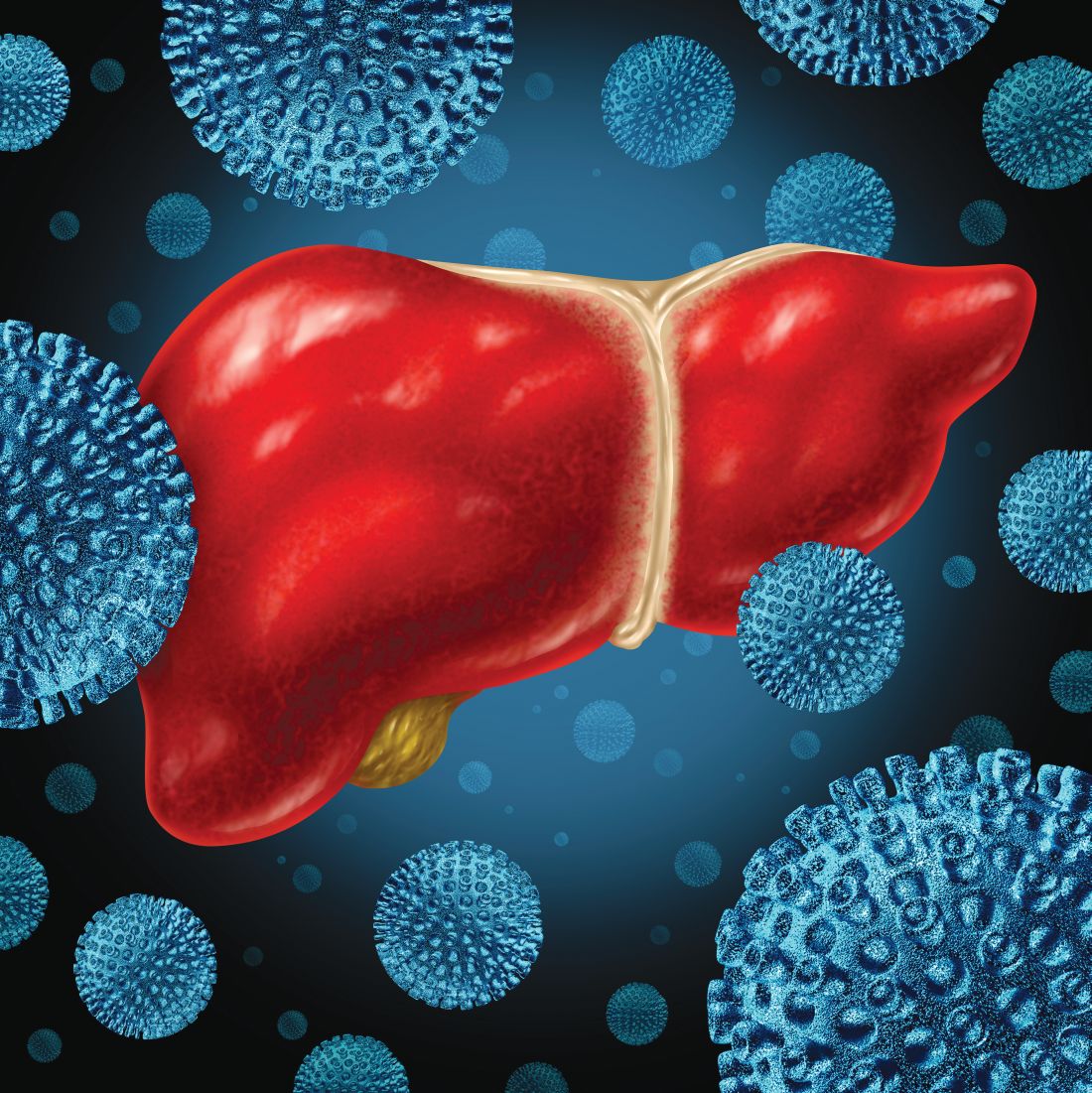
“The leveraging of health systems data transforms numbers into knowledge” that is used both by individual providers and the VA as a whole, wrote Dr. Belperio, national public health pharmacist in the VA’s public health division, and her coauthors.
Identifying veterans who were infected with HCV is simplified by means of electronic point-of-care reminders that prompt providers to conduct HCV risk assessment and testing. Veterans eligible for testing also receive automated letters that serve as a laboratory order form for HCV testing at a VA laboratory.
Adding HCV birth cohort screening as a performance measure and recommending reflex confirmatory HCV RNA testing for positive antibody tests were additional initiatives that contributed to the 3%-4% annual increase in veterans receiving HCV testing, “substantially higher than in other health care systems,” wrote Dr. Belperio and her colleagues.
To respect regional variations in practice within the VA system, multidisciplinary innovation teams meet in each region to identify opportunities for improving and streamlining HCV testing and treatment, using lean process improvement techniques. Regions also share innovations with each other.
The VA used a multipronged approach to raise awareness about HCV testing and treatment among VA health care providers and veterans. Provider reach has been expanded by extensive use of telemedicine, including real-time video calls between providers and patients or other providers at remote locations. Those telemedicine initiatives allow pharmacists and mental health providers to lend their expertise to physicians and other providers, who are themselves directly caring for HCV-infected individuals.
Patients at more than half of VA facilities receive care from physician assistants, nurse practitioners, and clinical pharmacy specialists, “who have been recognized as delivering the same quality of care and providing more timely access to HCV treatment,” wrote Dr. Belperio and her collaborators. Expanding the use of advanced practice providers allows more targeted use of specialists, and “is an important practice that can be adapted into other health care systems,” they noted.
Non–evidence-based criteria for HCV treatment eligibility remain a major barrier for HCV-infected individuals nationwide, despite VA studies showing “cure rates among veterans with alcohol, substance use, and mental health disorders that are similar to cure rates in those without these conditions,” said Dr. Belperio and her colleagues.
Within the VA, involving alcohol and substance use specialists, mental health providers, case managers, and social workers in the patient’s care team is an approach that can increase adherence and up the chance for a cure among the most vulnerable veterans.
The VA has been able to negotiate reduced pricing for the expensive DAAs, and has continued to receive additional appropriations to fund DAAs and other HCV-related resources. “Financing for HCV treatment and infrastructure resources, coupled with reduced drug prices, has been paramount to the VA’s success in curing HCV infection,” said Dr. Belperio and her colleagues.
However, they added, individual private insurers may not reap the benefits of achieving sweeping HCV cures within their particular patient panel, because patients frequently switch insurers. Still, “consistent leveraging of drug prices and removal of restrictions to HCV treatment among all insurers would help assuage this gap,” they wrote.
Dr. Belperio described the VA’s vision of a “hepatitis C cascade of cure” that occurs when individuals with chronic HCV are identified, linked to care, treated with DAAs, and achieve sustained viral response. The comprehensive strategies employed by the VA have meant that, from 2014 to 2016, the percentage of HCV-infected individuals who have been linked to care and treatment increased from 27% to 59%. Of those treated, SVR rates have risen from 51% to 84% during the same period, said Dr. Belperio and her coauthors.
It will not be easy to extend that success into the nongovernment sector, the article’s authors acknowledged. Still, “the VA recognizes the resources necessary to realize this goal and the innovations that could make it possible, and is poised to extend best practices to other health care organizations and providers delivering HCV care.”
None of the study authors reported conflicts of interest.
[email protected]
On Twitter @karioakes
The U.S. Department of Veterans Affairs (VA) cares for more patients with hepatitis C virus than any other care provider in the country, and has achieved a rapid and sharp reduction in hepatitis C virus (HCV) infection among veterans over the past 3 years.
The VA has treated more than 92,000 HCV-infected individuals since the advent of oral direct-acting antiviral (DAA) therapy in 2014. The number of veterans with HCV who were eligible for treatment was 168,000 in 2014 and 51,000 in July 2017, according to an article in Annals of Internal Medicine (2017 Sep 26. doi: 10.7326/M17-1073).
Given that success in HCV treatment, with a cure rate that exceeds 90% for those prescribed DAAs, the VA is well positioned to share best practices with other organizations, according to Pamela S. Belperio, PharmD, and her coauthors. The best practices harmonize with the recently outlined national strategy to eliminate hepatitis B and C from the National Academies of Sciences, Engineering, and Medicine.
“The leveraging of health systems data transforms numbers into knowledge” that is used both by individual providers and the VA as a whole, wrote Dr. Belperio, national public health pharmacist in the VA’s public health division, and her coauthors.
Identifying veterans who were infected with HCV is simplified by means of electronic point-of-care reminders that prompt providers to conduct HCV risk assessment and testing. Veterans eligible for testing also receive automated letters that serve as a laboratory order form for HCV testing at a VA laboratory.
Adding HCV birth cohort screening as a performance measure and recommending reflex confirmatory HCV RNA testing for positive antibody tests were additional initiatives that contributed to the 3%-4% annual increase in veterans receiving HCV testing, “substantially higher than in other health care systems,” wrote Dr. Belperio and her colleagues.
To respect regional variations in practice within the VA system, multidisciplinary innovation teams meet in each region to identify opportunities for improving and streamlining HCV testing and treatment, using lean process improvement techniques. Regions also share innovations with each other.
The VA used a multipronged approach to raise awareness about HCV testing and treatment among VA health care providers and veterans. Provider reach has been expanded by extensive use of telemedicine, including real-time video calls between providers and patients or other providers at remote locations. Those telemedicine initiatives allow pharmacists and mental health providers to lend their expertise to physicians and other providers, who are themselves directly caring for HCV-infected individuals.
Patients at more than half of VA facilities receive care from physician assistants, nurse practitioners, and clinical pharmacy specialists, “who have been recognized as delivering the same quality of care and providing more timely access to HCV treatment,” wrote Dr. Belperio and her collaborators. Expanding the use of advanced practice providers allows more targeted use of specialists, and “is an important practice that can be adapted into other health care systems,” they noted.
Non–evidence-based criteria for HCV treatment eligibility remain a major barrier for HCV-infected individuals nationwide, despite VA studies showing “cure rates among veterans with alcohol, substance use, and mental health disorders that are similar to cure rates in those without these conditions,” said Dr. Belperio and her colleagues.
Within the VA, involving alcohol and substance use specialists, mental health providers, case managers, and social workers in the patient’s care team is an approach that can increase adherence and up the chance for a cure among the most vulnerable veterans.
The VA has been able to negotiate reduced pricing for the expensive DAAs, and has continued to receive additional appropriations to fund DAAs and other HCV-related resources. “Financing for HCV treatment and infrastructure resources, coupled with reduced drug prices, has been paramount to the VA’s success in curing HCV infection,” said Dr. Belperio and her colleagues.
However, they added, individual private insurers may not reap the benefits of achieving sweeping HCV cures within their particular patient panel, because patients frequently switch insurers. Still, “consistent leveraging of drug prices and removal of restrictions to HCV treatment among all insurers would help assuage this gap,” they wrote.
Dr. Belperio described the VA’s vision of a “hepatitis C cascade of cure” that occurs when individuals with chronic HCV are identified, linked to care, treated with DAAs, and achieve sustained viral response. The comprehensive strategies employed by the VA have meant that, from 2014 to 2016, the percentage of HCV-infected individuals who have been linked to care and treatment increased from 27% to 59%. Of those treated, SVR rates have risen from 51% to 84% during the same period, said Dr. Belperio and her coauthors.
It will not be easy to extend that success into the nongovernment sector, the article’s authors acknowledged. Still, “the VA recognizes the resources necessary to realize this goal and the innovations that could make it possible, and is poised to extend best practices to other health care organizations and providers delivering HCV care.”
None of the study authors reported conflicts of interest.
[email protected]
On Twitter @karioakes
The U.S. Department of Veterans Affairs (VA) cares for more patients with hepatitis C virus than any other care provider in the country, and has achieved a rapid and sharp reduction in hepatitis C virus (HCV) infection among veterans over the past 3 years.
The VA has treated more than 92,000 HCV-infected individuals since the advent of oral direct-acting antiviral (DAA) therapy in 2014. The number of veterans with HCV who were eligible for treatment was 168,000 in 2014 and 51,000 in July 2017, according to an article in Annals of Internal Medicine (2017 Sep 26. doi: 10.7326/M17-1073).
Given that success in HCV treatment, with a cure rate that exceeds 90% for those prescribed DAAs, the VA is well positioned to share best practices with other organizations, according to Pamela S. Belperio, PharmD, and her coauthors. The best practices harmonize with the recently outlined national strategy to eliminate hepatitis B and C from the National Academies of Sciences, Engineering, and Medicine.
“The leveraging of health systems data transforms numbers into knowledge” that is used both by individual providers and the VA as a whole, wrote Dr. Belperio, national public health pharmacist in the VA’s public health division, and her coauthors.
Identifying veterans who were infected with HCV is simplified by means of electronic point-of-care reminders that prompt providers to conduct HCV risk assessment and testing. Veterans eligible for testing also receive automated letters that serve as a laboratory order form for HCV testing at a VA laboratory.
Adding HCV birth cohort screening as a performance measure and recommending reflex confirmatory HCV RNA testing for positive antibody tests were additional initiatives that contributed to the 3%-4% annual increase in veterans receiving HCV testing, “substantially higher than in other health care systems,” wrote Dr. Belperio and her colleagues.
To respect regional variations in practice within the VA system, multidisciplinary innovation teams meet in each region to identify opportunities for improving and streamlining HCV testing and treatment, using lean process improvement techniques. Regions also share innovations with each other.
The VA used a multipronged approach to raise awareness about HCV testing and treatment among VA health care providers and veterans. Provider reach has been expanded by extensive use of telemedicine, including real-time video calls between providers and patients or other providers at remote locations. Those telemedicine initiatives allow pharmacists and mental health providers to lend their expertise to physicians and other providers, who are themselves directly caring for HCV-infected individuals.
Patients at more than half of VA facilities receive care from physician assistants, nurse practitioners, and clinical pharmacy specialists, “who have been recognized as delivering the same quality of care and providing more timely access to HCV treatment,” wrote Dr. Belperio and her collaborators. Expanding the use of advanced practice providers allows more targeted use of specialists, and “is an important practice that can be adapted into other health care systems,” they noted.
Non–evidence-based criteria for HCV treatment eligibility remain a major barrier for HCV-infected individuals nationwide, despite VA studies showing “cure rates among veterans with alcohol, substance use, and mental health disorders that are similar to cure rates in those without these conditions,” said Dr. Belperio and her colleagues.
Within the VA, involving alcohol and substance use specialists, mental health providers, case managers, and social workers in the patient’s care team is an approach that can increase adherence and up the chance for a cure among the most vulnerable veterans.
The VA has been able to negotiate reduced pricing for the expensive DAAs, and has continued to receive additional appropriations to fund DAAs and other HCV-related resources. “Financing for HCV treatment and infrastructure resources, coupled with reduced drug prices, has been paramount to the VA’s success in curing HCV infection,” said Dr. Belperio and her colleagues.
However, they added, individual private insurers may not reap the benefits of achieving sweeping HCV cures within their particular patient panel, because patients frequently switch insurers. Still, “consistent leveraging of drug prices and removal of restrictions to HCV treatment among all insurers would help assuage this gap,” they wrote.
Dr. Belperio described the VA’s vision of a “hepatitis C cascade of cure” that occurs when individuals with chronic HCV are identified, linked to care, treated with DAAs, and achieve sustained viral response. The comprehensive strategies employed by the VA have meant that, from 2014 to 2016, the percentage of HCV-infected individuals who have been linked to care and treatment increased from 27% to 59%. Of those treated, SVR rates have risen from 51% to 84% during the same period, said Dr. Belperio and her coauthors.
It will not be easy to extend that success into the nongovernment sector, the article’s authors acknowledged. Still, “the VA recognizes the resources necessary to realize this goal and the innovations that could make it possible, and is poised to extend best practices to other health care organizations and providers delivering HCV care.”
None of the study authors reported conflicts of interest.
[email protected]
On Twitter @karioakes
FROM ANNALS OF INTERNAL MEDICINE
Higher BP targets suggested for elderly, cognitively impaired
SAN FRANCISCO – Lowering blood pressure below 140/90 mm Hg might not be a good idea in the very elderly, especially if they have cognitive impairment, according to Philip Gorelick, MD.
“Lower blood pressure” in those patients “may be associated with worse cognitive outcomes,” he said at the joint scientific sessions of AHA Council on Hypertension, AHA Council on Kidney in Cardiovascular Disease, and American Society of Hypertension.
The problem is that higher pressures may be needed to maintain cerebral perfusion. It’s possible the very elderly have impaired cerebral autoregulation, especially if there’s a history of hypertension. A little extra pressure is needed to overcome increased cerebral vascular resistance.
“Cautious blood pressure–lowering with a target of about 150 mm Hg systolic, may be prudent,” said Dr. Gorelick, professor of translational science and molecular medicine at Michigan State University in Grand Rapids. Meanwhile, “for those without cognitive impairment and who have intact cerebral autoregulation, lower blood pressure targets may be beneficial to preserve cognition.

It’s become clear in recent years that cognitive decline is not a strictly neurologic issue, but rather related to cardiovascular health, at least in some people. Good blood pressure control in midlife, in particular, seems to be important for prevention.
“The same risk factors for atherosclerotic disease [are] risks for Alzheimer’s disease. Vascular risks play a role in cognitive impairment, including Alzheimer’s,” he said.
But the evidence is not clear for blood pressure lowering after the age of 80. Several studies have suggested that angiotensin receptor blockers and other hypertension medications reduce pathologic and clinical changes associated with Alzheimer’s. “However, there’s certainly a downside” to using them in the elderly. “Everything that glistens is not gold,” Dr. Gorelick said.
“There have been studies in older persons with mild cognitive deficits who are placed on antihypertensives, and they actually have lower brain volumes: The brain is shrinking, possibly at a faster rate. Other studies have suggested that people around 80 years of age may have greater cognitive decline with lower blood pressure,” he said.
For those older than 80 and patients with cognitive impairment, the usefulness of blood pressure–lowering for prevention of dementia has not been established. Relaxing the blood pressure control targets might prevent harm, he said.
“There’s going to be a window of opportunity where were are going to see some benefit” in using, for instance, ARBs to slow cognitive decline, but “we have to be smart enough to find the right patients and the right window. We’re not there yet,” he said.
Dr. Gorelick is a consultant for Bayer, Novartis, and Amgen.
SAN FRANCISCO – Lowering blood pressure below 140/90 mm Hg might not be a good idea in the very elderly, especially if they have cognitive impairment, according to Philip Gorelick, MD.
“Lower blood pressure” in those patients “may be associated with worse cognitive outcomes,” he said at the joint scientific sessions of AHA Council on Hypertension, AHA Council on Kidney in Cardiovascular Disease, and American Society of Hypertension.
The problem is that higher pressures may be needed to maintain cerebral perfusion. It’s possible the very elderly have impaired cerebral autoregulation, especially if there’s a history of hypertension. A little extra pressure is needed to overcome increased cerebral vascular resistance.
“Cautious blood pressure–lowering with a target of about 150 mm Hg systolic, may be prudent,” said Dr. Gorelick, professor of translational science and molecular medicine at Michigan State University in Grand Rapids. Meanwhile, “for those without cognitive impairment and who have intact cerebral autoregulation, lower blood pressure targets may be beneficial to preserve cognition.
It’s become clear in recent years that cognitive decline is not a strictly neurologic issue, but rather related to cardiovascular health, at least in some people. Good blood pressure control in midlife, in particular, seems to be important for prevention.
“The same risk factors for atherosclerotic disease [are] risks for Alzheimer’s disease. Vascular risks play a role in cognitive impairment, including Alzheimer’s,” he said.
But the evidence is not clear for blood pressure lowering after the age of 80. Several studies have suggested that angiotensin receptor blockers and other hypertension medications reduce pathologic and clinical changes associated with Alzheimer’s. “However, there’s certainly a downside” to using them in the elderly. “Everything that glistens is not gold,” Dr. Gorelick said.
“There have been studies in older persons with mild cognitive deficits who are placed on antihypertensives, and they actually have lower brain volumes: The brain is shrinking, possibly at a faster rate. Other studies have suggested that people around 80 years of age may have greater cognitive decline with lower blood pressure,” he said.
For those older than 80 and patients with cognitive impairment, the usefulness of blood pressure–lowering for prevention of dementia has not been established. Relaxing the blood pressure control targets might prevent harm, he said.
“There’s going to be a window of opportunity where were are going to see some benefit” in using, for instance, ARBs to slow cognitive decline, but “we have to be smart enough to find the right patients and the right window. We’re not there yet,” he said.
Dr. Gorelick is a consultant for Bayer, Novartis, and Amgen.
SAN FRANCISCO – Lowering blood pressure below 140/90 mm Hg might not be a good idea in the very elderly, especially if they have cognitive impairment, according to Philip Gorelick, MD.
“Lower blood pressure” in those patients “may be associated with worse cognitive outcomes,” he said at the joint scientific sessions of AHA Council on Hypertension, AHA Council on Kidney in Cardiovascular Disease, and American Society of Hypertension.
The problem is that higher pressures may be needed to maintain cerebral perfusion. It’s possible the very elderly have impaired cerebral autoregulation, especially if there’s a history of hypertension. A little extra pressure is needed to overcome increased cerebral vascular resistance.
“Cautious blood pressure–lowering with a target of about 150 mm Hg systolic, may be prudent,” said Dr. Gorelick, professor of translational science and molecular medicine at Michigan State University in Grand Rapids. Meanwhile, “for those without cognitive impairment and who have intact cerebral autoregulation, lower blood pressure targets may be beneficial to preserve cognition.
It’s become clear in recent years that cognitive decline is not a strictly neurologic issue, but rather related to cardiovascular health, at least in some people. Good blood pressure control in midlife, in particular, seems to be important for prevention.
“The same risk factors for atherosclerotic disease [are] risks for Alzheimer’s disease. Vascular risks play a role in cognitive impairment, including Alzheimer’s,” he said.
But the evidence is not clear for blood pressure lowering after the age of 80. Several studies have suggested that angiotensin receptor blockers and other hypertension medications reduce pathologic and clinical changes associated with Alzheimer’s. “However, there’s certainly a downside” to using them in the elderly. “Everything that glistens is not gold,” Dr. Gorelick said.
“There have been studies in older persons with mild cognitive deficits who are placed on antihypertensives, and they actually have lower brain volumes: The brain is shrinking, possibly at a faster rate. Other studies have suggested that people around 80 years of age may have greater cognitive decline with lower blood pressure,” he said.
For those older than 80 and patients with cognitive impairment, the usefulness of blood pressure–lowering for prevention of dementia has not been established. Relaxing the blood pressure control targets might prevent harm, he said.
“There’s going to be a window of opportunity where were are going to see some benefit” in using, for instance, ARBs to slow cognitive decline, but “we have to be smart enough to find the right patients and the right window. We’re not there yet,” he said.
Dr. Gorelick is a consultant for Bayer, Novartis, and Amgen.
EXPERT ANALYSIS FROM Joint Hypertension 2017

Are Bladder Dysfunction and Falls Related in MS?
Urinary urgency with incontinence is associated with recurrent falls in people with relapsing-remitting multiple sclerosis (MS) with mild to moderate disability, according to data published in the July–August issue of International Journal of MS Care. Urinary urgency with incontinence often responds to physical, behavioral, and pharmaceutical interventions, and neurologists should ask patients with MS about bladder symptoms and fall history, according to the authors.
Bladder dysfunction and falls are highly prevalent among people with MS, and bladder dysfunction is associated with falls in older adults. Studies of the association between bladder dysfunction and falls in people with MS, however, are limited and have produced mixed results. Jaime E. Zelaya, PhD, a doctoral student at Oregon Health and Science University in Portland, and colleagues conducted a longitudinal observational cohort study to clarify the possible association between baseline urinary symptoms and future falls.
Participants Prospectively Recorded Falls
The investigators recruited participants from outpatient MS clinics in the Veterans Affairs Portland Health Care System, Oregon Health and Science University MS clinics, and the surrounding community. Eligible participants had a diagnosis of relapsing-remitting MS, mild to moderate MS-related disability, and no relapse within 30 days of baseline. Patients with another condition that affected their balance or gait were excluded from the study.
At baseline, Dr. Zelaya and colleagues asked participants whether they had urinary incontinence, urinary frequency, or urinary urgency. Participants then prospectively recorded their number of falls each day using fall calendars. They were asked to return their calendars to the investigators at the end of each month. The researchers defined four patient categories based on the number of falls during three months. Recurrent fallers fell two or more times, nonrecurrent fallers fell once or not at all, fallers had one fall or more, and nonfallers did not fall. The investigators analyzed the data using age, sex, and disability as potential confounders.
Most Patients Fell at Least Once
The final analysis included 51 participants (37 women). Mean age was 40, and median Expanded Disability Status Scale (EDSS) score was 3.0. In all, 15 participants (29%) were recurrent fallers, and 36 (71%) were nonrecurrent fallers. Furthermore, 32 (63%) participants were fallers, and 19 (37%) were nonfallers.
Urinary dysfunction was more prevalent in fallers and recurrent fallers than in nonrecurrent fallers or nonfallers. In the adjusted analyses, urinary urgency with incontinence was significantly associated with recurrent falls (odds ratio [OR], 57.57). The researchers did not find a significant association between urinary urgency without incontinence and recurrent falls, or between urinary frequency and recurrent falls. They also did not find significant associations between urinary urgency with incontinence, urinary urgency without incontinence, or urinary frequency and sustaining one or more falls.
The high prevalence of falls and bladder dysfunction in this population and previous studies “suggests that both falls and bladder dysfunction are common, early, and persistent symptoms in MS,” said the authors. The findings suggest that fall-prevention programs “should particularly be considered for reducing fall risk in recurrent fallers, and that such programs should include strategies for managing urinary urgency with incontinence,” they concluded.
—Erik Greb
Suggested Reading
Zelaya JE, Murchison C, Cameron M. Associations between bladder dysfunction and falls in people with relapsing-remitting multiple sclerosis. Int J MS Care. 2017;19(4):184-190.
Urinary urgency with incontinence is associated with recurrent falls in people with relapsing-remitting multiple sclerosis (MS) with mild to moderate disability, according to data published in the July–August issue of International Journal of MS Care. Urinary urgency with incontinence often responds to physical, behavioral, and pharmaceutical interventions, and neurologists should ask patients with MS about bladder symptoms and fall history, according to the authors.
Bladder dysfunction and falls are highly prevalent among people with MS, and bladder dysfunction is associated with falls in older adults. Studies of the association between bladder dysfunction and falls in people with MS, however, are limited and have produced mixed results. Jaime E. Zelaya, PhD, a doctoral student at Oregon Health and Science University in Portland, and colleagues conducted a longitudinal observational cohort study to clarify the possible association between baseline urinary symptoms and future falls.
Participants Prospectively Recorded Falls
The investigators recruited participants from outpatient MS clinics in the Veterans Affairs Portland Health Care System, Oregon Health and Science University MS clinics, and the surrounding community. Eligible participants had a diagnosis of relapsing-remitting MS, mild to moderate MS-related disability, and no relapse within 30 days of baseline. Patients with another condition that affected their balance or gait were excluded from the study.
At baseline, Dr. Zelaya and colleagues asked participants whether they had urinary incontinence, urinary frequency, or urinary urgency. Participants then prospectively recorded their number of falls each day using fall calendars. They were asked to return their calendars to the investigators at the end of each month. The researchers defined four patient categories based on the number of falls during three months. Recurrent fallers fell two or more times, nonrecurrent fallers fell once or not at all, fallers had one fall or more, and nonfallers did not fall. The investigators analyzed the data using age, sex, and disability as potential confounders.
Most Patients Fell at Least Once
The final analysis included 51 participants (37 women). Mean age was 40, and median Expanded Disability Status Scale (EDSS) score was 3.0. In all, 15 participants (29%) were recurrent fallers, and 36 (71%) were nonrecurrent fallers. Furthermore, 32 (63%) participants were fallers, and 19 (37%) were nonfallers.
Urinary dysfunction was more prevalent in fallers and recurrent fallers than in nonrecurrent fallers or nonfallers. In the adjusted analyses, urinary urgency with incontinence was significantly associated with recurrent falls (odds ratio [OR], 57.57). The researchers did not find a significant association between urinary urgency without incontinence and recurrent falls, or between urinary frequency and recurrent falls. They also did not find significant associations between urinary urgency with incontinence, urinary urgency without incontinence, or urinary frequency and sustaining one or more falls.
The high prevalence of falls and bladder dysfunction in this population and previous studies “suggests that both falls and bladder dysfunction are common, early, and persistent symptoms in MS,” said the authors. The findings suggest that fall-prevention programs “should particularly be considered for reducing fall risk in recurrent fallers, and that such programs should include strategies for managing urinary urgency with incontinence,” they concluded.
—Erik Greb
Suggested Reading
Zelaya JE, Murchison C, Cameron M. Associations between bladder dysfunction and falls in people with relapsing-remitting multiple sclerosis. Int J MS Care. 2017;19(4):184-190.
Urinary urgency with incontinence is associated with recurrent falls in people with relapsing-remitting multiple sclerosis (MS) with mild to moderate disability, according to data published in the July–August issue of International Journal of MS Care. Urinary urgency with incontinence often responds to physical, behavioral, and pharmaceutical interventions, and neurologists should ask patients with MS about bladder symptoms and fall history, according to the authors.
Bladder dysfunction and falls are highly prevalent among people with MS, and bladder dysfunction is associated with falls in older adults. Studies of the association between bladder dysfunction and falls in people with MS, however, are limited and have produced mixed results. Jaime E. Zelaya, PhD, a doctoral student at Oregon Health and Science University in Portland, and colleagues conducted a longitudinal observational cohort study to clarify the possible association between baseline urinary symptoms and future falls.
Participants Prospectively Recorded Falls
The investigators recruited participants from outpatient MS clinics in the Veterans Affairs Portland Health Care System, Oregon Health and Science University MS clinics, and the surrounding community. Eligible participants had a diagnosis of relapsing-remitting MS, mild to moderate MS-related disability, and no relapse within 30 days of baseline. Patients with another condition that affected their balance or gait were excluded from the study.
At baseline, Dr. Zelaya and colleagues asked participants whether they had urinary incontinence, urinary frequency, or urinary urgency. Participants then prospectively recorded their number of falls each day using fall calendars. They were asked to return their calendars to the investigators at the end of each month. The researchers defined four patient categories based on the number of falls during three months. Recurrent fallers fell two or more times, nonrecurrent fallers fell once or not at all, fallers had one fall or more, and nonfallers did not fall. The investigators analyzed the data using age, sex, and disability as potential confounders.
Most Patients Fell at Least Once
The final analysis included 51 participants (37 women). Mean age was 40, and median Expanded Disability Status Scale (EDSS) score was 3.0. In all, 15 participants (29%) were recurrent fallers, and 36 (71%) were nonrecurrent fallers. Furthermore, 32 (63%) participants were fallers, and 19 (37%) were nonfallers.
Urinary dysfunction was more prevalent in fallers and recurrent fallers than in nonrecurrent fallers or nonfallers. In the adjusted analyses, urinary urgency with incontinence was significantly associated with recurrent falls (odds ratio [OR], 57.57). The researchers did not find a significant association between urinary urgency without incontinence and recurrent falls, or between urinary frequency and recurrent falls. They also did not find significant associations between urinary urgency with incontinence, urinary urgency without incontinence, or urinary frequency and sustaining one or more falls.
The high prevalence of falls and bladder dysfunction in this population and previous studies “suggests that both falls and bladder dysfunction are common, early, and persistent symptoms in MS,” said the authors. The findings suggest that fall-prevention programs “should particularly be considered for reducing fall risk in recurrent fallers, and that such programs should include strategies for managing urinary urgency with incontinence,” they concluded.
—Erik Greb
Suggested Reading
Zelaya JE, Murchison C, Cameron M. Associations between bladder dysfunction and falls in people with relapsing-remitting multiple sclerosis. Int J MS Care. 2017;19(4):184-190.
Endometrial Evaluation: Are You Still Relying on a Blind Biopsy?
One-third of patients who visit a gynecologist are there because of abnormal uterine bleeding (AUB), which is believed to account for more than 70% of gyneco¬logic consults in perimenopausal and postmenopausal women. The American College of Obstetricians and Gynecologists Practice Bulle¬tin on AUB now states that a negative blind endometrial biopsy is not a stopping point in persistent bleeding.
In this supplement, learn about the advantages of diagnosing AUB using a hysteroscope.
- Authors:
- Steven R. Goldstein, MD, CCD, NCMP, FACOG
- New York University Medical Center New York, New York
- Ted L. Anderson, MD, PhD
- Vanderbilt University Medical School Nashville, Tennessee
- Click here to read this supplement.
To access the posttest and evaluation, visit
www.worldclasscme.com/endometrialevaluation
One-third of patients who visit a gynecologist are there because of abnormal uterine bleeding (AUB), which is believed to account for more than 70% of gyneco¬logic consults in perimenopausal and postmenopausal women. The American College of Obstetricians and Gynecologists Practice Bulle¬tin on AUB now states that a negative blind endometrial biopsy is not a stopping point in persistent bleeding.
In this supplement, learn about the advantages of diagnosing AUB using a hysteroscope.
- Authors:
- Steven R. Goldstein, MD, CCD, NCMP, FACOG
- New York University Medical Center New York, New York
- Ted L. Anderson, MD, PhD
- Vanderbilt University Medical School Nashville, Tennessee
- Click here to read this supplement.
To access the posttest and evaluation, visit
www.worldclasscme.com/endometrialevaluation
One-third of patients who visit a gynecologist are there because of abnormal uterine bleeding (AUB), which is believed to account for more than 70% of gyneco¬logic consults in perimenopausal and postmenopausal women. The American College of Obstetricians and Gynecologists Practice Bulle¬tin on AUB now states that a negative blind endometrial biopsy is not a stopping point in persistent bleeding.
In this supplement, learn about the advantages of diagnosing AUB using a hysteroscope.
- Authors:
- Steven R. Goldstein, MD, CCD, NCMP, FACOG
- New York University Medical Center New York, New York
- Ted L. Anderson, MD, PhD
- Vanderbilt University Medical School Nashville, Tennessee
- Click here to read this supplement.
To access the posttest and evaluation, visit
www.worldclasscme.com/endometrialevaluation
Study shows childhood IBD increased cancer risk in adulthood
Children who had developed inflammatory bowel disease had an 18-fold greater risk of gastrointestinal cancers in later life, a new study suggests.
The cohort study found that the risk of all cancers was elevated in individuals with childhood-onset inflammatory bowel disease, but particularly in those with primary sclerosing cholangitis and ulcerative colitis.
Researchers followed 9,405 patients with childhood-onset inflammatory bowel disease to a mean age of 27 years using a Swedish national patient register (BMJ. 2017 Sep 21. doi: 10.1136/bmj.j3951).
Analysis revealed that individuals with childhood-onset inflammatory bowel disease had double the risk of any cancer, compared with the general population (hazard ratio, 2.2; 95% confidence interval, 2.0-2.5), and a 2.7-fold greater risk of developing cancer before the age of 18 years.
Primary sclerosing cholangitis was associated with a sixfold greater risk of cancer, ulcerative colitis was associated with a 2.6-fold greater risk, and patients who had had colitis for 10 years or more had a nearly fourfold greater risk of cancer (HR, 3.9).
The study also found that childhood-onset inflammatory bowel disease was associated with an 18-fold greater risk of gastrointestinal cancer, compared with the general population, matched for age, sex, birth year, and county.
The risk was particularly high in patients with ulcerative colitis, who showed a 33-fold higher risk of colorectal cancer, while patients with Crohn’s disease had a nearly 6-fold higher risk.
“Colorectal cancer is a major cause of cancer mortality in the population, and even a moderately increased incidence is likely to have a large effect on patients with inflammatory bowel disease,” wrote Ola Olén, MD, of Karolinska Institutet, Stockholm, and coauthors.
When the researchers looked in more detail at the type of cancers, they saw the greatest increases in risk were for colorectal cancer (HR, 19.5) and small intestinal cancer (HR, 12.8), while the risk of liver cancer was 134 times higher (95% CI, 59.6-382).
The researchers also saw a 2.7-fold increased risk of lymphoid neoplasms associated with childhood inflammatory bowel disease, particularly in individuals with ulcerative colitis or Crohn’s disease. The most common lymphoid neoplasms were non-Hodgkin lymphomas, followed by Hodgkin lymphomas.
Commenting on possible explanations for the associations seen in the study, the authors said that patients with inflammatory bowel disease may have their gastrointestinal cancers diagnosed earlier than the general population because of regular endoscopies.
They also said that thiopurines and TNF inhibitors – both used to treat inflammatory bowel disease – could not be ruled out as a possible cause of the increase in cancer risk, but their study was not powered to pick up such an effect.
“Instead, we suggest that extent and duration of chronic inflammation might be the main driving mechanisms underlying the increased risk of cancer,” they wrote.
The authors noted that their study did not include data on the smoking status of individuals, which could be significant, because smoking is known to reduce the risk of ulcerative colitis and increase the risk of Crohn’s disease and cancer. However, they pointed out that the majority of patients would not have been smoking at the time of their initial inflammatory bowel disease diagnosis, and would have been unlikely to take up the habit after their diagnosis.
With the observation that the risk of cancer in inflammatory bowel disease was higher in patients who were younger when diagnosed with the disease, the authors suggested that age of onset be considered when designing surveillance strategies for cancer in this group.
The Stockholm County Council and the Karolinska Institutet, the Swedish Cancer Society, the Swedish Research Council, and the Swedish Foundation for Strategic Research supported the study. One author received grants from the Swedish Medical Society, Magtarmfonden, the Jane and Dan Olsson Foundation, the Mjölkdroppen Foundation, the Bengt Ihre Research Fellowship in gastroenterology, and the Karolinska Institutet Foundations. No conflicts of interest were declared.
Children who had developed inflammatory bowel disease had an 18-fold greater risk of gastrointestinal cancers in later life, a new study suggests.
The cohort study found that the risk of all cancers was elevated in individuals with childhood-onset inflammatory bowel disease, but particularly in those with primary sclerosing cholangitis and ulcerative colitis.
Researchers followed 9,405 patients with childhood-onset inflammatory bowel disease to a mean age of 27 years using a Swedish national patient register (BMJ. 2017 Sep 21. doi: 10.1136/bmj.j3951).
Analysis revealed that individuals with childhood-onset inflammatory bowel disease had double the risk of any cancer, compared with the general population (hazard ratio, 2.2; 95% confidence interval, 2.0-2.5), and a 2.7-fold greater risk of developing cancer before the age of 18 years.
Primary sclerosing cholangitis was associated with a sixfold greater risk of cancer, ulcerative colitis was associated with a 2.6-fold greater risk, and patients who had had colitis for 10 years or more had a nearly fourfold greater risk of cancer (HR, 3.9).
The study also found that childhood-onset inflammatory bowel disease was associated with an 18-fold greater risk of gastrointestinal cancer, compared with the general population, matched for age, sex, birth year, and county.
The risk was particularly high in patients with ulcerative colitis, who showed a 33-fold higher risk of colorectal cancer, while patients with Crohn’s disease had a nearly 6-fold higher risk.
“Colorectal cancer is a major cause of cancer mortality in the population, and even a moderately increased incidence is likely to have a large effect on patients with inflammatory bowel disease,” wrote Ola Olén, MD, of Karolinska Institutet, Stockholm, and coauthors.
When the researchers looked in more detail at the type of cancers, they saw the greatest increases in risk were for colorectal cancer (HR, 19.5) and small intestinal cancer (HR, 12.8), while the risk of liver cancer was 134 times higher (95% CI, 59.6-382).
The researchers also saw a 2.7-fold increased risk of lymphoid neoplasms associated with childhood inflammatory bowel disease, particularly in individuals with ulcerative colitis or Crohn’s disease. The most common lymphoid neoplasms were non-Hodgkin lymphomas, followed by Hodgkin lymphomas.
Commenting on possible explanations for the associations seen in the study, the authors said that patients with inflammatory bowel disease may have their gastrointestinal cancers diagnosed earlier than the general population because of regular endoscopies.
They also said that thiopurines and TNF inhibitors – both used to treat inflammatory bowel disease – could not be ruled out as a possible cause of the increase in cancer risk, but their study was not powered to pick up such an effect.
“Instead, we suggest that extent and duration of chronic inflammation might be the main driving mechanisms underlying the increased risk of cancer,” they wrote.
The authors noted that their study did not include data on the smoking status of individuals, which could be significant, because smoking is known to reduce the risk of ulcerative colitis and increase the risk of Crohn’s disease and cancer. However, they pointed out that the majority of patients would not have been smoking at the time of their initial inflammatory bowel disease diagnosis, and would have been unlikely to take up the habit after their diagnosis.
With the observation that the risk of cancer in inflammatory bowel disease was higher in patients who were younger when diagnosed with the disease, the authors suggested that age of onset be considered when designing surveillance strategies for cancer in this group.
The Stockholm County Council and the Karolinska Institutet, the Swedish Cancer Society, the Swedish Research Council, and the Swedish Foundation for Strategic Research supported the study. One author received grants from the Swedish Medical Society, Magtarmfonden, the Jane and Dan Olsson Foundation, the Mjölkdroppen Foundation, the Bengt Ihre Research Fellowship in gastroenterology, and the Karolinska Institutet Foundations. No conflicts of interest were declared.
Children who had developed inflammatory bowel disease had an 18-fold greater risk of gastrointestinal cancers in later life, a new study suggests.
The cohort study found that the risk of all cancers was elevated in individuals with childhood-onset inflammatory bowel disease, but particularly in those with primary sclerosing cholangitis and ulcerative colitis.
Researchers followed 9,405 patients with childhood-onset inflammatory bowel disease to a mean age of 27 years using a Swedish national patient register (BMJ. 2017 Sep 21. doi: 10.1136/bmj.j3951).
Analysis revealed that individuals with childhood-onset inflammatory bowel disease had double the risk of any cancer, compared with the general population (hazard ratio, 2.2; 95% confidence interval, 2.0-2.5), and a 2.7-fold greater risk of developing cancer before the age of 18 years.
Primary sclerosing cholangitis was associated with a sixfold greater risk of cancer, ulcerative colitis was associated with a 2.6-fold greater risk, and patients who had had colitis for 10 years or more had a nearly fourfold greater risk of cancer (HR, 3.9).
The study also found that childhood-onset inflammatory bowel disease was associated with an 18-fold greater risk of gastrointestinal cancer, compared with the general population, matched for age, sex, birth year, and county.
The risk was particularly high in patients with ulcerative colitis, who showed a 33-fold higher risk of colorectal cancer, while patients with Crohn’s disease had a nearly 6-fold higher risk.
“Colorectal cancer is a major cause of cancer mortality in the population, and even a moderately increased incidence is likely to have a large effect on patients with inflammatory bowel disease,” wrote Ola Olén, MD, of Karolinska Institutet, Stockholm, and coauthors.
When the researchers looked in more detail at the type of cancers, they saw the greatest increases in risk were for colorectal cancer (HR, 19.5) and small intestinal cancer (HR, 12.8), while the risk of liver cancer was 134 times higher (95% CI, 59.6-382).
The researchers also saw a 2.7-fold increased risk of lymphoid neoplasms associated with childhood inflammatory bowel disease, particularly in individuals with ulcerative colitis or Crohn’s disease. The most common lymphoid neoplasms were non-Hodgkin lymphomas, followed by Hodgkin lymphomas.
Commenting on possible explanations for the associations seen in the study, the authors said that patients with inflammatory bowel disease may have their gastrointestinal cancers diagnosed earlier than the general population because of regular endoscopies.
They also said that thiopurines and TNF inhibitors – both used to treat inflammatory bowel disease – could not be ruled out as a possible cause of the increase in cancer risk, but their study was not powered to pick up such an effect.
“Instead, we suggest that extent and duration of chronic inflammation might be the main driving mechanisms underlying the increased risk of cancer,” they wrote.
The authors noted that their study did not include data on the smoking status of individuals, which could be significant, because smoking is known to reduce the risk of ulcerative colitis and increase the risk of Crohn’s disease and cancer. However, they pointed out that the majority of patients would not have been smoking at the time of their initial inflammatory bowel disease diagnosis, and would have been unlikely to take up the habit after their diagnosis.
With the observation that the risk of cancer in inflammatory bowel disease was higher in patients who were younger when diagnosed with the disease, the authors suggested that age of onset be considered when designing surveillance strategies for cancer in this group.
The Stockholm County Council and the Karolinska Institutet, the Swedish Cancer Society, the Swedish Research Council, and the Swedish Foundation for Strategic Research supported the study. One author received grants from the Swedish Medical Society, Magtarmfonden, the Jane and Dan Olsson Foundation, the Mjölkdroppen Foundation, the Bengt Ihre Research Fellowship in gastroenterology, and the Karolinska Institutet Foundations. No conflicts of interest were declared.
FROM BMJ
Key clinical point: Childhood inflammatory bowel disease was associated with significant increases in the risk of cancer – particularly gastrointestinal cancer – in later life.
Major finding: Individuals diagnosed with inflammatory bowel disease in childhood have an 18-fold greater risk of gastrointestinal cancer, and a twofold higher risk of any cancer, compared with the general population.
Data source: A cohort study of 9,405 patients with childhood-onset inflammatory bowel disease.
Disclosures: The Stockholm County Council and the Karolinska Institutet, the Swedish Cancer Society, the Swedish Research Council, and the Swedish Foundation for Strategic Research supported the study. One author received grants from the Swedish Medical Society, Magtarmfonden, the Jane and Dan Olsson Foundation, the Mjölkdroppen Foundation, the Bengt Ihre Research Fellowship in gastroenterology, and the Karolinska Institutet Foundations. No conflicts of interest were declared.
Everything We Say And Do: The physician patient
Editor’s note: “Everything We Say and Do” provides readers with thoughtful and actionable communication tactics that can positively impact patients’ experience of care. In the next series of columns, physicians will share how their experiences as patients have shaped their professional approach.
In May 2007, I received my acceptance letter for medical school. One month later, I was diagnosed with cancer.
The clinic visit was only supposed to be a routine postoperative follow-up after a simple cyst resection. I really hoped that my doctor was mistaken as he walked me through what to expect, and when he was finished, the desperate look in my eyes demanded answers.

After I fully absorbed the initial shock of the grave news, I eventually found the strength to analyze the situation at hand. Ultimately, I adopted a more positive outlook and fought cancer head on. Contending with cancer while tackling the rigors of medical school was tedious, but despite the hardships, my experience catalyzed my determination and molded my personality as a physician.
What I say and do
I employ active listening and practice patience, especially when it comes to family members.
As both a cancer survivor and a physician, I am able to integrate empathy and diligence by putting myself in my patients’ shoes. My experience in a hospital bed during medical school granted me an extremely intriguing perspective towards medicine.
Why I do it
When I was a patient, the most crucial thing to my family was information. Most physicians did not take the time to explain my course of care, which elevated my family’s angst and anxiety. The experience taught me the importance of patience and communication.
But there were good examples. I still remember the physician who comforted my mother and assuaged her concerns. She held my mother’s hand and showed empathy. When my mother cried, she cried. That physician taught me that it was acceptable for physicians to express emotions.
When my surgeon rounded on me in the morning after my procedure, she was not wearing a white coat, which made her appear relatable. Her contagious confidence and humble demeanor were endorsement enough for her capabilities, showing me that a physician’s persona supersedes the conventional coat.
How I do it
I try to put myself in my patients’ shoes. I rejoice with them. I mourn with them. My uninhibited display of emotions affirms empathy. I dissolve all barriers by not wearing a white coat and ask my patients for a partnership. After all, I once walked miles in those shoes.
Dr. Sharma is a chief hospitalist for Sound Physicians at the Sierra Campus of The Hospitals of Providence, El Paso, Texas. She is a columnist for the El Paso Times and the medical contributor for KVIA Channel 7 ABC News. Her work has appeared on kevinmd.com, Thrive Global, and in El Paso magazine.
Editor’s note: “Everything We Say and Do” provides readers with thoughtful and actionable communication tactics that can positively impact patients’ experience of care. In the next series of columns, physicians will share how their experiences as patients have shaped their professional approach.
In May 2007, I received my acceptance letter for medical school. One month later, I was diagnosed with cancer.
The clinic visit was only supposed to be a routine postoperative follow-up after a simple cyst resection. I really hoped that my doctor was mistaken as he walked me through what to expect, and when he was finished, the desperate look in my eyes demanded answers.
After I fully absorbed the initial shock of the grave news, I eventually found the strength to analyze the situation at hand. Ultimately, I adopted a more positive outlook and fought cancer head on. Contending with cancer while tackling the rigors of medical school was tedious, but despite the hardships, my experience catalyzed my determination and molded my personality as a physician.
What I say and do
I employ active listening and practice patience, especially when it comes to family members.
As both a cancer survivor and a physician, I am able to integrate empathy and diligence by putting myself in my patients’ shoes. My experience in a hospital bed during medical school granted me an extremely intriguing perspective towards medicine.
Why I do it
When I was a patient, the most crucial thing to my family was information. Most physicians did not take the time to explain my course of care, which elevated my family’s angst and anxiety. The experience taught me the importance of patience and communication.
But there were good examples. I still remember the physician who comforted my mother and assuaged her concerns. She held my mother’s hand and showed empathy. When my mother cried, she cried. That physician taught me that it was acceptable for physicians to express emotions.
When my surgeon rounded on me in the morning after my procedure, she was not wearing a white coat, which made her appear relatable. Her contagious confidence and humble demeanor were endorsement enough for her capabilities, showing me that a physician’s persona supersedes the conventional coat.
How I do it
I try to put myself in my patients’ shoes. I rejoice with them. I mourn with them. My uninhibited display of emotions affirms empathy. I dissolve all barriers by not wearing a white coat and ask my patients for a partnership. After all, I once walked miles in those shoes.
Dr. Sharma is a chief hospitalist for Sound Physicians at the Sierra Campus of The Hospitals of Providence, El Paso, Texas. She is a columnist for the El Paso Times and the medical contributor for KVIA Channel 7 ABC News. Her work has appeared on kevinmd.com, Thrive Global, and in El Paso magazine.
Editor’s note: “Everything We Say and Do” provides readers with thoughtful and actionable communication tactics that can positively impact patients’ experience of care. In the next series of columns, physicians will share how their experiences as patients have shaped their professional approach.
In May 2007, I received my acceptance letter for medical school. One month later, I was diagnosed with cancer.
The clinic visit was only supposed to be a routine postoperative follow-up after a simple cyst resection. I really hoped that my doctor was mistaken as he walked me through what to expect, and when he was finished, the desperate look in my eyes demanded answers.
After I fully absorbed the initial shock of the grave news, I eventually found the strength to analyze the situation at hand. Ultimately, I adopted a more positive outlook and fought cancer head on. Contending with cancer while tackling the rigors of medical school was tedious, but despite the hardships, my experience catalyzed my determination and molded my personality as a physician.
What I say and do
I employ active listening and practice patience, especially when it comes to family members.
As both a cancer survivor and a physician, I am able to integrate empathy and diligence by putting myself in my patients’ shoes. My experience in a hospital bed during medical school granted me an extremely intriguing perspective towards medicine.
Why I do it
When I was a patient, the most crucial thing to my family was information. Most physicians did not take the time to explain my course of care, which elevated my family’s angst and anxiety. The experience taught me the importance of patience and communication.
But there were good examples. I still remember the physician who comforted my mother and assuaged her concerns. She held my mother’s hand and showed empathy. When my mother cried, she cried. That physician taught me that it was acceptable for physicians to express emotions.
When my surgeon rounded on me in the morning after my procedure, she was not wearing a white coat, which made her appear relatable. Her contagious confidence and humble demeanor were endorsement enough for her capabilities, showing me that a physician’s persona supersedes the conventional coat.
How I do it
I try to put myself in my patients’ shoes. I rejoice with them. I mourn with them. My uninhibited display of emotions affirms empathy. I dissolve all barriers by not wearing a white coat and ask my patients for a partnership. After all, I once walked miles in those shoes.
Dr. Sharma is a chief hospitalist for Sound Physicians at the Sierra Campus of The Hospitals of Providence, El Paso, Texas. She is a columnist for the El Paso Times and the medical contributor for KVIA Channel 7 ABC News. Her work has appeared on kevinmd.com, Thrive Global, and in El Paso magazine.
Early ankylosing spondylitis treatment stops transition from inflammatory to bone-forming fatty lesions
Structural damage in axial and peripheral ankylosing spondylitis is the result of a combination of destruction and new bone formation, which can be halted if treated early and for long enough, according to Dirk Elewaut, MD, PhD.
“There is a longstanding paradox in the field of ankylosing spondylitis, as to whether there is a strict relationship between the inflammation that leads to the signs and symptoms in patients, and the structural progression,” said Dr. Elewaut, who spoke at the annual Perspectives in Rheumatic Diseases held by Global Academy for Medical Education. “ ”

One key reason why the early TNF inhibition trials showed no effect of treatment on structural progression stemmed from inadequate study design. “The original studies were underpowered, and the patients used NSAIDs,” he said. “We also know that the anti-inflammatory effect [of TNF inhibition] is not 100%. So you have a clear drop in inflammation with biologics, but it’s not completely stopped. This led to a lot of speculation as to whether inflammation and ankyloses are coupled or not.”
More recently, researchers have honed in on the transition from acute inflammatory lesions visible on MRI by bone marrow edema to so-called fatty lesions, which are also visible on MRI. They have observed that fatty lesions are associated with new bone formation. “Lesions containing more fat are thought to be more difficult to modulate by biological therapy,” Dr. Elewaut said. “Once you have a fatty lesion, you have some kind of metabolic disease of the bone, and it’s a one-way road to the development of new syndesmophytes. So in other words, it is essential to assess the relationship between inflammation and new bone formation with both the STIR [short tau inversion recovery images] and T1-weighted MRI.”
A working hypothesis among AS researchers is that the effect of anti-TNF therapy on radiologic progression depends on the relative number of acute and mature inflammatory lesions that individual patients have. “Early diagnosis is a prerequisite for advances in disease modification,” he said. At least three “windows of opportunity” for disease modification exist, Dr. Elewaut continued. One is that the link between inflammation as measured by clinical parameters and new bone formation will be more evident in early AS. The second is that early treatment of patients with axial AS and spinal inflammation with anti-TNF agents will prevent new bone formation. The third is that reduction of new bone formation in established AS will be observed only with long-term anti-TNF therapy after mature lesions have resolved/repaired, and no new inflammatory lesions are being formed. One study found that patients with a delay of more than 10 years starting anti-TNF therapy were more likely to progress, compared with patients who received therapy earlier (odds ratio, 2.4; P = .03; see Arthritis Rheum. 2013;65:645-54). “The message here is quite clear,” Dr. Elewaut said. “The earlier we treat intensively, the better impact you have on structural outcomes.”
In a trial known as CRESPA (Clinical Remission in peripheral SPondyloArthritis), researchers including Dr. Elewaut evaluated the efficacy and safety of golimumab (Simponi) to induce clinical remission in patients with early, active peripheral AS (Ann Rheum Dis. 2017;76:1389-95). In all, 60 patients were randomized to golimumab or placebo for 24 weeks. At week 24, a significantly higher percentage of patients receiving golimumab achieved clinical remission, compared with placebo (75% vs. 20%, respectively; P less than .001). At week 12, similar results were observed (70% vs. 15%; P less than .001).
“These were very striking results in this early disease population,” Dr. Elewaut said. In a follow-up analysis, the researchers withdrew therapy in patients who reached clinical remission, to see what would happen. “At 1.5 years of follow-up, 57% of patients are in drug-free remission,” Dr. Elewaut said. “This is interesting and suggests that at least in a fraction of those patients, you can actually achieve a drug-free remission.” Predictors for relapse included pre-existing psoriasis and having more than five swollen joints.
Dr. Elewaut disclosed that he is a member of the speakers bureau for AbbVie, Novartis, Pfizer, and UCB. Global Academy for Medical Education and this news organization are owned by the same parent company.
Structural damage in axial and peripheral ankylosing spondylitis is the result of a combination of destruction and new bone formation, which can be halted if treated early and for long enough, according to Dirk Elewaut, MD, PhD.
“There is a longstanding paradox in the field of ankylosing spondylitis, as to whether there is a strict relationship between the inflammation that leads to the signs and symptoms in patients, and the structural progression,” said Dr. Elewaut, who spoke at the annual Perspectives in Rheumatic Diseases held by Global Academy for Medical Education. “ ”
One key reason why the early TNF inhibition trials showed no effect of treatment on structural progression stemmed from inadequate study design. “The original studies were underpowered, and the patients used NSAIDs,” he said. “We also know that the anti-inflammatory effect [of TNF inhibition] is not 100%. So you have a clear drop in inflammation with biologics, but it’s not completely stopped. This led to a lot of speculation as to whether inflammation and ankyloses are coupled or not.”
More recently, researchers have honed in on the transition from acute inflammatory lesions visible on MRI by bone marrow edema to so-called fatty lesions, which are also visible on MRI. They have observed that fatty lesions are associated with new bone formation. “Lesions containing more fat are thought to be more difficult to modulate by biological therapy,” Dr. Elewaut said. “Once you have a fatty lesion, you have some kind of metabolic disease of the bone, and it’s a one-way road to the development of new syndesmophytes. So in other words, it is essential to assess the relationship between inflammation and new bone formation with both the STIR [short tau inversion recovery images] and T1-weighted MRI.”
A working hypothesis among AS researchers is that the effect of anti-TNF therapy on radiologic progression depends on the relative number of acute and mature inflammatory lesions that individual patients have. “Early diagnosis is a prerequisite for advances in disease modification,” he said. At least three “windows of opportunity” for disease modification exist, Dr. Elewaut continued. One is that the link between inflammation as measured by clinical parameters and new bone formation will be more evident in early AS. The second is that early treatment of patients with axial AS and spinal inflammation with anti-TNF agents will prevent new bone formation. The third is that reduction of new bone formation in established AS will be observed only with long-term anti-TNF therapy after mature lesions have resolved/repaired, and no new inflammatory lesions are being formed. One study found that patients with a delay of more than 10 years starting anti-TNF therapy were more likely to progress, compared with patients who received therapy earlier (odds ratio, 2.4; P = .03; see Arthritis Rheum. 2013;65:645-54). “The message here is quite clear,” Dr. Elewaut said. “The earlier we treat intensively, the better impact you have on structural outcomes.”
In a trial known as CRESPA (Clinical Remission in peripheral SPondyloArthritis), researchers including Dr. Elewaut evaluated the efficacy and safety of golimumab (Simponi) to induce clinical remission in patients with early, active peripheral AS (Ann Rheum Dis. 2017;76:1389-95). In all, 60 patients were randomized to golimumab or placebo for 24 weeks. At week 24, a significantly higher percentage of patients receiving golimumab achieved clinical remission, compared with placebo (75% vs. 20%, respectively; P less than .001). At week 12, similar results were observed (70% vs. 15%; P less than .001).
“These were very striking results in this early disease population,” Dr. Elewaut said. In a follow-up analysis, the researchers withdrew therapy in patients who reached clinical remission, to see what would happen. “At 1.5 years of follow-up, 57% of patients are in drug-free remission,” Dr. Elewaut said. “This is interesting and suggests that at least in a fraction of those patients, you can actually achieve a drug-free remission.” Predictors for relapse included pre-existing psoriasis and having more than five swollen joints.
Dr. Elewaut disclosed that he is a member of the speakers bureau for AbbVie, Novartis, Pfizer, and UCB. Global Academy for Medical Education and this news organization are owned by the same parent company.
Structural damage in axial and peripheral ankylosing spondylitis is the result of a combination of destruction and new bone formation, which can be halted if treated early and for long enough, according to Dirk Elewaut, MD, PhD.
“There is a longstanding paradox in the field of ankylosing spondylitis, as to whether there is a strict relationship between the inflammation that leads to the signs and symptoms in patients, and the structural progression,” said Dr. Elewaut, who spoke at the annual Perspectives in Rheumatic Diseases held by Global Academy for Medical Education. “ ”
One key reason why the early TNF inhibition trials showed no effect of treatment on structural progression stemmed from inadequate study design. “The original studies were underpowered, and the patients used NSAIDs,” he said. “We also know that the anti-inflammatory effect [of TNF inhibition] is not 100%. So you have a clear drop in inflammation with biologics, but it’s not completely stopped. This led to a lot of speculation as to whether inflammation and ankyloses are coupled or not.”
More recently, researchers have honed in on the transition from acute inflammatory lesions visible on MRI by bone marrow edema to so-called fatty lesions, which are also visible on MRI. They have observed that fatty lesions are associated with new bone formation. “Lesions containing more fat are thought to be more difficult to modulate by biological therapy,” Dr. Elewaut said. “Once you have a fatty lesion, you have some kind of metabolic disease of the bone, and it’s a one-way road to the development of new syndesmophytes. So in other words, it is essential to assess the relationship between inflammation and new bone formation with both the STIR [short tau inversion recovery images] and T1-weighted MRI.”
A working hypothesis among AS researchers is that the effect of anti-TNF therapy on radiologic progression depends on the relative number of acute and mature inflammatory lesions that individual patients have. “Early diagnosis is a prerequisite for advances in disease modification,” he said. At least three “windows of opportunity” for disease modification exist, Dr. Elewaut continued. One is that the link between inflammation as measured by clinical parameters and new bone formation will be more evident in early AS. The second is that early treatment of patients with axial AS and spinal inflammation with anti-TNF agents will prevent new bone formation. The third is that reduction of new bone formation in established AS will be observed only with long-term anti-TNF therapy after mature lesions have resolved/repaired, and no new inflammatory lesions are being formed. One study found that patients with a delay of more than 10 years starting anti-TNF therapy were more likely to progress, compared with patients who received therapy earlier (odds ratio, 2.4; P = .03; see Arthritis Rheum. 2013;65:645-54). “The message here is quite clear,” Dr. Elewaut said. “The earlier we treat intensively, the better impact you have on structural outcomes.”
In a trial known as CRESPA (Clinical Remission in peripheral SPondyloArthritis), researchers including Dr. Elewaut evaluated the efficacy and safety of golimumab (Simponi) to induce clinical remission in patients with early, active peripheral AS (Ann Rheum Dis. 2017;76:1389-95). In all, 60 patients were randomized to golimumab or placebo for 24 weeks. At week 24, a significantly higher percentage of patients receiving golimumab achieved clinical remission, compared with placebo (75% vs. 20%, respectively; P less than .001). At week 12, similar results were observed (70% vs. 15%; P less than .001).
“These were very striking results in this early disease population,” Dr. Elewaut said. In a follow-up analysis, the researchers withdrew therapy in patients who reached clinical remission, to see what would happen. “At 1.5 years of follow-up, 57% of patients are in drug-free remission,” Dr. Elewaut said. “This is interesting and suggests that at least in a fraction of those patients, you can actually achieve a drug-free remission.” Predictors for relapse included pre-existing psoriasis and having more than five swollen joints.
Dr. Elewaut disclosed that he is a member of the speakers bureau for AbbVie, Novartis, Pfizer, and UCB. Global Academy for Medical Education and this news organization are owned by the same parent company.
EXPERT ANALYSIS FROM ANNUAL PERSPECTIVES IN RHEUMATIC DISEASES