User login
Blog: Could Radiation Make a Comeback in Dermatology?
Could radiation therapy be making its way back to the dermatologists' toolbox for treating skin cancer? Maybe, said Dr. James M. Spencer.
The once gigantic machines used for radiation are being replaced by smaller ones, and treatment methods and calculations are getting simpler, said Dr. Spencer, at the Orlando Dermatology Aesthetic and Clinical Conference.
However, radiation therapy for skin cancer is somewhat of a paradox. It's cumbersome, expensive (J. Am. Acad. Dermatol. 2009:96-103), and has a rigorous treatment regimen.
On the other hand, it has an excellent 5-year cure rate for basal cell carcinoma (J. Dermatol. Surg. Oncol. 1989;15:315-28), said Dr. Spencer, conference chair, and professor of clinical dermatology at Mount Sinai School of Medicine, New York.
But the long-term consequences of radiation therapy can't be ignored. The cosmetic outcome for radiation therapy sites gets worse as each year passes, while surgery "scars get better every day of your life," said Dr. Spencer.
There is also an increased risk for BCC in patients who have had radiation therapy, especially during childhood. So, while it's an effective treatment method for nonmelanoma skin cancers, it’s not an appropriate treatment for younger patients.
It may, however, be a good option for older patients who are less concerned with cosmetic outcomes in the long run. In fact, radiation therapy yields great cosmetic outcomes in the first 3 to 4 years.
Radiation therapy can also be used as combination treatment for cancers such as Merkel cell carcinoma.
Today, radiation therapy is mainly the domain of radiation oncologists, said Dr. Spencer. For skin cancer therapy, the field of dermatology has turned its attention to surgery, and medical therapies such as topical imiquimod, while radiation is rarely used.
Dr. Spencer reported having no relevant financial conflicts.
-Naseem Miller (on Twitter @NaseemSMiller)
Could radiation therapy be making its way back to the dermatologists' toolbox for treating skin cancer? Maybe, said Dr. James M. Spencer.
The once gigantic machines used for radiation are being replaced by smaller ones, and treatment methods and calculations are getting simpler, said Dr. Spencer, at the Orlando Dermatology Aesthetic and Clinical Conference.
However, radiation therapy for skin cancer is somewhat of a paradox. It's cumbersome, expensive (J. Am. Acad. Dermatol. 2009:96-103), and has a rigorous treatment regimen.
On the other hand, it has an excellent 5-year cure rate for basal cell carcinoma (J. Dermatol. Surg. Oncol. 1989;15:315-28), said Dr. Spencer, conference chair, and professor of clinical dermatology at Mount Sinai School of Medicine, New York.
But the long-term consequences of radiation therapy can't be ignored. The cosmetic outcome for radiation therapy sites gets worse as each year passes, while surgery "scars get better every day of your life," said Dr. Spencer.
There is also an increased risk for BCC in patients who have had radiation therapy, especially during childhood. So, while it's an effective treatment method for nonmelanoma skin cancers, it’s not an appropriate treatment for younger patients.
It may, however, be a good option for older patients who are less concerned with cosmetic outcomes in the long run. In fact, radiation therapy yields great cosmetic outcomes in the first 3 to 4 years.
Radiation therapy can also be used as combination treatment for cancers such as Merkel cell carcinoma.
Today, radiation therapy is mainly the domain of radiation oncologists, said Dr. Spencer. For skin cancer therapy, the field of dermatology has turned its attention to surgery, and medical therapies such as topical imiquimod, while radiation is rarely used.
Dr. Spencer reported having no relevant financial conflicts.
-Naseem Miller (on Twitter @NaseemSMiller)
Could radiation therapy be making its way back to the dermatologists' toolbox for treating skin cancer? Maybe, said Dr. James M. Spencer.
The once gigantic machines used for radiation are being replaced by smaller ones, and treatment methods and calculations are getting simpler, said Dr. Spencer, at the Orlando Dermatology Aesthetic and Clinical Conference.
However, radiation therapy for skin cancer is somewhat of a paradox. It's cumbersome, expensive (J. Am. Acad. Dermatol. 2009:96-103), and has a rigorous treatment regimen.
On the other hand, it has an excellent 5-year cure rate for basal cell carcinoma (J. Dermatol. Surg. Oncol. 1989;15:315-28), said Dr. Spencer, conference chair, and professor of clinical dermatology at Mount Sinai School of Medicine, New York.
But the long-term consequences of radiation therapy can't be ignored. The cosmetic outcome for radiation therapy sites gets worse as each year passes, while surgery "scars get better every day of your life," said Dr. Spencer.
There is also an increased risk for BCC in patients who have had radiation therapy, especially during childhood. So, while it's an effective treatment method for nonmelanoma skin cancers, it’s not an appropriate treatment for younger patients.
It may, however, be a good option for older patients who are less concerned with cosmetic outcomes in the long run. In fact, radiation therapy yields great cosmetic outcomes in the first 3 to 4 years.
Radiation therapy can also be used as combination treatment for cancers such as Merkel cell carcinoma.
Today, radiation therapy is mainly the domain of radiation oncologists, said Dr. Spencer. For skin cancer therapy, the field of dermatology has turned its attention to surgery, and medical therapies such as topical imiquimod, while radiation is rarely used.
Dr. Spencer reported having no relevant financial conflicts.
-Naseem Miller (on Twitter @NaseemSMiller)
Sun Exposure Attitudes, Behaviors Change From Age 10 to 13
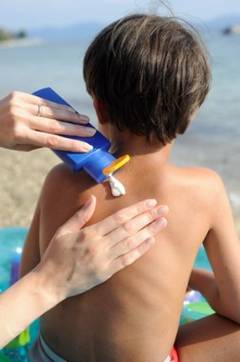
Attitudes toward sun exposure – and behaviors – change between childhood and adolescence, researchers have found, suggesting that children in this age bracket may be critical targets for physicians to advise.
Among children who were interviewed at age 10 years and again at 13, those in the elder group were only half as consistent in their sunscreen use as they had previously been, and were significantly more likely to report liking the appearance of a tan or seeking to become tan. Actual incidence of sunburn and tanning, meanwhile, remained high and largely unchanged between ages 10 and 13 years, with recent sunburns reported by more than half of children at both ages.
The findings, published online Jan. 23 in Pediatrics, were the first to examine sunburn and sun behaviors prospectively in this age group.
Stephen W. Dusza, Dr.P.H., of Memorial Sloan-Kettering Cancer Center in New York, led SONIC (Study of Nevi in Children), which used self-reported data from 360 students who were enrolled as fifth graders in Framingham, Mass., schools in 2004 and had complete data upon follow-up in 2007. High-resolution photography of the back was conducted for all subjects at both points. Almost three-fourths (74%) of the subjects analyzed were white, and males accounted for more than half the sample (62%).
At baseline in 2004, 53% of subjects reported having had a sunburn (defined as "pink or red skin") at least once the previous summer, and this proportion remained similar (55%) at follow-up, a nonsignificant difference. Actual incidence of tanning also changed little. At both baseline and follow-up, about 85% of students reported having gotten a tan the previous summer (Pediatrics 2012;129:309-17).
Sunscreen use, meanwhile, dropped sharply. In 2004, 50% of students reported that they used sunscreen "often or always" when outside for 6 or more hours in the summer. By 2007, only 25% reported the same, a significant difference.
The children in the study with the highest risk of developing skin cancer – those with pale skin – experienced the sharpest increase in reported sunburns, Dr. Dusza and his colleagues found. In 2007, fair-skinned children were 40% more likely to report two or more recent sunburns than in 2004. By contrast, children with light olive to black skin were 70% less likely to report two or more recent burns at follow-up, compared with baseline.
Some 53% of students reported "liking a tan" at age 10, but 66% did by age 13, a significant difference. And although 22% of 10-year-olds reported deliberately spending time in the sun to get a tan, a full 40% did so at follow up, also a significant difference. Girls were twice as likely to report liking a tan in 2007, compared with 2004 (odds ratio, 2.4). Boys also were more likely to report liking a tan when they reached age 13 (OR, 1.5).
The researchers acknowledged as weaknesses their study’s reliance on self-reported sun behaviors by children, noting that these reports have been shown to have "fair to moderate agreement" with direct observation.
Moreover, they said, nearly one-fourth of the children recruited in 2004 dropped out of the study because of relocation, and could not be included in the analysis. Among these were a disproportionate number of children with darker skins, an understudied group as far as sun behaviors are concerned. And finally, because the study did not seek reasons for sunscreen use or nonuse, "it was beyond the scope of this study to ascribe reasons for the drop in sunscreen use during these 3 years."
Despite these limitations, the findings strongly underscore the necessity of "new and creative messages" in both schools and physicians’ offices, with an aim to promote consistent sunscreen use and to deter tanning in this important age bracket, Dr. Dusza and his colleagues wrote in their analysis. In the United States, melanoma is reported to be one of the two most common cancers of young people, so it is important to encourage strong sun protection practices at young ages, the researchers noted.
In addition, "further studies are required to learn how to interweave enhanced sun-protection policies in settings such as beaches, after-school sites, and sporting events frequented by preadolescents and adolescents," the researchers wrote. Particular effort is needed to reach this group, they added, because adolescence "is a period of flexing independence, coupled with feelings of invincibility."
It also is important because the use of tanning beds, particularly for girls, is reported to begin at age 14, Dr. Dusza and his colleagues said.
Dr. Dusza and colleagues’ study was funded by the National Institutes of Health, as part of an ongoing study of nevi in children. Dr. Dusza and colleagues reported that they had no relevant financial disclosures.
Attitudes toward sun exposure – and behaviors – change between childhood and adolescence, researchers have found, suggesting that children in this age bracket may be critical targets for physicians to advise.
Among children who were interviewed at age 10 years and again at 13, those in the elder group were only half as consistent in their sunscreen use as they had previously been, and were significantly more likely to report liking the appearance of a tan or seeking to become tan. Actual incidence of sunburn and tanning, meanwhile, remained high and largely unchanged between ages 10 and 13 years, with recent sunburns reported by more than half of children at both ages.
The findings, published online Jan. 23 in Pediatrics, were the first to examine sunburn and sun behaviors prospectively in this age group.
Stephen W. Dusza, Dr.P.H., of Memorial Sloan-Kettering Cancer Center in New York, led SONIC (Study of Nevi in Children), which used self-reported data from 360 students who were enrolled as fifth graders in Framingham, Mass., schools in 2004 and had complete data upon follow-up in 2007. High-resolution photography of the back was conducted for all subjects at both points. Almost three-fourths (74%) of the subjects analyzed were white, and males accounted for more than half the sample (62%).
At baseline in 2004, 53% of subjects reported having had a sunburn (defined as "pink or red skin") at least once the previous summer, and this proportion remained similar (55%) at follow-up, a nonsignificant difference. Actual incidence of tanning also changed little. At both baseline and follow-up, about 85% of students reported having gotten a tan the previous summer (Pediatrics 2012;129:309-17).
Sunscreen use, meanwhile, dropped sharply. In 2004, 50% of students reported that they used sunscreen "often or always" when outside for 6 or more hours in the summer. By 2007, only 25% reported the same, a significant difference.
The children in the study with the highest risk of developing skin cancer – those with pale skin – experienced the sharpest increase in reported sunburns, Dr. Dusza and his colleagues found. In 2007, fair-skinned children were 40% more likely to report two or more recent sunburns than in 2004. By contrast, children with light olive to black skin were 70% less likely to report two or more recent burns at follow-up, compared with baseline.
Some 53% of students reported "liking a tan" at age 10, but 66% did by age 13, a significant difference. And although 22% of 10-year-olds reported deliberately spending time in the sun to get a tan, a full 40% did so at follow up, also a significant difference. Girls were twice as likely to report liking a tan in 2007, compared with 2004 (odds ratio, 2.4). Boys also were more likely to report liking a tan when they reached age 13 (OR, 1.5).
The researchers acknowledged as weaknesses their study’s reliance on self-reported sun behaviors by children, noting that these reports have been shown to have "fair to moderate agreement" with direct observation.
Moreover, they said, nearly one-fourth of the children recruited in 2004 dropped out of the study because of relocation, and could not be included in the analysis. Among these were a disproportionate number of children with darker skins, an understudied group as far as sun behaviors are concerned. And finally, because the study did not seek reasons for sunscreen use or nonuse, "it was beyond the scope of this study to ascribe reasons for the drop in sunscreen use during these 3 years."
Despite these limitations, the findings strongly underscore the necessity of "new and creative messages" in both schools and physicians’ offices, with an aim to promote consistent sunscreen use and to deter tanning in this important age bracket, Dr. Dusza and his colleagues wrote in their analysis. In the United States, melanoma is reported to be one of the two most common cancers of young people, so it is important to encourage strong sun protection practices at young ages, the researchers noted.
In addition, "further studies are required to learn how to interweave enhanced sun-protection policies in settings such as beaches, after-school sites, and sporting events frequented by preadolescents and adolescents," the researchers wrote. Particular effort is needed to reach this group, they added, because adolescence "is a period of flexing independence, coupled with feelings of invincibility."
It also is important because the use of tanning beds, particularly for girls, is reported to begin at age 14, Dr. Dusza and his colleagues said.
Dr. Dusza and colleagues’ study was funded by the National Institutes of Health, as part of an ongoing study of nevi in children. Dr. Dusza and colleagues reported that they had no relevant financial disclosures.
Attitudes toward sun exposure – and behaviors – change between childhood and adolescence, researchers have found, suggesting that children in this age bracket may be critical targets for physicians to advise.
Among children who were interviewed at age 10 years and again at 13, those in the elder group were only half as consistent in their sunscreen use as they had previously been, and were significantly more likely to report liking the appearance of a tan or seeking to become tan. Actual incidence of sunburn and tanning, meanwhile, remained high and largely unchanged between ages 10 and 13 years, with recent sunburns reported by more than half of children at both ages.
The findings, published online Jan. 23 in Pediatrics, were the first to examine sunburn and sun behaviors prospectively in this age group.
Stephen W. Dusza, Dr.P.H., of Memorial Sloan-Kettering Cancer Center in New York, led SONIC (Study of Nevi in Children), which used self-reported data from 360 students who were enrolled as fifth graders in Framingham, Mass., schools in 2004 and had complete data upon follow-up in 2007. High-resolution photography of the back was conducted for all subjects at both points. Almost three-fourths (74%) of the subjects analyzed were white, and males accounted for more than half the sample (62%).
At baseline in 2004, 53% of subjects reported having had a sunburn (defined as "pink or red skin") at least once the previous summer, and this proportion remained similar (55%) at follow-up, a nonsignificant difference. Actual incidence of tanning also changed little. At both baseline and follow-up, about 85% of students reported having gotten a tan the previous summer (Pediatrics 2012;129:309-17).
Sunscreen use, meanwhile, dropped sharply. In 2004, 50% of students reported that they used sunscreen "often or always" when outside for 6 or more hours in the summer. By 2007, only 25% reported the same, a significant difference.
The children in the study with the highest risk of developing skin cancer – those with pale skin – experienced the sharpest increase in reported sunburns, Dr. Dusza and his colleagues found. In 2007, fair-skinned children were 40% more likely to report two or more recent sunburns than in 2004. By contrast, children with light olive to black skin were 70% less likely to report two or more recent burns at follow-up, compared with baseline.
Some 53% of students reported "liking a tan" at age 10, but 66% did by age 13, a significant difference. And although 22% of 10-year-olds reported deliberately spending time in the sun to get a tan, a full 40% did so at follow up, also a significant difference. Girls were twice as likely to report liking a tan in 2007, compared with 2004 (odds ratio, 2.4). Boys also were more likely to report liking a tan when they reached age 13 (OR, 1.5).
The researchers acknowledged as weaknesses their study’s reliance on self-reported sun behaviors by children, noting that these reports have been shown to have "fair to moderate agreement" with direct observation.
Moreover, they said, nearly one-fourth of the children recruited in 2004 dropped out of the study because of relocation, and could not be included in the analysis. Among these were a disproportionate number of children with darker skins, an understudied group as far as sun behaviors are concerned. And finally, because the study did not seek reasons for sunscreen use or nonuse, "it was beyond the scope of this study to ascribe reasons for the drop in sunscreen use during these 3 years."
Despite these limitations, the findings strongly underscore the necessity of "new and creative messages" in both schools and physicians’ offices, with an aim to promote consistent sunscreen use and to deter tanning in this important age bracket, Dr. Dusza and his colleagues wrote in their analysis. In the United States, melanoma is reported to be one of the two most common cancers of young people, so it is important to encourage strong sun protection practices at young ages, the researchers noted.
In addition, "further studies are required to learn how to interweave enhanced sun-protection policies in settings such as beaches, after-school sites, and sporting events frequented by preadolescents and adolescents," the researchers wrote. Particular effort is needed to reach this group, they added, because adolescence "is a period of flexing independence, coupled with feelings of invincibility."
It also is important because the use of tanning beds, particularly for girls, is reported to begin at age 14, Dr. Dusza and his colleagues said.
Dr. Dusza and colleagues’ study was funded by the National Institutes of Health, as part of an ongoing study of nevi in children. Dr. Dusza and colleagues reported that they had no relevant financial disclosures.
FROM PEDIATRICS
Major finding: At baseline in 2004, 53% of subjects reported having had a sunburn at least once the previous summer, and this proportion remained similar (55%) at follow-up. In 2004, 50% of students reported that they used sunscreen "often or always" when outside for 6 or more hours in the summer. By 2007, only 25% reported the same, a significant difference.
Data Source: Linked data from 360 children interviewed at age 10 years and again at age 13 at schools in Framingham, Mass.
Disclosures: The study was funded by the National Institutes of Health, as part of an ongoing study of nevi in children. Dr. Dusza and colleagues reported that they had no relevant financial disclosures.
Skin Cancer Tops Malpractice Claims in Florida
ORLANDO – A higher than expected number of malpractice claims related to dermatologic surgery and treatment of psoriasis – as well as relatively few related to cosmetic dermatology were among the surprises revealed in a review of closed malpractice claims in Florida.
"There is a significant risk of malpractice actions in dermatology and dermatologic surgery," Dr. Ferdinand F. Becker said at the meeting. "Dermatologic surgeons would be well advised to be vigilant in diagnosis and appropriate treatment with the goal of avoiding complications at all cost."
General Dermatology Claims
Of 180 claims against dermatologists and dermatologic surgeons over a decade, 43 claims or 24% involved a general dermatology treatment. Of these, "44% were adjudicated or settled in favor of the plaintiff and 56% in favor of the defendant, so we came out better there," Dr. Becker said.
A total of 18 cases were adjudicated or settled in favor of the plaintiff – including 2 settled for an unknown amount. The largest settlement, $1 million, went to a patient who complained of meningoencephalitis and cerebral palsy secondary to failure to diagnose herpes simplex virus (conjunctival herpes simplex virus was the initial diagnosis). "This was the biggest claim in the whole shooting match," Dr. Becker said.
Another 25 of the general dermatology cases were decided or settled for the defendant physician, including 22 suits dropped by the plaintiff. Of the three remaining cases, two were summary judgments for the defendant and one judgment awarded the physician $50,000. In this case, the plaintiff had claimed avascular necrosis from treatment of chronic dermatitis with long-term steroid therapy.
Of note, a failure to diagnose Lyme disease when a patient presented with a rash of the axilla and groin resulted in a judgment for the plaintiff for $20,000, Dr. Becker said.
Psoriasis Claims
Dr. Becker identified seven claims involving psoriasis when he culled through the closed claims data from Florida’s Office of Insurance Regulation from January 2000 to December 2009. "I made a separate category for psoriasis because ... treatment of psoriasis is particularly problematic in general dermatology."
Four psoriasis treatment claims were settled in favor of the plaintiff from $500 to $250,000. The largest settlement involved a complaint of Stevens-Johnson syndrome with skin sloughing, oozing, and weeping sores resulting from methotrexate treatment. The defendant physician prevailed in three other cases – two dropped lawsuits and one summary judgment in which the patient had claimed steroids used to treat psoriasis had caused osteoporosis.
Cosmetic Dermatology Claims
A total of 28 claims or 16% involved cosmetic dermatology procedures. Outcomes were approximately split, with 54% adjudicated or settled in favor of the plaintiff and 46% in favor of the defendant.
"The majority were cases of laser hair removal," said Dr. Becker, a facial plastic surgeon and otolaryngologist in private practice in Vero Beach, Fla. Twelve of the 17 claims for laser hair removal were settled for the plaintiff for $2,500-$90,000. The biggest settlement followed a complaint of depigmentation and scarring related to laser hair removal. The remaining five laser cases involved complaints of burning, scarring, and/or pigmentary changes and were subsequently dropped by the plaintiff.
Dr, Becker found five suits involving Botox and filler treatments, each dropped by the plaintiff in favor of the defendant. Three plaintiffs claimed adverse reactions, one was unhappy with results, and one "patient left unattended after treatment, fell to the floor and broke three teeth, injured jaw, and cut lip."
Based on this lower number of malpractice claims, Botox and filler treatment "appears to be quite safe," Dr. Becker said.
The cosmetic dermatology category also included three claims involving liposuction, two settled in favor of the plaintiff and the other – a patient unhappy with abdominal liposuction results – dropped.
There was also a case involving sclerotherapy settled for $13,195 in favor of the plaintiff. The patient in this case claimed chronic ulceration resulting from treatment of spider veins.
A claim of pain, suffering, and a need for reconstructive surgery associated with a blepharoplasty resulted in a settlement of $100,000 for the plaintiff. Another suit, filed after a chemical facial peel, alleged facial burns and scarring ensued when the physician’s aesthetician acted outside the scope of her job.
Skin Cancer Claims
The highest percentage of claims in Florida (57%) involved skin cancer diagnosis and treatment. Of these, 57% were settled or adjudicated in favor of the plaintiff, 35% in favor of the defendant, and 8% were settled out of court for an unknown amount.
The greatest amount paid for non-melanoma skin cancer, $500,000, involved a patient treated with a biopsy and excision of a basal cell carcinoma on the upper lip. The patient filed suit, claiming they had to be referred for Mohs surgery and then experienced extensive scarring.
This and 19 other non-melanoma skin cancer malpractice claims were settled in favor of the plaintiff; 3 resulted in summary judgments for the defendant; 8 were settled out of court; and 15 suits were dropped by the plaintiff in favor of the physician defendant.
Melanoma diagnosis and/or treatment were cited in 17 malpractice cases. The second largest settlement to a plaintiff (out of the 180 cases reported) was $900,000 to a patient with malignant melanoma who had a biopsy but no pathology results or other follow-up. This and six other melanoma cases were settled in favor of the plaintiff. One case went to court and the plaintiff received $679,000 for severe scarring of his/her back related to malignant melanoma.
Another four melanoma cases were settled for an unknown amount and five claims were dropped by the plaintiff in favor of the defendant.
Mohs Surgery Claims
Mohs surgery comprised another major category with 29 malpractice claims. The largest settlement for a plaintiff was $875,000, stemming from Mohs surgery to remove a tumor from the arm. The patient lost the arm and claimed the dermatologic surgeon failed to diagnose malignant fibrous histiocytoma.
Two Mohs surgery claims were adjudicated as summary judgments for the defendant. Another ten cases were suits dropped by the plaintiff in favor of the defendant physician.
"This is the opposite of what I expected. I thought there would be more cases in the cosmetic derm area and less in derm surgery," Dr. Terry Cronin Jr., a private practice dermatologist in Melbourne, Fla., said during a Q and A session.
"I was surprised about this, too," Dr. Becker replied.
Overall, only 11 of the 180 closed claims actually went to court. Dr. Becker said, "The large majority [eight of these] were settled by the court with a summary judgment. This is the best news."
A meeting attendee asked if it is better to be direct with the patient or to call a lawyer if something does not go well. Dr. Becker replied: "Talking to your patient directly is a good idea and talking to your lawyer is also a good idea."
Dr. Becker said he had no relevant financial disclosures.
ORLANDO – A higher than expected number of malpractice claims related to dermatologic surgery and treatment of psoriasis – as well as relatively few related to cosmetic dermatology were among the surprises revealed in a review of closed malpractice claims in Florida.
"There is a significant risk of malpractice actions in dermatology and dermatologic surgery," Dr. Ferdinand F. Becker said at the meeting. "Dermatologic surgeons would be well advised to be vigilant in diagnosis and appropriate treatment with the goal of avoiding complications at all cost."
General Dermatology Claims
Of 180 claims against dermatologists and dermatologic surgeons over a decade, 43 claims or 24% involved a general dermatology treatment. Of these, "44% were adjudicated or settled in favor of the plaintiff and 56% in favor of the defendant, so we came out better there," Dr. Becker said.
A total of 18 cases were adjudicated or settled in favor of the plaintiff – including 2 settled for an unknown amount. The largest settlement, $1 million, went to a patient who complained of meningoencephalitis and cerebral palsy secondary to failure to diagnose herpes simplex virus (conjunctival herpes simplex virus was the initial diagnosis). "This was the biggest claim in the whole shooting match," Dr. Becker said.
Another 25 of the general dermatology cases were decided or settled for the defendant physician, including 22 suits dropped by the plaintiff. Of the three remaining cases, two were summary judgments for the defendant and one judgment awarded the physician $50,000. In this case, the plaintiff had claimed avascular necrosis from treatment of chronic dermatitis with long-term steroid therapy.
Of note, a failure to diagnose Lyme disease when a patient presented with a rash of the axilla and groin resulted in a judgment for the plaintiff for $20,000, Dr. Becker said.
Psoriasis Claims
Dr. Becker identified seven claims involving psoriasis when he culled through the closed claims data from Florida’s Office of Insurance Regulation from January 2000 to December 2009. "I made a separate category for psoriasis because ... treatment of psoriasis is particularly problematic in general dermatology."
Four psoriasis treatment claims were settled in favor of the plaintiff from $500 to $250,000. The largest settlement involved a complaint of Stevens-Johnson syndrome with skin sloughing, oozing, and weeping sores resulting from methotrexate treatment. The defendant physician prevailed in three other cases – two dropped lawsuits and one summary judgment in which the patient had claimed steroids used to treat psoriasis had caused osteoporosis.
Cosmetic Dermatology Claims
A total of 28 claims or 16% involved cosmetic dermatology procedures. Outcomes were approximately split, with 54% adjudicated or settled in favor of the plaintiff and 46% in favor of the defendant.
"The majority were cases of laser hair removal," said Dr. Becker, a facial plastic surgeon and otolaryngologist in private practice in Vero Beach, Fla. Twelve of the 17 claims for laser hair removal were settled for the plaintiff for $2,500-$90,000. The biggest settlement followed a complaint of depigmentation and scarring related to laser hair removal. The remaining five laser cases involved complaints of burning, scarring, and/or pigmentary changes and were subsequently dropped by the plaintiff.
Dr, Becker found five suits involving Botox and filler treatments, each dropped by the plaintiff in favor of the defendant. Three plaintiffs claimed adverse reactions, one was unhappy with results, and one "patient left unattended after treatment, fell to the floor and broke three teeth, injured jaw, and cut lip."
Based on this lower number of malpractice claims, Botox and filler treatment "appears to be quite safe," Dr. Becker said.
The cosmetic dermatology category also included three claims involving liposuction, two settled in favor of the plaintiff and the other – a patient unhappy with abdominal liposuction results – dropped.
There was also a case involving sclerotherapy settled for $13,195 in favor of the plaintiff. The patient in this case claimed chronic ulceration resulting from treatment of spider veins.
A claim of pain, suffering, and a need for reconstructive surgery associated with a blepharoplasty resulted in a settlement of $100,000 for the plaintiff. Another suit, filed after a chemical facial peel, alleged facial burns and scarring ensued when the physician’s aesthetician acted outside the scope of her job.
Skin Cancer Claims
The highest percentage of claims in Florida (57%) involved skin cancer diagnosis and treatment. Of these, 57% were settled or adjudicated in favor of the plaintiff, 35% in favor of the defendant, and 8% were settled out of court for an unknown amount.
The greatest amount paid for non-melanoma skin cancer, $500,000, involved a patient treated with a biopsy and excision of a basal cell carcinoma on the upper lip. The patient filed suit, claiming they had to be referred for Mohs surgery and then experienced extensive scarring.
This and 19 other non-melanoma skin cancer malpractice claims were settled in favor of the plaintiff; 3 resulted in summary judgments for the defendant; 8 were settled out of court; and 15 suits were dropped by the plaintiff in favor of the physician defendant.
Melanoma diagnosis and/or treatment were cited in 17 malpractice cases. The second largest settlement to a plaintiff (out of the 180 cases reported) was $900,000 to a patient with malignant melanoma who had a biopsy but no pathology results or other follow-up. This and six other melanoma cases were settled in favor of the plaintiff. One case went to court and the plaintiff received $679,000 for severe scarring of his/her back related to malignant melanoma.
Another four melanoma cases were settled for an unknown amount and five claims were dropped by the plaintiff in favor of the defendant.
Mohs Surgery Claims
Mohs surgery comprised another major category with 29 malpractice claims. The largest settlement for a plaintiff was $875,000, stemming from Mohs surgery to remove a tumor from the arm. The patient lost the arm and claimed the dermatologic surgeon failed to diagnose malignant fibrous histiocytoma.
Two Mohs surgery claims were adjudicated as summary judgments for the defendant. Another ten cases were suits dropped by the plaintiff in favor of the defendant physician.
"This is the opposite of what I expected. I thought there would be more cases in the cosmetic derm area and less in derm surgery," Dr. Terry Cronin Jr., a private practice dermatologist in Melbourne, Fla., said during a Q and A session.
"I was surprised about this, too," Dr. Becker replied.
Overall, only 11 of the 180 closed claims actually went to court. Dr. Becker said, "The large majority [eight of these] were settled by the court with a summary judgment. This is the best news."
A meeting attendee asked if it is better to be direct with the patient or to call a lawyer if something does not go well. Dr. Becker replied: "Talking to your patient directly is a good idea and talking to your lawyer is also a good idea."
Dr. Becker said he had no relevant financial disclosures.
ORLANDO – A higher than expected number of malpractice claims related to dermatologic surgery and treatment of psoriasis – as well as relatively few related to cosmetic dermatology were among the surprises revealed in a review of closed malpractice claims in Florida.
"There is a significant risk of malpractice actions in dermatology and dermatologic surgery," Dr. Ferdinand F. Becker said at the meeting. "Dermatologic surgeons would be well advised to be vigilant in diagnosis and appropriate treatment with the goal of avoiding complications at all cost."
General Dermatology Claims
Of 180 claims against dermatologists and dermatologic surgeons over a decade, 43 claims or 24% involved a general dermatology treatment. Of these, "44% were adjudicated or settled in favor of the plaintiff and 56% in favor of the defendant, so we came out better there," Dr. Becker said.
A total of 18 cases were adjudicated or settled in favor of the plaintiff – including 2 settled for an unknown amount. The largest settlement, $1 million, went to a patient who complained of meningoencephalitis and cerebral palsy secondary to failure to diagnose herpes simplex virus (conjunctival herpes simplex virus was the initial diagnosis). "This was the biggest claim in the whole shooting match," Dr. Becker said.
Another 25 of the general dermatology cases were decided or settled for the defendant physician, including 22 suits dropped by the plaintiff. Of the three remaining cases, two were summary judgments for the defendant and one judgment awarded the physician $50,000. In this case, the plaintiff had claimed avascular necrosis from treatment of chronic dermatitis with long-term steroid therapy.
Of note, a failure to diagnose Lyme disease when a patient presented with a rash of the axilla and groin resulted in a judgment for the plaintiff for $20,000, Dr. Becker said.
Psoriasis Claims
Dr. Becker identified seven claims involving psoriasis when he culled through the closed claims data from Florida’s Office of Insurance Regulation from January 2000 to December 2009. "I made a separate category for psoriasis because ... treatment of psoriasis is particularly problematic in general dermatology."
Four psoriasis treatment claims were settled in favor of the plaintiff from $500 to $250,000. The largest settlement involved a complaint of Stevens-Johnson syndrome with skin sloughing, oozing, and weeping sores resulting from methotrexate treatment. The defendant physician prevailed in three other cases – two dropped lawsuits and one summary judgment in which the patient had claimed steroids used to treat psoriasis had caused osteoporosis.
Cosmetic Dermatology Claims
A total of 28 claims or 16% involved cosmetic dermatology procedures. Outcomes were approximately split, with 54% adjudicated or settled in favor of the plaintiff and 46% in favor of the defendant.
"The majority were cases of laser hair removal," said Dr. Becker, a facial plastic surgeon and otolaryngologist in private practice in Vero Beach, Fla. Twelve of the 17 claims for laser hair removal were settled for the plaintiff for $2,500-$90,000. The biggest settlement followed a complaint of depigmentation and scarring related to laser hair removal. The remaining five laser cases involved complaints of burning, scarring, and/or pigmentary changes and were subsequently dropped by the plaintiff.
Dr, Becker found five suits involving Botox and filler treatments, each dropped by the plaintiff in favor of the defendant. Three plaintiffs claimed adverse reactions, one was unhappy with results, and one "patient left unattended after treatment, fell to the floor and broke three teeth, injured jaw, and cut lip."
Based on this lower number of malpractice claims, Botox and filler treatment "appears to be quite safe," Dr. Becker said.
The cosmetic dermatology category also included three claims involving liposuction, two settled in favor of the plaintiff and the other – a patient unhappy with abdominal liposuction results – dropped.
There was also a case involving sclerotherapy settled for $13,195 in favor of the plaintiff. The patient in this case claimed chronic ulceration resulting from treatment of spider veins.
A claim of pain, suffering, and a need for reconstructive surgery associated with a blepharoplasty resulted in a settlement of $100,000 for the plaintiff. Another suit, filed after a chemical facial peel, alleged facial burns and scarring ensued when the physician’s aesthetician acted outside the scope of her job.
Skin Cancer Claims
The highest percentage of claims in Florida (57%) involved skin cancer diagnosis and treatment. Of these, 57% were settled or adjudicated in favor of the plaintiff, 35% in favor of the defendant, and 8% were settled out of court for an unknown amount.
The greatest amount paid for non-melanoma skin cancer, $500,000, involved a patient treated with a biopsy and excision of a basal cell carcinoma on the upper lip. The patient filed suit, claiming they had to be referred for Mohs surgery and then experienced extensive scarring.
This and 19 other non-melanoma skin cancer malpractice claims were settled in favor of the plaintiff; 3 resulted in summary judgments for the defendant; 8 were settled out of court; and 15 suits were dropped by the plaintiff in favor of the physician defendant.
Melanoma diagnosis and/or treatment were cited in 17 malpractice cases. The second largest settlement to a plaintiff (out of the 180 cases reported) was $900,000 to a patient with malignant melanoma who had a biopsy but no pathology results or other follow-up. This and six other melanoma cases were settled in favor of the plaintiff. One case went to court and the plaintiff received $679,000 for severe scarring of his/her back related to malignant melanoma.
Another four melanoma cases were settled for an unknown amount and five claims were dropped by the plaintiff in favor of the defendant.
Mohs Surgery Claims
Mohs surgery comprised another major category with 29 malpractice claims. The largest settlement for a plaintiff was $875,000, stemming from Mohs surgery to remove a tumor from the arm. The patient lost the arm and claimed the dermatologic surgeon failed to diagnose malignant fibrous histiocytoma.
Two Mohs surgery claims were adjudicated as summary judgments for the defendant. Another ten cases were suits dropped by the plaintiff in favor of the defendant physician.
"This is the opposite of what I expected. I thought there would be more cases in the cosmetic derm area and less in derm surgery," Dr. Terry Cronin Jr., a private practice dermatologist in Melbourne, Fla., said during a Q and A session.
"I was surprised about this, too," Dr. Becker replied.
Overall, only 11 of the 180 closed claims actually went to court. Dr. Becker said, "The large majority [eight of these] were settled by the court with a summary judgment. This is the best news."
A meeting attendee asked if it is better to be direct with the patient or to call a lawyer if something does not go well. Dr. Becker replied: "Talking to your patient directly is a good idea and talking to your lawyer is also a good idea."
Dr. Becker said he had no relevant financial disclosures.
FROM THE ANNUAL MEETING OF THE FLORIDA SOCIETY OF DERMATOLOGIC SURGEONS
Major Finding: Skin cancer diagnosis and treatment led malpractice claims against dermatologists in Florida, accounting for 57% of 180 lawsuits.
Data Source: Review of malpractice claims reported to Florida’s Office of Insurance Regulation from January 2000 to December 2009.
Disclosures: Dr. Becker said that he had no relevant disclosures.
Blog: Top Five Most Watched Dermatology Videos
What were dermatologists watching from Skin & Allergy News in 2011? Here's the top five countdown.
5. New Drugs Help Melanoma Patients Live Longer: Dr. Lynn Schuchter puts the studies, which were presented at the 2011 ASCO Annual Meeting in Chicago, in perspective and offers advice to physicians.
4. Laviv May Offer Longer-Term Acne Scarring Tx: Azficel-T, an autologous cellular product, produced significant improvement in acne scarring, compared with placebo, according to study results reported at the annual meeting of the American Society for Dermatologic Surgery. Laviv was approved by the FDA earlier this year for treating wrinkles. We interviewed Dr. Girish Munavalli, a study investigator, at the meeting.
3. How to ID and Treat Fire Ant Bites: Dr. Ronald Rapini offered advice on recognizing and treating fire ant bites at the American Academy of Dermatology's Summer Academy meeting in New York.
2. Eczema and Food Allergies Often Go Hand and Hand: Dr. Lawrence Eichenfield talked about atopic dermatitis, food allergies, and national guidelines at the American Academy of Dermatology's Summer Academy meeting in New York.
Drum roll please…
1. Gel Nail Polish: The Painted Truth: Dr. Richard K. Scher discussed the dangers of gel nail polish, and also gave tips to share with patients on how to have a safe experience at the nail salon at the American Academy of Dermatology's Summer Academy meeting in New York.
What were dermatologists watching from Skin & Allergy News in 2011? Here's the top five countdown.
5. New Drugs Help Melanoma Patients Live Longer: Dr. Lynn Schuchter puts the studies, which were presented at the 2011 ASCO Annual Meeting in Chicago, in perspective and offers advice to physicians.
4. Laviv May Offer Longer-Term Acne Scarring Tx: Azficel-T, an autologous cellular product, produced significant improvement in acne scarring, compared with placebo, according to study results reported at the annual meeting of the American Society for Dermatologic Surgery. Laviv was approved by the FDA earlier this year for treating wrinkles. We interviewed Dr. Girish Munavalli, a study investigator, at the meeting.
3. How to ID and Treat Fire Ant Bites: Dr. Ronald Rapini offered advice on recognizing and treating fire ant bites at the American Academy of Dermatology's Summer Academy meeting in New York.
2. Eczema and Food Allergies Often Go Hand and Hand: Dr. Lawrence Eichenfield talked about atopic dermatitis, food allergies, and national guidelines at the American Academy of Dermatology's Summer Academy meeting in New York.
Drum roll please…
1. Gel Nail Polish: The Painted Truth: Dr. Richard K. Scher discussed the dangers of gel nail polish, and also gave tips to share with patients on how to have a safe experience at the nail salon at the American Academy of Dermatology's Summer Academy meeting in New York.
What were dermatologists watching from Skin & Allergy News in 2011? Here's the top five countdown.
5. New Drugs Help Melanoma Patients Live Longer: Dr. Lynn Schuchter puts the studies, which were presented at the 2011 ASCO Annual Meeting in Chicago, in perspective and offers advice to physicians.
4. Laviv May Offer Longer-Term Acne Scarring Tx: Azficel-T, an autologous cellular product, produced significant improvement in acne scarring, compared with placebo, according to study results reported at the annual meeting of the American Society for Dermatologic Surgery. Laviv was approved by the FDA earlier this year for treating wrinkles. We interviewed Dr. Girish Munavalli, a study investigator, at the meeting.
3. How to ID and Treat Fire Ant Bites: Dr. Ronald Rapini offered advice on recognizing and treating fire ant bites at the American Academy of Dermatology's Summer Academy meeting in New York.
2. Eczema and Food Allergies Often Go Hand and Hand: Dr. Lawrence Eichenfield talked about atopic dermatitis, food allergies, and national guidelines at the American Academy of Dermatology's Summer Academy meeting in New York.
Drum roll please…
1. Gel Nail Polish: The Painted Truth: Dr. Richard K. Scher discussed the dangers of gel nail polish, and also gave tips to share with patients on how to have a safe experience at the nail salon at the American Academy of Dermatology's Summer Academy meeting in New York.
The Top 10 Stories on OncologyReport.com in 2011
Catch up with what you missed as we count down the 10 most-read stories on OncologyReport.com last year.
10. Everolimus Posts Big Win in ER-Positive Breast Cancer By Patrice Wendling
This first report of the BOLERO-2 trial -- a potential practice changer -- came out of the European Multidisciplinary Cancer Congress in Stockholm.

9. Multimodal DCIS Therapy, Tamoxifen Cuts Breast Cancer Deaths By Neil Osterweil
A meta-analysis from Australia found that adding radiotherapy and tamoxifen to breast-conserving surgery significantly reduces the local recurrence rate and the breast cancer–specific death rate in women with ductal carcinoma in situ. It was presented at the American Society of Radiation Oncology (ASTRO) meeitng in Miami Beach.
8. Crizotinib Approval Personalizes Lung Cancer Therapy By Miriam E. Tucker
The swift approval of crizotinib capsules by the Food and Drug Administration as the first and only targeted therapy for locally advanced or metastatic ALK-positive non–small cell lung cancer represented another milestone in biomarker-driven, personalized medicine. Crizotinib was approved, along with a companion diagnostic test, Abbott Molecular’s Vysis ALK Break Apart FISH Probe Kit, which identifies the anaplastic lymphoma kinase (ALK) fusion gene that the drug targets.
7. Clinicians Slow to Embrace Sipuleucel-T for Prostate Cancer By Diana Mahoney
Most physicians have strong opinions on sipuleucel-T, including dubbing its approval "a milestone in the history of oncology," but many of them refused to speak about it on the record. Our persistent reporter found the reasons for their reluctance to use the first cancer vaccine went beyond reimbursement issues belabored in the financial press.
6. Drug Shortages Increasingly Take Toll on Care By Elizabeth Mechcatie
With their increasing prevalence, drug shortages in the United States have led to delays in treatment, forced the use of less effective alternatives, and encouraged a burgeoning gray market that sells tough-to-obtain medications at highly inflated prices, according to stakeholders gathered at a recent Food and Drug Administration meeting.
5. Practice Changers Expected at San Antonio Breast Cancer Symposium By Jane Salodof MacNeil
The 2011 San Antonio Breast Cancer Symposium featured a hefty number of studies that could change clinical practice. One of the most exciting SABCS meetings in recent years, it featured the phase III BOLERO-2 and CLEOPATRA trials, a new Oncotype DX assay for ductal carcinoma in situ, reports from four bisphosphonate trials, and a controversial brachytherapy study.
4. FDA Approves Brentuximab for Two Lymphomas By Elizabeth Mechcatie
The Food and Drug Administration on Aug. 19 gave an accelerated approval to brentuximab, a CD30-directed antibody drug-conjugate, for the treatment of Hodgkin’s lymphoma and systemic anaplastic large-cell lymphoma, after other treatments have failed.
3. FDA Approves Vemurafenib for Advanced Melanoma By Jane Salodof MacNeil
The Food and Drug Administration announced on August 17 the approval of vemurafenib, a highly anticipated metastatic melanoma therapy that targets the BRAF V600E mutation found in 40%-60% of patients. It also approved the cobas 4800 BRAF V600 Mutation Test, a companion diagnostic test designed to help determine whether a patient’s melanoma cells carry the BRAF V600E mutation.
2. Novel Therapies Put Multiple Myeloma 'On the Ropes' By Susan London
A sweep of new agents are poised to deliver what could be a knock-out blow to multiple myeloma, according to the director of the myeloma program at the University of California, San Francisco. Some are second- or third-generation agents in a mainstay class that appear to have less toxicity than and/or overcome resistance to their predecessors, Dr. Jeffrey L. Wolf said at the annual Oncology Congress in San Francisco. Others come from classes not previously used in this disease.
1. NICE Rejects Ipilimumab by Jennie Smith
A drug considered a breakthrough treatment for advanced melanoma was turned down by England’s clinical and cost-effectiveness agency. The National Institute for Health and Clinical Excellence, which makes recommendations to the National Health Service in England and Wales, said that it was not likely to recommend ipilimumab (Bristol-Myers Squibb’s Yervoy). The agency cited cost concerns and what it called insufficient follow-up results from a manufacturer-sponsored, phase III, randomized, placebo-controlled trial of ipilimumab.
Did you miss any of last year's top reads in oncology? Click here to receive our weekly e-newsletter.
Catch up with what you missed as we count down the 10 most-read stories on OncologyReport.com last year.
10. Everolimus Posts Big Win in ER-Positive Breast Cancer By Patrice Wendling
This first report of the BOLERO-2 trial -- a potential practice changer -- came out of the European Multidisciplinary Cancer Congress in Stockholm.
9. Multimodal DCIS Therapy, Tamoxifen Cuts Breast Cancer Deaths By Neil Osterweil
A meta-analysis from Australia found that adding radiotherapy and tamoxifen to breast-conserving surgery significantly reduces the local recurrence rate and the breast cancer–specific death rate in women with ductal carcinoma in situ. It was presented at the American Society of Radiation Oncology (ASTRO) meeitng in Miami Beach.
8. Crizotinib Approval Personalizes Lung Cancer Therapy By Miriam E. Tucker
The swift approval of crizotinib capsules by the Food and Drug Administration as the first and only targeted therapy for locally advanced or metastatic ALK-positive non–small cell lung cancer represented another milestone in biomarker-driven, personalized medicine. Crizotinib was approved, along with a companion diagnostic test, Abbott Molecular’s Vysis ALK Break Apart FISH Probe Kit, which identifies the anaplastic lymphoma kinase (ALK) fusion gene that the drug targets.
7. Clinicians Slow to Embrace Sipuleucel-T for Prostate Cancer By Diana Mahoney
Most physicians have strong opinions on sipuleucel-T, including dubbing its approval "a milestone in the history of oncology," but many of them refused to speak about it on the record. Our persistent reporter found the reasons for their reluctance to use the first cancer vaccine went beyond reimbursement issues belabored in the financial press.
6. Drug Shortages Increasingly Take Toll on Care By Elizabeth Mechcatie
With their increasing prevalence, drug shortages in the United States have led to delays in treatment, forced the use of less effective alternatives, and encouraged a burgeoning gray market that sells tough-to-obtain medications at highly inflated prices, according to stakeholders gathered at a recent Food and Drug Administration meeting.
5. Practice Changers Expected at San Antonio Breast Cancer Symposium By Jane Salodof MacNeil
The 2011 San Antonio Breast Cancer Symposium featured a hefty number of studies that could change clinical practice. One of the most exciting SABCS meetings in recent years, it featured the phase III BOLERO-2 and CLEOPATRA trials, a new Oncotype DX assay for ductal carcinoma in situ, reports from four bisphosphonate trials, and a controversial brachytherapy study.
4. FDA Approves Brentuximab for Two Lymphomas By Elizabeth Mechcatie
The Food and Drug Administration on Aug. 19 gave an accelerated approval to brentuximab, a CD30-directed antibody drug-conjugate, for the treatment of Hodgkin’s lymphoma and systemic anaplastic large-cell lymphoma, after other treatments have failed.
3. FDA Approves Vemurafenib for Advanced Melanoma By Jane Salodof MacNeil
The Food and Drug Administration announced on August 17 the approval of vemurafenib, a highly anticipated metastatic melanoma therapy that targets the BRAF V600E mutation found in 40%-60% of patients. It also approved the cobas 4800 BRAF V600 Mutation Test, a companion diagnostic test designed to help determine whether a patient’s melanoma cells carry the BRAF V600E mutation.
2. Novel Therapies Put Multiple Myeloma 'On the Ropes' By Susan London
A sweep of new agents are poised to deliver what could be a knock-out blow to multiple myeloma, according to the director of the myeloma program at the University of California, San Francisco. Some are second- or third-generation agents in a mainstay class that appear to have less toxicity than and/or overcome resistance to their predecessors, Dr. Jeffrey L. Wolf said at the annual Oncology Congress in San Francisco. Others come from classes not previously used in this disease.
1. NICE Rejects Ipilimumab by Jennie Smith
A drug considered a breakthrough treatment for advanced melanoma was turned down by England’s clinical and cost-effectiveness agency. The National Institute for Health and Clinical Excellence, which makes recommendations to the National Health Service in England and Wales, said that it was not likely to recommend ipilimumab (Bristol-Myers Squibb’s Yervoy). The agency cited cost concerns and what it called insufficient follow-up results from a manufacturer-sponsored, phase III, randomized, placebo-controlled trial of ipilimumab.
Did you miss any of last year's top reads in oncology? Click here to receive our weekly e-newsletter.
Catch up with what you missed as we count down the 10 most-read stories on OncologyReport.com last year.
10. Everolimus Posts Big Win in ER-Positive Breast Cancer By Patrice Wendling
This first report of the BOLERO-2 trial -- a potential practice changer -- came out of the European Multidisciplinary Cancer Congress in Stockholm.
9. Multimodal DCIS Therapy, Tamoxifen Cuts Breast Cancer Deaths By Neil Osterweil
A meta-analysis from Australia found that adding radiotherapy and tamoxifen to breast-conserving surgery significantly reduces the local recurrence rate and the breast cancer–specific death rate in women with ductal carcinoma in situ. It was presented at the American Society of Radiation Oncology (ASTRO) meeitng in Miami Beach.
8. Crizotinib Approval Personalizes Lung Cancer Therapy By Miriam E. Tucker
The swift approval of crizotinib capsules by the Food and Drug Administration as the first and only targeted therapy for locally advanced or metastatic ALK-positive non–small cell lung cancer represented another milestone in biomarker-driven, personalized medicine. Crizotinib was approved, along with a companion diagnostic test, Abbott Molecular’s Vysis ALK Break Apart FISH Probe Kit, which identifies the anaplastic lymphoma kinase (ALK) fusion gene that the drug targets.
7. Clinicians Slow to Embrace Sipuleucel-T for Prostate Cancer By Diana Mahoney
Most physicians have strong opinions on sipuleucel-T, including dubbing its approval "a milestone in the history of oncology," but many of them refused to speak about it on the record. Our persistent reporter found the reasons for their reluctance to use the first cancer vaccine went beyond reimbursement issues belabored in the financial press.
6. Drug Shortages Increasingly Take Toll on Care By Elizabeth Mechcatie
With their increasing prevalence, drug shortages in the United States have led to delays in treatment, forced the use of less effective alternatives, and encouraged a burgeoning gray market that sells tough-to-obtain medications at highly inflated prices, according to stakeholders gathered at a recent Food and Drug Administration meeting.
5. Practice Changers Expected at San Antonio Breast Cancer Symposium By Jane Salodof MacNeil
The 2011 San Antonio Breast Cancer Symposium featured a hefty number of studies that could change clinical practice. One of the most exciting SABCS meetings in recent years, it featured the phase III BOLERO-2 and CLEOPATRA trials, a new Oncotype DX assay for ductal carcinoma in situ, reports from four bisphosphonate trials, and a controversial brachytherapy study.
4. FDA Approves Brentuximab for Two Lymphomas By Elizabeth Mechcatie
The Food and Drug Administration on Aug. 19 gave an accelerated approval to brentuximab, a CD30-directed antibody drug-conjugate, for the treatment of Hodgkin’s lymphoma and systemic anaplastic large-cell lymphoma, after other treatments have failed.
3. FDA Approves Vemurafenib for Advanced Melanoma By Jane Salodof MacNeil
The Food and Drug Administration announced on August 17 the approval of vemurafenib, a highly anticipated metastatic melanoma therapy that targets the BRAF V600E mutation found in 40%-60% of patients. It also approved the cobas 4800 BRAF V600 Mutation Test, a companion diagnostic test designed to help determine whether a patient’s melanoma cells carry the BRAF V600E mutation.
2. Novel Therapies Put Multiple Myeloma 'On the Ropes' By Susan London
A sweep of new agents are poised to deliver what could be a knock-out blow to multiple myeloma, according to the director of the myeloma program at the University of California, San Francisco. Some are second- or third-generation agents in a mainstay class that appear to have less toxicity than and/or overcome resistance to their predecessors, Dr. Jeffrey L. Wolf said at the annual Oncology Congress in San Francisco. Others come from classes not previously used in this disease.
1. NICE Rejects Ipilimumab by Jennie Smith
A drug considered a breakthrough treatment for advanced melanoma was turned down by England’s clinical and cost-effectiveness agency. The National Institute for Health and Clinical Excellence, which makes recommendations to the National Health Service in England and Wales, said that it was not likely to recommend ipilimumab (Bristol-Myers Squibb’s Yervoy). The agency cited cost concerns and what it called insufficient follow-up results from a manufacturer-sponsored, phase III, randomized, placebo-controlled trial of ipilimumab.
Did you miss any of last year's top reads in oncology? Click here to receive our weekly e-newsletter.
Blog: Cosmeceutical Experts Agree on Best Anti-Aging Product
Three of the top experts on cosmeceuticals agreed that the best over-the-counter, anti-aging products come down to two simple words: "moisturizer" and "sunscreen."
There is oh, so much more out there being sold in the $9 billion/year skin care market, much of which are anti-aging products. But the skin regimen that provides the biggest bang for the buck: moisturizer and sunscreen. Spend $100 on a product, and chances are its moisturizer and sunscreen anyway.
Speaking in separate presentations at the annual meeting of the American Society of Cosmetic Dermatology and Aesthetic Surgery (ASCDAS), Dr. Zoe D. Draelos, Dr. Ellen S. Marmur and Dr. Michael H. Gold agreed that there is little science to back up claims made by cosmeceutical companies.
Cosmeceuticals fall somewhere between cosmetics and pharmaceuticals; therefore, they are not regulated, and manufacturers are not required to show evidence of anti-aging effectiveness. When evidence does exist, it generally points back to – you guessed it – moisturizer and sunscreen.
Dr. Draelos a dermatologist in High Point, N.C., and a consulting professor of dermatology at Duke University, studied the ingredients in over-the-counter skin care products. She found that 80% of products are moisturizers that serve as a vehicle to deliver whichever high-profile ingredient is being touted by the manufacturer (Plast. Reconst. Surg. 2010;125:719-24).
"Hands down, it's the moisturizer" that's the most important cosmeceutical choice, she said. "All the products that make anti-aging claims are making moisturizer claims," and most anti-aging products also have sunscreen ingredients in them.

When Dr. Gold first spoke at a medical conference many years ago about selling cosmeceutical products in his practice, most dermatologists frowned on the idea. He said he has been dispensing cosmeceuticals for 22 years and has seen the market explode. "There is now a $700 moisturizer," he said. "There may be no difference" between that and a $10 moisturizer, "but some people will pay the $700 because it's $700."
Dr. Gold, who is based in Nashville, urged his colleagues, "If you dispense, do it ethically."
Dermatologists have an important role to play by not just listening to marketing claims of cosmeceuticals, but assessing them. "Even though we don't have a lot of good research right now, patients want something their doctor feels good about," said Dr. Marmur of Mount Sinai School of Medicine, New York, and president of the ASCDAS.

She took that approach in her book, written with Gina Way, Simple Skin Beauty: Every Woman’s Guide to a Lifetime of Healthy, Gorgeous Skin (Atria Books, 2009).
The book "perhaps put me at odds with some of the industry, but we're challenging them to produce better science," she said.
Dr. Marmur and her associates are conducting the first randomized, controlled trial comparing over-the-counter anti-aging creams. With more than 130 subjects enrolled, the study will evaluate 28 biomarkers in seven lines of products, with the patients who apply the products blinded to the product being used.
Not all anti-aging cream manufacturers are included, however. "Some brands refused to participate," perhaps because they were afraid that the study would show that their product is effective but is a pharmaceutical, she said.
Dr. Draelos echoed that idea during the question-and-answer session: "The industry doesn't want closer scrutiny," she said.

I also heard Dr. Draelos speak recently at the Skin Disease and Education Foundation's Women's and Pediatric Dermatology Seminar. Her recommendations for cosmeceuticals include starting with a moisturizer containing dimethicone, glycerin, and/or petrolatum. "The most robust moisturizer known to man has these three ingredients," she said. For anti-aging, she suggests a sunscreen containing avobenzone, oxybenzone, octocrylene, reflecting spheres, or antioxidant botanicals.
How does that translate into over-the-counter products? For hands, Dr. Draelos favors Neutrogena Norwegian Formula Hand Cream. For the face, she recommends Johnson & Johnson's Aveeno Positively Radiant Daily Moisturizer SPF 30. And for the body, Galderma's Cetaphil cream.
Dr. Draelos has been a consultant and researcher for Johnson & Johnson, L'Oreal, Procter & Gamble, Nu Skin, Avon, Stiefel, and Dial Corp. Dr. Marmur disclosed financial relationships with Allergan, DUSA Pharmaceuticals, Genentech, Medicis, Merz, and Sanofi Aventis. Dr. Gold has been a consultant or researcher for Allergan, Medicis, Mentor (Johnson & Johnson), Merz, Galderma, and numerous other companies.
SDEF and this news organization are owned by Elsevier.
Three of the top experts on cosmeceuticals agreed that the best over-the-counter, anti-aging products come down to two simple words: "moisturizer" and "sunscreen."
There is oh, so much more out there being sold in the $9 billion/year skin care market, much of which are anti-aging products. But the skin regimen that provides the biggest bang for the buck: moisturizer and sunscreen. Spend $100 on a product, and chances are its moisturizer and sunscreen anyway.
Speaking in separate presentations at the annual meeting of the American Society of Cosmetic Dermatology and Aesthetic Surgery (ASCDAS), Dr. Zoe D. Draelos, Dr. Ellen S. Marmur and Dr. Michael H. Gold agreed that there is little science to back up claims made by cosmeceutical companies.
Cosmeceuticals fall somewhere between cosmetics and pharmaceuticals; therefore, they are not regulated, and manufacturers are not required to show evidence of anti-aging effectiveness. When evidence does exist, it generally points back to – you guessed it – moisturizer and sunscreen.
Dr. Draelos a dermatologist in High Point, N.C., and a consulting professor of dermatology at Duke University, studied the ingredients in over-the-counter skin care products. She found that 80% of products are moisturizers that serve as a vehicle to deliver whichever high-profile ingredient is being touted by the manufacturer (Plast. Reconst. Surg. 2010;125:719-24).
"Hands down, it's the moisturizer" that's the most important cosmeceutical choice, she said. "All the products that make anti-aging claims are making moisturizer claims," and most anti-aging products also have sunscreen ingredients in them.
When Dr. Gold first spoke at a medical conference many years ago about selling cosmeceutical products in his practice, most dermatologists frowned on the idea. He said he has been dispensing cosmeceuticals for 22 years and has seen the market explode. "There is now a $700 moisturizer," he said. "There may be no difference" between that and a $10 moisturizer, "but some people will pay the $700 because it's $700."
Dr. Gold, who is based in Nashville, urged his colleagues, "If you dispense, do it ethically."
Dermatologists have an important role to play by not just listening to marketing claims of cosmeceuticals, but assessing them. "Even though we don't have a lot of good research right now, patients want something their doctor feels good about," said Dr. Marmur of Mount Sinai School of Medicine, New York, and president of the ASCDAS.
She took that approach in her book, written with Gina Way, Simple Skin Beauty: Every Woman’s Guide to a Lifetime of Healthy, Gorgeous Skin (Atria Books, 2009).
The book "perhaps put me at odds with some of the industry, but we're challenging them to produce better science," she said.
Dr. Marmur and her associates are conducting the first randomized, controlled trial comparing over-the-counter anti-aging creams. With more than 130 subjects enrolled, the study will evaluate 28 biomarkers in seven lines of products, with the patients who apply the products blinded to the product being used.
Not all anti-aging cream manufacturers are included, however. "Some brands refused to participate," perhaps because they were afraid that the study would show that their product is effective but is a pharmaceutical, she said.
Dr. Draelos echoed that idea during the question-and-answer session: "The industry doesn't want closer scrutiny," she said.
I also heard Dr. Draelos speak recently at the Skin Disease and Education Foundation's Women's and Pediatric Dermatology Seminar. Her recommendations for cosmeceuticals include starting with a moisturizer containing dimethicone, glycerin, and/or petrolatum. "The most robust moisturizer known to man has these three ingredients," she said. For anti-aging, she suggests a sunscreen containing avobenzone, oxybenzone, octocrylene, reflecting spheres, or antioxidant botanicals.
How does that translate into over-the-counter products? For hands, Dr. Draelos favors Neutrogena Norwegian Formula Hand Cream. For the face, she recommends Johnson & Johnson's Aveeno Positively Radiant Daily Moisturizer SPF 30. And for the body, Galderma's Cetaphil cream.
Dr. Draelos has been a consultant and researcher for Johnson & Johnson, L'Oreal, Procter & Gamble, Nu Skin, Avon, Stiefel, and Dial Corp. Dr. Marmur disclosed financial relationships with Allergan, DUSA Pharmaceuticals, Genentech, Medicis, Merz, and Sanofi Aventis. Dr. Gold has been a consultant or researcher for Allergan, Medicis, Mentor (Johnson & Johnson), Merz, Galderma, and numerous other companies.
SDEF and this news organization are owned by Elsevier.
Three of the top experts on cosmeceuticals agreed that the best over-the-counter, anti-aging products come down to two simple words: "moisturizer" and "sunscreen."
There is oh, so much more out there being sold in the $9 billion/year skin care market, much of which are anti-aging products. But the skin regimen that provides the biggest bang for the buck: moisturizer and sunscreen. Spend $100 on a product, and chances are its moisturizer and sunscreen anyway.
Speaking in separate presentations at the annual meeting of the American Society of Cosmetic Dermatology and Aesthetic Surgery (ASCDAS), Dr. Zoe D. Draelos, Dr. Ellen S. Marmur and Dr. Michael H. Gold agreed that there is little science to back up claims made by cosmeceutical companies.
Cosmeceuticals fall somewhere between cosmetics and pharmaceuticals; therefore, they are not regulated, and manufacturers are not required to show evidence of anti-aging effectiveness. When evidence does exist, it generally points back to – you guessed it – moisturizer and sunscreen.
Dr. Draelos a dermatologist in High Point, N.C., and a consulting professor of dermatology at Duke University, studied the ingredients in over-the-counter skin care products. She found that 80% of products are moisturizers that serve as a vehicle to deliver whichever high-profile ingredient is being touted by the manufacturer (Plast. Reconst. Surg. 2010;125:719-24).
"Hands down, it's the moisturizer" that's the most important cosmeceutical choice, she said. "All the products that make anti-aging claims are making moisturizer claims," and most anti-aging products also have sunscreen ingredients in them.
When Dr. Gold first spoke at a medical conference many years ago about selling cosmeceutical products in his practice, most dermatologists frowned on the idea. He said he has been dispensing cosmeceuticals for 22 years and has seen the market explode. "There is now a $700 moisturizer," he said. "There may be no difference" between that and a $10 moisturizer, "but some people will pay the $700 because it's $700."
Dr. Gold, who is based in Nashville, urged his colleagues, "If you dispense, do it ethically."
Dermatologists have an important role to play by not just listening to marketing claims of cosmeceuticals, but assessing them. "Even though we don't have a lot of good research right now, patients want something their doctor feels good about," said Dr. Marmur of Mount Sinai School of Medicine, New York, and president of the ASCDAS.
She took that approach in her book, written with Gina Way, Simple Skin Beauty: Every Woman’s Guide to a Lifetime of Healthy, Gorgeous Skin (Atria Books, 2009).
The book "perhaps put me at odds with some of the industry, but we're challenging them to produce better science," she said.
Dr. Marmur and her associates are conducting the first randomized, controlled trial comparing over-the-counter anti-aging creams. With more than 130 subjects enrolled, the study will evaluate 28 biomarkers in seven lines of products, with the patients who apply the products blinded to the product being used.
Not all anti-aging cream manufacturers are included, however. "Some brands refused to participate," perhaps because they were afraid that the study would show that their product is effective but is a pharmaceutical, she said.
Dr. Draelos echoed that idea during the question-and-answer session: "The industry doesn't want closer scrutiny," she said.
I also heard Dr. Draelos speak recently at the Skin Disease and Education Foundation's Women's and Pediatric Dermatology Seminar. Her recommendations for cosmeceuticals include starting with a moisturizer containing dimethicone, glycerin, and/or petrolatum. "The most robust moisturizer known to man has these three ingredients," she said. For anti-aging, she suggests a sunscreen containing avobenzone, oxybenzone, octocrylene, reflecting spheres, or antioxidant botanicals.
How does that translate into over-the-counter products? For hands, Dr. Draelos favors Neutrogena Norwegian Formula Hand Cream. For the face, she recommends Johnson & Johnson's Aveeno Positively Radiant Daily Moisturizer SPF 30. And for the body, Galderma's Cetaphil cream.
Dr. Draelos has been a consultant and researcher for Johnson & Johnson, L'Oreal, Procter & Gamble, Nu Skin, Avon, Stiefel, and Dial Corp. Dr. Marmur disclosed financial relationships with Allergan, DUSA Pharmaceuticals, Genentech, Medicis, Merz, and Sanofi Aventis. Dr. Gold has been a consultant or researcher for Allergan, Medicis, Mentor (Johnson & Johnson), Merz, Galderma, and numerous other companies.
SDEF and this news organization are owned by Elsevier.
Less Than Half of Melanoma Survivors Regularly Use Sunscreen
Melanoma survivors are more likely to regularly use sunscreen, when compared with individuals who have never had cancer, but only 46.2% of survivors report frequent use, according to a new study published online.
Among 156 melanoma survivors who took part in the 2005 and 2007 Health Information National Trends Survey, 25% reported always using sunscreen and 21.2% reported often using sunscreen when outdoors for more than an hour on a warm, sunny day. Frequent use among those who reported never having cancer (n = 11,408) was 32.4% (14.5% always/17.9% often), reported Deborah Mayer, Ph.D., and her associates at the University of North Carolina, Chapel Hill.
The rate of frequent use of protective clothing was 70.5% among melanoma survivors and 65.8% for cancer-free control subjects. Frequent use of shade was 41% for melanoma survivors and 35.5% for controls (J. Am. Acad. Dermatol. 2012;66;e9-10).
"Given the high risk for new skin cancers, one would expect higher adherence," wrote Dr. Mayer and her associates, who noted that "10 melanoma survivors reported using tanning beds after their cancer diagnosis."
The study was supported by the National Cancer Institute. The investigators did not report any conflicts of interest.
Note: 2005 and 2007 Health Information National Trends Survey data.
Source: J. Am. Acad. Dermatol. 2012;66;e9-10
Melanoma survivors are more likely to regularly use sunscreen, when compared with individuals who have never had cancer, but only 46.2% of survivors report frequent use, according to a new study published online.
Among 156 melanoma survivors who took part in the 2005 and 2007 Health Information National Trends Survey, 25% reported always using sunscreen and 21.2% reported often using sunscreen when outdoors for more than an hour on a warm, sunny day. Frequent use among those who reported never having cancer (n = 11,408) was 32.4% (14.5% always/17.9% often), reported Deborah Mayer, Ph.D., and her associates at the University of North Carolina, Chapel Hill.
The rate of frequent use of protective clothing was 70.5% among melanoma survivors and 65.8% for cancer-free control subjects. Frequent use of shade was 41% for melanoma survivors and 35.5% for controls (J. Am. Acad. Dermatol. 2012;66;e9-10).
"Given the high risk for new skin cancers, one would expect higher adherence," wrote Dr. Mayer and her associates, who noted that "10 melanoma survivors reported using tanning beds after their cancer diagnosis."
The study was supported by the National Cancer Institute. The investigators did not report any conflicts of interest.
Note: 2005 and 2007 Health Information National Trends Survey data.
Source: J. Am. Acad. Dermatol. 2012;66;e9-10
Melanoma survivors are more likely to regularly use sunscreen, when compared with individuals who have never had cancer, but only 46.2% of survivors report frequent use, according to a new study published online.
Among 156 melanoma survivors who took part in the 2005 and 2007 Health Information National Trends Survey, 25% reported always using sunscreen and 21.2% reported often using sunscreen when outdoors for more than an hour on a warm, sunny day. Frequent use among those who reported never having cancer (n = 11,408) was 32.4% (14.5% always/17.9% often), reported Deborah Mayer, Ph.D., and her associates at the University of North Carolina, Chapel Hill.
The rate of frequent use of protective clothing was 70.5% among melanoma survivors and 65.8% for cancer-free control subjects. Frequent use of shade was 41% for melanoma survivors and 35.5% for controls (J. Am. Acad. Dermatol. 2012;66;e9-10).
"Given the high risk for new skin cancers, one would expect higher adherence," wrote Dr. Mayer and her associates, who noted that "10 melanoma survivors reported using tanning beds after their cancer diagnosis."
The study was supported by the National Cancer Institute. The investigators did not report any conflicts of interest.
Note: 2005 and 2007 Health Information National Trends Survey data.
Source: J. Am. Acad. Dermatol. 2012;66;e9-10
Blog: Top 10 Stories of 2011
For those of you who have had a busy year and haven't had the chance to regularly read the latest dermatology news on Skin and Allergy News Digital Network, we have you covered. As we ring in the new year, here's a rundown of last year's most-viewed stories:
10. Experts: Medical Dermatology Is Losing Ground, By Bruce Jancin: Experts in medical dermatology predicted the specialty will become narrower and less medically oriented by 2020. As we enter 2012, some experts said they were concerned about the emphasis on aesthetic dermatology and dermatologic surgery.

9. Mohs Surgery in Medicare Patients Skyrocketing, By Sherry Boschert: Several Mohs surgery experts found that the rate of Mohs surgery per 1,000 Medicare beneficiaries increased by 236% between 1999 and 2009. Dr. Matthew Donaldson and his associates presented the data at the annual meeting of the American College of Mohs Surgery.
8. Blog: New Isotretinoin Drug May Address Safety Concerns, By Amy Pfeiffer: This much-viewed blog post highlighted an investigational isotretinoin drug that may eliminate safety concerns associated with the drug, like IBD and depression. The gelatin capsules of CIP-iisotretinoin help reduce GI irritation and the drug is less food dependent.
7. Dosing Isotretinoin: Go Big to Avoid Second Course, By Jeffrey Eisenberg: In another isotretinoin study, investigators found that patients receiving a higher cumulative dose of the drug were no less likely to experience an acne relapse than those who received a lower cumulative dose. However, the investigators found that patients treated with a higher dose were less likely to need a second course of treatment.
6. Knifelike Vulvar Ulcers May Signal Crohn's Disease, By Kate Johnson: Knifelike vulvar ulcers could be a sign of Crohn's disease in women, according to experts at a conference on vulvovaginal diseases. For some patients, ulcers may be the only manifestation of the disorder.
5. Biologics Up Cardiovascular Risk, New Analysis Finds, By Sherry Boschert: Biologic therapies used to treat psoriasis have been linked to an increase in major cardiovascular events, according to researchers. One patient on placebo developed a major cardiovascular event in a study of etanercept. Five patients on ustekinumab, five on briakinumab, and one on adalimumab also developed major cardiovascular events.
4. Future Technologies Hold Promise for Hair Restoration, By Damian McNamara: At an annual meeting of dermatologic surgeons, Dr. Ricardo Mejia discussed technological advancements in hair restoration. He said the future for hair restoration could include technologies like robotic hair transfer, hair cloning, and technologies to optimize new growth.
3. AAD: Potential Doxycycline, IBD Link Considered Worrisome, By Bruce Jancin: In more acne news, a retrospective cohort study linked tetracycline-class antibiotics with an increase in inflammatory bowel disease. The highly controversial findings were one of the hottest topics at the annual meeting of the American Academy of Dermatology and on this website.
2. Bimatoprost Repigments Vitiligo Patient Skin, By Bruce Jancin: A topical bimatoprost ophthalmic solution could serve as treatment for focal vitiligo, according to a pilot study presented at the World Congress of Dermatology. Researchers said 7 out of 10 patients exhibited pronounced repigmentation after 2 months of treatment.
1. Marijuana Allergies "Fairly Common," Expert Says, By M. Alexander Otto: A heads up to physicians: allergy experts said marijuana allergies are more common than most people think. Patients with with a marijuana allergy exhibit symptoms including wheezing, sinusitis, throat swelling, and inhalation issues.
Best wishes for 2012!
-- Frances Correa (FMCReporting)
For those of you who have had a busy year and haven't had the chance to regularly read the latest dermatology news on Skin and Allergy News Digital Network, we have you covered. As we ring in the new year, here's a rundown of last year's most-viewed stories:
10. Experts: Medical Dermatology Is Losing Ground, By Bruce Jancin: Experts in medical dermatology predicted the specialty will become narrower and less medically oriented by 2020. As we enter 2012, some experts said they were concerned about the emphasis on aesthetic dermatology and dermatologic surgery.
9. Mohs Surgery in Medicare Patients Skyrocketing, By Sherry Boschert: Several Mohs surgery experts found that the rate of Mohs surgery per 1,000 Medicare beneficiaries increased by 236% between 1999 and 2009. Dr. Matthew Donaldson and his associates presented the data at the annual meeting of the American College of Mohs Surgery.
8. Blog: New Isotretinoin Drug May Address Safety Concerns, By Amy Pfeiffer: This much-viewed blog post highlighted an investigational isotretinoin drug that may eliminate safety concerns associated with the drug, like IBD and depression. The gelatin capsules of CIP-iisotretinoin help reduce GI irritation and the drug is less food dependent.
7. Dosing Isotretinoin: Go Big to Avoid Second Course, By Jeffrey Eisenberg: In another isotretinoin study, investigators found that patients receiving a higher cumulative dose of the drug were no less likely to experience an acne relapse than those who received a lower cumulative dose. However, the investigators found that patients treated with a higher dose were less likely to need a second course of treatment.
6. Knifelike Vulvar Ulcers May Signal Crohn's Disease, By Kate Johnson: Knifelike vulvar ulcers could be a sign of Crohn's disease in women, according to experts at a conference on vulvovaginal diseases. For some patients, ulcers may be the only manifestation of the disorder.
5. Biologics Up Cardiovascular Risk, New Analysis Finds, By Sherry Boschert: Biologic therapies used to treat psoriasis have been linked to an increase in major cardiovascular events, according to researchers. One patient on placebo developed a major cardiovascular event in a study of etanercept. Five patients on ustekinumab, five on briakinumab, and one on adalimumab also developed major cardiovascular events.
4. Future Technologies Hold Promise for Hair Restoration, By Damian McNamara: At an annual meeting of dermatologic surgeons, Dr. Ricardo Mejia discussed technological advancements in hair restoration. He said the future for hair restoration could include technologies like robotic hair transfer, hair cloning, and technologies to optimize new growth.
3. AAD: Potential Doxycycline, IBD Link Considered Worrisome, By Bruce Jancin: In more acne news, a retrospective cohort study linked tetracycline-class antibiotics with an increase in inflammatory bowel disease. The highly controversial findings were one of the hottest topics at the annual meeting of the American Academy of Dermatology and on this website.
2. Bimatoprost Repigments Vitiligo Patient Skin, By Bruce Jancin: A topical bimatoprost ophthalmic solution could serve as treatment for focal vitiligo, according to a pilot study presented at the World Congress of Dermatology. Researchers said 7 out of 10 patients exhibited pronounced repigmentation after 2 months of treatment.
1. Marijuana Allergies "Fairly Common," Expert Says, By M. Alexander Otto: A heads up to physicians: allergy experts said marijuana allergies are more common than most people think. Patients with with a marijuana allergy exhibit symptoms including wheezing, sinusitis, throat swelling, and inhalation issues.
Best wishes for 2012!
-- Frances Correa (FMCReporting)
For those of you who have had a busy year and haven't had the chance to regularly read the latest dermatology news on Skin and Allergy News Digital Network, we have you covered. As we ring in the new year, here's a rundown of last year's most-viewed stories:
10. Experts: Medical Dermatology Is Losing Ground, By Bruce Jancin: Experts in medical dermatology predicted the specialty will become narrower and less medically oriented by 2020. As we enter 2012, some experts said they were concerned about the emphasis on aesthetic dermatology and dermatologic surgery.
9. Mohs Surgery in Medicare Patients Skyrocketing, By Sherry Boschert: Several Mohs surgery experts found that the rate of Mohs surgery per 1,000 Medicare beneficiaries increased by 236% between 1999 and 2009. Dr. Matthew Donaldson and his associates presented the data at the annual meeting of the American College of Mohs Surgery.
8. Blog: New Isotretinoin Drug May Address Safety Concerns, By Amy Pfeiffer: This much-viewed blog post highlighted an investigational isotretinoin drug that may eliminate safety concerns associated with the drug, like IBD and depression. The gelatin capsules of CIP-iisotretinoin help reduce GI irritation and the drug is less food dependent.
7. Dosing Isotretinoin: Go Big to Avoid Second Course, By Jeffrey Eisenberg: In another isotretinoin study, investigators found that patients receiving a higher cumulative dose of the drug were no less likely to experience an acne relapse than those who received a lower cumulative dose. However, the investigators found that patients treated with a higher dose were less likely to need a second course of treatment.
6. Knifelike Vulvar Ulcers May Signal Crohn's Disease, By Kate Johnson: Knifelike vulvar ulcers could be a sign of Crohn's disease in women, according to experts at a conference on vulvovaginal diseases. For some patients, ulcers may be the only manifestation of the disorder.
5. Biologics Up Cardiovascular Risk, New Analysis Finds, By Sherry Boschert: Biologic therapies used to treat psoriasis have been linked to an increase in major cardiovascular events, according to researchers. One patient on placebo developed a major cardiovascular event in a study of etanercept. Five patients on ustekinumab, five on briakinumab, and one on adalimumab also developed major cardiovascular events.
4. Future Technologies Hold Promise for Hair Restoration, By Damian McNamara: At an annual meeting of dermatologic surgeons, Dr. Ricardo Mejia discussed technological advancements in hair restoration. He said the future for hair restoration could include technologies like robotic hair transfer, hair cloning, and technologies to optimize new growth.
3. AAD: Potential Doxycycline, IBD Link Considered Worrisome, By Bruce Jancin: In more acne news, a retrospective cohort study linked tetracycline-class antibiotics with an increase in inflammatory bowel disease. The highly controversial findings were one of the hottest topics at the annual meeting of the American Academy of Dermatology and on this website.
2. Bimatoprost Repigments Vitiligo Patient Skin, By Bruce Jancin: A topical bimatoprost ophthalmic solution could serve as treatment for focal vitiligo, according to a pilot study presented at the World Congress of Dermatology. Researchers said 7 out of 10 patients exhibited pronounced repigmentation after 2 months of treatment.
1. Marijuana Allergies "Fairly Common," Expert Says, By M. Alexander Otto: A heads up to physicians: allergy experts said marijuana allergies are more common than most people think. Patients with with a marijuana allergy exhibit symptoms including wheezing, sinusitis, throat swelling, and inhalation issues.
Best wishes for 2012!
-- Frances Correa (FMCReporting)
Chronic Inflammation Implies Perineural Invasion
SAN DIEGO – Evidence of chronic inflammation noted during Mohs surgery is a telltale sign of perineural invasion.
"If you see chronic inflammatory infiltrate within or proximal to a neurovascular bundle, look for perineural tumor," said Dr. Alexander Miller, a dermatologic surgeon in private practice in Yorba Linda, Calif. Histologically, that means abundant lymphocytes and perhaps histiocytes.

An abundance of neutrophils, however, is likely indicative of an acute inflammatory response. Perhaps even a response resulting from electrocautery during a Mohs procedure.
Neutrophils might also be present if a keratinizing tumor has ruptured into stroma, generating a microabscess. "But then it’s pretty darned obvious what you have," said Dr. Miller at a meeting sponsored by the American Society for Mohs Surgery.
Finding perineural tumor cells within a cluster of inflammatory cells can be like hunting for the proverbial needle in a haystack. A low-power view might miss them, he said. On medium or higher power views, tumor cells may appear as minute dots, a tiny stripe, or a sliver along one edge of a nerve.
To demonstrate, Dr. Miller displayed a slide depicting voluminous chronic inflammation surrounding an artery, vessel, and nerve.
"No tumor," he said.
"But if one looks carefully, two sections down, same slide, same patient, lo and behold there’s the tumor. Complacency should not be had here. One has to ensure that particularly when there’s inflammation, one needs to look very carefully at all sections of the slide."
Dr. Miller reported having no financial disclosures relevant to his talk.
SAN DIEGO – Evidence of chronic inflammation noted during Mohs surgery is a telltale sign of perineural invasion.
"If you see chronic inflammatory infiltrate within or proximal to a neurovascular bundle, look for perineural tumor," said Dr. Alexander Miller, a dermatologic surgeon in private practice in Yorba Linda, Calif. Histologically, that means abundant lymphocytes and perhaps histiocytes.
An abundance of neutrophils, however, is likely indicative of an acute inflammatory response. Perhaps even a response resulting from electrocautery during a Mohs procedure.
Neutrophils might also be present if a keratinizing tumor has ruptured into stroma, generating a microabscess. "But then it’s pretty darned obvious what you have," said Dr. Miller at a meeting sponsored by the American Society for Mohs Surgery.
Finding perineural tumor cells within a cluster of inflammatory cells can be like hunting for the proverbial needle in a haystack. A low-power view might miss them, he said. On medium or higher power views, tumor cells may appear as minute dots, a tiny stripe, or a sliver along one edge of a nerve.
To demonstrate, Dr. Miller displayed a slide depicting voluminous chronic inflammation surrounding an artery, vessel, and nerve.
"No tumor," he said.
"But if one looks carefully, two sections down, same slide, same patient, lo and behold there’s the tumor. Complacency should not be had here. One has to ensure that particularly when there’s inflammation, one needs to look very carefully at all sections of the slide."
Dr. Miller reported having no financial disclosures relevant to his talk.
SAN DIEGO – Evidence of chronic inflammation noted during Mohs surgery is a telltale sign of perineural invasion.
"If you see chronic inflammatory infiltrate within or proximal to a neurovascular bundle, look for perineural tumor," said Dr. Alexander Miller, a dermatologic surgeon in private practice in Yorba Linda, Calif. Histologically, that means abundant lymphocytes and perhaps histiocytes.
An abundance of neutrophils, however, is likely indicative of an acute inflammatory response. Perhaps even a response resulting from electrocautery during a Mohs procedure.
Neutrophils might also be present if a keratinizing tumor has ruptured into stroma, generating a microabscess. "But then it’s pretty darned obvious what you have," said Dr. Miller at a meeting sponsored by the American Society for Mohs Surgery.
Finding perineural tumor cells within a cluster of inflammatory cells can be like hunting for the proverbial needle in a haystack. A low-power view might miss them, he said. On medium or higher power views, tumor cells may appear as minute dots, a tiny stripe, or a sliver along one edge of a nerve.
To demonstrate, Dr. Miller displayed a slide depicting voluminous chronic inflammation surrounding an artery, vessel, and nerve.
"No tumor," he said.
"But if one looks carefully, two sections down, same slide, same patient, lo and behold there’s the tumor. Complacency should not be had here. One has to ensure that particularly when there’s inflammation, one needs to look very carefully at all sections of the slide."
Dr. Miller reported having no financial disclosures relevant to his talk.
EXPERT ANALYSIS FROM A MEETING SPONSORED BY THE AMERICAN SOCIETY FOR MOHS SURGERY