User login
Apixaban prevails in study of 163,000 DOAC users
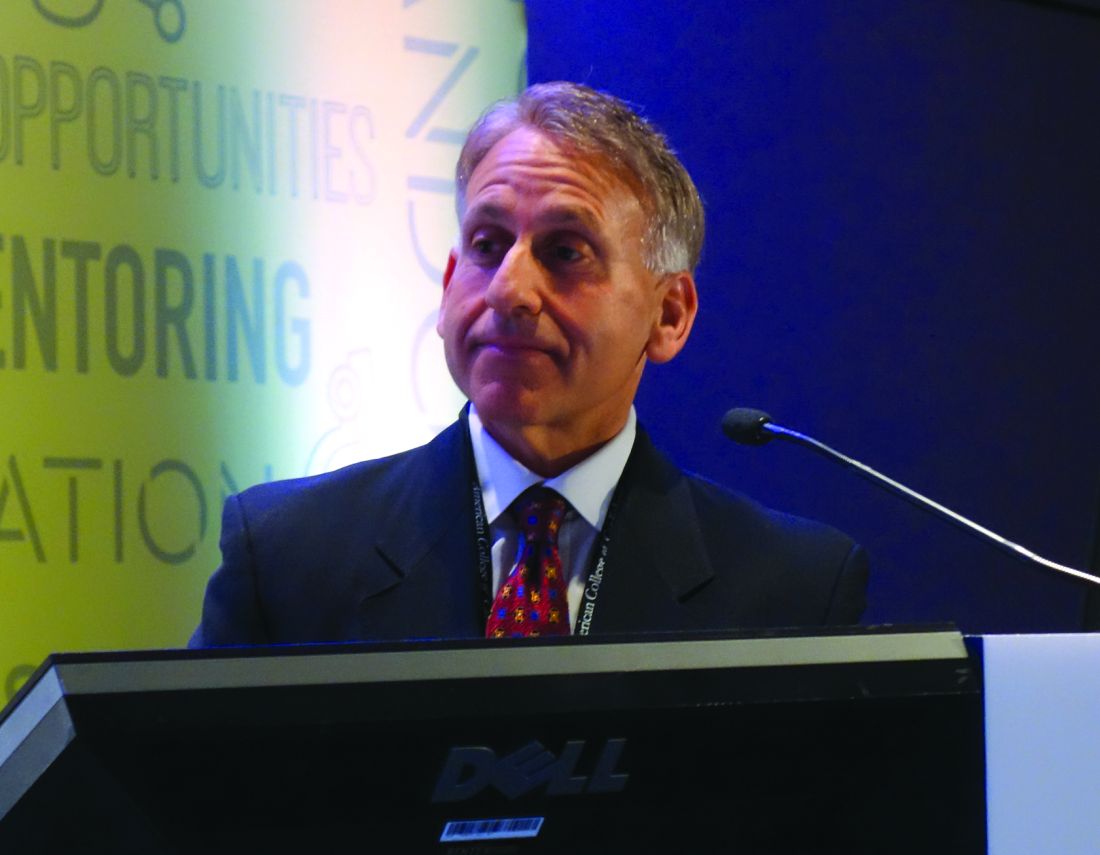
ORLANDO – Apixaban outperformed both rivaroxaban and dabigatran in a retrospective, observational study of real-world prescribing of direct oral anticoagulants in nearly 163,000 U.S. patients with nonvalvular atrial fibrillation, Steven B. Deitelzweig, MD, reported at the annual meeting of the American College of Cardiology.
This ongoing study, known as ARISTOPHANES (Anticoagulants for Reduction in Stroke: Observational Pooled Analysis on Health Outcomes and Experience of Patients), is the largest real-world analysis of direct oral anticoagulants (DOACs) to date. Unlike most of the previous observational studies of DOACs, which used a single insurance claims database, ARISTOPHANES pools data from Medicare and four large U.S. commercial insurance claims databases that collectively cover more than 180 million Americans.
This was a study of real-world prescribing. Unlike in randomized trials, where everyone is on a standard-dose DOAC, lower-dose therapy was common. It was prescribed for 21% of patients on apixaban, 15% on dabigatran, and 24% on rivaroxaban.
ARISTOPHANES results
The biggest difference in outcome was between patients on apixaban and those on dabigatran. The incidence of stroke/systemic embolism in 27,096 patients on apixaban (Eliquis) was 1.01% in 360 days, for a statistically significant 31% reduction in risk relative to the 1.42% incidence rate in 27,096 extensively matched patients on dabigatran (Pradaxa). The 360-day incidence of major bleeding was 2.7% in the apixaban group and 3.3% in those on dabigatran, for a 23% relative risk reduction. In the apixaban/rivaroxaban comparison, which included 62,619 patients in each group, the incidence of stroke/systemic embolism was 1.21% with apixaban and 1.42% with rivaroxaban, for a 27% relative risk reduction. Major bleeding occurred in 3.1% of the apixaban group and 5.3% of those on rivaroxaban, for a 46% reduction in risk favoring apixaban.
In a comparison of 27,538 patients on dabigatran and an equal number of rivaroxaban, the 360-day cumulative incidence of stroke/systemic embolism was 1.40% with dabigatran versus 1.23% with rivaroxaban, while the major bleeding rate was 3.28% in the dabigatran group and 4.76% with rivaroxaban.
Dr. Deitelzweig was quick to acknowledge the major limitation of ARISTOPHANES.
“Only associations can be drawn from a nonrandomized, retrospective, observational study, not conclusions regarding causality, even though the cohorts were matched using propensity scoring,” he emphasized.
The critique
Session cochair Jeanne E. Poole, MD, professor of medicine and director of the clinical cardiac electrophysiology program at the University of Washington, Seattle, commented, “The problem, of course, with using these large databases is that you may not be able to find out important information, such as whether rivaroxaban was being taken appropriately with meals, which is frequently not the case. If it wasn’t, that decreases absorption and efficacy by 40%. That’s a limitation.”
Audience member James A. Reiffel, MD, rose to add that, in his view, another significant limitation of all real-world, observational analyses using claims data is that it’s not possible to know why physicians selected a given drug for a given patient. He used as an example a patient with atrial fibrillation and gastroesophageal reflux disease (GERD).
“People with GERD may be less likely to get dabigatran, and if they’re less likely to get dabigatran with GERD, maybe they’re less likely to get a GI bleed. I don’t know,” said Dr. Reiffel, professor of clinical medicine and director of the electrocardiography laboratory at Columbia University Medical Center, New York.
“We have to take all the real-world analyses with a little grain of salt,” he added.
Dr. Deitelzweig replied, “This study is not meant to be the be-all and end-all.”
That being said, he noted that although randomized trials have shown that DOACs are at least as effective and safe as warfarin for stroke prevention in atrial fibrillation, there have been no randomized, head-to-head clinical trials comparing them, nor are any such studies likely to be done for the foreseeable future. Yet physicians and their patients are hungry for comparative effectiveness data, even if it doesn’t rise to the status of level I evidence.
ARISTOPHANES is sponsored by Bristol-Myers Squibb and Pfizer. Dr. Deitelzweig reported serving as a consultant to Pfizer and receiving research grants from Bristol-Myers Squibb and Portola.
SOURCE: Deitelzweig SB. ACC 2018.
ORLANDO – Apixaban outperformed both rivaroxaban and dabigatran in a retrospective, observational study of real-world prescribing of direct oral anticoagulants in nearly 163,000 U.S. patients with nonvalvular atrial fibrillation, Steven B. Deitelzweig, MD, reported at the annual meeting of the American College of Cardiology.
This ongoing study, known as ARISTOPHANES (Anticoagulants for Reduction in Stroke: Observational Pooled Analysis on Health Outcomes and Experience of Patients), is the largest real-world analysis of direct oral anticoagulants (DOACs) to date. Unlike most of the previous observational studies of DOACs, which used a single insurance claims database, ARISTOPHANES pools data from Medicare and four large U.S. commercial insurance claims databases that collectively cover more than 180 million Americans.
This was a study of real-world prescribing. Unlike in randomized trials, where everyone is on a standard-dose DOAC, lower-dose therapy was common. It was prescribed for 21% of patients on apixaban, 15% on dabigatran, and 24% on rivaroxaban.
ARISTOPHANES results
The biggest difference in outcome was between patients on apixaban and those on dabigatran. The incidence of stroke/systemic embolism in 27,096 patients on apixaban (Eliquis) was 1.01% in 360 days, for a statistically significant 31% reduction in risk relative to the 1.42% incidence rate in 27,096 extensively matched patients on dabigatran (Pradaxa). The 360-day incidence of major bleeding was 2.7% in the apixaban group and 3.3% in those on dabigatran, for a 23% relative risk reduction. In the apixaban/rivaroxaban comparison, which included 62,619 patients in each group, the incidence of stroke/systemic embolism was 1.21% with apixaban and 1.42% with rivaroxaban, for a 27% relative risk reduction. Major bleeding occurred in 3.1% of the apixaban group and 5.3% of those on rivaroxaban, for a 46% reduction in risk favoring apixaban.
In a comparison of 27,538 patients on dabigatran and an equal number of rivaroxaban, the 360-day cumulative incidence of stroke/systemic embolism was 1.40% with dabigatran versus 1.23% with rivaroxaban, while the major bleeding rate was 3.28% in the dabigatran group and 4.76% with rivaroxaban.
Dr. Deitelzweig was quick to acknowledge the major limitation of ARISTOPHANES.
“Only associations can be drawn from a nonrandomized, retrospective, observational study, not conclusions regarding causality, even though the cohorts were matched using propensity scoring,” he emphasized.
The critique
Session cochair Jeanne E. Poole, MD, professor of medicine and director of the clinical cardiac electrophysiology program at the University of Washington, Seattle, commented, “The problem, of course, with using these large databases is that you may not be able to find out important information, such as whether rivaroxaban was being taken appropriately with meals, which is frequently not the case. If it wasn’t, that decreases absorption and efficacy by 40%. That’s a limitation.”
Audience member James A. Reiffel, MD, rose to add that, in his view, another significant limitation of all real-world, observational analyses using claims data is that it’s not possible to know why physicians selected a given drug for a given patient. He used as an example a patient with atrial fibrillation and gastroesophageal reflux disease (GERD).
“People with GERD may be less likely to get dabigatran, and if they’re less likely to get dabigatran with GERD, maybe they’re less likely to get a GI bleed. I don’t know,” said Dr. Reiffel, professor of clinical medicine and director of the electrocardiography laboratory at Columbia University Medical Center, New York.
“We have to take all the real-world analyses with a little grain of salt,” he added.
Dr. Deitelzweig replied, “This study is not meant to be the be-all and end-all.”
That being said, he noted that although randomized trials have shown that DOACs are at least as effective and safe as warfarin for stroke prevention in atrial fibrillation, there have been no randomized, head-to-head clinical trials comparing them, nor are any such studies likely to be done for the foreseeable future. Yet physicians and their patients are hungry for comparative effectiveness data, even if it doesn’t rise to the status of level I evidence.
ARISTOPHANES is sponsored by Bristol-Myers Squibb and Pfizer. Dr. Deitelzweig reported serving as a consultant to Pfizer and receiving research grants from Bristol-Myers Squibb and Portola.
SOURCE: Deitelzweig SB. ACC 2018.
ORLANDO – Apixaban outperformed both rivaroxaban and dabigatran in a retrospective, observational study of real-world prescribing of direct oral anticoagulants in nearly 163,000 U.S. patients with nonvalvular atrial fibrillation, Steven B. Deitelzweig, MD, reported at the annual meeting of the American College of Cardiology.
This ongoing study, known as ARISTOPHANES (Anticoagulants for Reduction in Stroke: Observational Pooled Analysis on Health Outcomes and Experience of Patients), is the largest real-world analysis of direct oral anticoagulants (DOACs) to date. Unlike most of the previous observational studies of DOACs, which used a single insurance claims database, ARISTOPHANES pools data from Medicare and four large U.S. commercial insurance claims databases that collectively cover more than 180 million Americans.
This was a study of real-world prescribing. Unlike in randomized trials, where everyone is on a standard-dose DOAC, lower-dose therapy was common. It was prescribed for 21% of patients on apixaban, 15% on dabigatran, and 24% on rivaroxaban.
ARISTOPHANES results
The biggest difference in outcome was between patients on apixaban and those on dabigatran. The incidence of stroke/systemic embolism in 27,096 patients on apixaban (Eliquis) was 1.01% in 360 days, for a statistically significant 31% reduction in risk relative to the 1.42% incidence rate in 27,096 extensively matched patients on dabigatran (Pradaxa). The 360-day incidence of major bleeding was 2.7% in the apixaban group and 3.3% in those on dabigatran, for a 23% relative risk reduction. In the apixaban/rivaroxaban comparison, which included 62,619 patients in each group, the incidence of stroke/systemic embolism was 1.21% with apixaban and 1.42% with rivaroxaban, for a 27% relative risk reduction. Major bleeding occurred in 3.1% of the apixaban group and 5.3% of those on rivaroxaban, for a 46% reduction in risk favoring apixaban.
In a comparison of 27,538 patients on dabigatran and an equal number of rivaroxaban, the 360-day cumulative incidence of stroke/systemic embolism was 1.40% with dabigatran versus 1.23% with rivaroxaban, while the major bleeding rate was 3.28% in the dabigatran group and 4.76% with rivaroxaban.
Dr. Deitelzweig was quick to acknowledge the major limitation of ARISTOPHANES.
“Only associations can be drawn from a nonrandomized, retrospective, observational study, not conclusions regarding causality, even though the cohorts were matched using propensity scoring,” he emphasized.
The critique
Session cochair Jeanne E. Poole, MD, professor of medicine and director of the clinical cardiac electrophysiology program at the University of Washington, Seattle, commented, “The problem, of course, with using these large databases is that you may not be able to find out important information, such as whether rivaroxaban was being taken appropriately with meals, which is frequently not the case. If it wasn’t, that decreases absorption and efficacy by 40%. That’s a limitation.”
Audience member James A. Reiffel, MD, rose to add that, in his view, another significant limitation of all real-world, observational analyses using claims data is that it’s not possible to know why physicians selected a given drug for a given patient. He used as an example a patient with atrial fibrillation and gastroesophageal reflux disease (GERD).
“People with GERD may be less likely to get dabigatran, and if they’re less likely to get dabigatran with GERD, maybe they’re less likely to get a GI bleed. I don’t know,” said Dr. Reiffel, professor of clinical medicine and director of the electrocardiography laboratory at Columbia University Medical Center, New York.
“We have to take all the real-world analyses with a little grain of salt,” he added.
Dr. Deitelzweig replied, “This study is not meant to be the be-all and end-all.”
That being said, he noted that although randomized trials have shown that DOACs are at least as effective and safe as warfarin for stroke prevention in atrial fibrillation, there have been no randomized, head-to-head clinical trials comparing them, nor are any such studies likely to be done for the foreseeable future. Yet physicians and their patients are hungry for comparative effectiveness data, even if it doesn’t rise to the status of level I evidence.
ARISTOPHANES is sponsored by Bristol-Myers Squibb and Pfizer. Dr. Deitelzweig reported serving as a consultant to Pfizer and receiving research grants from Bristol-Myers Squibb and Portola.
SOURCE: Deitelzweig SB. ACC 2018.
REPORTING FROM ACC 2018
Key clinical point:
Major finding: The risk of stroke/systemic embolism in apixaban-treated patients was 31% lower than in those on dabigatran and 27% lower than with rivaroxaban.
Study details: This retrospective, observational study based upon claims data included 162,707 propensity score-matched patients with atrial fibrillation on a direct oral anticoagulant for stroke prevention.
Disclosures: The ongoing ARISTOPHANES study is sponsored by Bristol-Myers Squibb and Pfizer. The presenter reported serving as a consultant to Pfizer and receiving research grants from Bristol-Myers Squibb and Portola.
Source: Deitelzweig SB. ACC 2018.
Dexamethasone lowered risk of urinary retention in laparoscopic hernia repair
SEATTLE – Intraoperative in 955 men at the NorthShore University HealthSystem, Chicago.
Urinary retention occurs in up to a third of hernia repair patients. Men are at far higher risk than women; benign prostatic hypertrophy (BPH) and older age also increase the risk.
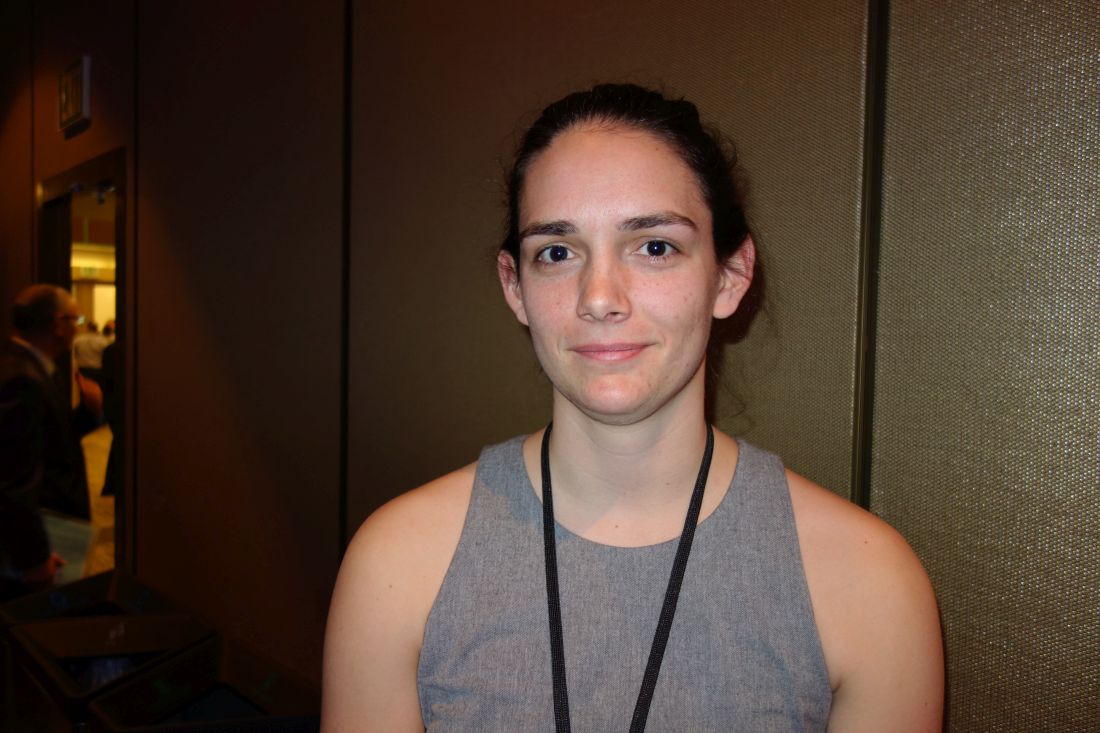
Intraoperative dexamethasone is a common antiemetic. The investigators had a hunch that it also reduces urinary retention by calming overstimulation of the bladder neck and prostate during the operation. “We believe this overstimulation” causes urinary retention, lead investigator Merritt Denham, BS, said at the World Congress of Endoscopic Surgery hosted by SAGES & CAGS.
She and her team went back in the records about 8 years to compare 617 laparoscopic inguinal hernia repair patients who received intraoperative dexamethasone with 338 who did not. They were all men: women were excluded from the review. The men voided before surgery. Those who received dexamethasone received more fluids during the operation than those who did not, a mean of 973 mL versus 878 mL (P = .0019).
Even so, urinary retention was far less likely in the dexamethasone group (3.7% vs. 9.8%; P = .0001). Controlling for age and BPH, the corticosteroid was highly protective (odds ratio, 0.48; 95% confidence interval, 0.26-0.87; P = .0147). The benefit was the same regardless of the intraoperative dexamethasone dosage, which ranged from 4 mg to 8 mg.
Dexamethasone patients had a shorter length of stay, and, counterintuitively, fewer surgical site infections (0.2% vs. 1.7%; P = .0109). They were also less likely to have BPH (16.7% vs. 22.5%; P = 0.026). The urinary retention odds ratio controlled for the difference in BPH.
The results are “interesting, but I don’t think the conclusion is there yet; there are a lot of variables to consider. We need more data,” said moderator Eduardo Parra-Davila, MD, FACS, director of minimally invasive and colorectal surgery at Florida Hospital Celebration Health in Celebration, Fla.
In both groups, mean body mass index was about 26 kg/m2, mean age about 57 years, and mean operative time about 40 minutes. Four general surgeons performed the repairs.
There was no external funding for the work, and the investigators had no disclosures.
SOURCE: Denham M. et al. SAGES 2018, Abstract S006.
SEATTLE – Intraoperative in 955 men at the NorthShore University HealthSystem, Chicago.
Urinary retention occurs in up to a third of hernia repair patients. Men are at far higher risk than women; benign prostatic hypertrophy (BPH) and older age also increase the risk.
Intraoperative dexamethasone is a common antiemetic. The investigators had a hunch that it also reduces urinary retention by calming overstimulation of the bladder neck and prostate during the operation. “We believe this overstimulation” causes urinary retention, lead investigator Merritt Denham, BS, said at the World Congress of Endoscopic Surgery hosted by SAGES & CAGS.
She and her team went back in the records about 8 years to compare 617 laparoscopic inguinal hernia repair patients who received intraoperative dexamethasone with 338 who did not. They were all men: women were excluded from the review. The men voided before surgery. Those who received dexamethasone received more fluids during the operation than those who did not, a mean of 973 mL versus 878 mL (P = .0019).
Even so, urinary retention was far less likely in the dexamethasone group (3.7% vs. 9.8%; P = .0001). Controlling for age and BPH, the corticosteroid was highly protective (odds ratio, 0.48; 95% confidence interval, 0.26-0.87; P = .0147). The benefit was the same regardless of the intraoperative dexamethasone dosage, which ranged from 4 mg to 8 mg.
Dexamethasone patients had a shorter length of stay, and, counterintuitively, fewer surgical site infections (0.2% vs. 1.7%; P = .0109). They were also less likely to have BPH (16.7% vs. 22.5%; P = 0.026). The urinary retention odds ratio controlled for the difference in BPH.
The results are “interesting, but I don’t think the conclusion is there yet; there are a lot of variables to consider. We need more data,” said moderator Eduardo Parra-Davila, MD, FACS, director of minimally invasive and colorectal surgery at Florida Hospital Celebration Health in Celebration, Fla.
In both groups, mean body mass index was about 26 kg/m2, mean age about 57 years, and mean operative time about 40 minutes. Four general surgeons performed the repairs.
There was no external funding for the work, and the investigators had no disclosures.
SOURCE: Denham M. et al. SAGES 2018, Abstract S006.
SEATTLE – Intraoperative in 955 men at the NorthShore University HealthSystem, Chicago.
Urinary retention occurs in up to a third of hernia repair patients. Men are at far higher risk than women; benign prostatic hypertrophy (BPH) and older age also increase the risk.
Intraoperative dexamethasone is a common antiemetic. The investigators had a hunch that it also reduces urinary retention by calming overstimulation of the bladder neck and prostate during the operation. “We believe this overstimulation” causes urinary retention, lead investigator Merritt Denham, BS, said at the World Congress of Endoscopic Surgery hosted by SAGES & CAGS.
She and her team went back in the records about 8 years to compare 617 laparoscopic inguinal hernia repair patients who received intraoperative dexamethasone with 338 who did not. They were all men: women were excluded from the review. The men voided before surgery. Those who received dexamethasone received more fluids during the operation than those who did not, a mean of 973 mL versus 878 mL (P = .0019).
Even so, urinary retention was far less likely in the dexamethasone group (3.7% vs. 9.8%; P = .0001). Controlling for age and BPH, the corticosteroid was highly protective (odds ratio, 0.48; 95% confidence interval, 0.26-0.87; P = .0147). The benefit was the same regardless of the intraoperative dexamethasone dosage, which ranged from 4 mg to 8 mg.
Dexamethasone patients had a shorter length of stay, and, counterintuitively, fewer surgical site infections (0.2% vs. 1.7%; P = .0109). They were also less likely to have BPH (16.7% vs. 22.5%; P = 0.026). The urinary retention odds ratio controlled for the difference in BPH.
The results are “interesting, but I don’t think the conclusion is there yet; there are a lot of variables to consider. We need more data,” said moderator Eduardo Parra-Davila, MD, FACS, director of minimally invasive and colorectal surgery at Florida Hospital Celebration Health in Celebration, Fla.
In both groups, mean body mass index was about 26 kg/m2, mean age about 57 years, and mean operative time about 40 minutes. Four general surgeons performed the repairs.
There was no external funding for the work, and the investigators had no disclosures.
SOURCE: Denham M. et al. SAGES 2018, Abstract S006.
REPORTING FROM SAGES 2018
Key clinical point: Patients given dexamethasone intraoperatively were less likely to have urinary retention.
Major finding: The dexamethasone group was less likely to have urinary retention, 3.7% versus 9.8% (P = 0.0001).
Study details: A review of 955 laparoscopic inguinal hernia repairs.
Disclosures: There was no external funding for the work, and the investigators had no disclosures.
Source: Denham M et al. SAGES 2018, Abstract S006.
HIV Transmission Risk Is Considerable at the Time of STI Diagnosis in HIV-Infected Persons
Study Overview
Objective. To evaluate the incidence and demographic factors associated with chlamydia, gonorrhea, and syphilis among HIV-infected persons in Washington, DC.
Design. Descriptive, retrospective cohort study.
Setting and participants. HIV-infected persons enrolled at 13 DC Cohort sites from 2011 to 2015. The DC Cohort is a clinic-based, city-wide, longitudinal observational cohort launched in 2011 to better understand HIV epidemiology in DC, describe clinical outcomes among those in care, and improve the quality of care for people living with HIV in the DC metropolitan area. Eligible participants included those enrolled from 1 January 2011 to 31 March 2015. Participant follow-up time included time from enrollment to 30 June 2015 or until one of these occurred: death, withdrawal from the DC Cohort, or loss to follow-up.
Main outcomes measures. Confirmed cases of chlamydia, gonorrhea, and syphilis, as well as HIV viral loads at the time of sexually transmitted infection (STI) diagnosis as a proxy for HIV transmission risk.
Main results. Around the time of the study, there were approximately 11,235 persons with HIV infection receiving care at the 13 DC Cohort sites, of which 8732 (77.7%) were approached for enrollment. Of those approached, 7004 (80.2%) agreed to participate and provided consent, 948 (10.9%) declined to enroll, 14 (0.2%) withdrew consent, and 766 (8.8%) remained undecided. There were significant differences between those consenting and declining, including female gender (27.8% of those consenting vs 36.1% of those declining, P < 0.001), white race/ethnicity (13.1% of those consenting vs 6.6% of those declining, P < 0.001), and private insurance status (27.6% of those consenting vs 33.2% of those declining, P < 0.001).
Median age of patients was 47 years (interquartile range, 36.5–54.5 years); 71% were male, 76% were non-Hispanic black, 39% were men who have sex with men (MSM), and 29% were heterosexual. 63.8% had public insurance. 6.7% (451/6672) developed an incident STI during a median follow-up of 32.5 months (4% chlamydia, 3% gonorrhea, 2% syphilis); 30% of participants had 2 or more STI episodes. The incidence rate of any STI was 3.8 cases per 100 person-years (95% confidence interval [CI], 3.5–4.1); age 18–34 years, 10.8 (95% CI, 9.7–12.0); transgender women, 9.9 (95% CI, 6.9–14.0); Hispanics, 9.2 (95% CI, 7.2–11.8); and MSM, 7.7 (95% CI, 7.1–8.4). Multivariate regression analysis showed younger age, Hispanic ethnicity, MSM risk, and higher nadir CD4 counts to be strongly associated with STIs. Among those with an STI, 41.8% had a detectable viral load within 1 month of STI diagnosis, and 14.6% had a viral load ≥ 1500 copies/mL.
Conclusion. STIs are highly prevalent among HIV-infected persons receiving care in DC. HIV transmission risk is considerable at the time of STI diagnosis. Interventions toward risk reduction, antiretroviral therapy adherence, and HIV virologic suppression are critical at the time of STI evaluation.
Commentary
Although the number of new HIV cases in Washington, DC, has been decreasing over recent years [1], it still has one of the highest rates of HIV infection in the United States [2]. In this large-scale, single-city analysis, Lucar et al reported on the incidence and factors associated with the development of chlamydia, gonorrhea, and syphilis in a cohort of people living with HIV in care in DC. Consistent with incidence rates among the DC general population [2], chlamydia had the highest incidence, followed by gonorrhea and then syphilis, each with particularly high rates among 18- to 34-year-olds, MSM, transgender women, and Hispanics.
Studies have shown that many people with HIV do not consistently practice safer sex, placing themselves and others at risk for HIV or STI infection/co-infection [3]. While most HIV prevention programs target HIV-negative individuals, targeting sexual risk behaviors in HIV-positive people can prevent the transmission of HIV and other STIs to uninfected individuals and can also prevent co-infections with other STIs [3]. However, effective interventions to maintain long-term behavior change and prevent HIV transmission are needed. In a recent systematic review and meta-analysis by Globerman et al [3] assessing the effectiveness of HIV/STI prevention interventions for people living with HIV, group-level health education interventions were found to be effective in reducing HIV/STI incidence when compared to attention controls. Another intervention type, comprehensive risk counseling and services, was found to be effective in reducing sexual risk behaviors when compared to both active and attention controls. All other intervention types showed no statistically significant effect or had low or very low quality of evidence. Improving strategies to reduce the impact of HIV and STDs may require an understanding of how different populations are experiencing those conditions [1].
This study has several limitations. First, the observational nature of the DC Cohort precluded standardized STI screening for all participants. STIs are frequently asymptomatic, and differences in screening practices can impact the observed STI frequency [4,5]. Subsequently, reported STI incidence rates are likely underestimating the true STI incidence in people with HIV in care in DC. Furthermore, STI screening may provide diagnosis dates distant from the actual time of STI acquisition. Similarly, the study design also limited the availability of HIV viral loads during the same encounter of STI diagnosis. In addition, the population enrolled in the DC Cohort may not be fully representative of the larger HIV-infected population in DC, as enrollment requires some degree of engagement in care, and the demographics of those declining to participate differed somewhat from those who provided consent.
Strengths of the study include its city-wide reach, prospective enrollment of participants, its longitudinal study design, and the large sample size. Also, since the study linked data from clinical sites with data reported to the local health department, this improved the accuracy of STI diagnosis frequency and provided insight into care received for STIs outside of the primary HIV care site.
Applications for Clinical Practice
Risk reduction interventions are needed for people living with HIV to help control the spread of STIs and reduce HIV transmission. More high-quality research on HIV/STI prevention interventions is needed. While there have been only a few studies, the existing data indicate that integration of STI services into HIV care and treatment service can be feasible and can have positive outcomes [6].
1. Annual Epidemiology & Surveillance Report. District of Columbia Department of Health HIV/AIDS, Hepatitis, STD, and TB Administration (HAHSTA). Accessed at https://doh.dc.gov/sites/default/files/dc/sites/doh/publication/attachments/HAHSTA%20Annual%20Report%202017%20-%20Final%20%282%29.pdf.
2. Centers for Disease Control and Prevention. HIV Surveillance Report, 2016; vol. 28. Accessed at www.cdc.gov/hiv/library/reports/hiv-surveillance.html.
3. Globerman J, Mitra S, Gogolishvili D, et al. HIV/STI prevention interventions: a systematic review and meta-analysis. Open Med (Wars) 2017;12:450–67.
4. Berry SA, Ghanem KG, Mathews WC, et al; HIV Research Network. Brief report: gonorrhea and chlamydia testing increasing but still lagging in HIV clinics in the United States. J Acquir Immune Defic Syndr 2015;70:275–9.
5. Hoover KW, Butler M, Workowski K, et al; Evaluation Group for Adherence to STD and Hepatitis Screening. STD screening of HIV-infected MSM in HIV clinics. Sex Transm Dis 2010;37:771–6.
6. Kennedy CE, Haberlen SA, Narasimhan M. Integration of sexually transmitted infection (STI) services into HIV care and treatment services for women living with HIV: a systematic review. BMJ Open 2017;7:e015310.
Study Overview
Objective. To evaluate the incidence and demographic factors associated with chlamydia, gonorrhea, and syphilis among HIV-infected persons in Washington, DC.
Design. Descriptive, retrospective cohort study.
Setting and participants. HIV-infected persons enrolled at 13 DC Cohort sites from 2011 to 2015. The DC Cohort is a clinic-based, city-wide, longitudinal observational cohort launched in 2011 to better understand HIV epidemiology in DC, describe clinical outcomes among those in care, and improve the quality of care for people living with HIV in the DC metropolitan area. Eligible participants included those enrolled from 1 January 2011 to 31 March 2015. Participant follow-up time included time from enrollment to 30 June 2015 or until one of these occurred: death, withdrawal from the DC Cohort, or loss to follow-up.
Main outcomes measures. Confirmed cases of chlamydia, gonorrhea, and syphilis, as well as HIV viral loads at the time of sexually transmitted infection (STI) diagnosis as a proxy for HIV transmission risk.
Main results. Around the time of the study, there were approximately 11,235 persons with HIV infection receiving care at the 13 DC Cohort sites, of which 8732 (77.7%) were approached for enrollment. Of those approached, 7004 (80.2%) agreed to participate and provided consent, 948 (10.9%) declined to enroll, 14 (0.2%) withdrew consent, and 766 (8.8%) remained undecided. There were significant differences between those consenting and declining, including female gender (27.8% of those consenting vs 36.1% of those declining, P < 0.001), white race/ethnicity (13.1% of those consenting vs 6.6% of those declining, P < 0.001), and private insurance status (27.6% of those consenting vs 33.2% of those declining, P < 0.001).
Median age of patients was 47 years (interquartile range, 36.5–54.5 years); 71% were male, 76% were non-Hispanic black, 39% were men who have sex with men (MSM), and 29% were heterosexual. 63.8% had public insurance. 6.7% (451/6672) developed an incident STI during a median follow-up of 32.5 months (4% chlamydia, 3% gonorrhea, 2% syphilis); 30% of participants had 2 or more STI episodes. The incidence rate of any STI was 3.8 cases per 100 person-years (95% confidence interval [CI], 3.5–4.1); age 18–34 years, 10.8 (95% CI, 9.7–12.0); transgender women, 9.9 (95% CI, 6.9–14.0); Hispanics, 9.2 (95% CI, 7.2–11.8); and MSM, 7.7 (95% CI, 7.1–8.4). Multivariate regression analysis showed younger age, Hispanic ethnicity, MSM risk, and higher nadir CD4 counts to be strongly associated with STIs. Among those with an STI, 41.8% had a detectable viral load within 1 month of STI diagnosis, and 14.6% had a viral load ≥ 1500 copies/mL.
Conclusion. STIs are highly prevalent among HIV-infected persons receiving care in DC. HIV transmission risk is considerable at the time of STI diagnosis. Interventions toward risk reduction, antiretroviral therapy adherence, and HIV virologic suppression are critical at the time of STI evaluation.
Commentary
Although the number of new HIV cases in Washington, DC, has been decreasing over recent years [1], it still has one of the highest rates of HIV infection in the United States [2]. In this large-scale, single-city analysis, Lucar et al reported on the incidence and factors associated with the development of chlamydia, gonorrhea, and syphilis in a cohort of people living with HIV in care in DC. Consistent with incidence rates among the DC general population [2], chlamydia had the highest incidence, followed by gonorrhea and then syphilis, each with particularly high rates among 18- to 34-year-olds, MSM, transgender women, and Hispanics.
Studies have shown that many people with HIV do not consistently practice safer sex, placing themselves and others at risk for HIV or STI infection/co-infection [3]. While most HIV prevention programs target HIV-negative individuals, targeting sexual risk behaviors in HIV-positive people can prevent the transmission of HIV and other STIs to uninfected individuals and can also prevent co-infections with other STIs [3]. However, effective interventions to maintain long-term behavior change and prevent HIV transmission are needed. In a recent systematic review and meta-analysis by Globerman et al [3] assessing the effectiveness of HIV/STI prevention interventions for people living with HIV, group-level health education interventions were found to be effective in reducing HIV/STI incidence when compared to attention controls. Another intervention type, comprehensive risk counseling and services, was found to be effective in reducing sexual risk behaviors when compared to both active and attention controls. All other intervention types showed no statistically significant effect or had low or very low quality of evidence. Improving strategies to reduce the impact of HIV and STDs may require an understanding of how different populations are experiencing those conditions [1].
This study has several limitations. First, the observational nature of the DC Cohort precluded standardized STI screening for all participants. STIs are frequently asymptomatic, and differences in screening practices can impact the observed STI frequency [4,5]. Subsequently, reported STI incidence rates are likely underestimating the true STI incidence in people with HIV in care in DC. Furthermore, STI screening may provide diagnosis dates distant from the actual time of STI acquisition. Similarly, the study design also limited the availability of HIV viral loads during the same encounter of STI diagnosis. In addition, the population enrolled in the DC Cohort may not be fully representative of the larger HIV-infected population in DC, as enrollment requires some degree of engagement in care, and the demographics of those declining to participate differed somewhat from those who provided consent.
Strengths of the study include its city-wide reach, prospective enrollment of participants, its longitudinal study design, and the large sample size. Also, since the study linked data from clinical sites with data reported to the local health department, this improved the accuracy of STI diagnosis frequency and provided insight into care received for STIs outside of the primary HIV care site.
Applications for Clinical Practice
Risk reduction interventions are needed for people living with HIV to help control the spread of STIs and reduce HIV transmission. More high-quality research on HIV/STI prevention interventions is needed. While there have been only a few studies, the existing data indicate that integration of STI services into HIV care and treatment service can be feasible and can have positive outcomes [6].
Study Overview
Objective. To evaluate the incidence and demographic factors associated with chlamydia, gonorrhea, and syphilis among HIV-infected persons in Washington, DC.
Design. Descriptive, retrospective cohort study.
Setting and participants. HIV-infected persons enrolled at 13 DC Cohort sites from 2011 to 2015. The DC Cohort is a clinic-based, city-wide, longitudinal observational cohort launched in 2011 to better understand HIV epidemiology in DC, describe clinical outcomes among those in care, and improve the quality of care for people living with HIV in the DC metropolitan area. Eligible participants included those enrolled from 1 January 2011 to 31 March 2015. Participant follow-up time included time from enrollment to 30 June 2015 or until one of these occurred: death, withdrawal from the DC Cohort, or loss to follow-up.
Main outcomes measures. Confirmed cases of chlamydia, gonorrhea, and syphilis, as well as HIV viral loads at the time of sexually transmitted infection (STI) diagnosis as a proxy for HIV transmission risk.
Main results. Around the time of the study, there were approximately 11,235 persons with HIV infection receiving care at the 13 DC Cohort sites, of which 8732 (77.7%) were approached for enrollment. Of those approached, 7004 (80.2%) agreed to participate and provided consent, 948 (10.9%) declined to enroll, 14 (0.2%) withdrew consent, and 766 (8.8%) remained undecided. There were significant differences between those consenting and declining, including female gender (27.8% of those consenting vs 36.1% of those declining, P < 0.001), white race/ethnicity (13.1% of those consenting vs 6.6% of those declining, P < 0.001), and private insurance status (27.6% of those consenting vs 33.2% of those declining, P < 0.001).
Median age of patients was 47 years (interquartile range, 36.5–54.5 years); 71% were male, 76% were non-Hispanic black, 39% were men who have sex with men (MSM), and 29% were heterosexual. 63.8% had public insurance. 6.7% (451/6672) developed an incident STI during a median follow-up of 32.5 months (4% chlamydia, 3% gonorrhea, 2% syphilis); 30% of participants had 2 or more STI episodes. The incidence rate of any STI was 3.8 cases per 100 person-years (95% confidence interval [CI], 3.5–4.1); age 18–34 years, 10.8 (95% CI, 9.7–12.0); transgender women, 9.9 (95% CI, 6.9–14.0); Hispanics, 9.2 (95% CI, 7.2–11.8); and MSM, 7.7 (95% CI, 7.1–8.4). Multivariate regression analysis showed younger age, Hispanic ethnicity, MSM risk, and higher nadir CD4 counts to be strongly associated with STIs. Among those with an STI, 41.8% had a detectable viral load within 1 month of STI diagnosis, and 14.6% had a viral load ≥ 1500 copies/mL.
Conclusion. STIs are highly prevalent among HIV-infected persons receiving care in DC. HIV transmission risk is considerable at the time of STI diagnosis. Interventions toward risk reduction, antiretroviral therapy adherence, and HIV virologic suppression are critical at the time of STI evaluation.
Commentary
Although the number of new HIV cases in Washington, DC, has been decreasing over recent years [1], it still has one of the highest rates of HIV infection in the United States [2]. In this large-scale, single-city analysis, Lucar et al reported on the incidence and factors associated with the development of chlamydia, gonorrhea, and syphilis in a cohort of people living with HIV in care in DC. Consistent with incidence rates among the DC general population [2], chlamydia had the highest incidence, followed by gonorrhea and then syphilis, each with particularly high rates among 18- to 34-year-olds, MSM, transgender women, and Hispanics.
Studies have shown that many people with HIV do not consistently practice safer sex, placing themselves and others at risk for HIV or STI infection/co-infection [3]. While most HIV prevention programs target HIV-negative individuals, targeting sexual risk behaviors in HIV-positive people can prevent the transmission of HIV and other STIs to uninfected individuals and can also prevent co-infections with other STIs [3]. However, effective interventions to maintain long-term behavior change and prevent HIV transmission are needed. In a recent systematic review and meta-analysis by Globerman et al [3] assessing the effectiveness of HIV/STI prevention interventions for people living with HIV, group-level health education interventions were found to be effective in reducing HIV/STI incidence when compared to attention controls. Another intervention type, comprehensive risk counseling and services, was found to be effective in reducing sexual risk behaviors when compared to both active and attention controls. All other intervention types showed no statistically significant effect or had low or very low quality of evidence. Improving strategies to reduce the impact of HIV and STDs may require an understanding of how different populations are experiencing those conditions [1].
This study has several limitations. First, the observational nature of the DC Cohort precluded standardized STI screening for all participants. STIs are frequently asymptomatic, and differences in screening practices can impact the observed STI frequency [4,5]. Subsequently, reported STI incidence rates are likely underestimating the true STI incidence in people with HIV in care in DC. Furthermore, STI screening may provide diagnosis dates distant from the actual time of STI acquisition. Similarly, the study design also limited the availability of HIV viral loads during the same encounter of STI diagnosis. In addition, the population enrolled in the DC Cohort may not be fully representative of the larger HIV-infected population in DC, as enrollment requires some degree of engagement in care, and the demographics of those declining to participate differed somewhat from those who provided consent.
Strengths of the study include its city-wide reach, prospective enrollment of participants, its longitudinal study design, and the large sample size. Also, since the study linked data from clinical sites with data reported to the local health department, this improved the accuracy of STI diagnosis frequency and provided insight into care received for STIs outside of the primary HIV care site.
Applications for Clinical Practice
Risk reduction interventions are needed for people living with HIV to help control the spread of STIs and reduce HIV transmission. More high-quality research on HIV/STI prevention interventions is needed. While there have been only a few studies, the existing data indicate that integration of STI services into HIV care and treatment service can be feasible and can have positive outcomes [6].
1. Annual Epidemiology & Surveillance Report. District of Columbia Department of Health HIV/AIDS, Hepatitis, STD, and TB Administration (HAHSTA). Accessed at https://doh.dc.gov/sites/default/files/dc/sites/doh/publication/attachments/HAHSTA%20Annual%20Report%202017%20-%20Final%20%282%29.pdf.
2. Centers for Disease Control and Prevention. HIV Surveillance Report, 2016; vol. 28. Accessed at www.cdc.gov/hiv/library/reports/hiv-surveillance.html.
3. Globerman J, Mitra S, Gogolishvili D, et al. HIV/STI prevention interventions: a systematic review and meta-analysis. Open Med (Wars) 2017;12:450–67.
4. Berry SA, Ghanem KG, Mathews WC, et al; HIV Research Network. Brief report: gonorrhea and chlamydia testing increasing but still lagging in HIV clinics in the United States. J Acquir Immune Defic Syndr 2015;70:275–9.
5. Hoover KW, Butler M, Workowski K, et al; Evaluation Group for Adherence to STD and Hepatitis Screening. STD screening of HIV-infected MSM in HIV clinics. Sex Transm Dis 2010;37:771–6.
6. Kennedy CE, Haberlen SA, Narasimhan M. Integration of sexually transmitted infection (STI) services into HIV care and treatment services for women living with HIV: a systematic review. BMJ Open 2017;7:e015310.
1. Annual Epidemiology & Surveillance Report. District of Columbia Department of Health HIV/AIDS, Hepatitis, STD, and TB Administration (HAHSTA). Accessed at https://doh.dc.gov/sites/default/files/dc/sites/doh/publication/attachments/HAHSTA%20Annual%20Report%202017%20-%20Final%20%282%29.pdf.
2. Centers for Disease Control and Prevention. HIV Surveillance Report, 2016; vol. 28. Accessed at www.cdc.gov/hiv/library/reports/hiv-surveillance.html.
3. Globerman J, Mitra S, Gogolishvili D, et al. HIV/STI prevention interventions: a systematic review and meta-analysis. Open Med (Wars) 2017;12:450–67.
4. Berry SA, Ghanem KG, Mathews WC, et al; HIV Research Network. Brief report: gonorrhea and chlamydia testing increasing but still lagging in HIV clinics in the United States. J Acquir Immune Defic Syndr 2015;70:275–9.
5. Hoover KW, Butler M, Workowski K, et al; Evaluation Group for Adherence to STD and Hepatitis Screening. STD screening of HIV-infected MSM in HIV clinics. Sex Transm Dis 2010;37:771–6.
6. Kennedy CE, Haberlen SA, Narasimhan M. Integration of sexually transmitted infection (STI) services into HIV care and treatment services for women living with HIV: a systematic review. BMJ Open 2017;7:e015310.
KEYNOTE-054: Adjuvant pembrolizumab beat placebo in high-risk resected melanoma
CHICAGO – Adjuvant pembrolizumab for resected high-risk melanoma slowed the rate of recurrence or death by 43% compared with placebo in a phase 3 trial of 1,519 patients.
After 15 months of follow-up, 12-month rates of recurrence-free survival (RFS) were 75% for pembrolizumab and 61% for placebo (hazard ratio, 0.57; P less than .001), Alexander M.M. Eggermont, MD, PhD, reported at the annual meeting of the American Association for Cancer Research.
By 18 months, the RFS difference between the arms had widened even more (71% versus 53%), Dr. Eggermont and his associates said at the meeting. The report was published simultaneously in the New England Journal of Medicine.
Adjuvant pembrolizumab was effective irrespective of PD-L1 tumor expression status. In a subgroup of more than 800 patients with PD-L1-positive tumors, 12-month RFS rates were 77% for pembrolizumab and 63% for placebo (HR, 0.54; 95% CI, 0.42 to 0.69; P less than .001). Among 116 patients who were PD-L1-negative, these rates were 72% and 52%, respectively (HR, 0.47; P = .01).
Treatment produced no new safety signals, said Dr. Eggermont of Gustave Roussy Cancer Campus Grand Paris and University Paris-Saclay, Villejuif, France. Grade 3 or higher toxicities affected 15% of pembrolizumab patients. Myositis caused one pembrolizumab-related death.
The findings bolster data suggesting that adjuvant therapy can stop or delay recurrence in resected high-risk melanoma. Previously, adjuvant ipilimumab was approved after significantly extending RFS and overall survival in the placebo-controlled European Organization for Research and Treatment of Cancer 18071 trial. More recently, adjuvant dabrafenib plus trametinib reduced the risk of recurrence compared with placebo in completely resected stage III melanoma with BRAF mutations (COMBI-AD), and adjuvant nivolumab significantly improved RFS and was less toxic than was ipilimumab in patients with advanced resected BRAF-mutated and BRAF-wild-type melanomas (CheckMate 238).
Like the EORTC 18071 trial, KEYNOTE-054 (EORTC 1325) enrolled adults with completely resected stage III cutaneous melanoma. Patients with stage IIIa disease were high-risk, with sentinel node tumors exceeding 1-mm diameter per Rotterdam criteria. Stage IIIB or IIIC patients had no in-transit metastases. In all, 1,015 patients received up to 18 doses of pembrolizumab (200 mg infused every 3 weeks) or placebo for approximately 1 year. Relapsers could either repeat pembrolizumab or cross over to the pembrolizumab arm.
Treatment-related adverse events occurred in 78% of pembrolizumab patients and 66% of placebo recipients. As in prior studies, the most frequent adverse effects of pembrolizumab included fatigue or asthenia (37%), skin reactions (28%), diarrhea (19%), arthralgia (12%), nausea (11%), and dyspnea (6%). Rates of immune-related adverse events of any grade were 37% versus 9%. The most common immune-related adverse event was endocrinopathy (23%), specifically hypothyroidism (14%) and hyperthyroidism (10%). Grade 3 or higher toxicities affected 15% of pembrolizumab recipients and most often consisted of colitis (2%), endocrine disorders (1.8%), or hepatobiliary disorders (1.4%). Myositis caused the only pembrolizumab-related death.
Patients and clinicians await KEYNOTE-054 readouts on distant metastasis-free survival and overall survival. In past trials of adjuvant interferon alfa or ipilimumab for high-risk melanoma, RFS and overall survival closely correlated, Dr. Eggermont noted. KEYNOTE-54 can be expected to produce similar findings unless post-relapse therapy – including crossover to the pembrolizumab arm – narrows the survival advantage of adjuvant treatment, he added.
Merck makes pembrolizumab and funded the trial. Dr. Eggermont disclosed ties to Actelion, Agenus, Bayer, BMS, Incyte, ISA Pharmaceuticals, HalioDX, Merck-Serono, MSD, Nektar, Novartis, Pfizer, and Sanofi outside the submitted work.
SOURCE: Eggermont AMM et al. AACR Annual Meeting Abstract CT001.
CHICAGO – Adjuvant pembrolizumab for resected high-risk melanoma slowed the rate of recurrence or death by 43% compared with placebo in a phase 3 trial of 1,519 patients.
After 15 months of follow-up, 12-month rates of recurrence-free survival (RFS) were 75% for pembrolizumab and 61% for placebo (hazard ratio, 0.57; P less than .001), Alexander M.M. Eggermont, MD, PhD, reported at the annual meeting of the American Association for Cancer Research.
By 18 months, the RFS difference between the arms had widened even more (71% versus 53%), Dr. Eggermont and his associates said at the meeting. The report was published simultaneously in the New England Journal of Medicine.
Adjuvant pembrolizumab was effective irrespective of PD-L1 tumor expression status. In a subgroup of more than 800 patients with PD-L1-positive tumors, 12-month RFS rates were 77% for pembrolizumab and 63% for placebo (HR, 0.54; 95% CI, 0.42 to 0.69; P less than .001). Among 116 patients who were PD-L1-negative, these rates were 72% and 52%, respectively (HR, 0.47; P = .01).
Treatment produced no new safety signals, said Dr. Eggermont of Gustave Roussy Cancer Campus Grand Paris and University Paris-Saclay, Villejuif, France. Grade 3 or higher toxicities affected 15% of pembrolizumab patients. Myositis caused one pembrolizumab-related death.
The findings bolster data suggesting that adjuvant therapy can stop or delay recurrence in resected high-risk melanoma. Previously, adjuvant ipilimumab was approved after significantly extending RFS and overall survival in the placebo-controlled European Organization for Research and Treatment of Cancer 18071 trial. More recently, adjuvant dabrafenib plus trametinib reduced the risk of recurrence compared with placebo in completely resected stage III melanoma with BRAF mutations (COMBI-AD), and adjuvant nivolumab significantly improved RFS and was less toxic than was ipilimumab in patients with advanced resected BRAF-mutated and BRAF-wild-type melanomas (CheckMate 238).
Like the EORTC 18071 trial, KEYNOTE-054 (EORTC 1325) enrolled adults with completely resected stage III cutaneous melanoma. Patients with stage IIIa disease were high-risk, with sentinel node tumors exceeding 1-mm diameter per Rotterdam criteria. Stage IIIB or IIIC patients had no in-transit metastases. In all, 1,015 patients received up to 18 doses of pembrolizumab (200 mg infused every 3 weeks) or placebo for approximately 1 year. Relapsers could either repeat pembrolizumab or cross over to the pembrolizumab arm.
Treatment-related adverse events occurred in 78% of pembrolizumab patients and 66% of placebo recipients. As in prior studies, the most frequent adverse effects of pembrolizumab included fatigue or asthenia (37%), skin reactions (28%), diarrhea (19%), arthralgia (12%), nausea (11%), and dyspnea (6%). Rates of immune-related adverse events of any grade were 37% versus 9%. The most common immune-related adverse event was endocrinopathy (23%), specifically hypothyroidism (14%) and hyperthyroidism (10%). Grade 3 or higher toxicities affected 15% of pembrolizumab recipients and most often consisted of colitis (2%), endocrine disorders (1.8%), or hepatobiliary disorders (1.4%). Myositis caused the only pembrolizumab-related death.
Patients and clinicians await KEYNOTE-054 readouts on distant metastasis-free survival and overall survival. In past trials of adjuvant interferon alfa or ipilimumab for high-risk melanoma, RFS and overall survival closely correlated, Dr. Eggermont noted. KEYNOTE-54 can be expected to produce similar findings unless post-relapse therapy – including crossover to the pembrolizumab arm – narrows the survival advantage of adjuvant treatment, he added.
Merck makes pembrolizumab and funded the trial. Dr. Eggermont disclosed ties to Actelion, Agenus, Bayer, BMS, Incyte, ISA Pharmaceuticals, HalioDX, Merck-Serono, MSD, Nektar, Novartis, Pfizer, and Sanofi outside the submitted work.
SOURCE: Eggermont AMM et al. AACR Annual Meeting Abstract CT001.
CHICAGO – Adjuvant pembrolizumab for resected high-risk melanoma slowed the rate of recurrence or death by 43% compared with placebo in a phase 3 trial of 1,519 patients.
After 15 months of follow-up, 12-month rates of recurrence-free survival (RFS) were 75% for pembrolizumab and 61% for placebo (hazard ratio, 0.57; P less than .001), Alexander M.M. Eggermont, MD, PhD, reported at the annual meeting of the American Association for Cancer Research.
By 18 months, the RFS difference between the arms had widened even more (71% versus 53%), Dr. Eggermont and his associates said at the meeting. The report was published simultaneously in the New England Journal of Medicine.
Adjuvant pembrolizumab was effective irrespective of PD-L1 tumor expression status. In a subgroup of more than 800 patients with PD-L1-positive tumors, 12-month RFS rates were 77% for pembrolizumab and 63% for placebo (HR, 0.54; 95% CI, 0.42 to 0.69; P less than .001). Among 116 patients who were PD-L1-negative, these rates were 72% and 52%, respectively (HR, 0.47; P = .01).
Treatment produced no new safety signals, said Dr. Eggermont of Gustave Roussy Cancer Campus Grand Paris and University Paris-Saclay, Villejuif, France. Grade 3 or higher toxicities affected 15% of pembrolizumab patients. Myositis caused one pembrolizumab-related death.
The findings bolster data suggesting that adjuvant therapy can stop or delay recurrence in resected high-risk melanoma. Previously, adjuvant ipilimumab was approved after significantly extending RFS and overall survival in the placebo-controlled European Organization for Research and Treatment of Cancer 18071 trial. More recently, adjuvant dabrafenib plus trametinib reduced the risk of recurrence compared with placebo in completely resected stage III melanoma with BRAF mutations (COMBI-AD), and adjuvant nivolumab significantly improved RFS and was less toxic than was ipilimumab in patients with advanced resected BRAF-mutated and BRAF-wild-type melanomas (CheckMate 238).
Like the EORTC 18071 trial, KEYNOTE-054 (EORTC 1325) enrolled adults with completely resected stage III cutaneous melanoma. Patients with stage IIIa disease were high-risk, with sentinel node tumors exceeding 1-mm diameter per Rotterdam criteria. Stage IIIB or IIIC patients had no in-transit metastases. In all, 1,015 patients received up to 18 doses of pembrolizumab (200 mg infused every 3 weeks) or placebo for approximately 1 year. Relapsers could either repeat pembrolizumab or cross over to the pembrolizumab arm.
Treatment-related adverse events occurred in 78% of pembrolizumab patients and 66% of placebo recipients. As in prior studies, the most frequent adverse effects of pembrolizumab included fatigue or asthenia (37%), skin reactions (28%), diarrhea (19%), arthralgia (12%), nausea (11%), and dyspnea (6%). Rates of immune-related adverse events of any grade were 37% versus 9%. The most common immune-related adverse event was endocrinopathy (23%), specifically hypothyroidism (14%) and hyperthyroidism (10%). Grade 3 or higher toxicities affected 15% of pembrolizumab recipients and most often consisted of colitis (2%), endocrine disorders (1.8%), or hepatobiliary disorders (1.4%). Myositis caused the only pembrolizumab-related death.
Patients and clinicians await KEYNOTE-054 readouts on distant metastasis-free survival and overall survival. In past trials of adjuvant interferon alfa or ipilimumab for high-risk melanoma, RFS and overall survival closely correlated, Dr. Eggermont noted. KEYNOTE-54 can be expected to produce similar findings unless post-relapse therapy – including crossover to the pembrolizumab arm – narrows the survival advantage of adjuvant treatment, he added.
Merck makes pembrolizumab and funded the trial. Dr. Eggermont disclosed ties to Actelion, Agenus, Bayer, BMS, Incyte, ISA Pharmaceuticals, HalioDX, Merck-Serono, MSD, Nektar, Novartis, Pfizer, and Sanofi outside the submitted work.
SOURCE: Eggermont AMM et al. AACR Annual Meeting Abstract CT001.
REPORTING FROM THE AACR ANNUAL MEETING
Key clinical point: Adjuvant pembrolizumab (200 mg every 3 weeks) significantly extended recurrence-free survival in adults with high-risk, completely resected stage III melanoma.
Major finding: After 15 months of median follow-up, 12-month rates of recurrence-free survival were 75% for pembrolizumab and 61% for placebo (hazard ratio, 0.57; P less than .001). There was one treatment-related death in the pembrolizumab group.
Study details: KEYNOTE-054, a randomized, double-blind, phase 3 trial of 1,019 patients.
Disclosures: Merck makes pembrolizumab and funded the trial.
Source: Eggermont AMM et al. AACR Annual Meeting. Abstract CT001.
Nominations open for the Academy of Master Surgeon Educators
Apply to become a member of the Academy of Master Surgeon Educators, a unique program of the American College of Surgeons. Membership will be open to master surgeon educators from across the surgical specialties. Learn more here. The deadline for nominating a colleague is April 20. The deadline for self-nomination is May 14.
Apply to become a member of the Academy of Master Surgeon Educators, a unique program of the American College of Surgeons. Membership will be open to master surgeon educators from across the surgical specialties. Learn more here. The deadline for nominating a colleague is April 20. The deadline for self-nomination is May 14.
Apply to become a member of the Academy of Master Surgeon Educators, a unique program of the American College of Surgeons. Membership will be open to master surgeon educators from across the surgical specialties. Learn more here. The deadline for nominating a colleague is April 20. The deadline for self-nomination is May 14.
Nivolumab shows promise in early-stage resectable NSCLC
(NSCLC), according to the results of a 21-patient pilot trial.
Eighty percent of patients were alive and recurrence-free a year after surgery, said Patrick M. Forde, MBBCh, and his colleagues from Johns Hopkins University, Baltimore. The only grade 3 or higher adverse event was treatment-related pneumonia, which did not prevent surgery. The findings were reported at the annual meeting of the American Association for Cancer Research and simultaneously in the New England Journal of Medicine.
For the study (NCT02259621), 21 patients with treatment-naive, stage I, II, or III NSCLC received two preoperative doses of nivolumab (3 mg/kg) 2 weeks apart, with surgery timed for 4 weeks after the first dose. In all, 62% of patients had adenocarcinoma, 81% had stage II or IIIa disease, and 86% were current or former smokers. Patients were followed for a median of 12 months after surgery (range, 0.8-19.7 months), and the researchers assessed safety, tumor response, programmed death ligand 1 mutational burden, and T-cell response.
Among 20 patients with evaluable resected primary tumors, nine (45%) showed a major pathologic response, defined as having 10% or fewer residual viable tumor cells. Twelve-month, recurrence-free survival was 83% (95% confidence interval, 66%-100%). The three progressors included one patient with 75% residual tumor at resection who subsequently developed a brain lesion, a patient with 5% residual tumor at resection who developed mediastinal lymph node recurrence, and a patient with 80% residual tumor at resection. The first two patients had durable responses to stereotactic radiotherapy or chemoradiotherapy, while the third patient developed fatal distal metastatic disease.
Sequencing of 11 completely resected tumors linked major pathologic response with higher tumor mutational burden (P = .01). Mutational burden did not correlate with tumor programmed death ligand 1 expression. Deep sequencing of T-cell receptor–beta chain CDR3 regions also correlated major pathologic response with increased clonality of tumor-infiltrating T-cell clones that also expanded into peripheral blood. “Many of these clones were not detected in peripheral blood before treatment,” the investigators wrote.
In all, five (23%) patients developed treatment-related adverse events, and many developed more than one side effect. Grade 1-2 anorexia, taste distortion, vomiting, and diarrhea were most common, with isolated cases of grade 1-2 fever, infusion reaction, abdominal pain, abnormal liver function, dry skin, and delirium. The case of grade 3 pneumonia developed after the first dose of nivolumab. The patient stopped treatment and underwent uncomplicated surgical resection.
Funders included Cancer Research Institute–Stand Up 2 Cancer; Johns Hopkins Bloomberg–Kimmel Institute for Cancer Immunotherapy; Bristol-Myers Squibb; International Immuno-Oncology Network, LUNGevity Foundation; International Association for the Study of Lung Cancer; Lung Cancer Foundation of America; and numerous other foundations and universities. Bristol-Myers Squibb makes nivolumab and supplied the study drug. Dr. Forde disclosed study grant support from Bristol-Myers Squibb. He reported ties to Bristol-Myers Squibb, AbbVie, and other pharmaceutical companies outside the submitted work.
SOURCE: Forde PM. AACR Annual Meeting 2018. Forde PM et al. N Engl J Med. 2018 Apr 16. doi: 10.1056/NEJMoa1716078.
(NSCLC), according to the results of a 21-patient pilot trial.
Eighty percent of patients were alive and recurrence-free a year after surgery, said Patrick M. Forde, MBBCh, and his colleagues from Johns Hopkins University, Baltimore. The only grade 3 or higher adverse event was treatment-related pneumonia, which did not prevent surgery. The findings were reported at the annual meeting of the American Association for Cancer Research and simultaneously in the New England Journal of Medicine.
For the study (NCT02259621), 21 patients with treatment-naive, stage I, II, or III NSCLC received two preoperative doses of nivolumab (3 mg/kg) 2 weeks apart, with surgery timed for 4 weeks after the first dose. In all, 62% of patients had adenocarcinoma, 81% had stage II or IIIa disease, and 86% were current or former smokers. Patients were followed for a median of 12 months after surgery (range, 0.8-19.7 months), and the researchers assessed safety, tumor response, programmed death ligand 1 mutational burden, and T-cell response.
Among 20 patients with evaluable resected primary tumors, nine (45%) showed a major pathologic response, defined as having 10% or fewer residual viable tumor cells. Twelve-month, recurrence-free survival was 83% (95% confidence interval, 66%-100%). The three progressors included one patient with 75% residual tumor at resection who subsequently developed a brain lesion, a patient with 5% residual tumor at resection who developed mediastinal lymph node recurrence, and a patient with 80% residual tumor at resection. The first two patients had durable responses to stereotactic radiotherapy or chemoradiotherapy, while the third patient developed fatal distal metastatic disease.
Sequencing of 11 completely resected tumors linked major pathologic response with higher tumor mutational burden (P = .01). Mutational burden did not correlate with tumor programmed death ligand 1 expression. Deep sequencing of T-cell receptor–beta chain CDR3 regions also correlated major pathologic response with increased clonality of tumor-infiltrating T-cell clones that also expanded into peripheral blood. “Many of these clones were not detected in peripheral blood before treatment,” the investigators wrote.
In all, five (23%) patients developed treatment-related adverse events, and many developed more than one side effect. Grade 1-2 anorexia, taste distortion, vomiting, and diarrhea were most common, with isolated cases of grade 1-2 fever, infusion reaction, abdominal pain, abnormal liver function, dry skin, and delirium. The case of grade 3 pneumonia developed after the first dose of nivolumab. The patient stopped treatment and underwent uncomplicated surgical resection.
Funders included Cancer Research Institute–Stand Up 2 Cancer; Johns Hopkins Bloomberg–Kimmel Institute for Cancer Immunotherapy; Bristol-Myers Squibb; International Immuno-Oncology Network, LUNGevity Foundation; International Association for the Study of Lung Cancer; Lung Cancer Foundation of America; and numerous other foundations and universities. Bristol-Myers Squibb makes nivolumab and supplied the study drug. Dr. Forde disclosed study grant support from Bristol-Myers Squibb. He reported ties to Bristol-Myers Squibb, AbbVie, and other pharmaceutical companies outside the submitted work.
SOURCE: Forde PM. AACR Annual Meeting 2018. Forde PM et al. N Engl J Med. 2018 Apr 16. doi: 10.1056/NEJMoa1716078.
(NSCLC), according to the results of a 21-patient pilot trial.
Eighty percent of patients were alive and recurrence-free a year after surgery, said Patrick M. Forde, MBBCh, and his colleagues from Johns Hopkins University, Baltimore. The only grade 3 or higher adverse event was treatment-related pneumonia, which did not prevent surgery. The findings were reported at the annual meeting of the American Association for Cancer Research and simultaneously in the New England Journal of Medicine.
For the study (NCT02259621), 21 patients with treatment-naive, stage I, II, or III NSCLC received two preoperative doses of nivolumab (3 mg/kg) 2 weeks apart, with surgery timed for 4 weeks after the first dose. In all, 62% of patients had adenocarcinoma, 81% had stage II or IIIa disease, and 86% were current or former smokers. Patients were followed for a median of 12 months after surgery (range, 0.8-19.7 months), and the researchers assessed safety, tumor response, programmed death ligand 1 mutational burden, and T-cell response.
Among 20 patients with evaluable resected primary tumors, nine (45%) showed a major pathologic response, defined as having 10% or fewer residual viable tumor cells. Twelve-month, recurrence-free survival was 83% (95% confidence interval, 66%-100%). The three progressors included one patient with 75% residual tumor at resection who subsequently developed a brain lesion, a patient with 5% residual tumor at resection who developed mediastinal lymph node recurrence, and a patient with 80% residual tumor at resection. The first two patients had durable responses to stereotactic radiotherapy or chemoradiotherapy, while the third patient developed fatal distal metastatic disease.
Sequencing of 11 completely resected tumors linked major pathologic response with higher tumor mutational burden (P = .01). Mutational burden did not correlate with tumor programmed death ligand 1 expression. Deep sequencing of T-cell receptor–beta chain CDR3 regions also correlated major pathologic response with increased clonality of tumor-infiltrating T-cell clones that also expanded into peripheral blood. “Many of these clones were not detected in peripheral blood before treatment,” the investigators wrote.
In all, five (23%) patients developed treatment-related adverse events, and many developed more than one side effect. Grade 1-2 anorexia, taste distortion, vomiting, and diarrhea were most common, with isolated cases of grade 1-2 fever, infusion reaction, abdominal pain, abnormal liver function, dry skin, and delirium. The case of grade 3 pneumonia developed after the first dose of nivolumab. The patient stopped treatment and underwent uncomplicated surgical resection.
Funders included Cancer Research Institute–Stand Up 2 Cancer; Johns Hopkins Bloomberg–Kimmel Institute for Cancer Immunotherapy; Bristol-Myers Squibb; International Immuno-Oncology Network, LUNGevity Foundation; International Association for the Study of Lung Cancer; Lung Cancer Foundation of America; and numerous other foundations and universities. Bristol-Myers Squibb makes nivolumab and supplied the study drug. Dr. Forde disclosed study grant support from Bristol-Myers Squibb. He reported ties to Bristol-Myers Squibb, AbbVie, and other pharmaceutical companies outside the submitted work.
SOURCE: Forde PM. AACR Annual Meeting 2018. Forde PM et al. N Engl J Med. 2018 Apr 16. doi: 10.1056/NEJMoa1716078.
REPORTING FROM AACR ANNUAL MEETING
Key clinical point: Neoadjuvant nivolumab was tolerable and induced robust responses in resectable non–small cell lung cancers.
Major finding: In all, 45% of evaluable tumors showed a major pathological response. Eighty percent of resected patients were alive and recurrence-free a median of 12 months after surgery. One patient (5%) developed a grade 3 treatment-related adverse event.
Study details: Pilot study of 21 adults with early-stage resectable non–small cell lung cancer (NCT02259621).
Disclosures: Funders included Cancer Research Institute–Stand Up 2 Cancer; Johns Hopkins Bloomberg–Kimmel Institute for Cancer Immunotherapy; Bristol-Myers Squibb; International Immuno-Oncology Network, LUNGevity Foundation; International Association for the Study of Lung Cancer; Lung Cancer Foundation of America; and numerous other foundations and universities. Bristol-Myers Squibb makes nivolumab and supplied the study drug. Dr. Forde disclosed study grant support from Bristol-Myers Squibb. He reported ties to Bristol-Myers Squibb, AbbVie, and other pharmaceutical companies outside the submitted work.
Source: Forde PM. AACR Annual Meeting 2018. Forde PM et al. N Engl J Med. 2018 Apr 16. doi: 10.1056/NEJMoa1716078.
Send Us Your Photos of Your Vascular Team
The theme of this year’s Vascular Annual Meeting is “Home of the Vascular Team – Partners in Patient Care.” To celebrate the work of all of the members of the vascular team, we want you to send in your team pictures. Round up the staff and take a picture with your cell phone or tablet. Then send it by May 15 to [email protected]. We’ll use these team photos for social media and, during the meeting itself, in various slide shows. VAM will be June 20 to 23 in Boston. Exhibits are June 21-22 and scientific sessions are June 21-23.
The theme of this year’s Vascular Annual Meeting is “Home of the Vascular Team – Partners in Patient Care.” To celebrate the work of all of the members of the vascular team, we want you to send in your team pictures. Round up the staff and take a picture with your cell phone or tablet. Then send it by May 15 to [email protected]. We’ll use these team photos for social media and, during the meeting itself, in various slide shows. VAM will be June 20 to 23 in Boston. Exhibits are June 21-22 and scientific sessions are June 21-23.
The theme of this year’s Vascular Annual Meeting is “Home of the Vascular Team – Partners in Patient Care.” To celebrate the work of all of the members of the vascular team, we want you to send in your team pictures. Round up the staff and take a picture with your cell phone or tablet. Then send it by May 15 to [email protected]. We’ll use these team photos for social media and, during the meeting itself, in various slide shows. VAM will be June 20 to 23 in Boston. Exhibits are June 21-22 and scientific sessions are June 21-23.
Learn to Negotiate Physician Compensation Agreements
SVS and the SVS Community Practice Committee will hold an informative webinar for SVS members on April 30 on “Negotiating Physician Employment Agreements.” The 75-minute webinar will begin at 8 p.m. Eastern, 7 p.m. Central, 6 p.m. Mountain and 5 p.m. Pacific times. Topics will include current trends, regulatory overview and key contractual provisions. Register here.
SVS and the SVS Community Practice Committee will hold an informative webinar for SVS members on April 30 on “Negotiating Physician Employment Agreements.” The 75-minute webinar will begin at 8 p.m. Eastern, 7 p.m. Central, 6 p.m. Mountain and 5 p.m. Pacific times. Topics will include current trends, regulatory overview and key contractual provisions. Register here.
SVS and the SVS Community Practice Committee will hold an informative webinar for SVS members on April 30 on “Negotiating Physician Employment Agreements.” The 75-minute webinar will begin at 8 p.m. Eastern, 7 p.m. Central, 6 p.m. Mountain and 5 p.m. Pacific times. Topics will include current trends, regulatory overview and key contractual provisions. Register here.
SVS 2018 Vascular Annual Meeting to Host Vascular Teams
When: June 20-23
Where: Hynes Convention Center, Boston
Scientific Sessions: June 21-23
Exhibit Hall: June 21-22
Register: vsweb.org/VAM18
#VAM18
What’s happening this year at the Society for Vascular Surgery’s Vascular Annual Meeting?
- Enhanced online program planner that syncs with meeting app and makes it simple to plan your schedule. Follow this link to start now
- New opportunities for audience participation and discussion
- Programming aimed at physicians and the vascular team in all practice settings
- Cooperative scheduling with the Society for Vascular Nursing and physician assistants
- Great minds, stimulating discussions and events that include the entire vascular team
The 2018 VAM, sponsored by the SVS, will be at the Hynes Convention Center in Boston, Mass., June 20-23. The scientific sessions and exhibit hall open June 21. Registration numbers are already exceeding last year’s benchmarks, organizers said.
Abstracts for all the scientific sessions will be available in the June Journal of Vascular Surgery supplement.
Some of the highlights:
Inclusive. – This year’s meeting has a theme: The Vascular Team: Partners in Patient Care. Every member of the vascular team – surgeons, nurses, nurse practitioners, PAs – will find a reason to attend.
The meeting provides programming across all practice settings with an even stronger focus on practical, take-home information for all.
View Dr. Darling’s “wicked awesome” Welcome to VAM18 video
The Society for Vascular Nursing’s annual meeting will be in the same location June 20-21. Registration for the SVN meeting includes access to VAM.
This year, the newly established membership section for vascular PAs will present PA-focused education. Within just the past few months, more than 130 PAs joined SVS and many are expected to be at VAM.
An Intuitive Planner - VAM18 meeting will see a new online program planner that allows attendees to filter by session type, areas of interest, faculty, and more. Attendees can favorite a session to build their own meeting schedule. The online planner will sync with the new meeting mobile app, so that attendees can carry their schedule with them. The mobile app will be available through the SVS store in June.
Interactive sessions - Meeting organizers have added more opportunities for small group and audience interaction during and after sessions.
Industry’s best – This year’s Exhibit Hall will run for two days with longer hours each day than in previous years. It will feature the crowd-pleasing Vascular Live sessions each day, as well as exhibits showing off innovative devices and offering a chance to chat one-on-one with company representatives. To add to the festivities, a scavenger hunt will foster interaction.
Familiar favorites will be back – workshops, postgraduate courses, international sessions, posters, collaborative events with other societies and many, many chances to network and catch up with old friends. The essential VAM on Demand post-meeting slides, audio and video will help members revisit VAM anytime.
Learn more about the 2018 VAM here: All about VAM18
When: June 20-23
Where: Hynes Convention Center, Boston
Scientific Sessions: June 21-23
Exhibit Hall: June 21-22
Register: vsweb.org/VAM18
#VAM18
What’s happening this year at the Society for Vascular Surgery’s Vascular Annual Meeting?
- Enhanced online program planner that syncs with meeting app and makes it simple to plan your schedule. Follow this link to start now
- New opportunities for audience participation and discussion
- Programming aimed at physicians and the vascular team in all practice settings
- Cooperative scheduling with the Society for Vascular Nursing and physician assistants
- Great minds, stimulating discussions and events that include the entire vascular team
The 2018 VAM, sponsored by the SVS, will be at the Hynes Convention Center in Boston, Mass., June 20-23. The scientific sessions and exhibit hall open June 21. Registration numbers are already exceeding last year’s benchmarks, organizers said.
Abstracts for all the scientific sessions will be available in the June Journal of Vascular Surgery supplement.
Some of the highlights:
Inclusive. – This year’s meeting has a theme: The Vascular Team: Partners in Patient Care. Every member of the vascular team – surgeons, nurses, nurse practitioners, PAs – will find a reason to attend.
The meeting provides programming across all practice settings with an even stronger focus on practical, take-home information for all.
View Dr. Darling’s “wicked awesome” Welcome to VAM18 video
The Society for Vascular Nursing’s annual meeting will be in the same location June 20-21. Registration for the SVN meeting includes access to VAM.
This year, the newly established membership section for vascular PAs will present PA-focused education. Within just the past few months, more than 130 PAs joined SVS and many are expected to be at VAM.
An Intuitive Planner - VAM18 meeting will see a new online program planner that allows attendees to filter by session type, areas of interest, faculty, and more. Attendees can favorite a session to build their own meeting schedule. The online planner will sync with the new meeting mobile app, so that attendees can carry their schedule with them. The mobile app will be available through the SVS store in June.
Interactive sessions - Meeting organizers have added more opportunities for small group and audience interaction during and after sessions.
Industry’s best – This year’s Exhibit Hall will run for two days with longer hours each day than in previous years. It will feature the crowd-pleasing Vascular Live sessions each day, as well as exhibits showing off innovative devices and offering a chance to chat one-on-one with company representatives. To add to the festivities, a scavenger hunt will foster interaction.
Familiar favorites will be back – workshops, postgraduate courses, international sessions, posters, collaborative events with other societies and many, many chances to network and catch up with old friends. The essential VAM on Demand post-meeting slides, audio and video will help members revisit VAM anytime.
Learn more about the 2018 VAM here: All about VAM18
When: June 20-23
Where: Hynes Convention Center, Boston
Scientific Sessions: June 21-23
Exhibit Hall: June 21-22
Register: vsweb.org/VAM18
#VAM18
What’s happening this year at the Society for Vascular Surgery’s Vascular Annual Meeting?
- Enhanced online program planner that syncs with meeting app and makes it simple to plan your schedule. Follow this link to start now
- New opportunities for audience participation and discussion
- Programming aimed at physicians and the vascular team in all practice settings
- Cooperative scheduling with the Society for Vascular Nursing and physician assistants
- Great minds, stimulating discussions and events that include the entire vascular team
The 2018 VAM, sponsored by the SVS, will be at the Hynes Convention Center in Boston, Mass., June 20-23. The scientific sessions and exhibit hall open June 21. Registration numbers are already exceeding last year’s benchmarks, organizers said.
Abstracts for all the scientific sessions will be available in the June Journal of Vascular Surgery supplement.
Some of the highlights:
Inclusive. – This year’s meeting has a theme: The Vascular Team: Partners in Patient Care. Every member of the vascular team – surgeons, nurses, nurse practitioners, PAs – will find a reason to attend.
The meeting provides programming across all practice settings with an even stronger focus on practical, take-home information for all.
View Dr. Darling’s “wicked awesome” Welcome to VAM18 video
The Society for Vascular Nursing’s annual meeting will be in the same location June 20-21. Registration for the SVN meeting includes access to VAM.
This year, the newly established membership section for vascular PAs will present PA-focused education. Within just the past few months, more than 130 PAs joined SVS and many are expected to be at VAM.
An Intuitive Planner - VAM18 meeting will see a new online program planner that allows attendees to filter by session type, areas of interest, faculty, and more. Attendees can favorite a session to build their own meeting schedule. The online planner will sync with the new meeting mobile app, so that attendees can carry their schedule with them. The mobile app will be available through the SVS store in June.
Interactive sessions - Meeting organizers have added more opportunities for small group and audience interaction during and after sessions.
Industry’s best – This year’s Exhibit Hall will run for two days with longer hours each day than in previous years. It will feature the crowd-pleasing Vascular Live sessions each day, as well as exhibits showing off innovative devices and offering a chance to chat one-on-one with company representatives. To add to the festivities, a scavenger hunt will foster interaction.
Familiar favorites will be back – workshops, postgraduate courses, international sessions, posters, collaborative events with other societies and many, many chances to network and catch up with old friends. The essential VAM on Demand post-meeting slides, audio and video will help members revisit VAM anytime.
Learn more about the 2018 VAM here: All about VAM18
MDedge Daily News: Shingles boosts stroke risk
Herpes zoster boosts short-term stroke and TIA risk. Americans don’t know about cancer drug shortages – but they want to. Complication rates rise after uterine fibroid morcellation’s boxed warning. And marijuana use may spur change in safety-sensitive industries.
Listen to the MDedge Daily News podcast for all the details on today’s top news.
Herpes zoster boosts short-term stroke and TIA risk. Americans don’t know about cancer drug shortages – but they want to. Complication rates rise after uterine fibroid morcellation’s boxed warning. And marijuana use may spur change in safety-sensitive industries.
Listen to the MDedge Daily News podcast for all the details on today’s top news.
Herpes zoster boosts short-term stroke and TIA risk. Americans don’t know about cancer drug shortages – but they want to. Complication rates rise after uterine fibroid morcellation’s boxed warning. And marijuana use may spur change in safety-sensitive industries.
Listen to the MDedge Daily News podcast for all the details on today’s top news.