User login
Cancer drug costs increasing despite competition

Cancer drug costs in the US increase substantially after launch, regardless of competition, according to a study published in the Journal of Clinical Oncology.*
Researchers studied 24 cancer drugs approved over the last 20 years and found a mean cumulative cost increase of about 37%, or 19% when adjusted for inflation.
Among drugs approved to treat hematologic malignancies, the greatest inflation-adjusted price increases were for arsenic trioxide (57%), nelarabine (55%), and rituximab (49%).
The lowest inflation-adjusted price increases were for ofatumumab (8%), clofarabine (8%), and liposomal vincristine (18%).
For this study, Daniel A. Goldstein, MD, of Emory University in Atlanta, Georgia, and his colleagues measured the monthly price trajectories of 24 cancer drugs approved by the US Food and Drug Administration. This included 10 drugs approved to treat hematologic malignancies between 1997 and 2011.
To account for discounts and rebates, the researchers used the average sales prices published by the Centers for Medicare and Medicaid Services and adjusted to general and health-related inflation rates. For each drug, the researchers calculated the cumulative and annual drug cost changes.
Results
The mean follow-up was 8 years. The mean cumulative cost increase for all 24 drugs was +36.5% (95% CI, 24.7% to 48.3%).
The general inflation-adjusted increase was +19.1% (95% CI, 11.0% to 27.2%), and the health-related inflation-adjusted increase was +8.4% (95% CI, 1.4% to 15.4%).
Only 1 of the 24 drugs studied had a price decrease over time. That drug is ziv-aflibercept, which was approved to treat metastatic colorectal cancer in 2012.
Ziv-aflibercept was launched with an annual price exceeding $110,000. After public outcry, the drug’s manufacturer, Sanofi, cut the price in half. By the end of the study’s follow-up period in 2017, the cost of ziv-aflibercept had decreased 13% (inflation-adjusted decrease of 15%, health-related inflation-adjusted decrease of 20%).
Cost changes for the drugs approved to treat hematologic malignancies are listed in the following table.
| Drug (indication, approval date, years of follow-up) | Mean monthly cost at launch | Mean annual cost change (SD) | Cumulative cost change | General and health-related inflation-adjusted change, respectively |
| Arsenic trioxide (APL, 2000, 12) | $11,455 | +6% (4) | +95% | +57%, +39% |
| Bendamustine (CLL, NHL, 2008, 8) | $6924 | +5% (5) | +50% | +32%, +21% |
| Bortezomib (MM, MCL, 2003, 12) | $5490 | +4% (3) | +63% | +31%, +16% |
| Brentuximab (lymphoma, 2011, 4) | $19,482 | +8% (0.1) | +35% | +29%, +22% |
| Clofarabine (ALL, 2004, 11) | $56,486 | +3% (3) | +31% | +8%, -4% |
| Liposomal vincristine (ALL, 2012, 3) | $34,602 | +8% (0.5) | +21% | +18%, +14% |
| Nelarabine (ALL, lymphoma, 2005, 10) | $18,513 | +6% (2) | +83% | +55%, +39% |
| Ofatumumab (CLL, 2009, 6) | $4538 | +3% (2) | +17% | +8%, -0.5% |
| Pralatrexate (lymphoma, 2009, 6) | $31,684 | +6% (4) | +43% | +31%, +21% |
| Rituximab (NHL, CLL, 1997, 12) | $4111 | +5% (0.5) | +85% | +49%, +32% |
Abbreviations: ALL, acute lymphoblastic leukemia; APL, acute promyelocytic leukemia; CLL, chronic lymphocytic leukemia; MCL, mantle cell lymphoma; MM, multiple myeloma; NHL, non-Hodgkin lymphoma; SD, standard deviation.
The researchers noted that there was a steady increase in drug costs over the study period, regardless of whether a drug was granted a new supplemental indication, the drug had a new off-label indication, or a competitor drug was approved.
The only variable that was significantly associated with price change was the amount of time that had elapsed from a drug’s launch.
This association was significant in models in which the researchers used prices adjusted to inflation (P=0.002) and health-related inflation (P=0.023). However, it was not significant when the researchers used the actual drug price (P=0.085). 
*Data in the abstract differ from data in the body of the JCO paper. This article includes data from the body of the JCO paper.
Cancer drug costs in the US increase substantially after launch, regardless of competition, according to a study published in the Journal of Clinical Oncology.*
Researchers studied 24 cancer drugs approved over the last 20 years and found a mean cumulative cost increase of about 37%, or 19% when adjusted for inflation.
Among drugs approved to treat hematologic malignancies, the greatest inflation-adjusted price increases were for arsenic trioxide (57%), nelarabine (55%), and rituximab (49%).
The lowest inflation-adjusted price increases were for ofatumumab (8%), clofarabine (8%), and liposomal vincristine (18%).
For this study, Daniel A. Goldstein, MD, of Emory University in Atlanta, Georgia, and his colleagues measured the monthly price trajectories of 24 cancer drugs approved by the US Food and Drug Administration. This included 10 drugs approved to treat hematologic malignancies between 1997 and 2011.
To account for discounts and rebates, the researchers used the average sales prices published by the Centers for Medicare and Medicaid Services and adjusted to general and health-related inflation rates. For each drug, the researchers calculated the cumulative and annual drug cost changes.
Results
The mean follow-up was 8 years. The mean cumulative cost increase for all 24 drugs was +36.5% (95% CI, 24.7% to 48.3%).
The general inflation-adjusted increase was +19.1% (95% CI, 11.0% to 27.2%), and the health-related inflation-adjusted increase was +8.4% (95% CI, 1.4% to 15.4%).
Only 1 of the 24 drugs studied had a price decrease over time. That drug is ziv-aflibercept, which was approved to treat metastatic colorectal cancer in 2012.
Ziv-aflibercept was launched with an annual price exceeding $110,000. After public outcry, the drug’s manufacturer, Sanofi, cut the price in half. By the end of the study’s follow-up period in 2017, the cost of ziv-aflibercept had decreased 13% (inflation-adjusted decrease of 15%, health-related inflation-adjusted decrease of 20%).
Cost changes for the drugs approved to treat hematologic malignancies are listed in the following table.
| Drug (indication, approval date, years of follow-up) | Mean monthly cost at launch | Mean annual cost change (SD) | Cumulative cost change | General and health-related inflation-adjusted change, respectively |
| Arsenic trioxide (APL, 2000, 12) | $11,455 | +6% (4) | +95% | +57%, +39% |
| Bendamustine (CLL, NHL, 2008, 8) | $6924 | +5% (5) | +50% | +32%, +21% |
| Bortezomib (MM, MCL, 2003, 12) | $5490 | +4% (3) | +63% | +31%, +16% |
| Brentuximab (lymphoma, 2011, 4) | $19,482 | +8% (0.1) | +35% | +29%, +22% |
| Clofarabine (ALL, 2004, 11) | $56,486 | +3% (3) | +31% | +8%, -4% |
| Liposomal vincristine (ALL, 2012, 3) | $34,602 | +8% (0.5) | +21% | +18%, +14% |
| Nelarabine (ALL, lymphoma, 2005, 10) | $18,513 | +6% (2) | +83% | +55%, +39% |
| Ofatumumab (CLL, 2009, 6) | $4538 | +3% (2) | +17% | +8%, -0.5% |
| Pralatrexate (lymphoma, 2009, 6) | $31,684 | +6% (4) | +43% | +31%, +21% |
| Rituximab (NHL, CLL, 1997, 12) | $4111 | +5% (0.5) | +85% | +49%, +32% |
Abbreviations: ALL, acute lymphoblastic leukemia; APL, acute promyelocytic leukemia; CLL, chronic lymphocytic leukemia; MCL, mantle cell lymphoma; MM, multiple myeloma; NHL, non-Hodgkin lymphoma; SD, standard deviation.
The researchers noted that there was a steady increase in drug costs over the study period, regardless of whether a drug was granted a new supplemental indication, the drug had a new off-label indication, or a competitor drug was approved.
The only variable that was significantly associated with price change was the amount of time that had elapsed from a drug’s launch.
This association was significant in models in which the researchers used prices adjusted to inflation (P=0.002) and health-related inflation (P=0.023). However, it was not significant when the researchers used the actual drug price (P=0.085).
*Data in the abstract differ from data in the body of the JCO paper. This article includes data from the body of the JCO paper.
Cancer drug costs in the US increase substantially after launch, regardless of competition, according to a study published in the Journal of Clinical Oncology.*
Researchers studied 24 cancer drugs approved over the last 20 years and found a mean cumulative cost increase of about 37%, or 19% when adjusted for inflation.
Among drugs approved to treat hematologic malignancies, the greatest inflation-adjusted price increases were for arsenic trioxide (57%), nelarabine (55%), and rituximab (49%).
The lowest inflation-adjusted price increases were for ofatumumab (8%), clofarabine (8%), and liposomal vincristine (18%).
For this study, Daniel A. Goldstein, MD, of Emory University in Atlanta, Georgia, and his colleagues measured the monthly price trajectories of 24 cancer drugs approved by the US Food and Drug Administration. This included 10 drugs approved to treat hematologic malignancies between 1997 and 2011.
To account for discounts and rebates, the researchers used the average sales prices published by the Centers for Medicare and Medicaid Services and adjusted to general and health-related inflation rates. For each drug, the researchers calculated the cumulative and annual drug cost changes.
Results
The mean follow-up was 8 years. The mean cumulative cost increase for all 24 drugs was +36.5% (95% CI, 24.7% to 48.3%).
The general inflation-adjusted increase was +19.1% (95% CI, 11.0% to 27.2%), and the health-related inflation-adjusted increase was +8.4% (95% CI, 1.4% to 15.4%).
Only 1 of the 24 drugs studied had a price decrease over time. That drug is ziv-aflibercept, which was approved to treat metastatic colorectal cancer in 2012.
Ziv-aflibercept was launched with an annual price exceeding $110,000. After public outcry, the drug’s manufacturer, Sanofi, cut the price in half. By the end of the study’s follow-up period in 2017, the cost of ziv-aflibercept had decreased 13% (inflation-adjusted decrease of 15%, health-related inflation-adjusted decrease of 20%).
Cost changes for the drugs approved to treat hematologic malignancies are listed in the following table.
| Drug (indication, approval date, years of follow-up) | Mean monthly cost at launch | Mean annual cost change (SD) | Cumulative cost change | General and health-related inflation-adjusted change, respectively |
| Arsenic trioxide (APL, 2000, 12) | $11,455 | +6% (4) | +95% | +57%, +39% |
| Bendamustine (CLL, NHL, 2008, 8) | $6924 | +5% (5) | +50% | +32%, +21% |
| Bortezomib (MM, MCL, 2003, 12) | $5490 | +4% (3) | +63% | +31%, +16% |
| Brentuximab (lymphoma, 2011, 4) | $19,482 | +8% (0.1) | +35% | +29%, +22% |
| Clofarabine (ALL, 2004, 11) | $56,486 | +3% (3) | +31% | +8%, -4% |
| Liposomal vincristine (ALL, 2012, 3) | $34,602 | +8% (0.5) | +21% | +18%, +14% |
| Nelarabine (ALL, lymphoma, 2005, 10) | $18,513 | +6% (2) | +83% | +55%, +39% |
| Ofatumumab (CLL, 2009, 6) | $4538 | +3% (2) | +17% | +8%, -0.5% |
| Pralatrexate (lymphoma, 2009, 6) | $31,684 | +6% (4) | +43% | +31%, +21% |
| Rituximab (NHL, CLL, 1997, 12) | $4111 | +5% (0.5) | +85% | +49%, +32% |
Abbreviations: ALL, acute lymphoblastic leukemia; APL, acute promyelocytic leukemia; CLL, chronic lymphocytic leukemia; MCL, mantle cell lymphoma; MM, multiple myeloma; NHL, non-Hodgkin lymphoma; SD, standard deviation.
The researchers noted that there was a steady increase in drug costs over the study period, regardless of whether a drug was granted a new supplemental indication, the drug had a new off-label indication, or a competitor drug was approved.
The only variable that was significantly associated with price change was the amount of time that had elapsed from a drug’s launch.
This association was significant in models in which the researchers used prices adjusted to inflation (P=0.002) and health-related inflation (P=0.023). However, it was not significant when the researchers used the actual drug price (P=0.085).
*Data in the abstract differ from data in the body of the JCO paper. This article includes data from the body of the JCO paper.
Rib fracture diagnosis in the panscan era
Clinical question: Do rib fractures observed on chest CT carry the same morbidity and mortality risk as those observed in chest radiograph?
Background: Traditionally studies have shown that first and second rib fractures on chest radiograph after blunt trauma are associated with substantial morbidity and mortality. With growing frequency of CT imaging in the “panscan” era, it is unknown whether similar rib fractures found on CT carry the same meaning.
Setting: 10 level I trauma centers.
Synopsis: Data from the National Emergency X-Radiography Utilization Study showed that, of the 8,661 patients who suffered blunt trauma and received both chest radiograph and chest CT, 23.9% had rib fractures. Rib fractures were observed in 66.1% of chest CT–only cases. Patients with rib fractures had a higher admission rate (88.7% versus 45.8%) and higher mortality (5.6% versus 2.7%) than patients without rib fractures. Mortality rate and great-vessel injury were higher in those with first or second rib fractures. The mortality of patients with rib fractures observed only on chest CT was not statistically different from those whose fractures were also seen in chest radiograph. The study included patients who were more severely injured and may have been more likely to receive a CT, which may have led to an overestimation of fractures found. The actual causes of admission and death were not reviewed.
Bottom line: CT in trauma-imaging protocol can identify patients with rib fractures well, compared with combined CT with chest radiograph. Rib fractures are associated with higher rates of admission and mortality risk than those without rib fractures. Specifically, first or second rib fractures are found to have greater risk for mortality and great-vessel injury.
Citation: Murphy CE 4th, Raja AS, Baumann BM, et al. Rib fracture diagnosis in the panscan era. Ann Emerg Med. 2017. doi: 10.1016/j.annemergmed.2017.04.011.
Dr. Xu is assistant professor and hospitalist, Icahn School of Medicine of the Mount Sinai Health System, New York.
Clinical question: Do rib fractures observed on chest CT carry the same morbidity and mortality risk as those observed in chest radiograph?
Background: Traditionally studies have shown that first and second rib fractures on chest radiograph after blunt trauma are associated with substantial morbidity and mortality. With growing frequency of CT imaging in the “panscan” era, it is unknown whether similar rib fractures found on CT carry the same meaning.
Setting: 10 level I trauma centers.
Synopsis: Data from the National Emergency X-Radiography Utilization Study showed that, of the 8,661 patients who suffered blunt trauma and received both chest radiograph and chest CT, 23.9% had rib fractures. Rib fractures were observed in 66.1% of chest CT–only cases. Patients with rib fractures had a higher admission rate (88.7% versus 45.8%) and higher mortality (5.6% versus 2.7%) than patients without rib fractures. Mortality rate and great-vessel injury were higher in those with first or second rib fractures. The mortality of patients with rib fractures observed only on chest CT was not statistically different from those whose fractures were also seen in chest radiograph. The study included patients who were more severely injured and may have been more likely to receive a CT, which may have led to an overestimation of fractures found. The actual causes of admission and death were not reviewed.
Bottom line: CT in trauma-imaging protocol can identify patients with rib fractures well, compared with combined CT with chest radiograph. Rib fractures are associated with higher rates of admission and mortality risk than those without rib fractures. Specifically, first or second rib fractures are found to have greater risk for mortality and great-vessel injury.
Citation: Murphy CE 4th, Raja AS, Baumann BM, et al. Rib fracture diagnosis in the panscan era. Ann Emerg Med. 2017. doi: 10.1016/j.annemergmed.2017.04.011.
Dr. Xu is assistant professor and hospitalist, Icahn School of Medicine of the Mount Sinai Health System, New York.
Clinical question: Do rib fractures observed on chest CT carry the same morbidity and mortality risk as those observed in chest radiograph?
Background: Traditionally studies have shown that first and second rib fractures on chest radiograph after blunt trauma are associated with substantial morbidity and mortality. With growing frequency of CT imaging in the “panscan” era, it is unknown whether similar rib fractures found on CT carry the same meaning.
Setting: 10 level I trauma centers.
Synopsis: Data from the National Emergency X-Radiography Utilization Study showed that, of the 8,661 patients who suffered blunt trauma and received both chest radiograph and chest CT, 23.9% had rib fractures. Rib fractures were observed in 66.1% of chest CT–only cases. Patients with rib fractures had a higher admission rate (88.7% versus 45.8%) and higher mortality (5.6% versus 2.7%) than patients without rib fractures. Mortality rate and great-vessel injury were higher in those with first or second rib fractures. The mortality of patients with rib fractures observed only on chest CT was not statistically different from those whose fractures were also seen in chest radiograph. The study included patients who were more severely injured and may have been more likely to receive a CT, which may have led to an overestimation of fractures found. The actual causes of admission and death were not reviewed.
Bottom line: CT in trauma-imaging protocol can identify patients with rib fractures well, compared with combined CT with chest radiograph. Rib fractures are associated with higher rates of admission and mortality risk than those without rib fractures. Specifically, first or second rib fractures are found to have greater risk for mortality and great-vessel injury.
Citation: Murphy CE 4th, Raja AS, Baumann BM, et al. Rib fracture diagnosis in the panscan era. Ann Emerg Med. 2017. doi: 10.1016/j.annemergmed.2017.04.011.
Dr. Xu is assistant professor and hospitalist, Icahn School of Medicine of the Mount Sinai Health System, New York.
The Tempest Within
On the heels of Hurricane Harvey, which devastated the city of Houston and other communities in Texas and Louisiana, Hurricane Irma ravaged several islands in the Caribbean—and then headed for the states. In the days before she made landfall in the US, the media offered seemingly minute-to-minute updates on her progress. Each new forecast seemed to contradict the previous, demonstrating the unpredictability of natural disasters. But as the hurricane crept closer, one thing was evident: Florida was going to take a hard hit.
Keeping up with the fluctuating weather report was like watching a tennis match: East Coast … nope, not the East Coast … probably the middle of the state. We breathed periodic sighs of relief but remained leery. Then, several of the spaghetti plots (may I never hear that term again!) showed Irma veering west—right over our heads. Hysteria set in. One meteorologist sounded absolutely frantic as she warned people to GET READY!!!!
Now, to be clear: My purpose in writing is not to disparage media coverage or governmental response, nor to minimize anyone else’s struggles. Rather, I want to share how the hurricane affected my neighbors, friends, family, and myself—and continues to do so, weeks afterward.
Once Irma’s course was set, we swept into action. Our emergency plan included hurricane-proofing our home—protective awnings placed over the windows; outside decorations put away; grill stored properly; palm trees trimmed—and laying in sufficient supplies (gallon jugs of water, needed medications, bread and peanut butter). We gathered important documents, filled the car with gas, and made sure to have cash on hand. This flurry of activity got the adrenaline pumping, but there was something satisfying about checking off each item on our list. Before you knew it, we were set.
Then Governor Scott took the proactive step of declaring a state of emergency, before Irma was even in striking distance. This was beneficial for all Floridians, since it positioned us to receive federal assistance if needed and allowed local officials to act quickly, without the burden of bureaucracy or red tape.
However, as this news spread, our phones began to ring, buzz, and ping. Friends around the country wanted to know, “Are you okay?” and to offer us a place to stay if we needed to get out. These well-intentioned messages were appreciated—but each expression of concern reminded us that we were facing something big. We were fine, though. Prepared. And the storm could still bypass us or at least hit in a weakened state.
As Irma moved closer, the nervous energy in our little community began to rise. Some neighbors headed north several days before the predicted arrival, spending hours in traffic. We were glad we’d decided to shelter in place instead! Our decision was met with worried looks and wringing hands, which perplexed us. After all, we live about two miles from the Gulf of Mexico and 40-plus feet above sea level. My parents had moved to the area in 1978, and Dad always told us it was where people evacuated to, not from. No problem!
Except … then the mandatory evacuation notice was given. Uh oh! Time to revisit our “shelter in place” plan. What were the options again?
Plan A: Call a friend who lives three towns away in a non-evacuation zone. But her daughter gets evacuated every storm, so she, her husband, and their three dogs had already claimed the guest room.
Plan B: Call another friend in the next town over. She was happy to accommodate us! We planned to arrive the night before the predicted hit and wait out the storm there. The plan was foolproof ... until she also got a mandatory evacuation notice.
Plan C: Find a hotel in a safe area. No luck—all booked.
Admittedly, with each snag in our plans, our stress and anxiety increased. We began to question our initial decision to stay put. Had we missed our opportunity to get out of town?
Then, thankfully, the phone rang. Our friend’s daughter had miraculously secured us hotel rooms about 30 miles from our home.
The strangest thing about riding out a hurricane is that you have days of anticipation and action—you prepare—and then you just have to wait. In the confines of our “bunker,” we had naught to do but track the storm. For three days, local television stations aired only the weather; there was no respite from the red tracking markers. The endless barrage of information added to our already heightened stress levels. We wondered what we would face once we returned home. The thought of major damage sickened us.
Three days after Irma visited, we were cleared to head home. We were admittedly nervous to see what she had left behind—but incredibly, we found our house exactly as we had left it. We hugged each other, in tears. The surrounding damage ranged from minor to major, but thankfully, no one was injured. Neighbors who had fled town asked us to send pictures of their homes so they could see for themselves. The consensus: What was broken can be fixed; we are all thankful to have survived. In a way, I expected that to be the end of the story. But I was wrong.
In my February 2010 editorial, I addressed the aftermath of the earthquake that had struck Haiti the month before.1 Seven years later, 2.5 million Haitians are still in need of humanitarian aid, and 55,000 people are in camps and makeshift camps.2 You might be thinking, “An earthquake in Haiti is much different from a hurricane in the United States.” That may be true, but some victims of Hurricane Sandy are still trying to repair damage to their homes, five years later.3 So while Hurricanes Irma and Harvey—let alone Hurricane Sandy—are already off the front pages, the despair, emotional impact, and disbelief associated with the disasters endure. As one woman described, “You’re in complete shock. You’re trying to figure out, ‘Is this happening to me? Am I in some sort of dream I can’t wake up from?’”3
We are not people who are easily discouraged or quick to worry about things we can’t control. But this experience was very different: The sensory overload was unnerving, and the anxiety and stress linger. As a result, I have an entirely new perspective on the effect of disaster on mental health. The worst we suffered was four days without power, yet as I write this weeks later, I find myself in tears, reliving the fear and anxiety we felt during Irma’s wrath. We were ready for a hurricane, but not for the emotional turmoil that has followed.
Have you experienced a disaster, natural or otherwise, that left you shaken? Share your experience, and any advice you may have, with me at [email protected].
1. Onieal ME. When helping hands are tied. Clinician Reviews. 2010;20(2):C2, 18-20.
2. Cook J. 7 years after Haiti’s earthquake, millions still need aid. www.huffingtonpost.com/entry/haiti-earthquake-anniversary_us_5875108de4b02b5f858b3f9c. Accessed October 6, 2017.
3. Sandoval E, Marcius CR, Durkin E, Dillon N. Hurricane Sandy victims’ homes still uninhabitable nearly five years later. www.nydailynews.com/new-york/hurricane-sandy-victims-living-limbo-years-article-1.3463866. Accessed October 6, 2017.

On the heels of Hurricane Harvey, which devastated the city of Houston and other communities in Texas and Louisiana, Hurricane Irma ravaged several islands in the Caribbean—and then headed for the states. In the days before she made landfall in the US, the media offered seemingly minute-to-minute updates on her progress. Each new forecast seemed to contradict the previous, demonstrating the unpredictability of natural disasters. But as the hurricane crept closer, one thing was evident: Florida was going to take a hard hit.
Keeping up with the fluctuating weather report was like watching a tennis match: East Coast … nope, not the East Coast … probably the middle of the state. We breathed periodic sighs of relief but remained leery. Then, several of the spaghetti plots (may I never hear that term again!) showed Irma veering west—right over our heads. Hysteria set in. One meteorologist sounded absolutely frantic as she warned people to GET READY!!!!
Now, to be clear: My purpose in writing is not to disparage media coverage or governmental response, nor to minimize anyone else’s struggles. Rather, I want to share how the hurricane affected my neighbors, friends, family, and myself—and continues to do so, weeks afterward.
Once Irma’s course was set, we swept into action. Our emergency plan included hurricane-proofing our home—protective awnings placed over the windows; outside decorations put away; grill stored properly; palm trees trimmed—and laying in sufficient supplies (gallon jugs of water, needed medications, bread and peanut butter). We gathered important documents, filled the car with gas, and made sure to have cash on hand. This flurry of activity got the adrenaline pumping, but there was something satisfying about checking off each item on our list. Before you knew it, we were set.
Then Governor Scott took the proactive step of declaring a state of emergency, before Irma was even in striking distance. This was beneficial for all Floridians, since it positioned us to receive federal assistance if needed and allowed local officials to act quickly, without the burden of bureaucracy or red tape.
However, as this news spread, our phones began to ring, buzz, and ping. Friends around the country wanted to know, “Are you okay?” and to offer us a place to stay if we needed to get out. These well-intentioned messages were appreciated—but each expression of concern reminded us that we were facing something big. We were fine, though. Prepared. And the storm could still bypass us or at least hit in a weakened state.
As Irma moved closer, the nervous energy in our little community began to rise. Some neighbors headed north several days before the predicted arrival, spending hours in traffic. We were glad we’d decided to shelter in place instead! Our decision was met with worried looks and wringing hands, which perplexed us. After all, we live about two miles from the Gulf of Mexico and 40-plus feet above sea level. My parents had moved to the area in 1978, and Dad always told us it was where people evacuated to, not from. No problem!
Except … then the mandatory evacuation notice was given. Uh oh! Time to revisit our “shelter in place” plan. What were the options again?
Plan A: Call a friend who lives three towns away in a non-evacuation zone. But her daughter gets evacuated every storm, so she, her husband, and their three dogs had already claimed the guest room.
Plan B: Call another friend in the next town over. She was happy to accommodate us! We planned to arrive the night before the predicted hit and wait out the storm there. The plan was foolproof ... until she also got a mandatory evacuation notice.
Plan C: Find a hotel in a safe area. No luck—all booked.
Admittedly, with each snag in our plans, our stress and anxiety increased. We began to question our initial decision to stay put. Had we missed our opportunity to get out of town?
Then, thankfully, the phone rang. Our friend’s daughter had miraculously secured us hotel rooms about 30 miles from our home.
The strangest thing about riding out a hurricane is that you have days of anticipation and action—you prepare—and then you just have to wait. In the confines of our “bunker,” we had naught to do but track the storm. For three days, local television stations aired only the weather; there was no respite from the red tracking markers. The endless barrage of information added to our already heightened stress levels. We wondered what we would face once we returned home. The thought of major damage sickened us.
Three days after Irma visited, we were cleared to head home. We were admittedly nervous to see what she had left behind—but incredibly, we found our house exactly as we had left it. We hugged each other, in tears. The surrounding damage ranged from minor to major, but thankfully, no one was injured. Neighbors who had fled town asked us to send pictures of their homes so they could see for themselves. The consensus: What was broken can be fixed; we are all thankful to have survived. In a way, I expected that to be the end of the story. But I was wrong.
In my February 2010 editorial, I addressed the aftermath of the earthquake that had struck Haiti the month before.1 Seven years later, 2.5 million Haitians are still in need of humanitarian aid, and 55,000 people are in camps and makeshift camps.2 You might be thinking, “An earthquake in Haiti is much different from a hurricane in the United States.” That may be true, but some victims of Hurricane Sandy are still trying to repair damage to their homes, five years later.3 So while Hurricanes Irma and Harvey—let alone Hurricane Sandy—are already off the front pages, the despair, emotional impact, and disbelief associated with the disasters endure. As one woman described, “You’re in complete shock. You’re trying to figure out, ‘Is this happening to me? Am I in some sort of dream I can’t wake up from?’”3
We are not people who are easily discouraged or quick to worry about things we can’t control. But this experience was very different: The sensory overload was unnerving, and the anxiety and stress linger. As a result, I have an entirely new perspective on the effect of disaster on mental health. The worst we suffered was four days without power, yet as I write this weeks later, I find myself in tears, reliving the fear and anxiety we felt during Irma’s wrath. We were ready for a hurricane, but not for the emotional turmoil that has followed.
Have you experienced a disaster, natural or otherwise, that left you shaken? Share your experience, and any advice you may have, with me at [email protected].
On the heels of Hurricane Harvey, which devastated the city of Houston and other communities in Texas and Louisiana, Hurricane Irma ravaged several islands in the Caribbean—and then headed for the states. In the days before she made landfall in the US, the media offered seemingly minute-to-minute updates on her progress. Each new forecast seemed to contradict the previous, demonstrating the unpredictability of natural disasters. But as the hurricane crept closer, one thing was evident: Florida was going to take a hard hit.
Keeping up with the fluctuating weather report was like watching a tennis match: East Coast … nope, not the East Coast … probably the middle of the state. We breathed periodic sighs of relief but remained leery. Then, several of the spaghetti plots (may I never hear that term again!) showed Irma veering west—right over our heads. Hysteria set in. One meteorologist sounded absolutely frantic as she warned people to GET READY!!!!
Now, to be clear: My purpose in writing is not to disparage media coverage or governmental response, nor to minimize anyone else’s struggles. Rather, I want to share how the hurricane affected my neighbors, friends, family, and myself—and continues to do so, weeks afterward.
Once Irma’s course was set, we swept into action. Our emergency plan included hurricane-proofing our home—protective awnings placed over the windows; outside decorations put away; grill stored properly; palm trees trimmed—and laying in sufficient supplies (gallon jugs of water, needed medications, bread and peanut butter). We gathered important documents, filled the car with gas, and made sure to have cash on hand. This flurry of activity got the adrenaline pumping, but there was something satisfying about checking off each item on our list. Before you knew it, we were set.
Then Governor Scott took the proactive step of declaring a state of emergency, before Irma was even in striking distance. This was beneficial for all Floridians, since it positioned us to receive federal assistance if needed and allowed local officials to act quickly, without the burden of bureaucracy or red tape.
However, as this news spread, our phones began to ring, buzz, and ping. Friends around the country wanted to know, “Are you okay?” and to offer us a place to stay if we needed to get out. These well-intentioned messages were appreciated—but each expression of concern reminded us that we were facing something big. We were fine, though. Prepared. And the storm could still bypass us or at least hit in a weakened state.
As Irma moved closer, the nervous energy in our little community began to rise. Some neighbors headed north several days before the predicted arrival, spending hours in traffic. We were glad we’d decided to shelter in place instead! Our decision was met with worried looks and wringing hands, which perplexed us. After all, we live about two miles from the Gulf of Mexico and 40-plus feet above sea level. My parents had moved to the area in 1978, and Dad always told us it was where people evacuated to, not from. No problem!
Except … then the mandatory evacuation notice was given. Uh oh! Time to revisit our “shelter in place” plan. What were the options again?
Plan A: Call a friend who lives three towns away in a non-evacuation zone. But her daughter gets evacuated every storm, so she, her husband, and their three dogs had already claimed the guest room.
Plan B: Call another friend in the next town over. She was happy to accommodate us! We planned to arrive the night before the predicted hit and wait out the storm there. The plan was foolproof ... until she also got a mandatory evacuation notice.
Plan C: Find a hotel in a safe area. No luck—all booked.
Admittedly, with each snag in our plans, our stress and anxiety increased. We began to question our initial decision to stay put. Had we missed our opportunity to get out of town?
Then, thankfully, the phone rang. Our friend’s daughter had miraculously secured us hotel rooms about 30 miles from our home.
The strangest thing about riding out a hurricane is that you have days of anticipation and action—you prepare—and then you just have to wait. In the confines of our “bunker,” we had naught to do but track the storm. For three days, local television stations aired only the weather; there was no respite from the red tracking markers. The endless barrage of information added to our already heightened stress levels. We wondered what we would face once we returned home. The thought of major damage sickened us.
Three days after Irma visited, we were cleared to head home. We were admittedly nervous to see what she had left behind—but incredibly, we found our house exactly as we had left it. We hugged each other, in tears. The surrounding damage ranged from minor to major, but thankfully, no one was injured. Neighbors who had fled town asked us to send pictures of their homes so they could see for themselves. The consensus: What was broken can be fixed; we are all thankful to have survived. In a way, I expected that to be the end of the story. But I was wrong.
In my February 2010 editorial, I addressed the aftermath of the earthquake that had struck Haiti the month before.1 Seven years later, 2.5 million Haitians are still in need of humanitarian aid, and 55,000 people are in camps and makeshift camps.2 You might be thinking, “An earthquake in Haiti is much different from a hurricane in the United States.” That may be true, but some victims of Hurricane Sandy are still trying to repair damage to their homes, five years later.3 So while Hurricanes Irma and Harvey—let alone Hurricane Sandy—are already off the front pages, the despair, emotional impact, and disbelief associated with the disasters endure. As one woman described, “You’re in complete shock. You’re trying to figure out, ‘Is this happening to me? Am I in some sort of dream I can’t wake up from?’”3
We are not people who are easily discouraged or quick to worry about things we can’t control. But this experience was very different: The sensory overload was unnerving, and the anxiety and stress linger. As a result, I have an entirely new perspective on the effect of disaster on mental health. The worst we suffered was four days without power, yet as I write this weeks later, I find myself in tears, reliving the fear and anxiety we felt during Irma’s wrath. We were ready for a hurricane, but not for the emotional turmoil that has followed.
Have you experienced a disaster, natural or otherwise, that left you shaken? Share your experience, and any advice you may have, with me at [email protected].
1. Onieal ME. When helping hands are tied. Clinician Reviews. 2010;20(2):C2, 18-20.
2. Cook J. 7 years after Haiti’s earthquake, millions still need aid. www.huffingtonpost.com/entry/haiti-earthquake-anniversary_us_5875108de4b02b5f858b3f9c. Accessed October 6, 2017.
3. Sandoval E, Marcius CR, Durkin E, Dillon N. Hurricane Sandy victims’ homes still uninhabitable nearly five years later. www.nydailynews.com/new-york/hurricane-sandy-victims-living-limbo-years-article-1.3463866. Accessed October 6, 2017.
1. Onieal ME. When helping hands are tied. Clinician Reviews. 2010;20(2):C2, 18-20.
2. Cook J. 7 years after Haiti’s earthquake, millions still need aid. www.huffingtonpost.com/entry/haiti-earthquake-anniversary_us_5875108de4b02b5f858b3f9c. Accessed October 6, 2017.
3. Sandoval E, Marcius CR, Durkin E, Dillon N. Hurricane Sandy victims’ homes still uninhabitable nearly five years later. www.nydailynews.com/new-york/hurricane-sandy-victims-living-limbo-years-article-1.3463866. Accessed October 6, 2017.
New, persistent opioid use more common after bariatric surgery
SAN DIEGO – Bariatric patients are nearly 50% more likely than general surgery patients to start using opioids after their procedures and continue taking the painkillers for a year, a new study finds.
It’s not clear why bariatric patients are at higher risk of continued opioid use, nor whether they are more likely to become addicted. Still, bariatric patients are a target for “intervention, enhanced education, early referral to specialists, protocols minimizing inpatient and outpatient narcotics, opioid-free operations, system-based interventions and prescribing guidelines,” says study lead author Sanjay Mohanty, MD, a surgery resident with the Henry Ford Health System, who spoke in a presentation at the annual clinical congress of the American College of Surgeons.
There’s been little research into opioid use among bariatric patients, said Dr. Mohanty. In 2013, a retrospective study found that 8% of 11,719 bariatric patients were chronic opioid users, and more than three-quarters of those remained so after 1 year. However, that study was completed in 2010 before the height of the opioid epidemic (JAMA. 2013;310(13):1369-76).
More recently, a 2017 study found that opioid use among 1,892 bariatric patients who weren’t using at baseline grew from 5.8% at 6 months to 14.2% at 7 years. The study tracked patients until January 2015 (Surg Obes Relat Dis. 2017 Aug;13 (8):1337-46).

For the new study, researchers tracked 14,063 bariatric patients in the Michigan Bariatric Surgery Collaborative, a group of Michigan hospitals and health systems, from 2006-2017.
Of the patients, 73% were opioid-naive at baseline and 27% were users. At 1 year after procedure, overall use dropped slightly to 24%. However, 905 patients – 8.8% of the initial opioid-native group – were new and persistent opioid users.
According to Dr. Carlin, this is almost 50% higher than in patients after general surgical procedures.
These users were significantly more likely to be black (OR 1.67), less likely to have private insurance (0.76 OR), more likely to have income under $25,000 (OR 1.43), and more likely to have a mobility limitation (OR 1.78).
The researchers also found evidence linking a higher risk of new and persistent opioid use to lack of unemployment, depression, musculoskeletal disorders, tobacco use and gastric bypass procedures.
Why might bariatric patients in general be more susceptible to new and persistent opioid use? “We don’t know that answer,” Dr. Carlin said. “Maybe there’s some addiction transfer. Or maybe it’s something physiologic. We’re doing an operation on the gut, and that could have an impact on absorption.”
As for solutions, Dr. Carlin says “prescribe less, prescribe differently, be more patient-specific. We’re looking at different modalities to treat the pain such as nerve blocks during surgery, anti-inflammatories and muscle relaxants.”
And if patients aren’t using opioids in the hospital and not having that much pain, he said, physicians don’t send any pills home with them.
The next steps should include research into links between opioids and perioperative complications and surgical outcomes, the researchers suggested.
Dr. Carlin and Dr. Mohanty report no relevant disclosures.
SAN DIEGO – Bariatric patients are nearly 50% more likely than general surgery patients to start using opioids after their procedures and continue taking the painkillers for a year, a new study finds.
It’s not clear why bariatric patients are at higher risk of continued opioid use, nor whether they are more likely to become addicted. Still, bariatric patients are a target for “intervention, enhanced education, early referral to specialists, protocols minimizing inpatient and outpatient narcotics, opioid-free operations, system-based interventions and prescribing guidelines,” says study lead author Sanjay Mohanty, MD, a surgery resident with the Henry Ford Health System, who spoke in a presentation at the annual clinical congress of the American College of Surgeons.
There’s been little research into opioid use among bariatric patients, said Dr. Mohanty. In 2013, a retrospective study found that 8% of 11,719 bariatric patients were chronic opioid users, and more than three-quarters of those remained so after 1 year. However, that study was completed in 2010 before the height of the opioid epidemic (JAMA. 2013;310(13):1369-76).
More recently, a 2017 study found that opioid use among 1,892 bariatric patients who weren’t using at baseline grew from 5.8% at 6 months to 14.2% at 7 years. The study tracked patients until January 2015 (Surg Obes Relat Dis. 2017 Aug;13 (8):1337-46).
For the new study, researchers tracked 14,063 bariatric patients in the Michigan Bariatric Surgery Collaborative, a group of Michigan hospitals and health systems, from 2006-2017.
Of the patients, 73% were opioid-naive at baseline and 27% were users. At 1 year after procedure, overall use dropped slightly to 24%. However, 905 patients – 8.8% of the initial opioid-native group – were new and persistent opioid users.
According to Dr. Carlin, this is almost 50% higher than in patients after general surgical procedures.
These users were significantly more likely to be black (OR 1.67), less likely to have private insurance (0.76 OR), more likely to have income under $25,000 (OR 1.43), and more likely to have a mobility limitation (OR 1.78).
The researchers also found evidence linking a higher risk of new and persistent opioid use to lack of unemployment, depression, musculoskeletal disorders, tobacco use and gastric bypass procedures.
Why might bariatric patients in general be more susceptible to new and persistent opioid use? “We don’t know that answer,” Dr. Carlin said. “Maybe there’s some addiction transfer. Or maybe it’s something physiologic. We’re doing an operation on the gut, and that could have an impact on absorption.”
As for solutions, Dr. Carlin says “prescribe less, prescribe differently, be more patient-specific. We’re looking at different modalities to treat the pain such as nerve blocks during surgery, anti-inflammatories and muscle relaxants.”
And if patients aren’t using opioids in the hospital and not having that much pain, he said, physicians don’t send any pills home with them.
The next steps should include research into links between opioids and perioperative complications and surgical outcomes, the researchers suggested.
Dr. Carlin and Dr. Mohanty report no relevant disclosures.
SAN DIEGO – Bariatric patients are nearly 50% more likely than general surgery patients to start using opioids after their procedures and continue taking the painkillers for a year, a new study finds.
It’s not clear why bariatric patients are at higher risk of continued opioid use, nor whether they are more likely to become addicted. Still, bariatric patients are a target for “intervention, enhanced education, early referral to specialists, protocols minimizing inpatient and outpatient narcotics, opioid-free operations, system-based interventions and prescribing guidelines,” says study lead author Sanjay Mohanty, MD, a surgery resident with the Henry Ford Health System, who spoke in a presentation at the annual clinical congress of the American College of Surgeons.
There’s been little research into opioid use among bariatric patients, said Dr. Mohanty. In 2013, a retrospective study found that 8% of 11,719 bariatric patients were chronic opioid users, and more than three-quarters of those remained so after 1 year. However, that study was completed in 2010 before the height of the opioid epidemic (JAMA. 2013;310(13):1369-76).
More recently, a 2017 study found that opioid use among 1,892 bariatric patients who weren’t using at baseline grew from 5.8% at 6 months to 14.2% at 7 years. The study tracked patients until January 2015 (Surg Obes Relat Dis. 2017 Aug;13 (8):1337-46).
For the new study, researchers tracked 14,063 bariatric patients in the Michigan Bariatric Surgery Collaborative, a group of Michigan hospitals and health systems, from 2006-2017.
Of the patients, 73% were opioid-naive at baseline and 27% were users. At 1 year after procedure, overall use dropped slightly to 24%. However, 905 patients – 8.8% of the initial opioid-native group – were new and persistent opioid users.
According to Dr. Carlin, this is almost 50% higher than in patients after general surgical procedures.
These users were significantly more likely to be black (OR 1.67), less likely to have private insurance (0.76 OR), more likely to have income under $25,000 (OR 1.43), and more likely to have a mobility limitation (OR 1.78).
The researchers also found evidence linking a higher risk of new and persistent opioid use to lack of unemployment, depression, musculoskeletal disorders, tobacco use and gastric bypass procedures.
Why might bariatric patients in general be more susceptible to new and persistent opioid use? “We don’t know that answer,” Dr. Carlin said. “Maybe there’s some addiction transfer. Or maybe it’s something physiologic. We’re doing an operation on the gut, and that could have an impact on absorption.”
As for solutions, Dr. Carlin says “prescribe less, prescribe differently, be more patient-specific. We’re looking at different modalities to treat the pain such as nerve blocks during surgery, anti-inflammatories and muscle relaxants.”
And if patients aren’t using opioids in the hospital and not having that much pain, he said, physicians don’t send any pills home with them.
The next steps should include research into links between opioids and perioperative complications and surgical outcomes, the researchers suggested.
Dr. Carlin and Dr. Mohanty report no relevant disclosures.
AT THE ACS CLINICAL CONGRESS
Key clinical point: It’s common for opioid-naive bariatric patients to begin using opioids after surgery and continuing at 1 year.
Major finding: At 1 year after surgery, 8.8% of the 73% of bariatric patients who were opioid-naive were new and persistent opioid users.
Data source: 14,063 Michigan bariatric patients tracked from 2006-2017.
Disclosures: The study authors report no relevant disclosures.
FDA grants 510k clearance for glucose monitoring system
OptiScan Biomedical Corporation announced Oct. 18 that the Food and Drug Administration has granted 510(k) clearance for the OptiScanner 5000 Glucose Monitoring System.
The clearance allows the device to be used for monitoring plasma glucose levels and determining dysglycemia in surgical intensive care unit (SICU) patients. It is a bedside glucose monitoring system that provides physicians with critical trending and tracking information to manage patient glucose levels in the ICU.
It is estimated that roughly 20% of ICU patients have pre-existing diabetes and an additional 40- to- 60% of ICU patients suffer from “stress hyperglycemia” or a temporary elevation of glucose levels, with all of these patients requiring accurate glucose monitoring to maintain glycemic control.
“There is a broad consensus in the medical community regarding the need for automated, continuous and highly accurate glucose monitoring in the ICU and my experience with the OptiScanner 5000 indicates that this device will play a critical role in delivering this enhanced level of care. I look forward to implementing this technology as soon as possible,” said Grant V. Bochicchio, MD, MPH, FACS, chief of acute and critical care surgery, and Harry Edison Professor of Surgery, Washington University School of Medicine, in a press release.
Read the full press release here.
OptiScan Biomedical Corporation announced Oct. 18 that the Food and Drug Administration has granted 510(k) clearance for the OptiScanner 5000 Glucose Monitoring System.
The clearance allows the device to be used for monitoring plasma glucose levels and determining dysglycemia in surgical intensive care unit (SICU) patients. It is a bedside glucose monitoring system that provides physicians with critical trending and tracking information to manage patient glucose levels in the ICU.
It is estimated that roughly 20% of ICU patients have pre-existing diabetes and an additional 40- to- 60% of ICU patients suffer from “stress hyperglycemia” or a temporary elevation of glucose levels, with all of these patients requiring accurate glucose monitoring to maintain glycemic control.
“There is a broad consensus in the medical community regarding the need for automated, continuous and highly accurate glucose monitoring in the ICU and my experience with the OptiScanner 5000 indicates that this device will play a critical role in delivering this enhanced level of care. I look forward to implementing this technology as soon as possible,” said Grant V. Bochicchio, MD, MPH, FACS, chief of acute and critical care surgery, and Harry Edison Professor of Surgery, Washington University School of Medicine, in a press release.
Read the full press release here.
OptiScan Biomedical Corporation announced Oct. 18 that the Food and Drug Administration has granted 510(k) clearance for the OptiScanner 5000 Glucose Monitoring System.
The clearance allows the device to be used for monitoring plasma glucose levels and determining dysglycemia in surgical intensive care unit (SICU) patients. It is a bedside glucose monitoring system that provides physicians with critical trending and tracking information to manage patient glucose levels in the ICU.
It is estimated that roughly 20% of ICU patients have pre-existing diabetes and an additional 40- to- 60% of ICU patients suffer from “stress hyperglycemia” or a temporary elevation of glucose levels, with all of these patients requiring accurate glucose monitoring to maintain glycemic control.
“There is a broad consensus in the medical community regarding the need for automated, continuous and highly accurate glucose monitoring in the ICU and my experience with the OptiScanner 5000 indicates that this device will play a critical role in delivering this enhanced level of care. I look forward to implementing this technology as soon as possible,” said Grant V. Bochicchio, MD, MPH, FACS, chief of acute and critical care surgery, and Harry Edison Professor of Surgery, Washington University School of Medicine, in a press release.
Read the full press release here.
Type of headwear worn during surgery had no impact on SSI rates
SAN DIEGO – Surgeon preference for bouffant versus skull caps does not significantly impact superficial surgical site infection rates after accounting for surgical procedure type, results from a an analysis of a previously randomized, prospective trial showed.
“We are all aware of the current battle that is taking place over operating room attire based on the differences between the AORN [Association of periOperative Nurses] recommendations and ACS guidelines,” lead study author Shanu N. Kothari, MD, FACS, said at the annual clinical congress of the American College of Surgeons.

In 2016, Dr. Kothari, director of minimally invasive bariatric surgery at Gundersen Health System, La Crosse, Wisc., and his associates published results from a prospective, randomized non-inferiority trial on the impact of hair removal on surgical site infection rates (J Am Coll Surg 2016;223[5]:704-11). Patients were grouped by the attending surgeons’ preferred cap choice into either bouffant or skull cap groups. Their analysis concluded that hair left on the abdomen had no impact on surgical site infection rates. “What is unique about this study is that two independent certified research nurses independently assessed every wound in that trial,” he said.
For the current study, the researchers re-examined the data by conducting a multivariate analysis to determine the influence of surgical cap choice on SSIs. Overall, 1,543 patients were included in the trial. Attending surgeons wore bouffant caps and skull caps in 39% and 61% of cases, respectively. Bouffant caps were used in 71% of colon/intestine, 42% of hernia/other, 40% of biliary cases and only 1% of foregut cases. Overall, SSIs occurred in 8% and 5% of cases in which attending surgeons wore a bouffant and skull cap, respectively (P = .016), with 6% vs. 4% classified as superficial (P = .041), 0.8% vs. 0.2% deep (P = .120), and 1% vs. 0.9% organ space (P = .790). However, when the researchers adjusted for the type of surgery and surgical approach (laparoscopic vs. open), they observed no difference in SSI rates for skull cap, compared with bouffant cap.
“Surgeon preference should dictate the choice of headwear in the operating room,” Dr. Kothari commented. “What I would encourage is perhaps a summit between thought leaders in the ACS and the AORN, [to conduct] a true review of evidence and come up with a universal guideline. There are many other issues we need to be focusing on in surgery, and this probably doesn’t have to be one of them.”
“In general, there is a complete and utter absence of any scientific evidence whatsoever for most of the things we are told to do in terms of wearing what we do in the OR,” said invited discussant E. Patchen Dellinger, MD, FACS, FIDSA, professor of surgery at the University of Washington, Seattle. “In fact, there are prospective randomized trials showing that wearing a [face] mask does not reduce surgical site infection, although I’ve been wearing a mask in the OR for approximately 48 years.”
Dr. Kothari reported having no relevant financial disclosures.
SAN DIEGO – Surgeon preference for bouffant versus skull caps does not significantly impact superficial surgical site infection rates after accounting for surgical procedure type, results from a an analysis of a previously randomized, prospective trial showed.
“We are all aware of the current battle that is taking place over operating room attire based on the differences between the AORN [Association of periOperative Nurses] recommendations and ACS guidelines,” lead study author Shanu N. Kothari, MD, FACS, said at the annual clinical congress of the American College of Surgeons.
In 2016, Dr. Kothari, director of minimally invasive bariatric surgery at Gundersen Health System, La Crosse, Wisc., and his associates published results from a prospective, randomized non-inferiority trial on the impact of hair removal on surgical site infection rates (J Am Coll Surg 2016;223[5]:704-11). Patients were grouped by the attending surgeons’ preferred cap choice into either bouffant or skull cap groups. Their analysis concluded that hair left on the abdomen had no impact on surgical site infection rates. “What is unique about this study is that two independent certified research nurses independently assessed every wound in that trial,” he said.
For the current study, the researchers re-examined the data by conducting a multivariate analysis to determine the influence of surgical cap choice on SSIs. Overall, 1,543 patients were included in the trial. Attending surgeons wore bouffant caps and skull caps in 39% and 61% of cases, respectively. Bouffant caps were used in 71% of colon/intestine, 42% of hernia/other, 40% of biliary cases and only 1% of foregut cases. Overall, SSIs occurred in 8% and 5% of cases in which attending surgeons wore a bouffant and skull cap, respectively (P = .016), with 6% vs. 4% classified as superficial (P = .041), 0.8% vs. 0.2% deep (P = .120), and 1% vs. 0.9% organ space (P = .790). However, when the researchers adjusted for the type of surgery and surgical approach (laparoscopic vs. open), they observed no difference in SSI rates for skull cap, compared with bouffant cap.
“Surgeon preference should dictate the choice of headwear in the operating room,” Dr. Kothari commented. “What I would encourage is perhaps a summit between thought leaders in the ACS and the AORN, [to conduct] a true review of evidence and come up with a universal guideline. There are many other issues we need to be focusing on in surgery, and this probably doesn’t have to be one of them.”
“In general, there is a complete and utter absence of any scientific evidence whatsoever for most of the things we are told to do in terms of wearing what we do in the OR,” said invited discussant E. Patchen Dellinger, MD, FACS, FIDSA, professor of surgery at the University of Washington, Seattle. “In fact, there are prospective randomized trials showing that wearing a [face] mask does not reduce surgical site infection, although I’ve been wearing a mask in the OR for approximately 48 years.”
Dr. Kothari reported having no relevant financial disclosures.
SAN DIEGO – Surgeon preference for bouffant versus skull caps does not significantly impact superficial surgical site infection rates after accounting for surgical procedure type, results from a an analysis of a previously randomized, prospective trial showed.
“We are all aware of the current battle that is taking place over operating room attire based on the differences between the AORN [Association of periOperative Nurses] recommendations and ACS guidelines,” lead study author Shanu N. Kothari, MD, FACS, said at the annual clinical congress of the American College of Surgeons.
In 2016, Dr. Kothari, director of minimally invasive bariatric surgery at Gundersen Health System, La Crosse, Wisc., and his associates published results from a prospective, randomized non-inferiority trial on the impact of hair removal on surgical site infection rates (J Am Coll Surg 2016;223[5]:704-11). Patients were grouped by the attending surgeons’ preferred cap choice into either bouffant or skull cap groups. Their analysis concluded that hair left on the abdomen had no impact on surgical site infection rates. “What is unique about this study is that two independent certified research nurses independently assessed every wound in that trial,” he said.
For the current study, the researchers re-examined the data by conducting a multivariate analysis to determine the influence of surgical cap choice on SSIs. Overall, 1,543 patients were included in the trial. Attending surgeons wore bouffant caps and skull caps in 39% and 61% of cases, respectively. Bouffant caps were used in 71% of colon/intestine, 42% of hernia/other, 40% of biliary cases and only 1% of foregut cases. Overall, SSIs occurred in 8% and 5% of cases in which attending surgeons wore a bouffant and skull cap, respectively (P = .016), with 6% vs. 4% classified as superficial (P = .041), 0.8% vs. 0.2% deep (P = .120), and 1% vs. 0.9% organ space (P = .790). However, when the researchers adjusted for the type of surgery and surgical approach (laparoscopic vs. open), they observed no difference in SSI rates for skull cap, compared with bouffant cap.
“Surgeon preference should dictate the choice of headwear in the operating room,” Dr. Kothari commented. “What I would encourage is perhaps a summit between thought leaders in the ACS and the AORN, [to conduct] a true review of evidence and come up with a universal guideline. There are many other issues we need to be focusing on in surgery, and this probably doesn’t have to be one of them.”
“In general, there is a complete and utter absence of any scientific evidence whatsoever for most of the things we are told to do in terms of wearing what we do in the OR,” said invited discussant E. Patchen Dellinger, MD, FACS, FIDSA, professor of surgery at the University of Washington, Seattle. “In fact, there are prospective randomized trials showing that wearing a [face] mask does not reduce surgical site infection, although I’ve been wearing a mask in the OR for approximately 48 years.”
Dr. Kothari reported having no relevant financial disclosures.
AT THE ACS CLINICAL CONGRESS
Key clinical point: Surgeon preference should dictate choice of headwear in the OR.
Major finding: There was no significant difference in the rate of SSI, regardless of whether a skull cap or a bouffant cap was used during surgery.
Study details: Re-examination of a prospective, randomized non-inferiority trial of 1,543 patients, on the impact of hair removal on surgical site infection rates.
Disclosures: Dr. Kothari reporting having no relevant disclosures.
Female surgeons are responsible for more work at home
Female surgeons and trainees are more likely to be responsible for household activities such a childcare planning, grocery shopping, and meal planning, according to a pilot survey.
As the rates of women in the medical profession has increased so have the level of dual-professional/dual-physician relationships which presents unique challenges for working professionals including work-home conflicts which are frequently related to surgeon burnout and depression.
The survey found that female surgeons are significantly more likely to be responsible for household responsibilities such as childcare planning, grocery shopping, meal planning, and vacation planning. Conversely, the men surveyed were more likely to pass these responsibilities on to their spouses.
Women were significantly more likely than men to be married to a professional (90% versus 37%, for faculty; 82%versus 41% for trainees; they were also significantly more likely to be married to a spouse who was working full time.
Female surgeons also reported significantly lower personal (mean 3.1 vs. 3.7) and work life (mean 2.7 vs. 3.5) satisfaction compared to men, Dr. Baptiste and her colleagues reported. Although female surgeons are burdened with household responsibilities, they are still managing to produce a similar number of publications to their male colleagues. Despite having a similar number of publications, women were less likely to be on track for tenure (adjusted P less than.01) and be at a lower rank despite equivalent years of practice (interaction P less than.001) than their male colleagues.Due to the increased demands on female surgeons many are more likely to delay child-bearing until completion of medical school or residency. This leads to women surgeons having fewer children (P = .04) and younger children (P less than.001).Medical trainees appear to equally divide responsibilities. Childcare planning was a shared responsibility among female trainees as well as financial planning, although financial planning was often the primary responsibility of male surgical trainees (P = .004). Although female trainees were significantly more likely not to have children (82% vs. 33% and delay childbearing until after medical school (100% vs. 46%) or residency (77% vs. 19%) compared to men. Household chores were equally shared for female trainees, but were still seen by men trainees as a spousal responsibility (P less than.001). Vacation planning was seen as entirely sex neutral among trainees.
Similar to their surgeon counterparts, female trainees reported lower work satisfaction (mean 2.9 vs. 3.4, P = .009). But, there were no differences between male and female trainees for reported personal life or work-life balance.As the number of female surgeons rises, strategies must be implemented regarding recruitment of female faculty, according to the authors. Universities such as Stanford have implemented strategies to recruit and retain female surgeons which resulted in a 74% increase in female faculty and a 66% increase in promotion of female faculty members (Acad Med. 2014 Jun;89[6]:904-11).
“Implementation of research-driven changes in policies that facilitate successful career development and promotion will aid in equalizing [sex] disparities, lead to improvement in recruitment, and result in retention of the current and subsequent generations of surgeons” wrote Dr. Baptiste and her colleagues.All the authors of this study reported no financial conflicts of interest.
Female surgeons and trainees are more likely to be responsible for household activities such a childcare planning, grocery shopping, and meal planning, according to a pilot survey.
As the rates of women in the medical profession has increased so have the level of dual-professional/dual-physician relationships which presents unique challenges for working professionals including work-home conflicts which are frequently related to surgeon burnout and depression.
The survey found that female surgeons are significantly more likely to be responsible for household responsibilities such as childcare planning, grocery shopping, meal planning, and vacation planning. Conversely, the men surveyed were more likely to pass these responsibilities on to their spouses.
Women were significantly more likely than men to be married to a professional (90% versus 37%, for faculty; 82%versus 41% for trainees; they were also significantly more likely to be married to a spouse who was working full time.
Female surgeons also reported significantly lower personal (mean 3.1 vs. 3.7) and work life (mean 2.7 vs. 3.5) satisfaction compared to men, Dr. Baptiste and her colleagues reported. Although female surgeons are burdened with household responsibilities, they are still managing to produce a similar number of publications to their male colleagues. Despite having a similar number of publications, women were less likely to be on track for tenure (adjusted P less than.01) and be at a lower rank despite equivalent years of practice (interaction P less than.001) than their male colleagues.Due to the increased demands on female surgeons many are more likely to delay child-bearing until completion of medical school or residency. This leads to women surgeons having fewer children (P = .04) and younger children (P less than.001).Medical trainees appear to equally divide responsibilities. Childcare planning was a shared responsibility among female trainees as well as financial planning, although financial planning was often the primary responsibility of male surgical trainees (P = .004). Although female trainees were significantly more likely not to have children (82% vs. 33% and delay childbearing until after medical school (100% vs. 46%) or residency (77% vs. 19%) compared to men. Household chores were equally shared for female trainees, but were still seen by men trainees as a spousal responsibility (P less than.001). Vacation planning was seen as entirely sex neutral among trainees.
Similar to their surgeon counterparts, female trainees reported lower work satisfaction (mean 2.9 vs. 3.4, P = .009). But, there were no differences between male and female trainees for reported personal life or work-life balance.As the number of female surgeons rises, strategies must be implemented regarding recruitment of female faculty, according to the authors. Universities such as Stanford have implemented strategies to recruit and retain female surgeons which resulted in a 74% increase in female faculty and a 66% increase in promotion of female faculty members (Acad Med. 2014 Jun;89[6]:904-11).
“Implementation of research-driven changes in policies that facilitate successful career development and promotion will aid in equalizing [sex] disparities, lead to improvement in recruitment, and result in retention of the current and subsequent generations of surgeons” wrote Dr. Baptiste and her colleagues.All the authors of this study reported no financial conflicts of interest.
Female surgeons and trainees are more likely to be responsible for household activities such a childcare planning, grocery shopping, and meal planning, according to a pilot survey.
As the rates of women in the medical profession has increased so have the level of dual-professional/dual-physician relationships which presents unique challenges for working professionals including work-home conflicts which are frequently related to surgeon burnout and depression.
The survey found that female surgeons are significantly more likely to be responsible for household responsibilities such as childcare planning, grocery shopping, meal planning, and vacation planning. Conversely, the men surveyed were more likely to pass these responsibilities on to their spouses.
Women were significantly more likely than men to be married to a professional (90% versus 37%, for faculty; 82%versus 41% for trainees; they were also significantly more likely to be married to a spouse who was working full time.
Female surgeons also reported significantly lower personal (mean 3.1 vs. 3.7) and work life (mean 2.7 vs. 3.5) satisfaction compared to men, Dr. Baptiste and her colleagues reported. Although female surgeons are burdened with household responsibilities, they are still managing to produce a similar number of publications to their male colleagues. Despite having a similar number of publications, women were less likely to be on track for tenure (adjusted P less than.01) and be at a lower rank despite equivalent years of practice (interaction P less than.001) than their male colleagues.Due to the increased demands on female surgeons many are more likely to delay child-bearing until completion of medical school or residency. This leads to women surgeons having fewer children (P = .04) and younger children (P less than.001).Medical trainees appear to equally divide responsibilities. Childcare planning was a shared responsibility among female trainees as well as financial planning, although financial planning was often the primary responsibility of male surgical trainees (P = .004). Although female trainees were significantly more likely not to have children (82% vs. 33% and delay childbearing until after medical school (100% vs. 46%) or residency (77% vs. 19%) compared to men. Household chores were equally shared for female trainees, but were still seen by men trainees as a spousal responsibility (P less than.001). Vacation planning was seen as entirely sex neutral among trainees.
Similar to their surgeon counterparts, female trainees reported lower work satisfaction (mean 2.9 vs. 3.4, P = .009). But, there were no differences between male and female trainees for reported personal life or work-life balance.As the number of female surgeons rises, strategies must be implemented regarding recruitment of female faculty, according to the authors. Universities such as Stanford have implemented strategies to recruit and retain female surgeons which resulted in a 74% increase in female faculty and a 66% increase in promotion of female faculty members (Acad Med. 2014 Jun;89[6]:904-11).
“Implementation of research-driven changes in policies that facilitate successful career development and promotion will aid in equalizing [sex] disparities, lead to improvement in recruitment, and result in retention of the current and subsequent generations of surgeons” wrote Dr. Baptiste and her colleagues.All the authors of this study reported no financial conflicts of interest.
FROM THE JOURNAL OF SURGICAL RESEARCH
Key clinical point:
Major finding: Childcare planning, grocery shopping, and meal planning were all significantly more likely to be managed by women.
Data source: Pilot survey of 127 faculty surgeons and 116 trainees in the Department of Surgery at a single, large academic medical center.
Disclosures: All the authors of this study reported no financial conflicts of interest.

Perioperative blood transfusion linked to worse outcomes in renal cell carcinoma
Perioperative blood transfusion (PBT) is associated with poorer outcomes among patients who underwent nephrectomy for renal cell carcinoma (RCC), according to a retrospective review of 1,159 patients.
Using multivariate analysis and controlling for potential confounders such as clinical and pathologic features, receipt of PBT was associated with significantly increased risk of tumor recurrence (HR = 2, P = .02, metastatic progression (HR = 2.5, P = .007), and death from RCC (HR = 2.5, P = .02).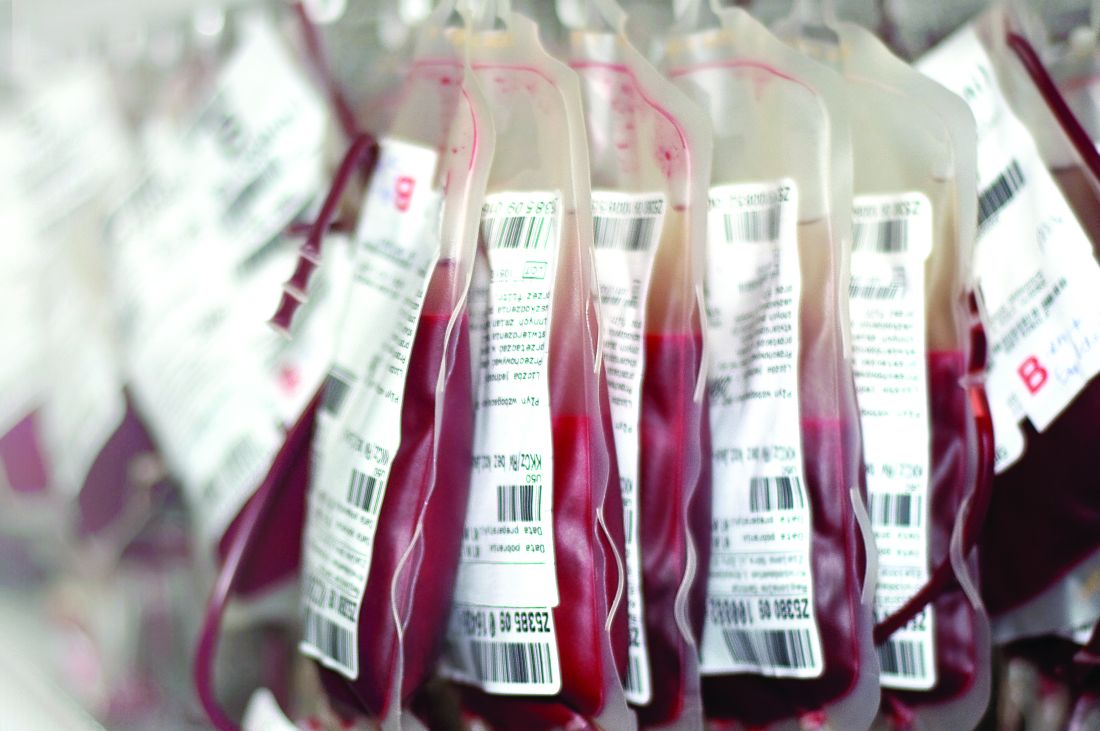
Previous research suggests that PBT may be associated with worse oncological outcomes following cancer surgery, although the data have been inconsistent. In this study, Dr. Abu-Ghanem and colleagues conducted a retrospective study that examined effect of PBT on the prognosis of 1,159 patients who underwent radical nephrectomy or partial nephrectomy for RCC, between 1987 to 2013.
Within this cohort, 198 patients (17.1%) received a PBT, and the median follow-up was 63.2 months. Receipt of PBT was associated with a symptomatic presentation (P less than .001) and a higher rate of adverse pathological features that included larger tumors (P less than .001), high nuclear grade (P less than .001), presence of tumor necrosis (P less than .001), and capsular invasion (P less than .001). Patients who received PBT were also more likely to have undergone an open surgical procedure (P less than .05).
The authors found that receipt of a PBT was associated with significantly worse 5-year relapse free survival (81% vs. 92%, P less than .01) as well as metastatic free survival (79% vs. 93%, P less than .001). Receiving a PBT was also associated with a worse 5-year CSS (85% vs. 95%, P less than .001) and OS (73% vs. 81%, P less than .001) versus those who were not transfused.
A subgroup analysis showed that patients who underwent a partial nephrectomy also had worse outcomes if they received a PBT as compared to those who didn’t; 5-year relapse free survival was 81% vs. 90% (P = .014), CSS was 89% vs. 97% (P = .019) and OS was 82% vs. 92%, (P = .016).
There were no funding sources or author disclosures listed in the article.
Perioperative blood transfusion (PBT) is associated with poorer outcomes among patients who underwent nephrectomy for renal cell carcinoma (RCC), according to a retrospective review of 1,159 patients.
Using multivariate analysis and controlling for potential confounders such as clinical and pathologic features, receipt of PBT was associated with significantly increased risk of tumor recurrence (HR = 2, P = .02, metastatic progression (HR = 2.5, P = .007), and death from RCC (HR = 2.5, P = .02).
Previous research suggests that PBT may be associated with worse oncological outcomes following cancer surgery, although the data have been inconsistent. In this study, Dr. Abu-Ghanem and colleagues conducted a retrospective study that examined effect of PBT on the prognosis of 1,159 patients who underwent radical nephrectomy or partial nephrectomy for RCC, between 1987 to 2013.
Within this cohort, 198 patients (17.1%) received a PBT, and the median follow-up was 63.2 months. Receipt of PBT was associated with a symptomatic presentation (P less than .001) and a higher rate of adverse pathological features that included larger tumors (P less than .001), high nuclear grade (P less than .001), presence of tumor necrosis (P less than .001), and capsular invasion (P less than .001). Patients who received PBT were also more likely to have undergone an open surgical procedure (P less than .05).
The authors found that receipt of a PBT was associated with significantly worse 5-year relapse free survival (81% vs. 92%, P less than .01) as well as metastatic free survival (79% vs. 93%, P less than .001). Receiving a PBT was also associated with a worse 5-year CSS (85% vs. 95%, P less than .001) and OS (73% vs. 81%, P less than .001) versus those who were not transfused.
A subgroup analysis showed that patients who underwent a partial nephrectomy also had worse outcomes if they received a PBT as compared to those who didn’t; 5-year relapse free survival was 81% vs. 90% (P = .014), CSS was 89% vs. 97% (P = .019) and OS was 82% vs. 92%, (P = .016).
There were no funding sources or author disclosures listed in the article.
Perioperative blood transfusion (PBT) is associated with poorer outcomes among patients who underwent nephrectomy for renal cell carcinoma (RCC), according to a retrospective review of 1,159 patients.
Using multivariate analysis and controlling for potential confounders such as clinical and pathologic features, receipt of PBT was associated with significantly increased risk of tumor recurrence (HR = 2, P = .02, metastatic progression (HR = 2.5, P = .007), and death from RCC (HR = 2.5, P = .02).
Previous research suggests that PBT may be associated with worse oncological outcomes following cancer surgery, although the data have been inconsistent. In this study, Dr. Abu-Ghanem and colleagues conducted a retrospective study that examined effect of PBT on the prognosis of 1,159 patients who underwent radical nephrectomy or partial nephrectomy for RCC, between 1987 to 2013.
Within this cohort, 198 patients (17.1%) received a PBT, and the median follow-up was 63.2 months. Receipt of PBT was associated with a symptomatic presentation (P less than .001) and a higher rate of adverse pathological features that included larger tumors (P less than .001), high nuclear grade (P less than .001), presence of tumor necrosis (P less than .001), and capsular invasion (P less than .001). Patients who received PBT were also more likely to have undergone an open surgical procedure (P less than .05).
The authors found that receipt of a PBT was associated with significantly worse 5-year relapse free survival (81% vs. 92%, P less than .01) as well as metastatic free survival (79% vs. 93%, P less than .001). Receiving a PBT was also associated with a worse 5-year CSS (85% vs. 95%, P less than .001) and OS (73% vs. 81%, P less than .001) versus those who were not transfused.
A subgroup analysis showed that patients who underwent a partial nephrectomy also had worse outcomes if they received a PBT as compared to those who didn’t; 5-year relapse free survival was 81% vs. 90% (P = .014), CSS was 89% vs. 97% (P = .019) and OS was 82% vs. 92%, (P = .016).
There were no funding sources or author disclosures listed in the article.
FROM UROLOGIC ONCOLOGY
Key clinical point: Major finding: Receipt of PBT was associated with significantly increased risk of tumor recurrence (HR = 2, P = .02, metastatic progression (HR = 2.5, P = .007), and death from RCC (HR = 2.5, P = .02).
Data source: Retrospective study that included 1,159 patients with RCC who underwent nephrectomy and evaluated outcomes in those who received a PBT versus those who did not.
Disclosures: There are no funding sources or author disclosures listed.
Eliminating patient-controlled analgesia accelerates discharge after bariatric surgery
NATIONAL HARBOR, MD – Hospital discharge after bariatric surgery can be significantly and meaningful accelerated by using multimodality pain control techniques that do not include patient-controlled analgesia (PCA), according to data from a two-hospital study presented at Obesity Week 2017.
“It was our impression that PCA was delaying milestones of recovery, so we prospectively evaluated this hypothesis. The result was a meaningful reduction in the length of stay without any meaningful adverse consequences,” reported Aline Van, RN, a weight loss surgery nurse navigator at Doctors Hospital, Manteca, Calif.

The study was conducted because of concern that nausea and vomiting related to PCA was a common cause of discharge delay at both Doctors Hospital in Manteca (DHM) and the affiliated Doctors Medical Center (DMC) in Modesto. Led by Maria Marple, PA-C, the two-part prospective study consisted of an initial six-month evaluation of average length of stay (LOS) and a formal evaluation of the causes of delayed discharge. In the second phase, the same analyses were performed over a six-month period when PCA was halted.
At 1.83 days in one center and 1.84 days in the other, the average LOS was nearly identical during the initial six-month baseline evaluation. In the 75 patients evaluated in this period at DHC, inadequate fluid intake due to nausea and vomiting was involved in 61.7% of the cases in which discharge was delayed. At DMC, where 46 patients were evaluated in the baseline period, 47.6% of delays were due to inadequate fluid intake attributed to nausea and vomiting. In both cases, this was the most common reason for delay.
In the study period after PCA was discontinued, inadequate fluid intake remained the major cause of delayed discharges, but there were fewer discharge delays overall due to less nausea and vomiting. The average length of stay among the 104 patients treated in the study period at DHM fell to 1.64 days, while the average LOS fell to 1.66 days in the 83 patients treated at DMC. This was largely driven by a reduction in the proportion of patients with >2 days LOS, which fell from 52% to 41% at DHC (P = .04) and from 45% to 32% at DMC (P = .008).
The surgical procedures at both centers (all performed laparoscopically) included sleeve gastrectomy, gastric bypass, and duodenal switch. Although a multimodality approach is employed for postoperative pain control at both institutions, the protocols differ modestly. At DHC, acetaminophen by mouth is the primary postoperative analgesic with hydromorphone permitted if needed. At DMC, intravenous acetaminophen is used in the first 24 hours in all patients with acetaminophen/hydrocodone offered if needed.
Since the trial was completed and results analyzed, PCA has been discontinued completely at both institutions. In follow-up to date there has been a slight additional reduction in average LOS at both institutions, reaching 1.5 days at DHC and 1.61 days at DMC.
“The four to five hour average reduction in LOS following discontinuation of PCA is significant because it frees up beds at our hospital, which is run at capacity,” Ms. Van said. “When considered cumulatively, the average reduction in LOS is very meaningful.”
Although the benefits are generally attributed to reduced nausea and vomiting, which has implications for a better patient experience, Ms. Van also believes patients are having faster cognitive and physical recovery since PCA was eliminated, producing faster time to ambulation and discharge readiness.
“There really have been no negatives,” Dr. Coates confirmed. “In our experience, eliminating PCA has been better for the patients and has important implications for costs.”
Ms. Van and Dr. Coates reported no financial relationships relevant to this topic.
NATIONAL HARBOR, MD – Hospital discharge after bariatric surgery can be significantly and meaningful accelerated by using multimodality pain control techniques that do not include patient-controlled analgesia (PCA), according to data from a two-hospital study presented at Obesity Week 2017.
“It was our impression that PCA was delaying milestones of recovery, so we prospectively evaluated this hypothesis. The result was a meaningful reduction in the length of stay without any meaningful adverse consequences,” reported Aline Van, RN, a weight loss surgery nurse navigator at Doctors Hospital, Manteca, Calif.
The study was conducted because of concern that nausea and vomiting related to PCA was a common cause of discharge delay at both Doctors Hospital in Manteca (DHM) and the affiliated Doctors Medical Center (DMC) in Modesto. Led by Maria Marple, PA-C, the two-part prospective study consisted of an initial six-month evaluation of average length of stay (LOS) and a formal evaluation of the causes of delayed discharge. In the second phase, the same analyses were performed over a six-month period when PCA was halted.
At 1.83 days in one center and 1.84 days in the other, the average LOS was nearly identical during the initial six-month baseline evaluation. In the 75 patients evaluated in this period at DHC, inadequate fluid intake due to nausea and vomiting was involved in 61.7% of the cases in which discharge was delayed. At DMC, where 46 patients were evaluated in the baseline period, 47.6% of delays were due to inadequate fluid intake attributed to nausea and vomiting. In both cases, this was the most common reason for delay.
In the study period after PCA was discontinued, inadequate fluid intake remained the major cause of delayed discharges, but there were fewer discharge delays overall due to less nausea and vomiting. The average length of stay among the 104 patients treated in the study period at DHM fell to 1.64 days, while the average LOS fell to 1.66 days in the 83 patients treated at DMC. This was largely driven by a reduction in the proportion of patients with >2 days LOS, which fell from 52% to 41% at DHC (P = .04) and from 45% to 32% at DMC (P = .008).
The surgical procedures at both centers (all performed laparoscopically) included sleeve gastrectomy, gastric bypass, and duodenal switch. Although a multimodality approach is employed for postoperative pain control at both institutions, the protocols differ modestly. At DHC, acetaminophen by mouth is the primary postoperative analgesic with hydromorphone permitted if needed. At DMC, intravenous acetaminophen is used in the first 24 hours in all patients with acetaminophen/hydrocodone offered if needed.
Since the trial was completed and results analyzed, PCA has been discontinued completely at both institutions. In follow-up to date there has been a slight additional reduction in average LOS at both institutions, reaching 1.5 days at DHC and 1.61 days at DMC.
“The four to five hour average reduction in LOS following discontinuation of PCA is significant because it frees up beds at our hospital, which is run at capacity,” Ms. Van said. “When considered cumulatively, the average reduction in LOS is very meaningful.”
Although the benefits are generally attributed to reduced nausea and vomiting, which has implications for a better patient experience, Ms. Van also believes patients are having faster cognitive and physical recovery since PCA was eliminated, producing faster time to ambulation and discharge readiness.
“There really have been no negatives,” Dr. Coates confirmed. “In our experience, eliminating PCA has been better for the patients and has important implications for costs.”
Ms. Van and Dr. Coates reported no financial relationships relevant to this topic.
NATIONAL HARBOR, MD – Hospital discharge after bariatric surgery can be significantly and meaningful accelerated by using multimodality pain control techniques that do not include patient-controlled analgesia (PCA), according to data from a two-hospital study presented at Obesity Week 2017.
“It was our impression that PCA was delaying milestones of recovery, so we prospectively evaluated this hypothesis. The result was a meaningful reduction in the length of stay without any meaningful adverse consequences,” reported Aline Van, RN, a weight loss surgery nurse navigator at Doctors Hospital, Manteca, Calif.
The study was conducted because of concern that nausea and vomiting related to PCA was a common cause of discharge delay at both Doctors Hospital in Manteca (DHM) and the affiliated Doctors Medical Center (DMC) in Modesto. Led by Maria Marple, PA-C, the two-part prospective study consisted of an initial six-month evaluation of average length of stay (LOS) and a formal evaluation of the causes of delayed discharge. In the second phase, the same analyses were performed over a six-month period when PCA was halted.
At 1.83 days in one center and 1.84 days in the other, the average LOS was nearly identical during the initial six-month baseline evaluation. In the 75 patients evaluated in this period at DHC, inadequate fluid intake due to nausea and vomiting was involved in 61.7% of the cases in which discharge was delayed. At DMC, where 46 patients were evaluated in the baseline period, 47.6% of delays were due to inadequate fluid intake attributed to nausea and vomiting. In both cases, this was the most common reason for delay.
In the study period after PCA was discontinued, inadequate fluid intake remained the major cause of delayed discharges, but there were fewer discharge delays overall due to less nausea and vomiting. The average length of stay among the 104 patients treated in the study period at DHM fell to 1.64 days, while the average LOS fell to 1.66 days in the 83 patients treated at DMC. This was largely driven by a reduction in the proportion of patients with >2 days LOS, which fell from 52% to 41% at DHC (P = .04) and from 45% to 32% at DMC (P = .008).
The surgical procedures at both centers (all performed laparoscopically) included sleeve gastrectomy, gastric bypass, and duodenal switch. Although a multimodality approach is employed for postoperative pain control at both institutions, the protocols differ modestly. At DHC, acetaminophen by mouth is the primary postoperative analgesic with hydromorphone permitted if needed. At DMC, intravenous acetaminophen is used in the first 24 hours in all patients with acetaminophen/hydrocodone offered if needed.
Since the trial was completed and results analyzed, PCA has been discontinued completely at both institutions. In follow-up to date there has been a slight additional reduction in average LOS at both institutions, reaching 1.5 days at DHC and 1.61 days at DMC.
“The four to five hour average reduction in LOS following discontinuation of PCA is significant because it frees up beds at our hospital, which is run at capacity,” Ms. Van said. “When considered cumulatively, the average reduction in LOS is very meaningful.”
Although the benefits are generally attributed to reduced nausea and vomiting, which has implications for a better patient experience, Ms. Van also believes patients are having faster cognitive and physical recovery since PCA was eliminated, producing faster time to ambulation and discharge readiness.
“There really have been no negatives,” Dr. Coates confirmed. “In our experience, eliminating PCA has been better for the patients and has important implications for costs.”
Ms. Van and Dr. Coates reported no financial relationships relevant to this topic.
AT OBESITY WEEK 2017
Key clinical point: When patient-controlled analgesia (PCA) after bariatric surgery is eliminated, time to discharge is accelerated with no adverse consequences.
Major finding: The average 0.2 day (4.8 hour) reduction (P < .05) was characterized as clinically meaningful.
Data source: Prospective, non-randomized study.
Disclosures: Ms. Van and Dr. Coates reported no financial relationships relevant to this topic.
Young adult HIV patients may be at increased risk of hypertension
SAN DIEGO – Young adults with perinatally-acquired HIV are at an increased risk of developing hypertension, according to a study presented at IDWeek 2017, an infectious diseases conference.
With advances in HIV care and treatment increasing the lifespan of perinatally infected children, patients are seeing increased risks of HIV-associated, non-AIDS conditions like hypertension.
While the prevalence of hypertension in older HIV patients has been studied thoroughly, rates among younger, perinatal HIV populations is relatively unexplored, said Dr. Ryscavage.
Investigators examined 324 patients between the ages of 18-29 years, split between three arms for a cross sectional study: 108 patients with perinatally-acquired (PA) HIV, 108 patients with non-perinatally acquired (NPA) HIV, and 108 uninfected (UI) patients. The 3 study arms were a median age of 24 years, 95% black, and a slight majority female.
Dr. Ryscavage and fellow investigators defined systemic hypertension as two systolic blood pressure measurements greater than or equal to 140 mmHg, or diastolic measurements greater or equal to 90 mmHG within 3 months, or if a physician prescribed antihypertensive mediation.
The researchers discovered that, while UI patients had the highest prevalence of obesity, PA patients reported the highest rate of chronic kidney disease (19%) and dysplidemia (13%), compared to NPA (1% and 3% respectively) and UI (0% and 5% respectively) patients.
Hypertension prevalence was highest among PA patients, followed by NPA patients, and then UI at 23%, 10%, and 9% respectively.
Young adults with PA HIV were nearly 5 times as likely to have hypertension (aOR 4.7; CI 95% [1.9-11.5]) compared to the uninfected population, while NPA showed no significant difference compared to the uninfected (aOR 1.7; CI 95% [.7-4.6]).
Investigators checked to see if the increase in hypertension could be related to the high rate of chronic kidney disease, but were not successful.
“We found [chronic kidney disease] to be approximately one third increased odds of association with chronic kidney disease,” Dr. Ryscavage explained. “However excluding kidney disease, the prevalence odds ratios remained significant and in the context of the cross sectional study…it was difficult to establish a directional relationship between chronic kidney diseases and hypertension.”
This study was limited by using one center in West Baltimore. Also, due to a majority of patients having at least one deceased parent, investigators were not able to collect a complete family history.
Dr. Ryscavage and his colleagues are next looking for what specific factors in HIV groups are causing an increased prevalence. Meanwhile, the investigators implored other researchers to initiate studies in poorer nations where HIV is much more prevalent.
“These findings need to be explored in the developing world where we have the largest population of aging, perinatally infected patients,” said Dr. Ryscavage.
Presenters reported no relevant financial disclosures.
[email protected]
On Twitter @eaztweets
SAN DIEGO – Young adults with perinatally-acquired HIV are at an increased risk of developing hypertension, according to a study presented at IDWeek 2017, an infectious diseases conference.
With advances in HIV care and treatment increasing the lifespan of perinatally infected children, patients are seeing increased risks of HIV-associated, non-AIDS conditions like hypertension.
While the prevalence of hypertension in older HIV patients has been studied thoroughly, rates among younger, perinatal HIV populations is relatively unexplored, said Dr. Ryscavage.
Investigators examined 324 patients between the ages of 18-29 years, split between three arms for a cross sectional study: 108 patients with perinatally-acquired (PA) HIV, 108 patients with non-perinatally acquired (NPA) HIV, and 108 uninfected (UI) patients. The 3 study arms were a median age of 24 years, 95% black, and a slight majority female.
Dr. Ryscavage and fellow investigators defined systemic hypertension as two systolic blood pressure measurements greater than or equal to 140 mmHg, or diastolic measurements greater or equal to 90 mmHG within 3 months, or if a physician prescribed antihypertensive mediation.
The researchers discovered that, while UI patients had the highest prevalence of obesity, PA patients reported the highest rate of chronic kidney disease (19%) and dysplidemia (13%), compared to NPA (1% and 3% respectively) and UI (0% and 5% respectively) patients.
Hypertension prevalence was highest among PA patients, followed by NPA patients, and then UI at 23%, 10%, and 9% respectively.
Young adults with PA HIV were nearly 5 times as likely to have hypertension (aOR 4.7; CI 95% [1.9-11.5]) compared to the uninfected population, while NPA showed no significant difference compared to the uninfected (aOR 1.7; CI 95% [.7-4.6]).
Investigators checked to see if the increase in hypertension could be related to the high rate of chronic kidney disease, but were not successful.
“We found [chronic kidney disease] to be approximately one third increased odds of association with chronic kidney disease,” Dr. Ryscavage explained. “However excluding kidney disease, the prevalence odds ratios remained significant and in the context of the cross sectional study…it was difficult to establish a directional relationship between chronic kidney diseases and hypertension.”
This study was limited by using one center in West Baltimore. Also, due to a majority of patients having at least one deceased parent, investigators were not able to collect a complete family history.
Dr. Ryscavage and his colleagues are next looking for what specific factors in HIV groups are causing an increased prevalence. Meanwhile, the investigators implored other researchers to initiate studies in poorer nations where HIV is much more prevalent.
“These findings need to be explored in the developing world where we have the largest population of aging, perinatally infected patients,” said Dr. Ryscavage.
Presenters reported no relevant financial disclosures.
[email protected]
On Twitter @eaztweets
SAN DIEGO – Young adults with perinatally-acquired HIV are at an increased risk of developing hypertension, according to a study presented at IDWeek 2017, an infectious diseases conference.
With advances in HIV care and treatment increasing the lifespan of perinatally infected children, patients are seeing increased risks of HIV-associated, non-AIDS conditions like hypertension.
While the prevalence of hypertension in older HIV patients has been studied thoroughly, rates among younger, perinatal HIV populations is relatively unexplored, said Dr. Ryscavage.
Investigators examined 324 patients between the ages of 18-29 years, split between three arms for a cross sectional study: 108 patients with perinatally-acquired (PA) HIV, 108 patients with non-perinatally acquired (NPA) HIV, and 108 uninfected (UI) patients. The 3 study arms were a median age of 24 years, 95% black, and a slight majority female.
Dr. Ryscavage and fellow investigators defined systemic hypertension as two systolic blood pressure measurements greater than or equal to 140 mmHg, or diastolic measurements greater or equal to 90 mmHG within 3 months, or if a physician prescribed antihypertensive mediation.
The researchers discovered that, while UI patients had the highest prevalence of obesity, PA patients reported the highest rate of chronic kidney disease (19%) and dysplidemia (13%), compared to NPA (1% and 3% respectively) and UI (0% and 5% respectively) patients.
Hypertension prevalence was highest among PA patients, followed by NPA patients, and then UI at 23%, 10%, and 9% respectively.
Young adults with PA HIV were nearly 5 times as likely to have hypertension (aOR 4.7; CI 95% [1.9-11.5]) compared to the uninfected population, while NPA showed no significant difference compared to the uninfected (aOR 1.7; CI 95% [.7-4.6]).
Investigators checked to see if the increase in hypertension could be related to the high rate of chronic kidney disease, but were not successful.
“We found [chronic kidney disease] to be approximately one third increased odds of association with chronic kidney disease,” Dr. Ryscavage explained. “However excluding kidney disease, the prevalence odds ratios remained significant and in the context of the cross sectional study…it was difficult to establish a directional relationship between chronic kidney diseases and hypertension.”
This study was limited by using one center in West Baltimore. Also, due to a majority of patients having at least one deceased parent, investigators were not able to collect a complete family history.
Dr. Ryscavage and his colleagues are next looking for what specific factors in HIV groups are causing an increased prevalence. Meanwhile, the investigators implored other researchers to initiate studies in poorer nations where HIV is much more prevalent.
“These findings need to be explored in the developing world where we have the largest population of aging, perinatally infected patients,” said Dr. Ryscavage.
Presenters reported no relevant financial disclosures.
[email protected]
On Twitter @eaztweets
AT IDWEEK 2017
Key clinical point:
Major finding: The prevalence of hypertension was 23% among perinatally infected patients, compared with 10% among nonperinatally infected patients and 9% among uninfected patients.
Data source: A cross-sectional study of 324 young adults between 18-29 years as of Sept. 1, 2014, from West Baltimore.
Disclosures: The presenters reported no relevant financial disclosures.