User login
How malaria parasites evade the immune system
Credit: St Jude
Children’s Research Hospital
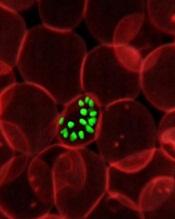
A new study has shown that malaria parasites can rapidly change proteins on the surface of human red blood cells (RBCs) during the course of a single infection, which helps the parasites evade the immune system.
The findings, which overturn previous thinking about the Plasmodium falciparum parasite’s lifecycle, could explain why so many attempts to create an effective malaria vaccine have failed and how the parasites are able to survive in the human body for such long periods of time.
Investigators described this research in PLOS Genetics.
The team kept P falciparum parasites dividing in human blood in the lab for over a year and sequenced the full parasite genome regularly. This provided snapshots of the parasite’s genome at multiple time points, allowing them to track evolution as it unfolded in the lab.
They found that the 60 or so genes that control proteins on the surface of infected human RBCs, known as var genes, swapped genetic information regularly, creating around a million new and unrecognizable surface proteins in every infected human every 2 days.
“These genes are like decks of cards constantly being shuffled,” explained study author William Hamilton, a graduate student at the Wellcome Trust Sanger Institute in Cambridge, UK.
“The use of whole-genome sequencing and the sheer number of samples we collected gave us a detailed picture of how the var gene repertoire changes continuously within red blood cells.”
The results showed, for the first time, that recombination does not occur when the malaria parasite is inside the mosquito, as previously thought. Instead, it occurs during the asexual stage of the parasite’s lifecycle inside human RBCs. This finding may help explain how chronic asymptomatic infection, a crucial problem for malaria elimination, is possible.
“It’s very likely that mosquitos are re-infected with Plasmodium falciparum parasites at the beginning of each wet season by biting humans who have carried the parasites, often asymptomatically, for up to 8 months during the dry season,” said study author Antoine Claessens, PhD, of the Wellcome Trust Sanger Institute.
“During those months, the parasite’s var genes are busy recombining to create millions of different versions—cunning disguises that mean they remain safe from the immune system and ready for the new malarial season.”
While further work will be required to fully understand the mechanism driving the recombination of P falciparum’s var genes, the investigators were able to calculate the rate at which it happens. They found that var gene recombination takes place in about 0.2% of parasites after each 48-hour life cycle in the RBC.
With about a billion parasites living inside a typical infected human, there is huge potential for the parasite to create new, recombined var genes inside each person with malaria. This pace of change far exceeds that of genes in any other region of the parasite’s genome.
“When you consider that 200 million people across the world are infected with malaria, and each of them is harboring parasites that are continually generating millions of antigenic variants, it becomes apparent why our fight against malaria is so challenging,” said study author Dominic Kwiatkowski, MBBS, of the Wellcome Trust Sanger Institute.
“This study is a great example of how genome sequence analysis is enriching our understanding of malaria biology. By learning the genetic tricks that the parasite uses to evade the human immune system, we will be in a much better position to eliminate this deadly disease.” 
Credit: St Jude
Children’s Research Hospital
A new study has shown that malaria parasites can rapidly change proteins on the surface of human red blood cells (RBCs) during the course of a single infection, which helps the parasites evade the immune system.
The findings, which overturn previous thinking about the Plasmodium falciparum parasite’s lifecycle, could explain why so many attempts to create an effective malaria vaccine have failed and how the parasites are able to survive in the human body for such long periods of time.
Investigators described this research in PLOS Genetics.
The team kept P falciparum parasites dividing in human blood in the lab for over a year and sequenced the full parasite genome regularly. This provided snapshots of the parasite’s genome at multiple time points, allowing them to track evolution as it unfolded in the lab.
They found that the 60 or so genes that control proteins on the surface of infected human RBCs, known as var genes, swapped genetic information regularly, creating around a million new and unrecognizable surface proteins in every infected human every 2 days.
“These genes are like decks of cards constantly being shuffled,” explained study author William Hamilton, a graduate student at the Wellcome Trust Sanger Institute in Cambridge, UK.
“The use of whole-genome sequencing and the sheer number of samples we collected gave us a detailed picture of how the var gene repertoire changes continuously within red blood cells.”
The results showed, for the first time, that recombination does not occur when the malaria parasite is inside the mosquito, as previously thought. Instead, it occurs during the asexual stage of the parasite’s lifecycle inside human RBCs. This finding may help explain how chronic asymptomatic infection, a crucial problem for malaria elimination, is possible.
“It’s very likely that mosquitos are re-infected with Plasmodium falciparum parasites at the beginning of each wet season by biting humans who have carried the parasites, often asymptomatically, for up to 8 months during the dry season,” said study author Antoine Claessens, PhD, of the Wellcome Trust Sanger Institute.
“During those months, the parasite’s var genes are busy recombining to create millions of different versions—cunning disguises that mean they remain safe from the immune system and ready for the new malarial season.”
While further work will be required to fully understand the mechanism driving the recombination of P falciparum’s var genes, the investigators were able to calculate the rate at which it happens. They found that var gene recombination takes place in about 0.2% of parasites after each 48-hour life cycle in the RBC.
With about a billion parasites living inside a typical infected human, there is huge potential for the parasite to create new, recombined var genes inside each person with malaria. This pace of change far exceeds that of genes in any other region of the parasite’s genome.
“When you consider that 200 million people across the world are infected with malaria, and each of them is harboring parasites that are continually generating millions of antigenic variants, it becomes apparent why our fight against malaria is so challenging,” said study author Dominic Kwiatkowski, MBBS, of the Wellcome Trust Sanger Institute.
“This study is a great example of how genome sequence analysis is enriching our understanding of malaria biology. By learning the genetic tricks that the parasite uses to evade the human immune system, we will be in a much better position to eliminate this deadly disease.”
Credit: St Jude
Children’s Research Hospital
A new study has shown that malaria parasites can rapidly change proteins on the surface of human red blood cells (RBCs) during the course of a single infection, which helps the parasites evade the immune system.
The findings, which overturn previous thinking about the Plasmodium falciparum parasite’s lifecycle, could explain why so many attempts to create an effective malaria vaccine have failed and how the parasites are able to survive in the human body for such long periods of time.
Investigators described this research in PLOS Genetics.
The team kept P falciparum parasites dividing in human blood in the lab for over a year and sequenced the full parasite genome regularly. This provided snapshots of the parasite’s genome at multiple time points, allowing them to track evolution as it unfolded in the lab.
They found that the 60 or so genes that control proteins on the surface of infected human RBCs, known as var genes, swapped genetic information regularly, creating around a million new and unrecognizable surface proteins in every infected human every 2 days.
“These genes are like decks of cards constantly being shuffled,” explained study author William Hamilton, a graduate student at the Wellcome Trust Sanger Institute in Cambridge, UK.
“The use of whole-genome sequencing and the sheer number of samples we collected gave us a detailed picture of how the var gene repertoire changes continuously within red blood cells.”
The results showed, for the first time, that recombination does not occur when the malaria parasite is inside the mosquito, as previously thought. Instead, it occurs during the asexual stage of the parasite’s lifecycle inside human RBCs. This finding may help explain how chronic asymptomatic infection, a crucial problem for malaria elimination, is possible.
“It’s very likely that mosquitos are re-infected with Plasmodium falciparum parasites at the beginning of each wet season by biting humans who have carried the parasites, often asymptomatically, for up to 8 months during the dry season,” said study author Antoine Claessens, PhD, of the Wellcome Trust Sanger Institute.
“During those months, the parasite’s var genes are busy recombining to create millions of different versions—cunning disguises that mean they remain safe from the immune system and ready for the new malarial season.”
While further work will be required to fully understand the mechanism driving the recombination of P falciparum’s var genes, the investigators were able to calculate the rate at which it happens. They found that var gene recombination takes place in about 0.2% of parasites after each 48-hour life cycle in the RBC.
With about a billion parasites living inside a typical infected human, there is huge potential for the parasite to create new, recombined var genes inside each person with malaria. This pace of change far exceeds that of genes in any other region of the parasite’s genome.
“When you consider that 200 million people across the world are infected with malaria, and each of them is harboring parasites that are continually generating millions of antigenic variants, it becomes apparent why our fight against malaria is so challenging,” said study author Dominic Kwiatkowski, MBBS, of the Wellcome Trust Sanger Institute.
“This study is a great example of how genome sequence analysis is enriching our understanding of malaria biology. By learning the genetic tricks that the parasite uses to evade the human immune system, we will be in a much better position to eliminate this deadly disease.”
FDA recommends changing blood donor policy for MSM

Photo by Elisa Amendola
The US Food and Drug Administration (FDA) is recommending a change to the policy that prevents men who have sex with men (MSM) from donating blood, according to FDA Commissioner Margaret A. Hamburg.
The FDA would like to allow MSM to donate blood if they have abstained from sexual contact for 1 year.
The agency intends to issue a draft guidance recommending this policy change in 2015. The guidance will be open for public comment.
In a prepared statement, Hamburg said that, over the past few years, the FDA and other government agencies have carefully considered the scientific evidence relevant to the blood donor deferral policy for MSM.
This review, as well as the recommendations of advisory committees to the US Department of Health and Human Services (HHS) and the FDA, has prompted the FDA to recommend the change.
“This recommended change is consistent with the recommendation of an independent expert advisory panel, the HHS Advisory Committee on Blood and Tissue Safety and Availability, and will better align the deferral period with that of other men and women at increased risk for HIV infection,” Hamburg said.
“Additionally, in collaboration with the NIH’s National Heart Lung and Blood Institute (NHLBI), the FDA has already taken steps to implement a national blood surveillance system that will help the agency monitor the effect of a policy change and further help to ensure the continued safety of the blood supply.” 
Photo by Elisa Amendola
The US Food and Drug Administration (FDA) is recommending a change to the policy that prevents men who have sex with men (MSM) from donating blood, according to FDA Commissioner Margaret A. Hamburg.
The FDA would like to allow MSM to donate blood if they have abstained from sexual contact for 1 year.
The agency intends to issue a draft guidance recommending this policy change in 2015. The guidance will be open for public comment.
In a prepared statement, Hamburg said that, over the past few years, the FDA and other government agencies have carefully considered the scientific evidence relevant to the blood donor deferral policy for MSM.
This review, as well as the recommendations of advisory committees to the US Department of Health and Human Services (HHS) and the FDA, has prompted the FDA to recommend the change.
“This recommended change is consistent with the recommendation of an independent expert advisory panel, the HHS Advisory Committee on Blood and Tissue Safety and Availability, and will better align the deferral period with that of other men and women at increased risk for HIV infection,” Hamburg said.
“Additionally, in collaboration with the NIH’s National Heart Lung and Blood Institute (NHLBI), the FDA has already taken steps to implement a national blood surveillance system that will help the agency monitor the effect of a policy change and further help to ensure the continued safety of the blood supply.”
Photo by Elisa Amendola
The US Food and Drug Administration (FDA) is recommending a change to the policy that prevents men who have sex with men (MSM) from donating blood, according to FDA Commissioner Margaret A. Hamburg.
The FDA would like to allow MSM to donate blood if they have abstained from sexual contact for 1 year.
The agency intends to issue a draft guidance recommending this policy change in 2015. The guidance will be open for public comment.
In a prepared statement, Hamburg said that, over the past few years, the FDA and other government agencies have carefully considered the scientific evidence relevant to the blood donor deferral policy for MSM.
This review, as well as the recommendations of advisory committees to the US Department of Health and Human Services (HHS) and the FDA, has prompted the FDA to recommend the change.
“This recommended change is consistent with the recommendation of an independent expert advisory panel, the HHS Advisory Committee on Blood and Tissue Safety and Availability, and will better align the deferral period with that of other men and women at increased risk for HIV infection,” Hamburg said.
“Additionally, in collaboration with the NIH’s National Heart Lung and Blood Institute (NHLBI), the FDA has already taken steps to implement a national blood surveillance system that will help the agency monitor the effect of a policy change and further help to ensure the continued safety of the blood supply.”
Classic HL vulnerable to PD-1 blockade therapy

SAN FRANCISCO—Two monoclonal antibodies that block the programmed death-1 (PD-1) pathway are showing promise in early phase trials in relapsed/refractory classic Hodgkin lymphoma (cHL).
Nivolumab prompted an 87% overall response rate (ORR) in heavily pretreated patients, and pembrolizumab elicited a 66% ORR in patients who had failed prior treatment with brentuximab vedotin.
These results were presented in 2 abstracts at the 2014 ASH Annual Meeting.
The rationale for using PD-1 blockade in cHL is that these patients frequently have an alteration in chromosome 9p24.1, which leads to increased expression of the PD-1 ligands, PD-L1 and PD-L2. The ligands engage the PD-1 receptors on activated T cells, inducing T-cell exhaustion. More than 85% of cHL tumors overexpress PD-L1.
Craig H. Moskowitz, MD, who presented the data on pembrolizumab at the meeting, sees nivolumab and pembrolizumab as being very similar.
“My gut feeling is that, at the end of the day, the response rates will be very similar,” he said. “The complete response rates will be similar. I think the toxicity profiles may be slightly dissimilar, and we’ll have to see what happens when these studies are both peer-reviewed.”
Nivolumab
Philippe Armand, MD, of Dana-Farber Cancer Institute in Boston, presented data on nivolumab in cHL (abstract 289), which was an independent expansion cohort of a phase 1b study in hematologic malignancies.
The 23 cHL patients received nivolumab at 3 mg/kg on weeks 1 and 4, then every 2 weeks.
Patients were a median age of 35 years (range, 20 to 54), and about two-thirds had received 4 or more prior systemic therapies. Seventy-eight percent had prior autologous stem cell transplant, and 78% had prior treatment with brentuximab.
“These were extensively pretreated patients” Dr Armand said, “with few options available.”
Twenty patients responded, for an ORR of 87%. Four patients (17%) achieved a complete response (CR), 16 (70%) had a partial response, and 3 (13%) had stable disease.
There were no progressions. And, at 24 weeks, the progression-free survival was 86%.
There were no life-threatening adverse events (AEs), no drug-related deaths, and no drug-related grade 4 AEs. Twenty-two patients (96%) experienced an AE, 18 (78%) had a drug-related AE, 5 (22%) had a grade 3 drug-related AE, and 2 (9%) patients discontinued treatment due to a drug-related AE.
The 2 events leading to discontinuation were myelodysplastic syndromes with grade 3 thrombocytopenia and grade 3 pancreatitis. The other grade 3 drug-related AEs were lymphopenia, increased lipase, GI inflammation, pneumonitis, colitis, and stomatitis.
“Overall, nivolumab has been used in thousands of patients already on clinical trials in solid tumors,” Dr Armand said. “And, overall, this safety profile mirrors that from what we expected in solid tumors.”
“But the interesting thing about that, from our standpoint, is that there was no apparent increase in the incidence of lung toxicity, which is something we worry about for those patients because many of them had had radiation or other drugs that can cause lung injury.”
This study was recently published in NEJM. It was funded by Bristol-Myers Squibb, the company developing nivolumab, and others.
Based on results of this study, the US Food and Drug Administration (FDA) granted nivolumab breakthrough therapy designation to treat HL. The drug recently gained FDA approval to treat advanced melanoma.
Pembrolizumab
Dr Moskowitz, of Memorial Sloan Kettering Cancer Center in New York, presented data on pembrolizumab as abstract 290.*
Investigators enrolled 31 patients onto the cHL cohort of the Keynote 013 trial. Patients were a median age of 32 years (range, 20 to 67).
All patients had failed therapy with brentuximab vedotin, 69% failed prior stem cell transplant, and 28% were transplant ineligible. Patients had to have an ECOG performance status of 0 or 1 and could not have autoimmune disease or interstitial lung disease.
Patients received 10 mg/kg of pembrolizumab intravenously every 2 weeks for up to 24 months or until progression.
Twenty-nine patients were evaluable for efficacy. The ORR was 66%, with a CR rate of 21% and a partial response rate of 45%. Twenty-one percent of patients had stable disease, and 14% had progressive disease. So the clinical benefit rate was 86%.
The median time to response was 12 weeks, and the median duration of response ranged from 1 to 185 days, but the median had not yet been reached.
Nine patients (31%) discontinued therapy, 1 (3%) due to an AE, 7 (24%) due to disease progression, and 1 (3%) after achieving a CR. Twenty patients (69%) were still on therapy at the time of the presentation, and 1 patient went on to transplant.
Sixteen patients (55%) experienced 1 or more treatment-related AE of any grade. Those occurring in 2 or more patients included hypothyroidism (10%), pneumonitis (10%), constipation (7%), diarrhea (7%), nausea (7%), hypercholesterolemia (7%), hypertriglyceridemia (7%), and hematuria (7%).
Treatment-related AEs of grade 3 or higher included axillary pain (3%), hypoxia (3%), joint swelling (3%), and pneumonitis (3%). Three patients experienced 4 grade 3 or higher AEs. There were no grade 4 treatment-related AEs or treatment-related deaths.
“In my opinion,” Dr Moskowitz concluded, “these results support continued development of pembrolizumab in Hodgkin lymphoma.”
“I think that these drugs are here to stay. Where we are going to put them in the armamentarium in Hodgkin lymphoma remains to be seen.”
This study was funded by Merck Sharp & Dohme Corp., the company developing pembrolizumab.
*Information in the abstract differs from that presented at the meeting.
SAN FRANCISCO—Two monoclonal antibodies that block the programmed death-1 (PD-1) pathway are showing promise in early phase trials in relapsed/refractory classic Hodgkin lymphoma (cHL).
Nivolumab prompted an 87% overall response rate (ORR) in heavily pretreated patients, and pembrolizumab elicited a 66% ORR in patients who had failed prior treatment with brentuximab vedotin.
These results were presented in 2 abstracts at the 2014 ASH Annual Meeting.
The rationale for using PD-1 blockade in cHL is that these patients frequently have an alteration in chromosome 9p24.1, which leads to increased expression of the PD-1 ligands, PD-L1 and PD-L2. The ligands engage the PD-1 receptors on activated T cells, inducing T-cell exhaustion. More than 85% of cHL tumors overexpress PD-L1.
Craig H. Moskowitz, MD, who presented the data on pembrolizumab at the meeting, sees nivolumab and pembrolizumab as being very similar.
“My gut feeling is that, at the end of the day, the response rates will be very similar,” he said. “The complete response rates will be similar. I think the toxicity profiles may be slightly dissimilar, and we’ll have to see what happens when these studies are both peer-reviewed.”
Nivolumab
Philippe Armand, MD, of Dana-Farber Cancer Institute in Boston, presented data on nivolumab in cHL (abstract 289), which was an independent expansion cohort of a phase 1b study in hematologic malignancies.
The 23 cHL patients received nivolumab at 3 mg/kg on weeks 1 and 4, then every 2 weeks.
Patients were a median age of 35 years (range, 20 to 54), and about two-thirds had received 4 or more prior systemic therapies. Seventy-eight percent had prior autologous stem cell transplant, and 78% had prior treatment with brentuximab.
“These were extensively pretreated patients” Dr Armand said, “with few options available.”
Twenty patients responded, for an ORR of 87%. Four patients (17%) achieved a complete response (CR), 16 (70%) had a partial response, and 3 (13%) had stable disease.
There were no progressions. And, at 24 weeks, the progression-free survival was 86%.
There were no life-threatening adverse events (AEs), no drug-related deaths, and no drug-related grade 4 AEs. Twenty-two patients (96%) experienced an AE, 18 (78%) had a drug-related AE, 5 (22%) had a grade 3 drug-related AE, and 2 (9%) patients discontinued treatment due to a drug-related AE.
The 2 events leading to discontinuation were myelodysplastic syndromes with grade 3 thrombocytopenia and grade 3 pancreatitis. The other grade 3 drug-related AEs were lymphopenia, increased lipase, GI inflammation, pneumonitis, colitis, and stomatitis.
“Overall, nivolumab has been used in thousands of patients already on clinical trials in solid tumors,” Dr Armand said. “And, overall, this safety profile mirrors that from what we expected in solid tumors.”
“But the interesting thing about that, from our standpoint, is that there was no apparent increase in the incidence of lung toxicity, which is something we worry about for those patients because many of them had had radiation or other drugs that can cause lung injury.”
This study was recently published in NEJM. It was funded by Bristol-Myers Squibb, the company developing nivolumab, and others.
Based on results of this study, the US Food and Drug Administration (FDA) granted nivolumab breakthrough therapy designation to treat HL. The drug recently gained FDA approval to treat advanced melanoma.
Pembrolizumab
Dr Moskowitz, of Memorial Sloan Kettering Cancer Center in New York, presented data on pembrolizumab as abstract 290.*
Investigators enrolled 31 patients onto the cHL cohort of the Keynote 013 trial. Patients were a median age of 32 years (range, 20 to 67).
All patients had failed therapy with brentuximab vedotin, 69% failed prior stem cell transplant, and 28% were transplant ineligible. Patients had to have an ECOG performance status of 0 or 1 and could not have autoimmune disease or interstitial lung disease.
Patients received 10 mg/kg of pembrolizumab intravenously every 2 weeks for up to 24 months or until progression.
Twenty-nine patients were evaluable for efficacy. The ORR was 66%, with a CR rate of 21% and a partial response rate of 45%. Twenty-one percent of patients had stable disease, and 14% had progressive disease. So the clinical benefit rate was 86%.
The median time to response was 12 weeks, and the median duration of response ranged from 1 to 185 days, but the median had not yet been reached.
Nine patients (31%) discontinued therapy, 1 (3%) due to an AE, 7 (24%) due to disease progression, and 1 (3%) after achieving a CR. Twenty patients (69%) were still on therapy at the time of the presentation, and 1 patient went on to transplant.
Sixteen patients (55%) experienced 1 or more treatment-related AE of any grade. Those occurring in 2 or more patients included hypothyroidism (10%), pneumonitis (10%), constipation (7%), diarrhea (7%), nausea (7%), hypercholesterolemia (7%), hypertriglyceridemia (7%), and hematuria (7%).
Treatment-related AEs of grade 3 or higher included axillary pain (3%), hypoxia (3%), joint swelling (3%), and pneumonitis (3%). Three patients experienced 4 grade 3 or higher AEs. There were no grade 4 treatment-related AEs or treatment-related deaths.
“In my opinion,” Dr Moskowitz concluded, “these results support continued development of pembrolizumab in Hodgkin lymphoma.”
“I think that these drugs are here to stay. Where we are going to put them in the armamentarium in Hodgkin lymphoma remains to be seen.”
This study was funded by Merck Sharp & Dohme Corp., the company developing pembrolizumab.
*Information in the abstract differs from that presented at the meeting.
SAN FRANCISCO—Two monoclonal antibodies that block the programmed death-1 (PD-1) pathway are showing promise in early phase trials in relapsed/refractory classic Hodgkin lymphoma (cHL).
Nivolumab prompted an 87% overall response rate (ORR) in heavily pretreated patients, and pembrolizumab elicited a 66% ORR in patients who had failed prior treatment with brentuximab vedotin.
These results were presented in 2 abstracts at the 2014 ASH Annual Meeting.
The rationale for using PD-1 blockade in cHL is that these patients frequently have an alteration in chromosome 9p24.1, which leads to increased expression of the PD-1 ligands, PD-L1 and PD-L2. The ligands engage the PD-1 receptors on activated T cells, inducing T-cell exhaustion. More than 85% of cHL tumors overexpress PD-L1.
Craig H. Moskowitz, MD, who presented the data on pembrolizumab at the meeting, sees nivolumab and pembrolizumab as being very similar.
“My gut feeling is that, at the end of the day, the response rates will be very similar,” he said. “The complete response rates will be similar. I think the toxicity profiles may be slightly dissimilar, and we’ll have to see what happens when these studies are both peer-reviewed.”
Nivolumab
Philippe Armand, MD, of Dana-Farber Cancer Institute in Boston, presented data on nivolumab in cHL (abstract 289), which was an independent expansion cohort of a phase 1b study in hematologic malignancies.
The 23 cHL patients received nivolumab at 3 mg/kg on weeks 1 and 4, then every 2 weeks.
Patients were a median age of 35 years (range, 20 to 54), and about two-thirds had received 4 or more prior systemic therapies. Seventy-eight percent had prior autologous stem cell transplant, and 78% had prior treatment with brentuximab.
“These were extensively pretreated patients” Dr Armand said, “with few options available.”
Twenty patients responded, for an ORR of 87%. Four patients (17%) achieved a complete response (CR), 16 (70%) had a partial response, and 3 (13%) had stable disease.
There were no progressions. And, at 24 weeks, the progression-free survival was 86%.
There were no life-threatening adverse events (AEs), no drug-related deaths, and no drug-related grade 4 AEs. Twenty-two patients (96%) experienced an AE, 18 (78%) had a drug-related AE, 5 (22%) had a grade 3 drug-related AE, and 2 (9%) patients discontinued treatment due to a drug-related AE.
The 2 events leading to discontinuation were myelodysplastic syndromes with grade 3 thrombocytopenia and grade 3 pancreatitis. The other grade 3 drug-related AEs were lymphopenia, increased lipase, GI inflammation, pneumonitis, colitis, and stomatitis.
“Overall, nivolumab has been used in thousands of patients already on clinical trials in solid tumors,” Dr Armand said. “And, overall, this safety profile mirrors that from what we expected in solid tumors.”
“But the interesting thing about that, from our standpoint, is that there was no apparent increase in the incidence of lung toxicity, which is something we worry about for those patients because many of them had had radiation or other drugs that can cause lung injury.”
This study was recently published in NEJM. It was funded by Bristol-Myers Squibb, the company developing nivolumab, and others.
Based on results of this study, the US Food and Drug Administration (FDA) granted nivolumab breakthrough therapy designation to treat HL. The drug recently gained FDA approval to treat advanced melanoma.
Pembrolizumab
Dr Moskowitz, of Memorial Sloan Kettering Cancer Center in New York, presented data on pembrolizumab as abstract 290.*
Investigators enrolled 31 patients onto the cHL cohort of the Keynote 013 trial. Patients were a median age of 32 years (range, 20 to 67).
All patients had failed therapy with brentuximab vedotin, 69% failed prior stem cell transplant, and 28% were transplant ineligible. Patients had to have an ECOG performance status of 0 or 1 and could not have autoimmune disease or interstitial lung disease.
Patients received 10 mg/kg of pembrolizumab intravenously every 2 weeks for up to 24 months or until progression.
Twenty-nine patients were evaluable for efficacy. The ORR was 66%, with a CR rate of 21% and a partial response rate of 45%. Twenty-one percent of patients had stable disease, and 14% had progressive disease. So the clinical benefit rate was 86%.
The median time to response was 12 weeks, and the median duration of response ranged from 1 to 185 days, but the median had not yet been reached.
Nine patients (31%) discontinued therapy, 1 (3%) due to an AE, 7 (24%) due to disease progression, and 1 (3%) after achieving a CR. Twenty patients (69%) were still on therapy at the time of the presentation, and 1 patient went on to transplant.
Sixteen patients (55%) experienced 1 or more treatment-related AE of any grade. Those occurring in 2 or more patients included hypothyroidism (10%), pneumonitis (10%), constipation (7%), diarrhea (7%), nausea (7%), hypercholesterolemia (7%), hypertriglyceridemia (7%), and hematuria (7%).
Treatment-related AEs of grade 3 or higher included axillary pain (3%), hypoxia (3%), joint swelling (3%), and pneumonitis (3%). Three patients experienced 4 grade 3 or higher AEs. There were no grade 4 treatment-related AEs or treatment-related deaths.
“In my opinion,” Dr Moskowitz concluded, “these results support continued development of pembrolizumab in Hodgkin lymphoma.”
“I think that these drugs are here to stay. Where we are going to put them in the armamentarium in Hodgkin lymphoma remains to be seen.”
This study was funded by Merck Sharp & Dohme Corp., the company developing pembrolizumab.
*Information in the abstract differs from that presented at the meeting.

Mitoxantrone lots recalled worldwide

Credit: Bill Branson
Hospira, Inc. has initiated a worldwide, user-level recall of 10 lots of Mitoxantrone (both human and veterinary) due to confirmed subpotency and elevated impurity levels.
Drugs in the affected lots may exhibit decreased effectiveness, require additional dosing, or prompt cumulative impurity toxicity requiring medical intervention.
However, Hospira has not received reports of any adverse events associated with subpotency and impurities for these lots to date.
The lots were distributed to hospitals and veterinary clinics worldwide from February 2013 through November 2014.
The following lots are affected by the recall. (To ensure this list displays properly, click the “Hide” icon on the right side of this page to hide the “In this Section” column.)
United States
Product NDC Number Lot Expiration Date
MitoXANTRONE Injection, USP, 61703-343-18 Z054636AA December 2014
(concentrate) 20 mg/10 mL, A014636AA April 2015
2 mg/mL in 10 mL, 10 mL Vial, A024636AB July 2015
Multi Dose Vial
MitoXANTRONE Injection, USP, 61703-343-65 A014643AA April 2015
(concentrate) 25 mg/12.5 mL,
2 mg/mL in 12.5 mL, 12.5 mL Vial,
Multi Dose Vial
MitoXANTRONE Injection, USP, 61703-343-66 A014645AA November 2015
(concentrate) 30 mg/15 mL,
2 mg/mL in 15 mL, 15 mL Vial,
Multi Dose Vial
Australia and New Zealand
Product Product Code Batch Number Expiration Date
DBL™ MitoXANTRONE M4636A A024636AA July 2015
Hydrochloride Injection
(concentrate) 20mg/10mL
Injection Vial
United Kingdom, Ireland, Cyprus, Saudi Arabia, Qatar, Oman and Bahrain
Product List Number Lot Expiration Date
MitoXANTRONE 2 mg/mL; M4636AGB1 A014636AB April 2015
Concentrate for Infusion A024636AD July 2015
Z054636AB Dec 2014
Canada
Product List Number DIN Lot Expiration Date
MitoXANTRONE for
Injection 20mg /10mL USP 4636A001 02244614 A024636AC July 2015
Anyone with an existing inventory of the recalled lots should stop use and distribution, and quarantine the product immediately. This recall is being carried out to the user level (both human and veterinary).
Hospira has notified its direct customers via a recall letter and is arranging for impacted product to be returned to Stericycle in the US. For additional assistance in the US, call Stericycle at 1-844-265-7407 between the hours of 8 am and 5 pm ET, Monday through Friday. Customers outside the US should work with their local Hospira offices to return the product per local recall notifications.
For medical inquiries, contact Hospira Medical Communications at 1-800-615-0187 or [email protected] (Available 24 hours a day/7 days per week).
To report adverse events or for product complaints, contact Hospira Global Complaint Management at 1-800-441-4100 (M-F, 8 am to 5 pm CT).
Adverse events or quality problems associated with Mitoxantrone can also be reported to the FDA’s MedWatch Adverse Event Reporting Program.
Credit: Bill Branson
Hospira, Inc. has initiated a worldwide, user-level recall of 10 lots of Mitoxantrone (both human and veterinary) due to confirmed subpotency and elevated impurity levels.
Drugs in the affected lots may exhibit decreased effectiveness, require additional dosing, or prompt cumulative impurity toxicity requiring medical intervention.
However, Hospira has not received reports of any adverse events associated with subpotency and impurities for these lots to date.
The lots were distributed to hospitals and veterinary clinics worldwide from February 2013 through November 2014.
The following lots are affected by the recall. (To ensure this list displays properly, click the “Hide” icon on the right side of this page to hide the “In this Section” column.)
United States
Product NDC Number Lot Expiration Date
MitoXANTRONE Injection, USP, 61703-343-18 Z054636AA December 2014
(concentrate) 20 mg/10 mL, A014636AA April 2015
2 mg/mL in 10 mL, 10 mL Vial, A024636AB July 2015
Multi Dose Vial
MitoXANTRONE Injection, USP, 61703-343-65 A014643AA April 2015
(concentrate) 25 mg/12.5 mL,
2 mg/mL in 12.5 mL, 12.5 mL Vial,
Multi Dose Vial
MitoXANTRONE Injection, USP, 61703-343-66 A014645AA November 2015
(concentrate) 30 mg/15 mL,
2 mg/mL in 15 mL, 15 mL Vial,
Multi Dose Vial
Australia and New Zealand
Product Product Code Batch Number Expiration Date
DBL™ MitoXANTRONE M4636A A024636AA July 2015
Hydrochloride Injection
(concentrate) 20mg/10mL
Injection Vial
United Kingdom, Ireland, Cyprus, Saudi Arabia, Qatar, Oman and Bahrain
Product List Number Lot Expiration Date
MitoXANTRONE 2 mg/mL; M4636AGB1 A014636AB April 2015
Concentrate for Infusion A024636AD July 2015
Z054636AB Dec 2014
Canada
Product List Number DIN Lot Expiration Date
MitoXANTRONE for
Injection 20mg /10mL USP 4636A001 02244614 A024636AC July 2015
Anyone with an existing inventory of the recalled lots should stop use and distribution, and quarantine the product immediately. This recall is being carried out to the user level (both human and veterinary).
Hospira has notified its direct customers via a recall letter and is arranging for impacted product to be returned to Stericycle in the US. For additional assistance in the US, call Stericycle at 1-844-265-7407 between the hours of 8 am and 5 pm ET, Monday through Friday. Customers outside the US should work with their local Hospira offices to return the product per local recall notifications.
For medical inquiries, contact Hospira Medical Communications at 1-800-615-0187 or [email protected] (Available 24 hours a day/7 days per week).
To report adverse events or for product complaints, contact Hospira Global Complaint Management at 1-800-441-4100 (M-F, 8 am to 5 pm CT).
Adverse events or quality problems associated with Mitoxantrone can also be reported to the FDA’s MedWatch Adverse Event Reporting Program.
Credit: Bill Branson
Hospira, Inc. has initiated a worldwide, user-level recall of 10 lots of Mitoxantrone (both human and veterinary) due to confirmed subpotency and elevated impurity levels.
Drugs in the affected lots may exhibit decreased effectiveness, require additional dosing, or prompt cumulative impurity toxicity requiring medical intervention.
However, Hospira has not received reports of any adverse events associated with subpotency and impurities for these lots to date.
The lots were distributed to hospitals and veterinary clinics worldwide from February 2013 through November 2014.
The following lots are affected by the recall. (To ensure this list displays properly, click the “Hide” icon on the right side of this page to hide the “In this Section” column.)
United States
Product NDC Number Lot Expiration Date
MitoXANTRONE Injection, USP, 61703-343-18 Z054636AA December 2014
(concentrate) 20 mg/10 mL, A014636AA April 2015
2 mg/mL in 10 mL, 10 mL Vial, A024636AB July 2015
Multi Dose Vial
MitoXANTRONE Injection, USP, 61703-343-65 A014643AA April 2015
(concentrate) 25 mg/12.5 mL,
2 mg/mL in 12.5 mL, 12.5 mL Vial,
Multi Dose Vial
MitoXANTRONE Injection, USP, 61703-343-66 A014645AA November 2015
(concentrate) 30 mg/15 mL,
2 mg/mL in 15 mL, 15 mL Vial,
Multi Dose Vial
Australia and New Zealand
Product Product Code Batch Number Expiration Date
DBL™ MitoXANTRONE M4636A A024636AA July 2015
Hydrochloride Injection
(concentrate) 20mg/10mL
Injection Vial
United Kingdom, Ireland, Cyprus, Saudi Arabia, Qatar, Oman and Bahrain
Product List Number Lot Expiration Date
MitoXANTRONE 2 mg/mL; M4636AGB1 A014636AB April 2015
Concentrate for Infusion A024636AD July 2015
Z054636AB Dec 2014
Canada
Product List Number DIN Lot Expiration Date
MitoXANTRONE for
Injection 20mg /10mL USP 4636A001 02244614 A024636AC July 2015
Anyone with an existing inventory of the recalled lots should stop use and distribution, and quarantine the product immediately. This recall is being carried out to the user level (both human and veterinary).
Hospira has notified its direct customers via a recall letter and is arranging for impacted product to be returned to Stericycle in the US. For additional assistance in the US, call Stericycle at 1-844-265-7407 between the hours of 8 am and 5 pm ET, Monday through Friday. Customers outside the US should work with their local Hospira offices to return the product per local recall notifications.
For medical inquiries, contact Hospira Medical Communications at 1-800-615-0187 or [email protected] (Available 24 hours a day/7 days per week).
To report adverse events or for product complaints, contact Hospira Global Complaint Management at 1-800-441-4100 (M-F, 8 am to 5 pm CT).
Adverse events or quality problems associated with Mitoxantrone can also be reported to the FDA’s MedWatch Adverse Event Reporting Program.
Similar Outcomes From Weekend Discharge
Hospitals typically reduce staffing levels and the availability of diagnostic, laboratory, and treatment services on weekends, and patients admitted on weekends exhibit poorer in‐hospital outcomes for several medical conditions.[1, 2, 3, 4, 5, 6, 7, 8, 9] Whether or not patients discharged on weekends have worse clinical outcomes has been less well studied.[10, 11, 12] Discharge rates on Saturday and Sunday are lower than for the other 5 days of the week,[12] but bed shortages and hospital overcrowding have increased the demand for maximizing 24/7 week‐round discharge efficiency. Given that the number of patients discharged on weekends is likely to continue to increase, it is important to assess the risk of weekend discharge on outcomes monitored as performance indicators by organizations such as the Centers for Medicare and Medicaid Services, the American Medical Association Physicians Consortium for Performance Improvement, the National Quality Forum, and the Joint Commission.
Thus, we designed this study to evaluate baseline characteristics, length of stay (LOS), and postdischarge outcomes for general internal medicine (GIM) patients in teaching hospitals discharged on weekends compared to weekdays. Our objective was to determine whether postdischarge outcomes differed for patients discharged on weekends versus weekdays.
METHODS
Study Setting
The Canadian province of Alberta has a single vertically integrated healthcare system that is government‐funded and provides universal access to hospitals, emergency departments (EDs), and outpatient physician services for all 4.1 million Albertans as well as all prescription medications for the poor, socially disadvantaged, disabled, or those age 65 years and older. This study received approval from the University of Alberta Health Research Ethics Board with waiver of informed consent.
Data Sources
This study used deidentified linked data from 3 Alberta Health administrative databases that capture vital status and all hospital or ED visits and have previously been shown to have high accuracy for medical diagnoses.[13] The Alberta Health Care Insurance Plan Registry tracks date of death or emigration from the province. The Discharge Abstract Database includes the most responsible diagnosis identified by the hospital attending physician, up to 25 other diagnoses coded by nosologists in each hospital, the admission and discharge dates, and the admission category (elective or urgent/emergent) for all acute care hospitalizations. Of note, unlike US studies, the hospital databases are able to distinguish in‐hospital (eg, adverse events) versus premorbid diagnoses (eg, preexisting comorbidities). The Ambulatory Care Database captures all patient visits to EDs with coding for up to 10 conditions per encounter.
Study Cohort
We identified all adults with an acute care hospitalization on the GIM services at all 7 Alberta teaching hospitals (ie, defined as those with Royal College of Physicians and Surgeons of Canadaapproved residency training programs in internal medicine, the equivalent of the Association of American Medical Colleges certification in the United States) between October 1, 2009 and September 30, 2010 and between April 1, 2011 and December 1, 2011 (these 20 months covered most of the pre/post intervals for a recently reported quality improvement initiative at 1 of the teaching hospitals that had no significant impact on postdischarge outcomes).[14] Patients from out of the province or transferred from/to another inpatient service (eg, the intensive care unit, a different service in the same hospital [such as surgery], another acute care hospital, or rehabilitation hospital) or with lengths of stay greater than 30 days were excluded. We only included the first hospitalization for any patient in our study timeframe and thus excluded repeat discharges of the same patient.
Explanatory Variable of Interest
The independent variable of interest was calendar day of discharge, stratified according to weekday (Monday thru Friday) versus weekend (Saturday and Sunday). Only 1.4% of weekday discharges occurred on a statutory holiday, and for the purposes of this study, these discharges were also considered weekend discharges. At the 7 teaching hospitals in Alberta, nursing staffing ratios do not differ between weekend and weekday, but availability of all other members of the healthcare team does. Physician census decreases from 4 to 5 per ward to 1 to 2, and ward‐based social workers, occupational therapists, physiotherapists, and pharmacist educators are generally not available on weekends.
Outcomes
Our primary outcome of interest was the composite outcome of death or all‐cause nonelective readmission within 30 days of discharge (ie, not including in‐hospital events prior to discharge or elective readmissions after discharge for planned procedures such as chemotherapy); hereafter we refer to this as death or readmission. This is a patient‐relevant outcome that is highlighted in the Affordable Care Act and for which there are several validated risk adjustment models.[15] We chose a composite outcome to deal with the issue of competing risks; if weekend discharges were more likely to die then we could observe a spurious association between weekend discharge and reduced readmissions if we focused on only that outcome.
Other Measures
Comorbidities for each patient were identified using International Classification of Diseases, Ninth Revision and Tenth Revision codes from the Discharge Abstract Database for the index hospitalization and any hospitalizations in the 12 months prior to their index admission, a method previously validated in Alberta databases.[13] We also recorded health resource use during their index hospitalization and calculated each patient's LACE score at the time of discharge, which is an index for predicting unplanned readmission or early death postdischarge previously validated in Canadian administrative databases.[15] The LACE index includes length of hospital stay (L), acuity of admission (A, based on the admission category variable described earlier), comorbidity burden quantified using the Charlson Comorbidity Index (C), and emergency department visits in the 6 months prior to admission (E); patients with discharge LACE scores >10 (total possible score is 19) are defined as being at high risk of death/readmission within 30 days.[16] As detailed below, to deal with potential concerns that LOS may be a mediator in the causal pathway, we ran 2 sensitivity analyses, 1 in which we excluded LOS from the analyses and 1 in which we included expected LOS rather than the actual LOS. Expected LOS is a data‐driven estimate based on the most current 2 years of patient LOS information available in the Canadian Institute for Health Information discharge abstract database (
Statistical Analysis
Baseline patient characteristics between weekend and weekday discharges were compared with t tests for continuous variables and [2] tests for binary or categorical variables. Logistic regression was used for comparison of death or readmission for weekend versus weekday discharges. Multivariable models were adjusted for age, sex, hospital, and LACE scores (as a continuous variable) at time of discharge; in sensitivity analyses we adjusted for (1) LACE score without including LOS and (2) LACE score using expected LOS rather than actual LOS. In further sensitivity analyses we (1) restricted the analysis to only those patients deemed to be at high risk for events due to LACE scores of 10 or greater and (2) included ED visits as part of the composite endpoint (ie, death, unplanned readmission, or unplanned ED visit within 30 days of discharge). Day of admission (weekend vs weekday) was also considered for the multivariable models, but was not found to be significant and thus was omitted from final models. We do not have any physician identifying variables in our dataset and thus could not investigate the potential correlation among patients discharged by the same physician. We did explore the hospital intraclass correlation coefficient, and as it was very small (0.001), we did not utilize models to account for the hierarchical nature of the data, but did include hospital as a fixed effect in the logistic models. The results were virtually identical whether we did or did not include hospital in the models. Adjusted odds ratios (aORs) are displayed with 95% confidence intervals (CI) and P values. Average LOS was calculated for weekend and weekday discharges with 95% CIs. P values for adjusted length of stay were calculated using multivariable linear regression adjusting for age, sex, day of admission, and Charlson score. All statistical analyses were done using SAS for Windows version 9.4 (SAS Institute, Inc., Cary, NC).
RESULTS
Patient Characteristics
Of the 7991 patients discharged during our study interval, 1146 (14.3%) were discharged on weekend or holiday days (Table 1). In contrast, 2180 of our cohort were admitted on a weekend (27.3%). The mean age of our study population was 62.1 years, 51.9% were men, mean Charlson score was 2.56, and 4591 (57.5%) had LACE scores of at least 10 at discharge.
| Characteristic | Weekend Discharge | Weekday Discharge | P Value |
|---|---|---|---|
| |||
| No. of patients | 1,146 | 6,845 | |
| Age, y, mean (SD) | 57.97 (19.70) | 62.77 (19.37) | <0.0001 |
| Male | 601 (52.4) | 3,548 (51.8) | 0.70 |
| Top 5 most responsible diagnoses | |||
| COPD | 74 (6.5) | 507 (7.4) | |
| Pneumonia | 64 (5.6) | 326 (4.8) | |
| Heart failure | 31 (2.7) | 375 (5.5) | |
| Urinary tract infection | 39 (3.4) | 254 (3.7) | |
| Venous thromboembolism | 31 (2.7) | 259 (3.8) | |
| Charlson score, mean (SD) | 2.17 (3.29) | 2.63 (3.30) | <0.0001 |
| Comorbidities (based on index hospitalization and prior 12 months) | |||
| Hypertension | 485 (42.3) | 3,265 (47.7) | 0.00 |
| Diabetes mellitus | 326 (28.4) | 2,106 (30.8) | 0.11 |
| Fluid imbalance | 332 (29.0) | 1,969 (28.8) | 0.89 |
| COPD | 255 (22.3) | 1,790 (26.2) | 0.01 |
| Psychiatric disorder | 179 (15.6) | 1,459 (21.3) | <0.0001 |
| Pneumonia | 242 (21.1) | 1,427 (20.8) | 0.84 |
| Anemia | 167 (14.6) | 1,233 (18.0) | 0.00 |
| Trauma | 169 (14.7) | 1,209 (17.7) | 0.02 |
| Atrial fibrillation | 141 (12.3) | 1,069 (15.6) | 0.00 |
| Heart failure | 101 (8.8) | 946 (13.8) | <0.0001 |
| Drug abuse | 188 (16.4) | 966 (14.1) | 0.04 |
| Cancer | 124 (10.8) | 867 (12.7) | 0.08 |
| Renal disease | 93 (8.1) | 689 (10.1) | 0.04 |
| Dementia | 49 (4.3) | 564 (8.2) | <0.0001 |
| Mild liver disease | 99 (8.6) | 587 (8.6) | 0.94 |
| Cerebrovascular disease | 59 (5.1) | 492 (7.2) | 0.01 |
| Gastrointestinal bleed | 84 (7.3) | 496 (7.2) | 0.92 |
| Asthma | 83 (7.2) | 426 (6.2) | 0.19 |
| Stroke | 42 (3.7) | 332 (4.9) | 0.08 |
| Prior myocardial infarction | 47 (4.1) | 329 (4.8) | 0.30 |
| Arthritis | 42 (3.7) | 309 (4.5) | 0.19 |
| Peripheral vascular disease | 42 (3.7) | 259 (3.8) | 0.84 |
| Severe liver disease | 44 (3.8) | 261 (3.8) | 0.97 |
| Valve disease | 24 (2.1) | 188 (2.7) | 0.20 |
| Paralysis | 31 (2.7) | 201 (2.9) | 0.67 |
| Skin ulcer | 17 (1.5) | 137 (2.0) | 0.24 |
| Shock | 19 (1.7) | 99 (1.4) | 0.58 |
| HIV | 15 (1.3) | 109 (1.6) | 0.47 |
| Protein calorie malnutrition | 0 (0.0) | 9 (0.1) | 0.21 |
| Features of index hospitalization | |||
| Resource intensity weight, mean (SD) | 1.10 (0.82) | 1.38 (1.24) | <0.0001 |
| LACE score, mean (SD) | 9.45 (2.85) | 10.51 (3.03) | <0.0001 |
| Expected LOS, mean (SD) | 6.20 (4.08) | 7.12 (4.89) | <0.0001 |
| Acute LOS, mean (SD) | 5.64 (4.99) | 7.86 (6.13) | <0.0001 |
| Weekend admission | 244 (21.3) | 1,936 (28.3) | <0.0001 |
| Discharge disposition | <0.0001 | ||
| Transferred to another inpatient hospital | 14 (1.2) | 189 (2.8) | |
| Transferred to long‐term care facility | 36 (3.1) | 532 (7.8) | |
| Transferred to other (except hospice) | 5 (0.4) | 24 (0.4) | |
| Discharged to home setting with support services | 125 (10.9) | 1,318 (19.3) | |
| Discharged home | 926 (80.8) | 4,646 (67.9) | |
| Left against medical advice | 40 (3.5) | 136 (2.0) | |
Weekday Versus Weekend Discharge
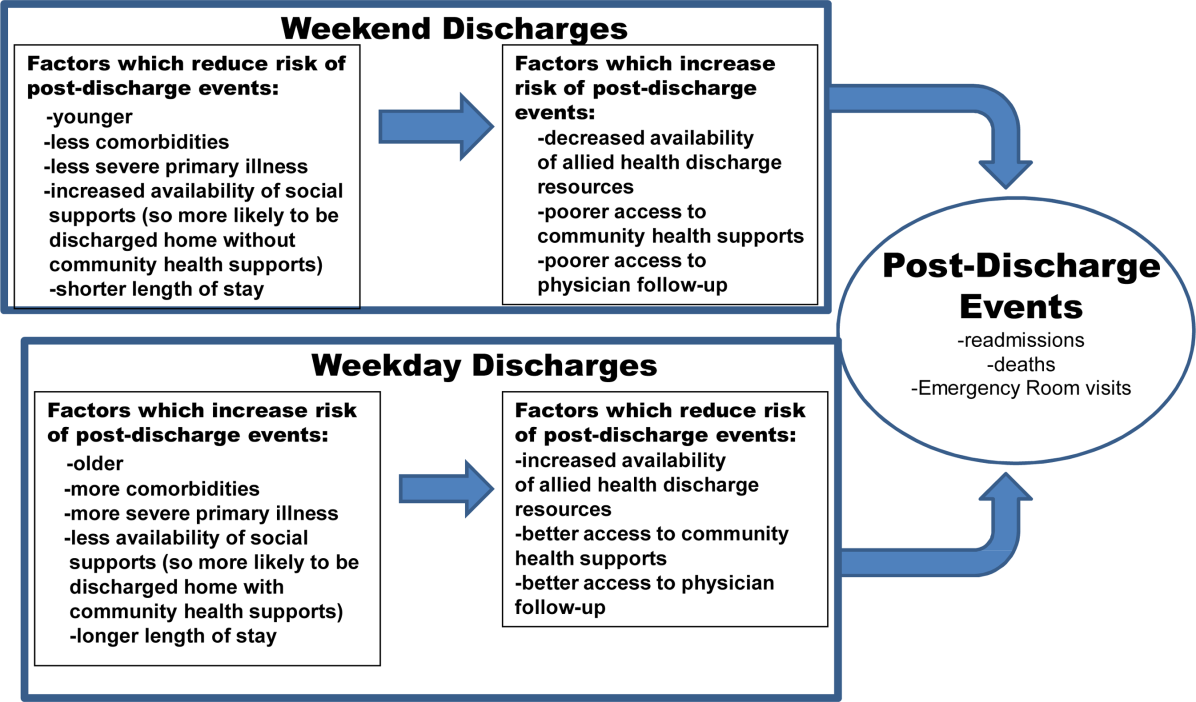
Although patients admitted on weekdays and weekends were very similar (data available upon request), patients discharged on weekends (compared to those discharged on weekdays) were younger, more likely to be discharged home without additional support, and had fewer comorbidities (Table 1, Figure 1). Patients discharged on weekends had shorter lengths of stay than those discharged on weekdays (5.6 days vs 7.9 days, P<0.0001). In adjusted linear regression analyses, this 2.3‐day difference remained statistically significant (adjusted P value <0.0001).
Patients discharged on a weekend exhibited lower unadjusted 30‐day rates of death or readmission than those discharged on a weekday (10.6% vs 13.2%), but these differences disappeared after multivariable adjustment that accounted for differences in risk profile (aOR: 0.94, 95% CI: 0.771.16 (Table 2). Results were similar in sensitivity analyses adjusting for LACE scores without LOS included (aOR: 0.88, 95% CI: 0.711.08) or adjusting for LACE scores using expected LOS rather than actual LOS (aOR: 0.90, 95% CI: 0.731.10). Restricting the analysis to only those patients deemed to be at high risk for events due to LACE scores of 10 or greater confirmed that weekend and weekday discharges had similar outcomes in the first 30 days after discharge (aOR: 1.09, 95% CI: 0.851.41, Table 2). Similar patterns were seen when we included ED visits as part of the composite endpoint (ie, death, unplanned readmission, or unplanned ED visit within 30 days of discharge) (Table 2).
| Weekend Discharge, n/N (%) | Weekday Discharge, n/N (%) | Unadjusted P Value | aOR* (95% CI) | Adjusted P Value | |
|---|---|---|---|---|---|
| |||||
| Death/readmission within 30 days | |||||
| All 7 teaching hospitals, all patients | 121/1146 (10.6) | 901/6845 (13.2) | 0.01 | 0.94 (0.77‐1.16) | 0.58 |
| All 7 teaching hospitals, but only patients with LACE <10 | 37/647 (5.7) | 225/2753 (8.2) | 0.04 | 0.72 (0.50, 1.03) | 0.07 |
| All 7 teaching hospitals, but only patients with LACE 10 | 84/499 (16.8) | 676/4092 (16.5) | 0.86 | 1.09 (0.85‐1.41) | 0.49 |
| Death/readmission/ED visit within 30 days | |||||
| All 7 teaching hospitals, all patients | 218/1146 (19.0) | 1445/6845 (21.1) | 0.11 | 0.98 (0.83‐1.15) | 0.79 |
| All 7 teaching hospitals, but only patients with LACE <10 | 90/647 (13.9) | 460/2753 (16.7) | 0.08 | 0.83 (0.64‐1.06) | 0.13 |
| All 7 teaching hospitals, but only patients with LACE 10 | 128/499 (25.7) | 985/4092 (24.1) | 0.44 | 1.12 (0.90‐1.39) | 0.31 |
| Death within 30 days | |||||
| All 7 teaching hospitals, all patients | 24/1146 (2.1) | 215/6845 (3.1) | 0.05 | 0.97 (0.63‐1.51) | 0.89 |
| All 7 teaching hospitals, but only patients with LACE <10 | 4/647 (0.6) | 23/2753 (0.8) | 0.58 | 0.89 (0.30, 2.62) | 0.83 |
| All 7 teaching hospitals, but only patients with LACE 10 | 20/499 (4.0) | 192/4092 (4.7) | 0.49 | 0.99 (0.61‐1.61) | 0.98 |
| Readmission within 30 days | |||||
| All 7 teaching hospitals, all patients | 105/1146 (9.2) | 751/6845 (11.0) | 0.07 | 0.94 (0.76‐1.17) | 0.59 |
| All 7 teaching hospitals, but only patients with LACE <10 | 33/647 (5.1) | 211/2753 (7.7) | 0.02 | 0.68 (0.46‐0.99) | 0.04 |
| All 7 teaching hospitals, but only patients with LACE 10 | 72/499 (14.4) | 540/4092 (13.2) | 0.44 | 1.14 (0.87‐1.49) | 0.34 |
| ED visit within 30 days | |||||
| All 7 teaching hospitals, all patients | 182/1146 (15.9) | 1118/6845 (16.3) | 0.70 | 1.00 (0.84‐1.19) | 0.99 |
| All 7 teaching hospitals, but only patients with LACE <10 | 83/647 (12.8) | 412/2753 (15.0) | 0.17 | 0.84 (0.65, 1.09) | 0.20 |
| All 7 teaching hospitals, but only patients with LACE 10 | 99/499 (19.8) | 706/4092 (17.3) | 0.15 | 1.17 (0.92‐1.48) | 0.20 |
DISCUSSION
Our data suggest that patients discharged from the GIM teaching wards we studied on weekends were appropriately triaged, as they did not exhibit a higher risk of adverse events postdischarge. Although patients discharged on weekends tended to be younger and had less comorbidities than those discharged during the week, we adjusted for baseline covariates in analyses, and we did not find an association between weekend discharge and increased postdischarge events even among the subset of patients deemed to be at high risk for postdischarge adverse events (based on high LACE scores). To our knowledge, although we previously examined this issue in patients with a most‐responsible diagnosis of heart failure,[10] examining weekend versus weekday discharges in the full gamut of general medical patients admitted to teaching hospitals has not previously been examined.
In our previous study[10] of over 24,000 heart failure patients discharged over 10 years (up to June 2009, therefore no overlap with any patients in this study), we also found that patients discharged on the weekends were younger, had fewer comorbidities, and shorter lengths of stay. Although postdischarge death/readmission rates were higher for weekend discharged patients in our earlier study (21.1% vs 19.5%, adjusted hazard ratio: 1.15, 95% CI: 1.061.25), it is worth noting that this was almost entirely driven by data from nonteaching hospitals and cardiology wards. Thus, it is important to reiterate that the findings in our current study are for GIM wards in teaching hospitals and may not be generalizable to less‐structured nonteaching settings.
Although we did not study physician decision making, our results suggest that physicians are incorporating discharge day into their discharge decision making. They may be selecting younger patients with less comorbidities for weekend discharges, or they may be delaying the discharges of older patients with more comorbidities for weekday discharges. Either is not surprising given the realities of weekend inpatient care: reduced staffing and frequent cross‐coverage (of physicians, nurses, physiotherapists, pharmacists, and occupational therapists), limited support services (such as laboratory services or diagnostic imaging), and decreased availability of community services (including home care and social support services).[17] For example, in 1 large US heart failure registry, patients discharged on a weekend received less complete discharge instructions than those discharged on weekdays.[11] Given that early follow‐up postdischarge is associated with better outcomes,[18, 19] future studies should also explore whether patterns of patient follow‐up differ after weekend versus weekday discharges.
Although we were able to capture all interactions with the healthcare system in a single payer system with universal access, there are some limitations to our study. First, we used administrative data, which preclude fully adjusting for severity of diagnoses or functional status, although we used proxies such as admission from/discharge to a long‐term care facility.[20, 21] Second, we did not have access to process of care measures such as diagnostic testing or prescribing data, and thus cannot determine whether quality of care or patient adherence differed by the day of the week they were discharged on, although this seems unlikely. Third, although postdischarge follow‐up may be associated with better outcomes,[18, 19] we were unable to adjust for patterns of outpatient follow‐up in this study. Fourth, we acknowledge that death or readmission soon after discharge does not necessarily mean that the quality of care during the preceding hospitalization was suboptimal or that these deaths or readmissions were even potentially preventable. Many factors influence postdischarge mortality and/or readmission, and quality of inpatient care is only one.[22, 23, 24, 25] Fifth, although some may express concern that LOS may be a mediator in the causal pathway between discharge decision and postdischarge events, and that adjusting for LOS in analyses could thus spuriously obscure a true association, it is worth pointing out that our 2 sensitivity analyses to explore this (the 1 in which we excluded LOS from the analyses and the 1 in which we included expected LOS rather than the actual LOS) revealed nearly identical point estimates and 95% CI as our main analysis. Finally, as our study is observational, we cannot definitively conclude causality, nor can we exclude an 18% excess risk for patients discharged on weekends (or a 22% lower risk either), given our 95% CI for postdischarge adverse outcomes.
CONCLUSION
We found that the proportion of patients discharged on weekends is lower than the proportion admitted on weekends. We also found that lower risk/less severely ill patients appear to be preferentially discharged on weekends, and as a result, postdischarge outcomes are similar between weekend and weekday discharges despite shorter LOS and less availability of outpatient resources for patients discharged on a weekend. The reasons why more complicated patients are not discharged on weekends deserves further study, as safely increasing weekend discharge rates would improve efficiency and safety (by reducing unnecessary exposure to in‐hospital adverse events such as falls, unnecessary urinary catheterizations, and healthcare‐acquired infections). Although hospital admission has become a 24/7 business, we believe that hospital discharge processes should strive for the same level of efficiency.
ACKNOWLEDGMENTS
Disclosures: This study is based in part on data provided by Alberta Health. The interpretation and conclusions contained herein are those of the researchers and do not necessarily represent the views of the government of Alberta. Neither the government of Alberta nor Alberta Health express any opinion in relation to this study. F.A.M. and S.R.M. are supported by salary awards from Alberta Innovates‐Health Solutions (AIHS). F.A.M. holds the Capital Health Chair in Cardiology Outcomes Research. S.R.M. holds the Endowed Chair in Patient Health Management. This project was funded by AIHS through an investigator‐initiated peer reviewed operating grant. The funding agencies did not have input into study design, data collection, interpretation of results, or write up/approval for submission. The authors report no conflicts of interest.
- , . Mortality among patients admitted to hospitals on weekends as compared with weekdays. N Engl J Med. 2001;345:663–668.
- , , , et al. Relationship between time of day, day of week, timeliness of reperfusion, and in‐hospital mortality for patients with acute ST‐segment elevation myocardial infarction. JAMA. 2005;294:803–812.
- , . Waiting for urgent procedures on the weekend among emergently hospitalized patients. Am J Med. 2004;117:175–181.
- . Do hospitals provide lower quality care on weekends? Health Serv Res. 2007;42:1589–1612.
- , , , et al. Day of admission and clinical outcomes for patients hospitalized for heart failure: findings from the organized program to initiate lifesaving treatment in hospitalized patients with heart failure (OPTIMIZE‐HF). Circ Heart Fail. 2008;1:50–57.
- , , , et al. Weekend hospitalization and additional risk of death: an analysis of inpatient data. J R Soc Med. 2012;105:74–84.
- , , , . Weekends: a dangerous time for having a stroke? Stroke. 2007;38:1211–1215.
- , , , . Day of the week of intensive care admission and patient outcomes: a multisite regional evaluation. Med Care. 2002;40:530–539.
- , , , . Effects of weekend admission and hospital teaching status on in‐hospital mortality. Am J Med. 2004;117:151–157.
- , , , , . Postdischarge outcomes in heart failure are better for teaching hospitals and weekday discharges. Circ Heart Fail. 2013;6:922–929.
- , , , et al. Weekend hospital admission and discharge for heart failure: association with quality of care and clinical outcomes. Am Heart J. 2009;158:451–458.
- , . Risk of death or readmission among people discharged from hospital on Fridays. CMAJ. 2002;166:1672–1673.
- , , , , et al.; IMECCHI Investigators. Assessing validity of ICD‐9‐CM and ICD‐10 administrative data in recording clinical conditions in a unique dually coded database. Health Serv Res. 2008;43:1424–1441.
- , , , et al. Safely and effectively reducing inpatient length of stay: a controlled study of the General Internal Medicine Care Transformation Initiative. BMJ Qual Saf. 2014;23:446–456.
- , , , et al. Derivation and validation of an index to predict early death or unplanned readmission after discharge from hospital to the community. CMAJ. 2010;182:551–557.
- , , , et al. Unplanned readmissions after hospital discharge among patients identified as being at high risk for readmission using a validated predictive algorithm. Open Med. 2011;5(2):e104–e111.
- , . Excellent hospital care for all: open and operating 24/7. J Gen Intern Med. 2011;26:1050–1052.
- , , , et al. Relationship between early physician follow‐up and 30‐day readmission among Medicare beneficiaries hospitalized for heart failure. JAMA. 2010;303:1716–1722.
- , , , , , . Impact of physician continuity on death or urgent readmission after discharge among patients with heart failure. CMAJ. 2013;185:e681–e689.
- , , , , , . Discordance of databases designed for claims payment versus clinical information systems. Implications for outcomes research. Ann Intern Med. 1993;119:844–850.
- , , , . Predictions of hospital mortality rates: a comparison of data sources. Ann Intern Med. 1997;126:347–354.
- , , , et al. Impact of social factors on risk of readmission or mortality in pneumonia and heart failure: systematic review. J Gen Intern Med. 2013;28(2):269–282.
- , . Investigating early readmission as an indicator for quality of care studies. Med Care. 1991;29(4):377–394.
- , , , et al. Risk prediction models for hospital readmission: a systematic review. JAMA. 2011;306(15):1688–1698.
- , , , , . Proportion of hospital readmissions deemed avoidable: a systematic review. CMAJ. 2011;183(7):E391–E402.
Hospitals typically reduce staffing levels and the availability of diagnostic, laboratory, and treatment services on weekends, and patients admitted on weekends exhibit poorer in‐hospital outcomes for several medical conditions.[1, 2, 3, 4, 5, 6, 7, 8, 9] Whether or not patients discharged on weekends have worse clinical outcomes has been less well studied.[10, 11, 12] Discharge rates on Saturday and Sunday are lower than for the other 5 days of the week,[12] but bed shortages and hospital overcrowding have increased the demand for maximizing 24/7 week‐round discharge efficiency. Given that the number of patients discharged on weekends is likely to continue to increase, it is important to assess the risk of weekend discharge on outcomes monitored as performance indicators by organizations such as the Centers for Medicare and Medicaid Services, the American Medical Association Physicians Consortium for Performance Improvement, the National Quality Forum, and the Joint Commission.
Thus, we designed this study to evaluate baseline characteristics, length of stay (LOS), and postdischarge outcomes for general internal medicine (GIM) patients in teaching hospitals discharged on weekends compared to weekdays. Our objective was to determine whether postdischarge outcomes differed for patients discharged on weekends versus weekdays.
METHODS
Study Setting
The Canadian province of Alberta has a single vertically integrated healthcare system that is government‐funded and provides universal access to hospitals, emergency departments (EDs), and outpatient physician services for all 4.1 million Albertans as well as all prescription medications for the poor, socially disadvantaged, disabled, or those age 65 years and older. This study received approval from the University of Alberta Health Research Ethics Board with waiver of informed consent.
Data Sources
This study used deidentified linked data from 3 Alberta Health administrative databases that capture vital status and all hospital or ED visits and have previously been shown to have high accuracy for medical diagnoses.[13] The Alberta Health Care Insurance Plan Registry tracks date of death or emigration from the province. The Discharge Abstract Database includes the most responsible diagnosis identified by the hospital attending physician, up to 25 other diagnoses coded by nosologists in each hospital, the admission and discharge dates, and the admission category (elective or urgent/emergent) for all acute care hospitalizations. Of note, unlike US studies, the hospital databases are able to distinguish in‐hospital (eg, adverse events) versus premorbid diagnoses (eg, preexisting comorbidities). The Ambulatory Care Database captures all patient visits to EDs with coding for up to 10 conditions per encounter.
Study Cohort
We identified all adults with an acute care hospitalization on the GIM services at all 7 Alberta teaching hospitals (ie, defined as those with Royal College of Physicians and Surgeons of Canadaapproved residency training programs in internal medicine, the equivalent of the Association of American Medical Colleges certification in the United States) between October 1, 2009 and September 30, 2010 and between April 1, 2011 and December 1, 2011 (these 20 months covered most of the pre/post intervals for a recently reported quality improvement initiative at 1 of the teaching hospitals that had no significant impact on postdischarge outcomes).[14] Patients from out of the province or transferred from/to another inpatient service (eg, the intensive care unit, a different service in the same hospital [such as surgery], another acute care hospital, or rehabilitation hospital) or with lengths of stay greater than 30 days were excluded. We only included the first hospitalization for any patient in our study timeframe and thus excluded repeat discharges of the same patient.
Explanatory Variable of Interest
The independent variable of interest was calendar day of discharge, stratified according to weekday (Monday thru Friday) versus weekend (Saturday and Sunday). Only 1.4% of weekday discharges occurred on a statutory holiday, and for the purposes of this study, these discharges were also considered weekend discharges. At the 7 teaching hospitals in Alberta, nursing staffing ratios do not differ between weekend and weekday, but availability of all other members of the healthcare team does. Physician census decreases from 4 to 5 per ward to 1 to 2, and ward‐based social workers, occupational therapists, physiotherapists, and pharmacist educators are generally not available on weekends.
Outcomes
Our primary outcome of interest was the composite outcome of death or all‐cause nonelective readmission within 30 days of discharge (ie, not including in‐hospital events prior to discharge or elective readmissions after discharge for planned procedures such as chemotherapy); hereafter we refer to this as death or readmission. This is a patient‐relevant outcome that is highlighted in the Affordable Care Act and for which there are several validated risk adjustment models.[15] We chose a composite outcome to deal with the issue of competing risks; if weekend discharges were more likely to die then we could observe a spurious association between weekend discharge and reduced readmissions if we focused on only that outcome.
Other Measures
Comorbidities for each patient were identified using International Classification of Diseases, Ninth Revision and Tenth Revision codes from the Discharge Abstract Database for the index hospitalization and any hospitalizations in the 12 months prior to their index admission, a method previously validated in Alberta databases.[13] We also recorded health resource use during their index hospitalization and calculated each patient's LACE score at the time of discharge, which is an index for predicting unplanned readmission or early death postdischarge previously validated in Canadian administrative databases.[15] The LACE index includes length of hospital stay (L), acuity of admission (A, based on the admission category variable described earlier), comorbidity burden quantified using the Charlson Comorbidity Index (C), and emergency department visits in the 6 months prior to admission (E); patients with discharge LACE scores >10 (total possible score is 19) are defined as being at high risk of death/readmission within 30 days.[16] As detailed below, to deal with potential concerns that LOS may be a mediator in the causal pathway, we ran 2 sensitivity analyses, 1 in which we excluded LOS from the analyses and 1 in which we included expected LOS rather than the actual LOS. Expected LOS is a data‐driven estimate based on the most current 2 years of patient LOS information available in the Canadian Institute for Health Information discharge abstract database (
Statistical Analysis
Baseline patient characteristics between weekend and weekday discharges were compared with t tests for continuous variables and [2] tests for binary or categorical variables. Logistic regression was used for comparison of death or readmission for weekend versus weekday discharges. Multivariable models were adjusted for age, sex, hospital, and LACE scores (as a continuous variable) at time of discharge; in sensitivity analyses we adjusted for (1) LACE score without including LOS and (2) LACE score using expected LOS rather than actual LOS. In further sensitivity analyses we (1) restricted the analysis to only those patients deemed to be at high risk for events due to LACE scores of 10 or greater and (2) included ED visits as part of the composite endpoint (ie, death, unplanned readmission, or unplanned ED visit within 30 days of discharge). Day of admission (weekend vs weekday) was also considered for the multivariable models, but was not found to be significant and thus was omitted from final models. We do not have any physician identifying variables in our dataset and thus could not investigate the potential correlation among patients discharged by the same physician. We did explore the hospital intraclass correlation coefficient, and as it was very small (0.001), we did not utilize models to account for the hierarchical nature of the data, but did include hospital as a fixed effect in the logistic models. The results were virtually identical whether we did or did not include hospital in the models. Adjusted odds ratios (aORs) are displayed with 95% confidence intervals (CI) and P values. Average LOS was calculated for weekend and weekday discharges with 95% CIs. P values for adjusted length of stay were calculated using multivariable linear regression adjusting for age, sex, day of admission, and Charlson score. All statistical analyses were done using SAS for Windows version 9.4 (SAS Institute, Inc., Cary, NC).
RESULTS
Patient Characteristics
Of the 7991 patients discharged during our study interval, 1146 (14.3%) were discharged on weekend or holiday days (Table 1). In contrast, 2180 of our cohort were admitted on a weekend (27.3%). The mean age of our study population was 62.1 years, 51.9% were men, mean Charlson score was 2.56, and 4591 (57.5%) had LACE scores of at least 10 at discharge.
| Characteristic | Weekend Discharge | Weekday Discharge | P Value |
|---|---|---|---|
| |||
| No. of patients | 1,146 | 6,845 | |
| Age, y, mean (SD) | 57.97 (19.70) | 62.77 (19.37) | <0.0001 |
| Male | 601 (52.4) | 3,548 (51.8) | 0.70 |
| Top 5 most responsible diagnoses | |||
| COPD | 74 (6.5) | 507 (7.4) | |
| Pneumonia | 64 (5.6) | 326 (4.8) | |
| Heart failure | 31 (2.7) | 375 (5.5) | |
| Urinary tract infection | 39 (3.4) | 254 (3.7) | |
| Venous thromboembolism | 31 (2.7) | 259 (3.8) | |
| Charlson score, mean (SD) | 2.17 (3.29) | 2.63 (3.30) | <0.0001 |
| Comorbidities (based on index hospitalization and prior 12 months) | |||
| Hypertension | 485 (42.3) | 3,265 (47.7) | 0.00 |
| Diabetes mellitus | 326 (28.4) | 2,106 (30.8) | 0.11 |
| Fluid imbalance | 332 (29.0) | 1,969 (28.8) | 0.89 |
| COPD | 255 (22.3) | 1,790 (26.2) | 0.01 |
| Psychiatric disorder | 179 (15.6) | 1,459 (21.3) | <0.0001 |
| Pneumonia | 242 (21.1) | 1,427 (20.8) | 0.84 |
| Anemia | 167 (14.6) | 1,233 (18.0) | 0.00 |
| Trauma | 169 (14.7) | 1,209 (17.7) | 0.02 |
| Atrial fibrillation | 141 (12.3) | 1,069 (15.6) | 0.00 |
| Heart failure | 101 (8.8) | 946 (13.8) | <0.0001 |
| Drug abuse | 188 (16.4) | 966 (14.1) | 0.04 |
| Cancer | 124 (10.8) | 867 (12.7) | 0.08 |
| Renal disease | 93 (8.1) | 689 (10.1) | 0.04 |
| Dementia | 49 (4.3) | 564 (8.2) | <0.0001 |
| Mild liver disease | 99 (8.6) | 587 (8.6) | 0.94 |
| Cerebrovascular disease | 59 (5.1) | 492 (7.2) | 0.01 |
| Gastrointestinal bleed | 84 (7.3) | 496 (7.2) | 0.92 |
| Asthma | 83 (7.2) | 426 (6.2) | 0.19 |
| Stroke | 42 (3.7) | 332 (4.9) | 0.08 |
| Prior myocardial infarction | 47 (4.1) | 329 (4.8) | 0.30 |
| Arthritis | 42 (3.7) | 309 (4.5) | 0.19 |
| Peripheral vascular disease | 42 (3.7) | 259 (3.8) | 0.84 |
| Severe liver disease | 44 (3.8) | 261 (3.8) | 0.97 |
| Valve disease | 24 (2.1) | 188 (2.7) | 0.20 |
| Paralysis | 31 (2.7) | 201 (2.9) | 0.67 |
| Skin ulcer | 17 (1.5) | 137 (2.0) | 0.24 |
| Shock | 19 (1.7) | 99 (1.4) | 0.58 |
| HIV | 15 (1.3) | 109 (1.6) | 0.47 |
| Protein calorie malnutrition | 0 (0.0) | 9 (0.1) | 0.21 |
| Features of index hospitalization | |||
| Resource intensity weight, mean (SD) | 1.10 (0.82) | 1.38 (1.24) | <0.0001 |
| LACE score, mean (SD) | 9.45 (2.85) | 10.51 (3.03) | <0.0001 |
| Expected LOS, mean (SD) | 6.20 (4.08) | 7.12 (4.89) | <0.0001 |
| Acute LOS, mean (SD) | 5.64 (4.99) | 7.86 (6.13) | <0.0001 |
| Weekend admission | 244 (21.3) | 1,936 (28.3) | <0.0001 |
| Discharge disposition | <0.0001 | ||
| Transferred to another inpatient hospital | 14 (1.2) | 189 (2.8) | |
| Transferred to long‐term care facility | 36 (3.1) | 532 (7.8) | |
| Transferred to other (except hospice) | 5 (0.4) | 24 (0.4) | |
| Discharged to home setting with support services | 125 (10.9) | 1,318 (19.3) | |
| Discharged home | 926 (80.8) | 4,646 (67.9) | |
| Left against medical advice | 40 (3.5) | 136 (2.0) | |
Weekday Versus Weekend Discharge
Although patients admitted on weekdays and weekends were very similar (data available upon request), patients discharged on weekends (compared to those discharged on weekdays) were younger, more likely to be discharged home without additional support, and had fewer comorbidities (Table 1, Figure 1). Patients discharged on weekends had shorter lengths of stay than those discharged on weekdays (5.6 days vs 7.9 days, P<0.0001). In adjusted linear regression analyses, this 2.3‐day difference remained statistically significant (adjusted P value <0.0001).
Patients discharged on a weekend exhibited lower unadjusted 30‐day rates of death or readmission than those discharged on a weekday (10.6% vs 13.2%), but these differences disappeared after multivariable adjustment that accounted for differences in risk profile (aOR: 0.94, 95% CI: 0.771.16 (Table 2). Results were similar in sensitivity analyses adjusting for LACE scores without LOS included (aOR: 0.88, 95% CI: 0.711.08) or adjusting for LACE scores using expected LOS rather than actual LOS (aOR: 0.90, 95% CI: 0.731.10). Restricting the analysis to only those patients deemed to be at high risk for events due to LACE scores of 10 or greater confirmed that weekend and weekday discharges had similar outcomes in the first 30 days after discharge (aOR: 1.09, 95% CI: 0.851.41, Table 2). Similar patterns were seen when we included ED visits as part of the composite endpoint (ie, death, unplanned readmission, or unplanned ED visit within 30 days of discharge) (Table 2).
| Weekend Discharge, n/N (%) | Weekday Discharge, n/N (%) | Unadjusted P Value | aOR* (95% CI) | Adjusted P Value | |
|---|---|---|---|---|---|
| |||||
| Death/readmission within 30 days | |||||
| All 7 teaching hospitals, all patients | 121/1146 (10.6) | 901/6845 (13.2) | 0.01 | 0.94 (0.77‐1.16) | 0.58 |
| All 7 teaching hospitals, but only patients with LACE <10 | 37/647 (5.7) | 225/2753 (8.2) | 0.04 | 0.72 (0.50, 1.03) | 0.07 |
| All 7 teaching hospitals, but only patients with LACE 10 | 84/499 (16.8) | 676/4092 (16.5) | 0.86 | 1.09 (0.85‐1.41) | 0.49 |
| Death/readmission/ED visit within 30 days | |||||
| All 7 teaching hospitals, all patients | 218/1146 (19.0) | 1445/6845 (21.1) | 0.11 | 0.98 (0.83‐1.15) | 0.79 |
| All 7 teaching hospitals, but only patients with LACE <10 | 90/647 (13.9) | 460/2753 (16.7) | 0.08 | 0.83 (0.64‐1.06) | 0.13 |
| All 7 teaching hospitals, but only patients with LACE 10 | 128/499 (25.7) | 985/4092 (24.1) | 0.44 | 1.12 (0.90‐1.39) | 0.31 |
| Death within 30 days | |||||
| All 7 teaching hospitals, all patients | 24/1146 (2.1) | 215/6845 (3.1) | 0.05 | 0.97 (0.63‐1.51) | 0.89 |
| All 7 teaching hospitals, but only patients with LACE <10 | 4/647 (0.6) | 23/2753 (0.8) | 0.58 | 0.89 (0.30, 2.62) | 0.83 |
| All 7 teaching hospitals, but only patients with LACE 10 | 20/499 (4.0) | 192/4092 (4.7) | 0.49 | 0.99 (0.61‐1.61) | 0.98 |
| Readmission within 30 days | |||||
| All 7 teaching hospitals, all patients | 105/1146 (9.2) | 751/6845 (11.0) | 0.07 | 0.94 (0.76‐1.17) | 0.59 |
| All 7 teaching hospitals, but only patients with LACE <10 | 33/647 (5.1) | 211/2753 (7.7) | 0.02 | 0.68 (0.46‐0.99) | 0.04 |
| All 7 teaching hospitals, but only patients with LACE 10 | 72/499 (14.4) | 540/4092 (13.2) | 0.44 | 1.14 (0.87‐1.49) | 0.34 |
| ED visit within 30 days | |||||
| All 7 teaching hospitals, all patients | 182/1146 (15.9) | 1118/6845 (16.3) | 0.70 | 1.00 (0.84‐1.19) | 0.99 |
| All 7 teaching hospitals, but only patients with LACE <10 | 83/647 (12.8) | 412/2753 (15.0) | 0.17 | 0.84 (0.65, 1.09) | 0.20 |
| All 7 teaching hospitals, but only patients with LACE 10 | 99/499 (19.8) | 706/4092 (17.3) | 0.15 | 1.17 (0.92‐1.48) | 0.20 |
DISCUSSION
Our data suggest that patients discharged from the GIM teaching wards we studied on weekends were appropriately triaged, as they did not exhibit a higher risk of adverse events postdischarge. Although patients discharged on weekends tended to be younger and had less comorbidities than those discharged during the week, we adjusted for baseline covariates in analyses, and we did not find an association between weekend discharge and increased postdischarge events even among the subset of patients deemed to be at high risk for postdischarge adverse events (based on high LACE scores). To our knowledge, although we previously examined this issue in patients with a most‐responsible diagnosis of heart failure,[10] examining weekend versus weekday discharges in the full gamut of general medical patients admitted to teaching hospitals has not previously been examined.
In our previous study[10] of over 24,000 heart failure patients discharged over 10 years (up to June 2009, therefore no overlap with any patients in this study), we also found that patients discharged on the weekends were younger, had fewer comorbidities, and shorter lengths of stay. Although postdischarge death/readmission rates were higher for weekend discharged patients in our earlier study (21.1% vs 19.5%, adjusted hazard ratio: 1.15, 95% CI: 1.061.25), it is worth noting that this was almost entirely driven by data from nonteaching hospitals and cardiology wards. Thus, it is important to reiterate that the findings in our current study are for GIM wards in teaching hospitals and may not be generalizable to less‐structured nonteaching settings.
Although we did not study physician decision making, our results suggest that physicians are incorporating discharge day into their discharge decision making. They may be selecting younger patients with less comorbidities for weekend discharges, or they may be delaying the discharges of older patients with more comorbidities for weekday discharges. Either is not surprising given the realities of weekend inpatient care: reduced staffing and frequent cross‐coverage (of physicians, nurses, physiotherapists, pharmacists, and occupational therapists), limited support services (such as laboratory services or diagnostic imaging), and decreased availability of community services (including home care and social support services).[17] For example, in 1 large US heart failure registry, patients discharged on a weekend received less complete discharge instructions than those discharged on weekdays.[11] Given that early follow‐up postdischarge is associated with better outcomes,[18, 19] future studies should also explore whether patterns of patient follow‐up differ after weekend versus weekday discharges.
Although we were able to capture all interactions with the healthcare system in a single payer system with universal access, there are some limitations to our study. First, we used administrative data, which preclude fully adjusting for severity of diagnoses or functional status, although we used proxies such as admission from/discharge to a long‐term care facility.[20, 21] Second, we did not have access to process of care measures such as diagnostic testing or prescribing data, and thus cannot determine whether quality of care or patient adherence differed by the day of the week they were discharged on, although this seems unlikely. Third, although postdischarge follow‐up may be associated with better outcomes,[18, 19] we were unable to adjust for patterns of outpatient follow‐up in this study. Fourth, we acknowledge that death or readmission soon after discharge does not necessarily mean that the quality of care during the preceding hospitalization was suboptimal or that these deaths or readmissions were even potentially preventable. Many factors influence postdischarge mortality and/or readmission, and quality of inpatient care is only one.[22, 23, 24, 25] Fifth, although some may express concern that LOS may be a mediator in the causal pathway between discharge decision and postdischarge events, and that adjusting for LOS in analyses could thus spuriously obscure a true association, it is worth pointing out that our 2 sensitivity analyses to explore this (the 1 in which we excluded LOS from the analyses and the 1 in which we included expected LOS rather than the actual LOS) revealed nearly identical point estimates and 95% CI as our main analysis. Finally, as our study is observational, we cannot definitively conclude causality, nor can we exclude an 18% excess risk for patients discharged on weekends (or a 22% lower risk either), given our 95% CI for postdischarge adverse outcomes.
CONCLUSION
We found that the proportion of patients discharged on weekends is lower than the proportion admitted on weekends. We also found that lower risk/less severely ill patients appear to be preferentially discharged on weekends, and as a result, postdischarge outcomes are similar between weekend and weekday discharges despite shorter LOS and less availability of outpatient resources for patients discharged on a weekend. The reasons why more complicated patients are not discharged on weekends deserves further study, as safely increasing weekend discharge rates would improve efficiency and safety (by reducing unnecessary exposure to in‐hospital adverse events such as falls, unnecessary urinary catheterizations, and healthcare‐acquired infections). Although hospital admission has become a 24/7 business, we believe that hospital discharge processes should strive for the same level of efficiency.
ACKNOWLEDGMENTS
Disclosures: This study is based in part on data provided by Alberta Health. The interpretation and conclusions contained herein are those of the researchers and do not necessarily represent the views of the government of Alberta. Neither the government of Alberta nor Alberta Health express any opinion in relation to this study. F.A.M. and S.R.M. are supported by salary awards from Alberta Innovates‐Health Solutions (AIHS). F.A.M. holds the Capital Health Chair in Cardiology Outcomes Research. S.R.M. holds the Endowed Chair in Patient Health Management. This project was funded by AIHS through an investigator‐initiated peer reviewed operating grant. The funding agencies did not have input into study design, data collection, interpretation of results, or write up/approval for submission. The authors report no conflicts of interest.
Hospitals typically reduce staffing levels and the availability of diagnostic, laboratory, and treatment services on weekends, and patients admitted on weekends exhibit poorer in‐hospital outcomes for several medical conditions.[1, 2, 3, 4, 5, 6, 7, 8, 9] Whether or not patients discharged on weekends have worse clinical outcomes has been less well studied.[10, 11, 12] Discharge rates on Saturday and Sunday are lower than for the other 5 days of the week,[12] but bed shortages and hospital overcrowding have increased the demand for maximizing 24/7 week‐round discharge efficiency. Given that the number of patients discharged on weekends is likely to continue to increase, it is important to assess the risk of weekend discharge on outcomes monitored as performance indicators by organizations such as the Centers for Medicare and Medicaid Services, the American Medical Association Physicians Consortium for Performance Improvement, the National Quality Forum, and the Joint Commission.
Thus, we designed this study to evaluate baseline characteristics, length of stay (LOS), and postdischarge outcomes for general internal medicine (GIM) patients in teaching hospitals discharged on weekends compared to weekdays. Our objective was to determine whether postdischarge outcomes differed for patients discharged on weekends versus weekdays.
METHODS
Study Setting
The Canadian province of Alberta has a single vertically integrated healthcare system that is government‐funded and provides universal access to hospitals, emergency departments (EDs), and outpatient physician services for all 4.1 million Albertans as well as all prescription medications for the poor, socially disadvantaged, disabled, or those age 65 years and older. This study received approval from the University of Alberta Health Research Ethics Board with waiver of informed consent.
Data Sources
This study used deidentified linked data from 3 Alberta Health administrative databases that capture vital status and all hospital or ED visits and have previously been shown to have high accuracy for medical diagnoses.[13] The Alberta Health Care Insurance Plan Registry tracks date of death or emigration from the province. The Discharge Abstract Database includes the most responsible diagnosis identified by the hospital attending physician, up to 25 other diagnoses coded by nosologists in each hospital, the admission and discharge dates, and the admission category (elective or urgent/emergent) for all acute care hospitalizations. Of note, unlike US studies, the hospital databases are able to distinguish in‐hospital (eg, adverse events) versus premorbid diagnoses (eg, preexisting comorbidities). The Ambulatory Care Database captures all patient visits to EDs with coding for up to 10 conditions per encounter.
Study Cohort
We identified all adults with an acute care hospitalization on the GIM services at all 7 Alberta teaching hospitals (ie, defined as those with Royal College of Physicians and Surgeons of Canadaapproved residency training programs in internal medicine, the equivalent of the Association of American Medical Colleges certification in the United States) between October 1, 2009 and September 30, 2010 and between April 1, 2011 and December 1, 2011 (these 20 months covered most of the pre/post intervals for a recently reported quality improvement initiative at 1 of the teaching hospitals that had no significant impact on postdischarge outcomes).[14] Patients from out of the province or transferred from/to another inpatient service (eg, the intensive care unit, a different service in the same hospital [such as surgery], another acute care hospital, or rehabilitation hospital) or with lengths of stay greater than 30 days were excluded. We only included the first hospitalization for any patient in our study timeframe and thus excluded repeat discharges of the same patient.
Explanatory Variable of Interest
The independent variable of interest was calendar day of discharge, stratified according to weekday (Monday thru Friday) versus weekend (Saturday and Sunday). Only 1.4% of weekday discharges occurred on a statutory holiday, and for the purposes of this study, these discharges were also considered weekend discharges. At the 7 teaching hospitals in Alberta, nursing staffing ratios do not differ between weekend and weekday, but availability of all other members of the healthcare team does. Physician census decreases from 4 to 5 per ward to 1 to 2, and ward‐based social workers, occupational therapists, physiotherapists, and pharmacist educators are generally not available on weekends.
Outcomes
Our primary outcome of interest was the composite outcome of death or all‐cause nonelective readmission within 30 days of discharge (ie, not including in‐hospital events prior to discharge or elective readmissions after discharge for planned procedures such as chemotherapy); hereafter we refer to this as death or readmission. This is a patient‐relevant outcome that is highlighted in the Affordable Care Act and for which there are several validated risk adjustment models.[15] We chose a composite outcome to deal with the issue of competing risks; if weekend discharges were more likely to die then we could observe a spurious association between weekend discharge and reduced readmissions if we focused on only that outcome.
Other Measures
Comorbidities for each patient were identified using International Classification of Diseases, Ninth Revision and Tenth Revision codes from the Discharge Abstract Database for the index hospitalization and any hospitalizations in the 12 months prior to their index admission, a method previously validated in Alberta databases.[13] We also recorded health resource use during their index hospitalization and calculated each patient's LACE score at the time of discharge, which is an index for predicting unplanned readmission or early death postdischarge previously validated in Canadian administrative databases.[15] The LACE index includes length of hospital stay (L), acuity of admission (A, based on the admission category variable described earlier), comorbidity burden quantified using the Charlson Comorbidity Index (C), and emergency department visits in the 6 months prior to admission (E); patients with discharge LACE scores >10 (total possible score is 19) are defined as being at high risk of death/readmission within 30 days.[16] As detailed below, to deal with potential concerns that LOS may be a mediator in the causal pathway, we ran 2 sensitivity analyses, 1 in which we excluded LOS from the analyses and 1 in which we included expected LOS rather than the actual LOS. Expected LOS is a data‐driven estimate based on the most current 2 years of patient LOS information available in the Canadian Institute for Health Information discharge abstract database (
Statistical Analysis
Baseline patient characteristics between weekend and weekday discharges were compared with t tests for continuous variables and [2] tests for binary or categorical variables. Logistic regression was used for comparison of death or readmission for weekend versus weekday discharges. Multivariable models were adjusted for age, sex, hospital, and LACE scores (as a continuous variable) at time of discharge; in sensitivity analyses we adjusted for (1) LACE score without including LOS and (2) LACE score using expected LOS rather than actual LOS. In further sensitivity analyses we (1) restricted the analysis to only those patients deemed to be at high risk for events due to LACE scores of 10 or greater and (2) included ED visits as part of the composite endpoint (ie, death, unplanned readmission, or unplanned ED visit within 30 days of discharge). Day of admission (weekend vs weekday) was also considered for the multivariable models, but was not found to be significant and thus was omitted from final models. We do not have any physician identifying variables in our dataset and thus could not investigate the potential correlation among patients discharged by the same physician. We did explore the hospital intraclass correlation coefficient, and as it was very small (0.001), we did not utilize models to account for the hierarchical nature of the data, but did include hospital as a fixed effect in the logistic models. The results were virtually identical whether we did or did not include hospital in the models. Adjusted odds ratios (aORs) are displayed with 95% confidence intervals (CI) and P values. Average LOS was calculated for weekend and weekday discharges with 95% CIs. P values for adjusted length of stay were calculated using multivariable linear regression adjusting for age, sex, day of admission, and Charlson score. All statistical analyses were done using SAS for Windows version 9.4 (SAS Institute, Inc., Cary, NC).
RESULTS
Patient Characteristics
Of the 7991 patients discharged during our study interval, 1146 (14.3%) were discharged on weekend or holiday days (Table 1). In contrast, 2180 of our cohort were admitted on a weekend (27.3%). The mean age of our study population was 62.1 years, 51.9% were men, mean Charlson score was 2.56, and 4591 (57.5%) had LACE scores of at least 10 at discharge.
| Characteristic | Weekend Discharge | Weekday Discharge | P Value |
|---|---|---|---|
| |||
| No. of patients | 1,146 | 6,845 | |
| Age, y, mean (SD) | 57.97 (19.70) | 62.77 (19.37) | <0.0001 |
| Male | 601 (52.4) | 3,548 (51.8) | 0.70 |
| Top 5 most responsible diagnoses | |||
| COPD | 74 (6.5) | 507 (7.4) | |
| Pneumonia | 64 (5.6) | 326 (4.8) | |
| Heart failure | 31 (2.7) | 375 (5.5) | |
| Urinary tract infection | 39 (3.4) | 254 (3.7) | |
| Venous thromboembolism | 31 (2.7) | 259 (3.8) | |
| Charlson score, mean (SD) | 2.17 (3.29) | 2.63 (3.30) | <0.0001 |
| Comorbidities (based on index hospitalization and prior 12 months) | |||
| Hypertension | 485 (42.3) | 3,265 (47.7) | 0.00 |
| Diabetes mellitus | 326 (28.4) | 2,106 (30.8) | 0.11 |
| Fluid imbalance | 332 (29.0) | 1,969 (28.8) | 0.89 |
| COPD | 255 (22.3) | 1,790 (26.2) | 0.01 |
| Psychiatric disorder | 179 (15.6) | 1,459 (21.3) | <0.0001 |
| Pneumonia | 242 (21.1) | 1,427 (20.8) | 0.84 |
| Anemia | 167 (14.6) | 1,233 (18.0) | 0.00 |
| Trauma | 169 (14.7) | 1,209 (17.7) | 0.02 |
| Atrial fibrillation | 141 (12.3) | 1,069 (15.6) | 0.00 |
| Heart failure | 101 (8.8) | 946 (13.8) | <0.0001 |
| Drug abuse | 188 (16.4) | 966 (14.1) | 0.04 |
| Cancer | 124 (10.8) | 867 (12.7) | 0.08 |
| Renal disease | 93 (8.1) | 689 (10.1) | 0.04 |
| Dementia | 49 (4.3) | 564 (8.2) | <0.0001 |
| Mild liver disease | 99 (8.6) | 587 (8.6) | 0.94 |
| Cerebrovascular disease | 59 (5.1) | 492 (7.2) | 0.01 |
| Gastrointestinal bleed | 84 (7.3) | 496 (7.2) | 0.92 |
| Asthma | 83 (7.2) | 426 (6.2) | 0.19 |
| Stroke | 42 (3.7) | 332 (4.9) | 0.08 |
| Prior myocardial infarction | 47 (4.1) | 329 (4.8) | 0.30 |
| Arthritis | 42 (3.7) | 309 (4.5) | 0.19 |
| Peripheral vascular disease | 42 (3.7) | 259 (3.8) | 0.84 |
| Severe liver disease | 44 (3.8) | 261 (3.8) | 0.97 |
| Valve disease | 24 (2.1) | 188 (2.7) | 0.20 |
| Paralysis | 31 (2.7) | 201 (2.9) | 0.67 |
| Skin ulcer | 17 (1.5) | 137 (2.0) | 0.24 |
| Shock | 19 (1.7) | 99 (1.4) | 0.58 |
| HIV | 15 (1.3) | 109 (1.6) | 0.47 |
| Protein calorie malnutrition | 0 (0.0) | 9 (0.1) | 0.21 |
| Features of index hospitalization | |||
| Resource intensity weight, mean (SD) | 1.10 (0.82) | 1.38 (1.24) | <0.0001 |
| LACE score, mean (SD) | 9.45 (2.85) | 10.51 (3.03) | <0.0001 |
| Expected LOS, mean (SD) | 6.20 (4.08) | 7.12 (4.89) | <0.0001 |
| Acute LOS, mean (SD) | 5.64 (4.99) | 7.86 (6.13) | <0.0001 |
| Weekend admission | 244 (21.3) | 1,936 (28.3) | <0.0001 |
| Discharge disposition | <0.0001 | ||
| Transferred to another inpatient hospital | 14 (1.2) | 189 (2.8) | |
| Transferred to long‐term care facility | 36 (3.1) | 532 (7.8) | |
| Transferred to other (except hospice) | 5 (0.4) | 24 (0.4) | |
| Discharged to home setting with support services | 125 (10.9) | 1,318 (19.3) | |
| Discharged home | 926 (80.8) | 4,646 (67.9) | |
| Left against medical advice | 40 (3.5) | 136 (2.0) | |
Weekday Versus Weekend Discharge
Although patients admitted on weekdays and weekends were very similar (data available upon request), patients discharged on weekends (compared to those discharged on weekdays) were younger, more likely to be discharged home without additional support, and had fewer comorbidities (Table 1, Figure 1). Patients discharged on weekends had shorter lengths of stay than those discharged on weekdays (5.6 days vs 7.9 days, P<0.0001). In adjusted linear regression analyses, this 2.3‐day difference remained statistically significant (adjusted P value <0.0001).
Patients discharged on a weekend exhibited lower unadjusted 30‐day rates of death or readmission than those discharged on a weekday (10.6% vs 13.2%), but these differences disappeared after multivariable adjustment that accounted for differences in risk profile (aOR: 0.94, 95% CI: 0.771.16 (Table 2). Results were similar in sensitivity analyses adjusting for LACE scores without LOS included (aOR: 0.88, 95% CI: 0.711.08) or adjusting for LACE scores using expected LOS rather than actual LOS (aOR: 0.90, 95% CI: 0.731.10). Restricting the analysis to only those patients deemed to be at high risk for events due to LACE scores of 10 or greater confirmed that weekend and weekday discharges had similar outcomes in the first 30 days after discharge (aOR: 1.09, 95% CI: 0.851.41, Table 2). Similar patterns were seen when we included ED visits as part of the composite endpoint (ie, death, unplanned readmission, or unplanned ED visit within 30 days of discharge) (Table 2).
| Weekend Discharge, n/N (%) | Weekday Discharge, n/N (%) | Unadjusted P Value | aOR* (95% CI) | Adjusted P Value | |
|---|---|---|---|---|---|
| |||||
| Death/readmission within 30 days | |||||
| All 7 teaching hospitals, all patients | 121/1146 (10.6) | 901/6845 (13.2) | 0.01 | 0.94 (0.77‐1.16) | 0.58 |
| All 7 teaching hospitals, but only patients with LACE <10 | 37/647 (5.7) | 225/2753 (8.2) | 0.04 | 0.72 (0.50, 1.03) | 0.07 |
| All 7 teaching hospitals, but only patients with LACE 10 | 84/499 (16.8) | 676/4092 (16.5) | 0.86 | 1.09 (0.85‐1.41) | 0.49 |
| Death/readmission/ED visit within 30 days | |||||
| All 7 teaching hospitals, all patients | 218/1146 (19.0) | 1445/6845 (21.1) | 0.11 | 0.98 (0.83‐1.15) | 0.79 |
| All 7 teaching hospitals, but only patients with LACE <10 | 90/647 (13.9) | 460/2753 (16.7) | 0.08 | 0.83 (0.64‐1.06) | 0.13 |
| All 7 teaching hospitals, but only patients with LACE 10 | 128/499 (25.7) | 985/4092 (24.1) | 0.44 | 1.12 (0.90‐1.39) | 0.31 |
| Death within 30 days | |||||
| All 7 teaching hospitals, all patients | 24/1146 (2.1) | 215/6845 (3.1) | 0.05 | 0.97 (0.63‐1.51) | 0.89 |
| All 7 teaching hospitals, but only patients with LACE <10 | 4/647 (0.6) | 23/2753 (0.8) | 0.58 | 0.89 (0.30, 2.62) | 0.83 |
| All 7 teaching hospitals, but only patients with LACE 10 | 20/499 (4.0) | 192/4092 (4.7) | 0.49 | 0.99 (0.61‐1.61) | 0.98 |
| Readmission within 30 days | |||||
| All 7 teaching hospitals, all patients | 105/1146 (9.2) | 751/6845 (11.0) | 0.07 | 0.94 (0.76‐1.17) | 0.59 |
| All 7 teaching hospitals, but only patients with LACE <10 | 33/647 (5.1) | 211/2753 (7.7) | 0.02 | 0.68 (0.46‐0.99) | 0.04 |
| All 7 teaching hospitals, but only patients with LACE 10 | 72/499 (14.4) | 540/4092 (13.2) | 0.44 | 1.14 (0.87‐1.49) | 0.34 |
| ED visit within 30 days | |||||
| All 7 teaching hospitals, all patients | 182/1146 (15.9) | 1118/6845 (16.3) | 0.70 | 1.00 (0.84‐1.19) | 0.99 |
| All 7 teaching hospitals, but only patients with LACE <10 | 83/647 (12.8) | 412/2753 (15.0) | 0.17 | 0.84 (0.65, 1.09) | 0.20 |
| All 7 teaching hospitals, but only patients with LACE 10 | 99/499 (19.8) | 706/4092 (17.3) | 0.15 | 1.17 (0.92‐1.48) | 0.20 |
DISCUSSION
Our data suggest that patients discharged from the GIM teaching wards we studied on weekends were appropriately triaged, as they did not exhibit a higher risk of adverse events postdischarge. Although patients discharged on weekends tended to be younger and had less comorbidities than those discharged during the week, we adjusted for baseline covariates in analyses, and we did not find an association between weekend discharge and increased postdischarge events even among the subset of patients deemed to be at high risk for postdischarge adverse events (based on high LACE scores). To our knowledge, although we previously examined this issue in patients with a most‐responsible diagnosis of heart failure,[10] examining weekend versus weekday discharges in the full gamut of general medical patients admitted to teaching hospitals has not previously been examined.
In our previous study[10] of over 24,000 heart failure patients discharged over 10 years (up to June 2009, therefore no overlap with any patients in this study), we also found that patients discharged on the weekends were younger, had fewer comorbidities, and shorter lengths of stay. Although postdischarge death/readmission rates were higher for weekend discharged patients in our earlier study (21.1% vs 19.5%, adjusted hazard ratio: 1.15, 95% CI: 1.061.25), it is worth noting that this was almost entirely driven by data from nonteaching hospitals and cardiology wards. Thus, it is important to reiterate that the findings in our current study are for GIM wards in teaching hospitals and may not be generalizable to less‐structured nonteaching settings.
Although we did not study physician decision making, our results suggest that physicians are incorporating discharge day into their discharge decision making. They may be selecting younger patients with less comorbidities for weekend discharges, or they may be delaying the discharges of older patients with more comorbidities for weekday discharges. Either is not surprising given the realities of weekend inpatient care: reduced staffing and frequent cross‐coverage (of physicians, nurses, physiotherapists, pharmacists, and occupational therapists), limited support services (such as laboratory services or diagnostic imaging), and decreased availability of community services (including home care and social support services).[17] For example, in 1 large US heart failure registry, patients discharged on a weekend received less complete discharge instructions than those discharged on weekdays.[11] Given that early follow‐up postdischarge is associated with better outcomes,[18, 19] future studies should also explore whether patterns of patient follow‐up differ after weekend versus weekday discharges.
Although we were able to capture all interactions with the healthcare system in a single payer system with universal access, there are some limitations to our study. First, we used administrative data, which preclude fully adjusting for severity of diagnoses or functional status, although we used proxies such as admission from/discharge to a long‐term care facility.[20, 21] Second, we did not have access to process of care measures such as diagnostic testing or prescribing data, and thus cannot determine whether quality of care or patient adherence differed by the day of the week they were discharged on, although this seems unlikely. Third, although postdischarge follow‐up may be associated with better outcomes,[18, 19] we were unable to adjust for patterns of outpatient follow‐up in this study. Fourth, we acknowledge that death or readmission soon after discharge does not necessarily mean that the quality of care during the preceding hospitalization was suboptimal or that these deaths or readmissions were even potentially preventable. Many factors influence postdischarge mortality and/or readmission, and quality of inpatient care is only one.[22, 23, 24, 25] Fifth, although some may express concern that LOS may be a mediator in the causal pathway between discharge decision and postdischarge events, and that adjusting for LOS in analyses could thus spuriously obscure a true association, it is worth pointing out that our 2 sensitivity analyses to explore this (the 1 in which we excluded LOS from the analyses and the 1 in which we included expected LOS rather than the actual LOS) revealed nearly identical point estimates and 95% CI as our main analysis. Finally, as our study is observational, we cannot definitively conclude causality, nor can we exclude an 18% excess risk for patients discharged on weekends (or a 22% lower risk either), given our 95% CI for postdischarge adverse outcomes.
CONCLUSION
We found that the proportion of patients discharged on weekends is lower than the proportion admitted on weekends. We also found that lower risk/less severely ill patients appear to be preferentially discharged on weekends, and as a result, postdischarge outcomes are similar between weekend and weekday discharges despite shorter LOS and less availability of outpatient resources for patients discharged on a weekend. The reasons why more complicated patients are not discharged on weekends deserves further study, as safely increasing weekend discharge rates would improve efficiency and safety (by reducing unnecessary exposure to in‐hospital adverse events such as falls, unnecessary urinary catheterizations, and healthcare‐acquired infections). Although hospital admission has become a 24/7 business, we believe that hospital discharge processes should strive for the same level of efficiency.
ACKNOWLEDGMENTS
Disclosures: This study is based in part on data provided by Alberta Health. The interpretation and conclusions contained herein are those of the researchers and do not necessarily represent the views of the government of Alberta. Neither the government of Alberta nor Alberta Health express any opinion in relation to this study. F.A.M. and S.R.M. are supported by salary awards from Alberta Innovates‐Health Solutions (AIHS). F.A.M. holds the Capital Health Chair in Cardiology Outcomes Research. S.R.M. holds the Endowed Chair in Patient Health Management. This project was funded by AIHS through an investigator‐initiated peer reviewed operating grant. The funding agencies did not have input into study design, data collection, interpretation of results, or write up/approval for submission. The authors report no conflicts of interest.
- , . Mortality among patients admitted to hospitals on weekends as compared with weekdays. N Engl J Med. 2001;345:663–668.
- , , , et al. Relationship between time of day, day of week, timeliness of reperfusion, and in‐hospital mortality for patients with acute ST‐segment elevation myocardial infarction. JAMA. 2005;294:803–812.
- , . Waiting for urgent procedures on the weekend among emergently hospitalized patients. Am J Med. 2004;117:175–181.
- . Do hospitals provide lower quality care on weekends? Health Serv Res. 2007;42:1589–1612.
- , , , et al. Day of admission and clinical outcomes for patients hospitalized for heart failure: findings from the organized program to initiate lifesaving treatment in hospitalized patients with heart failure (OPTIMIZE‐HF). Circ Heart Fail. 2008;1:50–57.
- , , , et al. Weekend hospitalization and additional risk of death: an analysis of inpatient data. J R Soc Med. 2012;105:74–84.
- , , , . Weekends: a dangerous time for having a stroke? Stroke. 2007;38:1211–1215.
- , , , . Day of the week of intensive care admission and patient outcomes: a multisite regional evaluation. Med Care. 2002;40:530–539.
- , , , . Effects of weekend admission and hospital teaching status on in‐hospital mortality. Am J Med. 2004;117:151–157.
- , , , , . Postdischarge outcomes in heart failure are better for teaching hospitals and weekday discharges. Circ Heart Fail. 2013;6:922–929.
- , , , et al. Weekend hospital admission and discharge for heart failure: association with quality of care and clinical outcomes. Am Heart J. 2009;158:451–458.
- , . Risk of death or readmission among people discharged from hospital on Fridays. CMAJ. 2002;166:1672–1673.
- , , , , et al.; IMECCHI Investigators. Assessing validity of ICD‐9‐CM and ICD‐10 administrative data in recording clinical conditions in a unique dually coded database. Health Serv Res. 2008;43:1424–1441.
- , , , et al. Safely and effectively reducing inpatient length of stay: a controlled study of the General Internal Medicine Care Transformation Initiative. BMJ Qual Saf. 2014;23:446–456.
- , , , et al. Derivation and validation of an index to predict early death or unplanned readmission after discharge from hospital to the community. CMAJ. 2010;182:551–557.
- , , , et al. Unplanned readmissions after hospital discharge among patients identified as being at high risk for readmission using a validated predictive algorithm. Open Med. 2011;5(2):e104–e111.
- , . Excellent hospital care for all: open and operating 24/7. J Gen Intern Med. 2011;26:1050–1052.
- , , , et al. Relationship between early physician follow‐up and 30‐day readmission among Medicare beneficiaries hospitalized for heart failure. JAMA. 2010;303:1716–1722.
- , , , , , . Impact of physician continuity on death or urgent readmission after discharge among patients with heart failure. CMAJ. 2013;185:e681–e689.
- , , , , , . Discordance of databases designed for claims payment versus clinical information systems. Implications for outcomes research. Ann Intern Med. 1993;119:844–850.
- , , , . Predictions of hospital mortality rates: a comparison of data sources. Ann Intern Med. 1997;126:347–354.
- , , , et al. Impact of social factors on risk of readmission or mortality in pneumonia and heart failure: systematic review. J Gen Intern Med. 2013;28(2):269–282.
- , . Investigating early readmission as an indicator for quality of care studies. Med Care. 1991;29(4):377–394.
- , , , et al. Risk prediction models for hospital readmission: a systematic review. JAMA. 2011;306(15):1688–1698.
- , , , , . Proportion of hospital readmissions deemed avoidable: a systematic review. CMAJ. 2011;183(7):E391–E402.
- , . Mortality among patients admitted to hospitals on weekends as compared with weekdays. N Engl J Med. 2001;345:663–668.
- , , , et al. Relationship between time of day, day of week, timeliness of reperfusion, and in‐hospital mortality for patients with acute ST‐segment elevation myocardial infarction. JAMA. 2005;294:803–812.
- , . Waiting for urgent procedures on the weekend among emergently hospitalized patients. Am J Med. 2004;117:175–181.
- . Do hospitals provide lower quality care on weekends? Health Serv Res. 2007;42:1589–1612.
- , , , et al. Day of admission and clinical outcomes for patients hospitalized for heart failure: findings from the organized program to initiate lifesaving treatment in hospitalized patients with heart failure (OPTIMIZE‐HF). Circ Heart Fail. 2008;1:50–57.
- , , , et al. Weekend hospitalization and additional risk of death: an analysis of inpatient data. J R Soc Med. 2012;105:74–84.
- , , , . Weekends: a dangerous time for having a stroke? Stroke. 2007;38:1211–1215.
- , , , . Day of the week of intensive care admission and patient outcomes: a multisite regional evaluation. Med Care. 2002;40:530–539.
- , , , . Effects of weekend admission and hospital teaching status on in‐hospital mortality. Am J Med. 2004;117:151–157.
- , , , , . Postdischarge outcomes in heart failure are better for teaching hospitals and weekday discharges. Circ Heart Fail. 2013;6:922–929.
- , , , et al. Weekend hospital admission and discharge for heart failure: association with quality of care and clinical outcomes. Am Heart J. 2009;158:451–458.
- , . Risk of death or readmission among people discharged from hospital on Fridays. CMAJ. 2002;166:1672–1673.
- , , , , et al.; IMECCHI Investigators. Assessing validity of ICD‐9‐CM and ICD‐10 administrative data in recording clinical conditions in a unique dually coded database. Health Serv Res. 2008;43:1424–1441.
- , , , et al. Safely and effectively reducing inpatient length of stay: a controlled study of the General Internal Medicine Care Transformation Initiative. BMJ Qual Saf. 2014;23:446–456.
- , , , et al. Derivation and validation of an index to predict early death or unplanned readmission after discharge from hospital to the community. CMAJ. 2010;182:551–557.
- , , , et al. Unplanned readmissions after hospital discharge among patients identified as being at high risk for readmission using a validated predictive algorithm. Open Med. 2011;5(2):e104–e111.
- , . Excellent hospital care for all: open and operating 24/7. J Gen Intern Med. 2011;26:1050–1052.
- , , , et al. Relationship between early physician follow‐up and 30‐day readmission among Medicare beneficiaries hospitalized for heart failure. JAMA. 2010;303:1716–1722.
- , , , , , . Impact of physician continuity on death or urgent readmission after discharge among patients with heart failure. CMAJ. 2013;185:e681–e689.
- , , , , , . Discordance of databases designed for claims payment versus clinical information systems. Implications for outcomes research. Ann Intern Med. 1993;119:844–850.
- , , , . Predictions of hospital mortality rates: a comparison of data sources. Ann Intern Med. 1997;126:347–354.
- , , , et al. Impact of social factors on risk of readmission or mortality in pneumonia and heart failure: systematic review. J Gen Intern Med. 2013;28(2):269–282.
- , . Investigating early readmission as an indicator for quality of care studies. Med Care. 1991;29(4):377–394.
- , , , et al. Risk prediction models for hospital readmission: a systematic review. JAMA. 2011;306(15):1688–1698.
- , , , , . Proportion of hospital readmissions deemed avoidable: a systematic review. CMAJ. 2011;183(7):E391–E402.
© 2014 Society of Hospital Medicine
The $64,000 Question/
A 40‐year‐old Sudanese man was admitted due to worsening abdominal pain with recurrent ascites. He had a history of hepatitis B (HBV) infection and diabetes. He previously drank 3 beers per day on the weekends, but he had not consumed alcohol in over a year. He was born in Sudan but lived in Egypt most of his adult life; he immigrated to the United States 6 years previously. He was hospitalized out of state 9 months ago for a swollen abdomen and underwent an exploratory laparotomy that reportedly was unremarkable except for ascites.
Portal hypertension due to liver disease is the most common cause of ascites. This patient has a known risk factor for liver disease (history of HBV infection). Although his reported alcohol consumption is low, there is a synergistic effect on liver injury in the setting of chronic hepatitis. Abdominal pain in the setting of ascites needs to be urgently evaluated to exclude spontaneous bacterial peritonitis (SBP). Also, because chronic HBV infection is the major risk factor for hepatocellular carcinoma in the world, malignant ascites is in the differential. Hepatic vascular thrombosis and tuberculous peritonitis (given the patient's country of origin and travel history) also should be considered. The most appropriate initial test would be a diagnostic paracentesis to support or exclude the presence of SBP and direct the evaluation toward liver disease or other less‐common causes of ascites.
The patient was seen as an outpatient 5 months prior to admission with transient fever and joint pains. Laboratory studies at that visit were notable for a serum albumin of 3.2 g/dL (normal 3.55), 2.4 g of predicted 24‐hour protein on urinalysis (normal 30 mg per 24 hours), creatinine of 0.5 mg/dL (normal 0.81.3), and a positive hepatitis B surface antibody. The working diagnosis was a nonspecific viral syndrome and his symptoms resolved without treatment. One month later, he developed ascites and mild lower extremity edema. Additional laboratory studies at that time showed a normocytic anemia with hemoglobin 11.7 g/dL (normal 13.517.5) and leukopenia with white blood cell count of 2.4 109/L (normal 3.510.5), neutrophil count of 1.45 109/L (normal 1.77.0), and lymphocyte count of 0.58 109/L (normal 0.902.90). Transaminases, serum bilirubin, prothrombin time, alpha fetoprotein, and peripheral blood smear were normal. Human immunodeficiency virus antibody screen and QuantiFERON‐TB assay were negative. Hemoglobin A1c was 6.2% (normal 4.06.0). Repeat urinalysis demonstrated 883 mg of predicted 24‐hour protein. Computed tomography (CT) of the abdomen showed a large amount of intra‐abdominal ascites; the liver and spleen were normal, and there were no varices or other evidence of portal hypertension. Echocardiogram was normal except for a small inferior vena cava (IVC) and a mildly increased right ventricular systolic pressure of 32 mm Hg (systolic blood pressure 98 mm Hg). Due to the indeterminate cause for the patient's ascites, referral was made for gastroenterology evaluation with consideration for a paracentesis.
Cirrhotic ascites seems less likely. Postsinusoidal causes of portal hypertension (eg, cardiomyopathy) are also less likely given the absence of suggestive findings on echocardiography. Malignant ascites also appears less probable in the absence of suggestive findings such as mass lesions, lymphadenopathy, or peritoneal carcinomatosis on CT imaging. The suspicion for tuberculous peritonitis is lower with the negative QuantiFERON‐TB test. Hypoalbuminemia, normocytic anemia, leukopenia, and proteinuria all suggest a systemic inflammatory condition (eg, systemic lupus erythematosus [SLE]) with inflammatory serositis causing ascites). Nephrotic syndrome can cause hypoalbuminemia, edema, and ascites, but his total urine protein losses of 3.5 grams per 24 hours are not in keeping with this diagnosis. Other uncommon causes of ascites such as chylous ascites have not yet been excluded. The most appropriate next step remains ascitic fluid analysis.
A paracentesis yielded 7.8 L of clear‐yellow fluid and improvement in his abdominal discomfort. Analysis showed 224 total nucleated cells/L with 2% neutrophils, 57% lymphocytes, and 37% monocytes. Ascites total protein was 3.8 g/dL and glucose was 55 mg/dL. Gram stain and culture were negative, and cytology was negative for malignancy but showed lymphocytes, plasma cells, monocytes, and reactive mesothelial cells interpreted as consistent with chronic inflammation. The serum‐ascites albumin gradient (SAAG) was not obtained.
With a low leukocyte count and a paucity of neutrophils, this is not SBP. The ascites fluid did not have a chylous appearance. The SAAG, which can distinguish between portal hypertensive and nonportal hypertensive causes for ascites using a cutoff of 1.1 g/dL, was not done. The total protein was high, arguing against cirrhosis. High protein ascites with a high SAAG would suggest a posthepatic source of portal hypertension (eg, Budd‐Chiari syndrome, constrictive pericarditis). High protein ascites with a low SAAG would suggest an inflammatory or malignant source of ascites. The relative lymphocytosis in the ascites fluid suggests an inflammatory process, but is a nonspecific finding. The negative cytology does not completely exclude a malignancy, but given the absence of findings on the CT, malignant ascites is less likely.
Three months before admission, the patient underwent a repeat large‐volume paracentesis and a liver biopsy. The biopsy showed ectopic portal vein branches consistent with hepatoportal sclerosis, but no actual sclerosis was identified. The pathologist concluded that the findings suggested noncirrhotic portal hypertension due to a vascular in‐flow abnormality. Abdominal ultrasound with Doppler was unremarkable other than slightly increased echogenicity of the liver. Magnetic resonance (MR) angiogram showed narrowing of the intra‐abdominal IVC at the level of the diaphragm. Because of concern that hepatic congestion from high pressures in the narrowed IVC was leading to poor vascular inflow as suggested by the biopsy findings, an inferior vena cavagram was performed. This study was normal, although no transhepatic pressure measurements were obtained. Three stool specimens and 2 urine specimens were negative for parasites. The patient required repeat large‐volume paracenteses monthly. SBP was again ruled out, but no other diagnostic labs were obtained. He had anorexia with poor oral intake each time his abdomen became distended.
The patient was started on furosemide 1 month prior to admission to the hospital but had only a slight improvement in the ascites. His other medications included insulin, tamsulosin, and hydrocodone‐acetaminophen. Five days prior to admission, he underwent a diagnostic laparoscopy, which showed only ascites and small adhesions to the anterior abdominal wall. There was no visual evidence of malignancy, and the surgeon commented that the liver was normal. No additional biopsies were obtained.
The liver biopsy findings could be seen in noncirrhotic portal hypertension, although this diagnosis would be unlikely without splenomegaly, varices, or other signs of portal hypertension. However, 2 possible etiologies for noncirrhotic portal hypertension in this patient would be hepatic congestion from the narrowed IVC (although the normal IVC study argues against this) and hepatic schistosomiasis. Schistosomiasis is an important cause of noncirrhotic portal hypertension in endemic areas like this patient's country of origin, but the negative stool and urine studies, combined with the lack of granulomas or fibrosis seen on biopsy, make this condition unlikely.
Systemic amyloidosis (primary or secondary) could also be a cause of ascites and could present with multiorgan involvement (diarrhea and nephrotic syndrome). Amyloid deposits would have probably been seen in the liver biopsy, if present, but may not have been apparent unless specific stains (Congo red) were performed.
Evaluation for systemic, inflammatory autoimmune processes is indicated. Serum autoantibodies (anti‐nuclear antibody [ANA] and extractable nuclear antigens), and a serum and 24‐hour urine protein electrophoresis would be appropriate diagnostic tests. Peritoneal biopsies would have been helpful to assess for serosal diseases.
The patient subsequently developed acute right‐sided abdominal pain requiring urgent evaluation and admission to the hospital. He was initially assessed by a general surgeon, who found no evidence of postoperative complications. His temperature was 36.7C, blood pressure 105/64, heart rate 82, respiratory rate 16, and oxygen saturation 97% on room air. He appeared chronically ill, but he was in no distress and he had a normal mental status. Cardiac exam was normal except for mild jugular venous distension. He had mild bibasilar lung crackles. His abdomen was distended with superficial abdominal tenderness and a fluid wave, but he had normal bowel sounds and no peritoneal signs. He had mild scrotal edema but no peripheral edema. Joint exam did not suggest synovitis and there were no rashes or oral ulcers. Lactate was 0.9 mmol/L (normal 0.62.3), albumin was 2.6 g/dL, and prealbumin was 9 mg/dL (normal 1938). Erythrocyte sedimentation rate and C‐reactive protein were 46 mm/hour (normal 22) and 33.1 mg/L (normal 8), respectively. He had a normocytic anemia and leukopenia. Liver tests and routine chemistries were normal. Serum protein electrophoresis indicated no monoclonal protein. Complete 24‐hour urine collection showed 1.2 g of protein (normal 102 mg). Paracentesis of 3.4 L demonstrated 227 total nucleated cells/L with 2% neutrophils. Following the fluid removal, he had improvement in his pain, which he felt was related to the ascites rather than the recent surgery. Ascites total protein was 3.9 g/dL and ascites albumin was 1.7 g/dL. Ascites culture was negative for infection. Serum Schistosoma immunoglobulin G (IgG) antibody was positive at 3.53 (normal 1.00).
Further history revealed prior episodes of polyarticular joint pain and swelling in his hands and knees 5 years before admission. At that time, he reported a diffuse, pruritic, papular body rash. In addition, he noticed that his fingertips and toes turned white with cold exposure.
Importantly, surgical and infectious complications have been excluded. High protein ascites with a low SAAG of 0.9 suggests an inflammatory source of ascites. The follow‐up clinical data (arthritis, normocytic anemia, leukopenia, rash, Raynaud's phenomenon) suggest a systemic inflammatory syndrome such as SLE, with accompanying serositis. Serologic testing for autoantibodies would be recommended. Peritoneal biopsies, if obtained, may have demonstrated chronic, inflammatory infiltrate (nonspecific) or leukocytoclastic vasculitis (strongly supportive).
ANA enzyme immunoassay was >12 U (normal 1.0 U). Extractable nuclear antigens revealed positive autoantibodies for anti‐SSA, anti‐SSB, and anti‐ribosomal P. Moreover, double‐stranded DNA IgG antibody was 120 IU/mL (normal 30 IU/mL) and C3, C4, and total complement levels were low.
The clinical data support a diagnosis of SLE with serositis. Treatment of the underlying connective tissue disease will typically result in resolution of the ascites; diuretic therapy is generally ineffective.
In consultation with rheumatology and gastroenterology specialists, the diagnosis of SLE was made based on criteria of serositis, persistent leukopenia, arthritis, renal disease (proteinuria), positive ANA, elevated ds‐DNA antibodies, and hypocomplementemia. MR imaging of the abdominal vasculature demonstrated no evidence of vasculitis. The patient was given intravenous methylprednisolone 1 g daily for 3 days followed by high‐dose oral corticosteroids with a gradual taper. He was also started on mycophenolate mofetil as a steroid‐sparing medication (which was later changed to leflunomide due to persistent leukopenia) and hydroxychloroquine. His isolated positive Schistosoma IgG antibody in the absence of other findings was consistent with past exposure or infection. The infectious disease specialist felt there was no evidence of active schistosomiasis, but recommended treatment with a single dose of praziquantel due to the potential benefit with low risk of side effects. The patient had ongoing improvement following dismissal. He had 1 additional paracentesis of 4.1 L, 10 days after his hospitalization, and his ascites and proteinuria resolved. At the 5‐year follow‐up visit, there had been no recurrence of abdominal ascites or abdominal pain. He remains on low‐dose prednisone at 5 mg daily, leflunomide, and hydroxychloroquine.
COMMENTARY
This patient had recurrent ascites with 29.6 L removed over the 4 months prior to admission and an additional 3.4 L during his hospitalization. His outpatient providers initially considered a portal hypertensive etiology of his ascites due to his history of HBV and prior alcohol use. They also appropriately investigated for a possible infectious process. They next directed their evaluation toward the liver biopsy findings, which raised concern for a vascular inflow abnormality. However, the evaluation could have been performed more rapidly and far more cost‐efficiently had a diagnostic paracentesis with calculation of the SAAG been performed early in the evaluation.
The SAAG, which was first described in 1983 by Par and colleagues, is a parameter reflecting the oncotic pressure gradient between the vascular bed and the interstitial splanchnic or ascitic fluid. [1] In the classic study by Runyon and colleagues, a SAAG difference of 1.1 g/dL correctly differentiated causes of ascites due to portal hypertension from those that were not due to portal hypertension 96.7% of the time. [2] Conditions such as nephrotic syndrome, peritoneal carcinomatosis, and serositis (lupus peritonitis) can cause ascites in patients without portal hypertension.
Serositis in the form of pleuritis and/or pericarditis is a common feature of SLE, and ascites has been described in 8% to 11% of SLE patients.[3] However, massive ascites due to lupus peritonitis as a presenting symptom is rare.[4] More common causes of ascites in the setting of SLE include nephrotic syndrome, heart failure, protein‐losing enteropathy, constrictive pericarditis, Budd‐Chiari syndrome, indolent infections such as tuberculosis, and chylous ascites.[5, 6, 7] Of note, lupus peritonitis may be chronic or acute. Chronic ascites develops insidiously with few manifestations of active lupus and may be painless, whereas ascites from acute lupus peritonitis typically develops rapidly and presents with acute abdominal pain and other signs of increased lupus activity.[3, 5, 6, 8, 9]
Ascites from lupus peritonitis may be due to marked serosal exudative accumulation with reduced absorptive capacity in the peritoneum.[3, 4, 10] Other possible causes include peritoneal inflammation from deposition of immune complexes or vasculitis of peritoneal vessels and visceral serous membranes.[4, 9, 11] Although subserosal and submucosal vasculitis have been found in acute ascites, chronic ascites may be related to scarring from vasculitis and serosal inflammation leading to poor venous and lymph drainage.[9] Ascitic fluid characteristics from lupus peritonitis include a SAAG 1.1, presence of white blood cells anywhere in a broad range from 10 to 1630/L, and a range of fluid protein from 3.4 to 4.7 mg/dL.[3] Although not tested in this patient, findings of low complement levels, positive ANA, and elevated anti‐DNA antibody in the ascitic fluid would be supportive of lupus peritonitis, but not specific.[5, 9, 12] Lupus erythematosus cells are occasionally found in the ascitic fluid, but do not rule out other causes of ascites.[9] On retrospective analysis, lupus erythematosus cells were not seen in this patient's pathology specimens.
Treatment of lupus peritonitis and ascites is with high‐dose glucocorticoid therapy, but many patients may need a second immunosuppressant, possibly because of impaired peritoneal circulation from chronic inflammation leading to decreased drug delivery.[13, 14] Chronic ascites may be recalcitrant to systemic glucocorticoids,[3] so a possible alternative therapy is intraperitoneal injection of triamcinolone, which successfully treated massive ascites in a patient who did not respond to oral glucocorticoid treatment.[13] Although ascites may be refractory in some patients, those with chronic lupus peritonitis can generally achieve remission, yet the overall prognosis depends on the presence and severity of multiorgan involvement from SLE. As with any SLE patient, there are also risks of infection from immunosuppression and increased cardiovascular risks.
This patient's evaluation and treatment could have been expedited if he had undergone a paracenteses with determination of the SAAG early in his workup. It is not known why the SAAG was not obtained despite multiple outpatient visits and paracenteses, his history of HBV, and prior alcohol use. This may have been simply an unfortunate oversight. Alternatively, it may have been that his outpatient providers focused on tantalizing clues such as his country of origin, which led to concern for schistosomiasis, and the biopsy findings suggestive of a vascular inflow abnormality that led to further extensive testing. In so doing, the clinicians committed several diagnostic errors, including multiple alternatives bias, anchoring, and confirmation bias.[15] As a result, the patient accrued excess charges of $64,000 from multiple tests, laparoscopic surgery, and 2 hospitalizations. This case highlights how cognitive errors introduce costly variability into patient care, especially when a simple and accurate test is at the beginning of the decision tree.
CLINICAL TEACHING POINTS
- Diagnostic paracentesis, with calculation of the serum‐ascites albumin gradient, should be the first test in the workup for ascites and can distinguish portal hypertensive causes from nonportal hypertensive causes.
- Ascites related to SLE can be acute or chronic and caused by bowel infarction, perforation, pancreatitis, mesenteric vasculitis, nephrotic syndrome, heart failure, protein‐losing enteropathy, constrictive pericarditis, lupus peritonitis, Budd‐Chiari syndrome, or serositis (lupus peritonitis).
- Ascites caused by lupus peritonitis is rare. Once treated, management should be directed toward keeping the SLE in remission.
ACKNOWLEDGMENTS
Disclosure: Nothing to report.
- , , . Serum‐ascites albumin concentration gradient: a physiologic approach to the differential diagnosis of ascites. Gastroenterology. 1983;85(2):240–244.
- , , , et al. The serum‐ascites albumin gradient is superior to the exudate‐transudate concept in the differential diagnosis of ascites. Ann Intern Med. 1992;117:215–220.
- , , . Insidious onset of massive painless ascites as initial manifestation of systemic lupus erythematosus. Lupus. 2011;20:754–757.
- , . Rapid onset of massive ascites as the initial presentation of systemic lupus erythematosus. Am J Gastroenterol. 2000;95:302–303.
- , . Gastrointestinal and hepatic manifestations of systemic lupus erythematosus. J Clin Gastroenterol. 2011;45:436–441.
- , , , . Massive ascites as a presenting feature of lupus. Int J Rheum Dis. 2012;15:e15–e16.
- , , , et al. Concurrent occurrence of chylothorax, chylous ascites, and protein‐losing enteropathy in systemic lupus erythematosus. J Rheumatol. 2002;29:1330–1333.
- , , , et al. Abdominal manifestations in childhood‐onset systemic lupus erythematosus. Ann Rheum Dis. 2007;66:174–178.
- , , . Chronic lupus peritonitis with ascites: review of the literature with a case report. Semin Arthritis Rheum. 1988;18:121–126.
- , . Nonhepatic Gastrointestinal Manifestations of Systemic Lupus Erythematosus. London, United Kingdom: Churchill Livingstone; 1987:747–760.
- , , , . Ascites due to lupus peritonitis: a rare form of onset of systemic lupus erythematosus. Rev Bras Reumatol. 2012;52(1):113–119.
- , , , . New‐onset lupus presenting as serositis in an 80‐year‐old woman: does a high‐titer ANA in pleural, pericardial, or peritoneal fluid help confirm the diagnosis? J Clin Rheum.2005:11(5):292–293.
- , , , . Successful treatment of massive ascites with intraperitoneal administration of a steroid in a case of systemic lupus erythematosus. Lupus. 2009;18:740–742.
- , , , et al. Chronic lupus peritonitis with massive ascites at elderly onset: case report and review of the literature. Intern Med. 2002;41:1056–1061.
- . The Importance of cognitive errors in diagnosis and strategies to minimize them. Acad Med. 2003;78:775–780.
A 40‐year‐old Sudanese man was admitted due to worsening abdominal pain with recurrent ascites. He had a history of hepatitis B (HBV) infection and diabetes. He previously drank 3 beers per day on the weekends, but he had not consumed alcohol in over a year. He was born in Sudan but lived in Egypt most of his adult life; he immigrated to the United States 6 years previously. He was hospitalized out of state 9 months ago for a swollen abdomen and underwent an exploratory laparotomy that reportedly was unremarkable except for ascites.
Portal hypertension due to liver disease is the most common cause of ascites. This patient has a known risk factor for liver disease (history of HBV infection). Although his reported alcohol consumption is low, there is a synergistic effect on liver injury in the setting of chronic hepatitis. Abdominal pain in the setting of ascites needs to be urgently evaluated to exclude spontaneous bacterial peritonitis (SBP). Also, because chronic HBV infection is the major risk factor for hepatocellular carcinoma in the world, malignant ascites is in the differential. Hepatic vascular thrombosis and tuberculous peritonitis (given the patient's country of origin and travel history) also should be considered. The most appropriate initial test would be a diagnostic paracentesis to support or exclude the presence of SBP and direct the evaluation toward liver disease or other less‐common causes of ascites.
The patient was seen as an outpatient 5 months prior to admission with transient fever and joint pains. Laboratory studies at that visit were notable for a serum albumin of 3.2 g/dL (normal 3.55), 2.4 g of predicted 24‐hour protein on urinalysis (normal 30 mg per 24 hours), creatinine of 0.5 mg/dL (normal 0.81.3), and a positive hepatitis B surface antibody. The working diagnosis was a nonspecific viral syndrome and his symptoms resolved without treatment. One month later, he developed ascites and mild lower extremity edema. Additional laboratory studies at that time showed a normocytic anemia with hemoglobin 11.7 g/dL (normal 13.517.5) and leukopenia with white blood cell count of 2.4 109/L (normal 3.510.5), neutrophil count of 1.45 109/L (normal 1.77.0), and lymphocyte count of 0.58 109/L (normal 0.902.90). Transaminases, serum bilirubin, prothrombin time, alpha fetoprotein, and peripheral blood smear were normal. Human immunodeficiency virus antibody screen and QuantiFERON‐TB assay were negative. Hemoglobin A1c was 6.2% (normal 4.06.0). Repeat urinalysis demonstrated 883 mg of predicted 24‐hour protein. Computed tomography (CT) of the abdomen showed a large amount of intra‐abdominal ascites; the liver and spleen were normal, and there were no varices or other evidence of portal hypertension. Echocardiogram was normal except for a small inferior vena cava (IVC) and a mildly increased right ventricular systolic pressure of 32 mm Hg (systolic blood pressure 98 mm Hg). Due to the indeterminate cause for the patient's ascites, referral was made for gastroenterology evaluation with consideration for a paracentesis.
Cirrhotic ascites seems less likely. Postsinusoidal causes of portal hypertension (eg, cardiomyopathy) are also less likely given the absence of suggestive findings on echocardiography. Malignant ascites also appears less probable in the absence of suggestive findings such as mass lesions, lymphadenopathy, or peritoneal carcinomatosis on CT imaging. The suspicion for tuberculous peritonitis is lower with the negative QuantiFERON‐TB test. Hypoalbuminemia, normocytic anemia, leukopenia, and proteinuria all suggest a systemic inflammatory condition (eg, systemic lupus erythematosus [SLE]) with inflammatory serositis causing ascites). Nephrotic syndrome can cause hypoalbuminemia, edema, and ascites, but his total urine protein losses of 3.5 grams per 24 hours are not in keeping with this diagnosis. Other uncommon causes of ascites such as chylous ascites have not yet been excluded. The most appropriate next step remains ascitic fluid analysis.
A paracentesis yielded 7.8 L of clear‐yellow fluid and improvement in his abdominal discomfort. Analysis showed 224 total nucleated cells/L with 2% neutrophils, 57% lymphocytes, and 37% monocytes. Ascites total protein was 3.8 g/dL and glucose was 55 mg/dL. Gram stain and culture were negative, and cytology was negative for malignancy but showed lymphocytes, plasma cells, monocytes, and reactive mesothelial cells interpreted as consistent with chronic inflammation. The serum‐ascites albumin gradient (SAAG) was not obtained.
With a low leukocyte count and a paucity of neutrophils, this is not SBP. The ascites fluid did not have a chylous appearance. The SAAG, which can distinguish between portal hypertensive and nonportal hypertensive causes for ascites using a cutoff of 1.1 g/dL, was not done. The total protein was high, arguing against cirrhosis. High protein ascites with a high SAAG would suggest a posthepatic source of portal hypertension (eg, Budd‐Chiari syndrome, constrictive pericarditis). High protein ascites with a low SAAG would suggest an inflammatory or malignant source of ascites. The relative lymphocytosis in the ascites fluid suggests an inflammatory process, but is a nonspecific finding. The negative cytology does not completely exclude a malignancy, but given the absence of findings on the CT, malignant ascites is less likely.
Three months before admission, the patient underwent a repeat large‐volume paracentesis and a liver biopsy. The biopsy showed ectopic portal vein branches consistent with hepatoportal sclerosis, but no actual sclerosis was identified. The pathologist concluded that the findings suggested noncirrhotic portal hypertension due to a vascular in‐flow abnormality. Abdominal ultrasound with Doppler was unremarkable other than slightly increased echogenicity of the liver. Magnetic resonance (MR) angiogram showed narrowing of the intra‐abdominal IVC at the level of the diaphragm. Because of concern that hepatic congestion from high pressures in the narrowed IVC was leading to poor vascular inflow as suggested by the biopsy findings, an inferior vena cavagram was performed. This study was normal, although no transhepatic pressure measurements were obtained. Three stool specimens and 2 urine specimens were negative for parasites. The patient required repeat large‐volume paracenteses monthly. SBP was again ruled out, but no other diagnostic labs were obtained. He had anorexia with poor oral intake each time his abdomen became distended.
The patient was started on furosemide 1 month prior to admission to the hospital but had only a slight improvement in the ascites. His other medications included insulin, tamsulosin, and hydrocodone‐acetaminophen. Five days prior to admission, he underwent a diagnostic laparoscopy, which showed only ascites and small adhesions to the anterior abdominal wall. There was no visual evidence of malignancy, and the surgeon commented that the liver was normal. No additional biopsies were obtained.
The liver biopsy findings could be seen in noncirrhotic portal hypertension, although this diagnosis would be unlikely without splenomegaly, varices, or other signs of portal hypertension. However, 2 possible etiologies for noncirrhotic portal hypertension in this patient would be hepatic congestion from the narrowed IVC (although the normal IVC study argues against this) and hepatic schistosomiasis. Schistosomiasis is an important cause of noncirrhotic portal hypertension in endemic areas like this patient's country of origin, but the negative stool and urine studies, combined with the lack of granulomas or fibrosis seen on biopsy, make this condition unlikely.
Systemic amyloidosis (primary or secondary) could also be a cause of ascites and could present with multiorgan involvement (diarrhea and nephrotic syndrome). Amyloid deposits would have probably been seen in the liver biopsy, if present, but may not have been apparent unless specific stains (Congo red) were performed.
Evaluation for systemic, inflammatory autoimmune processes is indicated. Serum autoantibodies (anti‐nuclear antibody [ANA] and extractable nuclear antigens), and a serum and 24‐hour urine protein electrophoresis would be appropriate diagnostic tests. Peritoneal biopsies would have been helpful to assess for serosal diseases.
The patient subsequently developed acute right‐sided abdominal pain requiring urgent evaluation and admission to the hospital. He was initially assessed by a general surgeon, who found no evidence of postoperative complications. His temperature was 36.7C, blood pressure 105/64, heart rate 82, respiratory rate 16, and oxygen saturation 97% on room air. He appeared chronically ill, but he was in no distress and he had a normal mental status. Cardiac exam was normal except for mild jugular venous distension. He had mild bibasilar lung crackles. His abdomen was distended with superficial abdominal tenderness and a fluid wave, but he had normal bowel sounds and no peritoneal signs. He had mild scrotal edema but no peripheral edema. Joint exam did not suggest synovitis and there were no rashes or oral ulcers. Lactate was 0.9 mmol/L (normal 0.62.3), albumin was 2.6 g/dL, and prealbumin was 9 mg/dL (normal 1938). Erythrocyte sedimentation rate and C‐reactive protein were 46 mm/hour (normal 22) and 33.1 mg/L (normal 8), respectively. He had a normocytic anemia and leukopenia. Liver tests and routine chemistries were normal. Serum protein electrophoresis indicated no monoclonal protein. Complete 24‐hour urine collection showed 1.2 g of protein (normal 102 mg). Paracentesis of 3.4 L demonstrated 227 total nucleated cells/L with 2% neutrophils. Following the fluid removal, he had improvement in his pain, which he felt was related to the ascites rather than the recent surgery. Ascites total protein was 3.9 g/dL and ascites albumin was 1.7 g/dL. Ascites culture was negative for infection. Serum Schistosoma immunoglobulin G (IgG) antibody was positive at 3.53 (normal 1.00).
Further history revealed prior episodes of polyarticular joint pain and swelling in his hands and knees 5 years before admission. At that time, he reported a diffuse, pruritic, papular body rash. In addition, he noticed that his fingertips and toes turned white with cold exposure.
Importantly, surgical and infectious complications have been excluded. High protein ascites with a low SAAG of 0.9 suggests an inflammatory source of ascites. The follow‐up clinical data (arthritis, normocytic anemia, leukopenia, rash, Raynaud's phenomenon) suggest a systemic inflammatory syndrome such as SLE, with accompanying serositis. Serologic testing for autoantibodies would be recommended. Peritoneal biopsies, if obtained, may have demonstrated chronic, inflammatory infiltrate (nonspecific) or leukocytoclastic vasculitis (strongly supportive).
ANA enzyme immunoassay was >12 U (normal 1.0 U). Extractable nuclear antigens revealed positive autoantibodies for anti‐SSA, anti‐SSB, and anti‐ribosomal P. Moreover, double‐stranded DNA IgG antibody was 120 IU/mL (normal 30 IU/mL) and C3, C4, and total complement levels were low.
The clinical data support a diagnosis of SLE with serositis. Treatment of the underlying connective tissue disease will typically result in resolution of the ascites; diuretic therapy is generally ineffective.
In consultation with rheumatology and gastroenterology specialists, the diagnosis of SLE was made based on criteria of serositis, persistent leukopenia, arthritis, renal disease (proteinuria), positive ANA, elevated ds‐DNA antibodies, and hypocomplementemia. MR imaging of the abdominal vasculature demonstrated no evidence of vasculitis. The patient was given intravenous methylprednisolone 1 g daily for 3 days followed by high‐dose oral corticosteroids with a gradual taper. He was also started on mycophenolate mofetil as a steroid‐sparing medication (which was later changed to leflunomide due to persistent leukopenia) and hydroxychloroquine. His isolated positive Schistosoma IgG antibody in the absence of other findings was consistent with past exposure or infection. The infectious disease specialist felt there was no evidence of active schistosomiasis, but recommended treatment with a single dose of praziquantel due to the potential benefit with low risk of side effects. The patient had ongoing improvement following dismissal. He had 1 additional paracentesis of 4.1 L, 10 days after his hospitalization, and his ascites and proteinuria resolved. At the 5‐year follow‐up visit, there had been no recurrence of abdominal ascites or abdominal pain. He remains on low‐dose prednisone at 5 mg daily, leflunomide, and hydroxychloroquine.
COMMENTARY
This patient had recurrent ascites with 29.6 L removed over the 4 months prior to admission and an additional 3.4 L during his hospitalization. His outpatient providers initially considered a portal hypertensive etiology of his ascites due to his history of HBV and prior alcohol use. They also appropriately investigated for a possible infectious process. They next directed their evaluation toward the liver biopsy findings, which raised concern for a vascular inflow abnormality. However, the evaluation could have been performed more rapidly and far more cost‐efficiently had a diagnostic paracentesis with calculation of the SAAG been performed early in the evaluation.
The SAAG, which was first described in 1983 by Par and colleagues, is a parameter reflecting the oncotic pressure gradient between the vascular bed and the interstitial splanchnic or ascitic fluid. [1] In the classic study by Runyon and colleagues, a SAAG difference of 1.1 g/dL correctly differentiated causes of ascites due to portal hypertension from those that were not due to portal hypertension 96.7% of the time. [2] Conditions such as nephrotic syndrome, peritoneal carcinomatosis, and serositis (lupus peritonitis) can cause ascites in patients without portal hypertension.
Serositis in the form of pleuritis and/or pericarditis is a common feature of SLE, and ascites has been described in 8% to 11% of SLE patients.[3] However, massive ascites due to lupus peritonitis as a presenting symptom is rare.[4] More common causes of ascites in the setting of SLE include nephrotic syndrome, heart failure, protein‐losing enteropathy, constrictive pericarditis, Budd‐Chiari syndrome, indolent infections such as tuberculosis, and chylous ascites.[5, 6, 7] Of note, lupus peritonitis may be chronic or acute. Chronic ascites develops insidiously with few manifestations of active lupus and may be painless, whereas ascites from acute lupus peritonitis typically develops rapidly and presents with acute abdominal pain and other signs of increased lupus activity.[3, 5, 6, 8, 9]
Ascites from lupus peritonitis may be due to marked serosal exudative accumulation with reduced absorptive capacity in the peritoneum.[3, 4, 10] Other possible causes include peritoneal inflammation from deposition of immune complexes or vasculitis of peritoneal vessels and visceral serous membranes.[4, 9, 11] Although subserosal and submucosal vasculitis have been found in acute ascites, chronic ascites may be related to scarring from vasculitis and serosal inflammation leading to poor venous and lymph drainage.[9] Ascitic fluid characteristics from lupus peritonitis include a SAAG 1.1, presence of white blood cells anywhere in a broad range from 10 to 1630/L, and a range of fluid protein from 3.4 to 4.7 mg/dL.[3] Although not tested in this patient, findings of low complement levels, positive ANA, and elevated anti‐DNA antibody in the ascitic fluid would be supportive of lupus peritonitis, but not specific.[5, 9, 12] Lupus erythematosus cells are occasionally found in the ascitic fluid, but do not rule out other causes of ascites.[9] On retrospective analysis, lupus erythematosus cells were not seen in this patient's pathology specimens.
Treatment of lupus peritonitis and ascites is with high‐dose glucocorticoid therapy, but many patients may need a second immunosuppressant, possibly because of impaired peritoneal circulation from chronic inflammation leading to decreased drug delivery.[13, 14] Chronic ascites may be recalcitrant to systemic glucocorticoids,[3] so a possible alternative therapy is intraperitoneal injection of triamcinolone, which successfully treated massive ascites in a patient who did not respond to oral glucocorticoid treatment.[13] Although ascites may be refractory in some patients, those with chronic lupus peritonitis can generally achieve remission, yet the overall prognosis depends on the presence and severity of multiorgan involvement from SLE. As with any SLE patient, there are also risks of infection from immunosuppression and increased cardiovascular risks.
This patient's evaluation and treatment could have been expedited if he had undergone a paracenteses with determination of the SAAG early in his workup. It is not known why the SAAG was not obtained despite multiple outpatient visits and paracenteses, his history of HBV, and prior alcohol use. This may have been simply an unfortunate oversight. Alternatively, it may have been that his outpatient providers focused on tantalizing clues such as his country of origin, which led to concern for schistosomiasis, and the biopsy findings suggestive of a vascular inflow abnormality that led to further extensive testing. In so doing, the clinicians committed several diagnostic errors, including multiple alternatives bias, anchoring, and confirmation bias.[15] As a result, the patient accrued excess charges of $64,000 from multiple tests, laparoscopic surgery, and 2 hospitalizations. This case highlights how cognitive errors introduce costly variability into patient care, especially when a simple and accurate test is at the beginning of the decision tree.
CLINICAL TEACHING POINTS
- Diagnostic paracentesis, with calculation of the serum‐ascites albumin gradient, should be the first test in the workup for ascites and can distinguish portal hypertensive causes from nonportal hypertensive causes.
- Ascites related to SLE can be acute or chronic and caused by bowel infarction, perforation, pancreatitis, mesenteric vasculitis, nephrotic syndrome, heart failure, protein‐losing enteropathy, constrictive pericarditis, lupus peritonitis, Budd‐Chiari syndrome, or serositis (lupus peritonitis).
- Ascites caused by lupus peritonitis is rare. Once treated, management should be directed toward keeping the SLE in remission.
ACKNOWLEDGMENTS
Disclosure: Nothing to report.
A 40‐year‐old Sudanese man was admitted due to worsening abdominal pain with recurrent ascites. He had a history of hepatitis B (HBV) infection and diabetes. He previously drank 3 beers per day on the weekends, but he had not consumed alcohol in over a year. He was born in Sudan but lived in Egypt most of his adult life; he immigrated to the United States 6 years previously. He was hospitalized out of state 9 months ago for a swollen abdomen and underwent an exploratory laparotomy that reportedly was unremarkable except for ascites.
Portal hypertension due to liver disease is the most common cause of ascites. This patient has a known risk factor for liver disease (history of HBV infection). Although his reported alcohol consumption is low, there is a synergistic effect on liver injury in the setting of chronic hepatitis. Abdominal pain in the setting of ascites needs to be urgently evaluated to exclude spontaneous bacterial peritonitis (SBP). Also, because chronic HBV infection is the major risk factor for hepatocellular carcinoma in the world, malignant ascites is in the differential. Hepatic vascular thrombosis and tuberculous peritonitis (given the patient's country of origin and travel history) also should be considered. The most appropriate initial test would be a diagnostic paracentesis to support or exclude the presence of SBP and direct the evaluation toward liver disease or other less‐common causes of ascites.
The patient was seen as an outpatient 5 months prior to admission with transient fever and joint pains. Laboratory studies at that visit were notable for a serum albumin of 3.2 g/dL (normal 3.55), 2.4 g of predicted 24‐hour protein on urinalysis (normal 30 mg per 24 hours), creatinine of 0.5 mg/dL (normal 0.81.3), and a positive hepatitis B surface antibody. The working diagnosis was a nonspecific viral syndrome and his symptoms resolved without treatment. One month later, he developed ascites and mild lower extremity edema. Additional laboratory studies at that time showed a normocytic anemia with hemoglobin 11.7 g/dL (normal 13.517.5) and leukopenia with white blood cell count of 2.4 109/L (normal 3.510.5), neutrophil count of 1.45 109/L (normal 1.77.0), and lymphocyte count of 0.58 109/L (normal 0.902.90). Transaminases, serum bilirubin, prothrombin time, alpha fetoprotein, and peripheral blood smear were normal. Human immunodeficiency virus antibody screen and QuantiFERON‐TB assay were negative. Hemoglobin A1c was 6.2% (normal 4.06.0). Repeat urinalysis demonstrated 883 mg of predicted 24‐hour protein. Computed tomography (CT) of the abdomen showed a large amount of intra‐abdominal ascites; the liver and spleen were normal, and there were no varices or other evidence of portal hypertension. Echocardiogram was normal except for a small inferior vena cava (IVC) and a mildly increased right ventricular systolic pressure of 32 mm Hg (systolic blood pressure 98 mm Hg). Due to the indeterminate cause for the patient's ascites, referral was made for gastroenterology evaluation with consideration for a paracentesis.
Cirrhotic ascites seems less likely. Postsinusoidal causes of portal hypertension (eg, cardiomyopathy) are also less likely given the absence of suggestive findings on echocardiography. Malignant ascites also appears less probable in the absence of suggestive findings such as mass lesions, lymphadenopathy, or peritoneal carcinomatosis on CT imaging. The suspicion for tuberculous peritonitis is lower with the negative QuantiFERON‐TB test. Hypoalbuminemia, normocytic anemia, leukopenia, and proteinuria all suggest a systemic inflammatory condition (eg, systemic lupus erythematosus [SLE]) with inflammatory serositis causing ascites). Nephrotic syndrome can cause hypoalbuminemia, edema, and ascites, but his total urine protein losses of 3.5 grams per 24 hours are not in keeping with this diagnosis. Other uncommon causes of ascites such as chylous ascites have not yet been excluded. The most appropriate next step remains ascitic fluid analysis.
A paracentesis yielded 7.8 L of clear‐yellow fluid and improvement in his abdominal discomfort. Analysis showed 224 total nucleated cells/L with 2% neutrophils, 57% lymphocytes, and 37% monocytes. Ascites total protein was 3.8 g/dL and glucose was 55 mg/dL. Gram stain and culture were negative, and cytology was negative for malignancy but showed lymphocytes, plasma cells, monocytes, and reactive mesothelial cells interpreted as consistent with chronic inflammation. The serum‐ascites albumin gradient (SAAG) was not obtained.
With a low leukocyte count and a paucity of neutrophils, this is not SBP. The ascites fluid did not have a chylous appearance. The SAAG, which can distinguish between portal hypertensive and nonportal hypertensive causes for ascites using a cutoff of 1.1 g/dL, was not done. The total protein was high, arguing against cirrhosis. High protein ascites with a high SAAG would suggest a posthepatic source of portal hypertension (eg, Budd‐Chiari syndrome, constrictive pericarditis). High protein ascites with a low SAAG would suggest an inflammatory or malignant source of ascites. The relative lymphocytosis in the ascites fluid suggests an inflammatory process, but is a nonspecific finding. The negative cytology does not completely exclude a malignancy, but given the absence of findings on the CT, malignant ascites is less likely.
Three months before admission, the patient underwent a repeat large‐volume paracentesis and a liver biopsy. The biopsy showed ectopic portal vein branches consistent with hepatoportal sclerosis, but no actual sclerosis was identified. The pathologist concluded that the findings suggested noncirrhotic portal hypertension due to a vascular in‐flow abnormality. Abdominal ultrasound with Doppler was unremarkable other than slightly increased echogenicity of the liver. Magnetic resonance (MR) angiogram showed narrowing of the intra‐abdominal IVC at the level of the diaphragm. Because of concern that hepatic congestion from high pressures in the narrowed IVC was leading to poor vascular inflow as suggested by the biopsy findings, an inferior vena cavagram was performed. This study was normal, although no transhepatic pressure measurements were obtained. Three stool specimens and 2 urine specimens were negative for parasites. The patient required repeat large‐volume paracenteses monthly. SBP was again ruled out, but no other diagnostic labs were obtained. He had anorexia with poor oral intake each time his abdomen became distended.
The patient was started on furosemide 1 month prior to admission to the hospital but had only a slight improvement in the ascites. His other medications included insulin, tamsulosin, and hydrocodone‐acetaminophen. Five days prior to admission, he underwent a diagnostic laparoscopy, which showed only ascites and small adhesions to the anterior abdominal wall. There was no visual evidence of malignancy, and the surgeon commented that the liver was normal. No additional biopsies were obtained.
The liver biopsy findings could be seen in noncirrhotic portal hypertension, although this diagnosis would be unlikely without splenomegaly, varices, or other signs of portal hypertension. However, 2 possible etiologies for noncirrhotic portal hypertension in this patient would be hepatic congestion from the narrowed IVC (although the normal IVC study argues against this) and hepatic schistosomiasis. Schistosomiasis is an important cause of noncirrhotic portal hypertension in endemic areas like this patient's country of origin, but the negative stool and urine studies, combined with the lack of granulomas or fibrosis seen on biopsy, make this condition unlikely.
Systemic amyloidosis (primary or secondary) could also be a cause of ascites and could present with multiorgan involvement (diarrhea and nephrotic syndrome). Amyloid deposits would have probably been seen in the liver biopsy, if present, but may not have been apparent unless specific stains (Congo red) were performed.
Evaluation for systemic, inflammatory autoimmune processes is indicated. Serum autoantibodies (anti‐nuclear antibody [ANA] and extractable nuclear antigens), and a serum and 24‐hour urine protein electrophoresis would be appropriate diagnostic tests. Peritoneal biopsies would have been helpful to assess for serosal diseases.
The patient subsequently developed acute right‐sided abdominal pain requiring urgent evaluation and admission to the hospital. He was initially assessed by a general surgeon, who found no evidence of postoperative complications. His temperature was 36.7C, blood pressure 105/64, heart rate 82, respiratory rate 16, and oxygen saturation 97% on room air. He appeared chronically ill, but he was in no distress and he had a normal mental status. Cardiac exam was normal except for mild jugular venous distension. He had mild bibasilar lung crackles. His abdomen was distended with superficial abdominal tenderness and a fluid wave, but he had normal bowel sounds and no peritoneal signs. He had mild scrotal edema but no peripheral edema. Joint exam did not suggest synovitis and there were no rashes or oral ulcers. Lactate was 0.9 mmol/L (normal 0.62.3), albumin was 2.6 g/dL, and prealbumin was 9 mg/dL (normal 1938). Erythrocyte sedimentation rate and C‐reactive protein were 46 mm/hour (normal 22) and 33.1 mg/L (normal 8), respectively. He had a normocytic anemia and leukopenia. Liver tests and routine chemistries were normal. Serum protein electrophoresis indicated no monoclonal protein. Complete 24‐hour urine collection showed 1.2 g of protein (normal 102 mg). Paracentesis of 3.4 L demonstrated 227 total nucleated cells/L with 2% neutrophils. Following the fluid removal, he had improvement in his pain, which he felt was related to the ascites rather than the recent surgery. Ascites total protein was 3.9 g/dL and ascites albumin was 1.7 g/dL. Ascites culture was negative for infection. Serum Schistosoma immunoglobulin G (IgG) antibody was positive at 3.53 (normal 1.00).
Further history revealed prior episodes of polyarticular joint pain and swelling in his hands and knees 5 years before admission. At that time, he reported a diffuse, pruritic, papular body rash. In addition, he noticed that his fingertips and toes turned white with cold exposure.
Importantly, surgical and infectious complications have been excluded. High protein ascites with a low SAAG of 0.9 suggests an inflammatory source of ascites. The follow‐up clinical data (arthritis, normocytic anemia, leukopenia, rash, Raynaud's phenomenon) suggest a systemic inflammatory syndrome such as SLE, with accompanying serositis. Serologic testing for autoantibodies would be recommended. Peritoneal biopsies, if obtained, may have demonstrated chronic, inflammatory infiltrate (nonspecific) or leukocytoclastic vasculitis (strongly supportive).
ANA enzyme immunoassay was >12 U (normal 1.0 U). Extractable nuclear antigens revealed positive autoantibodies for anti‐SSA, anti‐SSB, and anti‐ribosomal P. Moreover, double‐stranded DNA IgG antibody was 120 IU/mL (normal 30 IU/mL) and C3, C4, and total complement levels were low.
The clinical data support a diagnosis of SLE with serositis. Treatment of the underlying connective tissue disease will typically result in resolution of the ascites; diuretic therapy is generally ineffective.
In consultation with rheumatology and gastroenterology specialists, the diagnosis of SLE was made based on criteria of serositis, persistent leukopenia, arthritis, renal disease (proteinuria), positive ANA, elevated ds‐DNA antibodies, and hypocomplementemia. MR imaging of the abdominal vasculature demonstrated no evidence of vasculitis. The patient was given intravenous methylprednisolone 1 g daily for 3 days followed by high‐dose oral corticosteroids with a gradual taper. He was also started on mycophenolate mofetil as a steroid‐sparing medication (which was later changed to leflunomide due to persistent leukopenia) and hydroxychloroquine. His isolated positive Schistosoma IgG antibody in the absence of other findings was consistent with past exposure or infection. The infectious disease specialist felt there was no evidence of active schistosomiasis, but recommended treatment with a single dose of praziquantel due to the potential benefit with low risk of side effects. The patient had ongoing improvement following dismissal. He had 1 additional paracentesis of 4.1 L, 10 days after his hospitalization, and his ascites and proteinuria resolved. At the 5‐year follow‐up visit, there had been no recurrence of abdominal ascites or abdominal pain. He remains on low‐dose prednisone at 5 mg daily, leflunomide, and hydroxychloroquine.
COMMENTARY
This patient had recurrent ascites with 29.6 L removed over the 4 months prior to admission and an additional 3.4 L during his hospitalization. His outpatient providers initially considered a portal hypertensive etiology of his ascites due to his history of HBV and prior alcohol use. They also appropriately investigated for a possible infectious process. They next directed their evaluation toward the liver biopsy findings, which raised concern for a vascular inflow abnormality. However, the evaluation could have been performed more rapidly and far more cost‐efficiently had a diagnostic paracentesis with calculation of the SAAG been performed early in the evaluation.
The SAAG, which was first described in 1983 by Par and colleagues, is a parameter reflecting the oncotic pressure gradient between the vascular bed and the interstitial splanchnic or ascitic fluid. [1] In the classic study by Runyon and colleagues, a SAAG difference of 1.1 g/dL correctly differentiated causes of ascites due to portal hypertension from those that were not due to portal hypertension 96.7% of the time. [2] Conditions such as nephrotic syndrome, peritoneal carcinomatosis, and serositis (lupus peritonitis) can cause ascites in patients without portal hypertension.
Serositis in the form of pleuritis and/or pericarditis is a common feature of SLE, and ascites has been described in 8% to 11% of SLE patients.[3] However, massive ascites due to lupus peritonitis as a presenting symptom is rare.[4] More common causes of ascites in the setting of SLE include nephrotic syndrome, heart failure, protein‐losing enteropathy, constrictive pericarditis, Budd‐Chiari syndrome, indolent infections such as tuberculosis, and chylous ascites.[5, 6, 7] Of note, lupus peritonitis may be chronic or acute. Chronic ascites develops insidiously with few manifestations of active lupus and may be painless, whereas ascites from acute lupus peritonitis typically develops rapidly and presents with acute abdominal pain and other signs of increased lupus activity.[3, 5, 6, 8, 9]
Ascites from lupus peritonitis may be due to marked serosal exudative accumulation with reduced absorptive capacity in the peritoneum.[3, 4, 10] Other possible causes include peritoneal inflammation from deposition of immune complexes or vasculitis of peritoneal vessels and visceral serous membranes.[4, 9, 11] Although subserosal and submucosal vasculitis have been found in acute ascites, chronic ascites may be related to scarring from vasculitis and serosal inflammation leading to poor venous and lymph drainage.[9] Ascitic fluid characteristics from lupus peritonitis include a SAAG 1.1, presence of white blood cells anywhere in a broad range from 10 to 1630/L, and a range of fluid protein from 3.4 to 4.7 mg/dL.[3] Although not tested in this patient, findings of low complement levels, positive ANA, and elevated anti‐DNA antibody in the ascitic fluid would be supportive of lupus peritonitis, but not specific.[5, 9, 12] Lupus erythematosus cells are occasionally found in the ascitic fluid, but do not rule out other causes of ascites.[9] On retrospective analysis, lupus erythematosus cells were not seen in this patient's pathology specimens.
Treatment of lupus peritonitis and ascites is with high‐dose glucocorticoid therapy, but many patients may need a second immunosuppressant, possibly because of impaired peritoneal circulation from chronic inflammation leading to decreased drug delivery.[13, 14] Chronic ascites may be recalcitrant to systemic glucocorticoids,[3] so a possible alternative therapy is intraperitoneal injection of triamcinolone, which successfully treated massive ascites in a patient who did not respond to oral glucocorticoid treatment.[13] Although ascites may be refractory in some patients, those with chronic lupus peritonitis can generally achieve remission, yet the overall prognosis depends on the presence and severity of multiorgan involvement from SLE. As with any SLE patient, there are also risks of infection from immunosuppression and increased cardiovascular risks.
This patient's evaluation and treatment could have been expedited if he had undergone a paracenteses with determination of the SAAG early in his workup. It is not known why the SAAG was not obtained despite multiple outpatient visits and paracenteses, his history of HBV, and prior alcohol use. This may have been simply an unfortunate oversight. Alternatively, it may have been that his outpatient providers focused on tantalizing clues such as his country of origin, which led to concern for schistosomiasis, and the biopsy findings suggestive of a vascular inflow abnormality that led to further extensive testing. In so doing, the clinicians committed several diagnostic errors, including multiple alternatives bias, anchoring, and confirmation bias.[15] As a result, the patient accrued excess charges of $64,000 from multiple tests, laparoscopic surgery, and 2 hospitalizations. This case highlights how cognitive errors introduce costly variability into patient care, especially when a simple and accurate test is at the beginning of the decision tree.
CLINICAL TEACHING POINTS
- Diagnostic paracentesis, with calculation of the serum‐ascites albumin gradient, should be the first test in the workup for ascites and can distinguish portal hypertensive causes from nonportal hypertensive causes.
- Ascites related to SLE can be acute or chronic and caused by bowel infarction, perforation, pancreatitis, mesenteric vasculitis, nephrotic syndrome, heart failure, protein‐losing enteropathy, constrictive pericarditis, lupus peritonitis, Budd‐Chiari syndrome, or serositis (lupus peritonitis).
- Ascites caused by lupus peritonitis is rare. Once treated, management should be directed toward keeping the SLE in remission.
ACKNOWLEDGMENTS
Disclosure: Nothing to report.
- , , . Serum‐ascites albumin concentration gradient: a physiologic approach to the differential diagnosis of ascites. Gastroenterology. 1983;85(2):240–244.
- , , , et al. The serum‐ascites albumin gradient is superior to the exudate‐transudate concept in the differential diagnosis of ascites. Ann Intern Med. 1992;117:215–220.
- , , . Insidious onset of massive painless ascites as initial manifestation of systemic lupus erythematosus. Lupus. 2011;20:754–757.
- , . Rapid onset of massive ascites as the initial presentation of systemic lupus erythematosus. Am J Gastroenterol. 2000;95:302–303.
- , . Gastrointestinal and hepatic manifestations of systemic lupus erythematosus. J Clin Gastroenterol. 2011;45:436–441.
- , , , . Massive ascites as a presenting feature of lupus. Int J Rheum Dis. 2012;15:e15–e16.
- , , , et al. Concurrent occurrence of chylothorax, chylous ascites, and protein‐losing enteropathy in systemic lupus erythematosus. J Rheumatol. 2002;29:1330–1333.
- , , , et al. Abdominal manifestations in childhood‐onset systemic lupus erythematosus. Ann Rheum Dis. 2007;66:174–178.
- , , . Chronic lupus peritonitis with ascites: review of the literature with a case report. Semin Arthritis Rheum. 1988;18:121–126.
- , . Nonhepatic Gastrointestinal Manifestations of Systemic Lupus Erythematosus. London, United Kingdom: Churchill Livingstone; 1987:747–760.
- , , , . Ascites due to lupus peritonitis: a rare form of onset of systemic lupus erythematosus. Rev Bras Reumatol. 2012;52(1):113–119.
- , , , . New‐onset lupus presenting as serositis in an 80‐year‐old woman: does a high‐titer ANA in pleural, pericardial, or peritoneal fluid help confirm the diagnosis? J Clin Rheum.2005:11(5):292–293.
- , , , . Successful treatment of massive ascites with intraperitoneal administration of a steroid in a case of systemic lupus erythematosus. Lupus. 2009;18:740–742.
- , , , et al. Chronic lupus peritonitis with massive ascites at elderly onset: case report and review of the literature. Intern Med. 2002;41:1056–1061.
- . The Importance of cognitive errors in diagnosis and strategies to minimize them. Acad Med. 2003;78:775–780.
- , , . Serum‐ascites albumin concentration gradient: a physiologic approach to the differential diagnosis of ascites. Gastroenterology. 1983;85(2):240–244.
- , , , et al. The serum‐ascites albumin gradient is superior to the exudate‐transudate concept in the differential diagnosis of ascites. Ann Intern Med. 1992;117:215–220.
- , , . Insidious onset of massive painless ascites as initial manifestation of systemic lupus erythematosus. Lupus. 2011;20:754–757.
- , . Rapid onset of massive ascites as the initial presentation of systemic lupus erythematosus. Am J Gastroenterol. 2000;95:302–303.
- , . Gastrointestinal and hepatic manifestations of systemic lupus erythematosus. J Clin Gastroenterol. 2011;45:436–441.
- , , , . Massive ascites as a presenting feature of lupus. Int J Rheum Dis. 2012;15:e15–e16.
- , , , et al. Concurrent occurrence of chylothorax, chylous ascites, and protein‐losing enteropathy in systemic lupus erythematosus. J Rheumatol. 2002;29:1330–1333.
- , , , et al. Abdominal manifestations in childhood‐onset systemic lupus erythematosus. Ann Rheum Dis. 2007;66:174–178.
- , , . Chronic lupus peritonitis with ascites: review of the literature with a case report. Semin Arthritis Rheum. 1988;18:121–126.
- , . Nonhepatic Gastrointestinal Manifestations of Systemic Lupus Erythematosus. London, United Kingdom: Churchill Livingstone; 1987:747–760.
- , , , . Ascites due to lupus peritonitis: a rare form of onset of systemic lupus erythematosus. Rev Bras Reumatol. 2012;52(1):113–119.
- , , , . New‐onset lupus presenting as serositis in an 80‐year‐old woman: does a high‐titer ANA in pleural, pericardial, or peritoneal fluid help confirm the diagnosis? J Clin Rheum.2005:11(5):292–293.
- , , , . Successful treatment of massive ascites with intraperitoneal administration of a steroid in a case of systemic lupus erythematosus. Lupus. 2009;18:740–742.
- , , , et al. Chronic lupus peritonitis with massive ascites at elderly onset: case report and review of the literature. Intern Med. 2002;41:1056–1061.
- . The Importance of cognitive errors in diagnosis and strategies to minimize them. Acad Med. 2003;78:775–780.
In‐Hospital Stroke Alerts
Acute change in neurologic status in a hospitalized patient is an emergency requiring timely coordinated evaluation. To address this need, many hospitals have created a mechanism for in‐hospital stroke alerts utilizing generalized rapid response teams or specialized stroke teams.[1, 2, 3] The common purpose is to quickly diagnose new ischemic stroke within the time window for thrombolytic therapy.
Even when acute change in neurologic status is not due to brain ischemia, it may represent a new metabolic disturbance or reflect developing serious systemic illness. Sepsis, hypoglycemia, cardiac arrhythmia, respiratory failure, severe electrolyte disturbances, seizures, or delirium may first manifest as a change in neurologic status.
Prior research on stroke alerts has largely focused on patients who present from the community to the emergency department (ED).[4, 5, 6, 7, 8] Patients who develop acute neurologic symptoms during hospitalization have different risk factors and exposures compared to patients in the community.[9] This study represents the experience of a multistate quality improvement initiative for in‐hospital stroke. We characterize etiologies for symptoms triggering in‐hospital stroke alerts and thrombolytic treatment for in‐hospital strokes.
PATIENTS AND METHODS
The National Stroke Association's (NSA) initiative, Improving In‐Hospital Stroke Response: A Team‐based Quality Improvement Program, included data collection for all in‐hospital stroke alerts over a 12‐month period.[10] Six Joint Commission certified primary stroke centers from Michigan, South Carolina, Pennsylvania, Colorado, Washington, and North Carolina completed the 1‐year quality improvement initiative. One additional site withdrew from the program after the first quarter and was not included in this analysis. Sites prospectively reported deidentified patient‐level data on all adult in‐hospital stroke alerts from July 2010 to June 2011 to the NSA. At all sites, any provider could activate the in‐hospital stroke response system. Stroke alerts were evaluated by a rapid response team with stroke training. The providers on the stroke rapid response team varied between sites. A nurse with stroke training was 1 of the first responders on the stroke response team at all sites.
The NSA in‐hospital stroke‐alert criteria included the following symptoms occurring in the last 24‐hours, even if they resolved: (1) sudden numbness or weakness of the face, arm or leg, especially on 1 side of the body; (2) sudden confusion, trouble speaking or understanding; (3) sudden trouble seeing in 1 or both eyes; (4) sudden trouble walking, dizziness, loss of balance or coordination; and (5) sudden, severe headache with no known cause. Hospitals reported location, service, age, sex, race, symptoms triggering the stroke alert, free text entry of final clinical diagnosis following the completion of stroke alert evaluation, treatment with intravenous or intra‐arterial/mechanical thrombolysis, and any contraindications to intravenous thrombolysis. We categorized stroke mimics using the responses in the final diagnosis field after the data collection period was complete. Strokes were categorized as ischemic stroke, transient ischemic attack (TIA), or intracranial hemorrhage (intraparenchymal, intraventricular, epidural, subdural, or subarachnoid). Stroke mimics were subdivided according to the categories in Table 1. Lack of certainty in the final diagnosis was handled by creating a category of possible TIA, which includes alternative diagnosis versus TIA or the qualifier possible before TIA. Patients with final diagnoses unable to be determined were classified as stroke mimics. Institutional review board exemption was obtained for the deidentified prospective data registry of this quality‐improvement program.
| Diagnosis | No. (N=393) | % |
|---|---|---|
| ||
| Ischemic stroke | 167 | 42.5% |
| TIA (definite, probable, or likely) | 27 | 6.9% |
| TIA (possible or versus a mimic) | 7 | 1.8% |
| Syncope, hypotension, presyncope, bradycardia | 23 | 5.9% |
| Seizure | 23 | 5.9% |
| Delirium/encephalopathy/acute confusional state/dementia | 23 | 5.9% |
| Stroke mimic NOS | 21 | 5.3% |
| Other (examples include Parkinson's crisis, musculoskeletal, primary ophthalmologic diagnosis, or cardiovascular ischemia) | 17 | 4.3% |
| Final diagnosis uncertain | 16 | 4.1% |
| Medication effect (sedation due to narcotics, limb weakness due to epidural anesthetic, pupil dilation from ipratropium) | 15 | 3.8% |
| Metabolic (hypoglycemia, electrolyte abnormality, hypercarbia, acid/base disorders, respiratory failure) | 12 | 3.1% |
| Intracranial hemorrhage (intraparenchymal hemorrhage, subarachnoid hemorrhage, subdural hematoma) | 11 | 2.8% |
| Conversion disorder/psychiatric/functional/medically unexplained symptoms | 7 | 1.8% |
| Old deficit due to remote stroke | 6 | 1.5% |
| Peripheral neuropathy (Bell's palsy, cranial nerve palsy, compression neuropathy) | 6 | 1.5% |
| Sepsis/emnfection | 5 | 1.3% |
| Migraine | 4 | 1.0% |
| Peripheral vestibular dysfunction | 3 | 0.8% |
RESULTS
During the 12‐month data collection period, 393 in‐hospital stroke alerts were reported to the NSA. Hospitals reported an average of 65.5 in‐hospital stroke alerts (range, 27156; standard deviation 46.8) (Table 2). Median age was 70 years (range, 18 to >89 years, interquartile range [IQR], 6280 years). Of the stoke alert patients, 52.8% were female, 81.7% were white, 12.7% were black, 2.9% were Hispanic, and 2.7% were other or were unable to be determined. The most common primary services were medicine/hospitalist (36.4%), cardiology (19.5%), cardiothoracic/vascular surgery (13%), and orthopedic surgery (8.6%).
| All Six Sites | Site A | Site B | Site C | Site D | Site E | Site F | |
|---|---|---|---|---|---|---|---|
| |||||||
| No. of stroke alerts | 393 | 156 | 72 | 50 | 49 | 39 | 27 |
| Median age, y, (IQR 25th to 75th percentile), no. with data for this demographic | 70.0 (6280) 376 | 71.0 (63.081.0) 156 | 68.0 (58.879.3) 72 | 76.5 (65.585.0) 50 | 71.0 (63.078.5) 48 | 75.0 (58.584.5) 23 | 77.0 (66.084.5) 27 |
| Sex, % female, no. with data for this demographic | 52.8%, 377 | 48.7%, 156 | 63.9%, 72 | 52%, 50 | 49.0%, 49 | 52.2%, 23 | 55.6%, 27 |
| Race, no. (%) | |||||||
| White | 308 (81.7%) | 146 (93.6%) | 40 (55.6%) | 47 (94%) | 39 (80.0%) | 15 (65.2%) | 21 (77.8%) |
| Black or African American | 48 (12.7%) | 3 (1.9%) | 32 (44.4%) | 1 (2%) | 6 (12.2%) | 0 (0%) | 6 (22.2%) |
| Hispanic | 11 (2.9%) | 3 (1.9%) | 0 (0%) | 1 (2%) | 1 (2.0%) | 6 (26.1%) | 0 (0%) |
| Other or unable to determine | 10 (2.7%) | 4 (2.6%) | 0 (0%) | 1 (2%) | 3 (6.1%) | 2 (8.7%) | 0 (0%) |
| No. with data for this demographic | 377 | 156 | 72 | 50 | 49 | 23 | 27 |
| Service caring for patient, no. (%) | |||||||
| General medicine | 123 (36.4%) | 44 (32.1%) | 29 (40.3%) | 21 (46.7%) | 11 (22.9%) | 7 (77.7%) | 11 (40.7%) |
| Cardiology | 66 (19.5%) | 36 (26.3%) | 11 (15.3%) | 10 (22.2%) | 9 (18.8%) | 0 (0%) | 0 (0%) |
| Cardiothoracic/vascular surgery | 44 (13.0%) | 21 (15.3%) | 8 (11.1%) | 3 (6.7%) | 11 (22.9%) | 0 (0%) | 1 (3.7%) |
| Orthopedic surgery | 29 (8.6%) | 17 (12.4%) | 4 (5.6%) | 3 (6.7%) | 2 (4.2%) | 0 (0%) | 3 (11.1%) |
| Family practice | 13 (3.8%) | 2 (1.5%) | 1 (1.4%) | 1 (2.2%) | 0 (0%) | 0 (0%) | 9 (33.3%) |
| Pulmonology/critical care | 11 (3.3%) | 4 (2.9%) | 4 (5.6%) | 2 (4.4%) | 1 (2.1%) | 0 (0%) | 0 (0%) |
| General surgery | 11 (3.3%) | 4 (2.9%) | 1 (1.4%) | 3 (6.7%) | 2 (4.2%) | 0 (0%) | 1 (3.7%) |
| Other | 41 (12.1%) | 9 (6.6%) | 14 (19.4%) | 2 (4.4%) | 12 (25.0%) | 2 (22.2) | 2 (7.4%) |
| No. with data for this demographic | 338 | 137 | 72 | 45 | 48 | 9 | 27 |
| In‐hospital stroke alert mimic rate | |||||||
| Percent stroke mimics(confidence range)* | 46.1% (42.0%47.8%) | 48.7% (42.9%51.3%) | 50.0% (50.0%50.0%) | 28.0% (28.0%30.0%) | 42.9% (36.7%46.9%) | 66.7% (56.4%66.7%) | 29.6% (29.6%29.6%) |
Of the stroke alert patients, 167 (42.5%) were found to have ischemic stroke, 27 (6.9%) TIA, 11 (2.8%) intracranial hemorrhage, and 7 (1.8%) had TIA possible or considered along with a stroke mimic in the final diagnosis. The stroke mimic rate was 46.1%, with a confidence range of 42.0% to 47.8% depending on the true pathologic cause of the alerts in the categories possible TIA and final diagnosis uncertain. Participating hospitals had an alarm rate for stroke mimics ranging from 28.0% to 66.7% (median, 45.8%; IQR, 32.9%49.7%) (Table 2). The most common stroke mimics were seizure, hypotension, and delirium (Table 1). Data were available on symptoms that triggered the alert in 373 (94.9%) of cases. Eighteen alerts (4.8%) were for symptoms clearly not included in the NSA stroke alert criteria. The final diagnosis was acute ischemic stroke/TIA or intracranial hemorrhage in 4 of these 18 (22.2%) nonconforming alerts. If alerts called for a decrease in consciousness were also considered nonconforming, then 67 alerts (18.0%) could be categorized as nonconforming. However, 24 of these 67 alerts (35.8%) had a final diagnosis of acute ischemic stroke/TIA or intracranial hemorrhage.
For 194 patients with a final diagnosis of ischemic stroke or TIA, intravenous thrombolysis alone was used for 16 in‐hospital stroke patients (8.2%), 20 received intra‐arterial/mechanical thrombolysis alone (10.3%), and 2 patients received both (1%) (Table 3). No patient with a stroke mimic received thrombolysis.
| |
| Treatment of stroke alerts with final diagnosis of ischemic stroke or TIA, no. (%), n=194 | |
| Treated with IV thrombolysis alone | 16 (8.2%) |
| Treated with IA or mechanical thrombolysis alone | 20 (10.3%) |
| Treated with both IV and IA/mechanical thrombolysis | 2 (1.0%) |
| Contraindication to IV thrombolysis for patients not treated with IV thrombolysis, no. (%), n=176* | |
| Multiple | 42 (23.9%) |
| Time based | 27 (15.3%) |
| Medical | 25 (14.2%) |
| Contraindication not otherwise specified | 24 (13.6%) |
| Surgical/procedural | 20 (11.4%) |
| Minor or rapidly improving symptoms | 19 (10.8%) |
| Anticoagulation | 7 (4.0%) |
| Other | 4 (2.3%) |
| Goals of care | 3 (1.7%) |
| Data unavailable | 3 (1.7%) |
| Seizure at onset of symptoms | 2 (1.1%) |
DISCUSSION
Given the protean manifestations of brain ischemia, and significant symptom overlap with many mimics, stroke alert criteria casts a wide net in order not to miss or delay evaluation and treatment of true brain ischemia. Time is critical given the association of improved outcomes with more rapid delivery of treatment.[11] The inevitable consequence of the combination of time pressure and clinical uncertainty based solely on physical exam will be alerts due to stroke mimics. Our analysis reveals many of these alternative diagnoses also require urgent evaluation and treatment.
Prior research has found a large proportion of in‐hospital stroke alerts are not for cerebrovascular events.[1, 4, 12] We observed an average of 46.1% of in‐hospital stroke alerts were due to mimics. This rate is substantially higher than described in studies of stroke mimics in the ED.[7, 13, 14] The largest analysis over a 10‐year period from 2 hospitals in Washington found a 30% stroke mimic rate and concluded that in‐hospital location for symptom onset was a statistically significant predictor of being a mimic rather than a cerebrovascular event.[4] One single‐center trial in North Carolina found markedly higher mimic rates for in‐hospital stroke alerts (73%) versus ED stroke alerts (49%).[12] Assessment of neurologic symptoms is challenging in patients already hospitalized for acute medical conditions. The interaction of systemic illness, medications, and surgery seen in the hospital setting may make it more difficult to distinguish between cerebrovascular events and their many mimics.
Interpretation of NSA criteria for calling a stroke code likely varied within and between sites, and inter‐rater reliability of physical signs was not assessed, which is a limitation of the data. Observed rates of stroke for alerts that did not conform to the NSA criteria suggest that clinical judgment remains valuable. Final diagnoses were assigned by the stroke programs, and reliability of this assessment was not evaluated. Sites were not asked to use a specific categorization scheme to group final diagnoses. This analysis was limited to stroke centers with existing infrastructure to respond to stroke alerts and participated in an explicit quality‐improvement initiative on in‐hospital stroke response. Mimic and thrombolysis treatment rates may be different for hospitals without this stroke expertise.
Clinical uncertainty as to final diagnosis was addressed with the inclusion of confidence intervals accounting for potential misdiagnosis of the events in the categories of possible TIA or in the cases where the final diagnosis was unknown. Other studies have categorized TIA versus an alternative diagnosis as stroke mimic, and so our methodology is expected to yield a conservative estimate of the stroke mimic rate. Delirium is often a multifactorial phenomenon, so there may be an element of overlap between this category and other more specific mimic etiologies such as infection, hypotension, metabolic, or medication effect.
This initiative did not have the ability to assess the false negative rate of stroke team activation (failure to identify stroke symptoms in time for acute evaluation). It is not possible to calculate the sensitivity of stroke alerts in each center or conclude the optimal rate of false alarms. The finding of inter‐institutional variability in stroke alerts due to true brain ischemia could be explained by differences in staff education, systematic differences in the patient populations cared for among hospitals, or variation in institutional acceptance of having activated the stroke response team for cases with lower pretest probability of stroke. Sensitivity of alert criteria is more important than specificity, given the consequences of missing a potentially treatable emergent condition.
In conclusion, in this multi‐institution analysis of in‐hospital stroke alerts, a substantial proportion of in‐hospital strokes received thrombolytic therapy. Almost half of stroke alerts will not be for stroke or TIA. For many patients in our study, a change in neurologic status represented a harbinger of a change in general medical condition (hemorrhage, hypotension, hypoglycemia, or respiratory failure). Rapid response systems used for stroke in the hospital need to be trained and prepared to respond to a variety of acute medical conditions that extend beyond ischemic stroke.
Acknowledgements
This work was possible through the National Stroke Association's (NSA) In‐hospital Stroke Quality Improvement Initiative and NSA staff members including Jane Staller, MEd, Miranda N. Bretz, MS, and Amy K. Jensen.
Disclosures: This quality improvement project was funded by an educational grant to the National Stroke Association from Genentech, Inc. and Penumbra, Inc. The funding organizations had no role in the design, content, or preparation of this manuscript. The authors report no conflicts of interest.
- , , , , . Stroke alert program improves recognition and evaluation time of in‐hospital ischemic stroke. J Stroke Cerebrovasc Dis. 2010;19:494–496.
- , , . Code gray—an organized approach to inpatient stroke. Crit Care Nurs Q. 2003;26:296–302.
- , , . ID, Stat: rapid response to in‐hospital stroke patients. Nurs Manage. 2009;40:34–38.
- , , , et al. Predictors of acute stroke mimics in 8187 patients referred to a stroke service. J Stroke Cerebrovasc Dis. 2013;22:e397–e403.
- , , , , , . How to identify stroke mimics in patients eligible for intravenous thrombolysis? J Neurol. 2012;259:1347–1353.
- , , , , . Distinguishing between stroke and mimic at the bedside: The Brain Attack Study. Stroke. 2006;37:769–775.
- , , , . Identification of nonischemic stroke mimics among 411 code strokes at the University of California, San Diego, Stroke Center. J Stroke Cerebrovasc Dis. 2008;17:23–25.
- , , , . Identification of stroke mimics in the emergency department setting. J Brain Dis. 2009;1:19–22.
- , , , et al. Comparison of the characteristics for in‐hospital and out‐of‐hospital ischaemic strokes. Eur J Neur. 2009;16:582–588.
- National Stroke Association. Improving in‐hospital stroke through quality improvement interventions webinar. Available at: http://www.stroke.org/we‐can‐help/healthcare‐professionals/improve‐your‐skills/pre‐hospital‐acute‐stroke‐programs‐4. Accessed December 18, 2014.
- , , , et al. Time to treatment with intravenous tissue plasminogen activator and outcome from acute ischemic stroke. JAMA. 2013;309:2480–2488.
- , . “Code Stroke”: hospitalized versus emergency department patients. J Stroke Cerebrovasc Dis. 2013;22:345–348.
- , , , et al. Diagnostic accuracy of stroke referrals from primary care, emergency room physicians, and ambulance staff using the face arm speech test. Stroke. 2003;34:71–76.
- , , , , , . Hospitalization of non‐stroke patients in a stroke unit [in German]. Dtsch Med Wochenschr. 2004;129:731–735.
Acute change in neurologic status in a hospitalized patient is an emergency requiring timely coordinated evaluation. To address this need, many hospitals have created a mechanism for in‐hospital stroke alerts utilizing generalized rapid response teams or specialized stroke teams.[1, 2, 3] The common purpose is to quickly diagnose new ischemic stroke within the time window for thrombolytic therapy.
Even when acute change in neurologic status is not due to brain ischemia, it may represent a new metabolic disturbance or reflect developing serious systemic illness. Sepsis, hypoglycemia, cardiac arrhythmia, respiratory failure, severe electrolyte disturbances, seizures, or delirium may first manifest as a change in neurologic status.
Prior research on stroke alerts has largely focused on patients who present from the community to the emergency department (ED).[4, 5, 6, 7, 8] Patients who develop acute neurologic symptoms during hospitalization have different risk factors and exposures compared to patients in the community.[9] This study represents the experience of a multistate quality improvement initiative for in‐hospital stroke. We characterize etiologies for symptoms triggering in‐hospital stroke alerts and thrombolytic treatment for in‐hospital strokes.
PATIENTS AND METHODS
The National Stroke Association's (NSA) initiative, Improving In‐Hospital Stroke Response: A Team‐based Quality Improvement Program, included data collection for all in‐hospital stroke alerts over a 12‐month period.[10] Six Joint Commission certified primary stroke centers from Michigan, South Carolina, Pennsylvania, Colorado, Washington, and North Carolina completed the 1‐year quality improvement initiative. One additional site withdrew from the program after the first quarter and was not included in this analysis. Sites prospectively reported deidentified patient‐level data on all adult in‐hospital stroke alerts from July 2010 to June 2011 to the NSA. At all sites, any provider could activate the in‐hospital stroke response system. Stroke alerts were evaluated by a rapid response team with stroke training. The providers on the stroke rapid response team varied between sites. A nurse with stroke training was 1 of the first responders on the stroke response team at all sites.
The NSA in‐hospital stroke‐alert criteria included the following symptoms occurring in the last 24‐hours, even if they resolved: (1) sudden numbness or weakness of the face, arm or leg, especially on 1 side of the body; (2) sudden confusion, trouble speaking or understanding; (3) sudden trouble seeing in 1 or both eyes; (4) sudden trouble walking, dizziness, loss of balance or coordination; and (5) sudden, severe headache with no known cause. Hospitals reported location, service, age, sex, race, symptoms triggering the stroke alert, free text entry of final clinical diagnosis following the completion of stroke alert evaluation, treatment with intravenous or intra‐arterial/mechanical thrombolysis, and any contraindications to intravenous thrombolysis. We categorized stroke mimics using the responses in the final diagnosis field after the data collection period was complete. Strokes were categorized as ischemic stroke, transient ischemic attack (TIA), or intracranial hemorrhage (intraparenchymal, intraventricular, epidural, subdural, or subarachnoid). Stroke mimics were subdivided according to the categories in Table 1. Lack of certainty in the final diagnosis was handled by creating a category of possible TIA, which includes alternative diagnosis versus TIA or the qualifier possible before TIA. Patients with final diagnoses unable to be determined were classified as stroke mimics. Institutional review board exemption was obtained for the deidentified prospective data registry of this quality‐improvement program.
| Diagnosis | No. (N=393) | % |
|---|---|---|
| ||
| Ischemic stroke | 167 | 42.5% |
| TIA (definite, probable, or likely) | 27 | 6.9% |
| TIA (possible or versus a mimic) | 7 | 1.8% |
| Syncope, hypotension, presyncope, bradycardia | 23 | 5.9% |
| Seizure | 23 | 5.9% |
| Delirium/encephalopathy/acute confusional state/dementia | 23 | 5.9% |
| Stroke mimic NOS | 21 | 5.3% |
| Other (examples include Parkinson's crisis, musculoskeletal, primary ophthalmologic diagnosis, or cardiovascular ischemia) | 17 | 4.3% |
| Final diagnosis uncertain | 16 | 4.1% |
| Medication effect (sedation due to narcotics, limb weakness due to epidural anesthetic, pupil dilation from ipratropium) | 15 | 3.8% |
| Metabolic (hypoglycemia, electrolyte abnormality, hypercarbia, acid/base disorders, respiratory failure) | 12 | 3.1% |
| Intracranial hemorrhage (intraparenchymal hemorrhage, subarachnoid hemorrhage, subdural hematoma) | 11 | 2.8% |
| Conversion disorder/psychiatric/functional/medically unexplained symptoms | 7 | 1.8% |
| Old deficit due to remote stroke | 6 | 1.5% |
| Peripheral neuropathy (Bell's palsy, cranial nerve palsy, compression neuropathy) | 6 | 1.5% |
| Sepsis/emnfection | 5 | 1.3% |
| Migraine | 4 | 1.0% |
| Peripheral vestibular dysfunction | 3 | 0.8% |
RESULTS
During the 12‐month data collection period, 393 in‐hospital stroke alerts were reported to the NSA. Hospitals reported an average of 65.5 in‐hospital stroke alerts (range, 27156; standard deviation 46.8) (Table 2). Median age was 70 years (range, 18 to >89 years, interquartile range [IQR], 6280 years). Of the stoke alert patients, 52.8% were female, 81.7% were white, 12.7% were black, 2.9% were Hispanic, and 2.7% were other or were unable to be determined. The most common primary services were medicine/hospitalist (36.4%), cardiology (19.5%), cardiothoracic/vascular surgery (13%), and orthopedic surgery (8.6%).
| All Six Sites | Site A | Site B | Site C | Site D | Site E | Site F | |
|---|---|---|---|---|---|---|---|
| |||||||
| No. of stroke alerts | 393 | 156 | 72 | 50 | 49 | 39 | 27 |
| Median age, y, (IQR 25th to 75th percentile), no. with data for this demographic | 70.0 (6280) 376 | 71.0 (63.081.0) 156 | 68.0 (58.879.3) 72 | 76.5 (65.585.0) 50 | 71.0 (63.078.5) 48 | 75.0 (58.584.5) 23 | 77.0 (66.084.5) 27 |
| Sex, % female, no. with data for this demographic | 52.8%, 377 | 48.7%, 156 | 63.9%, 72 | 52%, 50 | 49.0%, 49 | 52.2%, 23 | 55.6%, 27 |
| Race, no. (%) | |||||||
| White | 308 (81.7%) | 146 (93.6%) | 40 (55.6%) | 47 (94%) | 39 (80.0%) | 15 (65.2%) | 21 (77.8%) |
| Black or African American | 48 (12.7%) | 3 (1.9%) | 32 (44.4%) | 1 (2%) | 6 (12.2%) | 0 (0%) | 6 (22.2%) |
| Hispanic | 11 (2.9%) | 3 (1.9%) | 0 (0%) | 1 (2%) | 1 (2.0%) | 6 (26.1%) | 0 (0%) |
| Other or unable to determine | 10 (2.7%) | 4 (2.6%) | 0 (0%) | 1 (2%) | 3 (6.1%) | 2 (8.7%) | 0 (0%) |
| No. with data for this demographic | 377 | 156 | 72 | 50 | 49 | 23 | 27 |
| Service caring for patient, no. (%) | |||||||
| General medicine | 123 (36.4%) | 44 (32.1%) | 29 (40.3%) | 21 (46.7%) | 11 (22.9%) | 7 (77.7%) | 11 (40.7%) |
| Cardiology | 66 (19.5%) | 36 (26.3%) | 11 (15.3%) | 10 (22.2%) | 9 (18.8%) | 0 (0%) | 0 (0%) |
| Cardiothoracic/vascular surgery | 44 (13.0%) | 21 (15.3%) | 8 (11.1%) | 3 (6.7%) | 11 (22.9%) | 0 (0%) | 1 (3.7%) |
| Orthopedic surgery | 29 (8.6%) | 17 (12.4%) | 4 (5.6%) | 3 (6.7%) | 2 (4.2%) | 0 (0%) | 3 (11.1%) |
| Family practice | 13 (3.8%) | 2 (1.5%) | 1 (1.4%) | 1 (2.2%) | 0 (0%) | 0 (0%) | 9 (33.3%) |
| Pulmonology/critical care | 11 (3.3%) | 4 (2.9%) | 4 (5.6%) | 2 (4.4%) | 1 (2.1%) | 0 (0%) | 0 (0%) |
| General surgery | 11 (3.3%) | 4 (2.9%) | 1 (1.4%) | 3 (6.7%) | 2 (4.2%) | 0 (0%) | 1 (3.7%) |
| Other | 41 (12.1%) | 9 (6.6%) | 14 (19.4%) | 2 (4.4%) | 12 (25.0%) | 2 (22.2) | 2 (7.4%) |
| No. with data for this demographic | 338 | 137 | 72 | 45 | 48 | 9 | 27 |
| In‐hospital stroke alert mimic rate | |||||||
| Percent stroke mimics(confidence range)* | 46.1% (42.0%47.8%) | 48.7% (42.9%51.3%) | 50.0% (50.0%50.0%) | 28.0% (28.0%30.0%) | 42.9% (36.7%46.9%) | 66.7% (56.4%66.7%) | 29.6% (29.6%29.6%) |
Of the stroke alert patients, 167 (42.5%) were found to have ischemic stroke, 27 (6.9%) TIA, 11 (2.8%) intracranial hemorrhage, and 7 (1.8%) had TIA possible or considered along with a stroke mimic in the final diagnosis. The stroke mimic rate was 46.1%, with a confidence range of 42.0% to 47.8% depending on the true pathologic cause of the alerts in the categories possible TIA and final diagnosis uncertain. Participating hospitals had an alarm rate for stroke mimics ranging from 28.0% to 66.7% (median, 45.8%; IQR, 32.9%49.7%) (Table 2). The most common stroke mimics were seizure, hypotension, and delirium (Table 1). Data were available on symptoms that triggered the alert in 373 (94.9%) of cases. Eighteen alerts (4.8%) were for symptoms clearly not included in the NSA stroke alert criteria. The final diagnosis was acute ischemic stroke/TIA or intracranial hemorrhage in 4 of these 18 (22.2%) nonconforming alerts. If alerts called for a decrease in consciousness were also considered nonconforming, then 67 alerts (18.0%) could be categorized as nonconforming. However, 24 of these 67 alerts (35.8%) had a final diagnosis of acute ischemic stroke/TIA or intracranial hemorrhage.
For 194 patients with a final diagnosis of ischemic stroke or TIA, intravenous thrombolysis alone was used for 16 in‐hospital stroke patients (8.2%), 20 received intra‐arterial/mechanical thrombolysis alone (10.3%), and 2 patients received both (1%) (Table 3). No patient with a stroke mimic received thrombolysis.
| |
| Treatment of stroke alerts with final diagnosis of ischemic stroke or TIA, no. (%), n=194 | |
| Treated with IV thrombolysis alone | 16 (8.2%) |
| Treated with IA or mechanical thrombolysis alone | 20 (10.3%) |
| Treated with both IV and IA/mechanical thrombolysis | 2 (1.0%) |
| Contraindication to IV thrombolysis for patients not treated with IV thrombolysis, no. (%), n=176* | |
| Multiple | 42 (23.9%) |
| Time based | 27 (15.3%) |
| Medical | 25 (14.2%) |
| Contraindication not otherwise specified | 24 (13.6%) |
| Surgical/procedural | 20 (11.4%) |
| Minor or rapidly improving symptoms | 19 (10.8%) |
| Anticoagulation | 7 (4.0%) |
| Other | 4 (2.3%) |
| Goals of care | 3 (1.7%) |
| Data unavailable | 3 (1.7%) |
| Seizure at onset of symptoms | 2 (1.1%) |
DISCUSSION
Given the protean manifestations of brain ischemia, and significant symptom overlap with many mimics, stroke alert criteria casts a wide net in order not to miss or delay evaluation and treatment of true brain ischemia. Time is critical given the association of improved outcomes with more rapid delivery of treatment.[11] The inevitable consequence of the combination of time pressure and clinical uncertainty based solely on physical exam will be alerts due to stroke mimics. Our analysis reveals many of these alternative diagnoses also require urgent evaluation and treatment.
Prior research has found a large proportion of in‐hospital stroke alerts are not for cerebrovascular events.[1, 4, 12] We observed an average of 46.1% of in‐hospital stroke alerts were due to mimics. This rate is substantially higher than described in studies of stroke mimics in the ED.[7, 13, 14] The largest analysis over a 10‐year period from 2 hospitals in Washington found a 30% stroke mimic rate and concluded that in‐hospital location for symptom onset was a statistically significant predictor of being a mimic rather than a cerebrovascular event.[4] One single‐center trial in North Carolina found markedly higher mimic rates for in‐hospital stroke alerts (73%) versus ED stroke alerts (49%).[12] Assessment of neurologic symptoms is challenging in patients already hospitalized for acute medical conditions. The interaction of systemic illness, medications, and surgery seen in the hospital setting may make it more difficult to distinguish between cerebrovascular events and their many mimics.
Interpretation of NSA criteria for calling a stroke code likely varied within and between sites, and inter‐rater reliability of physical signs was not assessed, which is a limitation of the data. Observed rates of stroke for alerts that did not conform to the NSA criteria suggest that clinical judgment remains valuable. Final diagnoses were assigned by the stroke programs, and reliability of this assessment was not evaluated. Sites were not asked to use a specific categorization scheme to group final diagnoses. This analysis was limited to stroke centers with existing infrastructure to respond to stroke alerts and participated in an explicit quality‐improvement initiative on in‐hospital stroke response. Mimic and thrombolysis treatment rates may be different for hospitals without this stroke expertise.
Clinical uncertainty as to final diagnosis was addressed with the inclusion of confidence intervals accounting for potential misdiagnosis of the events in the categories of possible TIA or in the cases where the final diagnosis was unknown. Other studies have categorized TIA versus an alternative diagnosis as stroke mimic, and so our methodology is expected to yield a conservative estimate of the stroke mimic rate. Delirium is often a multifactorial phenomenon, so there may be an element of overlap between this category and other more specific mimic etiologies such as infection, hypotension, metabolic, or medication effect.
This initiative did not have the ability to assess the false negative rate of stroke team activation (failure to identify stroke symptoms in time for acute evaluation). It is not possible to calculate the sensitivity of stroke alerts in each center or conclude the optimal rate of false alarms. The finding of inter‐institutional variability in stroke alerts due to true brain ischemia could be explained by differences in staff education, systematic differences in the patient populations cared for among hospitals, or variation in institutional acceptance of having activated the stroke response team for cases with lower pretest probability of stroke. Sensitivity of alert criteria is more important than specificity, given the consequences of missing a potentially treatable emergent condition.
In conclusion, in this multi‐institution analysis of in‐hospital stroke alerts, a substantial proportion of in‐hospital strokes received thrombolytic therapy. Almost half of stroke alerts will not be for stroke or TIA. For many patients in our study, a change in neurologic status represented a harbinger of a change in general medical condition (hemorrhage, hypotension, hypoglycemia, or respiratory failure). Rapid response systems used for stroke in the hospital need to be trained and prepared to respond to a variety of acute medical conditions that extend beyond ischemic stroke.
Acknowledgements
This work was possible through the National Stroke Association's (NSA) In‐hospital Stroke Quality Improvement Initiative and NSA staff members including Jane Staller, MEd, Miranda N. Bretz, MS, and Amy K. Jensen.
Disclosures: This quality improvement project was funded by an educational grant to the National Stroke Association from Genentech, Inc. and Penumbra, Inc. The funding organizations had no role in the design, content, or preparation of this manuscript. The authors report no conflicts of interest.
Acute change in neurologic status in a hospitalized patient is an emergency requiring timely coordinated evaluation. To address this need, many hospitals have created a mechanism for in‐hospital stroke alerts utilizing generalized rapid response teams or specialized stroke teams.[1, 2, 3] The common purpose is to quickly diagnose new ischemic stroke within the time window for thrombolytic therapy.
Even when acute change in neurologic status is not due to brain ischemia, it may represent a new metabolic disturbance or reflect developing serious systemic illness. Sepsis, hypoglycemia, cardiac arrhythmia, respiratory failure, severe electrolyte disturbances, seizures, or delirium may first manifest as a change in neurologic status.
Prior research on stroke alerts has largely focused on patients who present from the community to the emergency department (ED).[4, 5, 6, 7, 8] Patients who develop acute neurologic symptoms during hospitalization have different risk factors and exposures compared to patients in the community.[9] This study represents the experience of a multistate quality improvement initiative for in‐hospital stroke. We characterize etiologies for symptoms triggering in‐hospital stroke alerts and thrombolytic treatment for in‐hospital strokes.
PATIENTS AND METHODS
The National Stroke Association's (NSA) initiative, Improving In‐Hospital Stroke Response: A Team‐based Quality Improvement Program, included data collection for all in‐hospital stroke alerts over a 12‐month period.[10] Six Joint Commission certified primary stroke centers from Michigan, South Carolina, Pennsylvania, Colorado, Washington, and North Carolina completed the 1‐year quality improvement initiative. One additional site withdrew from the program after the first quarter and was not included in this analysis. Sites prospectively reported deidentified patient‐level data on all adult in‐hospital stroke alerts from July 2010 to June 2011 to the NSA. At all sites, any provider could activate the in‐hospital stroke response system. Stroke alerts were evaluated by a rapid response team with stroke training. The providers on the stroke rapid response team varied between sites. A nurse with stroke training was 1 of the first responders on the stroke response team at all sites.
The NSA in‐hospital stroke‐alert criteria included the following symptoms occurring in the last 24‐hours, even if they resolved: (1) sudden numbness or weakness of the face, arm or leg, especially on 1 side of the body; (2) sudden confusion, trouble speaking or understanding; (3) sudden trouble seeing in 1 or both eyes; (4) sudden trouble walking, dizziness, loss of balance or coordination; and (5) sudden, severe headache with no known cause. Hospitals reported location, service, age, sex, race, symptoms triggering the stroke alert, free text entry of final clinical diagnosis following the completion of stroke alert evaluation, treatment with intravenous or intra‐arterial/mechanical thrombolysis, and any contraindications to intravenous thrombolysis. We categorized stroke mimics using the responses in the final diagnosis field after the data collection period was complete. Strokes were categorized as ischemic stroke, transient ischemic attack (TIA), or intracranial hemorrhage (intraparenchymal, intraventricular, epidural, subdural, or subarachnoid). Stroke mimics were subdivided according to the categories in Table 1. Lack of certainty in the final diagnosis was handled by creating a category of possible TIA, which includes alternative diagnosis versus TIA or the qualifier possible before TIA. Patients with final diagnoses unable to be determined were classified as stroke mimics. Institutional review board exemption was obtained for the deidentified prospective data registry of this quality‐improvement program.
| Diagnosis | No. (N=393) | % |
|---|---|---|
| ||
| Ischemic stroke | 167 | 42.5% |
| TIA (definite, probable, or likely) | 27 | 6.9% |
| TIA (possible or versus a mimic) | 7 | 1.8% |
| Syncope, hypotension, presyncope, bradycardia | 23 | 5.9% |
| Seizure | 23 | 5.9% |
| Delirium/encephalopathy/acute confusional state/dementia | 23 | 5.9% |
| Stroke mimic NOS | 21 | 5.3% |
| Other (examples include Parkinson's crisis, musculoskeletal, primary ophthalmologic diagnosis, or cardiovascular ischemia) | 17 | 4.3% |
| Final diagnosis uncertain | 16 | 4.1% |
| Medication effect (sedation due to narcotics, limb weakness due to epidural anesthetic, pupil dilation from ipratropium) | 15 | 3.8% |
| Metabolic (hypoglycemia, electrolyte abnormality, hypercarbia, acid/base disorders, respiratory failure) | 12 | 3.1% |
| Intracranial hemorrhage (intraparenchymal hemorrhage, subarachnoid hemorrhage, subdural hematoma) | 11 | 2.8% |
| Conversion disorder/psychiatric/functional/medically unexplained symptoms | 7 | 1.8% |
| Old deficit due to remote stroke | 6 | 1.5% |
| Peripheral neuropathy (Bell's palsy, cranial nerve palsy, compression neuropathy) | 6 | 1.5% |
| Sepsis/emnfection | 5 | 1.3% |
| Migraine | 4 | 1.0% |
| Peripheral vestibular dysfunction | 3 | 0.8% |
RESULTS
During the 12‐month data collection period, 393 in‐hospital stroke alerts were reported to the NSA. Hospitals reported an average of 65.5 in‐hospital stroke alerts (range, 27156; standard deviation 46.8) (Table 2). Median age was 70 years (range, 18 to >89 years, interquartile range [IQR], 6280 years). Of the stoke alert patients, 52.8% were female, 81.7% were white, 12.7% were black, 2.9% were Hispanic, and 2.7% were other or were unable to be determined. The most common primary services were medicine/hospitalist (36.4%), cardiology (19.5%), cardiothoracic/vascular surgery (13%), and orthopedic surgery (8.6%).
| All Six Sites | Site A | Site B | Site C | Site D | Site E | Site F | |
|---|---|---|---|---|---|---|---|
| |||||||
| No. of stroke alerts | 393 | 156 | 72 | 50 | 49 | 39 | 27 |
| Median age, y, (IQR 25th to 75th percentile), no. with data for this demographic | 70.0 (6280) 376 | 71.0 (63.081.0) 156 | 68.0 (58.879.3) 72 | 76.5 (65.585.0) 50 | 71.0 (63.078.5) 48 | 75.0 (58.584.5) 23 | 77.0 (66.084.5) 27 |
| Sex, % female, no. with data for this demographic | 52.8%, 377 | 48.7%, 156 | 63.9%, 72 | 52%, 50 | 49.0%, 49 | 52.2%, 23 | 55.6%, 27 |
| Race, no. (%) | |||||||
| White | 308 (81.7%) | 146 (93.6%) | 40 (55.6%) | 47 (94%) | 39 (80.0%) | 15 (65.2%) | 21 (77.8%) |
| Black or African American | 48 (12.7%) | 3 (1.9%) | 32 (44.4%) | 1 (2%) | 6 (12.2%) | 0 (0%) | 6 (22.2%) |
| Hispanic | 11 (2.9%) | 3 (1.9%) | 0 (0%) | 1 (2%) | 1 (2.0%) | 6 (26.1%) | 0 (0%) |
| Other or unable to determine | 10 (2.7%) | 4 (2.6%) | 0 (0%) | 1 (2%) | 3 (6.1%) | 2 (8.7%) | 0 (0%) |
| No. with data for this demographic | 377 | 156 | 72 | 50 | 49 | 23 | 27 |
| Service caring for patient, no. (%) | |||||||
| General medicine | 123 (36.4%) | 44 (32.1%) | 29 (40.3%) | 21 (46.7%) | 11 (22.9%) | 7 (77.7%) | 11 (40.7%) |
| Cardiology | 66 (19.5%) | 36 (26.3%) | 11 (15.3%) | 10 (22.2%) | 9 (18.8%) | 0 (0%) | 0 (0%) |
| Cardiothoracic/vascular surgery | 44 (13.0%) | 21 (15.3%) | 8 (11.1%) | 3 (6.7%) | 11 (22.9%) | 0 (0%) | 1 (3.7%) |
| Orthopedic surgery | 29 (8.6%) | 17 (12.4%) | 4 (5.6%) | 3 (6.7%) | 2 (4.2%) | 0 (0%) | 3 (11.1%) |
| Family practice | 13 (3.8%) | 2 (1.5%) | 1 (1.4%) | 1 (2.2%) | 0 (0%) | 0 (0%) | 9 (33.3%) |
| Pulmonology/critical care | 11 (3.3%) | 4 (2.9%) | 4 (5.6%) | 2 (4.4%) | 1 (2.1%) | 0 (0%) | 0 (0%) |
| General surgery | 11 (3.3%) | 4 (2.9%) | 1 (1.4%) | 3 (6.7%) | 2 (4.2%) | 0 (0%) | 1 (3.7%) |
| Other | 41 (12.1%) | 9 (6.6%) | 14 (19.4%) | 2 (4.4%) | 12 (25.0%) | 2 (22.2) | 2 (7.4%) |
| No. with data for this demographic | 338 | 137 | 72 | 45 | 48 | 9 | 27 |
| In‐hospital stroke alert mimic rate | |||||||
| Percent stroke mimics(confidence range)* | 46.1% (42.0%47.8%) | 48.7% (42.9%51.3%) | 50.0% (50.0%50.0%) | 28.0% (28.0%30.0%) | 42.9% (36.7%46.9%) | 66.7% (56.4%66.7%) | 29.6% (29.6%29.6%) |
Of the stroke alert patients, 167 (42.5%) were found to have ischemic stroke, 27 (6.9%) TIA, 11 (2.8%) intracranial hemorrhage, and 7 (1.8%) had TIA possible or considered along with a stroke mimic in the final diagnosis. The stroke mimic rate was 46.1%, with a confidence range of 42.0% to 47.8% depending on the true pathologic cause of the alerts in the categories possible TIA and final diagnosis uncertain. Participating hospitals had an alarm rate for stroke mimics ranging from 28.0% to 66.7% (median, 45.8%; IQR, 32.9%49.7%) (Table 2). The most common stroke mimics were seizure, hypotension, and delirium (Table 1). Data were available on symptoms that triggered the alert in 373 (94.9%) of cases. Eighteen alerts (4.8%) were for symptoms clearly not included in the NSA stroke alert criteria. The final diagnosis was acute ischemic stroke/TIA or intracranial hemorrhage in 4 of these 18 (22.2%) nonconforming alerts. If alerts called for a decrease in consciousness were also considered nonconforming, then 67 alerts (18.0%) could be categorized as nonconforming. However, 24 of these 67 alerts (35.8%) had a final diagnosis of acute ischemic stroke/TIA or intracranial hemorrhage.
For 194 patients with a final diagnosis of ischemic stroke or TIA, intravenous thrombolysis alone was used for 16 in‐hospital stroke patients (8.2%), 20 received intra‐arterial/mechanical thrombolysis alone (10.3%), and 2 patients received both (1%) (Table 3). No patient with a stroke mimic received thrombolysis.
| |
| Treatment of stroke alerts with final diagnosis of ischemic stroke or TIA, no. (%), n=194 | |
| Treated with IV thrombolysis alone | 16 (8.2%) |
| Treated with IA or mechanical thrombolysis alone | 20 (10.3%) |
| Treated with both IV and IA/mechanical thrombolysis | 2 (1.0%) |
| Contraindication to IV thrombolysis for patients not treated with IV thrombolysis, no. (%), n=176* | |
| Multiple | 42 (23.9%) |
| Time based | 27 (15.3%) |
| Medical | 25 (14.2%) |
| Contraindication not otherwise specified | 24 (13.6%) |
| Surgical/procedural | 20 (11.4%) |
| Minor or rapidly improving symptoms | 19 (10.8%) |
| Anticoagulation | 7 (4.0%) |
| Other | 4 (2.3%) |
| Goals of care | 3 (1.7%) |
| Data unavailable | 3 (1.7%) |
| Seizure at onset of symptoms | 2 (1.1%) |
DISCUSSION
Given the protean manifestations of brain ischemia, and significant symptom overlap with many mimics, stroke alert criteria casts a wide net in order not to miss or delay evaluation and treatment of true brain ischemia. Time is critical given the association of improved outcomes with more rapid delivery of treatment.[11] The inevitable consequence of the combination of time pressure and clinical uncertainty based solely on physical exam will be alerts due to stroke mimics. Our analysis reveals many of these alternative diagnoses also require urgent evaluation and treatment.
Prior research has found a large proportion of in‐hospital stroke alerts are not for cerebrovascular events.[1, 4, 12] We observed an average of 46.1% of in‐hospital stroke alerts were due to mimics. This rate is substantially higher than described in studies of stroke mimics in the ED.[7, 13, 14] The largest analysis over a 10‐year period from 2 hospitals in Washington found a 30% stroke mimic rate and concluded that in‐hospital location for symptom onset was a statistically significant predictor of being a mimic rather than a cerebrovascular event.[4] One single‐center trial in North Carolina found markedly higher mimic rates for in‐hospital stroke alerts (73%) versus ED stroke alerts (49%).[12] Assessment of neurologic symptoms is challenging in patients already hospitalized for acute medical conditions. The interaction of systemic illness, medications, and surgery seen in the hospital setting may make it more difficult to distinguish between cerebrovascular events and their many mimics.
Interpretation of NSA criteria for calling a stroke code likely varied within and between sites, and inter‐rater reliability of physical signs was not assessed, which is a limitation of the data. Observed rates of stroke for alerts that did not conform to the NSA criteria suggest that clinical judgment remains valuable. Final diagnoses were assigned by the stroke programs, and reliability of this assessment was not evaluated. Sites were not asked to use a specific categorization scheme to group final diagnoses. This analysis was limited to stroke centers with existing infrastructure to respond to stroke alerts and participated in an explicit quality‐improvement initiative on in‐hospital stroke response. Mimic and thrombolysis treatment rates may be different for hospitals without this stroke expertise.
Clinical uncertainty as to final diagnosis was addressed with the inclusion of confidence intervals accounting for potential misdiagnosis of the events in the categories of possible TIA or in the cases where the final diagnosis was unknown. Other studies have categorized TIA versus an alternative diagnosis as stroke mimic, and so our methodology is expected to yield a conservative estimate of the stroke mimic rate. Delirium is often a multifactorial phenomenon, so there may be an element of overlap between this category and other more specific mimic etiologies such as infection, hypotension, metabolic, or medication effect.
This initiative did not have the ability to assess the false negative rate of stroke team activation (failure to identify stroke symptoms in time for acute evaluation). It is not possible to calculate the sensitivity of stroke alerts in each center or conclude the optimal rate of false alarms. The finding of inter‐institutional variability in stroke alerts due to true brain ischemia could be explained by differences in staff education, systematic differences in the patient populations cared for among hospitals, or variation in institutional acceptance of having activated the stroke response team for cases with lower pretest probability of stroke. Sensitivity of alert criteria is more important than specificity, given the consequences of missing a potentially treatable emergent condition.
In conclusion, in this multi‐institution analysis of in‐hospital stroke alerts, a substantial proportion of in‐hospital strokes received thrombolytic therapy. Almost half of stroke alerts will not be for stroke or TIA. For many patients in our study, a change in neurologic status represented a harbinger of a change in general medical condition (hemorrhage, hypotension, hypoglycemia, or respiratory failure). Rapid response systems used for stroke in the hospital need to be trained and prepared to respond to a variety of acute medical conditions that extend beyond ischemic stroke.
Acknowledgements
This work was possible through the National Stroke Association's (NSA) In‐hospital Stroke Quality Improvement Initiative and NSA staff members including Jane Staller, MEd, Miranda N. Bretz, MS, and Amy K. Jensen.
Disclosures: This quality improvement project was funded by an educational grant to the National Stroke Association from Genentech, Inc. and Penumbra, Inc. The funding organizations had no role in the design, content, or preparation of this manuscript. The authors report no conflicts of interest.
- , , , , . Stroke alert program improves recognition and evaluation time of in‐hospital ischemic stroke. J Stroke Cerebrovasc Dis. 2010;19:494–496.
- , , . Code gray—an organized approach to inpatient stroke. Crit Care Nurs Q. 2003;26:296–302.
- , , . ID, Stat: rapid response to in‐hospital stroke patients. Nurs Manage. 2009;40:34–38.
- , , , et al. Predictors of acute stroke mimics in 8187 patients referred to a stroke service. J Stroke Cerebrovasc Dis. 2013;22:e397–e403.
- , , , , , . How to identify stroke mimics in patients eligible for intravenous thrombolysis? J Neurol. 2012;259:1347–1353.
- , , , , . Distinguishing between stroke and mimic at the bedside: The Brain Attack Study. Stroke. 2006;37:769–775.
- , , , . Identification of nonischemic stroke mimics among 411 code strokes at the University of California, San Diego, Stroke Center. J Stroke Cerebrovasc Dis. 2008;17:23–25.
- , , , . Identification of stroke mimics in the emergency department setting. J Brain Dis. 2009;1:19–22.
- , , , et al. Comparison of the characteristics for in‐hospital and out‐of‐hospital ischaemic strokes. Eur J Neur. 2009;16:582–588.
- National Stroke Association. Improving in‐hospital stroke through quality improvement interventions webinar. Available at: http://www.stroke.org/we‐can‐help/healthcare‐professionals/improve‐your‐skills/pre‐hospital‐acute‐stroke‐programs‐4. Accessed December 18, 2014.
- , , , et al. Time to treatment with intravenous tissue plasminogen activator and outcome from acute ischemic stroke. JAMA. 2013;309:2480–2488.
- , . “Code Stroke”: hospitalized versus emergency department patients. J Stroke Cerebrovasc Dis. 2013;22:345–348.
- , , , et al. Diagnostic accuracy of stroke referrals from primary care, emergency room physicians, and ambulance staff using the face arm speech test. Stroke. 2003;34:71–76.
- , , , , , . Hospitalization of non‐stroke patients in a stroke unit [in German]. Dtsch Med Wochenschr. 2004;129:731–735.
- , , , , . Stroke alert program improves recognition and evaluation time of in‐hospital ischemic stroke. J Stroke Cerebrovasc Dis. 2010;19:494–496.
- , , . Code gray—an organized approach to inpatient stroke. Crit Care Nurs Q. 2003;26:296–302.
- , , . ID, Stat: rapid response to in‐hospital stroke patients. Nurs Manage. 2009;40:34–38.
- , , , et al. Predictors of acute stroke mimics in 8187 patients referred to a stroke service. J Stroke Cerebrovasc Dis. 2013;22:e397–e403.
- , , , , , . How to identify stroke mimics in patients eligible for intravenous thrombolysis? J Neurol. 2012;259:1347–1353.
- , , , , . Distinguishing between stroke and mimic at the bedside: The Brain Attack Study. Stroke. 2006;37:769–775.
- , , , . Identification of nonischemic stroke mimics among 411 code strokes at the University of California, San Diego, Stroke Center. J Stroke Cerebrovasc Dis. 2008;17:23–25.
- , , , . Identification of stroke mimics in the emergency department setting. J Brain Dis. 2009;1:19–22.
- , , , et al. Comparison of the characteristics for in‐hospital and out‐of‐hospital ischaemic strokes. Eur J Neur. 2009;16:582–588.
- National Stroke Association. Improving in‐hospital stroke through quality improvement interventions webinar. Available at: http://www.stroke.org/we‐can‐help/healthcare‐professionals/improve‐your‐skills/pre‐hospital‐acute‐stroke‐programs‐4. Accessed December 18, 2014.
- , , , et al. Time to treatment with intravenous tissue plasminogen activator and outcome from acute ischemic stroke. JAMA. 2013;309:2480–2488.
- , . “Code Stroke”: hospitalized versus emergency department patients. J Stroke Cerebrovasc Dis. 2013;22:345–348.
- , , , et al. Diagnostic accuracy of stroke referrals from primary care, emergency room physicians, and ambulance staff using the face arm speech test. Stroke. 2003;34:71–76.
- , , , , , . Hospitalization of non‐stroke patients in a stroke unit [in German]. Dtsch Med Wochenschr. 2004;129:731–735.
ADA’s revised diabetes 'standards' broaden statin use
Most patients with diabetes should receive at least a moderate statin dosage regardless of their cardiovascular disease risk profile, according to the American Diabetes Association’s annual update to standards for managing patients with diabetes.
“Standards of Medical Care in Diabetes–2015” also shifts the ADA’s official recommendation on assessing patients for statin treatment from a decision based on blood levels of low density lipoprotein (LDL) cholesterol to a risk-based assessment. That change brings the ADA’s position in line with the approach advocated in late 2013 by guidelines from the American College of Cardiology (ACC) and the American Heart Association (AHA) (J. Am. Coll. Cardiol. 2014;63:2889-934).
The ADA released the revised standards online Dec. 23.
The statin use recommendation is “a major change, a fairly big change in how we provide care, although not that big a change in what most patients are prescribed,” said Dr. Richard W. Grant, a primary care physician and researcher at Kaiser Permanente Northern California in Oakland and chair of the ADA’s Professional Practice Committee, the 14-member panel that produced the revised standards.

“We agreed [with the 2013 ACC and AHA lipid guidelines] that the decision to start a statin should be based on a patient’s cardiovascular disease risk, and it turns out that nearly every patient with type 2 diabetes should be on a statin,” Dr. Grant said in an interview.
The revised standards recommend a “moderate” statin dosage for patients with diabetes who are aged 40-75 years, as well as those who are older than 75 years even if they have no other cardiovascular disease risk factors (Diabetes Care 2015;38:S1-S94).
The dosage should be intensified to “high” for patients with diagnosed cardiovascular disease, and for patients aged 40-75 years with other cardiovascular disease risk factors. For patients older than 75 years with cardiovascular disease risk factors, the new revision calls for either a moderate or high dosage.
However, for patients younger than 40 years with no cardiovascular disease or risk factors, the revised standards call for no statin treatment, a moderate or high dosage for patients younger than 40 years with risk factors, and a high dosage for those with cardiovascular disease.
The ADA’s recommendation for no statin treatment of the youngest and lowest-risk patients with diabetes is somewhat at odds with the 2013 ACC and AHA recommendations. For this patient group, those recommendations said, “statin therapy should be individualized on the basis of considerations of atherosclerotic cardiovascular disease risk-reduction benefits, the potential for adverse effects and drug-drug interactions, and patient preferences.”
The new standards revision contains several other changes, including:
• The recommended goal diastolic blood pressure for patients with diabetes was revised to less than 90 mm Hg, an increase from the 80–mm Hg target that had been in place. That change follows a revision in the ADA’s 2014 standards that increased the systolic blood pressure target to less than 140 mm Hg.
Changing the diastolic target to less than 90 mm Hg was primarily a matter of following the best evidence that exists in the literature, Dr. Grant said, because only lower-grade evidence supports a target of less than 80 mm Hg.
The revised standards also note that the new targets of less than 140/90 mm Hg put the standards “ in harmonization” with the 2014 recommendations of the panel originally assembled at the Eighth Joint National Committee (JAMA 2014;311:507-20).
• The recommended blood glucose target when measured before eating is now 80-130 mg/dL, with the lower limit increased from 70 mg/dL. That change reflects new data that correlate blood glucose levels with blood levels of hemoglobin A1c.
• The revision sets the body mass index cutpoint for screening overweight or obese Asian Americans at 23 kg/m2, an increase from the prior cutpoint of 25 kg/m2.
• A new section devoted to managing patients with diabetes during pregnancy draws together information that previously had been scattered throughout the standards document, Dr. Grant explained. The section discusses gestational diabetes management, as well as managing women who had preexisting type 1 or type 2 diabetes prior to becoming pregnant.
Dr. Grant had no disclosures.
On Twitter @mitchelzoler
The efficacy of a moderate statin dosage for primary prevention of cardiovascular disease events in patients age 40-75 years with type 2 diabetes and no other risk factors was clearly established a decade ago by results from the Collaborative Atorvastatin Diabetes Study (CARDS) (Lancet 2004;364:685-96).
No prospective, randomized study has proved the efficacy of statin treatment in patients younger than 40 years with diabetes and no other risk factors; but we see increasing numbers of these patients, and they, too, are at high risk for cardiovascular disease events. I agree with the 2013 recommendation from the American College of Cardiology and American Heart Association that statin treatment should be discussed and in many cases started for these younger, lower-risk patients who still face an important cardiovascular disease risk from their diabetes alone.
Changing the target diastolic blood pressure to less than 90 mm Hg is also consistent with existing evidence. A few years ago, I wrote in an editorial that some prior blood pressure targets for patients with diabetes had been set too low (Circulation 2011;123:2776-8).
There is no evidence that patients with diabetes will benefit from a diastolic blood pressure target that is lower than less than 90 mm Hg, and an overly aggressive approach to blood pressure reduction potentially can cause adverse events. Elderly patients with diabetes often have “silent” coronary artery disease, and if their diastolic pressure goes too low, they can have inadequate coronary perfusion that will cause coronary ischemia.

|
Dr. Prakash Deedwania |
But the diastolic blood pressure target also needs individualization. Some patients, such as those with Asian ethnicity, may benefit from the greater stroke reduction achieved with more aggressive blood pressure reduction.
Aspirin use in patients with diabetes and no other cardiovascular disease risk factors has been controversial, but recent evidence from the Japanese Primary Prevention Project suggests it does not benefit patients with diabetes, even if they may also have hypertension, dyslipidemia, or both. About a third of the patients aged 60-85 years enrolled in this Japanese study had diabetes, more than 70% had dyslipidemia, and 85% had hypertension. But despite this background, daily low-dose aspirin did not reduce the incidence of atherosclerotic cardiovascular disease events during 5 years of follow-up of more than 14,000 randomized patients (JAMA 2014;312:2510-20).
Dr. Prakash C. Deedwania is professor of medicine at the University of California, San Francisco, and director of cardiology at the VA Central California Health Care System in Fresno. He made these comments in an interview. He has served as a consultant to several drug companies that market statins.
The efficacy of a moderate statin dosage for primary prevention of cardiovascular disease events in patients age 40-75 years with type 2 diabetes and no other risk factors was clearly established a decade ago by results from the Collaborative Atorvastatin Diabetes Study (CARDS) (Lancet 2004;364:685-96).
No prospective, randomized study has proved the efficacy of statin treatment in patients younger than 40 years with diabetes and no other risk factors; but we see increasing numbers of these patients, and they, too, are at high risk for cardiovascular disease events. I agree with the 2013 recommendation from the American College of Cardiology and American Heart Association that statin treatment should be discussed and in many cases started for these younger, lower-risk patients who still face an important cardiovascular disease risk from their diabetes alone.
Changing the target diastolic blood pressure to less than 90 mm Hg is also consistent with existing evidence. A few years ago, I wrote in an editorial that some prior blood pressure targets for patients with diabetes had been set too low (Circulation 2011;123:2776-8).
There is no evidence that patients with diabetes will benefit from a diastolic blood pressure target that is lower than less than 90 mm Hg, and an overly aggressive approach to blood pressure reduction potentially can cause adverse events. Elderly patients with diabetes often have “silent” coronary artery disease, and if their diastolic pressure goes too low, they can have inadequate coronary perfusion that will cause coronary ischemia.
|
|
Dr. Prakash Deedwania |
But the diastolic blood pressure target also needs individualization. Some patients, such as those with Asian ethnicity, may benefit from the greater stroke reduction achieved with more aggressive blood pressure reduction.
Aspirin use in patients with diabetes and no other cardiovascular disease risk factors has been controversial, but recent evidence from the Japanese Primary Prevention Project suggests it does not benefit patients with diabetes, even if they may also have hypertension, dyslipidemia, or both. About a third of the patients aged 60-85 years enrolled in this Japanese study had diabetes, more than 70% had dyslipidemia, and 85% had hypertension. But despite this background, daily low-dose aspirin did not reduce the incidence of atherosclerotic cardiovascular disease events during 5 years of follow-up of more than 14,000 randomized patients (JAMA 2014;312:2510-20).
Dr. Prakash C. Deedwania is professor of medicine at the University of California, San Francisco, and director of cardiology at the VA Central California Health Care System in Fresno. He made these comments in an interview. He has served as a consultant to several drug companies that market statins.
The efficacy of a moderate statin dosage for primary prevention of cardiovascular disease events in patients age 40-75 years with type 2 diabetes and no other risk factors was clearly established a decade ago by results from the Collaborative Atorvastatin Diabetes Study (CARDS) (Lancet 2004;364:685-96).
No prospective, randomized study has proved the efficacy of statin treatment in patients younger than 40 years with diabetes and no other risk factors; but we see increasing numbers of these patients, and they, too, are at high risk for cardiovascular disease events. I agree with the 2013 recommendation from the American College of Cardiology and American Heart Association that statin treatment should be discussed and in many cases started for these younger, lower-risk patients who still face an important cardiovascular disease risk from their diabetes alone.
Changing the target diastolic blood pressure to less than 90 mm Hg is also consistent with existing evidence. A few years ago, I wrote in an editorial that some prior blood pressure targets for patients with diabetes had been set too low (Circulation 2011;123:2776-8).
There is no evidence that patients with diabetes will benefit from a diastolic blood pressure target that is lower than less than 90 mm Hg, and an overly aggressive approach to blood pressure reduction potentially can cause adverse events. Elderly patients with diabetes often have “silent” coronary artery disease, and if their diastolic pressure goes too low, they can have inadequate coronary perfusion that will cause coronary ischemia.
|
|
Dr. Prakash Deedwania |
But the diastolic blood pressure target also needs individualization. Some patients, such as those with Asian ethnicity, may benefit from the greater stroke reduction achieved with more aggressive blood pressure reduction.
Aspirin use in patients with diabetes and no other cardiovascular disease risk factors has been controversial, but recent evidence from the Japanese Primary Prevention Project suggests it does not benefit patients with diabetes, even if they may also have hypertension, dyslipidemia, or both. About a third of the patients aged 60-85 years enrolled in this Japanese study had diabetes, more than 70% had dyslipidemia, and 85% had hypertension. But despite this background, daily low-dose aspirin did not reduce the incidence of atherosclerotic cardiovascular disease events during 5 years of follow-up of more than 14,000 randomized patients (JAMA 2014;312:2510-20).
Dr. Prakash C. Deedwania is professor of medicine at the University of California, San Francisco, and director of cardiology at the VA Central California Health Care System in Fresno. He made these comments in an interview. He has served as a consultant to several drug companies that market statins.
Most patients with diabetes should receive at least a moderate statin dosage regardless of their cardiovascular disease risk profile, according to the American Diabetes Association’s annual update to standards for managing patients with diabetes.
“Standards of Medical Care in Diabetes–2015” also shifts the ADA’s official recommendation on assessing patients for statin treatment from a decision based on blood levels of low density lipoprotein (LDL) cholesterol to a risk-based assessment. That change brings the ADA’s position in line with the approach advocated in late 2013 by guidelines from the American College of Cardiology (ACC) and the American Heart Association (AHA) (J. Am. Coll. Cardiol. 2014;63:2889-934).
The ADA released the revised standards online Dec. 23.
The statin use recommendation is “a major change, a fairly big change in how we provide care, although not that big a change in what most patients are prescribed,” said Dr. Richard W. Grant, a primary care physician and researcher at Kaiser Permanente Northern California in Oakland and chair of the ADA’s Professional Practice Committee, the 14-member panel that produced the revised standards.
“We agreed [with the 2013 ACC and AHA lipid guidelines] that the decision to start a statin should be based on a patient’s cardiovascular disease risk, and it turns out that nearly every patient with type 2 diabetes should be on a statin,” Dr. Grant said in an interview.
The revised standards recommend a “moderate” statin dosage for patients with diabetes who are aged 40-75 years, as well as those who are older than 75 years even if they have no other cardiovascular disease risk factors (Diabetes Care 2015;38:S1-S94).
The dosage should be intensified to “high” for patients with diagnosed cardiovascular disease, and for patients aged 40-75 years with other cardiovascular disease risk factors. For patients older than 75 years with cardiovascular disease risk factors, the new revision calls for either a moderate or high dosage.
However, for patients younger than 40 years with no cardiovascular disease or risk factors, the revised standards call for no statin treatment, a moderate or high dosage for patients younger than 40 years with risk factors, and a high dosage for those with cardiovascular disease.
The ADA’s recommendation for no statin treatment of the youngest and lowest-risk patients with diabetes is somewhat at odds with the 2013 ACC and AHA recommendations. For this patient group, those recommendations said, “statin therapy should be individualized on the basis of considerations of atherosclerotic cardiovascular disease risk-reduction benefits, the potential for adverse effects and drug-drug interactions, and patient preferences.”
The new standards revision contains several other changes, including:
• The recommended goal diastolic blood pressure for patients with diabetes was revised to less than 90 mm Hg, an increase from the 80–mm Hg target that had been in place. That change follows a revision in the ADA’s 2014 standards that increased the systolic blood pressure target to less than 140 mm Hg.
Changing the diastolic target to less than 90 mm Hg was primarily a matter of following the best evidence that exists in the literature, Dr. Grant said, because only lower-grade evidence supports a target of less than 80 mm Hg.
The revised standards also note that the new targets of less than 140/90 mm Hg put the standards “ in harmonization” with the 2014 recommendations of the panel originally assembled at the Eighth Joint National Committee (JAMA 2014;311:507-20).
• The recommended blood glucose target when measured before eating is now 80-130 mg/dL, with the lower limit increased from 70 mg/dL. That change reflects new data that correlate blood glucose levels with blood levels of hemoglobin A1c.
• The revision sets the body mass index cutpoint for screening overweight or obese Asian Americans at 23 kg/m2, an increase from the prior cutpoint of 25 kg/m2.
• A new section devoted to managing patients with diabetes during pregnancy draws together information that previously had been scattered throughout the standards document, Dr. Grant explained. The section discusses gestational diabetes management, as well as managing women who had preexisting type 1 or type 2 diabetes prior to becoming pregnant.
Dr. Grant had no disclosures.
On Twitter @mitchelzoler
Most patients with diabetes should receive at least a moderate statin dosage regardless of their cardiovascular disease risk profile, according to the American Diabetes Association’s annual update to standards for managing patients with diabetes.
“Standards of Medical Care in Diabetes–2015” also shifts the ADA’s official recommendation on assessing patients for statin treatment from a decision based on blood levels of low density lipoprotein (LDL) cholesterol to a risk-based assessment. That change brings the ADA’s position in line with the approach advocated in late 2013 by guidelines from the American College of Cardiology (ACC) and the American Heart Association (AHA) (J. Am. Coll. Cardiol. 2014;63:2889-934).
The ADA released the revised standards online Dec. 23.
The statin use recommendation is “a major change, a fairly big change in how we provide care, although not that big a change in what most patients are prescribed,” said Dr. Richard W. Grant, a primary care physician and researcher at Kaiser Permanente Northern California in Oakland and chair of the ADA’s Professional Practice Committee, the 14-member panel that produced the revised standards.
“We agreed [with the 2013 ACC and AHA lipid guidelines] that the decision to start a statin should be based on a patient’s cardiovascular disease risk, and it turns out that nearly every patient with type 2 diabetes should be on a statin,” Dr. Grant said in an interview.
The revised standards recommend a “moderate” statin dosage for patients with diabetes who are aged 40-75 years, as well as those who are older than 75 years even if they have no other cardiovascular disease risk factors (Diabetes Care 2015;38:S1-S94).
The dosage should be intensified to “high” for patients with diagnosed cardiovascular disease, and for patients aged 40-75 years with other cardiovascular disease risk factors. For patients older than 75 years with cardiovascular disease risk factors, the new revision calls for either a moderate or high dosage.
However, for patients younger than 40 years with no cardiovascular disease or risk factors, the revised standards call for no statin treatment, a moderate or high dosage for patients younger than 40 years with risk factors, and a high dosage for those with cardiovascular disease.
The ADA’s recommendation for no statin treatment of the youngest and lowest-risk patients with diabetes is somewhat at odds with the 2013 ACC and AHA recommendations. For this patient group, those recommendations said, “statin therapy should be individualized on the basis of considerations of atherosclerotic cardiovascular disease risk-reduction benefits, the potential for adverse effects and drug-drug interactions, and patient preferences.”
The new standards revision contains several other changes, including:
• The recommended goal diastolic blood pressure for patients with diabetes was revised to less than 90 mm Hg, an increase from the 80–mm Hg target that had been in place. That change follows a revision in the ADA’s 2014 standards that increased the systolic blood pressure target to less than 140 mm Hg.
Changing the diastolic target to less than 90 mm Hg was primarily a matter of following the best evidence that exists in the literature, Dr. Grant said, because only lower-grade evidence supports a target of less than 80 mm Hg.
The revised standards also note that the new targets of less than 140/90 mm Hg put the standards “ in harmonization” with the 2014 recommendations of the panel originally assembled at the Eighth Joint National Committee (JAMA 2014;311:507-20).
• The recommended blood glucose target when measured before eating is now 80-130 mg/dL, with the lower limit increased from 70 mg/dL. That change reflects new data that correlate blood glucose levels with blood levels of hemoglobin A1c.
• The revision sets the body mass index cutpoint for screening overweight or obese Asian Americans at 23 kg/m2, an increase from the prior cutpoint of 25 kg/m2.
• A new section devoted to managing patients with diabetes during pregnancy draws together information that previously had been scattered throughout the standards document, Dr. Grant explained. The section discusses gestational diabetes management, as well as managing women who had preexisting type 1 or type 2 diabetes prior to becoming pregnant.
Dr. Grant had no disclosures.
On Twitter @mitchelzoler
FROM DIABETES CARE

Consider a mandibular positioning device to alleviate sleep-disordered breathing
Snoring, snorting, gasping, and obstructive sleep apnea are caused by collapse of the pharyngeal airway during sleep.1 Pathophysiology includes a combination of anatomical and physiological variables.1 Common anatomical predisposing conditions include abnormalities of pharyngeal, lingual, and dental arches; physiological concerns are advancing age, male sex, obesity, use of sedatives, body positioning, and reduced muscle tone during rapid eye movement sleep. Coexistence of anatomic and physiological elements can produce significant narrowing of the upper airway.
Comorbidities include vascular, metabolic, and psychiatric conditions. As many as one-third of people with symptoms of sleep apnea report depressed mood; approximately 10% of these patients meet criteria for moderate or severe depression.2
In short, sleep-disordered breathing has a globally negative effect on mental health.
When should you consider obtaining a sleep apnea study?
Refer patients for a sleep study when snoring, snorting, gasping, or pauses in breathing occur during sleep, or in the case of daytime sleepiness, fatigue, or unrefreshing sleep that cannot be explained by another medical or psychiatric illness.2 A sleep specialist can determine the most appropriate intervention for sleep-disordered breathing.
An apneic event is characterized by complete cessation of airflow; hypopnea is a partially compromised airway. In either event, at least a 3% decrease in oxygen saturation occurs for at least 10 seconds.3 A diagnosis of obstructive sleep apnea or hypopnea is required when polysomnography reveals either of:
• ≥5 episodes of apnea or hypopnea, or both, per hour of sleep, with symptoms of a rhythmic breathing disturbance or daytime sleepiness or fatigue
• ≥15 episodes of apnea or hypopnea, or both, per hour of sleep, regardless of accompanying symptoms.2
What are the treatment options?
• Continuous positive airway pressure (CPAP) machines.
• Surgical procedures include adeno-tonsillectomy in children and surgical maxilla-mandibular advancement or palatal implants for adults.
• A novel implantable electrical stimulation device stimulates the hypoglossal nerve, which activates the genioglossus muscle, thus moving the tongue forward to open the airway.
• An anterior mandibular positioning (AMP) device increases the diameter of the retroglossal space by preventing posterior movement of the mandible and tongue, thereby limiting encroachment on the airway diameter and reducing the potential for collapse.1-4
When should you recommend an AMP device?
Consider recommending an AMP device to treat sleep-disordered breathing when (1) lifestyle changes, such as sleep hygiene, weight loss, and stopping sedatives, do not work and (2) a CPAP machine or a surgical procedure is contraindicated or has been ineffective.1 An AMP device can minimize snoring and relieve airway obstruction, especially in patients with supine position-related apnea.4 To keep the airway open in non-supine position-related cases, an AMP device might be indicated in addition to CPAP delivered nasally.1
This plastic oral appliance is either a 1- or 2-piece design, and looks and is sized similarly to an athletic mouth-protection guard or an oral anti-bruxism tooth-protection appliance. It is affixed to the mandible and maxillary arches by clasps (Figure).
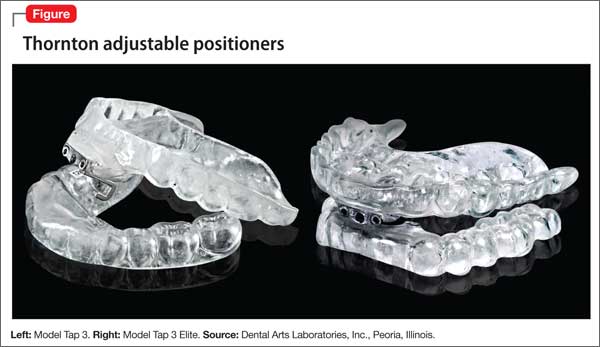
An AMP device often is most beneficial for supine-dependent sleep apnea patients and those with loud snoring, without sleep apnea.4 Response is best in young adults and in patients who have a low body mass index, are free of sedatives, and have appropriate cephalometrics of the oral, dental, or pharyngeal anatomy. Improved sleep architecture, continuous sleep with less snoring, and increased daytime alertness are observed in patients who respond to an AMP device.
An AMP device is contraindicated when the device cannot be affixed to the dental arches and in some patients with an anatomical or pain-related temporomandibular joint disorder.5 The device is easy to use, noninvasive, readily accessible, and less expensive than alternatives.3
How can you help maintain treatment adherence?
AMP devices can induce adverse effects, including dental pain or discomfort through orthodontic alterations; patient reports and follow-up can yield detection and device adjustments can alleviate such problems. Adherence generally is good, with complaints usually limited to minor tooth discomfort, occlusive changes, and increased or decreased salivation.5 In our clinical experience, many patients find these devices comfortable and easy to use, but might complain of feeling awkward when wearing them.
Changes in occlusion can occur during long-term treatment with an AMP device. Proper fitting is essential to facilitate a more open airway and the ability to speak and drink fluids, and to maintain safety, even if vomiting occurs while the device is in place.
Disclosures
The authors report no financial relationships with any company whose products are mentioned in this article or with manufacturers of competing products.
1. Epstein LJ, Kristo D, Strollo PJ, et al. Clinical guideline for the evaluation, management and long-term care of obstructive sleep apnea in adults. J Clin Sleep Med. 2009;5(3):263-276.
2. Diagnostic and statistical manual of mental disorders, 5th ed. Washington, DC: American Psychiatric Association; 2013.
3. de Britto Teixeira AO, Abi-Ramia LB, de Oliveira Almeida MA. Treatment of obstructive sleep apnea with oral appliances. Prog Orthod. 2013;14:10.
4. Marklund M, Stenlund H, Franklin K. Mandibular advancement devices in 630 men and women with obstructive sleep apnea and snoring: tolerability and predictors of treatment success. Chest. 2004;125(4):1270-1278.
5. Ferguson KA, Cartwright R, Rogers R, et al. Oral appliances for snoring and obstructive sleep apnea: a review. Sleep. 2006;29(2):244-262.
Snoring, snorting, gasping, and obstructive sleep apnea are caused by collapse of the pharyngeal airway during sleep.1 Pathophysiology includes a combination of anatomical and physiological variables.1 Common anatomical predisposing conditions include abnormalities of pharyngeal, lingual, and dental arches; physiological concerns are advancing age, male sex, obesity, use of sedatives, body positioning, and reduced muscle tone during rapid eye movement sleep. Coexistence of anatomic and physiological elements can produce significant narrowing of the upper airway.
Comorbidities include vascular, metabolic, and psychiatric conditions. As many as one-third of people with symptoms of sleep apnea report depressed mood; approximately 10% of these patients meet criteria for moderate or severe depression.2
In short, sleep-disordered breathing has a globally negative effect on mental health.
When should you consider obtaining a sleep apnea study?
Refer patients for a sleep study when snoring, snorting, gasping, or pauses in breathing occur during sleep, or in the case of daytime sleepiness, fatigue, or unrefreshing sleep that cannot be explained by another medical or psychiatric illness.2 A sleep specialist can determine the most appropriate intervention for sleep-disordered breathing.
An apneic event is characterized by complete cessation of airflow; hypopnea is a partially compromised airway. In either event, at least a 3% decrease in oxygen saturation occurs for at least 10 seconds.3 A diagnosis of obstructive sleep apnea or hypopnea is required when polysomnography reveals either of:
• ≥5 episodes of apnea or hypopnea, or both, per hour of sleep, with symptoms of a rhythmic breathing disturbance or daytime sleepiness or fatigue
• ≥15 episodes of apnea or hypopnea, or both, per hour of sleep, regardless of accompanying symptoms.2
What are the treatment options?
• Continuous positive airway pressure (CPAP) machines.
• Surgical procedures include adeno-tonsillectomy in children and surgical maxilla-mandibular advancement or palatal implants for adults.
• A novel implantable electrical stimulation device stimulates the hypoglossal nerve, which activates the genioglossus muscle, thus moving the tongue forward to open the airway.
• An anterior mandibular positioning (AMP) device increases the diameter of the retroglossal space by preventing posterior movement of the mandible and tongue, thereby limiting encroachment on the airway diameter and reducing the potential for collapse.1-4
When should you recommend an AMP device?
Consider recommending an AMP device to treat sleep-disordered breathing when (1) lifestyle changes, such as sleep hygiene, weight loss, and stopping sedatives, do not work and (2) a CPAP machine or a surgical procedure is contraindicated or has been ineffective.1 An AMP device can minimize snoring and relieve airway obstruction, especially in patients with supine position-related apnea.4 To keep the airway open in non-supine position-related cases, an AMP device might be indicated in addition to CPAP delivered nasally.1
This plastic oral appliance is either a 1- or 2-piece design, and looks and is sized similarly to an athletic mouth-protection guard or an oral anti-bruxism tooth-protection appliance. It is affixed to the mandible and maxillary arches by clasps (Figure).
An AMP device often is most beneficial for supine-dependent sleep apnea patients and those with loud snoring, without sleep apnea.4 Response is best in young adults and in patients who have a low body mass index, are free of sedatives, and have appropriate cephalometrics of the oral, dental, or pharyngeal anatomy. Improved sleep architecture, continuous sleep with less snoring, and increased daytime alertness are observed in patients who respond to an AMP device.
An AMP device is contraindicated when the device cannot be affixed to the dental arches and in some patients with an anatomical or pain-related temporomandibular joint disorder.5 The device is easy to use, noninvasive, readily accessible, and less expensive than alternatives.3
How can you help maintain treatment adherence?
AMP devices can induce adverse effects, including dental pain or discomfort through orthodontic alterations; patient reports and follow-up can yield detection and device adjustments can alleviate such problems. Adherence generally is good, with complaints usually limited to minor tooth discomfort, occlusive changes, and increased or decreased salivation.5 In our clinical experience, many patients find these devices comfortable and easy to use, but might complain of feeling awkward when wearing them.
Changes in occlusion can occur during long-term treatment with an AMP device. Proper fitting is essential to facilitate a more open airway and the ability to speak and drink fluids, and to maintain safety, even if vomiting occurs while the device is in place.
Disclosures
The authors report no financial relationships with any company whose products are mentioned in this article or with manufacturers of competing products.
Snoring, snorting, gasping, and obstructive sleep apnea are caused by collapse of the pharyngeal airway during sleep.1 Pathophysiology includes a combination of anatomical and physiological variables.1 Common anatomical predisposing conditions include abnormalities of pharyngeal, lingual, and dental arches; physiological concerns are advancing age, male sex, obesity, use of sedatives, body positioning, and reduced muscle tone during rapid eye movement sleep. Coexistence of anatomic and physiological elements can produce significant narrowing of the upper airway.
Comorbidities include vascular, metabolic, and psychiatric conditions. As many as one-third of people with symptoms of sleep apnea report depressed mood; approximately 10% of these patients meet criteria for moderate or severe depression.2
In short, sleep-disordered breathing has a globally negative effect on mental health.
When should you consider obtaining a sleep apnea study?
Refer patients for a sleep study when snoring, snorting, gasping, or pauses in breathing occur during sleep, or in the case of daytime sleepiness, fatigue, or unrefreshing sleep that cannot be explained by another medical or psychiatric illness.2 A sleep specialist can determine the most appropriate intervention for sleep-disordered breathing.
An apneic event is characterized by complete cessation of airflow; hypopnea is a partially compromised airway. In either event, at least a 3% decrease in oxygen saturation occurs for at least 10 seconds.3 A diagnosis of obstructive sleep apnea or hypopnea is required when polysomnography reveals either of:
• ≥5 episodes of apnea or hypopnea, or both, per hour of sleep, with symptoms of a rhythmic breathing disturbance or daytime sleepiness or fatigue
• ≥15 episodes of apnea or hypopnea, or both, per hour of sleep, regardless of accompanying symptoms.2
What are the treatment options?
• Continuous positive airway pressure (CPAP) machines.
• Surgical procedures include adeno-tonsillectomy in children and surgical maxilla-mandibular advancement or palatal implants for adults.
• A novel implantable electrical stimulation device stimulates the hypoglossal nerve, which activates the genioglossus muscle, thus moving the tongue forward to open the airway.
• An anterior mandibular positioning (AMP) device increases the diameter of the retroglossal space by preventing posterior movement of the mandible and tongue, thereby limiting encroachment on the airway diameter and reducing the potential for collapse.1-4
When should you recommend an AMP device?
Consider recommending an AMP device to treat sleep-disordered breathing when (1) lifestyle changes, such as sleep hygiene, weight loss, and stopping sedatives, do not work and (2) a CPAP machine or a surgical procedure is contraindicated or has been ineffective.1 An AMP device can minimize snoring and relieve airway obstruction, especially in patients with supine position-related apnea.4 To keep the airway open in non-supine position-related cases, an AMP device might be indicated in addition to CPAP delivered nasally.1
This plastic oral appliance is either a 1- or 2-piece design, and looks and is sized similarly to an athletic mouth-protection guard or an oral anti-bruxism tooth-protection appliance. It is affixed to the mandible and maxillary arches by clasps (Figure).
An AMP device often is most beneficial for supine-dependent sleep apnea patients and those with loud snoring, without sleep apnea.4 Response is best in young adults and in patients who have a low body mass index, are free of sedatives, and have appropriate cephalometrics of the oral, dental, or pharyngeal anatomy. Improved sleep architecture, continuous sleep with less snoring, and increased daytime alertness are observed in patients who respond to an AMP device.
An AMP device is contraindicated when the device cannot be affixed to the dental arches and in some patients with an anatomical or pain-related temporomandibular joint disorder.5 The device is easy to use, noninvasive, readily accessible, and less expensive than alternatives.3
How can you help maintain treatment adherence?
AMP devices can induce adverse effects, including dental pain or discomfort through orthodontic alterations; patient reports and follow-up can yield detection and device adjustments can alleviate such problems. Adherence generally is good, with complaints usually limited to minor tooth discomfort, occlusive changes, and increased or decreased salivation.5 In our clinical experience, many patients find these devices comfortable and easy to use, but might complain of feeling awkward when wearing them.
Changes in occlusion can occur during long-term treatment with an AMP device. Proper fitting is essential to facilitate a more open airway and the ability to speak and drink fluids, and to maintain safety, even if vomiting occurs while the device is in place.
Disclosures
The authors report no financial relationships with any company whose products are mentioned in this article or with manufacturers of competing products.
1. Epstein LJ, Kristo D, Strollo PJ, et al. Clinical guideline for the evaluation, management and long-term care of obstructive sleep apnea in adults. J Clin Sleep Med. 2009;5(3):263-276.
2. Diagnostic and statistical manual of mental disorders, 5th ed. Washington, DC: American Psychiatric Association; 2013.
3. de Britto Teixeira AO, Abi-Ramia LB, de Oliveira Almeida MA. Treatment of obstructive sleep apnea with oral appliances. Prog Orthod. 2013;14:10.
4. Marklund M, Stenlund H, Franklin K. Mandibular advancement devices in 630 men and women with obstructive sleep apnea and snoring: tolerability and predictors of treatment success. Chest. 2004;125(4):1270-1278.
5. Ferguson KA, Cartwright R, Rogers R, et al. Oral appliances for snoring and obstructive sleep apnea: a review. Sleep. 2006;29(2):244-262.
1. Epstein LJ, Kristo D, Strollo PJ, et al. Clinical guideline for the evaluation, management and long-term care of obstructive sleep apnea in adults. J Clin Sleep Med. 2009;5(3):263-276.
2. Diagnostic and statistical manual of mental disorders, 5th ed. Washington, DC: American Psychiatric Association; 2013.
3. de Britto Teixeira AO, Abi-Ramia LB, de Oliveira Almeida MA. Treatment of obstructive sleep apnea with oral appliances. Prog Orthod. 2013;14:10.
4. Marklund M, Stenlund H, Franklin K. Mandibular advancement devices in 630 men and women with obstructive sleep apnea and snoring: tolerability and predictors of treatment success. Chest. 2004;125(4):1270-1278.
5. Ferguson KA, Cartwright R, Rogers R, et al. Oral appliances for snoring and obstructive sleep apnea: a review. Sleep. 2006;29(2):244-262.
Young, pregnant, ataxic—and jilted
CASE Difficulty walking
Ms. M, age 15, is a pregnant, Spanish-speaking Guatemalan woman who is brought to obstetrics triage in a large academic medical center at 35 weeks gestational age. She complains of dizziness, tinnitus, left orbital headache, and difficulty walking.
The neurology service finds profound truncal ataxia, astasia-abasia, and buckling of the knees; a normal brain and spine MRI are not consistent with a neurologic etiology. Otolaryngology service evaluates Ms. M to rule out a cholesteatoma and suggests a head CT and endoscopy, which are normal.
Ms. M’s symptoms resolve after 3 days, although the gait disturbances persist. When no clear cause is found for her difficulty walking, the psychiatry service is consulted to evaluate whether an underlying psychiatric disorder is contributing to symptoms.
What could be causing Ms. M’s symptoms?
a) malingering
b) factitious disorder
c) undiagnosed neurologic disorder
d) conversion disorder
The authors’ observations
Women are vulnerable to a variety of psychiatric illnesses during pregnancy1 that have deleterious effects on mother, baby, and family.2-6 Although there is a burgeoning literature on affective and anxiety disorders occurring in pregnancy, there is a dearth of information about somatoform disorders.
HISTORY Abandonment
Ms. M reports that, although her boyfriend deserted her after learning about the unexpected pregnancy, she will welcome the baby and looks forward to motherhood. She seems unaware of the responsibilities of being a mother.
Ms. M acknowledges a history of depression and self-harm a few years earlier, yet says she feels better now and thinks that psychiatric care is unnecessary. Because she does not endorse a history of trauma or symptoms suggesting an affective, anxiety, or psychotic illness, the psychiatrist does not recommend treatment with psychotropic medication.
At age 5, Ms. M’s parents sent her to the United States with her aunt, hoping that she would have a better life than she would have had in Guatemala. Her aunt reports that Ms. M initially had difficulty adjusting to life in the United States without her parents, yet she has made substantial strides over the years and is now quite accustomed to the country. Her aunt describes Ms. M as an independent high school student who earns good grades.
During the interview, the psychiatrist observes that Ms. M exhibits childlike mannerisms, including sleeping with stuffed toys and coloring in Disney books with crayons. She also is indifferent to her gait difficulty, pregnancy, and psychosocial stressors. Her affect is inconsistent with the content of her speech and she is alexithymic.
Ms. M’s aunt reports that her niece is becoming more dependent on her, which is not consistent with her baseline. Her aunt also notes that several years earlier, Ms. M’s nephew was diagnosed with a cholesteatoma after he presented with similar symptoms.
The combination of (1) Ms. M’s clinical presentation, which was causing her significant impairment in her social functioning, (2) the incompatibility of symptoms with any recognized neurologic and medical disease, and (3) prior family experience with cholesteatoma leads the consulting psychiatrist to suspect conversion disorder. Ms. M’s alexithymia, indifference to her symptoms, and recent abandonment by the baby’s father also support a conversion disorder diagnosis.
From a psychodynamic perspective, the ataxia appears to be her way of protecting herself from the abandonment she is experiencing by being left again to “stand alone” by her boyfriend as she had been when her parents sent her to the United States. Her regressive behavior could be her way of securing her aunt’s love and support.
The authors’ observations
This is the first case of psychogenic gait disturbance during pregnancy described in the literature. Authors have reported on pseudotoxemia,7 hyperemesis gravidarum,8 and pesudocyesis,9 yet there is a paucity of information on psychogenic gait disturbance during pregnancy. Ms. M’s case elucidates many of the clinical quandaries that occur when managing psychiatric illness—and, more specifically, conversion disorder— during pregnancy. Many women are hesitant to seek psychiatric treatment during pregnancy because of shame, stigma, and fear of loss of personal or parental rights10,11; it is not surprising that emotionally distressed women communicate their feelings or troubled thoughts through physical symptoms.
Likely diagnosis
Conversion disorder is the presence of neurologic symptoms in the absence of a neurologic diagnosis that fully explains those symptoms. Conversion disorder, previously known as hysteria, is called functional neurologic symptom disorder in DSM-5 (Box).12 Symptoms are not feigned; instead, they represent “conversion” of emotional distress into neurologic symptoms.13,14 Although misdiagnosing conversion disorder in patients with true neurologic disease is uncommon, clinicians often are uncomfortable making the diagnosis until all medical causes have been ruled out.14 It is not always possible to find a psychological explanation for conversion disorder, but a history of childhood abuse, particularly sexual abuse, could play a role.14

Because of the variety of presentations, clinicians in all specialties should be familiar with somatoform disorders; this is especially important in obstetrics and gynecology because women are more likely than men to develop these disorders.15 It is important to consider that Ms. M is a teenager and somatoform disorders can present differently in adults. The diagnostic process should include a diligent somatic workup and a personal and social history to identify the patient’s developmental tasks, stressors, and coping style.15
How would you treat Ms. M?
a) destigmatize psychiatric illness and provide psychoeducation regarding treatment benefits
b) identify and treat any comorbid psychiatric disorders
c) maintain a proactive and multidisciplinary approach that includes assessment of psychosocial stressors and psychodynamic factors, particularly those related to the pregnancy
d) all of the above
TREATMENT Close follow-up
The psychiatrist recommends continued close psychiatric follow-up as well as multidisciplinary involvement, including physical therapy, neurology, and obstetrics.
Ms. M initially is resistant to psychiatric follow-up because she says that “people on the street” told her that, if she saw a psychiatrist, her baby would be taken away. After the psychiatrist explains that it is unlikely her baby would be taken away, Ms. M immediately appears relieved, smiles, and readily agrees to outpatient psychotherapy.
Over the next 24 hours, she continues to work with a physical therapist and her gait significantly improves. She is discharged home 2 days later with a walking aid (Zimmer frame) for assistance.
Four days later, however, Ms. M is readmitted with worsening ataxia. Her aunt reports that, at home, Ms. M’s regressed behaviors are worsening; she is sleeping in bed with her and had several episodes of enuresis at home.
Ms. M continues to deny psychiatric symptoms or anxiety about the delivery. Although she shows some improvement when working with physical therapists, they note that Ms. M is still unable to ambulate or stand on her own. The psychiatrist is increasingly concerned about her regressed behavior and continued ataxia.
A family meeting is held and the psychiatrist and social worker educate Ms. M and her aunt about conversion disorder, including how some emotionally distressed women communicate their feelings or troubled thoughts through physical symptoms and how that may apply to Ms. M. During the meeting, the team also destigmatizes psychiatric illness and treatment and provides psychoeducation regarding its benefits. The psychiatrist and social worker also provide a psychodynamic interpretation that her ataxia could be a way of protecting herself against the abandonment she is experiencing by being left to “stand alone” by her boyfriend— as she had been when her parents sent her to the United States, and that her behavior could be her way of securing her aunt’s love and support.Ms. M and her aunt both readily agree with this interpretation. The aunt notes that her niece is more anxious about motherhood than she acknowledges and is concerned that Ms. M expects her to be the primary caregiver for the baby. Those present note that Ms. M is becoming increasingly dependent on her aunt, and that it is important for her to retain her independence, especially once she becomes a mother.
Ms. M immediately begins to display more affect; she smiles and reports feeling relieved. Similar to the previous admission, her gait significantly improves over the next 2 days and she is discharged home with a walking aid.
The authors’ observations
A broad differential diagnosis and early multidisciplinary involvement might facilitate earlier diagnosis and treatment.16 Assessment of psychosocial stressors in the patient’s personal and family life, including circumstances around the pregnancy and the meaning of motherhood, as well as investigation of what the patient may gain from the sick role, are paramount. In Ms. M’s case, cultural background, separation from her parents at a young age, and recent abandonment by her boyfriend have contributed to her inability to “stand alone,” which manifested as ataxia. Young age, regressed behavior, and her minimization of stressors also point to her difficulty acknowledging and coping with psychosocial stressors.
Successful delivery of the diagnosis is key to treatment success. After building a therapeutic alliance, a multidisciplinary discussion should take place that allows the patient to understand the diagnosis and treatment plan.17,18 The patient and family should be reassured that the fetus is healthy and all organic causes of symptoms have been investigated.17 Although management of conversion disorder during pregnancy is similar to that in non-pregnant women, several additional avenues of investigation should be considered:
• Explore the psychodynamic basis of the disorder and the role of the pregnancy and motherhood.
• Identify any comorbid psychiatric disorders, particularly those specific to pregnancy or the postpartum period.
• Because of the shame and stigma associated with seeking psychiatric treatment during pregnancy,10,11 it is imperative to destigmatize treatment and provide psychoeducation regarding its benefits.
A treatment plan can then be developed that involves psychotherapy, psychoeducation, stress management, and, when appropriate, pharmacotherapy.17
Providing psychoeducation about postpartum depression and other perinatal psychiatric illness could be beneficial. Physical therapy often is culturally acceptable and can help re-establish healthy patterns of motor function.19 Ms. M’s gait showed some improvement with physical therapy as part of the multidisciplinary approach, which also should include a thorough medical workup. Appropriate psychiatric treatment can help patients give up the sick role and return to their previous level of functioning.17
Maintain close communication with the outpatient perinatal care team as they monitor the patient’s parenting capacity. The outpatient perinatal care team also should engage pregnant or postpartum women in prioritizing their emotional well-being and encourage outpatient mental health treatment. Despite a dearth of data on the regressive symptoms and prognosis for future pregnancies, it is important to monitor maternal capacity and discuss the possibility of symptom recurrence.
OUTCOME Healthy baby
Three days later, Ms. M returns in labor with improved gait yet still using a walking aid. She has a normal vaginal delivery of a healthy baby boy at 37 weeks’ gestational age.
After the birth, Ms. M reports feeling well and enjoying motherhood, and denies psychiatric symptoms. She is ambulating without assistance within hours of delivery. This spontaneous resolution of symptoms could have been because of the psychodynamically oriented multidisciplinary approach to her care, which may have helped her realize that she did not have to “stand alone” as she embarked on motherhood.
Before being discharged home, Ms. M and her aunt meet with the inpatient obstetric social worker to assess Ms. M’s ability to care for the baby and discuss the importance of continued emotional support. The social worker does not contact the Department of Children and Families because Ms. M is walking independently and not endorsing or exhibiting regressive behaviors. Ms. M also reports that she will ask her aunt to take care of the baby should ataxia recur. Her aunt reassures the social workers that she will encourage Ms. M to attend outpatient psychotherapy and will contact the social worker if she becomes concerned about Ms. M’s or the baby’s well-being.
During her postpartum obstetric visit, Ms. M is walking independently and does not exhibit or endorse neurologic symptoms. The social worker provides psychoeducation about the importance of outpatient psychotherapy and schedules an initial appointment; Ms. M does not attend outpatient psychotherapy after discharge.
Bottom Line
Consider conversion disorder in obstetric patients who present with ataxia without a neurologic cause. Management involves a proactive and multidisciplinary approach that includes a thorough medical workup and assessment of psychosocial stressors and psychodynamic factors, particularly those related to the pregnancy. Early identification and delivery of the diagnosis, destigmatization, and provision of appropriate psychiatric treatment can facilitate treatment success.
Disclosures
Dr. Byatt has received grant funding/support for this project from the National Center for Research Resources and the National Center for Advancing Translational Sciences, National Institutes of Health, through Grant KL2TR000160. The content is solely the responsibility of the authors and does not necessarily represent the official views of the NIH. Dr. Toor reports no financial relationships with any company whose products are mentioned in this article or manufacturers of competing products.
1. Vesga-Lopez O, Blanco C, Keyes K, et al. Psychiatric disorders in pregnant and postpartum women in the United States. Arch Gen Psychiatry. 2008;65(7):805-815.
2. Britton HL, Gronwaldt V, Britton JR. Maternal postpartum behaviors and mother-infant relationship during the first year of life. J Pediatr. 2001;138(6):905-909.
3. Deave T, Heron J, Evans J, et al. The impact of maternal depression in pregnancy on early child development. BJOG. 2008;115(8):1043-1051.
4. Paulson JF, Keefe HA, Leiferman JA. Early parental depression and child language development. J Child Psychol Psychiatry. 2009;50(3):254-262.
5. Zuckerman B, Amaro H, Bauchner H, et al. Depressive symptoms during pregnancy: relationship to poor health behaviors. Am J Obstet Gynecol. 1989;160(5 pt 1):1107-1111.
6. Forman DR, O’Hara MW, Stuart S, et al. Effective treatment for postpartum depression is not sufficient to improve the developing mother-child relationship. Dev Psychopathol. 2007;19(2):585-602.
7. Brady WJ Jr, Huff JS. Pseudotoxemia: new onset psychogenic seizure in third trimester pregnancy. J Emerg Med. 1997;15(6):815-820.
8. el-Mallakh RS, Liebowitz NR, Hale MS. Hyperemesis gravidarum as conversion disorder. J Nerv Ment Dis. 1990; 178(10):655-659.
9. Paulman PM, Sadat A. Pseudocyesis. J Fam Pract. 1990;30(5):575-576.
10. Dennis CL, Chung-Lee L. Postpartum depression help-seeking barriers and maternal treatment p: a qualitative systematic review. Birth. 2006;33(4):323-331.
11. Byatt N, Simas TA, Lundquist RS, et al. Strategies for improving perinatal depression treatment in North American outpatient obstetric settings. J Psychosom Obstetr Gynaecol. 2012;33(4):143-161.
12. Diagnostic and statistical manual of mental disorders, 5th ed. Washington, DC: American Psychiatric Association; 2013.
13. Feinstein A. Conversion disorder: advances in our understanding. CMAJ. 2011;183(8):915-920.
14. Nicholson TR, Stone J, Kanaan RA. Conversion disorder: a problematic diagnosis. J Neurol Neurosurg Psychiatry. 2011;82(11):1267-1273.
15. Bitzer J. Somatization disorders in obstetrics and gynecology. Arch Womens Mental health, 2003;6(2):99-107.
16. Smith HE, Rynning RE, Okafor C, et al. Evaluation of neurologic deficit without apparent cause: the importance of a multidisciplinary approach. J Spinal Cord Med. 2007;30(5):509-517.
17. Hinson VK, Haren WB. Psychogenic movement disorders. Lancet Neurol. 2006;5(8):695-700.
18. Oyama O, Paltoo C, Greengold J. Somatoform disorders. Am Fam Physician. 2007;76(9):1333-1338.
19. Ness D. Physical therapy management for conversion disorder: case series. J Neurol Phys Ther. 2007;31(1):30-39.
CASE Difficulty walking
Ms. M, age 15, is a pregnant, Spanish-speaking Guatemalan woman who is brought to obstetrics triage in a large academic medical center at 35 weeks gestational age. She complains of dizziness, tinnitus, left orbital headache, and difficulty walking.
The neurology service finds profound truncal ataxia, astasia-abasia, and buckling of the knees; a normal brain and spine MRI are not consistent with a neurologic etiology. Otolaryngology service evaluates Ms. M to rule out a cholesteatoma and suggests a head CT and endoscopy, which are normal.
Ms. M’s symptoms resolve after 3 days, although the gait disturbances persist. When no clear cause is found for her difficulty walking, the psychiatry service is consulted to evaluate whether an underlying psychiatric disorder is contributing to symptoms.
What could be causing Ms. M’s symptoms?
a) malingering
b) factitious disorder
c) undiagnosed neurologic disorder
d) conversion disorder
The authors’ observations
Women are vulnerable to a variety of psychiatric illnesses during pregnancy1 that have deleterious effects on mother, baby, and family.2-6 Although there is a burgeoning literature on affective and anxiety disorders occurring in pregnancy, there is a dearth of information about somatoform disorders.
HISTORY Abandonment
Ms. M reports that, although her boyfriend deserted her after learning about the unexpected pregnancy, she will welcome the baby and looks forward to motherhood. She seems unaware of the responsibilities of being a mother.
Ms. M acknowledges a history of depression and self-harm a few years earlier, yet says she feels better now and thinks that psychiatric care is unnecessary. Because she does not endorse a history of trauma or symptoms suggesting an affective, anxiety, or psychotic illness, the psychiatrist does not recommend treatment with psychotropic medication.
At age 5, Ms. M’s parents sent her to the United States with her aunt, hoping that she would have a better life than she would have had in Guatemala. Her aunt reports that Ms. M initially had difficulty adjusting to life in the United States without her parents, yet she has made substantial strides over the years and is now quite accustomed to the country. Her aunt describes Ms. M as an independent high school student who earns good grades.
During the interview, the psychiatrist observes that Ms. M exhibits childlike mannerisms, including sleeping with stuffed toys and coloring in Disney books with crayons. She also is indifferent to her gait difficulty, pregnancy, and psychosocial stressors. Her affect is inconsistent with the content of her speech and she is alexithymic.
Ms. M’s aunt reports that her niece is becoming more dependent on her, which is not consistent with her baseline. Her aunt also notes that several years earlier, Ms. M’s nephew was diagnosed with a cholesteatoma after he presented with similar symptoms.
The combination of (1) Ms. M’s clinical presentation, which was causing her significant impairment in her social functioning, (2) the incompatibility of symptoms with any recognized neurologic and medical disease, and (3) prior family experience with cholesteatoma leads the consulting psychiatrist to suspect conversion disorder. Ms. M’s alexithymia, indifference to her symptoms, and recent abandonment by the baby’s father also support a conversion disorder diagnosis.
From a psychodynamic perspective, the ataxia appears to be her way of protecting herself from the abandonment she is experiencing by being left again to “stand alone” by her boyfriend as she had been when her parents sent her to the United States. Her regressive behavior could be her way of securing her aunt’s love and support.
The authors’ observations
This is the first case of psychogenic gait disturbance during pregnancy described in the literature. Authors have reported on pseudotoxemia,7 hyperemesis gravidarum,8 and pesudocyesis,9 yet there is a paucity of information on psychogenic gait disturbance during pregnancy. Ms. M’s case elucidates many of the clinical quandaries that occur when managing psychiatric illness—and, more specifically, conversion disorder— during pregnancy. Many women are hesitant to seek psychiatric treatment during pregnancy because of shame, stigma, and fear of loss of personal or parental rights10,11; it is not surprising that emotionally distressed women communicate their feelings or troubled thoughts through physical symptoms.
Likely diagnosis
Conversion disorder is the presence of neurologic symptoms in the absence of a neurologic diagnosis that fully explains those symptoms. Conversion disorder, previously known as hysteria, is called functional neurologic symptom disorder in DSM-5 (Box).12 Symptoms are not feigned; instead, they represent “conversion” of emotional distress into neurologic symptoms.13,14 Although misdiagnosing conversion disorder in patients with true neurologic disease is uncommon, clinicians often are uncomfortable making the diagnosis until all medical causes have been ruled out.14 It is not always possible to find a psychological explanation for conversion disorder, but a history of childhood abuse, particularly sexual abuse, could play a role.14
Because of the variety of presentations, clinicians in all specialties should be familiar with somatoform disorders; this is especially important in obstetrics and gynecology because women are more likely than men to develop these disorders.15 It is important to consider that Ms. M is a teenager and somatoform disorders can present differently in adults. The diagnostic process should include a diligent somatic workup and a personal and social history to identify the patient’s developmental tasks, stressors, and coping style.15
How would you treat Ms. M?
a) destigmatize psychiatric illness and provide psychoeducation regarding treatment benefits
b) identify and treat any comorbid psychiatric disorders
c) maintain a proactive and multidisciplinary approach that includes assessment of psychosocial stressors and psychodynamic factors, particularly those related to the pregnancy
d) all of the above
TREATMENT Close follow-up
The psychiatrist recommends continued close psychiatric follow-up as well as multidisciplinary involvement, including physical therapy, neurology, and obstetrics.
Ms. M initially is resistant to psychiatric follow-up because she says that “people on the street” told her that, if she saw a psychiatrist, her baby would be taken away. After the psychiatrist explains that it is unlikely her baby would be taken away, Ms. M immediately appears relieved, smiles, and readily agrees to outpatient psychotherapy.
Over the next 24 hours, she continues to work with a physical therapist and her gait significantly improves. She is discharged home 2 days later with a walking aid (Zimmer frame) for assistance.
Four days later, however, Ms. M is readmitted with worsening ataxia. Her aunt reports that, at home, Ms. M’s regressed behaviors are worsening; she is sleeping in bed with her and had several episodes of enuresis at home.
Ms. M continues to deny psychiatric symptoms or anxiety about the delivery. Although she shows some improvement when working with physical therapists, they note that Ms. M is still unable to ambulate or stand on her own. The psychiatrist is increasingly concerned about her regressed behavior and continued ataxia.
A family meeting is held and the psychiatrist and social worker educate Ms. M and her aunt about conversion disorder, including how some emotionally distressed women communicate their feelings or troubled thoughts through physical symptoms and how that may apply to Ms. M. During the meeting, the team also destigmatizes psychiatric illness and treatment and provides psychoeducation regarding its benefits. The psychiatrist and social worker also provide a psychodynamic interpretation that her ataxia could be a way of protecting herself against the abandonment she is experiencing by being left to “stand alone” by her boyfriend— as she had been when her parents sent her to the United States, and that her behavior could be her way of securing her aunt’s love and support.Ms. M and her aunt both readily agree with this interpretation. The aunt notes that her niece is more anxious about motherhood than she acknowledges and is concerned that Ms. M expects her to be the primary caregiver for the baby. Those present note that Ms. M is becoming increasingly dependent on her aunt, and that it is important for her to retain her independence, especially once she becomes a mother.
Ms. M immediately begins to display more affect; she smiles and reports feeling relieved. Similar to the previous admission, her gait significantly improves over the next 2 days and she is discharged home with a walking aid.
The authors’ observations
A broad differential diagnosis and early multidisciplinary involvement might facilitate earlier diagnosis and treatment.16 Assessment of psychosocial stressors in the patient’s personal and family life, including circumstances around the pregnancy and the meaning of motherhood, as well as investigation of what the patient may gain from the sick role, are paramount. In Ms. M’s case, cultural background, separation from her parents at a young age, and recent abandonment by her boyfriend have contributed to her inability to “stand alone,” which manifested as ataxia. Young age, regressed behavior, and her minimization of stressors also point to her difficulty acknowledging and coping with psychosocial stressors.
Successful delivery of the diagnosis is key to treatment success. After building a therapeutic alliance, a multidisciplinary discussion should take place that allows the patient to understand the diagnosis and treatment plan.17,18 The patient and family should be reassured that the fetus is healthy and all organic causes of symptoms have been investigated.17 Although management of conversion disorder during pregnancy is similar to that in non-pregnant women, several additional avenues of investigation should be considered:
• Explore the psychodynamic basis of the disorder and the role of the pregnancy and motherhood.
• Identify any comorbid psychiatric disorders, particularly those specific to pregnancy or the postpartum period.
• Because of the shame and stigma associated with seeking psychiatric treatment during pregnancy,10,11 it is imperative to destigmatize treatment and provide psychoeducation regarding its benefits.
A treatment plan can then be developed that involves psychotherapy, psychoeducation, stress management, and, when appropriate, pharmacotherapy.17
Providing psychoeducation about postpartum depression and other perinatal psychiatric illness could be beneficial. Physical therapy often is culturally acceptable and can help re-establish healthy patterns of motor function.19 Ms. M’s gait showed some improvement with physical therapy as part of the multidisciplinary approach, which also should include a thorough medical workup. Appropriate psychiatric treatment can help patients give up the sick role and return to their previous level of functioning.17
Maintain close communication with the outpatient perinatal care team as they monitor the patient’s parenting capacity. The outpatient perinatal care team also should engage pregnant or postpartum women in prioritizing their emotional well-being and encourage outpatient mental health treatment. Despite a dearth of data on the regressive symptoms and prognosis for future pregnancies, it is important to monitor maternal capacity and discuss the possibility of symptom recurrence.
OUTCOME Healthy baby
Three days later, Ms. M returns in labor with improved gait yet still using a walking aid. She has a normal vaginal delivery of a healthy baby boy at 37 weeks’ gestational age.
After the birth, Ms. M reports feeling well and enjoying motherhood, and denies psychiatric symptoms. She is ambulating without assistance within hours of delivery. This spontaneous resolution of symptoms could have been because of the psychodynamically oriented multidisciplinary approach to her care, which may have helped her realize that she did not have to “stand alone” as she embarked on motherhood.
Before being discharged home, Ms. M and her aunt meet with the inpatient obstetric social worker to assess Ms. M’s ability to care for the baby and discuss the importance of continued emotional support. The social worker does not contact the Department of Children and Families because Ms. M is walking independently and not endorsing or exhibiting regressive behaviors. Ms. M also reports that she will ask her aunt to take care of the baby should ataxia recur. Her aunt reassures the social workers that she will encourage Ms. M to attend outpatient psychotherapy and will contact the social worker if she becomes concerned about Ms. M’s or the baby’s well-being.
During her postpartum obstetric visit, Ms. M is walking independently and does not exhibit or endorse neurologic symptoms. The social worker provides psychoeducation about the importance of outpatient psychotherapy and schedules an initial appointment; Ms. M does not attend outpatient psychotherapy after discharge.
Bottom Line
Consider conversion disorder in obstetric patients who present with ataxia without a neurologic cause. Management involves a proactive and multidisciplinary approach that includes a thorough medical workup and assessment of psychosocial stressors and psychodynamic factors, particularly those related to the pregnancy. Early identification and delivery of the diagnosis, destigmatization, and provision of appropriate psychiatric treatment can facilitate treatment success.
Disclosures
Dr. Byatt has received grant funding/support for this project from the National Center for Research Resources and the National Center for Advancing Translational Sciences, National Institutes of Health, through Grant KL2TR000160. The content is solely the responsibility of the authors and does not necessarily represent the official views of the NIH. Dr. Toor reports no financial relationships with any company whose products are mentioned in this article or manufacturers of competing products.
CASE Difficulty walking
Ms. M, age 15, is a pregnant, Spanish-speaking Guatemalan woman who is brought to obstetrics triage in a large academic medical center at 35 weeks gestational age. She complains of dizziness, tinnitus, left orbital headache, and difficulty walking.
The neurology service finds profound truncal ataxia, astasia-abasia, and buckling of the knees; a normal brain and spine MRI are not consistent with a neurologic etiology. Otolaryngology service evaluates Ms. M to rule out a cholesteatoma and suggests a head CT and endoscopy, which are normal.
Ms. M’s symptoms resolve after 3 days, although the gait disturbances persist. When no clear cause is found for her difficulty walking, the psychiatry service is consulted to evaluate whether an underlying psychiatric disorder is contributing to symptoms.
What could be causing Ms. M’s symptoms?
a) malingering
b) factitious disorder
c) undiagnosed neurologic disorder
d) conversion disorder
The authors’ observations
Women are vulnerable to a variety of psychiatric illnesses during pregnancy1 that have deleterious effects on mother, baby, and family.2-6 Although there is a burgeoning literature on affective and anxiety disorders occurring in pregnancy, there is a dearth of information about somatoform disorders.
HISTORY Abandonment
Ms. M reports that, although her boyfriend deserted her after learning about the unexpected pregnancy, she will welcome the baby and looks forward to motherhood. She seems unaware of the responsibilities of being a mother.
Ms. M acknowledges a history of depression and self-harm a few years earlier, yet says she feels better now and thinks that psychiatric care is unnecessary. Because she does not endorse a history of trauma or symptoms suggesting an affective, anxiety, or psychotic illness, the psychiatrist does not recommend treatment with psychotropic medication.
At age 5, Ms. M’s parents sent her to the United States with her aunt, hoping that she would have a better life than she would have had in Guatemala. Her aunt reports that Ms. M initially had difficulty adjusting to life in the United States without her parents, yet she has made substantial strides over the years and is now quite accustomed to the country. Her aunt describes Ms. M as an independent high school student who earns good grades.
During the interview, the psychiatrist observes that Ms. M exhibits childlike mannerisms, including sleeping with stuffed toys and coloring in Disney books with crayons. She also is indifferent to her gait difficulty, pregnancy, and psychosocial stressors. Her affect is inconsistent with the content of her speech and she is alexithymic.
Ms. M’s aunt reports that her niece is becoming more dependent on her, which is not consistent with her baseline. Her aunt also notes that several years earlier, Ms. M’s nephew was diagnosed with a cholesteatoma after he presented with similar symptoms.
The combination of (1) Ms. M’s clinical presentation, which was causing her significant impairment in her social functioning, (2) the incompatibility of symptoms with any recognized neurologic and medical disease, and (3) prior family experience with cholesteatoma leads the consulting psychiatrist to suspect conversion disorder. Ms. M’s alexithymia, indifference to her symptoms, and recent abandonment by the baby’s father also support a conversion disorder diagnosis.
From a psychodynamic perspective, the ataxia appears to be her way of protecting herself from the abandonment she is experiencing by being left again to “stand alone” by her boyfriend as she had been when her parents sent her to the United States. Her regressive behavior could be her way of securing her aunt’s love and support.
The authors’ observations
This is the first case of psychogenic gait disturbance during pregnancy described in the literature. Authors have reported on pseudotoxemia,7 hyperemesis gravidarum,8 and pesudocyesis,9 yet there is a paucity of information on psychogenic gait disturbance during pregnancy. Ms. M’s case elucidates many of the clinical quandaries that occur when managing psychiatric illness—and, more specifically, conversion disorder— during pregnancy. Many women are hesitant to seek psychiatric treatment during pregnancy because of shame, stigma, and fear of loss of personal or parental rights10,11; it is not surprising that emotionally distressed women communicate their feelings or troubled thoughts through physical symptoms.
Likely diagnosis
Conversion disorder is the presence of neurologic symptoms in the absence of a neurologic diagnosis that fully explains those symptoms. Conversion disorder, previously known as hysteria, is called functional neurologic symptom disorder in DSM-5 (Box).12 Symptoms are not feigned; instead, they represent “conversion” of emotional distress into neurologic symptoms.13,14 Although misdiagnosing conversion disorder in patients with true neurologic disease is uncommon, clinicians often are uncomfortable making the diagnosis until all medical causes have been ruled out.14 It is not always possible to find a psychological explanation for conversion disorder, but a history of childhood abuse, particularly sexual abuse, could play a role.14
Because of the variety of presentations, clinicians in all specialties should be familiar with somatoform disorders; this is especially important in obstetrics and gynecology because women are more likely than men to develop these disorders.15 It is important to consider that Ms. M is a teenager and somatoform disorders can present differently in adults. The diagnostic process should include a diligent somatic workup and a personal and social history to identify the patient’s developmental tasks, stressors, and coping style.15
How would you treat Ms. M?
a) destigmatize psychiatric illness and provide psychoeducation regarding treatment benefits
b) identify and treat any comorbid psychiatric disorders
c) maintain a proactive and multidisciplinary approach that includes assessment of psychosocial stressors and psychodynamic factors, particularly those related to the pregnancy
d) all of the above
TREATMENT Close follow-up
The psychiatrist recommends continued close psychiatric follow-up as well as multidisciplinary involvement, including physical therapy, neurology, and obstetrics.
Ms. M initially is resistant to psychiatric follow-up because she says that “people on the street” told her that, if she saw a psychiatrist, her baby would be taken away. After the psychiatrist explains that it is unlikely her baby would be taken away, Ms. M immediately appears relieved, smiles, and readily agrees to outpatient psychotherapy.
Over the next 24 hours, she continues to work with a physical therapist and her gait significantly improves. She is discharged home 2 days later with a walking aid (Zimmer frame) for assistance.
Four days later, however, Ms. M is readmitted with worsening ataxia. Her aunt reports that, at home, Ms. M’s regressed behaviors are worsening; she is sleeping in bed with her and had several episodes of enuresis at home.
Ms. M continues to deny psychiatric symptoms or anxiety about the delivery. Although she shows some improvement when working with physical therapists, they note that Ms. M is still unable to ambulate or stand on her own. The psychiatrist is increasingly concerned about her regressed behavior and continued ataxia.
A family meeting is held and the psychiatrist and social worker educate Ms. M and her aunt about conversion disorder, including how some emotionally distressed women communicate their feelings or troubled thoughts through physical symptoms and how that may apply to Ms. M. During the meeting, the team also destigmatizes psychiatric illness and treatment and provides psychoeducation regarding its benefits. The psychiatrist and social worker also provide a psychodynamic interpretation that her ataxia could be a way of protecting herself against the abandonment she is experiencing by being left to “stand alone” by her boyfriend— as she had been when her parents sent her to the United States, and that her behavior could be her way of securing her aunt’s love and support.Ms. M and her aunt both readily agree with this interpretation. The aunt notes that her niece is more anxious about motherhood than she acknowledges and is concerned that Ms. M expects her to be the primary caregiver for the baby. Those present note that Ms. M is becoming increasingly dependent on her aunt, and that it is important for her to retain her independence, especially once she becomes a mother.
Ms. M immediately begins to display more affect; she smiles and reports feeling relieved. Similar to the previous admission, her gait significantly improves over the next 2 days and she is discharged home with a walking aid.
The authors’ observations
A broad differential diagnosis and early multidisciplinary involvement might facilitate earlier diagnosis and treatment.16 Assessment of psychosocial stressors in the patient’s personal and family life, including circumstances around the pregnancy and the meaning of motherhood, as well as investigation of what the patient may gain from the sick role, are paramount. In Ms. M’s case, cultural background, separation from her parents at a young age, and recent abandonment by her boyfriend have contributed to her inability to “stand alone,” which manifested as ataxia. Young age, regressed behavior, and her minimization of stressors also point to her difficulty acknowledging and coping with psychosocial stressors.
Successful delivery of the diagnosis is key to treatment success. After building a therapeutic alliance, a multidisciplinary discussion should take place that allows the patient to understand the diagnosis and treatment plan.17,18 The patient and family should be reassured that the fetus is healthy and all organic causes of symptoms have been investigated.17 Although management of conversion disorder during pregnancy is similar to that in non-pregnant women, several additional avenues of investigation should be considered:
• Explore the psychodynamic basis of the disorder and the role of the pregnancy and motherhood.
• Identify any comorbid psychiatric disorders, particularly those specific to pregnancy or the postpartum period.
• Because of the shame and stigma associated with seeking psychiatric treatment during pregnancy,10,11 it is imperative to destigmatize treatment and provide psychoeducation regarding its benefits.
A treatment plan can then be developed that involves psychotherapy, psychoeducation, stress management, and, when appropriate, pharmacotherapy.17
Providing psychoeducation about postpartum depression and other perinatal psychiatric illness could be beneficial. Physical therapy often is culturally acceptable and can help re-establish healthy patterns of motor function.19 Ms. M’s gait showed some improvement with physical therapy as part of the multidisciplinary approach, which also should include a thorough medical workup. Appropriate psychiatric treatment can help patients give up the sick role and return to their previous level of functioning.17
Maintain close communication with the outpatient perinatal care team as they monitor the patient’s parenting capacity. The outpatient perinatal care team also should engage pregnant or postpartum women in prioritizing their emotional well-being and encourage outpatient mental health treatment. Despite a dearth of data on the regressive symptoms and prognosis for future pregnancies, it is important to monitor maternal capacity and discuss the possibility of symptom recurrence.
OUTCOME Healthy baby
Three days later, Ms. M returns in labor with improved gait yet still using a walking aid. She has a normal vaginal delivery of a healthy baby boy at 37 weeks’ gestational age.
After the birth, Ms. M reports feeling well and enjoying motherhood, and denies psychiatric symptoms. She is ambulating without assistance within hours of delivery. This spontaneous resolution of symptoms could have been because of the psychodynamically oriented multidisciplinary approach to her care, which may have helped her realize that she did not have to “stand alone” as she embarked on motherhood.
Before being discharged home, Ms. M and her aunt meet with the inpatient obstetric social worker to assess Ms. M’s ability to care for the baby and discuss the importance of continued emotional support. The social worker does not contact the Department of Children and Families because Ms. M is walking independently and not endorsing or exhibiting regressive behaviors. Ms. M also reports that she will ask her aunt to take care of the baby should ataxia recur. Her aunt reassures the social workers that she will encourage Ms. M to attend outpatient psychotherapy and will contact the social worker if she becomes concerned about Ms. M’s or the baby’s well-being.
During her postpartum obstetric visit, Ms. M is walking independently and does not exhibit or endorse neurologic symptoms. The social worker provides psychoeducation about the importance of outpatient psychotherapy and schedules an initial appointment; Ms. M does not attend outpatient psychotherapy after discharge.
Bottom Line
Consider conversion disorder in obstetric patients who present with ataxia without a neurologic cause. Management involves a proactive and multidisciplinary approach that includes a thorough medical workup and assessment of psychosocial stressors and psychodynamic factors, particularly those related to the pregnancy. Early identification and delivery of the diagnosis, destigmatization, and provision of appropriate psychiatric treatment can facilitate treatment success.
Disclosures
Dr. Byatt has received grant funding/support for this project from the National Center for Research Resources and the National Center for Advancing Translational Sciences, National Institutes of Health, through Grant KL2TR000160. The content is solely the responsibility of the authors and does not necessarily represent the official views of the NIH. Dr. Toor reports no financial relationships with any company whose products are mentioned in this article or manufacturers of competing products.
1. Vesga-Lopez O, Blanco C, Keyes K, et al. Psychiatric disorders in pregnant and postpartum women in the United States. Arch Gen Psychiatry. 2008;65(7):805-815.
2. Britton HL, Gronwaldt V, Britton JR. Maternal postpartum behaviors and mother-infant relationship during the first year of life. J Pediatr. 2001;138(6):905-909.
3. Deave T, Heron J, Evans J, et al. The impact of maternal depression in pregnancy on early child development. BJOG. 2008;115(8):1043-1051.
4. Paulson JF, Keefe HA, Leiferman JA. Early parental depression and child language development. J Child Psychol Psychiatry. 2009;50(3):254-262.
5. Zuckerman B, Amaro H, Bauchner H, et al. Depressive symptoms during pregnancy: relationship to poor health behaviors. Am J Obstet Gynecol. 1989;160(5 pt 1):1107-1111.
6. Forman DR, O’Hara MW, Stuart S, et al. Effective treatment for postpartum depression is not sufficient to improve the developing mother-child relationship. Dev Psychopathol. 2007;19(2):585-602.
7. Brady WJ Jr, Huff JS. Pseudotoxemia: new onset psychogenic seizure in third trimester pregnancy. J Emerg Med. 1997;15(6):815-820.
8. el-Mallakh RS, Liebowitz NR, Hale MS. Hyperemesis gravidarum as conversion disorder. J Nerv Ment Dis. 1990; 178(10):655-659.
9. Paulman PM, Sadat A. Pseudocyesis. J Fam Pract. 1990;30(5):575-576.
10. Dennis CL, Chung-Lee L. Postpartum depression help-seeking barriers and maternal treatment p: a qualitative systematic review. Birth. 2006;33(4):323-331.
11. Byatt N, Simas TA, Lundquist RS, et al. Strategies for improving perinatal depression treatment in North American outpatient obstetric settings. J Psychosom Obstetr Gynaecol. 2012;33(4):143-161.
12. Diagnostic and statistical manual of mental disorders, 5th ed. Washington, DC: American Psychiatric Association; 2013.
13. Feinstein A. Conversion disorder: advances in our understanding. CMAJ. 2011;183(8):915-920.
14. Nicholson TR, Stone J, Kanaan RA. Conversion disorder: a problematic diagnosis. J Neurol Neurosurg Psychiatry. 2011;82(11):1267-1273.
15. Bitzer J. Somatization disorders in obstetrics and gynecology. Arch Womens Mental health, 2003;6(2):99-107.
16. Smith HE, Rynning RE, Okafor C, et al. Evaluation of neurologic deficit without apparent cause: the importance of a multidisciplinary approach. J Spinal Cord Med. 2007;30(5):509-517.
17. Hinson VK, Haren WB. Psychogenic movement disorders. Lancet Neurol. 2006;5(8):695-700.
18. Oyama O, Paltoo C, Greengold J. Somatoform disorders. Am Fam Physician. 2007;76(9):1333-1338.
19. Ness D. Physical therapy management for conversion disorder: case series. J Neurol Phys Ther. 2007;31(1):30-39.
1. Vesga-Lopez O, Blanco C, Keyes K, et al. Psychiatric disorders in pregnant and postpartum women in the United States. Arch Gen Psychiatry. 2008;65(7):805-815.
2. Britton HL, Gronwaldt V, Britton JR. Maternal postpartum behaviors and mother-infant relationship during the first year of life. J Pediatr. 2001;138(6):905-909.
3. Deave T, Heron J, Evans J, et al. The impact of maternal depression in pregnancy on early child development. BJOG. 2008;115(8):1043-1051.
4. Paulson JF, Keefe HA, Leiferman JA. Early parental depression and child language development. J Child Psychol Psychiatry. 2009;50(3):254-262.
5. Zuckerman B, Amaro H, Bauchner H, et al. Depressive symptoms during pregnancy: relationship to poor health behaviors. Am J Obstet Gynecol. 1989;160(5 pt 1):1107-1111.
6. Forman DR, O’Hara MW, Stuart S, et al. Effective treatment for postpartum depression is not sufficient to improve the developing mother-child relationship. Dev Psychopathol. 2007;19(2):585-602.
7. Brady WJ Jr, Huff JS. Pseudotoxemia: new onset psychogenic seizure in third trimester pregnancy. J Emerg Med. 1997;15(6):815-820.
8. el-Mallakh RS, Liebowitz NR, Hale MS. Hyperemesis gravidarum as conversion disorder. J Nerv Ment Dis. 1990; 178(10):655-659.
9. Paulman PM, Sadat A. Pseudocyesis. J Fam Pract. 1990;30(5):575-576.
10. Dennis CL, Chung-Lee L. Postpartum depression help-seeking barriers and maternal treatment p: a qualitative systematic review. Birth. 2006;33(4):323-331.
11. Byatt N, Simas TA, Lundquist RS, et al. Strategies for improving perinatal depression treatment in North American outpatient obstetric settings. J Psychosom Obstetr Gynaecol. 2012;33(4):143-161.
12. Diagnostic and statistical manual of mental disorders, 5th ed. Washington, DC: American Psychiatric Association; 2013.
13. Feinstein A. Conversion disorder: advances in our understanding. CMAJ. 2011;183(8):915-920.
14. Nicholson TR, Stone J, Kanaan RA. Conversion disorder: a problematic diagnosis. J Neurol Neurosurg Psychiatry. 2011;82(11):1267-1273.
15. Bitzer J. Somatization disorders in obstetrics and gynecology. Arch Womens Mental health, 2003;6(2):99-107.
16. Smith HE, Rynning RE, Okafor C, et al. Evaluation of neurologic deficit without apparent cause: the importance of a multidisciplinary approach. J Spinal Cord Med. 2007;30(5):509-517.
17. Hinson VK, Haren WB. Psychogenic movement disorders. Lancet Neurol. 2006;5(8):695-700.
18. Oyama O, Paltoo C, Greengold J. Somatoform disorders. Am Fam Physician. 2007;76(9):1333-1338.
19. Ness D. Physical therapy management for conversion disorder: case series. J Neurol Phys Ther. 2007;31(1):30-39.