User login
Methylphenidate for ADHD in early pregnancy
It is estimated that 30%-70% of children diagnosed with attention-deficit/hyperactivity disorder will continue to experience symptoms as they grow older. The prevalence of the disorder in adults is thought to be 3%-4%.
For these reasons, therapeutic use of stimulants to treat attention-deficit/hyperactivity disorder (ADHD) among adults has increased sharply in recent years. This leads to the increasing possibility that pregnant women will either intentionally or inadvertently be treated with ADHD medications during some period of gestation (J. Clin. Psychiatry 2014;75:e88-93); (Can. Fam. Physician 2007;53:1153-5). Yet, there are limited human data regarding the use of these medications with respect to fetal safety.

Of the various medications currently marketed for the treatment of ADHD, the stimulant medication methylphenidate is the single drug with the largest amount of published human pregnancy safety data. The Swedish Medical Birth Register holds reports on 104 children exposed to methylphenidate in early pregnancy. Three children had congenital malformations (two to three expected), all of which were heart defects (Basic Clin. Pharmacol. Toxicol. 2013;112:73-6).
Another register-based study, conducted in Denmark between 1998 and 2010, identified 480 pregnancies in which women had redeemed at least one prescription for an ADHD medication; 81.9% of these prescriptions were for methylphenidate (Pharmacoepidemiol. Drug Saf. 2014 Mar 4 [doi: 10.1002/pds.3600]). Women treated with an ADHD medication in pregnancy were more likely to be younger, single, less educated, and primiparous, and to have used other psychotherapeutic medications. Methylphenidate-exposed women were more likely to experience an induced or spontaneous abortion than other pregnant women in the population, but no more likely to have a child with a congenital anomaly (adjusted odds ratio, 0.48; 95% confidence interval, 0.15, 1.53).
A third study, also from Denmark, identified 240 pregnancies with a prescription dispensed for methylphenidate in the first trimester and linked them to live birth outcomes between 2005 and 2012. It is unclear how much overlap there was with the pregnancies reported in the previously mentioned Danish study from the same data source. Methylphenidate-exposed pregnancies in this analysis were compared with propensity score–matched pregnancies presumed to be unexposed to the drug, to address confounding by age, education, tobacco, and other drug use that differed between the groups. Among the exposed, 3.2% of pregnancies resulted in a child with a major malformation, which is within the expected range in the population. The point prevalence ratio for major birth defects comparing the methylphenidate-exposed women to the matched controls was 0.8 (95% confidence interval, 0.3-1.8) (J. Clin. Psychiatry 2014;75:e88-93).
Finally, a study from Israel (published as an abstract only) identified 54 methylphenidate-exposed pregnancies of which 52 were exposed in the first trimester and compared outcomes with 54 unexposed pregnancies. There were no congenital malformations reported in the exposed group; there were no significant differences in abortion rates, and no significant differences in gestational age at delivery or mean birth weight between the groups (Reprod. Toxicol. 2011;31:267).
Other than the concern for pregnancy loss, which could be explained in part by other characteristics of the mothers who were taking methylphenidate early in pregnancy, the limited data to date have been generally reassuring, with no suggestion of an overall increased risk for major congenital malformations or a specific pattern of defects. However, the number of exposed pregnancies followed in controlled studies that have been published in the literature to date are too few to allow firm conclusions. Additional data are needed for this drug as well as alternative stimulant and nonstimulant medications used to treat ADHD, particularly in light of the fact that it is evident that an increasing number of women will continue to be treated into their reproductive years.
Dr. Chambers is professor of pediatrics and family and preventive medicine at the University of California, San Diego. She is director of the California Teratogen Information Service and Clinical Research Program. Dr. Chambers is a past president of the Organization of Teratology Information Specialists and past president of the Teratology Society. She said that she had no relevant financial disclosures. To comment, e-mail her at [email protected].
It is estimated that 30%-70% of children diagnosed with attention-deficit/hyperactivity disorder will continue to experience symptoms as they grow older. The prevalence of the disorder in adults is thought to be 3%-4%.
For these reasons, therapeutic use of stimulants to treat attention-deficit/hyperactivity disorder (ADHD) among adults has increased sharply in recent years. This leads to the increasing possibility that pregnant women will either intentionally or inadvertently be treated with ADHD medications during some period of gestation (J. Clin. Psychiatry 2014;75:e88-93); (Can. Fam. Physician 2007;53:1153-5). Yet, there are limited human data regarding the use of these medications with respect to fetal safety.
Of the various medications currently marketed for the treatment of ADHD, the stimulant medication methylphenidate is the single drug with the largest amount of published human pregnancy safety data. The Swedish Medical Birth Register holds reports on 104 children exposed to methylphenidate in early pregnancy. Three children had congenital malformations (two to three expected), all of which were heart defects (Basic Clin. Pharmacol. Toxicol. 2013;112:73-6).
Another register-based study, conducted in Denmark between 1998 and 2010, identified 480 pregnancies in which women had redeemed at least one prescription for an ADHD medication; 81.9% of these prescriptions were for methylphenidate (Pharmacoepidemiol. Drug Saf. 2014 Mar 4 [doi: 10.1002/pds.3600]). Women treated with an ADHD medication in pregnancy were more likely to be younger, single, less educated, and primiparous, and to have used other psychotherapeutic medications. Methylphenidate-exposed women were more likely to experience an induced or spontaneous abortion than other pregnant women in the population, but no more likely to have a child with a congenital anomaly (adjusted odds ratio, 0.48; 95% confidence interval, 0.15, 1.53).
A third study, also from Denmark, identified 240 pregnancies with a prescription dispensed for methylphenidate in the first trimester and linked them to live birth outcomes between 2005 and 2012. It is unclear how much overlap there was with the pregnancies reported in the previously mentioned Danish study from the same data source. Methylphenidate-exposed pregnancies in this analysis were compared with propensity score–matched pregnancies presumed to be unexposed to the drug, to address confounding by age, education, tobacco, and other drug use that differed between the groups. Among the exposed, 3.2% of pregnancies resulted in a child with a major malformation, which is within the expected range in the population. The point prevalence ratio for major birth defects comparing the methylphenidate-exposed women to the matched controls was 0.8 (95% confidence interval, 0.3-1.8) (J. Clin. Psychiatry 2014;75:e88-93).
Finally, a study from Israel (published as an abstract only) identified 54 methylphenidate-exposed pregnancies of which 52 were exposed in the first trimester and compared outcomes with 54 unexposed pregnancies. There were no congenital malformations reported in the exposed group; there were no significant differences in abortion rates, and no significant differences in gestational age at delivery or mean birth weight between the groups (Reprod. Toxicol. 2011;31:267).
Other than the concern for pregnancy loss, which could be explained in part by other characteristics of the mothers who were taking methylphenidate early in pregnancy, the limited data to date have been generally reassuring, with no suggestion of an overall increased risk for major congenital malformations or a specific pattern of defects. However, the number of exposed pregnancies followed in controlled studies that have been published in the literature to date are too few to allow firm conclusions. Additional data are needed for this drug as well as alternative stimulant and nonstimulant medications used to treat ADHD, particularly in light of the fact that it is evident that an increasing number of women will continue to be treated into their reproductive years.
Dr. Chambers is professor of pediatrics and family and preventive medicine at the University of California, San Diego. She is director of the California Teratogen Information Service and Clinical Research Program. Dr. Chambers is a past president of the Organization of Teratology Information Specialists and past president of the Teratology Society. She said that she had no relevant financial disclosures. To comment, e-mail her at [email protected].
It is estimated that 30%-70% of children diagnosed with attention-deficit/hyperactivity disorder will continue to experience symptoms as they grow older. The prevalence of the disorder in adults is thought to be 3%-4%.
For these reasons, therapeutic use of stimulants to treat attention-deficit/hyperactivity disorder (ADHD) among adults has increased sharply in recent years. This leads to the increasing possibility that pregnant women will either intentionally or inadvertently be treated with ADHD medications during some period of gestation (J. Clin. Psychiatry 2014;75:e88-93); (Can. Fam. Physician 2007;53:1153-5). Yet, there are limited human data regarding the use of these medications with respect to fetal safety.
Of the various medications currently marketed for the treatment of ADHD, the stimulant medication methylphenidate is the single drug with the largest amount of published human pregnancy safety data. The Swedish Medical Birth Register holds reports on 104 children exposed to methylphenidate in early pregnancy. Three children had congenital malformations (two to three expected), all of which were heart defects (Basic Clin. Pharmacol. Toxicol. 2013;112:73-6).
Another register-based study, conducted in Denmark between 1998 and 2010, identified 480 pregnancies in which women had redeemed at least one prescription for an ADHD medication; 81.9% of these prescriptions were for methylphenidate (Pharmacoepidemiol. Drug Saf. 2014 Mar 4 [doi: 10.1002/pds.3600]). Women treated with an ADHD medication in pregnancy were more likely to be younger, single, less educated, and primiparous, and to have used other psychotherapeutic medications. Methylphenidate-exposed women were more likely to experience an induced or spontaneous abortion than other pregnant women in the population, but no more likely to have a child with a congenital anomaly (adjusted odds ratio, 0.48; 95% confidence interval, 0.15, 1.53).
A third study, also from Denmark, identified 240 pregnancies with a prescription dispensed for methylphenidate in the first trimester and linked them to live birth outcomes between 2005 and 2012. It is unclear how much overlap there was with the pregnancies reported in the previously mentioned Danish study from the same data source. Methylphenidate-exposed pregnancies in this analysis were compared with propensity score–matched pregnancies presumed to be unexposed to the drug, to address confounding by age, education, tobacco, and other drug use that differed between the groups. Among the exposed, 3.2% of pregnancies resulted in a child with a major malformation, which is within the expected range in the population. The point prevalence ratio for major birth defects comparing the methylphenidate-exposed women to the matched controls was 0.8 (95% confidence interval, 0.3-1.8) (J. Clin. Psychiatry 2014;75:e88-93).
Finally, a study from Israel (published as an abstract only) identified 54 methylphenidate-exposed pregnancies of which 52 were exposed in the first trimester and compared outcomes with 54 unexposed pregnancies. There were no congenital malformations reported in the exposed group; there were no significant differences in abortion rates, and no significant differences in gestational age at delivery or mean birth weight between the groups (Reprod. Toxicol. 2011;31:267).
Other than the concern for pregnancy loss, which could be explained in part by other characteristics of the mothers who were taking methylphenidate early in pregnancy, the limited data to date have been generally reassuring, with no suggestion of an overall increased risk for major congenital malformations or a specific pattern of defects. However, the number of exposed pregnancies followed in controlled studies that have been published in the literature to date are too few to allow firm conclusions. Additional data are needed for this drug as well as alternative stimulant and nonstimulant medications used to treat ADHD, particularly in light of the fact that it is evident that an increasing number of women will continue to be treated into their reproductive years.
Dr. Chambers is professor of pediatrics and family and preventive medicine at the University of California, San Diego. She is director of the California Teratogen Information Service and Clinical Research Program. Dr. Chambers is a past president of the Organization of Teratology Information Specialists and past president of the Teratology Society. She said that she had no relevant financial disclosures. To comment, e-mail her at [email protected].

The Downside of Truth
At a recent surgical Morbidity and Mortality Conference, we discussed a tragic case of an elderly gentleman who had been explored for a gastric outlet obstruction. He was found to have a widely metastatic malignancy of unknown primary that was clearly unresectable. Biopsies were taken, a bypass was performed to alleviate the obstruction, and the patient was closed. The surgeon subsequently discussed the findings with the patient and his family. They were understandably upset after getting the news, but plans were made for follow-up and possible treatment when the final pathology was back. During several days in the hospital, the patient seemed to be in good spirits and was seen regularly, encouraging his family not to worry. However, on the day of discharge, the patient went home and committed suicide.
This case raised a series of important questions at the Morbidity and Mortality (M&M) Conference. Had the patient shown signs of depression? Should he have been evaluated by psychiatry? Did the surgical team miss any signs of his impending actions? In the tradition of M&M Conferences, the discussion focused on the question, "What would you have done differently?"
One issue repeatedly raised in the discussions at conference given the patient’s response was whether he should have been told his diagnosis. Such a consideration is a radical idea today when no physician would argue against telling a patient a diagnosis of cancer. But this consensus of full disclosure is relatively new in the medical profession. In 1961, 88% of physicians surveyed at Michael Reese Hospital in Chicago stated that their general policy was not to disclose a cancer diagnosis to the patient (JAMA 1961;175:1120-8). Certainly, this view among physicians has changed dramatically in recent decades. By 1979, the same survey at the same hospital revealed that 98% of physicians said that they tell patients that when the diagnosis is cancer (JAMA 1979;241:897-900).
In the medical profession, a diagnosis is no longer seen as information that can be withheld from a patient. The idea of respecting the patient as a person means that the patient must have the information necessary to make decisions about his or her future.
In this context, the recent New York Times article entitled "When Doctors Need to Lie" (Feb. 22, 2014) is provocative. Dr. Sandeep Jauhar suggests that sometimes there are situations in which doctors need to exercise a form of paternalism and lie to patients for their own benefit. Dr. Jauhar described a case in which he informed the family of a young patient of the true diagnosis, but only gradually and gently told the young man of his true condition.
Informing the elderly gentleman of his diagnosis may well have triggered his suicide. If the patient had not known that he had unresectable cancer, he could well still be alive. Nevertheless, no one at the M&M conference thought that lying about the diagnosis could be justified. Knowing the diagnosis is the fundamental basis for a patient to project a future existence. The ability to make the best medical and nonmedical decisions is dependent on having valid information. Without truthful information, the decisions made are uninformed and no better than guesses. It is not the physician’s role to guess the reaction of a patient to a diagnosis or project a future circumstance that may result from the patient learning the truth.
While the outcome of the transmission of knowledge to the patient may at times be unfortunate, the ethical implications of not telling patients the truth are potentially even more unfortunate. How can a surgeon establish a relationship of trust while also lying to a patient or withholding important information? Even though the choice made by this particular patient was tragic, to have lied to him is contrary to the physician’s role. Truth is the basis of trust, and trust in turn must be the basis of the relationship between doctor and patient.
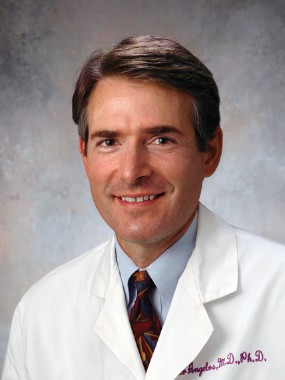
Dr. Angelos is an ACS Fellow; the Linda Kohler Anderson Professor of Surgery and Surgical Ethics; chief, endocrine surgery; and associate director of the MacLean Center for Clinical Medical Ethics at the University of Chicago.
At a recent surgical Morbidity and Mortality Conference, we discussed a tragic case of an elderly gentleman who had been explored for a gastric outlet obstruction. He was found to have a widely metastatic malignancy of unknown primary that was clearly unresectable. Biopsies were taken, a bypass was performed to alleviate the obstruction, and the patient was closed. The surgeon subsequently discussed the findings with the patient and his family. They were understandably upset after getting the news, but plans were made for follow-up and possible treatment when the final pathology was back. During several days in the hospital, the patient seemed to be in good spirits and was seen regularly, encouraging his family not to worry. However, on the day of discharge, the patient went home and committed suicide.
This case raised a series of important questions at the Morbidity and Mortality (M&M) Conference. Had the patient shown signs of depression? Should he have been evaluated by psychiatry? Did the surgical team miss any signs of his impending actions? In the tradition of M&M Conferences, the discussion focused on the question, "What would you have done differently?"
One issue repeatedly raised in the discussions at conference given the patient’s response was whether he should have been told his diagnosis. Such a consideration is a radical idea today when no physician would argue against telling a patient a diagnosis of cancer. But this consensus of full disclosure is relatively new in the medical profession. In 1961, 88% of physicians surveyed at Michael Reese Hospital in Chicago stated that their general policy was not to disclose a cancer diagnosis to the patient (JAMA 1961;175:1120-8). Certainly, this view among physicians has changed dramatically in recent decades. By 1979, the same survey at the same hospital revealed that 98% of physicians said that they tell patients that when the diagnosis is cancer (JAMA 1979;241:897-900).
In the medical profession, a diagnosis is no longer seen as information that can be withheld from a patient. The idea of respecting the patient as a person means that the patient must have the information necessary to make decisions about his or her future.
In this context, the recent New York Times article entitled "When Doctors Need to Lie" (Feb. 22, 2014) is provocative. Dr. Sandeep Jauhar suggests that sometimes there are situations in which doctors need to exercise a form of paternalism and lie to patients for their own benefit. Dr. Jauhar described a case in which he informed the family of a young patient of the true diagnosis, but only gradually and gently told the young man of his true condition.
Informing the elderly gentleman of his diagnosis may well have triggered his suicide. If the patient had not known that he had unresectable cancer, he could well still be alive. Nevertheless, no one at the M&M conference thought that lying about the diagnosis could be justified. Knowing the diagnosis is the fundamental basis for a patient to project a future existence. The ability to make the best medical and nonmedical decisions is dependent on having valid information. Without truthful information, the decisions made are uninformed and no better than guesses. It is not the physician’s role to guess the reaction of a patient to a diagnosis or project a future circumstance that may result from the patient learning the truth.
While the outcome of the transmission of knowledge to the patient may at times be unfortunate, the ethical implications of not telling patients the truth are potentially even more unfortunate. How can a surgeon establish a relationship of trust while also lying to a patient or withholding important information? Even though the choice made by this particular patient was tragic, to have lied to him is contrary to the physician’s role. Truth is the basis of trust, and trust in turn must be the basis of the relationship between doctor and patient.
Dr. Angelos is an ACS Fellow; the Linda Kohler Anderson Professor of Surgery and Surgical Ethics; chief, endocrine surgery; and associate director of the MacLean Center for Clinical Medical Ethics at the University of Chicago.
At a recent surgical Morbidity and Mortality Conference, we discussed a tragic case of an elderly gentleman who had been explored for a gastric outlet obstruction. He was found to have a widely metastatic malignancy of unknown primary that was clearly unresectable. Biopsies were taken, a bypass was performed to alleviate the obstruction, and the patient was closed. The surgeon subsequently discussed the findings with the patient and his family. They were understandably upset after getting the news, but plans were made for follow-up and possible treatment when the final pathology was back. During several days in the hospital, the patient seemed to be in good spirits and was seen regularly, encouraging his family not to worry. However, on the day of discharge, the patient went home and committed suicide.
This case raised a series of important questions at the Morbidity and Mortality (M&M) Conference. Had the patient shown signs of depression? Should he have been evaluated by psychiatry? Did the surgical team miss any signs of his impending actions? In the tradition of M&M Conferences, the discussion focused on the question, "What would you have done differently?"
One issue repeatedly raised in the discussions at conference given the patient’s response was whether he should have been told his diagnosis. Such a consideration is a radical idea today when no physician would argue against telling a patient a diagnosis of cancer. But this consensus of full disclosure is relatively new in the medical profession. In 1961, 88% of physicians surveyed at Michael Reese Hospital in Chicago stated that their general policy was not to disclose a cancer diagnosis to the patient (JAMA 1961;175:1120-8). Certainly, this view among physicians has changed dramatically in recent decades. By 1979, the same survey at the same hospital revealed that 98% of physicians said that they tell patients that when the diagnosis is cancer (JAMA 1979;241:897-900).
In the medical profession, a diagnosis is no longer seen as information that can be withheld from a patient. The idea of respecting the patient as a person means that the patient must have the information necessary to make decisions about his or her future.
In this context, the recent New York Times article entitled "When Doctors Need to Lie" (Feb. 22, 2014) is provocative. Dr. Sandeep Jauhar suggests that sometimes there are situations in which doctors need to exercise a form of paternalism and lie to patients for their own benefit. Dr. Jauhar described a case in which he informed the family of a young patient of the true diagnosis, but only gradually and gently told the young man of his true condition.
Informing the elderly gentleman of his diagnosis may well have triggered his suicide. If the patient had not known that he had unresectable cancer, he could well still be alive. Nevertheless, no one at the M&M conference thought that lying about the diagnosis could be justified. Knowing the diagnosis is the fundamental basis for a patient to project a future existence. The ability to make the best medical and nonmedical decisions is dependent on having valid information. Without truthful information, the decisions made are uninformed and no better than guesses. It is not the physician’s role to guess the reaction of a patient to a diagnosis or project a future circumstance that may result from the patient learning the truth.
While the outcome of the transmission of knowledge to the patient may at times be unfortunate, the ethical implications of not telling patients the truth are potentially even more unfortunate. How can a surgeon establish a relationship of trust while also lying to a patient or withholding important information? Even though the choice made by this particular patient was tragic, to have lied to him is contrary to the physician’s role. Truth is the basis of trust, and trust in turn must be the basis of the relationship between doctor and patient.
Dr. Angelos is an ACS Fellow; the Linda Kohler Anderson Professor of Surgery and Surgical Ethics; chief, endocrine surgery; and associate director of the MacLean Center for Clinical Medical Ethics at the University of Chicago.
Obesity: American Association of Clinical Endocrinology (AACE)
Obesity rates in the United States have skyrocketed over the last 30 years, with rates for adults having doubled and rates for children tripled from 1980 to 2010. Approximately one-third of the U.S adult population is obese; that’s 72 million people. The consequences of obesity include an increased risk for stroke, hypertension, type 2 diabetes, liver and gallbladder disease, orthopedic complications, mental health conditions, cancers, elevated lipids, obstructive sleep apnea (OSA), and reproductive complications such as infertility.
There is now solid evidence that we can intervene to help patient lose weight and decrease the complications that result from obesity. To this end, the American Association of Clinical Endocrinology (AACE) has issued recommendations giving guidance for clinicians about how to approach this issue. Intensive approaches to lifestyle modification with diet and exercise can help patients lose 7% or more of their body weight and have been show to decrease progression from prediabetes to diabetes. Two new medications, lorcaserin and phentermine/topiramate ER, have received Food and Drug Administration approval over the past 2 years as an adjunct to diet for weight loss. Bariatric surgery has emerged as a safe and effective method of weight loss as well.
The AACE guidelines focus on a "complications-centric model" as opposed to a body mass index–driven approach. The guidelines recommend treating obesity to decrease the risk of developing adverse metabolic consequences such as diabetes and metabolic syndrome, and to decrease disability from mechanical comorbidities such as osteoarthritis and obstructive sleep apnea. The AACE guidelines place obese patients into two categories: those that have obesity-related comorbidities and those that do not. The guidelines recommend a graded approach to treatment. All overweight and obese patients should receive therapeutic lifestyle counseling focusing on diet and exercise. Medical or surgical treatment is then recommended for the patients who stand to benefit the most, those with obesity-related comorbidities and those with more severe obesity who have not been able to lose weight using lifestyle modification alone.
In the initial evaluation of overweight and obese patients, the patients should be assessed for cardiometabolic and mechanical complications of obesity, as well as the severity of those complications in order to determine the level of treatment that is appropriate. Patients with obesity-related comorbidities are classified into two groups. The first group includes those with insulin resistance and/or cardiovascular consequences. For this group, evaluation should include waist circumference, fasting, and 2-hour glucose tolerance testing, and lipids, blood pressure, and liver function testing. The second group is composed of people with mechanical consequences including OSA, stress incontinence, orthopedic complications, and chronic pulmonary diseases.
It is important to determine target goals for weight loss to improve mechanical and cardiometabolic complications. Weight loss of 5% or more is enough to affect improvement in metabolic parameters such as glucose and lipids, decrease progression to diabetes, and improve mechanical complications such as knee and hip pain in osteoarthritis. The next step in the approach to treatment is to determine the type and intensity. Therapeutic lifestyle changes (TLC) are important for all patients with diabetes and prediabetes, regardless of risk factors. TLC recommendations include smoking cessation, physical activity, weight management, and healthy eating. Exercise is recommended 5 days/week for more than 30 minutes of moderate intensity activity, to achieve a more than 60% age-related heart rate. The diet recommended reduced saturated fat to less than 7% of calories, reduced cholesterol intake to 200 mg/day, increased fiber to 10-25 g/day, increased plant sterols/stanol esters to 2 g/day, caloric restriction, reduced simple carbohydrates and sugars, increased intake of unsaturated fats, elimination of trans fats, increased marine-based omega-3 ethyl esters, and restriction of alcohol to 20-30 g/day.
For patients with comorbidities and with a BMI of 27 kg/m2 or more, consideration should be given to weight-loss medication in addition to lifestyle intervention. The currently approved medications for long-term weight loss include lorcaserin and phentermine/topiramate ER. In the FDA registration studies, the lorcaserin group had an average weight loss of 5.8% after 1 year vs. 2.2% in the placebo group. Phentermine/topiramate ER had an average weight loss of 10% at 1 year vs. 1.2% in the placebo group. These medications are FDA approved as adjuncts to lifestyle modification for the treatment of overweight patients with a BMI greater than 27 kg/m2 with comorbidities and for obese patients with a BMI greater than 30 kg/m2 regardless of comorbidities. Both medications improve blood pressure, triglycerides, and insulin sensitivity and prevent the progression to diabetes in patients with diabetes. Bariatric surgery should be considered for those with a BMI of 35 kg/m2 or morewith comorbidities, especially if they have failed using other methods.
Once goals are reached, reassess the patient to evaluate for more interventions, if needed. If the targets for improvement in complications were not reached, then the weight loss therapy should become more intense.
Bottom line
The AACE recommendations recognize obesity as a disease and have formulated guidelines using a "complications-centric model." Patients should be assessed for obesity and related complications. Lifestyle counseling should be provided for all overweight and obese individuals, with the addition of weight loss medications for individuals with a BMI of 27 kg/m2 or more who have obesity-related comorbidities, and the consideration of bariatric surgery for those with a BMI of 35 kg/m2 or more with comorbidities.
Reference
American Association of Clinical Endocrinologists’ Comprehensive Diabetes Management Algorithm 2013 Consensus Statement. Published May/June 2013, Endocrine Practice, Vol. 19 (Suppl. 2).
Dr. Skolnik is associate director of the family medicine residency program at Abington (Pa.) Memorial Hospital and professor of family and community medicine at Temple University, Philadelphia. Dr. McDonald is a second-year resident in the Family Medicine Residency Program at Abington Memorial Hospital.
Obesity rates in the United States have skyrocketed over the last 30 years, with rates for adults having doubled and rates for children tripled from 1980 to 2010. Approximately one-third of the U.S adult population is obese; that’s 72 million people. The consequences of obesity include an increased risk for stroke, hypertension, type 2 diabetes, liver and gallbladder disease, orthopedic complications, mental health conditions, cancers, elevated lipids, obstructive sleep apnea (OSA), and reproductive complications such as infertility.
There is now solid evidence that we can intervene to help patient lose weight and decrease the complications that result from obesity. To this end, the American Association of Clinical Endocrinology (AACE) has issued recommendations giving guidance for clinicians about how to approach this issue. Intensive approaches to lifestyle modification with diet and exercise can help patients lose 7% or more of their body weight and have been show to decrease progression from prediabetes to diabetes. Two new medications, lorcaserin and phentermine/topiramate ER, have received Food and Drug Administration approval over the past 2 years as an adjunct to diet for weight loss. Bariatric surgery has emerged as a safe and effective method of weight loss as well.
The AACE guidelines focus on a "complications-centric model" as opposed to a body mass index–driven approach. The guidelines recommend treating obesity to decrease the risk of developing adverse metabolic consequences such as diabetes and metabolic syndrome, and to decrease disability from mechanical comorbidities such as osteoarthritis and obstructive sleep apnea. The AACE guidelines place obese patients into two categories: those that have obesity-related comorbidities and those that do not. The guidelines recommend a graded approach to treatment. All overweight and obese patients should receive therapeutic lifestyle counseling focusing on diet and exercise. Medical or surgical treatment is then recommended for the patients who stand to benefit the most, those with obesity-related comorbidities and those with more severe obesity who have not been able to lose weight using lifestyle modification alone.
In the initial evaluation of overweight and obese patients, the patients should be assessed for cardiometabolic and mechanical complications of obesity, as well as the severity of those complications in order to determine the level of treatment that is appropriate. Patients with obesity-related comorbidities are classified into two groups. The first group includes those with insulin resistance and/or cardiovascular consequences. For this group, evaluation should include waist circumference, fasting, and 2-hour glucose tolerance testing, and lipids, blood pressure, and liver function testing. The second group is composed of people with mechanical consequences including OSA, stress incontinence, orthopedic complications, and chronic pulmonary diseases.
It is important to determine target goals for weight loss to improve mechanical and cardiometabolic complications. Weight loss of 5% or more is enough to affect improvement in metabolic parameters such as glucose and lipids, decrease progression to diabetes, and improve mechanical complications such as knee and hip pain in osteoarthritis. The next step in the approach to treatment is to determine the type and intensity. Therapeutic lifestyle changes (TLC) are important for all patients with diabetes and prediabetes, regardless of risk factors. TLC recommendations include smoking cessation, physical activity, weight management, and healthy eating. Exercise is recommended 5 days/week for more than 30 minutes of moderate intensity activity, to achieve a more than 60% age-related heart rate. The diet recommended reduced saturated fat to less than 7% of calories, reduced cholesterol intake to 200 mg/day, increased fiber to 10-25 g/day, increased plant sterols/stanol esters to 2 g/day, caloric restriction, reduced simple carbohydrates and sugars, increased intake of unsaturated fats, elimination of trans fats, increased marine-based omega-3 ethyl esters, and restriction of alcohol to 20-30 g/day.
For patients with comorbidities and with a BMI of 27 kg/m2 or more, consideration should be given to weight-loss medication in addition to lifestyle intervention. The currently approved medications for long-term weight loss include lorcaserin and phentermine/topiramate ER. In the FDA registration studies, the lorcaserin group had an average weight loss of 5.8% after 1 year vs. 2.2% in the placebo group. Phentermine/topiramate ER had an average weight loss of 10% at 1 year vs. 1.2% in the placebo group. These medications are FDA approved as adjuncts to lifestyle modification for the treatment of overweight patients with a BMI greater than 27 kg/m2 with comorbidities and for obese patients with a BMI greater than 30 kg/m2 regardless of comorbidities. Both medications improve blood pressure, triglycerides, and insulin sensitivity and prevent the progression to diabetes in patients with diabetes. Bariatric surgery should be considered for those with a BMI of 35 kg/m2 or morewith comorbidities, especially if they have failed using other methods.
Once goals are reached, reassess the patient to evaluate for more interventions, if needed. If the targets for improvement in complications were not reached, then the weight loss therapy should become more intense.
Bottom line
The AACE recommendations recognize obesity as a disease and have formulated guidelines using a "complications-centric model." Patients should be assessed for obesity and related complications. Lifestyle counseling should be provided for all overweight and obese individuals, with the addition of weight loss medications for individuals with a BMI of 27 kg/m2 or more who have obesity-related comorbidities, and the consideration of bariatric surgery for those with a BMI of 35 kg/m2 or more with comorbidities.
Reference
American Association of Clinical Endocrinologists’ Comprehensive Diabetes Management Algorithm 2013 Consensus Statement. Published May/June 2013, Endocrine Practice, Vol. 19 (Suppl. 2).
Dr. Skolnik is associate director of the family medicine residency program at Abington (Pa.) Memorial Hospital and professor of family and community medicine at Temple University, Philadelphia. Dr. McDonald is a second-year resident in the Family Medicine Residency Program at Abington Memorial Hospital.
Obesity rates in the United States have skyrocketed over the last 30 years, with rates for adults having doubled and rates for children tripled from 1980 to 2010. Approximately one-third of the U.S adult population is obese; that’s 72 million people. The consequences of obesity include an increased risk for stroke, hypertension, type 2 diabetes, liver and gallbladder disease, orthopedic complications, mental health conditions, cancers, elevated lipids, obstructive sleep apnea (OSA), and reproductive complications such as infertility.
There is now solid evidence that we can intervene to help patient lose weight and decrease the complications that result from obesity. To this end, the American Association of Clinical Endocrinology (AACE) has issued recommendations giving guidance for clinicians about how to approach this issue. Intensive approaches to lifestyle modification with diet and exercise can help patients lose 7% or more of their body weight and have been show to decrease progression from prediabetes to diabetes. Two new medications, lorcaserin and phentermine/topiramate ER, have received Food and Drug Administration approval over the past 2 years as an adjunct to diet for weight loss. Bariatric surgery has emerged as a safe and effective method of weight loss as well.
The AACE guidelines focus on a "complications-centric model" as opposed to a body mass index–driven approach. The guidelines recommend treating obesity to decrease the risk of developing adverse metabolic consequences such as diabetes and metabolic syndrome, and to decrease disability from mechanical comorbidities such as osteoarthritis and obstructive sleep apnea. The AACE guidelines place obese patients into two categories: those that have obesity-related comorbidities and those that do not. The guidelines recommend a graded approach to treatment. All overweight and obese patients should receive therapeutic lifestyle counseling focusing on diet and exercise. Medical or surgical treatment is then recommended for the patients who stand to benefit the most, those with obesity-related comorbidities and those with more severe obesity who have not been able to lose weight using lifestyle modification alone.
In the initial evaluation of overweight and obese patients, the patients should be assessed for cardiometabolic and mechanical complications of obesity, as well as the severity of those complications in order to determine the level of treatment that is appropriate. Patients with obesity-related comorbidities are classified into two groups. The first group includes those with insulin resistance and/or cardiovascular consequences. For this group, evaluation should include waist circumference, fasting, and 2-hour glucose tolerance testing, and lipids, blood pressure, and liver function testing. The second group is composed of people with mechanical consequences including OSA, stress incontinence, orthopedic complications, and chronic pulmonary diseases.
It is important to determine target goals for weight loss to improve mechanical and cardiometabolic complications. Weight loss of 5% or more is enough to affect improvement in metabolic parameters such as glucose and lipids, decrease progression to diabetes, and improve mechanical complications such as knee and hip pain in osteoarthritis. The next step in the approach to treatment is to determine the type and intensity. Therapeutic lifestyle changes (TLC) are important for all patients with diabetes and prediabetes, regardless of risk factors. TLC recommendations include smoking cessation, physical activity, weight management, and healthy eating. Exercise is recommended 5 days/week for more than 30 minutes of moderate intensity activity, to achieve a more than 60% age-related heart rate. The diet recommended reduced saturated fat to less than 7% of calories, reduced cholesterol intake to 200 mg/day, increased fiber to 10-25 g/day, increased plant sterols/stanol esters to 2 g/day, caloric restriction, reduced simple carbohydrates and sugars, increased intake of unsaturated fats, elimination of trans fats, increased marine-based omega-3 ethyl esters, and restriction of alcohol to 20-30 g/day.
For patients with comorbidities and with a BMI of 27 kg/m2 or more, consideration should be given to weight-loss medication in addition to lifestyle intervention. The currently approved medications for long-term weight loss include lorcaserin and phentermine/topiramate ER. In the FDA registration studies, the lorcaserin group had an average weight loss of 5.8% after 1 year vs. 2.2% in the placebo group. Phentermine/topiramate ER had an average weight loss of 10% at 1 year vs. 1.2% in the placebo group. These medications are FDA approved as adjuncts to lifestyle modification for the treatment of overweight patients with a BMI greater than 27 kg/m2 with comorbidities and for obese patients with a BMI greater than 30 kg/m2 regardless of comorbidities. Both medications improve blood pressure, triglycerides, and insulin sensitivity and prevent the progression to diabetes in patients with diabetes. Bariatric surgery should be considered for those with a BMI of 35 kg/m2 or morewith comorbidities, especially if they have failed using other methods.
Once goals are reached, reassess the patient to evaluate for more interventions, if needed. If the targets for improvement in complications were not reached, then the weight loss therapy should become more intense.
Bottom line
The AACE recommendations recognize obesity as a disease and have formulated guidelines using a "complications-centric model." Patients should be assessed for obesity and related complications. Lifestyle counseling should be provided for all overweight and obese individuals, with the addition of weight loss medications for individuals with a BMI of 27 kg/m2 or more who have obesity-related comorbidities, and the consideration of bariatric surgery for those with a BMI of 35 kg/m2 or more with comorbidities.
Reference
American Association of Clinical Endocrinologists’ Comprehensive Diabetes Management Algorithm 2013 Consensus Statement. Published May/June 2013, Endocrine Practice, Vol. 19 (Suppl. 2).
Dr. Skolnik is associate director of the family medicine residency program at Abington (Pa.) Memorial Hospital and professor of family and community medicine at Temple University, Philadelphia. Dr. McDonald is a second-year resident in the Family Medicine Residency Program at Abington Memorial Hospital.
Anatomy of an independent primary care ACO, part 2
In our last column, we highlighted the Rio Grande Valley Health Alliance, an accountable care organization in McAllen, Tex., composed of 14 independent primary care physicians in 11 practices. As primary care physicians, the RGVHA providers realized the potential for a primary care ACO to generate savings from value-based care.
Because RGVHA is a network model ACO – the physicians stay in their separate independent practices but participate in the ACO through contracts – RGVHA needed a way to manage the ACO data collection, sorting, and reporting requirements in an efficient and effective manner.
Fortunately, Dr. Gretchen Hoyle of MD Online Solutions was able to tailor a data management solution for RGVHA. In addition, Dr. Hoyle helps interpret the data and leads a weekly data-driven staff conference call with the ACO’s nurse care coordinators.
Through Dr. Hoyle’s data collection and interpretation work with RGVHA, the ACO now has concrete data showing utilization trends and patterns. The most positive result has been the demonstrated benefit of nurse care coordinators, who work with patients in the post–acute care settings between their office visits.
In fact, care coordinators have proved to be RGVHA’s secret weapon, because their work has been invaluable in managing patients with chronic conditions between provider appointments.
Conversely, the data have revealed a pattern of overuse of home health care services, which helps contribute to higher care costs overall, making home health the biggest disappointment.
The secret weapon
As Dr. Hoyle so aptly said, "To become a fully functioning ACO, an organization must be able to address both sides of the ACO ‘coin’: quality improvement and cost control." Care coordinators have the capacity to address both concerns.
Within RGVHA, care coordinators have performed chart reviews that identify the ACO’s current performance according to the Centers for Medicare and Medicaid Services’ quality standards. This is the first secret weapon for a small primary care ACO.
This data collection helps RGVHA fill in knowledge gaps as it works toward having a fully integrated electronic health records system. In turn, it helps the care coordinators identify the strengths and weaknesses of each of the participating ACO providers. This ensures that weaknesses can be addressed in a timely fashion. In addition, the chart reviews help identify documentation issues. Documentation is critical to meeting CMS benchmarks, which ultimately helps determine the amount of shared savings for an ACO.
In addition, the data have proved crucial to being able to rank patients by cost. That has allowed RGVHA to identify the top 10% of patients whose care accounts for 50% of the total care costs in the ACO. This information allows providers to understand which patients and types of patients are more expensive, and who can benefit most from intense care coordination and/or longer visits with RGVHA’s primary care doctors.
Claims data show that even a small amount of additional time and care coordination outside of the clinic setting curbs utilization for the most complex patients and saves money. Most important, care coordinators help providers focus their time and energy where it can have the most impact.
The biggest disappointment
Shortly after RGVHA began reviewing patient claims data, home health care costs per patient emerged as one of the greatest cost outliers. The data revealed that providers outside of the ACO were prescribing home health at much higher rates than providers within the ACO. A subsequent gap analysis showed that home health was a prime opportunity target for RGVHA.
As RGVHA developed a strategy to address the overutilization and extremely high home health costs for their patient population, the providers faced their biggest disappointment to date: The Medicare Shared Savings Program regulations only permit ACOs to "ask" that providers outside the ACO coordinate patient care with doctors inside the ACO, not "tell" the providers that they must collaborate in delivering evidence-based, high-value care.
So, RGVHA decided to use those data as the starting point to reach out to those providers.
Dr. Hoyle helped RGVHA identify the amount of home health care generated by each specific agency and ordering physician. That information was used to craft a targeted letter to each provider outside the ACO requesting and encouraging their collaboration and cooperation in the development of a care plan for each home health patient.
Now, several months later, home health care overutilization and costs are beginning to decline, as patient care is monitored by RGVHA and appropriately coordinated among each ACO patient’s team of care providers.
RGVHA’s biggest concern has now become one of its biggest assets. The ACO doctors finally feel empowered in their ability to impact the quality and costs of patient care. Furthermore, they are excited they are getting paid for doing what they are trained to do: provide high-value care to their patients.
The good news is that, when properly informed and invited to help shape high-value patient care, providers want to and will do the right thing.
Mr. Bobbitt is a senior partner and head of the health law group at the Smith Anderson law firm in Raleigh, N.C. He has spoken and written nationally to primary care physicians on the strategies and practicalities of forming or joining ACOs. Mr. Bobbitt is grateful for the excellent lead research and drafting of this article by Ms. Poe. This article is meant to be educational and does not constitute legal advice. For additional information, readers may contact the author at [email protected] or at 919-821-6612.
In our last column, we highlighted the Rio Grande Valley Health Alliance, an accountable care organization in McAllen, Tex., composed of 14 independent primary care physicians in 11 practices. As primary care physicians, the RGVHA providers realized the potential for a primary care ACO to generate savings from value-based care.
Because RGVHA is a network model ACO – the physicians stay in their separate independent practices but participate in the ACO through contracts – RGVHA needed a way to manage the ACO data collection, sorting, and reporting requirements in an efficient and effective manner.
Fortunately, Dr. Gretchen Hoyle of MD Online Solutions was able to tailor a data management solution for RGVHA. In addition, Dr. Hoyle helps interpret the data and leads a weekly data-driven staff conference call with the ACO’s nurse care coordinators.
Through Dr. Hoyle’s data collection and interpretation work with RGVHA, the ACO now has concrete data showing utilization trends and patterns. The most positive result has been the demonstrated benefit of nurse care coordinators, who work with patients in the post–acute care settings between their office visits.
In fact, care coordinators have proved to be RGVHA’s secret weapon, because their work has been invaluable in managing patients with chronic conditions between provider appointments.
Conversely, the data have revealed a pattern of overuse of home health care services, which helps contribute to higher care costs overall, making home health the biggest disappointment.
The secret weapon
As Dr. Hoyle so aptly said, "To become a fully functioning ACO, an organization must be able to address both sides of the ACO ‘coin’: quality improvement and cost control." Care coordinators have the capacity to address both concerns.
Within RGVHA, care coordinators have performed chart reviews that identify the ACO’s current performance according to the Centers for Medicare and Medicaid Services’ quality standards. This is the first secret weapon for a small primary care ACO.
This data collection helps RGVHA fill in knowledge gaps as it works toward having a fully integrated electronic health records system. In turn, it helps the care coordinators identify the strengths and weaknesses of each of the participating ACO providers. This ensures that weaknesses can be addressed in a timely fashion. In addition, the chart reviews help identify documentation issues. Documentation is critical to meeting CMS benchmarks, which ultimately helps determine the amount of shared savings for an ACO.
In addition, the data have proved crucial to being able to rank patients by cost. That has allowed RGVHA to identify the top 10% of patients whose care accounts for 50% of the total care costs in the ACO. This information allows providers to understand which patients and types of patients are more expensive, and who can benefit most from intense care coordination and/or longer visits with RGVHA’s primary care doctors.
Claims data show that even a small amount of additional time and care coordination outside of the clinic setting curbs utilization for the most complex patients and saves money. Most important, care coordinators help providers focus their time and energy where it can have the most impact.
The biggest disappointment
Shortly after RGVHA began reviewing patient claims data, home health care costs per patient emerged as one of the greatest cost outliers. The data revealed that providers outside of the ACO were prescribing home health at much higher rates than providers within the ACO. A subsequent gap analysis showed that home health was a prime opportunity target for RGVHA.
As RGVHA developed a strategy to address the overutilization and extremely high home health costs for their patient population, the providers faced their biggest disappointment to date: The Medicare Shared Savings Program regulations only permit ACOs to "ask" that providers outside the ACO coordinate patient care with doctors inside the ACO, not "tell" the providers that they must collaborate in delivering evidence-based, high-value care.
So, RGVHA decided to use those data as the starting point to reach out to those providers.
Dr. Hoyle helped RGVHA identify the amount of home health care generated by each specific agency and ordering physician. That information was used to craft a targeted letter to each provider outside the ACO requesting and encouraging their collaboration and cooperation in the development of a care plan for each home health patient.
Now, several months later, home health care overutilization and costs are beginning to decline, as patient care is monitored by RGVHA and appropriately coordinated among each ACO patient’s team of care providers.
RGVHA’s biggest concern has now become one of its biggest assets. The ACO doctors finally feel empowered in their ability to impact the quality and costs of patient care. Furthermore, they are excited they are getting paid for doing what they are trained to do: provide high-value care to their patients.
The good news is that, when properly informed and invited to help shape high-value patient care, providers want to and will do the right thing.
Mr. Bobbitt is a senior partner and head of the health law group at the Smith Anderson law firm in Raleigh, N.C. He has spoken and written nationally to primary care physicians on the strategies and practicalities of forming or joining ACOs. Mr. Bobbitt is grateful for the excellent lead research and drafting of this article by Ms. Poe. This article is meant to be educational and does not constitute legal advice. For additional information, readers may contact the author at [email protected] or at 919-821-6612.
In our last column, we highlighted the Rio Grande Valley Health Alliance, an accountable care organization in McAllen, Tex., composed of 14 independent primary care physicians in 11 practices. As primary care physicians, the RGVHA providers realized the potential for a primary care ACO to generate savings from value-based care.
Because RGVHA is a network model ACO – the physicians stay in their separate independent practices but participate in the ACO through contracts – RGVHA needed a way to manage the ACO data collection, sorting, and reporting requirements in an efficient and effective manner.
Fortunately, Dr. Gretchen Hoyle of MD Online Solutions was able to tailor a data management solution for RGVHA. In addition, Dr. Hoyle helps interpret the data and leads a weekly data-driven staff conference call with the ACO’s nurse care coordinators.
Through Dr. Hoyle’s data collection and interpretation work with RGVHA, the ACO now has concrete data showing utilization trends and patterns. The most positive result has been the demonstrated benefit of nurse care coordinators, who work with patients in the post–acute care settings between their office visits.
In fact, care coordinators have proved to be RGVHA’s secret weapon, because their work has been invaluable in managing patients with chronic conditions between provider appointments.
Conversely, the data have revealed a pattern of overuse of home health care services, which helps contribute to higher care costs overall, making home health the biggest disappointment.
The secret weapon
As Dr. Hoyle so aptly said, "To become a fully functioning ACO, an organization must be able to address both sides of the ACO ‘coin’: quality improvement and cost control." Care coordinators have the capacity to address both concerns.
Within RGVHA, care coordinators have performed chart reviews that identify the ACO’s current performance according to the Centers for Medicare and Medicaid Services’ quality standards. This is the first secret weapon for a small primary care ACO.
This data collection helps RGVHA fill in knowledge gaps as it works toward having a fully integrated electronic health records system. In turn, it helps the care coordinators identify the strengths and weaknesses of each of the participating ACO providers. This ensures that weaknesses can be addressed in a timely fashion. In addition, the chart reviews help identify documentation issues. Documentation is critical to meeting CMS benchmarks, which ultimately helps determine the amount of shared savings for an ACO.
In addition, the data have proved crucial to being able to rank patients by cost. That has allowed RGVHA to identify the top 10% of patients whose care accounts for 50% of the total care costs in the ACO. This information allows providers to understand which patients and types of patients are more expensive, and who can benefit most from intense care coordination and/or longer visits with RGVHA’s primary care doctors.
Claims data show that even a small amount of additional time and care coordination outside of the clinic setting curbs utilization for the most complex patients and saves money. Most important, care coordinators help providers focus their time and energy where it can have the most impact.
The biggest disappointment
Shortly after RGVHA began reviewing patient claims data, home health care costs per patient emerged as one of the greatest cost outliers. The data revealed that providers outside of the ACO were prescribing home health at much higher rates than providers within the ACO. A subsequent gap analysis showed that home health was a prime opportunity target for RGVHA.
As RGVHA developed a strategy to address the overutilization and extremely high home health costs for their patient population, the providers faced their biggest disappointment to date: The Medicare Shared Savings Program regulations only permit ACOs to "ask" that providers outside the ACO coordinate patient care with doctors inside the ACO, not "tell" the providers that they must collaborate in delivering evidence-based, high-value care.
So, RGVHA decided to use those data as the starting point to reach out to those providers.
Dr. Hoyle helped RGVHA identify the amount of home health care generated by each specific agency and ordering physician. That information was used to craft a targeted letter to each provider outside the ACO requesting and encouraging their collaboration and cooperation in the development of a care plan for each home health patient.
Now, several months later, home health care overutilization and costs are beginning to decline, as patient care is monitored by RGVHA and appropriately coordinated among each ACO patient’s team of care providers.
RGVHA’s biggest concern has now become one of its biggest assets. The ACO doctors finally feel empowered in their ability to impact the quality and costs of patient care. Furthermore, they are excited they are getting paid for doing what they are trained to do: provide high-value care to their patients.
The good news is that, when properly informed and invited to help shape high-value patient care, providers want to and will do the right thing.
Mr. Bobbitt is a senior partner and head of the health law group at the Smith Anderson law firm in Raleigh, N.C. He has spoken and written nationally to primary care physicians on the strategies and practicalities of forming or joining ACOs. Mr. Bobbitt is grateful for the excellent lead research and drafting of this article by Ms. Poe. This article is meant to be educational and does not constitute legal advice. For additional information, readers may contact the author at [email protected] or at 919-821-6612.

The USPSTF says 'Don't do it'
The United States Preventive Services Task Force (USPSTF) recently issued a draft document recommending against screening for carotid artery disease in asymptomatic patients.
The draft implies that ultrasonography in the general population, where carotid artery stenosis prevalence is low, yields "many false-positive results." Moreover the USPSTF concludes that there is "adequate evidence" that both testing for carotid artery stenosis and treating carotid artery stenosis "can cause harm."
How is it that a test most vascular surgeons consider reliable can be so inaccurate on a national level? How can screening duplex ultrasonography have such a negative impact? I believe that the answer is simple. It is not that the test is flawed or that the treatment is overly risky. It is that those who perform the tests and subsequent interventions are not vascular surgeons. Vascular surgeons pioneered ultrasound evaluation of the carotid artery and, for the most part, continue to offer reliable tests and subsequent treatments. However, over the past few years, we have become marginalized. Now entrepreneurs run mobile labs often using outdated equipment and poorly supervised technologists. They wheel their machines into primary care doctors’ offices for the day, where patients who do not need testing are nevertheless scanned. The scans are then read offsite by who-knows-who with inexact results commensurate with the poorly performed studies. I suspect that many of these tests are not even interpreted by a physician who simply rubber stamps the technologist’s preliminary study. No wonder the USPSTF has its concerns.

It is not only the mobile labs that are the problem. Family practice clinics are also investing in machines and relying on a technologist’s interpretation. Some podiatrists are now advertising that they are experts in evaluating lower-extremity ischemia and venous disease. Believe it or not, their competition comes from gynecologists and orthopedists. Cardiologists seem to be more interested in carotid and lower-extremity arteries than the coronaries. Further, having direct control of the patient and the interpretation of an ultrasound test, it becomes relatively straightforward for them to "justify" a carotid artery stent.
Vascular surgeons and registered vascular technologists have endeavored to refine diagnostic parameters that will improve the accuracy of these tests. Most use the best equipment and attend many hours of continuing education. They voluntarily go through the arduous process of having their vascular lab certified by the Intersocietal Accreditation Commission so as to be sure that they are providing optimal services and accurate diagnoses. Dr. Eric Topol, a noted cardiologist, has begun promoting the concept of an ultrasound that can be attached to an iPhone.
The question, however, is whether an untrained physician using an inexpensive hand-held ultrasound can still make an accurate diagnosis. And will this test be reimbursed no matter what the quality, or the outcome of such a study on the patient?
Fortunately those "I-Sound" devices may still be far off in our future. However, even now, surgeons will have a patient referred to them for treatment of a critical carotid stenosis that they cannot replicate with a confirmatory ultrasound in their own lab. This has become so common an occurrence that our group always repeats the outside test. In so doing, we run the risk of antagonizing the referring doctor, confusing the patient, and being told by the insurance program that we are performing an unnecessary reevaluation. To add insult to injury, we are usually not paid for this confirmatory test. It appears that insurance carriers would rather pay for an unnecessary endarterectomy or stent, with the possibility of stroke or death, rather than pay for a repeat test that might have prevented the procedure in the first place.
In an upcoming edition of Vascular Specialist, we will provide a "Point-Counterpoint" discussion on the value of screening for carotid disease and the merit of the USPSTF document. But, in the meantime, what are we to do about these subpar labs, their nondiagnostic tests and subsequent unnecessary and poorly performed interventions? Can we really stop this abuse? I believe we can. As I mentioned, we already have an accreditation body to evaluate diagnostic vascular facilities.
What we need to do is convince insurance companies and the Centers for Medicare & Medicaid Services that only certified labs should be permitted to carry out these studies. Further, only trained, certified specialists should be allowed to perform carotid stenting and carotid artery surgery. Finally, we need to educate patients that all tests are not generic. They should insist on having their carotid artery ultrasounds carried out by a vascular surgeon or, at the very least, having it done in an accredited vascular lab.
The United States Preventive Services Task Force (USPSTF) recently issued a draft document recommending against screening for carotid artery disease in asymptomatic patients.
The draft implies that ultrasonography in the general population, where carotid artery stenosis prevalence is low, yields "many false-positive results." Moreover the USPSTF concludes that there is "adequate evidence" that both testing for carotid artery stenosis and treating carotid artery stenosis "can cause harm."
How is it that a test most vascular surgeons consider reliable can be so inaccurate on a national level? How can screening duplex ultrasonography have such a negative impact? I believe that the answer is simple. It is not that the test is flawed or that the treatment is overly risky. It is that those who perform the tests and subsequent interventions are not vascular surgeons. Vascular surgeons pioneered ultrasound evaluation of the carotid artery and, for the most part, continue to offer reliable tests and subsequent treatments. However, over the past few years, we have become marginalized. Now entrepreneurs run mobile labs often using outdated equipment and poorly supervised technologists. They wheel their machines into primary care doctors’ offices for the day, where patients who do not need testing are nevertheless scanned. The scans are then read offsite by who-knows-who with inexact results commensurate with the poorly performed studies. I suspect that many of these tests are not even interpreted by a physician who simply rubber stamps the technologist’s preliminary study. No wonder the USPSTF has its concerns.
It is not only the mobile labs that are the problem. Family practice clinics are also investing in machines and relying on a technologist’s interpretation. Some podiatrists are now advertising that they are experts in evaluating lower-extremity ischemia and venous disease. Believe it or not, their competition comes from gynecologists and orthopedists. Cardiologists seem to be more interested in carotid and lower-extremity arteries than the coronaries. Further, having direct control of the patient and the interpretation of an ultrasound test, it becomes relatively straightforward for them to "justify" a carotid artery stent.
Vascular surgeons and registered vascular technologists have endeavored to refine diagnostic parameters that will improve the accuracy of these tests. Most use the best equipment and attend many hours of continuing education. They voluntarily go through the arduous process of having their vascular lab certified by the Intersocietal Accreditation Commission so as to be sure that they are providing optimal services and accurate diagnoses. Dr. Eric Topol, a noted cardiologist, has begun promoting the concept of an ultrasound that can be attached to an iPhone.
The question, however, is whether an untrained physician using an inexpensive hand-held ultrasound can still make an accurate diagnosis. And will this test be reimbursed no matter what the quality, or the outcome of such a study on the patient?
Fortunately those "I-Sound" devices may still be far off in our future. However, even now, surgeons will have a patient referred to them for treatment of a critical carotid stenosis that they cannot replicate with a confirmatory ultrasound in their own lab. This has become so common an occurrence that our group always repeats the outside test. In so doing, we run the risk of antagonizing the referring doctor, confusing the patient, and being told by the insurance program that we are performing an unnecessary reevaluation. To add insult to injury, we are usually not paid for this confirmatory test. It appears that insurance carriers would rather pay for an unnecessary endarterectomy or stent, with the possibility of stroke or death, rather than pay for a repeat test that might have prevented the procedure in the first place.
In an upcoming edition of Vascular Specialist, we will provide a "Point-Counterpoint" discussion on the value of screening for carotid disease and the merit of the USPSTF document. But, in the meantime, what are we to do about these subpar labs, their nondiagnostic tests and subsequent unnecessary and poorly performed interventions? Can we really stop this abuse? I believe we can. As I mentioned, we already have an accreditation body to evaluate diagnostic vascular facilities.
What we need to do is convince insurance companies and the Centers for Medicare & Medicaid Services that only certified labs should be permitted to carry out these studies. Further, only trained, certified specialists should be allowed to perform carotid stenting and carotid artery surgery. Finally, we need to educate patients that all tests are not generic. They should insist on having their carotid artery ultrasounds carried out by a vascular surgeon or, at the very least, having it done in an accredited vascular lab.
The United States Preventive Services Task Force (USPSTF) recently issued a draft document recommending against screening for carotid artery disease in asymptomatic patients.
The draft implies that ultrasonography in the general population, where carotid artery stenosis prevalence is low, yields "many false-positive results." Moreover the USPSTF concludes that there is "adequate evidence" that both testing for carotid artery stenosis and treating carotid artery stenosis "can cause harm."
How is it that a test most vascular surgeons consider reliable can be so inaccurate on a national level? How can screening duplex ultrasonography have such a negative impact? I believe that the answer is simple. It is not that the test is flawed or that the treatment is overly risky. It is that those who perform the tests and subsequent interventions are not vascular surgeons. Vascular surgeons pioneered ultrasound evaluation of the carotid artery and, for the most part, continue to offer reliable tests and subsequent treatments. However, over the past few years, we have become marginalized. Now entrepreneurs run mobile labs often using outdated equipment and poorly supervised technologists. They wheel their machines into primary care doctors’ offices for the day, where patients who do not need testing are nevertheless scanned. The scans are then read offsite by who-knows-who with inexact results commensurate with the poorly performed studies. I suspect that many of these tests are not even interpreted by a physician who simply rubber stamps the technologist’s preliminary study. No wonder the USPSTF has its concerns.
It is not only the mobile labs that are the problem. Family practice clinics are also investing in machines and relying on a technologist’s interpretation. Some podiatrists are now advertising that they are experts in evaluating lower-extremity ischemia and venous disease. Believe it or not, their competition comes from gynecologists and orthopedists. Cardiologists seem to be more interested in carotid and lower-extremity arteries than the coronaries. Further, having direct control of the patient and the interpretation of an ultrasound test, it becomes relatively straightforward for them to "justify" a carotid artery stent.
Vascular surgeons and registered vascular technologists have endeavored to refine diagnostic parameters that will improve the accuracy of these tests. Most use the best equipment and attend many hours of continuing education. They voluntarily go through the arduous process of having their vascular lab certified by the Intersocietal Accreditation Commission so as to be sure that they are providing optimal services and accurate diagnoses. Dr. Eric Topol, a noted cardiologist, has begun promoting the concept of an ultrasound that can be attached to an iPhone.
The question, however, is whether an untrained physician using an inexpensive hand-held ultrasound can still make an accurate diagnosis. And will this test be reimbursed no matter what the quality, or the outcome of such a study on the patient?
Fortunately those "I-Sound" devices may still be far off in our future. However, even now, surgeons will have a patient referred to them for treatment of a critical carotid stenosis that they cannot replicate with a confirmatory ultrasound in their own lab. This has become so common an occurrence that our group always repeats the outside test. In so doing, we run the risk of antagonizing the referring doctor, confusing the patient, and being told by the insurance program that we are performing an unnecessary reevaluation. To add insult to injury, we are usually not paid for this confirmatory test. It appears that insurance carriers would rather pay for an unnecessary endarterectomy or stent, with the possibility of stroke or death, rather than pay for a repeat test that might have prevented the procedure in the first place.
In an upcoming edition of Vascular Specialist, we will provide a "Point-Counterpoint" discussion on the value of screening for carotid disease and the merit of the USPSTF document. But, in the meantime, what are we to do about these subpar labs, their nondiagnostic tests and subsequent unnecessary and poorly performed interventions? Can we really stop this abuse? I believe we can. As I mentioned, we already have an accreditation body to evaluate diagnostic vascular facilities.
What we need to do is convince insurance companies and the Centers for Medicare & Medicaid Services that only certified labs should be permitted to carry out these studies. Further, only trained, certified specialists should be allowed to perform carotid stenting and carotid artery surgery. Finally, we need to educate patients that all tests are not generic. They should insist on having their carotid artery ultrasounds carried out by a vascular surgeon or, at the very least, having it done in an accredited vascular lab.

Read G. Pierce, M.D.: Teaching students and residents the skills to be hospitalist leaders
Dr. Read G. Pierce, a hospitalist and assistant professor of medicine at the University of Colorado (CU) Anschutz Medical Campus in Denver, realized early on in his career that while physicians are generally viewed as leaders in health care teams and practices, they often lack key skills and training necessary to take on leadership roles in hospitals.
"There are discrete skills, tactics, and frameworks that you need to lead effectively, but these often are not taught in medical school," Dr. Pierce said. "I became very interested in that gap, which started me down the road of developing leadership training programs, particularly for students and residents."

Over the past decade, he’s been teaching in and creating various programs designed to give medical students, residents, and physicians a leg up in their practice of leadership. As associate director of the CU Institute for Healthcare Quality, Safety, and Efficiency, he has led the development of a portfolio of training programs that focus on developing leaders of quality, safety, and process improvement. He also cofounded and now leads the Health Innovations Scholars Program – part of the CU Young Hospitalist Academy – which is a summer program for preclinical medical students that accelerates mastery of leadership and health care systems improvement skills.
In 2012, he cofounded the CU Hospitalist Training Program–Leaders Track, an intensive 3-year program for internal medicine residents that prepares them for careers as both clinicians and physician executives. And he provides executive coaching to hospitalists in a 1-year leadership fellowship jointly sponsored by IPC: The Hospitalist Company and the University of California, San Francisco.
In an interview with Hospitalist News, Dr. Pierce explained which leadership skills are most important and why hospitalists are well positioned to be leaders.
Hospitalist News: What type of leadership skills do you teach students and residents?
Dr. Pierce: There are five big types of skills that we focus on for both students and residents. The first is self-awareness. Many people who are highly accomplished develop a relatively robust sense of their strengths and weaknesses, but we often don’t give people opportunities to understand deeply how personal preferences impact their leadership. All of us have preferences for how we interact with other people, how we process information, and how we make decisions. A lot of lightbulbs go on when people realize, "I have a certain style for receiving information and making a decision as a leader." Once you’re conscious of that style, you can start to recognize what your blind spots are and you can adapt and improve.
Second, we spend a fair amount of time with our students and residents on basic management skills. This includes how to run a meeting effectively, how to create action items when you finish a conversation, how to set expectations when you get a team together for the first time, and how to manage projects. We practice application of these skills by running quality improvement projects and leading clinical teams.
The third thing we teach is effective stakeholder management. Understanding how other people – particularly those with power and influence in the organization – will perceive your project, want to hear from you, and make decisions about whether to support or oppose your leadership agenda is critical to success.
The fourth thing we teach is "systems" thinking, which some people consider health care operations. One of the major challenges for people working in health care is the tremendous complexity of the system itself. Even physicians with many years of experience may have little detailed knowledge of how the pharmacy or clinical laboratory works, yet physician leaders are asked to solve problems that impact resource utilization, workflow, quality, and safety in those clinical systems. We spend time discussing and analyzing different components of the health care system, how they interact, how various incentives drive behavior among people working in different silos, and how people within different parts of the system view change and opportunities to improve.
The last piece is creating an authentic leadership development pathway for each of our learners. There is no simple formula for becoming a better leader. Thus, we help them develop tailored plans so that they can bring their personal experiences and passions into their leadership style, find individualized growth opportunities, and see highly effective leaders practicing some of the skills they want to develop.
HN: If you haven’t had formal leadership training, what can you do to step into a leadership position in your hospital?
Dr. Pierce: The real key is to seize an opportunity that looks interesting. This should be an opportunity that not only allows you to do the work – lead a quality improvement project, change the way that staffing happens within your group practice, or participate in a contract negotiation – but also allows you to think about how people around you are leading and following. Any opportunity where you can do the work and also have a small space to reflect on how people are responding to your leadership will be growth promoting.
Also, find a coach. You can hire a professional coach, but you can also find a peer or mentor who you admire as an effective leader. Debrief with that person regularly as you go through the project, and talk about three things: where is the work going well, where are you struggling, and what could you do differently?
HN: Why are hospitalists in a unique position to be leaders in their institutions?
Dr. Pierce: Hospitalists are primed for leadership roles within health care because of their openness to systems thinking. More than a decade ago, hospital medicine expanded its focus on clinical efficiency in the hospital to include quality and safety, and now we’re working on patient experience and value as well. For most of its history the field has considered it part of the job to be at the table, speaking with hospital executives, serving on committees, and leading improvement initiatives. As a result, hospitalists see the big leadership and change management questions that hospitals and health systems wrestle with daily. This exposure gives them an ability to grasp the language and some of the concepts that are fundamental to effective leadership in care delivery systems.
HN: Do you think the implementation of the Affordable Care Act across U.S. hospitals will result in the rise of more physician executives?
Dr. Pierce: I think the Affordable Care Act creates a diverse and exciting set of opportunities for physicians who want to be more engaged in leadership roles. Stepping into those roles is up to us. If you look at the history of health care in the United States over the last 30 or 40 years, one of the interesting questions is this: How engaged have physicians been in leading important change? A lot of people would argue that some of the big challenges in the 1990s, when we implemented managed care, arose because physicians were not active enough in leading and shaping that period of change. In many markets, physicians stepped back and managed care happened to them. I think the same thing could happen with the Affordable Care Act, if physicians largely sit on the sidelines and wait to see what happens. I am encouraged that I increasingly see physicians of all ages embracing leadership as a core competency and a rewarding path.
Take us to your leader. Nominate a hospitalist whose work inspires you. E-mail suggestions to [email protected].
On Twitter https://twitter.com/maryellenny
Dr. Read G. Pierce, a hospitalist and assistant professor of medicine at the University of Colorado (CU) Anschutz Medical Campus in Denver, realized early on in his career that while physicians are generally viewed as leaders in health care teams and practices, they often lack key skills and training necessary to take on leadership roles in hospitals.
"There are discrete skills, tactics, and frameworks that you need to lead effectively, but these often are not taught in medical school," Dr. Pierce said. "I became very interested in that gap, which started me down the road of developing leadership training programs, particularly for students and residents."
Over the past decade, he’s been teaching in and creating various programs designed to give medical students, residents, and physicians a leg up in their practice of leadership. As associate director of the CU Institute for Healthcare Quality, Safety, and Efficiency, he has led the development of a portfolio of training programs that focus on developing leaders of quality, safety, and process improvement. He also cofounded and now leads the Health Innovations Scholars Program – part of the CU Young Hospitalist Academy – which is a summer program for preclinical medical students that accelerates mastery of leadership and health care systems improvement skills.
In 2012, he cofounded the CU Hospitalist Training Program–Leaders Track, an intensive 3-year program for internal medicine residents that prepares them for careers as both clinicians and physician executives. And he provides executive coaching to hospitalists in a 1-year leadership fellowship jointly sponsored by IPC: The Hospitalist Company and the University of California, San Francisco.
In an interview with Hospitalist News, Dr. Pierce explained which leadership skills are most important and why hospitalists are well positioned to be leaders.
Hospitalist News: What type of leadership skills do you teach students and residents?
Dr. Pierce: There are five big types of skills that we focus on for both students and residents. The first is self-awareness. Many people who are highly accomplished develop a relatively robust sense of their strengths and weaknesses, but we often don’t give people opportunities to understand deeply how personal preferences impact their leadership. All of us have preferences for how we interact with other people, how we process information, and how we make decisions. A lot of lightbulbs go on when people realize, "I have a certain style for receiving information and making a decision as a leader." Once you’re conscious of that style, you can start to recognize what your blind spots are and you can adapt and improve.
Second, we spend a fair amount of time with our students and residents on basic management skills. This includes how to run a meeting effectively, how to create action items when you finish a conversation, how to set expectations when you get a team together for the first time, and how to manage projects. We practice application of these skills by running quality improvement projects and leading clinical teams.
The third thing we teach is effective stakeholder management. Understanding how other people – particularly those with power and influence in the organization – will perceive your project, want to hear from you, and make decisions about whether to support or oppose your leadership agenda is critical to success.
The fourth thing we teach is "systems" thinking, which some people consider health care operations. One of the major challenges for people working in health care is the tremendous complexity of the system itself. Even physicians with many years of experience may have little detailed knowledge of how the pharmacy or clinical laboratory works, yet physician leaders are asked to solve problems that impact resource utilization, workflow, quality, and safety in those clinical systems. We spend time discussing and analyzing different components of the health care system, how they interact, how various incentives drive behavior among people working in different silos, and how people within different parts of the system view change and opportunities to improve.
The last piece is creating an authentic leadership development pathway for each of our learners. There is no simple formula for becoming a better leader. Thus, we help them develop tailored plans so that they can bring their personal experiences and passions into their leadership style, find individualized growth opportunities, and see highly effective leaders practicing some of the skills they want to develop.
HN: If you haven’t had formal leadership training, what can you do to step into a leadership position in your hospital?
Dr. Pierce: The real key is to seize an opportunity that looks interesting. This should be an opportunity that not only allows you to do the work – lead a quality improvement project, change the way that staffing happens within your group practice, or participate in a contract negotiation – but also allows you to think about how people around you are leading and following. Any opportunity where you can do the work and also have a small space to reflect on how people are responding to your leadership will be growth promoting.
Also, find a coach. You can hire a professional coach, but you can also find a peer or mentor who you admire as an effective leader. Debrief with that person regularly as you go through the project, and talk about three things: where is the work going well, where are you struggling, and what could you do differently?
HN: Why are hospitalists in a unique position to be leaders in their institutions?
Dr. Pierce: Hospitalists are primed for leadership roles within health care because of their openness to systems thinking. More than a decade ago, hospital medicine expanded its focus on clinical efficiency in the hospital to include quality and safety, and now we’re working on patient experience and value as well. For most of its history the field has considered it part of the job to be at the table, speaking with hospital executives, serving on committees, and leading improvement initiatives. As a result, hospitalists see the big leadership and change management questions that hospitals and health systems wrestle with daily. This exposure gives them an ability to grasp the language and some of the concepts that are fundamental to effective leadership in care delivery systems.
HN: Do you think the implementation of the Affordable Care Act across U.S. hospitals will result in the rise of more physician executives?
Dr. Pierce: I think the Affordable Care Act creates a diverse and exciting set of opportunities for physicians who want to be more engaged in leadership roles. Stepping into those roles is up to us. If you look at the history of health care in the United States over the last 30 or 40 years, one of the interesting questions is this: How engaged have physicians been in leading important change? A lot of people would argue that some of the big challenges in the 1990s, when we implemented managed care, arose because physicians were not active enough in leading and shaping that period of change. In many markets, physicians stepped back and managed care happened to them. I think the same thing could happen with the Affordable Care Act, if physicians largely sit on the sidelines and wait to see what happens. I am encouraged that I increasingly see physicians of all ages embracing leadership as a core competency and a rewarding path.
Take us to your leader. Nominate a hospitalist whose work inspires you. E-mail suggestions to [email protected].
On Twitter https://twitter.com/maryellenny
Dr. Read G. Pierce, a hospitalist and assistant professor of medicine at the University of Colorado (CU) Anschutz Medical Campus in Denver, realized early on in his career that while physicians are generally viewed as leaders in health care teams and practices, they often lack key skills and training necessary to take on leadership roles in hospitals.
"There are discrete skills, tactics, and frameworks that you need to lead effectively, but these often are not taught in medical school," Dr. Pierce said. "I became very interested in that gap, which started me down the road of developing leadership training programs, particularly for students and residents."
Over the past decade, he’s been teaching in and creating various programs designed to give medical students, residents, and physicians a leg up in their practice of leadership. As associate director of the CU Institute for Healthcare Quality, Safety, and Efficiency, he has led the development of a portfolio of training programs that focus on developing leaders of quality, safety, and process improvement. He also cofounded and now leads the Health Innovations Scholars Program – part of the CU Young Hospitalist Academy – which is a summer program for preclinical medical students that accelerates mastery of leadership and health care systems improvement skills.
In 2012, he cofounded the CU Hospitalist Training Program–Leaders Track, an intensive 3-year program for internal medicine residents that prepares them for careers as both clinicians and physician executives. And he provides executive coaching to hospitalists in a 1-year leadership fellowship jointly sponsored by IPC: The Hospitalist Company and the University of California, San Francisco.
In an interview with Hospitalist News, Dr. Pierce explained which leadership skills are most important and why hospitalists are well positioned to be leaders.
Hospitalist News: What type of leadership skills do you teach students and residents?
Dr. Pierce: There are five big types of skills that we focus on for both students and residents. The first is self-awareness. Many people who are highly accomplished develop a relatively robust sense of their strengths and weaknesses, but we often don’t give people opportunities to understand deeply how personal preferences impact their leadership. All of us have preferences for how we interact with other people, how we process information, and how we make decisions. A lot of lightbulbs go on when people realize, "I have a certain style for receiving information and making a decision as a leader." Once you’re conscious of that style, you can start to recognize what your blind spots are and you can adapt and improve.
Second, we spend a fair amount of time with our students and residents on basic management skills. This includes how to run a meeting effectively, how to create action items when you finish a conversation, how to set expectations when you get a team together for the first time, and how to manage projects. We practice application of these skills by running quality improvement projects and leading clinical teams.
The third thing we teach is effective stakeholder management. Understanding how other people – particularly those with power and influence in the organization – will perceive your project, want to hear from you, and make decisions about whether to support or oppose your leadership agenda is critical to success.
The fourth thing we teach is "systems" thinking, which some people consider health care operations. One of the major challenges for people working in health care is the tremendous complexity of the system itself. Even physicians with many years of experience may have little detailed knowledge of how the pharmacy or clinical laboratory works, yet physician leaders are asked to solve problems that impact resource utilization, workflow, quality, and safety in those clinical systems. We spend time discussing and analyzing different components of the health care system, how they interact, how various incentives drive behavior among people working in different silos, and how people within different parts of the system view change and opportunities to improve.
The last piece is creating an authentic leadership development pathway for each of our learners. There is no simple formula for becoming a better leader. Thus, we help them develop tailored plans so that they can bring their personal experiences and passions into their leadership style, find individualized growth opportunities, and see highly effective leaders practicing some of the skills they want to develop.
HN: If you haven’t had formal leadership training, what can you do to step into a leadership position in your hospital?
Dr. Pierce: The real key is to seize an opportunity that looks interesting. This should be an opportunity that not only allows you to do the work – lead a quality improvement project, change the way that staffing happens within your group practice, or participate in a contract negotiation – but also allows you to think about how people around you are leading and following. Any opportunity where you can do the work and also have a small space to reflect on how people are responding to your leadership will be growth promoting.
Also, find a coach. You can hire a professional coach, but you can also find a peer or mentor who you admire as an effective leader. Debrief with that person regularly as you go through the project, and talk about three things: where is the work going well, where are you struggling, and what could you do differently?
HN: Why are hospitalists in a unique position to be leaders in their institutions?
Dr. Pierce: Hospitalists are primed for leadership roles within health care because of their openness to systems thinking. More than a decade ago, hospital medicine expanded its focus on clinical efficiency in the hospital to include quality and safety, and now we’re working on patient experience and value as well. For most of its history the field has considered it part of the job to be at the table, speaking with hospital executives, serving on committees, and leading improvement initiatives. As a result, hospitalists see the big leadership and change management questions that hospitals and health systems wrestle with daily. This exposure gives them an ability to grasp the language and some of the concepts that are fundamental to effective leadership in care delivery systems.
HN: Do you think the implementation of the Affordable Care Act across U.S. hospitals will result in the rise of more physician executives?
Dr. Pierce: I think the Affordable Care Act creates a diverse and exciting set of opportunities for physicians who want to be more engaged in leadership roles. Stepping into those roles is up to us. If you look at the history of health care in the United States over the last 30 or 40 years, one of the interesting questions is this: How engaged have physicians been in leading important change? A lot of people would argue that some of the big challenges in the 1990s, when we implemented managed care, arose because physicians were not active enough in leading and shaping that period of change. In many markets, physicians stepped back and managed care happened to them. I think the same thing could happen with the Affordable Care Act, if physicians largely sit on the sidelines and wait to see what happens. I am encouraged that I increasingly see physicians of all ages embracing leadership as a core competency and a rewarding path.
Take us to your leader. Nominate a hospitalist whose work inspires you. E-mail suggestions to [email protected].
On Twitter https://twitter.com/maryellenny

The ACA, the private practice of vascular surgery, and SVS: A call to action
As I view the implementation of the Patient Protection and Accountable Care Act (ACA), I am concerned that this bureaucratic, administrative, directive-driven apparatus will have a disproportionately negative impact on the largest constituency in the Society for Vascular Surgery, the private practice vascular surgeon (the private practice model), as opposed to the employed physician model. The impact may be severe enough that, except for large groups, its existence will be imperiled. Ironically, if this should occur, then even the status of the employed physician will be negatively affected and, ultimately, so will the care of the patients in need of our services. It is for this reason that I believe the time has come for the SVS to broaden its focus by declaring as one of its core values the support of the private practice model of vascular surgery and to back these words up with action by creating several seats on the Board of Directors for private practitioners. Only by doing this will the SVS better understand and address the burdens the ACA is creating for them.
As described in a recent lecture by John Marini, Ph.D., Visiting Distinguished Fellow at the Allan P. Kirby Jr. Center for Constitutional Studies and Citizenship in Washington, the ACA "is little more than 2,500 pages long and all it did was provide the administrative apparatus with the right and power to formulate rules and regulations governing healthcare."
An example is the Independent Physicians Advisory Panel (IPAP), a bureaucratic board with no accountability, not even to Congress, yet it is empowered to determine Medicare expenditures. Furthermore, the writings of some of the chief architects of the ACA express their preference for a vertically integrated system practice model with governmental incentives (i.e., penalties) to make physicians comply.
This is not a ringing endorsement for the private practice model. This should make us all take pause because the lack of accountability and our lack of recourse create an uneven playing field.
As we have seen in the roll out of the ACA, it is a law in name only as exceptions have been granted at will by fiat for groups such as Congress, large corporations, unions, and the like, leaving no doubt that it can be manipulated to suit a bureaucrat’s purpose. How we protect ourselves and our patients needs to be our main concern.
Some of the burdens created by the ACA for the private practitioner involve the increased compliance costs associated with the directives for data collection and reporting, EHRs, meaningful use, and the like – such as hiring additional staff – while the ACA simultaneously attempts to bend the cost curve downward, decreasing reimbursement.
The ACA provides no financial support to offset the resulting increased costs. Imagine telling a builder you wanted special "extras" built into a house at no additional costs to you. Preposterous! The ultimate pressure of course is meeting payroll, overhead costs, and capital expenditures under these restraints.
The jobs of many employees are at risk here. I am concerned that unless a society openly supports and advocates for the private practice model and has private practice vascular surgeons on its board, many of these concerns will not be addressed.
If the ACA succeeds in eliminating private practice, what would be lost? Plenty! From innovative ways to increase patient access, value, and cost-effective and highly efficient treatment centers, much will be lost.
In fact, at a time when the New York Times writes about whether today’s surgeons are adequately prepared, private practice offers a great opportunity to vascular fellowship programs for partnership to provide additional surgical exposure and real- world business experience, something inexplicably absent in most fellowship programs.
The private practice of vascular surgery has always been geared to providing unsurpassed access, service, innovation, and cost-effective therapy with minimal administrative overlay and costs because it is the only way this practice model can survive.
There is no benefactor or other source of funds to keep it afloat. Ironically, if private practice were to disappear, the impact would also be felt by the employed physician because this would only increase the power of the administrative class at every institution, not a pleasant thought.
Given the bureaucrats’ expanding administrative state into the realm of medicine, as exemplified by the ACA, and given the fact that it creates burdens on the private practitioner not experienced on a daily basis by the employed physician, it is imperative that professional societies advocate for the private practice model and have representatives of both practice models on their boards.
Only in this manner can a professional society be fully informed and responsive to the impact of the ACA on both practice models, and only in this way will a professional society be truly representative of its constituents.
For the SVS, this means openly advocating for the private practice model and creating several board seats for members of its largest constituency, the private practice vascular surgeon. These representatives can be chosen at the annual meeting by those in private practice. This will serve to strengthen the SVS as it will be a more representative body of all its constituent parts and be better informed and able to respond to future issues which impact its membership.
Carlo A. Dall’Olmo, M.D., is a vascular surgeon and president, the Michigan Vascular Center, Flint.
As I view the implementation of the Patient Protection and Accountable Care Act (ACA), I am concerned that this bureaucratic, administrative, directive-driven apparatus will have a disproportionately negative impact on the largest constituency in the Society for Vascular Surgery, the private practice vascular surgeon (the private practice model), as opposed to the employed physician model. The impact may be severe enough that, except for large groups, its existence will be imperiled. Ironically, if this should occur, then even the status of the employed physician will be negatively affected and, ultimately, so will the care of the patients in need of our services. It is for this reason that I believe the time has come for the SVS to broaden its focus by declaring as one of its core values the support of the private practice model of vascular surgery and to back these words up with action by creating several seats on the Board of Directors for private practitioners. Only by doing this will the SVS better understand and address the burdens the ACA is creating for them.
As described in a recent lecture by John Marini, Ph.D., Visiting Distinguished Fellow at the Allan P. Kirby Jr. Center for Constitutional Studies and Citizenship in Washington, the ACA "is little more than 2,500 pages long and all it did was provide the administrative apparatus with the right and power to formulate rules and regulations governing healthcare."
An example is the Independent Physicians Advisory Panel (IPAP), a bureaucratic board with no accountability, not even to Congress, yet it is empowered to determine Medicare expenditures. Furthermore, the writings of some of the chief architects of the ACA express their preference for a vertically integrated system practice model with governmental incentives (i.e., penalties) to make physicians comply.
This is not a ringing endorsement for the private practice model. This should make us all take pause because the lack of accountability and our lack of recourse create an uneven playing field.
As we have seen in the roll out of the ACA, it is a law in name only as exceptions have been granted at will by fiat for groups such as Congress, large corporations, unions, and the like, leaving no doubt that it can be manipulated to suit a bureaucrat’s purpose. How we protect ourselves and our patients needs to be our main concern.
Some of the burdens created by the ACA for the private practitioner involve the increased compliance costs associated with the directives for data collection and reporting, EHRs, meaningful use, and the like – such as hiring additional staff – while the ACA simultaneously attempts to bend the cost curve downward, decreasing reimbursement.
The ACA provides no financial support to offset the resulting increased costs. Imagine telling a builder you wanted special "extras" built into a house at no additional costs to you. Preposterous! The ultimate pressure of course is meeting payroll, overhead costs, and capital expenditures under these restraints.
The jobs of many employees are at risk here. I am concerned that unless a society openly supports and advocates for the private practice model and has private practice vascular surgeons on its board, many of these concerns will not be addressed.
If the ACA succeeds in eliminating private practice, what would be lost? Plenty! From innovative ways to increase patient access, value, and cost-effective and highly efficient treatment centers, much will be lost.
In fact, at a time when the New York Times writes about whether today’s surgeons are adequately prepared, private practice offers a great opportunity to vascular fellowship programs for partnership to provide additional surgical exposure and real- world business experience, something inexplicably absent in most fellowship programs.
The private practice of vascular surgery has always been geared to providing unsurpassed access, service, innovation, and cost-effective therapy with minimal administrative overlay and costs because it is the only way this practice model can survive.
There is no benefactor or other source of funds to keep it afloat. Ironically, if private practice were to disappear, the impact would also be felt by the employed physician because this would only increase the power of the administrative class at every institution, not a pleasant thought.
Given the bureaucrats’ expanding administrative state into the realm of medicine, as exemplified by the ACA, and given the fact that it creates burdens on the private practitioner not experienced on a daily basis by the employed physician, it is imperative that professional societies advocate for the private practice model and have representatives of both practice models on their boards.
Only in this manner can a professional society be fully informed and responsive to the impact of the ACA on both practice models, and only in this way will a professional society be truly representative of its constituents.
For the SVS, this means openly advocating for the private practice model and creating several board seats for members of its largest constituency, the private practice vascular surgeon. These representatives can be chosen at the annual meeting by those in private practice. This will serve to strengthen the SVS as it will be a more representative body of all its constituent parts and be better informed and able to respond to future issues which impact its membership.
Carlo A. Dall’Olmo, M.D., is a vascular surgeon and president, the Michigan Vascular Center, Flint.
As I view the implementation of the Patient Protection and Accountable Care Act (ACA), I am concerned that this bureaucratic, administrative, directive-driven apparatus will have a disproportionately negative impact on the largest constituency in the Society for Vascular Surgery, the private practice vascular surgeon (the private practice model), as opposed to the employed physician model. The impact may be severe enough that, except for large groups, its existence will be imperiled. Ironically, if this should occur, then even the status of the employed physician will be negatively affected and, ultimately, so will the care of the patients in need of our services. It is for this reason that I believe the time has come for the SVS to broaden its focus by declaring as one of its core values the support of the private practice model of vascular surgery and to back these words up with action by creating several seats on the Board of Directors for private practitioners. Only by doing this will the SVS better understand and address the burdens the ACA is creating for them.
As described in a recent lecture by John Marini, Ph.D., Visiting Distinguished Fellow at the Allan P. Kirby Jr. Center for Constitutional Studies and Citizenship in Washington, the ACA "is little more than 2,500 pages long and all it did was provide the administrative apparatus with the right and power to formulate rules and regulations governing healthcare."
An example is the Independent Physicians Advisory Panel (IPAP), a bureaucratic board with no accountability, not even to Congress, yet it is empowered to determine Medicare expenditures. Furthermore, the writings of some of the chief architects of the ACA express their preference for a vertically integrated system practice model with governmental incentives (i.e., penalties) to make physicians comply.
This is not a ringing endorsement for the private practice model. This should make us all take pause because the lack of accountability and our lack of recourse create an uneven playing field.
As we have seen in the roll out of the ACA, it is a law in name only as exceptions have been granted at will by fiat for groups such as Congress, large corporations, unions, and the like, leaving no doubt that it can be manipulated to suit a bureaucrat’s purpose. How we protect ourselves and our patients needs to be our main concern.
Some of the burdens created by the ACA for the private practitioner involve the increased compliance costs associated with the directives for data collection and reporting, EHRs, meaningful use, and the like – such as hiring additional staff – while the ACA simultaneously attempts to bend the cost curve downward, decreasing reimbursement.
The ACA provides no financial support to offset the resulting increased costs. Imagine telling a builder you wanted special "extras" built into a house at no additional costs to you. Preposterous! The ultimate pressure of course is meeting payroll, overhead costs, and capital expenditures under these restraints.
The jobs of many employees are at risk here. I am concerned that unless a society openly supports and advocates for the private practice model and has private practice vascular surgeons on its board, many of these concerns will not be addressed.
If the ACA succeeds in eliminating private practice, what would be lost? Plenty! From innovative ways to increase patient access, value, and cost-effective and highly efficient treatment centers, much will be lost.
In fact, at a time when the New York Times writes about whether today’s surgeons are adequately prepared, private practice offers a great opportunity to vascular fellowship programs for partnership to provide additional surgical exposure and real- world business experience, something inexplicably absent in most fellowship programs.
The private practice of vascular surgery has always been geared to providing unsurpassed access, service, innovation, and cost-effective therapy with minimal administrative overlay and costs because it is the only way this practice model can survive.
There is no benefactor or other source of funds to keep it afloat. Ironically, if private practice were to disappear, the impact would also be felt by the employed physician because this would only increase the power of the administrative class at every institution, not a pleasant thought.
Given the bureaucrats’ expanding administrative state into the realm of medicine, as exemplified by the ACA, and given the fact that it creates burdens on the private practitioner not experienced on a daily basis by the employed physician, it is imperative that professional societies advocate for the private practice model and have representatives of both practice models on their boards.
Only in this manner can a professional society be fully informed and responsive to the impact of the ACA on both practice models, and only in this way will a professional society be truly representative of its constituents.
For the SVS, this means openly advocating for the private practice model and creating several board seats for members of its largest constituency, the private practice vascular surgeon. These representatives can be chosen at the annual meeting by those in private practice. This will serve to strengthen the SVS as it will be a more representative body of all its constituent parts and be better informed and able to respond to future issues which impact its membership.
Carlo A. Dall’Olmo, M.D., is a vascular surgeon and president, the Michigan Vascular Center, Flint.
DNR orders and medical futility
Question: A 71-year-old woman with heart disease and breast cancer was hospitalized for uncontrolled diabetes and a hip fracture. There, she suffered two grand mal seizures that could not be controlled with anticonvulsants, and the patient lapsed into coma. Her daughter became the surrogate decision maker, and she made it clear that her mother always said she wanted everything done.
After several weeks, the physicians decided that further care would be futile. The chair of the ethics committee took the view that the family’s opinion was not relevant, because cardiopulmonary resuscitation (CPR) was not a genuine therapeutic option and would be "medically contraindicated, inhumane, and unethical." Accordingly, the attending physician entered a do-not-resuscitate (DNR) order despite strong protest from the daughter. The patient died shortly thereafter without receiving CPR.
In this actual case where the daughter filed a negligence lawsuit against the hospital, which of the following statements is incorrect?
A. The defendant’s expert relied upon the position paper of the American Thoracic Society, which states that life support "can be limited without the consent of patient or surrogate when the intervention is judged to be futile."
B. Futile intervention may be defined as treatment that would be highly unlikely to result in a meaningful survival of the patient.
C. The jury found that if competent, the patient would have wanted CPR and would have wanted ventilation until death.
D. The jury found such treatment would be futile.
E. The jury entered a verdict of negligence.
Answer: E. The above narrative is based on Gilgunn v. Massachusetts General Hospital (verdict issued April 21, 1995) and adapted from an article by the prominent ethicist Alexander M. Capron.1 All of the options listed were evident at trial, except that it was a defense verdict, i.e., no negligence. The case remains the best-known litigated example of medical futility. In earlier cases such as Wanglie2 and Baby K,3 the courts had avoided addressing the issue directly.
Gilgunn supports the notion that futility of CPR can trump a patient’s family insistence on having such intervention. But being a trial court verdict, it lacks the precedential authority that an appellate decision would confer.
The verdict also was not without its critics. As Mr. Capron wrote:
"But to allow Mrs. Gilgunn’s physicians to impose this view, however widely held, on their patient is the equivalent of allowing them to abandon the patient. We still need means ... to reach a social consensus on whether health professionals should have authority to decide, among the interventions patients (or surrogates) will accept, which will actually be provided and which they may withhold based upon their evaluation of the worth of the outcome. When we come to adopt such policies, we would do well to ponder long and hard before adopting a utilitarian measure that affords the waning lives of the most vulnerable in our society less protection from unilateral decisions by powerful professionals."1
In 1999, the District of Columbia Court of Appeals agreed with a trial court’s order to issue a DNR order for a neglected 2-year-old child who was born prematurely with serious medical problems and virtually nonexistent cognition, but who could still experience pain.4 The biological mother and putative father appealed, but the Court of Appeals affirmed. The court held, among other things, that the standard of proof required for issuance of a DNR order is clear and convincing evidence, and the applicable standard is the best interests of the child test rather than a substituted judgment standard. However, this case pitted the biological parents against a court-appointed guardian, rather than the medical providers.
The American Medical Association’s current Code of Ethics urges that when neither a patient nor surrogate is able or available to make a decision regarding CPR, an attending physician contemplating a DNR order should consult another physician or a hospital ethics committee if one is available.5 If the physician determines that a request for resuscitation would not be medically effective, "the physician should seek to resolve the conflict through a fair decision-making process, when time permits." In an earlier version,6 the AMA stated: "CPR may be withheld if, in the judgment of the treating physician, an attempt to resuscitate the patient would be futile."
DNR orders are at the heart of the futility conundrum, especially because CPR is a highly invasive, low-success procedure (notable exceptions exist, however). Medical futility denotes treatment that cannot confer an overall benefit on the whole person even if it can restore some physiologic variable.7 The Latin word "futilis" means leaky, and in Greek mythology, the daughters of Danaus were condemned in the underworld to draw water in leaky sieves, conveying the full meaning of futility.
The debate is over whether an intervention, however hopeless and ineffective, can ever be characterized as completely futile. Moreover, without absolute certainty, will this suffice to override a patient’s insistence on having that treatment?
Others have countered that absoluteness is an unrealistic standard, and that inhumane suffering and costs are relevant factors to ponder. The AMA has clearly stated that "physicians are not ethically obligated to deliver care that, in their best professional judgment, will not have a reasonable chance of benefiting their patients," and "patients should not be given treatments simply because they demand them."8
One legal consequence of discontinuing medical treatment that ends with a patient’s demise is the specter of criminal prosecution, although charges of homicide are unlikely to prevail.
In a landmark California case, Barber v. Superior Court of Los Angeles County,9 the court recognized that "a physician is authorized under the standards of medical practice to discontinue a form of therapy which in his medical judgment is useless. ... If the treating physicians have determined that continued use of a respirator is useless, then they may decide to discontinue it without fear of civil or criminal liability."
In Kansas v. Naramore,10 the state appeals court reversed and entered a verdict of acquittal despite a jury finding Dr. Naramore guilty over his provision of palliative treatment. The court noted that the burden of proof to establish the criminal guilt of a physician for acts arising out of providing medical treatment is higher than that necessary to find medical malpractice or to impose medical licensure discipline. It held that "with no direct evidence of criminal intent, it is highly disturbing that testimony by such an impressive array of apparently objective medical experts, who found the defendant’s actions to be not only noncriminal, but medically appropriate, can be dismissed as ‘unbelievable’ and not even capable of generating reasonable doubt."
Notwithstanding widely accepted ethical notions of medical futility, there are state and federal statutes touching on DNR orders that warrant careful attention.
For example, New York Public Health Law Section 2962, paragraph 1, states: "Every person admitted to a hospital shall be presumed to consent to the administration of cardiopulmonary resuscitation in the event of cardiac or respiratory arrest, unless there is consent to the issuance of an order not to resuscitate as provided in this article." This raises the question as to whether it is ever legally permissible to enter a unilateral DNR order against the wishes of the patient.
On the other hand, Hawaii Revised Statutes 327E-13(d) notes: "This chapter shall not authorize or require a health care provider or institution to provide health care contrary to generally accepted health care standards." This has been interpreted as allowing the prevailing standard of care to serve as the yardstick of propriety.
Finally, the federal "antidumping" law governing emergency treatment in hospitals, widely known as EMTALA (Emergency Medical Treatment & Labor Act), requires all emergency departments to provide treatment necessary to prevent the material deterioration of the individual’s condition. This would always include the use of CPR unless specifically rejected by the patient or surrogate, because the law does not contain a "standard of care" or futility exception.
References
1. Capron, A.M., Abandoning a Waning Life. Hastings Center Report 1995;25:24-6.
2. In re the conservatorship of Helga M. Wanglie, No. PX-91-283, District Probate Division, 4th Judicial District of the County of Hennepin, State of Minnesota.
3. In the Matter of Baby "K", 16 F.3d F. Supp. 590 (E.D. VA 1993). WL 38674 (4th Cir. 1994).
4. In re K.I., 735 A.2d 448 (D.C. Ct. App. 1999).
5. Code of Ethics of the AMA, section 2.22, 2012-2013 edition.
7. Ann. Int. Med. 1990;112:949-54.
8. Code of Ethics of the AMA, section 2.035, 2012-2013 edition.
9. Barber v. Superior Court of Los Angeles County, 147 Cal. App. 3d 1006 (1983).
10. Kansas v. Naramore, 965 P.2d 211 (Kan. 1998).
Dr. Tan is professor emeritus of medicine and former adjunct professor of law at the University of Hawaii. This article is meant to be educational and does not constitute medical, ethical, or legal advice. It is adapted from the author’s book, "Medical Malpractice: Understanding the Law, Managing the Risk" (2006). For additional information, readers may contact the author at [email protected].
Question: A 71-year-old woman with heart disease and breast cancer was hospitalized for uncontrolled diabetes and a hip fracture. There, she suffered two grand mal seizures that could not be controlled with anticonvulsants, and the patient lapsed into coma. Her daughter became the surrogate decision maker, and she made it clear that her mother always said she wanted everything done.
After several weeks, the physicians decided that further care would be futile. The chair of the ethics committee took the view that the family’s opinion was not relevant, because cardiopulmonary resuscitation (CPR) was not a genuine therapeutic option and would be "medically contraindicated, inhumane, and unethical." Accordingly, the attending physician entered a do-not-resuscitate (DNR) order despite strong protest from the daughter. The patient died shortly thereafter without receiving CPR.
In this actual case where the daughter filed a negligence lawsuit against the hospital, which of the following statements is incorrect?
A. The defendant’s expert relied upon the position paper of the American Thoracic Society, which states that life support "can be limited without the consent of patient or surrogate when the intervention is judged to be futile."
B. Futile intervention may be defined as treatment that would be highly unlikely to result in a meaningful survival of the patient.
C. The jury found that if competent, the patient would have wanted CPR and would have wanted ventilation until death.
D. The jury found such treatment would be futile.
E. The jury entered a verdict of negligence.
Answer: E. The above narrative is based on Gilgunn v. Massachusetts General Hospital (verdict issued April 21, 1995) and adapted from an article by the prominent ethicist Alexander M. Capron.1 All of the options listed were evident at trial, except that it was a defense verdict, i.e., no negligence. The case remains the best-known litigated example of medical futility. In earlier cases such as Wanglie2 and Baby K,3 the courts had avoided addressing the issue directly.
Gilgunn supports the notion that futility of CPR can trump a patient’s family insistence on having such intervention. But being a trial court verdict, it lacks the precedential authority that an appellate decision would confer.
The verdict also was not without its critics. As Mr. Capron wrote:
"But to allow Mrs. Gilgunn’s physicians to impose this view, however widely held, on their patient is the equivalent of allowing them to abandon the patient. We still need means ... to reach a social consensus on whether health professionals should have authority to decide, among the interventions patients (or surrogates) will accept, which will actually be provided and which they may withhold based upon their evaluation of the worth of the outcome. When we come to adopt such policies, we would do well to ponder long and hard before adopting a utilitarian measure that affords the waning lives of the most vulnerable in our society less protection from unilateral decisions by powerful professionals."1
In 1999, the District of Columbia Court of Appeals agreed with a trial court’s order to issue a DNR order for a neglected 2-year-old child who was born prematurely with serious medical problems and virtually nonexistent cognition, but who could still experience pain.4 The biological mother and putative father appealed, but the Court of Appeals affirmed. The court held, among other things, that the standard of proof required for issuance of a DNR order is clear and convincing evidence, and the applicable standard is the best interests of the child test rather than a substituted judgment standard. However, this case pitted the biological parents against a court-appointed guardian, rather than the medical providers.
The American Medical Association’s current Code of Ethics urges that when neither a patient nor surrogate is able or available to make a decision regarding CPR, an attending physician contemplating a DNR order should consult another physician or a hospital ethics committee if one is available.5 If the physician determines that a request for resuscitation would not be medically effective, "the physician should seek to resolve the conflict through a fair decision-making process, when time permits." In an earlier version,6 the AMA stated: "CPR may be withheld if, in the judgment of the treating physician, an attempt to resuscitate the patient would be futile."
DNR orders are at the heart of the futility conundrum, especially because CPR is a highly invasive, low-success procedure (notable exceptions exist, however). Medical futility denotes treatment that cannot confer an overall benefit on the whole person even if it can restore some physiologic variable.7 The Latin word "futilis" means leaky, and in Greek mythology, the daughters of Danaus were condemned in the underworld to draw water in leaky sieves, conveying the full meaning of futility.
The debate is over whether an intervention, however hopeless and ineffective, can ever be characterized as completely futile. Moreover, without absolute certainty, will this suffice to override a patient’s insistence on having that treatment?
Others have countered that absoluteness is an unrealistic standard, and that inhumane suffering and costs are relevant factors to ponder. The AMA has clearly stated that "physicians are not ethically obligated to deliver care that, in their best professional judgment, will not have a reasonable chance of benefiting their patients," and "patients should not be given treatments simply because they demand them."8
One legal consequence of discontinuing medical treatment that ends with a patient’s demise is the specter of criminal prosecution, although charges of homicide are unlikely to prevail.
In a landmark California case, Barber v. Superior Court of Los Angeles County,9 the court recognized that "a physician is authorized under the standards of medical practice to discontinue a form of therapy which in his medical judgment is useless. ... If the treating physicians have determined that continued use of a respirator is useless, then they may decide to discontinue it without fear of civil or criminal liability."
In Kansas v. Naramore,10 the state appeals court reversed and entered a verdict of acquittal despite a jury finding Dr. Naramore guilty over his provision of palliative treatment. The court noted that the burden of proof to establish the criminal guilt of a physician for acts arising out of providing medical treatment is higher than that necessary to find medical malpractice or to impose medical licensure discipline. It held that "with no direct evidence of criminal intent, it is highly disturbing that testimony by such an impressive array of apparently objective medical experts, who found the defendant’s actions to be not only noncriminal, but medically appropriate, can be dismissed as ‘unbelievable’ and not even capable of generating reasonable doubt."
Notwithstanding widely accepted ethical notions of medical futility, there are state and federal statutes touching on DNR orders that warrant careful attention.
For example, New York Public Health Law Section 2962, paragraph 1, states: "Every person admitted to a hospital shall be presumed to consent to the administration of cardiopulmonary resuscitation in the event of cardiac or respiratory arrest, unless there is consent to the issuance of an order not to resuscitate as provided in this article." This raises the question as to whether it is ever legally permissible to enter a unilateral DNR order against the wishes of the patient.
On the other hand, Hawaii Revised Statutes 327E-13(d) notes: "This chapter shall not authorize or require a health care provider or institution to provide health care contrary to generally accepted health care standards." This has been interpreted as allowing the prevailing standard of care to serve as the yardstick of propriety.
Finally, the federal "antidumping" law governing emergency treatment in hospitals, widely known as EMTALA (Emergency Medical Treatment & Labor Act), requires all emergency departments to provide treatment necessary to prevent the material deterioration of the individual’s condition. This would always include the use of CPR unless specifically rejected by the patient or surrogate, because the law does not contain a "standard of care" or futility exception.
References
1. Capron, A.M., Abandoning a Waning Life. Hastings Center Report 1995;25:24-6.
2. In re the conservatorship of Helga M. Wanglie, No. PX-91-283, District Probate Division, 4th Judicial District of the County of Hennepin, State of Minnesota.
3. In the Matter of Baby "K", 16 F.3d F. Supp. 590 (E.D. VA 1993). WL 38674 (4th Cir. 1994).
4. In re K.I., 735 A.2d 448 (D.C. Ct. App. 1999).
5. Code of Ethics of the AMA, section 2.22, 2012-2013 edition.
7. Ann. Int. Med. 1990;112:949-54.
8. Code of Ethics of the AMA, section 2.035, 2012-2013 edition.
9. Barber v. Superior Court of Los Angeles County, 147 Cal. App. 3d 1006 (1983).
10. Kansas v. Naramore, 965 P.2d 211 (Kan. 1998).
Dr. Tan is professor emeritus of medicine and former adjunct professor of law at the University of Hawaii. This article is meant to be educational and does not constitute medical, ethical, or legal advice. It is adapted from the author’s book, "Medical Malpractice: Understanding the Law, Managing the Risk" (2006). For additional information, readers may contact the author at [email protected].
Question: A 71-year-old woman with heart disease and breast cancer was hospitalized for uncontrolled diabetes and a hip fracture. There, she suffered two grand mal seizures that could not be controlled with anticonvulsants, and the patient lapsed into coma. Her daughter became the surrogate decision maker, and she made it clear that her mother always said she wanted everything done.
After several weeks, the physicians decided that further care would be futile. The chair of the ethics committee took the view that the family’s opinion was not relevant, because cardiopulmonary resuscitation (CPR) was not a genuine therapeutic option and would be "medically contraindicated, inhumane, and unethical." Accordingly, the attending physician entered a do-not-resuscitate (DNR) order despite strong protest from the daughter. The patient died shortly thereafter without receiving CPR.
In this actual case where the daughter filed a negligence lawsuit against the hospital, which of the following statements is incorrect?
A. The defendant’s expert relied upon the position paper of the American Thoracic Society, which states that life support "can be limited without the consent of patient or surrogate when the intervention is judged to be futile."
B. Futile intervention may be defined as treatment that would be highly unlikely to result in a meaningful survival of the patient.
C. The jury found that if competent, the patient would have wanted CPR and would have wanted ventilation until death.
D. The jury found such treatment would be futile.
E. The jury entered a verdict of negligence.
Answer: E. The above narrative is based on Gilgunn v. Massachusetts General Hospital (verdict issued April 21, 1995) and adapted from an article by the prominent ethicist Alexander M. Capron.1 All of the options listed were evident at trial, except that it was a defense verdict, i.e., no negligence. The case remains the best-known litigated example of medical futility. In earlier cases such as Wanglie2 and Baby K,3 the courts had avoided addressing the issue directly.
Gilgunn supports the notion that futility of CPR can trump a patient’s family insistence on having such intervention. But being a trial court verdict, it lacks the precedential authority that an appellate decision would confer.
The verdict also was not without its critics. As Mr. Capron wrote:
"But to allow Mrs. Gilgunn’s physicians to impose this view, however widely held, on their patient is the equivalent of allowing them to abandon the patient. We still need means ... to reach a social consensus on whether health professionals should have authority to decide, among the interventions patients (or surrogates) will accept, which will actually be provided and which they may withhold based upon their evaluation of the worth of the outcome. When we come to adopt such policies, we would do well to ponder long and hard before adopting a utilitarian measure that affords the waning lives of the most vulnerable in our society less protection from unilateral decisions by powerful professionals."1
In 1999, the District of Columbia Court of Appeals agreed with a trial court’s order to issue a DNR order for a neglected 2-year-old child who was born prematurely with serious medical problems and virtually nonexistent cognition, but who could still experience pain.4 The biological mother and putative father appealed, but the Court of Appeals affirmed. The court held, among other things, that the standard of proof required for issuance of a DNR order is clear and convincing evidence, and the applicable standard is the best interests of the child test rather than a substituted judgment standard. However, this case pitted the biological parents against a court-appointed guardian, rather than the medical providers.
The American Medical Association’s current Code of Ethics urges that when neither a patient nor surrogate is able or available to make a decision regarding CPR, an attending physician contemplating a DNR order should consult another physician or a hospital ethics committee if one is available.5 If the physician determines that a request for resuscitation would not be medically effective, "the physician should seek to resolve the conflict through a fair decision-making process, when time permits." In an earlier version,6 the AMA stated: "CPR may be withheld if, in the judgment of the treating physician, an attempt to resuscitate the patient would be futile."
DNR orders are at the heart of the futility conundrum, especially because CPR is a highly invasive, low-success procedure (notable exceptions exist, however). Medical futility denotes treatment that cannot confer an overall benefit on the whole person even if it can restore some physiologic variable.7 The Latin word "futilis" means leaky, and in Greek mythology, the daughters of Danaus were condemned in the underworld to draw water in leaky sieves, conveying the full meaning of futility.
The debate is over whether an intervention, however hopeless and ineffective, can ever be characterized as completely futile. Moreover, without absolute certainty, will this suffice to override a patient’s insistence on having that treatment?
Others have countered that absoluteness is an unrealistic standard, and that inhumane suffering and costs are relevant factors to ponder. The AMA has clearly stated that "physicians are not ethically obligated to deliver care that, in their best professional judgment, will not have a reasonable chance of benefiting their patients," and "patients should not be given treatments simply because they demand them."8
One legal consequence of discontinuing medical treatment that ends with a patient’s demise is the specter of criminal prosecution, although charges of homicide are unlikely to prevail.
In a landmark California case, Barber v. Superior Court of Los Angeles County,9 the court recognized that "a physician is authorized under the standards of medical practice to discontinue a form of therapy which in his medical judgment is useless. ... If the treating physicians have determined that continued use of a respirator is useless, then they may decide to discontinue it without fear of civil or criminal liability."
In Kansas v. Naramore,10 the state appeals court reversed and entered a verdict of acquittal despite a jury finding Dr. Naramore guilty over his provision of palliative treatment. The court noted that the burden of proof to establish the criminal guilt of a physician for acts arising out of providing medical treatment is higher than that necessary to find medical malpractice or to impose medical licensure discipline. It held that "with no direct evidence of criminal intent, it is highly disturbing that testimony by such an impressive array of apparently objective medical experts, who found the defendant’s actions to be not only noncriminal, but medically appropriate, can be dismissed as ‘unbelievable’ and not even capable of generating reasonable doubt."
Notwithstanding widely accepted ethical notions of medical futility, there are state and federal statutes touching on DNR orders that warrant careful attention.
For example, New York Public Health Law Section 2962, paragraph 1, states: "Every person admitted to a hospital shall be presumed to consent to the administration of cardiopulmonary resuscitation in the event of cardiac or respiratory arrest, unless there is consent to the issuance of an order not to resuscitate as provided in this article." This raises the question as to whether it is ever legally permissible to enter a unilateral DNR order against the wishes of the patient.
On the other hand, Hawaii Revised Statutes 327E-13(d) notes: "This chapter shall not authorize or require a health care provider or institution to provide health care contrary to generally accepted health care standards." This has been interpreted as allowing the prevailing standard of care to serve as the yardstick of propriety.
Finally, the federal "antidumping" law governing emergency treatment in hospitals, widely known as EMTALA (Emergency Medical Treatment & Labor Act), requires all emergency departments to provide treatment necessary to prevent the material deterioration of the individual’s condition. This would always include the use of CPR unless specifically rejected by the patient or surrogate, because the law does not contain a "standard of care" or futility exception.
References
1. Capron, A.M., Abandoning a Waning Life. Hastings Center Report 1995;25:24-6.
2. In re the conservatorship of Helga M. Wanglie, No. PX-91-283, District Probate Division, 4th Judicial District of the County of Hennepin, State of Minnesota.
3. In the Matter of Baby "K", 16 F.3d F. Supp. 590 (E.D. VA 1993). WL 38674 (4th Cir. 1994).
4. In re K.I., 735 A.2d 448 (D.C. Ct. App. 1999).
5. Code of Ethics of the AMA, section 2.22, 2012-2013 edition.
7. Ann. Int. Med. 1990;112:949-54.
8. Code of Ethics of the AMA, section 2.035, 2012-2013 edition.
9. Barber v. Superior Court of Los Angeles County, 147 Cal. App. 3d 1006 (1983).
10. Kansas v. Naramore, 965 P.2d 211 (Kan. 1998).
Dr. Tan is professor emeritus of medicine and former adjunct professor of law at the University of Hawaii. This article is meant to be educational and does not constitute medical, ethical, or legal advice. It is adapted from the author’s book, "Medical Malpractice: Understanding the Law, Managing the Risk" (2006). For additional information, readers may contact the author at [email protected].

Disconnect in use of academic screening tool and everyday practice
While doing some catch-up reading, I recently came across an article about the Ottawa screening tool for subarachnoid hemorrhage. It noted clinical factors that best predicted a bleed were as follows:
• Age 40 years or older.
• Neck pain or stiffness.
• Witnessed loss of consciousness.
• Onset during exertion.
• Thunderclap onset of headache.
• Limited neck flexion. (I’m not sure why this was separated from the second factor.)
In the validation cohort that the investigators used to devise the rule, these factors resulted in 100% sensitivity and 15% specificity for subarachnoid bleed, which increased to an overall sensitivity of 99.2% and a specificity of 99.6% when the derivation cohort and the validation cohort were combined
This is, admittedly, interesting, and certainly of value in a situation where imaging isn’t immediately available. But, realistically, how often does that happen in a modern ER?
Not to put down the research, but in everyday practice no one is going to rely on a basic guideline of this sort. Will it change the number of CT scans or lumbar punctures done? Probably not. The risk of missing a bleed is so potentially serious that CT scans are routinely done for most headache symptoms. "Well, the Ottawa SAH rule said ..." is unlikely to protect you in court.
So why do people keep coming up with scales of this sort? Part of it, I suspect is the disconnect between academic centers (where most of these are created) and front-line medicine. There’s also likely an element of "publish or perish," in which fellows have to come up with things like this.
But, realistically, do they change the way nonacademic medicine (which is most of it) is practiced? Probably not.
Dr. Block has a solo neurology practice in Scottsdale, Ariz.
While doing some catch-up reading, I recently came across an article about the Ottawa screening tool for subarachnoid hemorrhage. It noted clinical factors that best predicted a bleed were as follows:
• Age 40 years or older.
• Neck pain or stiffness.
• Witnessed loss of consciousness.
• Onset during exertion.
• Thunderclap onset of headache.
• Limited neck flexion. (I’m not sure why this was separated from the second factor.)
In the validation cohort that the investigators used to devise the rule, these factors resulted in 100% sensitivity and 15% specificity for subarachnoid bleed, which increased to an overall sensitivity of 99.2% and a specificity of 99.6% when the derivation cohort and the validation cohort were combined
This is, admittedly, interesting, and certainly of value in a situation where imaging isn’t immediately available. But, realistically, how often does that happen in a modern ER?
Not to put down the research, but in everyday practice no one is going to rely on a basic guideline of this sort. Will it change the number of CT scans or lumbar punctures done? Probably not. The risk of missing a bleed is so potentially serious that CT scans are routinely done for most headache symptoms. "Well, the Ottawa SAH rule said ..." is unlikely to protect you in court.
So why do people keep coming up with scales of this sort? Part of it, I suspect is the disconnect between academic centers (where most of these are created) and front-line medicine. There’s also likely an element of "publish or perish," in which fellows have to come up with things like this.
But, realistically, do they change the way nonacademic medicine (which is most of it) is practiced? Probably not.
Dr. Block has a solo neurology practice in Scottsdale, Ariz.
While doing some catch-up reading, I recently came across an article about the Ottawa screening tool for subarachnoid hemorrhage. It noted clinical factors that best predicted a bleed were as follows:
• Age 40 years or older.
• Neck pain or stiffness.
• Witnessed loss of consciousness.
• Onset during exertion.
• Thunderclap onset of headache.
• Limited neck flexion. (I’m not sure why this was separated from the second factor.)
In the validation cohort that the investigators used to devise the rule, these factors resulted in 100% sensitivity and 15% specificity for subarachnoid bleed, which increased to an overall sensitivity of 99.2% and a specificity of 99.6% when the derivation cohort and the validation cohort were combined
This is, admittedly, interesting, and certainly of value in a situation where imaging isn’t immediately available. But, realistically, how often does that happen in a modern ER?
Not to put down the research, but in everyday practice no one is going to rely on a basic guideline of this sort. Will it change the number of CT scans or lumbar punctures done? Probably not. The risk of missing a bleed is so potentially serious that CT scans are routinely done for most headache symptoms. "Well, the Ottawa SAH rule said ..." is unlikely to protect you in court.
So why do people keep coming up with scales of this sort? Part of it, I suspect is the disconnect between academic centers (where most of these are created) and front-line medicine. There’s also likely an element of "publish or perish," in which fellows have to come up with things like this.
But, realistically, do they change the way nonacademic medicine (which is most of it) is practiced? Probably not.
Dr. Block has a solo neurology practice in Scottsdale, Ariz.

Corporate health care is here
Hospital mergers have been accelerating in the last few years, and doctors and other health care workers have been swept up in the process.
The last time merger mania took place in the 1990s, seemingly to provide efficiencies and savings, costs went up. At that time some doctors became interested in joining their local hospitals and became salaried employees. This time around multiple incentives are playing out, and the exodus from private practice has accelerated. Between 2007 and 2012 the number of cardiologists employed by hospitals has increased from 11% to 35% (N. Engl. J. Med. 2014;370;198-9).
The increased need for investment in financial infrastructure has led many private practitioners to seek the umbrella of the local hospital. Cardiology has seen a shift in federal reimbursement rates for imaging favoring hospital-based testing. At the same time, local hospitals have sought out mergers and acquisitions of varying sorts in order to become more competitive in the marketplace and to acquire more development capital. The number of hospital mergers increased almost twofold from 2009 to 2012 (N.Y. Times, Aug. 12, 2013, p. B1). Local hospitals have been anxious to solidify relationships within their local communities by creating referral networks. Others have looked nationally for the "quality branding" for their institution.
Merger mania has also moved from local to national control by both profit and nonprofit corporations. Entrepreneurism has driven financial incentives in order to develop large networks that have the potential to improve quality and efficiency. An unwritten motivation is the potential to generate large profits that have the potential of increasing health care costs in the pre-Medicare population that we saw in the last merger go-around. Several large medical groups, like the Mayo Clinic or the Cleveland Clinic, have expanded their network and instituted franchiselike arrangements with hospitals thousands of miles distant from their headquarters, to create referral networks for highly specialized and high-cost procedures.
Much of this is hardly news to any of us. This trend is a result of multiple forces that include the changes in imaging fees, which provided the potential for expanding sources of revenue to hospitals and hospital networks. Many physicians found that merging their practice with their local hospital, where they had been practicing, was not too wrenching. That is, until they woke up the next morning to learn that their local hospital had just merged with another system. They now found that they had to deal with unfamiliar administrators with different views on health care. The system was no longer sensitive to local health care but to the corporate bottom line. Suddenly, the familiarity with the local hospital administrator, whom they knew, had been replaced by a "corporate vice president for physician relations."
Recent press coverage has recounted tales of corporate initiatives that have driven up expenses in order to improve the bottom line. One recent report recounts the story of emergency department physicians who were financially rewarded or penalized based upon the statistics of their hospital admission rate (N.Y. Times, Jan. 23, 2014, p. A1).
According to the attorney who represented the doctors, "It’s not a doctor in there watching those statistics – it’s the finance people." The economics of cardiology provide many targets for finance people to improve the bottom line. Some examples are biannual or annual stress tests, multiple imaging procedures, and "tack-on" procedures during angiography, to name just a few. The most recent story (Bloomberg News, March 6, 2014) of how one of America’s most prestigious hospitals manipulated admissions for coronary angiography and trolled local communities with stress tests to increase the number of angiograms, raised shudders in this reader. In 2010, seven of the hospital-based cardiologists each averaged 301 referrals to the cath lab, which was "15 times the average by all 546 doctors who sent patients to the lab that year."
These events were not driven by "finance people" alone, but had complicity by doctors. They suggest that the process is endemic in cardiology today. It has been said before; the enemy is US.
Dr. Goldstein, medical editor of Cardiology News, is professor of medicine at Wayne State University and division head emeritus of cardiovascular medicine at Henry Ford Hospital, both in Detroit. He is on data safety monitoring committees for the National Institutes of Health and several pharmaceutical companies.
Hospital mergers have been accelerating in the last few years, and doctors and other health care workers have been swept up in the process.
The last time merger mania took place in the 1990s, seemingly to provide efficiencies and savings, costs went up. At that time some doctors became interested in joining their local hospitals and became salaried employees. This time around multiple incentives are playing out, and the exodus from private practice has accelerated. Between 2007 and 2012 the number of cardiologists employed by hospitals has increased from 11% to 35% (N. Engl. J. Med. 2014;370;198-9).
The increased need for investment in financial infrastructure has led many private practitioners to seek the umbrella of the local hospital. Cardiology has seen a shift in federal reimbursement rates for imaging favoring hospital-based testing. At the same time, local hospitals have sought out mergers and acquisitions of varying sorts in order to become more competitive in the marketplace and to acquire more development capital. The number of hospital mergers increased almost twofold from 2009 to 2012 (N.Y. Times, Aug. 12, 2013, p. B1). Local hospitals have been anxious to solidify relationships within their local communities by creating referral networks. Others have looked nationally for the "quality branding" for their institution.
Merger mania has also moved from local to national control by both profit and nonprofit corporations. Entrepreneurism has driven financial incentives in order to develop large networks that have the potential to improve quality and efficiency. An unwritten motivation is the potential to generate large profits that have the potential of increasing health care costs in the pre-Medicare population that we saw in the last merger go-around. Several large medical groups, like the Mayo Clinic or the Cleveland Clinic, have expanded their network and instituted franchiselike arrangements with hospitals thousands of miles distant from their headquarters, to create referral networks for highly specialized and high-cost procedures.
Much of this is hardly news to any of us. This trend is a result of multiple forces that include the changes in imaging fees, which provided the potential for expanding sources of revenue to hospitals and hospital networks. Many physicians found that merging their practice with their local hospital, where they had been practicing, was not too wrenching. That is, until they woke up the next morning to learn that their local hospital had just merged with another system. They now found that they had to deal with unfamiliar administrators with different views on health care. The system was no longer sensitive to local health care but to the corporate bottom line. Suddenly, the familiarity with the local hospital administrator, whom they knew, had been replaced by a "corporate vice president for physician relations."
Recent press coverage has recounted tales of corporate initiatives that have driven up expenses in order to improve the bottom line. One recent report recounts the story of emergency department physicians who were financially rewarded or penalized based upon the statistics of their hospital admission rate (N.Y. Times, Jan. 23, 2014, p. A1).
According to the attorney who represented the doctors, "It’s not a doctor in there watching those statistics – it’s the finance people." The economics of cardiology provide many targets for finance people to improve the bottom line. Some examples are biannual or annual stress tests, multiple imaging procedures, and "tack-on" procedures during angiography, to name just a few. The most recent story (Bloomberg News, March 6, 2014) of how one of America’s most prestigious hospitals manipulated admissions for coronary angiography and trolled local communities with stress tests to increase the number of angiograms, raised shudders in this reader. In 2010, seven of the hospital-based cardiologists each averaged 301 referrals to the cath lab, which was "15 times the average by all 546 doctors who sent patients to the lab that year."
These events were not driven by "finance people" alone, but had complicity by doctors. They suggest that the process is endemic in cardiology today. It has been said before; the enemy is US.
Dr. Goldstein, medical editor of Cardiology News, is professor of medicine at Wayne State University and division head emeritus of cardiovascular medicine at Henry Ford Hospital, both in Detroit. He is on data safety monitoring committees for the National Institutes of Health and several pharmaceutical companies.
Hospital mergers have been accelerating in the last few years, and doctors and other health care workers have been swept up in the process.
The last time merger mania took place in the 1990s, seemingly to provide efficiencies and savings, costs went up. At that time some doctors became interested in joining their local hospitals and became salaried employees. This time around multiple incentives are playing out, and the exodus from private practice has accelerated. Between 2007 and 2012 the number of cardiologists employed by hospitals has increased from 11% to 35% (N. Engl. J. Med. 2014;370;198-9).
The increased need for investment in financial infrastructure has led many private practitioners to seek the umbrella of the local hospital. Cardiology has seen a shift in federal reimbursement rates for imaging favoring hospital-based testing. At the same time, local hospitals have sought out mergers and acquisitions of varying sorts in order to become more competitive in the marketplace and to acquire more development capital. The number of hospital mergers increased almost twofold from 2009 to 2012 (N.Y. Times, Aug. 12, 2013, p. B1). Local hospitals have been anxious to solidify relationships within their local communities by creating referral networks. Others have looked nationally for the "quality branding" for their institution.
Merger mania has also moved from local to national control by both profit and nonprofit corporations. Entrepreneurism has driven financial incentives in order to develop large networks that have the potential to improve quality and efficiency. An unwritten motivation is the potential to generate large profits that have the potential of increasing health care costs in the pre-Medicare population that we saw in the last merger go-around. Several large medical groups, like the Mayo Clinic or the Cleveland Clinic, have expanded their network and instituted franchiselike arrangements with hospitals thousands of miles distant from their headquarters, to create referral networks for highly specialized and high-cost procedures.
Much of this is hardly news to any of us. This trend is a result of multiple forces that include the changes in imaging fees, which provided the potential for expanding sources of revenue to hospitals and hospital networks. Many physicians found that merging their practice with their local hospital, where they had been practicing, was not too wrenching. That is, until they woke up the next morning to learn that their local hospital had just merged with another system. They now found that they had to deal with unfamiliar administrators with different views on health care. The system was no longer sensitive to local health care but to the corporate bottom line. Suddenly, the familiarity with the local hospital administrator, whom they knew, had been replaced by a "corporate vice president for physician relations."
Recent press coverage has recounted tales of corporate initiatives that have driven up expenses in order to improve the bottom line. One recent report recounts the story of emergency department physicians who were financially rewarded or penalized based upon the statistics of their hospital admission rate (N.Y. Times, Jan. 23, 2014, p. A1).
According to the attorney who represented the doctors, "It’s not a doctor in there watching those statistics – it’s the finance people." The economics of cardiology provide many targets for finance people to improve the bottom line. Some examples are biannual or annual stress tests, multiple imaging procedures, and "tack-on" procedures during angiography, to name just a few. The most recent story (Bloomberg News, March 6, 2014) of how one of America’s most prestigious hospitals manipulated admissions for coronary angiography and trolled local communities with stress tests to increase the number of angiograms, raised shudders in this reader. In 2010, seven of the hospital-based cardiologists each averaged 301 referrals to the cath lab, which was "15 times the average by all 546 doctors who sent patients to the lab that year."
These events were not driven by "finance people" alone, but had complicity by doctors. They suggest that the process is endemic in cardiology today. It has been said before; the enemy is US.
Dr. Goldstein, medical editor of Cardiology News, is professor of medicine at Wayne State University and division head emeritus of cardiovascular medicine at Henry Ford Hospital, both in Detroit. He is on data safety monitoring committees for the National Institutes of Health and several pharmaceutical companies.