User login
MDedge conference coverage features onsite reporting of the latest study results and expert perspectives from leading researchers.
PV: Novel rusfertide shows ‘impressive’ efficacy
“The results are surprisingly positive,” said senior author Ronald Hoffman, MD, of the Icahn School of Medicine at Mount Sinai, New York, in discussing the late-breaking research at a press briefing during the European Hematology Association Hybrid Congress 2023.
“Importantly, the study met all of its efficacy endpoints, including the proportion of responders, absence of phlebotomy eligibility, and hematocrit control,” Dr. Hoffman said.
PV, a relatively common clonal myeloproliferative neoplasm, is characterized by uncontrolled erythrocytosis, or excessive production of red blood cells, increasing the risk for serious complications such as thromboembolic and cardiovascular events – the most common causes of morbidity and mortality in this blood cancer.
To treat PV, the maintenance of hematocrit levels at below 45% is critical. However, the current standard of care, therapeutic phlebotomy, with or without cytoreductive agents, falls short in maintaining those lower levels in the majority of patients, Dr. Hoffman explained.
To improve responses, rusfertide was developed as a novel, synthetic form of hepcidin, a peptide hormone that is produced by the liver and functions to maintain iron homeostasis and control the formation of red blood cells.
“This is somewhat of a paradigm shift,” said Dr. Hoffman in the press briefing. “We’re trying to use a hormone made by the liver to control excessive red blood cell production from polycythemia vera.”
For the phase 2 REVIVE study evaluating rusfertide in PV, the authors enrolled 53 patients with PV who had a high phlebotomy burden while receiving the current standard of care. The study’s criteria called for patients to have received at least three therapeutic phlebotomies in the 28 weeks prior to enrollment, with or without concurrent cytoreductive agents.
During a first part of the study, patients received subcutaneous rusfertide once weekly over 28 weeks, during which period the dose was adjusted individually to achieve control of HCT levels below 45%.
The second part was a withdrawal phase extending from weeks 29 to 41, in which patients were randomized in a blinded fashion to either continue on rusfertide (n = 26) or receive a placebo (n = 27).
The patients had a median age of 58; they were 71.7% male, and 54.7% had previously been treated with therapeutic phlebotomy alone while 45.3% received therapeutic phlebotomy plus cytoreductive agents.
Patients were considered to be responders if they met three criteria, including having HCT control without phlebotomy eligibility, no therapeutic phlebotomy, and having completed 12 weeks of treatment.
At the end of the second phase, 69.2% of patients receiving rusfertide were responders versus just 18.5% in the placebo group (P = .0003).
Notably, the improvement with rusfertide was observed among those receiving therapeutic phlebotomy alone, as well as with cytoreductive agents (both P = .02).
Compared with placebo, rusfertide provided significant improvement in measures including the maintenance of response, the absence of the need for therapeutic phlebotomy, and persistent HCT control (P < .0001 for all).
Whereas the phlebotomy-free rate with rusfertide during the dose-finding weeks of 1-17 was 76.9% and in weeks 17-29, 87.3%, the rate increased in part 2 of the study to 92.3%.
Additional symptom benefits reported with rusfertide at week 29 versus baseline in part 1 of the study included significant improvements in concentration (P = .0018), itching (P = .0054), fatigue (P = .0074), and inactivity (P = .0005).
In terms of safety, rusfertide was generally well tolerated, with 83% of treatment-emergent adverse events (TEAEs) being grade 1-2, while 17% were grade 3, and none were grade 4 or 5.
The most common TEAEs consisted of injection-site reactions, which were localized, and grade 1-2 in severity. The incidence of reactions decreased with ongoing treatment. There were only two discontinuations resulting from TEAEs.
Among a total of 70 patients who were enrolled, 52 (74.3%) have continued to receive rusfertide for at least 1 year, 32 (45.7%) for at least 1.5 years, and 10 (14.3%) for at least 2 years, indicating the long-term tolerability of rusfertide.
Further commenting, first author Marina Kremyanskaya, MD, PhD, an assistant professor of medicine, hematology, and medical oncology at the Icahn School of Medicine at Mount Sinai, added that a key benefit is rusfertide’s tolerability with combination therapies, which is important in enabling the avoidance of phlebotomies.
“Many patients on cytoreductive therapies still require phlebotomies, and they can’t tolerate a dose increase, either due to cytopenias or other adverse reactions,” she said in an interview. “So adding rusfertide allows for better control of their hematocrits on a lower dose of their respective cytoreductive drug.”
“The combination treatment thus allows for elimination of phlebotomy requirements and potentially improves their symptoms,” Dr. Kremyanskaya said, adding that “using a lower dose of cytoreductive drug such as interferon or hydroxyurea could offer a symptomatic relief to patients as well.”
Overall, she agreed that the responses are remarkably positive.
“I think this is what is so impressive about this agent – basically everybody responds,” Dr. Kremyanskaya said. “When we first started treating patients, we were so impressed, as none of the other drugs we use to treat PV, or any other hematologic malignancy, come anywhere close to this response rate.”
In commenting on the study, Claire Harrison, MD, a professor of myeloproliferative neoplasms and deputy medical director of research at Guy’s and St Thomas’ NHS Foundation Trust in London, agreed that “these data show a strong signal for effectiveness of this therapy in controlling red cell proliferation in PV without inducing iron deficiency and adding to the symptom burden of patients.”
The alternative of phlebotomy “is painful and consumes patient time and hospital resources,” she said in an interview.
Dr. Harrison noted that an earlier signal suggested squamous cell cancer might be of potential concern, but the signal “has not re-emerged [suggesting] this does indeed seem to be a safe and extremely effective therapy.”
Further commenting on the study during the press briefing, Konstanze Döhner, MD, of the University of Ulm (Germany) added that “this is exciting data.”
“For a long time, we had no therapeutic options for PV, and now the field is rapidly developing,” she said.
In ongoing research, rusfertide is currently being studied in the phase 3, placebo-controlled VERIFY randomized trial.
The study was sponsored by Protagonist Therapeutics. Dr. Hoffman reports being on the advisory board for Protagonist Therapeutics, and Dr. Kremyanskaya is a consultant for Protagonist Therapeutics. Dr. Harrison had no disclosures to report.
“The results are surprisingly positive,” said senior author Ronald Hoffman, MD, of the Icahn School of Medicine at Mount Sinai, New York, in discussing the late-breaking research at a press briefing during the European Hematology Association Hybrid Congress 2023.
“Importantly, the study met all of its efficacy endpoints, including the proportion of responders, absence of phlebotomy eligibility, and hematocrit control,” Dr. Hoffman said.
PV, a relatively common clonal myeloproliferative neoplasm, is characterized by uncontrolled erythrocytosis, or excessive production of red blood cells, increasing the risk for serious complications such as thromboembolic and cardiovascular events – the most common causes of morbidity and mortality in this blood cancer.
To treat PV, the maintenance of hematocrit levels at below 45% is critical. However, the current standard of care, therapeutic phlebotomy, with or without cytoreductive agents, falls short in maintaining those lower levels in the majority of patients, Dr. Hoffman explained.
To improve responses, rusfertide was developed as a novel, synthetic form of hepcidin, a peptide hormone that is produced by the liver and functions to maintain iron homeostasis and control the formation of red blood cells.
“This is somewhat of a paradigm shift,” said Dr. Hoffman in the press briefing. “We’re trying to use a hormone made by the liver to control excessive red blood cell production from polycythemia vera.”
For the phase 2 REVIVE study evaluating rusfertide in PV, the authors enrolled 53 patients with PV who had a high phlebotomy burden while receiving the current standard of care. The study’s criteria called for patients to have received at least three therapeutic phlebotomies in the 28 weeks prior to enrollment, with or without concurrent cytoreductive agents.
During a first part of the study, patients received subcutaneous rusfertide once weekly over 28 weeks, during which period the dose was adjusted individually to achieve control of HCT levels below 45%.
The second part was a withdrawal phase extending from weeks 29 to 41, in which patients were randomized in a blinded fashion to either continue on rusfertide (n = 26) or receive a placebo (n = 27).
The patients had a median age of 58; they were 71.7% male, and 54.7% had previously been treated with therapeutic phlebotomy alone while 45.3% received therapeutic phlebotomy plus cytoreductive agents.
Patients were considered to be responders if they met three criteria, including having HCT control without phlebotomy eligibility, no therapeutic phlebotomy, and having completed 12 weeks of treatment.
At the end of the second phase, 69.2% of patients receiving rusfertide were responders versus just 18.5% in the placebo group (P = .0003).
Notably, the improvement with rusfertide was observed among those receiving therapeutic phlebotomy alone, as well as with cytoreductive agents (both P = .02).
Compared with placebo, rusfertide provided significant improvement in measures including the maintenance of response, the absence of the need for therapeutic phlebotomy, and persistent HCT control (P < .0001 for all).
Whereas the phlebotomy-free rate with rusfertide during the dose-finding weeks of 1-17 was 76.9% and in weeks 17-29, 87.3%, the rate increased in part 2 of the study to 92.3%.
Additional symptom benefits reported with rusfertide at week 29 versus baseline in part 1 of the study included significant improvements in concentration (P = .0018), itching (P = .0054), fatigue (P = .0074), and inactivity (P = .0005).
In terms of safety, rusfertide was generally well tolerated, with 83% of treatment-emergent adverse events (TEAEs) being grade 1-2, while 17% were grade 3, and none were grade 4 or 5.
The most common TEAEs consisted of injection-site reactions, which were localized, and grade 1-2 in severity. The incidence of reactions decreased with ongoing treatment. There were only two discontinuations resulting from TEAEs.
Among a total of 70 patients who were enrolled, 52 (74.3%) have continued to receive rusfertide for at least 1 year, 32 (45.7%) for at least 1.5 years, and 10 (14.3%) for at least 2 years, indicating the long-term tolerability of rusfertide.
Further commenting, first author Marina Kremyanskaya, MD, PhD, an assistant professor of medicine, hematology, and medical oncology at the Icahn School of Medicine at Mount Sinai, added that a key benefit is rusfertide’s tolerability with combination therapies, which is important in enabling the avoidance of phlebotomies.
“Many patients on cytoreductive therapies still require phlebotomies, and they can’t tolerate a dose increase, either due to cytopenias or other adverse reactions,” she said in an interview. “So adding rusfertide allows for better control of their hematocrits on a lower dose of their respective cytoreductive drug.”
“The combination treatment thus allows for elimination of phlebotomy requirements and potentially improves their symptoms,” Dr. Kremyanskaya said, adding that “using a lower dose of cytoreductive drug such as interferon or hydroxyurea could offer a symptomatic relief to patients as well.”
Overall, she agreed that the responses are remarkably positive.
“I think this is what is so impressive about this agent – basically everybody responds,” Dr. Kremyanskaya said. “When we first started treating patients, we were so impressed, as none of the other drugs we use to treat PV, or any other hematologic malignancy, come anywhere close to this response rate.”
In commenting on the study, Claire Harrison, MD, a professor of myeloproliferative neoplasms and deputy medical director of research at Guy’s and St Thomas’ NHS Foundation Trust in London, agreed that “these data show a strong signal for effectiveness of this therapy in controlling red cell proliferation in PV without inducing iron deficiency and adding to the symptom burden of patients.”
The alternative of phlebotomy “is painful and consumes patient time and hospital resources,” she said in an interview.
Dr. Harrison noted that an earlier signal suggested squamous cell cancer might be of potential concern, but the signal “has not re-emerged [suggesting] this does indeed seem to be a safe and extremely effective therapy.”
Further commenting on the study during the press briefing, Konstanze Döhner, MD, of the University of Ulm (Germany) added that “this is exciting data.”
“For a long time, we had no therapeutic options for PV, and now the field is rapidly developing,” she said.
In ongoing research, rusfertide is currently being studied in the phase 3, placebo-controlled VERIFY randomized trial.
The study was sponsored by Protagonist Therapeutics. Dr. Hoffman reports being on the advisory board for Protagonist Therapeutics, and Dr. Kremyanskaya is a consultant for Protagonist Therapeutics. Dr. Harrison had no disclosures to report.
“The results are surprisingly positive,” said senior author Ronald Hoffman, MD, of the Icahn School of Medicine at Mount Sinai, New York, in discussing the late-breaking research at a press briefing during the European Hematology Association Hybrid Congress 2023.
“Importantly, the study met all of its efficacy endpoints, including the proportion of responders, absence of phlebotomy eligibility, and hematocrit control,” Dr. Hoffman said.
PV, a relatively common clonal myeloproliferative neoplasm, is characterized by uncontrolled erythrocytosis, or excessive production of red blood cells, increasing the risk for serious complications such as thromboembolic and cardiovascular events – the most common causes of morbidity and mortality in this blood cancer.
To treat PV, the maintenance of hematocrit levels at below 45% is critical. However, the current standard of care, therapeutic phlebotomy, with or without cytoreductive agents, falls short in maintaining those lower levels in the majority of patients, Dr. Hoffman explained.
To improve responses, rusfertide was developed as a novel, synthetic form of hepcidin, a peptide hormone that is produced by the liver and functions to maintain iron homeostasis and control the formation of red blood cells.
“This is somewhat of a paradigm shift,” said Dr. Hoffman in the press briefing. “We’re trying to use a hormone made by the liver to control excessive red blood cell production from polycythemia vera.”
For the phase 2 REVIVE study evaluating rusfertide in PV, the authors enrolled 53 patients with PV who had a high phlebotomy burden while receiving the current standard of care. The study’s criteria called for patients to have received at least three therapeutic phlebotomies in the 28 weeks prior to enrollment, with or without concurrent cytoreductive agents.
During a first part of the study, patients received subcutaneous rusfertide once weekly over 28 weeks, during which period the dose was adjusted individually to achieve control of HCT levels below 45%.
The second part was a withdrawal phase extending from weeks 29 to 41, in which patients were randomized in a blinded fashion to either continue on rusfertide (n = 26) or receive a placebo (n = 27).
The patients had a median age of 58; they were 71.7% male, and 54.7% had previously been treated with therapeutic phlebotomy alone while 45.3% received therapeutic phlebotomy plus cytoreductive agents.
Patients were considered to be responders if they met three criteria, including having HCT control without phlebotomy eligibility, no therapeutic phlebotomy, and having completed 12 weeks of treatment.
At the end of the second phase, 69.2% of patients receiving rusfertide were responders versus just 18.5% in the placebo group (P = .0003).
Notably, the improvement with rusfertide was observed among those receiving therapeutic phlebotomy alone, as well as with cytoreductive agents (both P = .02).
Compared with placebo, rusfertide provided significant improvement in measures including the maintenance of response, the absence of the need for therapeutic phlebotomy, and persistent HCT control (P < .0001 for all).
Whereas the phlebotomy-free rate with rusfertide during the dose-finding weeks of 1-17 was 76.9% and in weeks 17-29, 87.3%, the rate increased in part 2 of the study to 92.3%.
Additional symptom benefits reported with rusfertide at week 29 versus baseline in part 1 of the study included significant improvements in concentration (P = .0018), itching (P = .0054), fatigue (P = .0074), and inactivity (P = .0005).
In terms of safety, rusfertide was generally well tolerated, with 83% of treatment-emergent adverse events (TEAEs) being grade 1-2, while 17% were grade 3, and none were grade 4 or 5.
The most common TEAEs consisted of injection-site reactions, which were localized, and grade 1-2 in severity. The incidence of reactions decreased with ongoing treatment. There were only two discontinuations resulting from TEAEs.
Among a total of 70 patients who were enrolled, 52 (74.3%) have continued to receive rusfertide for at least 1 year, 32 (45.7%) for at least 1.5 years, and 10 (14.3%) for at least 2 years, indicating the long-term tolerability of rusfertide.
Further commenting, first author Marina Kremyanskaya, MD, PhD, an assistant professor of medicine, hematology, and medical oncology at the Icahn School of Medicine at Mount Sinai, added that a key benefit is rusfertide’s tolerability with combination therapies, which is important in enabling the avoidance of phlebotomies.
“Many patients on cytoreductive therapies still require phlebotomies, and they can’t tolerate a dose increase, either due to cytopenias or other adverse reactions,” she said in an interview. “So adding rusfertide allows for better control of their hematocrits on a lower dose of their respective cytoreductive drug.”
“The combination treatment thus allows for elimination of phlebotomy requirements and potentially improves their symptoms,” Dr. Kremyanskaya said, adding that “using a lower dose of cytoreductive drug such as interferon or hydroxyurea could offer a symptomatic relief to patients as well.”
Overall, she agreed that the responses are remarkably positive.
“I think this is what is so impressive about this agent – basically everybody responds,” Dr. Kremyanskaya said. “When we first started treating patients, we were so impressed, as none of the other drugs we use to treat PV, or any other hematologic malignancy, come anywhere close to this response rate.”
In commenting on the study, Claire Harrison, MD, a professor of myeloproliferative neoplasms and deputy medical director of research at Guy’s and St Thomas’ NHS Foundation Trust in London, agreed that “these data show a strong signal for effectiveness of this therapy in controlling red cell proliferation in PV without inducing iron deficiency and adding to the symptom burden of patients.”
The alternative of phlebotomy “is painful and consumes patient time and hospital resources,” she said in an interview.
Dr. Harrison noted that an earlier signal suggested squamous cell cancer might be of potential concern, but the signal “has not re-emerged [suggesting] this does indeed seem to be a safe and extremely effective therapy.”
Further commenting on the study during the press briefing, Konstanze Döhner, MD, of the University of Ulm (Germany) added that “this is exciting data.”
“For a long time, we had no therapeutic options for PV, and now the field is rapidly developing,” she said.
In ongoing research, rusfertide is currently being studied in the phase 3, placebo-controlled VERIFY randomized trial.
The study was sponsored by Protagonist Therapeutics. Dr. Hoffman reports being on the advisory board for Protagonist Therapeutics, and Dr. Kremyanskaya is a consultant for Protagonist Therapeutics. Dr. Harrison had no disclosures to report.
FROM EHA 2023
CLL: Venetoclax-obinutuzumab combo effective long term
Initial results from the trial were shown at the EHA 2019 annual meeting and reported at the time by this news organization.
They revealed that, among more than 430 CLL patients with a median age of over 70 years and multiple comorbidities, the combination of venetoclax, a B-cell lymphoma 2 protein blocker, plus obinutuzumab, an anti-CD20 monoclonal antibody, was associated with a 65% improvement in PFS, compared with chlorambucil, a chemotherapy agent, plus obinutuzumab.
On the strength of these findings, the venetoclax-obinutuzumab combination received Food and Drug Administration approval for previously untreated CLL and small lymphocytic lymphoma in March 2019.
The latest analysis, presented by Othman Al-Sawaf, MD, University Hospital of Cologne (Germany), showed that despite having just 12 cycles of treatment, patients treated with venetoclax-obinutuzumab continued to experience a significant PFS benefit over those given the chemotherapy-based regimen, including in high-risk patients, after more than 6 years of follow-up.
Dr. Al-Sawaf noted that more than 50% of patients given the experimental combination remained without a PFS event at the latest follow-up, and that over 60% had not required a second treatment, equating to a 66% reduction in the likelihood of needing a second treatment versus chlorambucil-obinutuzumab.
Dr. Al-Sawaf said at a press conference that, “clinically, the standard of care for any CLL if it is asymptomatic” is watch and wait, which is “true in the frontline setting, but also in the relapse setting.”
Therefore, these patients “do not need to initiate the next line of treatment, and that’s why time to next treatment is so interesting.”
He added that there also were no new safety signals, with adverse event rates dropping markedly once treatment was over, although there was a suggestion of an increase in second malignancies with venetoclax-obinutuzumab.
“We’ve seen, in many studies now that use fixed-duration approaches, that there is virtually no posttreatment toxicity once patients are able to get off treatment,” Dr. Al-Sawaf said, adding: “This really highlights the benefit” of stopping treatment, “which is a clear advantage compared to having any kind of continuous treatment.”
Approached for comment, William G. Wierda, MD, PhD, professor, department of leukemia, division of cancer medicine, University of Texas MD Anderson Cancer Center, Houston, emphasized the value of the 6-year follow-up of the study, adding that these are “very impressive data.”
He told this news organization that, in terms of the ongoing PFS improvement, “we wouldn’t expect anything otherwise” with venetoclax-obinutuzumab when compared with the chemotherapy-based regimen, but that the trend for an improvement in overall survival is of particular interest.
This “is a notable feature of the update,” Dr. Wierda said, and “we will continue to watch the long-term overall survival curves with a longer follow-up,” especially as the separation of the curves between the two regimens is “more prominent” than in previous analyses of CLL14.
He also pointed to the low incidence of grade ≥ 3 adverse events in patients who are in remission, which “support the use of fixed-duration chemo-free” treatments, and the longer follow-up now allowing the contribution of high-risk features to outcomes to be teased out in multivariate analysis.
“The data that we’re looking for in the next update of this is some indication about improved outcomes between patients with a mutated and unmutated immunoglobulin heavy chain gene [IgHV], in regard to undetectable MRD [minimal residual disease] status,” Dr. Wierda said.
“We know that mutational status correlates with progression free survival,” he explained. “What we would like to see moving forward is how that is associated with undetectable MRD status at the end of treatment.”
Dr. Wierda said that the next hotly anticipated trial in the field is CLL17, which is comparing ibrutinib monotherapy to fixed-duration venetoclax-obinutuzumab to fixed-duration ibrutinib-venetoclax in patients with previously untreated CLL.
“That’s the next question: Is there any advantage of a BTK [Bruton’s tyrosine kinase] inhibitor with venetoclax over venetoclax plus the CD20 antibody?”
Dr. Al-Sawaf, in presenting the latest analysis, reminded the audience that CLL14 was a randomized phase 3 study focusing on patients with previously untreated CLL and coexisting conditions who were randomized to either venetoclax-obinutuzumab for six cycles, followed by six cycles of venetoclax, or chlorambucil-obinutuzumab for six cycles, followed by chlorambucil for six cycles.
The patients, who were enrolled between 2015 and 2016, were required to have a Cumulative Illness Rating Scale (CIRS) score > 6 and/or creatinine clearance < 70 mL/min, which Dr. Al-Sawaf explained serves as “indicator of the unfitness of the patients.”
A total of 432 patients took part in the study. The median age across the two treatment groups was 71-72 years, and the median total CIRS score was 8-9. The majority of patients (79%-80%) had Binet stage B or C CLL. An intermediate tumor lysis syndrome risk was identified in 64%-68%.
“We also had a fair share of patients with high-risk disease,” Dr. Al-Sawaf noted, with approximately 60% having an unmutated IGHV status, and 12% having a TP53 mutation, both of which are associated with a poorer prognosis.
He added that the “aim of these long-term observations that we try to do every year is not so much to do the comparisons to chlorambucil-obinutuzumab, which we appreciate is not necessarily a standard of care anymore,” but rather to understand the safety and effectiveness of venetoclax-obinutuzumab “in the long run, given that all patients are off treatment.”
Beginning with the safety data, Dr. Al-Sawaf showed that rates of grade ≥ 3 adverse events plummeted after the treatment period, with rates of neutropenia falling from 51.9% with venetoclax-obinutuzumab and 47.2% with chlorambucil-obinutuzumab during treatment to 3.8% and 1.9%, respectively, post treatment.
Similarly, rates of thrombocytopenia decreased from 14.2% on treatment to 0.5% off treatment in patients given venetoclax-obinutuzumab, and from 15.0% to 0.0% in the chlorambucil-obinutuzumab group.
One note of caution was sounded over the proportion of patients with at least one second primary malignancy following treatment, which was numerically higher with venetoclax-obinutuzumab, at 14.2% versus 8.4% with the chemotherapy-based regimen.
“But this is a rather a heterogeneous pattern of solid organ tumors and melanoma,” Dr. Al-Sawaf said, referring to the additional malignancies in the venetoclax-obinutuzumab arm. These included lung cancer, prostate cancer and breast cancer.
He said, however, there was no “specific pattern that we can really pinpoint ... and, importantly, the difference is not statistically significant.”
Turning to the efficacy outcomes, Dr. Al-Sawaf showed that, after median follow-up of 76.4 months, the separation in PFS between the two treatment arms continued, with the median PFS 76.2 months with venetoclax-obinutuzumab versus 36.4 months with chlorambucil-obinutuzumab, at a hazard ratio 0.40 (P < .0001).
The 6-year PFS rate in patients treated with venetoclax-obinutuzumab was 53.1% versus 21.7% with the chemotherapy-based regimen. Looking at the high-risk groups, Dr. Al-Sawaf reported that there was a similar pattern of benefit with venetoclax-obinutuzumab.
Among patients with a TP53 mutation, the median PFS was 51.9 months with the combination versus 20.8 months in those given chlorambucil-obinutuzumab, while the corresponding durations in patients with unmutated IGHV were 64.8 months and 26.9 months, respectively.
Multivariate analysis demonstrated that IGHV status was an independent predictor of PFS in patients treated with venetoclax-obinutuzumab, as was the presence of a TP53 mutation, and lymph node size ≥ 5 cm.
There was no significant difference in overall survival between the two treatment groups, although there was a numerical difference in 6-year overall survival rates, at 78.7% with the experimental combination versus 69.2% with chlorambucil-obinutuzumab.
Patients with a minimal residual disease (MRD) count ≥ 10-4 had a shorter overall survival than did those with MRD < 10-4.
“We are currently working up to understand which group of patients experiences these tremendous long term remissions,” Dr. Al-Sawaf said, “and we will keep you posted on this.”
He also showed that the time to next treatment (TTNT), defined as time to death or next anti-leukemic treatment, was significantly longer with venetoclax-obinutuzumab, with the median not reached before the current data lock versus 52.9 months with the chemotherapy-based regimen.
This equated to a hazard ratio in favor of the experimental combination of 0.44 (P < .0001), and a 6-year TTNT rate of 65.2% versus 37.1% for chlorambucil-obinutuzumab.
That second treatment was a Bruton’s tyrosine kinase inhibitor in 59.0% of cases in the venetoclax-obinutuzumab arm and 53.4% in the chlorambucil-obinutuzumab group.
Dr. Al-Sawaf noted, however, that 23.1% and 30.1%, respectively, of patients were given a chemotherapy or chemo-immunotherapy regimen, “which we nowadays would not necessarily consider a standard of care.”
“This ultimately reflects, as in many global clinical studies, the disparities that we still have across the world in terms of access to state-of-the-art therapies.”
The study was sponsored by Hoffmann–La Roche, and conducted in collaboration with AbbVie, and the German CLL Study Group. Dr. Al-Sawaf disclosed relationships with AbbVie, Adaptive, Ascentage, AstraZeneca, BeiGene, Gilead, Janssen, Lilly, and Roche.
Initial results from the trial were shown at the EHA 2019 annual meeting and reported at the time by this news organization.
They revealed that, among more than 430 CLL patients with a median age of over 70 years and multiple comorbidities, the combination of venetoclax, a B-cell lymphoma 2 protein blocker, plus obinutuzumab, an anti-CD20 monoclonal antibody, was associated with a 65% improvement in PFS, compared with chlorambucil, a chemotherapy agent, plus obinutuzumab.
On the strength of these findings, the venetoclax-obinutuzumab combination received Food and Drug Administration approval for previously untreated CLL and small lymphocytic lymphoma in March 2019.
The latest analysis, presented by Othman Al-Sawaf, MD, University Hospital of Cologne (Germany), showed that despite having just 12 cycles of treatment, patients treated with venetoclax-obinutuzumab continued to experience a significant PFS benefit over those given the chemotherapy-based regimen, including in high-risk patients, after more than 6 years of follow-up.
Dr. Al-Sawaf noted that more than 50% of patients given the experimental combination remained without a PFS event at the latest follow-up, and that over 60% had not required a second treatment, equating to a 66% reduction in the likelihood of needing a second treatment versus chlorambucil-obinutuzumab.
Dr. Al-Sawaf said at a press conference that, “clinically, the standard of care for any CLL if it is asymptomatic” is watch and wait, which is “true in the frontline setting, but also in the relapse setting.”
Therefore, these patients “do not need to initiate the next line of treatment, and that’s why time to next treatment is so interesting.”
He added that there also were no new safety signals, with adverse event rates dropping markedly once treatment was over, although there was a suggestion of an increase in second malignancies with venetoclax-obinutuzumab.
“We’ve seen, in many studies now that use fixed-duration approaches, that there is virtually no posttreatment toxicity once patients are able to get off treatment,” Dr. Al-Sawaf said, adding: “This really highlights the benefit” of stopping treatment, “which is a clear advantage compared to having any kind of continuous treatment.”
Approached for comment, William G. Wierda, MD, PhD, professor, department of leukemia, division of cancer medicine, University of Texas MD Anderson Cancer Center, Houston, emphasized the value of the 6-year follow-up of the study, adding that these are “very impressive data.”
He told this news organization that, in terms of the ongoing PFS improvement, “we wouldn’t expect anything otherwise” with venetoclax-obinutuzumab when compared with the chemotherapy-based regimen, but that the trend for an improvement in overall survival is of particular interest.
This “is a notable feature of the update,” Dr. Wierda said, and “we will continue to watch the long-term overall survival curves with a longer follow-up,” especially as the separation of the curves between the two regimens is “more prominent” than in previous analyses of CLL14.
He also pointed to the low incidence of grade ≥ 3 adverse events in patients who are in remission, which “support the use of fixed-duration chemo-free” treatments, and the longer follow-up now allowing the contribution of high-risk features to outcomes to be teased out in multivariate analysis.
“The data that we’re looking for in the next update of this is some indication about improved outcomes between patients with a mutated and unmutated immunoglobulin heavy chain gene [IgHV], in regard to undetectable MRD [minimal residual disease] status,” Dr. Wierda said.
“We know that mutational status correlates with progression free survival,” he explained. “What we would like to see moving forward is how that is associated with undetectable MRD status at the end of treatment.”
Dr. Wierda said that the next hotly anticipated trial in the field is CLL17, which is comparing ibrutinib monotherapy to fixed-duration venetoclax-obinutuzumab to fixed-duration ibrutinib-venetoclax in patients with previously untreated CLL.
“That’s the next question: Is there any advantage of a BTK [Bruton’s tyrosine kinase] inhibitor with venetoclax over venetoclax plus the CD20 antibody?”
Dr. Al-Sawaf, in presenting the latest analysis, reminded the audience that CLL14 was a randomized phase 3 study focusing on patients with previously untreated CLL and coexisting conditions who were randomized to either venetoclax-obinutuzumab for six cycles, followed by six cycles of venetoclax, or chlorambucil-obinutuzumab for six cycles, followed by chlorambucil for six cycles.
The patients, who were enrolled between 2015 and 2016, were required to have a Cumulative Illness Rating Scale (CIRS) score > 6 and/or creatinine clearance < 70 mL/min, which Dr. Al-Sawaf explained serves as “indicator of the unfitness of the patients.”
A total of 432 patients took part in the study. The median age across the two treatment groups was 71-72 years, and the median total CIRS score was 8-9. The majority of patients (79%-80%) had Binet stage B or C CLL. An intermediate tumor lysis syndrome risk was identified in 64%-68%.
“We also had a fair share of patients with high-risk disease,” Dr. Al-Sawaf noted, with approximately 60% having an unmutated IGHV status, and 12% having a TP53 mutation, both of which are associated with a poorer prognosis.
He added that the “aim of these long-term observations that we try to do every year is not so much to do the comparisons to chlorambucil-obinutuzumab, which we appreciate is not necessarily a standard of care anymore,” but rather to understand the safety and effectiveness of venetoclax-obinutuzumab “in the long run, given that all patients are off treatment.”
Beginning with the safety data, Dr. Al-Sawaf showed that rates of grade ≥ 3 adverse events plummeted after the treatment period, with rates of neutropenia falling from 51.9% with venetoclax-obinutuzumab and 47.2% with chlorambucil-obinutuzumab during treatment to 3.8% and 1.9%, respectively, post treatment.
Similarly, rates of thrombocytopenia decreased from 14.2% on treatment to 0.5% off treatment in patients given venetoclax-obinutuzumab, and from 15.0% to 0.0% in the chlorambucil-obinutuzumab group.
One note of caution was sounded over the proportion of patients with at least one second primary malignancy following treatment, which was numerically higher with venetoclax-obinutuzumab, at 14.2% versus 8.4% with the chemotherapy-based regimen.
“But this is a rather a heterogeneous pattern of solid organ tumors and melanoma,” Dr. Al-Sawaf said, referring to the additional malignancies in the venetoclax-obinutuzumab arm. These included lung cancer, prostate cancer and breast cancer.
He said, however, there was no “specific pattern that we can really pinpoint ... and, importantly, the difference is not statistically significant.”
Turning to the efficacy outcomes, Dr. Al-Sawaf showed that, after median follow-up of 76.4 months, the separation in PFS between the two treatment arms continued, with the median PFS 76.2 months with venetoclax-obinutuzumab versus 36.4 months with chlorambucil-obinutuzumab, at a hazard ratio 0.40 (P < .0001).
The 6-year PFS rate in patients treated with venetoclax-obinutuzumab was 53.1% versus 21.7% with the chemotherapy-based regimen. Looking at the high-risk groups, Dr. Al-Sawaf reported that there was a similar pattern of benefit with venetoclax-obinutuzumab.
Among patients with a TP53 mutation, the median PFS was 51.9 months with the combination versus 20.8 months in those given chlorambucil-obinutuzumab, while the corresponding durations in patients with unmutated IGHV were 64.8 months and 26.9 months, respectively.
Multivariate analysis demonstrated that IGHV status was an independent predictor of PFS in patients treated with venetoclax-obinutuzumab, as was the presence of a TP53 mutation, and lymph node size ≥ 5 cm.
There was no significant difference in overall survival between the two treatment groups, although there was a numerical difference in 6-year overall survival rates, at 78.7% with the experimental combination versus 69.2% with chlorambucil-obinutuzumab.
Patients with a minimal residual disease (MRD) count ≥ 10-4 had a shorter overall survival than did those with MRD < 10-4.
“We are currently working up to understand which group of patients experiences these tremendous long term remissions,” Dr. Al-Sawaf said, “and we will keep you posted on this.”
He also showed that the time to next treatment (TTNT), defined as time to death or next anti-leukemic treatment, was significantly longer with venetoclax-obinutuzumab, with the median not reached before the current data lock versus 52.9 months with the chemotherapy-based regimen.
This equated to a hazard ratio in favor of the experimental combination of 0.44 (P < .0001), and a 6-year TTNT rate of 65.2% versus 37.1% for chlorambucil-obinutuzumab.
That second treatment was a Bruton’s tyrosine kinase inhibitor in 59.0% of cases in the venetoclax-obinutuzumab arm and 53.4% in the chlorambucil-obinutuzumab group.
Dr. Al-Sawaf noted, however, that 23.1% and 30.1%, respectively, of patients were given a chemotherapy or chemo-immunotherapy regimen, “which we nowadays would not necessarily consider a standard of care.”
“This ultimately reflects, as in many global clinical studies, the disparities that we still have across the world in terms of access to state-of-the-art therapies.”
The study was sponsored by Hoffmann–La Roche, and conducted in collaboration with AbbVie, and the German CLL Study Group. Dr. Al-Sawaf disclosed relationships with AbbVie, Adaptive, Ascentage, AstraZeneca, BeiGene, Gilead, Janssen, Lilly, and Roche.
Initial results from the trial were shown at the EHA 2019 annual meeting and reported at the time by this news organization.
They revealed that, among more than 430 CLL patients with a median age of over 70 years and multiple comorbidities, the combination of venetoclax, a B-cell lymphoma 2 protein blocker, plus obinutuzumab, an anti-CD20 monoclonal antibody, was associated with a 65% improvement in PFS, compared with chlorambucil, a chemotherapy agent, plus obinutuzumab.
On the strength of these findings, the venetoclax-obinutuzumab combination received Food and Drug Administration approval for previously untreated CLL and small lymphocytic lymphoma in March 2019.
The latest analysis, presented by Othman Al-Sawaf, MD, University Hospital of Cologne (Germany), showed that despite having just 12 cycles of treatment, patients treated with venetoclax-obinutuzumab continued to experience a significant PFS benefit over those given the chemotherapy-based regimen, including in high-risk patients, after more than 6 years of follow-up.
Dr. Al-Sawaf noted that more than 50% of patients given the experimental combination remained without a PFS event at the latest follow-up, and that over 60% had not required a second treatment, equating to a 66% reduction in the likelihood of needing a second treatment versus chlorambucil-obinutuzumab.
Dr. Al-Sawaf said at a press conference that, “clinically, the standard of care for any CLL if it is asymptomatic” is watch and wait, which is “true in the frontline setting, but also in the relapse setting.”
Therefore, these patients “do not need to initiate the next line of treatment, and that’s why time to next treatment is so interesting.”
He added that there also were no new safety signals, with adverse event rates dropping markedly once treatment was over, although there was a suggestion of an increase in second malignancies with venetoclax-obinutuzumab.
“We’ve seen, in many studies now that use fixed-duration approaches, that there is virtually no posttreatment toxicity once patients are able to get off treatment,” Dr. Al-Sawaf said, adding: “This really highlights the benefit” of stopping treatment, “which is a clear advantage compared to having any kind of continuous treatment.”
Approached for comment, William G. Wierda, MD, PhD, professor, department of leukemia, division of cancer medicine, University of Texas MD Anderson Cancer Center, Houston, emphasized the value of the 6-year follow-up of the study, adding that these are “very impressive data.”
He told this news organization that, in terms of the ongoing PFS improvement, “we wouldn’t expect anything otherwise” with venetoclax-obinutuzumab when compared with the chemotherapy-based regimen, but that the trend for an improvement in overall survival is of particular interest.
This “is a notable feature of the update,” Dr. Wierda said, and “we will continue to watch the long-term overall survival curves with a longer follow-up,” especially as the separation of the curves between the two regimens is “more prominent” than in previous analyses of CLL14.
He also pointed to the low incidence of grade ≥ 3 adverse events in patients who are in remission, which “support the use of fixed-duration chemo-free” treatments, and the longer follow-up now allowing the contribution of high-risk features to outcomes to be teased out in multivariate analysis.
“The data that we’re looking for in the next update of this is some indication about improved outcomes between patients with a mutated and unmutated immunoglobulin heavy chain gene [IgHV], in regard to undetectable MRD [minimal residual disease] status,” Dr. Wierda said.
“We know that mutational status correlates with progression free survival,” he explained. “What we would like to see moving forward is how that is associated with undetectable MRD status at the end of treatment.”
Dr. Wierda said that the next hotly anticipated trial in the field is CLL17, which is comparing ibrutinib monotherapy to fixed-duration venetoclax-obinutuzumab to fixed-duration ibrutinib-venetoclax in patients with previously untreated CLL.
“That’s the next question: Is there any advantage of a BTK [Bruton’s tyrosine kinase] inhibitor with venetoclax over venetoclax plus the CD20 antibody?”
Dr. Al-Sawaf, in presenting the latest analysis, reminded the audience that CLL14 was a randomized phase 3 study focusing on patients with previously untreated CLL and coexisting conditions who were randomized to either venetoclax-obinutuzumab for six cycles, followed by six cycles of venetoclax, or chlorambucil-obinutuzumab for six cycles, followed by chlorambucil for six cycles.
The patients, who were enrolled between 2015 and 2016, were required to have a Cumulative Illness Rating Scale (CIRS) score > 6 and/or creatinine clearance < 70 mL/min, which Dr. Al-Sawaf explained serves as “indicator of the unfitness of the patients.”
A total of 432 patients took part in the study. The median age across the two treatment groups was 71-72 years, and the median total CIRS score was 8-9. The majority of patients (79%-80%) had Binet stage B or C CLL. An intermediate tumor lysis syndrome risk was identified in 64%-68%.
“We also had a fair share of patients with high-risk disease,” Dr. Al-Sawaf noted, with approximately 60% having an unmutated IGHV status, and 12% having a TP53 mutation, both of which are associated with a poorer prognosis.
He added that the “aim of these long-term observations that we try to do every year is not so much to do the comparisons to chlorambucil-obinutuzumab, which we appreciate is not necessarily a standard of care anymore,” but rather to understand the safety and effectiveness of venetoclax-obinutuzumab “in the long run, given that all patients are off treatment.”
Beginning with the safety data, Dr. Al-Sawaf showed that rates of grade ≥ 3 adverse events plummeted after the treatment period, with rates of neutropenia falling from 51.9% with venetoclax-obinutuzumab and 47.2% with chlorambucil-obinutuzumab during treatment to 3.8% and 1.9%, respectively, post treatment.
Similarly, rates of thrombocytopenia decreased from 14.2% on treatment to 0.5% off treatment in patients given venetoclax-obinutuzumab, and from 15.0% to 0.0% in the chlorambucil-obinutuzumab group.
One note of caution was sounded over the proportion of patients with at least one second primary malignancy following treatment, which was numerically higher with venetoclax-obinutuzumab, at 14.2% versus 8.4% with the chemotherapy-based regimen.
“But this is a rather a heterogeneous pattern of solid organ tumors and melanoma,” Dr. Al-Sawaf said, referring to the additional malignancies in the venetoclax-obinutuzumab arm. These included lung cancer, prostate cancer and breast cancer.
He said, however, there was no “specific pattern that we can really pinpoint ... and, importantly, the difference is not statistically significant.”
Turning to the efficacy outcomes, Dr. Al-Sawaf showed that, after median follow-up of 76.4 months, the separation in PFS between the two treatment arms continued, with the median PFS 76.2 months with venetoclax-obinutuzumab versus 36.4 months with chlorambucil-obinutuzumab, at a hazard ratio 0.40 (P < .0001).
The 6-year PFS rate in patients treated with venetoclax-obinutuzumab was 53.1% versus 21.7% with the chemotherapy-based regimen. Looking at the high-risk groups, Dr. Al-Sawaf reported that there was a similar pattern of benefit with venetoclax-obinutuzumab.
Among patients with a TP53 mutation, the median PFS was 51.9 months with the combination versus 20.8 months in those given chlorambucil-obinutuzumab, while the corresponding durations in patients with unmutated IGHV were 64.8 months and 26.9 months, respectively.
Multivariate analysis demonstrated that IGHV status was an independent predictor of PFS in patients treated with venetoclax-obinutuzumab, as was the presence of a TP53 mutation, and lymph node size ≥ 5 cm.
There was no significant difference in overall survival between the two treatment groups, although there was a numerical difference in 6-year overall survival rates, at 78.7% with the experimental combination versus 69.2% with chlorambucil-obinutuzumab.
Patients with a minimal residual disease (MRD) count ≥ 10-4 had a shorter overall survival than did those with MRD < 10-4.
“We are currently working up to understand which group of patients experiences these tremendous long term remissions,” Dr. Al-Sawaf said, “and we will keep you posted on this.”
He also showed that the time to next treatment (TTNT), defined as time to death or next anti-leukemic treatment, was significantly longer with venetoclax-obinutuzumab, with the median not reached before the current data lock versus 52.9 months with the chemotherapy-based regimen.
This equated to a hazard ratio in favor of the experimental combination of 0.44 (P < .0001), and a 6-year TTNT rate of 65.2% versus 37.1% for chlorambucil-obinutuzumab.
That second treatment was a Bruton’s tyrosine kinase inhibitor in 59.0% of cases in the venetoclax-obinutuzumab arm and 53.4% in the chlorambucil-obinutuzumab group.
Dr. Al-Sawaf noted, however, that 23.1% and 30.1%, respectively, of patients were given a chemotherapy or chemo-immunotherapy regimen, “which we nowadays would not necessarily consider a standard of care.”
“This ultimately reflects, as in many global clinical studies, the disparities that we still have across the world in terms of access to state-of-the-art therapies.”
The study was sponsored by Hoffmann–La Roche, and conducted in collaboration with AbbVie, and the German CLL Study Group. Dr. Al-Sawaf disclosed relationships with AbbVie, Adaptive, Ascentage, AstraZeneca, BeiGene, Gilead, Janssen, Lilly, and Roche.
FROM EHA 2023
PCOS associated with shorter lifespan
CHICAGO –
In the study, involving nearly 10,000 women with PCOS and matched controls from Finland, women with PCOS died on average a year earlier than their age-matched counterparts, primarily from diseases of the circulatory system, cancer, and diabetes.
PCOS is the most common endocrine disorder of reproductive-age women, of whom about 50%-70% also have obesity.
“I think we need to acknowledge that this is a health burden and not just a reproductive problem. In many cases we deal with the reproductive problem, and then these women are left alone. … So I think the message is we need to look beyond the reproductive outcomes, which are … really good. We can manage that,” said Terhi T. Piltonen, MD, PhD, during a press briefing held June 15 at the annual meeting of the Endocrine Society.
“I think the difficult part is [managing] the lifelong health for these women and supporting them to achieve the best health they can get. We need a multidisciplinary effort and to put more resources into the research,” added Dr. Piltonen, professor in the departments of ob.gyn. and reproductive endocrinology at the University of Oulu, Finland.
Indeed, Punith Kempegowda, MD, PhD, of the University of Birmingham (England) observed: “In our medical schools in the U.K., over 5 years, students get 45 minutes [of education] on PCOS, and they’re expected to learn about it.”
And over the last 20 years, funding for research into the condition has totaled less than a half percent of overall medical funding. “And we’re talking about 10% of all women. …We need to acknowledge it and educate people more. We need more published studies to understand more about it,” he noted.
Asked to comment, Greg Dodell, MD, owner and president of Central Park Endocrinology, New York, said: “PCOS is about a lot more than fertility, and that may not be the goal or on the mind of a woman at the time they start having symptoms of PCOS or get the diagnosis.”
“PCOS is largely a metabolic condition rooted in insulin resistance, and therefore, the potential clinical outcomes, including mortality, are important to recognize.”
Dr. Dodell, who has a special interest in PCOS, advised that, for women with the condition, “focus on reducing insulin resistance with health-promoting behaviors and medications as needed. Data demonstrate that improving fitness, irrespective of a change in weight, can improve metabolic markers.” And, he advised that these women be routinely screened for mental health issues.
He also noted, “PCOS occurs across the size spectrum, but those patients in larger bodies may face weight stigma which has negative health consequences. These patients may avoid going to doctors for routine health screenings, so it is an important issue to continue to address.”
Women with PCOS lose a year of life
The new data come from 9,839 women with PCOS and 70,705 age- and region-matched controls from the Finnish Care Register for Health Care. The group with PCOS had been diagnosed at a mean age of 27 years.
The mean follow-up time was 13.1 years in both groups, during which 1,003 controls and 177 women with PCOS died. The mean age at death was 51.4 years for the PCOS group versus 52.6 years for the control women, a significant difference (P < .001).
Causes of death that were significantly higher among the women with PCOS versus controls after adjustments were cancer (hazard ratio, 1.39), and diseases of the circulatory system (1.68).
In more specific subcategories, after adjustment for education, the women with PCOS had increased mortality from nonischemic diseases, such as hypertensive heart disease, pulmonary embolism, etc. (HR, 2.06), and diabetes (HR, 2.85).
One study limitation was the inability to adjust for body mass index, Dr. Piltonen noted.
Dr. Piltonen, Dr. Kempegowda, and Dr. Dodell have no disclosures.
CHICAGO –
In the study, involving nearly 10,000 women with PCOS and matched controls from Finland, women with PCOS died on average a year earlier than their age-matched counterparts, primarily from diseases of the circulatory system, cancer, and diabetes.
PCOS is the most common endocrine disorder of reproductive-age women, of whom about 50%-70% also have obesity.
“I think we need to acknowledge that this is a health burden and not just a reproductive problem. In many cases we deal with the reproductive problem, and then these women are left alone. … So I think the message is we need to look beyond the reproductive outcomes, which are … really good. We can manage that,” said Terhi T. Piltonen, MD, PhD, during a press briefing held June 15 at the annual meeting of the Endocrine Society.
“I think the difficult part is [managing] the lifelong health for these women and supporting them to achieve the best health they can get. We need a multidisciplinary effort and to put more resources into the research,” added Dr. Piltonen, professor in the departments of ob.gyn. and reproductive endocrinology at the University of Oulu, Finland.
Indeed, Punith Kempegowda, MD, PhD, of the University of Birmingham (England) observed: “In our medical schools in the U.K., over 5 years, students get 45 minutes [of education] on PCOS, and they’re expected to learn about it.”
And over the last 20 years, funding for research into the condition has totaled less than a half percent of overall medical funding. “And we’re talking about 10% of all women. …We need to acknowledge it and educate people more. We need more published studies to understand more about it,” he noted.
Asked to comment, Greg Dodell, MD, owner and president of Central Park Endocrinology, New York, said: “PCOS is about a lot more than fertility, and that may not be the goal or on the mind of a woman at the time they start having symptoms of PCOS or get the diagnosis.”
“PCOS is largely a metabolic condition rooted in insulin resistance, and therefore, the potential clinical outcomes, including mortality, are important to recognize.”
Dr. Dodell, who has a special interest in PCOS, advised that, for women with the condition, “focus on reducing insulin resistance with health-promoting behaviors and medications as needed. Data demonstrate that improving fitness, irrespective of a change in weight, can improve metabolic markers.” And, he advised that these women be routinely screened for mental health issues.
He also noted, “PCOS occurs across the size spectrum, but those patients in larger bodies may face weight stigma which has negative health consequences. These patients may avoid going to doctors for routine health screenings, so it is an important issue to continue to address.”
Women with PCOS lose a year of life
The new data come from 9,839 women with PCOS and 70,705 age- and region-matched controls from the Finnish Care Register for Health Care. The group with PCOS had been diagnosed at a mean age of 27 years.
The mean follow-up time was 13.1 years in both groups, during which 1,003 controls and 177 women with PCOS died. The mean age at death was 51.4 years for the PCOS group versus 52.6 years for the control women, a significant difference (P < .001).
Causes of death that were significantly higher among the women with PCOS versus controls after adjustments were cancer (hazard ratio, 1.39), and diseases of the circulatory system (1.68).
In more specific subcategories, after adjustment for education, the women with PCOS had increased mortality from nonischemic diseases, such as hypertensive heart disease, pulmonary embolism, etc. (HR, 2.06), and diabetes (HR, 2.85).
One study limitation was the inability to adjust for body mass index, Dr. Piltonen noted.
Dr. Piltonen, Dr. Kempegowda, and Dr. Dodell have no disclosures.
CHICAGO –
In the study, involving nearly 10,000 women with PCOS and matched controls from Finland, women with PCOS died on average a year earlier than their age-matched counterparts, primarily from diseases of the circulatory system, cancer, and diabetes.
PCOS is the most common endocrine disorder of reproductive-age women, of whom about 50%-70% also have obesity.
“I think we need to acknowledge that this is a health burden and not just a reproductive problem. In many cases we deal with the reproductive problem, and then these women are left alone. … So I think the message is we need to look beyond the reproductive outcomes, which are … really good. We can manage that,” said Terhi T. Piltonen, MD, PhD, during a press briefing held June 15 at the annual meeting of the Endocrine Society.
“I think the difficult part is [managing] the lifelong health for these women and supporting them to achieve the best health they can get. We need a multidisciplinary effort and to put more resources into the research,” added Dr. Piltonen, professor in the departments of ob.gyn. and reproductive endocrinology at the University of Oulu, Finland.
Indeed, Punith Kempegowda, MD, PhD, of the University of Birmingham (England) observed: “In our medical schools in the U.K., over 5 years, students get 45 minutes [of education] on PCOS, and they’re expected to learn about it.”
And over the last 20 years, funding for research into the condition has totaled less than a half percent of overall medical funding. “And we’re talking about 10% of all women. …We need to acknowledge it and educate people more. We need more published studies to understand more about it,” he noted.
Asked to comment, Greg Dodell, MD, owner and president of Central Park Endocrinology, New York, said: “PCOS is about a lot more than fertility, and that may not be the goal or on the mind of a woman at the time they start having symptoms of PCOS or get the diagnosis.”
“PCOS is largely a metabolic condition rooted in insulin resistance, and therefore, the potential clinical outcomes, including mortality, are important to recognize.”
Dr. Dodell, who has a special interest in PCOS, advised that, for women with the condition, “focus on reducing insulin resistance with health-promoting behaviors and medications as needed. Data demonstrate that improving fitness, irrespective of a change in weight, can improve metabolic markers.” And, he advised that these women be routinely screened for mental health issues.
He also noted, “PCOS occurs across the size spectrum, but those patients in larger bodies may face weight stigma which has negative health consequences. These patients may avoid going to doctors for routine health screenings, so it is an important issue to continue to address.”
Women with PCOS lose a year of life
The new data come from 9,839 women with PCOS and 70,705 age- and region-matched controls from the Finnish Care Register for Health Care. The group with PCOS had been diagnosed at a mean age of 27 years.
The mean follow-up time was 13.1 years in both groups, during which 1,003 controls and 177 women with PCOS died. The mean age at death was 51.4 years for the PCOS group versus 52.6 years for the control women, a significant difference (P < .001).
Causes of death that were significantly higher among the women with PCOS versus controls after adjustments were cancer (hazard ratio, 1.39), and diseases of the circulatory system (1.68).
In more specific subcategories, after adjustment for education, the women with PCOS had increased mortality from nonischemic diseases, such as hypertensive heart disease, pulmonary embolism, etc. (HR, 2.06), and diabetes (HR, 2.85).
One study limitation was the inability to adjust for body mass index, Dr. Piltonen noted.
Dr. Piltonen, Dr. Kempegowda, and Dr. Dodell have no disclosures.
AT ENDO 2023
Poor sleep tied to increased injury from falls, motor vehicle accidents
Confirming the importance of sleep health, new research shows that short and disrupted sleep increases the risk of fall-related and motor vehicle–related injury among U.S. adults.
Among the study’s key findings – adults who get 4 hours or less nightly and those who have trouble staying asleep are significantly more likely to be injured than peers who sleep the recommended 7-8 hours and those who never have trouble staying asleep.
The findings were presented at SLEEP 2023: 37th Annual Meeting of the Associated Professional Sleep Societies.
‘Stark differences’
In 2020, 55.4 million (roughly 1 in 6) Americans sought medical attention for nonfatal, preventable injuries.
“Poor sleep has been identified as a risk factor for preventable injuries,” study investigator Clarence Locklear, MA, who is a PhD student with the Center for Translational Sleep and Circadian Sciences, University of Miami Miller School of Medicine, told this news organization.
For the study, the researchers examined associations between different types of sleep problems and different types of injuries utilizing data on 31,568 adults who participated in the 2020 National Health Interview Survey.
They investigated three types of injuries (fall-related, sports-related, and motor vehicle–related) and four domains of past-month sleep health: (1) sleep quantity: very short (≤ 4 hours), short (5-6 hours), healthy (7-8 hours), or long (≥ 9 hours); (2) sleep quality: trouble falling asleep and trouble staying asleep; (3) feeling well rested upon waking up; and (4) sleep medications.
Overall, 9% of adults suffered an injury in the prior 3 months. Among injured adults, 47% had a fall-related injury, 29% had a sports-related injury, and 6% had a motor vehicle–related injury.
Adults with very short sleep, those with short sleep, and those with long sleep were 37%, 15%, and 22% more likely to be injured, respectively, than adults with healthy sleep (P < .05), the researchers found.
Those who had trouble staying asleep were 36% more likely to be injured than peers who never had trouble staying asleep (P < .01).
Adults who never woke up feeling rested and those who woke up feeling rested only on some days were 49% and 36% more likely to be injured (P < .01), respectively, than peers who always felt rested on waking.
Individuals who on some days took medication for sleep were 24% (P < .05) more likely to suffer an injury and those who took sleep medication every day were 36% (P < .001) more likely to get injured than those who never took sleep medication.
“These are pretty stark differences,” said Mr. Locklear.
Regarding injury type, those who had trouble staying asleep some days were 22% (P < .05) more likely to have a fall-related injury and were 3.5 times (P < .01) more likely to experience a motor vehicle–related injury than peers who didn’t have trouble staying asleep.
People who took sleep medication most days were 2.4 times more likely to suffer a fall than those who never took sleep medication. In addition, adults who reported long sleep (9+ hours nightly) were 43% less likely to have sports-related injuries (P < .05) than healthy sleepers (7-8 hours).
Quantity and quality matter
Michael Breus, PhD, clinical psychologist and founder of TheSleepDoctor.com, said the results are “not particularly surprising but are consistent with other data.”
Dr. Breus said, “Many people don’t realize it’s not just sleep deprivation, in terms of minutes, that’s a problem. Our quality of sleep also matters. You can get 8 hours of crappy sleep and still injure yourself playing sports or get into a car accident due to poor reaction time.”
As previously reported by this news organization, the American Heart Association recently added healthy sleep as an essential component of heart health. “It’s nice to see them recognize that sleep is a big deal, and we’ve got the data to back it up,” said Dr. Breus.
He noted that people often ask him what’s the one thing they can do to improve sleep.
“The answer is always, wake up at the same time every single day, including the weekend, because your circadian system realigns every single morning.
“I solve maybe 50%-60% of people’s problems by just telling them to just wake up at the same time 7 days a week. I personally have been doing it for a very long time,” said Dr. Breus.
The study was supported by the National Heart Lung and Blood Institute. Mr. Locklear and Dr. Breus have no relevant disclosures.
A version of this article first appeared on Medscape.com.
Confirming the importance of sleep health, new research shows that short and disrupted sleep increases the risk of fall-related and motor vehicle–related injury among U.S. adults.
Among the study’s key findings – adults who get 4 hours or less nightly and those who have trouble staying asleep are significantly more likely to be injured than peers who sleep the recommended 7-8 hours and those who never have trouble staying asleep.
The findings were presented at SLEEP 2023: 37th Annual Meeting of the Associated Professional Sleep Societies.
‘Stark differences’
In 2020, 55.4 million (roughly 1 in 6) Americans sought medical attention for nonfatal, preventable injuries.
“Poor sleep has been identified as a risk factor for preventable injuries,” study investigator Clarence Locklear, MA, who is a PhD student with the Center for Translational Sleep and Circadian Sciences, University of Miami Miller School of Medicine, told this news organization.
For the study, the researchers examined associations between different types of sleep problems and different types of injuries utilizing data on 31,568 adults who participated in the 2020 National Health Interview Survey.
They investigated three types of injuries (fall-related, sports-related, and motor vehicle–related) and four domains of past-month sleep health: (1) sleep quantity: very short (≤ 4 hours), short (5-6 hours), healthy (7-8 hours), or long (≥ 9 hours); (2) sleep quality: trouble falling asleep and trouble staying asleep; (3) feeling well rested upon waking up; and (4) sleep medications.
Overall, 9% of adults suffered an injury in the prior 3 months. Among injured adults, 47% had a fall-related injury, 29% had a sports-related injury, and 6% had a motor vehicle–related injury.
Adults with very short sleep, those with short sleep, and those with long sleep were 37%, 15%, and 22% more likely to be injured, respectively, than adults with healthy sleep (P < .05), the researchers found.
Those who had trouble staying asleep were 36% more likely to be injured than peers who never had trouble staying asleep (P < .01).
Adults who never woke up feeling rested and those who woke up feeling rested only on some days were 49% and 36% more likely to be injured (P < .01), respectively, than peers who always felt rested on waking.
Individuals who on some days took medication for sleep were 24% (P < .05) more likely to suffer an injury and those who took sleep medication every day were 36% (P < .001) more likely to get injured than those who never took sleep medication.
“These are pretty stark differences,” said Mr. Locklear.
Regarding injury type, those who had trouble staying asleep some days were 22% (P < .05) more likely to have a fall-related injury and were 3.5 times (P < .01) more likely to experience a motor vehicle–related injury than peers who didn’t have trouble staying asleep.
People who took sleep medication most days were 2.4 times more likely to suffer a fall than those who never took sleep medication. In addition, adults who reported long sleep (9+ hours nightly) were 43% less likely to have sports-related injuries (P < .05) than healthy sleepers (7-8 hours).
Quantity and quality matter
Michael Breus, PhD, clinical psychologist and founder of TheSleepDoctor.com, said the results are “not particularly surprising but are consistent with other data.”
Dr. Breus said, “Many people don’t realize it’s not just sleep deprivation, in terms of minutes, that’s a problem. Our quality of sleep also matters. You can get 8 hours of crappy sleep and still injure yourself playing sports or get into a car accident due to poor reaction time.”
As previously reported by this news organization, the American Heart Association recently added healthy sleep as an essential component of heart health. “It’s nice to see them recognize that sleep is a big deal, and we’ve got the data to back it up,” said Dr. Breus.
He noted that people often ask him what’s the one thing they can do to improve sleep.
“The answer is always, wake up at the same time every single day, including the weekend, because your circadian system realigns every single morning.
“I solve maybe 50%-60% of people’s problems by just telling them to just wake up at the same time 7 days a week. I personally have been doing it for a very long time,” said Dr. Breus.
The study was supported by the National Heart Lung and Blood Institute. Mr. Locklear and Dr. Breus have no relevant disclosures.
A version of this article first appeared on Medscape.com.
Confirming the importance of sleep health, new research shows that short and disrupted sleep increases the risk of fall-related and motor vehicle–related injury among U.S. adults.
Among the study’s key findings – adults who get 4 hours or less nightly and those who have trouble staying asleep are significantly more likely to be injured than peers who sleep the recommended 7-8 hours and those who never have trouble staying asleep.
The findings were presented at SLEEP 2023: 37th Annual Meeting of the Associated Professional Sleep Societies.
‘Stark differences’
In 2020, 55.4 million (roughly 1 in 6) Americans sought medical attention for nonfatal, preventable injuries.
“Poor sleep has been identified as a risk factor for preventable injuries,” study investigator Clarence Locklear, MA, who is a PhD student with the Center for Translational Sleep and Circadian Sciences, University of Miami Miller School of Medicine, told this news organization.
For the study, the researchers examined associations between different types of sleep problems and different types of injuries utilizing data on 31,568 adults who participated in the 2020 National Health Interview Survey.
They investigated three types of injuries (fall-related, sports-related, and motor vehicle–related) and four domains of past-month sleep health: (1) sleep quantity: very short (≤ 4 hours), short (5-6 hours), healthy (7-8 hours), or long (≥ 9 hours); (2) sleep quality: trouble falling asleep and trouble staying asleep; (3) feeling well rested upon waking up; and (4) sleep medications.
Overall, 9% of adults suffered an injury in the prior 3 months. Among injured adults, 47% had a fall-related injury, 29% had a sports-related injury, and 6% had a motor vehicle–related injury.
Adults with very short sleep, those with short sleep, and those with long sleep were 37%, 15%, and 22% more likely to be injured, respectively, than adults with healthy sleep (P < .05), the researchers found.
Those who had trouble staying asleep were 36% more likely to be injured than peers who never had trouble staying asleep (P < .01).
Adults who never woke up feeling rested and those who woke up feeling rested only on some days were 49% and 36% more likely to be injured (P < .01), respectively, than peers who always felt rested on waking.
Individuals who on some days took medication for sleep were 24% (P < .05) more likely to suffer an injury and those who took sleep medication every day were 36% (P < .001) more likely to get injured than those who never took sleep medication.
“These are pretty stark differences,” said Mr. Locklear.
Regarding injury type, those who had trouble staying asleep some days were 22% (P < .05) more likely to have a fall-related injury and were 3.5 times (P < .01) more likely to experience a motor vehicle–related injury than peers who didn’t have trouble staying asleep.
People who took sleep medication most days were 2.4 times more likely to suffer a fall than those who never took sleep medication. In addition, adults who reported long sleep (9+ hours nightly) were 43% less likely to have sports-related injuries (P < .05) than healthy sleepers (7-8 hours).
Quantity and quality matter
Michael Breus, PhD, clinical psychologist and founder of TheSleepDoctor.com, said the results are “not particularly surprising but are consistent with other data.”
Dr. Breus said, “Many people don’t realize it’s not just sleep deprivation, in terms of minutes, that’s a problem. Our quality of sleep also matters. You can get 8 hours of crappy sleep and still injure yourself playing sports or get into a car accident due to poor reaction time.”
As previously reported by this news organization, the American Heart Association recently added healthy sleep as an essential component of heart health. “It’s nice to see them recognize that sleep is a big deal, and we’ve got the data to back it up,” said Dr. Breus.
He noted that people often ask him what’s the one thing they can do to improve sleep.
“The answer is always, wake up at the same time every single day, including the weekend, because your circadian system realigns every single morning.
“I solve maybe 50%-60% of people’s problems by just telling them to just wake up at the same time 7 days a week. I personally have been doing it for a very long time,” said Dr. Breus.
The study was supported by the National Heart Lung and Blood Institute. Mr. Locklear and Dr. Breus have no relevant disclosures.
A version of this article first appeared on Medscape.com.
Big trial reassures on heart safety of testosterone in men
CHICAGO – , long-awaited results from a major clinical trial show.
Among over 5,000 men aged 45-80 years randomized to daily transdermal testosterone gel or matching placebo gel for an average of 22 months, no increased risk was seen for a first occurrence of any component of a composite of death from cardiovascular causes, nonfatal myocardial infarction, or nonfatal stroke.
There was also no increased risk for prostate cancer over the 33-month follow-up period. However, there were increases in rates of atrial fibrillation, acute kidney injury, and pulmonary embolism in the testosterone group.
In terms of efficacy, testosterone therapy was associated with improved sexual function over two years of treatment and correction, or prevention, of anemia, but had no effect on progression to diabetes or glycemic parameters.
And, an unexpected finding was a significant and unexplained 43% increase in fractures with testosterone therapy.
The TRAVERSE study was mandated by the Food and Drug Administration in 2015 in response to concerns and conflicting data regarding the cardiovascular safety of testosterone replacement therapy in men. It was conducted by a consortium of five manufacturers of testosterone replacement products, led by AbbVie.
The results were presented during a symposium at the annual meeting of the Endocrine Society. The mandated safety data were published online in the New England Journal of Medicine. The efficacy outcomes, undertaken opportunistically due to the trial’s large sample size and relatively long followup time, will be published later this year.
Taken together, the TRAVERSE findings are expected to transform the risk–benefit discussions with patients about the use of testosterone therapy for hypogonadism, study coauthor Shalender Bhasin, MD, told this news organization.
“Testosterone deficiency doesn’t kill people as far as we know but it is really an important symptomatic condition that affects quality of life. Many middle-aged and older men seek assistance for these symptoms, so it’s an important condition and the treatment decisions are complicated,” said Dr. Bhasin, director of the research program in Men’s Health: Aging and Metabolism, at Brigham and Women’s Hospital in Boston.
These new data will be incorporated into future guidelines on testosterone therapy in men with hypoandrogenism, noted Dr. Bhasin, a coauthor of The Endocrine Society’s 2018 guidelines.
Findings apply only to men with bona fide testosterone deficiency
Asked to comment, endocrinologist Bradley D. Anawalt, MD, told this news organization that “the community of physicians who prescribe testosterone to men was waiting with bated breath” for the TRAVERSE results.

“Until now, we’ve had to say well, there might be a risk of strokes and heart attacks. This study does a lot to say that’s not a serious risk, in the first few years anyway, of testosterone therapy. We still need long-term follow-up in these patients, or others, to see what the long-term risks are, but it’s really reassuring,” added Dr. Anawalt, professor of medicine at the University of Washington, Seattle.
Both Dr. Bhasin and Dr. Anawalt said the TRAVERSE trial in men is similar in many ways to the Women’s Health Initiative (WHI). “[TRAVERSE] is not as big as [WHI], but it’s framed in a similar way to ask those safety questions and to weigh the risk and benefit,” Dr. Anawalt explained.
However, Dr. Anawalt stressed that the TRAVERSE safety data apply only to men with documented testosterone deficiency.
“It’s important to emphasize that this is a study of men with bona fide testosterone deficiency and symptoms. It doesn’t give carte blanche to prescribe to men with normal testosterone concentrations. It doesn’t tell us about the safety of that,” he noted.
Safety reassuring, but some concerns will require more investigation
TRAVERSE was a multicenter, randomized, double-blind, placebo-controlled noninferiority trial that enrolled 5246 men aged 45-80 years. Participants had pre-existing or were at high risk of cardiovascular disease, reported symptoms of hypogonadism, and had two fasting testosterone levels < 300 ng/dL. They were randomly assigned to receive daily transdermal 1.62% testosterone gel or placebo gel.
The primary safety endpoint event (first adjudicated major adverse cardiac event) occurred in 182 patients (7.0%) in the testosterone group and in 190 patients (7.3%) in the placebo group (hazard ratio, 0.96; P < .001 for noninferiority). Similar results were seen in sensitivity analyses.
Pulmonary embolism occurred in 0.9% of the testosterone group versus 0.5% of the placebo group, supporting current guidelines that testosterone should be used with caution in men who have had previous thromboembolic events, the authors note.
Prostate cancer occurred in 0.5% (n = 12) of patients in the testosterone group and 0.4% (n = 11) of patients in the placebo group, not a significant difference (P = .87).
There were, however, significant differences between the testosterone and placebo groups in terms of nonfatal arrhythmias warranting intervention (5.2% vs. 3.3%; P = .001), atrial fibrillation (3.5% vs. 2.4%; P = .02), and acute kidney injury (2.3% vs. 1.5%; P = .04).
“These adverse events were not expected,” the authors wrote.
Dr. Bhasin said that the team plans to investigate those cases further to look for possible risk factors, including whether COVID-19 played a role in these outcomes because the trial took place during the pandemic and some participants in both study groups contracted the virus.
Regarding acute kidney injury, Dr. Anawalt said: “I don’t know that I believe that ... It’s probably a statistical abnormality. It barely made ... significance.”
Finally, ‘real data on something we’ve been prescribing for decades’
Both Dr. Bhasin and Dr. Anawalt pointed out the deficiencies in the prior literature in terms of what has been known about testosterone’s effects. According to Dr. Bhasin, “In spite of all the folklore, there isn’t very much known about the efficacy of treatment beyond sexual function, and even there, the data are really limited. Most trials have been open-label and very small.”
He added that even among the few previous randomized clinical trials, only one, the TTrials series, had an adequate number of participants and used robust measures to assess sexual function, but that study only lasted a year.
Indeed, Dr. Anawalt noted, “[TRAVERSE] and its father study, the TTrials, were the first systematic studies to look at large groups of men getting testosterone versus placebo. We’re now starting to get real data on something that we’ve been prescribing for decades.”
At the ENDO symposium, Dr. Bhasin presented data showing significant improvements with testosterone compared to placebo in overall sexual activity (P = .011), sexual symptoms (P < .001), and sexual desire over one year, and maintained over two years in TRAVERSE. All were assessed by validated questionnaires.
“They confirmed that there’s an improvement in sexual function and that it’s sustained. That’s important because there had been doubt about that ... and it sounds like it’s clinically significant,” Dr. Anawalt said.
Testosterone therapy was also associated with lower rates of anemia among men who were not anemic at baseline, and lower incidence of anemia in those who were anemic to begin with. However, the rate of progression from prediabetes to diabetes didn’t differ significantly, nor did testosterone therapy improve glycemic control or remission in men who had diabetes at baseline, Dr. Bhasin reported.
‘Big surprise’ and a mystery: Testosterone increased fracture risk
The fracture data were presented by Peter J. Snyder, MD, of the University of Pennsylvania, who earlier in the session had received an Endocrine Society award for his work in the testosterone field.
“No prior trial of testosterone treatment of hypogonadal men has been large enough or long enough to assess its effect on fractures ... until the TRAVERSE trial,” he said.
The hypothesis going in was that testosterone would decrease the fracture incidence, since prior data had suggested it improves many parameters of bone quality in elderly men and in those with severe hypogonadism.
Instead, there were 91 confirmed and adjudicated clinical fractures in the testosterone group versus 64 in the placebo group, giving a hazard ratio of 1.43 (P = .03). The risk was seen across fracture types, increasing the likelihood that this finding was, in fact, real, Dr. Snyder said.
“We could speculate about a possible mechanism, but because we did not expect these results, we did not design the trial to evaluate a possible mechanism,” Dr. Snyder noted.
Dr. Anawalt told this news organization that the fracture finding “was a big surprise. None of us would have expected that there would be an increase in fractures.”
Clinically, Dr. Anawalt said it suggests consideration of expanding the use of anti-osteoporotic medication such as bisphosphonates to men with low testosterone and elevated fracture risk for whom clinicians may have assumed that just giving them testosterone replacement might also protect their bones.
“This begs the question should we reorient the way we’re thinking about these men.”
The study was funded by AbbVie, Acerus Pharmaceuticals Corporation/Aytu Biosciences, Allergan Sales, Endo Pharmaceuticals, and Upsher-Smith Laboratories. Dr. Bhasin has disclosed grants to his institution from Function Promoting Therapies and Metro International Biotech, and owns stock in XYone. Dr. Anawalt has reported no relevant financial relationships.
A version of this article first appeared on Medscape.com.
This article was updated 6/19/23.
CHICAGO – , long-awaited results from a major clinical trial show.
Among over 5,000 men aged 45-80 years randomized to daily transdermal testosterone gel or matching placebo gel for an average of 22 months, no increased risk was seen for a first occurrence of any component of a composite of death from cardiovascular causes, nonfatal myocardial infarction, or nonfatal stroke.
There was also no increased risk for prostate cancer over the 33-month follow-up period. However, there were increases in rates of atrial fibrillation, acute kidney injury, and pulmonary embolism in the testosterone group.
In terms of efficacy, testosterone therapy was associated with improved sexual function over two years of treatment and correction, or prevention, of anemia, but had no effect on progression to diabetes or glycemic parameters.
And, an unexpected finding was a significant and unexplained 43% increase in fractures with testosterone therapy.
The TRAVERSE study was mandated by the Food and Drug Administration in 2015 in response to concerns and conflicting data regarding the cardiovascular safety of testosterone replacement therapy in men. It was conducted by a consortium of five manufacturers of testosterone replacement products, led by AbbVie.
The results were presented during a symposium at the annual meeting of the Endocrine Society. The mandated safety data were published online in the New England Journal of Medicine. The efficacy outcomes, undertaken opportunistically due to the trial’s large sample size and relatively long followup time, will be published later this year.
Taken together, the TRAVERSE findings are expected to transform the risk–benefit discussions with patients about the use of testosterone therapy for hypogonadism, study coauthor Shalender Bhasin, MD, told this news organization.
“Testosterone deficiency doesn’t kill people as far as we know but it is really an important symptomatic condition that affects quality of life. Many middle-aged and older men seek assistance for these symptoms, so it’s an important condition and the treatment decisions are complicated,” said Dr. Bhasin, director of the research program in Men’s Health: Aging and Metabolism, at Brigham and Women’s Hospital in Boston.
These new data will be incorporated into future guidelines on testosterone therapy in men with hypoandrogenism, noted Dr. Bhasin, a coauthor of The Endocrine Society’s 2018 guidelines.
Findings apply only to men with bona fide testosterone deficiency
Asked to comment, endocrinologist Bradley D. Anawalt, MD, told this news organization that “the community of physicians who prescribe testosterone to men was waiting with bated breath” for the TRAVERSE results.
“Until now, we’ve had to say well, there might be a risk of strokes and heart attacks. This study does a lot to say that’s not a serious risk, in the first few years anyway, of testosterone therapy. We still need long-term follow-up in these patients, or others, to see what the long-term risks are, but it’s really reassuring,” added Dr. Anawalt, professor of medicine at the University of Washington, Seattle.
Both Dr. Bhasin and Dr. Anawalt said the TRAVERSE trial in men is similar in many ways to the Women’s Health Initiative (WHI). “[TRAVERSE] is not as big as [WHI], but it’s framed in a similar way to ask those safety questions and to weigh the risk and benefit,” Dr. Anawalt explained.
However, Dr. Anawalt stressed that the TRAVERSE safety data apply only to men with documented testosterone deficiency.
“It’s important to emphasize that this is a study of men with bona fide testosterone deficiency and symptoms. It doesn’t give carte blanche to prescribe to men with normal testosterone concentrations. It doesn’t tell us about the safety of that,” he noted.
Safety reassuring, but some concerns will require more investigation
TRAVERSE was a multicenter, randomized, double-blind, placebo-controlled noninferiority trial that enrolled 5246 men aged 45-80 years. Participants had pre-existing or were at high risk of cardiovascular disease, reported symptoms of hypogonadism, and had two fasting testosterone levels < 300 ng/dL. They were randomly assigned to receive daily transdermal 1.62% testosterone gel or placebo gel.
The primary safety endpoint event (first adjudicated major adverse cardiac event) occurred in 182 patients (7.0%) in the testosterone group and in 190 patients (7.3%) in the placebo group (hazard ratio, 0.96; P < .001 for noninferiority). Similar results were seen in sensitivity analyses.
Pulmonary embolism occurred in 0.9% of the testosterone group versus 0.5% of the placebo group, supporting current guidelines that testosterone should be used with caution in men who have had previous thromboembolic events, the authors note.
Prostate cancer occurred in 0.5% (n = 12) of patients in the testosterone group and 0.4% (n = 11) of patients in the placebo group, not a significant difference (P = .87).
There were, however, significant differences between the testosterone and placebo groups in terms of nonfatal arrhythmias warranting intervention (5.2% vs. 3.3%; P = .001), atrial fibrillation (3.5% vs. 2.4%; P = .02), and acute kidney injury (2.3% vs. 1.5%; P = .04).
“These adverse events were not expected,” the authors wrote.
Dr. Bhasin said that the team plans to investigate those cases further to look for possible risk factors, including whether COVID-19 played a role in these outcomes because the trial took place during the pandemic and some participants in both study groups contracted the virus.
Regarding acute kidney injury, Dr. Anawalt said: “I don’t know that I believe that ... It’s probably a statistical abnormality. It barely made ... significance.”
Finally, ‘real data on something we’ve been prescribing for decades’
Both Dr. Bhasin and Dr. Anawalt pointed out the deficiencies in the prior literature in terms of what has been known about testosterone’s effects. According to Dr. Bhasin, “In spite of all the folklore, there isn’t very much known about the efficacy of treatment beyond sexual function, and even there, the data are really limited. Most trials have been open-label and very small.”
He added that even among the few previous randomized clinical trials, only one, the TTrials series, had an adequate number of participants and used robust measures to assess sexual function, but that study only lasted a year.
Indeed, Dr. Anawalt noted, “[TRAVERSE] and its father study, the TTrials, were the first systematic studies to look at large groups of men getting testosterone versus placebo. We’re now starting to get real data on something that we’ve been prescribing for decades.”
At the ENDO symposium, Dr. Bhasin presented data showing significant improvements with testosterone compared to placebo in overall sexual activity (P = .011), sexual symptoms (P < .001), and sexual desire over one year, and maintained over two years in TRAVERSE. All were assessed by validated questionnaires.
“They confirmed that there’s an improvement in sexual function and that it’s sustained. That’s important because there had been doubt about that ... and it sounds like it’s clinically significant,” Dr. Anawalt said.
Testosterone therapy was also associated with lower rates of anemia among men who were not anemic at baseline, and lower incidence of anemia in those who were anemic to begin with. However, the rate of progression from prediabetes to diabetes didn’t differ significantly, nor did testosterone therapy improve glycemic control or remission in men who had diabetes at baseline, Dr. Bhasin reported.
‘Big surprise’ and a mystery: Testosterone increased fracture risk
The fracture data were presented by Peter J. Snyder, MD, of the University of Pennsylvania, who earlier in the session had received an Endocrine Society award for his work in the testosterone field.
“No prior trial of testosterone treatment of hypogonadal men has been large enough or long enough to assess its effect on fractures ... until the TRAVERSE trial,” he said.
The hypothesis going in was that testosterone would decrease the fracture incidence, since prior data had suggested it improves many parameters of bone quality in elderly men and in those with severe hypogonadism.
Instead, there were 91 confirmed and adjudicated clinical fractures in the testosterone group versus 64 in the placebo group, giving a hazard ratio of 1.43 (P = .03). The risk was seen across fracture types, increasing the likelihood that this finding was, in fact, real, Dr. Snyder said.
“We could speculate about a possible mechanism, but because we did not expect these results, we did not design the trial to evaluate a possible mechanism,” Dr. Snyder noted.
Dr. Anawalt told this news organization that the fracture finding “was a big surprise. None of us would have expected that there would be an increase in fractures.”
Clinically, Dr. Anawalt said it suggests consideration of expanding the use of anti-osteoporotic medication such as bisphosphonates to men with low testosterone and elevated fracture risk for whom clinicians may have assumed that just giving them testosterone replacement might also protect their bones.
“This begs the question should we reorient the way we’re thinking about these men.”
The study was funded by AbbVie, Acerus Pharmaceuticals Corporation/Aytu Biosciences, Allergan Sales, Endo Pharmaceuticals, and Upsher-Smith Laboratories. Dr. Bhasin has disclosed grants to his institution from Function Promoting Therapies and Metro International Biotech, and owns stock in XYone. Dr. Anawalt has reported no relevant financial relationships.
A version of this article first appeared on Medscape.com.
This article was updated 6/19/23.
CHICAGO – , long-awaited results from a major clinical trial show.
Among over 5,000 men aged 45-80 years randomized to daily transdermal testosterone gel or matching placebo gel for an average of 22 months, no increased risk was seen for a first occurrence of any component of a composite of death from cardiovascular causes, nonfatal myocardial infarction, or nonfatal stroke.
There was also no increased risk for prostate cancer over the 33-month follow-up period. However, there were increases in rates of atrial fibrillation, acute kidney injury, and pulmonary embolism in the testosterone group.
In terms of efficacy, testosterone therapy was associated with improved sexual function over two years of treatment and correction, or prevention, of anemia, but had no effect on progression to diabetes or glycemic parameters.
And, an unexpected finding was a significant and unexplained 43% increase in fractures with testosterone therapy.
The TRAVERSE study was mandated by the Food and Drug Administration in 2015 in response to concerns and conflicting data regarding the cardiovascular safety of testosterone replacement therapy in men. It was conducted by a consortium of five manufacturers of testosterone replacement products, led by AbbVie.
The results were presented during a symposium at the annual meeting of the Endocrine Society. The mandated safety data were published online in the New England Journal of Medicine. The efficacy outcomes, undertaken opportunistically due to the trial’s large sample size and relatively long followup time, will be published later this year.
Taken together, the TRAVERSE findings are expected to transform the risk–benefit discussions with patients about the use of testosterone therapy for hypogonadism, study coauthor Shalender Bhasin, MD, told this news organization.
“Testosterone deficiency doesn’t kill people as far as we know but it is really an important symptomatic condition that affects quality of life. Many middle-aged and older men seek assistance for these symptoms, so it’s an important condition and the treatment decisions are complicated,” said Dr. Bhasin, director of the research program in Men’s Health: Aging and Metabolism, at Brigham and Women’s Hospital in Boston.
These new data will be incorporated into future guidelines on testosterone therapy in men with hypoandrogenism, noted Dr. Bhasin, a coauthor of The Endocrine Society’s 2018 guidelines.
Findings apply only to men with bona fide testosterone deficiency
Asked to comment, endocrinologist Bradley D. Anawalt, MD, told this news organization that “the community of physicians who prescribe testosterone to men was waiting with bated breath” for the TRAVERSE results.
“Until now, we’ve had to say well, there might be a risk of strokes and heart attacks. This study does a lot to say that’s not a serious risk, in the first few years anyway, of testosterone therapy. We still need long-term follow-up in these patients, or others, to see what the long-term risks are, but it’s really reassuring,” added Dr. Anawalt, professor of medicine at the University of Washington, Seattle.
Both Dr. Bhasin and Dr. Anawalt said the TRAVERSE trial in men is similar in many ways to the Women’s Health Initiative (WHI). “[TRAVERSE] is not as big as [WHI], but it’s framed in a similar way to ask those safety questions and to weigh the risk and benefit,” Dr. Anawalt explained.
However, Dr. Anawalt stressed that the TRAVERSE safety data apply only to men with documented testosterone deficiency.
“It’s important to emphasize that this is a study of men with bona fide testosterone deficiency and symptoms. It doesn’t give carte blanche to prescribe to men with normal testosterone concentrations. It doesn’t tell us about the safety of that,” he noted.
Safety reassuring, but some concerns will require more investigation
TRAVERSE was a multicenter, randomized, double-blind, placebo-controlled noninferiority trial that enrolled 5246 men aged 45-80 years. Participants had pre-existing or were at high risk of cardiovascular disease, reported symptoms of hypogonadism, and had two fasting testosterone levels < 300 ng/dL. They were randomly assigned to receive daily transdermal 1.62% testosterone gel or placebo gel.
The primary safety endpoint event (first adjudicated major adverse cardiac event) occurred in 182 patients (7.0%) in the testosterone group and in 190 patients (7.3%) in the placebo group (hazard ratio, 0.96; P < .001 for noninferiority). Similar results were seen in sensitivity analyses.
Pulmonary embolism occurred in 0.9% of the testosterone group versus 0.5% of the placebo group, supporting current guidelines that testosterone should be used with caution in men who have had previous thromboembolic events, the authors note.
Prostate cancer occurred in 0.5% (n = 12) of patients in the testosterone group and 0.4% (n = 11) of patients in the placebo group, not a significant difference (P = .87).
There were, however, significant differences between the testosterone and placebo groups in terms of nonfatal arrhythmias warranting intervention (5.2% vs. 3.3%; P = .001), atrial fibrillation (3.5% vs. 2.4%; P = .02), and acute kidney injury (2.3% vs. 1.5%; P = .04).
“These adverse events were not expected,” the authors wrote.
Dr. Bhasin said that the team plans to investigate those cases further to look for possible risk factors, including whether COVID-19 played a role in these outcomes because the trial took place during the pandemic and some participants in both study groups contracted the virus.
Regarding acute kidney injury, Dr. Anawalt said: “I don’t know that I believe that ... It’s probably a statistical abnormality. It barely made ... significance.”
Finally, ‘real data on something we’ve been prescribing for decades’
Both Dr. Bhasin and Dr. Anawalt pointed out the deficiencies in the prior literature in terms of what has been known about testosterone’s effects. According to Dr. Bhasin, “In spite of all the folklore, there isn’t very much known about the efficacy of treatment beyond sexual function, and even there, the data are really limited. Most trials have been open-label and very small.”
He added that even among the few previous randomized clinical trials, only one, the TTrials series, had an adequate number of participants and used robust measures to assess sexual function, but that study only lasted a year.
Indeed, Dr. Anawalt noted, “[TRAVERSE] and its father study, the TTrials, were the first systematic studies to look at large groups of men getting testosterone versus placebo. We’re now starting to get real data on something that we’ve been prescribing for decades.”
At the ENDO symposium, Dr. Bhasin presented data showing significant improvements with testosterone compared to placebo in overall sexual activity (P = .011), sexual symptoms (P < .001), and sexual desire over one year, and maintained over two years in TRAVERSE. All were assessed by validated questionnaires.
“They confirmed that there’s an improvement in sexual function and that it’s sustained. That’s important because there had been doubt about that ... and it sounds like it’s clinically significant,” Dr. Anawalt said.
Testosterone therapy was also associated with lower rates of anemia among men who were not anemic at baseline, and lower incidence of anemia in those who were anemic to begin with. However, the rate of progression from prediabetes to diabetes didn’t differ significantly, nor did testosterone therapy improve glycemic control or remission in men who had diabetes at baseline, Dr. Bhasin reported.
‘Big surprise’ and a mystery: Testosterone increased fracture risk
The fracture data were presented by Peter J. Snyder, MD, of the University of Pennsylvania, who earlier in the session had received an Endocrine Society award for his work in the testosterone field.
“No prior trial of testosterone treatment of hypogonadal men has been large enough or long enough to assess its effect on fractures ... until the TRAVERSE trial,” he said.
The hypothesis going in was that testosterone would decrease the fracture incidence, since prior data had suggested it improves many parameters of bone quality in elderly men and in those with severe hypogonadism.
Instead, there were 91 confirmed and adjudicated clinical fractures in the testosterone group versus 64 in the placebo group, giving a hazard ratio of 1.43 (P = .03). The risk was seen across fracture types, increasing the likelihood that this finding was, in fact, real, Dr. Snyder said.
“We could speculate about a possible mechanism, but because we did not expect these results, we did not design the trial to evaluate a possible mechanism,” Dr. Snyder noted.
Dr. Anawalt told this news organization that the fracture finding “was a big surprise. None of us would have expected that there would be an increase in fractures.”
Clinically, Dr. Anawalt said it suggests consideration of expanding the use of anti-osteoporotic medication such as bisphosphonates to men with low testosterone and elevated fracture risk for whom clinicians may have assumed that just giving them testosterone replacement might also protect their bones.
“This begs the question should we reorient the way we’re thinking about these men.”
The study was funded by AbbVie, Acerus Pharmaceuticals Corporation/Aytu Biosciences, Allergan Sales, Endo Pharmaceuticals, and Upsher-Smith Laboratories. Dr. Bhasin has disclosed grants to his institution from Function Promoting Therapies and Metro International Biotech, and owns stock in XYone. Dr. Anawalt has reported no relevant financial relationships.
A version of this article first appeared on Medscape.com.
This article was updated 6/19/23.
AT ENDO 2023
‘Professional grief’ is a daily reality for oncologists
– but when it is also accompanied by a sense of emotional isolation, it can lead to reduced well-being and burnout.
The issue was discussed at a special session at the annual meeting of the American Society of Clinical Oncology, and several speakers offered solutions.
Laurie Jean Lyckholm, MD, professor, Hematology/Oncology, West Virginia University School of Medicine, Morgantown, polled the audience to ask how they deal with patient-related loss and grief.
The responses showed that 44.4% said they talk with their colleagues, 16.7% said they talk about it with family and friends, but 22.2% said that they simply move on to the next patient.
Dr. Lyckholm noted that there are positive and negative ways of dealing with grief.
One example of a positive way comes from an oncologist who attended one of her talks and shared with her how his practice deals with the issue.
“At the end of every fourth Friday, he closes his community practice office early and all the oncologists, everyone, stays for a while, and they have a list of the people who have died,” Dr. Lyckholm explained. As a group, they go through the list and reminisce about the patients who died, recalling funny incidents or things that person had said.
“I love this idea,” she said. “The most important thing is to commemorate that person.”
Amplified during pandemic
Like many other issues, the problem of how to deal with “professional grief” was amplified during the COVID-19 pandemic. Many people were unable to see their dying relatives because of the restricted access to sealed-off, dedicated COVID-19 units. One oncologist who had developed a friendly relationship with a patient while treating them for cancer over several years was unable to visit the patient once they were ill with the disease and was left to communicate via an iPad. “It was the only way I could say ‘goodbye’ before she died. ... It still haunts me today, 2 years later,” the clinician recalled.
This anecdote illustrates “disenfranchised grief,” which occurs when an individual experiences a “significant loss and the resultant grief is not openly acknowledged, socially validated, or publicly mourned,” Dr. Lyckholm explained.
If this goes unrecognized, it can lead to shame, guilt, and organizational mistrust, resulting in reduced well-being and clinician burnout, she warned.
The pandemic also had an impact on clinicians directly. Dr. Lyckholm quoted one nurse practitioner who talked about coming back to a new “lonely normal” when returning to a Veterans Affairs hospital.
“I am still getting used to calling colleagues, and paging colleagues, and realizing that they just aren’t there,” the nurse practitioner said. “They aren’t there because they either left or died. I just didn’t expect that.”
Dr. Lyckholm said, “I don’t think we can ever stop acknowledging COVID, because it just had such a terrible impact on all of us.”
Teamwork intervention
The next speaker also polled the audience. Christopher Ryan Friese, PhD, RN, AOCN, Elizabeth Tone Hosmer Professor of Nursing, University of Michigan, Ann Arbor, asked the audience what strategy they would prioritize to reduce burnout, from the perspective of the entire cancer care team.
The response indicated that many (43.6%) would like to see team-based grief and bereavement sessions, while 31.1% thought it best to tackle low-value administrative work.
Dr. Friese drew on a teamwork intervention that researchers at the Dana-Farber Cancer Institute, Boston, with support from the National Cancer Institute, implemented to help identify opportunities to improve cancer care delivery services.
It began with a focus group of nurses who were invited to identify practice pain points, then six 2-hour sessions with all members of the clinical team to identify and develop service expectations and commitments across the various roles.
After these sessions, the researchers saw a decrease in missing orders from 30% to 2%, while patient satisfaction increased from 93% to 97% as a result. Interestingly, there was also a reported rise in efficiency, practice quality and safety, and respectful professional behaviors.
The pilot was then rolled out across the whole institution, and Dr. Friese and colleagues also implemented a version of the program at their community medical oncology practice.
They had a huge response from patients and clinicians alike (with participation rates of 90% and 78%, respectively), and the survey results led to changes in workflow and the standardization of communications.
Importantly for Dr. Friese, the clinicians who took part wanted to repeat the survey to evaluate any practice changes, which was not part of the study protocol and had not been envisaged by the researchers.
So they developed a survey for clinicians, using as an inspiration the Choosing Wisely campaign by the American Board of Internal Medicine Foundation to identify the best treatments to improve patient outcomes and those to deprioritize.
They used the survey on 373 clinicians at the University of Michigan Health System and found that “the number one thing was getting rid of the administrative work” – that it doesn’t have to be done specifically by physicians or other providers and that other people can do it.
The second was time-consuming electronic health record tasks.
Both of these have since been the focus of an elimination and reduction process to give clinicians more time to do what matters most to them and their patients.
“We have the opportunity to do this in a different way,” Dr. Friese said, “and I think it’s a really powerful opportunity.”
“We can retrofit the solution, which is the pizza parties, and the yoga apps, and the T-shirts ... [or] we could actually redesign the work that we’re asking clinicians to do on a daily basis,” he commented.
“We could make the work easier to do so that you have more time with patients and less time with administrative work and have more time to process grief or to celebrate successes,” he concluded.
Tackling burnout
The final speaker, Vicki A. Jackson, MD, MPH, chief of palliative care, Massachusetts General Hospital, emphasized that the recognition of grief by a cancer care provider is “imperative” for physician well-being and pointed out that that interventions to help “do exist,” including ASCO’s SafeHaven collection of physician well-being resources.
Oncology inherently carries with it “threats” to well-being, including uncertainty and doubt, isolation, fears over one’s usefulness, exhaustion, the witnessing of suffering, and moral distress, she noted.
Things that are necessary for well-being, in contrast, include a sense of connection and community, having boundaries between work and personal life, self-awareness, compassion, and empowerment, among others.
Dr. Jackson believes that in the current era community building within oncology must be “intentional” and not just based around “water cooler moments,” as the sense of isolation experienced by clinicians is “not fluff; this is critical.”
Initiatives such as virtual happy hours and game nights may be helpful, she suggested.
A colleague of hers likes to send out the dad joke of the day, “which made everybody groan, but let me tell you, it changed the affective tone before they started seeing all these really hard, sad patients.”
Setting boundaries, which was the topic of another session at ASCO 2023, is also an important way to address the “emotionally powerful” work of oncology, Dr. Jackson commented.
She underlined the need to channel or be “fully present when you are in the room” but emphasized the need to detach at the end of the day, commenting that “when you leave, you leave.”
No funding was declared. Dr. Friese reported relationships with Merck, NCCN/Pfizer, National Cancer Institute, Patient-Centered Outcomes Research Institute, and the Simms/Mann Foundation. No other speakers reported relevant financial relationships.
A version of this article first appeared on Medscape.com.
– but when it is also accompanied by a sense of emotional isolation, it can lead to reduced well-being and burnout.
The issue was discussed at a special session at the annual meeting of the American Society of Clinical Oncology, and several speakers offered solutions.
Laurie Jean Lyckholm, MD, professor, Hematology/Oncology, West Virginia University School of Medicine, Morgantown, polled the audience to ask how they deal with patient-related loss and grief.
The responses showed that 44.4% said they talk with their colleagues, 16.7% said they talk about it with family and friends, but 22.2% said that they simply move on to the next patient.
Dr. Lyckholm noted that there are positive and negative ways of dealing with grief.
One example of a positive way comes from an oncologist who attended one of her talks and shared with her how his practice deals with the issue.
“At the end of every fourth Friday, he closes his community practice office early and all the oncologists, everyone, stays for a while, and they have a list of the people who have died,” Dr. Lyckholm explained. As a group, they go through the list and reminisce about the patients who died, recalling funny incidents or things that person had said.
“I love this idea,” she said. “The most important thing is to commemorate that person.”
Amplified during pandemic
Like many other issues, the problem of how to deal with “professional grief” was amplified during the COVID-19 pandemic. Many people were unable to see their dying relatives because of the restricted access to sealed-off, dedicated COVID-19 units. One oncologist who had developed a friendly relationship with a patient while treating them for cancer over several years was unable to visit the patient once they were ill with the disease and was left to communicate via an iPad. “It was the only way I could say ‘goodbye’ before she died. ... It still haunts me today, 2 years later,” the clinician recalled.
This anecdote illustrates “disenfranchised grief,” which occurs when an individual experiences a “significant loss and the resultant grief is not openly acknowledged, socially validated, or publicly mourned,” Dr. Lyckholm explained.
If this goes unrecognized, it can lead to shame, guilt, and organizational mistrust, resulting in reduced well-being and clinician burnout, she warned.
The pandemic also had an impact on clinicians directly. Dr. Lyckholm quoted one nurse practitioner who talked about coming back to a new “lonely normal” when returning to a Veterans Affairs hospital.
“I am still getting used to calling colleagues, and paging colleagues, and realizing that they just aren’t there,” the nurse practitioner said. “They aren’t there because they either left or died. I just didn’t expect that.”
Dr. Lyckholm said, “I don’t think we can ever stop acknowledging COVID, because it just had such a terrible impact on all of us.”
Teamwork intervention
The next speaker also polled the audience. Christopher Ryan Friese, PhD, RN, AOCN, Elizabeth Tone Hosmer Professor of Nursing, University of Michigan, Ann Arbor, asked the audience what strategy they would prioritize to reduce burnout, from the perspective of the entire cancer care team.
The response indicated that many (43.6%) would like to see team-based grief and bereavement sessions, while 31.1% thought it best to tackle low-value administrative work.
Dr. Friese drew on a teamwork intervention that researchers at the Dana-Farber Cancer Institute, Boston, with support from the National Cancer Institute, implemented to help identify opportunities to improve cancer care delivery services.
It began with a focus group of nurses who were invited to identify practice pain points, then six 2-hour sessions with all members of the clinical team to identify and develop service expectations and commitments across the various roles.
After these sessions, the researchers saw a decrease in missing orders from 30% to 2%, while patient satisfaction increased from 93% to 97% as a result. Interestingly, there was also a reported rise in efficiency, practice quality and safety, and respectful professional behaviors.
The pilot was then rolled out across the whole institution, and Dr. Friese and colleagues also implemented a version of the program at their community medical oncology practice.
They had a huge response from patients and clinicians alike (with participation rates of 90% and 78%, respectively), and the survey results led to changes in workflow and the standardization of communications.
Importantly for Dr. Friese, the clinicians who took part wanted to repeat the survey to evaluate any practice changes, which was not part of the study protocol and had not been envisaged by the researchers.
So they developed a survey for clinicians, using as an inspiration the Choosing Wisely campaign by the American Board of Internal Medicine Foundation to identify the best treatments to improve patient outcomes and those to deprioritize.
They used the survey on 373 clinicians at the University of Michigan Health System and found that “the number one thing was getting rid of the administrative work” – that it doesn’t have to be done specifically by physicians or other providers and that other people can do it.
The second was time-consuming electronic health record tasks.
Both of these have since been the focus of an elimination and reduction process to give clinicians more time to do what matters most to them and their patients.
“We have the opportunity to do this in a different way,” Dr. Friese said, “and I think it’s a really powerful opportunity.”
“We can retrofit the solution, which is the pizza parties, and the yoga apps, and the T-shirts ... [or] we could actually redesign the work that we’re asking clinicians to do on a daily basis,” he commented.
“We could make the work easier to do so that you have more time with patients and less time with administrative work and have more time to process grief or to celebrate successes,” he concluded.
Tackling burnout
The final speaker, Vicki A. Jackson, MD, MPH, chief of palliative care, Massachusetts General Hospital, emphasized that the recognition of grief by a cancer care provider is “imperative” for physician well-being and pointed out that that interventions to help “do exist,” including ASCO’s SafeHaven collection of physician well-being resources.
Oncology inherently carries with it “threats” to well-being, including uncertainty and doubt, isolation, fears over one’s usefulness, exhaustion, the witnessing of suffering, and moral distress, she noted.
Things that are necessary for well-being, in contrast, include a sense of connection and community, having boundaries between work and personal life, self-awareness, compassion, and empowerment, among others.
Dr. Jackson believes that in the current era community building within oncology must be “intentional” and not just based around “water cooler moments,” as the sense of isolation experienced by clinicians is “not fluff; this is critical.”
Initiatives such as virtual happy hours and game nights may be helpful, she suggested.
A colleague of hers likes to send out the dad joke of the day, “which made everybody groan, but let me tell you, it changed the affective tone before they started seeing all these really hard, sad patients.”
Setting boundaries, which was the topic of another session at ASCO 2023, is also an important way to address the “emotionally powerful” work of oncology, Dr. Jackson commented.
She underlined the need to channel or be “fully present when you are in the room” but emphasized the need to detach at the end of the day, commenting that “when you leave, you leave.”
No funding was declared. Dr. Friese reported relationships with Merck, NCCN/Pfizer, National Cancer Institute, Patient-Centered Outcomes Research Institute, and the Simms/Mann Foundation. No other speakers reported relevant financial relationships.
A version of this article first appeared on Medscape.com.
– but when it is also accompanied by a sense of emotional isolation, it can lead to reduced well-being and burnout.
The issue was discussed at a special session at the annual meeting of the American Society of Clinical Oncology, and several speakers offered solutions.
Laurie Jean Lyckholm, MD, professor, Hematology/Oncology, West Virginia University School of Medicine, Morgantown, polled the audience to ask how they deal with patient-related loss and grief.
The responses showed that 44.4% said they talk with their colleagues, 16.7% said they talk about it with family and friends, but 22.2% said that they simply move on to the next patient.
Dr. Lyckholm noted that there are positive and negative ways of dealing with grief.
One example of a positive way comes from an oncologist who attended one of her talks and shared with her how his practice deals with the issue.
“At the end of every fourth Friday, he closes his community practice office early and all the oncologists, everyone, stays for a while, and they have a list of the people who have died,” Dr. Lyckholm explained. As a group, they go through the list and reminisce about the patients who died, recalling funny incidents or things that person had said.
“I love this idea,” she said. “The most important thing is to commemorate that person.”
Amplified during pandemic
Like many other issues, the problem of how to deal with “professional grief” was amplified during the COVID-19 pandemic. Many people were unable to see their dying relatives because of the restricted access to sealed-off, dedicated COVID-19 units. One oncologist who had developed a friendly relationship with a patient while treating them for cancer over several years was unable to visit the patient once they were ill with the disease and was left to communicate via an iPad. “It was the only way I could say ‘goodbye’ before she died. ... It still haunts me today, 2 years later,” the clinician recalled.
This anecdote illustrates “disenfranchised grief,” which occurs when an individual experiences a “significant loss and the resultant grief is not openly acknowledged, socially validated, or publicly mourned,” Dr. Lyckholm explained.
If this goes unrecognized, it can lead to shame, guilt, and organizational mistrust, resulting in reduced well-being and clinician burnout, she warned.
The pandemic also had an impact on clinicians directly. Dr. Lyckholm quoted one nurse practitioner who talked about coming back to a new “lonely normal” when returning to a Veterans Affairs hospital.
“I am still getting used to calling colleagues, and paging colleagues, and realizing that they just aren’t there,” the nurse practitioner said. “They aren’t there because they either left or died. I just didn’t expect that.”
Dr. Lyckholm said, “I don’t think we can ever stop acknowledging COVID, because it just had such a terrible impact on all of us.”
Teamwork intervention
The next speaker also polled the audience. Christopher Ryan Friese, PhD, RN, AOCN, Elizabeth Tone Hosmer Professor of Nursing, University of Michigan, Ann Arbor, asked the audience what strategy they would prioritize to reduce burnout, from the perspective of the entire cancer care team.
The response indicated that many (43.6%) would like to see team-based grief and bereavement sessions, while 31.1% thought it best to tackle low-value administrative work.
Dr. Friese drew on a teamwork intervention that researchers at the Dana-Farber Cancer Institute, Boston, with support from the National Cancer Institute, implemented to help identify opportunities to improve cancer care delivery services.
It began with a focus group of nurses who were invited to identify practice pain points, then six 2-hour sessions with all members of the clinical team to identify and develop service expectations and commitments across the various roles.
After these sessions, the researchers saw a decrease in missing orders from 30% to 2%, while patient satisfaction increased from 93% to 97% as a result. Interestingly, there was also a reported rise in efficiency, practice quality and safety, and respectful professional behaviors.
The pilot was then rolled out across the whole institution, and Dr. Friese and colleagues also implemented a version of the program at their community medical oncology practice.
They had a huge response from patients and clinicians alike (with participation rates of 90% and 78%, respectively), and the survey results led to changes in workflow and the standardization of communications.
Importantly for Dr. Friese, the clinicians who took part wanted to repeat the survey to evaluate any practice changes, which was not part of the study protocol and had not been envisaged by the researchers.
So they developed a survey for clinicians, using as an inspiration the Choosing Wisely campaign by the American Board of Internal Medicine Foundation to identify the best treatments to improve patient outcomes and those to deprioritize.
They used the survey on 373 clinicians at the University of Michigan Health System and found that “the number one thing was getting rid of the administrative work” – that it doesn’t have to be done specifically by physicians or other providers and that other people can do it.
The second was time-consuming electronic health record tasks.
Both of these have since been the focus of an elimination and reduction process to give clinicians more time to do what matters most to them and their patients.
“We have the opportunity to do this in a different way,” Dr. Friese said, “and I think it’s a really powerful opportunity.”
“We can retrofit the solution, which is the pizza parties, and the yoga apps, and the T-shirts ... [or] we could actually redesign the work that we’re asking clinicians to do on a daily basis,” he commented.
“We could make the work easier to do so that you have more time with patients and less time with administrative work and have more time to process grief or to celebrate successes,” he concluded.
Tackling burnout
The final speaker, Vicki A. Jackson, MD, MPH, chief of palliative care, Massachusetts General Hospital, emphasized that the recognition of grief by a cancer care provider is “imperative” for physician well-being and pointed out that that interventions to help “do exist,” including ASCO’s SafeHaven collection of physician well-being resources.
Oncology inherently carries with it “threats” to well-being, including uncertainty and doubt, isolation, fears over one’s usefulness, exhaustion, the witnessing of suffering, and moral distress, she noted.
Things that are necessary for well-being, in contrast, include a sense of connection and community, having boundaries between work and personal life, self-awareness, compassion, and empowerment, among others.
Dr. Jackson believes that in the current era community building within oncology must be “intentional” and not just based around “water cooler moments,” as the sense of isolation experienced by clinicians is “not fluff; this is critical.”
Initiatives such as virtual happy hours and game nights may be helpful, she suggested.
A colleague of hers likes to send out the dad joke of the day, “which made everybody groan, but let me tell you, it changed the affective tone before they started seeing all these really hard, sad patients.”
Setting boundaries, which was the topic of another session at ASCO 2023, is also an important way to address the “emotionally powerful” work of oncology, Dr. Jackson commented.
She underlined the need to channel or be “fully present when you are in the room” but emphasized the need to detach at the end of the day, commenting that “when you leave, you leave.”
No funding was declared. Dr. Friese reported relationships with Merck, NCCN/Pfizer, National Cancer Institute, Patient-Centered Outcomes Research Institute, and the Simms/Mann Foundation. No other speakers reported relevant financial relationships.
A version of this article first appeared on Medscape.com.
FROM ASCO 2023
Experts share their sun protection tips for children
“I basically say, ‘sun protection means clothing, shade, [considering the] time of day of exposure, and sunscreen if you are going to be otherwise exposed,’ ” Dr. Eichenfield, chief of pediatric and adolescent dermatology at Rady’s Children’s Hospital, San Diego, said during a panel discussion about sunscreen use at the Hawaii Dermatology Seminar provided by MedscapeLIVE! He recommends photoprotective gear such as rash guards for surfers and other water sport enthusiasts. When patients ask him if they should use sunscreen, he often replies with a question of his own.
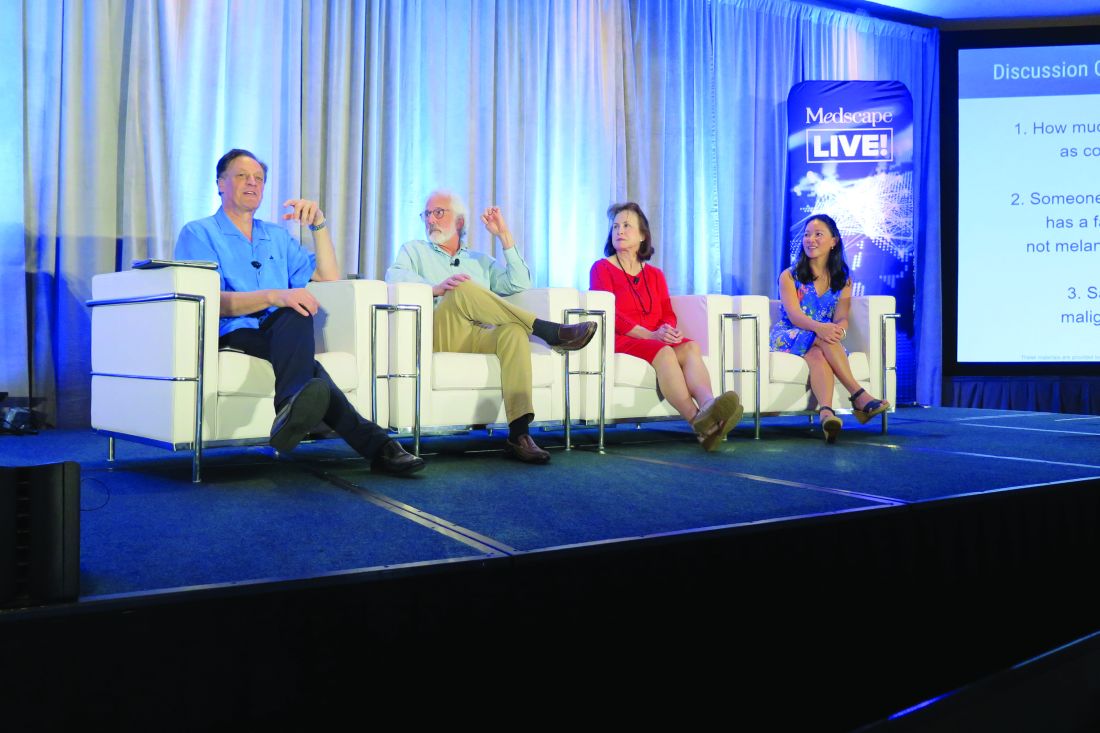
“Do you brush your teeth?” he’ll ask.
“Yes, I do.”
“Well, you should put sunscreen on every day.”
Another panelist, Adelaide A. Hebert, MD, professor of dermatology and pediatrics and chief of pediatric dermatology at the University of Texas, Houston, said that she advises new parents to start sun protection efforts early. “Most sunscreens are not approved for use in children under the age of 6 months because testing has not been done in this age group, but I do recommend protective clothing. I also recommend wrap-around sunglasses, which offer 5% more protection from the sun than regular sunglasses.”
In her opinion, stick sunscreens are “a good add-on,” especially for under the eyes and the backs of the hands, but she is not a fan of spray sunscreens, which can leave large areas of skin unprotected if not applied properly.
Fellow panelist Jennifer Huang, MD, a pediatric dermatologist at Boston Children’s Hospital, who has a special interest in taking care of dermatologic conditions of children with cancer, generally recommends mineral-based sunscreens. “There is data to suggest that nonmineral sunscreens are less safe than mineral sunscreens for humans, and mineral sunscreens are considered to be better for the environment,” Dr. Huang said. “Plus, there are more elegant versions of mineral sunscreens that don’t make your skin pasty white.” However, for patients with darker skin tones, “it can be hard to apply a pasty white sunscreen, so I lean on some recommendations for tinted sunscreens, too, so there are options. I specifically recommend sunscreens that have iron oxides in them so that it can block physical rays and help with the cosmetic appearance.”
Moise Levy, MD, professor of internal medicine and pediatrics at the University of Texas at Austin, said that his approach to imparting sunscreen advice to children and their parents involves a mix of spoken information, printed information, and sunscreen samples for children to try in the office, in the presence of a parent. To help patients choose among different samples, be they ointments, gels, or lotions, he will often ask the child: “‘What do you like the feel of better?’ If the child says, ‘I like this one,’ I make sure the parent hears that,” Dr. Levy said.
Next, Dr. Eichenfield, who moderated the discussion, asked his fellow panelists how they would counsel someone who comes to their practice for evaluation of moles and has a family history of nonmelanoma skin cancer. “I think this is one of the easier counseling sessions, because there are enough kids who are asked about the moles on their skin when they’re at school,” Dr. Hebert said. “I think they’re very ready to wear sun protective clothing and I certainly don’t want any sun exposure that would pose an increased risk for their child.”
In addition to routine sun protection, Dr. Huang recommends annual mole checks for children who have a first-degree relative with a history of malignant melanoma. Other high-risk groups that should undergo annual skin exams include anyone who has received high doses of radiation, bone marrow transplants, prolonged use of voriconazole, or prolonged systemic immunosuppression. Without a known genetic predisposition syndrome, a family history of nonmelanoma skin cancer would not raise concern for melanoma in an otherwise healthy child.
Dr. Eichenfield added that freckling used to be the secondary risk factor for melanoma, “but it’s flipped over to a primary risk factor. A history of immunosuppression or prior cancer is a major risk factor in childhood and teenage years.”
Dr. Eichenfield disclosed that he is a consultant or adviser for numerous pharmaceutical companies. He has also received research funding from AbbVie, Bausch & Lomb, Galderma Laboratories, and Pfizer. Dr. Hebert disclosed that she is a consultant or adviser for AbbVie, Almirall, Amryt Pharma, Arcutis Biotherapeutics, Beiersdorf, Dermavant Sciences, Galderma Laboratories, L’Oreal, Novan, Ortho Dermatologics, Pfizer, and Verrica. Dr. Levy disclosed that he is consultant or adviser for Abeona, Castle Creek, Dusa Pharma, Krystal Bio, Novan, Regeneron, and Sanofi Genzyme. Dr. Huang disclosed that she is an adviser for EllaOla.
MedscapeLive! and this news organization are owned by the same parent company.
“I basically say, ‘sun protection means clothing, shade, [considering the] time of day of exposure, and sunscreen if you are going to be otherwise exposed,’ ” Dr. Eichenfield, chief of pediatric and adolescent dermatology at Rady’s Children’s Hospital, San Diego, said during a panel discussion about sunscreen use at the Hawaii Dermatology Seminar provided by MedscapeLIVE! He recommends photoprotective gear such as rash guards for surfers and other water sport enthusiasts. When patients ask him if they should use sunscreen, he often replies with a question of his own.
“Do you brush your teeth?” he’ll ask.
“Yes, I do.”
“Well, you should put sunscreen on every day.”
Another panelist, Adelaide A. Hebert, MD, professor of dermatology and pediatrics and chief of pediatric dermatology at the University of Texas, Houston, said that she advises new parents to start sun protection efforts early. “Most sunscreens are not approved for use in children under the age of 6 months because testing has not been done in this age group, but I do recommend protective clothing. I also recommend wrap-around sunglasses, which offer 5% more protection from the sun than regular sunglasses.”
In her opinion, stick sunscreens are “a good add-on,” especially for under the eyes and the backs of the hands, but she is not a fan of spray sunscreens, which can leave large areas of skin unprotected if not applied properly.
Fellow panelist Jennifer Huang, MD, a pediatric dermatologist at Boston Children’s Hospital, who has a special interest in taking care of dermatologic conditions of children with cancer, generally recommends mineral-based sunscreens. “There is data to suggest that nonmineral sunscreens are less safe than mineral sunscreens for humans, and mineral sunscreens are considered to be better for the environment,” Dr. Huang said. “Plus, there are more elegant versions of mineral sunscreens that don’t make your skin pasty white.” However, for patients with darker skin tones, “it can be hard to apply a pasty white sunscreen, so I lean on some recommendations for tinted sunscreens, too, so there are options. I specifically recommend sunscreens that have iron oxides in them so that it can block physical rays and help with the cosmetic appearance.”
Moise Levy, MD, professor of internal medicine and pediatrics at the University of Texas at Austin, said that his approach to imparting sunscreen advice to children and their parents involves a mix of spoken information, printed information, and sunscreen samples for children to try in the office, in the presence of a parent. To help patients choose among different samples, be they ointments, gels, or lotions, he will often ask the child: “‘What do you like the feel of better?’ If the child says, ‘I like this one,’ I make sure the parent hears that,” Dr. Levy said.
Next, Dr. Eichenfield, who moderated the discussion, asked his fellow panelists how they would counsel someone who comes to their practice for evaluation of moles and has a family history of nonmelanoma skin cancer. “I think this is one of the easier counseling sessions, because there are enough kids who are asked about the moles on their skin when they’re at school,” Dr. Hebert said. “I think they’re very ready to wear sun protective clothing and I certainly don’t want any sun exposure that would pose an increased risk for their child.”
In addition to routine sun protection, Dr. Huang recommends annual mole checks for children who have a first-degree relative with a history of malignant melanoma. Other high-risk groups that should undergo annual skin exams include anyone who has received high doses of radiation, bone marrow transplants, prolonged use of voriconazole, or prolonged systemic immunosuppression. Without a known genetic predisposition syndrome, a family history of nonmelanoma skin cancer would not raise concern for melanoma in an otherwise healthy child.
Dr. Eichenfield added that freckling used to be the secondary risk factor for melanoma, “but it’s flipped over to a primary risk factor. A history of immunosuppression or prior cancer is a major risk factor in childhood and teenage years.”
Dr. Eichenfield disclosed that he is a consultant or adviser for numerous pharmaceutical companies. He has also received research funding from AbbVie, Bausch & Lomb, Galderma Laboratories, and Pfizer. Dr. Hebert disclosed that she is a consultant or adviser for AbbVie, Almirall, Amryt Pharma, Arcutis Biotherapeutics, Beiersdorf, Dermavant Sciences, Galderma Laboratories, L’Oreal, Novan, Ortho Dermatologics, Pfizer, and Verrica. Dr. Levy disclosed that he is consultant or adviser for Abeona, Castle Creek, Dusa Pharma, Krystal Bio, Novan, Regeneron, and Sanofi Genzyme. Dr. Huang disclosed that she is an adviser for EllaOla.
MedscapeLive! and this news organization are owned by the same parent company.
“I basically say, ‘sun protection means clothing, shade, [considering the] time of day of exposure, and sunscreen if you are going to be otherwise exposed,’ ” Dr. Eichenfield, chief of pediatric and adolescent dermatology at Rady’s Children’s Hospital, San Diego, said during a panel discussion about sunscreen use at the Hawaii Dermatology Seminar provided by MedscapeLIVE! He recommends photoprotective gear such as rash guards for surfers and other water sport enthusiasts. When patients ask him if they should use sunscreen, he often replies with a question of his own.
“Do you brush your teeth?” he’ll ask.
“Yes, I do.”
“Well, you should put sunscreen on every day.”
Another panelist, Adelaide A. Hebert, MD, professor of dermatology and pediatrics and chief of pediatric dermatology at the University of Texas, Houston, said that she advises new parents to start sun protection efforts early. “Most sunscreens are not approved for use in children under the age of 6 months because testing has not been done in this age group, but I do recommend protective clothing. I also recommend wrap-around sunglasses, which offer 5% more protection from the sun than regular sunglasses.”
In her opinion, stick sunscreens are “a good add-on,” especially for under the eyes and the backs of the hands, but she is not a fan of spray sunscreens, which can leave large areas of skin unprotected if not applied properly.
Fellow panelist Jennifer Huang, MD, a pediatric dermatologist at Boston Children’s Hospital, who has a special interest in taking care of dermatologic conditions of children with cancer, generally recommends mineral-based sunscreens. “There is data to suggest that nonmineral sunscreens are less safe than mineral sunscreens for humans, and mineral sunscreens are considered to be better for the environment,” Dr. Huang said. “Plus, there are more elegant versions of mineral sunscreens that don’t make your skin pasty white.” However, for patients with darker skin tones, “it can be hard to apply a pasty white sunscreen, so I lean on some recommendations for tinted sunscreens, too, so there are options. I specifically recommend sunscreens that have iron oxides in them so that it can block physical rays and help with the cosmetic appearance.”
Moise Levy, MD, professor of internal medicine and pediatrics at the University of Texas at Austin, said that his approach to imparting sunscreen advice to children and their parents involves a mix of spoken information, printed information, and sunscreen samples for children to try in the office, in the presence of a parent. To help patients choose among different samples, be they ointments, gels, or lotions, he will often ask the child: “‘What do you like the feel of better?’ If the child says, ‘I like this one,’ I make sure the parent hears that,” Dr. Levy said.
Next, Dr. Eichenfield, who moderated the discussion, asked his fellow panelists how they would counsel someone who comes to their practice for evaluation of moles and has a family history of nonmelanoma skin cancer. “I think this is one of the easier counseling sessions, because there are enough kids who are asked about the moles on their skin when they’re at school,” Dr. Hebert said. “I think they’re very ready to wear sun protective clothing and I certainly don’t want any sun exposure that would pose an increased risk for their child.”
In addition to routine sun protection, Dr. Huang recommends annual mole checks for children who have a first-degree relative with a history of malignant melanoma. Other high-risk groups that should undergo annual skin exams include anyone who has received high doses of radiation, bone marrow transplants, prolonged use of voriconazole, or prolonged systemic immunosuppression. Without a known genetic predisposition syndrome, a family history of nonmelanoma skin cancer would not raise concern for melanoma in an otherwise healthy child.
Dr. Eichenfield added that freckling used to be the secondary risk factor for melanoma, “but it’s flipped over to a primary risk factor. A history of immunosuppression or prior cancer is a major risk factor in childhood and teenage years.”
Dr. Eichenfield disclosed that he is a consultant or adviser for numerous pharmaceutical companies. He has also received research funding from AbbVie, Bausch & Lomb, Galderma Laboratories, and Pfizer. Dr. Hebert disclosed that she is a consultant or adviser for AbbVie, Almirall, Amryt Pharma, Arcutis Biotherapeutics, Beiersdorf, Dermavant Sciences, Galderma Laboratories, L’Oreal, Novan, Ortho Dermatologics, Pfizer, and Verrica. Dr. Levy disclosed that he is consultant or adviser for Abeona, Castle Creek, Dusa Pharma, Krystal Bio, Novan, Regeneron, and Sanofi Genzyme. Dr. Huang disclosed that she is an adviser for EllaOla.
MedscapeLive! and this news organization are owned by the same parent company.
FROM THE MEDSCAPELIVE! HAWAII DERMATOLOGY SEMINAR
Cancer drug shortages spur worry, rationing, and tough choices
CHICAGO – Oncologist Denise Yardley, MD, isn’t used to expressing uncertainty when she tells patients about what’s in store for them in terms of drug treatment. But things are dramatically different now amid a severe national shortage of carboplatin and cisplatin, two common and crucial cancer drugs.
“There’s a regimen I’m thinking about,” Dr. Yardley told a new patient recently, “but we’ll have to wait until you finish your staging evaluation to see whether I can deliver this. Another regimen that’s a little more toxic is my second choice.” And, she added, the alternative chemotherapy treatment – anthracycline instead of carboplatin – requires a longer treatment period.
This ambiguity is hardly ideal, said Dr. Yardley, of Tennessee Oncology and Sarah Cannon Research Institute in Nashville. “It’s another factor in being overwhelmed in a first-time visit and wanting to know the details about what your treatment is going to look like. You’re not walking out knowing exactly what you’re going to take or the exact timing so you can start mapping out your calendar and work schedule.”
This kind of scenario is becoming all too familiar this spring, according to oncologists who gathered at the annual meeting of the American Society of Clinical Oncology (ASCO). In interviews, these physicians said the limited supply of multiple cancer drugs – including the chemotherapies carboplatin and cisplatin – is having an unprecedented negative effect since their use is so widespread in cancer care.
“Every patient could get impacted. That’s why we need to address this sooner rather than later,” said oncologist Aditya Baria, MBBS, MPH, director of the Breast Cancer Research Program at Massachusetts General Hospital, Boston.
Shortages of cancer drugs are not unusual. Three-quarters of oncology pharmacists at 68 organizations surveyed from 2019 to 2020 said shortages prompted treatment delays, reduced doses, or alternative regimens. But the current shortages are having a much wider impact.
The National Comprehensive Cancer Network recently reported that 93% of 27 member institutions surveyed in late May are short on carboplatin, and 70% have reported a shortage of cisplatin. Plus, 20% of 19 centers said they weren’t able to continue carboplatin regimens for all patients.
The drugs are mainstays of multiple types of treatment for a long list of cancer types including lung, breast, gynecologic, and many others.
Several scenarios are possible when the drugs are in short supply, said Dr. Yardley, who noted that the shortage is more severe than any she’s seen in her medical career of more than 3 decades. Patients may need to be switched to regimens with more side effects, even when they’re in the middle of a treatment, she said. Or patients might have to go longer between treatments.
In some cases, Dr. Yardley said, the shortage is forcing patients to go without an important component of a larger combination therapy regimen. “The Keynote 522 neoadjuvant regimen for triple-negative breast cancer has carboplatin given with Taxol [paclitaxel] and Keytruda [pembrolizumab]. We are just deleting the carboplatin.”
She added that carboplatin is part of the following so-called TCHP regimen for HER2+ early-stage breast cancer: Taxotere (docetaxel), carboplatin, Herceptin (trastuzumab), and Perjeta (pertuzumab).
“You can delete [carboplatin] or consider substituting cyclophosphamide for carboplatin,” she said. But she cautioned the Keynote 522 and TCHP regimens haven’t been tested without carboplatin in curative-intent trials.
At Duke University in Durham, N.C., doses of carboplatin for many patients are being lowered by a third to the level that’s commonly used for older and frail patients, said oncologist Arif Kamal, MD, MBA, MHS, who works at the academic center and is the chief patient officer at the American Cancer Society.
“We don’t know if [the lower doses will negatively affect cancer patients’ outcomes]. What’s amazing is how many patients [are understanding about having to take smaller amounts of the chemotherapy],” he said.
Medical organizations are offering guidance. The Society of Gynecologic Oncology, for example, in late April recommended that oncologists increase intervals between chemotherapy treatments when appropriate, round down vial sizes to ensure “efficient use,” and eliminate or minimize use of cisplatin and carboplatin in certain platinum-resistant cancers.
In early June, ASCO published guidance regarding alternatives to cisplatin, carboplatin, and 5-fluorouracil, which is also in short supply, in gastrointestinal cancer. As the guidance notes, some alternatives are more untested or more toxic than ideal treatments.
In addition, ASCO has a webpage devoted to news and resources about shortages of cancer drugs. It offers drug availability updates, general guidance, and breast cancer guidance. ASCO also offers ethical guidance about handling drug shortages.
Patients in clinical trials and those who hope to join them are especially vulnerable to the drug shortage, oncologists interviewed for this story said. Cisplatin and carboplatin are the backbones of many clinical trials, Dr. Yardley said. “When you can’t supply a drug in one of the [trial] arms, that puts the whole trial on pause.”
Even clinics that have managed to find adequate supplies of the drugs are planning for when they run out.
“Our institution and other institutions are trying to come up with a rationing protocol, deciding which patients are going to get access, and which ones have reasonable alternatives,” radiation oncologist Corey Speers MD, PhD, of University Hospitals Seidman Cancer Center and Case Western Reserve University, Cleveland, said in an interview. “In some settings, there really isn’t an effective alternative. Or the alternatives are tens of thousands of dollars more expensive.”
Oncologists also noted that cisplatin and carboplatin aren’t the only cancer drugs in short supply.
“Methotrexate is critically low, and 5FU [fluorouracil] is critically low,” Dr. Yardley said, referring to drugs that each treat several types of cancer. According to the May NCNN survey, 67% of respondents reported low supplies of methotrexate, and 26% said they were low on 5FU.
“Viscous lidocaine is a component of many supportive care mouth rinses for the stomatitis caused by our drugs but is not available at all,” Dr. Yardley said.
She added that there are also low supplies of fludarabine, which is used to treat chronic lymphocytic lymphom; clofarabine, which is used to treat acute lymphoblastic leukemia; and rasburicase, which is used to treat high levels of uric acid in patients on chemotherapy.
Dr. Speers said his institution is facing a shortage of capecitabine, which is used to treat several types of cancer.
“Numerous trials have demonstrated the improved, safety, efficacy, and convenience of oral capecitabine. With the shortage we’re having to use infusional 5FU, which not only is less convenient but also ends up being more costly and requires infusion room space or continuous infusion pumps. This impacts our ability to treat cancer patients,” he said. “Our capacity is becoming more limited to accommodate these added patients, and we have to use infusional formulations of a drug that previously was readily available via an oral formulation. Patients and caregivers now have to come to the cancer center for appointments and infusions that previously weren’t needed as they could take an oral pill.”
Dr. Speers added that his institution is rationing methotrexate. “We are now prioritizing patients being treated with curative intent and adjusting protocols to use the lowest allowable doses to conserve supply,” he said.
The roots of the platinum chemotherapy drug shortage link back to the India-based Intas Pharmaceuticals company, a major manufacturer of cisplatin and carboplatin. According to Kellyann Zuzulo, spokeperson for Accord Healthcare, an Instas U.S. subsidiary, a facility inspection in December 2022 prompted a decision to temporarily stop making the drugs. The inspection identified multiple problems.
“Intas and Accord are working with the FDA on a plan to return to manufacturing,” Ms. Zuzulo said in an interview. “This will allow for continued production of products that will be prioritized based on medical necessity. A date has not yet been confirmed in which the facility will return to manufacturing for cisplatin, carboplatin or any other products.”
Ms. Zuzulo said the company is not a health care provider and cannot offer advice to patients about alternatives.
Other companies that make cisplatin and carboplatin have also reported shortages. In interviews, representatives for Fresenius Kabi and Pfizer said the companies have limited supplies because of increased demand – not because of manufacturing problems.
On June 12, the American Society of Health-System Pharmacists (ASHP) reported that carboplatin remains in short supply, with all five companies that sell the drug listed as having limited or back-ordered supplies. Cisplatin is also in short supply, the organization reported in a June 9 update, although some is available.
In a June 12 update on methotrexate, ASHP said manufacturing delays at Accord have caused a shortage, and other companies are running low due to increased demand.
As for the future, Congress and the Biden administration, according to a report by Bloomberg, are trying to figure out what to do regarding shortages of cheap generic drugs such as cisplatin and carboplatin. The FDA is exploring a partnership with a Chinese drugmaker to make cisplatin, NBC News reported.
However, fixes will be challenging, according to former FDA commissioner and Pfizer board member, Scott Gottlieb, MD.
“This generic business, particularly for these complex drugs, these complex formulations, is not a healthy business right now. Yet it’s a vital business from a public standpoint,” he told CBS News.
In an interview, Dr. Kamal said that there is even talk about boosting the prices of cheap generic drugs “to ensure that there’s enough incentive for multiple manufacturers to be involved.”
Dr. Kamal said he is crossing his fingers that cutting chemotherapy doses at his clinic doesn’t result in worse outcomes for his patients.
“Right now, I think dropping someone by 25% or 30% is okay. And for some patients, particularly in a curative setting, we try to keep them at as much as 100% as possible. But there’s just a lot of unknowns,” he said.
CHICAGO – Oncologist Denise Yardley, MD, isn’t used to expressing uncertainty when she tells patients about what’s in store for them in terms of drug treatment. But things are dramatically different now amid a severe national shortage of carboplatin and cisplatin, two common and crucial cancer drugs.
“There’s a regimen I’m thinking about,” Dr. Yardley told a new patient recently, “but we’ll have to wait until you finish your staging evaluation to see whether I can deliver this. Another regimen that’s a little more toxic is my second choice.” And, she added, the alternative chemotherapy treatment – anthracycline instead of carboplatin – requires a longer treatment period.
This ambiguity is hardly ideal, said Dr. Yardley, of Tennessee Oncology and Sarah Cannon Research Institute in Nashville. “It’s another factor in being overwhelmed in a first-time visit and wanting to know the details about what your treatment is going to look like. You’re not walking out knowing exactly what you’re going to take or the exact timing so you can start mapping out your calendar and work schedule.”
This kind of scenario is becoming all too familiar this spring, according to oncologists who gathered at the annual meeting of the American Society of Clinical Oncology (ASCO). In interviews, these physicians said the limited supply of multiple cancer drugs – including the chemotherapies carboplatin and cisplatin – is having an unprecedented negative effect since their use is so widespread in cancer care.
“Every patient could get impacted. That’s why we need to address this sooner rather than later,” said oncologist Aditya Baria, MBBS, MPH, director of the Breast Cancer Research Program at Massachusetts General Hospital, Boston.
Shortages of cancer drugs are not unusual. Three-quarters of oncology pharmacists at 68 organizations surveyed from 2019 to 2020 said shortages prompted treatment delays, reduced doses, or alternative regimens. But the current shortages are having a much wider impact.
The National Comprehensive Cancer Network recently reported that 93% of 27 member institutions surveyed in late May are short on carboplatin, and 70% have reported a shortage of cisplatin. Plus, 20% of 19 centers said they weren’t able to continue carboplatin regimens for all patients.
The drugs are mainstays of multiple types of treatment for a long list of cancer types including lung, breast, gynecologic, and many others.
Several scenarios are possible when the drugs are in short supply, said Dr. Yardley, who noted that the shortage is more severe than any she’s seen in her medical career of more than 3 decades. Patients may need to be switched to regimens with more side effects, even when they’re in the middle of a treatment, she said. Or patients might have to go longer between treatments.
In some cases, Dr. Yardley said, the shortage is forcing patients to go without an important component of a larger combination therapy regimen. “The Keynote 522 neoadjuvant regimen for triple-negative breast cancer has carboplatin given with Taxol [paclitaxel] and Keytruda [pembrolizumab]. We are just deleting the carboplatin.”
She added that carboplatin is part of the following so-called TCHP regimen for HER2+ early-stage breast cancer: Taxotere (docetaxel), carboplatin, Herceptin (trastuzumab), and Perjeta (pertuzumab).
“You can delete [carboplatin] or consider substituting cyclophosphamide for carboplatin,” she said. But she cautioned the Keynote 522 and TCHP regimens haven’t been tested without carboplatin in curative-intent trials.
At Duke University in Durham, N.C., doses of carboplatin for many patients are being lowered by a third to the level that’s commonly used for older and frail patients, said oncologist Arif Kamal, MD, MBA, MHS, who works at the academic center and is the chief patient officer at the American Cancer Society.
“We don’t know if [the lower doses will negatively affect cancer patients’ outcomes]. What’s amazing is how many patients [are understanding about having to take smaller amounts of the chemotherapy],” he said.
Medical organizations are offering guidance. The Society of Gynecologic Oncology, for example, in late April recommended that oncologists increase intervals between chemotherapy treatments when appropriate, round down vial sizes to ensure “efficient use,” and eliminate or minimize use of cisplatin and carboplatin in certain platinum-resistant cancers.
In early June, ASCO published guidance regarding alternatives to cisplatin, carboplatin, and 5-fluorouracil, which is also in short supply, in gastrointestinal cancer. As the guidance notes, some alternatives are more untested or more toxic than ideal treatments.
In addition, ASCO has a webpage devoted to news and resources about shortages of cancer drugs. It offers drug availability updates, general guidance, and breast cancer guidance. ASCO also offers ethical guidance about handling drug shortages.
Patients in clinical trials and those who hope to join them are especially vulnerable to the drug shortage, oncologists interviewed for this story said. Cisplatin and carboplatin are the backbones of many clinical trials, Dr. Yardley said. “When you can’t supply a drug in one of the [trial] arms, that puts the whole trial on pause.”
Even clinics that have managed to find adequate supplies of the drugs are planning for when they run out.
“Our institution and other institutions are trying to come up with a rationing protocol, deciding which patients are going to get access, and which ones have reasonable alternatives,” radiation oncologist Corey Speers MD, PhD, of University Hospitals Seidman Cancer Center and Case Western Reserve University, Cleveland, said in an interview. “In some settings, there really isn’t an effective alternative. Or the alternatives are tens of thousands of dollars more expensive.”
Oncologists also noted that cisplatin and carboplatin aren’t the only cancer drugs in short supply.
“Methotrexate is critically low, and 5FU [fluorouracil] is critically low,” Dr. Yardley said, referring to drugs that each treat several types of cancer. According to the May NCNN survey, 67% of respondents reported low supplies of methotrexate, and 26% said they were low on 5FU.
“Viscous lidocaine is a component of many supportive care mouth rinses for the stomatitis caused by our drugs but is not available at all,” Dr. Yardley said.
She added that there are also low supplies of fludarabine, which is used to treat chronic lymphocytic lymphom; clofarabine, which is used to treat acute lymphoblastic leukemia; and rasburicase, which is used to treat high levels of uric acid in patients on chemotherapy.
Dr. Speers said his institution is facing a shortage of capecitabine, which is used to treat several types of cancer.
“Numerous trials have demonstrated the improved, safety, efficacy, and convenience of oral capecitabine. With the shortage we’re having to use infusional 5FU, which not only is less convenient but also ends up being more costly and requires infusion room space or continuous infusion pumps. This impacts our ability to treat cancer patients,” he said. “Our capacity is becoming more limited to accommodate these added patients, and we have to use infusional formulations of a drug that previously was readily available via an oral formulation. Patients and caregivers now have to come to the cancer center for appointments and infusions that previously weren’t needed as they could take an oral pill.”
Dr. Speers added that his institution is rationing methotrexate. “We are now prioritizing patients being treated with curative intent and adjusting protocols to use the lowest allowable doses to conserve supply,” he said.
The roots of the platinum chemotherapy drug shortage link back to the India-based Intas Pharmaceuticals company, a major manufacturer of cisplatin and carboplatin. According to Kellyann Zuzulo, spokeperson for Accord Healthcare, an Instas U.S. subsidiary, a facility inspection in December 2022 prompted a decision to temporarily stop making the drugs. The inspection identified multiple problems.
“Intas and Accord are working with the FDA on a plan to return to manufacturing,” Ms. Zuzulo said in an interview. “This will allow for continued production of products that will be prioritized based on medical necessity. A date has not yet been confirmed in which the facility will return to manufacturing for cisplatin, carboplatin or any other products.”
Ms. Zuzulo said the company is not a health care provider and cannot offer advice to patients about alternatives.
Other companies that make cisplatin and carboplatin have also reported shortages. In interviews, representatives for Fresenius Kabi and Pfizer said the companies have limited supplies because of increased demand – not because of manufacturing problems.
On June 12, the American Society of Health-System Pharmacists (ASHP) reported that carboplatin remains in short supply, with all five companies that sell the drug listed as having limited or back-ordered supplies. Cisplatin is also in short supply, the organization reported in a June 9 update, although some is available.
In a June 12 update on methotrexate, ASHP said manufacturing delays at Accord have caused a shortage, and other companies are running low due to increased demand.
As for the future, Congress and the Biden administration, according to a report by Bloomberg, are trying to figure out what to do regarding shortages of cheap generic drugs such as cisplatin and carboplatin. The FDA is exploring a partnership with a Chinese drugmaker to make cisplatin, NBC News reported.
However, fixes will be challenging, according to former FDA commissioner and Pfizer board member, Scott Gottlieb, MD.
“This generic business, particularly for these complex drugs, these complex formulations, is not a healthy business right now. Yet it’s a vital business from a public standpoint,” he told CBS News.
In an interview, Dr. Kamal said that there is even talk about boosting the prices of cheap generic drugs “to ensure that there’s enough incentive for multiple manufacturers to be involved.”
Dr. Kamal said he is crossing his fingers that cutting chemotherapy doses at his clinic doesn’t result in worse outcomes for his patients.
“Right now, I think dropping someone by 25% or 30% is okay. And for some patients, particularly in a curative setting, we try to keep them at as much as 100% as possible. But there’s just a lot of unknowns,” he said.
CHICAGO – Oncologist Denise Yardley, MD, isn’t used to expressing uncertainty when she tells patients about what’s in store for them in terms of drug treatment. But things are dramatically different now amid a severe national shortage of carboplatin and cisplatin, two common and crucial cancer drugs.
“There’s a regimen I’m thinking about,” Dr. Yardley told a new patient recently, “but we’ll have to wait until you finish your staging evaluation to see whether I can deliver this. Another regimen that’s a little more toxic is my second choice.” And, she added, the alternative chemotherapy treatment – anthracycline instead of carboplatin – requires a longer treatment period.
This ambiguity is hardly ideal, said Dr. Yardley, of Tennessee Oncology and Sarah Cannon Research Institute in Nashville. “It’s another factor in being overwhelmed in a first-time visit and wanting to know the details about what your treatment is going to look like. You’re not walking out knowing exactly what you’re going to take or the exact timing so you can start mapping out your calendar and work schedule.”
This kind of scenario is becoming all too familiar this spring, according to oncologists who gathered at the annual meeting of the American Society of Clinical Oncology (ASCO). In interviews, these physicians said the limited supply of multiple cancer drugs – including the chemotherapies carboplatin and cisplatin – is having an unprecedented negative effect since their use is so widespread in cancer care.
“Every patient could get impacted. That’s why we need to address this sooner rather than later,” said oncologist Aditya Baria, MBBS, MPH, director of the Breast Cancer Research Program at Massachusetts General Hospital, Boston.
Shortages of cancer drugs are not unusual. Three-quarters of oncology pharmacists at 68 organizations surveyed from 2019 to 2020 said shortages prompted treatment delays, reduced doses, or alternative regimens. But the current shortages are having a much wider impact.
The National Comprehensive Cancer Network recently reported that 93% of 27 member institutions surveyed in late May are short on carboplatin, and 70% have reported a shortage of cisplatin. Plus, 20% of 19 centers said they weren’t able to continue carboplatin regimens for all patients.
The drugs are mainstays of multiple types of treatment for a long list of cancer types including lung, breast, gynecologic, and many others.
Several scenarios are possible when the drugs are in short supply, said Dr. Yardley, who noted that the shortage is more severe than any she’s seen in her medical career of more than 3 decades. Patients may need to be switched to regimens with more side effects, even when they’re in the middle of a treatment, she said. Or patients might have to go longer between treatments.
In some cases, Dr. Yardley said, the shortage is forcing patients to go without an important component of a larger combination therapy regimen. “The Keynote 522 neoadjuvant regimen for triple-negative breast cancer has carboplatin given with Taxol [paclitaxel] and Keytruda [pembrolizumab]. We are just deleting the carboplatin.”
She added that carboplatin is part of the following so-called TCHP regimen for HER2+ early-stage breast cancer: Taxotere (docetaxel), carboplatin, Herceptin (trastuzumab), and Perjeta (pertuzumab).
“You can delete [carboplatin] or consider substituting cyclophosphamide for carboplatin,” she said. But she cautioned the Keynote 522 and TCHP regimens haven’t been tested without carboplatin in curative-intent trials.
At Duke University in Durham, N.C., doses of carboplatin for many patients are being lowered by a third to the level that’s commonly used for older and frail patients, said oncologist Arif Kamal, MD, MBA, MHS, who works at the academic center and is the chief patient officer at the American Cancer Society.
“We don’t know if [the lower doses will negatively affect cancer patients’ outcomes]. What’s amazing is how many patients [are understanding about having to take smaller amounts of the chemotherapy],” he said.
Medical organizations are offering guidance. The Society of Gynecologic Oncology, for example, in late April recommended that oncologists increase intervals between chemotherapy treatments when appropriate, round down vial sizes to ensure “efficient use,” and eliminate or minimize use of cisplatin and carboplatin in certain platinum-resistant cancers.
In early June, ASCO published guidance regarding alternatives to cisplatin, carboplatin, and 5-fluorouracil, which is also in short supply, in gastrointestinal cancer. As the guidance notes, some alternatives are more untested or more toxic than ideal treatments.
In addition, ASCO has a webpage devoted to news and resources about shortages of cancer drugs. It offers drug availability updates, general guidance, and breast cancer guidance. ASCO also offers ethical guidance about handling drug shortages.
Patients in clinical trials and those who hope to join them are especially vulnerable to the drug shortage, oncologists interviewed for this story said. Cisplatin and carboplatin are the backbones of many clinical trials, Dr. Yardley said. “When you can’t supply a drug in one of the [trial] arms, that puts the whole trial on pause.”
Even clinics that have managed to find adequate supplies of the drugs are planning for when they run out.
“Our institution and other institutions are trying to come up with a rationing protocol, deciding which patients are going to get access, and which ones have reasonable alternatives,” radiation oncologist Corey Speers MD, PhD, of University Hospitals Seidman Cancer Center and Case Western Reserve University, Cleveland, said in an interview. “In some settings, there really isn’t an effective alternative. Or the alternatives are tens of thousands of dollars more expensive.”
Oncologists also noted that cisplatin and carboplatin aren’t the only cancer drugs in short supply.
“Methotrexate is critically low, and 5FU [fluorouracil] is critically low,” Dr. Yardley said, referring to drugs that each treat several types of cancer. According to the May NCNN survey, 67% of respondents reported low supplies of methotrexate, and 26% said they were low on 5FU.
“Viscous lidocaine is a component of many supportive care mouth rinses for the stomatitis caused by our drugs but is not available at all,” Dr. Yardley said.
She added that there are also low supplies of fludarabine, which is used to treat chronic lymphocytic lymphom; clofarabine, which is used to treat acute lymphoblastic leukemia; and rasburicase, which is used to treat high levels of uric acid in patients on chemotherapy.
Dr. Speers said his institution is facing a shortage of capecitabine, which is used to treat several types of cancer.
“Numerous trials have demonstrated the improved, safety, efficacy, and convenience of oral capecitabine. With the shortage we’re having to use infusional 5FU, which not only is less convenient but also ends up being more costly and requires infusion room space or continuous infusion pumps. This impacts our ability to treat cancer patients,” he said. “Our capacity is becoming more limited to accommodate these added patients, and we have to use infusional formulations of a drug that previously was readily available via an oral formulation. Patients and caregivers now have to come to the cancer center for appointments and infusions that previously weren’t needed as they could take an oral pill.”
Dr. Speers added that his institution is rationing methotrexate. “We are now prioritizing patients being treated with curative intent and adjusting protocols to use the lowest allowable doses to conserve supply,” he said.
The roots of the platinum chemotherapy drug shortage link back to the India-based Intas Pharmaceuticals company, a major manufacturer of cisplatin and carboplatin. According to Kellyann Zuzulo, spokeperson for Accord Healthcare, an Instas U.S. subsidiary, a facility inspection in December 2022 prompted a decision to temporarily stop making the drugs. The inspection identified multiple problems.
“Intas and Accord are working with the FDA on a plan to return to manufacturing,” Ms. Zuzulo said in an interview. “This will allow for continued production of products that will be prioritized based on medical necessity. A date has not yet been confirmed in which the facility will return to manufacturing for cisplatin, carboplatin or any other products.”
Ms. Zuzulo said the company is not a health care provider and cannot offer advice to patients about alternatives.
Other companies that make cisplatin and carboplatin have also reported shortages. In interviews, representatives for Fresenius Kabi and Pfizer said the companies have limited supplies because of increased demand – not because of manufacturing problems.
On June 12, the American Society of Health-System Pharmacists (ASHP) reported that carboplatin remains in short supply, with all five companies that sell the drug listed as having limited or back-ordered supplies. Cisplatin is also in short supply, the organization reported in a June 9 update, although some is available.
In a June 12 update on methotrexate, ASHP said manufacturing delays at Accord have caused a shortage, and other companies are running low due to increased demand.
As for the future, Congress and the Biden administration, according to a report by Bloomberg, are trying to figure out what to do regarding shortages of cheap generic drugs such as cisplatin and carboplatin. The FDA is exploring a partnership with a Chinese drugmaker to make cisplatin, NBC News reported.
However, fixes will be challenging, according to former FDA commissioner and Pfizer board member, Scott Gottlieb, MD.
“This generic business, particularly for these complex drugs, these complex formulations, is not a healthy business right now. Yet it’s a vital business from a public standpoint,” he told CBS News.
In an interview, Dr. Kamal said that there is even talk about boosting the prices of cheap generic drugs “to ensure that there’s enough incentive for multiple manufacturers to be involved.”
Dr. Kamal said he is crossing his fingers that cutting chemotherapy doses at his clinic doesn’t result in worse outcomes for his patients.
“Right now, I think dropping someone by 25% or 30% is okay. And for some patients, particularly in a curative setting, we try to keep them at as much as 100% as possible. But there’s just a lot of unknowns,” he said.
AT ASCO 2023
Multiple sclerosis has a misdiagnosis problem
DENVER – that potentially puts patients at prolonged and unnecessary risk. Experts warn that false-negative diagnoses cause treatment delays, while false-positive diagnoses run the risk for potential harm from needless treatment.
“MS has a misdiagnosis problem,” said Patricia Coyle, MD, professor of neurology and vice chair (academic affairs), department of neurology, Stony Brook (N.Y.) University, in presenting on the issue at the annual meeting of the Consortium of Multiple Sclerosis Centers.
“We currently lack a diagnostic biomarker test, yet diagnosis is key. If you get it wrong – that really can be a problem,” Dr. Coyle said. Recent research indicates that MS misdiagnosis is a widespread problem, she added.
For instance, one research paper reported that nearly 20% of patients were misdiagnosed with MS and that more than 50% carried the misdiagnosis for at least 3 years, while 5% were misdiagnosed for 20 years or more.
The misdiagnosis problem is also reflected at large MS referral centers, where 30%-67% of patients turn out not to have the disease, Dr. Coyle noted.
A study from Argentina further highlights some of the key characteristics of misdiagnosis. In this study, examination of a cohort of 572 patients diagnosed with MS revealed that 16% were incorrectly diagnosed with MS and that women were at an 83% greater risk for misdiagnosis than men. Furthermore, the study showed that MS misdiagnosis increased by 8% per year of older age. The most frequent confirmed diagnoses among those who had been initially misdiagnosed as having MS were cerebrovascular disease, radiologically isolated syndrome, and headache.
The majority (83%) of patients incorrectly diagnosed with MS had an atypical presentation that did not indicate demyelination, 70% had an atypical brain magnetic resonance imaging, and 61% received a prescription for a disease-modifying treatment (DMT), despite not having confirmed MS.
The dangers of misdiagnosis
Misdiagnosis and incorrect treatment can be particularly dangerous if patients are diagnosed with MS when, in fact, they have neuromyelitis optica spectrum disorder (NMOSD), commonly mistaken for MS, Dr. Coyle noted.
“Several MS DMTs make NMOSD worse. You are also basically giving an unnecessary and inappropriate drug with potential side effects to the misdiagnosed patient,” she said.
There have been some advances in MS diagnosis on MRI. However, there are many caveats, Dr. Coyle noted.
For instance, leptomeningeal enhancement has been considered as an MS diagnostic indicator, but it is not unique to MS, Dr. Coyle noted. In addition, subpial demyelination is MS specific, but it is hard to see and is often missed, she added.
Central vein sign has received significant attention as an important MRI marker for MS, but, Dr. Coyle said, it is “not ready for prime time. It’s somewhat tedious and you need to use special protocols to identify it,” she said.
In the future, artificial intelligence and deep learning may be key to improving some of these technologies, Dr. Coyle noted.
Best hope for an accurate diagnosis
In the meantime, Dr. Coyle said she believes spinal fluid evaluation offers the best chance for a reliable MS diagnosis and is her preference. “I personally find spinal fluid to be extremely helpful to support MS diagnosis. Spinal fluid oligoclonal bands are positive in the vast majority of people with MS, and it is an independent finding from MRI to support an MS diagnosis. Added to MRI, it makes you much more comfortable,” she said.
Dr. Coyle said that a comprehensive workup should include:
- A thorough neurologic history and exam.
- MRI of the brain and spinal cord ensuring use of the MS protocol, and personally reading the studies with a neuroradiologist.
- Adding spinal fluid evaluation, especially in any atypical cases.
- Ruling out myelin oligodendrocyte glycoprotein antibody disease and NMOSD, diseases that mimic relapsing MS, via blood IgG to aquaporin 4.
“You want to be as certain as possible. Everything starts with a thorough workup,” Dr. Coyle said.
Dr. Coyle’s disclosures include consulting, nonbranded speaker fees, and/or research support with Actelion, Alkermes, Accordant, Biogen, Bristol Myers Squibb, Celgene, CorEvitas LLC, GlaxoSmithKline, Genentech/Roche, Horizon Therapeutics, Janssen, MedDay, Labcorp, Eli Lilly, Mylan, NINDS, Novartis, Sanofi Genzyme, and TG Therapeutics.
A version of this article originally appeared on Medscape.com.
DENVER – that potentially puts patients at prolonged and unnecessary risk. Experts warn that false-negative diagnoses cause treatment delays, while false-positive diagnoses run the risk for potential harm from needless treatment.
“MS has a misdiagnosis problem,” said Patricia Coyle, MD, professor of neurology and vice chair (academic affairs), department of neurology, Stony Brook (N.Y.) University, in presenting on the issue at the annual meeting of the Consortium of Multiple Sclerosis Centers.
“We currently lack a diagnostic biomarker test, yet diagnosis is key. If you get it wrong – that really can be a problem,” Dr. Coyle said. Recent research indicates that MS misdiagnosis is a widespread problem, she added.
For instance, one research paper reported that nearly 20% of patients were misdiagnosed with MS and that more than 50% carried the misdiagnosis for at least 3 years, while 5% were misdiagnosed for 20 years or more.
The misdiagnosis problem is also reflected at large MS referral centers, where 30%-67% of patients turn out not to have the disease, Dr. Coyle noted.
A study from Argentina further highlights some of the key characteristics of misdiagnosis. In this study, examination of a cohort of 572 patients diagnosed with MS revealed that 16% were incorrectly diagnosed with MS and that women were at an 83% greater risk for misdiagnosis than men. Furthermore, the study showed that MS misdiagnosis increased by 8% per year of older age. The most frequent confirmed diagnoses among those who had been initially misdiagnosed as having MS were cerebrovascular disease, radiologically isolated syndrome, and headache.
The majority (83%) of patients incorrectly diagnosed with MS had an atypical presentation that did not indicate demyelination, 70% had an atypical brain magnetic resonance imaging, and 61% received a prescription for a disease-modifying treatment (DMT), despite not having confirmed MS.
The dangers of misdiagnosis
Misdiagnosis and incorrect treatment can be particularly dangerous if patients are diagnosed with MS when, in fact, they have neuromyelitis optica spectrum disorder (NMOSD), commonly mistaken for MS, Dr. Coyle noted.
“Several MS DMTs make NMOSD worse. You are also basically giving an unnecessary and inappropriate drug with potential side effects to the misdiagnosed patient,” she said.
There have been some advances in MS diagnosis on MRI. However, there are many caveats, Dr. Coyle noted.
For instance, leptomeningeal enhancement has been considered as an MS diagnostic indicator, but it is not unique to MS, Dr. Coyle noted. In addition, subpial demyelination is MS specific, but it is hard to see and is often missed, she added.
Central vein sign has received significant attention as an important MRI marker for MS, but, Dr. Coyle said, it is “not ready for prime time. It’s somewhat tedious and you need to use special protocols to identify it,” she said.
In the future, artificial intelligence and deep learning may be key to improving some of these technologies, Dr. Coyle noted.
Best hope for an accurate diagnosis
In the meantime, Dr. Coyle said she believes spinal fluid evaluation offers the best chance for a reliable MS diagnosis and is her preference. “I personally find spinal fluid to be extremely helpful to support MS diagnosis. Spinal fluid oligoclonal bands are positive in the vast majority of people with MS, and it is an independent finding from MRI to support an MS diagnosis. Added to MRI, it makes you much more comfortable,” she said.
Dr. Coyle said that a comprehensive workup should include:
- A thorough neurologic history and exam.
- MRI of the brain and spinal cord ensuring use of the MS protocol, and personally reading the studies with a neuroradiologist.
- Adding spinal fluid evaluation, especially in any atypical cases.
- Ruling out myelin oligodendrocyte glycoprotein antibody disease and NMOSD, diseases that mimic relapsing MS, via blood IgG to aquaporin 4.
“You want to be as certain as possible. Everything starts with a thorough workup,” Dr. Coyle said.
Dr. Coyle’s disclosures include consulting, nonbranded speaker fees, and/or research support with Actelion, Alkermes, Accordant, Biogen, Bristol Myers Squibb, Celgene, CorEvitas LLC, GlaxoSmithKline, Genentech/Roche, Horizon Therapeutics, Janssen, MedDay, Labcorp, Eli Lilly, Mylan, NINDS, Novartis, Sanofi Genzyme, and TG Therapeutics.
A version of this article originally appeared on Medscape.com.
DENVER – that potentially puts patients at prolonged and unnecessary risk. Experts warn that false-negative diagnoses cause treatment delays, while false-positive diagnoses run the risk for potential harm from needless treatment.
“MS has a misdiagnosis problem,” said Patricia Coyle, MD, professor of neurology and vice chair (academic affairs), department of neurology, Stony Brook (N.Y.) University, in presenting on the issue at the annual meeting of the Consortium of Multiple Sclerosis Centers.
“We currently lack a diagnostic biomarker test, yet diagnosis is key. If you get it wrong – that really can be a problem,” Dr. Coyle said. Recent research indicates that MS misdiagnosis is a widespread problem, she added.
For instance, one research paper reported that nearly 20% of patients were misdiagnosed with MS and that more than 50% carried the misdiagnosis for at least 3 years, while 5% were misdiagnosed for 20 years or more.
The misdiagnosis problem is also reflected at large MS referral centers, where 30%-67% of patients turn out not to have the disease, Dr. Coyle noted.
A study from Argentina further highlights some of the key characteristics of misdiagnosis. In this study, examination of a cohort of 572 patients diagnosed with MS revealed that 16% were incorrectly diagnosed with MS and that women were at an 83% greater risk for misdiagnosis than men. Furthermore, the study showed that MS misdiagnosis increased by 8% per year of older age. The most frequent confirmed diagnoses among those who had been initially misdiagnosed as having MS were cerebrovascular disease, radiologically isolated syndrome, and headache.
The majority (83%) of patients incorrectly diagnosed with MS had an atypical presentation that did not indicate demyelination, 70% had an atypical brain magnetic resonance imaging, and 61% received a prescription for a disease-modifying treatment (DMT), despite not having confirmed MS.
The dangers of misdiagnosis
Misdiagnosis and incorrect treatment can be particularly dangerous if patients are diagnosed with MS when, in fact, they have neuromyelitis optica spectrum disorder (NMOSD), commonly mistaken for MS, Dr. Coyle noted.
“Several MS DMTs make NMOSD worse. You are also basically giving an unnecessary and inappropriate drug with potential side effects to the misdiagnosed patient,” she said.
There have been some advances in MS diagnosis on MRI. However, there are many caveats, Dr. Coyle noted.
For instance, leptomeningeal enhancement has been considered as an MS diagnostic indicator, but it is not unique to MS, Dr. Coyle noted. In addition, subpial demyelination is MS specific, but it is hard to see and is often missed, she added.
Central vein sign has received significant attention as an important MRI marker for MS, but, Dr. Coyle said, it is “not ready for prime time. It’s somewhat tedious and you need to use special protocols to identify it,” she said.
In the future, artificial intelligence and deep learning may be key to improving some of these technologies, Dr. Coyle noted.
Best hope for an accurate diagnosis
In the meantime, Dr. Coyle said she believes spinal fluid evaluation offers the best chance for a reliable MS diagnosis and is her preference. “I personally find spinal fluid to be extremely helpful to support MS diagnosis. Spinal fluid oligoclonal bands are positive in the vast majority of people with MS, and it is an independent finding from MRI to support an MS diagnosis. Added to MRI, it makes you much more comfortable,” she said.
Dr. Coyle said that a comprehensive workup should include:
- A thorough neurologic history and exam.
- MRI of the brain and spinal cord ensuring use of the MS protocol, and personally reading the studies with a neuroradiologist.
- Adding spinal fluid evaluation, especially in any atypical cases.
- Ruling out myelin oligodendrocyte glycoprotein antibody disease and NMOSD, diseases that mimic relapsing MS, via blood IgG to aquaporin 4.
“You want to be as certain as possible. Everything starts with a thorough workup,” Dr. Coyle said.
Dr. Coyle’s disclosures include consulting, nonbranded speaker fees, and/or research support with Actelion, Alkermes, Accordant, Biogen, Bristol Myers Squibb, Celgene, CorEvitas LLC, GlaxoSmithKline, Genentech/Roche, Horizon Therapeutics, Janssen, MedDay, Labcorp, Eli Lilly, Mylan, NINDS, Novartis, Sanofi Genzyme, and TG Therapeutics.
A version of this article originally appeared on Medscape.com.
AT CMSC 2023
Latest data: COVID vaccine safety, protection, and breakthrough infections in inflammatory, autoimmune diseases
MILAN – The impact of the COVID-19 pandemic on patients with rheumatic and nonrheumatic autoimmune diseases is ongoing and not yet fully comprehended. New data presented at the annual European Congress of Rheumatology, primarily derived from the global COVID-19 in Autoimmune Diseases (COVAD) survey but not limited to it, provide reassurance regarding the protection and safety of COVID-19 vaccines for older and younger adults, as well as for pregnant and breastfeeding women. These data also explore the influence of underlying diseases and medications on breakthrough SARS-CoV-2 infections and infection outcomes.
Safety of vaccines in patients with autoimmune or immune-mediated diseases
Following vaccination, even with low levels of antibodies, the risk of severe COVID-19 remains relatively low for patients who receive immunosuppressive therapy for various immune-mediated inflammatory diseases (IMIDs). This encouraging finding comes from the Nor-vaC study, presented by Hilde Ørbo, MD, of the Center for Treatment of Rheumatic and Musculoskeletal Diseases, Diakonhjemmet Hospital, Oslo.
During the presentation, Dr. Ørbo stated: “We did not find any specific diagnosis or medication associated with a significantly higher risk of hospitalization.” Receiving booster doses of the vaccine, having high levels of anti-spike antibodies after vaccination, and achieving hybrid immunity are correlated with further reductions in the risk of breakthrough SARS-CoV-2 infections.

Between Feb. 15, 2021, and Feb. 15, 2023, COVID-19 affected a similar proportion among the 729 patients and 350 healthy control persons (67% and 68%, respectively). Among the patients, 22 reported severe COVID-19, whereas none of the healthy control persons did. However, there were no fatalities among the patients. The study cohort consisted of patients with various IMIDs; 70% had an inflammatory joint disease. The use of immunosuppressive medications also varied, with 63% of patients using tumor necrosis factor inhibitors, either as monotherapy or in combination with other treatments, and other patients taking medications such as methotrexate, interleukin inhibitors, Janus kinase inhibitors, vedolizumab (Entyvio), and others.
While being older than 70 years and the presence of comorbidities were identified as risk factors for severe COVID-19, there was a significant reduction in risk with each additional vaccine dose. These results support the protective role of repeated COVID-19 vaccination for patients with IMIDs who are receiving immunosuppressive therapies; they yield a favorable prognosis even with the Omicron variant.
The study further compared the risk of severe COVID-19 between a group with hybrid immunity (having received three vaccine doses and experiencing breakthrough infection with the Omicron variant) and a group that received a fourth vaccine dose within the same time frame. The difference was striking: Hybrid immunity was associated with a 5.8-fold decrease in risk, compared with four-dose vaccination (P < .0001).
The level of antibodies, measured 2-4 weeks after the last vaccination, was predictive of the risk of breakthrough COVID-19. An antibody level above 6000 binding antibody units/mL after vaccination was significantly associated with a reduction in risk. “We can conclude that patients who receive multiple vaccine doses have a lower risk of COVID-19,” Dr. Ørbo said. “In patients who recently experienced breakthrough infections, the administration of a booster vaccine dose might be delayed.”

“The virus has undergone changes throughout the pandemic, while the vaccines have remained relatively stable. Are we anticipating more infections over time?” asked Hendrik Schulze-Koops, MD, PhD, of Ludwig Maximilians University of Munich (Germany), the session moderator. In response, Dr. Ørbo stated that 85% of the recorded infections in the study occurred after the emergence of the Omicron variant, and time was considered a covariable in the analysis.
These data shed light on a topic discussed by Pedro Machado, MD, PhD, professor and consultant in rheumatology and neuromuscular diseases at University College London, during his scientific session talk entitled, “Unsolved Issues of COVID Vaccination and Re-vaccination.” Dr. Machado referred to the VROOM study published in 2022, which examined the interruption of methotrexate for 2 weeks following booster administration. Both groups demonstrated a significant antibody response, but the group that stopped taking methotrexate showed double the antibody titers.

However, he emphasized, “what remains unknown is the clinical relevance of these differences in terms of severe infection, hospitalization, or even death. The potential benefit of increased immunogenicity by interrupting conventional synthetic disease-modifying antirheumatic drugs [csDMARDs] such as methotrexate before or after vaccination needs to be balanced against the potential risk of disease flare. Ultimately, decision-making should be individualized based on factors such as comorbidities, disease activity, and other considerations.” The results presented by Dr. Ørbo suggest that, while there may be a clinical difference in terms of severe infection, the overall prognosis for vaccinated patients is reasonably good.
Regarding other DMARDs, such as biologics, the approach may differ. Dr. Machado suggested: “In patients using rituximab or other B cell–depleting therapies, SARS-CoV-2 vaccination should be scheduled in a way that optimizes vaccine immunogenicity. A minimum of 10 B cells/mcL of blood is likely a relevant threshold above which a sufficient cellular and immune response is established.”
COVID vaccines are safe for pregnant and breastfeeding women
According to data from the COVAD study, which comprised two global cross-sectional surveys conducted in 2021 and 2022, the COVID-19 vaccine appeared safe for pregnant and breastfeeding women with autoimmune diseases (AID).
Presenter Laura Andreoli, MD, PhD, of the University of Brescia (Italy), said that, although pregnant patients with AID reported more adverse events related to vaccination, these rates were not significantly higher than those among pregnant, healthy control persons who were without AID. No difference in adverse events was observed between breastfeeding women and healthy control persons, and the incidence of disease flares did not significantly differ among all groups.
“In summary, this study provides initial insights into the safety of COVID-19 vaccination during the gestational and postpartum periods in women with autoimmune diseases. These reassuring observations will hopefully improve clinician-patient communication and address hesitancy towards COVID-19 vaccination, as the benefits for the mother and fetus through passive immunization appear to outweigh potential risks,” Dr. Andreoli said in an interview.
“The large number of participants and the global geographical spread of the COVAD survey were very beneficial in gaining access to this important subset of patients,” added Dr. Andreoli. However, she acknowledged that patients with low socioeconomic status and/or high disability were likely underrepresented. While no data on pregnancy outcomes have been collected thus far, Dr. Andreoli expressed the desire to include them in the study’s follow-up.
The COVAD survey data also indicate that, in general, vaccine hesitancy among patients with AID is decreasing; from 2021 to 2022, it declined from 16.5% to 5.1%, as Dr. Machado indicated in his presentation.
Multiple factors contribute to breakthrough infections
The risk of breakthrough SARS-CoV-2 infections after vaccination varies among patients with rheumatoid arthritis and rheumatic or nonrheumatic autoimmune diseases, primarily depending on the underlying condition rather than the immunosuppressive medication. Environmental factors also appear to play a role. This complex landscape emerges from a further analysis of the COVAD survey dataset.
Alessia Alunno, MD, PhD, of the University of L’Aquila (Italy), presented a detailed and occasionally counterintuitive picture of similarities and differences among young adult patients (aged 18-35 years), mostly women, with various rheumatic and nonrheumatic diseases in relation to COVID-19. Most notably, the type of disease seemed to have more significance than the immunosuppression resulting from the treatment regimen. This held true for vaccine safety as well as for the risk of breakthrough COVID-19 and symptom profiles.
Patients with rheumatic disease (RMD) and nonrheumatic autoimmune disease (nr-AD) had significantly different therapeutic profiles on average. Before vaccination, 45% of patients with RMD used glucocorticoids (GC), and 91% used immunosuppressants (IS). In contrast, only 9.5% of nr-AD patients used GC, and 21% were taking IS.
Interestingly, the overall prevalence of reported SARS-CoV-2 infections was not influenced by medication and was practically identical (25% to 28%) across all groups. However, there were intriguing differences in the occurrence of infections before and after vaccination between disease groups. Prevaccine infections were less frequent among patients with RMD compared with healthy control persons (adjusted odds ratio, 0.6), while the rates were similar among patients with nr-AD and healthy control persons. On the other hand, breakthrough infections were more frequent in patients with RMD (aOR, 2.7), whereas the rate was similar between healthy control persons and patients with nr-AD.
Despite a much lower rate of GC/IS use, patients with nr-AD experienced repeated infections more frequently. In contrast, patients with RMD were less prone to multiple infections, even compared with healthy control persons (aOR, 0.5).
Regarding the disease profile, fewer than 5% of all infected patients required advanced therapies for SARS-CoV-2 infection. Notably, all SARS-CoV-2 infections in patients with nr-AD were symptomatic, whereas among patients with RMD and healthy control persons, the incidence of asymptomatic infections was 3%. The rate of hospital admissions was 4% for patients with RMD, compared with 2% for patients with nr-AD and 1% for control persons. The RMD group exhibited some differences between prevaccine infections and breakthrough infections, including a significantly lower frequency of loss of smell and taste during breakthrough infections. Overall, patients with RMD and COVID-19 experienced cough, runny nose, throat pain, nausea, and vomiting more frequently. In contrast, patients with nr-AD had a much higher risk of skin rashes during breakthrough infections (aOR, 8.7).
Vaccine adverse events (AEs) were also influenced by the underlying disease. Patients with RMD and those with nr-AD were more likely to experience mild AEs after the first or second dose, compared with healthy control persons (adjusted OR, 2.4 and 2.0, respectively). The most common early, mild AEs across all groups were injection-site pain, headache, and fatigue, but they occurred more frequently in the nr-AD group than in the RMD or healthy control group. Additionally, fever and chills occurred more frequently among the nr-AD group. Late, mild AEs and severe AEs were rare and affected all groups equally.
“The overall incidence of AEs was very low. Our results certainly do not undermine the safety of vaccines,” Dr. Alunno said.
Disease flares were more common after vaccination (10% with RMD and 7% with nr-AD) than after infection (5% with RMD and 1.5% with nr-AD). Furthermore, in many cases, after vaccination, flares required a change of medications, particularly for patients with RMD.

Additional results from the COVAD survey from January to July 2022, presented by Naveen Ravichandran, MD, DM, of Sanjay Gandhi Postgraduate Institute of Medical Sciences, Lucknow, India, revealed a higher prevalence (OR, 1.2; P = .001) of breakthrough infections among patients with RA. A total of 22.6% of patients with RA experienced breakthrough infections, compared with 20.6% for patients with other autoimmune rheumatic diseases and 18.4% of healthy control persons. Hospitalizations and the need for advanced treatment were also more common among patients with RA (30.9%) than among healthy control persons (13.9%). Patients with RA who had breakthrough infections tended to be older (closer to 50 years of age on average) and female, and they were more likely to have comorbidities and mental disorders. The human development index of the patient’s country of residence also played a role. Further research is necessary to understand how breakthrough infection outcomes are affected by a patient’s socioeconomic situation.
According to Dr. Ravichandran, medication was not a significant factor, except for the use of steroids and rituximab, which were associated with a higher risk of severe COVID-19 and hospitalization. Patients using rituximab, in particular, faced significantly increased odds for hospitalization (OR, 3.4) and severe breakthrough COVID-19 (OR, 3.0).

Session moderator Kim Lauper, MD, of the University of Geneva, cautioned: “The roles of disease and medication are challenging to separate. Some diseases require a more aggressive immunosuppressive regimen. It’s possible that different diseases affect the immune system differently, but it is not easy to demonstrate.”
The complications observed in the data warrant further study, as mentioned by Dr. Schulze-Koops: “We have a problem tied to the time line of the pandemic, where we had different viruses, different population behaviors, different treatments, and different standards of care over time. We also have differences between ethnic communities and regions of the world. But most importantly, we have different viruses: From the original strain to Delta to Omicron, we know they have very different clinical outcomes. I believe we need more scientific research to unravel these factors.”
Dr. Ørbo, Dr. Ravichandran, Dr. Andreoli, and Dr. Alunno reported no relevant financial relationships. Dr. Machado has received grants and/or honoraria from AbbVie, Bristol-Myers Squibb, Celgene, Eli Lilly, Galapagos, Janssen, Merck Sharp & Dohme, Novartis, Orphazyme, Pfizer, Roche, and UCB.
A version of this article originally appeared on Medscape.com.
MILAN – The impact of the COVID-19 pandemic on patients with rheumatic and nonrheumatic autoimmune diseases is ongoing and not yet fully comprehended. New data presented at the annual European Congress of Rheumatology, primarily derived from the global COVID-19 in Autoimmune Diseases (COVAD) survey but not limited to it, provide reassurance regarding the protection and safety of COVID-19 vaccines for older and younger adults, as well as for pregnant and breastfeeding women. These data also explore the influence of underlying diseases and medications on breakthrough SARS-CoV-2 infections and infection outcomes.
Safety of vaccines in patients with autoimmune or immune-mediated diseases
Following vaccination, even with low levels of antibodies, the risk of severe COVID-19 remains relatively low for patients who receive immunosuppressive therapy for various immune-mediated inflammatory diseases (IMIDs). This encouraging finding comes from the Nor-vaC study, presented by Hilde Ørbo, MD, of the Center for Treatment of Rheumatic and Musculoskeletal Diseases, Diakonhjemmet Hospital, Oslo.
During the presentation, Dr. Ørbo stated: “We did not find any specific diagnosis or medication associated with a significantly higher risk of hospitalization.” Receiving booster doses of the vaccine, having high levels of anti-spike antibodies after vaccination, and achieving hybrid immunity are correlated with further reductions in the risk of breakthrough SARS-CoV-2 infections.
Between Feb. 15, 2021, and Feb. 15, 2023, COVID-19 affected a similar proportion among the 729 patients and 350 healthy control persons (67% and 68%, respectively). Among the patients, 22 reported severe COVID-19, whereas none of the healthy control persons did. However, there were no fatalities among the patients. The study cohort consisted of patients with various IMIDs; 70% had an inflammatory joint disease. The use of immunosuppressive medications also varied, with 63% of patients using tumor necrosis factor inhibitors, either as monotherapy or in combination with other treatments, and other patients taking medications such as methotrexate, interleukin inhibitors, Janus kinase inhibitors, vedolizumab (Entyvio), and others.
While being older than 70 years and the presence of comorbidities were identified as risk factors for severe COVID-19, there was a significant reduction in risk with each additional vaccine dose. These results support the protective role of repeated COVID-19 vaccination for patients with IMIDs who are receiving immunosuppressive therapies; they yield a favorable prognosis even with the Omicron variant.
The study further compared the risk of severe COVID-19 between a group with hybrid immunity (having received three vaccine doses and experiencing breakthrough infection with the Omicron variant) and a group that received a fourth vaccine dose within the same time frame. The difference was striking: Hybrid immunity was associated with a 5.8-fold decrease in risk, compared with four-dose vaccination (P < .0001).
The level of antibodies, measured 2-4 weeks after the last vaccination, was predictive of the risk of breakthrough COVID-19. An antibody level above 6000 binding antibody units/mL after vaccination was significantly associated with a reduction in risk. “We can conclude that patients who receive multiple vaccine doses have a lower risk of COVID-19,” Dr. Ørbo said. “In patients who recently experienced breakthrough infections, the administration of a booster vaccine dose might be delayed.”
“The virus has undergone changes throughout the pandemic, while the vaccines have remained relatively stable. Are we anticipating more infections over time?” asked Hendrik Schulze-Koops, MD, PhD, of Ludwig Maximilians University of Munich (Germany), the session moderator. In response, Dr. Ørbo stated that 85% of the recorded infections in the study occurred after the emergence of the Omicron variant, and time was considered a covariable in the analysis.
These data shed light on a topic discussed by Pedro Machado, MD, PhD, professor and consultant in rheumatology and neuromuscular diseases at University College London, during his scientific session talk entitled, “Unsolved Issues of COVID Vaccination and Re-vaccination.” Dr. Machado referred to the VROOM study published in 2022, which examined the interruption of methotrexate for 2 weeks following booster administration. Both groups demonstrated a significant antibody response, but the group that stopped taking methotrexate showed double the antibody titers.
However, he emphasized, “what remains unknown is the clinical relevance of these differences in terms of severe infection, hospitalization, or even death. The potential benefit of increased immunogenicity by interrupting conventional synthetic disease-modifying antirheumatic drugs [csDMARDs] such as methotrexate before or after vaccination needs to be balanced against the potential risk of disease flare. Ultimately, decision-making should be individualized based on factors such as comorbidities, disease activity, and other considerations.” The results presented by Dr. Ørbo suggest that, while there may be a clinical difference in terms of severe infection, the overall prognosis for vaccinated patients is reasonably good.
Regarding other DMARDs, such as biologics, the approach may differ. Dr. Machado suggested: “In patients using rituximab or other B cell–depleting therapies, SARS-CoV-2 vaccination should be scheduled in a way that optimizes vaccine immunogenicity. A minimum of 10 B cells/mcL of blood is likely a relevant threshold above which a sufficient cellular and immune response is established.”
COVID vaccines are safe for pregnant and breastfeeding women
According to data from the COVAD study, which comprised two global cross-sectional surveys conducted in 2021 and 2022, the COVID-19 vaccine appeared safe for pregnant and breastfeeding women with autoimmune diseases (AID).
Presenter Laura Andreoli, MD, PhD, of the University of Brescia (Italy), said that, although pregnant patients with AID reported more adverse events related to vaccination, these rates were not significantly higher than those among pregnant, healthy control persons who were without AID. No difference in adverse events was observed between breastfeeding women and healthy control persons, and the incidence of disease flares did not significantly differ among all groups.
“In summary, this study provides initial insights into the safety of COVID-19 vaccination during the gestational and postpartum periods in women with autoimmune diseases. These reassuring observations will hopefully improve clinician-patient communication and address hesitancy towards COVID-19 vaccination, as the benefits for the mother and fetus through passive immunization appear to outweigh potential risks,” Dr. Andreoli said in an interview.
“The large number of participants and the global geographical spread of the COVAD survey were very beneficial in gaining access to this important subset of patients,” added Dr. Andreoli. However, she acknowledged that patients with low socioeconomic status and/or high disability were likely underrepresented. While no data on pregnancy outcomes have been collected thus far, Dr. Andreoli expressed the desire to include them in the study’s follow-up.
The COVAD survey data also indicate that, in general, vaccine hesitancy among patients with AID is decreasing; from 2021 to 2022, it declined from 16.5% to 5.1%, as Dr. Machado indicated in his presentation.
Multiple factors contribute to breakthrough infections
The risk of breakthrough SARS-CoV-2 infections after vaccination varies among patients with rheumatoid arthritis and rheumatic or nonrheumatic autoimmune diseases, primarily depending on the underlying condition rather than the immunosuppressive medication. Environmental factors also appear to play a role. This complex landscape emerges from a further analysis of the COVAD survey dataset.
Alessia Alunno, MD, PhD, of the University of L’Aquila (Italy), presented a detailed and occasionally counterintuitive picture of similarities and differences among young adult patients (aged 18-35 years), mostly women, with various rheumatic and nonrheumatic diseases in relation to COVID-19. Most notably, the type of disease seemed to have more significance than the immunosuppression resulting from the treatment regimen. This held true for vaccine safety as well as for the risk of breakthrough COVID-19 and symptom profiles.
Patients with rheumatic disease (RMD) and nonrheumatic autoimmune disease (nr-AD) had significantly different therapeutic profiles on average. Before vaccination, 45% of patients with RMD used glucocorticoids (GC), and 91% used immunosuppressants (IS). In contrast, only 9.5% of nr-AD patients used GC, and 21% were taking IS.
Interestingly, the overall prevalence of reported SARS-CoV-2 infections was not influenced by medication and was practically identical (25% to 28%) across all groups. However, there were intriguing differences in the occurrence of infections before and after vaccination between disease groups. Prevaccine infections were less frequent among patients with RMD compared with healthy control persons (adjusted odds ratio, 0.6), while the rates were similar among patients with nr-AD and healthy control persons. On the other hand, breakthrough infections were more frequent in patients with RMD (aOR, 2.7), whereas the rate was similar between healthy control persons and patients with nr-AD.
Despite a much lower rate of GC/IS use, patients with nr-AD experienced repeated infections more frequently. In contrast, patients with RMD were less prone to multiple infections, even compared with healthy control persons (aOR, 0.5).
Regarding the disease profile, fewer than 5% of all infected patients required advanced therapies for SARS-CoV-2 infection. Notably, all SARS-CoV-2 infections in patients with nr-AD were symptomatic, whereas among patients with RMD and healthy control persons, the incidence of asymptomatic infections was 3%. The rate of hospital admissions was 4% for patients with RMD, compared with 2% for patients with nr-AD and 1% for control persons. The RMD group exhibited some differences between prevaccine infections and breakthrough infections, including a significantly lower frequency of loss of smell and taste during breakthrough infections. Overall, patients with RMD and COVID-19 experienced cough, runny nose, throat pain, nausea, and vomiting more frequently. In contrast, patients with nr-AD had a much higher risk of skin rashes during breakthrough infections (aOR, 8.7).
Vaccine adverse events (AEs) were also influenced by the underlying disease. Patients with RMD and those with nr-AD were more likely to experience mild AEs after the first or second dose, compared with healthy control persons (adjusted OR, 2.4 and 2.0, respectively). The most common early, mild AEs across all groups were injection-site pain, headache, and fatigue, but they occurred more frequently in the nr-AD group than in the RMD or healthy control group. Additionally, fever and chills occurred more frequently among the nr-AD group. Late, mild AEs and severe AEs were rare and affected all groups equally.
“The overall incidence of AEs was very low. Our results certainly do not undermine the safety of vaccines,” Dr. Alunno said.
Disease flares were more common after vaccination (10% with RMD and 7% with nr-AD) than after infection (5% with RMD and 1.5% with nr-AD). Furthermore, in many cases, after vaccination, flares required a change of medications, particularly for patients with RMD.
Additional results from the COVAD survey from January to July 2022, presented by Naveen Ravichandran, MD, DM, of Sanjay Gandhi Postgraduate Institute of Medical Sciences, Lucknow, India, revealed a higher prevalence (OR, 1.2; P = .001) of breakthrough infections among patients with RA. A total of 22.6% of patients with RA experienced breakthrough infections, compared with 20.6% for patients with other autoimmune rheumatic diseases and 18.4% of healthy control persons. Hospitalizations and the need for advanced treatment were also more common among patients with RA (30.9%) than among healthy control persons (13.9%). Patients with RA who had breakthrough infections tended to be older (closer to 50 years of age on average) and female, and they were more likely to have comorbidities and mental disorders. The human development index of the patient’s country of residence also played a role. Further research is necessary to understand how breakthrough infection outcomes are affected by a patient’s socioeconomic situation.
According to Dr. Ravichandran, medication was not a significant factor, except for the use of steroids and rituximab, which were associated with a higher risk of severe COVID-19 and hospitalization. Patients using rituximab, in particular, faced significantly increased odds for hospitalization (OR, 3.4) and severe breakthrough COVID-19 (OR, 3.0).
Session moderator Kim Lauper, MD, of the University of Geneva, cautioned: “The roles of disease and medication are challenging to separate. Some diseases require a more aggressive immunosuppressive regimen. It’s possible that different diseases affect the immune system differently, but it is not easy to demonstrate.”
The complications observed in the data warrant further study, as mentioned by Dr. Schulze-Koops: “We have a problem tied to the time line of the pandemic, where we had different viruses, different population behaviors, different treatments, and different standards of care over time. We also have differences between ethnic communities and regions of the world. But most importantly, we have different viruses: From the original strain to Delta to Omicron, we know they have very different clinical outcomes. I believe we need more scientific research to unravel these factors.”
Dr. Ørbo, Dr. Ravichandran, Dr. Andreoli, and Dr. Alunno reported no relevant financial relationships. Dr. Machado has received grants and/or honoraria from AbbVie, Bristol-Myers Squibb, Celgene, Eli Lilly, Galapagos, Janssen, Merck Sharp & Dohme, Novartis, Orphazyme, Pfizer, Roche, and UCB.
A version of this article originally appeared on Medscape.com.
MILAN – The impact of the COVID-19 pandemic on patients with rheumatic and nonrheumatic autoimmune diseases is ongoing and not yet fully comprehended. New data presented at the annual European Congress of Rheumatology, primarily derived from the global COVID-19 in Autoimmune Diseases (COVAD) survey but not limited to it, provide reassurance regarding the protection and safety of COVID-19 vaccines for older and younger adults, as well as for pregnant and breastfeeding women. These data also explore the influence of underlying diseases and medications on breakthrough SARS-CoV-2 infections and infection outcomes.
Safety of vaccines in patients with autoimmune or immune-mediated diseases
Following vaccination, even with low levels of antibodies, the risk of severe COVID-19 remains relatively low for patients who receive immunosuppressive therapy for various immune-mediated inflammatory diseases (IMIDs). This encouraging finding comes from the Nor-vaC study, presented by Hilde Ørbo, MD, of the Center for Treatment of Rheumatic and Musculoskeletal Diseases, Diakonhjemmet Hospital, Oslo.
During the presentation, Dr. Ørbo stated: “We did not find any specific diagnosis or medication associated with a significantly higher risk of hospitalization.” Receiving booster doses of the vaccine, having high levels of anti-spike antibodies after vaccination, and achieving hybrid immunity are correlated with further reductions in the risk of breakthrough SARS-CoV-2 infections.
Between Feb. 15, 2021, and Feb. 15, 2023, COVID-19 affected a similar proportion among the 729 patients and 350 healthy control persons (67% and 68%, respectively). Among the patients, 22 reported severe COVID-19, whereas none of the healthy control persons did. However, there were no fatalities among the patients. The study cohort consisted of patients with various IMIDs; 70% had an inflammatory joint disease. The use of immunosuppressive medications also varied, with 63% of patients using tumor necrosis factor inhibitors, either as monotherapy or in combination with other treatments, and other patients taking medications such as methotrexate, interleukin inhibitors, Janus kinase inhibitors, vedolizumab (Entyvio), and others.
While being older than 70 years and the presence of comorbidities were identified as risk factors for severe COVID-19, there was a significant reduction in risk with each additional vaccine dose. These results support the protective role of repeated COVID-19 vaccination for patients with IMIDs who are receiving immunosuppressive therapies; they yield a favorable prognosis even with the Omicron variant.
The study further compared the risk of severe COVID-19 between a group with hybrid immunity (having received three vaccine doses and experiencing breakthrough infection with the Omicron variant) and a group that received a fourth vaccine dose within the same time frame. The difference was striking: Hybrid immunity was associated with a 5.8-fold decrease in risk, compared with four-dose vaccination (P < .0001).
The level of antibodies, measured 2-4 weeks after the last vaccination, was predictive of the risk of breakthrough COVID-19. An antibody level above 6000 binding antibody units/mL after vaccination was significantly associated with a reduction in risk. “We can conclude that patients who receive multiple vaccine doses have a lower risk of COVID-19,” Dr. Ørbo said. “In patients who recently experienced breakthrough infections, the administration of a booster vaccine dose might be delayed.”
“The virus has undergone changes throughout the pandemic, while the vaccines have remained relatively stable. Are we anticipating more infections over time?” asked Hendrik Schulze-Koops, MD, PhD, of Ludwig Maximilians University of Munich (Germany), the session moderator. In response, Dr. Ørbo stated that 85% of the recorded infections in the study occurred after the emergence of the Omicron variant, and time was considered a covariable in the analysis.
These data shed light on a topic discussed by Pedro Machado, MD, PhD, professor and consultant in rheumatology and neuromuscular diseases at University College London, during his scientific session talk entitled, “Unsolved Issues of COVID Vaccination and Re-vaccination.” Dr. Machado referred to the VROOM study published in 2022, which examined the interruption of methotrexate for 2 weeks following booster administration. Both groups demonstrated a significant antibody response, but the group that stopped taking methotrexate showed double the antibody titers.
However, he emphasized, “what remains unknown is the clinical relevance of these differences in terms of severe infection, hospitalization, or even death. The potential benefit of increased immunogenicity by interrupting conventional synthetic disease-modifying antirheumatic drugs [csDMARDs] such as methotrexate before or after vaccination needs to be balanced against the potential risk of disease flare. Ultimately, decision-making should be individualized based on factors such as comorbidities, disease activity, and other considerations.” The results presented by Dr. Ørbo suggest that, while there may be a clinical difference in terms of severe infection, the overall prognosis for vaccinated patients is reasonably good.
Regarding other DMARDs, such as biologics, the approach may differ. Dr. Machado suggested: “In patients using rituximab or other B cell–depleting therapies, SARS-CoV-2 vaccination should be scheduled in a way that optimizes vaccine immunogenicity. A minimum of 10 B cells/mcL of blood is likely a relevant threshold above which a sufficient cellular and immune response is established.”
COVID vaccines are safe for pregnant and breastfeeding women
According to data from the COVAD study, which comprised two global cross-sectional surveys conducted in 2021 and 2022, the COVID-19 vaccine appeared safe for pregnant and breastfeeding women with autoimmune diseases (AID).
Presenter Laura Andreoli, MD, PhD, of the University of Brescia (Italy), said that, although pregnant patients with AID reported more adverse events related to vaccination, these rates were not significantly higher than those among pregnant, healthy control persons who were without AID. No difference in adverse events was observed between breastfeeding women and healthy control persons, and the incidence of disease flares did not significantly differ among all groups.
“In summary, this study provides initial insights into the safety of COVID-19 vaccination during the gestational and postpartum periods in women with autoimmune diseases. These reassuring observations will hopefully improve clinician-patient communication and address hesitancy towards COVID-19 vaccination, as the benefits for the mother and fetus through passive immunization appear to outweigh potential risks,” Dr. Andreoli said in an interview.
“The large number of participants and the global geographical spread of the COVAD survey were very beneficial in gaining access to this important subset of patients,” added Dr. Andreoli. However, she acknowledged that patients with low socioeconomic status and/or high disability were likely underrepresented. While no data on pregnancy outcomes have been collected thus far, Dr. Andreoli expressed the desire to include them in the study’s follow-up.
The COVAD survey data also indicate that, in general, vaccine hesitancy among patients with AID is decreasing; from 2021 to 2022, it declined from 16.5% to 5.1%, as Dr. Machado indicated in his presentation.
Multiple factors contribute to breakthrough infections
The risk of breakthrough SARS-CoV-2 infections after vaccination varies among patients with rheumatoid arthritis and rheumatic or nonrheumatic autoimmune diseases, primarily depending on the underlying condition rather than the immunosuppressive medication. Environmental factors also appear to play a role. This complex landscape emerges from a further analysis of the COVAD survey dataset.
Alessia Alunno, MD, PhD, of the University of L’Aquila (Italy), presented a detailed and occasionally counterintuitive picture of similarities and differences among young adult patients (aged 18-35 years), mostly women, with various rheumatic and nonrheumatic diseases in relation to COVID-19. Most notably, the type of disease seemed to have more significance than the immunosuppression resulting from the treatment regimen. This held true for vaccine safety as well as for the risk of breakthrough COVID-19 and symptom profiles.
Patients with rheumatic disease (RMD) and nonrheumatic autoimmune disease (nr-AD) had significantly different therapeutic profiles on average. Before vaccination, 45% of patients with RMD used glucocorticoids (GC), and 91% used immunosuppressants (IS). In contrast, only 9.5% of nr-AD patients used GC, and 21% were taking IS.
Interestingly, the overall prevalence of reported SARS-CoV-2 infections was not influenced by medication and was practically identical (25% to 28%) across all groups. However, there were intriguing differences in the occurrence of infections before and after vaccination between disease groups. Prevaccine infections were less frequent among patients with RMD compared with healthy control persons (adjusted odds ratio, 0.6), while the rates were similar among patients with nr-AD and healthy control persons. On the other hand, breakthrough infections were more frequent in patients with RMD (aOR, 2.7), whereas the rate was similar between healthy control persons and patients with nr-AD.
Despite a much lower rate of GC/IS use, patients with nr-AD experienced repeated infections more frequently. In contrast, patients with RMD were less prone to multiple infections, even compared with healthy control persons (aOR, 0.5).
Regarding the disease profile, fewer than 5% of all infected patients required advanced therapies for SARS-CoV-2 infection. Notably, all SARS-CoV-2 infections in patients with nr-AD were symptomatic, whereas among patients with RMD and healthy control persons, the incidence of asymptomatic infections was 3%. The rate of hospital admissions was 4% for patients with RMD, compared with 2% for patients with nr-AD and 1% for control persons. The RMD group exhibited some differences between prevaccine infections and breakthrough infections, including a significantly lower frequency of loss of smell and taste during breakthrough infections. Overall, patients with RMD and COVID-19 experienced cough, runny nose, throat pain, nausea, and vomiting more frequently. In contrast, patients with nr-AD had a much higher risk of skin rashes during breakthrough infections (aOR, 8.7).
Vaccine adverse events (AEs) were also influenced by the underlying disease. Patients with RMD and those with nr-AD were more likely to experience mild AEs after the first or second dose, compared with healthy control persons (adjusted OR, 2.4 and 2.0, respectively). The most common early, mild AEs across all groups were injection-site pain, headache, and fatigue, but they occurred more frequently in the nr-AD group than in the RMD or healthy control group. Additionally, fever and chills occurred more frequently among the nr-AD group. Late, mild AEs and severe AEs were rare and affected all groups equally.
“The overall incidence of AEs was very low. Our results certainly do not undermine the safety of vaccines,” Dr. Alunno said.
Disease flares were more common after vaccination (10% with RMD and 7% with nr-AD) than after infection (5% with RMD and 1.5% with nr-AD). Furthermore, in many cases, after vaccination, flares required a change of medications, particularly for patients with RMD.
Additional results from the COVAD survey from January to July 2022, presented by Naveen Ravichandran, MD, DM, of Sanjay Gandhi Postgraduate Institute of Medical Sciences, Lucknow, India, revealed a higher prevalence (OR, 1.2; P = .001) of breakthrough infections among patients with RA. A total of 22.6% of patients with RA experienced breakthrough infections, compared with 20.6% for patients with other autoimmune rheumatic diseases and 18.4% of healthy control persons. Hospitalizations and the need for advanced treatment were also more common among patients with RA (30.9%) than among healthy control persons (13.9%). Patients with RA who had breakthrough infections tended to be older (closer to 50 years of age on average) and female, and they were more likely to have comorbidities and mental disorders. The human development index of the patient’s country of residence also played a role. Further research is necessary to understand how breakthrough infection outcomes are affected by a patient’s socioeconomic situation.
According to Dr. Ravichandran, medication was not a significant factor, except for the use of steroids and rituximab, which were associated with a higher risk of severe COVID-19 and hospitalization. Patients using rituximab, in particular, faced significantly increased odds for hospitalization (OR, 3.4) and severe breakthrough COVID-19 (OR, 3.0).
Session moderator Kim Lauper, MD, of the University of Geneva, cautioned: “The roles of disease and medication are challenging to separate. Some diseases require a more aggressive immunosuppressive regimen. It’s possible that different diseases affect the immune system differently, but it is not easy to demonstrate.”
The complications observed in the data warrant further study, as mentioned by Dr. Schulze-Koops: “We have a problem tied to the time line of the pandemic, where we had different viruses, different population behaviors, different treatments, and different standards of care over time. We also have differences between ethnic communities and regions of the world. But most importantly, we have different viruses: From the original strain to Delta to Omicron, we know they have very different clinical outcomes. I believe we need more scientific research to unravel these factors.”
Dr. Ørbo, Dr. Ravichandran, Dr. Andreoli, and Dr. Alunno reported no relevant financial relationships. Dr. Machado has received grants and/or honoraria from AbbVie, Bristol-Myers Squibb, Celgene, Eli Lilly, Galapagos, Janssen, Merck Sharp & Dohme, Novartis, Orphazyme, Pfizer, Roche, and UCB.
A version of this article originally appeared on Medscape.com.
AT EULAR 2023