User login
Survival differences among AYAs with blood cancers

A new report has revealed differences in survival among adolescents and young adults (AYAs) with hematologic malignancies.
The report includes information on AYAs—ages 15 to 39—living in Los Angeles County who were diagnosed with common cancers between 1988 and 2014.
The data showed differences in 5-year survival rates according to sex, race, age, and socioeconomic status (SES).
For example, lymphoma survival rates were lower for males, African Americans (AAs), older AYAs, and patients with low socioeconomic status (SES).
For AYAs with leukemias, there was no survival difference according to sex, but AAs had worse survival than patients of other races. And the impact of age and SES varied according to leukemia type.
“Cancer survival data are poorly understood for 15- to 39-year-olds,” noted Amie Hwang, PhD, of the University of Southern California Keck School of Medicine in Los Angeles.
That is why she and her colleagues created the report, “Cancer in Los Angeles County: Survival Among Adolescents and Young Adults 1988-2014.”
According to the authors, this is the first report to break down cancer survival rates for AYAs into segments on race/ethnicity, sex, age group, SES, and cancer stage.
Survival data for patients with hematologic malignancies were as follows.
Acute lymphoblastic leukemia
There were 1137 cases of acute lymphoblastic leukemia in the AYA population in Los Angeles County during the period studied. This included 752 males and 385 females.
Five-year survival was similar between males (43%) and females (41%).
Younger AYAs had better survival than older AYAs (48% for ages 15-24, 35% for ages 25-34, and 32% for ages 35-39).
Survival was highest among non-Latino whites (NLWs, 56%), followed by Asian/Pacific Islanders (APIs, 52%), patients of other/unknown races (51%), Latino whites (LWs, 38%), and AAs (29%).
Survival declined with SES (55% for high, 42% for middle, and 36% for low SES).
Acute myeloid leukemia
There were 1195 cases of acute myeloid leukemia—641 males and 554 females.
Five-year survival was similar for males (40%) and females (43%) as well as for the different age groups (45% for ages 15-24 vs 40% for the older age groups).
Survival was highest among NLWs (44%), followed by LWs (43%), APIs (40%), other/unknown (33%), and AAs (25%).
Survival declined somewhat with SES (49% for high, 39% for middle, and 41% for low SES).
Chronic myeloid leukemia
There were 655 cases of chronic myeloid leukemia—408 males and 247 females.
Five-year survival was similar for males (70%) and females (71%), but it was slightly higher for older AYAs (69% for ages 15-24, 68% for ages 25-34, and 76% for ages 35-39).
Survival was highest among patients in the “other/unknown” race category (76%), followed by LWs (73%), NLWs/APIs (both 72%), and AAs (57%).
Survival declined somewhat with SES (76% for high, 67% for middle, and 68% for low SES).
Hodgkin lymphoma
There were 2993 AYAs diagnosed with Hodgkin lymphoma—1553 males and 1440 females.
The 5-year survival rate was higher in females (93%) than males (86%) and in younger AYAs (93% for ages 15-24, 89% for ages 25-34, and 85% for ages 35-39).
Survival was highest among patients in the “other/unknown” race category (96%), followed by APIs/NLWs (both 91%), LWs (88%), and AAs (83%).
Survival declined with SES (95% for high, 89% for middle, and 83% for low SES).
And survival was lower for patients with advanced-stage disease (93% localized, 94% regional, and 83% distant).
Non-Hodkgin lymphoma
There were 4485 AYAs diagnosed with non-Hodgkin lymphoma during the study period—3064 males and 1421 females.
The 5-year survival rate was higher in females (75%) than males (46%) and in younger AYAs (69% for ages 15-24, 51% for ages 25-34, and 52% for ages 35-39).
Survival was highest among patients in the “other/unknown” race category (88%), followed by APIs (68%), LWs/NLWs (both 53%), and AAs (50%).
Survival declined with SES (68% for high, 54% for middle, and 45% for low SES).
And survival was lower for patients with advanced-stage disease (61% localized, 66% regional, and 46% distant).
“Adolescents and young adults go to the doctor less often because they have this superhero mentality, like they’re invincible,” said author Dennis Deapen, DrPH, of the University of Southern California Keck School of Medicine.
“Once they do go to a health professional, their cancer diagnosis can be delayed because cancer isn’t the first concern doctors have for this age group. It comes as no surprise that patients diagnosed with late-stage cancer have reduced survival rates.” 
A new report has revealed differences in survival among adolescents and young adults (AYAs) with hematologic malignancies.
The report includes information on AYAs—ages 15 to 39—living in Los Angeles County who were diagnosed with common cancers between 1988 and 2014.
The data showed differences in 5-year survival rates according to sex, race, age, and socioeconomic status (SES).
For example, lymphoma survival rates were lower for males, African Americans (AAs), older AYAs, and patients with low socioeconomic status (SES).
For AYAs with leukemias, there was no survival difference according to sex, but AAs had worse survival than patients of other races. And the impact of age and SES varied according to leukemia type.
“Cancer survival data are poorly understood for 15- to 39-year-olds,” noted Amie Hwang, PhD, of the University of Southern California Keck School of Medicine in Los Angeles.
That is why she and her colleagues created the report, “Cancer in Los Angeles County: Survival Among Adolescents and Young Adults 1988-2014.”
According to the authors, this is the first report to break down cancer survival rates for AYAs into segments on race/ethnicity, sex, age group, SES, and cancer stage.
Survival data for patients with hematologic malignancies were as follows.
Acute lymphoblastic leukemia
There were 1137 cases of acute lymphoblastic leukemia in the AYA population in Los Angeles County during the period studied. This included 752 males and 385 females.
Five-year survival was similar between males (43%) and females (41%).
Younger AYAs had better survival than older AYAs (48% for ages 15-24, 35% for ages 25-34, and 32% for ages 35-39).
Survival was highest among non-Latino whites (NLWs, 56%), followed by Asian/Pacific Islanders (APIs, 52%), patients of other/unknown races (51%), Latino whites (LWs, 38%), and AAs (29%).
Survival declined with SES (55% for high, 42% for middle, and 36% for low SES).
Acute myeloid leukemia
There were 1195 cases of acute myeloid leukemia—641 males and 554 females.
Five-year survival was similar for males (40%) and females (43%) as well as for the different age groups (45% for ages 15-24 vs 40% for the older age groups).
Survival was highest among NLWs (44%), followed by LWs (43%), APIs (40%), other/unknown (33%), and AAs (25%).
Survival declined somewhat with SES (49% for high, 39% for middle, and 41% for low SES).
Chronic myeloid leukemia
There were 655 cases of chronic myeloid leukemia—408 males and 247 females.
Five-year survival was similar for males (70%) and females (71%), but it was slightly higher for older AYAs (69% for ages 15-24, 68% for ages 25-34, and 76% for ages 35-39).
Survival was highest among patients in the “other/unknown” race category (76%), followed by LWs (73%), NLWs/APIs (both 72%), and AAs (57%).
Survival declined somewhat with SES (76% for high, 67% for middle, and 68% for low SES).
Hodgkin lymphoma
There were 2993 AYAs diagnosed with Hodgkin lymphoma—1553 males and 1440 females.
The 5-year survival rate was higher in females (93%) than males (86%) and in younger AYAs (93% for ages 15-24, 89% for ages 25-34, and 85% for ages 35-39).
Survival was highest among patients in the “other/unknown” race category (96%), followed by APIs/NLWs (both 91%), LWs (88%), and AAs (83%).
Survival declined with SES (95% for high, 89% for middle, and 83% for low SES).
And survival was lower for patients with advanced-stage disease (93% localized, 94% regional, and 83% distant).
Non-Hodkgin lymphoma
There were 4485 AYAs diagnosed with non-Hodgkin lymphoma during the study period—3064 males and 1421 females.
The 5-year survival rate was higher in females (75%) than males (46%) and in younger AYAs (69% for ages 15-24, 51% for ages 25-34, and 52% for ages 35-39).
Survival was highest among patients in the “other/unknown” race category (88%), followed by APIs (68%), LWs/NLWs (both 53%), and AAs (50%).
Survival declined with SES (68% for high, 54% for middle, and 45% for low SES).
And survival was lower for patients with advanced-stage disease (61% localized, 66% regional, and 46% distant).
“Adolescents and young adults go to the doctor less often because they have this superhero mentality, like they’re invincible,” said author Dennis Deapen, DrPH, of the University of Southern California Keck School of Medicine.
“Once they do go to a health professional, their cancer diagnosis can be delayed because cancer isn’t the first concern doctors have for this age group. It comes as no surprise that patients diagnosed with late-stage cancer have reduced survival rates.”
A new report has revealed differences in survival among adolescents and young adults (AYAs) with hematologic malignancies.
The report includes information on AYAs—ages 15 to 39—living in Los Angeles County who were diagnosed with common cancers between 1988 and 2014.
The data showed differences in 5-year survival rates according to sex, race, age, and socioeconomic status (SES).
For example, lymphoma survival rates were lower for males, African Americans (AAs), older AYAs, and patients with low socioeconomic status (SES).
For AYAs with leukemias, there was no survival difference according to sex, but AAs had worse survival than patients of other races. And the impact of age and SES varied according to leukemia type.
“Cancer survival data are poorly understood for 15- to 39-year-olds,” noted Amie Hwang, PhD, of the University of Southern California Keck School of Medicine in Los Angeles.
That is why she and her colleagues created the report, “Cancer in Los Angeles County: Survival Among Adolescents and Young Adults 1988-2014.”
According to the authors, this is the first report to break down cancer survival rates for AYAs into segments on race/ethnicity, sex, age group, SES, and cancer stage.
Survival data for patients with hematologic malignancies were as follows.
Acute lymphoblastic leukemia
There were 1137 cases of acute lymphoblastic leukemia in the AYA population in Los Angeles County during the period studied. This included 752 males and 385 females.
Five-year survival was similar between males (43%) and females (41%).
Younger AYAs had better survival than older AYAs (48% for ages 15-24, 35% for ages 25-34, and 32% for ages 35-39).
Survival was highest among non-Latino whites (NLWs, 56%), followed by Asian/Pacific Islanders (APIs, 52%), patients of other/unknown races (51%), Latino whites (LWs, 38%), and AAs (29%).
Survival declined with SES (55% for high, 42% for middle, and 36% for low SES).
Acute myeloid leukemia
There were 1195 cases of acute myeloid leukemia—641 males and 554 females.
Five-year survival was similar for males (40%) and females (43%) as well as for the different age groups (45% for ages 15-24 vs 40% for the older age groups).
Survival was highest among NLWs (44%), followed by LWs (43%), APIs (40%), other/unknown (33%), and AAs (25%).
Survival declined somewhat with SES (49% for high, 39% for middle, and 41% for low SES).
Chronic myeloid leukemia
There were 655 cases of chronic myeloid leukemia—408 males and 247 females.
Five-year survival was similar for males (70%) and females (71%), but it was slightly higher for older AYAs (69% for ages 15-24, 68% for ages 25-34, and 76% for ages 35-39).
Survival was highest among patients in the “other/unknown” race category (76%), followed by LWs (73%), NLWs/APIs (both 72%), and AAs (57%).
Survival declined somewhat with SES (76% for high, 67% for middle, and 68% for low SES).
Hodgkin lymphoma
There were 2993 AYAs diagnosed with Hodgkin lymphoma—1553 males and 1440 females.
The 5-year survival rate was higher in females (93%) than males (86%) and in younger AYAs (93% for ages 15-24, 89% for ages 25-34, and 85% for ages 35-39).
Survival was highest among patients in the “other/unknown” race category (96%), followed by APIs/NLWs (both 91%), LWs (88%), and AAs (83%).
Survival declined with SES (95% for high, 89% for middle, and 83% for low SES).
And survival was lower for patients with advanced-stage disease (93% localized, 94% regional, and 83% distant).
Non-Hodkgin lymphoma
There were 4485 AYAs diagnosed with non-Hodgkin lymphoma during the study period—3064 males and 1421 females.
The 5-year survival rate was higher in females (75%) than males (46%) and in younger AYAs (69% for ages 15-24, 51% for ages 25-34, and 52% for ages 35-39).
Survival was highest among patients in the “other/unknown” race category (88%), followed by APIs (68%), LWs/NLWs (both 53%), and AAs (50%).
Survival declined with SES (68% for high, 54% for middle, and 45% for low SES).
And survival was lower for patients with advanced-stage disease (61% localized, 66% regional, and 46% distant).
“Adolescents and young adults go to the doctor less often because they have this superhero mentality, like they’re invincible,” said author Dennis Deapen, DrPH, of the University of Southern California Keck School of Medicine.
“Once they do go to a health professional, their cancer diagnosis can be delayed because cancer isn’t the first concern doctors have for this age group. It comes as no surprise that patients diagnosed with late-stage cancer have reduced survival rates.”
Marine animals aid development of cytotoxicity assay

Researchers have looked to deep-sea creatures with the goal of creating a better cytotoxicity assay.
The team harnessed the power of enzymes responsible for marine animal bioluminescence to create the “Matador assay,” which can be used to determine whether cellular and immune-therapeutic agents are actually killing target cells.
The researchers said the Matador assay is quick and simple as well as “highly sensitive,” with the ability to detect cytotoxicity induced by several types of therapies.
Preet M. Chaudhary, MD, PhD, of the University of Southern California Keck School of Medicine in Los Angeles, and his colleagues described the assay in Scientific Reports.
“One of the most promising areas in cancer research is immunotherapy. . .,” Dr Chaudhary said. “It is also one of the most difficult because the methods for testing immunotherapies are not ideal.”
“Radioactive chromium release assay is the gold standard for testing whether an immunotherapy kills cancer cells. This method is expensive, complicated, and requires special disposal practices. Other available methods also suffer from limitations and don’t allow scientists to rapidly screen immunotherapeutic agents to find the best candidates.”
Dr Chaudhary and his colleagues set out to develop a simple, precise, and inexpensive cytotoxicity assay based on marine animal luciferases, the enzymes responsible for bioluminescence.
The team used a group of small crustaceans and deep-sea shrimp, which were selected for their bright bioluminescence. Their luciferases became the basis of the Matador assay.
Engineered to get trapped inside cells, the luciferases leak out of cells when they die, causing a visible glow. The level of luminescence can then be measured with a luminometer.
To test the Matador assay’s effectiveness at measuring cell death, the researchers used several types of cancer cells, including chronic myelogenous leukemia, acute myelogenous leukemia, Burkitt lymphoma, and solid tumor cells.
The team treated these cells with a variety of therapies, including chimeric antigen receptor (CAR) T cells, bispecific T-cell engagers, monoclonal antibodies, and natural killer cells.
Results showed the Matador assay could detect the death of a single cell, a level of sensitivity superior to that of existing cytotoxicity assays.
The researchers also pointed out that the Matador assay is fast, inexpensive, and can be performed in a 384-well plate format, saving time and reagents.
“In our hands, the Matador assay can detect cell death in as little as 30 minutes, which can ultimately translate to more expedient treatments for patients getting cellular immunotherapies such as CAR T cells,” Dr Chaudhary said.
In fact, Dr Chaudhary’s lab has developed more than 75 cancer cell lines expressing the marine luciferases and used them with the Matador assay to develop next-generation CAR T cells.
Dr Chaudhary believes the Matador assay has many potential applications in biomedical research and cellular therapy manufacturing.
“It could potentially play a role in screening other types of anticancer agents or even measuring environmental toxins,” he said.
Researchers have looked to deep-sea creatures with the goal of creating a better cytotoxicity assay.
The team harnessed the power of enzymes responsible for marine animal bioluminescence to create the “Matador assay,” which can be used to determine whether cellular and immune-therapeutic agents are actually killing target cells.
The researchers said the Matador assay is quick and simple as well as “highly sensitive,” with the ability to detect cytotoxicity induced by several types of therapies.
Preet M. Chaudhary, MD, PhD, of the University of Southern California Keck School of Medicine in Los Angeles, and his colleagues described the assay in Scientific Reports.
“One of the most promising areas in cancer research is immunotherapy. . .,” Dr Chaudhary said. “It is also one of the most difficult because the methods for testing immunotherapies are not ideal.”
“Radioactive chromium release assay is the gold standard for testing whether an immunotherapy kills cancer cells. This method is expensive, complicated, and requires special disposal practices. Other available methods also suffer from limitations and don’t allow scientists to rapidly screen immunotherapeutic agents to find the best candidates.”
Dr Chaudhary and his colleagues set out to develop a simple, precise, and inexpensive cytotoxicity assay based on marine animal luciferases, the enzymes responsible for bioluminescence.
The team used a group of small crustaceans and deep-sea shrimp, which were selected for their bright bioluminescence. Their luciferases became the basis of the Matador assay.
Engineered to get trapped inside cells, the luciferases leak out of cells when they die, causing a visible glow. The level of luminescence can then be measured with a luminometer.
To test the Matador assay’s effectiveness at measuring cell death, the researchers used several types of cancer cells, including chronic myelogenous leukemia, acute myelogenous leukemia, Burkitt lymphoma, and solid tumor cells.
The team treated these cells with a variety of therapies, including chimeric antigen receptor (CAR) T cells, bispecific T-cell engagers, monoclonal antibodies, and natural killer cells.
Results showed the Matador assay could detect the death of a single cell, a level of sensitivity superior to that of existing cytotoxicity assays.
The researchers also pointed out that the Matador assay is fast, inexpensive, and can be performed in a 384-well plate format, saving time and reagents.
“In our hands, the Matador assay can detect cell death in as little as 30 minutes, which can ultimately translate to more expedient treatments for patients getting cellular immunotherapies such as CAR T cells,” Dr Chaudhary said.
In fact, Dr Chaudhary’s lab has developed more than 75 cancer cell lines expressing the marine luciferases and used them with the Matador assay to develop next-generation CAR T cells.
Dr Chaudhary believes the Matador assay has many potential applications in biomedical research and cellular therapy manufacturing.
“It could potentially play a role in screening other types of anticancer agents or even measuring environmental toxins,” he said.
Researchers have looked to deep-sea creatures with the goal of creating a better cytotoxicity assay.
The team harnessed the power of enzymes responsible for marine animal bioluminescence to create the “Matador assay,” which can be used to determine whether cellular and immune-therapeutic agents are actually killing target cells.
The researchers said the Matador assay is quick and simple as well as “highly sensitive,” with the ability to detect cytotoxicity induced by several types of therapies.
Preet M. Chaudhary, MD, PhD, of the University of Southern California Keck School of Medicine in Los Angeles, and his colleagues described the assay in Scientific Reports.
“One of the most promising areas in cancer research is immunotherapy. . .,” Dr Chaudhary said. “It is also one of the most difficult because the methods for testing immunotherapies are not ideal.”
“Radioactive chromium release assay is the gold standard for testing whether an immunotherapy kills cancer cells. This method is expensive, complicated, and requires special disposal practices. Other available methods also suffer from limitations and don’t allow scientists to rapidly screen immunotherapeutic agents to find the best candidates.”
Dr Chaudhary and his colleagues set out to develop a simple, precise, and inexpensive cytotoxicity assay based on marine animal luciferases, the enzymes responsible for bioluminescence.
The team used a group of small crustaceans and deep-sea shrimp, which were selected for their bright bioluminescence. Their luciferases became the basis of the Matador assay.
Engineered to get trapped inside cells, the luciferases leak out of cells when they die, causing a visible glow. The level of luminescence can then be measured with a luminometer.
To test the Matador assay’s effectiveness at measuring cell death, the researchers used several types of cancer cells, including chronic myelogenous leukemia, acute myelogenous leukemia, Burkitt lymphoma, and solid tumor cells.
The team treated these cells with a variety of therapies, including chimeric antigen receptor (CAR) T cells, bispecific T-cell engagers, monoclonal antibodies, and natural killer cells.
Results showed the Matador assay could detect the death of a single cell, a level of sensitivity superior to that of existing cytotoxicity assays.
The researchers also pointed out that the Matador assay is fast, inexpensive, and can be performed in a 384-well plate format, saving time and reagents.
“In our hands, the Matador assay can detect cell death in as little as 30 minutes, which can ultimately translate to more expedient treatments for patients getting cellular immunotherapies such as CAR T cells,” Dr Chaudhary said.
In fact, Dr Chaudhary’s lab has developed more than 75 cancer cell lines expressing the marine luciferases and used them with the Matador assay to develop next-generation CAR T cells.
Dr Chaudhary believes the Matador assay has many potential applications in biomedical research and cellular therapy manufacturing.
“It could potentially play a role in screening other types of anticancer agents or even measuring environmental toxins,” he said.
DNA methylation may predict outcomes in JMML

New research suggests DNA methylation may be used to predict how children with juvenile myelomonocytic leukemia (JMML) will respond to treatment.
Researchers found they could divide patients into risk groups according to their methylation levels.
Patients with the highest methylation levels had the worst event-free survival, while patients who recovered spontaneously had methylation levels similar to those of healthy control subjects.
“This data provides important information that will help clinicians decide how intensively and swiftly to treat their patients,” said Mignon Loh, MD, of Benioff Children’s Hospital, University of California, San Francisco.
She and her colleagues described this research in Nature Communications.
The team studied genome-wide DNA methylation levels in an initial group of 39 patients with JMML and then validated the results in a group of 40 JMML patients.
Statistical analysis revealed that patients fell into 3 clusters with high, intermediate, or low levels of DNA methylation. And patients’ methylation levels were associated with 4-year event-free survival.
In the initial cohort, 6% (1/15) of patients in the lowest methylation group had an event at 4 years, as did 45% (5/11) of patients with intermediate levels of methylation and 61% (8/13) of patients with the highest levels of methylation.
In the validation cohort, 8% (1/12) of patients in the lowest methylation group had an event at 4 years, as did 36% (4/11) of patients with intermediate levels of methylation and 76% (13/17) of patients with the highest levels of methylation.
“For us, this was surprising,” said study author Elliot Stieglitz, MD, also of Benioff Children’s Hospital.
“We are not yet able to say why DNA methylation is different amongst these patients, but for it to be so predictive of outcomes, even more than genetic mutations, was a big surprise.”
The researchers also found that methylation levels might predict spontaneous remission as well.
Thirteen of the 14 patients who had spontaneous remission clustered together. And their DNA methylation levels were closer to those of healthy control subjects than those of other JMML cases.
“Because we have never been able to tell which patients might spontaneously recover, and because the disease can be so aggressive, the standard of care has been to recommend transplants for everybody,” Dr Stieglitz said.
“There are many health risks associated with bone marrow transplants, ranging from infections to long-term short stature and even death in some cases. To be able to avoid this intensive intervention for some patients based on a methylation assay would really be cutting-edge clinical science.”
New research suggests DNA methylation may be used to predict how children with juvenile myelomonocytic leukemia (JMML) will respond to treatment.
Researchers found they could divide patients into risk groups according to their methylation levels.
Patients with the highest methylation levels had the worst event-free survival, while patients who recovered spontaneously had methylation levels similar to those of healthy control subjects.
“This data provides important information that will help clinicians decide how intensively and swiftly to treat their patients,” said Mignon Loh, MD, of Benioff Children’s Hospital, University of California, San Francisco.
She and her colleagues described this research in Nature Communications.
The team studied genome-wide DNA methylation levels in an initial group of 39 patients with JMML and then validated the results in a group of 40 JMML patients.
Statistical analysis revealed that patients fell into 3 clusters with high, intermediate, or low levels of DNA methylation. And patients’ methylation levels were associated with 4-year event-free survival.
In the initial cohort, 6% (1/15) of patients in the lowest methylation group had an event at 4 years, as did 45% (5/11) of patients with intermediate levels of methylation and 61% (8/13) of patients with the highest levels of methylation.
In the validation cohort, 8% (1/12) of patients in the lowest methylation group had an event at 4 years, as did 36% (4/11) of patients with intermediate levels of methylation and 76% (13/17) of patients with the highest levels of methylation.
“For us, this was surprising,” said study author Elliot Stieglitz, MD, also of Benioff Children’s Hospital.
“We are not yet able to say why DNA methylation is different amongst these patients, but for it to be so predictive of outcomes, even more than genetic mutations, was a big surprise.”
The researchers also found that methylation levels might predict spontaneous remission as well.
Thirteen of the 14 patients who had spontaneous remission clustered together. And their DNA methylation levels were closer to those of healthy control subjects than those of other JMML cases.
“Because we have never been able to tell which patients might spontaneously recover, and because the disease can be so aggressive, the standard of care has been to recommend transplants for everybody,” Dr Stieglitz said.
“There are many health risks associated with bone marrow transplants, ranging from infections to long-term short stature and even death in some cases. To be able to avoid this intensive intervention for some patients based on a methylation assay would really be cutting-edge clinical science.”
New research suggests DNA methylation may be used to predict how children with juvenile myelomonocytic leukemia (JMML) will respond to treatment.
Researchers found they could divide patients into risk groups according to their methylation levels.
Patients with the highest methylation levels had the worst event-free survival, while patients who recovered spontaneously had methylation levels similar to those of healthy control subjects.
“This data provides important information that will help clinicians decide how intensively and swiftly to treat their patients,” said Mignon Loh, MD, of Benioff Children’s Hospital, University of California, San Francisco.
She and her colleagues described this research in Nature Communications.
The team studied genome-wide DNA methylation levels in an initial group of 39 patients with JMML and then validated the results in a group of 40 JMML patients.
Statistical analysis revealed that patients fell into 3 clusters with high, intermediate, or low levels of DNA methylation. And patients’ methylation levels were associated with 4-year event-free survival.
In the initial cohort, 6% (1/15) of patients in the lowest methylation group had an event at 4 years, as did 45% (5/11) of patients with intermediate levels of methylation and 61% (8/13) of patients with the highest levels of methylation.
In the validation cohort, 8% (1/12) of patients in the lowest methylation group had an event at 4 years, as did 36% (4/11) of patients with intermediate levels of methylation and 76% (13/17) of patients with the highest levels of methylation.
“For us, this was surprising,” said study author Elliot Stieglitz, MD, also of Benioff Children’s Hospital.
“We are not yet able to say why DNA methylation is different amongst these patients, but for it to be so predictive of outcomes, even more than genetic mutations, was a big surprise.”
The researchers also found that methylation levels might predict spontaneous remission as well.
Thirteen of the 14 patients who had spontaneous remission clustered together. And their DNA methylation levels were closer to those of healthy control subjects than those of other JMML cases.
“Because we have never been able to tell which patients might spontaneously recover, and because the disease can be so aggressive, the standard of care has been to recommend transplants for everybody,” Dr Stieglitz said.
“There are many health risks associated with bone marrow transplants, ranging from infections to long-term short stature and even death in some cases. To be able to avoid this intensive intervention for some patients based on a methylation assay would really be cutting-edge clinical science.”
Lesion with vessels

The FP performed a shave biopsy with a sharp razor blade after using local anesthesia (lidocaine and epinephrine), and pathology confirmed the suspected diagnosis of a nodular basal cell carcinoma (BCC). While this case of BCC was diagnosed with naked eye examination, dermoscopic examination would have revealed shiny white structures and branching vessels. This would increase the FP’s confidence in a diagnosis of BCC before a biopsy was even performed.
The FP was experienced with skin surgery and performed an elliptical excision with 4 mm margins. The ellipse was oriented horizontally across the patient’s forehead, so that the healing incision would be hidden among her wrinkle lines. A 2-layer closure was employed using absorbable 4-0 Vicryl for the deep sutures and running 5-0 Prolene for the epidermal layer.
At follow-up 6 days later, the incision was healing well without signs of infection and the external sutures were removed. Pathology showed that the margins were clear of tumor. The FP suggested a total body skin exam to make sure there were no other skin cancers in hiding. The patient agreed, and the remainder of the skin exam was clear. The FP also talked to the patient about sun avoidance and protection. A follow-up was scheduled for 6 months later to recheck the skin, since the diagnosis of one BCC increases the risk for additional skin cancers.
Photos and text for Photo Rounds Friday courtesy of Richard P. Usatine, MD. This case was adapted from: Smith M. Sebaceous hyperplasia. In: Usatine R, Smith M, Mayeaux EJ, et al, eds. Color Atlas of Family Medicine. 2nd ed. New York, NY: McGraw-Hill; 2013: 931-934.
To learn more about the Color Atlas of Family Medicine, see: www.amazon.com/Color-Family-Medicine-Richard-Usatine/dp/0071769641/
You can now get the second edition of the Color Atlas of Family Medicine as an app by clicking on this link: usatinemedia.com
The FP performed a shave biopsy with a sharp razor blade after using local anesthesia (lidocaine and epinephrine), and pathology confirmed the suspected diagnosis of a nodular basal cell carcinoma (BCC). While this case of BCC was diagnosed with naked eye examination, dermoscopic examination would have revealed shiny white structures and branching vessels. This would increase the FP’s confidence in a diagnosis of BCC before a biopsy was even performed.
The FP was experienced with skin surgery and performed an elliptical excision with 4 mm margins. The ellipse was oriented horizontally across the patient’s forehead, so that the healing incision would be hidden among her wrinkle lines. A 2-layer closure was employed using absorbable 4-0 Vicryl for the deep sutures and running 5-0 Prolene for the epidermal layer.
At follow-up 6 days later, the incision was healing well without signs of infection and the external sutures were removed. Pathology showed that the margins were clear of tumor. The FP suggested a total body skin exam to make sure there were no other skin cancers in hiding. The patient agreed, and the remainder of the skin exam was clear. The FP also talked to the patient about sun avoidance and protection. A follow-up was scheduled for 6 months later to recheck the skin, since the diagnosis of one BCC increases the risk for additional skin cancers.
Photos and text for Photo Rounds Friday courtesy of Richard P. Usatine, MD. This case was adapted from: Smith M. Sebaceous hyperplasia. In: Usatine R, Smith M, Mayeaux EJ, et al, eds. Color Atlas of Family Medicine. 2nd ed. New York, NY: McGraw-Hill; 2013: 931-934.
To learn more about the Color Atlas of Family Medicine, see: www.amazon.com/Color-Family-Medicine-Richard-Usatine/dp/0071769641/
You can now get the second edition of the Color Atlas of Family Medicine as an app by clicking on this link: usatinemedia.com
The FP performed a shave biopsy with a sharp razor blade after using local anesthesia (lidocaine and epinephrine), and pathology confirmed the suspected diagnosis of a nodular basal cell carcinoma (BCC). While this case of BCC was diagnosed with naked eye examination, dermoscopic examination would have revealed shiny white structures and branching vessels. This would increase the FP’s confidence in a diagnosis of BCC before a biopsy was even performed.
The FP was experienced with skin surgery and performed an elliptical excision with 4 mm margins. The ellipse was oriented horizontally across the patient’s forehead, so that the healing incision would be hidden among her wrinkle lines. A 2-layer closure was employed using absorbable 4-0 Vicryl for the deep sutures and running 5-0 Prolene for the epidermal layer.
At follow-up 6 days later, the incision was healing well without signs of infection and the external sutures were removed. Pathology showed that the margins were clear of tumor. The FP suggested a total body skin exam to make sure there were no other skin cancers in hiding. The patient agreed, and the remainder of the skin exam was clear. The FP also talked to the patient about sun avoidance and protection. A follow-up was scheduled for 6 months later to recheck the skin, since the diagnosis of one BCC increases the risk for additional skin cancers.
Photos and text for Photo Rounds Friday courtesy of Richard P. Usatine, MD. This case was adapted from: Smith M. Sebaceous hyperplasia. In: Usatine R, Smith M, Mayeaux EJ, et al, eds. Color Atlas of Family Medicine. 2nd ed. New York, NY: McGraw-Hill; 2013: 931-934.
To learn more about the Color Atlas of Family Medicine, see: www.amazon.com/Color-Family-Medicine-Richard-Usatine/dp/0071769641/
You can now get the second edition of the Color Atlas of Family Medicine as an app by clicking on this link: usatinemedia.com
Can You Treat These Feet?
ANSWER
The item that does not belong is tinea corporis (ringworm; choice “c”). There are several reasons this presumed, “obvious” diagnosis does not belong: First, there was no known source (human or animal) from which the patient could have contracted such an infection. Second, what should have been adequate treatment for a fungal infection had no effect. And finally, cutaneous fungal infections almost always disrupt the outer layer of skin; the relevant signs (eg, scaling, vesiculation, follicular granulomas) were absent in this case.
The correct diagnosis is granuloma annulare (GA; choice “a”), an extremely common, benign condition that is often misdiagnosed and treated as fungal infection. Histologically, GA is characterized by palisading (row-like) collections of cells that group together to form granulomas.
Similar patterns can be seen with sarcoidosis (choice “b”) and cutaneous mycobacterial infection (choice “d”), but additional distinguishing histologic features must be sought to confirm those diagnoses.
DISCUSSION
Virtually every medical provider has fallen for this clinical canard, referring an alleged “fungal infection” to dermatology when it fails to respond to treatment. This case was archetypical of GA, a condition most commonly found on the feet of young women.
It manifests on the extensor surfaces of the extremities as brownish red, round-to-oval, intradermal plaques devoid of surface disruption. The borders of the lesions are often raised enough to produce an apparent valley (delling) in the center.
There is a rather wide spectrum of GA variants (eg, generalized, su
Many treatments have been used (including topical or intralesional steroids and liquid nitrogen), but none are particularly effective. Fortunately, most cases eventually clear on their own and do not involve associated morbidity.
ANSWER
The item that does not belong is tinea corporis (ringworm; choice “c”). There are several reasons this presumed, “obvious” diagnosis does not belong: First, there was no known source (human or animal) from which the patient could have contracted such an infection. Second, what should have been adequate treatment for a fungal infection had no effect. And finally, cutaneous fungal infections almost always disrupt the outer layer of skin; the relevant signs (eg, scaling, vesiculation, follicular granulomas) were absent in this case.
The correct diagnosis is granuloma annulare (GA; choice “a”), an extremely common, benign condition that is often misdiagnosed and treated as fungal infection. Histologically, GA is characterized by palisading (row-like) collections of cells that group together to form granulomas.
Similar patterns can be seen with sarcoidosis (choice “b”) and cutaneous mycobacterial infection (choice “d”), but additional distinguishing histologic features must be sought to confirm those diagnoses.
DISCUSSION
Virtually every medical provider has fallen for this clinical canard, referring an alleged “fungal infection” to dermatology when it fails to respond to treatment. This case was archetypical of GA, a condition most commonly found on the feet of young women.
It manifests on the extensor surfaces of the extremities as brownish red, round-to-oval, intradermal plaques devoid of surface disruption. The borders of the lesions are often raised enough to produce an apparent valley (delling) in the center.
There is a rather wide spectrum of GA variants (eg, generalized, su
Many treatments have been used (including topical or intralesional steroids and liquid nitrogen), but none are particularly effective. Fortunately, most cases eventually clear on their own and do not involve associated morbidity.
ANSWER
The item that does not belong is tinea corporis (ringworm; choice “c”). There are several reasons this presumed, “obvious” diagnosis does not belong: First, there was no known source (human or animal) from which the patient could have contracted such an infection. Second, what should have been adequate treatment for a fungal infection had no effect. And finally, cutaneous fungal infections almost always disrupt the outer layer of skin; the relevant signs (eg, scaling, vesiculation, follicular granulomas) were absent in this case.
The correct diagnosis is granuloma annulare (GA; choice “a”), an extremely common, benign condition that is often misdiagnosed and treated as fungal infection. Histologically, GA is characterized by palisading (row-like) collections of cells that group together to form granulomas.
Similar patterns can be seen with sarcoidosis (choice “b”) and cutaneous mycobacterial infection (choice “d”), but additional distinguishing histologic features must be sought to confirm those diagnoses.
DISCUSSION
Virtually every medical provider has fallen for this clinical canard, referring an alleged “fungal infection” to dermatology when it fails to respond to treatment. This case was archetypical of GA, a condition most commonly found on the feet of young women.
It manifests on the extensor surfaces of the extremities as brownish red, round-to-oval, intradermal plaques devoid of surface disruption. The borders of the lesions are often raised enough to produce an apparent valley (delling) in the center.
There is a rather wide spectrum of GA variants (eg, generalized, su
Many treatments have been used (including topical or intralesional steroids and liquid nitrogen), but none are particularly effective. Fortunately, most cases eventually clear on their own and do not involve associated morbidity.
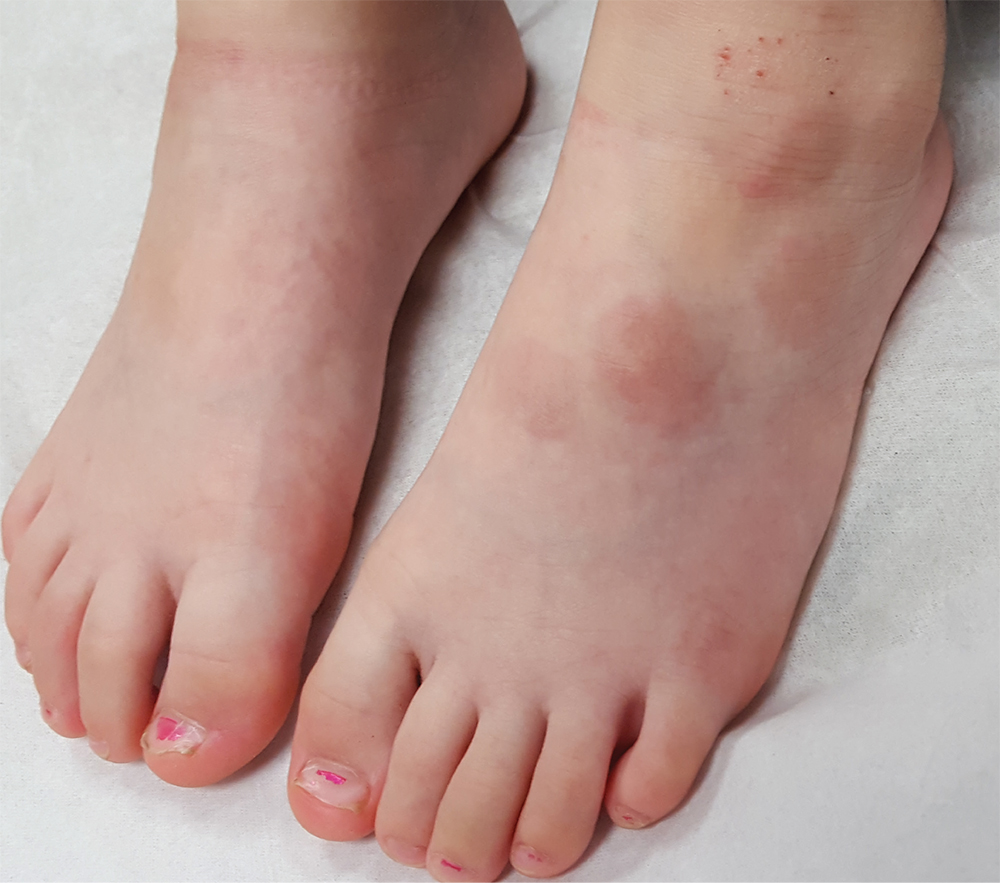
Two years ago, asymptomatic lesions appeared on this 17-year-old girl’s left foot. Diagnosed as “ringworm” by primary care, the spots have not responded to topical econazole or oral terbinafine and have instead grown and darkened.
Five intradermal plaques are found on the dorsal aspect of the patient’s left foot. Round and reddish brown, they measure 3 to 4 cm each. There is modest induration on palpation, but no increased warmth or tenderness. None of the lesions have an epidermal component (ie, scaling, vesiculation); in short, there is nothing to scrape for KOH examination.
The patient has no lesions elsewhere and denies any other health problems. Her mother, who is present, is certain that no one else in the family has had similar lesions. There are no pets in the house.

Budesonide fails to cut deaths in preemies
The administration of inhaled budesonide to extremely preterm infants did not increase the risk of neurodevelopmental disability, but did increase mortality, in a study by Dirk Bassler, MD, of the University of Zürich and his associates.
An older study led by Dr. Bassler and published in the New England Journal of Medicine showed that inhaled budesonide significantly reduced the incidence of bronchopulmonary dysplasia, which has been linked to higher mortality and chronic respiratory and cardiovascular impairment (N Engl J Med. 2015;373:1497-506).
Systemic glucocorticoids have been linked to greater risk of neurodevelopmental disability, but only a few studies have examined the effect of inhaled glucocorticoids, such as budesonide, in preterm infants. These studies, including the earlier one by Dr. Bassler and his colleagues, were either small, covered a short period of time or involved late administering of the drug.
In the two studies by Dr. Bassler and his colleagues, 863 preterm infants between 23 weeks’ and just under 28 weeks’ gestation who required any form of positive-pressure respiratory support were randomized to receive inhaled budesonide (two puffs, 200 mcg per puff) or placebo every 12 hours. They began within 24 hours of birth and continued for the first 14 days of life. Following that, patients received 1 puff every 12 hours until they no longer required supplemental oxygen and positive-pressure support, or reached a postmenstrual age of 32 weeks.
The treatment resulted in a significant reduction in bronchopulmonary dysplasia at a postmenstrual age of 36 weeks (28.2% in the budesonide group vs. 37.4%; P = .01), in the older study.
In the new study, which was also published in the New England Journal of Medicine, Dr. Bassler and his associates found higher mortality (19.9% vs. 14.5%; relative risk, 1.37; 95% confidence interval, 1.01-1.86; P = .04) in the group of patients who had received inhaled budesonide. Additionally, at a corrected age of 18-22 months, surviving infants who received inhaled budesonide had a similar risk of neurodevelopmental disability as those patients who took the placebo.
Broadly speaking, 48.1% of infants who received budesonide had a neurodevelopmental disability, compared with 51.4% of infants who received placebo (RR adjusted for gestational age, 0.93; 95% CI, 0.80-1.09; P = .40). The two groups also had no statistically significant differences in their frequencies of cerebral palsy, blindness, hearing loss, or cognitive delay.
“There was no significant difference between the groups in adverse long-term outcomes in our study. However, the fact that fewer infants died in the placebo group than in the budesonide group complicates the interpretation of the treatment of budesonide,” the researchers wrote.
Supported by a grant from the European Union and by Chiesi Farmaceutici. Disclosure forms provided by the authors are available with the full text of this article at NEJM.org.
SOURCE: N Engl J Med. 2018;378:148-57.
This is an important study regarding bronchopulmonary dysplasia prevention. The study suggests starting budesonide within 24 hours of life resulted in a lower rate of bronchopulmonary dysplasia than placebo but fewer infants died in the placebo group. A bigger question for me is “what is the evidence for starting inhaled steroids prior to neonatal intensive care unit discharge?” Pediatric pulmonologists would like to know if it decreases subsequent respiratory-related ER visits and readmissions.

This is an important study regarding bronchopulmonary dysplasia prevention. The study suggests starting budesonide within 24 hours of life resulted in a lower rate of bronchopulmonary dysplasia than placebo but fewer infants died in the placebo group. A bigger question for me is “what is the evidence for starting inhaled steroids prior to neonatal intensive care unit discharge?” Pediatric pulmonologists would like to know if it decreases subsequent respiratory-related ER visits and readmissions.
This is an important study regarding bronchopulmonary dysplasia prevention. The study suggests starting budesonide within 24 hours of life resulted in a lower rate of bronchopulmonary dysplasia than placebo but fewer infants died in the placebo group. A bigger question for me is “what is the evidence for starting inhaled steroids prior to neonatal intensive care unit discharge?” Pediatric pulmonologists would like to know if it decreases subsequent respiratory-related ER visits and readmissions.
The administration of inhaled budesonide to extremely preterm infants did not increase the risk of neurodevelopmental disability, but did increase mortality, in a study by Dirk Bassler, MD, of the University of Zürich and his associates.
An older study led by Dr. Bassler and published in the New England Journal of Medicine showed that inhaled budesonide significantly reduced the incidence of bronchopulmonary dysplasia, which has been linked to higher mortality and chronic respiratory and cardiovascular impairment (N Engl J Med. 2015;373:1497-506).
Systemic glucocorticoids have been linked to greater risk of neurodevelopmental disability, but only a few studies have examined the effect of inhaled glucocorticoids, such as budesonide, in preterm infants. These studies, including the earlier one by Dr. Bassler and his colleagues, were either small, covered a short period of time or involved late administering of the drug.
In the two studies by Dr. Bassler and his colleagues, 863 preterm infants between 23 weeks’ and just under 28 weeks’ gestation who required any form of positive-pressure respiratory support were randomized to receive inhaled budesonide (two puffs, 200 mcg per puff) or placebo every 12 hours. They began within 24 hours of birth and continued for the first 14 days of life. Following that, patients received 1 puff every 12 hours until they no longer required supplemental oxygen and positive-pressure support, or reached a postmenstrual age of 32 weeks.
The treatment resulted in a significant reduction in bronchopulmonary dysplasia at a postmenstrual age of 36 weeks (28.2% in the budesonide group vs. 37.4%; P = .01), in the older study.
In the new study, which was also published in the New England Journal of Medicine, Dr. Bassler and his associates found higher mortality (19.9% vs. 14.5%; relative risk, 1.37; 95% confidence interval, 1.01-1.86; P = .04) in the group of patients who had received inhaled budesonide. Additionally, at a corrected age of 18-22 months, surviving infants who received inhaled budesonide had a similar risk of neurodevelopmental disability as those patients who took the placebo.
Broadly speaking, 48.1% of infants who received budesonide had a neurodevelopmental disability, compared with 51.4% of infants who received placebo (RR adjusted for gestational age, 0.93; 95% CI, 0.80-1.09; P = .40). The two groups also had no statistically significant differences in their frequencies of cerebral palsy, blindness, hearing loss, or cognitive delay.
“There was no significant difference between the groups in adverse long-term outcomes in our study. However, the fact that fewer infants died in the placebo group than in the budesonide group complicates the interpretation of the treatment of budesonide,” the researchers wrote.
Supported by a grant from the European Union and by Chiesi Farmaceutici. Disclosure forms provided by the authors are available with the full text of this article at NEJM.org.
SOURCE: N Engl J Med. 2018;378:148-57.
The administration of inhaled budesonide to extremely preterm infants did not increase the risk of neurodevelopmental disability, but did increase mortality, in a study by Dirk Bassler, MD, of the University of Zürich and his associates.
An older study led by Dr. Bassler and published in the New England Journal of Medicine showed that inhaled budesonide significantly reduced the incidence of bronchopulmonary dysplasia, which has been linked to higher mortality and chronic respiratory and cardiovascular impairment (N Engl J Med. 2015;373:1497-506).
Systemic glucocorticoids have been linked to greater risk of neurodevelopmental disability, but only a few studies have examined the effect of inhaled glucocorticoids, such as budesonide, in preterm infants. These studies, including the earlier one by Dr. Bassler and his colleagues, were either small, covered a short period of time or involved late administering of the drug.
In the two studies by Dr. Bassler and his colleagues, 863 preterm infants between 23 weeks’ and just under 28 weeks’ gestation who required any form of positive-pressure respiratory support were randomized to receive inhaled budesonide (two puffs, 200 mcg per puff) or placebo every 12 hours. They began within 24 hours of birth and continued for the first 14 days of life. Following that, patients received 1 puff every 12 hours until they no longer required supplemental oxygen and positive-pressure support, or reached a postmenstrual age of 32 weeks.
The treatment resulted in a significant reduction in bronchopulmonary dysplasia at a postmenstrual age of 36 weeks (28.2% in the budesonide group vs. 37.4%; P = .01), in the older study.
In the new study, which was also published in the New England Journal of Medicine, Dr. Bassler and his associates found higher mortality (19.9% vs. 14.5%; relative risk, 1.37; 95% confidence interval, 1.01-1.86; P = .04) in the group of patients who had received inhaled budesonide. Additionally, at a corrected age of 18-22 months, surviving infants who received inhaled budesonide had a similar risk of neurodevelopmental disability as those patients who took the placebo.
Broadly speaking, 48.1% of infants who received budesonide had a neurodevelopmental disability, compared with 51.4% of infants who received placebo (RR adjusted for gestational age, 0.93; 95% CI, 0.80-1.09; P = .40). The two groups also had no statistically significant differences in their frequencies of cerebral palsy, blindness, hearing loss, or cognitive delay.
“There was no significant difference between the groups in adverse long-term outcomes in our study. However, the fact that fewer infants died in the placebo group than in the budesonide group complicates the interpretation of the treatment of budesonide,” the researchers wrote.
Supported by a grant from the European Union and by Chiesi Farmaceutici. Disclosure forms provided by the authors are available with the full text of this article at NEJM.org.
SOURCE: N Engl J Med. 2018;378:148-57.
FROM NEW ENGLAND JOURNAL OF MEDICINE
Key clinical point:
Major finding: Nearly 20% of infants in the budesonide group died, compared with 14.5% of the placebo group.
Data source: Randomized, controlled trial of 863 extremely preterm infants.
Disclosures: Supported by a grant from the European Union and by Chiesi Farmaceutici. Disclosure forms provided by the authors are available with the full text of this article at NEJM.org.
Source: N Engl J Med. 2018;378:148-57.
Non-PCOS IVF: Two trials show no benefit with frozen embryo transfer
Contrary to findings in women with polycystic ovary syndrome (PCOS), the transfer of frozen vs. fresh embryos does not lead to significantly higher live birth or ongoing pregnancy rates in women with non-PCOS infertility who undergo in vitro fertilization, according to findings from two randomized trials.
Frozen embryo transfer did, however, result in a lower risk of ovarian hyperstimulation syndrome in one of the trials. In that multicenter study, 2,157 women undergoing their first in vitro fertilization (IVF) cycle were randomized to undergo either fresh embryo transfer or embryo cryopreservation followed by frozen embryo transfer, with up to two cleavage-stage embryos transferred, Yuhua Shi, MD, of Shandong University, Jinan, China, and colleagues reported Jan. 11 in the New England Journal of Medicine. The live birth rate, defined as delivery of a viable neonate at 28 weeks of gestation or greater, was 50.2% and 48.7% in the fresh embryo and frozen embryo groups, respectively (relative risk, 0.97). The rate of ovarian hyperstimulation syndrome was 2.0% and 0.6% in the groups, respectively (RR, 0.32), the investigators reported.
Of note, the rates of implantation, clinical pregnancy, overall pregnancy loss, and ongoing pregnancy did not differ between the groups, but in a post hoc analysis, the rate of second-trimester pregnancy loss was lower with frozen embryo transfer (4.7% vs. 1.5%; RR, 0.33). However, the authors urged caution regarding the latter finding because of the post hoc setting and because the overall rates of pregnancy loss did not differ between the groups.
In the second study, 782 women without PCOS who were undergoing a first or second IVF cycle at a single center were randomized to receive either fresh or frozen embryo transfer with up to two embryos transferred.
After the first complete cycle, the ongoing pregnancy rate – the primary outcome in the study, defined as pregnancy with a detectable heart rate after 12 weeks of gestation – was 34.5% in the fresh embryo group and 36.3% in the frozen embryo group (RR in frozen embryo group, 1.05), Lan N. Vuong, MD, of My Duc Hospital, Ho Chi Minh City, Vietnam, and colleagues reported.
The live birth rates after the first transfer were 31.5% and 33.8%, respectively (risk ratio, 1.07). There also were no differences in rates of implantation or clinical pregnancy, or in rates of ectopic pregnancy, miscarriage, multiple pregnancy, ovarian hyperstimulation syndrome in the primary cycle, or pregnancy complications.
The findings of both studies contrast with those from prior studies showing a higher live-birth rate among anovulatory women with PCOS who undergo frozen embryo transfer, compared with those who undergo fresh embryo transfer.
For example, Dr. Shi and associates found in a prior study of women with PCOS that the live birth rate was higher with frozen embryo transfer (42% vs. 49%), and they concluded that this was largely explained by a lower rate of pregnancy loss (N Engl J Med. 2016;375:523-33).
“However, patients with the polycystic ovary syndrome have a different reproductive, metabolic milieu than do other women with infertility; it is characterized by hyperandrogenism and insulin resistance, and these patients typically have a greater ovarian response to gonadotropin stimulation than do ovulatory women undergoing IVF,” they wrote in the current paper.
The findings of the current studies suggest the benefits of frozen vs. fresh embryo transfer, with respect to the primary outcome measures in the studies, do not apply in women with non-PCOS infertility.
Dr. Shi and colleagues speculated that “the difference is due to the unfavorable uterine environment after fresh embryo transfer in women with the polycystic ovary syndrome, as shown by a much lower rate of live birth overall in the previous trial than in the present trial.”
The “altered hormonal milieu” in women with PCOS, along with a need for ovarian stimulation cycle initiation with oral contraceptives or progestin may adversely affect endometrial receptivity after fresh embryo transfer, they explained.
Dr. Vuong and colleagues noted that their findings are not necessarily inconsistent with those reported in women with PCOS, because “the 95% confidence intervals around the risk ratios for live birth that were associated with frozen embryo transfer in our trial overlap with the 95% confidence intervals in that report,” adding that another contributing factor to the different results might be the timing of freezing, which differed in the studies.
They also said that a small difference in the time to conception, which was 1.4 months shorter in the fresh embryo group, could be “a relevant factor for some patients in terms of the overall treatment duration and both the direct and indirect costs of IVF.”
The study by Dr. Shi and associates was supported by grants from the National Key Research and Development Program of China, the Major Program of the National Natural Science Foundation of China, and the State Key Program of the National Natural Science Foundation of China. Dr. Shi reported having no conflicts of interest. One coauthor, Richard S. Legro, MD, reported receiving consulting fees from Ogeda, KinDex Pharmaceuticals, Fractyl Laboratories, Bayer, and AbbVie, and receiving grant support from Ferring Pharmaceuticals. The study by Dr. Vuong and associates was supported by My Duc Hospital. Author disclosures for that study are available with the full text of the article at NEJM.org.
SOURCES: Shi Y et al. N Engl J Med. 2018;378(2):126-36; Vuong N et al. N Engl J Med. 2018;378(2):137-47.
Contrary to findings in women with polycystic ovary syndrome (PCOS), the transfer of frozen vs. fresh embryos does not lead to significantly higher live birth or ongoing pregnancy rates in women with non-PCOS infertility who undergo in vitro fertilization, according to findings from two randomized trials.
Frozen embryo transfer did, however, result in a lower risk of ovarian hyperstimulation syndrome in one of the trials. In that multicenter study, 2,157 women undergoing their first in vitro fertilization (IVF) cycle were randomized to undergo either fresh embryo transfer or embryo cryopreservation followed by frozen embryo transfer, with up to two cleavage-stage embryos transferred, Yuhua Shi, MD, of Shandong University, Jinan, China, and colleagues reported Jan. 11 in the New England Journal of Medicine. The live birth rate, defined as delivery of a viable neonate at 28 weeks of gestation or greater, was 50.2% and 48.7% in the fresh embryo and frozen embryo groups, respectively (relative risk, 0.97). The rate of ovarian hyperstimulation syndrome was 2.0% and 0.6% in the groups, respectively (RR, 0.32), the investigators reported.
Of note, the rates of implantation, clinical pregnancy, overall pregnancy loss, and ongoing pregnancy did not differ between the groups, but in a post hoc analysis, the rate of second-trimester pregnancy loss was lower with frozen embryo transfer (4.7% vs. 1.5%; RR, 0.33). However, the authors urged caution regarding the latter finding because of the post hoc setting and because the overall rates of pregnancy loss did not differ between the groups.
In the second study, 782 women without PCOS who were undergoing a first or second IVF cycle at a single center were randomized to receive either fresh or frozen embryo transfer with up to two embryos transferred.
After the first complete cycle, the ongoing pregnancy rate – the primary outcome in the study, defined as pregnancy with a detectable heart rate after 12 weeks of gestation – was 34.5% in the fresh embryo group and 36.3% in the frozen embryo group (RR in frozen embryo group, 1.05), Lan N. Vuong, MD, of My Duc Hospital, Ho Chi Minh City, Vietnam, and colleagues reported.
The live birth rates after the first transfer were 31.5% and 33.8%, respectively (risk ratio, 1.07). There also were no differences in rates of implantation or clinical pregnancy, or in rates of ectopic pregnancy, miscarriage, multiple pregnancy, ovarian hyperstimulation syndrome in the primary cycle, or pregnancy complications.
The findings of both studies contrast with those from prior studies showing a higher live-birth rate among anovulatory women with PCOS who undergo frozen embryo transfer, compared with those who undergo fresh embryo transfer.
For example, Dr. Shi and associates found in a prior study of women with PCOS that the live birth rate was higher with frozen embryo transfer (42% vs. 49%), and they concluded that this was largely explained by a lower rate of pregnancy loss (N Engl J Med. 2016;375:523-33).
“However, patients with the polycystic ovary syndrome have a different reproductive, metabolic milieu than do other women with infertility; it is characterized by hyperandrogenism and insulin resistance, and these patients typically have a greater ovarian response to gonadotropin stimulation than do ovulatory women undergoing IVF,” they wrote in the current paper.
The findings of the current studies suggest the benefits of frozen vs. fresh embryo transfer, with respect to the primary outcome measures in the studies, do not apply in women with non-PCOS infertility.
Dr. Shi and colleagues speculated that “the difference is due to the unfavorable uterine environment after fresh embryo transfer in women with the polycystic ovary syndrome, as shown by a much lower rate of live birth overall in the previous trial than in the present trial.”
The “altered hormonal milieu” in women with PCOS, along with a need for ovarian stimulation cycle initiation with oral contraceptives or progestin may adversely affect endometrial receptivity after fresh embryo transfer, they explained.
Dr. Vuong and colleagues noted that their findings are not necessarily inconsistent with those reported in women with PCOS, because “the 95% confidence intervals around the risk ratios for live birth that were associated with frozen embryo transfer in our trial overlap with the 95% confidence intervals in that report,” adding that another contributing factor to the different results might be the timing of freezing, which differed in the studies.
They also said that a small difference in the time to conception, which was 1.4 months shorter in the fresh embryo group, could be “a relevant factor for some patients in terms of the overall treatment duration and both the direct and indirect costs of IVF.”
The study by Dr. Shi and associates was supported by grants from the National Key Research and Development Program of China, the Major Program of the National Natural Science Foundation of China, and the State Key Program of the National Natural Science Foundation of China. Dr. Shi reported having no conflicts of interest. One coauthor, Richard S. Legro, MD, reported receiving consulting fees from Ogeda, KinDex Pharmaceuticals, Fractyl Laboratories, Bayer, and AbbVie, and receiving grant support from Ferring Pharmaceuticals. The study by Dr. Vuong and associates was supported by My Duc Hospital. Author disclosures for that study are available with the full text of the article at NEJM.org.
SOURCES: Shi Y et al. N Engl J Med. 2018;378(2):126-36; Vuong N et al. N Engl J Med. 2018;378(2):137-47.
Contrary to findings in women with polycystic ovary syndrome (PCOS), the transfer of frozen vs. fresh embryos does not lead to significantly higher live birth or ongoing pregnancy rates in women with non-PCOS infertility who undergo in vitro fertilization, according to findings from two randomized trials.
Frozen embryo transfer did, however, result in a lower risk of ovarian hyperstimulation syndrome in one of the trials. In that multicenter study, 2,157 women undergoing their first in vitro fertilization (IVF) cycle were randomized to undergo either fresh embryo transfer or embryo cryopreservation followed by frozen embryo transfer, with up to two cleavage-stage embryos transferred, Yuhua Shi, MD, of Shandong University, Jinan, China, and colleagues reported Jan. 11 in the New England Journal of Medicine. The live birth rate, defined as delivery of a viable neonate at 28 weeks of gestation or greater, was 50.2% and 48.7% in the fresh embryo and frozen embryo groups, respectively (relative risk, 0.97). The rate of ovarian hyperstimulation syndrome was 2.0% and 0.6% in the groups, respectively (RR, 0.32), the investigators reported.
Of note, the rates of implantation, clinical pregnancy, overall pregnancy loss, and ongoing pregnancy did not differ between the groups, but in a post hoc analysis, the rate of second-trimester pregnancy loss was lower with frozen embryo transfer (4.7% vs. 1.5%; RR, 0.33). However, the authors urged caution regarding the latter finding because of the post hoc setting and because the overall rates of pregnancy loss did not differ between the groups.
In the second study, 782 women without PCOS who were undergoing a first or second IVF cycle at a single center were randomized to receive either fresh or frozen embryo transfer with up to two embryos transferred.
After the first complete cycle, the ongoing pregnancy rate – the primary outcome in the study, defined as pregnancy with a detectable heart rate after 12 weeks of gestation – was 34.5% in the fresh embryo group and 36.3% in the frozen embryo group (RR in frozen embryo group, 1.05), Lan N. Vuong, MD, of My Duc Hospital, Ho Chi Minh City, Vietnam, and colleagues reported.
The live birth rates after the first transfer were 31.5% and 33.8%, respectively (risk ratio, 1.07). There also were no differences in rates of implantation or clinical pregnancy, or in rates of ectopic pregnancy, miscarriage, multiple pregnancy, ovarian hyperstimulation syndrome in the primary cycle, or pregnancy complications.
The findings of both studies contrast with those from prior studies showing a higher live-birth rate among anovulatory women with PCOS who undergo frozen embryo transfer, compared with those who undergo fresh embryo transfer.
For example, Dr. Shi and associates found in a prior study of women with PCOS that the live birth rate was higher with frozen embryo transfer (42% vs. 49%), and they concluded that this was largely explained by a lower rate of pregnancy loss (N Engl J Med. 2016;375:523-33).
“However, patients with the polycystic ovary syndrome have a different reproductive, metabolic milieu than do other women with infertility; it is characterized by hyperandrogenism and insulin resistance, and these patients typically have a greater ovarian response to gonadotropin stimulation than do ovulatory women undergoing IVF,” they wrote in the current paper.
The findings of the current studies suggest the benefits of frozen vs. fresh embryo transfer, with respect to the primary outcome measures in the studies, do not apply in women with non-PCOS infertility.
Dr. Shi and colleagues speculated that “the difference is due to the unfavorable uterine environment after fresh embryo transfer in women with the polycystic ovary syndrome, as shown by a much lower rate of live birth overall in the previous trial than in the present trial.”
The “altered hormonal milieu” in women with PCOS, along with a need for ovarian stimulation cycle initiation with oral contraceptives or progestin may adversely affect endometrial receptivity after fresh embryo transfer, they explained.
Dr. Vuong and colleagues noted that their findings are not necessarily inconsistent with those reported in women with PCOS, because “the 95% confidence intervals around the risk ratios for live birth that were associated with frozen embryo transfer in our trial overlap with the 95% confidence intervals in that report,” adding that another contributing factor to the different results might be the timing of freezing, which differed in the studies.
They also said that a small difference in the time to conception, which was 1.4 months shorter in the fresh embryo group, could be “a relevant factor for some patients in terms of the overall treatment duration and both the direct and indirect costs of IVF.”
The study by Dr. Shi and associates was supported by grants from the National Key Research and Development Program of China, the Major Program of the National Natural Science Foundation of China, and the State Key Program of the National Natural Science Foundation of China. Dr. Shi reported having no conflicts of interest. One coauthor, Richard S. Legro, MD, reported receiving consulting fees from Ogeda, KinDex Pharmaceuticals, Fractyl Laboratories, Bayer, and AbbVie, and receiving grant support from Ferring Pharmaceuticals. The study by Dr. Vuong and associates was supported by My Duc Hospital. Author disclosures for that study are available with the full text of the article at NEJM.org.
SOURCES: Shi Y et al. N Engl J Med. 2018;378(2):126-36; Vuong N et al. N Engl J Med. 2018;378(2):137-47.
FROM NEW ENGLAND JOURNAL OF MEDICINE
Key clinical point:
Major finding: The live birth rate was similar with fresh vs. frozen transfer (50.2% and 48.7% in one study; relative risk, 0.97).
Study details: Randomized trials including 2,157 and 782 women, respectively.
Disclosures: The study by Shi et al. was supported by grants from the National Key Research and Development Program of China, the Major Program of the National Natural Science Foundation of China, and the State Key Program of the National Natural Science Foundation of China. Dr. Shi reported having no conflicts of interest. One coauthor, Richard S. Legro, MD, reported receiving consulting fees from Ogeda, KinDex Pharmaceuticals, Fractyl Laboratories, Bayer, and AbbVie, and receiving grant support from Ferring Pharmaceuticals. The study by Vuong et al. was supported by My Duc Hospital. Author disclosures for that study are available with the full text of the article at NEJM.org.
Sources: Shi Y et al. N Engl J Med. 2018;378(2):126-36; Vuong N et al. N Engl J Med. 2018;378(2):137-47.
CMS launches advanced APM focused on bundled payments
The Centers for Medicare & Medicaid Services is launching a new voluntary bundled payment demonstration project that for the first time will qualify as an advanced alternative payment model under the Quality Payment Program.
The Bundled Payments for Care Improvement Advanced (BPCI Advanced) “builds on the earlier success of bundled payment models and is an important step in the move away from fee-for-service and towards paying for value,” CMS Administrator Seema Verma said in a statement. “Under this model, providers will have an incentive to deliver high-quality care.”
Both categories of participants may enter into agreements with individual physicians and nonphysician providers to furnish care under the bundled payment model.
It will cover 29 in-patient episodes and three outpatient clinical episodes. Payment will be tied to performance on quality measures.
The 29 in-patient clinical episodes cover a range of conditions, including liver disorders (excluding malignancy, cirrhosis, and alcoholic hepatitis); various cardiac conditions; chronic obstructive pulmonary disease, bronchitis, and asthma; spinal fusion; joint replacements; femur, hip, or pelvis fractures; gastrointestinal hemorrhage or obstruction; renal failure; sepsis; simple pneumonia and respiratory infections; stroke; and urinary tract infections.
The three outpatient clinical episodes include percutaneous coronary intervention, cardiac defibrillator implantation, and back and neck surgery except spinal fusion.
Seven quality measures will be tracked as part of the payment. For all clinical episodes, measurement of all-cause hospital readmissions and advance care plan will be required.
The other five will be applied to the payment when appropriate, as follows:
- Perioperative care: selection of prophylactic antibiotic: first- or second-generation cephalosporin.
- Hospital-level risk-standardized complication rate following elective primary total hip arthroplasty and/or total knee arthroplasty.
- Hospital 30-day, all-cause, risk-standardized mortality rate following coronary artery bypass graft surgery.
- Excess days in acute care after hospitalization for acute myocardial infarction; and AHRQ patient safety indicators.
CMS has scheduled an open-door forum for those interested in participating in BPCI Advanced on Jan. 30.
Applications for participation will be accepted through March 12.

The Centers for Medicare & Medicaid Services is launching a new voluntary bundled payment demonstration project that for the first time will qualify as an advanced alternative payment model under the Quality Payment Program.
The Bundled Payments for Care Improvement Advanced (BPCI Advanced) “builds on the earlier success of bundled payment models and is an important step in the move away from fee-for-service and towards paying for value,” CMS Administrator Seema Verma said in a statement. “Under this model, providers will have an incentive to deliver high-quality care.”
Both categories of participants may enter into agreements with individual physicians and nonphysician providers to furnish care under the bundled payment model.
It will cover 29 in-patient episodes and three outpatient clinical episodes. Payment will be tied to performance on quality measures.
The 29 in-patient clinical episodes cover a range of conditions, including liver disorders (excluding malignancy, cirrhosis, and alcoholic hepatitis); various cardiac conditions; chronic obstructive pulmonary disease, bronchitis, and asthma; spinal fusion; joint replacements; femur, hip, or pelvis fractures; gastrointestinal hemorrhage or obstruction; renal failure; sepsis; simple pneumonia and respiratory infections; stroke; and urinary tract infections.
The three outpatient clinical episodes include percutaneous coronary intervention, cardiac defibrillator implantation, and back and neck surgery except spinal fusion.
Seven quality measures will be tracked as part of the payment. For all clinical episodes, measurement of all-cause hospital readmissions and advance care plan will be required.
The other five will be applied to the payment when appropriate, as follows:
- Perioperative care: selection of prophylactic antibiotic: first- or second-generation cephalosporin.
- Hospital-level risk-standardized complication rate following elective primary total hip arthroplasty and/or total knee arthroplasty.
- Hospital 30-day, all-cause, risk-standardized mortality rate following coronary artery bypass graft surgery.
- Excess days in acute care after hospitalization for acute myocardial infarction; and AHRQ patient safety indicators.
CMS has scheduled an open-door forum for those interested in participating in BPCI Advanced on Jan. 30.
Applications for participation will be accepted through March 12.
The Centers for Medicare & Medicaid Services is launching a new voluntary bundled payment demonstration project that for the first time will qualify as an advanced alternative payment model under the Quality Payment Program.
The Bundled Payments for Care Improvement Advanced (BPCI Advanced) “builds on the earlier success of bundled payment models and is an important step in the move away from fee-for-service and towards paying for value,” CMS Administrator Seema Verma said in a statement. “Under this model, providers will have an incentive to deliver high-quality care.”
Both categories of participants may enter into agreements with individual physicians and nonphysician providers to furnish care under the bundled payment model.
It will cover 29 in-patient episodes and three outpatient clinical episodes. Payment will be tied to performance on quality measures.
The 29 in-patient clinical episodes cover a range of conditions, including liver disorders (excluding malignancy, cirrhosis, and alcoholic hepatitis); various cardiac conditions; chronic obstructive pulmonary disease, bronchitis, and asthma; spinal fusion; joint replacements; femur, hip, or pelvis fractures; gastrointestinal hemorrhage or obstruction; renal failure; sepsis; simple pneumonia and respiratory infections; stroke; and urinary tract infections.
The three outpatient clinical episodes include percutaneous coronary intervention, cardiac defibrillator implantation, and back and neck surgery except spinal fusion.
Seven quality measures will be tracked as part of the payment. For all clinical episodes, measurement of all-cause hospital readmissions and advance care plan will be required.
The other five will be applied to the payment when appropriate, as follows:
- Perioperative care: selection of prophylactic antibiotic: first- or second-generation cephalosporin.
- Hospital-level risk-standardized complication rate following elective primary total hip arthroplasty and/or total knee arthroplasty.
- Hospital 30-day, all-cause, risk-standardized mortality rate following coronary artery bypass graft surgery.
- Excess days in acute care after hospitalization for acute myocardial infarction; and AHRQ patient safety indicators.
CMS has scheduled an open-door forum for those interested in participating in BPCI Advanced on Jan. 30.
Applications for participation will be accepted through March 12.
Pain after breast surgery may not be caused by the operation
, according to a study of almost 2,000 women recruited from the Mastectomy Reconstructive Outcomes Consortium (MROC).
In the February issue of The Breast, investigators from the University of Michigan, Ann Arbor and Memorial Sloan Kettering Cancer Center, New York, wrote that almost half of the study subjects had some level of pain before their operations and that, at 2 years afterward, their pain had increased but not in a clinically meaningful way. This finding is consistent with earlier research, which investigators noted found that “one-fourth to one-half of women who undergo postmastectomy report persistent pain months and years after surgery.”
“Average clinical pain severity was strikingly similar for preoperative and postoperative assessments,” said lead author Randy S. Roth, PhD, of the University of Michigan, and his coauthors. “Postoperative levels of pain, acute postoperative pain and (marginally) level of depression held consistent relationship at 2-year follow-up with all outcome measures.”
The prospective, multicenter cohort study of 1,996 women was undertaken over 5 years. Most patients had immediate (92.7%) and bilateral (53.8%) reconstruction; 47.6% had sentinel lymph node biopsy and 25.9% had axillary lymph node dissection. Most had no adjuvant therapy: 70.3% received no radiation and 52.7% no chemotherapy.
At 2 years, the Numerical Pain Rating Scale (NPRS) measured what Dr. Roth and his coauthors called a “significant increase in pain intensity” – from an average rating of 1.1 to 1.2, an increase of 9%. However, the absolute change and standard deviation (1.7 for both intervals) “suggest that this was not a clinically meaningful change.” The researchers also recorded more complaints of bodily discomfort after 2 years, “but the statistical parameters again indicate little clinically meaningful differences from preoperative status.”
Pain ratings measured with the McGill Pain Questionnaire showed a significant decrease in the MPQ affective pain rating, from 1.6 preoperatively to 0.8 at 2 years (P less than .001), and virtually no change in the MPQ sensory rating, from 3.2 to 3.1.
The researchers drew some conclusions about demographic profiles and pain after breast reconstruction. Older age was associated with more severe pain on NPRS, and higher body mass index was linked with chronic postsurgical pain for the MPQ sensory rating, NPRS score, and body discomfort scores.
Treatment characteristics associated with chronic postsurgical pain (CPSP) include radiation therapy during or after reconstruction and chemotherapy before reconstruction. Chemotherapy during or after reconstruction was associated with higher MPQ affective rating scores at 2 years (P = .011), as was chemotherapy both before and during or after reconstruction (P = .001). The latter also was linked to higher NPRS scores (P = .0015).
The type of surgery also was a factor in CPSP, the researchers wrote. Both MPQ sensory and affective ratings were higher in women who had free transverse flap surgery, or deep or superficial inferior epigastric perforator surgery than in women who had tissue expander/implant reconstruction. Lymph node status and timing of surgery had no impact on chronic pain.
One noteworthy finding, Dr. Roth and his coauthors wrote, is that “careful examination of our data suggests that CPSP following breast reconstruction may be of less clinical concern as a direct consequence of breast reconstruction than suggested by previous investigations of major surgery, including mastectomy and breast reconstruction.” Future studies of chronic postsurgical pain in breast reconstruction “will require greater methodological rigor” to reach more sound conclusions to use in patient counseling.
Dr. Roth and his coauthors had no financial relationships to disclose.
SOURCE: Roth RS et al. Breast 2018;37:119-25.
, according to a study of almost 2,000 women recruited from the Mastectomy Reconstructive Outcomes Consortium (MROC).
In the February issue of The Breast, investigators from the University of Michigan, Ann Arbor and Memorial Sloan Kettering Cancer Center, New York, wrote that almost half of the study subjects had some level of pain before their operations and that, at 2 years afterward, their pain had increased but not in a clinically meaningful way. This finding is consistent with earlier research, which investigators noted found that “one-fourth to one-half of women who undergo postmastectomy report persistent pain months and years after surgery.”
“Average clinical pain severity was strikingly similar for preoperative and postoperative assessments,” said lead author Randy S. Roth, PhD, of the University of Michigan, and his coauthors. “Postoperative levels of pain, acute postoperative pain and (marginally) level of depression held consistent relationship at 2-year follow-up with all outcome measures.”
The prospective, multicenter cohort study of 1,996 women was undertaken over 5 years. Most patients had immediate (92.7%) and bilateral (53.8%) reconstruction; 47.6% had sentinel lymph node biopsy and 25.9% had axillary lymph node dissection. Most had no adjuvant therapy: 70.3% received no radiation and 52.7% no chemotherapy.
At 2 years, the Numerical Pain Rating Scale (NPRS) measured what Dr. Roth and his coauthors called a “significant increase in pain intensity” – from an average rating of 1.1 to 1.2, an increase of 9%. However, the absolute change and standard deviation (1.7 for both intervals) “suggest that this was not a clinically meaningful change.” The researchers also recorded more complaints of bodily discomfort after 2 years, “but the statistical parameters again indicate little clinically meaningful differences from preoperative status.”
Pain ratings measured with the McGill Pain Questionnaire showed a significant decrease in the MPQ affective pain rating, from 1.6 preoperatively to 0.8 at 2 years (P less than .001), and virtually no change in the MPQ sensory rating, from 3.2 to 3.1.
The researchers drew some conclusions about demographic profiles and pain after breast reconstruction. Older age was associated with more severe pain on NPRS, and higher body mass index was linked with chronic postsurgical pain for the MPQ sensory rating, NPRS score, and body discomfort scores.
Treatment characteristics associated with chronic postsurgical pain (CPSP) include radiation therapy during or after reconstruction and chemotherapy before reconstruction. Chemotherapy during or after reconstruction was associated with higher MPQ affective rating scores at 2 years (P = .011), as was chemotherapy both before and during or after reconstruction (P = .001). The latter also was linked to higher NPRS scores (P = .0015).
The type of surgery also was a factor in CPSP, the researchers wrote. Both MPQ sensory and affective ratings were higher in women who had free transverse flap surgery, or deep or superficial inferior epigastric perforator surgery than in women who had tissue expander/implant reconstruction. Lymph node status and timing of surgery had no impact on chronic pain.
One noteworthy finding, Dr. Roth and his coauthors wrote, is that “careful examination of our data suggests that CPSP following breast reconstruction may be of less clinical concern as a direct consequence of breast reconstruction than suggested by previous investigations of major surgery, including mastectomy and breast reconstruction.” Future studies of chronic postsurgical pain in breast reconstruction “will require greater methodological rigor” to reach more sound conclusions to use in patient counseling.
Dr. Roth and his coauthors had no financial relationships to disclose.
SOURCE: Roth RS et al. Breast 2018;37:119-25.
, according to a study of almost 2,000 women recruited from the Mastectomy Reconstructive Outcomes Consortium (MROC).
In the February issue of The Breast, investigators from the University of Michigan, Ann Arbor and Memorial Sloan Kettering Cancer Center, New York, wrote that almost half of the study subjects had some level of pain before their operations and that, at 2 years afterward, their pain had increased but not in a clinically meaningful way. This finding is consistent with earlier research, which investigators noted found that “one-fourth to one-half of women who undergo postmastectomy report persistent pain months and years after surgery.”
“Average clinical pain severity was strikingly similar for preoperative and postoperative assessments,” said lead author Randy S. Roth, PhD, of the University of Michigan, and his coauthors. “Postoperative levels of pain, acute postoperative pain and (marginally) level of depression held consistent relationship at 2-year follow-up with all outcome measures.”
The prospective, multicenter cohort study of 1,996 women was undertaken over 5 years. Most patients had immediate (92.7%) and bilateral (53.8%) reconstruction; 47.6% had sentinel lymph node biopsy and 25.9% had axillary lymph node dissection. Most had no adjuvant therapy: 70.3% received no radiation and 52.7% no chemotherapy.
At 2 years, the Numerical Pain Rating Scale (NPRS) measured what Dr. Roth and his coauthors called a “significant increase in pain intensity” – from an average rating of 1.1 to 1.2, an increase of 9%. However, the absolute change and standard deviation (1.7 for both intervals) “suggest that this was not a clinically meaningful change.” The researchers also recorded more complaints of bodily discomfort after 2 years, “but the statistical parameters again indicate little clinically meaningful differences from preoperative status.”
Pain ratings measured with the McGill Pain Questionnaire showed a significant decrease in the MPQ affective pain rating, from 1.6 preoperatively to 0.8 at 2 years (P less than .001), and virtually no change in the MPQ sensory rating, from 3.2 to 3.1.
The researchers drew some conclusions about demographic profiles and pain after breast reconstruction. Older age was associated with more severe pain on NPRS, and higher body mass index was linked with chronic postsurgical pain for the MPQ sensory rating, NPRS score, and body discomfort scores.
Treatment characteristics associated with chronic postsurgical pain (CPSP) include radiation therapy during or after reconstruction and chemotherapy before reconstruction. Chemotherapy during or after reconstruction was associated with higher MPQ affective rating scores at 2 years (P = .011), as was chemotherapy both before and during or after reconstruction (P = .001). The latter also was linked to higher NPRS scores (P = .0015).
The type of surgery also was a factor in CPSP, the researchers wrote. Both MPQ sensory and affective ratings were higher in women who had free transverse flap surgery, or deep or superficial inferior epigastric perforator surgery than in women who had tissue expander/implant reconstruction. Lymph node status and timing of surgery had no impact on chronic pain.
One noteworthy finding, Dr. Roth and his coauthors wrote, is that “careful examination of our data suggests that CPSP following breast reconstruction may be of less clinical concern as a direct consequence of breast reconstruction than suggested by previous investigations of major surgery, including mastectomy and breast reconstruction.” Future studies of chronic postsurgical pain in breast reconstruction “will require greater methodological rigor” to reach more sound conclusions to use in patient counseling.
Dr. Roth and his coauthors had no financial relationships to disclose.
SOURCE: Roth RS et al. Breast 2018;37:119-25.
FROM THE BREAST
Key clinical point: Breast reconstruction surgery may not be the cause of persistent pain afterward.
Major finding: McGill Pain Questionnaire affective pain rating decreased from 1.6 preoperatively to 0.8 at 2 years.
Data source: Five-year prospective multicenter cohort study of 1,966 women recruited for the Mastectomy Reconstruction Outcomes Consortium.
Disclosures: Dr. Roth and his coauthors reported having no financial disclosures.
Source: Roth RS et al. Breast 2018;37:119-25.
Early psychotherapy may predict buprenorphine treatment retention
SAN DIEGO – an observational study found.
“Opioid use disorder and overdose deaths are devastating many communities across the country,” lead study author Ajay Manhapra, MD, said at the annual meeting and scientific symposium of the American Academy of Addiction Psychiatry. “We know that engagement in opioid agonist treatment with buprenorphine/methadone is associated with a two-thirds reduction in mortality and lower morbidity. However, 1-year retention rates are generally less than 50%.”

As part of a larger study on 3-year buprenorphine retention, Dr. Manhapra and his associates set out to investigate what factors predict long-term retention in buprenorphine treatment. From patients with an OUD diagnosis in the Marketscan database, they identified 16,190 individuals who filled their prescription of buprenorphine after the first 60 days of 2011 as new starts and calculated the treatment retention period as the time between the date of their first prescription to the last prescription until the end of 2014. The researchers used CPT codes to identify the receipt of any outpatient psychotherapy and multivariate Cox survival analysis to examine the effect of psychotherapy receipt on buprenorphine retention.
Dr. Manhapra reported that of the 16,190 patients, 15% were engaged in buprenorphine treatment for 30 days or fewer, 40% were engaged for 31 days to 1 year, 31% were engaged between 1 and 3 years, and 14% were engaged for more than 3 years. The mean duration of retention was 1.23 years. At the same time, the outpatient psychotherapy receipt rate in 2011 was 30.29% among those retained for 0-30 days, 35.30% among those retained for 31-364 days, 37.59% among those retained for 1-3 years, and 39.20% among those retained for more than 3 years.
Multivariate Cox survival analysis revealed that receipt of any psychotherapy in 2011 was associated with a lower risk of discontinuation of buprenorphine treatment (hazard ratio, 0.86; P less than .0001). “Is this a direct effect of psychotherapy? I don’t know,” said Dr. Manhapra, who also practices at the Hampton (Virginia) VA Medical Center. “Is this a selection bias not accounted for by the variables available? That is, those who have a better chance of sustained retention might have been selected for or chosen to receive psychotherapy. Those are possibilities. We need further observational and qualitative studies, and maybe more randomized trials.”
Dr. Manhapra disclosed that he has received support from the VA Interprofessional Fellowship in Addiction Treatment and from Research in Addiction Medicine Scholars.
SOURCE: Manhapra A et al. AAAP 2017. Paper session A5.
SAN DIEGO – an observational study found.
“Opioid use disorder and overdose deaths are devastating many communities across the country,” lead study author Ajay Manhapra, MD, said at the annual meeting and scientific symposium of the American Academy of Addiction Psychiatry. “We know that engagement in opioid agonist treatment with buprenorphine/methadone is associated with a two-thirds reduction in mortality and lower morbidity. However, 1-year retention rates are generally less than 50%.”
As part of a larger study on 3-year buprenorphine retention, Dr. Manhapra and his associates set out to investigate what factors predict long-term retention in buprenorphine treatment. From patients with an OUD diagnosis in the Marketscan database, they identified 16,190 individuals who filled their prescription of buprenorphine after the first 60 days of 2011 as new starts and calculated the treatment retention period as the time between the date of their first prescription to the last prescription until the end of 2014. The researchers used CPT codes to identify the receipt of any outpatient psychotherapy and multivariate Cox survival analysis to examine the effect of psychotherapy receipt on buprenorphine retention.
Dr. Manhapra reported that of the 16,190 patients, 15% were engaged in buprenorphine treatment for 30 days or fewer, 40% were engaged for 31 days to 1 year, 31% were engaged between 1 and 3 years, and 14% were engaged for more than 3 years. The mean duration of retention was 1.23 years. At the same time, the outpatient psychotherapy receipt rate in 2011 was 30.29% among those retained for 0-30 days, 35.30% among those retained for 31-364 days, 37.59% among those retained for 1-3 years, and 39.20% among those retained for more than 3 years.
Multivariate Cox survival analysis revealed that receipt of any psychotherapy in 2011 was associated with a lower risk of discontinuation of buprenorphine treatment (hazard ratio, 0.86; P less than .0001). “Is this a direct effect of psychotherapy? I don’t know,” said Dr. Manhapra, who also practices at the Hampton (Virginia) VA Medical Center. “Is this a selection bias not accounted for by the variables available? That is, those who have a better chance of sustained retention might have been selected for or chosen to receive psychotherapy. Those are possibilities. We need further observational and qualitative studies, and maybe more randomized trials.”
Dr. Manhapra disclosed that he has received support from the VA Interprofessional Fellowship in Addiction Treatment and from Research in Addiction Medicine Scholars.
SOURCE: Manhapra A et al. AAAP 2017. Paper session A5.
SAN DIEGO – an observational study found.
“Opioid use disorder and overdose deaths are devastating many communities across the country,” lead study author Ajay Manhapra, MD, said at the annual meeting and scientific symposium of the American Academy of Addiction Psychiatry. “We know that engagement in opioid agonist treatment with buprenorphine/methadone is associated with a two-thirds reduction in mortality and lower morbidity. However, 1-year retention rates are generally less than 50%.”
As part of a larger study on 3-year buprenorphine retention, Dr. Manhapra and his associates set out to investigate what factors predict long-term retention in buprenorphine treatment. From patients with an OUD diagnosis in the Marketscan database, they identified 16,190 individuals who filled their prescription of buprenorphine after the first 60 days of 2011 as new starts and calculated the treatment retention period as the time between the date of their first prescription to the last prescription until the end of 2014. The researchers used CPT codes to identify the receipt of any outpatient psychotherapy and multivariate Cox survival analysis to examine the effect of psychotherapy receipt on buprenorphine retention.
Dr. Manhapra reported that of the 16,190 patients, 15% were engaged in buprenorphine treatment for 30 days or fewer, 40% were engaged for 31 days to 1 year, 31% were engaged between 1 and 3 years, and 14% were engaged for more than 3 years. The mean duration of retention was 1.23 years. At the same time, the outpatient psychotherapy receipt rate in 2011 was 30.29% among those retained for 0-30 days, 35.30% among those retained for 31-364 days, 37.59% among those retained for 1-3 years, and 39.20% among those retained for more than 3 years.
Multivariate Cox survival analysis revealed that receipt of any psychotherapy in 2011 was associated with a lower risk of discontinuation of buprenorphine treatment (hazard ratio, 0.86; P less than .0001). “Is this a direct effect of psychotherapy? I don’t know,” said Dr. Manhapra, who also practices at the Hampton (Virginia) VA Medical Center. “Is this a selection bias not accounted for by the variables available? That is, those who have a better chance of sustained retention might have been selected for or chosen to receive psychotherapy. Those are possibilities. We need further observational and qualitative studies, and maybe more randomized trials.”
Dr. Manhapra disclosed that he has received support from the VA Interprofessional Fellowship in Addiction Treatment and from Research in Addiction Medicine Scholars.
SOURCE: Manhapra A et al. AAAP 2017. Paper session A5.
REPORTING FROM AAAP
Key clinical point: Psychotherapy at the beginning of buprenorphine treatment may affect retention in patients with opioid use disorder.
Major finding: Receipt of any psychotherapy in 2011 was associated with a lower risk of discontinuation of buprenorphine treatment by 2014 (hazard ratio, 0.86; P less than .0001).
Study details: An observational study of 16,190 individuals with OUD.
Disclosures: Dr. Manhapra disclosed that he has received support from the VA Interprofessional Fellowship in Addiction Treatment and from Research in Addiction Medicine Scholars.
Source: Manhapra A et al. AAAP 2017. Paper session A5.