User login
Pediatric Physicians React to Bronchiolitis Clinical Practice Guideline
Reading posts from multiple listservs is much like Cold War-era CIA monitoring of Russian phone calls—you have to scan through a lot of unrewarding material to find a nugget of interesting material. But that nugget, once found, can be a revelation.
Recently, the American Academy of Pediatrics (AAP) released an update to its clinical practice guideline (CPG) for bronchiolitis in Pediatrics. The 2011 incarnation had made concessions to the “do something” crowd, allowing for a “carefully monitored” trial of either albuterol or epinephrine, but the 2014 version quashed all hopes of pharmacologic intervention by eradicating that possibility.1 The AAPHOSPMED listserv, which goes out to the members of the AAP Section on Hospital Medicine, predictably bloomed with a flurry of entries opining about the 2014 guidelines, many of them from academic leaders in pediatric hospital medicine (PHM). But one entry, submitted by Scott Krugman, MD, chairman of pediatrics at MedStar Franklin Square Medical Center in Baltimore, caught my eye:
While the hospitalist medicine group celebrates, I’d thought I’d let you all in on the reaction from the Peds EM list serve (2 emails follow with redacted names….):
-----Original Message-----
Date: Thu, 30 Oct 2014 15:17:57 -0700
Subject: My name is Dr. Indigo Montoya, You Killed Albuterol…
...prepare to die.
In face of the recent AAP Guideline on the management of bronchiolitis, I am recruiting other Peds ED centers who will be endorsing this set of practices to serve as the treatment group in my non-randomized observational study. Our center will serve as the ‘out-of-control’ group and we will be initiating a new clinical pathway entitled... ‘Empiric therapy for the treatment of undifferentiated respiratory distress in infants.’
It is my hypothesis that our group’s admission and bounce-back rates will be the same as last year.
I anxiously await the data from the centers who adopt the AAP approach!
-----Original Message-----
Subject: Re: My name is Dr. Indigo Montoya, You Killed Albuterol…
From:
Reply-To:
Date: Thu, 30 Oct 2014 20:07:51 -0400
I am pretty sure it is Inigo Montoya.
Best movie ever.
How about this:
Trial of Duoneb
If you see a positive clinical response, great, if not...well...don’t give it anymore. If a very strong positive clinical response, consider steroids in addition. Can you believe I said that? I understand the studies for “traditional” bronchiolitis, I also understand there is a subset of these patients that I see that have a very favorable response to this treatment. I also see some variation to the response year by year. Have also heard and (think I have, as we have no rapid test for this) seen very good response with EV D68 to Albuterol + steroids.
Just Sayin...
At first read, I was surprised by the evident mastery of satirical humor manifested by our peds ED physician colleagues. Then it began to dawn on me that perhaps these comments were not purely in jest. But, then again, this is not so terribly inconceivable to any pediatric hospitalist—the ED is the last great bastion of nonstandardized medical practice (or maybe that’s the ICU). If any group of physicians were to thumb their noses at the AAP bronchiolitis CPGs, clearly they would be ED docs.
As I was vacillating between horror and indignant vexation, I began to realize that our peds ED colleagues are perhaps more intelligent than we give them credit for. Just the prior month, in the September 2014 issue of Journal of Pediatrics, a group of researchers, led by Vineeta Mittal, MD, associate professor of pediatrics at UT Southwestern in Dallas, had found that, despite the scholarly, evidence-based implementation of bronchiolitis guidelines across 28 U.S. children’s hospitals, these CPGs had not significantly moved the needle on ordering nonrecommended therapies and diagnostics.2 My only comfort was that Dr. Mittal had at least been able to lower the ordering of chest radiographs, bronchodilators, and steroids through the use of a bronchiolitis CPG at her own institution, Children’s Medical Center in Dallas, as described in the March 2014 issue of Pediatrics.3 Truly, Dr. Mittal, “you have a dizzying intellect!”
But the fact remains that PHM thought leaders, despite their best intentions and dedicated pursuit of research to improve bronchiolitis outcomes, have begun to alienate peds ED physicians and likely many pediatric hospitalists as well. In the Country of (Todd) Florin, MD, MSCE, otherwise known as Cincinnati Children’s Hospital ED, researchers led by Dr. Florin found that the release of the AAP bronchiolitis CPG in 2006 had not significantly changed the utilization of nonrecommended resources in bronchiolitis, despite the fact that use of these nonrecommended resources only increased length of stay without reducing readmission rates.4 Once again, we find that simply releasing high-minded CPGs without appropriate local multidisciplinary active implementation is as ill-fated as a land war in Asia.
Perhaps we shouldn’t be surprised that individuals trained for years to trust their gut feelings about the patient in front of them would begin to buck the tidal wave of regulation, oversight, and standardization that has begun to define how medicine is practiced in the 21st century. Many pediatric hospitalists and pediatric ED physicians would take issue with the outcomes cited by CPGs as not taking into account the therapeutic benefit of even short-term symptomatic improvements achieved through bronchodilators use. As Dr. Inigo Montoya might say, doctors have been in the thinking-independently business so long that, now that it’s over, they don’t know what to do with the rest of their lives.
Yet, is that really true? Have clinical pathways, practice guidelines, and high-minded academic pediatric hospitalists snuffed the life out of our quick-thinking, sword-wielding heroic physician?
Perhaps, but mostly dead is slightly alive.
I would posit, however, that our heroic physician, instead of viewing the local hospital’s creator of CPGs and clinical pathways as a condescending Prince Humperdinck, should consider him more of a Fezzik, who would do their heavy lifting for more mundane tasks, leading the charge against more worthy adversaries. Who wants to enter all those orders anyway?
For who could resist storming the castle of Kawasaki Disease? Hand-to-hand combat with metabolic defects? The Fire Swamp of PHM is still lurking with Diseases of Unusual Size that haven’t been tamed by AAP CPGs. Even our old nemesis, sepsis, has been found to be less susceptible to the arrows of early goal-directed therapy (EGDT) than we thought.5 By reporting in the October 16, 2014, issue of New England Journal of Medicine that EGDT may not reduce mortality in sepsis after all, fearless Aussie and Kiwi ARISE investigators may have opened a path for pediatric hospitalists and intensivists to follow in the battle against pediatric sepsis.
So, fear not, brave PHM warrior. There are still dragons to slay, ogres to battle, ED docs to debate as to whether to admit the kid with iocane poisoning. Do not worry about CPGs, and have fun storming the castle!
I would like to thank Drs. Scott Krugman, Jay Fisher, and Todd Zimmerman for giving their permission to reproduce their listserv posts, which inspired this column.

References
- Ralston SL, Lieberthal AS, Meissner HC, et al. Clinical practice guideline: the diagnosis, management, and prevention of bronchiolitis. Pediatrics. 2014;134(5):e1474-e1502.
- Mittal V, Hall M, Morse R, et al. Impact of inpatient bronchiolitis clinical practice guideline implementation on testing and treatment. J Pediatrics. 2014;165(3):570-576.e3.
- Mittal V, Darnell C, Walsh B, et al. Inpatient bronchiolitis guideline implementation and resource utilization. Pediatrics. 2014;133(3):e730-737.
- Florin TA, Byczkowski T, Ruddy RM, Zorc JJ, Test M, Shah SS. Variation in the management of infants hospitalized for bronchiolitis persists after the 2006 American Academy of Pediatrics bronchiolitis guidelines. J Pediatrics. 2014;165(4):786-792.e1.
- ARISE Investigators, ANZICS Clinical Trials Group, Peake SL, et al. Goal-directed resuscitation for patients with early septic shock. New Engl J Med. 2014;371(16):1496-1506.
Reading posts from multiple listservs is much like Cold War-era CIA monitoring of Russian phone calls—you have to scan through a lot of unrewarding material to find a nugget of interesting material. But that nugget, once found, can be a revelation.
Recently, the American Academy of Pediatrics (AAP) released an update to its clinical practice guideline (CPG) for bronchiolitis in Pediatrics. The 2011 incarnation had made concessions to the “do something” crowd, allowing for a “carefully monitored” trial of either albuterol or epinephrine, but the 2014 version quashed all hopes of pharmacologic intervention by eradicating that possibility.1 The AAPHOSPMED listserv, which goes out to the members of the AAP Section on Hospital Medicine, predictably bloomed with a flurry of entries opining about the 2014 guidelines, many of them from academic leaders in pediatric hospital medicine (PHM). But one entry, submitted by Scott Krugman, MD, chairman of pediatrics at MedStar Franklin Square Medical Center in Baltimore, caught my eye:
While the hospitalist medicine group celebrates, I’d thought I’d let you all in on the reaction from the Peds EM list serve (2 emails follow with redacted names….):
-----Original Message-----
Date: Thu, 30 Oct 2014 15:17:57 -0700
Subject: My name is Dr. Indigo Montoya, You Killed Albuterol…
...prepare to die.
In face of the recent AAP Guideline on the management of bronchiolitis, I am recruiting other Peds ED centers who will be endorsing this set of practices to serve as the treatment group in my non-randomized observational study. Our center will serve as the ‘out-of-control’ group and we will be initiating a new clinical pathway entitled... ‘Empiric therapy for the treatment of undifferentiated respiratory distress in infants.’
It is my hypothesis that our group’s admission and bounce-back rates will be the same as last year.
I anxiously await the data from the centers who adopt the AAP approach!
-----Original Message-----
Subject: Re: My name is Dr. Indigo Montoya, You Killed Albuterol…
From:
Reply-To:
Date: Thu, 30 Oct 2014 20:07:51 -0400
I am pretty sure it is Inigo Montoya.
Best movie ever.
How about this:
Trial of Duoneb
If you see a positive clinical response, great, if not...well...don’t give it anymore. If a very strong positive clinical response, consider steroids in addition. Can you believe I said that? I understand the studies for “traditional” bronchiolitis, I also understand there is a subset of these patients that I see that have a very favorable response to this treatment. I also see some variation to the response year by year. Have also heard and (think I have, as we have no rapid test for this) seen very good response with EV D68 to Albuterol + steroids.
Just Sayin...
At first read, I was surprised by the evident mastery of satirical humor manifested by our peds ED physician colleagues. Then it began to dawn on me that perhaps these comments were not purely in jest. But, then again, this is not so terribly inconceivable to any pediatric hospitalist—the ED is the last great bastion of nonstandardized medical practice (or maybe that’s the ICU). If any group of physicians were to thumb their noses at the AAP bronchiolitis CPGs, clearly they would be ED docs.
As I was vacillating between horror and indignant vexation, I began to realize that our peds ED colleagues are perhaps more intelligent than we give them credit for. Just the prior month, in the September 2014 issue of Journal of Pediatrics, a group of researchers, led by Vineeta Mittal, MD, associate professor of pediatrics at UT Southwestern in Dallas, had found that, despite the scholarly, evidence-based implementation of bronchiolitis guidelines across 28 U.S. children’s hospitals, these CPGs had not significantly moved the needle on ordering nonrecommended therapies and diagnostics.2 My only comfort was that Dr. Mittal had at least been able to lower the ordering of chest radiographs, bronchodilators, and steroids through the use of a bronchiolitis CPG at her own institution, Children’s Medical Center in Dallas, as described in the March 2014 issue of Pediatrics.3 Truly, Dr. Mittal, “you have a dizzying intellect!”
But the fact remains that PHM thought leaders, despite their best intentions and dedicated pursuit of research to improve bronchiolitis outcomes, have begun to alienate peds ED physicians and likely many pediatric hospitalists as well. In the Country of (Todd) Florin, MD, MSCE, otherwise known as Cincinnati Children’s Hospital ED, researchers led by Dr. Florin found that the release of the AAP bronchiolitis CPG in 2006 had not significantly changed the utilization of nonrecommended resources in bronchiolitis, despite the fact that use of these nonrecommended resources only increased length of stay without reducing readmission rates.4 Once again, we find that simply releasing high-minded CPGs without appropriate local multidisciplinary active implementation is as ill-fated as a land war in Asia.
Perhaps we shouldn’t be surprised that individuals trained for years to trust their gut feelings about the patient in front of them would begin to buck the tidal wave of regulation, oversight, and standardization that has begun to define how medicine is practiced in the 21st century. Many pediatric hospitalists and pediatric ED physicians would take issue with the outcomes cited by CPGs as not taking into account the therapeutic benefit of even short-term symptomatic improvements achieved through bronchodilators use. As Dr. Inigo Montoya might say, doctors have been in the thinking-independently business so long that, now that it’s over, they don’t know what to do with the rest of their lives.
Yet, is that really true? Have clinical pathways, practice guidelines, and high-minded academic pediatric hospitalists snuffed the life out of our quick-thinking, sword-wielding heroic physician?
Perhaps, but mostly dead is slightly alive.
I would posit, however, that our heroic physician, instead of viewing the local hospital’s creator of CPGs and clinical pathways as a condescending Prince Humperdinck, should consider him more of a Fezzik, who would do their heavy lifting for more mundane tasks, leading the charge against more worthy adversaries. Who wants to enter all those orders anyway?
For who could resist storming the castle of Kawasaki Disease? Hand-to-hand combat with metabolic defects? The Fire Swamp of PHM is still lurking with Diseases of Unusual Size that haven’t been tamed by AAP CPGs. Even our old nemesis, sepsis, has been found to be less susceptible to the arrows of early goal-directed therapy (EGDT) than we thought.5 By reporting in the October 16, 2014, issue of New England Journal of Medicine that EGDT may not reduce mortality in sepsis after all, fearless Aussie and Kiwi ARISE investigators may have opened a path for pediatric hospitalists and intensivists to follow in the battle against pediatric sepsis.
So, fear not, brave PHM warrior. There are still dragons to slay, ogres to battle, ED docs to debate as to whether to admit the kid with iocane poisoning. Do not worry about CPGs, and have fun storming the castle!
I would like to thank Drs. Scott Krugman, Jay Fisher, and Todd Zimmerman for giving their permission to reproduce their listserv posts, which inspired this column.
References
- Ralston SL, Lieberthal AS, Meissner HC, et al. Clinical practice guideline: the diagnosis, management, and prevention of bronchiolitis. Pediatrics. 2014;134(5):e1474-e1502.
- Mittal V, Hall M, Morse R, et al. Impact of inpatient bronchiolitis clinical practice guideline implementation on testing and treatment. J Pediatrics. 2014;165(3):570-576.e3.
- Mittal V, Darnell C, Walsh B, et al. Inpatient bronchiolitis guideline implementation and resource utilization. Pediatrics. 2014;133(3):e730-737.
- Florin TA, Byczkowski T, Ruddy RM, Zorc JJ, Test M, Shah SS. Variation in the management of infants hospitalized for bronchiolitis persists after the 2006 American Academy of Pediatrics bronchiolitis guidelines. J Pediatrics. 2014;165(4):786-792.e1.
- ARISE Investigators, ANZICS Clinical Trials Group, Peake SL, et al. Goal-directed resuscitation for patients with early septic shock. New Engl J Med. 2014;371(16):1496-1506.
Reading posts from multiple listservs is much like Cold War-era CIA monitoring of Russian phone calls—you have to scan through a lot of unrewarding material to find a nugget of interesting material. But that nugget, once found, can be a revelation.
Recently, the American Academy of Pediatrics (AAP) released an update to its clinical practice guideline (CPG) for bronchiolitis in Pediatrics. The 2011 incarnation had made concessions to the “do something” crowd, allowing for a “carefully monitored” trial of either albuterol or epinephrine, but the 2014 version quashed all hopes of pharmacologic intervention by eradicating that possibility.1 The AAPHOSPMED listserv, which goes out to the members of the AAP Section on Hospital Medicine, predictably bloomed with a flurry of entries opining about the 2014 guidelines, many of them from academic leaders in pediatric hospital medicine (PHM). But one entry, submitted by Scott Krugman, MD, chairman of pediatrics at MedStar Franklin Square Medical Center in Baltimore, caught my eye:
While the hospitalist medicine group celebrates, I’d thought I’d let you all in on the reaction from the Peds EM list serve (2 emails follow with redacted names….):
-----Original Message-----
Date: Thu, 30 Oct 2014 15:17:57 -0700
Subject: My name is Dr. Indigo Montoya, You Killed Albuterol…
...prepare to die.
In face of the recent AAP Guideline on the management of bronchiolitis, I am recruiting other Peds ED centers who will be endorsing this set of practices to serve as the treatment group in my non-randomized observational study. Our center will serve as the ‘out-of-control’ group and we will be initiating a new clinical pathway entitled... ‘Empiric therapy for the treatment of undifferentiated respiratory distress in infants.’
It is my hypothesis that our group’s admission and bounce-back rates will be the same as last year.
I anxiously await the data from the centers who adopt the AAP approach!
-----Original Message-----
Subject: Re: My name is Dr. Indigo Montoya, You Killed Albuterol…
From:
Reply-To:
Date: Thu, 30 Oct 2014 20:07:51 -0400
I am pretty sure it is Inigo Montoya.
Best movie ever.
How about this:
Trial of Duoneb
If you see a positive clinical response, great, if not...well...don’t give it anymore. If a very strong positive clinical response, consider steroids in addition. Can you believe I said that? I understand the studies for “traditional” bronchiolitis, I also understand there is a subset of these patients that I see that have a very favorable response to this treatment. I also see some variation to the response year by year. Have also heard and (think I have, as we have no rapid test for this) seen very good response with EV D68 to Albuterol + steroids.
Just Sayin...
At first read, I was surprised by the evident mastery of satirical humor manifested by our peds ED physician colleagues. Then it began to dawn on me that perhaps these comments were not purely in jest. But, then again, this is not so terribly inconceivable to any pediatric hospitalist—the ED is the last great bastion of nonstandardized medical practice (or maybe that’s the ICU). If any group of physicians were to thumb their noses at the AAP bronchiolitis CPGs, clearly they would be ED docs.
As I was vacillating between horror and indignant vexation, I began to realize that our peds ED colleagues are perhaps more intelligent than we give them credit for. Just the prior month, in the September 2014 issue of Journal of Pediatrics, a group of researchers, led by Vineeta Mittal, MD, associate professor of pediatrics at UT Southwestern in Dallas, had found that, despite the scholarly, evidence-based implementation of bronchiolitis guidelines across 28 U.S. children’s hospitals, these CPGs had not significantly moved the needle on ordering nonrecommended therapies and diagnostics.2 My only comfort was that Dr. Mittal had at least been able to lower the ordering of chest radiographs, bronchodilators, and steroids through the use of a bronchiolitis CPG at her own institution, Children’s Medical Center in Dallas, as described in the March 2014 issue of Pediatrics.3 Truly, Dr. Mittal, “you have a dizzying intellect!”
But the fact remains that PHM thought leaders, despite their best intentions and dedicated pursuit of research to improve bronchiolitis outcomes, have begun to alienate peds ED physicians and likely many pediatric hospitalists as well. In the Country of (Todd) Florin, MD, MSCE, otherwise known as Cincinnati Children’s Hospital ED, researchers led by Dr. Florin found that the release of the AAP bronchiolitis CPG in 2006 had not significantly changed the utilization of nonrecommended resources in bronchiolitis, despite the fact that use of these nonrecommended resources only increased length of stay without reducing readmission rates.4 Once again, we find that simply releasing high-minded CPGs without appropriate local multidisciplinary active implementation is as ill-fated as a land war in Asia.
Perhaps we shouldn’t be surprised that individuals trained for years to trust their gut feelings about the patient in front of them would begin to buck the tidal wave of regulation, oversight, and standardization that has begun to define how medicine is practiced in the 21st century. Many pediatric hospitalists and pediatric ED physicians would take issue with the outcomes cited by CPGs as not taking into account the therapeutic benefit of even short-term symptomatic improvements achieved through bronchodilators use. As Dr. Inigo Montoya might say, doctors have been in the thinking-independently business so long that, now that it’s over, they don’t know what to do with the rest of their lives.
Yet, is that really true? Have clinical pathways, practice guidelines, and high-minded academic pediatric hospitalists snuffed the life out of our quick-thinking, sword-wielding heroic physician?
Perhaps, but mostly dead is slightly alive.
I would posit, however, that our heroic physician, instead of viewing the local hospital’s creator of CPGs and clinical pathways as a condescending Prince Humperdinck, should consider him more of a Fezzik, who would do their heavy lifting for more mundane tasks, leading the charge against more worthy adversaries. Who wants to enter all those orders anyway?
For who could resist storming the castle of Kawasaki Disease? Hand-to-hand combat with metabolic defects? The Fire Swamp of PHM is still lurking with Diseases of Unusual Size that haven’t been tamed by AAP CPGs. Even our old nemesis, sepsis, has been found to be less susceptible to the arrows of early goal-directed therapy (EGDT) than we thought.5 By reporting in the October 16, 2014, issue of New England Journal of Medicine that EGDT may not reduce mortality in sepsis after all, fearless Aussie and Kiwi ARISE investigators may have opened a path for pediatric hospitalists and intensivists to follow in the battle against pediatric sepsis.
So, fear not, brave PHM warrior. There are still dragons to slay, ogres to battle, ED docs to debate as to whether to admit the kid with iocane poisoning. Do not worry about CPGs, and have fun storming the castle!
I would like to thank Drs. Scott Krugman, Jay Fisher, and Todd Zimmerman for giving their permission to reproduce their listserv posts, which inspired this column.
References
- Ralston SL, Lieberthal AS, Meissner HC, et al. Clinical practice guideline: the diagnosis, management, and prevention of bronchiolitis. Pediatrics. 2014;134(5):e1474-e1502.
- Mittal V, Hall M, Morse R, et al. Impact of inpatient bronchiolitis clinical practice guideline implementation on testing and treatment. J Pediatrics. 2014;165(3):570-576.e3.
- Mittal V, Darnell C, Walsh B, et al. Inpatient bronchiolitis guideline implementation and resource utilization. Pediatrics. 2014;133(3):e730-737.
- Florin TA, Byczkowski T, Ruddy RM, Zorc JJ, Test M, Shah SS. Variation in the management of infants hospitalized for bronchiolitis persists after the 2006 American Academy of Pediatrics bronchiolitis guidelines. J Pediatrics. 2014;165(4):786-792.e1.
- ARISE Investigators, ANZICS Clinical Trials Group, Peake SL, et al. Goal-directed resuscitation for patients with early septic shock. New Engl J Med. 2014;371(16):1496-1506.
HM15 Q&A: Why Is It Important That Hospitalists Be Agents of Change?
QUESTION: SHM CEO Larry Wellikson, MD, MHM, calls the country’s roughly 48,000 hospitalists “agents of change.” The Hospitalist asked HM15 why is it important that hospitalists be those people?

–Lorrie Saville, NP, assistant medical director, Carilion Roanoke Memorial Hospital, Roanoke, Va.

–Hospitalist Ahmed Farag, MD Rex Hospital, Raleigh, N.C.

–Hospitalist Zahra’a Salah, MD St. Mary Mercy Livonia Hospital, Livonia, Mich.

–Ajay Kumar, MD, MECP, FACP, SFHM, chief, Department of Medicine, Hartford Hospital, Hartford, Conn.
QUESTION: SHM CEO Larry Wellikson, MD, MHM, calls the country’s roughly 48,000 hospitalists “agents of change.” The Hospitalist asked HM15 why is it important that hospitalists be those people?
–Lorrie Saville, NP, assistant medical director, Carilion Roanoke Memorial Hospital, Roanoke, Va.
–Hospitalist Ahmed Farag, MD Rex Hospital, Raleigh, N.C.
–Hospitalist Zahra’a Salah, MD St. Mary Mercy Livonia Hospital, Livonia, Mich.
–Ajay Kumar, MD, MECP, FACP, SFHM, chief, Department of Medicine, Hartford Hospital, Hartford, Conn.
QUESTION: SHM CEO Larry Wellikson, MD, MHM, calls the country’s roughly 48,000 hospitalists “agents of change.” The Hospitalist asked HM15 why is it important that hospitalists be those people?
–Lorrie Saville, NP, assistant medical director, Carilion Roanoke Memorial Hospital, Roanoke, Va.
–Hospitalist Ahmed Farag, MD Rex Hospital, Raleigh, N.C.
–Hospitalist Zahra’a Salah, MD St. Mary Mercy Livonia Hospital, Livonia, Mich.
–Ajay Kumar, MD, MECP, FACP, SFHM, chief, Department of Medicine, Hartford Hospital, Hartford, Conn.
Mobile Apps Hot Topic for Technology-Minded Hospitalists
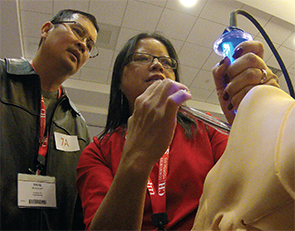
NATIONAL HARBOR, Md.—The conversation about hospitalists and technology can be pretty big. Rigmarole with rollout of an electronic health records (EHR) system is as much a rite of physician passage as Match Day. Administrators and C-suiters agonize over sprawling national initiatives (i.e., the Health Information Technology for Economic and Clinical Health [HITECH] Act of 2009) and the delayed implementation of the 10th revision of the International Statistical Classification of Diseases coding system (ICD-10). And there’s not an informatics officer in the country who doesn’t struggle with the term “meaningful use.”
Yet at HM15, one of the most interesting technology discussions wasn’t about the biggest of the big. In fact, it was about the smallest of the small: mobile applications, better known as apps. App usage on the ever-more-ubiquitous smartphones and tablets, used by patients and physicians alike, is a topic in its infancy. But hospitalist Roger Yu, MD, of Mayo Clinic in Rochester, Minn., says that hospitalists need to get ahead of the issue. He knows patients will soon start asking them more and more questions.
“Some of the older generation may not be savvy enough to utilize these apps themselves, but the next generation, who are these older patients’ caregivers, are savvy enough, and they are very facile with their use of mobile technology,” says Dr. Yu, who helped lead one of the annual meeting’s best attended workshops, “Dr. Hi Tech Hospitalist: Improving Quality and Value of Care Using Mobile Apps.”
“So we need to be able to advise them, because they will come to us as physicians thinking that we have expertise in this.”
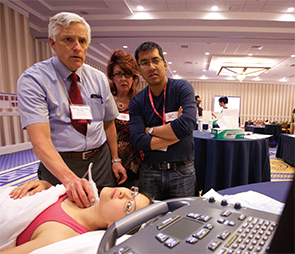
Anuj Dalal, MD, FHM, a hospitalist at Brigham and Women’s Hospital in Boston, says that one of the impediments to knowing the best apps is the pure size of the marketplace. There are some 44,000 applications related to healthcare. Although the bulk of those are consumer-related applications focused on diet, fitness, and personal health, many can be resources for hospitalists. But first, medical professionals need the marketplace to develop a reliable app certification process, Dr. Dalal says.
“They will provide [physicians’ board] certification, and patients will start relying on them for advice just as you would rely on Consumer Reports,” he says. “I think that will help individual providers and patients decide what is a good app and what is an effective app, which apps they should use and which apps they shouldn’t use.”
Of course, some physicians frustrated with regulation prefer to see the government stay out of technology in healthcare. The FDA currently reviews apps with direct ties to medical devices, but the remainder of the app marketplace is wide open for some entity to fill the certification void.
“I think there are a lot of people who are fearful of overregulation, but right now I think we’re at the point of underregulation,” Dr. Yu says. “There’s a sweet spot. I think if there is a standard that people can meet, companies can meet, technologies can meet, that’ll give a lot of structure and guidance to people who want to make their own apps.”
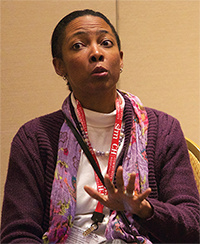
Part of the difficulty of vetting apps is what Cheng-Kai Kao, MD, medical director of informatics at the University of Chicago Medicine, calls the “hype cycle.”
“When it first shows up, there’s a lot of hype, there’s a lot of hope for the technology, and you [drill] down, and eventually you find what’s real,” he says. “We are looking for what are the things that we hope mobile apps can really do.”
Hospitalist Lisa Bonwell, MD, of Colorado Health Medical Group in Colorado Springs, sees discharge as one useful time to work with patients via applications. She believes many patients would find electronic instructions delivered through their smartphone or tablet more useful than the deluge of paperwork many now receive.
“When I discharge a patient from our system, they get a stack of papers,” she says. “I was recently a patient in the ER. I looked at that [stack of paperwork] and said, ‘There is nothing useful here. This is ridiculous.’
“I mean, it’s all this medical, legal stuff [patients] have to have, so I think that really turns off people. This would be much more usable to them.”
Richard Quinn is a freelance writer in New Jersey.
NATIONAL HARBOR, Md.—The conversation about hospitalists and technology can be pretty big. Rigmarole with rollout of an electronic health records (EHR) system is as much a rite of physician passage as Match Day. Administrators and C-suiters agonize over sprawling national initiatives (i.e., the Health Information Technology for Economic and Clinical Health [HITECH] Act of 2009) and the delayed implementation of the 10th revision of the International Statistical Classification of Diseases coding system (ICD-10). And there’s not an informatics officer in the country who doesn’t struggle with the term “meaningful use.”
Yet at HM15, one of the most interesting technology discussions wasn’t about the biggest of the big. In fact, it was about the smallest of the small: mobile applications, better known as apps. App usage on the ever-more-ubiquitous smartphones and tablets, used by patients and physicians alike, is a topic in its infancy. But hospitalist Roger Yu, MD, of Mayo Clinic in Rochester, Minn., says that hospitalists need to get ahead of the issue. He knows patients will soon start asking them more and more questions.
“Some of the older generation may not be savvy enough to utilize these apps themselves, but the next generation, who are these older patients’ caregivers, are savvy enough, and they are very facile with their use of mobile technology,” says Dr. Yu, who helped lead one of the annual meeting’s best attended workshops, “Dr. Hi Tech Hospitalist: Improving Quality and Value of Care Using Mobile Apps.”
“So we need to be able to advise them, because they will come to us as physicians thinking that we have expertise in this.”
Anuj Dalal, MD, FHM, a hospitalist at Brigham and Women’s Hospital in Boston, says that one of the impediments to knowing the best apps is the pure size of the marketplace. There are some 44,000 applications related to healthcare. Although the bulk of those are consumer-related applications focused on diet, fitness, and personal health, many can be resources for hospitalists. But first, medical professionals need the marketplace to develop a reliable app certification process, Dr. Dalal says.
“They will provide [physicians’ board] certification, and patients will start relying on them for advice just as you would rely on Consumer Reports,” he says. “I think that will help individual providers and patients decide what is a good app and what is an effective app, which apps they should use and which apps they shouldn’t use.”
Of course, some physicians frustrated with regulation prefer to see the government stay out of technology in healthcare. The FDA currently reviews apps with direct ties to medical devices, but the remainder of the app marketplace is wide open for some entity to fill the certification void.
“I think there are a lot of people who are fearful of overregulation, but right now I think we’re at the point of underregulation,” Dr. Yu says. “There’s a sweet spot. I think if there is a standard that people can meet, companies can meet, technologies can meet, that’ll give a lot of structure and guidance to people who want to make their own apps.”
Part of the difficulty of vetting apps is what Cheng-Kai Kao, MD, medical director of informatics at the University of Chicago Medicine, calls the “hype cycle.”
“When it first shows up, there’s a lot of hype, there’s a lot of hope for the technology, and you [drill] down, and eventually you find what’s real,” he says. “We are looking for what are the things that we hope mobile apps can really do.”
Hospitalist Lisa Bonwell, MD, of Colorado Health Medical Group in Colorado Springs, sees discharge as one useful time to work with patients via applications. She believes many patients would find electronic instructions delivered through their smartphone or tablet more useful than the deluge of paperwork many now receive.
“When I discharge a patient from our system, they get a stack of papers,” she says. “I was recently a patient in the ER. I looked at that [stack of paperwork] and said, ‘There is nothing useful here. This is ridiculous.’
“I mean, it’s all this medical, legal stuff [patients] have to have, so I think that really turns off people. This would be much more usable to them.”
Richard Quinn is a freelance writer in New Jersey.
NATIONAL HARBOR, Md.—The conversation about hospitalists and technology can be pretty big. Rigmarole with rollout of an electronic health records (EHR) system is as much a rite of physician passage as Match Day. Administrators and C-suiters agonize over sprawling national initiatives (i.e., the Health Information Technology for Economic and Clinical Health [HITECH] Act of 2009) and the delayed implementation of the 10th revision of the International Statistical Classification of Diseases coding system (ICD-10). And there’s not an informatics officer in the country who doesn’t struggle with the term “meaningful use.”
Yet at HM15, one of the most interesting technology discussions wasn’t about the biggest of the big. In fact, it was about the smallest of the small: mobile applications, better known as apps. App usage on the ever-more-ubiquitous smartphones and tablets, used by patients and physicians alike, is a topic in its infancy. But hospitalist Roger Yu, MD, of Mayo Clinic in Rochester, Minn., says that hospitalists need to get ahead of the issue. He knows patients will soon start asking them more and more questions.
“Some of the older generation may not be savvy enough to utilize these apps themselves, but the next generation, who are these older patients’ caregivers, are savvy enough, and they are very facile with their use of mobile technology,” says Dr. Yu, who helped lead one of the annual meeting’s best attended workshops, “Dr. Hi Tech Hospitalist: Improving Quality and Value of Care Using Mobile Apps.”
“So we need to be able to advise them, because they will come to us as physicians thinking that we have expertise in this.”
Anuj Dalal, MD, FHM, a hospitalist at Brigham and Women’s Hospital in Boston, says that one of the impediments to knowing the best apps is the pure size of the marketplace. There are some 44,000 applications related to healthcare. Although the bulk of those are consumer-related applications focused on diet, fitness, and personal health, many can be resources for hospitalists. But first, medical professionals need the marketplace to develop a reliable app certification process, Dr. Dalal says.
“They will provide [physicians’ board] certification, and patients will start relying on them for advice just as you would rely on Consumer Reports,” he says. “I think that will help individual providers and patients decide what is a good app and what is an effective app, which apps they should use and which apps they shouldn’t use.”
Of course, some physicians frustrated with regulation prefer to see the government stay out of technology in healthcare. The FDA currently reviews apps with direct ties to medical devices, but the remainder of the app marketplace is wide open for some entity to fill the certification void.
“I think there are a lot of people who are fearful of overregulation, but right now I think we’re at the point of underregulation,” Dr. Yu says. “There’s a sweet spot. I think if there is a standard that people can meet, companies can meet, technologies can meet, that’ll give a lot of structure and guidance to people who want to make their own apps.”
Part of the difficulty of vetting apps is what Cheng-Kai Kao, MD, medical director of informatics at the University of Chicago Medicine, calls the “hype cycle.”
“When it first shows up, there’s a lot of hype, there’s a lot of hope for the technology, and you [drill] down, and eventually you find what’s real,” he says. “We are looking for what are the things that we hope mobile apps can really do.”
Hospitalist Lisa Bonwell, MD, of Colorado Health Medical Group in Colorado Springs, sees discharge as one useful time to work with patients via applications. She believes many patients would find electronic instructions delivered through their smartphone or tablet more useful than the deluge of paperwork many now receive.
“When I discharge a patient from our system, they get a stack of papers,” she says. “I was recently a patient in the ER. I looked at that [stack of paperwork] and said, ‘There is nothing useful here. This is ridiculous.’
“I mean, it’s all this medical, legal stuff [patients] have to have, so I think that really turns off people. This would be much more usable to them.”
Richard Quinn is a freelance writer in New Jersey.
Tips for Hospitalists on Finding, Working With Mentor
NATIONAL HARBOR, Md.—What do Harry Potter, Luke Skywalker, and Frodo Baggins have in common?
Vineet Arora, MD, MAPP, SFHM, said each of the big screen superstars had a great mentor. Dr. Arora’s HM15 session, “Making the Most of Your Mentoring Relationships,” looked at the qualities young hospitalists should seek out in a mentor. She also outlined skills and behaviors mentees should look to improve in themselves, in terms of connecting with a mentor and building relationships.
“You need to know yourself, your goals, your priorities,” said Dr. Arora, associate professor of medicine, assistant dean for scholarship and discovery, and director of the GME clinical learning environment innovation at the University of Chicago. “Mentorship is a partnership. If your mentor is always busy and traveling, and you need a lot of hand holding, that is not a great fit.”
Dr. Arora’s pep talk was part of a new educational track focused on young hospitalists that debuted at this year’s annual meeting. The track, coordinated by members of SHM’s Physicians in Training Committee, also included sessions on “How to Stand Out: Being the Best Applicant You Can Be,” “Getting to the Top of the Pile: Writing Your CV,” and “Quality and Safety for Residents and Students.”
The majority of the 100 or so in attendance at Dr. Arora’s talk were residents and academic hospitalists in the first few years of their career, but the crowd also included a few fellows and a handful of program directors.
You Need a Hero
Using video clips featuring three of the most popular fictional characters of all time, Dr. Arora outlined some of the key characteristics young physicians should look for in mentors.
Yoda, for example, provided inspiration in “The Empire Strikes Back” by showing young Skywalker the impossible is possible. Yoda, the 500-year-old mentor, “used the force” to lift Skywalker’s X-Wing Fighter from the swamp. “He showed him that ‘this is doable,’” said Dr. Arora, a self-proclaimed movie buff. “That’s really half the battle, and it’s something you really want to think about.”
In a scene from “Harry Potter and the Prisoner of Azkaban,” veteran wizard Remus Lupin comforts the young sorcerer when he struggles to learn a new spell, the powerful Patronus charm. “I didn’t expect you to do it the first time,” Lupin told Potter. “That would have been remarkable.”
The teaching moment, Dr. Arora said, was that it is “OK to fail” and that good mentors are “going to pick you back up and help you.”
Mentors’ words—and how they say them—are important, too. At the end of the first “The Lord of the Rings” movie, little Frodo stood at the shore of a lake wondering if he could continue on his journey—“I wish the ring had never come to me; I wish none of this had happened,” he said. The next scene showed Frodo recalling the encouraging words of his friend and mentor, Gandalf: “So do all who have lived to see such times, but that is not for them to decide. All you will have to decide is what to do with the time that is given to you.”
“You thought your quality improvement project was bad? Talk to Frodo!” Dr. Arora quipped. “Support, empathy, easing the pain; these are very different mentoring functions than the technical quality of doing a project, or being capable.”
Comparing mentors to superheroes utilizing the acronym CAPE, Dr. Arora boiled it down to the qualities mentees should look for in their mentors:
- Capable: “If the mentor is not capable, they are not going to be a good mentor,” she said. “This is important; not everyone is capable of being a good mentor.”
- Available: “It’s easy to walk away from a project. A good mentor stays with you, show you how it works, and inspires you to work harder.”
- Project (or Passion): “You want to have a mentor who is going to teach you something you are interested in; otherwise you are not going to want to learn, and there is no inspiration.”
- Empathetic: “They must be empathetic, easy to get along with, able to ease the pain.”
Mentee Self-Assessment
Dr. Arora and her colleague, Valerie Press, MD, MPH, role-played a number of scenarios in which young hospitalists and trainees err in their relationships with mentors. These ranged from the dreaded “pop-in meeting” to e-mail etiquette to last-minute requests to review a CV or poster.
The scenarios rang true with Brandon Mauldin, MD, a third-year resident at Tulane University School of Medicine in New Orleans.
“I learned the errors of how I’ve approached my mentors in the past. I think I have been guilty of every one of the points she made,” said Dr. Mauldin, who attended the session to glean tips as he prepares for a career as an academic hospitalist. “Maybe not as much the drop-in meetings, but definitely the last-minute, ‘Hey, I have this poster due tomorrow. Can you help me edit it?’”
Dr. Mauldin’s mentor at Tulane, Deepa Bhatnagar, MD, also attended the session. In her fourth year as an academic hospitalist, Dr. Bhatnagar said she gleaned the most practical information from Dr. Arora’s final scenario, which focused on mentees doing their homework before selecting a mentor or joining a research project.
“Do not sign on the dotted line without consultation. Right? Do not buy a car without doing your homework,” Dr. Arora said. “Mentors want free labor, so beware.”
Dr. Arora said mentees should set reasonable expectations and focus broadly in selecting projects, as they “have their whole career to do the project you love; right now, do the project that works.” It was a tip that stuck.
“The successful project is a good takeaway: Find your interest, find a good mentor, but find a good project,” Dr. Bhatnagar said. “It’s better to zone in on a successful project, instead of taking on a project that might not be successful for you.”
Richard Quinn is a freelance writer in New Jersey.
NATIONAL HARBOR, Md.—What do Harry Potter, Luke Skywalker, and Frodo Baggins have in common?
Vineet Arora, MD, MAPP, SFHM, said each of the big screen superstars had a great mentor. Dr. Arora’s HM15 session, “Making the Most of Your Mentoring Relationships,” looked at the qualities young hospitalists should seek out in a mentor. She also outlined skills and behaviors mentees should look to improve in themselves, in terms of connecting with a mentor and building relationships.
“You need to know yourself, your goals, your priorities,” said Dr. Arora, associate professor of medicine, assistant dean for scholarship and discovery, and director of the GME clinical learning environment innovation at the University of Chicago. “Mentorship is a partnership. If your mentor is always busy and traveling, and you need a lot of hand holding, that is not a great fit.”
Dr. Arora’s pep talk was part of a new educational track focused on young hospitalists that debuted at this year’s annual meeting. The track, coordinated by members of SHM’s Physicians in Training Committee, also included sessions on “How to Stand Out: Being the Best Applicant You Can Be,” “Getting to the Top of the Pile: Writing Your CV,” and “Quality and Safety for Residents and Students.”
The majority of the 100 or so in attendance at Dr. Arora’s talk were residents and academic hospitalists in the first few years of their career, but the crowd also included a few fellows and a handful of program directors.
You Need a Hero
Using video clips featuring three of the most popular fictional characters of all time, Dr. Arora outlined some of the key characteristics young physicians should look for in mentors.
Yoda, for example, provided inspiration in “The Empire Strikes Back” by showing young Skywalker the impossible is possible. Yoda, the 500-year-old mentor, “used the force” to lift Skywalker’s X-Wing Fighter from the swamp. “He showed him that ‘this is doable,’” said Dr. Arora, a self-proclaimed movie buff. “That’s really half the battle, and it’s something you really want to think about.”
In a scene from “Harry Potter and the Prisoner of Azkaban,” veteran wizard Remus Lupin comforts the young sorcerer when he struggles to learn a new spell, the powerful Patronus charm. “I didn’t expect you to do it the first time,” Lupin told Potter. “That would have been remarkable.”
The teaching moment, Dr. Arora said, was that it is “OK to fail” and that good mentors are “going to pick you back up and help you.”
Mentors’ words—and how they say them—are important, too. At the end of the first “The Lord of the Rings” movie, little Frodo stood at the shore of a lake wondering if he could continue on his journey—“I wish the ring had never come to me; I wish none of this had happened,” he said. The next scene showed Frodo recalling the encouraging words of his friend and mentor, Gandalf: “So do all who have lived to see such times, but that is not for them to decide. All you will have to decide is what to do with the time that is given to you.”
“You thought your quality improvement project was bad? Talk to Frodo!” Dr. Arora quipped. “Support, empathy, easing the pain; these are very different mentoring functions than the technical quality of doing a project, or being capable.”
Comparing mentors to superheroes utilizing the acronym CAPE, Dr. Arora boiled it down to the qualities mentees should look for in their mentors:
- Capable: “If the mentor is not capable, they are not going to be a good mentor,” she said. “This is important; not everyone is capable of being a good mentor.”
- Available: “It’s easy to walk away from a project. A good mentor stays with you, show you how it works, and inspires you to work harder.”
- Project (or Passion): “You want to have a mentor who is going to teach you something you are interested in; otherwise you are not going to want to learn, and there is no inspiration.”
- Empathetic: “They must be empathetic, easy to get along with, able to ease the pain.”
Mentee Self-Assessment
Dr. Arora and her colleague, Valerie Press, MD, MPH, role-played a number of scenarios in which young hospitalists and trainees err in their relationships with mentors. These ranged from the dreaded “pop-in meeting” to e-mail etiquette to last-minute requests to review a CV or poster.
The scenarios rang true with Brandon Mauldin, MD, a third-year resident at Tulane University School of Medicine in New Orleans.
“I learned the errors of how I’ve approached my mentors in the past. I think I have been guilty of every one of the points she made,” said Dr. Mauldin, who attended the session to glean tips as he prepares for a career as an academic hospitalist. “Maybe not as much the drop-in meetings, but definitely the last-minute, ‘Hey, I have this poster due tomorrow. Can you help me edit it?’”
Dr. Mauldin’s mentor at Tulane, Deepa Bhatnagar, MD, also attended the session. In her fourth year as an academic hospitalist, Dr. Bhatnagar said she gleaned the most practical information from Dr. Arora’s final scenario, which focused on mentees doing their homework before selecting a mentor or joining a research project.
“Do not sign on the dotted line without consultation. Right? Do not buy a car without doing your homework,” Dr. Arora said. “Mentors want free labor, so beware.”
Dr. Arora said mentees should set reasonable expectations and focus broadly in selecting projects, as they “have their whole career to do the project you love; right now, do the project that works.” It was a tip that stuck.
“The successful project is a good takeaway: Find your interest, find a good mentor, but find a good project,” Dr. Bhatnagar said. “It’s better to zone in on a successful project, instead of taking on a project that might not be successful for you.”
Richard Quinn is a freelance writer in New Jersey.
NATIONAL HARBOR, Md.—What do Harry Potter, Luke Skywalker, and Frodo Baggins have in common?
Vineet Arora, MD, MAPP, SFHM, said each of the big screen superstars had a great mentor. Dr. Arora’s HM15 session, “Making the Most of Your Mentoring Relationships,” looked at the qualities young hospitalists should seek out in a mentor. She also outlined skills and behaviors mentees should look to improve in themselves, in terms of connecting with a mentor and building relationships.
“You need to know yourself, your goals, your priorities,” said Dr. Arora, associate professor of medicine, assistant dean for scholarship and discovery, and director of the GME clinical learning environment innovation at the University of Chicago. “Mentorship is a partnership. If your mentor is always busy and traveling, and you need a lot of hand holding, that is not a great fit.”
Dr. Arora’s pep talk was part of a new educational track focused on young hospitalists that debuted at this year’s annual meeting. The track, coordinated by members of SHM’s Physicians in Training Committee, also included sessions on “How to Stand Out: Being the Best Applicant You Can Be,” “Getting to the Top of the Pile: Writing Your CV,” and “Quality and Safety for Residents and Students.”
The majority of the 100 or so in attendance at Dr. Arora’s talk were residents and academic hospitalists in the first few years of their career, but the crowd also included a few fellows and a handful of program directors.
You Need a Hero
Using video clips featuring three of the most popular fictional characters of all time, Dr. Arora outlined some of the key characteristics young physicians should look for in mentors.
Yoda, for example, provided inspiration in “The Empire Strikes Back” by showing young Skywalker the impossible is possible. Yoda, the 500-year-old mentor, “used the force” to lift Skywalker’s X-Wing Fighter from the swamp. “He showed him that ‘this is doable,’” said Dr. Arora, a self-proclaimed movie buff. “That’s really half the battle, and it’s something you really want to think about.”
In a scene from “Harry Potter and the Prisoner of Azkaban,” veteran wizard Remus Lupin comforts the young sorcerer when he struggles to learn a new spell, the powerful Patronus charm. “I didn’t expect you to do it the first time,” Lupin told Potter. “That would have been remarkable.”
The teaching moment, Dr. Arora said, was that it is “OK to fail” and that good mentors are “going to pick you back up and help you.”
Mentors’ words—and how they say them—are important, too. At the end of the first “The Lord of the Rings” movie, little Frodo stood at the shore of a lake wondering if he could continue on his journey—“I wish the ring had never come to me; I wish none of this had happened,” he said. The next scene showed Frodo recalling the encouraging words of his friend and mentor, Gandalf: “So do all who have lived to see such times, but that is not for them to decide. All you will have to decide is what to do with the time that is given to you.”
“You thought your quality improvement project was bad? Talk to Frodo!” Dr. Arora quipped. “Support, empathy, easing the pain; these are very different mentoring functions than the technical quality of doing a project, or being capable.”
Comparing mentors to superheroes utilizing the acronym CAPE, Dr. Arora boiled it down to the qualities mentees should look for in their mentors:
- Capable: “If the mentor is not capable, they are not going to be a good mentor,” she said. “This is important; not everyone is capable of being a good mentor.”
- Available: “It’s easy to walk away from a project. A good mentor stays with you, show you how it works, and inspires you to work harder.”
- Project (or Passion): “You want to have a mentor who is going to teach you something you are interested in; otherwise you are not going to want to learn, and there is no inspiration.”
- Empathetic: “They must be empathetic, easy to get along with, able to ease the pain.”
Mentee Self-Assessment
Dr. Arora and her colleague, Valerie Press, MD, MPH, role-played a number of scenarios in which young hospitalists and trainees err in their relationships with mentors. These ranged from the dreaded “pop-in meeting” to e-mail etiquette to last-minute requests to review a CV or poster.
The scenarios rang true with Brandon Mauldin, MD, a third-year resident at Tulane University School of Medicine in New Orleans.
“I learned the errors of how I’ve approached my mentors in the past. I think I have been guilty of every one of the points she made,” said Dr. Mauldin, who attended the session to glean tips as he prepares for a career as an academic hospitalist. “Maybe not as much the drop-in meetings, but definitely the last-minute, ‘Hey, I have this poster due tomorrow. Can you help me edit it?’”
Dr. Mauldin’s mentor at Tulane, Deepa Bhatnagar, MD, also attended the session. In her fourth year as an academic hospitalist, Dr. Bhatnagar said she gleaned the most practical information from Dr. Arora’s final scenario, which focused on mentees doing their homework before selecting a mentor or joining a research project.
“Do not sign on the dotted line without consultation. Right? Do not buy a car without doing your homework,” Dr. Arora said. “Mentors want free labor, so beware.”
Dr. Arora said mentees should set reasonable expectations and focus broadly in selecting projects, as they “have their whole career to do the project you love; right now, do the project that works.” It was a tip that stuck.
“The successful project is a good takeaway: Find your interest, find a good mentor, but find a good project,” Dr. Bhatnagar said. “It’s better to zone in on a successful project, instead of taking on a project that might not be successful for you.”
Richard Quinn is a freelance writer in New Jersey.
Listen Now: Highlights of the May 2015 Issue of The Hospitalist

Highlights from the May 2015 issue of The Hospitalist, featuring new SHM President Dr. Robert Harrington on his mission for the next year, Dr. Win Whitcomb on sharing responsibility for outcomes, and Dr. David Weidig on multi-site outcome management.
[audio mp3="http://www.the-hospitalist.org/wp-content/uploads/2015/05/Hospitalist-Highlights-May-2015.mp3"][/audio]
Highlights from the May 2015 issue of The Hospitalist, featuring new SHM President Dr. Robert Harrington on his mission for the next year, Dr. Win Whitcomb on sharing responsibility for outcomes, and Dr. David Weidig on multi-site outcome management.
[audio mp3="http://www.the-hospitalist.org/wp-content/uploads/2015/05/Hospitalist-Highlights-May-2015.mp3"][/audio]
Highlights from the May 2015 issue of The Hospitalist, featuring new SHM President Dr. Robert Harrington on his mission for the next year, Dr. Win Whitcomb on sharing responsibility for outcomes, and Dr. David Weidig on multi-site outcome management.
[audio mp3="http://www.the-hospitalist.org/wp-content/uploads/2015/05/Hospitalist-Highlights-May-2015.mp3"][/audio]

HM15 Q&A: How Will You Make Healthcare Safer?
QUESTION: Quality improvement guru Peter Pronovost, MD, PhD, senior vice president for patient safety and quality at Johns Hopkins Medicine in Baltimore, challenged attendees at HM15 to finish this sentence about how they will make healthcare safer: “I will…” The Hospitalist talked to a few doctors who accepted the challenge.
–Hospitalist Salah Mohageb, MD
Virtua Medical Group, Marlton, N.J.
–Hospitalist Moncy Varughese, MD
Highland Park Hospital, NorthShore University
Health System, Chicago
–Timothy Farmer, MD, locums tenens hospitalist in North Carolina
QUESTION: Quality improvement guru Peter Pronovost, MD, PhD, senior vice president for patient safety and quality at Johns Hopkins Medicine in Baltimore, challenged attendees at HM15 to finish this sentence about how they will make healthcare safer: “I will…” The Hospitalist talked to a few doctors who accepted the challenge.
–Hospitalist Salah Mohageb, MD
Virtua Medical Group, Marlton, N.J.
–Hospitalist Moncy Varughese, MD
Highland Park Hospital, NorthShore University
Health System, Chicago
–Timothy Farmer, MD, locums tenens hospitalist in North Carolina
QUESTION: Quality improvement guru Peter Pronovost, MD, PhD, senior vice president for patient safety and quality at Johns Hopkins Medicine in Baltimore, challenged attendees at HM15 to finish this sentence about how they will make healthcare safer: “I will…” The Hospitalist talked to a few doctors who accepted the challenge.
–Hospitalist Salah Mohageb, MD
Virtua Medical Group, Marlton, N.J.
–Hospitalist Moncy Varughese, MD
Highland Park Hospital, NorthShore University
Health System, Chicago
–Timothy Farmer, MD, locums tenens hospitalist in North Carolina
HM15 Offers Hospitalist Leaders Training, Encouragement
NATIONAL HARBOR, Md.—Patient satisfaction, physician engagement, and administrator buy-in, oh my.
So went the thoughts of Jaidev Bhoopal, MD, last month at HM15. He’d been a hospitalist for about eight years, but he was named section chair about a month before he arrived at the annual meeting. His calculated first stop was the daylong practice management pre-course titled “Where the Rubber Meets the Road: Managing in the Era of Healthcare Reform.”
The timing couldn’t have been better.

“I’m starting a new role and I wanted to get input and ideas,” said Dr. Bhoopal, section chair of the hospitalist department at St. Mary’s Medical Center in Duluth, Minn. “This gives you a playbook of where you want to be and where you want to go.”
A playbook for where to go could just as well be the slogan for practice management’s role at SHM’s annual meeting. An educational track, a dedicated—and ever-popular—pre-course, and a chance to ask the field’s founding fathers their best practices were among the highlights of this spring’s four-day confab.
The need for practice management and leadership training is greater in the past few years as hospitalists have been more confounded than ever with how to best run their practices under a myriad of new rules and regulations tied to the Affordable Care Act and the digitization of healthcare. At their core, the changes are shifting hospital-based care from fee-for-service to value-based payments.
“The tipping point is really here for us,” said Win Whitcomb, MD, MHM, chief medical officer of Remedy Partners of Darien, Conn.
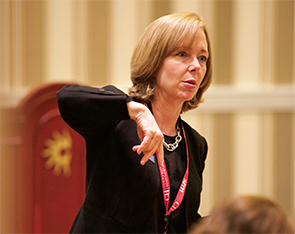
Dr. Whitcomb, a founder of SHM and regular columnist for The Hospitalist, said that HM group (HMG) leaders have to be well versed in how to navigate a landscape of alternative payment models to excel in the new paradigm. Particularly after the announcement earlier this year that the federal government has set a goal of tying 85% of Medicare hospital fee-for-service payments to quality or value by 2016, and that percentage could increase to 90% by 2018. The January announcement was the first time in Medicare’s history that explicit goals for alternative payment models and value-based payments were set, according to an announcement from the U.S. Department of Health and Human Services.
“Strategically, these things are essential to work into the plan of what the hospital medicine group is doing in the coming three to five years,” Dr. Whitcomb said. “Hospitalists can’t do this alone. They have to do it with teams. It’s not only teams of other professionals in the hospital and around the hospital, but it’s other physicians.”
Dr. Whitcomb said key to the new paradigm is shared financial and clinical responsibilities. He says hospitalists have to “change our thinking…to a mindset where we’re in this together.”
Part of that shared responsibility extends to the post-acute care setting, where SHM senior vice president for practice management Joseph Miller said that some 30% of HMGs are practicing. To help those practitioners, SHM and IPC Healthcare of North Hollywood, Calif., debuted the “Primer for Hospitalists on Skilled Nursing Facilities” at HM15.
The educational program, housed at SHM’s Learning Portal, has 32 lessons meant to differentiate the traditional acute-care hospital from post-acute care facilities. It is grouped in five sections and two modules, with a focus on skilled-nursing facilities (SNFs), which are the most common post-acute care settings.
“The types of resources that are available are different, and that’s not only in terms of staff, but the availability of specialists, the availability of testing capabilities,” Miller said. “If you need to work with a cardiologist for a particular patient...how do you engage them? You’re not going to be able to have them come and see that patient frequently. How do you communicate with them to get the feedback you need as the attending physician?”
Another communication hassle involves the growing number of HMGs spread over multiple sites. For Sara Shraibman, MD, an assistant program director at Syosset Hospital in Syosset, N.Y., those sites are two hospitals covered by the North Shore LIJ Medical Group.
“It’s actually a new program, so we are trying to look at our compensation, models comparing them across two hospitals…and how we manage,” she said. “Not every hospitalist will go back and forth. Some will, some won’t. Some will work nights to help cover, some won’t. It’s very interesting trying to come up with a schedule.”
The best way to address conflict at multi-site groups is communicating and focusing on shared goals, said David Weidig, MD, director of hospital medicine for Aurora Medical Group in West Allis, Wis., and a new member of Team Hospitalist.
“Make sure that no matter what conflict might be up front, that everybody is looking at the goals downstream and saying, ‘Yes, that is a goal we want to achieve. We want to have better patient safety metrics. We want to have decreased readmissions. We want to have better transitions of care,’” Dr. Weidig said. “The common goal all the way from hospital administrators all the way down to hospital physicians is going to be the key.”
Richard Quinn is a freelance writer in New Jersey.
NATIONAL HARBOR, Md.—Patient satisfaction, physician engagement, and administrator buy-in, oh my.
So went the thoughts of Jaidev Bhoopal, MD, last month at HM15. He’d been a hospitalist for about eight years, but he was named section chair about a month before he arrived at the annual meeting. His calculated first stop was the daylong practice management pre-course titled “Where the Rubber Meets the Road: Managing in the Era of Healthcare Reform.”
The timing couldn’t have been better.
“I’m starting a new role and I wanted to get input and ideas,” said Dr. Bhoopal, section chair of the hospitalist department at St. Mary’s Medical Center in Duluth, Minn. “This gives you a playbook of where you want to be and where you want to go.”
A playbook for where to go could just as well be the slogan for practice management’s role at SHM’s annual meeting. An educational track, a dedicated—and ever-popular—pre-course, and a chance to ask the field’s founding fathers their best practices were among the highlights of this spring’s four-day confab.
The need for practice management and leadership training is greater in the past few years as hospitalists have been more confounded than ever with how to best run their practices under a myriad of new rules and regulations tied to the Affordable Care Act and the digitization of healthcare. At their core, the changes are shifting hospital-based care from fee-for-service to value-based payments.
“The tipping point is really here for us,” said Win Whitcomb, MD, MHM, chief medical officer of Remedy Partners of Darien, Conn.
Dr. Whitcomb, a founder of SHM and regular columnist for The Hospitalist, said that HM group (HMG) leaders have to be well versed in how to navigate a landscape of alternative payment models to excel in the new paradigm. Particularly after the announcement earlier this year that the federal government has set a goal of tying 85% of Medicare hospital fee-for-service payments to quality or value by 2016, and that percentage could increase to 90% by 2018. The January announcement was the first time in Medicare’s history that explicit goals for alternative payment models and value-based payments were set, according to an announcement from the U.S. Department of Health and Human Services.
“Strategically, these things are essential to work into the plan of what the hospital medicine group is doing in the coming three to five years,” Dr. Whitcomb said. “Hospitalists can’t do this alone. They have to do it with teams. It’s not only teams of other professionals in the hospital and around the hospital, but it’s other physicians.”
Dr. Whitcomb said key to the new paradigm is shared financial and clinical responsibilities. He says hospitalists have to “change our thinking…to a mindset where we’re in this together.”
Part of that shared responsibility extends to the post-acute care setting, where SHM senior vice president for practice management Joseph Miller said that some 30% of HMGs are practicing. To help those practitioners, SHM and IPC Healthcare of North Hollywood, Calif., debuted the “Primer for Hospitalists on Skilled Nursing Facilities” at HM15.
The educational program, housed at SHM’s Learning Portal, has 32 lessons meant to differentiate the traditional acute-care hospital from post-acute care facilities. It is grouped in five sections and two modules, with a focus on skilled-nursing facilities (SNFs), which are the most common post-acute care settings.
“The types of resources that are available are different, and that’s not only in terms of staff, but the availability of specialists, the availability of testing capabilities,” Miller said. “If you need to work with a cardiologist for a particular patient...how do you engage them? You’re not going to be able to have them come and see that patient frequently. How do you communicate with them to get the feedback you need as the attending physician?”
Another communication hassle involves the growing number of HMGs spread over multiple sites. For Sara Shraibman, MD, an assistant program director at Syosset Hospital in Syosset, N.Y., those sites are two hospitals covered by the North Shore LIJ Medical Group.
“It’s actually a new program, so we are trying to look at our compensation, models comparing them across two hospitals…and how we manage,” she said. “Not every hospitalist will go back and forth. Some will, some won’t. Some will work nights to help cover, some won’t. It’s very interesting trying to come up with a schedule.”
The best way to address conflict at multi-site groups is communicating and focusing on shared goals, said David Weidig, MD, director of hospital medicine for Aurora Medical Group in West Allis, Wis., and a new member of Team Hospitalist.
“Make sure that no matter what conflict might be up front, that everybody is looking at the goals downstream and saying, ‘Yes, that is a goal we want to achieve. We want to have better patient safety metrics. We want to have decreased readmissions. We want to have better transitions of care,’” Dr. Weidig said. “The common goal all the way from hospital administrators all the way down to hospital physicians is going to be the key.”
Richard Quinn is a freelance writer in New Jersey.
NATIONAL HARBOR, Md.—Patient satisfaction, physician engagement, and administrator buy-in, oh my.
So went the thoughts of Jaidev Bhoopal, MD, last month at HM15. He’d been a hospitalist for about eight years, but he was named section chair about a month before he arrived at the annual meeting. His calculated first stop was the daylong practice management pre-course titled “Where the Rubber Meets the Road: Managing in the Era of Healthcare Reform.”
The timing couldn’t have been better.
“I’m starting a new role and I wanted to get input and ideas,” said Dr. Bhoopal, section chair of the hospitalist department at St. Mary’s Medical Center in Duluth, Minn. “This gives you a playbook of where you want to be and where you want to go.”
A playbook for where to go could just as well be the slogan for practice management’s role at SHM’s annual meeting. An educational track, a dedicated—and ever-popular—pre-course, and a chance to ask the field’s founding fathers their best practices were among the highlights of this spring’s four-day confab.
The need for practice management and leadership training is greater in the past few years as hospitalists have been more confounded than ever with how to best run their practices under a myriad of new rules and regulations tied to the Affordable Care Act and the digitization of healthcare. At their core, the changes are shifting hospital-based care from fee-for-service to value-based payments.
“The tipping point is really here for us,” said Win Whitcomb, MD, MHM, chief medical officer of Remedy Partners of Darien, Conn.
Dr. Whitcomb, a founder of SHM and regular columnist for The Hospitalist, said that HM group (HMG) leaders have to be well versed in how to navigate a landscape of alternative payment models to excel in the new paradigm. Particularly after the announcement earlier this year that the federal government has set a goal of tying 85% of Medicare hospital fee-for-service payments to quality or value by 2016, and that percentage could increase to 90% by 2018. The January announcement was the first time in Medicare’s history that explicit goals for alternative payment models and value-based payments were set, according to an announcement from the U.S. Department of Health and Human Services.
“Strategically, these things are essential to work into the plan of what the hospital medicine group is doing in the coming three to five years,” Dr. Whitcomb said. “Hospitalists can’t do this alone. They have to do it with teams. It’s not only teams of other professionals in the hospital and around the hospital, but it’s other physicians.”
Dr. Whitcomb said key to the new paradigm is shared financial and clinical responsibilities. He says hospitalists have to “change our thinking…to a mindset where we’re in this together.”
Part of that shared responsibility extends to the post-acute care setting, where SHM senior vice president for practice management Joseph Miller said that some 30% of HMGs are practicing. To help those practitioners, SHM and IPC Healthcare of North Hollywood, Calif., debuted the “Primer for Hospitalists on Skilled Nursing Facilities” at HM15.
The educational program, housed at SHM’s Learning Portal, has 32 lessons meant to differentiate the traditional acute-care hospital from post-acute care facilities. It is grouped in five sections and two modules, with a focus on skilled-nursing facilities (SNFs), which are the most common post-acute care settings.
“The types of resources that are available are different, and that’s not only in terms of staff, but the availability of specialists, the availability of testing capabilities,” Miller said. “If you need to work with a cardiologist for a particular patient...how do you engage them? You’re not going to be able to have them come and see that patient frequently. How do you communicate with them to get the feedback you need as the attending physician?”
Another communication hassle involves the growing number of HMGs spread over multiple sites. For Sara Shraibman, MD, an assistant program director at Syosset Hospital in Syosset, N.Y., those sites are two hospitals covered by the North Shore LIJ Medical Group.
“It’s actually a new program, so we are trying to look at our compensation, models comparing them across two hospitals…and how we manage,” she said. “Not every hospitalist will go back and forth. Some will, some won’t. Some will work nights to help cover, some won’t. It’s very interesting trying to come up with a schedule.”
The best way to address conflict at multi-site groups is communicating and focusing on shared goals, said David Weidig, MD, director of hospital medicine for Aurora Medical Group in West Allis, Wis., and a new member of Team Hospitalist.
“Make sure that no matter what conflict might be up front, that everybody is looking at the goals downstream and saying, ‘Yes, that is a goal we want to achieve. We want to have better patient safety metrics. We want to have decreased readmissions. We want to have better transitions of care,’” Dr. Weidig said. “The common goal all the way from hospital administrators all the way down to hospital physicians is going to be the key.”
Richard Quinn is a freelance writer in New Jersey.
HM15 Speakers Urge Hospitalists to Use Technology, Teamwork, Talent

NATIONAL HARBOR, Md.—In the convention business, some say an annual meeting is only as good as its keynote addresses. Those people would call HM15 a home run, because the thousands of hospitalists who made their way to just outside the nation’s capital last month were treated to a trinity of talented talkers.
First up was patient safety guru Peter Pronovost, MD, PhD, FCCM, senior vice president for patient safety and quality at Johns Hopkins Medicine in Baltimore. Maureen Bisognano, president and CEO of the Institute for Healthcare Improvement (IHI), echoed his patient-centered focus in her address. The four-day confab ended with hospitalist dean Bob Wachter, MD, MHM, reading from his new book, “The Digital Doctor: Hope, Hype, and Harm at the Dawn of Medicine’s Computer Age.”
The three came from different perspectives but ended up in the same place: Hospitalists can use technology, teamwork, and talent to be the people who make healthcare in this country safer. In fact, HM has the responsibility to do so.
“We are the only hope that the healthcare system has of improving quality and safety,” Dr. Pronovost said.
Famous for creating a five-step checklist designed to reduce the incidence of central line-associated infections, he talked about healthcare in terms of physicians telling “depressing” stories that hold change back.
“The first is that we still tell a story that harm is inevitable,” he said. “‘You’re sick, you’re old, you’re young, stuff happens.’ Second, we still tell stories that [show that] safety and quality are based on the heroism of our clinicians rather than design of safe systems. And, third, we still tell a story that ‘I am powerless to do anything about it.’
“We need some new stories.”
Reframing the discussion of healthcare into a story of preventing all harm is ambitious but doable, he added. Hospitalists need to team with others, though, because an overhauled healthcare system needs buy-in from all physicians.
“The trick of this is to have enough details that people want to join you, but don’t completely tell the story, because others have to co-create it with you,” Dr. Pronovost said. “You tell the why and the what, but the how is co-created by all of your colleagues who are working with you.”
Bisognano says hospitalists can help hospitalists achieve IHI’s Triple Aim, an initiative to simultaneously improve the patient experience and the health of populations, reducing the per capita cost of healthcare. But, like Dr. Pronovost, her argument is based on a new view of the healthcare system.
“We need not a system that says, ‘What’s the matter?’ but a system that understands deeply what matters to each patient,” Bisognano said.
That prism requires speaking a new “language,” one that uses quality of care delivered and defines it more broadly than simply mortality rates and adverse events.
“You can look at health and care, but you also can drive out unnecessary cost,” she said. “And being a former hospital CEO, I can say it was magic when a clinician could walk in and be able to talk in both languages.”
Dr. Wachter spoke of the past, present, and future of the digital age of medicine. He is as frustrated by poor electronic health record (EHR) rollouts as front-line hospitalists but notes that healthcare in the past five years has seen a digital revolution in a much shorter time period than most industries, thanks to federal incentives.
“Most fields that go digital do so over the course of 10 or 20 years, in a very organic way, with the early adopters, the rank and file, and then the laggards,” he said. “And in that kind of organic adoption curve, you see problems arise, and people begin to deal with them and understand them and mitigate them.
“What the federal intervention did was essentially turbocharge the digitization of healthcare. We’ve seen this in a very telescoped way. … It’s like we got started on a huge dose of chemo, stat.”
Moving forward, Dr. Wachter said the focus has to be on improving the use and integration of healthcare to ensure that it translates to better patient care. For example, going to digital radiology has in many ways ended the daily meetings that once were commonplace in hospital “film rooms.” In essence, the move from “analog to digital” meant people communicated less. Now, multidisciplinary rounds and other unit-based approaches are trying to recreate teamwork.
“Places are doing some pretty impressive things to try to bring teams back together in a digital environment,” Dr. Wachter said. “But, the point is, I didn’t give this any thought. I don’t know whether you did. What didn’t cross my own cognitive radar screen was that when we go digital, we will screw up the relationships, because people can now be wherever they want to be to do their work.”
Richard Quinn is a freelance writer in New Jersey.
NATIONAL HARBOR, Md.—In the convention business, some say an annual meeting is only as good as its keynote addresses. Those people would call HM15 a home run, because the thousands of hospitalists who made their way to just outside the nation’s capital last month were treated to a trinity of talented talkers.
First up was patient safety guru Peter Pronovost, MD, PhD, FCCM, senior vice president for patient safety and quality at Johns Hopkins Medicine in Baltimore. Maureen Bisognano, president and CEO of the Institute for Healthcare Improvement (IHI), echoed his patient-centered focus in her address. The four-day confab ended with hospitalist dean Bob Wachter, MD, MHM, reading from his new book, “The Digital Doctor: Hope, Hype, and Harm at the Dawn of Medicine’s Computer Age.”
The three came from different perspectives but ended up in the same place: Hospitalists can use technology, teamwork, and talent to be the people who make healthcare in this country safer. In fact, HM has the responsibility to do so.
“We are the only hope that the healthcare system has of improving quality and safety,” Dr. Pronovost said.
Famous for creating a five-step checklist designed to reduce the incidence of central line-associated infections, he talked about healthcare in terms of physicians telling “depressing” stories that hold change back.
“The first is that we still tell a story that harm is inevitable,” he said. “‘You’re sick, you’re old, you’re young, stuff happens.’ Second, we still tell stories that [show that] safety and quality are based on the heroism of our clinicians rather than design of safe systems. And, third, we still tell a story that ‘I am powerless to do anything about it.’
“We need some new stories.”
Reframing the discussion of healthcare into a story of preventing all harm is ambitious but doable, he added. Hospitalists need to team with others, though, because an overhauled healthcare system needs buy-in from all physicians.
“The trick of this is to have enough details that people want to join you, but don’t completely tell the story, because others have to co-create it with you,” Dr. Pronovost said. “You tell the why and the what, but the how is co-created by all of your colleagues who are working with you.”
Bisognano says hospitalists can help hospitalists achieve IHI’s Triple Aim, an initiative to simultaneously improve the patient experience and the health of populations, reducing the per capita cost of healthcare. But, like Dr. Pronovost, her argument is based on a new view of the healthcare system.
“We need not a system that says, ‘What’s the matter?’ but a system that understands deeply what matters to each patient,” Bisognano said.
That prism requires speaking a new “language,” one that uses quality of care delivered and defines it more broadly than simply mortality rates and adverse events.
“You can look at health and care, but you also can drive out unnecessary cost,” she said. “And being a former hospital CEO, I can say it was magic when a clinician could walk in and be able to talk in both languages.”
Dr. Wachter spoke of the past, present, and future of the digital age of medicine. He is as frustrated by poor electronic health record (EHR) rollouts as front-line hospitalists but notes that healthcare in the past five years has seen a digital revolution in a much shorter time period than most industries, thanks to federal incentives.
“Most fields that go digital do so over the course of 10 or 20 years, in a very organic way, with the early adopters, the rank and file, and then the laggards,” he said. “And in that kind of organic adoption curve, you see problems arise, and people begin to deal with them and understand them and mitigate them.
“What the federal intervention did was essentially turbocharge the digitization of healthcare. We’ve seen this in a very telescoped way. … It’s like we got started on a huge dose of chemo, stat.”
Moving forward, Dr. Wachter said the focus has to be on improving the use and integration of healthcare to ensure that it translates to better patient care. For example, going to digital radiology has in many ways ended the daily meetings that once were commonplace in hospital “film rooms.” In essence, the move from “analog to digital” meant people communicated less. Now, multidisciplinary rounds and other unit-based approaches are trying to recreate teamwork.
“Places are doing some pretty impressive things to try to bring teams back together in a digital environment,” Dr. Wachter said. “But, the point is, I didn’t give this any thought. I don’t know whether you did. What didn’t cross my own cognitive radar screen was that when we go digital, we will screw up the relationships, because people can now be wherever they want to be to do their work.”
Richard Quinn is a freelance writer in New Jersey.
NATIONAL HARBOR, Md.—In the convention business, some say an annual meeting is only as good as its keynote addresses. Those people would call HM15 a home run, because the thousands of hospitalists who made their way to just outside the nation’s capital last month were treated to a trinity of talented talkers.
First up was patient safety guru Peter Pronovost, MD, PhD, FCCM, senior vice president for patient safety and quality at Johns Hopkins Medicine in Baltimore. Maureen Bisognano, president and CEO of the Institute for Healthcare Improvement (IHI), echoed his patient-centered focus in her address. The four-day confab ended with hospitalist dean Bob Wachter, MD, MHM, reading from his new book, “The Digital Doctor: Hope, Hype, and Harm at the Dawn of Medicine’s Computer Age.”
The three came from different perspectives but ended up in the same place: Hospitalists can use technology, teamwork, and talent to be the people who make healthcare in this country safer. In fact, HM has the responsibility to do so.
“We are the only hope that the healthcare system has of improving quality and safety,” Dr. Pronovost said.
Famous for creating a five-step checklist designed to reduce the incidence of central line-associated infections, he talked about healthcare in terms of physicians telling “depressing” stories that hold change back.
“The first is that we still tell a story that harm is inevitable,” he said. “‘You’re sick, you’re old, you’re young, stuff happens.’ Second, we still tell stories that [show that] safety and quality are based on the heroism of our clinicians rather than design of safe systems. And, third, we still tell a story that ‘I am powerless to do anything about it.’
“We need some new stories.”
Reframing the discussion of healthcare into a story of preventing all harm is ambitious but doable, he added. Hospitalists need to team with others, though, because an overhauled healthcare system needs buy-in from all physicians.
“The trick of this is to have enough details that people want to join you, but don’t completely tell the story, because others have to co-create it with you,” Dr. Pronovost said. “You tell the why and the what, but the how is co-created by all of your colleagues who are working with you.”
Bisognano says hospitalists can help hospitalists achieve IHI’s Triple Aim, an initiative to simultaneously improve the patient experience and the health of populations, reducing the per capita cost of healthcare. But, like Dr. Pronovost, her argument is based on a new view of the healthcare system.
“We need not a system that says, ‘What’s the matter?’ but a system that understands deeply what matters to each patient,” Bisognano said.
That prism requires speaking a new “language,” one that uses quality of care delivered and defines it more broadly than simply mortality rates and adverse events.
“You can look at health and care, but you also can drive out unnecessary cost,” she said. “And being a former hospital CEO, I can say it was magic when a clinician could walk in and be able to talk in both languages.”
Dr. Wachter spoke of the past, present, and future of the digital age of medicine. He is as frustrated by poor electronic health record (EHR) rollouts as front-line hospitalists but notes that healthcare in the past five years has seen a digital revolution in a much shorter time period than most industries, thanks to federal incentives.
“Most fields that go digital do so over the course of 10 or 20 years, in a very organic way, with the early adopters, the rank and file, and then the laggards,” he said. “And in that kind of organic adoption curve, you see problems arise, and people begin to deal with them and understand them and mitigate them.
“What the federal intervention did was essentially turbocharge the digitization of healthcare. We’ve seen this in a very telescoped way. … It’s like we got started on a huge dose of chemo, stat.”
Moving forward, Dr. Wachter said the focus has to be on improving the use and integration of healthcare to ensure that it translates to better patient care. For example, going to digital radiology has in many ways ended the daily meetings that once were commonplace in hospital “film rooms.” In essence, the move from “analog to digital” meant people communicated less. Now, multidisciplinary rounds and other unit-based approaches are trying to recreate teamwork.
“Places are doing some pretty impressive things to try to bring teams back together in a digital environment,” Dr. Wachter said. “But, the point is, I didn’t give this any thought. I don’t know whether you did. What didn’t cross my own cognitive radar screen was that when we go digital, we will screw up the relationships, because people can now be wherever they want to be to do their work.”
Richard Quinn is a freelance writer in New Jersey.
Hospitalist Nancy Zeitoun, MD, FHM, Seeks Better Health Outcomes
Nancy Zeitoun, MD, FHM, sees her expanding role as a leader at Long Island Jewish Medical Center in New Hyde Park, N.Y., as a chance to make a difference. As co-site director for clinical affairs in the division of hospital medicine and assistant professor at Hofstra North Shore-LIJ School of Medicine, she can introduce her “own ideas to our evolving and growing program.”
Now she’s brought that desire to share ideas to Team Hospitalist, the volunteer editorial advisory board of The Hospitalist.
Question: Why did you choose a career in medicine?
Answer: I consider it among the most challenging professions, both intellectually [conceptually] and physically [tangible].
Q: How/when did you decide to become a hospitalist?
A: Ten years ago, I was entering the third year of my four-year residency with the motivation to pursue critical care medicine and with much less enthusiasm for primary care than I had anticipated. One of the junior faculty was my internal medicine teaching attending, and he described his new role as a hospitalist. He preferred inpatient care with a structured schedule, less call time, and no outpatient responsibilities that required running between the hospital and an office practice. He told me this was where the future of medicine was heading. It was the best of both worlds.
Q: Tell us about your mentor. What did she mean to you?
A: My mentor was my program director. I admired her for being a distinguished woman in medicine with an academic position. She was a natural leader with passion and vision that were electrifying. She motivated and inspired. She saw potential in her residents and gave opportunity for any willing participant to advance.

Q: You say a structured yet flexible day and multidisciplinary work appeal to you. What do you like most about being a hospitalist?
A: Hospitalists have a unique and global vantage point of a hospital’s intricate network, making them the most valuable players on the field. They see opportunity in instability and uncertainty. Hospitalists are resourceful and efficient, adhering to the business concepts of competition, sustainability, conservation, and stewardship. The challenges of the field are vast but include a balance of clinical and administrative roles, leading and implementing changes to daily practice and being the constant in a sea of subspecialists.
The flexibility of the day allows for multitasking and setting priorities, so that patient care is never compromised in an acute care setting. A clinician can spend as much time with a patient as needed without the constraints of set appointments.
Q: What do you dislike most about being a hospitalist?
A: Having to balance clinical work with administrative and committee work.
Q: What’s the best advice you ever received?
A: Be proactive and be a part of the solution, rather than wait for change to be imposed. “Change is the only constant in life.”—Heraclitus
Q: What’s the worst advice you ever received?
A: Be friends with your boss.
Q: You’ve said you’d like to see hospitalists have more impact on lobbying and legislation. Can you explain what you’d like to see, and what you would see as the benefit of that?
A: Legislative action is spearheaded by the leaders of large medical organizations speaking on behalf of all of their members. These leaders tend to be either non-clinicians or non-practicing physicians. However, differing viewpoints exist. Physicians don’t want to be politicians or lobbyists. They have a hard time agreeing on things and working as a cohesive entity. So they leave others to speak for them. Then they complain when laws are passed without their say.
Hospitalists work in and help lead such complex organizations. SHM is led by physicians in practice. Events like Hospitalists on the Hill [at SHM’s annual meeting] encourage us to be more involved in legislative advocacy.
Q: As an administrator, at least part time, why is it important for you to continue seeing patients?
A: Clinical skills directly affect ability to understand the “day to day” and target the areas that need change. It also allows you to be an effective leader when you continue to do the same work your colleagues do. You are legitimate in their eyes!
Q: As a hospitalist, seeing most of your patients for the very first time, what aspect of patient care is most challenging for you?
A: Establishing trust and confidence by first impressions.
Q: What aspect of patient care is most rewarding?
A: Patient/family appreciation.
Q: As an assistant professor, what aspect of teaching in the 21st century do you find most difficult? And, what is most enjoyable?
A: Less focus on protected/dedicated teaching time, because money drivers take precedence (i.e., length of stay, dispo, utilization, billing and documentation). The new label is “system-based practice.” This has led to decreased bedside teaching.
Most enjoyable is working with eager learners.
Q: You call your biggest professional challenge taking credit for your ideas. Why is that difficult? Do you think that’s an issue for a lot of hospitalists, particularly given the specialty focus on the multidisciplinary team?
A: Hospital medicine focuses on teamwork. Hospitalists have figured out how to step out of their silos and reach across the aisle to accomplish some daunting tasks. Clinical competence is obviously important, but the ability to work together, check egos at the door, and make individual sacrifices when necessary is the only way a team succeeds. The unintentional consequence is that they don’t take credit because it’s the collective effort that counts.
Richard Quinn is a freelance writer in New Jersey.
Nancy Zeitoun, MD, FHM, sees her expanding role as a leader at Long Island Jewish Medical Center in New Hyde Park, N.Y., as a chance to make a difference. As co-site director for clinical affairs in the division of hospital medicine and assistant professor at Hofstra North Shore-LIJ School of Medicine, she can introduce her “own ideas to our evolving and growing program.”
Now she’s brought that desire to share ideas to Team Hospitalist, the volunteer editorial advisory board of The Hospitalist.
Question: Why did you choose a career in medicine?
Answer: I consider it among the most challenging professions, both intellectually [conceptually] and physically [tangible].
Q: How/when did you decide to become a hospitalist?
A: Ten years ago, I was entering the third year of my four-year residency with the motivation to pursue critical care medicine and with much less enthusiasm for primary care than I had anticipated. One of the junior faculty was my internal medicine teaching attending, and he described his new role as a hospitalist. He preferred inpatient care with a structured schedule, less call time, and no outpatient responsibilities that required running between the hospital and an office practice. He told me this was where the future of medicine was heading. It was the best of both worlds.
Q: Tell us about your mentor. What did she mean to you?
A: My mentor was my program director. I admired her for being a distinguished woman in medicine with an academic position. She was a natural leader with passion and vision that were electrifying. She motivated and inspired. She saw potential in her residents and gave opportunity for any willing participant to advance.
Q: You say a structured yet flexible day and multidisciplinary work appeal to you. What do you like most about being a hospitalist?
A: Hospitalists have a unique and global vantage point of a hospital’s intricate network, making them the most valuable players on the field. They see opportunity in instability and uncertainty. Hospitalists are resourceful and efficient, adhering to the business concepts of competition, sustainability, conservation, and stewardship. The challenges of the field are vast but include a balance of clinical and administrative roles, leading and implementing changes to daily practice and being the constant in a sea of subspecialists.
The flexibility of the day allows for multitasking and setting priorities, so that patient care is never compromised in an acute care setting. A clinician can spend as much time with a patient as needed without the constraints of set appointments.
Q: What do you dislike most about being a hospitalist?
A: Having to balance clinical work with administrative and committee work.
Q: What’s the best advice you ever received?
A: Be proactive and be a part of the solution, rather than wait for change to be imposed. “Change is the only constant in life.”—Heraclitus
Q: What’s the worst advice you ever received?
A: Be friends with your boss.
Q: You’ve said you’d like to see hospitalists have more impact on lobbying and legislation. Can you explain what you’d like to see, and what you would see as the benefit of that?
A: Legislative action is spearheaded by the leaders of large medical organizations speaking on behalf of all of their members. These leaders tend to be either non-clinicians or non-practicing physicians. However, differing viewpoints exist. Physicians don’t want to be politicians or lobbyists. They have a hard time agreeing on things and working as a cohesive entity. So they leave others to speak for them. Then they complain when laws are passed without their say.
Hospitalists work in and help lead such complex organizations. SHM is led by physicians in practice. Events like Hospitalists on the Hill [at SHM’s annual meeting] encourage us to be more involved in legislative advocacy.
Q: As an administrator, at least part time, why is it important for you to continue seeing patients?
A: Clinical skills directly affect ability to understand the “day to day” and target the areas that need change. It also allows you to be an effective leader when you continue to do the same work your colleagues do. You are legitimate in their eyes!
Q: As a hospitalist, seeing most of your patients for the very first time, what aspect of patient care is most challenging for you?
A: Establishing trust and confidence by first impressions.
Q: What aspect of patient care is most rewarding?
A: Patient/family appreciation.
Q: As an assistant professor, what aspect of teaching in the 21st century do you find most difficult? And, what is most enjoyable?
A: Less focus on protected/dedicated teaching time, because money drivers take precedence (i.e., length of stay, dispo, utilization, billing and documentation). The new label is “system-based practice.” This has led to decreased bedside teaching.
Most enjoyable is working with eager learners.
Q: You call your biggest professional challenge taking credit for your ideas. Why is that difficult? Do you think that’s an issue for a lot of hospitalists, particularly given the specialty focus on the multidisciplinary team?
A: Hospital medicine focuses on teamwork. Hospitalists have figured out how to step out of their silos and reach across the aisle to accomplish some daunting tasks. Clinical competence is obviously important, but the ability to work together, check egos at the door, and make individual sacrifices when necessary is the only way a team succeeds. The unintentional consequence is that they don’t take credit because it’s the collective effort that counts.
Richard Quinn is a freelance writer in New Jersey.
Nancy Zeitoun, MD, FHM, sees her expanding role as a leader at Long Island Jewish Medical Center in New Hyde Park, N.Y., as a chance to make a difference. As co-site director for clinical affairs in the division of hospital medicine and assistant professor at Hofstra North Shore-LIJ School of Medicine, she can introduce her “own ideas to our evolving and growing program.”
Now she’s brought that desire to share ideas to Team Hospitalist, the volunteer editorial advisory board of The Hospitalist.
Question: Why did you choose a career in medicine?
Answer: I consider it among the most challenging professions, both intellectually [conceptually] and physically [tangible].
Q: How/when did you decide to become a hospitalist?
A: Ten years ago, I was entering the third year of my four-year residency with the motivation to pursue critical care medicine and with much less enthusiasm for primary care than I had anticipated. One of the junior faculty was my internal medicine teaching attending, and he described his new role as a hospitalist. He preferred inpatient care with a structured schedule, less call time, and no outpatient responsibilities that required running between the hospital and an office practice. He told me this was where the future of medicine was heading. It was the best of both worlds.
Q: Tell us about your mentor. What did she mean to you?
A: My mentor was my program director. I admired her for being a distinguished woman in medicine with an academic position. She was a natural leader with passion and vision that were electrifying. She motivated and inspired. She saw potential in her residents and gave opportunity for any willing participant to advance.
Q: You say a structured yet flexible day and multidisciplinary work appeal to you. What do you like most about being a hospitalist?
A: Hospitalists have a unique and global vantage point of a hospital’s intricate network, making them the most valuable players on the field. They see opportunity in instability and uncertainty. Hospitalists are resourceful and efficient, adhering to the business concepts of competition, sustainability, conservation, and stewardship. The challenges of the field are vast but include a balance of clinical and administrative roles, leading and implementing changes to daily practice and being the constant in a sea of subspecialists.
The flexibility of the day allows for multitasking and setting priorities, so that patient care is never compromised in an acute care setting. A clinician can spend as much time with a patient as needed without the constraints of set appointments.
Q: What do you dislike most about being a hospitalist?
A: Having to balance clinical work with administrative and committee work.
Q: What’s the best advice you ever received?
A: Be proactive and be a part of the solution, rather than wait for change to be imposed. “Change is the only constant in life.”—Heraclitus
Q: What’s the worst advice you ever received?
A: Be friends with your boss.
Q: You’ve said you’d like to see hospitalists have more impact on lobbying and legislation. Can you explain what you’d like to see, and what you would see as the benefit of that?
A: Legislative action is spearheaded by the leaders of large medical organizations speaking on behalf of all of their members. These leaders tend to be either non-clinicians or non-practicing physicians. However, differing viewpoints exist. Physicians don’t want to be politicians or lobbyists. They have a hard time agreeing on things and working as a cohesive entity. So they leave others to speak for them. Then they complain when laws are passed without their say.
Hospitalists work in and help lead such complex organizations. SHM is led by physicians in practice. Events like Hospitalists on the Hill [at SHM’s annual meeting] encourage us to be more involved in legislative advocacy.
Q: As an administrator, at least part time, why is it important for you to continue seeing patients?
A: Clinical skills directly affect ability to understand the “day to day” and target the areas that need change. It also allows you to be an effective leader when you continue to do the same work your colleagues do. You are legitimate in their eyes!
Q: As a hospitalist, seeing most of your patients for the very first time, what aspect of patient care is most challenging for you?
A: Establishing trust and confidence by first impressions.
Q: What aspect of patient care is most rewarding?
A: Patient/family appreciation.
Q: As an assistant professor, what aspect of teaching in the 21st century do you find most difficult? And, what is most enjoyable?
A: Less focus on protected/dedicated teaching time, because money drivers take precedence (i.e., length of stay, dispo, utilization, billing and documentation). The new label is “system-based practice.” This has led to decreased bedside teaching.
Most enjoyable is working with eager learners.
Q: You call your biggest professional challenge taking credit for your ideas. Why is that difficult? Do you think that’s an issue for a lot of hospitalists, particularly given the specialty focus on the multidisciplinary team?
A: Hospital medicine focuses on teamwork. Hospitalists have figured out how to step out of their silos and reach across the aisle to accomplish some daunting tasks. Clinical competence is obviously important, but the ability to work together, check egos at the door, and make individual sacrifices when necessary is the only way a team succeeds. The unintentional consequence is that they don’t take credit because it’s the collective effort that counts.
Richard Quinn is a freelance writer in New Jersey.
D-Dimer Not Reliable Marker to Stop Anticoagulation Therapy
Clinical question: In patients with a first unprovoked VTE, is it safe to use a normalized D-dimer test to stop anticoagulation therapy?
Background: The risk of VTE recurrence after stopping anticoagulation is higher in patients who have elevated D-dimer levels after treatment. It is unknown whether we can use normalized D-dimer levels to guide the decision about whether or not to stop anticoagulation.
Study design: Prospective cohort study.
Setting: Thirteen university-affiliated centers.
Synopsis: Study authors screened 410 adult patients who had a first unprovoked VTE and completed three to seven months of anticoagulation therapy with D-dimer tests. In patients with negative D-dimer tests, anticoagulation was stopped, and D-dimer tests were repeated after a month. In those with two consecutive negative D-dimer tests, anticoagulation was stopped indefinitely; these patients were followed for an average of 2.2 years. Among those 319 patients, there was an overall recurrent VTE rate of 6.7% per patient year. Subgroup analysis was performed among men, women not on estrogen therapy, and women on estrogen therapy; recurrence rates per patient year were 9.7%, 5.4%, and 0%, respectively.
This study used a point-of-care D-dimer test that was either positive or negative; it is unclear if the results can be generalized to all D-dimer tests. Additionally, although the study found a lower recurrence VTE rate among women, the study was not powered for the subgroups.
Bottom line: The high rate of recurrent VTE among men makes the D-dimer test an unsafe marker to use in deciding whether or not to stop anticoagulation for an unprovoked VTE. Among women, D-dimer test can potentially be used to guide length of treatment, but, given the limitations of the study, more evidence is needed.
Citation: Kearon C, Spencer FA, O’Keeffe D, et al. D-Dimer testing to select patients with a first unprovoked venous thromboembolism who can stop anticoagulant therapy. Ann Intern Med. 2015;162(1):27-34.
Clinical question: In patients with a first unprovoked VTE, is it safe to use a normalized D-dimer test to stop anticoagulation therapy?
Background: The risk of VTE recurrence after stopping anticoagulation is higher in patients who have elevated D-dimer levels after treatment. It is unknown whether we can use normalized D-dimer levels to guide the decision about whether or not to stop anticoagulation.
Study design: Prospective cohort study.
Setting: Thirteen university-affiliated centers.
Synopsis: Study authors screened 410 adult patients who had a first unprovoked VTE and completed three to seven months of anticoagulation therapy with D-dimer tests. In patients with negative D-dimer tests, anticoagulation was stopped, and D-dimer tests were repeated after a month. In those with two consecutive negative D-dimer tests, anticoagulation was stopped indefinitely; these patients were followed for an average of 2.2 years. Among those 319 patients, there was an overall recurrent VTE rate of 6.7% per patient year. Subgroup analysis was performed among men, women not on estrogen therapy, and women on estrogen therapy; recurrence rates per patient year were 9.7%, 5.4%, and 0%, respectively.
This study used a point-of-care D-dimer test that was either positive or negative; it is unclear if the results can be generalized to all D-dimer tests. Additionally, although the study found a lower recurrence VTE rate among women, the study was not powered for the subgroups.
Bottom line: The high rate of recurrent VTE among men makes the D-dimer test an unsafe marker to use in deciding whether or not to stop anticoagulation for an unprovoked VTE. Among women, D-dimer test can potentially be used to guide length of treatment, but, given the limitations of the study, more evidence is needed.
Citation: Kearon C, Spencer FA, O’Keeffe D, et al. D-Dimer testing to select patients with a first unprovoked venous thromboembolism who can stop anticoagulant therapy. Ann Intern Med. 2015;162(1):27-34.
Clinical question: In patients with a first unprovoked VTE, is it safe to use a normalized D-dimer test to stop anticoagulation therapy?
Background: The risk of VTE recurrence after stopping anticoagulation is higher in patients who have elevated D-dimer levels after treatment. It is unknown whether we can use normalized D-dimer levels to guide the decision about whether or not to stop anticoagulation.
Study design: Prospective cohort study.
Setting: Thirteen university-affiliated centers.
Synopsis: Study authors screened 410 adult patients who had a first unprovoked VTE and completed three to seven months of anticoagulation therapy with D-dimer tests. In patients with negative D-dimer tests, anticoagulation was stopped, and D-dimer tests were repeated after a month. In those with two consecutive negative D-dimer tests, anticoagulation was stopped indefinitely; these patients were followed for an average of 2.2 years. Among those 319 patients, there was an overall recurrent VTE rate of 6.7% per patient year. Subgroup analysis was performed among men, women not on estrogen therapy, and women on estrogen therapy; recurrence rates per patient year were 9.7%, 5.4%, and 0%, respectively.
This study used a point-of-care D-dimer test that was either positive or negative; it is unclear if the results can be generalized to all D-dimer tests. Additionally, although the study found a lower recurrence VTE rate among women, the study was not powered for the subgroups.
Bottom line: The high rate of recurrent VTE among men makes the D-dimer test an unsafe marker to use in deciding whether or not to stop anticoagulation for an unprovoked VTE. Among women, D-dimer test can potentially be used to guide length of treatment, but, given the limitations of the study, more evidence is needed.
Citation: Kearon C, Spencer FA, O’Keeffe D, et al. D-Dimer testing to select patients with a first unprovoked venous thromboembolism who can stop anticoagulant therapy. Ann Intern Med. 2015;162(1):27-34.